
Why planned economies are inefficient
Many left-wing political activists still believe that planned economies are efficient and conducive to reducing social inequality. However, this belief is one of the most serious mistakes among contemporary leftists, because a planned economy does not inherently guarantee social justice, and there are a number of problems that must be resolved before advocating for such an economic system. We will now examine these problems in detail.
– What is the difference between capitalism and socialism?
– Capitalism is strict discipline in production and chaos in consumption; socialism is the opposite.
Socialists, having achieved successes in some sectors of public life in Soviet Russia (and committing fatal mistakes), after the coup d’état of the “red conservatives” group led by Joseph Stalin, ceased to accept criticism and to develop further. The crisis and collapse of the Soviet Union was by no means a random process, nor the result of a “conspiracy”. There were many reasons for the collapse, one of which was the inefficiency of the planned economy — a problem whose causes we will substantiate in this article and attempt to propose a solution. In a separate article, we also examined the inefficiency of laissez-faire; thus, we do not fall into the false dilemma suggested by some politicians, which claims that the only choice is between a planned economy and the “free market”.
Contents
- A planned economy exhibits the shortcomings of monopolies
- The problem of minimizing plans
- The problem of “implementation”
- The problem of forecasting
- The problem of quality
- The problem of production indicators
- The problem of falsification
- The problem of the shadow sector
- The problem of totalitarianism
- The problem of efficiency
- The problem of inequality
- The problem of compatibility with democracy
- Did the USSR attempt to make the planned economy efficient?
- Conclusion
A planned economy exhibits the shortcomings of monopolies
An economy organized on a planned basis presupposes a state monopoly in all spheres of production. Otherwise, centralized planning becomes unfeasible in practice, since a centrally devised plan must be executed locally — a requirement possible only when enterprises are under centralized control. If these enterprises possess freedom of choice and therefore the ability to refuse implementation of the plan, the achievement of the plan’s objectives is jeopardized. If we speak of decentralized planning, however, that is no longer a planned economy, since decentralized planning also exists within market economies and within syndicalist projects.
The Dictionary of Economics edited by Doctor of Economics Irina Osadchaya characterizes a planned economy as “centralized planning”1. The Dictionary of Economic Theory states that “this system is characterized by public ownership of material resources and collective economic decision-making through centralized economic planning. All major decisions regarding the volume of resources used, production structure and distribution, and the organization of production are made by the central planning authority”2.
Accordingly, a planned economy possesses both the advantages and the disadvantages of monopoly — a phenomenon even criticized by Vladimir Lenin:
As we have seen, the deepest economic foundation of imperialism is monopoly. This is a capitalist monopoly, i.e., one that has grown out of capitalism and exists within the general environment of capitalism, commodity production, and competition, in constant and irreconcilable contradiction with that environment. Nevertheless, like every monopoly, it inevitably engenders a tendency toward stagnation and decay. When monopoly prices are established, even if only temporarily, the incentives for technical and therefore all other progress and advancement are diminished; there arises the economic possibility of artificially retarding technical progress.
<…>
…the tendency toward stagnation and decay inherent in monopoly continues to operate, and in individual industries and countries, for certain periods, it gains the upper hand3.
The first Chairman of the Council of People’s Commissars rightly noted the tendency of every monopoly toward stagnation, decay, and the suppression of technological progress—something that later occurred in the Soviet Union.
The problem of minimizing plans
In theory, a planned economy sounded elegant and logical, but in practice the Soviet leadership encountered unpleasant realities. The interests of workers, factory directors, and the nomenklatura did not become unified, simply due to their differing positions in production and consumption. Let us examine how the planned economy functioned in practice.
If you are a worker in a planned system, you — as anywhere — wish to work less and earn more (which is natural). The desire to work less in a planned economy is constrained by production norms, but if a worker fails to meet the norm, he is either not dismissed (because labor is still needed) or transferred to another factory. Management, knowing this, avoids raising the norm beyond limits acceptable to the worker.

If you are a workshop supervisor, chief engineer, or plant director, you seek to receive a bonus for overfulfilling the plan (if one replaces overfulfillment with another indicator, the logic remains largely the same; and without overfulfillment there is no incentive to improve production). Pressure on workers would only cause staff turnover and labor disputes, which would displease management. At the same time, significant overfulfillment of the plan is also undesirable, because fellow directors will resent you (since they would then receive reprimands and higher targets), and higher authorities may conclude that you had previously been idle and concealed reserves for increasing output — thereby raising your plan and complicating your work and career. Therefore, like other managers, you strive to secure the minimum possible plan for your enterprise so that you can fulfill and exceed it (and you draw up the plan yourself, since the higher bodies — the main directorate, the ministry, and the State Planning Committee — do not know the real situation at your factory; they approve and coordinate plans from above rather than delve into the details of each enterprise in the country). To have the plan approved, it must be formulated according to the following principle: the production figure reported in the previous plan’s execution plus a small percentage of growth (while noting that fulfilling such a plan will require full effort and mobilization of all reserves).
If you are a head of a main directorate or a minister, you — like a plant director — wish to keep your position, receive an award, and enjoy a good reputation “upstairs”. It is important that the higher leadership sees that your enterprises regularly fulfill the plan. Therefore, you will not impose an overly difficult plan on them but will approve the proposals of the directors. Your interest lies in favorable reports of plan fulfillment and overfulfillment by all enterprises under your directorate and ministry, and for the next period — again in a readily achievable (that is, minimal) plan.
If you are the head of the State Planning Committee, you know that no minister signed the plans for his ministry without the consent of the corresponding department of the Communist Party’s Central Committee. Whether the figures were checked by that department or simply the minister struck a deal with the department head over a bottle of imported “Napoleon” cognac does not concern you: the department head assumed responsibility, he is not subordinate to you, and he has access to the Central Committee Secretariat. You have no intention of upsetting such an influential person over a few “silly figures”. Moreover, your staff reports that the numbers look fine — there is slight growth compared to the previous plan. Thus you sign the voluminous plan document filled with a sea of figures that no individual, and certainly no member of the Politburo, could realistically survey. Soon the first requests for amendments to the plan begin to arrive, and this process continues until the final quarter of its implementation. Will you demand the execution of every line of the plan and punish violators? No. Your interests require otherwise, because if there are many instances of non-fulfillment, the blame will fall on you: you failed to supervise, you approved an unrealistic plan. In the vast majority of cases you will patiently introduce adjustments throughout the plan’s period of validity, and all of them will aim to reduce targets. Consequently, planned indicators were repeatedly revised and lowered, so that ultimately fulfilling the plan meant achieving results far below those stated in the initially approved document.
Therefore, a planned economy does not strive for development or for increasing production indicators; instead, it strives to minimize the plan and ensure its fulfillment — logically leading to shortages and underproduction. When goods were delivered to stores, people had to buy as much as possible while supplies lasted; hence citizens carried so-called “avoski” shopping nets. The name became popular in 1935 after a monologue by Arkady Raikin, who, while showing the bag, said: “Avos-ka, maybe I’ll get something…”4. Problems of shortages were evident at the early stages of the planned economy; André Gide, who visited the USSR in the 1930s, wrote about them:
Goods, with rare exceptions, are quite poor. One might even think that fabrics and other items are deliberately made as unattractive as possible so that they will be bought only out of necessity, not because they are appealing. I wanted to bring souvenirs to friends, but everything looked dreadful. However, I was told that efforts had recently been made to improve quality, and if one searched carefully and spent time, one could occasionally find rather pleasant items. Yet to work on quality, the required quantity had to be achieved. For a long time there was very little of everything. Now the situation is improving, but with difficulty. Moreover, people in the USSR seem inclined to buy whatever is offered to them, even things that in the West would appear unsightly5.
For more details about shortages, queues, consumption, and other indicators of living standards in the USSR, we discussed them in a separate article.
The problem of “implementation”
A genuine headache for the planned economy was the problem of implementing scientific advances and innovations in production. It remained a constant topic at the Academy of Sciences of the USSR and other scientific institutions, and to address it the State Committee of the Council of Ministers of the USSR for the Introduction of Advanced Technology into the National Economy was created6. This body was repeatedly reorganized and restructured; it was headed by deputy chairmen of the Council of Ministers and the State Planning Committee, yet the problem remained unsolved. For decades the USSR copied Western models (for example, the VAZ-2101 automobile was a copy of the FIAT 124, and the Kiev-Vega camera was a copy of the Minolta-16), and in the most critical cases acquired technology through espionage (as with the atomic bomb, the acquisition of technology for which is described in the memoirs of Pavel Sudoplatov7, or with the Tu-144, when Aeroflot representative Sergei Pavlov was expelled from France after being accused of exporting documentation on the Concorde8).
The USSR could boast of enormous technological breakthroughs in the space sector and the military industry. In other areas, however, the situation more closely resembled the story of Vadim Matskevich’s radar. The background is as follows. In 1949, during the Korean War, Soviet MiG-15bis aircraft lacked radar gunsights and radar tail-warning devices. American F-86 Sabre pilots could detect Soviet aircraft at distances of up to 2,500 meters and thus gain a decisive advantage in combat. It seemed that the United States might achieve complete air superiority, and if they had been intent on war with the USSR, a chain of nuclear strikes could have ended the conflict quite rapidly. Engineer Lieutenant Vadim Viktorovich Matskevich, learning about the vulnerability of the MiGs, independently created a compact locator capable of warning the pilot of an enemy aircraft at ranges up to 10,000 meters. This radar was the size of a cigarette box, whereas the military research institute NII-17 produced a radar weighing 120 kilograms with a detection range of only 600–800 meters.

The difference was enormous; consequently, Matskevich’s attempts to promote his invention met resistance from competitors at the institute, who succeeded in removing the lieutenant from his work and accusing him of “admiring Americans”, cosmopolitanism, and mental instability9. Had Matskevich not been fortunate enough to receive assistance from Stepan Mikoyan, son of a Politburo member, world history might have taken a very different course, and Matskevich himself could have fallen into the hands of the NKVD. The fact that Matskevich’s radars were successfully tested in combat conditions and put into production was a small miracle that lay beyond the logic of the planned economy.
The problem of implementation was even celebrated in the literature of the Khrushchev Thaw — namely in the novel Not by Bread Alone10, in which the factory director — an apparatchik named Drozdov — engages in all manner of intrigues to prevent the introduction of a machine that would increase his plant’s productivity. For him, implementing the new machine would mean complications, disruption of schedules, threats to plan fulfillment and bonuses, and the prospect of raising the plan on the grounds of the newly acquired technology. The workers themselves are no more interested in the new machine: after its installation their wages would not rise; instead, norms would be increased, and the authorities would likely cheat by setting those norms too high, while the workers would also need time to adapt to the machine.
The problem of forecasting
Former member of the board of the Social Democratic Party of Russia, Andrei Maltsev, in a private conversation, sheds light on one possible cause of the “implementation” problem:
For example, I once worked at an institute of the Ministry of the Radio Industry. We experienced a shortage of components even though we were working for the defense sector.
The components had to be ordered a year in advance so that they would be included in the supply plan. Yet at the time of ordering it was often entirely unclear what tasks would need to be solved, since those tasks had not yet been assigned to us.
As a result, we had to order an element base on which future devices could be designed, but it was impossible to say precisely what element base would be required.
Therefore, orders were placed “by guesswork”, which meant that some of the parts received were never used at all, while other parts had to be obtained through various means outside the planned supply system.
Thus, a planned economy introduces new products far more slowly than a market economy and stimulates the production of goods that are not in demand. In industries where innovations, new models, and improvements appear almost daily, such an economy will lag several steps behind — or the plan must be recalculated with corresponding frequency, not only for the industry where the innovation is introduced but also for related industries necessary for its functioning, the consequences of which are difficult to predict.
The problem of quality
– What is it that huffs and puffs but cannot push anything in?
– The new Soviet machine for pushing things in.
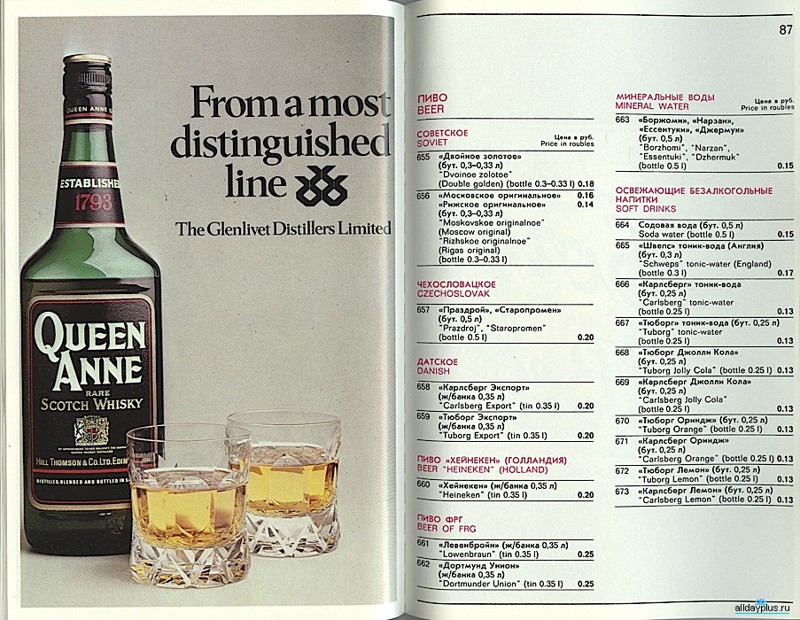
A planned economy cannot effectively control quality and consumer demand — these are indicators that cannot be measured precisely. State planning can more or less cope with what can be quantified (although, as we will discuss later, problems exist even there). But you cannot measure quality, beauty, fashionability, and other non-quantifiable characteristics in numerical terms. Consequently, in the Soviet Union there developed a cult of “imports”, and many even came to believe that imported goods were automatically of higher quality.
Planning under real socialism is quantitative — whether in units of output or in monetary terms; in these categories the plan must be fulfilled or overfulfilled. Product quality plays a clearly secondary role; state standards (GOSTs) are established, and it is assumed that production meets them. However, verification is quite superficial. Inspection is carried out by the technical control department (OTK) of the enterprise producing the goods. OTK inspectors are dependent persons; at most they can trip up some disliked foreman or shop manager, but they will never risk calling into question the overfulfillment of the plan required for bonuses.
This is so well known to the nomenklatura that it has received a kind of organizational recognition: in cases where quality is of vital importance — namely in the military industry — the products are accepted by representatives of the USSR Ministry of Defense, who are independent of the managers of military enterprises and even of the Ministry of the Defense Industry. The quality of special equipment manufactured for the KGB is subjected to the strictest control by specialists.
Gorbachev introduced state acceptance procedures at ordinary enterprises as well. And the result? Much production was rejected, plans went unfulfilled, and workers were dissatisfied. That was all. Because no system of state acceptance can compensate for the organic defects of the system11.
The problem of production indicators
In order to combat the production of vast quantities of low-quality goods, attempts were made to replace measurement in units with measurement in monetary terms, tons, and so on. But the system refused to function:
If the plan is drawn up not in units but in monetary terms, the enterprise strives to produce more expensive types of goods. In this way it can produce less yet still overfulfill the plan. When in a Soviet shop you see some typically unattractive, garishly made item selling at an exorbitant price and therefore not being purchased by anyone, you may confidently conclude: the enterprise’s director has managed to fulfill the plan by this method. Whether the goods find a market is of no concern to the director12.
For example, if production targets are set in tons, all products will become excessively heavy. Because I will not be producing machines; I will be producing tons. And the heavier the machine, the better. The Japanese even deliberately bought Soviet machines for scrap: they contained enormous machine beds built for a single purpose — to increase the weight of the product.
Later, when it became clear where such practices led, targets were defined in rubles. The result was that you obtained the same machines, only they somehow became ever more expensive. When price and weight indicators were combined, things grew worse still: they became both heavy and costly. Throughout the entire history of Soviet planning, planners struggled with “optimal indicators”, yet nothing came of it, since the defect lay in the method itself13.
The problem of falsification
In the USSR there also existed the phenomenon known as “false reporting”. This was a specific form of official fraud, defined in Soviet criminal law as the intentional distortion by an official of reporting data on the fulfillment of the state plan (for example, inflating the percentage of plan fulfillment beyond the factual data). Liability for false reporting was established on 24 May 1961 by a decree of the Presidium of the Supreme Soviet of the USSR — where the document particularly emphasized the danger of such practices, which harmed the national economy of the USSR14
“False reporting” is outright fraud: fictitious figures of supposedly produced output are simply inserted into reports on plan fulfillment. The method rests on a clear understanding of the bureaucratic and paper-based nature of nomenklatura planning and reporting: a paper directive is issued from the State Planning Committee and the ministry without knowledge of reality, and in return a paper report is submitted upward that likewise bears no relation to reality.
“False reporters” are sometimes exposed. Yet it is striking that the practice of false reporting is usually carried out for many years by those responsible. This means that the fraudulent method is fully applicable under a planned economy.
Of course, fraud exists everywhere and is not inherently linked to planning. But it is precisely the planned nature of the economy of real socialism that led not only petty cheats but even pillars of Soviet society to engage in fraud and false reporting.
It was among such pillars that, for example, the first secretary of the Ryazan regional committee of the CPSU, A.E. Larionov, belonged. He loudly undertook an obligation that his region in 1959 would deliver to the state 280% more meat than in 1958. At the December (1959) Plenum of the Party Central Committee, Larionov proudly reported the fulfillment of the obligation, and Khrushchev praised him. The following year it turned out that all of Larionov’s reports had been a deception: he had ordered meat to be purchased in food stores of his and neighboring regions and “delivered it to the state”.
A pillar of even higher rank was the first secretary of the Central Committee of the Communist Party of Tajikistan, T.U. Uldzhabayev. This head of the Tajik nomenklatura reported for several years that his republic achieved the world’s highest cotton yields. Much was said and written — also abroad — about how the mighty force of socialism had enabled once backward Tajikistan to surpass all others. Yet in April 1961 a Plenum of the Central Committee of the Communist Party of Tajikistan was held — though with far less publicity — at which it was announced that the cotton harvest plan in the republic had long been unfulfilled and that falsified data had been provided. The scale of the deception was such that the term “false reporting” no longer applied15.

Falsifications began as early as under Joseph Stalin, and at the highest level. In the report of the Central Statistical Administration of the USSR “On the Results of the Implementation of the National Economic Plan for 1948”, it was stated that collective farm trade in 1948 exceeded the prewar level of 1940 by 22%. However, as was revealed after the 20th Congress of the CPSU, the Central Statistical Administration had previously, without any justification, “recalculated” the data for 1940, lowering them from the published figure of 41.2 billion to 29.1 billion rubles. Only as a result of this maneuver did the comparison favor 1948 (35.5 billion rubles in 1940 prices)16. At the 17th Congress of the All-Union Communist Party (Bolsheviks) in 1934, Stalin’s report stated that 89.8 million tons of grain had been produced in 1933. By the late 1980s, the USSR State Statistics Committee estimated grain production in 1933 at 68.4 million tons17. In the journals “Statistical Bulletin” and “Higher School Bulletin” in 1948 it was explicitly stated that statistical calculations should be based not on scientific methods but on ideological ones: “Statistical theory and science can rely only on the philosophy of Marx-Engels-Lenin-Stalin. Dialectical materialism and Marxist-Leninist political economy, and not the law of large numbers, constitute the foundation of statistics as a science”18.
In the aforementioned report of the Central Statistical Administration for 1948 it was stated that the real wages of Soviet workers in 1948 increased more than twofold compared to 1947; however, the American economist of Russian origin and member of the RSDLP since 1903, Naum Jasny, calculated that in reality wages not only did not rise but even declined due to the monetary reform of 15 December 194719. Nikita Khrushchev himself criticized the falsifications at the January Plenum of the CPSU Central Committee in 196120.
The problem of the shadow sector
In a planned economy, a significant shadow sector emerges, leading to the appearance of so-called “speculators” who are essentially small-scale entrepreneurs but, due to their marginal status arising from the logic of the economic system, become much more resolutely opposed to the authorities. In effect, socialists create a very aggressive and influential enemy.

The scale was always considerable. For example, the People’s Commissar of Internal Affairs of the USSR, Lavrentiy Beria, reported to the Council of People’s Commissars in July 1940 (after more than ten years of Stalin’s dictatorship and before the world war) on the situation in Moscow.
Regarding industrial goods. 947 people were arrested and brought to trial as speculators; 16,853 people were fined for a total amount of 474,696 rubles. In addition, industrial goods worth 1,038,279 rubles were confiscated from them.
Regarding foodstuffs. 463 people were arrested and brought to trial; 50,809 people were detained, from whom 582,688 kg of foodstuffs were confiscated; of these, 38,962 people were fined for a total amount of 626,556 rubles21.
In 1977, Gregory Grossman even wrote an article “The Second Economy of the USSR”, emphasizing the presence of a significant entrepreneurial sector in the Soviet Union that benefited everyone — from officials to ordinary workers22. According to estimates of the Scientific Research Economic Institute of the State Planning Committee of the USSR, the total amount of shadow services provided to the population in the late 1980s reached 20–22 billion rubles23. Doctor of Economic Sciences T.I. Koryagina in the work “Shadow Economy” confirms the enormous scale of the shadow market in the USSR.
All practical data available to us indicate that a market sector will always exist in one form or another. The question is only whether to legalize it or not (the second option will not eliminate the market but will only create a problematic sector).
The problem of totalitarianism
Smoke for a thousand years, Comrade Stalin,
and even if I must perish in the taiga,
I believe: there will be enough cast iron and steel
per capita.
Under a planned economy, the only employer is the state. Accordingly, it can leave an undesirable person without work and means of subsistence. That is, if, for example, workers were to strike under a planned economy defending their rights, the state could simply fire those workers and hire them nowhere else, and then their fate would be unenviable. Also, under a planned economy the state controls all the media, thereby destroying their freedom, destroying the possibility of influencing the political situation, which in turn destroys the institutions of democracy. A planned economy is a crushingly powerful instrument in the fight against the opposition, and therefore against democracy, against the popular movement. The well-known economist Erik Reinert emphasized that “the economy of central planning, as it was in the Soviet Union, is not compatible with democracy”24.
The problem of potential border closures and import restrictions should also be considered. A planned economy requires production volumes to be planned; these plans are based on consumption forecasts. However, how is it possible to plan, for example, automobile production if foreign goods are imported and planning authorities cannot know how many foreign cars citizens will purchase? There is a risk of producing a large number of cars that no one will buy. The simplest way to avoid potentially enormous losses is either to ban or severely restrict imports. This inevitably leads to rising prices for foreign goods and their fetishization, as well as public dissatisfaction due to the inaccessibility of these products.
Furthermore, if emigration is not restricted, citizens — facing import limitations — will tend to travel abroad more often to purchase goods (a tendency reinforced by the fetishization of foreign products), thereby exporting capital from the country.
The problem of efficiency
Finally, planned economies have simply demonstrated their inefficiency and inability to achieve a high standard of living in virtually all places where they were implemented. This concerned not only living standards but even indicators such as GDP per capita. Let us compare some indicators of the New Economic Policy and the first Stalinist five-year plans. The data are taken from the collection “The Spread of Modern Industry to the Periphery since 1871”25:
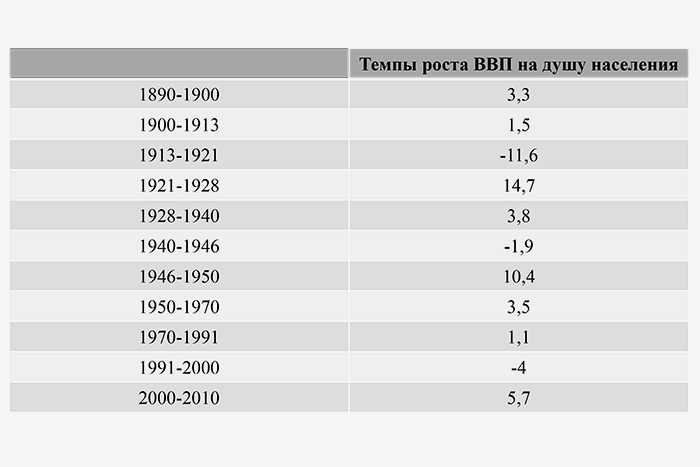
We can see that the downturn in the period from 1928 to 1940 compared with 1921–1928 is significant, even taking into account that post-war reconstruction typically entails higher growth rates. Supporters of planning might argue that the period 1946–1950 also saw noticeable economic growth; however, in addition to post-war recovery, one must consider reparations paid to the Soviet Union by several countries and the scale of equipment supplied to the USSR under Lend-Lease, which was used in the post-war reconstruction of the country. Even with all these advantages, the planned economy lagged behind the New Economic Policy.

The comparison is also supported by data from Vladimir Polevanov26, which concerns the standard of living: if in 1927 the number of sets of nine basic food products that could be purchased with one wage was 19.29 and grew at a good pace, by 1940 it had fallen to 8.28:
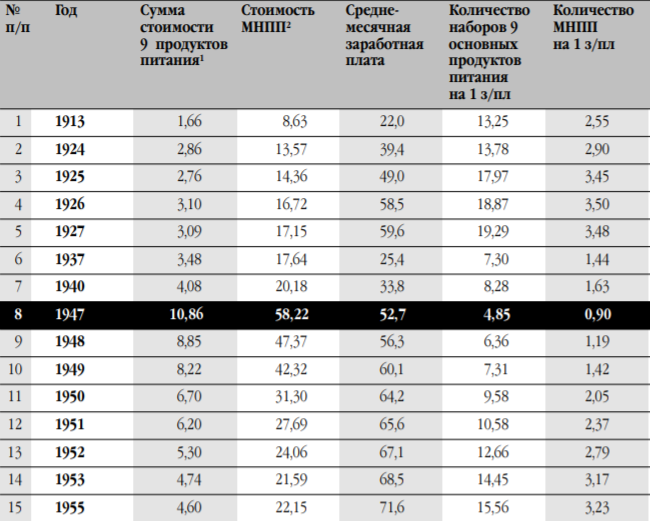
By 1985, raw materials accounted for more than 64% of exports27; the economy of the Soviet Union had ultimately become a raw-materials-based economy.
The problem of inequality
There is also a widespread opinion that although the standard of living in the Soviet Union under a planned economy was low, people nevertheless lived more or less equally. We have already written an article about the privileges of the Soviet nomenklatura, where we examined this issue in great detail, and the data presented there show that the problem of inequality was not solved — although the income gap in monetary terms was smaller than in developed democracies with relatively free markets, the existence of privileges unavailable to ordinary people at any price is an even more severe indicator of inequality than economic disparity.

Under a planned economy, small and large business owners are replaced by the nomenklatura, which not only strives for enrichment in the same way but is also far less capable of organizing production — both because of the reasons outlined in this article and because of its particular class consciousness, which is more inclined toward conservatism than toward a progressive value system.
As a result, at the beginning of 1951 payments to ministers in the USSR amounted to 20,000 rubles per month, and to their deputies — 10,000 rubles28. Meanwhile, the monetary income of a peasant household in 1950 per capita was less than 100 rubles per month29. Historian Oleg Khlevnyuk also notes that “a significant portion of payments to managerial personnel was not taxed, while taxes on the population continually increased”30. The difference between a minister and a villager was thus at least 200-fold, not counting privileges that could not be bought at any price. It is therefore documented that a planned economy does not by itself reduce social inequality; reductions in inequality are achieved by other mechanisms.
The problem of compatibility with democracy
A planned economy, as noted above, implies state ownership of enterprises. If each entity plans separately, this is no longer a centralized plan and therefore not a planned economy. Moreover, if enterprises are not state-owned, some may refuse to fulfill the state plan, and then it will not be implemented as intended. It is impossible to know how much production is required in total when you do not know the output of part of your enterprises. For example, a country might need 500,000 cars, but enterprises that refuse to plan may produce only 100,000, while you expected 250,000 and therefore produced 250,000 yourself. Then 150,000 people would not receive the cars that the country’s economy was supposed to provide, leading to shortages. The simplest way to avoid potentially enormous losses is therefore to make enterprises state-owned so as to ensure the execution of state directives.
If ownership is state-based, all media are either state property or overwhelmingly dependent on state financing. All major capital (which can be used to finance media and political parties) is state-owned. When this is the case, the state (i.e., senior officials) gains the ability to tell the media what to write and do. These officials have their own interests — preserving power and profiting from it. Dictatorship is the most effective means of achieving this. Consequently, under a planned economy a dictatorship will tend to emerge. This is why the likelihood of democracy under a planned economy tends toward zero. This is also supported by economic indicators.
According to estimates by the ILO, as of 2012 about 21 million people worldwide were engaged in forced labor. This represents only 0.6 percent of the global labor force, estimated at 3.3 billion people (0.3 percent of the world population), but the proportion remains too high. According to the ILO, the highest incidence of forced labor is in former socialist states of Europe, in the former Soviet Union (0.42 percent of the population), and in Africa (0.40 percent). Even in wealthy countries, an estimated 0.15 percent of the population is engaged in forced labor31.
Did the USSR attempt to make the planned economy efficient?
Of course, the nomenklatura tried numerous methods (some supporters of planned economies would prefer to believe that those in charge were either enemies — even of themselves — or simply foolish, but such supporters flatter themselves by assuming knowledge that was unavailable to an entire class). Ministries were created, enlarged, and reduced in size; they were replaced by economic councils and state committees, after which ministries were again restored. There was a Workers’ and Peasants’ Inspectorate, state control, and popular control — but no reorganizations or propaganda could overcome the basic incentives of self-interest. Many apologists for planned economies fall into conspiracy theories, claiming that the nomenklatura deliberately worsened the system at risk and cost to itself. Such people either lack a basic understanding of Marxism and the principles of the development of productive forces in its conception (Marxism is often used as the main justification for a planned economy) or are not entirely sincere.
Attempts were also made to modify the planned economy in other socialist states. However, experience showed that economic efficiency and living standards were higher in Austria than in Czechoslovakia, higher in South Korea than in North Korea, and higher in West Germany than in East Germany.
Conclusion
Professor of the Cambridge University Ha-Joon Chang sums up his critique of the planned economy: “the problems of socialist economies were already well known: difficulties in planning an increasingly diverse economy, incentive problems arising from weak links between labor productivity and remuneration, and widespread politically determined inequality in a supposedly egalitarian society”32. When speaking about the economy of the future, we must in any case choose either a planned basis or a market basis as its foundation and then introduce changes to one of them. Which of these two foundations should we choose?
Modern Marxists, although they claim that all the shortcomings listed in this article can be fixed, have not proposed any convincing methods for fixing them and building such an economy — especially on the strongest foundation, the foundation of incentives. That is, at the moment such methods do not exist, and work in this direction is not being carried out due to the exceptional complexity of the issue. Let us note here that we are well aware of the theses about a “decentralized planned economy” and the claim that a planned economy can supposedly be made efficient through the introduction of mechanisms of computer calculation — we have refuted them in the relevant articles.
At the same time, changes in the market economy and its improvement toward reducing exploitation and social inequality have been applied in practice many times. Social stratification and poverty are far more effectively reduced by social democrats (especially in Scandinavia) than by Marxists with a planned economy, which leads to a host of problems outlined above. Marxists also claim that the market economy is chaotic. However, one of its advantages is precisely that each enterprise is a small planning center, since it plans its own production, and with a far higher level of motivation than the employees of the state planning authority. The transition to the next stage of global economic development should be achieved through robotization and modernization of production, which can be accomplished within a mixed economy (the basic principles of a social-democratic economy are described here).
- Economics. Explanatory Dictionary // General editor: Dr. Econ. Sci. I.M. Osadchaya — Moscow: “INFRA-M”, Publishing House “Ves Mir”, 2000
- Dictionary of Economic Theory // Compiled by V.P. Teplov – 136 pp. – Novosibirsk: Russian State University of Trade and Economics, Novosibirsk Branch, 2007
- V.I. Lenin. Collected Works. Fifth Edition. Volume 27 (August 1915 – June 1916). – 643 pp. – Moscow: Publishing House of Political Literature, 1969. – p. 397.
- Leonid Koval. Meetings with Arkady Raikin // University of Latvia (www.lu.lv). [Electronic resource]. URL: https://www.lu.lv/materiali/studiju-centri/jsc/resursi/134-143.pdf (accessed 08.03.2020).
- André Gide. Return from the USSR
- Politburo of the Central Committee of the All-Union Communist Party (Bolsheviks) and Council of Ministers of the USSR. 1945–1953 / Compiled by O.V. Khlevnyuk, J. Gorlicki, L.P. Kosheleva, A.I. Minyuk, M.Yu. Prozumentshchikov, L.A. Rogovaya, S.V. Somonova – 656 pp. – Moscow: Russian Political Encyclopedia (ROSSPEN), 2002. – p. 53.
- Pavel Sudoplatov. Intelligence and the Kremlin: Notes of a Notorious Spy. – 508 pp. – Moscow: “Geya”, 1996. – pp. 207–262.
- Scientific and Technical Intelligence from Lenin to Gorbachev – Sergey Chertoprud
- S.Yu. Rybass. Stalin. – 902 pp. – Moscow: Molodaya Gvardiya, 2009. – pp. 828–830.
- V. Dudintsev. Not by Bread Alone. Novel. – 407 pp. – Moscow: “Khudozhestvennaya Literatura” Publishing House, 1968.
- M. Voslensky. Nomenklatura: The Soviet Ruling Class (2nd revised and expanded edition), 671 pp. — Overseas Publications Interchange Ltd, London, 1990. — pp. 224–225.
- M. Voslensky. Nomenklatura: The Ruling Class of the Soviet Union (2nd revised and expanded edition), 671 pp. — Overseas Publications Interchange Ltd, London, 1990. — p. 225.
- Boris Y. Kagarlitsky. Marxism: Not Recommended for Study. – 1622 pp. – Algoritm, Eksmo, 2006. – pp. 290–291.
- Decree of 24 May 1961 “On Liability for False Reporting and Other Distortions of Reports on Plan Fulfillment”.
- M. Voslensky. Nomenklatura: The Ruling Class of the Soviet Union (2nd revised and expanded edition), 671 pp. — Overseas Publications Interchange Ltd, London, 1990. — pp. 226–227.
- Ibid., p. 228
- Source Studies: Theory. History. Method. Sources of Russian History: Textbook / I.N. Danilevsky, V.V. Kabanov, O.M. Medushevskaya, M.F. Rumyantseva. — 702 p. — Moscow: Russian State University for the Humanities, 1998. — p. 590.
- Mathematical Statistics in Biomedical Research Using the Statistica Package – Nina Vasilyevna Trukhacheva – GEOTAR-Media, 2012 – total pages: 379
- N. Jasny: Essays on the Soviet Economy. Munich, 1962, pp. 270-272, 276-281
- Pravda, 14 January 1961
- Svetlana Kuznetsova. “There were about 8,000 people in the queue” // Kommersant Publishing House (www.kommersant.ru). Kommersant Vlast magazine No. 28 dated 19.07.2010, p. 56. [Electronic resource]. URL: https://www.kommersant.ru/doc/1407605 (access date: 29.11.2019).
- Grossman G. The “Second Economy” of the USSR // Problems of Communism. 1977. Sept.–Oct. pp. 25–40.
- L.A. Kormishkina. Shadow economy: textbook / L.A. Kormishkina, O.M. Lizina. — 136 p. — Saransk: Publishing House of Mordovia University, 2009. — p. 83.
- E.S. Reinert. How Rich Countries Got Rich and Why Poor Countries Stay Poor [Text] / trans. from English by N. Avtonomova; ed. by V. Avtonomov; National Research University “Higher School of Economics”. 4th ed. — 384 p. — Moscow: Higher School of Economics Publishing House, 2016. — p. 320.
- Markevich, Andrei and Steven Nafziger “State and Market in Russian Industrialization, 1870–2010” in O’Rourke, K. and J.G. Williamson, eds. (2017), The Spread of Modern Manufacturing to the Periphery, 1870 to the Present, Oxford University Press: Oxford
- V. Polevanov. Russia: the price of life // Institute for Economic Strategies of the Russian Academy of Sciences (www.inesnet.ru). [Electronic resource]. URL: http://www.inesnet.ru/wp-content/mag_archive/1999_01/ES1999-01-102-103-Polevanov.pdf (accessed 09.12.2019).
- National Economy of the USSR in 1985: Statistical Yearbook / USSR State Statistics Committee. — 655 p. — Moscow: Finance and Statistics, 1986. — p. 575.
- RGANI. F. 5. Op. 25. D. 279. L. 17
- Popov, V. P. Russian Village after the War (June 1945 – March 1953). Moscow, 1993. P. 146
- O. Khlevnyuk. Stalin. The Life of a Leader: Biography. — 464 p. — Moscow: AST-CORPUS, 2015. — p. 205.
- Ha-Joon Chang. Economics: The User’s Guide / Ha-Joon Chang; trans. from English by E. Ivchenko; ed. by E. Kondukova. — 322 p. — Moscow: Mann, Ivanov and Ferber, 2015. — p. 232.
- Ha-Joon Chang. How the Economy Works / Ha-Joon Chang; trans. from English by E. Ivchenko; ed. by E. Kondukova. — 322 p. — Moscow: Mann, Ivanov and Ferber, 2015. — p. 67.
