“The Bolsheviks started the Civil War”
The Bolsheviks are often accused of having started the Civil War in Russia. Meanwhile, those sympathetic to the Bolsheviks (usually various kinds of communists) place the blame on the White movement. Let us examine who actually initiated the hostilities and who was responsible for unleashing this war.
A very widespread claim is that the Bolsheviks unleashed the Civil War in Russia, and various arguments are put forward in its support (or not put forward at all). For example, one Boris Romanov writes, without quoting or citing any sources:
Let us emphasize that it was precisely the Bolsheviks who unleashed the Civil War in Russia, and Lenin publicly took responsibility for this as early as the spring of 1918, at a regular Congress of Soviets1.
However, on March 14, 1918, at the Fourth Extraordinary All-Russian Congress of Soviets, Vladimir Lenin said exactly the opposite – he spoke of an attack by the “landowners and the bourgeoisie”: “The civil war was a continuous triumph of Soviet power, because its opponents, the exploiters, the landowners and the bourgeoisie, had no political or economic support whatsoever, and their attack was shattered”2. Another example is provided by Vladimir Ryzhkov, co-chairman of the RPR-PARNAS party and a deputy of the State Duma of the first to fourth convocations:
Lenin was one of those who unleashed the Civil War that claimed millions of lives, he paved the way for Stalin to come to power, and the latter continued his work3.
Vladimir Ryzhkov is a Candidate of Historical Sciences – could his point of view really be incorrect? However, given that after the October coup power passed to the Bolshevik Party, and it became the ruling party, the question arises: what sense would it make for a ruling party to unleash a civil war? This requires clarification.
Contents
What should be considered the “beginning” of the Civil War and the causal approach
Some historians consider the fighting in Petrograd during the October coup to be the first act of the Civil War, however, a coup d’état and a civil war are two different concepts, since carrying out a coup does not imply the beginning of a civil war (most often, one of these events does not entail the other). If democratic forces seize power in a country through a coup, this does not mean that they are unleashing a civil war. Therefore, from a historical point of view, it is incorrect to treat the October coup and the Civil War as anything other than two separate processes. A coup d’état is not the beginning of a civil war; those who equate these two propositions are engaging in demagoguery. The fact that the Bolsheviks carried out a coup d’état – there is no doubt about this and it is not disputed by anyone.
According to Encyclopaedia Britannica, a civil war is a violent conflict between a state and one or more organized non-state actors within the territory of that state4. According to Dictionary.com, it is a war between political factions or regions within a single country5. What is war? Britannica states: it is a conflict between political groups involving military actions of considerable duration and scale6. Therefore, a coup d’état and a civil war are different concepts: a coup does not imply either military actions of considerable duration and scale, or military actions between regions.
Nevertheless, the Bolsheviks are accused of the October coup having caused the Civil War. This ignores a significant portion of the facts – since the real causes of the Civil War were far more numerous. If we are looking for the causes of the Civil War, we must first look at the policies of the tsarist government, which led to three revolutions and, as a consequence of the unresolved problems after these revolutions, to a civil war. Thus, if we use a “causal” approach, it becomes very difficult to blame only the Bolsheviks – what they inherited was not a stable country, but a powder keg that had already exploded three times. The causes of the revolutions and the extremely low standard of living in imperial Russia deserve separate articles, however, even from the article on the transformations carried out by the Bolsheviks, one can see how problematic the country they inherited was.
The editorial board of “Logic of Progress” considers the “causal approach” to be entirely valid – responsibility for unleashing the Civil War should be attributed to the conservatives, whose government led the country to three revolutions, involved it in two wars, and reduced the population to a state of bitterness, illiteracy, hunger, and poverty. Yes, for the sake of objectivity, one must also take into account the responsibility of the Bolsheviks and that of the Provisional Government. The reforms of the Provisional Government were too slow, belated; moreover, it made a number of unforgivable mistakes (some of which we examine in the article on the history of democracy in Russia). The Bolsheviks, for their part, first and foremost dissolved the Constituent Assembly, thereby establishing their own authoritarian rule. Since opposition parties were left with no legal means of coming to power after this (especially considering the Bolshevization of the soviets and other measures taken by the Bolsheviks to establish an authoritarian regime), only the military path remained open to them, so the Bolsheviks also bear some responsibility for the beginning of the Civil War. However, there is another approach – the formal one. It involves determining who initiated the military actions. Let us examine the issue from this perspective as well.
The formal approach
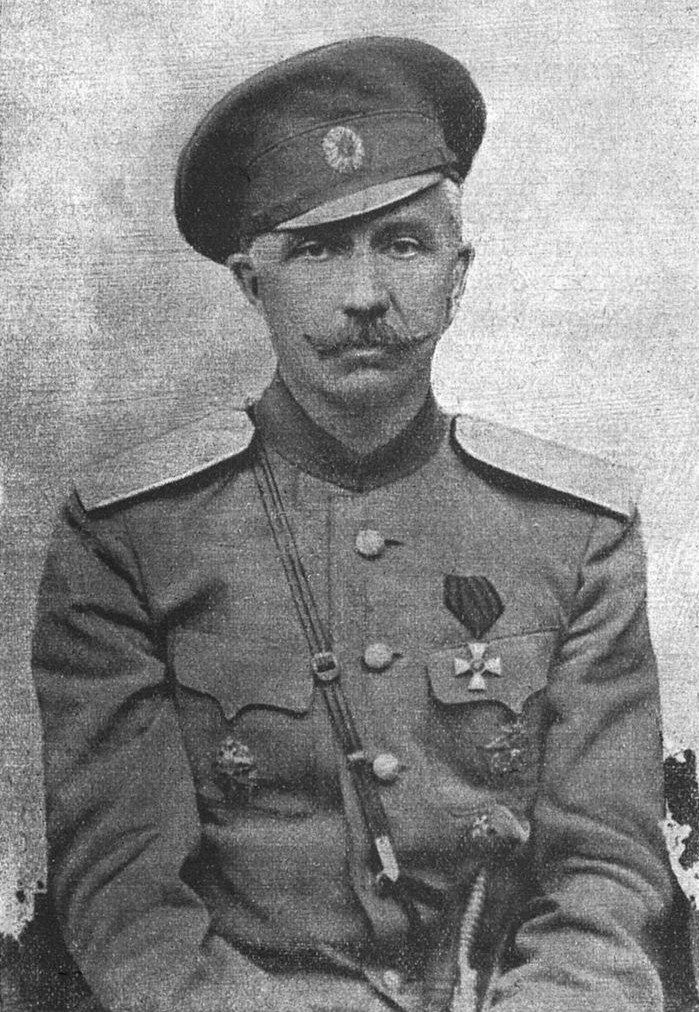
Another method is to identify the “unleashing” of the Civil War not by its causes, but by the concrete facts of the first military actions. In this case, the first attempt to start the Civil War occurred on October 25-29, 1917 (Old Style), when, after the October coup, the former Minister-Chairman of the Provisional Government Alexander Kerensky and the general of the tsarist army Pyotr Krasnov sent units of the 3rd Cavalry Corps from the town of Ostrov on a military campaign against Petrograd7 (in effect, this was not a revolution or a coup, but a military campaign). On October 27, 1917, they occupied Gatchina, on October 28 – Tsarskoye Selo, reaching the nearest approaches to the capital. On October 29, an uprising (an attempted coup d’état) of cadets broke out in Petrograd under the leadership of the “Committee for the Salvation of the Homeland and the Revolution”8, however, it was soon suppressed by superior forces of the Bolsheviks and the Left Socialist Revolutionaries under the command of Mikhail Muravyov.
Due to the small size9 of his forces and the defeat of the cadets, Krasnov began negotiations with the “Reds” to cease hostilities. He also reached an agreement with the commander of the Red detachments Pavel Dybenko on the unhindered withdrawal of the Cossacks from the vicinity of Petrograd. On November 1, he surrendered to the Bolsheviks, however, was released on his “word of honor as an officer that he would no longer fight against Soviet power”10. Soon afterward, Krasnov left for the Don, where he became a prominent political and military figure in the anti-Bolshevik struggle. This military campaign can be regarded as the first attempt to start the Civil War, and the initiative here belonged to Kerensky and Krasnov.
Meanwhile, the newly appointed Supreme Commander-in-Chief, General Nikolai Dukhonin, refused to obey the Soviet government and on November 19 released Generals Lavr Kornilov and Anton Denikin from the Bykhov prison11, who then went to the Don to take part in the formation of the Volunteer Army, whose goal was to fight the Bolsheviks.
From October 1917 to February 1918, the Bolsheviks managed to establish Soviet power throughout the country (in Soviet historiography, this process was called the “triumphal march of Soviet power”12). In Rostov, Soviet power was proclaimed on October 28 (November 8, New Style), 191713. In response, the ataman of the Don Host, Alexei Kaledin, began military operations. As early as October 26, he declared martial law in the Don region and began the liquidation of local Soviets14. The Host (Cossack) government assumed full state authority in the region. There exists an appeal of the Council of People’s Commissars “On the struggle against the counterrevolutionary uprising of Kaledin, Kornilov, Dutov, supported by the Central Rada”, which stated:
At a time when representatives of the Soviets of workers’, soldiers’ and peasants’ deputies had opened negotiations to secure a dignified peace for the exhausted country, the enemies of the people — the imperialists, the landowners, the bankers and their allies, the Cossack generals — made a last desperate attempt to disrupt the cause of peace, to wrest power from the hands of the Soviets, land from the hands of the peasants, and to force soldiers, sailors, and Cossacks to bleed for the profits of Russian and allied imperialists. Kaledin on the Don, Dutov in the Urals have raised the banner of revolt. The Cadet bourgeoisie is providing them with the necessary means to fight against the people15.
On November 2 (15), 1917, General Mikhail Alekseyev (as reported by one of the White generals, Anton Denikin16) began organizing an armed force and called on all officers and cadets to go to the Don to organize the struggle against the Bolsheviks17. On November 7, Kaledin declared that the Host government did not recognize Bolshevik authority and that the Don region was proclaimed independent18. On December 2 (15), after fierce fighting, volunteer detachments and the troops of General Kaledin drove the Bolsheviks out of Rostov, then out of Taganrog, and launched an offensive into the Donbas19. This can be considered the second attempt to start the Civil War, and here the initiators were again Russian generals, in this case Alexei Kaledin.

However, after the formation of the Southern Revolutionary Front for the Struggle against Counterrevolution under the command of Vladimir Antonov-Ovseenko, as a result of two months of fighting, Soviet troops and Red Guard detachments occupied Taganrog on February 11, 1918, took Rostov on February 23, and on the 25th of the same month — Novocherkassk20, as a result of which the rebellion was suppressed.
On February 22, 1918 (February 9, Old Style), the forces of the Volunteer Army under the command of Lavr Kornilov, Mikhail Alekseyev, and Anton Denikin begin the “Ice March”21 — a military action against Bolshevik power. Denikin himself wrote about the beginning of the campaign:
Across the vast expanse of the country, there remained only one place where the tricolor national flag flew openly — this was Kornilov’s headquarters22.
This statement by Denikin confirms that it was the military leaders of the former regime who initiated the Civil War. The “Ice March” can be considered the third attempt to start the Civil War (this time a successful one), and here again the initiative belonged to the generals, in this case Kornilov, Alekseyev, and Denikin.

All historical facts show that the Civil War was not started by the Bolsheviks, but by the generals. However, it should be especially noted that the very unleashing of a Civil War is not necessarily an action with a negative connotation. In the article on progressive values, we wrote that human life and peace are the highest values, but if their preservation comes at the cost of establishing slavery, the loss of freedom, dignity, a decline in the standard of living, and harm to other progressive values, the decision may be made not in their favor. Was the choice made by the generals the right one? This question remains open. On the one hand, Bolshevik rule turned out to be a disastrous choice for Russia. On the other hand, this war was lost, and some generals (such as Kolchak) proved to be no better than the Bolsheviks, and, given how strong conservatism, reaction, and statism are in Russia, it cannot be ruled out that the first Nazi or fascist regime would have been established in Russia in the event of Kolchak’s victory. Therefore, the question of whether the outbreak of the Civil War was justified remains open. Unlike the question of the dissolution of the Constituent Assembly, which is clear.
Other theses
As evidence for the thesis of the “Bolsheviks unleashing the Civil War”, reference is sometimes made to Vladimir Lenin’s slogan about the “transformation of the imperialist war into a civil war”, proclaimed by him in 1915. Such a slogan was indeed proclaimed by Lenin. But does this mean that the Bolsheviks started the war? Hardly, because if every such statement started a civil war, humanity would have died out long ago. This issue was not relevant after the October coup.
The call for civil war was relevant only under conditions when the government forced citizens to wage another bloody war, and this Leninist demand was merely a response to Russia’s participation in the First World War. If we examine Lenin’s work of that period “War and Russian Social-Democracy”, from which this slogan originates, we will see that the author and many other Social Democrats in 1915 were calling on soldiers of all countries to stop fighting each other and instead go fight against their own “bourgeoisie” and governments:
The opportunists have betrayed the resolutions of the Stuttgart, Copenhagen and Basel Congresses, which obligated the socialists of all countries to fight against chauvinism under all circumstances, and obligated the socialists to respond to every war begun by the bourgeoisie and the governments with intensified propaganda of civil war and social revolution23.
We have not yet found information that socialists were supposed to start a civil war in their own country even after a socialist revolution (unless one counts Bolshevik terror as such). After the October coup took place, the slogan about the transformation of the imperialist war into a civil war within a single country became irrelevant. The best evidence of the Bolsheviks’ desire to end the war as quickly as possible is the Treaty of Brest-Litovsk. The Bolsheviks immediately began peace negotiations with Germany24 and ultimately concluded a peace agreement even on terms that were not the most favorable.
Conclusion
Given all the above facts of military campaigns by White generals and the fact of the peace agreement in Brest-Litovsk, we can conclude that formally the Civil War was not started by the Bolsheviks, but by the generals. However, a civil war may also be fought for progressive goals, so the question of whether this was justified is a separate one. If, however, we judge not by formal criteria but more deeply, trying to understand the causes of the war, then the primary responsibility for the beginning of the Civil War lies with the tsarist government and the statists, whose policies resulted in three revolutions and the involvement of Russia in the catastrophic First World War.
- B.S. Romanov. The Emperor Who Knew His Fate. And Russia, Which Did Not. – 624 p. – St. Petersburg: BKhV-Petersburg, 2012. – p. 67.
- V.I. Lenin. Collected Works. Fifth Edition. Volume 36. March – July 1918. – 741 p. – Moscow: Progress Publishers, 1969. – p. 95.
- When Will Lenin Be Removed from the Mausoleum? // Arguments and Facts (aif.ru). AiF No. 48. Between East and West 27/11/2013. [Electronic resource]. URL: https://aif.ru/dontknows/answer/1031028 (accessed: 15.01.2020).
- Kristian Skrede Gleditsch. Civil war // Encyclopaedia Britannica (www.britannica.com). [Electronic resource]. URL: https://www.britannica.com/topic/civil-war (accessed: 15.01.2020).
- Civil war // Dictionary.com (www.dictionary.com). [Electronic resource]. URL: https://www.dictionary.com/browse/civil-war (accessed: 15.01.2020).
- Joseph Frankel. War // Encyclopaedia Britannica (www.britannica.com). [Electronic resource]. URL: https://www.britannica.com/topic/war (accessed: 15.01.2020).
- Russian Revolutions and the Civil War / A.A. German. – 192 p. – Moscow: AST Publishing, 2017. – pp. 94-95.
- Ibid. – pp. 93-94.
- Revolution and Civil War in Russia: 1917-1923: Encyclopedia. In 4 volumes / Great Encyclopedia. – 560 p. – Moscow: TERRA, 2008. Vol. 2. – p. 387.
- Russian Revolutions and the Civil War / A.A. German. – 192 p. – Moscow: AST Publishing, 2017. – p. 96.
- Revolution and Civil War in Russia: 1917-1923: Encyclopedia. In 4 volumes / Great Encyclopedia. – 560 p. – Moscow: TERRA, 2008. Vol. 2. – pp. 29-30.
- A.V. Shubin. The Start of the Country of Soviets. Revolution. October 1917 – March 1918. – 448 p. – St. Petersburg: Piter, 2017. – p. 55.
- Sarychev, A.G. The October Revolution in Russia and the First Steps of Soviet Power (October 1917 – Spring 1918) / Scientific ed. L.M. Iskra. — Voronezh: Voronezh University, 2000. — 171 p.
- Revolution and Civil War in Russia: 1917-1923: Encyclopedia. In 4 volumes / Great Encyclopedia. – 560 p. – Moscow: TERRA, 2008. Vol. 2. – p. 223.
- Collection of Laws and Decrees of the Government for 1917-1918. – 1483 p. – Moscow, 1942. – pp. 45-46.
- A.I. Denikin. Essays on the Russian Troubles: The Struggle of General Kornilov. August 1917 – April 1918. – 400 p. – Minsk: Kharvest, 2002. – p. 185.
- R.G. Gagkuev. The White Movement in the South of Russia. Military construction, sources of recruitment, social composition. 1917—1920. – 704 p. – Moscow: Possev, 2012. – p. 53.
- V.Zh. Tsvetkov. The White Cause in Russia: 1917-1919
- Soviet Historical Encyclopedia / Editor-in-chief E.M. Zhukov. Volume 14. – 1038 p. – Moscow: Soviet Encyclopedia Publishing House, 1973. – p. 441.
- N.L. Yanchevsky. Civil Struggle in the North Caucasus. Volume 1. – 204 p. – Rostov-on-Don: “Sevkavkniga”, 1927. – p. 173.
- The First Kuban (“Ice”) Campaign / Compilation, scientific editing, foreword and commentary by Doctor of Historical Sciences S.V. Volkov. – 944 p. – Moscow: Tsentrpoligraf, 2001. – p. 3.
- A.I. Denikin. Essays on the Russian Troubles: The Struggle of General Kornilov. August 1917 — April 1918. — 400 p. — Minsk: Kharvest, 2002. – p. 267.
- V.I. Lenin. Collected Works. Fifth Edition. Volume 26. July 1914 – August 1915. – 590 p. – Moscow: Progress Publishers, 1969. – p. 20.
- Collection of Laws and Decrees of the Government for 1917-1918. – 1483 p. – Moscow, 1942. – pp. 2-3.