How Stalin killed communists
One of the shortcomings of communist regimes is that they pose a deadly threat primarily to communists themselves. If we look at historical facts, we can see that Nazis, fascists, and monarchists combined killed fewer communists than another member of the Communist Party – Joseph Stalin. In this article, we will present evidence supporting this thesis.
As we have already discussed in a separate article, Joseph Stalin carried out a conservative coup d’état, as a result of which his faction came to control the Soviet Union. This faction organized the mass destruction of communists both inside the USSR and abroad. Let us proceed to the evidence.
We anticipate in advance the typical trick used by Stalinists regarding those who were killed: “they were ineffective officials”, “they were corrupt officials”. The effectiveness of a significant part of the Bolshevik leadership’s reforms has already been shown in this article (compare this with the results of Stalin’s rule, which we examined in the article on living standards in the Stalin period), and the claims about “corrupt officials” are also inventions of Stalinists, since virtually all the people mentioned in this article were destroyed for “counter-revolutionary activity”, not for embezzlement. In contrast, Stalin’s own group was in fact corrupt from top to bottom, which we demonstrate here.
Contents
Key communists according to Lenin
Vladimir Lenin, in his “Letter to the congress”, also known as Lenin’s “Testament”, mentioned six individuals whom he considered important for the Bolshevik Party. These were Leon Trotsky, Joseph Stalin, Grigory Zinoviev, Lev Kamenev, Nikolai Bukharin, and Georgy Pyatakov1. Of these six people, five were eliminated under Stalin’s dictatorship. We have already addressed in a separate piece the myth that the General Secretary was supposedly not the organizer of mass repression.
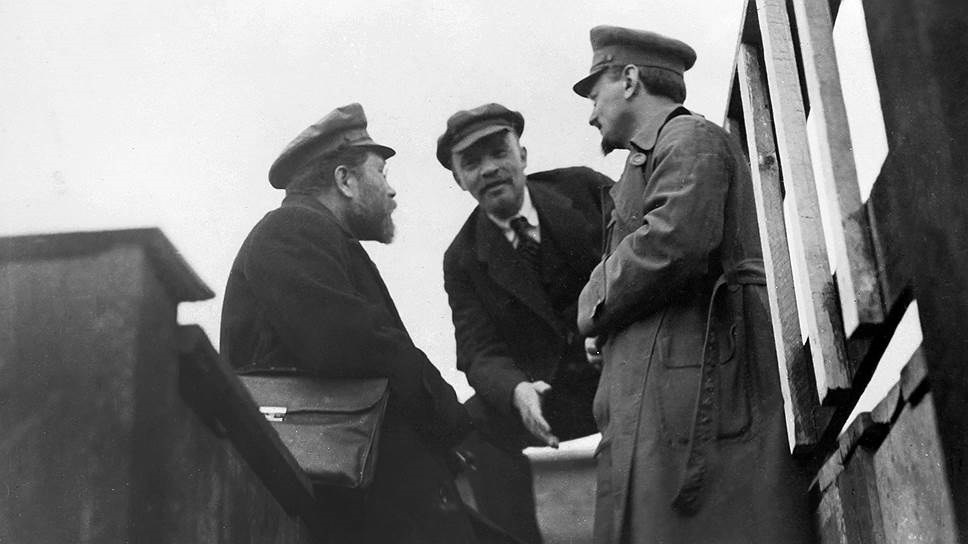
If we look at the composition of the Politburo that existed at the time of Lenin’s death, then, in addition to the already mentioned Trotsky, Zinoviev, and Kamenev, it also included Alexei Rykov and Mikhail Tomsky – the former was executed by Stalin, while the latter committed suicide after learning that an investigation had been launched against him (which at that time effectively meant an imminent execution).
The first council of people’s commissars
The composition of the first Council of People’s Commissars was elected at the Second All-Russian Congress of Workers’, Soldiers’, and Peasants’ Deputies on October 26, 1917 (Old Style). It included2:
- Vladimir Lenin (died January 21, 1924);
- Leon Trotsky (killed August 21, 1940);
- Joseph Stalin;
- Alexei Rykov (executed March 15, 1938);
- Anatoly Lunacharsky (died December 26, 1933);
- Viktor Nogin (died May 22, 1924);
- Vladimir Milyutin (executed October 30, 1937);
- Alexander Shlyapnikov (executed September 2, 1937);
- Vladimir Antonov-Ovseenko (executed February 10, 1938);
- Nikolai Krylenko (executed July 29, 1938);
- Pavel Dybenko (executed July 29, 1938);
- Georgy Oppokov (Lomov) (executed December 30, 1938);
- Ivan Teodorovich (executed September 20, 1937);
- Nikolai Avilov (Glebov) (executed March 13, 1937).
Thus, out of the 11 members of the first Soviet government who were still alive by 1937, 10 were eliminated by Stalin.
A question for reflection – who was the traitor in the first Soviet government? Ten people or one?
Revolutionary Military Council
The Revolutionary Military Council of the Republic was the body that governed the Red Army during the Civil War. Its chairman – Leon Trotsky – as already noted, was eliminated by order of Stalin. The deputy chairman Efraim Sklyansky was sent by Stalin to the United States in 1924, where he died under suspicious circumstances (Stalin’s former secretary Boris Bazhanov described indirect evidence suggesting the General Secretary’s involvement in this3). The commanders-in-chief were Ioakim Vatsetis (shot on July 28, 1938) and Sergey Kamenev (did not live to 1937). Members of the RMC were also executed4:
- Konstantin Mekhonoshin (shot on May 7, 1938);
- Karl Danishevsky (shot on January 8, 1938);
- Ivan Smirnov (shot on August 25, 1936);
- Arkady Rosengolts (shot on March 15, 1938);
- Konstantin Yurenev (shot on August 1, 1938);
- Vladimir Nevsky (shot on May 26, 1937);
- Ivar Smilga (shot on January 10, 1937);
- Nikolai Brukhanov (shot on September 1, 1938);
- Vaclav Bogutskiy (shot on December 19, 1937);
- Shalva Eliava (shot on December 3, 1937);
- Geidar Vezirov (shot on October 13, 1937);
- Iosif Unshlikht (shot on July 29, 1938);
- as well as the already mentioned Rykov and Antonov-Ovseenko.
Also, Alexei Okulov and Stepan Danilov died in a camp. In addition, Fyodor Raskolnikov, who accused Stalin of treason, died shortly afterward under rather strange circumstances. There are many rumors about Stalin’s possible involvement in the death of Mikhail Frunze, but they cannot currently be considered proven (for example, writer Boris Pilnyak made an unambiguous allusion in “The Tale of the Unextinguished Moon” suggesting that Stalin killed Frunze, and in 1938 Pilnyak himself was executed). However, even excluding Sklyansky and Frunze, out of 33 members and leaders of the Revolutionary Military Council who had been part of it up to and including 1923, 18 were destroyed by Stalin, 6 simply did not live to see 1937 (Sergey Kamenev, Vasily Altfater, Pavel Lebedev, Dmitry Kursky, Sergey Gusev, Inagadzhan Khidyr-Aliyev), and another three – Raskolnikov, Sklyansky and Frunze – remain disputed cases. It must be said that Stalin achieved what the White movement did not – the destruction of the majority of RMC members.
We are not even touching here on the military leaders who brought the communists victory in the Civil War – such as Mikhail Tukhachevsky or Vasily Blyukher, who were also destroyed by Stalin.
Bolshevik party
As we already mentioned in the article about Stalin’s coup d’état, out of 139 members and candidate members of the Central Committee in 1934, 110 were executed or driven to suicide5. Out of 1,966 delegates to the 17th Party Congress of 1934, 1,103 were repressed6. Out of 267 Central Committee members elected between 1917 and 1934, 34 had died by the beginning of the purges, 36 survived the purges, mostly those who strongly supported Stalin and entered the Central Committee in the 1920s–1930s. The rest were repressed7. Almost 200 out of 267.
We do not have the exact number of communists in Russia destroyed by Stalin; we can rely only on indirect data. In 1991, a responsible official of the Central Control Commission under the CPSU Central Committee, Katkov, reported that among those repressed in 1937–1938 there were 116,885 communists8. This figure is significantly underestimated: it does not include those who were expelled from the party before execution and during earlier “purges”. At the February–March 1937 Central Committee plenum, Stalin stated that there were 1.5 million people expelled from the party since 19229 (of course, only part of them were destroyed). Historian Vadim Rogovin noted: “Naturally, this category, and especially those expelled for participation in oppositions, received special attention from the NKVD organs”10. Rogovin compares party membership numbers at congresses before and after the “Great Terror”, taking into account new admissions, and concludes that “communists, by the most minimal estimates, made up more than half of the victims of the Great Terror”11. Andrei Sakharov, in his article “Reflections on Progress, Peaceful Coexistence, and Intellectual Freedom”, cited figures of 1.2 million arrested communists, of whom only 50,000 were released, 600,000 were shot, and the rest died in camps or were tortured during interrogations12. However, even if we take the main figure of 116,885 people – compare it with February 1917, when the Bolshevik Party had about 24,000 members13.
How Stalin handed over german communists to Hitler
Candidate of Historical Sciences Yakov Perekhov reports that in 1939, after the signing of the Molotov–Ribbentrop Pact, «as a gift to Hitler, Stalin handed over imprisoned German and Austrian communists, former employees of the Comintern»14. One of these communists was Margarita Buber-Neumann, who after deportation ended up in the Ravensbrück concentration camp and later wrote memoirs about Stalin’s destruction of Comintern figures15 (she was one of the very few who managed to survive the concentration camp; later she also testified at the Kravchenko trial). NKVD officer Mikhail Shreider wrote in his memoirs:
In the various cells where I happened to be, there were also Germans. Some of them were outright fascists, while others were communists. Almost every day there were clashes between them that escalated into fights. The German fascists took malicious pleasure in the fact that the German communists were sitting in a Soviet prison, and they were glad that they would soon return home, to the Fatherland. Representatives of the German embassy came to the prison to see the German fascists and summoned them one by one for visits, after which the investigator announced that they would all soon be sent to Germany.
No representative of the embassy came to the German communists. They kept writing letters addressed to Stalin, proving their innocence. One day the investigator informed them that they would also be deported to Germany. Then the German communists were horrified and again began urgently writing statements to Stalin, begging to be shot there instead, but not to be sent to Nazi Germany. (Many years later, after the Great Patriotic War and Stalin’s death, I learned from the wife of one German communist that many German communists were indeed deported to Nazi Germany during that period, and that some of them miraculously survived in German concentration camps. They later said that Hitler used the fact of their deportation from the Soviet Union for propaganda purposes, emphasizing how the Soviet communists were dealing with their “brothers” — the German communists16.)
One of the most well-known members of the German Communist Party – physicist Fritz Houtermans – was also handed over to the Gestapo as part of Stalin’s cooperation with Hitler17. Among those handed over was also Franz Koritschoner, one of the founders of the Austrian Communist Party18, who was sent to Auschwitz. You can also find information about composer Hans Walter David, a member of the Communist Party whom Stalin handed over to the Nazis and who died in the gas chamber of Majdanek, about physicist Alexander Weissberg, and others. Interestingly, Stalin did not demand in return the release of Ernst Thälmann, who was rotting in Nazi camps, although according to some rumors Hitler had offered him Thälmann’s release.
The destruction of communists worldwide
It was not enough for Stalin to destroy only Soviet communists. Here is just a small part of well-known foreign communists who were shot during his “purges”:
- Béla Kun, one of the leaders of the Hungarian Revolution of 1919;
- Milan Gorkić, General Secretary of the Central Committee of the Communist Party of Yugoslavia;
- Hermann Remmele, one of the leaders of the Communist Party of Germany;
- Adolf Warski, one of the founders of the social-democratic movement in Poland, member of the Politburo of the Communist Party of Poland;
- Vladimir Čopić, member of the Central Committee of the Communist Party of Yugoslavia, commander of the 15th International Brigade in the Spanish Civil War;
- Fritz Platten, founder of the Communist Party of Switzerland;
- Avetis Sultan-Zade, member of the Executive Committee of the Comintern from Persia;
- Julian Lenski, General Secretary of the Communist Party of Poland;
- Gustav Rovio, secretary of the Central Committee of the Social Democratic Youth League of Finland;
- Abani Mukherji, one of the founders of the Communist Party of India;
- Jaan Anvelt, one of the leaders of the Communist Party of Estonia;
- Zigmas Angarietis, one of the first leaders of the Communist Party of Lithuania;
- Alexandru Dobrogeanu-Gherea, member of the Central Committee of the Communist Party of Romania;
- Francesco Misiano, member of the Central Committee of the Italian Communist Party;
- and so on.

Member of the Central Committee of the Communist Party of Poland Jerzy Czeszejko-Sochacki committed suicide in the Lubyanka prison. Before his death, he wrote a note in blood: “I have never belonged to any counter-revolutionary organizations and remained faithful to the Party until the end of my days”19. Rekiti Sugimoto, the author of the Japanese translation of the novel “How the Steel Was Tempered” and husband of Yoshiko Okada, after fleeing with his wife to the USSR, was executed as a foreign spy (despite his pro-Soviet views, membership in the Japanese Communist Party, and work translating socialist literature from Russian). By the decision of the court chaired by Vasily Ulrikh, Yoshiko was sentenced to 10 years of labor camps20. Mikhail Shreider recalls:
On the neighboring bunk lay a completely exhausted German, unable to move either his arms or legs. He spoke Russian quite well, but with a strong accent, so in the first days I treated him with caution. But later we talked and became friends. He was the well-known German communist, a friend and comrade of V.I. Lenin, Hugo Eberlein21.
Eberlein would be executed in 1941. The writer George Orwell, author of the novel “1984” and the novella “Animal Farm”, which made a major contribution to the struggle against Stalinism, was inspired by events from his own experience. In 1936, he went to Spain to fight as a volunteer against the fascists in the Civil War. In his book “Homage to Catalonia”, where he describes the events that happened to him, Orwell also recalls how, in the midst of the war against fascism, Stalinists began arresting communists and throwing them into prisons, accusing them of Trotskyism and “fascism”. At the same time, the POUM Trotskyist units fighting at the front were cynically not informed of this before battle:
The offensive on Huesca was beginning. The P.O.U.M. militia still retained its independence, and someone apparently feared that if the fighters learned what was happening, they would refuse to fight. In fact, when the news reached the front, nothing happened. In the battles that followed, many fighters were killed without ever knowing that the newspapers in the rear had been calling them fascists. This is hard to forgive. There is a custom of hiding bad news from soldiers at the front line. This is often justified. But it is something entirely different to send men into battle without even telling them that behind their backs the party they belonged to had been declared illegal, their leaders accused of treason, and their friends and relatives thrown into prison22.
Lieutenant General of the NKVD Pavel Sudoplatov, who led the operation to assassinate Leon Trotsky, reported certain cases of liquidation of communists and Trotsky’s supporters by Stalin’s NKVD:
Eyal Taubman, a young agent with the codename “The youth”, originally from Lithuania, managed to gain the trust of Rudolf Klement, who headed the Trotskyist organization in Europe and was the secretary of the so-called Fourth International. For a year and a half, Taubman worked as Klement’s assistant. One evening, Taubman invited Klement to dinner with his friends and brought him to an apartment on Boulevard Saint-Michel, where a Turk and Korotkov were already present. The Turk stabbed Klement, and his body was placed in a suitcase and thrown into the Seine. The body was found and identified by French police, but by that time Taubman, Korotkov, and the Turk were already far from Paris.
In Moscow, they were awaiting rewards…
<…>
Orlov played a major role in the elimination of the leader of the Spanish Trotskyists, Andreu Nin. Nin was arrested by Republican authorities for participating in the Trotskyist uprising in Barcelona and later kidnapped from prison by Orlov and killed near Barcelona. Orlov then wrote an anti-Trotskyist pamphlet, distributing it under Andreu Nin’s name, and created the version accepted by official authorities of German intelligence services assisting Nin’s escape from custody. This operation seriously damaged the prestige of the Trotskyist movement in Spain23.
Conclusion
When in 1938 the physicists Moisey Korets and Lev Landau (the latter would later become a Nobel Prize laureate) distributed leaflets against Stalin, they wrote, among other things: “In his furious hatred of true socialism, Stalin has become equal to Hitler and Mussolini”24. Landau and Korets were not aware of the true scale of the General Secretary’s actions — in terms of repression against communists, he could hardly be matched by Adolf Hitler and Benito Mussolini even combined, because even in Nazi Germany the total number of death sentences (not only of communists) during the entire rule of the Führer is estimated at 40–50 thousand25.
Fans of Stalin who justify the killing of communists are propagandists of the nomenklatura created by the General Secretary, which still governs Russia today (read more here). In essence, they are fascists waving red flags.
- V.I. Lenin. Complete Collected Works. Fifth edition. Volume 45 (March 1922 – March 1923). – 729 pp. – Moscow: Political Literature Publishing House, 1970. – pp. 343–346.
- The First Soviet Government. Oct. 1917 – July 1918 / Ed. by A. P. Nenarokov. – 461 pp. – Moscow: Politizdat, 1991. – p. 4.
- Б.Г. Бажанов. Борьба Сталина за власть. Воспоминания личного секретаря. – 304 с. – М.: Алгоритм, 2017. – с. 86-88.
- Советская историческая энциклопедия / Главный редактор Е.М. Жуков. Том 11. – 1022 с. – М.: Издательство “Советская энциклопедия”, 1968. – с. 912-913.
- С. Коэн. Бухарин. Политическая биография. 1888-1938: Пер. с англ. / Общ. ред., послесл. и коммент. И.Е. Горелова. — 574 с. — М.: Прогресс, 1988. — с. 407.
- Доклад комиссии ЦК КПСС президиуму ЦК КПСС по установлению причин массовых репрессий против членов и кандидатов в члены ЦК ВКП(б), избранных на ХVII съезде партии. 9 февраля 1956 года // АП РФ. Ф. 3. Оп. 24. Д. 489. Л. 23-91. Подлинник. Машинопись.
- А. И. Козлов. «Сталин: борьба за власть». – Ростов Н/Д: Издательство Ростовского университета, 1991.- стр. 381
- Правда. 1991. 14 апреля.
- Материалы февральско-мартовского пленума ЦК ВКП(б) 1937 года. 5 марта 1937 г. Вечернее заседание. Из речи т. Сталина // Вопросы истории, 1995, № 12, стр. 11-23
- Роговин В.З. Партия расстрелянных. [Московская типография №3 РАН]; Москва; 1997. ISBN 5-85-272-026-7
- Там же
- Вопросы философии. 1990. № 2. С. 13
- Партия большевиков в февральской революции 1917 года. – 254 с. – М.: Издательство политической литературы, 1971. – с. 100-101.
- History of Russia, 9th–20th centuries – Ya. A. Perekhov – Gardariki, 2002 – Total pages: 620
- Margarita Neumann. In the Clutches of Stalin and Hitler: The World in Darkness, 1948
- Mikhail Shreider. The NKVD from Within. Notes of a Chekist
- Valentin Ivanovich Simonenkov. The Fates of Scientists in Stalin’s Special Prisons
- Karl Steiner. 7000 Days in the Gulag
- Vladimir Iosifovich Pyatnitsky. Conspiracy Against Stalin. Sovremennik, 1998 – Total pages: 480
- Kato, Tetsuro. The Japanese Victims of Stalinist Terror in the USSR // Hitotsubashi University (hit-u.ac.jp). [Electronic resource]. URL: http://hermes-ir.lib.hit-u.ac.jp/rs/bitstream/10086/8312/1/HJsoc0320100010.pdf (accessed: 15.12.2019).
- Mikhail Shreider. The NKVD from Within. Notes of a Chekist
- George Orwell. Homage to Catalonia
- Pavel Sudoplatov. Intelligence and the Kremlin. Notes of a Reluctant Witness. – 507 pp. – Moscow: TOO “Geya”, 1996. – pp. 58, 54.
- Izvestia of the CPSU Central Committee. 1991. No. 3. pp. 146–147
- Hitler’s Justice: The Courts of the Third Reich – Ingo Müller. Harvard University Press, 1991 – Total pages: 349