What is racism and why is it harmful
Many people believe that the left opposes racism only for ethical or aesthetic reasons, or solely out of a sense of justice. However, the fight against racism is, first and foremost, a practical necessity, and the success of its implementation directly affects the standard of living in a country.
One of the fundamental progressive values is the equality of people regardless of their race or nation. However, it is natural for people to derive some general rule from individual cases, which they then consider applicable to a wide range of situations. This is especially true when such conclusions are reinforced by stereotypes. For example, given the prevalence of the stereotype about “greedy Jews”, a person may encounter the same percentage of greedy individuals among Jews and among some other nationality, yet still conclude that only Jews are greedy. Racist stereotypes are among the most widespread, but they are misconceptions, and quite dangerous ones for public well-being. Let us examine point by point why racism hinders progress and the improvement of living standards. It should also be noted from the outset that the shortcomings of racism are not only applicable to Nazism, but are significantly intensified in a Nazi state.
Contents
- What is racism
- Pseudoscientific nature of racial theory
- Use by elites for their own purposes
- Racists create enemies for themselves
- May turn against the racist themselves
- Brain drain
- A Basis for the killing of innocent people
- Cultivation of inequality
- Creates a false notion of an “effective government”
- Creates hatred toward one’s own nationality or race
- Supports racism of other races and nationalities
- Cultivates ignorance
- Creates problems in everyday communication
- Reverse racism
- Misconceptions of racists
- Conclusion
What is racism
According to the Great Russian Encyclopedia, racism is a doctrine and a political-ideological practice based on the idea that humanity is not unified, but consists of fundamentally different types (human races, ethnic communities, and so on), hierarchically subordinated to one another. In socio-psychological terms, racism is associated with xenophobia, but unlike it, it claims theoretical justification, appealing to science (anthropology, genetics, and others), absolutizing phenotypic differences between people and interpreting them as a source of sociocultural boundaries1. According to the definition by Deutsche Welle, it is an ideology, or a system of views, that закрепляет деление людей на расы и утверждающая превосходство одной расы над другой (остальными)2. The Holocaust Encyclopedia notes that racists are people who believe that innate, inherited biological traits determine human behavior. Racist doctrine asserts that national identity is determined by the purity of blood. According to this concept, a person’s value is determined not by their individuality, but by their belonging to a particular so-called “racial collective of a nation”3. Encyclopaedia Britannica states that racism is the belief that humans can be divided into distinct and exclusive biological entities called “races”; that there is a causal link between inherited physical traits and traits of personality, intellect, morality, and other cultural and behavioral features; and that some races are inherently superior to others4. The Merriam-Webster Dictionary, as usual, provides several definitions that aim to comprehensively cover everything implied by the term “racism”:
1: A belief that race is a fundamental determinant of human traits and capacities and that racial differences produce an inherent superiority of a particular race;
Also: behavior or attitudes that reflect and foster this belief: racial discrimination or prejudice;
2a: The systemic oppression of a racial group to the social, economic, and political advantage of another;
2b: A political or social system founded on racism and designed to execute its principles5.
Summarizing these definitions, we will proceed from the understanding that racism is a system of views that establishes the division of people into groups with shared biological or ethnic traits, affirms the belief that belonging to one of these groups is a determining factor of human qualities and abilities, and asserts the superiority of one group over another (others). In practice, any statement whose meaning consists in asserting the inequality of races or nationalities is racism. Any policy that infringes upon or elevates the rights of one or several races/nationalities over others is racist. Therefore, if you make assumptions about a person’s behavior or value based on their ethnic or racial background, you should honestly admit to yourself that you are a racist, read this article, and consider whether you need racism or not.
Pseudoscientific nature of racial theory
What should be understood first and foremost is that neither we nor any scientists claim that, for example, a dark-skinned person does not differ at all from a person with light skin. On the contrary, every individual differs in appearance from others. However, as we have seen from the definitions, racism does not consist in recognizing differences, but in the assumption that people of a particular ethnic or racial origin possess certain inherent behavioral traits, and that some race or nationality therefore has greater value. And this is precisely what is rejected by scientists, since it is not confirmed either in practice or through experimentation.
The theory of racism itself is untenable, first of all, because pure races and nationalities do not exist. Candidate of Biological Sciences, Associate Professor of the Department of Anthropology of the Faculty of Biology at Moscow State University and scientific editor of the website Antropogenez.ru Stanislav Drobyshevsky states: “Pure races have never existed in nature, this is an abstraction (exceptions only on rare islands like Tasmania and the Andaman Islands, but even there mixing occurred)”6. There is also no single universally accepted classification of races78.
Therefore, we cannot single out any one race or nationality: for example, if we fall under racist propaganda and agree that “only Russians should be in the government”, we will not be able to find “pure” Russians. And then those who define “Russianness” will decide for us. This is precisely the goal of racist political movements — for them, racism is merely a tool for gaining and distributing power.
Doctor of Biological Sciences, head of the Laboratory of Genomic Geography at the Institute of General Genetics of the Russian Academy of Sciences, and author of more than 300 publications on population genetics Oleg Balanovsky says: “the practice of assigning race to specific individuals is not justified from a scientific point of view, and moreover looks крайне спорно в этическом отношении… One can, for example, distinguish between northern and southern Mongoloids, or consider them a single race. Ethiopians can be considered part of the Negro race, or выделять в отдельную расу as a result of ancient mixing with Caucasoids. But a bureaucratic understanding of race is definitely not science”9. Balanovsky acknowledges the existence of races as a concept, but emphasizes that this concept is confused and categorically incorrect in the context of politics and self-identification. Even the Nazis in the Third Reich understood this. In his diary, Minister of Propaganda Joseph Goebbels wrote: “Some over-clever fellow dug up that Johann Strauss was one-eighth Jewish. I forbade this from being disclosed. Firstly, it is not proven, and secondly, I will not allow all the cream of German culture to be skimmed off. In the end, only Widukind, Henry the Lion and Rosenberg would remain from our history”10.
In addition, after the discovery of genes and DNA, it was established that the genome of all people on Earth — pygmies, Chinese, Norwegians, Papuans — is 99.9% identical11. Doctor of Biological Sciences, chief researcher at the Vavilov Institute of General Genetics of the Russian Academy of Sciences Lev Zhivotovsky took part in an international study that showed that races differ little from one another on a global scale. According to Zhivotovsky, “there are no distinct, ‘racial’ traits and there are no genetically ‘pure’ ethnic groups: many individuals had a significant proportion of genetic traits from other ethnic groups”, and “in each ethnic group there are many individuals who, based on DNA characteristics, could be assigned to another group”12. That is, within a single race, people often have more genetic differences among themselves than exist on average between people of different races.
The Declaration on Race and Racial Prejudice adopted by the United Nations states: «All human beings belong to a single species and are descended from a common stock»13. It also states:
Any theory which involves the claim that racial or ethnic groups are inherently superior or inferior, thus implying that some would be entitled to dominate or eliminate others presumed to be inferior, or which bases value judgments on racial differentiation, has no scientific foundation and runs counter to the moral and ethical principles of humanity14.
The scientific point of view, however, is that humanity is a single biological species, and that the boundaries between populations are determined by geographical, social, and cultural factors, rather than biological ones. This is the key difference between the modern scientific approach and the racist one, which turns races into separate biological species, attributes to them a special psychology, equates them with ethnic groups, and erects insurmountable barriers between them. When Western specialists completely deny the reality of race, they mean precisely this understanding of race, characteristic of both ideological racists and many laypeople15. Taking a pseudoscientific theory seriously means contributing to the degradation of society and hindering real development. Often this is the fault of the propaganda machine, which implants racist stereotypes.
Racists may consider themselves smarter than the United Nations, doctors of science, geneticists, and leading scientists of developed countries (in line with the Dunning–Kruger effect), but you would agree that it looks rather ridiculous when, for example, a man in a bar lectures an aircraft designer that «a metal bird cannot fly». In this case, we are dealing with a phenomenon of the same kind.
Use by elites for their own purposes
The elites of society (nomenklatura, big capital, and so on) use racism to redirect public discontent away from themselves (those actually responsible for the low standard of living in the country) onto Jews, Black people, Asians, and so on. Thus, instead of actually solving a problem and putting pressure on the government or on an “overreaching” oligarchy, citizens may, for example, stage a Jewish pogrom. The result is that the problem remains unsolved, the elite becomes further corrupted by its impunity and exacerbates the situation, and citizens turn against one another.
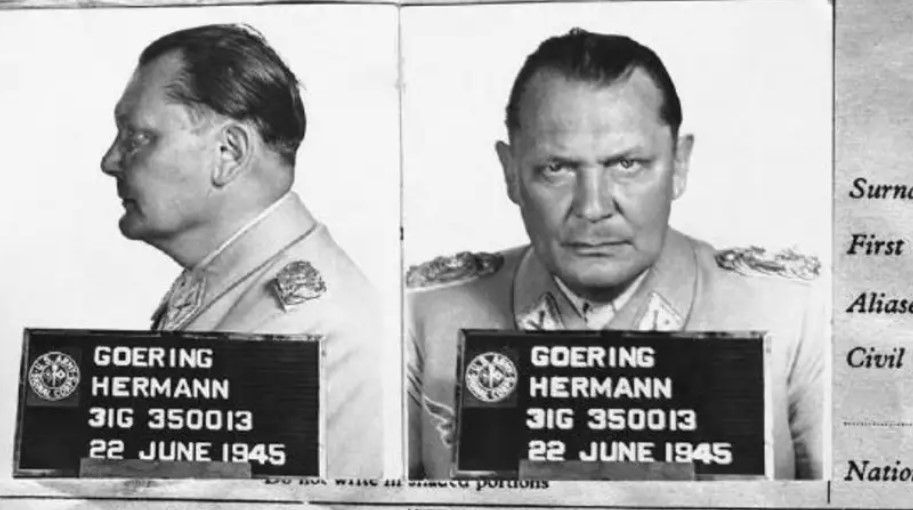
Many racists believe that racist politicians sincerely think that there are superior and inferior peoples, but in reality these politicians generally understand perfectly well that racism is nothing more than a way to gain political popularity by exploiting prejudice and the lack of education among the masses. For example, the Nazi leader Hermann Göring, when there was a possibility that his deputy Erhard Milch would be arrested on the basis of “racial inferiority” (Milch was half-Jewish), famously declared: «Here I decide who is a Jew»1617. That is, racism is not only a tool for justifying failed government policy and shifting public discontent onto national and racial minorities, it is also a tool for placing one’s own people in key positions. If a politician in a racist state has an unemployed relative, it is enough to look for someone in an important position who is insufficiently “correct” from a racial point of view (or to invent such a case — since racism is unscientific, it is easy to fabricate the desired result), and a position for the relative is found. It is characteristic that the leaders of racist movements themselves often fully understand that the ideas they promote are manipulative. For example, in 1925, traveling around German cities on a propaganda mission for the NSDAP, Goebbels wrote in his diary: «This evening by car to Hammertal. Once again to grind out nonsense»18.
The creation of a racist state (possible at a certain stage of the spread of racism in society) opens up new opportunities for the nomenklatura to enrich itself and strengthen its power. Thus, in a racist state, it is possible to label some undesirable opposition figure as a Jew, a Ukrainian, an Anglo-Saxon, and so on, and this will serve in the eyes of society as sufficient grounds for persecution. That is, racism is also a tool for establishing a dictatorship. In Nazi Germany, the nomenklatura also enriched itself through the “Jewish tax”, the “emigration tax”, the expropriation of Jewish property, and other similar measures19. For example, SS Obersturmbannführer Adolf Eichmann appropriated for personal use a villa belonging to the Jewish banker Aschner20. During Kristallnacht, when calls were made to smash the windows of Jewish shops, the homes of wealthy Jews were ordered to be left intact – they were later occupied by leaders of the Nazi Party21.
Politicians sometimes forget so much that racism, in addition to its practical function as a tool of power, also has an ideological dimension that the situation becomes absurd: for example, the Russian politician Vladimir Zhirinovsky was known for his racist statements about Jews (“Are you a Jew? Go to Israel!”22, “all bankers are Jews”23), however later facts came to light that his father was Jewish and his father’s surname was Eidelstein, and Zhirinovsky’s antisemitic rhetoric became softer and less frequent.
Racists create enemies for themselves
If a nationality or race places itself above others, distinguishes itself from others, declares its superiority or proclaims dominance as its goal, this sets and unites other nationalities and races against it. Moreover, if you oppress a nationality on the basis of nationality, you can be sure that it will also unite against you, and also on a national basis.
Peoples who do not claim to possess some kind of “national pride”, special achievements or merits are much more likely to receive support and assistance from other peoples when necessary. This is entirely natural – you do not like braggarts who try to show in every possible way that they are better than you, do you? People around the world do not like them either.
The Declaration on Race and Racial Prejudice states that racism “internally divides nations, creates obstacles to international cooperation and gives rise to political tensions between peoples; it is contrary to the fundamental principles of international law and, consequently, seriously disturbs international peace and security”24.
The government of the Russian Empire was racist – for example, the country had the Pale of Settlement25 for Jews, laws were issued on the forced expropriation of land from immigrants from Germany and Austria-Hungary26, the deportation of Circassians was carried out27 (sometimes later classified as genocide28), and so on. The policy toward Jews was especially repressive, as they often had to either emigrate from the country or join revolutionary organizations. One such Jew, Yakov Yurovsky, later became the direct supervisor of the execution of Nicholas II and his family29, and another, Leon Trotsky, was one of the leaders of the Russian revolutions. It turns out that by pursuing a racist policy, Emperor Alexander III dug a grave for his son Nicholas. The pogroms under Alexander III formed the basis of one of the scenes in director Don Bluth’s animated film “An American Tail”:
The fate of the imperial family did not serve as a lesson for Symon Petliura. During the Russian Civil War, the largest number of Jewish pogroms – 493 (40%) – were carried out by those who fought on his side30. Petliura’s story ended with the fact that in 1926 in France he was shot five times with a revolver by Sholem Schwarzbard, whose entire family (15 people) had been killed during Jewish pogroms in Ukraine in 1918-192031. A French jury fully acquitted Sholem Schwarzbard32. And this is one of the most important things that racists should remember: first, by creating hatred, they create hatred toward themselves (and possibly toward their loved ones), and second, an educated society will never justify their actions, and is more likely to justify their killer than them (because racism is dangerous and has no reasonable foundation).
May turn against the racist themselves
A racist is not used to putting themselves in the place of other people, but they can easily end up in that position. Because if you accept that racist insults are permissible, then you also accept that your race/nation and all its representatives can be called pigs, slaves, beasts, and be subjected to calls for their destruction.
Let’s conduct a simple test. So, the question is – are you against insults on racial and national grounds? If the answer is “no”, then you have just officially allowed calling representatives of your own nationality and race inferior animals, monkeys, subhumans, and so on. This is exactly how a person’s path to a concentration camp begins.
There is also a point of view that even if racists win, they will not stop at the destruction of people of other races. A logical continuation of this could be the destruction of people with a different eye color, or, for example, a different height.
It is amusing that if you tell a short-statured racist that all short people are very stupid, or tell a brown-eyed racist that all brown-eyed people are losers, in most cases you will see indignation and dissatisfaction as a reaction. But in this case the same logic is being used – division based on external characteristics and the assumption that people with these characteristics possess certain inherent traits.
Brain drain
Racism in a country contributes to talented people of other nationalities and races leaving for another country and ultimately working for the benefit of society abroad. Those who remain are oppressed and turn into a downtrodden, largely unproductive mass. According to the Declaration on Race and Racial Prejudice, racism “hinders the development of its victims and corrupts those who put it into practice”33.
This problem is most vividly illustrated by the situation with the atomic program of Nazi Germany. In 1933, Albert Einstein, one of the most brilliant physicists of his time, was forced to leave the country. Philipp Lenard, who led the “German Physics” group, proclaimed: “The most important example of the dangerous influence of Jewish circles on the study of nature is Einstein with his theories and his mathematical chatter, compiled from old information and arbitrary additions… We must understand that it is unworthy of a German to be a spiritual follower of a Jew”34. Max Born, Edward Teller, Leo Szilard, Hans Bethe, Emil Fuchs, and Felix Bloch also left the country. And when during the war the Nazis needed scientists to develop a nuclear program, it turned out that many valuable scientists had been rejected by them.
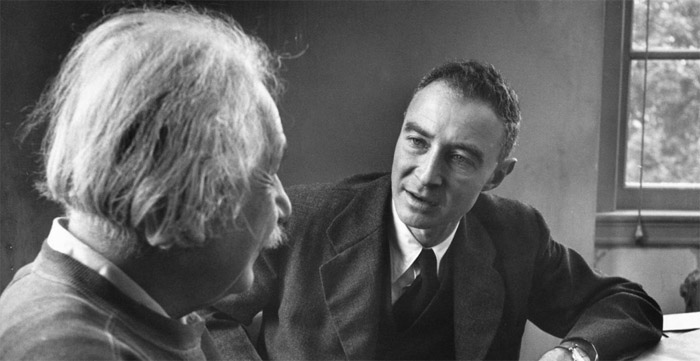
At the same time, in the United States, which was more tolerant toward people’s ethnic backgrounds, work began on the atomic bomb. The so-called Manhattan Project involved the already mentioned Edward Teller, Leo Szilard, Hans Bethe, Emil Fuchs, and Felix Bloch, Enrico Fermi (who fled fascist Italy – his wife was Jewish, and his children could therefore also be classified as Jews), the Jew Louis Slotin (his family fled Jewish pogroms from the Russian Empire), the Jew Robert Oppenheimer, the Dane Niels Bohr, the Polish Jew Stanislaw Ulam, the American of Greek origin Nicholas Metropolis, the American of Armenian origin Harry Daghlian, and others. The contribution of these scientists became one of the factors that ensured the United States a much faster and more successful effort on the nuclear project. The Reich Minister of Armaments of Germany, Albert Speer, admitted, when asked at the Nuremberg Trials about Germany’s atomic project: “Unfortunately, we have not yet achieved such success in this field, as all the best minds who were engaged in the study of atomic energy left for America. We are very far behind in this matter. It would have taken us another one or two years to split the atom”35.
And since the Soviet Union did not pursue an open policy of racism, Oppenheimer and Emil Fuchs were willing to pass on crucial data about the atomic project to Soviet agents. Niels Bohr, who sympathized with the Bolsheviks (at that time few understood the nature of the Stalinist conservative coup), also provided significant assistance to Soviet scientists, as noted by Pavel Sudoplatov, who headed the NKVD department responsible for gathering information on nuclear developments abroad:
Bohr answered questions about methods of obtaining uranium in the United States, both diffusion and mass-spectrographic, about the combination of these methods, and how higher productivity is achieved in the mass-spectrographic method. He reported that in the United States all reactors operate with graphite moderators, since the production of heavy water requires enormous amounts of electricity. Terletsky received answers to a number of fundamentally important questions, including about plutonium-240, about which there was not a word in Smith’s official report, which we received from Bohr and from the United States. The meeting, according to Kurchatov, was of great importance for verifying by our specialists the several hundred reports and works of Fermi, Szilard, Bethe, Oppenheimer, and other foreign scientists available to intelligence. As Kvasnikov recalls, 690 scientific materials were reviewed. According to John Hassard, a well-known British nuclear physicist from London’s Imperial College, Bohr orally provided the Russians with significant information about the design of the American atomic bomb. Jack Sarfatti, a theoretical physicist and a student of one of the creators of the atomic bomb, H. Bethe, also believes that Bohr’s answers contained important strategic information for the creation of nuclear weapons36.
It is for this reason that societies free from racism are bound to be more developed and more progressive. Those who support racism foster isolation, degradation, and backwardness in their country.
A Basis for the killing of innocent people
The idea that one nationality or race is superior to another logically gives rise to the тезис: «if we are so superior, why do we need these subhumans who will hinder our development?». Accordingly, any offense committed by a person of another nationality or race will reinforce the racist’s belief that the cause of the offense is the offender’s nationality or race.
Over time, if racism is widespread in a society, racist stereotypes grow like a snowball, which can lead, on the part of the state, to genocide or ethnic cleansing, and on the part of the masses, to ethnic pogroms or racially motivated crimes. In all these cases, the killing of innocent people is inevitable.

Racists may think: “well, I am Russian. What do I care if some non-Russians are being killed?” However, those who think this have a poor understanding of what a pogrom is. When it happens, no one will check your passport or your surname. For a pogrom participant, it is enough that you, in their opinion, resemble a representative of some “wrong” nationality to kill you and your children. And when genocide occurs, if a racist official likes your wife or your house, they will be able to find either Jewish or Cambodian roots in you. Because they decide who is a Jew. And then it will be too late to say that pure races do not exist.
In a society where there is no compassion for innocent people, there will be no compassion for you and your loved ones in a difficult moment.

Cultivation of inequality
Racism makes inequality legitimate. If we are comfortable with the idea that some nationality should be worse than ours and that this is normal, then we will also be more willing to accept that our profession (teacher, driver, worker, etc.) should be worse than that of an FSO employee, a slot machine owner, and so on, and that this is normal. Some may say that, for example, a production manager should earn more than a worker – that may be true, and we have even written an article arguing that fair inequality is better than unfair equality. But it is completely abnormal when that worker believes that they are inferior to the production manager and therefore should not strive for equality with them. They stop fighting for their rights, become passive and inert, and this leads to the impoverishment of society as a whole and hinders efforts to reduce social inequality – after all, why would that be necessary if inequality is considered the norm? We have already examined the problem of inequality (and the consequences it may lead to) in our article with a critique of the free market. In addition, racism serves as a means of keeping low-status groups within certain social boundaries and using middle-status groups as unpaid soldiers of the policing system of a conservative state.
Creates a false notion of an “effective government”
Racist ideology logically leads to the thesis that the most effective government will be one composed of people of the “correct” nationality or race (rather than one composed of the most competent individuals). However, first, as we have already noted above, “correctness” will be determined by the racist politicians themselves. Second, such a principle of forming a government has little to do with effectiveness.
The most developed societies of the modern era – the United States and the European Union – as of 2020 pursue anti-racist policies. There is also the historical example of forming a government based on a single nationality – Nazi Germany. The result of that government’s rule was the destruction of the country, the irreversible loss of many cultural monuments and millions of human lives, and for many years to come its citizens will be reminded of Hitler. As for the postwar period, when policies combating racism and Nazism were implemented, it was precisely during this time that the so-called “German economic miracle” occurred37.

Russia has had a similar experience. At the beginning of the 20th century and in the late 1980s, the percentage of Russians in the government was probably among the highest in history (it is difficult to calculate precisely, since we explained above that racism is not a science), yet this did not save the country from economic problems and collapse. The percentage of Russians in the government remains very high today.
Creates hatred toward one’s own nationality or race
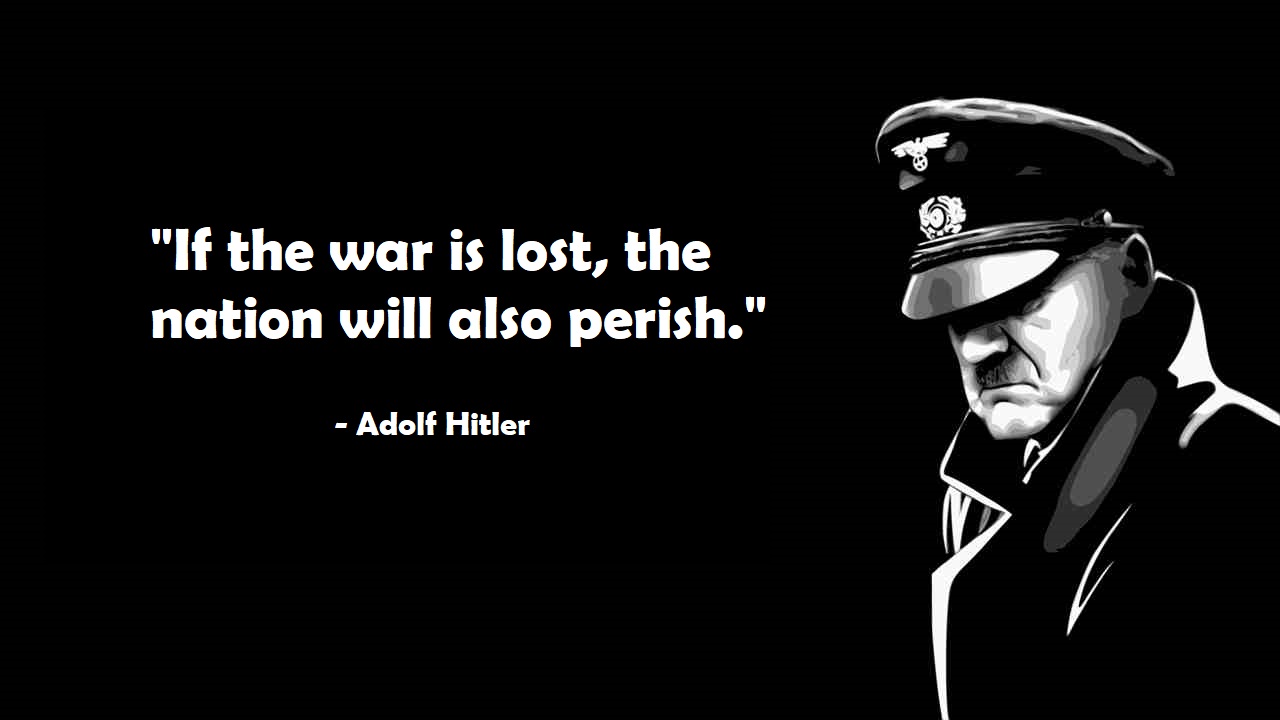
Many mistakenly believe that a person who thinks in national terms will always be loyal to their nation or race. But in practice, this does not help one work better for the benefit of society (what helps is a scientific organization of work), while in the case of failures (which are inevitable due to the narrow-mindedness of racists), the racist blames not themselves, but the nation. And all the force of their racism turns against “their own”. For example, at the end of the Second World War, the Nazis believed that the German people were to blame for Germany’s defeat – at a meeting with Gauleiters in August 1944, Hitler said: «If the German people are defeated in this struggle, then it will mean that they are too weak to withstand the test of history and must perish»38. However, by abandoning racism, the German people not only did not perish, but flourished again.
Earlier, in 1925, Goebbels, during political setbacks, wrote in his diary: «The German people can hardly count on salvation. They smear with mud the leaders given to them by fate or condemn them to starvation. For whom do I sacrifice? For this humanity? For these petty souls? I must obey only inner necessity… A disgusting people, the Germans»39.
This is characteristic not only of Nazis in Hitler’s era. For example, many Russian right-liberals with nationalist views, during political failures, conclude that Russians are “cattle”, “Sharikovs” (we examined this in detail in this article). Thus, racism tends to turn into hatred toward one’s own nationality, and toward oneself.
Supports racism of other races and nationalities
One of the reasons racism is harmful is that it spreads to other races, nationalities, and cultures, creating hostility toward “outsiders” within them. You may not pay attention to a racist remark made on the street, but a person of another nationality who hears it may “pick it up” and begin thinking in the same way, spreading this mindset to their acquaintances. And who knows, perhaps this will create racists who later attack your loved ones or relatives. Therefore, the demand to condemn racist statements is driven прежде всего by safety considerations.
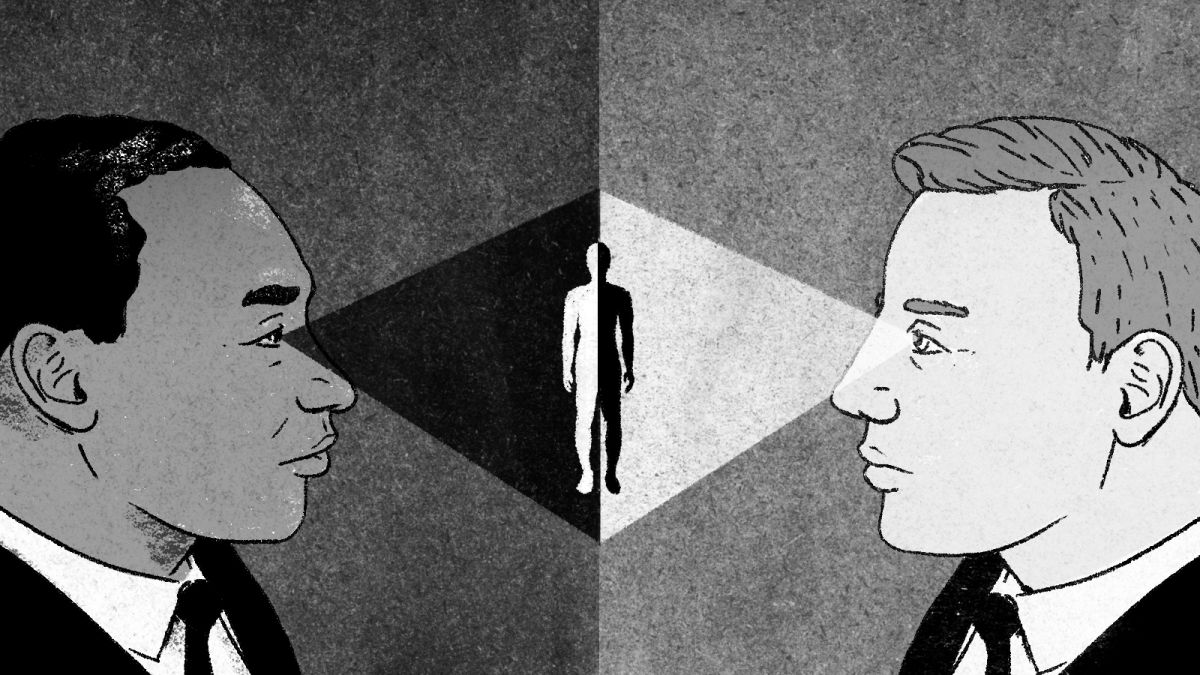
By suppressing our own racism, we thereby help suppress racism of others toward us.
Cultivates ignorance
According to research by Professor of Psychology Gordon Hodson of Brock University in Ontario, adults with lower intelligence tend to gravitate toward conservative ideologies, including racism, and low intelligence in childhood is also associated with racism in adulthood40. However, a study by Geoffrey Wodtke of the University of Chicago does not find a direct correlation between intelligence and a tendency toward racism; it shows that intelligent people can also be racists41. Nevertheless, racists generally do not want to acknowledge the scientific findings presented at the beginning of this article, sometimes not even wanting to study them, and such an attitude cultivates in society a rejection of objective experience and science, contributing to intellectual degradation.
Racists seek simple explanations for complex phenomena. For example, if a country is in decline, investigating and determining the true causes is quite difficult. But saying that, for instance, Jews or illegal migrants are to blame is very easy (we examined such an example here, refuting the myth that an increase in the number of migrants leads to an increase in crime – all studies refute this myth, but racists prefer to believe populist politicians because it is more accessible to their level of understanding). By adopting such “explanations”, racists make scientific research, which could help solve the problem, unnecessary in society. The fewer people rely on simplified solutions instead of examining issues from the perspective of scientific research, the more progressive, and therefore more prosperous, society as a whole will be.
Creates problems in everyday communication
A racist may be speaking with other people and casually drop one of their racist stereotypes into conversation. And the person they are speaking with may have relatives, a partner, or other close people of the “wrong” nationality. There is a high probability that this will either lead to a conflict, or the interlocutor will simply start treating the racist as an ignorant “thug”. This creates problems in everyday life primarily for the racist themselves. Is it worth creating problems for yourself because of a fabricated ideology that is used by political demagogues for their own selfish purposes?
Reverse racism
Even if a member of an oppressed ethnic group exhibits racism, it is still racism. If they say “whites oppress black people” instead of “racists oppress black people” — that is a racist statement. And, for example, the statement by British writer Karla Marie Sweet that there were no people of color in the series “Chernobyl” and that they should have been included in the cast42 is racist. The very fact that she draws attention to the skin color of actors in a film (moreover speaking about a separate race — and what about, in that case, all other races and nationalities?) shows that she is a racist. And such racism, disguised as a fight against racism, is just as dangerous as overt racism, because it discredits the entire movement. Reverse racism is a “fifth column” within the anti-fascist movement.
Progressive social democrats fight not only against the racism we are all used to seeing, but also against racism from members of historically oppressed groups.
We also consider it important to note here — what is often considered manifestations of antisemitism, Russophobia, Anglophobia, and so on is in fact racism (if the speaker expresses hostility toward other nationalities/races as well — we discussed this in the article on Russophobia). All of this is racism. When instead of the term “racism” a word is used that refers only to hostility toward a single nation, in most cases this is due to racist opportunism, which demands special treatment for one nationality/race, and therefore such actions constitute reverse racism. Even if only one nationality is oppressed, it is still racism that must be fought, rather than using terms without sufficient justification that forbid a racist from hating only one nationality or race (this would merely push them to redirect their hatred toward another).
Misconceptions of racists
Racists often consider their prejudices and stereotypes harmless. For example, many of them say: “What do genocide or pogroms have to do with it? I am against that, I just believe people are different!”
If you simply believe that people are different — that is not racism. But if you believe that nationality or race determines behavior, or obliges people toward certain actions — that is racism. By supporting it, you are supporting the rhetoric and phraseology of racist movements. In other words, you are helping these movements grow and strengthen, acting as a carrier of their ideology. These movements, of course, also oppose genocide and pogroms until they reach their peak of power (coming to power). Goebbels wrote: «If, before taking power, we had shown in detail everything we would do after coming to power, we would never have reached it»43. Racist politicians cannot openly state their true goals, so they resort to moderate racism instead, which is then supported by those who believe there is nothing wrong with it.
Now you may not take the problem of racism seriously, but before the Second World War people thought in a similar way and paid a very high price for it. For example, the concentration camp prisoner of the Third Reich Simon Wiesenthal recalled:
We underestimated Hitler, initially taking him for a ridiculous and insecure undereducated man… The world did not take Hitler seriously, the world told jokes about him. We were so in love with the progress of our century, with the humanity of society, with the growing harmony in the world, that we failed to recognize the danger in time. Our generation paid dearly for its optimism…44
You will not notice how the slogans «we are simply for the fact that people are different» change into «we are simply cautious toward other nationalities», and then into «we simply do not like (hate) other nationalities». Such things always happen unnoticed. If you support racism, you are helping to strengthen its political movements.
«So I should approve of Russians being slaughtered?» If Russians are being killed because of their nationality, that is precisely racism, which we are fighting against. If they are being killed for another reason, then that is crime, which we also fight against. You should not approve of it. And in any case, it is not a reason to approve of racism.
«So I should approve of them blowing up buses, dancing lezginka in the street, or firing automatic weapons into the air?» It is religious extremists who blow up buses. Social democrats fight against extremism and religious fundamentalism. Shooting into the air with automatic weapons is done by savages who feel their impunity (every nation has its idiots) – this phenomenon should also be fought. They have little in common with many decent people of the same nationality. As for dancing lezginka, we see nothing wrong with it. On the contrary, if you see people dancing lezginka – join them: you will most likely have a good time.
«Do you want Jews to rule us?» Social democrats strive for full-fledged democracy and the expansion of democratic institutions. That is, a system in which any person, regardless of nationality, has the opportunity to effectively influence their destiny in their own interests. We do not make distinctions between nationalities in political or everyday life – this article explains why. The question «do you want Jews to rule» sounds just as absurd to us as «do you want blondes to rule us?».
We will also examine other racist stereotypes in the future.
Conclusion
For social democrats, it would be easiest to support racism, thereby gaining easy approval from conservative-minded masses and the ability to use populist slogans. However, we cannot do this due to the clearly counterproductive nature of racism. Therefore, the fight against it is driven, among other things, by purely practical goals.
Racism is one of the mechanisms that serve to restrain progressive values: equal opportunities, equality before the law, and so on. Progressive social democrats therefore consistently oppose all its manifestations.
- V.S. Malakhov. Racism // Great Russian Encyclopedia. Volume 28. Moscow, 2015, p. 224. [Electronic resource]. URL: https://bigenc.ru/ethnology/text/3493858 (accessed: 24.02.2021).
- Racism // Deutsche Welle (www.dw.com). [Electronic resource]. URL: https://www.dw.com/ru/что-такое-расизм/t-53780543 (accessed: 24.02.2021).
- Racism. Overview // Holocaust Encyclopedia (encyclopedia.ushmm.org). [Electronic resource]. URL: https://encyclopedia.ushmm.org/content/ru/article/nazi-racism-an-overview (accessed: 24.02.2021).
- Audrey Smedley. Racism // Encyclopaedia Britannica (www.britannica.com). [Electronic resource]. URL: https://www.britannica.com/topic/racism (accessed: 24.02.2021).
- racism // Merriam-Webster Dictionary: America’s most-trusted online dictionary (www.merriam-webster.com). [Electronic resource]. URL: https://www.merriam-webster.com/dictionary/racism (accessed: 24.02.2021).
- S.V. Drobyshevsky. Pure races have never existed in nature // Antropogenez.ru (antropogenez.ru). [Electronic resource]. URL: http://antropogenez.ru/interview/708/ (accessed: 31.01.2020).
- I.V. Komadorova. Ethnocultural dynamics in the modern world: main problems and approaches to solutions – 254 p. – Moscow: Academia, 2004. – p. 68
- V.A. Shnirelman. “Threshold of tolerance”: Ideology and practice of the new racism. Volume I. – 552 p. – Moscow: Novoe literaturnoe obozrenie, 2011. – p. 92-103.
- Alexey Timoshenko. “Bureaucratic races do not exist, but scientific races have not disappeared”. Interview with Oleg Balanovsky about whether the concept of race has any scientific content // TASS (tass.ru). March 21, 2018, 09:30. [Electronic resource]. URL: https://tass.ru/sci/6820428 (accessed: 31.01.2020).
- E.M. Rzhevskaya. Goebbels. Portrait against the background of a diary. – 400 p. – Moscow: AST-PRESS KNIGA, 2004. – p. 202-203.
- Genetics vs. Genomics Fact Sheet // National Human Genome Research Institute (www.genome.gov). [Electronic resource]. URL: https://www.genome.gov/about-genomics/fact-sheets/Genetics-vs-Genomics (accessed: 31.01.2020).
- L. Zhivotovsky. We are not only different, but also surprisingly similar // Science and Life (www.nkj.ru). No. 4, 2006. [Electronic resource]. URL: https://www.nkj.ru/archive/articles/5289/ (accessed: 31.01.2020).
- Declaration on Race and Racial Prejudice // United Nations (www.un.org). Resolution 3/1.1/2 of the General Conference of UNESCO, November 27, 1978. [Electronic resource]. URL: https://www.un.org/ru/documents/decl_conv/declarations/racism.shtml (accessed: 02.02.2020).
- Ibid.
- V.A. Shnirelman. “Threshold of tolerance”: Ideology and practice of the new racism. Volume I. – 552 p. – Moscow: Novoe literaturnoe obozrenie, 2011. – p. 102-103.
- F. Kersody. Hermann Göring: The Second Man of the Third Reich. – 832 p. – Moscow: Eterna, 2014
- K. Dushenko. World History in Aphorisms and Quotations. – Moscow: Eksmo, 2008
- E.M. Rzhevskaya. Goebbels. Portrait against the background of a diary. – 400 p. – Moscow: AST-PRESS KNIGA, 2004. – p. 44.
- The Wages of Destruction: The Making and Breaking of the Nazi Economy / Tooze, A., trans. from English by N. Edelman; scientific ed. by A. Kosmarsky. – Moscow: Gaidar Institute Publishing House, 2019
- Auschwitz: The Nazis and the “Final Solution” / L. Rees — “Azbuka-Atticus”, 2005
- E.M. Rzhevskaya. Goebbels. A Portrait Against the Background of His Diary. – 400 p. – Moscow: AST-PRESS KNIGA, 2004. – pp. 201.
- I am RUSSIAN, and you go to Israel! Zhirinovsky DESTROYED Khinshtein! // YouTube (www.youtube.com). September 13, 2018. [Electronic resource]. URL: https://www.youtube.com/watch?v=DU6cPUIReWQ (accessed: 31.01.2020).
- There are Jews everywhere. Zhirinovsky // YouTube (www.youtube.com). December 26, 2010. [Electronic resource]. URL: https://www.youtube.com/watch?v=H6eZd1x3M0g (accessed: 31.01.2020).
- Declaration on Race and Racial Prejudice // United Nations (www.un.org). Resolution 3/1.1/2 of the General Conference of UNESCO of November 27, 1978. [Electronic resource]. URL: https://www.un.org/ru/documents/decl_conv/declarations/racism.shtml (accessed: 02.02.2020).
- A.K. Mordovin-Zalessky. Pale of Settlement // Great Russian Encyclopedia (bigenc.ru). [Electronic resource]. URL: https://bigenc.ru/domestic_history/text/4683900 (accessed: 31.01.2020).
- S.S. Oldenburg. The Reign of Emperor Nicholas II. Volume II. – 260 p. – Munich: Society for the Dissemination of Russian National and Patriotic Literature, 1949. – p. 161.
- Problems of the Caucasian War and the Deportation of Circassians to the Ottoman Empire (1820s–1870s). Collection of archival documents. / Compilation, editing and commentary by T.Kh. Kumykov. Nalchik: Elbrus, 2001
- Georgia recognized the genocide of Circassians in Tsarist Russia // Lenta.ru (lenta.ru). May 20, 2011, 23:17. [Electronic resource]. URL: https://lenta.ru/news/2011/05/20/cherkesy/ (accessed: 31.01.2020).
- Senior prosecutor-criminalist of the Main Investigative Directorate of the Prosecutor General’s Office of the Russian Federation, Senior Counselor of Justice V.N. Solovyov. Resolution on the termination of criminal case No. 18/123666-93 “On clarifying the circumstances of the death of members of the Russian imperial family and persons from their entourage in the period 1918-1919”, paragraphs 5-6 // The Tsar’s family: last days, execution, discovery of remains (www.nik2.ru). July 17, 1998. [Electronic resource]. URL: http://www.nik2.ru/documents.htm?id=267 (accessed: 02.02.2020).
- G.V. Kostyrchenko. Stalin’s Secret Policy: Power and Antisemitism. 2nd ed., expanded. – 784 p. – Moscow: International Relations, 2003. – p. 56.
- N.M. Golushko. In the Intelligence Services of Three States. – 896 p. – Moscow: Editorial Office “Historical Newspaper”, 2009. – p. 143.
- Johnson, Kelly. 2012. Sholem Schwarzbard: Biography of a Jewish Assassin. Doctoral dissertation, Harvard University (harvard.edu). [Electronic resource]. URL: https://dash.harvard.edu/bitstream/handle/1/9830349/Johnson_gsas.harvard_0084L_10644.pdf (accessed: 01.02.2020).
- Declaration on Race and Racial Prejudice // United Nations (www.un.org). Resolution 3/1.1/2 of the General Conference of UNESCO of November 27, 1978. [Electronic resource]. URL: https://www.un.org/ru/documents/decl_conv/declarations/racism.shtml (accessed: 02.02.2020).
- Frank P. Einstein. His Life and Times. — New York: Alfred A. Knopf, 1947. — p. 232.
- K.P. Gorshenin. The Nuremberg Trial: Collection of Materials. Volume II. – 1155 p. – Moscow: State Publishing House of Legal Literature, 1955. – p. 322
- Pavel Sudoplatov. Intelligence and the Kremlin. Notes of an Unwanted Witness. – 507 p. – Moscow: TOO “Geya”, 1996. – p. 245.
- S.I. Nevsky. “German economic miracle” // Great Russian Encyclopedia (bigenc.ru). [Electronic resource]. URL: https://bigenc.ru/text/5461982 (accessed: 02.02.2020).
- H. Trevor-Roper. The Last Days of Hitler. The Secret of the Death of the Leader of the Third Reich. 1945 – “Tsentrpoligraf”, 1995
- E.M. Rzhevskaya. Goebbels. A Portrait Against the Background of a Diary. – 400 p. – Moscow: AST-PRESS KNIGA, 2004. – p. 40.
- Stephanie Pappas. Low IQ & Conservative Beliefs Linked to Prejudice // Live Science (www.livescience.com). January 26, 2012. [Electronic resource]. URL: https://www.livescience.com/18132-intelligence-social-conservatism-racism.html (accessed: 01.02.2020).
- Geoffrey T. Wodtke. Are Smart People Less Racist? Verbal Ability, Anti-Black Prejudice, and the Principle-Policy Paradox // Oxford Academic (academic.oup.com). January 8, 2016. [Electronic resource]. URL: https://academic.oup.com/socpro/article/63/1/21/1846173 (accessed: 01.02.2020).
- Karla Marie Sweet. I was attacked for calling for characters of colour in Chernobyl. But history proves me right // The Guardian (www.theguardian.com). August 7, 2019. [Electronic resource]. URL: https://www.theguardian.com/tv-and-radio/2019/aug/07/i-was-attacked-for-calling-for-characters-of-colour-in-chernobyl-but-history-proves-me-right (accessed: 01.02.2020).
- E.M. Rzhevskaya. Goebbels. A Portrait Against the Background of a Diary. – 400 p. – Moscow: AST-PRESS KNIGA, 2004. – p. 305.
- Феликс Кандель, Марк Кипнис – Книга времен и событий: История евреев Советского Союза. 5. Уничтожение еврейского населения (1941-1945). – Мосты культуры, 2006 – с. 17