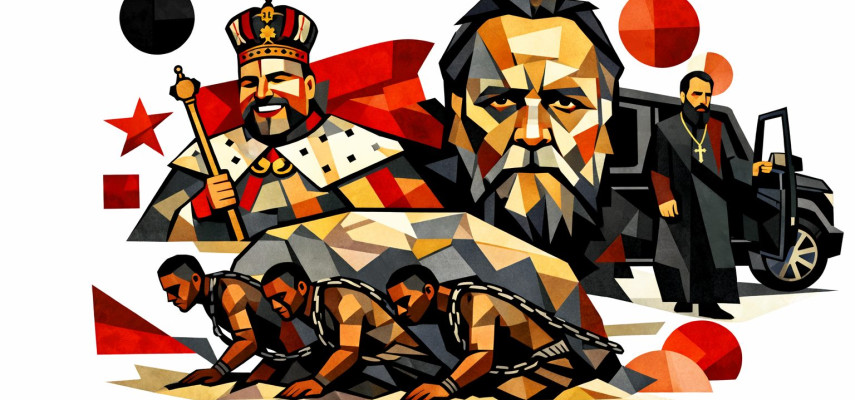
Who are conservatives
In its articles, "Logic of Progress" offers a critique of conservatism; however, this critique cannot be fully understood without defining and understanding the essence of this phenomenon. In this article, we will attempt not only to provide a definition, but also to describe the system of values underlying the ideology of conservatism.
The concept of conservatism still does not have clear boundaries, as noted by Pyotr Struve, who argued that “conservatism is a purely formal concept that can encompass any content whatsoever”1. The absence of such boundaries is also emphasized in the textbook “Fundamentals of Social Democracy”:
Historically, conservatives — as their very name suggests — have mainly been oriented toward the existing reality and its preservation. Therefore, it is hardly possible to single out a distinct, coherent historical idea among them. Conservatives have always existed, whereas it is difficult to speak of a coherent concept of conservatism.
During the French Revolution and the Restoration period in the first third of the 19th century, conservatives defended estate privileges and the interests of the nobility. During the formation of the German Empire, they supported the small German states, later advocated preserving the empire, and during the Weimar Republic mostly supported the restoration of the empire and opposed democracy. In the 1980s, conservative forces sought support rather in the sphere of the classical values of neoliberals, while opposing the reforms of the 1970s2.
Nevertheless, the existence of a significant number of conservative parties and politicians compels us to provide a definition of this concept, based on a synthesis of definitions and their correlation with the practice of conservative movements, ideologies, and parties, as well as on identifying the values that unite them to one degree or another. Of course, in more developed countries, conservatives may even be more progressive than progressive forces in some particularly conservative societies. For example, some of what is written below cannot be attributed to, for instance, the Conservative Party of the United Kingdom, which (already) supports a democratic system. At the same time, it should be remembered that conservatives are not limited to the Conservative Party of the United Kingdom or some moderate conservative movements — this is a broad concept that includes both the most radical traditionalists and liberal conservatives.
Contents
- What is conservatism
- Genesis in brief
- Inequality
- Spiritual values
- Nationalism, racism, patriotism
- Life and power of the state
- Militarism
- Loyalty instead of professionalism
- Return to the origins
- Strong authority
- Solving problems by decrees
- Religion
- Increasing birth rates
- Imposition of Sexual Standards
- Gender Roles
- “Dissent Is Treason”
- Conspiracy Thinking
- Demagoguery and Lies
- Why Conservative Values Are a Deception and Hypocrisy
- The Conservative Front
- Conclusion
What is conservatism
According to the Great Russian Encyclopedia, the term “conservatism” derives from the Latin word “conservo”, meaning “to preserve”, “to protect”, and denotes a mindset and life position characterized by adherence to tradition — social, moral, religious — and the associated distrust of any radical innovations3. Let us add that the word “radical” here refers to those innovations that threaten the conservative orders mentioned above. One definition of conservatism in Efremova’s dictionary is “adherence to the old, established, and well-proven”4. According to Dictionary.com, it is the principles and practices of political conservatives, as well as “a disposition to preserve or restore what is established in society (including traditions) and to limit change”5. Encyclopaedia Britannica considers conservatism to be a political doctrine emphasizing the value of traditional institutions and practices6. The encyclopedia’s authors also note that conservatism should be distinguished from reactionary ideology, which advocates restoring a previous and usually outdated political or social order. Conservatives of the 1980s, such as Margaret Thatcher and Ronald Reagan, expanded this concept when they sought to return to a policy of laissez-faire that had previously dominated. Meanwhile, for example, the modern Russian conservative Alexander Dugin states that “we need to build a new Middle Ages, modernity has exhausted its agenda”7, that is, he declares the need to return to the Middle Ages.
Thus, we can say that conservatism is an ideology aimed at preserving existing orders or restoring past ones. For many conservatives, the ideal is a return to the orders established before the French Revolution (inequality, strong religious influence, anti-democratic power, and militarism). Most sources also indicate that conservatism implies adherence to traditional values. Next, we will attempt to formulate them.
Genesis in brief
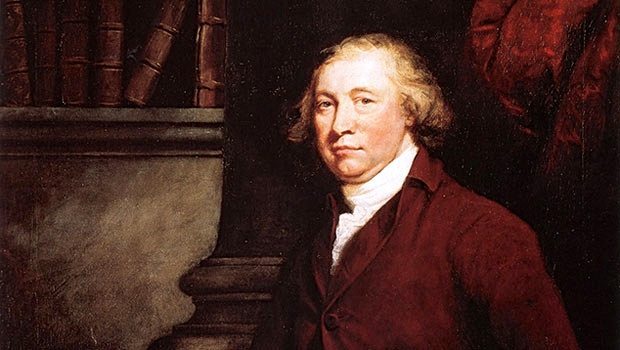
Conservatism emerged as a reaction to the aforementioned French Revolution of 1789, when the English elites feared that society might likewise rise up against them. In 1790, the treatise “Reflections on the Revolution in France” by the English parliamentarian Edmund Burke was published; later, the ideas of conservatism were developed by Joseph de Maistre, Klemens von Metternich, Louis de Bonald, and others. All of them came from noble or clerical families, which generally fits the view of conservatism as an ideology defending the interests of elites and their informational support against the interests of society. This does not mean that conservatism did not exist before 1789 — it existed almost whenever it was advantageous for someone to preserve the existing state of affairs in society. However, after the French Revolution, conservatives required more convincing grounds for this than before, which is why they began deliberate ideological work.
By a constitutional policy, working after the pattern of nature, we receive, we hold, we transmit our government and our privileges… By a slow but well-sustained progress, we have not lost the spirit of our forefathers. We have not been converted by Rousseau; we are not the disciples of Voltaire; Helvétius has made no progress amongst us. Atheists are not our preachers; madmen are not our lawgivers. We know that we have made no discoveries; and we think that no discoveries are to be made in morality…8
Opposing conservatives are movements whose representatives are increasingly called progressives, sometimes democrats, reformists, social democrats, liberals — in general, these are movements advocating progress and change; we examined progressive values in a separate article. It is the view of fundamental values that distinguishes conservatives from progressives — in most respects, their positions diverge. Since the planned economy has failed, and the free market also has a large number of serious problems, as we discussed in separate articles, Marxists and right-wing liberals have effectively dropped out of the list of relevant opponents of conservatives due to their limited effectiveness. The only real opponents remaining are social democrats, which is what we observe in the most advanced societies — for example, in the United States, where the conservative Republican Party opposes the Democratic Party, which is close to social democrats and is part of the Progressive Alliance. In Europe, conservative right-wing parties (the National Front in France, “Forza Italia”, and others) oppose social democrats (the Socialist Party in France, the Democratic Party in Italy, and others). In Russia, however, there are mainly only conservative parties, and as of the early 2020s, an adequate progressive and social-democratic opposition has not yet formed.
In Russia, the conservative movement is represented primarily by the political party “United Russia”, whose official ideology is “Russian conservatism”9, and whose leader Vladimir Putin has stated that the party was originally conceived as a conservative one10. Therefore, in this material we will often quote the leader of “United Russia”; however, this does not mean that he alone is the bearer of the ideology of conservatism — in large part, this is due to the fact that by the early 2020s, virtually the entire political field of the country is permeated by conservatism.
Where does conservative ideology come from? Initially, an uneducated person tends to be wary of everything new, everything unfamiliar and unusual. Sometimes they fear it, sometimes they hate it, depending on which reaction they most often observe among the people around them. They are reluctant to study new things (because this requires time and effort), to learn, to acknowledge their mistakes and the falsity of their own empirical conclusions, and therefore they invent justifications to avoid doing so. This is especially common among individuals with lower levels of intellectual development — because a person of limited intellect fears, for example, that they might read something incorrect and believe it, being unable to critically comprehend it, or that it might turn out to be true and they would have to abandon their previous beliefs. An example of such behavior is when a believer is afraid to read and attempt to understand an atheistic text; although, if their position is truly correct, what is there to fear, since they could justify to themselves why the text is wrong? However, such a believer fears that the text may contain the truth, that they will agree with it without being able to argue against it, and will then appear foolish for abandoning their previous beliefs (not realizing that they appear foolish precisely when defending false claims).
Conservatives take advantage of this, and on the basis of these fears cultivate nationalism, racism, religion, a “return to the roots”, justification of inequality, hostility to reforms and revolutions, and so on. After all, if a person fears everything new and unfamiliar, it becomes much easier for conservative elites to preserve their wealth and privileges. Progressives, by contrast, encourage people to acquire new knowledge, abilities, and benefits through gaining and evaluating experience.
A vivid example is the attitude toward racism. Initially, a human being, like an animal, perceives a threat in individuals who are different from themselves. Conservatives play on this animal instinct and speak about “cunning Jews”, “stupid Blacks”, “greedy Americans”, “gay Europeans”, and so on. This is accessible to people with a low level of intellectual development. In order to understand how racism harms the growth of the well-being of the majority of citizens, a scientific approach and the study of a large amount of data and sources are required — but this is much more difficult.
What is included in the list of conservative (or traditional) values? There is no clearly defined list, so here we will attempt to formulate it ourselves. Let us proceed to consider the values to which conservatives pay the greatest attention in their works and speeches; however, we should immediately note that all of them, in one way or another, are subordinated to a single goal — the protection of high inequality and, consequently, of elites, which from the perspective of society means that these values justify its exploitation. Most of these values are based either on the protection of elite interests or on “tradition” and the rejection of everything new and unfamiliar, which ultimately also serves the elites of society — these two fundamental factors unite them, make them conservative, and form the core of their divergence from progressive values. Some of them were also mentioned in Umberto Eco’s list of the “14 features of fascism”. It is also important to note that a conservative is not necessarily someone who shares all of the values listed below — it is sufficient to share a significant portion of them or to consider any one of these values as a primary priority.
Inequality
The key and fundamental principle of any conservative theory is the defense of various forms of inequality and unequal rights. This, in fact, reveals the goal of conservatives — only by preserving as many forms of inequality as possible can one rise above others, most often at their expense. Any inequality is justified — social, racial, national, gender-based. For example, Vladimir Putin in December 2018 justified high inequality in Russia by stating that it “exists in any large economy”11, and shifted the discussion to the United States. Today, the divergence between progressive forces and conservative ones lies in different understandings of social justice. From the perspective of the former, social justice is impossible under high income inequality (we examined this issue in great detail in this article), whereas from the perspective of the latter, it is possible. Conservatives may also support various privileges, that is, inequality in rights, while progressives advocate equality.
It is known that one of the principles of the Roman Senate was “divide et impera” — “divide and rule”12, according to which the best method of governing a state is to incite hostility between parts of society, which allows those parts to pay less attention to resisting the elites. This is why conservatives support inequality among different social groups.
Spiritual values
We have written that one of the most important progressive values is the standard of living. Conservatives also verbally support improving the standard of living, but at the same time, what is most important to them is still “spiritual values”, about the importance of which they constantly speak (while they almost never speak about the standard of living), rather than material ones. Conservatives glorify “modesty”, “non-acquisitiveness”, and “asceticism”, masking ordinary poverty with these elevated terms, and they criticize the “consumer society”, yet when in power, they themselves are anything but “ascetic”. The “benefit” of poverty is left to the society they exploit. An example of such reasoning:
Today it seems ridiculous and unbelievable — to sell a country for trousers intended for dirty work, for chewing gum with harmful sweeteners, and for sausage with GMOs13.
Conservative propagandists here attempt to substitute the abstract notion of “the country” for the plainly corrupt nomenklatura and the inefficient planned economy, which any reasonable person would, of course, exchange for food and clothing – because these are among their basic needs, whereas a private jet for a regional party secretary is not among them.
Conservatives try to make society abandon important goods and conveniences, leaving it deprived by shaming it for “material values”, for “jeans and chewing gum”, and so on, after which they replace them with “spirituality”. Typically, people are encouraged to endure hardship for the sake of “the greatness of the country”, for increased military spending (the well-known “guns instead of butter” of Rudolf Hess), and other principles that benefit the nomenklatura and big business, or for unrealistic promises of improvements in the future.
“You are right, Russia’s strength lies, above all, in spirituality”, Putin addressed Abbot Vasily, who in his welcoming speech noted that “the main difference between Russia and other world powers is that it possesses not only material wealth, but also spiritual wealth”14.
Nationalism, racism, patriotism
The most genuine and effective nationalist is me15.
In an attempt to divert attention away from the country’s elites, conservatives shift the “fire” onto other countries. If, for example, a government mismanages a country and drives society into poverty, conservatives will blame “America”, “Europe”, or someone else (sometimes using the dependency theory). Therefore, nationalism and patriotism are very often important tools of conservatives.
Sometimes a “scapegoat” is sought within the country itself, and here “purity of blood”, racism, antisemitism, or something similar come into play. These allow blaming migrants, Jews, national minorities, democrats — anyone — so long as it diverts attention from the elites (for example, inventing the myth that increasing migration leads to rising crime). We have discussed in detail why racism is harmful here, and there is also a separate article on the harms of patriotism.
Life and power of the state
If for a progressive one of the most important values is human life and health, a conservative is oriented toward the life and power of the state, that is, the nomenklatura. And when a progressive cites as positive examples countries where the average citizen is better provided for, a conservative names as positive models kings and tsars under whom the state expanded its territories. For example, Alexander Prokhanov’s “five Stalins” – the conservative calls as the “Russian dream” the tsars under whom “an empire is created”16. At the same time, Prokhanov himself is not content with spirituality alone and successfully seeks material means — for example, having received $300,000 from Boris Berezovsky17.
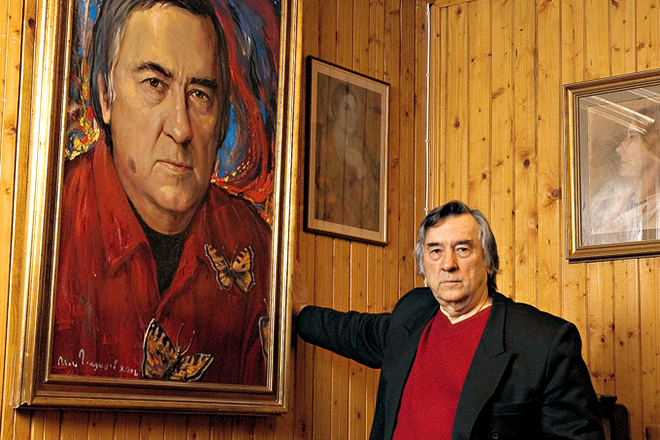
In political terms, the highest stage of development of conservative views is a стремление toward authoritarianism, and many conservatives (such as Vladimir Putin, Recep Tayyip Erdoğan, or Viktor Orbán) are leading their countries in this direction. In democratic societies, conservatives are forced to mimic democrats, however one should not be deceived by this – one should always remain vigilant and resist their attempts to covertly introduce authoritarian institutions.
Militarism
In contrast to the pacifism of progressives, conservatives deliberately escalate the military atmosphere in the country, frequently discussing and glorifying war, as well as widely publicizing and exaggerating the dangers of military invasion, even if such dangers are minimal. Conservatives expand the army and military production in order, first, to present this as their achievements (although for the rest of society the increase of the army brings at most minor aesthetic benefit, but very little practical value), second, to recruit supporters among military circles, and third, to threaten the rest of the world if it attempts to stand up for citizens in a country governed by conservatives.
Interestingly, conservative societies of comparable strength have most often suffered defeat in confrontation with more progressive and democratic ones, such as Persia in its war with Greece, the USSR in its confrontation with the United States, Spain in its confrontations with the Netherlands and England, Arab countries in wars with Israel, and so on (the most striking example being the defeat of most of Europe by revolutionary France in the French Revolutionary Wars), which deserves consideration in a separate article. Thus, even their focus on war helps conservatives very little in it.
An example of militarism in Russia is the cult of the “Great Patriotic War”, which has been turned into a celebration with military parades and loud slogans about greatness. This is a slap in the face to all victims of the war, because those who have experienced its horrors most often want to forget everything that happened and ensure that it never happens again.

The drive of supporters of military superiority toward struggle and the conquest of world dominance by military force предполагает a kind of final battle, as a result of which, for example, the German nation would achieve victory. However, even in the case of such a victory (highly unlikely), the cultivated militarism (and military apparatus) would demand new battles, and therefore a final battle (as well as victory) cannot exist under such an ideology; this is a deceptive goal.
Loyalty instead of professionalism
Conservatives value loyalty more than professionalism, since their primary concern is not the common good, as it is for progressives, but their own personal benefit (along with the influence of the thesis that “disagreement is betrayal”). This leads to a situation in which, in the economy and politics under a conservative ideology, management is divided among low-qualified but loyal personnel – relatives, easily controlled “useful idiots”, or those “compromised” by involvement in dubious activities. All these subordinates pose no threat to the conservative’s power, which is why they are chosen. However, this results in democratic societies eventually simply outcompeting conservative ones in all markets and spheres of activity due to more efficient management, and then just as easily defeating them in war.
Return to the origins
Let all that crap return, the five-year plan — in three days!
If their opponents critically evaluate the experience of the past and study it only in order to better build processes in the future, conservatives often want to return to some previous era. In Russia, for example, there is a widespread desire to restore either the pre-revolutionary monarchist system or Stalinism. This looks strange, considering that both of these systems suffered a historical collapse. In other words, if one were to “bring back what existed in the USSR”, it would end the same way, and the country would simply waste 30–40 years, and in a century collapse completely, while others continue to develop. In politics there is no path backward – only development or degradation. But conservatives prefer “tradition” over development.
Conservatives see degradation and moral decline everywhere, accompanying this with statements like “things were better in the past” or “this didn’t happen under Stalin” (even though their knowledge of Joseph Stalin usually comes only from books by professional conservatives and school history courses written in the same vein).
In 1998, 44% of the population (30% of young people) expressed the belief that Russia needs a strong hand. It was Putin who managed to tap into these deep layers of the political subconscious of our population, including the younger generation18.
Strong authority or, as it is often called, a “strong hand”, is a term that masks ordinary fascism, totalitarianism, or dictatorship. Democracy is disadvantageous to conservatives because it creates a risk to the privileged position of elites if an undesirable political force wins elections (we explained why democracy is far more effective for broad segments of society here). It is in their interest to remain in power as long as possible. Therefore, they promote the idea that a “strong leader” is needed, that it is necessary to “restore order”, while almost never explaining who needs this and especially why, or what exactly this “order” consists of. The conservative system of values presupposes hierarchy, subordination of lower ranks to higher ones, and the absence of self-governance – this helps ensure that the lower classes do not pose a threat to the privileged position of the upper classes.
Solving problems by decrees
A conservative often believes that in order to eliminate corruption, it is enough simply to ban it. Or to introduce mass executions, and then corruption will disappear (while they cannot respond to well-documented cases of widespread corruption in Stalin’s USSR or in China with anything other than accusations of lying). They are convinced that if people are executed for rape, then rapists will soon disappear, although statistics show that in countries where the death penalty exists and criminal law has a clearly repressive character, the level of crime and violence in society is generally quite high. In countries where the death penalty is abolished and criminal law is relatively lenient, both crime and violence levels are significantly lower19.
In March next year I will enter the Kremlin, I will shoot and hang you, scoundrels!20
Progressives, in contrast, believe that in order to combat crime it is first necessary to address the problems that lead to its emergence, and to ensure that the law actually works and that its enforcement is guaranteed; they advocate the rule of law, and for reasonable laws instead of a “runaway printer”. For directive methods to work, that is, solving problems through orders, a favorable environment for their implementation is required. If such an environment does not exist, no decree will solve the problem; instead, a practice of ignoring all kinds of orders develops, even feasible ones, and thus conservatives, where there was one problem, create at least two.
One manifestation of this aspect of conservative ideology in Russia has been the widely circulated phrase “Only mass executions will save the Motherland”. We have already examined why the death penalty does not help solve problems but instead creates new ones. The practice of the first five-year plan also deserves attention, when the Stalinist government set excessively high development targets in the plan detached from objective reality, believing that “there are no fortresses that the Bolsheviks cannot take”, as a result of which the plan in many indicators fell far short of fulfillment, which led to a decline in the standard of living.
Religion
Orthodoxy and Russia are inseparable. Throughout history, Orthodoxy has played a very significant role in the life of our state and our people21.
Conservatives very often consider religion an important tool for maintaining power, and there is a whole set of reasons for this, which we analyzed in the article on the harm and benefits of religion (the main one being its function of teaching a person to believe rather than to think). Religion encourages its adherents to impose their rituals on their children from birth, and since their environment is conservative, these children are unlikely to change anything and will remain within the church. Progressives, on the other hand, advocate for a secular state and the separation of church from it, and most often are themselves atheists or agnostics.

Increasing birth rates
There is an area in which we should all take an example from Chechens – it is the demographic process. … In the Caucasus in general, and in Chechnya in particular, the birth rate is very high22.
Many aspects of conservative state policy are aimed at addressing the “demographic problem”, which in their understanding means insufficient birth rates. However, they usually attempt to solve it not by improving citizens’ living standards, ensuring the country’s future, or providing accessible and high-quality education, but through the already mentioned directives such as taxes on childlessness, maternity capital, and so on.
At the same time, financial assistance for the birth of a second, third, and subsequent children in a family tends to increase birth rates primarily among poor families23, who are unable to provide a child with a достойный standard of living and education (especially in conservative societies aimed at cutting back social state institutions); moreover, if a child is born not as a result of a conscious desire of both parents but as a result of a desire to gain financial benefits, this cannot have a positive effect on relationships within such a family.
But conservatives do not actually need the birth of happy people; increasing the birth rate for them is a way to obtain a sufficient amount of cheap labor and military force.
Imposition of Sexual Standards
Usually, normal people do not interfere in another person’s private life or force them to share their sexual preferences. Conservatives, however, are different — they believe they know exactly with whom, how often, and in what way you should have sex, and if you do not fit into this concept, then in their view you are a deviant. Conservatives are characterized by homophobia (here we discussed the harm of homophobia), dictating appearance norms, attempts to ban pornography, condemning the vast majority of forms of sex, and so on. All these measures, in their view, help them achieve the already mentioned increase in birth rates — according to conservative logic, if gay people are forbidden from being gay, they will become attracted to women instead of men (which implies that if conservatives were forbidden from being heterosexual, they could easily become attracted to men?), and if pornography is banned, then “energy” will be redirected from masturbation to mass child production. However, in practice, this does not significantly increase birth rates, and people simply find other, less conventional and legal ways to masturbate and maintain same-sex relationships.
According to Cameron, he was concerned about Russia’s law banning “gay propaganda” and raised the issue of gay rights in a private conversation with Putin. “It was our frostiest conversation. He said that population decline is a problem for Russia and that he needs [Russian] men to marry women and have many children”, Cameron quoted the Russian leader as saying24.
As a result, conservatives achieve much greater success in something else — through such measures, they cultivate “bench grandmothers” who call girls prostitutes for wearing a miniskirt or a low neckline; men and women who do not know how to satisfy their partner, pushing them toward infidelity; closeted homosexuals, and so on, thereby creating a sexually frustrated society.
Gender Roles
In contrast to progressives, who advocate for an equal distribution of responsibilities between genders, conservatives present a list of things that a “real man must do” and that a “woman must do”. According to conservatives, a “man must”:
- Earn enough to provide for the entire family (which contradicts reality, where conservative states do little to enable this, as they support inequality, resulting in mass impoverishment);
- Be able to fix everything in the house (since salaries in a conservative state do not allow hiring professionals, its ideologists attempt to shift this responsibility onto men);
- Not be better-looking than a monkey (appearance is also an expense that is often unaffordable in a conservative state);
- Serve in the army (because conservatives need cannon fodder, preferably free).
There is a similar list for women. Thus, a “woman must”:
- Stay either in the kitchen or with children (if she works, she may demand higher wages and a better standard of living — if she is a housewife, this issue is shifted onto the husband. Going out and developing herself is also undesirable, as she might “catch” progressive ideas somewhere);
- Submit to a man (this is necessary if the man cannot meet her expectations, as is often the case in a conservative state with low wages);
- Give birth, preferably more (because conservatives need labor and military force);
- Remain a virgin until marriage and marry early (conservatives believe this makes her more dependent on her husband and more inclined to marry and have children).
This results in a principle that can be briefly formulated as “a man must, a woman must”. These measures imply that only men and women owe something to each other, while the state and the elites supposedly owe nothing to anyone. Progressives believe that all of the above should be done by individuals only if it is their conscious choice, not a stereotype imposed by society. Therefore, you are unlikely to hear from them that “a man must” or “a woman must”. And that is why every time you hear the word “must”, you should ask yourself — who owes what to whom, why, and who decided that.
“Dissent Is Treason”
Conservatives know, or at least feel, the weakness of their position, and are not confident that they can substantiate their point of view. At the same time, they are unable to simply admit they are wrong and listen to the opinion of their interlocutor (even if that person is more knowledgeable on a specific issue) — they believe this would undermine their perceived superiority in the eyes of others (although such superiority does not exist; to others, they appear ridiculous and foolish precisely when they refuse to admit they are wrong). Therefore, conservatives attempt to portray any criticism of themselves as betrayal and to incite as much raw, instinctive hatred from society toward critics as possible — preferably so emotionally intense that society loses the ability to think logically.
In the Soviet Union under Stalinism, the film “The Shawshank Redemption” would never have been made, because conservatives within state structures would not have allowed the “defamation” of “Soviet justice — the most just justice in the world”. In the United States, they were not afraid to “defame” their own system, and what is the result? It had no negative effect on the reputation of their judicial system; it remains objectively more independent and fair than the Soviet and Russian systems (the film may have even improved it by drawing attention to problems within law enforcement and the prison system), and at the same time, they created a great film.
The Italian professor Umberto Eco also noted this feature of conservative ideologies using fascism as an example:
In modern culture, the scientific community values disagreement as a foundation of scientific progress. In the eyes of Ur-Fascism, disagreement is treason25.
Conspiracy Thinking
Conservatives resort to conspiracy theories in cases where events such as the overthrow of a monarchy, the collapse of the USSR, or other failures of conservative governments need to be presented not as objective processes resulting from a complex set of policies, but as the result of a conspiracy. In this way, a large portion of the population begins to believe that the conservative government had no real problems, that only a conspiracy is to blame, and that academic works explaining the real causes of crises are enemy propaganda. Thus, we are told that the cause of the Russian revolutions of the early 20th century was not a combination of factors such as low living standards or poor governance, but a “Jewish Bolshevik conspiracy”. Or that the collapse of the USSR was not due to a set of structural problems such as nomenklatura privileges or an inefficient planned economy, but the actions of Gorbachev and Yeltsin. It is also very common to hear the claim that all opposition is funded by the “West”, and that everything in the country is actually fine.
If one begins to examine the roots of these events in a truly deep and scientific manner, it may reveal the inefficiency of the measures taken by conservatives at the time. Therefore, they prefer to shift this discussion into the realm of conspiracy theories.
To those who are socially deprived, Ur-Fascism says that the only guarantee of their privileges is being born in a particular country. Thus nationalism is born. And the only thing that can unite a nation is its enemies. Hence, at the core of Ur-Fascist psychology lies an obsession with conspiracy, preferably an international one. People must feel besieged. The best way to focus the audience on conspiracy is to exploit xenophobia. However, an internal conspiracy also works; Jews are particularly suitable for this, because they are simultaneously perceived as both inside and outside26.
Demagoguery and Lies
Since in constructive debate conservatives often have very little chance of success, it is not in their interest to structure discussion through argumentation. Therefore, they instead rely on demagoguery, and their main techniques are described in this article.
It is also worth separately mentioning, alongside the previously discussed conspiracy thinking, conservative disinformation. This is an inseparable part of their ideology, without which the entire value system would be unsustainable. We have already opened the sections “Conservatives’ Legendary Lore”, “Stalinist Legendary Lore”, and “Stalinist Propagandists”, where we will provide concrete examples of their disinformation; however, we assure you that what we have covered so far is only a drop in the ocean, and even to cover just 10% would require a lifetime, because behind conservatives stand enormous budgets for media, publishing books and films, cooperation with public figures, pseudo-opposition party apparatuses, and so on.
A vast ideological apparatus, maintained with no fewer resources and attention than the military apparatus, works to convince citizens that forces opposing conservatives want to turn everyone into gays and pedophiles, steal everything they own, poison them with radioactive food, hand the country over to its enemies, and so on.
Why Conservative Values Are a Deception and Hypocrisy
In all times, villains have tried to disguise their vile deeds in the interests of religion, morality, and patriotism.
You can be absolutely certain that if you, for example, suggest to a Stalinist complaining that “the country was sold for jeans” that he himself should sell his best clothes and electronics to donate the money to a state or party with a Stalinist program, he will either dismiss you as insane or immediately backtrack.
If you ask a Christian whether he has read the Bible or other sacred scriptures, in most cases he will say “no, but…”. And if, after he has been discussing the attractiveness of some girl, you remind him of Jesus’ words, “if your right eye causes you to sin, tear it out and throw it away”27, he will most likely respond that much of these scriptures are metaphorical or invented. Yet the Bible is a foundational text of Christianity.
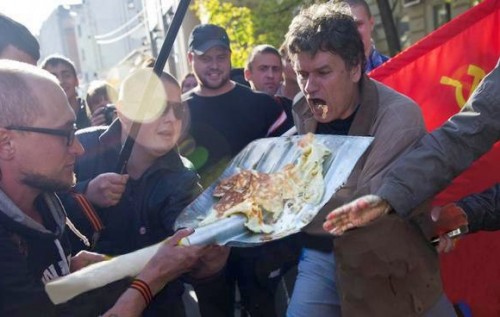
And you can be absolutely certain that if conservatives who advocate for a “strong state” or justify Stalinist repressions are themselves imprisoned without trial and tortured “for the good of the country” (that is, essentially given what they themselves advocate), they will be the first to start shouting about freedom of speech and legality.
The point is that conservative principles reflect not the interests of ordinary supporters of this ideology, but the group interests of elites. It is precisely because conservative propaganda has clouded people’s minds that their words so often diverge from reality.
The Conservative Front
The values of conservatism are shared by a fairly large number of political ideologies and movements, many of which we described in the relevant article. Ideologies such as liberal conservatism, Christian democracy, or national democracy share relatively few conservative values and are therefore only partially conservative, often representing a blend of conservatism and progressivism. More monolithic in terms of values are authoritarian movements such as Stalinism, fascism, and absolute monarchism. The latter almost always unite into a single front against supporters of progressive values, and less often align with more democratic conservative movements.
Conclusion
Overall, what distinguishes conservatives most — aside from their justification of inequality and attachment to tradition — is an extreme unwillingness to reconsider their views. Even if a conservative knows they are wrong, they fear anything new and prefer to leave everything as it is. That is why they are conservatives: fear of novelty, fear of progress, and fear of losing what they already have (even if there is a high chance of living much better) push a person toward conservatism. They reason according to the “soiled pants principle” — in the conservative view, “why change soiled pants if others might also turn out to be soiled?”. Perhaps it is precisely this fear that draws the line between conservative and progressive-minded people, helping elites preserve inequality. And this fear makes conservative masses want everyone to be the same; even an unusual hairstyle or bright clothing evokes hostility, because they themselves do not want to change anything about themselves and impose this “norm” on others.
The principles described above are characteristic of the overwhelming majority of conservatives worldwide, but since conservatives in Russia are historically even stronger than in many other countries, we have additionally written an article about Russian conservatives — statists.
In the opinion of our journal, conservative ideology slows the development of individual countries and of humanity as a whole, and is the main political opponent of social democrats.
- V.N. Garbuzov. Conservatism: concept and typology (historiographical review) // Polis, 1995, No. 4. – pp. 60 – 68.
- Tobias Gombert, Julia Blesius, Christian Krell, Martin Timpe. Fundamentals of Social Democracy – p. 70. // Friedrich-Ebert-Stiftung (www.fes.de). [Electronic resource]. URL: https://library.fes.de/pdf-files/akademie/07650.pdf (accessed: 14.10.2020).
- A.M. Rutkevich, A.A. Kulikov. Conservatism // Great Russian Encyclopedia. Volume 15. Moscow, 2010, p. 73. [Electronic resource]. URL: https://bigenc.ru/philosophy/text/2091273 (accessed: 28.02.2021).
- T.F. Efremova. New Dictionary of the Russian Language. Explanatory and derivational. – Moscow: Russian Language, 2000
- conservatism // Dictionary.com. [Electronic resource]. URL: https://www.dictionary.com/browse/conservatism (accessed: 28.02.2021).
- Kenneth Minogue. Conservatism // Encyclopaedia Britannica (www.britannica.com). [Electronic resource]. URL: https://www.britannica.com/topic/conservatism (accessed: 28.02.2021).
- A. Dugin. Geopolitics of Postmodernity. The Times of New Empires. Essays on the geopolitics of the 21st century / Alexander Dugin. – 382 p. – St. Petersburg: Amphora. TID Amphora, 2007
- Edmund Burke, Reflections on the Revolution in France
- “Russian conservatism” became the official ideology of “United Russia” // RIA Novosti (ria.ru). November 21, 2009, 14:24. [Electronic resource]. URL: https://ria.ru/20091121/194856090.html (accessed: 27.11.2019).
- Putin: “United Russia” should be a centrist and conservative force // Official website of the “United Russia” party (er.ru). April 24, 2012, 16:51. [Electronic resource]. URL: https://er.ru/news/81954/ (accessed: 27.11.2019).
- Putin: income inequality exists in any large economy // RIA Novosti (ria.ru). December 20, 2018, 15:37. [Electronic resource]. URL: https://ria.ru/20181220/1548338860.html (accessed: 27.11.2019).
- Grebenyuk, A. V. History of World Civilizations in 3 parts. Part 2. Ancient civilization: textbook for bachelor’s and master’s degrees / A. V. Grebenyuk. (2nd ed., revised and supplemented) — 365 p. — Moscow: Yurayt Publishing, 2019 (Author’s textbook). — ISBN 978-5-534-07928-9. – p. 190.
- Debunking the slander against Stalin and the USSR. Independent research – Ustin Chashchikhin
- Putin believes that Russia’s strength lies primarily in spirituality // RIA Novosti (ria.ru). September 9, 2005, 18:10. [Electronic resource]. URL: https://ria.ru/20050909/41353287.html (accessed: 27.11.2019).
- Natalia Demchenko. Putin called himself the most effective nationalist // RBC (www.rbc.ru). October 18, 2018, 17:04. [Electronic resource]. URL: https://www.rbc.ru/politics/18/10/2018/5bc887819a79471a48978647 (accessed: 27.11.2019).
- Alexander Prokhanov: The Fifth Stalin // Izborsk Club (izborsk-club.ru). December 20, 2018, 8:24. [Electronic resource]. URL: https://izborsk-club.ru/16281 (accessed: 27.11.2019).
- Stanislav Belkovsky. Berezovsky: the final episode // Colta (archives.colta.ru). March 26, 2013. [Electronic resource]. URL: http://archives.colta.ru/docs/17627 (accessed: 27.11.2019).
- Youth of the Russian Federation: Status and Choice of Path. State report. – Valery Andreevich Lukov, V. A. Rodionov, B. A. Ruchkin. State Committee of the Russian Federation for Youth Policy, 2000 – Total pages: 191
- 20 years without the death penalty // TASS (tass.ru). August 2, 2016, 13:48. [Electronic resource]. URL: https://tass.ru/politika/3503703 (accessed: 27.11.2019).
- Zhirinovsky promised to shoot and hang deputies // Rosbalt (www.rosbalt.ru). March 15, 2017, 21:17. [Electronic resource]. URL: https://www.rosbalt.ru/video/2017/03/15/1599108.html (accessed: 27.11.2019).
- Putin: Orthodoxy and Russia are inseparable // MIR24 (mir24.tv). November 20, 2016, 19:41. [Electronic resource]. URL: https://mir24.tv/news/15336731/putin-pravoslavie-i-rossiya-nerazdelimy (accessed: 27.11.2019).
- Putin called to take an example from Chechnya in terms of demographics // RIA Novosti (ria.ru). April 24, 2019, 18:08. [Electronic resource]. URL: https://ria.ru/20190424/1553015771.html (accessed: 27.11.2019).
- E.S. Smetanina. Sociological analysis of the birth rate problem in the modern Russian family // Vestnik PAGS, 2013. No. 34. – p. 109.
- Evgeny Pudovkin. Cameron explained Putin’s reasoning behind the “gay propaganda” law // RBC (www.rbc.ru). [Electronic resource]. URL: https://www.rbc.ru/politics/20/09/2019/5d8380149a79474a1a2f0310 (accessed: 27.11.2019).
- Umberto Eco. Five Moral Pieces / Translated from Italian by E. A. Kostyukovich. – 158 p. – St. Petersburg: Symposium, 2003. – p. 71.
- Umberto Eco. Five Moral Pieces / Translated from Italian by E. A. Kostyukovich. – 158 p. – St. Petersburg: “Symposium”, 2003. – pp. 72–73.
- Matthew 5:29