
Constructed identities
Ideologies built around “innate” characteristics and civic identity differ significantly in their nature and in the radicalism of their demands. However, they are often conflated, which leads to confusion and misunderstanding both among right-wing movements themselves and among their critics. As a result, for example, national democrats may be confused with Nazis, and xenophobia may be labeled as racism. Let us try to distinguish between these terms in order to make them easier to understand.
В dictionaries there is some confusion regarding the concepts of «patriotism», «nationalism», «Nazism», «racism», «fascism» and several others. Thus, Dictionary.com1 and Britannica2 define Nazism as a purely German phenomenon, although the re-emergence of a political regime with similar characteristics is theoretically possible not only in Germany. The dictionaries of Ozhegov3 and Efremova4 define Nazism as “German fascism”, although fascism and Nazism are nevertheless different phenomena – for example, not all fascist states carried out or supported policies of genocide and mass extermination of people based on their racial origin. One of the definitions of nation in Ozhegov’s dictionary is the formulation “country, state”5, which makes it unclear how patriotism, meaning “love for one’s homeland”6, differs from nationalism, which, among other things, according to Efremova’s dictionary, also means “the interpretation of the nation as the highest form of society”7. In turn, the word “racism” is often in dictionaries linked to race8, but in practice it is very often used to denote discrimination on national grounds as well9.
We hope that in the future the scientific and political communities will establish strict terminology in this area. But until that happens, we will try to propose more specific distinctions that we will use in articles on “Logic of Progress”. Let us define the basic concepts.
Contents
Nationality
The Great Russian Encyclopedia provides two definitions of nationality: “1) the same as an ethnic community or its specific type; 2) ethnic or civic affiliation”10. The concept has two main interpretations – ethnic and civic. According to the Cambridge Dictionary, nationality is the official right to belong to a particular country, or a group of people of the same race, religion, tradition, etc.11. The Merriam-Webster dictionary gives many definitions of the term “nationality”, among which several are of interest to us:
3a: National status, especially: a legal relationship involving allegiance on the part of an individual and usually protection by the state;
3b: Membership in a particular nation;
4: Political independence or existence as a separate nation;
5a: A people having a common origin, tradition, and language and capable of forming or actually constituting a nation-state;
5b: An ethnic group forming one element of a larger unit (such as a nation)12.
In general, we can say that nationality is ethnic or civic affiliation.
Citizenship
According to the definition of the Great Russian Encyclopedia, citizenship is a stable legal relationship between an individual and the state that generates mutual rights and obligations; a status associated with belonging to a particular state, implying legal recognition of a person’s state affiliation both within the country and abroad, and granting them the full scope of rights and duties provided for by national legislation. This concept is also used in a broader sense – as a legal status related to an individual’s belonging to a community or a union of states united by shared history, culture, and traditions (citizen of the European Union)13. Britannica states that citizenship is “the relationship between an individual and the state to which he or she belongs and to which he or she owes allegiance, and in turn is entitled to its protection. Citizenship implies the status of freedom with accompanying responsibilities. Citizens have certain rights, duties, and responsibilities that are denied or only partially extended to aliens and other noncitizens residing in a country. In general, full political rights, including the right to vote and to hold public office, are based on citizenship. The usual responsibilities of citizenship are allegiance, taxation, and military service”14. In simpler terms, citizenship is a person’s belonging to a state and a legal bond with it. A citizen is a person belonging to the permanent population of a given state, enjoying its protection and endowed with a set of rights and obligations15.
Race
According to Ozhegov’s dictionary, race is “a historically formed group of humankind united by a common set of inherited physical characteristics (skin color, eyes, hair, skull shape, etc.), determined by common origin and early settlement”16. According to the Great Russian Encyclopedia, human races are “groups of human populations sharing common phenotypic and genotypic traits that distinguish them from other populations; the term ‘race’ usually corresponds to the taxonomic category ‘subspecies’ and reflects the polytypy of modern humankind”17. Britannica states that race is “the idea that the human species is divided into distinct groups based on inherited physical and behavioral differences. Genetic research in the late 20th century disproved the existence of biologically distinct races, and scientists now argue that ‘races’ are cultural constructions reflecting particular views and beliefs imposed on different populations following Western European conquests beginning in the 15th century”18. Which of these definitions is most relevant today? The Great Russian Encyclopedia notes:
None of the existing classifications covers the full typological diversity of humankind; the identified variants represent systems of populations with large individual variability across many sets of traits, which may exceed the variability between types. Moreover, these population systems evolve over time, and the typological picture does not remain constant… Since the end of the 20th century, the concept of “race” has been criticized from the standpoint of population theory, as well as out of concern that it may contribute to the spread of racism; many anthropologists avoid using this term or even deny the very existence of human polytypy19.
Britannica also emphasizes that scientists have not reached a consensus on the number of human races, the characteristics used to identify them, or even the meaning of the term itself. Based on this, “Logic of Progress” rejects the scientific validity of the concept of “race”. To describe this term, we will use the definition from the same Britannica encyclopedia.
Ethnic Community
This term is considered by the Great Russian Encyclopedia as a synonym of the term “ethnos” and is defined as follows: “a group of people (a people) who share a common self-awareness (ethnic identity), and usually also a common language and cultural features. The presence of ethnic identity is regarded as the main feature of an ethnic community, on the basis of which the community itself is formed, along with those characteristics that distinguish it (ethnicity)”20. The compilers of the encyclopedia also note that ethnic identities are more often a political and intellectual construct, and bearers of ethnic identity possess a complex and fluid self-awareness. In English, the term “ethnic group” is used; according to Britannica, it is “a social group or category of the population that in a larger society is set apart and bound together by common ties of race, language, nationality, or culture”21. Research shows that, in many cases, the concept of an ethnic group in public consciousness is associated with the concept of race22. Even some researchers consider, for example, physical appearance to be a factor of ethnic comparison23. As Candidate of Philosophy Sergey Petrenko notes, “to this day, the problem of a precise definition of the concept of ‘ethnos’ itself and the identification of characteristic features inherent in the social phenomenon it denotes remains not fully resolved”24. That is, in essence, it cannot be unambiguously classified as a scientific concept. In Lev Gumilev’s interpretation, for example, an ethnos is not merely a set of characteristics, but a system linking the biological and the social, in which biological traits play a determining role25. Summing up, we can conclude that an ethnic community is a social group that possesses a shared self-awareness and may be united, in addition to identity, by language, biological characteristics, and culture.
Nation
Let us turn to the Great Russian Encyclopedia: according to its editors, a nation is “a concept widely used in both academic and public discourse with varying semantic content. In modern science and law, the term ‘nation’ refers to two types of human communities: a community of citizens of one state (a political or civic nation) and an ethnic community (ethnic nation, ethnonation, cultural nation)”26. Ozhegov’s dictionary provides two definitions: first, a historically formed stable community of people that emerges through the development of shared territory, economic ties, literary language, cultural characteristics, and spiritual identity; and second, in some combinations: country, state27. According to Merriam-Webster, the term “nation” may mean: nationality; a community of people composed of one or more nationalities and occupying a more or less defined territory and government; or a tribe or federation of tribes28. In general, we can conclude that a nation is either a community of citizens of a single state or an ethnic community.
Proceeding in the usual anthropological spirit, I propose the following definition of the nation: it is an imagined political community—and it is imagined as both inherently limited and sovereign.
It is imagined because the members of even the smallest nation will never know most of their fellow-members, meet them, or even hear of them, yet in the minds of each lives the image of their communion. Renan, in his peculiarly insinuatingly ambiguous manner, referred to this imagining when he wrote that “Or l’essence d’une nation est que tous les individus aient beaucoup de choses en commun, et aussi que tous aient oublié bien des choses” [“The essence of a nation is that all individuals who compose it have many things in common and have also forgotten many things”]29. Gellner, with some force, makes a comparable point, asserting: “Nationalism is not the awakening of nations to self-consciousness: it invents nations where they do not exist”30. But in this formulation there is a flaw. Gellner is so concerned to show that nationalism disguises itself in false pretenses that he equates “invention” with “fabrication” and “falsity”, rather than with “imagination” and “creation”. In doing so, he implies that there exist “true” communities which can be usefully contrasted with nations. In fact, all communities larger than primordial villages of face-to-face contact (and perhaps even these) are imagined. Communities are to be distinguished not by their falsity/genuineness, but by the style in which they are imagined.
<…>
The nation is imagined as limited because even the largest of them, perhaps a billion people, has finite, though elastic, boundaries beyond which lie other nations. No nation imagines itself as coterminous with all of humanity. Even the most messianic nationalists do not dream of the day when all mankind will join their nation, as was once possible in certain eras when Christians, for example, might dream of a wholly Christian planet31.
People
According to the Great Russian Encyclopedia, people are a historical community of individuals understood both in a political and in a cultural-ethnic sense. In the first meaning, the term “people” refers to the entire population of a country or its citizens (in this sense it is synonymous with the concept of a civic nation); in the second, it refers to an ethnic community. In historical literature, the term “people” is also often used to denote the lower, non-privileged strata (estates), the common people, and implies oppositions such as “people and power”, “people and the nobility”, and so on32. That is, we can see that, in essence, the term “people” is close in meaning to the term “nation”.
Society
Society is defined as “various forms of collective life activity of individuals united by common conditions of existence, interests, norms, values, aspirations, worldviews, and a shared identity. This concept is often applied to relatively large groups of people organized into nation-state formations and living within a clearly defined territory (for example, Russian society, French society, British society)” (definition from the Great Russian Encyclopedia)33. According to the main definition in Ozhegov’s dictionary, it is “a set of people united by historically conditioned social forms of joint life and activity”34. In other words, society is a set of people united by historically conditioned social forms of joint life and activity, or a set of people organized into a state formation.
Racism
According to the Great Russian Encyclopedia, racism is a doctrine and a politico-ideological practice based on the idea that humanity is not unified, but consists of fundamentally different types (human races, ethnic communities, and so on) arranged in a hierarchical order. In socio-psychological terms, racism is associated with xenophobia, but unlike it claims theoretical justification, appealing to science (anthropology, genetics, and others), absolutizing phenotypic differences between people and interpreting them as the basis of socio-cultural boundaries35. According to Deutsche Welle, it is an ideology or system of beliefs that закрепs the division of people into races and asserts the superiority of one race over another (or others)36. The Holocaust Encyclopedia notes that racists are people who believe that innate, inherited biological traits determine human behavior. Racist doctrine claims that national identity is defined by “blood purity”. According to this concept, a person’s value is determined not by their individuality, but by their belonging to a so-called “racial collectivity of the nation”37. Britannica states that racism is the belief that humans can be divided into distinct and exclusive biological entities called “races”; that there is a causal relationship between inherited physical traits and traits of personality, intelligence, morality, and other cultural and behavioral characteristics; and that some races are naturally superior to others38. Merriam-Webster, as usual, provides several definitions that aim to cover the full scope of the term “racism”:
1: A belief that race is a fundamental determinant of human traits and capacities and that racial differences produce an inherent superiority of a particular race;
Also: behavior or attitudes that reflect and support this belief; racial discrimination or prejudice;
2a: Systemic oppression of one racial group by another for social, economic, and political advantage;
2b: A political or social system founded on racism and designed to implement its principles39.
Summing up these definitions, we proceed from the understanding that racism is a system of beliefs that divides people into groups with shared biological or ethnic characteristics, that asserts that belonging to one of these groups is a determining factor of human qualities and abilities, and that proclaims the superiority of one group over another (or others). In fact, any statement whose meaning is to prove inequality between representatives of different races or nationalities is racism. Any policy that discriminates against or elevates the rights of one or several races/nationalities over others is racist. The harm of such policies was discussed here.
Antisemitism and hostility toward members of specific races or ethnic groups (Russophobia, Germanophobia, Anglophobia, and so on) are also forms of racism.
Patriotism
According to the Encyclopaedia Britannica, patriotism is a feeling of attachment to one’s country, nation, or political community40. The Great Russian Encyclopedia states that it is a conscious love for one’s homeland, one’s people, and its traditions41. It is also noted there that “in the Middle Ages, patriotism implied not so much love for one’s country and people, but primarily loyalty to faith and service to one’s suzerain… With the establishment of absolutist regimes in early modern Europe, the patriotic idea of ‘service to the state’ became identical to the idea of ‘service to the monarch’”. According to Ozhegov’s dictionary, patriotism is “devotion and love for one’s fatherland and one’s people”42. Finally, the Merriam-Webster dictionary defines this concept as “love for or devotion to one’s country”43. That is, according to all dictionaries, patriotism is love and devotion to one’s country.
Immediately, two major problems arise in connection with patriotism. First, why should love be directed specifically toward one’s own country and not toward all countries? When we positively evaluate patriotism—that is, love for one’s own country rather than love for all countries and all humanity—we implicitly create a contrast: loving one’s own country is good, therefore loving other countries is not as good. And perhaps even bad. With such a specification, it is not surprising that many people perceive patriotism as a lack of love for other countries.
The second problem is that the word “love” can refer to a very wide range of actions. Frederick Clegg from John Fowles’ novel “The Collector” also loved Miranda Grey, but in a rather distorted way. A slave may also love their master, but such love deserves only contempt. The desire to create a Thousand-Year Reich in which all Germans are happy at the expense of the suffering of others is also love for one’s country—distorted, like the Collector’s love in Fowles’ novel, but still the same kind of patriotism.
The concept of “patriotism” includes both positive actions:
- Supporting local producers of goods and services in order to keep capital within the country;
- Investing funds in the development of the national economy;
- Practical actions to improve living conditions in one’s place of residence—cleaning litter in the streets, helping people in distress, and so on;
- Defending the country in the event of military invasion by other states;
- Fighting for democracy within one’s own country.
And negative ones:
- Verbal “love” for one’s country or its administrative units and ritualistic expressions of loyalty. This includes, for example, pride in the achievements of other people or groups (so-called “national pride”) or placing propaganda stickers on a car;
- Statements primarily reflecting the interests of elites;
- Hostile reactions to criticism of one’s government;
- Participation in wars of conquest and the initiation of military actions on the territory of other countries;
- Incitement of hostility and hatred between countries, contempt for diplomatic conflict resolution and international compromise.
However, the key point is that positive actions do not require patriotism. They are possible without it. If we want to explain to people that they should help those in distress, we need to explain exactly that—not patriotism. Patriotism, in turn, is an amalgam that serves to smuggle in negative values under the guise of positive ones. The harmful effects of patriotism are discussed in more detail in a separate article here.
Xenophobia
According to Ozhegov’s dictionary, xenophobia is, firstly, a painful, obsessive fear of unfamiliar people, and secondly, hatred and intolerance toward anything foreign, unfamiliar, or alien44. The Merriam-Webster dictionary defines xenophobia as “fear and hatred of strangers or foreigners or of anything that is strange or foreign”45. The Great Russian Encyclopedia states that xenophobia is “intolerance toward someone or something foreign, unfamiliar, unusual… unlike racism, xenophobia represents dislike of a stranger due to their behavior, lifestyle, and so on, rather than due to inherent qualities. In the EU, the term ‘xenophobia’ is officially used to denote widespread societal suspicion and hostility toward immigrants and, in essence, serves as a euphemism for the concept of ‘racism’, but is understood as its milder form. Similar to racism, xenophobia serves to oppose ‘us’ to ‘them’, asserting that ethnic culture, like biological characteristics, is given to a person for life together with ‘blood’. The mixing of cultures provokes resistance, as it is said to cause disorientation by imposing different cultural and behavioral codes on the individual. In this context, talk arises about the ‘incompatibility of cultures’, which leads to opposition to mixed marriages. There is fear of ‘outsiders’ who are believed to be capable of polluting and degrading the culture of ‘native inhabitants’, and calls are made to preserve the traditional ethno-cultural identity. At the same time, local culture is understood as superior, and a hierarchy of cultures is constructed with it at the top”46. Overall, we can see that the definition from the GRE corresponds quite closely to the generally accepted understanding; therefore, we can state that xenophobia is intolerance toward someone or something foreign, unfamiliar, or unusual.
https://www.youtube.com/watch?v=XUGjU80kZU0
Chauvinism
According to the Great Russian Encyclopedia, chauvinism is an extreme form of nationalism; the preaching of national exclusivity and superiority. In Ozhegov’s dictionary, it is defined as extreme nationalism that promotes national and racial exclusivity and incites national hostility and hatred47. The Encyclopaedia Britannica, in turn, notes that chauvinism is “excessive and unreasonable patriotism, similar to jingoism… Later, chauvinism came to denote any kind of ultra-nationalism and was usually used to refer to excessive partiality or attachment to a group or place to which one belongs or has belonged”48. The Merriam-Webster dictionary provides three definitions:
- An attitude of superiority toward members of the opposite sex or behavior expressing such an attitude;
- Excessive partiality or attachment to a group or place to which one belongs or has belonged;
- Excessive or blind patriotism49.
Overall, we can see that the meaning of the term differs slightly between Russian and English usage; however, we would hardly be mistaken if we take the definition from Ozhegov’s dictionary and state that chauvinism is extreme nationalism that promotes national or racial exclusivity and incites national hostility and hatred.
Nationalism
Big Russian Encyclopedia states that nationalism is a political ideology and practice based on the idea of the nation and its interests as the highest values50. Depending on how the concept of the nation is understood, nationalism has two main forms – civic, or state, and ethnic. The encyclopedia’s compilers note that civic nationalism is the same as patriotism; it often contains attitudes toward discrimination and assimilation of minorities, as well as toward state expansion (missionism) or, conversely, isolationism.
Ethnic nationalism is based on biological and racial arguments and emerged in the era of the dominance of evolutionism and ethno-racial theories (see Racism) in the second half of the 19th century… It is based on simplified interpretations of history, the appropriation of cultural heritage in favor of one group, and conflict-driven territorial interpretations (“ethnic territory”, “ancestral lands”, “historical homeland”, and so on). It contains negative stereotypes toward other peoples and anti-statist attitudes. Political ethno-nationalism on the part of dominant groups is discriminatory toward minorities and migrants. Radical ethno-nationalism of minorities may take a separatist form, demanding changes to internal borders or the creation of a separate “national state”. It becomes a cause of prolonged and destructive ethnic conflicts (Northern Ireland, Biafra, Katanga, Karabakh, Eritrea, Sri Lanka, Chechnya, and others)51.
According to Ozhegov’s dictionary, nationalism is an ideology and political practice based on ideas of national superiority and opposition of one’s nation to others, or else an expression of the psychology of national superiority, national antagonism, and the idea of national insularity52. The Britannica Encyclopedia states that it is an ideology based on the premise that an individual’s loyalty and devotion to the nation-state take precedence over other individual or group priorities53. Merriam-Webster’s dictionary provides two definitions of nationalism: 1) loyalty and devotion to a nation; 2) a nationalist movement or government54. Overall, we can see that definitions of nationalism most often do not contradict the definition given in the Big Russian Encyclopedia.
Fascism
The Great Law Dictionary reports that fascism is a socio-political movement, ideology, and state regime of a right-totalitarian type55. According to Dictionary.com, it is “a governmental system led by a dictator having complete power, forcibly suppressing opposition and criticism, regimenting all industry, commerce, etc., and emphasizing an aggressive nationalism and often racism”56. One definition of fascism was given by the Russian Academy of Sciences: “it is an ideology and practice that asserts the superiority and exclusivity of a particular nation or race and is aimed at inciting national intolerance, justifying discrimination against representatives of other peoples, denying democracy, establishing a cult of a leader, using violence and terror to suppress political opponents and any forms of dissent, justifying war as a means of solving interstate problems”57. Overall, we find the definition from the Cambridge Dictionary quite successful: fascism is “a political system based on a powerful leader, state control, and being very proud of your country and race, with no political opposition allowed”58. At the same time, the famous writer and philosopher Umberto Eco formulated 14 signs of fascism that can also be used as a guide when defining it59:
- Cult of tradition;
- Rejection of modernism;
- Cult of “action for action’s sake”, rejection of the intellectual;
- Rejection of criticism, “disagreement is treason”;
- Xenophobia, racism;
- Reliance on frustrated middle classes;
- Nationalism, obsession with conspiracy theories, cultivating a sense of being under siege;
- The enemy is portrayed as either extremely strong or extremely weak;
- Life is understood as continuous struggle, and pacifism as collaboration with the enemy;
- Mass elitism, contempt for the weak;
- Cult of heroism and death;
- Machismo, sexism, rejection of non-standard sexual behavior;
- Rejection of parliamentarism, populism;
- Use of “newspeak”.
Nazism
Oddly enough, scholarly sources define Nazism as “German fascism”60 or as “the totalitarian movement that was led by Adolf Hitler as head of the Nazi Party in Germany”61. Merriam-Webster’s Dictionary also gives only this definition: “the body of political and economic doctrines held and put into effect by the Nazis in Germany from 1933 to 1945 including the totalitarian principle of government, predominance of especially Germanic groups assumed to be racially superior, and supremacy of the führer”62. However, such definitions imply impossibility of repetition, or the possibility of repetition only within Germany. At the same time, it is obvious that the policies pursued by the Nazis are possible in other countries, differ from the concepts of “nationalism” and “fascism”, and require a separate term, which “Nazism” is. We find a suitable definition in an unexpected place – the “Patriot’s Dictionary of the Fatherland” by Russian conservatives: Nazism is a worldview based on ideas of the exclusivity (or chosenness) of one’s own nationality and simultaneously on disrespect, even hatred, towards others63. As noted in the dictionary, Nazism can place its nationality at the head of the world and justify the use of repressive measures (up to genocide) against the rest of humanity. This is its main difference from fascism – more pronounced repressive measures. The Great Russian Encyclopedia also characterizes Nazism (National Socialism) as an extreme form of ethnic nationalism64.
Social-democratic view
In general, it is commonly assumed that a person can have ethnic affiliation, nationality, or citizenship. The set of such individuals with similar characteristics is referred to respectively as an ethnic community, a nation/people, or a society. At the same time, from the definitions above we can see that the term “nationality” can refer both to ethnic affiliation and to citizenship, while the term “nation” can, in turn, refer both to an ethnic community and to a society.

Progressive social democrats set the goal of a gradual transition in the future toward a single global language and the rejection of dividing people into nationalities, races, and ethnic groups, advocating for the maximum possible removal of these concepts from usage (we wrote about this here). Since ethnic affiliation and ethnic community are tied to language and national identity, these concepts are not guiding categories for progressive social democrats. Accordingly, the concepts of “nationality” and “nation” are also not used by progressive social democrats—they instead use the concepts of citizenship and society. This is also due to the fact that the concepts of ethnicity, ethnic groups, and ethnic communities are linked to the unscientific concept of race, which in turn creates the potential for racism and xenophobia, while ethnic identities, as we have already mentioned, are more often a political and intellectual construct—possibly having a right to exist, but not the most adequate one from a social democratic point of view. Doctor of Historical Sciences Yulian Bromley noted:
For us today, what is essential is the very fact of the reproduction by people who find themselves in new conditions of existence of a certain part of their traditional ethnic traits. This quite clearly demonstrates the relatively strong “attachment” of such traits to people themselves. What are these traits? We already know that they must be stable, visible, and play a differentiating role. All these requirements are met by the external distinguishing features of the human physical type, i.e., racial characteristics: differences in skin color, hair, eyes, facial features, skull shape, etc. It is characteristic that in everyday practice these external, very visible, stable, and differentiating features are often the initial indicator when deciding on the ethnic affiliation of a person or group of people. However, in the overwhelming majority of cases racial characteristics cannot serve as a meaningful ethnic marker, since racial divisions of humanity, as a rule, do not coincide with ethnic ones. This is expressed both in the fact that there are practically no “pure”, racially unmixed ethnic groups, and in the absence of clear anthropological boundaries between neighboring ethnic communities belonging to the same race65.
If we advocate for the interests of the nation, we will face the fact that this can and will be interpreted as a struggle for the interests of a race or ethnic affiliation, which many understand as race or something similar, thereby leading to racism. And there is no scientific distinction capable of resolving this confusion. For social democrats, this is unacceptable.
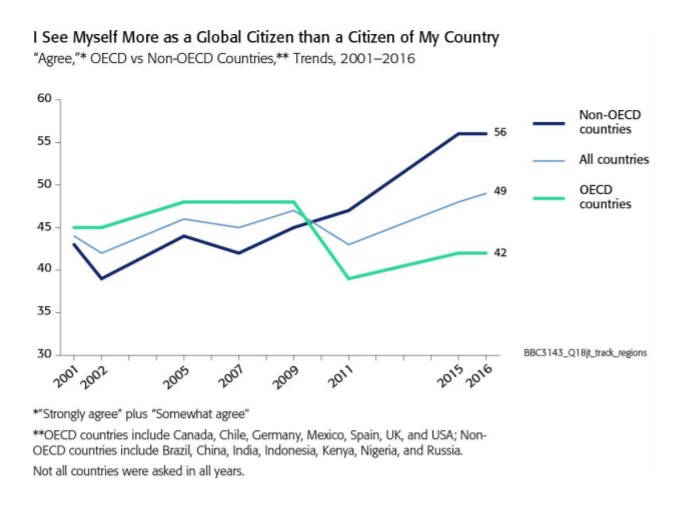
When for a person the “interests of Russia” become higher than universal human interests, higher than the values of humanism, higher than democracy and their own political preferences, this contributes to the unleashing of war and suffering; it produces people who are obedient to the onset of war and unable to oppose it, because “whatever it is, it is our country”. But this is the result of a complete distortion of human values. A social democrat, however, should first and foremost perceive themselves as a human being, then as a humanist and supporter of progressive values, then as a democrat, as a social democrat, and only then, somewhere further down the line, as Russian (or another nationality) or a citizen of Russia. A person influenced by conservative and state-centric propaganda, on the other hand, primarily perceives themselves as Russian or as a resident of Russia, and from this it follows that in the name of the “interests of Russians and Russia” one can sacrifice human values altogether, such as life and freedom. The statement by international criminal and terrorist Vladimir Putin, “why do we need a world without Russia in it”, is the highest degree of political perversion.
Progressive ideologies imply prioritizing unity based on social characteristics and one’s position in society or the economic system. Conservative ideologies, on the other hand, most often prefer to base unity on territorial or racial/national grounds. We have also discussed in a separate article here why nationalism can be harmful.
- Nazism // Dictionary.com (www.dictionary.com). [Electronic resource]. URL: https://www.dictionary.com/browse/nazism (access date: 25.01.2020).
- Nazism // Encyclopaedia Britannica (www.britannica.com). [Electronic resource]. URL: https://www.britannica.com/event/Nazism (access date: 25.01.2020).
- S.I. Ozhegov, N.Yu. Shvedova. Explanatory Dictionary of the Russian Language: 80,000 words and phraseological expressions / Russian Academy of Sciences. V.V. Vinogradov Institute of the Russian Language. – 4th edition, revised and expanded. – 944 pages. – Moscow: LLC “A TEMP”, 2006. – p. 398.
- T.F. Efremova. New Dictionary of the Russian Language. Explanatory and Word-Formation. – Moscow: Russian Language, 2000
- S.I. Ozhegov, N.Yu. Shvedova. Explanatory Dictionary of the Russian Language: 80,000 words and phraseological expressions / Russian Academy of Sciences. V.V. Vinogradov Institute of the Russian Language. – 4th edition, revised and expanded. – 944 pages. – Moscow: LLC “A TEMP”, 2006. – p. 398.
- Ibid., p. 496.
- T.F. Efremova. New Dictionary of the Russian Language. Explanatory and Word-Formation. – Moscow: Russian Language, 2000
- S.I. Ozhegov, N.Yu. Shvedova. Explanatory Dictionary of the Russian Language: 80,000 words and phraseological expressions / Russian Academy of Sciences. V.V. Vinogradov Institute of the Russian Language. – 4th edition, revised and expanded. – 944 pages. – Moscow: LLC “A TEMP”, 2006. – p. 657.
- Racism // Vocabulary.com (www.vocabulary.com). [Electronic resource]. URL: https://www.vocabulary.com/dictionary/racism (access date: 25.01.2020).
- T.D. Solovey. Nationality // Great Russian Encyclopedia. Electronic version (bigenc.ru). [Electronic resource]. URL: https://bigenc.ru/ethnology/text/2253322 (access date: 10.03.2021).
- Meaning of nationality in English // Cambridge Dictionary (dictionary.cambridge.org). [Electronic resource]. URL: https://dictionary.cambridge.org/ru/dictionary/english/nationality (access date: 10.03.2021).
- Nationality // Merriam-Webster (www.merriam-webster.com). [Electronic resource]. URL: https://www.merriam-webster.com/dictionary/nationality (access date: 10.03.2021).
- T.A. Vasilyeva. Citizenship // Great Russian Encyclopedia. Online version (bigenc.ru). [Electronic resource]. URL: https://bigenc.ru/law/text/2375607 (Date of access: 10.03.2021).
- Citizenship // Encyclopaedia Britannica (www.britannica.com). [Electronic resource]. URL: https://www.britannica.com/topic/citizenship (Date of access: 10.03.2021).
- S.I. Ozhegov, N.Yu. Shvedova. Explanatory Dictionary of the Russian Language: 80,000 words and phraseological expressions / Russian Academy of Sciences. V.V. Vinogradov Institute of the Russian Language. – 4th ed., expanded. – 944 pp. – Moscow: OOO “A TEMP”, 2006. – p. 143.
- Ibid., p. 657.
- I.V. Perevozchikov. Human Races // Great Russian Encyclopedia. Online version (bigenc.ru). [Electronic resource]. URL: https://bigenc.ru/ethnology/text/3495273 (Date of access: 10.03.2021).
- Yasuko I. Takezawa. Race // Encyclopaedia Britannica (www.britannica.com). [Electronic resource]. URL: https://www.britannica.com/topic/race-human (Date of access: 10.03.2021).
- I.V. Perevozchikov. Human Races // Great Russian Encyclopedia. Online version (bigenc.ru). [Electronic resource]. URL: https://bigenc.ru/ethnology/text/3495273 (Date of access: 10.03.2021).
- V.A. Tishkov. Ethnic community // Great Russian Encyclopedia. Online version (bigenc.ru). [Electronic resource]. URL: https://bigenc.ru/ethnology/text/4916954 (Date of access: 10.03.2021).
- Ethnic group // Encyclopaedia Britannica (www.britannica.com). [Electronic resource]. URL: https://www.britannica.com/topic/ethnic-group (Date of access: 10.03.2021).
- Katarzyna Hamer, Sam McFarland, Barbara Czarnecka, Agnieszka Golińska, Liliana Manrique Cadena, Magdalena Łużniak-Piecha, Tomasz Jułkowski. What Is an “Ethnic Group” in Ordinary People’s Eyes? Different Ways of Understanding It Among American, British, Mexican, and Polish Respondents // SAGE Journals (journals.sagepub.com). 21 December 2018. [Electronic resource]. URL: https://journals.sagepub.com/doi/10.1177/1069397118816939 (Date of access: 10.03.2021).
- A.A. Kozhanov. Appearance as a factor of ethnic comparison // Ethnographic Review (journal.iea.ras.ru). [Electronic resource]. URL: https://journal.iea.ras.ru/archive/1970s/1977/no3/1977_3_014_Kozhanov.pdf (Date of access: 10.03.2021).
- S.P. Petrenko. On the terms ‘ethnos’ and ‘ethnic community’ // Bulletin of the Taganrog State Pedagogical Institute – Humanities, 2006, No. 2. – p. 172.
- V.V. Simonov. Ethnic community – a collective subject of constitutional law: concept and features / V.V. Simonov // Bulletin of Omsk State University. Series: Law. 2008. No. 2. – p. 5.
- V.A. Tishkov. Nation // Great Russian Encyclopedia. Online version (bigenc.ru). [Electronic resource]. URL: https://bigenc.ru/ethnology/text/2253708 (Date of access: 10.03.2021).
- S.I. Ozhegov, N.Yu. Shvedova. Explanatory Dictionary of the Russian Language: 80,000 words and phraseological expressions / Russian Academy of Sciences. V.V. Vinogradov Russian Language Institute. – 4th ed., expanded. – 944 pp. – Moscow: OOO “A TEMP”, 2006. – p. 398.
- Nation // Merriam-Webster (www.merriam-webster.com). [Electronic resource]. URL: https://www.merriam-webster.com/dictionary/nation (Date of access: 10.03.2021).
- Ernest Renan. Qu’est-ce qu’une nation? // Œuvres complètes, vol. 1, p. 892. (Russian translation cited from: E. Renan. What is a Nation. St. Petersburg: V. Berman and S. Voinitsky Publishing House (1886), p. 12).
- Ernest Gellner. Thought and Change, p. 169.
- Benedict Anderson. Imagined Communities. Reflections on the Origin and Spread of Nationalism / Trans. V. Nikolaev; intro. S.P. Bankovskaya. – 416 pp. – Moscow: Kuchkovo Pole, 2016. – pp. 47–49.
- V.S. Malakhov. People // Great Russian Encyclopedia. Online version (bigenc.ru). [Electronic resource]. URL: https://bigenc.ru/ethnology/text/2249362 (Date of access: 10.03.2021).
- A.B. Hofman. Society // Great Russian Encyclopedia. Online version (bigenc.ru). [Electronic resource]. URL: https://bigenc.ru/philosophy/text/2675545 (Date of access: 10.03.2021).
- S.I. Ozhegov, N.Yu. Shvedova. Explanatory Dictionary of the Russian Language: 80,000 words and phraseological expressions / Russian Academy of Sciences. V.V. Vinogradov Russian Language Institute. – 4th ed., expanded. – 944 pp. – Moscow: OOO “A TEMP”, 2006. – p. 440.
- V.S. Malakhov. Racism // Great Russian Encyclopedia. Online version (bigenc.ru). [Electronic resource]. URL: https://bigenc.ru/ethnology/text/3493858 (Date of access: 10.03.2021).
- Racism // Deutsche Welle (www.dw.com). [Electronic resource]. URL: https://www.dw.com/ru/что-такое-расизм/t-53780543 (Date of access: 10.03.2021).
- Racism. Overview // Holocaust Encyclopedia (encyclopedia.ushmm.org). [Electronic resource]. URL: https://encyclopedia.ushmm.org/content/ru/article/nazi-racism-an-overview (Date of access: 10.03.2021).
- Audrey Smedley. Racism // Encyclopaedia Britannica (www.britannica.com). [Electronic resource]. URL: https://www.britannica.com/topic/racism (Date of access: 10.03.2021).
- Racism // Merriam-Webster (www.merriam-webster.com). [Electronic resource]. URL: https://www.merriam-webster.com/dictionary/racism (Date of access: 10.03.2021).
- Andrea Baumeister. Patriotism // Encyclopaedia Britannica (www.britannica.com). [Electronic resource]. URL: https://www.britannica.com/topic/patriotism-sociology (Date of access: 25.02.2021).
- Patriotism // Great Russian Encyclopedia (bigenc.ru). [Electronic resource]. URL: https://bigenc.ru/philosophy/text/2324213 (Date of access: 25.02.2021).
- S.I. Ozhegov, N.Yu. Shvedova. Explanatory Dictionary of the Russian Language: 80,000 words and phraseological expressions / Russian Academy of Sciences. V.V. Vinogradov Institute of the Russian Language. – 4th ed., expanded. – 944 pages. – Moscow: OOO “A TEMP”, 2006. – p. 496.
- Patriotism // Dictionary by Merriam-Webster: America’s most-trusted online dictionary (www.merriam-webster.com). [Electronic resource]. URL: https://www.merriam-webster.com/dictionary/patriotism (Date of access: 25.02.2021).
- S.I. Ozhegov, N.Yu. Shvedova. Explanatory Dictionary of the Russian Language: 80,000 words and phraseological expressions / Russian Academy of Sciences. V.V. Vinogradov Institute of the Russian Language. – 4th ed., expanded. – 944 pages. – Moscow: OOO “A TEMP”, 2006. – p. 311.
- Xenophobia // Merriam-Webster (www.merriam-webster.com). [Electronic resource]. URL: https://www.merriam-webster.com/dictionary/xenophobia (Date of access: 10.03.2021).
- V.A. Shnirelman. Xenophobia // Great Russian Encyclopedia (bigenc.ru). [Electronic resource]. URL: https://bigenc.ru/ethnology/text/2639008 (Date of access: 10.03.2021).
- S.I. Ozhegov, N.Yu. Shvedova. Explanatory Dictionary of the Russian Language: 80,000 words and phraseological expressions / Russian Academy of Sciences. V.V. Vinogradov Institute of the Russian Language. – 4th ed., expanded. – 944 pages. – Moscow: OOO “A TEMP”, 2006. – p. 899.
- Chauvinism // Encyclopaedia Britannica (www.britannica.com). [Electronic resource]. URL: https://www.britannica.com/topic/chauvinism (Date of access: 10.03.2021).
- Chauvinism // Merriam-Webster (www.merriam-webster.com). [Electronic resource]. URL: https://www.merriam-webster.com/dictionary/chauvinism (Date of access: 10.03.2021).
- V.A. Tishkov. Nationalism // Big Russian Encyclopedia. Online version (bigenc.ru). [Electronic resource]. URL: https://bigenc.ru/ethnology/text/2252782 (accessed: 10.03.2021).
- Ibid.
- S.I. Ozhegov, N.Yu. Shvedova. Explanatory Dictionary of the Russian Language: 80,000 words and phraseological expressions / Russian Academy of Sciences, V.V. Vinogradov Russian Language Institute. – 4th ed., revised. – 944 pp. – Moscow: A TEMP LLC, 2006. – p. 398.
- Hans Kohn. Nationalism // Encyclopaedia Britannica (www.britannica.com). [Electronic resource]. URL: https://www.britannica.com/topic/nationalism (accessed: 10.03.2021).
- Nationalism // Merriam-Webster (www.merriam-webster.com). [Electronic resource]. URL: https://www.merriam-webster.com/dictionary/nationalism (accessed: 10.03.2021).
- Большой юридический словарь / [В.А. Белов и др.]; Под ред. А. Я. Сухарева, В. Е. Крутских. – 2. изд., перераб. и доп. – М. : ИНФРА-М, 2003 (ОАО Можайский полигр. комб.). – 703 с
- Fascism // Dictionary.com (www.dictionary.com). [Electronic resource]. URL: https://www.dictionary.com/browse/fascism (accessed: 25.01.2020).
- Moskovskiye Novosti, 1995, No. 39
- Fascism // Cambridge Dictionary (dictionary.cambridge.org). [Electronic resource]. URL: https://dictionary.cambridge.org/dictionary/english/fascism (accessed: 25.01.2020).
- Umberto Eco. Five Essays on Ethics / Trans. from Italian by E. A. Kostyukovich. – 158 p. – St. Petersburg: “Symposium”, 2003. – pp. 67-78.
- S.I. Ozhegov, N.Yu. Shvedova. Explanatory Dictionary of the Russian Language: 80,000 words and phraseological expressions / Russian Academy of Sciences. V.V. Vinogradov Institute of the Russian Language. – 4th ed., supplemented. – 944 p. – Moscow: “A TEMP” LLC, 2006. – p. 398.
- Nazism // Encyclopaedia Britannica (www.britannica.com). [Electronic resource]. URL: https://www.britannica.com/event/Nazism (accessed: 10.03.2021).
- Nazism // Merriam-Webster (www.merriam-webster.com). [Electronic resource]. URL: https://www.merriam-webster.com/dictionary/Nazism (accessed: 10.03.2021).
- A. Prokhanov, N. Starikov, F. Papayani. Patriot’s Dictionary of the Fatherland. With a foreword by Nikolai Starikov. – 256 p. – St. Petersburg: Piter, 2019 – p. 125
- V.A. Tishkov. Nationalism // Great Russian Encyclopedia. Electronic version (bigenc.ru). [Electronic resource]. URL: https://bigenc.ru/ethnology/text/2252782 (accessed: 10.03.2021).
- Yu.V. Bromley. On the question of the essence of ethnos. – “Nature”, 1970, No. 2