What is a propaganda machine and how does it work
Most people are aware that they are surrounded by ideology and propaganda, but when the amount of disinformation becomes overwhelming, an interesting process occurs: an unprepared majority begins to perceive propaganda serving narrow interest groups as truth, and truth itself as propaganda serving narrow interest groups.
To be able to distinguish deception from truth, we must, among other things, examine the mechanisms through which elites introduce their ideology, fill the information space with it, and, as a result, shape the minds of citizens. A propaganda machine is a set of mechanisms and methods used to disseminate an ideology by a specific organization, group of people, or social class. Such machines can be relatively small (for example, Russian opposition politician Alexei Navalny once announced the creation of his own propaganda machine1), but here we will examine the most comprehensive set of tools available to the Russian propaganda machine created by the nomenklatura – likely one of the most powerful in history.
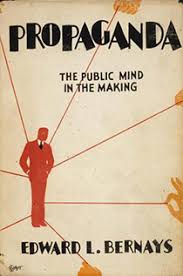
For the most part, we will rely on the works of Edward Bernays – the nephew of Sigmund Freud, whose book “Propaganda” is considered a classic; most other researchers in this field can, to one degree or another, be seen as paraphrasing Bernays. This scholar is also of particular importance to us because, during the First World War, he worked together with Walter Lippmann in the U.S. Committee on Public Information (CPI) – the apparatus that operated one of the first modern propaganda machines. In addition to Bernays and Lippmann, information on propaganda can also be found in the works of Gustave Le Bon, Wilfred Trotter, Graham Wallas, and Paul Lazarsfeld. However, most researchers describe methods rather than organizational tools. Incomplete but still valuable insight into the organization of a propaganda machine (which in this case was used for unprecedented mass manipulation) can be found in the diaries of Nazi Minister of Propaganda Joseph Goebbels, as well as in the work of an unrecognized Austro-German artist whose name we cannot directly cite due to its prohibition in the territory of the Russian Federation. Goebbels is often credited with the quote that “propaganda loses its power the moment it is exposed”2. Well, let us try to make it visible.
Contents
Tools of influence
If a person, group of people, or an entire social class has material interests, their representatives first develop an ideology that serves to promote those interests. For example, in the article on Stalinism we examined how the needs of the nomenklatura of security structures to arrest and expropriate anyone with impunity are framed in theoretical terms as the “intensification of class struggle as socialism progresses”, which implies the identification of enemies and the possibility of arrests and property confiscation under the pretext of fighting them. An ideology and its core postulates (in the form of narratives or concise theses – more on this later) are introduced through tools that we will now examine.
It should be clarified that here we are only discussing the tools of propaganda and their general organization. A separate article would be required to describe propaganda methods in detail. It should also be noted that social democracy is also an ideology, designed to promote the interests of the masses, i.e., the majority of citizens.
Organizations
Perhaps the most important part of a propaganda machine consists of organized structures (any kind – foundations, publishing houses, factories, village administrations, organizations, communities, sects, and so on). If the leadership of these structures (or key positions within them) is brought over to one’s side, the ideology can be transmitted downward and reach a large number of people.
Bearers of ideology who hold organizational power either implement personnel policies within organizations that select for those who agree with the ideology and exclude dissenters, or they use administrative methods to force subordinates to adopt it. In most cases, it is from them that the activation of all other mechanisms begins.
Sometimes mass influence is carried out by professional propagandists, sometimes by non-professionals appointed to the task. It is important to understand that this activity is widespread and continuous; ultimately, it enables control over public opinion as effectively as an army controls its soldiers3.
Leaders of organizations are often recruited through so-called “public relations consultants”. In such cases, the recruited agents of influence then conduct propaganda among their regular audiences.
Therefore, the modern Russian system is structured not through changeable or elected leaders, but through appointed heads of organizations – university rectors, chief editors of media outlets, leaders of political parties, and so on. Through the appointment of “proper” personnel, the ideology of statism spreads rapidly.
Media
Media outlets controlled by ideologues and agents of influence disseminate information that carries ideological content. This tool is perhaps the most obvious one. Bernays assesses its role as follows:
Through their mouthpiece – the mass media – our leaders transmit various arguments and information on issues submitted for public judgment; from some authority in ethics, whether a priest, a popular essayist, or simply widely held opinion, we receive a standard code of social behavior, which we most often follow4.
This also includes publishing houses, bookstores, and libraries. Much depends on which books chief editors are willing to publish and which books bookstores are willing to sell.
Science
Science is usually regarded as a bastion of truth (it should be recalled that social democrats rely on the scientific method), and it may seem that it will always resist disinformation. However, this is not always the case. In authoritarian countries, it often happens that scientific institutions (or individual researchers) controlled by ideologues and agents of influence are tasked with producing scientific or pseudo-scientific studies that confirm the prevailing ideology. The Nazis thought along similar lines (we quote a banned book):
Our national state will also be able to use science in the interests of fostering national pride. From this point of view, we will organize the teaching not only of general history, but also of the history of the development of all culture. We will glorify our inventor not only as such, but also as a German, as a son of our people.
Pseudo-scientific research conducted in accordance with this thesis serves to justify state policy and is propaganda rather than science.
Culture and Art
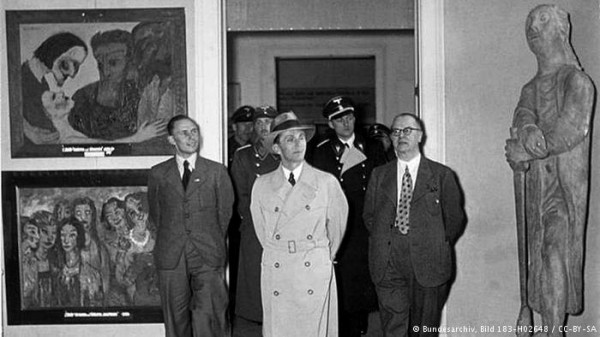
The same applies to figures in culture and the arts: films are produced, computer games are developed, paintings are created, and so on. Even graffiti on walls and street names can carry ideological meaning. Nazi leaders attached particular importance to culture:
From now on, art can only exist if it is rooted in the National Socialist soil5.
The Nazis did not persecute avant-garde artists, suprematists, and many other artistic movements by accident; these were labeled “degenerate art”6 — conservative ideology demanded uniformity and tradition from everyone, and therefore any deviation was perceived as a threat to the ruling regime.
Goods
Ideology can also be embedded in goods. For example, this includes products bearing state symbols, images of political leaders, slogans, and so on.
Any object that can carry a printed message or image should be utilized, as well as any device capable of producing intelligible sounds7.
Speech control by agents of influence
Even an agent of influence without organizational power can shape the ideology of their interlocutor. For example, parents who teach a child that fighting and dying for the interests of the nomenklatura is a noble cause (“each parent is himself the leader of a group and has authority over his children”8). Or, for instance, a “fake” veteran urging people to vote for United Russia.
Bribery
Sometimes it is sufficient to simply bribe a well-known public figure to broadcast a particular ideology. In the end, this can even turn out to be cheaper than building and maintaining propagandists from scratch.
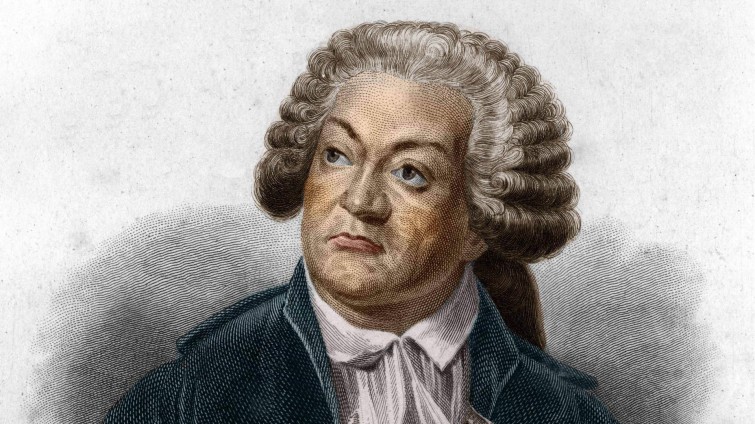
Modern propaganda takes into account not the individual person, or even mass consciousness, but the structure of society, consisting of overlapping groups and “leader–follower” relationships.
<…>
By being able to influence leaders, with or without their consent, you automatically gain influence over the groups they control9.
Traditions
Some traditional rituals serve a purely ideological function. Thus, the celebration of certain dates often carries ideological messages that are transmitted during the festivities. For example, the Church also maintains loyalty through traditional ritual practices:
Church ritualism keeps even the non-believing or weakly believing worker tethered through the three most important moments in human life and the human family: birth, marriage, and death. The workers’ state has turned away from church ritualism, telling citizens that they have the right to be born, to marry, and to die without magical movements and incantations performed by people dressed in cassocks, vestments, and other forms of religious attire. But everyday life finds it much harder to break away from ritualism than the state does.
<…>
Theoretical arguments act only on the mind. But theatrical ritual acts on feeling and imagination. Its influence is therefore much broader. Even within the communist milieu, there occasionally arises a need to oppose old ritualism with new forms, new symbolism, not only in the sphere of public state life, where this already exists to a significant extent, but also in the sphere of the family10.
Events
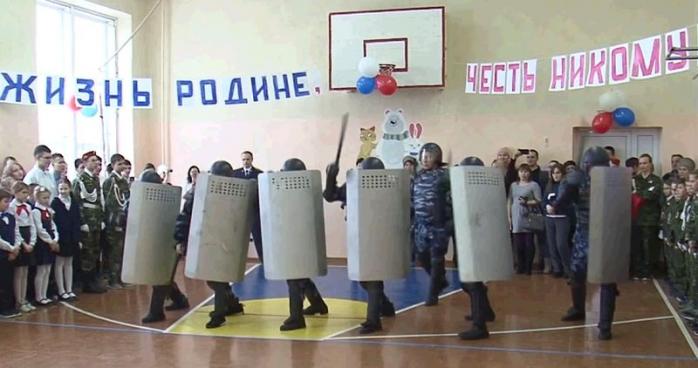
Ideology spreads most successfully when many people willing to listen gather in one place. Bernays pays considerable attention to this, and in his book “Propaganda”, immediately after discussing the media, he addresses precisely events, gatherings, and congresses11 (we may also add rallies, holidays, presentations, banquets, propaganda tours, exhibitions, sporting events, and so on — the list is endless).
Perhaps this is not all. According to Goebbels, “the goal of the national revolution must be a totalitarian state that penetrates all spheres of social life”12. Therefore, the most powerful propaganda machine can permeate literally every step of a person’s life. Now let us examine four main sectors that work to implant ideology and use the tools described above.
Children’s Sector
In practically every action of everyday life — whether in politics or business, social interaction or ethics — we act under the guidance of a comparatively small group of people who constitute a tiny fraction of our one hundred and twenty million fellow citizens, yet who understand the thought processes and social structure of the masses. They are the ones pulling the strings leading to public consciousness; they are the ones who manage old social forces and invent new ways of binding the world together and governing it13.
The machine affects a person from early childhood — when they hear ideological short theses reproduced by those around them. For example, “he’s growing up to be a groom” is a phrase aligned with conservative ideology, which does not need scientists and creative individuals, but rather “grooms” for population growth — i.e., labor and military force. Or “he will become a real man” — again, an idea consistent with conservative ideology, which insists on performing duties supposedly inherent to men, such as military service, since conservatives require as cheap a military force as possible. People transmit these ideas not entirely consciously — the machine has taught them that this is the right thing to say, that good and proper people speak this way, and they are merely trying to be kind without understanding the ideological content behind their words.
These and many other short theses are introduced, for example, through statements by certain politicians, and are reinforced through works of art – films, literature, and so on. For example, the massively promoted film “Brother 2” helped reinforce a number of such theses – Ukrainians should be held accountable for Sevastopol, and Black people should be referred to only as “negroes”, and so on.
But more on that later; for now, let us look at the stage at which propaganda further embeds its ideology. The next stage is children’s products, such as toys or books. Examples of healthy, anti-conservative toys include construction sets whose themes are work, leisure, self-development, and so on. A child learns not only to assemble according to instructions but also to create something of their own, something new. Examples of conservative toys are toy soldiers and tanks. A child who has spent their entire childhood playing war is more likely to grow up to be good disposable material in wars for the interests of conservative nomenklatura officials than a productive creator. According to Detinform.ru, “any military toys, even complex ones, including radio-controlled models and reconstructions of past wars, program children toward the destruction of their own kind”14. Even a holiday such as the Day of Destruction of Military Toys is observed in the world.
Children are also already influenced by part of the leisure sector — for example, cartoons can be part of it.
Educational Sector
Next comes the most important stage of propaganda – the so-called “patriotic education” in schools and universities, which in practice is nationalist education. In Russia, in addition to literature, history, and geography traditionally used for this purpose, lessons on Orthodoxy were also introduced15. The main Nazi book states:
From this perspective [from the perspective of “developing national pride” – note by “Logic of Progress”], we must restructure all curricula and gradually reorganize education so that our young person, upon finishing school, does not emerge as a half-pacifist, a democrat, etc., but as a true German.
<…>
In order for this national feeling from the very beginning to be genuine rather than illusory, it is necessary to instill the following ideas with iron consistency from early youth, when people are especially receptive…
And here is, for example, the task of geography in modern Russian schools, according to the “Teacher’s Handbook of Geography”:
Geography is a subject that largely bears one of the main tasks of the Russian school system: the formation of Russian identity among students as the key condition for strengthening Russian statehood. This task is set as a priority in the Second Generation State Educational Standards16.
It hardly needs to be explained that “the formation of Russian identity” is a softer definition of the formation of state nationalism. It is also quite clear that strengthening statehood means strengthening state power, that is, in this case, the power of senior officials (the nomenklatura).
In other words, schools spend a large amount of time not teaching professional skills or primarily training personnel, but forcing students to memorize conservative ideology!
In Order of the Ministry of Education and Science of the Russian Federation dated December 17, 2010 No. 1897 “On Approval of the Federal State Educational Standard for Basic General Education”, alongside some legitimate provisions, we indeed find requirements for “the upbringing of Russian civic identity: patriotism, respect for the Fatherland”, “awareness of one’s ethnic belonging”, and “the cultivation of a sense of responsibility and duty to the Motherland”17 (note that it is not “to society”, but to the “Motherland” — a term typically used to mask loyalty to the nomenklatura), and the “ability to recognize Russian identity” is also highly valued.

In school, students are already introduced to literary works that contain elements of conservative propaganda — Fyodor Dostoevsky, Nikolai Gogol’s “Taras Bulba”, “The Tale of Igor’s Campaign”, and so on18. Rare inclusions of democratic thought, such as the works of Ivan Turgenev, simply dissolve within the vast body of literature presented to young children — such volumes are apparently assigned so that children do not have time to reflect or critically reassess, but instead memorize uncritically and learn to accept what is said on faith.
According to the editorial board of “The Logic of Progress”, literature should develop children’s ability to read and imagination. It is not entirely clear what kind of imagination can develop if they spend almost all their time reading about 19th-century Russia, or what kind of reading ability can develop if these books are written in 19th-century language.
In civilized countries, history classes teach how democracy developed, how society evolved, and how people achieved improvements in living standards. In Russian schools, however, history lessons heavily focus on battles, who fought whom, who won, and so on. This creates the impression that the effectiveness of a state depends on how much territory it has conquered.
In Russian schools, children are also required to learn the national anthem, are brought to meet veterans, and are taught about the importance of militaristic holidays such as Victory Day.
Everything described above in relation to schools also largely applies to the period of university education, which is a continuation of the educational sector. For example, if we examine the comprehensive program of civic-patriotic education of students at the FSBEI HPE “Ural State Mining University” for 2015–201719, we will find among the list of activities alone such items as:
- Conducting individual and group discussions on students’ assessment of national values and the historical-patriotic attitude toward Russia;
- Organizing student participation in competitions, grant programs, and contests at regional, national, and international levels on civic-patriotic themes;
- Establishing and organizing the work of collectives, clubs, leisure centers, professional and student associations whose activities are aimed at civic-patriotic education of youth;
- Holding a scientific-practical student conference on patriotic education;
- Holding a patriotic song festival;
- Organizing and holding a photo exhibition “We Are Ready to Serve Russia”;
- Holding ceremonial evenings and concerts dedicated to Russian state holidays, together with patriotic organizations;
- Organizing visual propaganda on military-patriotic themes;
- Promoting among students periodicals of the Ministry of Defense of the Russian Federation;
- Military-sports game “Zarnitsa”;
- Literary evenings “Poetry of War”.
And much, much more. The imagination of the organizers of the propaganda machine here is truly boundless.
Military sector
One of the most powerful tools of propaganda is the army, especially conscription-based armies. In the military, people are primarily taught obedience, often completely useless — legendary examples include painting grass in the army, loading and unloading work, building generals’ dachas, and so on. If one believes Nazi ideologists, “education from the racial point of view is completed in military service”20.
In the army, individuality is suppressed, and a conservative hatred toward anyone who is not like you is cultivated. Everyone has the same uniform and the same haircut.
In addition, in the army people are fed slogans of patriotism to the point of exhaustion. In 2018, the institution of political officers was re-established in the Russian army21, one of whose main tasks is the “organization of military-political propaganda and agitation”22, so there will be even more patriotism. The army, among other things, also contributes to the formation of militarism. For example, some soldiers look at military equipment, become impressed by its strength and power, and after demobilization buy books about tanks and fighter jets, which helps reinforce conservative ideology.
Leisure sector
When a person has learned to read and has formed their worldview, they begin to independently study literature, read and watch the news, and this sphere is the most resource-intensive for propaganda. It is clear that at earlier stages the conservative “programming” has already been implanted into the minds of the majority of people, who are not particularly predisposed to critically evaluating what is happening. But there remains another, smaller group, and it is precisely this group that this sector of the propaganda machine is aimed at.
All tools are used here. Mass media, publishing houses, film studios, various foundations (for example, those funding research), pseudo-oppositional political parties — all of them generate information that serves the interests of elites. A person is regularly bombarded with ideology — when they read, watch television, listen to the radio, or talk with acquaintances. Manipulative short theses are poured from all of these information sources.

The leisure sector is additionally reinforced by religion — we have already mentioned this. For now, we can limit ourselves to one example: according to RBC, in 2014–2015 organizations of the Russian Orthodox Church received over 1.8 billion rubles for the creation and development of Russian spiritual and educational centers under the federal program “Strengthening the Unity of the Russian Nation and the Ethnocultural Development of the Peoples of Russia”23.
Sometimes opinion leaders emerge who pose a threat to elites. They are either bought or neutralized. For example, blogger Roma Mechanic described how someone close to Kremlin structures (apparently a “public relations specialist”) offered him 600,000 rubles to continue producing “oppositional” content criticizing the authorities, but in the interests of one of the Kremlin factions.
If Roma Mechanic had agreed, he could later have been blackmailed simply on the basis of this bribery, and would have become controlled by the propaganda machine. However, he refused, and as a result his YouTube channel began to be “buried” through a tactic of mass unsubscribes and dislikes, which lowered the channel’s ranking in the platform’s algorithms and prevented the author from increasing his view counts.
Managing the machine
The programs and personnel of the entire system are shaped by its owners — sometimes by the nomenklatura, sometimes simply by the financial elite, which shares conservative values due to its desire to preserve a high level of inequality, and therefore its own privileged position. Subordinates are controlled through standard directive methods as well as economic incentives. For example, a former employee of VGTRK, Leonid Krivenkov, reported that the official salary at the TV channel was extremely low (6,860 rubles per month), while “there is a sophisticated system of bonuses that may or may not be paid if an employee starts behaving ‘incorrectly’”24.
Of course, not all media owners are conservatives; however, if their creation poses a threat to conservative interests, such an owner will be ignored, excluded from the professional community, and discredited by colleagues and advertisers (who also belong to the elite), who will, among other things, avoid entering into deals and contracts with them.
In practice, it works as follows. Suppose that in the present day a book is published that represents a high level of revolutionary threat. The first reaction of the conservative machine is to ensure it is not covered, published, or sold anywhere. The second reaction is to commission a rebuttal book for the narrow circles where the information has already leaked, and to actively promote this rebuttal within those same circles. The third reaction is to require relevant university disciplines to study the rebuttal book (in a version that does not mention the original at all). If the state is totalitarian, it will also ensure the destruction of existing copies of the book and imprison the author (for example, by “discovering” drugs in their possession).
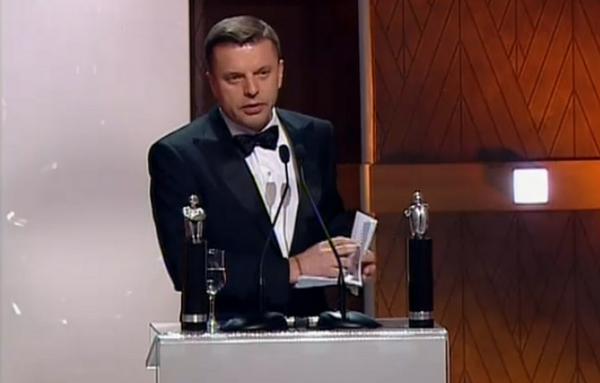
If this initial barrier is overcome and the book somehow gains popularity, then all available forces are mobilized. Racists spread the narrative that the author is Jewish and funded by the West; security officials claim the author is a criminal hiding income; clerical circles suggest he is cheating on his wife or is gay; regime-aligned intellectuals construct philosophical arguments declaring the author incorrect; columnists spew hostility in articles and low-quality books (which are readily published in large print runs), and so on. Such harassment is funded either by the nomenklatura or large business interests (if both are interested in preserving and strengthening high inequality), or it arises from the personal initiative of “enthusiasts” who have themselves been influenced by the propaganda machine.
What is the power of the propaganda machine
With the help of a propaganda machine, especially when it is controlled by a totalitarian state, it is possible to make the population of a country think almost anything. It can even be possible to make a significant part of the country believe that two plus two equals five. This can be done, for example, in the following way. A compliant segment of the scientific establishment is given a task to construct a basis — for instance, the “discovery” of some pseudo-ancient Arabic manuscript in which two plus two equals five, along with a couple more “findings” of the same kind, supported by serious academic-style articles in order to formulate a short thesis. Then a “culprit” is identified — the one who allegedly replaced five with four. This could be a treacherous Arab prince, or a universal scapegoat — the Jews. The search for the culprit may be conducted by the same scientific apparatus and tabloid publicists. After the theoretical foundation for the thesis that two plus two equals five is established, all sectors of the propaganda machine begin to operate. And when this manipulative short thesis is repeated everywhere, and students are graded down for writing 2×2=4, any objective point of view will be regarded as madness. Of course, there exists an international scientific community that would not accept such a position. However, today we can observe how quickly even flat Earth theories spread — hardly anyone listens to the scientific community, and its voice can be drowned out.
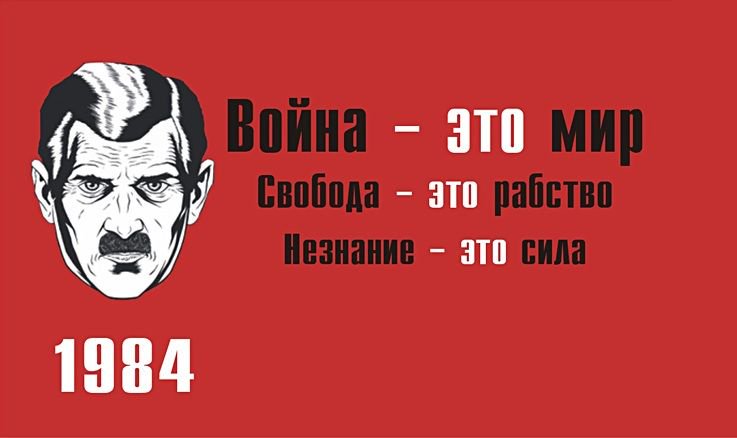
George Orwell artistically described the world of totalitarian propaganda machinesIn the next stage, it is also possible to artificially create fanatics of the “2×2=5” thesis. It is enough to introduce short theses claiming that Jews or another external enemy are trying to destroy the country’s economy by imposing the idea that 2×2=4, after which they will slaughter and torture children and pregnant women, and turn the rest of the country into sexual and gay slavery. To implant this idea, only part of the propaganda machine’s sectors may be used, strengthening the narrative with the illusion that “the state is hiding the truth from us”. And then the brainwashed fanatics will attack people who say that 2×2=4, calling them a “fifth column”, “traitors”, “paid agents of Israel”, and so on.
How to resist
Every person is capable of independently resisting the manipulations of the propaganda machine. To do this, at a minimum, whenever you hear a short thesis, you need to verify it against factual sources and experimental evidence. In other words — use the scientific method. This can help an individual avoid the influence of the propaganda machine, but it will not be enough to break it. The machine can be broken only by gaining state power, completely replacing the leadership of the propaganda apparatus, and fully debunking its foundational narratives.
Conclusion
The propaganda machine literally determines “who we should respect and who we should despise, what position we should take on the privatization of public utilities, tariffs, prices for rubber, the Dawes Plan and immigration; people who tell us how our home should be arranged, what furniture it should contain, what should be served for dinner, what shirts to wear, what sports to engage in, what theaters to attend, what charitable organizations to support, what slang expressions to use, and what jokes to laugh at25”. A centralized and monopolistic propaganda machine within a country is an authoritarian institution — a tool for the implementation of authoritarian power.
- Mega-hyper-agitation machine of good // Navalny. LiveJournal (navalny.livejournal.com). March 12, 2012, 17:07. [Electronic resource]. URL: https://navalny.livejournal.com/692163.html (accessed: 10.01.2020).
- Andrey Kolesnik. Wisdom of the Ages. 1000 of the Most Important Thoughts in the History of Humanity. – p. 291
- E. Bernays. Propaganda / Edward Bernays; trans. from English by I. Yushchenko. – 176 pp. – Moscow: Hippo Publishing, 2010. – p. 20.
- Ibid., p. 3.
- A.V. Vasilchenko – The Spotlight of Dr. Goebbels. Cinema of the Third Reich – 320 pp. – Moscow: Veche, 2010. – p. 6.
- What the Nazis classified as “degenerate art” // BBC News Russian Service (www.bbc.com). January 31, 2014. [Electronic resource]. URL: https://www.bbc.com/russian/multimedia/2014/01/140131_v_nazi_art_list (accessed: 10.01.2020).
- E. Bernays. Propaganda / Edward Bernays; trans. from English by I. Yushchenko. – 176 pp. – Moscow: Hippo Publishing, 2010. – p. 105.
- Ibid., p. 32.
- Ibid., pp. 45–49.
- L. Trotsky. Collected Works. Series VI. Problems of Culture. Volume XXI. Culture of the Transitional Period. — 520 pp. — Moscow–Leningrad: State Publishing House, 1927. – pp. 39–40.
- E. Bernays. Propaganda / Edward Bernays; Trans. from English – I. Yushchenko. – 176 pp. – Moscow: Hippo Publishing, 2010. – pp. 8–10.
- Heinz Höhne. The Order of the Death’s Head: The Story of Hitler’s SS. – Moscow: Olma-Press, 2003. – p. 88
- E. Bernays. Propaganda / Edward Bernays; Trans. from English – I. Yushchenko. – 176 pp. – Moscow: Hippo Publishing, 2010. – p. 2.
- Do children need military toys? // Detinform (detinform.ru). [Electronic resource]. URL: https://detinform.ru/nuzhny-li-detyam-voennye-igrushki.html (accessed: 10.01.2020).
- Decree of the Government of the Russian Federation of October 29, 2009 No. 1578-r, Moscow // Rossiyskaya Gazeta – Federal Issue No. 211(5035). November 11, 2009. [Electronic resource]. URL: https://rg.ru/2009/11/11/obr-dok.html (accessed: 11.01.2020).
- Stupnikova A.D. et al. Geography Teacher’s Handbook. – 215 pp. – Uchitel Publishing House, 2019. – pp. 3–6
- Order of December 17, 2010 No. 1897 On Approval of the Federal State Educational Standard for Basic General Education // FGOS – Federal State Educational Standards (fgos.ru). [Electronic resource]. URL: https://fgos.ru/LMS/wm/wm_fgos.php?id=osnov (accessed: 11.01.2020).
- Federal Component of the State Standard of General Education. Part I. Primary General Education. Basic General Education. / Ministry of Education of the Russian Federation. – 221 pp. – Moscow, 2004. – pp. 86–102.
- Comprehensive program “Civic-patriotic education of students of FSBEI HPE ‘Ural State Mining University’ for 2015–2017” // Official portal of FSBEI HE “Ural State Mining University”. Yekaterinburg, 2015. [Electronic resource]. URL: http://activities.ursmu.ru/upload/doc/2016/01/16/grajdansko-patrioticheskoe_vospitanie.pdf (accessed: 11.01.2020).
- E.M. Rzhevskaya. Goebbels. Portrait Against the Background of a Diary. – 400 pp. – Moscow: AST-PRESS BOOK, 2004. – p. 180.
- Yuri Gavrilov. General in a “dual” position // Rossiyskaya Gazeta – Federal issue No. 165(7628). July 30, 2018, 16:41. [Electronic resource]. URL: https://rg.ru/2018/07/30/v-minoborony-poiavilsia-voenno-politicheskij-glavk.html (accessed: 11.01.2020).
- Main Military-Political Directorate of the Armed Forces of the Russian Federation // Ministry of Defense of the Russian Federation (mil.ru). [Electronic resource]. URL: https://structure.mil.ru/structure/ministry_of_defence/details.htm?id=12375@egOrganization (accessed: 12.01.2020).
- Svetlana Reiter, Anastasia Napalkova, Ivan Golunov. RBC investigation: what the Church lives on // RBC (www.rbc.ru). February 24, 2016, 08:44. [Electronic resource]. URL: https://www.rbc.ru/investigation/society/24/02/2016/56c84fd49a7947ecbff1473d (accessed: 23.12.2019).
- Дмитрий Волчек. “Советую телевизор не включать”. Исповедь оператора ВГТРК // Радио Свобода (www.svoboda.org). 19 января 2019 года. [Электронный ресурс]. URL: https://www.svoboda.org/a/29717396.html (дата обращения: 12.01.2020).
- Э. Бернейс. Пропаганда / Эдвард Бернейс; Пер. с англ. – И.Ющенко. – 176 с. – М.: Hippo Publishing, 2010. – с. 27.