Right-wing and left-wing political movements
In political terminology, there is a certain amount of confusion, especially when it comes to defining “the right” and “the left”. For example, the left labels National Socialists as right-wing, while some on the right label them as left-wing. This creates difficulties in understanding the terms and leads to confusion.
Today, even Time magazine notes that “right” and “left” are situational terms used depending on context1. However, by failing to establish clear definitions, we thereby roll out the red carpet for demagogues who manipulate public consciousness for their own purposes. Historian and political scientist, Doctor of Historical Sciences Kamaludin Gadzhiev, in his political science textbook, concludes that “the concepts of ‘left,’ ‘right,’ ‘conservatism,’ ‘liberalism,’ etc. require rethinking and clearer interpretation in light of current realities”2. Therefore, let us try to define who the “right” and the “left” are, and how to distinguish between them.
The origin of the terms
Let us first turn to the history of the political terms “right” and “left”. These terms originated during the era of the Great French Revolution, specifically after August 28, 1789 — on that day, the National Constituent Assembly, which was working on designing new institutions that would mark the transition from absolute monarchy to constitutional monarchy, split into two groups over the question of what powers should be granted to the king. Above all, the issue concerned the future right of veto. It was at this moment that supporters of granting the monarch broader powers grouped themselves on the right side of the assembly hall, while those who opposed this gathered on the left3. This arrangement persisted later as well — in the Legislative (later National) Assembly, where those occupying the right benches were supporters of preserving the old order (monarchy, aristocracy, and state religion), while those on the left were supporters of egalitarian reforms (republicanism, the abolition of estate-based inequality, and the separation of church and state).
The right wing of revolutionary figures at that time was represented by the Feuillants, and the left wing by the Jacobins4. The latter were mainly supporters of progressive values based on progress and social justice. The further to the “right” a politician was, the more they tended to share conservative values based on tradition and inequality. This division by value systems (as well as by the state and social institutions they support) historically constitutes the essence of the distinction between “right” and “left”. This is how political movements are still classified today — for example, Andrew Heywood’s textbook states that left-wing movements are characterized by ideas such as freedom, equality, fraternity, human rights, progress, reform, and internationalism, while right-wing movements are more typically associated with values such as authority, hierarchy, order, duty, tradition, reaction, and nationalism5. Therefore, in parliamentary seating charts (for example, the European Parliament chart by BBC or Deutsche Welle), social democrats and Greens are placed on the left, while liberals are to the left of conservatives:
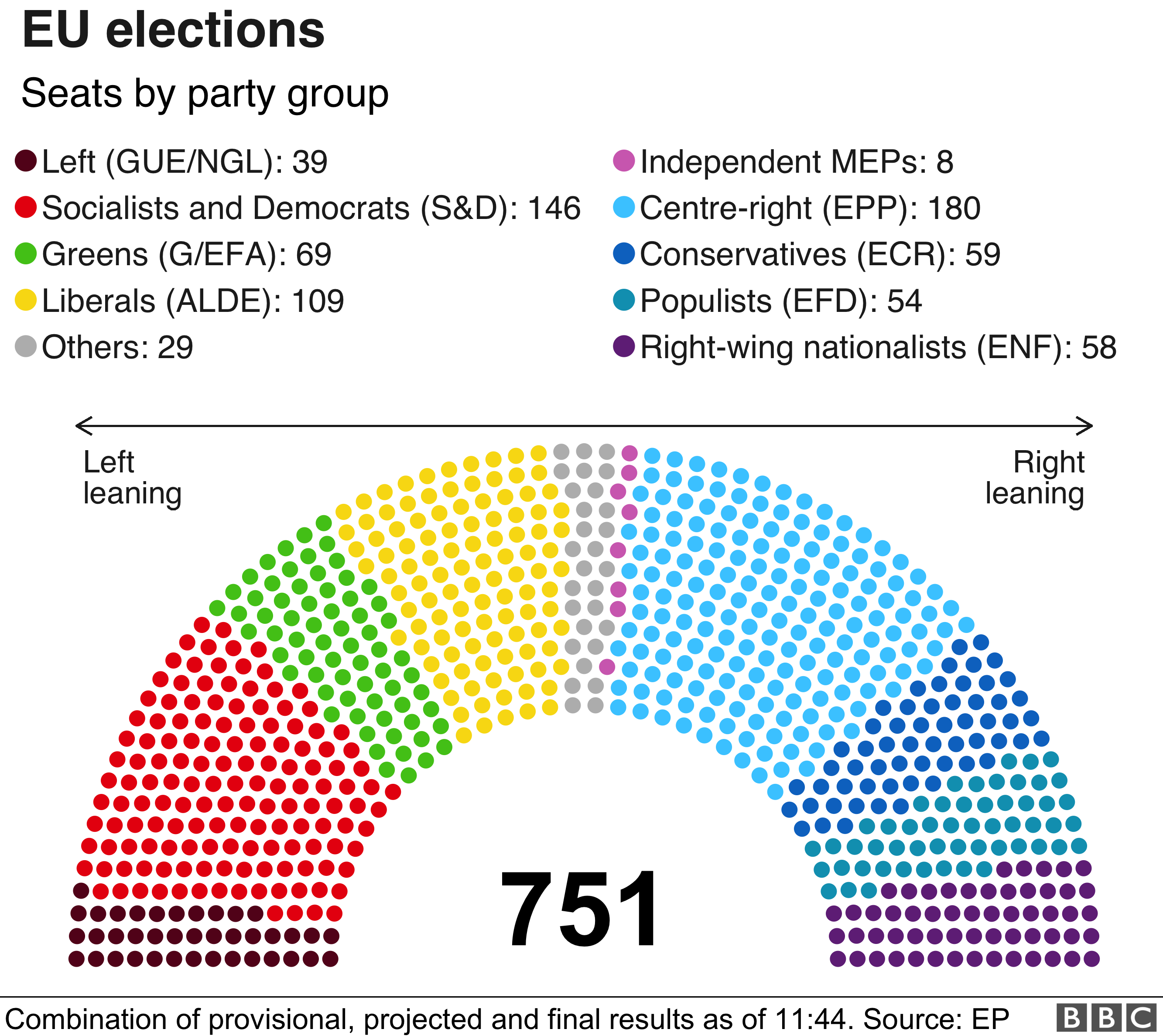
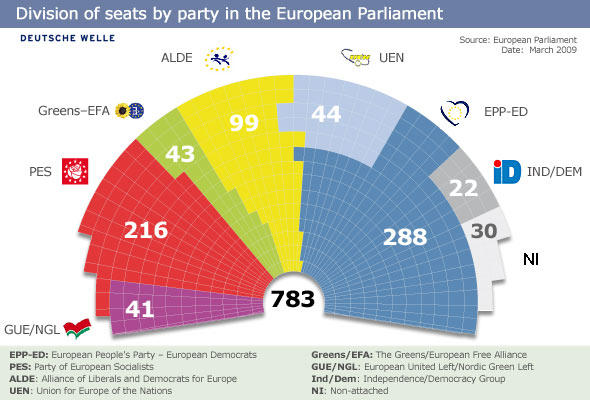
Therefore, both historically and today, left-wing forces are considered to be those political movements that implement progressive values, while right-wing forces are those that implement conservative ones. Moreover, given that the main reason for the division into left and right was the question of monarchical powers, it can be concluded that the right are those forces that support the concentration of power (i.e., authoritarianism), while the left support the decentralization of authority (i.e., democracy).
Who is “right” and who is “left”?
If we compare the principles of progressives and conservatives, which we have already examined in the relevant articles, we will see that for the former they are again based on progress and social justice, while for the latter they are based on tradition and inequality:
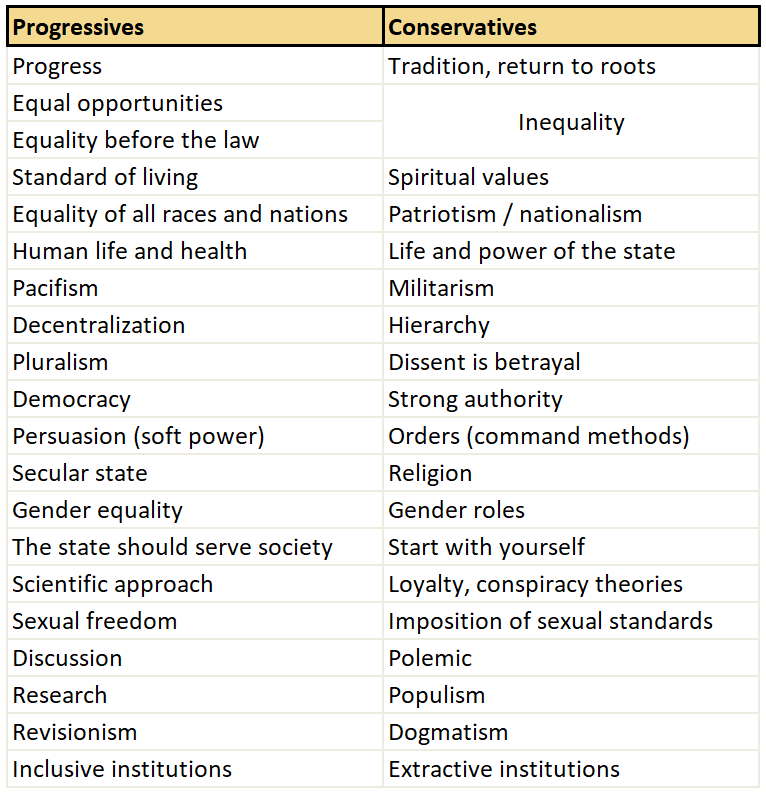
And here we come to the most fundamental mistake, which consists in dividing the right and the left primarily by their economic program rather than by their value system. The main dividing line runs precisely through the system of values. For example, Nazis could introduce a planned economy and even set targets for burning Jews and redheads in furnaces, but no one in their right mind would call them left-wing because of that. And under a planned economy without private property, high inequality can be implemented, almost feudal privileges can be introduced (we examined the privileges of the Soviet nomenklatura in a separate article), progressive reforms can be blocked, meaning that practically none of the left-wing values are implemented. Planned instruments and state ownership make it possible to organize both total “leveling” and the harshest inequality imaginable. Also, if judged by economic policy alone, Vladimir Lenin would end up being a right-wing politician in relation to Joseph Stalin (due to the NEP), and Maximilien Robespierre would be right-wing in relation to Benito Mussolini. Therefore, “right” and “left” are not about economics, but about the value system as a whole. In a developed society, no one would understand it if social democrats or greens were called right-wing, or conservatives were called left-wing. And a planned economy is not a marker of left-wing politics if it does not implement a progressive value system.

As Dictionary.com notes, the left are those who support progressive reforms (especially aimed at achieving greater social and economic equality), while the right are those who hold conservative views6. This is also confirmed by the Britannica Dictionary7. The Cambridge Dictionary adds that, in addition to traditionalist views, the right is also characterized by support for low taxes and private property8. However, the same Cambridge Dictionary defines the left as those who believe that power and property should be distributed among all strata of society9, meaning that private property is also included here (joint-stock companies and cooperatives also fall under private property, as we discussed in a separate article). Thus, the sources confirm precisely our position.
Confusion was introduced by later radicals and utopian populists, starting with the Jacobins, who declared themselves left-wing despite advocating authoritarianism (which the left originally opposed). Later radicals and utopian populists, such as the Bolsheviks and anarchists, also declared themselves left-wing. The public partially accepted this, and today those advocating radical and revolutionary restructuring with the establishment of a new socio-political order are referred to as the “far left”, as noted by the same Dictionary.com. However, such terms became established before it became clear to the public that utopian populism is not progress or forward movement, but a step backward, since it is practically unworkable and therefore does not lead to progress or improvements in living standards. Thus, we have a contradiction: the left are those who share the values of progress, but the politics of the far left does not lead to progress. In modern society, this contradiction has not been resolved, and it continues to exist. In what follows, we will propose our own solution to this problem.
The consideration of a planned economy as the principle determining affiliation with the left was based on the assumption that it would enable the achievement of equality, which was not confirmed in practice, and the very idea of property equality collapsed – we examined this issue here. However, even after the collapse of this idea, the principle of classification based on economic criteria continued to be supported by propaganda of the nomenklatura, in order to present Stalinism, which was their ideology, as a left-wing movement, while in fact it is not left-wing. For the same purpose, the regime of Adolf Hitler was referred to in the Soviet press as fascist rather than Nazi, in order to make it easier to explain to citizens how fascism differs from the regime that developed under the dictatorship of Joseph Stalin. In reality, the planned economy is a major part of what little distinguishes Stalinism from fascism, rather than distinguishing left movements from right ones.
In articles on the inefficiency of the planned economy and the privileges of the nomenklatura, we demonstrated that a high level of social stratification can exist even under a planned economy. Therefore, what determines whether a movement is “right-wing” or “left-wing” is the extent to which a given value system is actually implemented in practice. The more conservative values are reflected in a movement’s words and actions, the more “right-wing” it is – it is very important to note here that in order to be considered right-wing, an ideology does not have to embrace all of these values without exception. It is hardly possible to claim that there exist ideologies that are 100% right-wing or 100% left-wing. Many of them in fact represent a mixture of right-wing and left-wing ideas. However, if conservative values are predominant or some of them are treated as priorities, such an ideology can be classified as right-wing. At the same time, a key factor is the attitude toward social justice and which groups’ interests the movement represents (as a rule, the right represents elite interests, while the left represents the majority of citizens).
This table presents a gradation of the main political movements from the most left-wing to the most right-wing, based on our article reviewing existing political ideologies:

Legend:
- Ds – democratic socialism;
- Sd – social democracy;
- Sl – social liberalism;
- Gr – greens;
- ChrD – Christian democrats;
- Nl – neoliberals;
- Cl – classical liberals;
- Pm – parliamentary monarchists;
- Nd – national democrats;
- Scon – social conservatives;
- Lcon – liberal conservatives;
- Pcon – right conservatives;
- Ti – Titoists;
- Rm – market Marxists;
- Mt – Trotskyists;
- SovP – Soviet patriots;
- F – fundamentalists;
- St – Stalinists;
- Fa – fascists;
- Am – absolute monarchists;
- Ns – National Socialists.
Many may find it surprising that Titoists, market Marxists, Trotskyists, Soviet patriots, and Stalinists, who are traditionally classified by many sources as left-wing, are placed in our scheme on the right. The reason is that, despite the proclamation of many progressive values as political goals, the practice of these movements, due to the logic of authoritarianism, too often shows that in real political situations different values are implemented, while the goals of progress and social justice, fundamental to the left, are not achieved. Our scheme assumes that the classification of left and right is determined not only by the declaration of values, but also by their actual implementation. Otherwise, a situation is possible in which a conservative regime declares progressive values but pursues a fundamentally different policy – in this case, the ideology of such a regime is a deception, and calling it progressive would also be a deception (and our model is intended, among other things, to counter such deception). If, however, we construct the system based on theory rather than practice, then, for example, Stalinism would turn out to be a left-wing ideology, even though progressive values were implemented under it more poorly than under some fascist regimes. Therefore, classification based solely on theory, without its connection to the results of practical implementation, is the second major mistake in defining the left and the right. Both theory and practice must be taken into account.
In addition, в our model of the spectrum there is no group of ideologies that includes anarcho-communists, mutualists, anarcho-capitalists, and anarcho-primitivists. This is because the ideologies of this group proclaim principles that cannot be successfully implemented in practice, as we discussed in the article on the state, therefore we do not consider them in the “right–left” context at all.
It may also be asked why there are so many right-wing ideologies in the scheme, but this is due to the fact that a significant part of them existed in the past, has now become obsolete, and remains only as echoes of history – the left rejects such ideologies due to its progressivism.
It should be noted, however, that social democrats may refer to themselves as centrists in cases where this is required in order for the interlocutor to better understand what is being discussed. Today, an outdated scheme is still popular, in which the division places an unjustifiably high emphasis on issues of economics, utopianism, and self-identification. This situation forces us to take it into account, while at the same time promoting our own point of view.
Conclusion
The model of the political spectrum presented above helps to clarify and understand who is actually left-wing and who only declares affiliation with left-wing movements. And this, first and foremost, will help social democrats correctly identify political opponents and allies.
- Madeleine Carlisle. What to Know About the Origins of ‘Left’ and ‘Right’ in Politics, From the French Revolution to the 2020 Presidential Race // Time (time.com). September 14, 2019, 13:08. [Electronic resource]. URL: https://time.com/5673239/left-right-politics-origins/ (accessed: 28.12.2019).
- К.С. Гаджиев. Политология: Учебник для высших учебных заведений. – 488 с. – М.: Логос, 2001
- Сиринелли Ж. Деление на правых и левых во Франции: величина постоянная или переменная? Перевод с франц. Е.И. Лебедевой // Французский ежегодник 2003: Правые во Франции. М. – с. 4.
- Новая история стран Европы и Америки: первый период. Учеб. для студентов вузов, обучающихся по спец. «История» / Г.Л. Арш, В.С. Бондарчук, Л.И. Гольман и др.; под ред. А.В. Адо. – 623 с. – М.: Высш. шк., 1986. – с. 190.
- Andrew Heywood. Key Concepts in Politics and International Relations (2d ed.: Palgrave Macmillan, 2015), p. 119.
- Why Do “Left” And “Right” Mean Liberal And Conservative? // Dictionary.com (www.dictionary.com). 9 August 2022. [Electronic resource]. URL: https://www.dictionary.com/e/leftright/ (accessed: 09.07.2023).
- Right wing // The Britannica Dictionary (www.britannica.com). [Electronic resource]. URL: https://www.britannica.com/dictionary/right-wing (accessed: 09.07.2023).
- The right wing // Cambridge Dictionary (dictionary.cambridge.org). [Electronic resource]. URL: https://dictionary.cambridge.org/dictionary/english/right-wing (accessed: 09.07.2023).
- The left wing // Cambridge Dictionary (dictionary.cambridge.org). [Electronic resource]. URL: https://dictionary.cambridge.org/dictionary/english/left-wing (accessed: 09.07.2023).