
Class and social struggle – contemporary metamorphoses
Despite the fact that Marxism as a whole is largely an outdated ideology today, the potential of some of its provisions is not yet exhausted. They need significant revision and modernization, which can also be considered a development of these ideas. One of the controversial theses usually attributed to Marxism — the doctrine of class struggle — evolved in such a way that it led to dire consequences. However, this is not a reason to deny the existence of a struggle between various forces in society for the realization of their interests. In this article, we will attempt to bring this idea into alignment with reality.
Before proceeding to define the concepts of classes and class struggle, we need to note that these concepts are not inherently Marxist. Karl Marx himself wrote that “no credit is due to me for discovering the existence of classes in modern society or the struggle between them. Long before me, bourgeois historians had described the historical development of this class struggle and bourgeois economists the economic anatomy of the classes”1, that is, Marxists have no right to claim that only their definitions and understanding of these terms are correct. Therefore, it is more appropriate here to rely not on Marxist sources, but on academic ones.
Contents
What are classes
According to the Great Russian Encyclopedia, social classes are large groups of people occupying similar positions in the economic structure of society2. The differences between these groups, which determine the social inequality of classes, lie in the nature and size of ownership of the means of production and the produced product, as well as in the level of material wealth. Britannica states that a social class is a group of people within a society who possess the same socioeconomic status3. Dictionary.com gives the following definition: a broad group in society having common economic, cultural, or political status4. In general, we see that most sources largely share the definition from the Great Russian Encyclopedia.
The communist movement in Russia traditionally uses the definition of class derived by Vladimir Lenin: “Classes are large groups of people differing from each other by the place they occupy in a historically determined system of social production, by their relation (in most cases fixed and formulated in law) to the means of production, by their role in the social organisation of labour, and, consequently, by the dimensions and mode of acquiring the share of social wealth of which they dispose. Classes are groups of people one of which can appropriate the labour of another owing to the different places they occupy in a definite system of social economy”5.
Based on the Leninist understanding of classes, many communists conclude that classes are divided into two groups – those that own the means of production and those that do not. Class struggle occurs between them. However, for example, the struggle also takes place between classes that own the means of production – the nomenclature (which owns enterprises collectively, as we showed here) and business. The former strive for nationalization, the latter for privatization; their interests are opposite. Another example is the confrontation between small and large businesses, whose interests also come into conflict, a subject to which we will return later. But on the whole, the Leninist definition of classes does not contradict the definition from the Great Russian Encyclopedia, as the relation to the means of production is not the sole criterion of class affiliation in it. Simply using this definition means narrowing the generally accepted concept of classes, using a reduced definition, which ultimately narrows the quality of the class analysis we conduct.
What is class struggle
The 1955 Short Philosophical Dictionary states that it is a struggle between exploiters and the exploited, a manifestation and expression of the irreconcilability of their class interests6. According to Dictionary.com, it is a struggle between different classes in a society, arising from different social or economic positions and reflecting conflicting interests7. It is also a struggle for political and economic power. The Cambridge Dictionary agrees with the latter statement, defining class war as the struggle between capitalists and the working class for political and economic power8. According to Merriam-Webster, it is the tension and rivalry between social or economic classes9. In general, based on the sources, we can conclude that class struggle is the struggle between different classes in society for political and economic power.
On the history of class struggle
Throughout human history, various social classes have emerged, after which their role has waxed and waned. In Marxism, it is believed that “the history of all hitherto existing society is the history of class struggles”10. Candidate of Historical Sciences Eduard Schultz briefly attempts to describe the theory of class struggle outlined by Marx:
The entire history “according to Marx” is, firstly, the successive modes of production, and, secondly, the history of the oppression of one class by another, from which grew the antagonism between the oppressing and oppressed classes1112. Class struggle, from Marx’s point of view, inevitably leads to revolution and the revolutionary transformation of society13. That is precisely why, for him, “revolutions are the locomotives of history”14. The entire process of human development, according to Marx, leads it to the final revolution – the proletarian revolution, which will finally establish on Earth a new, just social order – socialism and communism1516.
However, Karl Popper already noted:
Marx’s theory of classes is to be regarded as a dangerous oversimplification, even if we admit that the distinction between rich and poor is always of fundamental importance. One of the most important episodes of medieval history – the struggle between the popes and the emperors – serves as a good example of dissension within the ruling class. It would obviously be a mistake to interpret this rivalry as a conflict between exploiters and the exploited… One of the dangerous aspects of Marx’s formula under analysis is that if taken seriously, it leads Marxists to a false understanding of all political conflicts as a struggle between the exploited and the exploiters… As a consequence of this, some Marxists, especially in Germany, explained the First World War as a war between revolutionary, or “have-not”, nations and an alliance of conservative, or “have”, powers. Obviously, such an interpretation can be used to justify any aggression. This is only one example of the danger inherent in the sweeping historicist generalization developed by Marx17.
Also, at least strange are the concepts of “bourgeois revolution” and “proletarian revolution”. Let us omit here the fact that it would be difficult for us to name slave-owning and feudal revolutions (which would be logical if we think along the lines of the theory of socio-economic formations), but let us pay attention to the fact that the French Revolution of 1789–1794 was classified in the USSR as a bourgeois revolution18, while not being a “bourgeois” revolution, since the vast majority of its key leaders and participants did not belong to the bourgeoisie. Marx himself admitted that “in 1648 the bourgeoisie, in alliance with the new nobility, fought against the monarchy, the feudal nobility, and the established church. In 1789 the bourgeoisie, in alliance with the people, fought against the monarchy, the nobility, and the established church”19, that is, according to Marx as well, the revolution was not bourgeois, but at least popular-bourgeois. The label “bourgeois” is pinned on the French and similar revolutions for the following reason: “In both revolutions the bourgeoisie was the class that really stood at the head of the movement. The proletariat and the strata of the urban population not belonging to the bourgeoisie either had as yet no interests separate from the bourgeoisie, or did not yet constitute independently developed classes or parts of a class”20. Was this actually the case?
The first problem was that the revolutions of 1848–49 in Europe took place in states that were already “capitalist” by Marxist definitions. If we call them bourgeois, it turns out that the bourgeoisie staged a revolution against the bourgeoisie. The second problem was that if one investigates who stood at the head of the movement during the French Revolution, it turns out that these people did not belong to the bourgeoisie. Take, for example, the “Robespierrist” Committee of Public Safety of 1793. Of the 12 people on it, six had been lawyers before the revolution (Robespierre, Couthon, Saint-Just, Barère, Prieur de la Marne, Billaud-Varenne), two were military engineers (Prieur de la Côte-d’Or and Carnot), two were prosecutors (Lendot and Hérault de Séchelles), one was a pastor (Jeanbon Saint-André), and one was an actor (Collot d’Herbois). It is unlikely that any of them can be classified as bourgeoisie, unless lawyers are classified as this class, but in that case, there were plenty of representatives of the bourgeoisie in the Soviet Union even under Joseph Stalin (besides, the Manifesto of the Communist Party mentions that “the bourgeoisie has stripped of its halo every occupation hitherto honored and looked up to with reverent awe. It has converted the physician, the lawyer, the priest, the poet, the man of science, into its paid wage laborers”21, that is, lawyers do not belong to the bourgeoisie there). So lawyers cannot be classified as bourgeoisie.
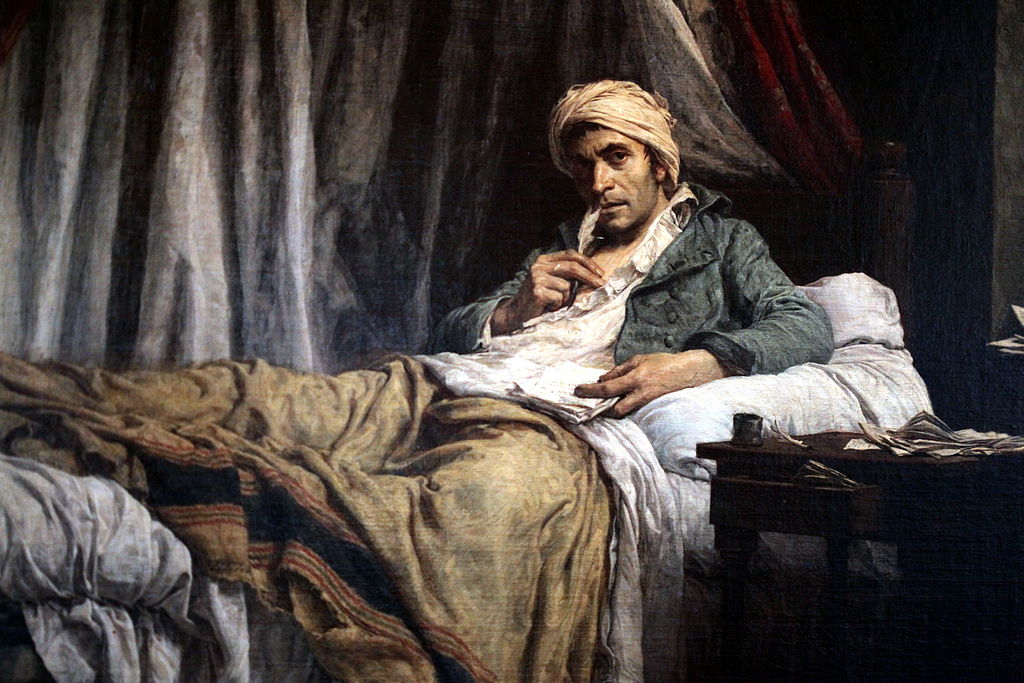
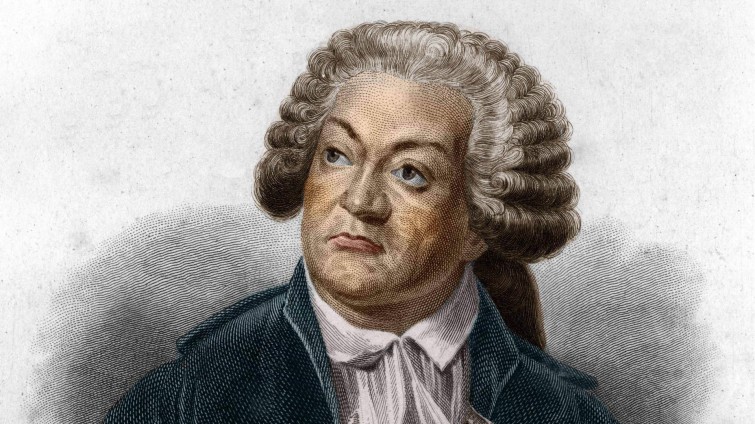
Moreover, quite a few prominent figures of the French Revolution did not belong to the Third Estate either, being representatives of the nobility or the clergy. Apart from the aforementioned Jeanbon Saint-André, one can recall such figures as Philippe Égalité (Duke of Orléans), Emmanuel-Joseph Sieyès (vicar-general of the Bishop of Chartres), Gilbert du Motier, Marquis de Lafayette (marquis, camp marshal), Adrien Duport (son of a baron), Alexandre de Lamet (nobleman, colonel of the 2nd Royal Lorraine Regiment), Henri Grégoire (bishop), Jean-Baptiste Gobel (auxiliary bishop), Charles-Maurice de Talleyrand-Périgord (Bishop of Autun), Louis-Michel Le Peletier de Saint-Fargeau (from a wealthy aristocratic family, later became the “first martyr of the revolution”), Armand Louis de Gontaut, Duke of Lauzun, Armand Désiré de Vignerot du Plessis (Duke of Aiguillon), Boniface-Louis-Andre de Castellane (marquis, general), Stanislas de Clermont-Tonnerre (representative of the noble house of Clermont-Tonnerre), Louis Alexandre de La Rochefoucauld (duke), Jean-Frédéric de La Tour du Pin Gouvernet (Count de Paulin, general), Louis-Joseph-Charles-Amable d’Albert de Luynes (colonel-general of dragoons, from the influential d’Albert family), and others. All of them supported the Third Estate. In fact, among the famous leaders, only Jacques-Pierre Brissot (besides his law practice, was a tavern keeper), Maximin Isnard (seller and manufacturer of perfumery), and Jean-Baptiste Boyer-Fonfrède (merchant) belonged to the bourgeoisie. One might recall that Dominique Vincent Ramel-Nogaret was the son of a merchant, but he himself held the post of a prosecutor. Doctor of Historical Sciences Dmitry Bovykin writes: “the bourgeoisie, however one understands it, hardly made the revolution: for example, among the deputies of the Constituent Assembly, who in two years left not a stone standing of the old monarchy, there were no more than 15% bourgeois, and they were not among the leaders”22.
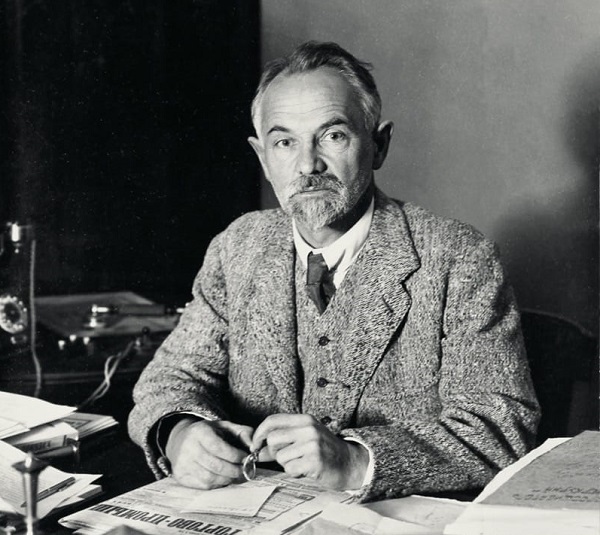
We can observe a similar situation in relation to “proletarian revolutions”, among which Marx included the Paris Commune23, and later Marxists – the Bolshevik coup of October 1917. If we are talking about the latter, among the Bolshevik leaders at various times were: Vladimir Lenin (hereditary nobleman24), Leon Trotsky (from a family of wealthy land-renters25), Grigory Zinoviev (son of a dairy farm owner26), Leonid Krasin (general manager of the Russian Siemens-Schuckert Joint-Stock Company27), Yakov Sverdlov (son of an engraving workshop owner28), Grigory Sokolnikov (son of a pharmacy owner), Rozalia Zemlyachka (daughter of a wealthy 1st-guild merchant), Joseph Dubrovinovsky (born into the family of a merchant-renter), Gleb Krzhizhanovsky (power station director29), Andrey Bubnov (from a merchant family), Gleb Bokiy (from the noble family of an Active State Councillor), Sergo Ordzhonikidze (from the family of a petty landowner), Elena Stasova (from a noble family), Valerian Kuybyshev (from a noble family), and so on. Most of these people had no profession (due to the concept of the “party of professional revolutionaries”, where the party member’s profession was revolution), which is why we indicate their background for them. Such a composition looks even more like a “bourgeois revolution”. Especially considering the Bolsheviks’ sources of financing, such as Savva Morozov. However, here too this label is inappropriate, as we will return to discuss.
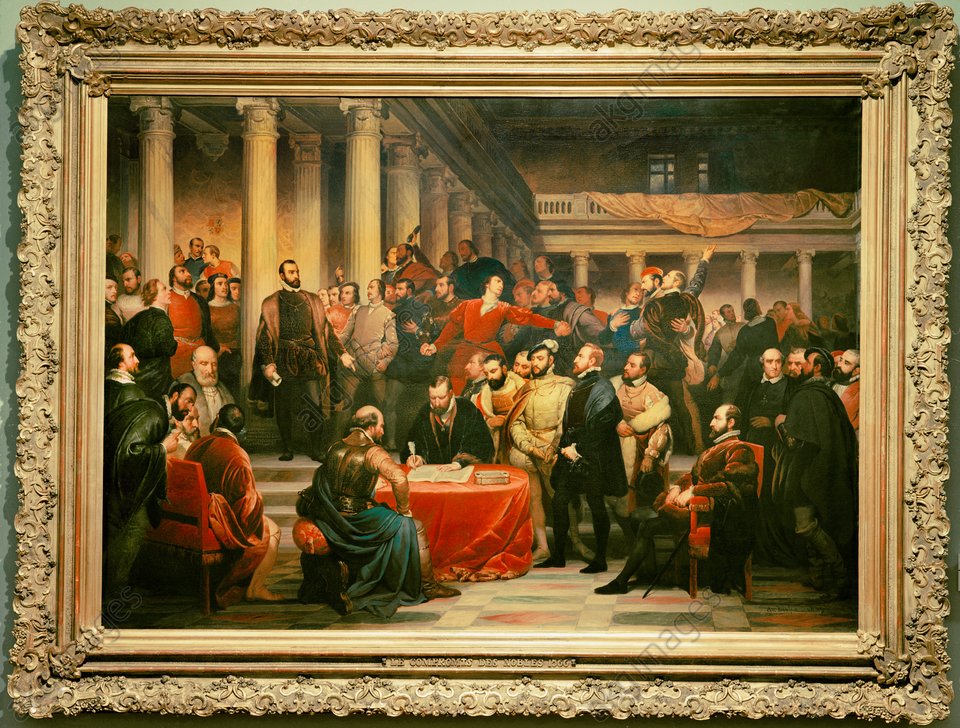
Right now, however, we need to note that even in radical revolutions and coups, a noticeable role was played by a part of the “reactionary classes”, without which these revolutions would most likely have been simply impossible. For example, the leader of the Dutch Revolt, also classified by Marxists as “bourgeois”, was William of Orange (Prince of Orange and Count of Nassau), and the key event from which the revolution actually began was the so-called “Compromise of Nobles”30 – an agreement between Dutch nobles drawn up in 1566 and directed against the Spaniards who ruled the Netherlands, against royal edicts and the Inquisition, both papal and episcopal. The document, secretly circulated from hand to hand, was soon covered with a mass of signatures – of nobles, townspeople, Catholics, and Calvinists.
Besides its crude historicism, the Marxist class theory ignores Asian countries (true, Marx wrote about the “Asiatic mode of production”, but only in passing, as something insubstantial, and in Marxism this concept is “apocryphal”, not fitting into the canon). Meanwhile, social relations in China and India differed significantly from European ones for many centuries. In China, statehood had long played a greater economic role than the relations of ownership of the means of production, and a career as a civil servant or state scholar carried much more weight for social status and income than private land ownership.
The history of India also does not quite fit into the Marxist class theory. In this country, the social order was expressed through the existence of specific castes, that is, closed social groups. Since ancient times, 4 main castes (varnas) have been distinguished in India: Brahmins, Kshatriyas, Vaishyas, and Shudras. Among them, each preceding caste surpasses the subsequent one in origin and social status. At the very top are the Brahmins, the priests, in whose hands lay the right to interpret the word of God. Thanks to this, this caste occupied the highest position in society, as above them was only the divine essence, with which only they could communicate. Any word of theirs was law and was not subject to discussion. Next come the Kshatriyas – warriors, a very numerous and powerful caste of India. In all ages, professional soldiers have participated in the administration of the state. Only in India did they distinguish themselves as a separate group of people who passed on their skills and traditions by inheritance. The caste was so closed that for many centuries common people could not even conceive of becoming a soldier. The Vaishyas included merchants, farmers, and herders. This caste was also numerous, but the people who belonged to it had no political influence, since representatives of the higher castes of India could at any moment deprive them of all their property, home, or family, simply by saying that it pleased the gods. The Shudra is a servant-laborer. The most numerous and disenfranchised caste: people belonging to it were essentially equated to the level of animals. Moreover, some animals in India lived much better, as they had the status of being sacred. Within the varna-castes, there existed more than 3,000 sub-castes, or jatis. To this day, in the age of the internet, artificial intelligence, mass media, and the flight of Indian spacecraft and astronauts into Earth orbit, in India — the world’s largest parliamentary democratic republic — caste atavisms regularly manifest in the social system of relations, sometimes in the most scandalous manner. Even to the point of murders for inter-caste marriages without the consent of relatives.
In the pre-Columbian states of America, it is often difficult to correlate social statuses in power with any analogues from European historical periods at all. This all speaks to the lack of predetermined historical stages of development and the falsity of the concept of inevitably corresponding antagonistic classes.
The concept of “class struggle” severely narrows the prospects of opposition movements, as the division of citizens into classes, some of which are progressive and others reactionary, has certain nuances. Representatives of business, for example, are portrayed as enemies of the broad masses, who cannot have common interests with them. Thus, the concept of class struggle displaces the progressive part of the elites, without whom social change will be either extremely difficult or entirely impossible, into the camp of reaction — that is, in essence, it fights against these progressive elites and thereby plays into the hands of reaction itself, performing a protective role. It stokes the hatred of the masses toward absolutely any, even progress-minded, representatives of business, thereby reducing the probability of support for its movement from the business community to a minimum, and the chances of success along with it.
Classes then and today
What was the point of view on social classes at the time of their description by the founders of Marxism? Based on reading the Manifesto of the Communist Party, the following classes can be identified (although they are not listed or specifically defined there):
- the bourgeoisie;
- the petty bourgeoisie (which includes peasants);
- the proletariat;
- the lumpen-proletariat;
- the feudal lords (a dying class).
At the same time, it was claimed that “society as a whole is more and more splitting up into two great hostile camps, into two great classes directly facing each other – Bourgeoisie and Proletariat”31. Doctor of Historical Sciences Valentin Kolomiytsev notes:
Marx divided classes into basic and non-basic. The basic ones are those whose existence stems directly from the prevailing economic relations in a given society, primarily relations of ownership: slaves and slave owners, peasants and feudal lords, proletarians and the bourgeoisie. Non-basic ones are intermediate or transitional social groups that do not have a clearly expressed relation to the means of production and, therefore, do not possess all the signs of a class (for example, the intelligentsia, the lumpen-proletariat). Class antagonism manifests only between basic classes. Especially important for isolating a class, according to Marx’s teaching, is the awareness of belonging to a social unity, the feeling of having interests distinct from the interests of other groups, and the presence of a will for joint action32.
On the whole, at that time, such a class division of society seemed quite adequate to reality — perhaps with the exception of representing the peasantry as the petty bourgeoisie. Given the large size of this group, its special role in the structure of social production, and the presence and perception of its own interests (the peasants needed land), in some societies (such as, for example, Russia at the beginning of the 20th century) they could well be distinguished as a separate class.
What is the modern class structure of society? In accordance with the previously cited definition of a class, we will proceed from the fact that its representatives occupy a similar place in society and the structure of production. Consequently, they are united by common economic interests. However, in any case, it can be said immediately that the division will be made with a certain degree of conditionality and generalization (in sociology, it is generally difficult to derive clear and fully scientific concepts). We can distinguish 6 social classes today.
The Nomenklatura. It consists of the un-electable and immovable senior leadership of civil servants. It is present in authoritarian states and is, in essence, the collective owner of the state. It was analyzed in detail by “Logika Progressa” in the corresponding series of articles.
Big business. This consists of the owners of large businesses (typically, the staff of such enterprises consists of more than 250 people — for example, Federal Law No. 209-FZ “On the Development of Small and Medium-Sized Entrepreneurship in the Russian Federation” indicates that the average headcount of employees of medium-sized enterprises is up to 250 people33) or large shareholders (here the boundary is harder to calculate, but also possible).
Small business. This consists of the owners of small businesses (in this case, what is also called medium business can be included here) or small shareholders.
Working class. This includes production workers, service sector workers, and white-collar workers employed under long-term hiring agreements. This class can also be easily described by the terms “workers”, “working class”, and “wage laborers”. The definition of the term “working class” from the Encyclopedia Britannica states that the working class is the class of people who earn money, most often by performing physical labor, and who are not rich or influential34. A similar definition is given by the Great Russian Encyclopedia: “a social group of wage laborers in the sphere of material production and services, which emerged in industrial society”35. Much discussion in Russian society revolves around whether the intelligentsia should be included in the working class, and this question is best answered by the fact that the very concept of “intelligentsia” as such is present primarily in Russian culture and is designated in English as “Intelligentsia”36 — that is, a word from the Russian language — and is used in rare cases. We can, of course, speak of the existence of the intelligentsia as the sum of wage laborers engaged in intellectual labor, but overall they belong either to the working class or to the class of freelancers. The working class also includes those commonly referred to as “workers” (most often this term refers to factory workers).
Freelancers. This includes people who perform various services without long-term obligations to any employer37, or who produce certain goods without long-term hiring of employees. In essence, they have occupied the place once held by artisans today.
The unemployed. This includes people who are temporarily or permanently without work, as well as those on social welfare.
Moreover, a person can be a representative of more than one class. For example, a member of the working class might own a small number of shares or have a blog that generates income, thus belonging to two classes — the working class and small business.
However, we do not claim to be the ultimate authority regarding the division between the working class and the intelligentsia. We separate big business from small, and a division between manual and intellectual wage laborers is entirely permissible — not only because these concepts have firmly entered everyday use (for example, the concept of “small business” is constantly used in the media, and intellectual workers were already attempted to be singled out in the USSR as “intellectual proletarians”). They occupy different positions in the organization of production — thus, intellectual workers do not physically create any goods and services, but they often perform work that increases the efficiency of this labor (for example, a university lecturer produces nothing, but is engaged in training personnel). Intellectual and manual workers were already separated by Engels:
Dear Citizens, I thank you for your kind invitation to the Congress of Socialist Students and extremely regret that I cannot take advantage of it, being occupied with important and urgent matters. It remains for me, therefore, only to wish your congress every success which it deserves. May your efforts lead to the development among the students of the realization that it is from their ranks that there must emerge that intellectual proletariat which is destined, shoulder to shoulder and in the same ranks with their brothers the workers engaged in manual labor, to play a significant role in the approaching revolution38.
At the same time, the viewpoint that includes the intelligentsia in the working class seems more generally accepted and universal, especially since the differences between the intelligentsia and other parts of the working class, despite their different positions in the structure of production, in terms of the nature and size of property, as well as the level of material wealth, are most often insignificant. Therefore, we ultimately use the division we gave above.
As for small business and big business, representatives of small business most often engage in the organization of production themselves, while representatives of big business more often delegate this work to managers. The interests of small business fundamentally diverge from the interests of big business, for example, on the issue of monopoly regulation — if small business benefits from antitrust measures and the promotion of competition, then big business will be constrained by antitrust measures; it benefits from crowding small business out of the market and complicating procedures for new players. Big business benefits from a flat tax, while small business benefits from a progressive tax. And so on. Therefore, we must separate these classes in accordance with the academic concept of class.
Which classes are basic? It is no coincidence that Popper noted that the struggle between rich and poor is of fundamental importance. Let us also add that between the privileged and the underprivileged. We can see that no matter how the system of social production and division of labor changes, whatever classes and social groups are dominant in society, there has always been a confrontation between broad strata of society and narrow privileged groups. The economic policy pursued by the state as a whole depended on the results of this struggle. From the struggle of the Third Estate in France and the working class in the late 19th and early 20th centuries, we have come to civil protests and a phenomenon such as the “99% protest”39 — such slogans were heard during the Occupy Wall Street actions.

However, it would be more correct to speak in this case not about percentages, but about the struggle of elites (in alliance with the social groups supporting them) and the masses. What are elites? According to the Great Russian Encyclopedia, it is “a small group of persons occupying the highest status positions (not necessarily formally fixed) in the system of social hierarchy and exerting significant influence on the life of society in various spheres and/or possessing certain exceptional qualities and abilities that receive high public appreciation and recognition”40. Of course, they do not necessarily have to receive “high public appreciation”. According to the Encyclopedia Britannica, it is fundamentally a “small group of people who hold a disproportionately large amount of power and influence”41. That is, we can say that elites are composed of the nomenclature and big business. However, here we run into the problem once again that both elites and the masses (another division option being the privileged class and society) are heterogeneous and can contain both progressive and reactionary social groups.
Is it appropriate to use the term “the people” to denote the dichotomy with elites? On the one hand, such a contrast is used in historical literature42. On the other hand, this term has several definitions, among which are the definition of the concept of “the people” as all citizens of a country as a whole, or even definitions associated with ethnicity. That is, for use in the context of social struggle, this concept is not entirely successful.
As for the term “the masses”, we have both cases of its contrast with the concept of “elites”43, and definitions that fit into this contrast. For example, the Cambridge Dictionary characterizes the masses as “the ordinary people who form the largest group in a society”44. Vocabulary.com explains: “the masses are not celebrities, wealthy people, royalty, or political leaders. The masses are everybody else. People use this term when they want to talk about the majority”45. For this reason, to designate struggle in a broad sense as a struggle between well-to-do, powerful groups and the majority of citizens, we can rely on strata that we can designate as “the masses”, “the broad masses” (they are formed from the working class, small business, freelancers, and the unemployed).
Social groups
We notice the heterogeneity of class representatives. A part of the nomenclature class may support communism, a part – conservatism, and some parts may support ideologies that would seem to express interests opposite to this class – social democracy or liberalism (for example, the former nomenclature member Boris Yeltsin became the leader of the liberal opposition in the USSR46 and supported privatization). What is the reason for such a seemingly paradox?
It is related to the fact that citizens’ demands can be connected not only with their economic interests, but also with the differences in their cultural and political beliefs. The determination of all human actions by economic rationality is an erroneous belief, refuted even by the example of Friedrich Engels (who came from the family of a wealthy textile manufacturer while being a Marxist). A huge number of people behave economically irrationally. Therefore, the struggle takes place not only between classes, but also between social groups (within these classes, or these social groups may include representatives of several classes). A person usually belongs to several social groups, sometimes even with mutually opposing interests (thus, Vladimir Lenin belonged to the groups “nobility” and “communists”), and their demands and beliefs will depend on which of these groups they associate with more, or they will represent a compromise between the interests of these groups. Similarly, a social group may consist of representatives of several social classes. Also, a person can make decisions in the interests of various social groups on various issues – for example, they may support privatization, which meets the economic interests of big business, and at the same time support a strict progressive tax, which already contradicts the economic interests of big business.
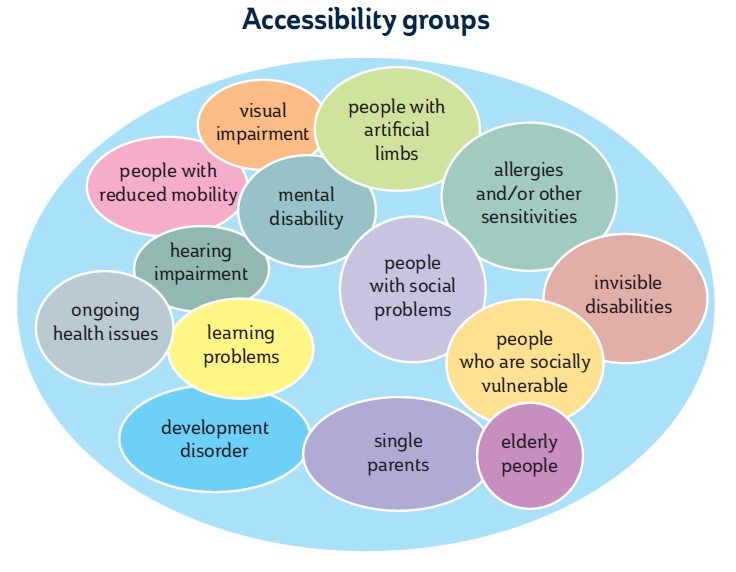
For this reason, a difference in interests is also observed among citizens who do not own any production and are wage laborers. For example, the military will support an increase in spending on the maintenance of the army and the military-industrial complex, while teachers will advocate for an increase in spending on education. Social groups are formed on various grounds – by profession, by religious affiliation, by belonging to a political ideology, and so on. A struggle takes place between these groups in public life – for example, between religious people and atheists. The former will advocate for the building of churches (however, if they feel themselves to be, for example, residents of a neighborhood more than believers, they may also protest), while the latter will oppose it. Moreover, the group of believers is divided into confessions – Christianity, Islam, and so on, and they, in turn, into denominations (further division can also occur). As a result of the struggle of social groups, decisions are made that shape the development of society.
A single person can relate themselves to various social groups – they can be simultaneously a social democrat, a party member, an atheist, a man, a manual wage laborer, a native of St. Petersburg, a fan of the Spartak football club, and so on. Moreover, depending on their values, habits, and daily interests, they may place the interests of their favorite football club above the interests of the party. Or they may make decisions on certain issues, taking into account the interests of all social groups to which they belong.
In this context, it is appropriate to recall the works of the Russian sociological scientist who was forced to emigrate from the Bolsheviks to the USA, a former Socialist-Revolutionary and secretary to Alexander Kerensky in the Provisional Government, Pitirim Sorokin. He proposed the following principles of objective sociology:
- Sociology can and must be built on the model of natural sciences (the main methods are the same). It is necessary to study only acts of behavior accessible to observation and measurement;
- Sociology is an empirical and exact science (facts are important, not metaphysics);
- Exclude the normative-value approach in sociology;
- Instead of single-factor theories – methodological pluralism and a systemic approach. The unit of sociological analysis is social interaction. Society acts in this model of sociology as a “system of systems”. All public life can be decomposed into phenomena and processes of interaction between two or more individuals and vice versa.
In this context, a class is a “cumulative” social group combining three elementary characteristics (profession, property, and legal status — as a whole). Society has a complex structure of stratification, which is irreducible to class division — a hierarchically organized differentiation of the aggregate of people (the population), recording the existence of higher and lower layers (strata) in society, which appear as a result of the uneven distribution of rights and privileges, responsibilities and duties, caused by the presence or absence of social values, power, and influence among members of society. Social groupings of society are constantly changing; regroupings and circulations occur (important property, geographical, and territorial characteristics). There is constant social mobility, which has two vectors: horizontal and vertical. Horizontal mobility is movement within the same stratum (changing jobs, changing place of residence, etc.). Vertical mobility is movement from one stratum to another. In addition, mobility can be upward or downward.
Today, on the whole, it is more correct to speak about social struggle rather than class struggle, since it is precisely the struggle of social groups that we observe most often. What is a social group? The Great Russian Encyclopedia reports that it is a community of people singled out from a wider social context based on some criterion (territorial, cultural, economic, demographic, kinship, and the like)47. A large group is most often understood as a numerous community of people occupying a certain place in the social structure and having formed in the process of historical development (classes, nations, ethnic groups, social strata, and so on). Large groups also include a crowd — a spontaneously emerging cluster of a large number of people in a certain place, united by a common, clearly expressed emotional state. Crowds are characterized by weak structuring (or its complete absence) and the irrationality of the regulation of actions. Small groups, on the other hand, are characterized primarily by the presence of direct personal contacts. Joining a specific group can be caused by the need to belong to it (due to the attractiveness of the group itself, its members, or group activity for the person), extraneous motives (for example, to achieve some other goals), or circumstances (for example, the birth of a child in a family).
In some specific issues, we can also see class struggle, however, reducing all social development to it would be a mistake. Struggle more often occurs between social groups and their associations. On various issues, for example, the same increase in spending on the military-industrial complex, society is divided — the nomenclature, various security officials, and military industrialists can support the military. But many other social groups — education workers, lawyers, small businesses, furniture industrialists, and so on — can take an opposing position. The struggle on this specific issue will take place between the associations of these groups. At the same time, the military may take the position of the masses, for example, on the issue of a progressive tax. Calling this a struggle between the proletariat and the bourgeoisie means having no idea about the nature of this struggle. Therefore, social democrats must replace the concept of class struggle with the concept of social struggle.
We previously defined that class struggle is a struggle between different classes in society for political and economic power. However, we see that the struggle is waged not so much between classes, but rather between social groups. And most often, it is waged not for power, but for the realization of their interests. It is most often social groups such as a political party that fight for power, and under an authoritarian system, clans within the nomenclature, as well as political parties that act, in essence, from the underground. Therefore, the most powerful social group is a political party — it fights for power in order to form a government and determine state policy, which is the most powerful mechanism for influencing the life of society (we will talk about this in future articles).
Class struggle often becomes the social engineering of parties, their governing structures, and politically organized small public groups, for propaganda-political purposes, for the convenience of managing mass processes. Should modern social democrats rely on this kind of social engineering? The question is open. Trade unions often prefer to generalize their membership base under class categories. This is more familiar and simpler for them. For example, the social democrats of Sweden and other Scandinavian countries still actively use class terminology in political struggle to this day. The political system of Sweden, built on a proportional voting system in elections for party lists, contributes to the entrenchment in the mass consciousness of the division of parties into “working-class” and “bourgeois”. Strong Swedish trade unions support this political approach in practice, creating an “us versus them” negotiating position. This is natural for trade unions seeking to protect the labor and social rights of their members in enterprises. But in reality, trade unions are operators of the interests of different social groups connected with wage labor of different levels of intellectual preparation, intensity, creativity, system of contractual relations, working conditions, available free time, with a different system of incentives, a different subculture, and so on. Ultimately: with different profitability, access to participation in ownership, privileges in the enterprise, and rights in relation to other employees and owners.
The era of Fordist-Taylorist organization of industrial production is gradually becoming a thing of the past, and with it, the industrial proletariat with its undifferentiated mass subculture is also disappearing. Trade unions today already understand this and are reorganizing the work of their organizers, but they cannot yet completely move away from the mass and class stereotypes of the past. Therein lies a problem and a challenge for progressive social democrats.
Communists strive to achieve a classless society, therefore, from their point of view, the presence of classes in society testifies to the fact that society is unjust. However, if we take the academic definition of classes, then classes will always exist as long as property inequality exists (since we mentioned above that one of the differences between classes lies in the level of material wealth). In the article on inequality, we substantiated that property equality is simply not viable. And in the foreseeable future, there are no foreseeable factors that can make it viable (and it is possible that they will never appear at all). Therefore, classes, like the struggle between them, are very likely to exist for at least a very long time, if not forever.
If, however, we take the Marxist definition of classes, then in accordance with it, attempts were made to build a classless society, and in 1934, Joseph Stalin announced that it had been built in the USSR48. Later, however, it turned out that a new elite had appeared in the USSR, and the nomenclature had taken the place of business (we wrote that in accordance with Marxist analysis itself, it is an exploiting class). The nomenclature has inevitably formed to this day in all societies where private property was destroyed in favor of the state. Some modern Marxists see the way out in socializing property, that is, transferring enterprises to the ownership of their employees. However, in the article on the need for the transition from communism to social democracy, we mentioned why this also will not yield the desired result in the form of a classless society (in general, we also reviewed the problems of collective property here). As a result, we arrive at the simple fact that we do not have the slightest reason to speak about the possibility of a classless society.
It is also important to note here that the concept of class struggle was formulated so vaguely that some communists perceived it as a call for the physical destruction of classes. For example, during the era of “dekulakization”, Joseph Stalin wrote that “in order to oust the kulaks as a class, a policy of restricting and ousting their individual detachments is not enough. To oust the kulaks as a class, we must break the resistance of this class in open battle and deprive it of the productive sources of its existence and development (free use of land, means of production, lease, the right to hire labor, etc.). This is precisely the turn to the policy of liquidating the kulaks as a class. Without this, talk about ousting the kulaks as a class is empty chatter, pleasing and profitable only to the right-wing deviationists”49. And battles were fought, which should be discussed in a separate article on collectivization. However, substituting the concept of class struggle with the concept of class terror, which is passed off as class struggle, is a misanthropic idea. We must clearly state this. Social struggle is the struggle of various social groups for the realization of their demands. It is not their struggle for the destruction or subjugation of other social groups, nor is it social terror.
Is it bad that a classless society will not exist and that the struggle between social groups will persist? Given that there is no foreseeable possibility of creating a viable classless society, this is not bad. It will be bad if, as a result of this struggle, the elites manage to extract benefits for themselves. Can the current top leadership of Russia (in fact – an oligarchy of upstarts striving to turn into a court under an absolute monarch) be called a class? Meanwhile, according to various estimates, it directly and indirectly controls a substantial share of property in the Russian Federation. Yet, throughout world history, social struggle has often led to social progress, serving as a tool for winning new human rights. When new proposals for improving society appeared, they were not immediately supported by all of society, let alone accepted – at first, they usually have a small group of supporters whose numbers grow, and ultimately they succeed in implementing their proposals. Therefore, social struggle is inevitable if we want to build a society that will develop.
Man created many of his inventions in attempts to get rich, to break into a higher class. For example, in 1775, immediately after Watt’s patent for his model of a steam engine – he called it a “Fire Engine” – was extended, the inventor wrote to his father:
Dear Father, despite diverse and stiff opposition, I have at last procured an Act of Parliament securing to me and my assigns the property of my new Fire Engines across all of Great Britain and her plantations for the next 25 years, which I hope will yield me large profits, as there is already a considerable demand for them50.
Business tried to introduce such inventions in order to increase its profits, which led to progress. And its workers tried to fight for an increase in their share of these profits, which served the task of improving their standard of living. Communists tried to create a society where entrepreneurship does not exist, but the improvement in living standards was far from as convincing as in systems with entrepreneurship. So for now, we must state that systems in which class and social struggle are present develop better. This is also confirmed by the fact that humanity passed from a classless state in due time to a society with division into classes.
In general, the very idea of a “classless society” implies the existence of a certain “end of history”, a final point in the development of human society, which would mean that human history is predetermined and has a certain final point that cannot be rolled back and cannot be changed. We have already criticized such a idea in the article on the theory of socio-economic formations and said that human history has a mass of examples of rolling back from more progressive forms of society’s development to more reactionary ones, and consequently, it is not linear and cannot have a final point.
In their policy, social democrats proceed primarily from the realization of progressive values. Accordingly, they must support those social groups that share the desire for their realization. In the article on allies of social democrats, we listed some social groups that set goals similar to ours and can wage the struggle against elites jointly with us. We also designated the social groups opposing us. Generally speaking, however, we appeal to the masses, to a wide circle of citizens. The struggle here will consist in conducting informational and organizational work that strengthens the social groups friendly to us and splits those opposing us, pulling their supporters over to our side. The most powerful tool in this struggle is the social democratic party. It is the creation and strengthening of social democratic parties that is our main weapon in the social struggle, and the goal in this struggle is moving forward – the development of the economy, the struggle for a fair distribution of income from this development, the modernization of industries and cities.
We thank Artyom Kuznetsov for his help in writing the article.
- K. Marx and F. Engels. Collected Works. Volume 28. – 767 p. – M.: State Publishing House of Political Literature, 1962. – p. 424-427.
- V.V. Radaev. Social classes // Great Russian Encyclopedia (bigenc.ru). [Electronic resource]. URL: https://bigenc.ru/philosophy/text/2623029 (Accessed: 24.10.2022).
- Social class // Encyclopedia Britannica (www.britannica.com). [Electronic resource]. URL: https://www.britannica.com/topic/social-class (Accessed: 24.10.2022).
- Social class // Dictionary.com (www.dictionary.com). [Electronic resource]. URL: https://www.dictionary.com/browse/social-class (Accessed: 24.10.2022).
- V.I. Lenin. Collected Works. Vol. 39, 5th edition. – 623 p. – M.: Publishing House of Political Literature, 1970. – p. 15.
- Class struggle // Short Philosophical Dictionary. Edited by M. Rosenthal and P. Yudin. 4th ed. – 567 p. – M.: State Publishing House of Political Literature, 1955. – p. 195.
- Class struggle // Dictionary.com (www.dictionary.com). [Electronic resource]. URL: https://www.dictionary.com/browse/class-warfare (Accessed: 24.10.2022).
- Class war // Cambridge Dictionary (dictionary.cambridge.org). [Electronic resource]. URL: https://dictionary.cambridge.org/ru/словарь/английский/class-war (Accessed: 24.10.2022).
- Class struggle // Merriam-Webster (www.merriam-webster.com). [Electronic resource]. URL: https://www.merriam-webster.com/dictionary/class%20struggle (Accessed: 24.10.2022).
- K. Marx and F. Engels. Collected Works. Vol. 4. 2nd edition – 615 p. – M.: State Publishing House of Political Literature, 1955. – p. 424.
- Marx K. A Contribution to the Critique of Political Economy // Marx K., Engels F. Works. 2nd ed. Vol. 13. M.: Politizdat, 1959. p. 7.
- Revolutions of 1848–1849: in 2 vols. / edited by Potemkin F.V., Molok A.I. M.: Publishing House of the USSR Academy of Sciences, 1952. 640 p. – p. 435
- Marx K., Engels F. Manifesto of the Communist Party // Marx K., Engels F. Collected Works. 2nd ed. Vol. 4. M.: Politizdat, 1955. p. 424.
- Marx K. The Class Struggles in France, 1848 to 1850 // Marx K., Engels F. Collected Works. 2nd ed. Vol. 7. M.: Politizdat, 1956. p. 86.
- Marx K., Engels F. Manifesto of the Communist Party // Marx K., Engels F. Collected Works. 2nd ed. Vol. 4. M.: Politizdat, 1955. p. 447.
- E.E. Schultz. Theory of revolution: Marx and Marxism // Privolzhsky Scientific Bulletin. 2014. No. 2 (30). – p. 188.
- K.R. Popper. The Open Society and Its Enemies. Vol. 2: The High Tide of Prophecy: Hegel, Marx, and the Aftermath. – 528 p. – M.: Phoenix, International Foundation “Cultural Initiative”, 1992. – p. 136-137.
- French bourgeois revolution of 1789-1794 / Edited by V.P. Volgin and E.V. Tarle. – St. Petersburg, M.: Academy of Sciences, 1941. – 849 p.
- K. Marx and F. Engels. Collected Works. Vol. 6. 2nd edition. – 760 p. – M.: State Publishing House of Political Literature, 1957. – p. 114.
- Ibid.
- K. Marx and F. Engels. Collected Works. Vol. 4. 2nd edition – 615 p. – M.: State Publishing House of Political Literature, 1955. – p. 427.
- 23 myths that annoy scientists // Arzamas (arzamas.academy). [Electronic resource]. URL: https://arzamas.academy/materials/785 (Accessed: 16.10.2023).
- Marx K. The Civil War in France. Address of the General Council of the International Workingmen’s Association // Marx K. and Engels F. Collected Works. 2nd ed. Vol. 17. M.: Politizdat, 1960. p. 339.
- I.S. Rosenthal. Lenin // Great Russian Encyclopedia (bigenc.ru). [Electronic resource]. URL: https://bigenc.ru/domestic_history/text/3793734 (Accessed: 24.10.2022).
- G.I. Chernyavsky. Leon Trotsky / Georgy Chernyavsky. – 665 p. – M.: Molodaya Gvardiya, 2010. – p. 21-22.
- Yu.V. Aksyutin. Zinoviev // Great Russian Encyclopedia (bigenc.ru). [Electronic resource]. URL: https://bigenc.ru/domestic_history/text/2879281 (Accessed: 24.10.2022).
- Krasin, Leonid Borisovich // TASS (tass.ru). [Electronic resource]. URL: https://tass.ru/encyclopedia/person/krasin-leonid-borisovich (Accessed: 24.10.2022).
- Yu.V. Aksyutin. Sverdlov // Great Russian Encyclopedia (bigenc.ru). [Electronic resource]. URL: https://bigenc.ru/domestic_history/text/3539816 (Accessed: 24.10.2022).
- Krzhizhanovsky // Great Russian Encyclopedia (bigenc.ru). [Electronic resource]. URL: https://bigenc.ru/domestic_history/text/2110853 (Accessed: 24.10.2022).
- F.A. Brockhaus, I.A. Efron. Encyclopedic Dictionary. Vol. 15a. – 960 p. – St. Petersburg, Typography-Lithography of I.A. Efron, 1895. – p. 911.
- K. Marx and F. Engels. Collected Works. Vol. 4. 2nd edition — 615 p. — M.: State Publishing House of Political Literature, 1955. — p. 425.
- V.F. Kolomiytsev. Classes: an outdated concept? // Social and Humanitarian Knowledge. – 2008. – No. 1. – p. 276-291.
- Federal Law “On the Development of Small and Medium-Sized Entrepreneurship in the Russian Federation” dated 24.07.2007 No. 209-FZ.
- Working class // Encyclopedia Britannica (www.britannica.com). [Electronic resource]. URL: https://www.britannica.com/dictionary/working-class (Accessed: 24.10.2022).
- D.O. Churakov. Working class // Great Russian Encyclopedia (bigenc.ru). [Electronic resource]. URL: https://bigenc.ru/domestic_history/text/3488091 (Accessed: 24.10.2022).
- Intelligentsia // Cambridge Dictionary (dictionary.cambridge.org). [Electronic resource]. URL: https://www.dictionary.com/browse/intelligentsia (Accessed: 24.10.2022).
- Freelancer // Merriam-Webster (www.merriam-webster.com). [Electronic resource]. URL: https://www.merriam-webster.com/dictionary/freelancer (Accessed: 24.10.2022).
- K. Marx and F. Engels. Collected Works. Vol. 22. 2nd edition — 805 p. — M.: State Publishing House of Political Literature, 1962. — p. 432.
- We are the 99%. Protests against the existing financial system took place in the world // Korrespondent (korrespondent.net). October 17, 2011, 5:40. [Electronic resource]. URL: https://korrespondent.net/world/3199414-nas-99-v-mire-proshli-protesty-protiv-sushchestvuyushchej-finansovoj-sistemy (Accessed: 24.10.2022).
- D.G. Podvoisky. Elite // Great Russian Encyclopedia. Volume 35. Moscow, 2017, pp. 350-351. [Electronic resource]. URL: https://bigenc.ru/philosophy/text/4930813 (Accessed: 27.10.2022).
- Elites // Encyclopedia Britannica (www.britannica.com). [Electronic resource]. URL: https://www.britannica.com/topic/elite-sociology (Accessed: 27.10.2022).
- V.S. Malakhov. People // Great Russian Encyclopedia (bigenc.ru). [Electronic resource]. URL: https://bigenc.ru/ethnology/text/2249362 (Accessed: 24.10.2022).
- D.G. Podvoisky. Masses // Great Russian Encyclopedia (bigenc.ru). [Electronic resource]. URL: https://bigenc.ru/philosophy/text/2191402 (Accessed: 24.10.2022).
- Masses // Cambridge Dictionary (dictionary.cambridge.org). [Electronic resource]. URL: https://dictionary.cambridge.org/dictionary/english/masses (Accessed: 24.10.2022).
- Masses // Vocabulary.com (www.vocabulary.com). [Electronic resource]. URL: https://www.vocabulary.com/dictionary/masses (Accessed: 24.10.2022).
- Yeltsin // Great Russian Encyclopedia (bigenc.ru). [Electronic resource]. URL: https://bigenc.ru/domestic_history/text/3089465 (Accessed: 24.10.2022).
- E.M. Dubovskaya. Social group // Great Russian Encyclopedia. Volume 8. Moscow, 2007, p. 86. [Electronic resource]. URL: https://bigenc.ru/philosophy/text/1933200 (Accessed: 24.10.2022).
- I.V. Stalin. Works. Vol. 14. – M.: “Pisatel” Publishing House, 1997. – p. 119–147
- AP RF. F. 3. Op. 30. D. 193. L. 12-12 ob.
- Daron Acemoglu, James A. Robinson. Why Nations Fail: The Origins of Power, Prosperity, and Poverty. — 693 p. — Moscow: AST Publishing House, 2019. — p. 144-145.