The Constituent Assembly in Russia in 1917
Many wonder why a democratic system did not take root in Russia. One of the attempts to create it was the convocation of the Constituent Assembly, which ended in failure. Russia is far from the only country where there were unsuccessful attempts to transition to democracy, and in many countries, a series of failed attempts was followed by a successful one. To increase the chance of success in the future, we need to study and comprehend previous attempts, which is what we will do now.
The phrase “Constituent Assembly” is familiar to many people who have read books or textbooks on the history of the 20th century as the name of a certain body that was supposed to form a new statehood. What is it? Why did the attempt to build a parliamentary democracy with strong left-wing parties, which could have led Russia to prosperity, encounter resistance from the communists and suffer defeat?
Contents
Background
The very idea of convening such a body has deep roots in Russian history. Its prototypes were largely based on the Zemsky Sobors, at which not only important state decisions were made, but tsars were also elected (Boris Godunov in 1598, Mikhail Romanov in 1613)1.
The slogan of convening a Constituent Assembly (National Assembly) was first put forward in Russia by the Decembrist movement. It was assumed that the Decembrists’ Constituent Assembly, namely the Great Sobor, should approve the foundations of the new social order. At the same time, even before the convocation of the Great Sobor, the Provisional Government was supposed to introduce a number of transformations: “to declare nationwide by a special manifesto, to shake up the country with this, to win over a vast mass of supporters and to outline in advance the range of actions of the future Great Sobor”2. It is worth noting that another option was proposed. Thus, according to the Manifesto of S. P. Trubetskoy, the new government was to adopt the foundations of the new statehood, and elections to the House of People’s Representatives were also to take place3.
The Constituent Assembly as a social institution was in one of the most significant projects of the Decembrists — the Constitution of Muravyov4. According to this project, to amend the Constitution (Charter), the Veche (a bicameral parliament of a federal state) would announce the convocation of a People’s Sobor, which would consist of 495 people and deal only with issues of the Constitution: to amend, preserve, repeal, and draw up a new Charter accordingly. The number of representatives (495) was to be equal to the number of representatives in parliament (450 in the House of People’s Representatives and 45 in the Supreme Duma). The body would work for only 6 months, and to make a final decision on the issue, it was necessary to get 2/3 of the votes (330 people). After that, another Law would appoint Regional Sobors to discuss, adopt, or reject the Draft Charter. Each Region would appoint as many representatives to the Sobor as there were representatives in the regional parliaments — Regional Chambers (according to Muravyov’s project, they were also bicameral). The Regional Sobors were convened for one day, and 2/3 of the votes would be needed to make a decision, and depending on the decision, they would either accept the changes or not.
But since the Decembrists lost, many ideas, including the idea of the Great Sobor, were forgotten for many years.
Since the late 1870s, the Narodnaya Volya (People’s Will) members launched active propaganda for the idea of a Constituent Assembly. In 1880, in the program of the Executive Committee of “Narodnaya Volya”, the immediate task was announced as a political coup with the goal of transferring power to the people, which would be expressed through a Constituent Assembly. It was to be elected on the basis of free universal suffrage. It was the Constituent Assembly that was to revise the composition and functions of all state and public institutions and reorganize them “according to the instructions of their constituents”5. And it was through “Narodnaya Volya” that the idea of convening a Constituent Assembly entered the consciousness of sufficiently wide circles of Russian society.

After the defeat of the Narodniks, other forces continued to support the idea. In particular, the demand for the convocation of a Constituent Assembly was already contained in the program of the II Congress of the RSDLP (Russian Social Democratic Labour Party) in 1903 and continued to be supported after the party split by both the Mensheviks and the Bolsheviks. The Socialist-Revolutionaries (SR Party) were also for the Constituent Assembly, agitating for “the convocation of a Zemsky Sobor (Constituent Assembly), freely elected by the whole people without distinction of sex, class, nationality, and religion, for the liquidation of the autocratic regime and the reorganization of all modern orders”6. They also declared their intention to uphold their program both in the Constituent Assembly “and to strive to implement it directly during the revolutionary period”7, and also allowed for the possibility of establishing a “temporary revolutionary dictatorship of the working class”8. Liberals also thought about this topic, and the idea of a Constituent Assembly in their interpretation — “reform instead of violence” — was first formulated in the article by the prominent Chernigov Zemstvo figure I. I. Petrunkevich, “Immediate Tasks of the Zemstvo” (1879). Petrunkevich counted on the government’s convocation of a Council of People’s Representatives9.
The call for the prompt convocation of a Constituent Assembly entered the program of the proto-party liberal organization “Union of Liberation” in 1903–1905, as well as the “Draft Basic Law of the Russian Empire” developed by its members. They insisted that the monarch grant political freedoms by a “unilateral act” and convene a “constituent body” of representatives of local self-government bodies elected on the basis of universal suffrage. The latter was to work out the Basic State Law together with the tsar1011. Under the slogan of convening a Constituent Assembly, the necessity of a constitution and civil freedoms, the “banquet campaign” on the occasion of the anniversary of Alexander II’s judicial reform also took place in the autumn of 190412.
Universal accessibility, and with it the popularity of the idea of the Constituent Assembly, was imparted by the First Russian Revolution. This was facilitated by the objective coincidence of two simultaneous processes: “on the one hand, the intensification of vertical social mobility of the population and the marginalization of society, which created a breeding ground for the growth of anti-government sentiments, and on the other hand, the intensive party-political formalization of society”13. The demand for the convocation of a Constituent Assembly “acquires the characteristics of an all-people’s, all-national one”14.
The very idea of elections to the Constituent Assembly was contained in the “Petition of the Workers and Residents of St. Petersburg for Presentation to Tsar Nicholas II on January 9, 1905”15, which they wanted to deliver to Emperor Nicholas II. However, this was not meant to be, as the mass procession (about 140,000 people) for the presentation was brutally dispersed: officially 200 people were killed and 800 wounded, and there were mass arrests. This event went down in history as “Bloody Sunday” and led to the outbreak of the First Russian Revolution16.

The Manifesto of October 17, 1905 led to the emergence of a legislative and representative body — the State Duma, and “no law could acquire force without the approval”17 of this body. This event, however, was met without enthusiasm. Everyone wanted the convocation of precisely the Constituent Assembly, especially the socialist forces and movements, in the form of the Socialist-Revolutionaries, the Social Democrats (Mensheviks and Bolsheviks), and national socialist forces, in the form of the Jewish party “BUND”, the Revolutionary Ukrainian Party, and so on18. The idea of the Constituent Assembly during the period of the First Russian Revolution was actively adopted by the majority of the intelligentsia, but did not receive broad, conscious support from the popular masses. All these factors did not allow the implementation of the idea of convening the Constituent Assembly in 1905–1907, even in a truncated form.
The beginning
The idea of the Constituent Assembly reached its triumph in 1917, after the overthrow of the autocracy. As we wrote in the article about the Soviets, the latter disappeared by 1907, but in February 1917 they were restored, including the Petrograd Soviet of Workers’ and Soldiers’ Deputies, which in its first proclamation to the population of Petrograd and Russia mentioned the necessity of convening the Constituent Assembly as the goal of the revolution19.

On the night of March 2, by a well-known agreement on the structure of power in the country, concluded between the Executive Committee of the Petrograd Soviet and members of the Provisional Committee of the State Duma, after long and fierce disputes, a clear legal status of the Constituent Assembly was worked out. It included three principles20:
- Elections by universal free voting (“all-people’s will”);
- Exclusive prerogative of the Constituent Assembly (“non-pre-determination”);
- It alone, and only it, will determine the scope and boundaries of its tasks (“master of the Russian land”).
The Constituent Assembly was to formulate solutions to the main issues of state life, including determining the form of government.
On the afternoon of March 2, the “Izvestia of the Petrograd Soviet” wrote that the Provisional Government had no right to establish any permanent form of government: to protect the people from the intrigues of the counter-revolution, to help them bring the revolution to its conclusion, that is, to the convocation of the Constituent Assembly — this is its only purpose21.
P. N. Milyukov (head of the Kadets) had already rejected the “absurd idea of some kind of Constituent Assembly” at the beginning of 191722. The Kadets were very worried about the question of the continuity of the new government. A complete break with the former authorities, in their view, could lead to painful upheavals. Therefore, in the first days of the revolution, Kadet leaders tried to preserve a constitutional monarchy. But already on March 3, in essence, the last emperor, Michael II, abdicated the throne, saying that he would accept power if the people so decided, through the Constituent Assembly, and until then, people should obey the Provisional Government23. And only under the pressure of public sentiment, on March 10, the Central Committee decided to support the republic24. At the end of March, the 7th Congress of the Constitutional Democratic Party amended point 13 of the party program as follows: “Russia should be a democratic parliamentary republic. Legislative power should belong to the people’s representation”25. But even after that, P. N. Milyukov and other party leaders hoped that the Constituent Assembly would speak out in favor of a constitutional monarchy.

The Kadets believed that the Constituent Assembly “would be legally unlimited in its competence”, and that it “should itself outline the scope of its tasks and establish the duration of its activity”26. However, they considered it necessary to ensure the separation of legislative and executive power, and therefore the Constituent Assembly from the very beginning “must, even before the establishment of the Constitution, immediately organize a provisional executive power on the principles of parliamentarism and on the principles of a responsible ministry”27.
At first, the Kadets believed that the Constituent Assembly should only determine the form of government and draft a Constitution. However, by the end of March, under pressure from the growing demands of the masses and unauthorized attempts to solve pressing problems, the Kadets became convinced “that a number of major issues, partly of a constituent, partly of a socio-political nature, will be included in the sphere of activity of the Constituent Assembly by themselves”28. Thus, they referred the resolution of agrarian issues and questions of local autonomies to the prerogative of the Constituent Assembly. The judgments of Kadet leaders also changed on the issue of the timing of elections and the convocation of the Constituent Assembly. In principle, they considered elections in a calm environment preferable, preferably after the end of the war, but given the situation, they also began to insist on holding elections as soon as possible.
Having united in the Soviets, the socialist parties began joint work on preparing for the convocation of the Constituent Assembly. In late March–early April, at the All-Russian Conference of Soviets, Trudovik V. B. Stankevich stated in his report on the Constituent Assembly that its convocation would become the “formal expression of the complete and final victory of Russian democracy” and would appear as the “embodiment of the principle of people’s power”29. Without much disagreement, the conference approved the theses of the report, which contained the “main issues” that the Constituent Assembly should address: the form of government, the basic laws of Russia, national issues, the organization of local government, international issues, the democratization of the army, the land question, labor legislation, and issues of organizing the people’s and state economy30. This extensive program of activity for the Constituent Assembly became the common platform for all the major socialist parties. On all these issues, the government’s decisions before the convocation of the Constituent Assembly could only be of a preliminary nature.
The Bolsheviks also supported the convocation of the Constituent Assembly, but changes were emerging here. After Lenin’s arrival in April and the Seventh All-Russian Conference, the RSDLP(b) (by this moment they had become their own entity, separate from the rest of the RSDLP) adopted Lenin’s resolutions, which recognized the goal of the struggle as the transition of all power to the Soviets “or other bodies directly expressing the will of the people”31. Lenin spoke very skeptically about the Constituent Assembly, but did not reject it. While waging a struggle for a republic of Soviets, Lenin and his like-minded supporters attached rather secondary importance to the demand for the convocation of the Constituent Assembly. At the same time, for tactical reasons, it was considered important to speak in its support, and, in the event of the convocation of the Constituent Assembly, it was recognized as necessary to participate in its elections.
The process of organizing the convocation was handled by the Special Conference under the Provisional Government, which represented the main parties: from the Kadets to the Bolsheviks32. Under it, the following was accomplished:
- Holding elections based on universal, direct, equal, and secret suffrage33.
- The number of deputies was determined, namely about 800 people.
- When calculating seats, a proportional electoral system was used for “reasons of justice” in expressing the popular will and because of technical simplicity34.
- Voting rights were granted to military personnel from the age of 18, and to civilians from the age of 2035.
There were also groups of the population deprived of the right to vote:
- Those serving a court sentence and those held under guard.
- Those who violated the law: this group included deserters among others.
- The Romanovs and their distant relatives were deprived of the right both to vote and to be elected.

The only serious and dangerous flaw in the Election Regulations was the delay in their creation. The time factor played perhaps a decisive role in the failure of the Constituent Assembly. There were also other difficulties on the path of implementing this law, which we will mention later.
In the first months, the Provisional Government did not set specific dates for the convocation of the Constituent Assembly. The government’s proclamation of March 6 contained a promise “to convene the Constituent Assembly in the shortest possible time, to ensure participation in the elections also to the valiant defenders of the homeland”36. As the Socialist-Revolutionary Mark Vishnyak wrote about this:
Transitional periods and the power of Provisional Governments, as a rule, <…> last on average three months37.
<…>
In Russia in 1917, three months after the February explosion, they only began to draft the election bill38.
There were two main reasons why the transition period stretched in Russia to ten months. The first, complex reason was very aptly formulated once again by Mark Vishnyak: “Everything that in other eras in other countries ripened gradually and was resolved partially, all this coincided in time in Russia of the early 20th century. Nowhere and never has it happened that a country had to solve simultaneously such a multitude of the most complex and urgent issues — political, economic, social, national <…>. The conditions of an impassable, three-quarters illiterate country, devoid of the legal and technical means and bodies necessary for elections, for the first time in its history, and moreover in an environment of an unfinished war, carrying out the transition to a democratic order, were little favorable to the speedy liquidation of the transition period and the associated instability of power”39.
The second important reason why the convocation of the Constituent Assembly was postponed was the desire of the authors of the election law for its perfection. And despite a number of obvious defects, the final document indeed outpaced its time in many respects. But many were unhappy with the course of events. As member of the Constituent Assembly, Socialist-Revolutionary Pitirim Sorokin (incidentally, the future founder of the Department of Sociology at Harvard) wrote, the election law “is as suitable for modern Russia as an evening dress for horseback riding”40.
During a meeting of the Petrograd Soviet delegation with members of the government on March 13, the parties agreed that the place of convocation would be Petrograd and that the date of convocation should be as close as possible, “according to the proposals of the Provisional Government, no later than mid-summer”41. It was decided that the government would determine the deadline and conditions for convocation jointly with the Soviet. Only on June 14, at the insistence of the leaders of revolutionary democracy, the coalition Provisional Government scheduled the elections and the convocation of the Constituent Assembly for September 17 and September 30, respectively. The First Congress of Soviets on June 20 adopted theses on the Constituent Assembly, which declared as the “first task of revolutionary democracy <…> that the opening of the sessions of the Constituent Assembly follow no later than the appointed date, that is, September 30”42. The Congress also decided to begin preparations for the elections.

The events of early July and the subsequent three-week government crisis disorganized the situation. Under these conditions, the convocation of the Constituent Assembly in late September proved problematic. Meanwhile, on July 20, the government approved the first 5 chapters of the Election Regulations in order to begin practical preparations for the elections based on them, while simultaneously finalizing the drafts of the remaining sections. On July 26, it entrusted the preparatory work associated with the opening of the Constituent Assembly to the Legal Conference. It was instructed to submit a package of legal acts to assist the Constituent Assembly: the rules of its procedure, the organizational statute, the position of the executive power, and the future Russian constitution. However, most of the drafts were not completed due to the Bolshevik coup. As a model for future Russia, a presidential-type republic was chosen, with a president as the head of the executive branch, with a bicameral parliament — similar to the Third Republic in France, established in 1871. These outlines were only raw material for subsequent processing into laws by the Constituent Assembly, but they show the desire to transplant the most viable shoots of the European republican-parliamentary system onto Russian soil, the desire to create a firm power taking into account the authoritarian traditions of Russian statehood and mass legal consciousness43.
Only on August 9 did the Provisional Government adopt a resolution stating that “November 12, 1917 should be appointed as the day of elections to the Constituent Assembly, and November 28, 1917 as the date of convocation of the Constituent Assembly”44. Moreover, the elections could be carried out only by newly elected city Dumas and local Zemstvos. Somewhat earlier, on August 1, the government approved the composition of the All-Russian Commission for Elections to the Constituent Assembly (Vsevibori). Kadet N. N. Avinov became its chairman, and Popular Socialist L. M. Bramson and Kadet V. D. Nabokov became deputy chairmen. Very soon, due to the weak initiative of the chairman, Nabokov became the actual leader of Vsevibori.
The Kornilov affair led to a radical change in the political situation in the country. The positions of the Bolsheviks sharply strengthened, and conversely, the Provisional Government completely lost support. Under these conditions, the slogan of convening the Constituent Assembly acquired a special resonance. From then on, the idea of the Constituent Assembly was linked not just to the need to secure a shaky democratic power. The Constituent Assembly became democracy’s only serious chance on the path to a rule-of-law state. However, the Bolshevik party, which won a majority in the Soviets after the Kornilov affair, began preparing for an armed uprising under the slogan “All Power to the Soviets”. On September 12, speaking in favor of an immediate uprising, Lenin explained: “with power in the hands of the Soviets, the Constituent Assembly is guaranteed and its success is guaranteed”45. Furthermore, he even allowed for the possibility of the temporary existence of a power of a “combined type”: “both the republic of Soviets and the Constituent Assembly, let us outlive all this first, and then we will have time to throw away the minimum program”46.
It is an interesting fact that the Provisional Government itself began to violate the foundations of the Constituent Assembly, namely on September 1 (14), 1917, the Russian Republic was proclaimed47.

The armed uprising in Petrograd and the seizure of state power by the Bolsheviks changed the tone of the struggle. The Bolshevik slogan “All Power to the Soviets” essentially contradicted the idea of parliamentary, representative democracy, which was supported by liberals and moderate socialists. The Constituent Assembly turned from a unifying idea into an idea that divided society.
The intensity and heat of the political struggle in the country around the Constituent Assembly in the post-October period can be traced by the example of Russia’s largest Ural region. In the autumn of 1917, there were about 120 Bolshevik organizations in the Urals, 104 Socialist-Revolutionary ones, and 66 Menshevik ones. There is no exact information on the number of People’s Freedom Party organizations. It is known that the most numerous Kadet organizations were in the provincial centers of the Urals, as well as in Troitsk and Irbit. The October coup caused a wave of protest in the Urals. All political forces opposing the Bolsheviks came to the defense of the Constituent Assembly. The Perm and Yekaterinburg committees of the Kadet party urged the population to reject the power of the Soviets and entrust their fate to the Constituent Assembly, “the only master of the Russian land”4849.

Among the socialist parties, the Perm organizations of the Socialist-Revolutionaries and Mensheviks took the most irreconcilable position towards the new government. The Perm organization of the RSDLP stated that “there can be no question now, before the convocation of the Constituent Assembly, about the seizure of power, which we have no right to take”50. They rejected the Bolshevik slogan of “seizing power in alliance with the poorest peasantry”, because this would alienate the democratic strata of the bourgeoisie51. The Perm Provincial Committee of the Socialist-Revolutionary Party, in a resolution adopted on October 27, called the October events in the capital a “huge political mistake” and warned against the possible severe consequences for the revolution of civil war and the disruption of elections to the Constituent Assembly52. The allies of the Bolsheviks, the Left Socialist-Revolutionaries, also expressed a negative attitude towards the armed seizure of power on the eve of the Constituent Assembly. The leader of the Ufa Left Socialist-Revolutionaries, I. Z. Steinberg, stated: “We have always demanded the dictatorship of the entire democracy, and not of the proletariat alone”53. The leadership of the Ural Regional Committee of the RSDLP(b), referring to the decisions of the II Congress of Soviets, hastened to assure its political opponents that “the new government will immediately proceed to elections and provide everyone with full freedom of agitation”54.
Elections
Now let’s talk about the elections as a whole, which (in theory) took place on November 12 (25), 1917. The elections themselves were very progressive for those years. In particular, women could vote in them (at that time, only female residents of Norway, Denmark, Finland, Australia, New Zealand, and a number of American states had the right to vote worldwide). Many criticized such a decision. A striking example is the resolution of the gathering in the village of Tikhvinskoye, Tobolsk Governorate:
This equal rights for women seems something strange to us, and we do not allow women to elections in any form. We ask the Provisional Government not to blame us for not giving equal rights to the female sex, to which we subscribe55.
There were no property or educational restrictions in the election law. In addition, the residency requirement was abolished, thanks to which seasonal workers and peasants who went to work in cities could participate in the elections for the first time. The voter lists included everyone who arrived at the polling stations by the time they were compiled. This made it possible even for representatives of nomadic peoples to vote. The entire country was divided into electoral districts, and each of them received an electoral quota proportional to the population — one deputy per 200,000 citizens. Siberia was granted an advantage: one deputy per 179,000 people. Interestingly, in those elections, for the first time in history, districts representing the army and navy were created, and they elected about 80 deputies56. This, by the way, was advantageous to the Bolsheviks, who had support there. Thus, according to V. V. Kaplyukov, the RSDLP(b) list in the Ural garrisons received about 54% of the soldiers’ votes57.
The principle of proportionality was used not only to determine the deputy quota by districts, but also to tally the election results. The system of proportional representation in the elections to the Constituent Assembly was borrowed from Belgium, which introduced it in 189958. The main feature of this system was that it ensured representation in state bodies not only of the majority, but also of the minority of the population. In sparsely populated areas, 12 districts were formed, and elections were held using a majoritarian voting system (majoritarian system of representation), which, incidentally, was used in the Arkhangelsk electoral district59, where 2 people were elected. In total, there were 81 districts — 73 civilian and 8 military60. Elections to the All-Russian Constituent Assembly began on November 12 (25), 1917, and officially took place over 3 days — November 12 (25), 13 (26), 14 (27). In some places, they actually lasted longer, but more on that later61. At the same time, the elections had a number of problems.

Violation of the electoral law
During the election days, the law was violated. For example, V. I. Lenin was included in the lists of candidates for the Constituent Assembly from the Central Committee of the RSDLP(b) in five districts: Petrograd — the capital, Petrograd Governorate, Ufa, the Baltic Fleet, and the Northern Front. In addition, Lenin was put forward as a candidate for the Constituent Assembly from Moscow62. According to the law, one could run from a maximum of 5 districts63, and not 6, but because no statement was raised regarding this, this case went unpunished. It was also known that quite a few prisoners achieved the right to vote in the elections to the Constituent Assembly. It is noteworthy that in such cases, the majority of votes were also given to the Bolsheviks. A number of private decisions were also made, which seem to have been based mostly on emotions: for example, the ministers of the Provisional Government held under arrest in the Peter and Paul Fortress were granted the right to vote, but the extremely unpopular former Minister of Justice of the tsarist government, Ivan Shcheglovitov, was not allowed to vote64.

In each district (there were 81 in total), their own candidate lists were nominated, which means that in fact, during the elections, there were several dozen separate votes. Each candidate could be nominated in no more than five electoral districts. A candidate who made it into the assembly in two or more districts had to keep one mandate for himself and transfer the rest by written statement to Vsevibori to his fellow party members following him on the lists. In reality, this system worked very poorly or did not work at all, since information from the localities arrived extremely unevenly, if at all. As a result, even the secretary of the Constituent Assembly, Mark Vishnyak, did not have the list of deputies on the day the Constituent Assembly opened. Based on indirect signs, however, it can be calculated that slightly more than 400 deputies participated in the single meeting of the Constituent Assembly at the time of its start.

It is worth noting that the Regulations on Elections to the Constituent Assembly provided for punishments; for example, if “A clergyman who during a divine service or immediately following it in a temple or other place intended for divine service shall attempt, by means of delivering a speech, distributing writings, or otherwise, to influence the elections to the Constituent Assembly, shall be punished — with imprisonment for a term not exceeding six months”65. But in fact, throughout the entire election period, according to reports, only one case of the application of sanctions was found66.
Organizational problems
Problems initially arose with the formation of electoral commissions: the country had a critical shortage of legally literate, and often simply literate, people, for example, in the Vilna Governorate67. Therefore, judges began to be involved in the work of the commissions. Where there were none, they were “imported” from neighboring governorates. Letters were sent out to teachers asking them not to avoid working on the commissions. Where there were not enough teachers, the question was raised of involving high school students in the work. There was also the problem of citizens not being included in voter lists and not being issued personal identification cards. Such things happened in Yelizavetpol68, Sevastopol69, Barnaul70, Vitebsk71, and so on.
Material shortages
During preparations for the elections, problems with the material support of the commissions’ work were discovered. For example, in the Orenburg Governorate alone, 75 poods (over 1,200 kg) of glue alone were needed for the work72. Orders for consumables were placed both all over Russia and abroad: including, for example, in Sweden, but there still wasn’t enough. The head of the district commission in Petro-Alexandrovsk (now Turtkul in Uzbekistan) telegraphed on December 22 (January 4), that is, almost a month and a half after the designated election start date: “There is still no paper. They plan to set the elections for the end of February. The situation is desperate. No candidate lists have been submitted”73. In the Transcaspian Region, elections did not take place74, since preparations for the elections were hindered by drought and mass livestock mortality, that is, the death of horses. There were many such problems, and this even led to the Provisional Government allowing the requisition of paper intended for private needs, and such cases of confiscation did occur75.
Geography
There were also obvious factors that, however, must also be listed76. Firstly, this is the huge territory of the country without normal roads. This factor was further aggravated by the decision to hold elections in the cold season, because of which election documents could not be delivered to some populated areas either by land or by water. Also, we must not forget that World War I was ongoing at that time, and conflicts were observed in various territories.
Complexity of the elections
To participate in the elections, each voter had to register in advance at the polling station and obtain samples of the ballots of all parties and associations participating in the elections in the given locality (hence, in particular, stemmed the terrible shortage of paper)77. Upon arriving at the elections, the voter received an envelope in which they had to place the list for which they were voting. It was decided to depart from this system only in the most culturally undeveloped districts. In them, however, the voting system looked no less absurd: taking a ball in hand, the voter had to sequentially lower their hand into each ballot box, while leaving the ball in the one on which the list they chose was pasted.

Firstly, with such a system, a great multitude of voters, naturally, remained unregistered. However, on election days, they came to the polling stations and demanded to be granted the right to vote. For example, in Vyshny Volochyok, two thousand workers of the Ryabushinsky brothers’ factory were not included in the voter lists. When they were denied the right to vote on this basis, they went on strike and besieged the city administration. Stalls and shops closed in the city, and someone was distributing pogrom leaflets. The city authorities were forced to promise the workers additional elections, which in fact were illegal78. Similarly, such situations were resolved everywhere: legislation was simply turned a blind eye to. Secondly, the voting procedure described above was still too complex for a country that largely remained illiterate and had almost no electoral culture. As a result, a huge number of election envelopes contained more than one list and automatically became invalid.
Protraction
In total, the elections to the Constituent Assembly stretched over three months: while in Kamchatka their deputy was elected on October 29 (November 11), and he sailed to the “mainland” with the last steamship of the 1917 navigation season (otherwise he simply wouldn’t have reached Petrograd that year), in the Kuban, paradoxically as it may seem, elections took place only in February 1918, when the Constituent Assembly had already been dispersed for a month79.
Pressure
Pressure from the Bolsheviks manifested itself in the following acts:
- the decree on the press, which de facto introduced censorship80;
- the closure of the Popular Socialist newspaper “Trudovaya Mysl” and the arrests of its distributors8182;
- the ban on the printing house in Vladivostok, where anti-Bolshevik materials were printed83.
There were cases of influence on voters. For example, they might not be given party lists, in particular those of the Bolsheviks. Such a moment occurred in the Krasnogorsk volost in the Pskov region. Later, the lists were still given out, but some people bought these lists from the peasants and handed out Cadet ones instead84. Soldiers — one might say, an important electorate of the Bolsheviks — could both influence people and threaten them so that they would vote for the Bolsheviks8586. Despite the fact that this was forbidden, priests also tried to exert influence87.
Results of the elections
There are various reports on the election results with different figures. Let’s analyze a number of options.
From the Presidential Library website
According to it88, 44,433,309 people participated in the voting across 67 electoral districts. The election results vary in different sources. The votes received by the Socialist-Revolutionary Party (SRs, right and left) in the regions of Russia ranged from 39.5% to 45.5%. Taking into account the SRs and close associations of national regions, this percentage rose to 58%. In second place were the Bolsheviks with votes ranging from 22.5% to 25%. The Bolshevik party achieved its greatest success in the elections in the two capitals and industrial governorates (in Petrograd — 45% against 16% for the SRs, and in Moscow — 56% against 25%). The Mensheviks received only 1.8% – 3.2% of the votes. Taking into account political organizations of Russian and national regions close to the Mensheviks, this percentage rose to 4.7%. The Constitutional Democratic Party (Constitutional Democrats, Kadets) received between 4.5% and 5.6% of the votes in the elections to the Constituent Assembly. All right-wing political organizations of Russian and national regions together with the Kadets had support in the range of 13% to 17% of the votes.
N. V. Svyatitsky
His article was used by Lenin89. According to it, the results are given for 54 out of 79 districts (which, incidentally, contradicts reality, since there were 81 districts), and consisted of the following. A total of 36,262,560 votes were cast across 54 districts in November 1917 (Svyatitsky has 36,257,960 votes, which Lenin disputed based on the data), and the totals are as follows:
- Party of the proletariat (Bolsheviks) 9.02 million = 25%
- Parties of petty-bourgeois democracy (Socialist-Revolutionaries, Mensheviks, etc.) 22.62 = 62%
- Parties of landowners and the bourgeoisie (Kadets, etc.) 4.62 = 13%
Such schemes speak of that very idea of the “vanguard party” promoted by the Bolsheviks, which the article about the dictatorship of the proletariat was about. But these options are subjective, which raises questions about the quality of the election administration by the Bolsheviks.
L. G. Protasov
Out of 767 deputies, the following number were elected90:
- 347 Socialist-Revolutionaries;
- 180 Bolsheviks;
- 81 Ukrainian Socialist-Revolutionaries;
- 16 Mensheviks;
- 15 Kadets;
- 11 Ukrainian Social Democrats;
- 4 Popular Socialists.
Also elected were:
- 62 Muslims;
- 18 national socialists;
- 16 Cossacks;
- 16 from national lists;
- 1 from the Church.
At the same time, he notes that there were about 450 Socialist-Revolutionaries of various kinds.
Alexander Abramovsky
Out of 715 people, according to incomplete data, the following were elected91:
- 370 Right Socialist-Revolutionaries;
- 175 Bolsheviks;
- 86 representatives from national groups;
- 40 Left Socialist-Revolutionaries;
- 17 Kadets;
- 15 Mensheviks;
- 2 representatives of the Labor Popular Party (Popular Socialists);
- 1 did not state party affiliation.
RCOIT under the CEC of Russia
766 deputies. All-Russian parties92:
- 374 Socialist-Revolutionaries;
- 180 Bolsheviks;
- 24 Kadets;
- 22 Mensheviks;
- 5 Popular Socialists;
- 1 right-winger.
National parties and movements:
- 81 Ukrainian Socialist-Revolutionaries;
- 11 Ukrainian Social Democrats;
- 12 from the Alash party;
- 10 Musavatists;
- 9 Dashnaks;
- 4 Zionists;
- 8 other socialists;
- 25 autonomists and federalists.

The initial 800-odd deputies turned into either 70393, 71594, or even 767 deputies95 (different sources give different numbers), and we do not know their exact list and never will due to the complex system of transferring mandates within parties, which poorly correlated with the fact that the countrywide elections stretched over many weeks. Voter turnout is not precisely known, but there are usually two options: either less than 50%96, or slightly more than 50%97. Protasov, based on the data available to him, calculated (35 out of 75 districts) that turnout was 67%98.
Bolsheviks and the Constituent Assembly
Let us talk separately about the Bolsheviks, who took up the elections proper after the October coup. Even before the coup, Lenin at the historic Central Committee meeting on October 10 (23), which effectively decided on an armed uprising, said: “Waiting for the Constituent Assembly, which will obviously not be with us, is senseless, because that means complicating our task”99.
Leon Trotsky recalled100:
In the very first days, if not hours, after the coup, Lenin raised the question of the Constituent Assembly.
— It must be postponed, — he proposed, — the elections must be postponed. We must expand the suffrage by giving it to eighteen-year-olds. We must make it possible to renew the voter lists. Our own lists are no good at all: a multitude of accidental intelligentsia, and we need workers and peasants. The Kornilovites, the Kadets must be declared outlaws.
In public, Lenin said something completely different. The day after the coup, he declared at the II Congress of Soviets: “As a democratic government, we cannot bypass the decision of the grassroots of the people, even if we disagree with them. <…> And even if the peasants continue to follow the Socialist-Revolutionaries, and even if they give this party a majority in the Constituent Assembly, even then we will say, so be it!”101

The Decree on Land adopted on the same day contained the words “The land question in its full scope can be solved only by the nationwide Constituent Assembly”102. However, a mere few days later, on November 5 (18), the same “Pravda” was already calling expectations from the Constituent Assembly to solve all the “accursed questions” “parliamentary cretinism”. This very formulation — “parliamentary cretinism” — was used three days later by member of the Presidium of the All-Russian Central Executive Committee V. Volodarsky in his report at an expanded meeting of the St. Petersburg Committee of the Bolsheviks, in which he also openly stated for the first time about the possibility of dissolving the Constituent Assembly103. This was a “test balloon”, and it was, as expected, met with hostility by the opponents of the Bolsheviks. The party hastened to disavow Volodarsky, but this does not mean that it had abandoned such a possibility.
At the same time, it can be noted that many Bolsheviks were nevertheless inspired by the Constituent Assembly. Thus, the Perm newspaper “Proletarskoye Znamya” wrote on November 7: “The Bolsheviks have no intention of renouncing the Constituent Assembly and will readily confirm: ‘All power to the Constituent Assembly’. The fact is that the Constituent Assembly, convened by the Bolsheviks at the moment of the greatest sweep of the revolution, will not look like the conciliationist pseudo-parliament of the Kishkins-Buryushkins and Liberdans and will resolve all issues of our life not the way Messrs. Defensists would like”104.
At the same time, attacks directed at the Constituent Assembly had been made by the Bolsheviks even earlier. The very same “Pravda” wrote as early as June 9 (22): “The All-Russian Congress of Soviets <…> you must consider even higher than the Constituent Assembly, for the elections to the Constituent Assembly will not be through organizations created by the people themselves, but from the most diverse classes of society”105. And Lenin, in his comments on his “April Theses” immediately upon returning to Russia, wrote: “Life and the revolution relegate the Constituent Assembly to the background”106.
Yet, the Bolsheviks simply could not cancel the convocation of the Constituent Assembly. Firstly, it was precisely the necessity of ensuring it that they used to justify their struggle for power. Demonstratively walking out of the Pre-parliament on October 7 (20), the Bolsheviks hurled the accusation through Trotsky: “The bourgeois classes directing the policy of the Provisional Government have set themselves the goal of wrecking the Constituent Assembly!”107. And although the Bolsheviks, both before and after, freely abandoned many of their theses and slogans, this was not the case. If they had simply canceled the Constituent Assembly, they would have faced a consolidated attack by all their opponents, in the face of which they would hardly have been able to retain power. Even their only allies — the Left Socialist-Revolutionaries — made their entry into the Council of People’s Commissars, which was necessary for the Bolsheviks to achieve minimal legitimation of their power, conditional upon the convocation of the Constituent Assembly. Therefore, the Bolsheviks kept in force the date of elections to the Constituent Assembly confirmed by them at the II Congress of Soviets immediately after the October coup. It is telling, however, that the opening date of the assembly was not mentioned in that same document. Meanwhile, on November 14, 1917, at the Extraordinary All-Russian Congress of Soviets of Peasant Deputies, Lenin proclaimed108:
As for the Constituent Assembly, the speaker said that the work of the Constituent Assembly will depend on the mood in the country, and I will say: trust the mood, but don’t forget your rifle.
Faced with the fact of defeat in the elections to the Constituent Assembly, the Bolsheviks initially followed a well-known path: what you cannot defeat, you must lead. On November 21 (December 4 in the new style), the All-Russian Central Executive Committee, appealing to the “main fundamental principle of true democratism”, adopted a decree on the right to recall deputies of the Constituent Assembly through the Soviets (which were under the control of the Bolsheviks and Left Socialist-Revolutionaries) and hold re-elections for them109, as the most perfect bearers of the idea of state coercion110. In the draft appeal of the II Congress of Soviets of Peasant Deputies to the peasantry, written on December 6-7 (19–20), Lenin expressed himself unequivocally: “Either the bloody extermination of the rich <…>. Or their agreement to re-elect deputies from the peasantry to the Constituent Assembly”111.
Amusingly, the right of recall essentially appeared only in the mid-1920s, and even then it was not all that popular, as discussed in more detail in the article about the imperative mandate.
The decree, however, did not work out locally. Thus, the Pskov Provincial Congress of Soviets recalled the Socialist-Revolutionary G. K. Pokrovsky, the congress of delegates of the 12th Army recalled N. D. Avksentiev, A. R. Gotz, M. A. Likhach, and V. A. Kolerov. The Smolensk Soviet recalled the Right Socialist-Revolutionaries E. K. Breshko-Breshkovskaya (one of the SR leaders who was called the “Grandmother of the Russian Revolution”112), A. A. Argunov, and V. V. Podvitsky113114. But the catch was that Avksentiev and Gotz represented not the Northern Fleet, but the Penza Governorate, and the “Grandmother of the Russian Revolution” represented not the Smolensk, but the Chernigov Governorate. Their decisions were also frequently ignored by deputies, and in the end, the Bolsheviks and Left Socialist-Revolutionaries failed to change the composition of the Constituent Assembly in their favor.
In the evening of November 28 (December 11), the Council of People’s Commissars adopted the “Government Statement on the Counter-Revolutionary Uprising of the Bourgeoisie Led by the Cadet Party”, which stated that “direct civil war has been launched at the initiative and under the leadership of the Cadet Party”. “Fully aware of the immense responsibility that now rests upon the Soviet power for the destinies of the people and the revolution, the Council of People’s Commissars declares the Cadet Party, as an organization of counter-revolutionary mutiny, to be a party of enemies of the people”115, the statement said. In fact, as early as the morning of that same day, members of the Cadet Central Committee Fedor Kokoshkin (head of the Special Conference for Drafting the Regulations on Elections), Prince Pavel Dolgorukov, and former Minister of the Provisional Government Andrei Shingarev were arrested.

Kokoshkin and Dolgorukov had by that time already been elected members of the Constituent Assembly, and their arrest was a direct violation of parliamentary immunity. The Bolsheviks, however, stated that they would recognize the immunity of the deputies of the Constituent Assembly only from the moment the assembly itself established it. On December 1 (14), several dozen more prominent Cadets were arrested. The next day, speaking at the II All-Russian Congress of Peasant Deputies, Lenin stated that deputy status could not protect those who encroach upon the interests of the working people. Because of this, the Cadets did not participate in the work of the Constituent Assembly.
On December 16 (29), on charges of organizing a Junker mutiny in Petrograd, the leader of the Right Socialist-Revolutionaries, Nikolai Avksentiev, was arrested, and literally three days before the opening of the assembly — another group of Socialist-Revolutionaries. Those who managed to avoid arrest (for example, prominent Right Socialist-Revolutionary Abram Gotz) were forced into hiding. There was also a similar, yet still distinct case. The “statement on the counter-revolutionary uprising” said that “several dozen individuals, calling themselves deputies, without presenting their documents, burst into the building of the Tauride Palace on the evening of November 28, accompanied by armed White Guards, junkers, and several thousand bourgeois and bureaucrat-saboteurs. <…> They wanted to present the voice of a few dozen bourgeois deputies as the voice of the Constituent Assembly”116.
Indeed, on the evening of November 28 (December 11), that is, on the day of the opening of the Constituent Assembly scheduled by the Provisional Government, about 45 of its deputies gathered in the Tauride Palace, mostly Socialist-Revolutionaries and Cadets who were in Petrograd at that time. One can even agree that they broke into the palace building to some extent, since a multi-thousand-strong demonstration came to it along with them, under the pressure of which the bewildered guards let them into the palace. However, these deputies made no attempt to pass off their voice as the voice of the Constituent Assembly. Acknowledging that they could not assume the functions of the Constituent Assembly, they declared themselves a private meeting of the members of the Constituent Assembly, elected a chairman — Socialist-Revolutionary Viktor Chernov, and decided to meet daily until a quorum of 400 deputies was reached and the Constituent Assembly could be declared open. However, as early as the next day, when attempting to gather again in the Tauride Palace, these deputies were dispersed by sailors.
Let us express our opinion regarding the quorum: due to the problematic nature of the elections in many regions, as well as the overall change in the final number, the quorum should theoretically have been not 400, but at least 350 deputies.
In the following days, demonstrations under the slogan “All power to the Constituent Assembly”, similar to the one that came to the Tauride Palace, took place in other cities as well. For example, on December 3 (16), from 100,000 to 150,000 people took part in a demonstration in Moscow in various parts of the city117,118; they also took place in other cities — in particular, in Sevastopol and Tula. However, special attention is deserved by the demonstration in Kaluga on December 10 (23), which was dispersed with the support of armored cars by Red Guards who fired four volleys into the crowd. According to a newspaper report, about 40 people were killed and wounded that day119.
Simultaneously with the dispersal of the private meeting of members of the Constituent Assembly, Vsyevybory also finally ceased to exist. As early as November 6 (19), the Council of People’s Commissars dispatched Vladimir Bonch-Bruevich to “establish exact data on the work of the Commission in general and on the measures taken by it to hold elections on the scheduled date”120, but this visit was unsuccessful. On November 13 (26), the CPC proposed that Vsyevybory “immediately report to the Council of People’s Commissars all available <…> information on the course of the elections…”121. The Commission, which had literally the day before published this very information, left the order unanswered. Finally, on November 20 (December 3), the Council of People’s Commissars instructed the People’s Commissar for Nationalities Joseph Stalin and the newly appointed People’s Commissar for Internal Affairs Grigory Petrovsky to “take into their own hands the commission on the Constituent Assembly in order to seize all documents on the Constituent Assembly to orient themselves in the state of affairs”122.
Members of the commission repeatedly refused to cooperate with the commissars. As a result, on November 23 (December 6), members of Vsyevybory from the Cadets and Socialist-Revolutionaries were arrested for “sabotage”, which manifested itself in a refusal to obey Moses Uritsky appointed as commissar over them — the future first head of the Petrograd Cheka. On November 27 (December 10), they were released, but just two days later, after a repeated refusal to work under the leadership of Uritsky, they were dismissed by a decree of the Council of People’s Commissars. All preparations for the convocation of the assembly were concentrated in the hands of Uritsky, who was granted the authority to dismiss and appoint members of the commission. In those same days, the Council of People’s Commissars decreed that “the first meeting of the Constituent Assembly shall be convened at the invitation of the commissar over the All-Russian Commission for Elections to the Constituent Assembly upon the arrival in Petrograd of more than 400 members of the Constituent Assembly”123.
As a result, such an action damaged all the statistics. Moreover, as can be seen above, the authorities generally coped poorly with the elections. This is trivially confirmed by the presence of gaps in the statistics due to the fact that the mail as such ceased to arrive. This also caused criticism both in the opposition and among civil servants. Thus, the Left Socialist-Revolutionaries spoke out against it, including M. A. Natanson and A. L. Kolegaev, as well as the Bolshevik K. K. Yurenev. The Left Socialist-Revolutionaries submitted a corresponding inquiry to the All-Russian Central Executive Committee124.
On December 13 (26), Lenin’s “Theses on the Constituent Assembly” were published in “Pravda”, in which the argument about the illegitimacy of the elected composition of the Constituent Assembly due to the split in the Socialist-Revolutionary party was formulated for the first time, which Lenin subsequently used as the main justification for the dispersal of the assembly in dozens of his writings and speeches. This caused a check on the party’s unity, which took place at a meeting of the Bolshevik faction of the Constituent Assembly in Smolny. Lenin was extremely dissatisfied with the line taken by the faction’s bureau on preparations for the assembly. In his opinion, it thereby demonstrated a “bourgeois-democratic point of view on the Constituent Assembly without taking into account the real conditions of the class struggle and civil war”125. He demanded the re-election of the bureau and pushed through his decision with the support of Yakov Sverdlov.
At some point, it became clear to the Bolshevik leadership that further delaying the convocation of the Constituent Assembly was not only pointless, but could also cause not an increase in the popularity of their party, but the opposite effect. “The under-elected 100 deputies were supposed to represent predominantly the Muslim, Kyrgyz, and Cossack populations, which were less disposed in favor of the Bolsheviks than others”126, — explained the secretary of the Constituent Assembly, Socialist-Revolutionary Mark Vishnyak. Lev Trotsky recalled the following regarding the idea of dispersal127:
It turned out in the meantime that we would be in the minority even with the Left SRs.
<…>
— Of course, we must disperse the Constituent Assembly, — Lenin said, — but what about the Left SRs?
We were, however, greatly comforted by the old man Natanson (one of the leaders of the Left SRs, Mark Natanson — ed.). He dropped by to see us “to consult” and from the very first words said:
— Well, we will probably have to disperse the Constituent Assembly by force.
— Bravo! — exclaimed Lenin.
On December 20 (January 2), the Council of People’s Commissars scheduled the opening of the Constituent Assembly for January 5 (18). Two days later, this date was approved by the All-Russian Central Executive Committee. However, in parallel, the All-Russian Central Executive Committee scheduled the opening of the III All-Russian Congress of Soviets of Workers’ and Soldiers’ Deputies for January 8 (21), and on January 15 (28) the All-Russian Congress of Peasant Deputies, in order “with the entire organized force of the Soviets to support the left half of the Constituent Assembly against its right, bourgeois, and conciliationist half”128. Considering that the aforementioned “left half” was almost entirely delegated to the congress, it became obvious that preparations were underway for the withdrawal of the Bolsheviks and Left Socialist-Revolutionaries from the Constituent Assembly and the dispersal of its remaining part. On the very day these lines were printed, martial law was introduced in Petrograd. Red Guard detachments and garrison regiments loyal to the Bolsheviks were put on combat alert. Lev Trotsky wrote: “Lenin ordered, among other things, the delivery to Petrograd of one of the Latvian regiments, the most working-class in composition. The peasant might waver in case of anything, — he said, — proletarian determination is needed here”129.

Before the convocation
Some time after the end of the elections, on November 26, 1917, the CPC adopted a decree according to which the first meeting of the Constituent Assembly would be opened upon the “presence in the assembly hall of at least four hundred members of the Constituent Assembly”130. And by November 28 — the deadline for convocation established by the overthrown Provisional Government — about 300 deputies had been elected, 173 registered, and only 50 arrived in Petrograd131. By December 9, 368 deputies had already been elected, and 120–150 had arrived132. On December 20, due to various reasons, it was decided that January 5 would be the date for the opening of the Constituent Assembly, “upon the presence of the established quorum of 400 people”.
The Socialist-Revolutionaries scheduled a demonstration in support of the Constituent Assembly for the day of its opening, intending to involve soldiers of the Preobrazhensky and Semyonovsky regiments in its defense, who had remained neutral or even opposed the Bolsheviks during the critical moments of 1917. The chairman of the Constituent Assembly, Socialist-Revolutionary Viktor Chernov, recalled: “The Preobrazhensky and Semyonovsky soldiers adopted resolutions in favor of energy. They did not want to believe in the possibility of its defeat <…>. But in case of violent measures against the people’s elect, they agreed to go to its defense, especially if supported by the armored division, which had also repeatedly spoken out in favor of the Constituent Assembly. This loyalty of theirs the armored division intended to demonstrate on the day of its opening”133.
Let us note that there was also a military aspect to the demonstration, which was handled by the Military Commission of the Central Committee. It was supposed to provide an armed support base for the Constituent Assembly. The following was stated: “an armed demonstration was categorically forbidden as an untimely and unreliable act. A peaceful demonstration was recommended, and it was proposed that soldiers and other military ranks take part in the demonstration unarmed, in order to avoid unnecessary bloodshed”134. This, by the way, caused a reaction among some Socialist-Revolutionaries who were counting on a violent option. It was precisely the option of the regiments as a defense, rather than an attack, that became the main one.
It is worth noting that the Socialist-Revolutionaries had an idea of attempting on Lenin’s and Trotsky’s lives. It was handled by F. M. Onipko, a member of the First Duma, a participant in the Kronstadt uprising of 1906, and general commissar of the Baltic Fleet. His idea was supported by the Military Commission, but the party’s Central Committee refused, and he was asked to disband the terrorist group135
However, “on the night before the opening of the Constituent Assembly, workers of the repair shops organized by the Bolsheviks accomplished the task assigned to them. Through skillful ‘technical sabotage’, the armored cars were turned into motionless heaps of iron, smashed as if by paralysis”136. The outcome was logical: “In the barracks of the Preobrazhensky and Semyonovsky soldiers, the mood is gloomy and depressed. They waited for the arrival of the armored cars and were ready to go with them to the Tauride Palace, calculating that under such conditions the Bolsheviks would retreat without bloodshed. The armored cars did not arrive. The mood dropped”137.
Thus, only unarmed peaceful crowds remained on the side of the opponents of the Bolsheviks. “Pravda” threatened the day before: “This will be a demonstration of the enemies of the people. On January 5, saboteurs, the bourgeoisie, and lackeys of the bourgeoisie will demonstrate on the streets of Petrograd. Not a single honest worker, not a single conscious soldier will take part in this demonstration of the enemies of the people. <…> Every attempt by groups of counter-revolutionaries to penetrate the area of the Tauride Palace and Smolny starting from January 5 will be vigorously stopped by military force”138. However, these threats did not work. From the morning of January 5 (18), many and many thousands of “saboteurs” and “lackeys of the bourgeoisie” walked from different ends of the city to the Tauride Palace, but as soon as they approached close to the palace, shooting began.

Sociologist and jurist M. Ya. Larsons recalled the shots and the fear of the unbridled soldiery. He wrote how some people from gateways rushed in horror onto the back staircases of houses and sought salvation in apartments. Despite desperate knocking, no one opened for them. The residents were scared to death139. Workers of Petrograd were shot at from rifles and machine guns. As one newspaper noted, the tsarist order “to spare no cartridges” is being carried out in all its tragic cruelty140. Fire was opened on the demonstrators without any warning. There was not even a hint of resistance from the demonstrators. Menshevik L. G. Deutsch, who participated in the demonstration, foresaw the shooting. He wrote: “Outrageous act. Terrible indignation”141. From the testimony of D. N. Bogdanov, a worker of the Obukhov Plant dated January 29, 1918, a participant in the demonstration in support of the Constituent Assembly142:
I, as a participant in the procession back on January 9, 1905, must state the fact that I did not see such a brutal reprisal there as the one perpetrated by our “comrades”, who still dare to call themselves such, and in conclusion I must say that after that shooting and that savagery that the Red Guards and sailors committed against our comrades, and even more so after they began to tear out banners and break poles, and then burn them at the stake, I could not understand what country I was in: whether in a socialist country, or in a country of savages capable of doing everything that the tsarist satraps could not do, but which Lenin’s fine fellows have now done.
So if the Socialist-Revolutionaries refused to fight, the Bolsheviks certainly decided to. Not a single demonstration in support of the Constituent Assembly managed to make it to the Tauride Palace that day. The mass shooting made an impression on many: thus, the Left Socialist-Revolutionary and Siberian S. D. Mstislavsky wrote that the impression from the street clashes was harsh and sharp, and the blood of the Civil War was still a novelty. However, Mstislavsky immediately made a reservation. He noted that, essentially, the fact of the shooting was not unexpected. It was, according to him, entirely within the “psychology of the day”143. A witness to the shooting, Assembly deputy B. F. Sokolov, described how hard it was for him to make his way through the crowd to the Tauride building and saw yet another victim. Near the porch on the pavement lay a student whose face could not be seen: “From the side, as if forgotten by everyone, lies a banner, clumsily rolled up and torn. Individual letters remain, still the same familiar ones: ‘Yes… s… vo… Uch… e…’. An old woman, very, very old, mumbling and forgetting words, threatens the Red Guards: ‘You have no cross, you damned ones. Murderers'”144.
According to official data, 21 people died in Petrograd on January 5 (18). In fact, there were more victims. The dead were buried on January 9 (22), on the 13th anniversary of Bloody Sunday, next to its victims. In Moscow, on the day of the opening of the Constituent Assembly, six people also became victims of the dispersal of the demonstration in its support. There were victims in other cities as well. For example, as a result of the shooting of the demonstration in the city of Kozlov (now Michurinsk in the Tambov Oblast) the day after the dispersal of the Constituent Assembly, at least 20 people were killed. “Pravda” wrote the day after the demonstration in Petrograd: “Only the most insignificant groups of workers joined this counter-revolutionary demonstration, and, to our deep regret, several accidental victims were snatched from their ranks”145. Regarding this event, as well as the news from “Pravda”, Gorky said146:
And, like machines, they fired into crowds of people. Reluctantly, perhaps — with a heavy heart, but they fired. On January 5, 1918, the unarmed Petersburg democracy — workers, employees — peacefully demonstrated in honor of the Constituent Assembly.
The best Russian people lived for almost a hundred years by the idea of the Constituent Assembly — a political body that would give the entire Russian democracy the opportunity to freely express its will. In the struggle for this idea, thousands of intellectuals, tens of thousands of workers and peasants perished in prisons, in exile and hard labor, on gallows, and under soldiers’ bullets. Rivers of blood have been shed on the altar of this sacred idea — and now the “people’s commissars” have ordered the shooting of the democracy that demonstrated in honor of this idea. Let me remind you that many of the “people’s commissars” themselves, throughout their entire political activity, instilled in the working masses the necessity of the struggle for the convocation of the Constituent Assembly. “Pravda” lies when it writes that the demonstration of January 5 was organized by the bourgeoisie, bankers, etc., and that it was precisely “bourgeois” and “Kaledinites” who marched to the Tauride Palace.
“Pravda” lies — it knows very well that the “bourgeoisie” has nothing to rejoice about regarding the opening of the Constituent Assembly, they have nothing to do in the midst of 246 socialists of one party and 140 Bolsheviks. Among the deputies present at the opening of the Constituent Assembly were 259 Socialist-Revolutionaries, 136 Bolsheviks, 40 Left Socialist-Revolutionaries, 5 Mensheviks.
“Pravda” knows that workers of the Obukhov, Cartridge, and other plants took part in the demonstration, that workers of the Vasileostrovsky, Vyborgsky, and other districts marched to the Tauride Palace under the red banners of the Russian Social Democratic Party.
It was precisely these workers who were shot at, and no matter how much “Pravda” lies, it will not hide the shameful fact.The “bourgeoisie” may have rejoiced when they saw soldiers and the Red Guard snatching revolutionary banners from the hands of workers, trampling them underfoot, and burning them at the stake. But it is possible that even this pleasant spectacle no longer rejoiced all “bourgeois”, because after all, among them there are honest people who sincerely love their people, their country.
One of them was Andrei Ivanovich Shingarev, basely murdered by some beasts.
So, on January 5, the workers of Petrograd were shot at, unarmed. They were shot at without warning that they would be fired upon, shot at from ambushes, through the cracks of fences, cowardly, like real murderers.
And just like on January 9, 1905, people who had not lost their conscience and reason asked those who were shooting:
— What are you doing, you idiots? After all, these are your own people coming! You see — red banners everywhere, and not a single slogan hostile to the working class, not a single shout hostile to you!
And just like the tsarist soldiers — murderers by order — they answer:
— Ordered! We are ordered to shoot.
Opening
The opening of the Constituent Assembly itself was scheduled for noon. Viktor Chernov recalled: “At noon the opening of the assembly was to take place: but the Bolsheviks and their allies are still continuing to consult. An hour passes after noon: they are not ready. The second hour expires: the same thing. The third, fourth are passing… Start without them? We risk not gathering a quorum”147. The negative attitude of the Bolsheviks towards the Constituent Assembly, which adopted the resolutions of the Socialist-Revolutionaries, manifested itself in the delay of the opening of the meetings. Socialist-Revolutionary M. N. Boglanov wrote: “The Bolshevik government treats the Constituent Assembly, of course, with extreme hostility, fearing and trembling for the power seized by them by force”148.
The Socialist-Revolutionaries had concerns about the quorum, which is why the Socialist-Revolutionary Party tried to counteract the Bolsheviks and open the Assembly. On December 22, 1917, the Socialist-Revolutionaries decided to gather all elected members of the Constituent Assembly by January 1 in order to determine how many members of the assembly had converged and whether the Constituent Assembly could be opened apart from the decree of the Council of People’s Commissars. “On this basis, major events will probably take place. The Bolsheviks, one might think, will take preventive measures to disrupt the possible quorum. For this purpose, mass arrests of members of the Constituent Assembly will begin. It is already being said that they have a decree on the arrest of 120 SRs”149. As a result, the meeting of the Constituent Assembly was nevertheless opened around four o’clock in the afternoon. And already at the stage of its opening, it became obvious that its fate was predetermined.

At the meeting, out of 707–767 elected deputies, more than 400 appeared. Among them, centrist Socialist-Revolutionaries predominated, led by V. M. Chernov, who was elected chairman of the assembly. There were 155 Bolsheviks and Left Socialist-Revolutionaries adjoining them150. Now it should be noted that Ukrainian socialists of various parties, of whom between 46 and 70 were elected, ultimately decided for the most part not to go. Instead, 12 people from various parties arrived as a delegation from Ukraine, or rather from the Central Rada. They arrived with one goal: they were to proclaim the fundamental principles of the state and social structure of Ukraine as a federative republic151. Everything else was to be adopted by the Constituent Assembly of Ukraine, which was to be convened later, but unlike the Russian one, it was not convened at all.
According to the Socialist-Revolutionaries, 495 deputies had arrived by December 27152. At the same time, 407–410 people participated. We know that there were conditionally 15 Cadets and 12 Ukrainian socialists, who for the most part did not take part in this. As a result, 58–61 deputies were missing, who theoretically should have been in the city. At the same time, we do not take into account people who did not arrive, like Kerensky, Milyukov, Trotsky, as well as those who died, like the Bolshevik Pyatakov and the Ukrainian Socialist-Revolutionary Lebedinetz. And here there are 2 options: either the SR statistics are incorrect, or part of them were arrested, part fled due to the threat, and another part did not arrive at all.
In the “Conclusion of the Legal Meeting on the Procedure for Opening the Constituent Assembly…”, it was proposed by tradition to “recognize the eldest deputy as the temporary presiding officer”, however, on November 26 (December 9), the Council of People’s Commissars adopted its decree on the conditions for opening the Constituent Assembly, which stated that “the meeting is opened by a person authorized to do so by the Council of People’s Commissars”153. The Socialist-Revolutionaries, who held a majority in the Constituent Assembly, decided to adhere to the conclusion of the legal meeting. The eldest deputy was Socialist-Revolutionary Yegor Lazarev, but obviously, considering the severity of this mission in the existing circumstances, the Socialist-Revolutionaries settled on the second oldest, but physically stronger Sergey Shvetsov. Here is how Viktor Chernov describes what happened next: “The figure of S. P. Shvetsov rises to the rostrum. And at once, on a signal, a terrifying cacophony breaks out. Stamping of feet, banging of desk lids, shouts, a catcall concert. The Left SR sector competes with the Bolsheviks”154.
This moment was also recalled by the Bolshevik Fedor Raskolnikov: “Seeing that Shvetsov is seriously intending to open the meeting, we begin a frantic obstruction: we shout, whistle, stamp our feet, bang our fists on the thin wooden desks. When all this does not help, we jump out of our seats and with shouts of ‘down with!’ rush to the chairman’s rostrum. The Right SRs rush to the defense of the eldest. A light hand-to-hand skirmish takes place on the parquet steps of the rostrum”155. Here is how Vishnyak describes what happened156:
The verbatim report notes briefly and restrainedly… In reality, it was much more terrible, vile, and agonizing… It was a raving crowd that had lost its human appearance and reason. Krylenko, Lunacharsky, Stepanov-Skvortsov, Spiridonova, Kamkov stood out especially for their frenzy. Open jaws, clenched and shaken fists, fingers put into the mouth for whistling are visible. The balcony accompanies zealously. The entire left sector presented a spectacle of raving lunatics broke loose from their chain. It was neither a madhouse, nor a circus or a menagerie turned into a place of execution. For here they not only entertained themselves, here they also tortured. Woe to the vanquished!
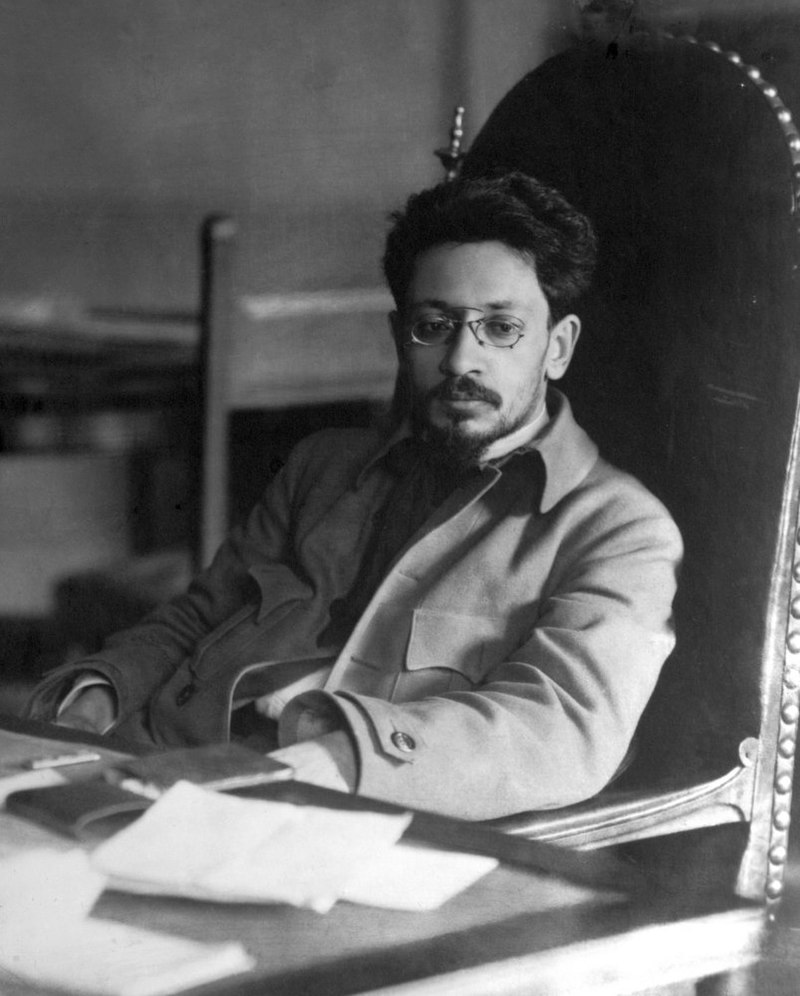
The meeting was opened on behalf of the All-Russian Central Executive Committee by its chairman, Yakov Sverdlov, who expressed hope for the “complete recognition by the Constituent Assembly of all decrees and resolutions of the Council of People’s Commissars” and proposed adopting the draft “Declaration of the Rights of the Toiling and Exploited People” written by Vladimir Lenin, the 1st point of which declared Russia a “Republic of Soviets of Workers’, Soldiers’, and Peasants’ Deputies”157.
The Declaration repeated the resolution of the II Congress of Soviets of Workers’ and Soldiers’ Deputies on agrarian reform, workers’ control, and peace. However, the Assembly, by a majority of 237 votes against 146, refused even to discuss the Bolshevik Declaration. Let us talk separately about this Declaration. This document was generally socialist, but it also contained points that rather repelled the Assembly158:
Power must belong entirely and exclusively to the working masses and their plenipotentiary representation — the Soviets of Workers’, Soldiers’, and Peasants’ Deputies.
Supporting the Soviet power and the decrees of the Council of People’s Commissars, the Constituent Assembly recognizes that its tasks are exhausted by the general elaboration of the fundamental principles of the socialist reorganization of society.
This statement contradicted the slogan of those years “All power to the Constituent Assembly!”, as well as the basis of the Assembly, which implied that the main power would belong to this body. This declaration assigned it a minimal role as a drafter of the Constitution. An interesting situation also developed with the Council of People’s Commissars, since essentially it was a provisional government that was supposed to be replaced. Shortly after the convocation of the Assembly, the CPC was supposed to resign. The Soviets, which were proposed as a more democratic alternative, turned out in the end to be the exact opposite, as can be read in the article dedicated to the Soviets as organs of power. One might think that the Constituent Assembly wanted to remove the Soviets, but in reality Chernov himself said the following: “The Soviets, as an organ of public control, should not be rivals, but allies and collaborators of the Constituent Assembly: any other line of behavior threatens the horrors of civil war, ruin, and savagery”159.
In general, one can assume that under the power of the Constituent Assembly, the Soviets could have become works councils (as in Germany), consisting exclusively of employee representatives and who, in addition to labor issues, have their representatives in the management system160. In general, the Soviets could theoretically even have existed for some time jointly with the Constituent Assembly. There might have been a probability that if the power of the Soviets had been recognized, the Bolsheviks could have used this fact to dissolve the Constituent Assembly in case of dissatisfaction. Indeed, why are they needed if there are organs of power in the form of Soviets? But this was not the only such moment. It was especially difficult with the approval of the candidacy of the chairman of the Constituent Assembly. A section of the Socialist-Revolutionaries proposed Chernov himself, and the Bolsheviks proposed the Left SR Spiridonova, which could have won over the peasants to their side; in the end, after three hours, Chernov was elected by a narrow margin. The Ukrainian Socialist-Revolutionaries even proposed a Presidium, that is, a collegial head, but the SRs refused so that the Bolsheviks and their allies would not “wreck” it. However, in the end, this did not help.
“Perhaps you have heard that the public on the balconies in the Assembly was for the Bolsheviks. And as Chernov wrote on this occasion: ‘tickets to the galleries were distributed by Uritsky (a Bolshevik — ed.). And he distributed…’161. It is obvious that based on the results of this distribution, the majority of the public on the balconies were supporters of the Bolshevik forces”.

There are memoirs recounting a typist from Uritsky’s apparatus, E. P. Selyugina, which highlight how spectators equipped with rattles and whistles, on command, made a noise and shouted what was prompted to them by a prominent party worker, Sergey Gusev, who was hiding behind the curtain162. “We gathered for the meeting that day as if for the theater, we knew that there would be no action today, there would only be a spectacle”163, wrote Left Socialist-Revolutionary Sergey Mstislavsky, who was not a deputy himself. The meeting itself was chaotic and unproductive. Here is one example out of many: Left Socialist-Revolutionary Alexei Feofilaktov almost shot Irakli Tsereteli at the rostrum — at the last moment he was disarmed by one of the faction’s leaders, Vladimir Karelin164.
Here is how Mark Vishnyak describes this episode: “Revolvers are drawn and almost put into action in another place as well — on the Left SR and Ukrainian benches. <…> Only mimicry, gestures, and a revolver taken away by the ‘senior’ of the Left SR faction, Karelin, are visible. It is heard: ‘Ask for forgiveness, scoundrel!'”165.

As a result, at around 23:00, at the demand of the Bolsheviks, a break was announced in the meeting. During this break, a meeting of the Bolshevik faction took place, at which, after Lenin’s speech, the decision to leave the Constituent Assembly was approved. After the break ended, only two Bolsheviks returned to the hall. One of them, Fedor Raskolnikov, read out the following declaration on behalf of his faction166:
The vast majority of toiling Russia — workers, peasants, soldiers — presented the Constituent Assembly with the demand to recognize the conquests of the great October Revolution — the Soviet decrees on land, peace, workers’ control, and above all, to recognize the power of the Soviets of Workers’, Soldiers’, and Peasants’ Deputies.
The All-Russian Central Executive Committee, fulfilling the will of the vast majority of the toiling classes of Russia, invited the Constituent Assembly to recognize this will as binding for itself. The majority of the Constituent Assembly, however, in agreement with the claims of the bourgeoisie, rejected this proposal, throwing down a challenge to all of toiling Russia. <…>
The debates throughout the entire day showed ocularly that the party of Right SRs, just as under Kerensky, feeds the people with promises, in words promises it everything and anything, but in practice has decided to fight against the workers’, peasants’, and soldiers’ Soviets, against socialist measures, against the transfer of lands and all inventory without ransom to the peasants, against the nationalization of banks, against the annulment of state debts. <…>
Not wishing for a single minute to cover up the crimes of the enemies of the people, we declare that we are leaving this Constituent Assembly in order to transfer to the Soviet power the final decision on the question of the attitude towards the counter-revolutionary part of the Constituent Assembly.
Lenin left first, leaving a written order to the guards “not to allow any violence against the counter-revolutionary part of the Constituent Assembly and to freely release everyone from the Tauride Palace, not allowing anyone into it without special orders”167. According to the memoirs of Mark Vishnyak, “it (the declaration read out by Raskolnikov — ed.) made a tremendous impression on the guard soldiers. Many of them raised their rifles to the ready”168, preparing to shoot the remaining part of the Constituent Assembly. Further stay in the hall of the Tauride Palace finally began to pose a danger to the lives of the members of the assembly169: “Armed men, after the departure of the Bolsheviks, more and more often, to pass the time, ‘for entertainment’, raised a rifle and took aim at either someone on the rostrum or the glossy skull of old Minor (SR Osip Minor — ed.)… Rifles and revolvers threatened every minute to go off ‘by themselves’, hand bombs and grenades to explode ‘by themselves’. Some sailor, recognizing in Bunakov-Fundaminsky (SR Ilya Fondaminsky — ed.) the former commissioner of the Black Sea Fleet, without much thought right there at the rostrum took his rifle to the ready. And only the frantic cry of a casual neighbor <…> ‘brother, come to your senses!’, accompanied by a blow to the shoulder, stopped the frantic sailor. <…>. We, the deputies, were surrounded by an enraged crowd, ready every minute to rush at us and tear us to pieces”, recalled SR deputy V. M. Zenzinov170.
The Bolsheviks, after leaving the Constituent Assembly, held a meeting of the Council of People’s Commissars right there in the Tauride Palace, at which Lenin sketched out the theses of the decree on the dissolution of the assembly, adopted a day later by the All-Russian Central Executive Committee. Following the Bolsheviks, at four o’clock in the morning, the Left SR faction left the Assembly, stating through its representative Karelin that “the Constituent Assembly is in no way a reflection of the mood and will of the toiling masses… We are leaving, withdrawing from this Assembly… We are going in order to bring our strength, our energy to Soviet institutions, to the Central Executive Committee”171.
The remaining deputies adopted the following172:
- The Land Law, proclaiming land as all-people’s property,
- An appeal to the warring powers calling to begin peace negotiations,
- A resolution on proclaiming a new state — the Russian Democratic Federative Republic.
Closure
At 04:40 on January 6 (19), the meeting of the Constituent Assembly was closed. The next meeting was scheduled for 17:00 on the same day. When the first deputies walked to the Tauride Palace for the second meeting at the appointed time, they discovered a guard with machine guns and two field guns in front of the sealed doors, on which hung a notice: “By order of the commissioner, the building of the Tauride Palace is closed”173.

A day after the dispersal of the Constituent Assembly, on the night of January 7 (20), the All-Russian Central Executive Committee adopted a decree written by Vladimir Lenin on its dissolution, which stated174:
The Russian revolution, from its very beginning, put forward the Soviets of Workers’, Soldiers’, and Peasants’ Deputies as a mass organization of all toiling and exploited classes, the only one capable of guiding the struggle of these classes for their complete political and economic emancipation.
Throughout the entire first period of the Russian revolution, the Soviets multiplied, grew, and strengthened, outgrowing illusions from their own experience of compromise with the bourgeoisie, the deceitfulness of the forms of bourgeois-democratic parliamentarism; coming practically to the conclusion that it is impossible to emancipate the oppressed classes without breaking with these forms and with any compromise. Such a break was the October Revolution, the transfer of all power into the hands of the Soviets.
The Constituent Assembly, elected on lists compiled before the October Revolution, was an expression of the old correlation of political forces, when the compromisers and Cadets were in power.
The people could not then, by voting for the candidates of the Socialist-Revolutionary party, choose between the Right SRs, supporters of the bourgeoisie, and the Left, supporters of socialism. Thus, this Constituent Assembly, which was to have been the crown of the bourgeois-parliamentary republic, could not fail to stand across the path of the October Revolution and Soviet power. The October Revolution, by giving power to the Soviets and through the Soviets to the toiling and exploited classes, provoked the desperate resistance of the exploiters, and in suppressing this resistance fully revealed itself as the beginning of the socialist revolution.
The toiling classes had to see from experience that the old bourgeois parliamentarism has outlived itself, that it is completely incompatible with the tasks of implementing socialism, that not nationwide, but only class institutions (such as the Soviets) are able to overcome the resistance of the propertied classes and lay the foundations of a socialist society.
Any abandonment of the full power of the Soviets, of the Soviet Republic conquered by the people in favor of bourgeois parliamentarism — and the Constituent Assembly would now be a step back and the collapse of the entire October workers’ and peasants’ revolution.
The Constituent Assembly opened on January 5 produced, due to circumstances known to all, a majority for the party of Right SRs, the party of Kerensky, Avksentiev, and Chernov. Naturally, this party refused to take up for discussion the completely precise, clear, and unambiguous proposal of the supreme organ of Soviet power to adopt the “Declaration of the Rights of the Toiling and Exploited People”, to recognize the October Revolution and Soviet power. Thus, the Constituent Assembly severed any connection between itself and the Soviet Republic of Russia. The withdrawal from such a Constituent Assembly of the faction of the Bolsheviks and Left SRs, who now constitute a manifestly overwhelming majority in the Soviets and enjoy the trust of the workers and the majority of the peasants, was inevitable.
And outside the walls of the Constituent Assembly, the party of the majority of the Constituent Assembly, the Right SRs and Mensheviks, are waging an open struggle against Soviet power, calling in their organs for its overthrow, objectively supporting thereby the resistance of the exploiters to the transfer of land and factories into the hands of the toilers.
It is clear that the remaining part of the Constituent Assembly can, by virtue of this, play only the role of a cover for the struggle of the bourgeois counter-revolution for the “overthrow of the power of the Soviets”.
Therefore, the Central Executive Committee resolves:
The Constituent Assembly is dissolved.
The Bolsheviks, in the words of L. D. Trotsky, “after the open, overt, brutal dispersal of the Constituent Assembly” dealt “formal democracy that salutary blow from which it will never rise again”175. Interestingly, by the way, how Trotsky described the opposition on that night176: “Instead, they carefully worked out the ritual of the first session. They brought candles with them in case the Bolsheviks turned off the electricity, and a large number of sandwiches in case they were deprived of food. That is how democracy appeared to do battle with dictatorship — fully armed with sandwiches and candles”. What happened after the dissolution? Repressions. Thus, on the night of January 9, over 20 people were arrested in the deputies’ dormitory — Nizhny Novgorod, Tambov, and Siberian deputies. However, 2 days later they were released. People’s Commissar of Justice Steinberg admitted that the arrests were made without his knowledge, on the initiative of the All-Russian Extraordinary Commission (VChK)177. Nevertheless, on the 10th the arrests continued, and many left Petrograd.
Now let us figure out what is wrong with the decree? Let us start with the argument about lists and Socialist-Revolutionaries. The argument about deceiving voters is false. As Protasov noted, in reality there were both joint lists and separate lists of Right and Left SRs, which, unlike the joint ones, often showed “bad” results: the Left SRs in several governorates (Voronezh178, Yenisei179, Priamur180, Tobolsk181) gained only 26 thousand votes, and in the elections in February 1918 in Yekaterinodar their list received only 1.9%, while the general SR one gained 11.9%182. Also, many Left SRs suggested voting not for them, but for the Bolsheviks183.
The argument about unfair elections due to a conflict within the party also looks foolish. The intra-party conflict was a problem of the party, not the election organizers, which the SRs should have solved themselves. Besides, as already mentioned, the SRs also had separate lists.
Now let us talk about the dissolution. There are two different opinions: some say that the dissolution was legal, while others say it was not. Let us start with the quorum, which according to many was the reason for the dissolution, but first we need to figure out this issue. In the documents themselves, there were such formulations:
The first meeting of the Constituent Assembly is convened at the invitation of the commissioner over the All-Russian Commission for Elections to the Constituent Assembly upon the arrival in Petrograd of more than four hundred members of the Constituent Assembly.
The meeting is opened by a person authorized to do so by the Council of People’s Commissars, provided there are at least four hundred members of the Constituent Assembly in the meeting hall.
The Council of People’s Commissars sets January 5 as the date for the opening of the Constituent Assembly, given the presence of the established quorum of 400 people.
What is wrong with the formulations? The fact is that due to the absence of rules of procedure (as mentioned above, they did not manage to write them down), it is unclear how to interpret these formulations. Two options are possible:
- It is necessary just to gather 400 people for the opening and further quorum is not needed.
- The quorum is constant even after the opening.
If the Bolsheviks had developed at least rules of procedure, then such a problem with interpretations would not have existed. But it cannot be considered specifically the reason for the dissolution, since it is not mentioned at all in the decree of the All-Russian Central Executive Committee itself. For example. Suppose you go to court, and under the contract you are owed money. If you declare a claim that you want to recover for unjust enrichment (that is, they enriched themselves at your expense by not returning the debt), then you will be refused the initiation of a case — since the wrong method of protecting rights was chosen, and you need to file a claim for the recovery of the debt. Therefore, since nothing is written about the quorum, it means it is not the reason for the dissolution, and if it were so, they should have at least written:
…On the basis that there was no quorum at the time the Constituent Assembly made decisions, the decision is considered illegitimate and the Constituent Assembly is dissolved.
Regarding the issue of dissolution: in theory there is one supposedly legitimate point here (which will be discussed later), which in itself is very vague and thanks to which repressions can be used. We are talking about the Resolution of the All-Russian Central Executive Committee “On Recognizing as a Counter-Revolutionary Action All Attempts to Appropriate the Functions of State Power”184, adopted on January (3) 16, 1918, 2 days before the start of the Constituent Assembly’s work:
Based on all the conquests of the October Revolution and in accordance with the declaration of the toiling and exploited people adopted at the meeting of the Central Executive Committee on January 3 of this year, all power in the Russian Republic belongs to the Soviets and Soviet institutions. Therefore, any attempt by anyone whatsoever, or by any institution whatsoever, to arrogate to itself any functions of state power will be considered a counter-revolutionary action. Any such attempt will be suppressed by all means at the disposal of Soviet power, up to the use of armed force.
If viewed from this perspective, the dissolution is legal. But in fact, this is not so, since it contradicted the documents, which indicated that only the Constituent Assembly could determine the foundations of the state and society of Russia, and no other body. Therefore, it can be said that the Bolsheviks usurped power.
After the dissolution
The above-mentioned factors ultimately led to the fact that many parties, as well as some enterprises185 and authorities186187 opposed the dissolution. No later than January 12, the Appeal of the socialist factions of the Constituent Assembly “To All Citizens of Russia” was published, which condemned the action of the Bolsheviks and their allies. The factions included the Socialist-Revolutionary Party (PSR, Right SRs), the Russian Social Democratic Labour Party (United) (RSDLP(o), Mensheviks), Muslim Socialists, the Labor Popular Socialist Party (LPSP, Popular Socialists), the United Jewish Socialist Labour Party (UJSLP), and the Estonian Democratic Fraction. In the Appeal, the factions stated that they would take measures to resume work, and also called on various citizens of Russia to fight for the resumption of work in order to achieve “peace, revival and freedom, the realization of the age-old aspirations of the people — land and freedom”188.
Also published on January 25, 1918, was the “Proclamation of the All-Russian Union for the Defense of the Constituent Assembly on the Organization of Local Branches of the Union, Meetings and Gatherings in Defense of the Constituent Assembly and the Collection of Funds for the Benefit of the Union”189. Here is what Socialist-Revolutionary leader V. M. Chernov later wrote in his open letter to V. I. Lenin190:
…Oh yes, you are not a thief in the direct and vulgar sense of the word. You will not steal someone else’s wallet. But if it is necessary to steal someone else’s trust, you will go to all tricks, to all deceptions, to all twists that will only be required for this… And never, in anything have these social-psychological traits of yours been manifested with such brilliance as in the two deeds that you had to commit in order to clear your path to power. These two dark and dirty deeds are the shooting on January 5, 1918 of the peaceful street demonstration of Petrograd workers and the dispersal of the Constituent Assembly…
But, unfortunately, this event did not cause a huge stir in society, which the moderate socialists regretted most of all191. Popular Socialist A. V. Peshekhonov scolded the opposition for the lack of a sense of power and responsibility to the people, because otherwise the Bolsheviks would not have managed to seize power so easily192. The Right gloated over this event193, and the Cadets generally advocated for new elections to the Constituent Assembly, which would be freely elected. After this, there were attempts to convene the old (without the Bolsheviks and Left SRs) or elect a new Constituent Assembly. Among them, for example, was the Committee of Members ofgetConnection of the Constituent Assembly (Komuch)194.

A little later, at the state conference in Ufa, it was decided to organize preparations for the continuation of the work of the Constituent Assembly. It was decided that “The Provisional All-Russian Government, until the convocation of the All-Russian Constituent Assembly, is the sole bearer of supreme power throughout the entire expanse of the Russian State”195. However, as a result of Kolchak’s coup, left-wing representatives fell under repressions. And although at the same time Kolchak did not cancel the elections to the Constituent Assembly, he called it the National Assembly, since, according to him, “Instead of the Constituent Assembly, a party one gathered, which sang the ‘Internationale’ and was dispersed by a sailor. The repetition of such an experiment is unacceptable…”196, and considering the authoritarian rule and the statement about the Constituent Assembly, into which Kolchak would have allowed “only <…> state-healthy elements”197, Russia would likely have also become a dictatorship.

In the end, the idea of the Constituent Assembly lasted in a political sense until the early 1920s. The last time the call for the convocation of the Constituent Assembly in Zauralye sounded was in 1921 during the peasant uprising against the communists198. Outside of Russia, in January 1921, a private meeting of members of the Constituent Assembly took place, dedicated to “discussing the forms and methods of protecting the international interests of Russia”199. A single platform was developed and a representative executive commission was elected, consisting of political, financial, and Russian citizens’ protection departments. In the autumn of 1922, it ceased its activities. Around the same time, the Constitution of the Russian State was developed by Dr. Karel Kramar, the 1st Prime Minister of Czechoslovakia, who had a favorable attitude towards Russia. And this material was considered by such figures as G. E. Lvov, P. B. Struve, V. A. Maklakov, B. V. Savinkov, M. A. Stakhovich, M. M. Vinaver, and M. S. Adzhemov. The Constitution itself consisted of 7 chapters and 77 articles and in many respects formed a presidential republic200.
Interestingly, one Constituent Assembly did take place on the territory of present-day Russia, specifically on the territory of a buffer and puppet state of the RSFSR201 — the Far Eastern Republic (FER). The elections were held on January 9, 1921, and were conducted under a proportional system202. They were universal, except for the CER (Chinese Eastern Railway) alienation zone, whose Russian population was sent to Chita by an elected congress of representatives203. A total of 427 deputies were elected: the Bolsheviks received 92 seats, the adjacent peasant faction — “majority” (mostly partisans, supporters of the Bolsheviks) — 183, the peasant faction — “minority” (supporters of other parties) — 44, the SRs — 18, the Mensheviks — 13, non-partisan democrats (Cadets) — 9, the Siberian Union of SRs — 6, the Popular Socialists — 3, the Buryat-Mongol faction — 13204.

The Constitution was finally adopted on April 27, 1921, and consisted of 10 sections and 184 articles. We will not dwell on the FER in detail, but let us briefly note that the Constitution was generally democratic. Thus, the Constitution fixed a social contract between the individual, society, and the state, and was based on such provisions as sovereignty, rule of the people, supremacy of law, separation of powers, multi-party system, broad rights and freedoms of citizens, a market economy, and others. But at the same time, there were also gaps — for example, the Government (a collective head of state, not to be confused with the government in the usual sense, which was called the Council of Ministers in the FER) had the right to issue laws between sessions of the National Assembly (the FER parliament), which would then go for consideration and approval to the National Assembly upon the resumption of the session, and the Assembly in turn could suspend their effect until their consideration205. The state did not exist for long overall, and already on November 15, 1922, the FER became part of the RSFSR206.
With this, the history of both the Constituent Assembly and the idea as a whole can be considered completed.
What Russia could have been
And now let us imagine: what could Russia have been if the dissolution had not happened?
Let us note right away that this is only a thought, based also on the material that existed in the form of projects, so one cannot say what would have happened in reality for sure.
To begin with, it is worth saying that the approximate scope (about 200 articles) and structure of the future Russian Constitution were agreed upon, which, in particular, initially included the following main sections developed by separate commissions207:
I. Declaration of civil liberty rights and guarantees thereof. Citizenship and naturalization.
II. Principles of federalism, autonomy, and self-government. Competence of legislative institutions.
III. State and local languages.
IV. National representation:
a. Bicameralism.
b. Organization of office work, session, dissolution, constitution, immunity, combination with public service.
V. Head of state (President), method of election, functions.
VI. Organization of courts, independence, irremovability, military and special courts.
VII. Army (which, judging by everything, was replaced by a people’s militia).
VIII. Organization of administration.
IX. Council of Ministers.
X. Budget, loans, financial control.
XI. International relations and treaties.
XII. Procedure for constitutional revision, judicial guarantee of the constitution.
XIII. Seal, coats of arms, banner.
Judging by the materials, there was also supposed to be another section208:
XIV. Church (separated from the state, and the section was to lay the foundations of separation).

Russia would be called as follows: the Russian Democratic Federative Republic209. For a better understanding of the issue, let us examine various materials. Let us take the “Draft Law on the Organization of Temporary Executive Power under the Constituent Assembly”210 and start with the Provisional Government.
The head of government would become the Provisional President of the Russian Republic, who would be elected by the Constituent Assembly. He would be under the supervision of the Assembly, and he could be recalled. The President had a term of office of only 1 year. Powers of the President:
- Legislative initiative;
- Determination of the structure, composition, and order of functioning of government institutions except judicial ones;
- Supervision over the observance of laws;
- Foreign policy, but on issues of declaring war, concluding peace and armistice, as well as signing international treaties with foreign states, the Provisional President must submit inquiries to the Constituent Assembly;
- Supreme Commander-in-Chief;
- Appointment and dismissal of officials;
- Defense of the foundations of the constitutional system;
- Resolution of all administrative affairs;
- Selects the Chairman of the Council of Ministers and Ministers who enjoy the confidence of the Constituent Assembly.
Countersignature is also introduced here, the meaning of which is that the signing by the Prime Minister (in our case, the Chairman of the Council of Ministers) or an authorized minister of a normative act of the head of state (in our case, the Provisional President of the Russian Republic) gives the normative act of the head of state legal force211. The possibility was also provided that the positions of the Provisional President, the Chairman of the Council of Ministers, as well as a Minister could be held by deputies of the Constituent Assembly. The Council of Ministers — both as a whole and each of its members individually — are responsible to the Assembly, while the possibility of recall is not prescribed.
As mentioned above, the benchmark was the Third French Republic, which at that time looked like a model of democracy, and it is likely that the model of the President would have become permanent. At the same time, the system embedded in the documents was generally dangerous for the nascent country, as there were risks of the emergence of a peculiar dictator concentrating all threads and governing centers of state administration in his hands.
The parliament was supposed to be bicameral. Let us start with the lower house, which, judging by the outlined theses, would have been elected by the population directly through proportional lists. The election system would be the same as that for the elections to the Constituent Assembly (from 20 years old, women could vote, no property qualifications, and so on). Along with the lower house elected by the population, an upper house was envisaged, the main element of the composition of which was to be the representation of “local autonomous institutions”, “provincial zemstvo assemblies”, and “city dumas of cities separated from provincial administration”. In addition, it seemed desirable that the composition of the upper house include “representatives of the most important organized social and cultural forces of the country” like representatives of trade and industry, cooperatives, trade unions, academies, educational societies, and higher education institutions212, etc., a detailed list was to be determined by special laws.
The upper house as an idea was criticized by many parties and they proposed a unicameral parliament (Cadets, SRs, Social Democrats), and the SRs also proposed the idea of final approval of a law through referendums, but the idea was eventually abandoned because under those conditions it did not seem possible. Also, the refusal was justified by the risks of usurpation of the people’s will by demagogues, as well as the need for the existence of the upper house as the most important corrective tool in party struggle, the main guarantor of legality. In addition, it was indicated that the upper house could (especially in the case of approval of the federal principle) assume the function of representing the regions, expressing their interests213.
Their system of relationships is interesting214:
If a bill adopted by the lower house and rejected by the upper house (moreover, the introduction of amendments to which the lower house did not agree, or non-consideration during the legislature is equated to rejection) is again adopted by the lower house during the first session after its re-election (through dissolution or natural expiration of the term of office) in the same form in which it was adopted the first time, then such a bill becomes law without being submitted to the upper house.
Financial matters (both the budget and purely financial bills) must be excluded from this procedure, however, if only because these matters mostly require immediate resolution. In these matters, the upper house can be granted only a purely consultative voice (following the example of the existing English system of those years). That is, these bills must be submitted for the conclusion of the upper house, but must be finally resolved by the lower house within the same session.
Now let us move on to the federal structure, which initially was, surprisingly, very similar to the Soviet one. According to the “Preliminary Draft of Articles of Fundamental Laws on the Question of Autonomy (Federation)”, a phenomenon known as regional autonomy was introduced215, which receives the right to issue laws from the central legislative power. At the same time, the center determines both the organization of the autonomous province and the scope of those subjects on which it may legislate, with the understanding that this organization and this scope of subjects can be changed only by the central, and not the local, legislative power216.
The only region that could have become a full-fledged region of the federation was Finland, but this option fell away, as Finland gained independence even before the Constituent Assembly began its work217.
In essence, Russia in theory could have become a decentralized unitary state in which there would have been unequal subjects, but at its only meeting, the following was announced218:
The Russian State is proclaimed the Russian Democratic Federative Republic, uniting in an indissoluble union the peoples and regions, sovereign within the limits established by the federal constitution.
A similar system could have become comparable to the federal system of Russia. Judging by the programs of the major parties of the Constituent Assembly219220, the rest can be summarized as follows:
- Political sphere: suffrage would have become universal, equal, and direct, starting at the age of 20; elected and removable power.
- In social matters, it would of course have been a state without estates, in which there would have been those rights and freedoms that are written, including in our modern Constitution: for example, pluralism, freedom of conscience, press, assembly, inviolability of person and home, movement, the right to education,
- The Church was to be separated from the state.
- In the labor sphere, an 8-hour workday, a ban on child labor, the right of workers to participate in the life of the enterprise, the resolution of hygiene issues, state insurance, and the restructuring of women’s and adolescent labor, for example, restrictions by sphere of activity, etc., would have been introduced.
- Expansion of local self-government rights would have been carried out.
- Economic sphere: the nationalization of land (Social Democrats — Bolsheviks and Mensheviks — proposed leaving small land ownership, the size of which would be determined by local self-government) and its transfer to communes (SRs) or local self-government (Social Democrats) would have been carried out; a progressive tax would have been introduced. Also, there would have been the abolition of private property both on the “means of production (factories, plants)” and on the “forces of nature (rivers, forests)”.
- The army was to disappear, and a people’s militia would have been created in its place.
- In national terms, the basis would have been the right of nations to self-determination, for example in the educational and cultural spheres.
Ultimately, it is difficult to say where the Russian Democratic Federative Republic would have ended up, so we are left only to guess and reflect.
The idea of the Constituent Assembly in Russia
Although the very idea of convening a Constituent Assembly was not as broad as at the beginning of the 20th century, it was nevertheless raised during the Perestroika era by various democratic organizations — for example, the Democratic Union221, as well as the Russian Movement for Democratic Reforms, which proposed electing a Constituent Assembly at the beginning of 1993 to adopt a new Constitution of Russia already in 1994 and a law on elections in 1995222. Today, the Yabloko party mainly advocates for the convocation of a Constituent Assembly (including in the form of a Constitutional Assembly)223224225.
In the system of the Russian Federation, there is a Constituent Assembly, which is called the Constitutional Assembly (Article 135 of the Constitution of the Russian Federation226). This body is necessary in case of revision of the provisions of chapters 1, 2, and 9 of the Constitution, and will be convened if the initiative is supported by 3/5 of the total number of members of the Federation Council and deputies of the State Duma. The Constitutional Assembly either confirms the immutability of the Constitution of the Russian Federation or develops a draft of a new Constitution of the Russian Federation, which is adopted by 2/3 of the votes of the total number of its members or is submitted to a national vote. In the latter case, the Constitution is considered adopted if more than half of the voters who took part in the voting voted for it (provided that more than half of the voters participated in it).
It is interesting that as of March 19, 2022, there is no federal constitutional law (FCL) on the Constitutional Assembly (the only unadopted FCL)227. Although it is worth noting that there were drafts of the law, including projects by Lukyanov, Zvolinsky, a group of deputies including Vyacheslav Volodin, Alksnis–Baburin, Bortko, and the CPRF itself. But these drafts cannot be called democratic, as appointees play a major role in them (in particular, in these projects, the following people are automatically deputies of the Constitutional Assembly: the President, ministers, judges, deputies, and senators, and so on). And the only democratic option was the Kovalev project, according to which deputies of the Constitutional Assembly are elected fully, not partially.
But in general, as of today, the very idea of a Constituent Assembly does not have a broad demand. It is likely that this topic will become more relevant much later.
We express our gratitude to Artem Novikov and Maxim Sikach for their help in writing this article.
- L. G. Protasov. The All-Russian Constituent Assembly: The History of its Birth and Demise. – 368 p. – Moscow: Russian Political Encyclopedia (ROSSPEN), 1997. – p. 11.
- M. V. Nechkina. December 14, 1825. – 256 p. – Moscow: Mysl Publishing House, 1985. – p. 28.
- Manifesto of S. P. Trubetskoy // Site of the Constitution of the Russian Federation (https://constitution.garant.ru/). [Electronic resource]. URL: https://constitution.garant.ru/history/act1600-1918/5401/? (Accessed: 03/18/2022)
- Constitution of N. M. Muravyov // Site of the Constitution of the Russian Federation (https://constitution.garant.ru/). [Electronic resource]. URL: https://constitution.garant.ru/history/act1600-1918/5400/? (Accessed: 03/18/2022)
- “Narodnaya Volya” in Documents and Memoirs / ed. by A. V. Yakimovskaya-Dikovskaya; M. F. Frolenko; I. I. Popov et al. – 340 p. – St. Petersburg: Nestor-Istoriya, 2006. – p. 40.
- Collection of Programs of Political Parties in Russia / With a foreword by V. V. Vodovozov. Issue 1. – 73 p. – St. Petersburg: Book Warehouse “Nashy Zhizn”, 2006. – p. 23.
- Ibid.
- Ibid., p. 19.
- I. I. Petrunkevich. Immediate Tasks of the Zemstvo // Jubilee Zemstvo Collection. 1864–1914 / ed. by B. B. Veselovsky, Z. G. Frenkel. – 467 p. – St. Petersburg: 1914. – p. 434.
- The Liberal Movement in Russia. 1902–1905 / Assoc. “Russian Political Encyclopedia” (ROSSPEN), Feder. Arch. Service of Russia, State Arch. of the Russian Federation, Ros. State Arch. of Soc.-Polit. History, comp. D. B. Pavlov, authors of notes O. N. Lezhneva, D. B. Pavlov, resp. ed. V. V. Shelokhaev. – 648 p. – Moscow: “Russian Political Encyclopedia” (ROSSPEN), 2001. – p. 300 – 302.
- Ibid., p. 158–162.
- O. G. Popova. The Idea of the Constituent Assembly in Russian History and its Role in the Attempt to Create a Rule-of-Law State in 1917 – Early 1918 / O. G. Popova // Problems of Russian History. – Yekaterinburg: Volot, 1998. – Issue 2: Experience of State-Building of the 15th-20th Centuries. – p. 146-175.
- L. G. Protasov. The All-Russian Constituent Assembly: The History of its Birth and Demise. – 368 p. – Moscow: Russian Political Encyclopedia (ROSSPEN), 1997. – p. 17.
- M. V. Vishnyak. The All-Russian Constituent Assembly. – 235 p. – Paris: Sovremennye Zapiski, 1932. – p. 152.
- The Russian State: Power and Society: From Ancient Times to the Present Day: Collection of Documents: [Study Guide for Universities in the Direction and Specialty “History”] / Ed. by Yu. S. Kukushkin. – 526 p. – Moscow: Moscow University Publishing House, 1996. – p. 253.
- BLOODY SUNDAY 1905 // Great Russian Encyclopedia. Volume 16. Moscow, 2010, p. 78
- Manifesto on the Improvement of the State Order // Site of the Constitution of the Russian Federation (https://constitution.garant.ru/). [Electronic resource]. URL: https://constitution.garant.ru/history/act1600-1918/35000/? (Accessed: 03/18/2022)
- L. G. Protasov. The All-Russian Constituent Assembly: The History of its Birth and Demise. – 368 p. – Moscow: Russian Political Encyclopedia (ROSSPEN), 1997. – p. 18.
- The Revolutionary Movement in Russia after the Overthrow of the Autocracy / Ed. by L. S. Gaponenko (resp. ed.). – 857 p. – Moscow: Publishing House of the Academy of Sciences of the USSR, 1957. – p. 188.
- Ibid., p. 419.
- L. G. Protasov. Part I. Public request for the election of the Constituent Assembly. // RCOIT under the CEC of Russia (https://www.rcoit.ru/). [Electronic resource]. URL: https://rcoit.ru/lib/history/constituent_assembly/16867/ (Accessed: 03/18/2022).
- N. N. Sukhanov. Notes on the Revolution: In 3 vols. Vol. 1: Books 1-2. – p. 142. – 382 p. – Moscow: Politizdat, 1991. – p. 142.
- Bulletin of the Provisional Government. – Petrograd, 1917, March 5. – Number 1. – p. 1 – 4.
- Bulletin of the People’s Freedom Party [Text]: weekly of the Constitutional Democratic Party. – 32 p. – Petrograd: CC of the People’s Freedom Party, 1917 – No. 1 – p. 11.
- Stenographic report of the meetings of the 7th Congress of the People’s Freedom Party: 1st day of the Congress. – 88 p. – Petrograd: B. i., 1917. – p. 48.
- Fyodor Fyodorovich Kokoshkin. The Constituent Assembly: [report read to the 7th Congress of the People’s Freedom Party on March 25, 1917] – 22 p. – Pg: Synod type., 1917. – p. 18.
- Ibid., p. 21.
- O. G. Popova. The Idea of the Constituent Assembly in Russian History and its Role in the Attempt to Create a Rule-of-Law State in 1917 – Early 1918 / O. G. Popova // Problems of Russian History. – Yekaterinburg: Volot, 1998. – Issue 2: Experience of State-Building of the 15th-20th Centuries. – p. 146-175.
- Ibid.
- Ibid.
- V. I. Lenin. Complete Collected Works. Volume 31 – 671 p. – Moscow: Politizdat, 1969. – p. 252.
- O. G. Popova. The Idea of the Constituent Assembly in Russian History and its Role in the Attempt to Create a Rule-of-Law State in 1917 – Early 1918 / O. G. Popova // Problems of Russian History. – Yekaterinburg: Volot, 1998. – Issue 2: Experience of State-Building of the 15th-20th Centuries. – p. 146-175.
- The Revolutionary Movement in Russia after the Overthrow of the Autocracy [Text] / Ed. by L. S. Gaponenko – 857 p. – Moscow: Publishing House of the Academy of Sciences of the USSR, 1957 – p. 419.
- Fyodor Fyodorovich Kokoshkin. The Constituent Assembly: [report read to the 7th Congress of the People’s Freedom Party on March 25, 1917] – 22 p. – Pg: Synod type., 1917. – p. 13 – 14.
- Resolution of the Provisional Government of July 20, 1917 “On the Approval of Section I of the Regulations on Elections to the Constituent Assembly” // Site of the Constitution of the Russian Federation (https://constitution.garant.ru/). [Electronic resource]. URL: https://constitution.garant.ru/history/act1600-1918/5411/ (Accessed: 03/18/2022).
- P. N. Milyukov. History of the Second Russian Revolution. In 3 parts. Part 1. / ed. by L. M. Suris. M., 1990. Vol. I. P. 71 – 309 p. – Moscow; Berlin: Direct-Media, 2017. – p. 71.
- M. V. Vishnyak. The All-Russian Constituent Assembly. – 478 p. – Moscow: Russian Political Encyclopedia (ROSSPEN), 2010. – p. 152.
- Ibid., p. 153.
- Ibid.
- L. G. Protasov. The All-Russian Constituent Assembly: The History of its Birth and Demise. – 368 p. – Moscow: Russian Political Encyclopedia (ROSSPEN), 1997. – p. 76.
- Petrograd Soviet of Workers’ and Soldiers’ Deputies in 1917: Protocols, shorthand reports and reports, resolutions, decisions of general meetings, meetings of sections, meetings of the Executive Committee and factions (February 27-October 25, 1917). Vol. 1 (February 27-March 31, 1917) / Institute of History of the Leningrad Branch of the USSR Academy of Sciences, Central State Historical Archive of the USSR, Central State Archive of the October Revolution and Socialist Construction of Leningrad; Resp. comp. B. D. Galperina. – 669 p. – Leningrad: Nauka. Leningrad Branch, 1991. – p. 242.
- First All-Russian Congress of Soviets of Workers’ and Soldiers’ Deputies: [Shorthand Report]: Vols. 1-2 / Prepared for publication by V. N. Rakhmetov; Central Archives. – Vol. 2. – 489 p. – Moscow; Leningrad: State Publishing House, 1930-1931. (L.: Pchatny Dvor Type.) – p. 163.
- L. G. Protasov. Part I. Public request for the election of the Constituent Assembly. // RCOIT under the CEC of Russia (https://www.rcoit.ru/). [Electronic resource]. URL: https://rcoit.ru/lib/history/constituent_assembly/16867/ (Accessed: 03/18/2022).
- Russian State Historical Archive. F. 1329. Op. 1. D. 1022. L. 159.
- V. I. Lenin. Complete Collected Works. Volume 34 – 584 p. – Moscow: Politizdat, 1969. – p. 403.
- Ibid., p. 375.
- The Russian Republic was proclaimed // Presidential Library (https://www.prlib.ru/). [Electronic resource]. URL: https://www.prlib.ru/history/619540 (Accessed: 03/18/2022).
- Narodny Listok. 1917. Oct. 28, Nov. 2.
- Zauralsky Krai. 1917. Nov. 26.
- CDOOSO. F. 41. Op. 1. D. 478. L. 68.
- Permskaya Zhizn. 1917. Oct. 26.
- Narodnaya Volya. 1917. Oct. 29.
- Preparation and Conduct of the Great October Socialist Revolution in Bashkiria. (February 1917 – June 1918) [Text]: collection of documents and materials / USSR Academy of Sciences, Bashkir Branch, Institute of History, Language and Literature, Archival Dept. of the Ministry of Internal Affairs of the Bashkir ASSR, Central State Archive of the BASSR, Party Archive of the Bashkir Regional Committee of the CPSU; [comp.: L. A. Vagapova, R. G. Ganeev, Z. V. Metelitsina et al.]; ed. by Z. A. Aminev. – 532 p. – Ufa: Bashknigoizdat, 1957 – p. 226.
- Uralsky Rabochy. 1917. Nov. 1.
- L. G. Protasov. The All-Russian Constituent Assembly: The History of its Birth and Demise. – 368 p. – Moscow: Russian Political Encyclopedia (ROSSPEN), 1997. – p. 201.
- S. N. Bazanov. Results of the Elections to the Constituent Assembly in the Active Army in November 1917 (Truth and Fiction) // Society and Power in Imperial Russia, the USSR, and the Modern Russian Federation. Proceedings of the International Scientific Conference dedicated to the memory of Doctor of Historical Sciences, Honorary Professor of MPSU and RSU named after S. A. Yesenin, Honored Scientist of the RF E. M. Shchagin. Under the general scientific editorship of A. B. Ananchenko. 2018. – 2018. – p. 117 – 125.
- Kaplyukov V. V. Party Struggle in the Urals around the Constituent Assembly // Bolshevik Organizations of the Urals in the Struggle for the Victory of the Socialist Revolution. Collection of scientific papers. – 153 p. Sverdlovsk: Ural Univ. Publishing House, 1987. – p. 27.
- M. F. Chudakov. Constitutional Law of Foreign Countries: Textbook – 477 p. – Minsk: Vyshynaya Shkola, 2018. – p. 257.
- Oliver H. Radkey. Russia goes to the polls: the election to the all-Russian Constituent Assembly, 1917. – 477 p. – Ithaca; London: Cornell Univ. Press, 1989. – p. 161.
- L. G. Protasov. The All-Russian Constituent Assembly: The History of its Birth and Demise. – 368 p. – Moscow: Russian Political Encyclopedia (ROSSPEN), 1997. – p. 84.
- Elections to the Constituent Assembly began // Presidential Library (https://www.prlib.ru/). [Electronic resource]. URL: https://www.prlib.ru/history/619753 (Accessed: 03/18/2022).
- V. I. Lenin. Complete Collected Works. Volume 50 – 623 p. – Moscow: Politizdat, 1970. – p. 405.
- Resolution of the Provisional Government of July 20, 1917 “On the Approval of Section I of the Regulations on Elections to the Constituent Assembly” // Site of the Constitution of the Russian Federation (https://constitution.garant.ru/). [Electronic resource]. URL: https://constitution.garant.ru/history/act1600-1918/5411/ (Accessed: 03/18/2022).
- Utro Rossii. November 16: Moskovsky Listok. 1917. November 17.
- Institute of Elections in Russian History: Sources, Testimonies of Contemporaries. Views of Researchers of the 19th – Early 20th Centuries. / Auth. of the project and comp.: Yu. A. Vedeneev [et al.]; Under the gen. ed. of A. A. Veshnyakov. – 774 p. – Moscow: NORMA, 2001. – p. 739.
- Vlast Truda. Yaroslavl. 1917. November 16.
- GARF. F. 110. Op. 1. D. 159.
- Tiflissky Listok. 1917. November 26.
- Volny Yug. Sevastopol. 1919. November 19.
- Narodnaya Svoboda. Barnaul. 1917. December 3.
- GARF. F. 1810. Op. 1. D. 156. L. 45.
- Orenburgskoye Zemskoye Delo. 1917, October 5.
- GARF. F. 1810. Op. 1. D. 366. L. 43.
- GARF. F. 1810. Op. 1. D. 7. L. 123.
- TsGA of Tatarstan. F. 1246. Op. 1. D. 96. L. 21.
- L. G. Protasov. The All-Russian Constituent Assembly: The History of its Birth and Demise. – 368 p. – Moscow: Russian Political Encyclopedia (ROSSPEN), 1997. – p. 93.
- Constituent Assembly // TASS (https://tass.ru/) [Electronic resource]. URL: https://1917.tass.ru/article/18-yanvarya (Accessed: 03/19/2022).
- Nasha Gazeta, Verkhny Volochyok. 1917. December 25.
- Bolshakova O. V. 98.04.010. Protasov L. G. The All-Russian Constituent Assembly: History of Birth and Demise. – M.: ROSSPEN, 1997. – 368 p. // Social and Humanitarian Sciences. Domestic and Foreign Literature. Series 5: History. – 1998 – No. 4. – p. 99-116.
- Decrees of Soviet Power. Vol. 1: October 25, 1917 – March 16, 1918 / [prepared for publication by Doctor of Historical Sciences Prof. S. N. Valk et al.]. – 626 p. – Moscow: Gospolitizdat, 1957 – p. 24-25.
- GARF, F. 1810, Op. 1, D. 91, L. 130.
- State Archive of the Tver Region, F. 162, Op. 1, D. 32, L. 161.
- Russkoye Slovo. 1917. October 25.
- GARF. F. 1810. Op. 1. D. 85. L. 36.
- State Archive of the Tambov Region. F. 1068. Op. 1. D. 160. L. 207.
- GATO. F. 1068. Op. 1. D. 13. L. 133-134.
- L. G. Protasov. The All-Russian Constituent Assembly: The History of its Birth and Demise. – 368 p. – Moscow: Russian Political Encyclopedia (ROSSPEN), 1997. – p. 187
- Elections to the Constituent Assembly began // Presidential Library (https://www.prlib.ru/). [Electronic resource]. URL: https://www.prlib.ru/history/619753 (Accessed: 03/18/2022).
- V. I. Lenin. Complete Collected Works. Volume 40 – 506 p. – Moscow: Politizdat, 1974. – p. 2.
- L. G. Protasov. The All-Russian Constituent Assembly: The History of its Birth and Demise. – 368 p. – Moscow: Russian Political Encyclopedia (ROSSPEN), 1997. – p. 299-300.
- Alexander Abramovsky. The mechanism of formation of the Constituent Assembly // Journal of Elections. – 2013 – No. 1. – p. 56-60.
- L. G. Protasov. Part III. Election campaign, results, and lessons of the elections to the Constituent Assembly // RCOIT under the CEC of Russia (https://www.rcoit.ru/). [Electronic resource]. URL: https://www.rcoit.ru/lib/history/constituent_assembly/16993/ (Accessed: 03/19/2022).
- Oliver H. Radkey. Russia goes to the polls: the election to the all-Russian Constituent Assembly, 1917. – 477 p. – Ithaca; London: Cornell Univ. Press, 1989. – p. 71.
- Constituent Assembly // Bulletin of Chelyabinsk State University. – 1993. – No. 1 (5). – p. 99-120.
- L. G. Protasov. The All-Russian Constituent Assembly: The History of its Birth and Demise. – 368 p. – Moscow: Russian Political Encyclopedia (ROSSPEN), 1997. – p. 299-300.
- E. N. Gorodetsky. Birth of the Soviet State. – 350 p. – Moscow: Nauka, 1987. – p. 268.
- O. N. Znamensky. The All-Russian Constituent Assembly. – 364 p. – Leningrad: Nauka, Leningrad Branch, 1976. – p. 294.
- L. G. Protasov. The All-Russian Constituent Assembly: The History of its Birth and Demise. – 368 p. – Moscow: Russian Political Encyclopedia (ROSSPEN), 1997. – p. 197.
- V. I. Lenin. Complete Collected Works. Volume 34 – 584 p. – Moscow: Politizdat, 1969. – p. 392.
- L. D. Trotsky. History of the Russian Revolution. Selected Works – 293 p. – Moscow: Yurayt Publishing House, 2017. – p. 207.
- V. I. Lenin. Complete Collected Works. Volume 35 – 600 p. – Moscow: Politizdat, 1974. – p. 27.
- Decrees of Soviet Power. Vol. 1: October 25, 1917 – March 16, 1918 / [prepared for publication by Doctor of Historical Sciences Prof. S. N. Valk et al.]. – 626 p. – Moscow: Gospolitizdat, 1957 – p. 18.
- Izvestiya TsIK i Petrogradskogo Soveta Rabochikh i Soldatskikh Deputatov. 1917, November 9.
- Popova O. G. The idea of the constituent assembly in Russian history and its role in the attempt to create a rule-of-law state in 1917 – early 1918 / O. G. Popova // Problems of Russian History. – Yekaterinburg: Volot, 1998. – Issue 2: Experience of state building of the 15th-20th centuries. – p. 146-175.
- Bolsheviks during the period of preparation and implementation of the Great October Socialist Revolution: Chronicle of events in Petrograd. Vol. 1: April-October 1917 / Comp. I. Krushkol, T. Trenogova – 523 p. – Leningrad: Lenizdat, 1947 – p. 474.
- V. I. Lenin. Complete Collected Works. Volume 31 – 671 p. – Moscow: Politizdat, 1969. – p. 110.
- The Communist Party of the Soviet Union in resolutions and decisions of congresses, conferences, and plenums of the Central Committee (1898-1986). Vol. 1: 1898-1917. – 638 p. – Moscow: Politizdat, 1983 – p. 601-602.
- V. I. Lenin. Complete Collected Works. Volume 35 – 600 p. – Moscow: Politizdat, 1974. – p. 96.
- Decrees of Soviet Power. Vol. 1: October 25, 1917 – March 16, 1918 / [prepared for publication by Doctor of Historical Sciences Prof. S. N. Valk et al.]. – 626 p. – Moscow: Gospolitizdat, 1957 – p. 77.
- V. I. Lenin. Complete Collected Works. Volume 35 – 600 p. – Moscow: Politizdat, 1974. – p. 111.
- Ibid., p. 155.
- Maria Molchanova. Ekaterina Breshko-Breshkovskaya — “grandmother of the Russian revolution” // Diletant (https://diletant.media/). June 14, 2017 [Electronic resource]. URL: https://diletant.media/articles/36083045/ (Accessed: 03/19/2022).
- GARF. F. 1810. Op. 1. D. 375. L. 49.
- I. I. Mints. History of the Great October: In 3 vols. Vol. 3. The Triumphant March of Soviet Power – 1007 p. – Moscow: Nauka, 1973 – p. 837.
- Decrees of Soviet Power. Vol. 1: October 25, 1917 – March 16, 1918 / [prepared for publication by Doctor of Historical Sciences Prof. S. N. Valk et al.]. – 626 p. – Moscow: Gospolitizdat, 1957 – p. 162.
- G. V. Klokova. History of the Fatherland in Documents, 1917–1993. Reader for High School Students of Secondary Schools. – 224 p. – Moscow: ILBI, 1997. – p. 109.
- Moskovsky Listok. 1917. December 4.
- Utro Rossii. 1917. December 5.
- Delo Naroda. 1917. December 16
- Decrees of Soviet Power. Vol. 1: October 25, 1917 – March 16, 1918 / [prepared for publication by Doctor of Historical Sciences Prof. S. N. Valk et al.]. – 626 p. – Moscow: Gospolitizdat, 1957 – p. 76.
- Ibid.
- Ibid., p. 168.
- Ibid., p. 159.
- Utro Rossii. 1917. November 25.
- V. I. Lenin. Complete Collected Works. Volume 35 – 600 p. – Moscow: Politizdat, 1974. – p. 161.
- M. V. Vishnyak. The All-Russian Constituent Assembly – 478 p. – Moscow: Russian Political Encyclopedia (ROSSPEN), 2010. – p. 179.
- L. D. Trotsky. History of the Russian Revolution. Selected Works – 293 p. – Moscow: Yurayt Publishing House, 2017. – p. 208.
- Decrees of Soviet Power. Vol. 1: October 25, 1917 – March 16, 1918 / [prepared for publication by Doctor of Historical Sciences Prof. S. N. Valk et al.]. – 626 p. – Moscow: Gospolitizdat, 1957 – p. 278.
- L. D. Trotsky. History of the Russian Revolution. Selected Works – 293 p. – Moscow: Yurayt Publishing House, 2017. – p. 209.
- Decrees of Soviet Power. Vol. 1: October 25, 1917 – March 16, 1918 / [prepared for publication by Doctor of Historical Sciences Prof. S. N. Valk et al.]. – 626 p. – Moscow: Gospolitizdat, 1957 – p. 159.
- O. P. Korolkov. Elections to the Constituent Assembly in Pskov Governorate // Pskov Scientific-Practical, Historical-Local History Journal. – 2016. – No. 45. – p. 45-67.
- RTSHIDNI. F. 274. D. 49. L. 5.
- V. M. Chernov. Before the Storm / ed. by L. M. Suris. – 498 p. – Moscow; Berlin: Direct-Media, 2016. – p. 424.
- The Socialist-Revolutionary Party. Documents and Materials. In 3 vols. / Vol. 3. Part 2. October 1917 – 1925. – 1055 p. – Moscow: Russian Political Encyclopedia (ROSSPEN), 2000. – p. 283.
- Delo Naroda. 1917. June 18.
- V. M. Chernov. Before the Storm / ed. by L. M. Suris. – 498 p. – Moscow; Berlin: Direct-Media, 2016. – p. 428.
- Ibid.
- O. F. Solovyov. Great October and its opponents: On the role of the Entente’s alliance with internal counter-revolution in unleashing intervention and civil war (Oct. 1917–July 1918). – 227 p. – Moscow: Mysl, 1968. – p. 98.
- Larsons M. Ya. In Soviet Service. Notes of a Specialist – 285 p. – Paris: Societe Nouvelle d’Edit. Franco-Slaves, 1930. – p. 25-26.
- The Socialist-Revolutionary Party. Documents and Materials. 1900–1925. In 3 vols. Vol. 3. Part 2. October 1917–1925. – 1055 p. – Moscow: Russian Political Encyclopedia (ROSSPEN), 2000. – p. 309.
- Notebooks of L. G. Deutsch / Publication of A. R. Posner // Questions of History. – 1996. – No. 3. – p. 15.
- State Archive of the Russian Federation. F. 1810. Op. 1. D. 514. L. 79-80
- Mstislavsky S. D. Five Days: The Beginning and End of the February Revolution – 161 p. – Berlin: Z. I. Grzhebin Publishing House, 1922. – p. 140.
- G. V. Gessen. Archive of the Russian Revolution Published by Gessen – 315 p. – Berlin: “Slovo” Publishing House, 1924. – Vol. 13. – p. 64-65.
- Constituent Assembly // TASS (https://tass.ru/) [Electronic resource]. URL: https://1917.tass.ru/article/18-yanvarya (Accessed: 03/19/2022).
- The Eternal Threshold of Freedom: [collection] / [comp., introductory art. and notes by M. Glinka]. – 357 p. – Leningrad: Khudozhestvennaya Literatura: Leningrad Branch, 1990. – p. 175-176.
- V. M. Chernov. Before the Storm – 416 p. – Minsk: Harvest, 2004. – p. 357.
- State Archive of the Republic of Buryatia (GARB). F. R-438. Central Buryat National Committee (Chita). Op. 1. D. 29, L. 7.
- Ibid.
- Soviet Historical Encyclopedia. Vol. 14: Taanah-Feleo / ed. in chief E. M. Zhukov. – 1038 p. – Moscow: Soviet Encyclopedia, 1973. – p. 919.
- Petrogradsky Golos. 1918. January 4.
- RTSHIDNI. F. 274. Op. 1. D. 95. L. 195 ob.
- Decrees of Soviet Power. Vol. 1: October 25, 1917 – March 16, 1918 / [prepared for publication by Doctor of Historical Sciences Prof. S. N. Valk et al.]. – 626 p. – Moscow: Gospolitizdat, 1957 – p. 159.
- V. M. Chernov. Before the Storm – 416 p. – Minsk: Harvest, 2004. – p. 360.
- F. F. Raskolnikov. About Time and About Oneself: Memoirs, Letters, Documents – 626 p. – Leningrad: Lenizdat, 1989. – p. 337.
- M. V. Vishnyak. The All-Russian Constituent Assembly – 478 p. – Moscow: Russian Political Encyclopedia (ROSSPEN), 2010. – p. 192.
- Decrees of Soviet Power. Vol. 1: October 25, 1917 – March 16, 1918 / [prepared for publication by Doctor of Historical Sciences Prof. S. N. Valk et al.]. – 626 p. – Moscow: Gospolitizdat, 1957 – p. 321.
- Ibid., p. 323.
- V. M. Chernov. Before the Storm – 416 p. – Minsk: Harvest, 2004. – p. 362.
- K. V. Plamennova. Legal Foundations of Non-Union Employee Representation in Germany // Journal of Russian Law – 2014 – No. 1 (205). – p. 124-131.
- V. M. Chernov. Before the Storm / ed. by L. M. Suris. – 498 p. – Moscow; Berlin: Direct-Media, 2016. – p. 429.
- Memoirs of Mikhail Serov about the story of Elena Petrovna Selyugina // Century XX and World. – 1990 – No. 2. – p. 33-35.
- Mstislavsky S. D. Five Days: The Beginning and End of the February Revolution – 161 p. – Berlin: Z. I. Grzhebin Publishing House, 1922. – p. 140.
- L. G. Protasov. The All-Russian Constituent Assembly: History of Birth and Death – 368 p. – Moscow: Russian Political Encyclopedia (ROSSPEN), 1997. – p. 318.
- M. V. Vishnyak. The All-Russian Constituent Assembly – 478 p. – Moscow: Russian Political Encyclopedia (ROSSPEN), 2010. – p. 205.
- V. I. Lenin. Complete Collected Works. Vol. 35 – 600 p. – Moscow: Politizdat, 1974. – p. 227-228.
- State Archive of the Russian Federation. F. 1810. Op. 1. D. 34.
- M. V. Vishnyak. The All-Russian Constituent Assembly – 478 p. – Moscow: Russian Political Encyclopedia (ROSSPEN), 2010. – p. 203.
- Ibid., p. 204.
- The Socialist-Revolutionary Party After the October Coup of 1917. Documents from the PSR Archive. / Comp. and preface by Jansen Mark. – 159 p. – Amsterdam: IISG, 1989. – p. 17.
- Constituent Assembly, Russia, 1918: Verbatim report and other documents / Comp. and author of preface Novitskaya T. E. – 159 p. – Moscow: Nedra, 1991. – p. 157.
- T. E. Sanzhieva. Activities of Deputy M. N. Bogdanov in the Constituent Assembly. To the 140th Anniversary of His Birth // Bulletin of the Buryat State University. Humanitarian Studies of Inner Asia – 2018 – No. 2. – p. 37-42.
- L. G. Protasov. The All-Russian Constituent Assembly: History of Birth and Death – 368 p. – Moscow: Russian Political Encyclopedia (ROSSPEN), 1997. – p. 319.
- V. I. Lenin. Complete Collected Works. Vol. 35 – 600 p. – Moscow: Politizdat, 1974. – p. 235-237.
- L. D. Trotsky. History of the Russian Revolution. Selected Works – 293 p. – Moscow: Urait Publishing House, 2017. – p. 210.
- Ibid., p. 209.
- L. G. Protasov. The All-Russian Constituent Assembly: History of Birth and Death – 368 p. – Moscow: Russian Political Encyclopedia (ROSSPEN), 1997. – p. 321.
- L. M. Spirin. Russia 1917: From the History of the Struggle of Political Parties – 368 p. – Moscow: Mysl, 1987. – p. 279.
- Ibid., p. 283.
- Ibid., p. 287.
- Ibid., p. 316.
- Ibid., p. 290.
- Proletarskaya Pravda. Tula. 1917. November 15.
- Resolution of the All-Russian Central Executive Committee “On Recognizing as a Counter-Revolutionary Action All Attempts to Appropriate the Functions of State Power” // Website of the Constitution of the Russian Federation (https://constitution.garant.ru/). [Electronic resource]. URL: https://constitution.garant.ru/history/act1600-1918/5318/? (Accessed: 03/18/2022).
- At the factories and plants of Petrograd after January 5 of the Union // Presidential Library (https://www.prlib.ru/). [Electronic resource]. URL: https://www.prlib.ru/item/428489 (Accessed: 03/19/2022).
- “Golos Sibiri”. Novo-Nikolayevsk. 1917, December 10. No. 260.
- TsDOOSO. F. 41. Op. 1. D. 63. L. 163. Original. Typewritten.
- Mensheviks in Bolshevik Russia. 1918–1924. Mensheviks in 1918 – 797 p. – Moscow: ROSSPEN, 1999. – p. 164.
- Proclamation of the All-Russian Union for the Defense of the Constituent Assembly on the Organization of Local Branches of the Union, Meetings and Gatherings in Defense of the Constituent Assembly and the Collection of Funds for the Benefit of the Union // Presidential Library (https://www.prlib.ru/). [Electronic resource]. URL: https://www.prlib.ru/item/703310 (Accessed: 03/19/2022).
- Yu. I. Steltsovsky. History of Soviet Repressions: in 2 vols. Vol. 2. – 433 p. – Moscow: Znak-SP, n. d., 1997. – p. 380.
- Svobodnoe Slovo. 1918. January 15 and 21.
- O. L. Protasova. Political and Public Activity of A. V. Peshekhonov: dissertation … candidate of historical sciences: 07.00.02. – 293 p. – Moscow, 1996. – p. 170.
- Fonar. 1918. January 15.
- Novikova L. G. COMMITTEE OF MEMBERS OF THE CONSTITUENT ASSEMBLY // Great Russian Encyclopedia. Vol. 14. Moscow, 2009, p. 639
- G. V. Gessen. Archive of the Russian Revolution Published by Gessen – 297 p. – Berlin: “Slovo” Publishing House, 1923. – Vol. 12. – p. 190.
- Between Two Bolshevisms // Museology, Regional History and Local History in Modern Research and Practices. Vibe P. P. Ser. “Anthology of Omsk Local History” Edited by P. P. Vibe. Omsk, 2015. – 2015. – p. 686-696.
- White Cause: Chronicle of the White Struggle: Materials collected and developed by Baron P. N. Wrangel, Duke G. N. Leuchtenberg and Serene Prince A. P. Lieven: In 6 vols. Vol. 1 / Ed. by A. A. von Lampe. – 205 p. – Berlin: “Medny Vsadnik” Publishing House, 1926. – P. 108.
- D. A. Koksharov. Legislative Power in the History of Zauralye: People and Events: People and Events – 149 p. – Kurgan: [n. p.], 2014. – p. 28.
- Funds of the Russian Foreign Historical Archive in Prague: Inter-archival Guidebook / Ed. by T. F. Pavlova. – 670 p. – Moscow: ROSSPEN, 1999. – P. 129.
- D. R. Zainutdinov, A. G. Gataullin. “Constitution of Karel Kramar”: Project of a Presidential Republic for Russia // Current Problems of Russian Law. – 2020. – Vol. 15. – No. 12 (121). – p. 11-22.
- A. P. Sukhodulov, Lebedina A. V. The Far Eastern Republic and Manchukuo: Historical Parallels // Russian-Chinese Studies. – 2019. – Vol. 3. – No. 3. – p. 40-53.
- I. V. Starikov. Historical Experience of Constitutional Construction of an Unrecognized State (On the Example of the FER Constitution of 1921) // Genesis: Historical Research – 2017. – No. 1. – p. 33-37.
- Sablin I. The Far Eastern Republic: From Idea to Liquidation, 1905–1922 / Trans. from English by A. Yu. Tereshchenko. – 480 p. – Moscow: New Literary Observer, 2020. – p. 287.
- I. V. Starikov. Comparative Analysis of the Provisions of the Constitutions of the FER of 1921 and the RSFSR of 1918 // Bulletin of Chelyabinsk State University. – 2019. – Vol. 4. – No. 1. – p. 11-17.
- Basic Law (Constitution) of the Far Eastern Republic: Approved by the Constituent Assembly of the Far East on April 27, 1921. – 72 p. – Chita: State Typ., 1921. – p. 10.
- Tsipkin Yu. N. FAR EASTERN REPUBLIC // Great Russian Encyclopedia. Vol. 8. Moscow, 2007, p. 261
- Constituent Assembly, Russia, 1918: Verbatim report and other documents / Comp. and author of preface Novitskaya T. E. – 159 p. – Moscow: Nedra, 1991. – p. 36.
- Ibid., p. 37.
- RGASPI, f. 274, op. 1, d. 46, l. 15.
- Draft Law on the Organization of Temporary Executive Power under the Constituent Assembly // Presidential Library (https://www.prlib.ru/). [Electronic resource]. URL: https://www.prlib.ru/item/703319 (Accessed: 03/19/2022).
- V. E. Chirkin. Countersignature // Great Russian Encyclopedia. Vol. 15. Moscow, 2010, p. 146. [Electronic resource]. URL: https://bigenc.ru/law/text/2093440 (Accessed: 04/21/2021).
- Constitutional Projects in Russia of the 18th — Early 20th Century / [Comp., author of intro. art. and comment. A. N. Medushevsky] – 640 p. – Moscow: Russian Political Encyclopedia (ROSSPEN), 2010. – p. 590.
- Ibid., p. 65-66.
- Ibid., p. 590-591.
- Zubov A. B. Unitarism or Federalism: On the Question of the Future Organization of Russia’s State Space // Polis. Political Studies. Founders: Federal Center for Theoretical and Applied Sociology of the Russian Academy of Sciences, NP “Polis Journal Editorial Office (Political Studies)”, Russian Political Science Association, Non-profit Foundation — Institute for Social, Economic and Political Studies (ISEPI Foundation), Moscow State Institute of International Relations (University) — 2000. — No. 5. — p. 32-54.
- Nikolay Ivanovich. Russian State Law. 3rd ed. Vol. 1 — 672 p. — SPb: Kn. mag. “Pravo”, 1913. — p. 217-218.
- Decree on the State Independence of Finland Adopted // Presidential Library (https://www.prlib.ru/). [Electronic resource]. URL: https://www.prlib.ru/history/619861 (Accessed: 03/18/2022).
- RGASPI, f. 274, op. 1, d. 46, l. 15.
- Collection of Programs of Russian Political Parties — 30 p. — Petrograd: “Strannik” Journal, 1917.
- Programs of the Main Russian Parties. — 64 p. — M.: S. n., 2014. — (Library of the Free People).
- “Smena”. No. 104–105, 05/08/1991.
- M. A. Mityukov. On the Way to the Fundamental Law of 1993. From Diaries // Gosudarstvennaya Sluzhba — 2013 — No. 4 (84). — p. 12-19.
- Lessons of the Constituent Assembly // Yabloko (https://www.yabloko.ru/). January 21, 2013 [Electronic resource]. URL: https://www.yabloko.ru/publikatsii/2013/01/21_0 (Accessed: 03/18/2022).
- Lessons of the Constituent Assembly // Yabloko (https://www.yabloko.ru/). January 18, 2018 [Electronic resource]. URL: https://www.yabloko.ru/publikatsii/2018/01/18 (Accessed: 03/18/2022).
- Lies and Legitimacy // Yabloko (https://www.yabloko.ru/). April 6, 2011 [Electronic resource]. URL: https://www.yabloko.ru/publikatsii/2011/04/06 (Accessed: 03/18/2022).
- Constitution of the Russian Federation // Administration of the President of Russia (http://www.kremlin.ru/). [Electronic resource]. URL: http://www.kremlin.ru/acts/constitution/item#chapter9 (Accessed: 03/18/2022).
- Phantom of the Constitutional Assembly // Rambler (https://www.rambler.ru/ utm_source=head&utm_campaign=self_promo&utm_medium=logo&utm_content=head). January 20, 2020 [Electronic resource]. URL: https://news.rambler.ru/politics/43529088-fantom-konstitutsionnogo-sobraniya/ (Accessed: 03/18/2022).