
Imperative mandate: for or against?
Our readers have likely heard from communists that the democracies of developed countries are flawed. They claim there was not and is no imperative mandate there, whereas it existed in countries under communist party rule. What is the actual state of affairs? Is an imperative mandate needed in a social democratic system, and if so, in what form is it acceptable?
The imperative mandate is an object of devotion for many communists, alongside the Soviets, world revolution, the dictatorship of the proletariat, and so on. One sometimes hears from them that the existence of the imperative mandate in the countries of the Socialist Bloc is evidence of the greater democracy of their systems. But what is this concept? Why is an imperative mandate needed in principle, and is it possible within a democratic system?
Contents
What is an imperative mandate
The Great Russian Encyclopedia informs the reader that it is “a rule determining the procedure of relations between a representative and their constituents, according to which the representative is considered legally accountable to the constituents, bound by instructions and mandates from those who elected them (or the programs of the parties on whose tickets they were elected)”1. Other definitions:
A rule according to which a representative of a representative body of power is bound by instructions from voters and responsible to them in all their activities; at the same time, the possibility of early recall of representatives who have not justified the voters’ trust is legally secured2.
A parliamentary mandate according to which a parliamentarian is considered legally accountable to voters and bound by instructions from voters; the possibility of early recall may be provided for3.
In simpler terms, an imperative mandate is a type of mandate under which a representative is more strongly dependent on their constituents because they receive instructions (that is, directives) from them, and if their work does not satisfy the constituents, in theory, they can be recalled.
History
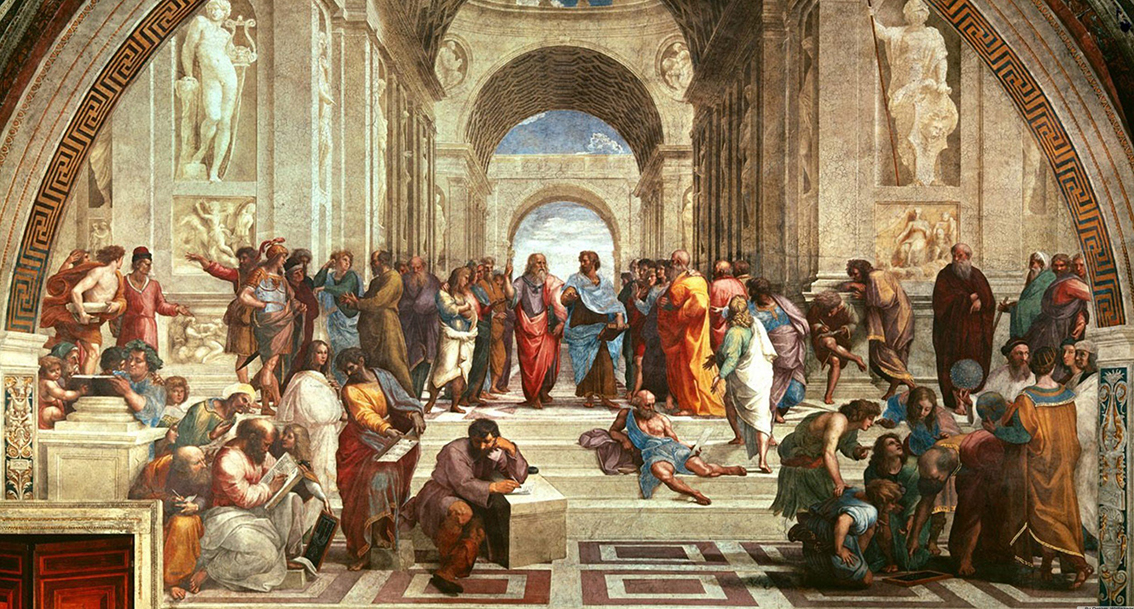
The prototype of this type of mandate existed back in the Ancient World. In Athens, officials during their term of office were held accountable for mistakes made — in particular, after the adoption of a new law, its author could be prosecuted within a year on charges of proposing a law contrary to the democratic constitution and existing laws4, and annually replaced officials regularly reported to the popular assembly and, if their report was deemed unsatisfactory, could be recalled prematurely5. This made it possible to prevent officials from becoming detached from the broad masses of Athenian citizens.
In the Middle Ages, one can already find the direct roots of the institution of representative recall6. In medieval Spain — for example, in the Kingdom of León and Castile — the representation of large and small towns in the Cortes (that is, in parliament) was based on an imperative mandate7. Representatives of these towns were equipped with precise and detailed instructions corresponding to the topics discussed at the sessions. They could not deviate from these instructions. As a rule, towns required their representatives to take an oath. According to this oath, representatives could not depart from the instructions given to them and could not exceed their authority. This act was certified by a public notary. Beginning in the 15th century, the Kings of Spain began to specify in their documents convoking assemblies the scope of the desired mandate, even if it conflicted with the wishes of the towns. This meant that the towns could no longer fully control their representatives. Thus, the Spanish monarchy overcame the imperative mandate and largely subordinated the town representatives to its own interests.
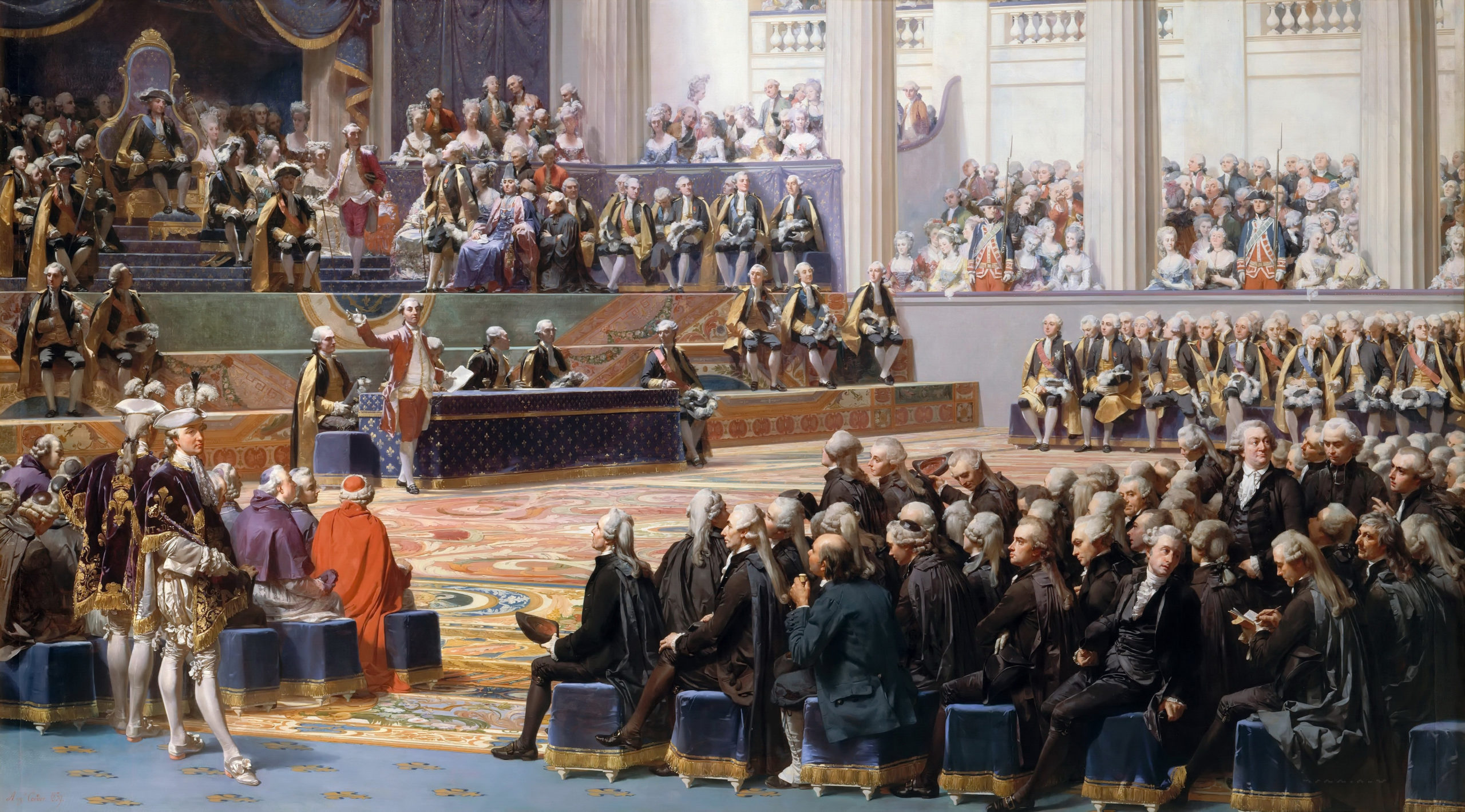
A similar mandate also existed in France. At the Estates-General, voters gave instructions to their deputies and declared that the deputies were their agents, bound executors of their will alone: “By virtue of these principles, which we shall always uphold, we order our deputies to the Estates-General not to deviate in any way from the orders and instructions given by us, and in the event that they do not conform to them in all respects, we shall disown them and declare them forever unworthy of our trust”8.
After the overthrow of the monarchy, the imperative mandate was subjected to serious criticism, as one of the key ideologues of the French Revolution — Jean-Jacques Rousseau — considered sovereignty to be indivisible (“…for will is either general, or it is not; it is the will of the body of the people, or only of a part”9), which subsequently led to its replacement by the concept of the free mandate.
The imperative mandate in its modern form appeared during the Paris Commune, in which “delegates were to be bound strictly by the mandat impératif (formal instructions) of their constituents and could be recalled at any time”10. Karl Marx evaluated the imperative mandate in the Commune as a phenomenon characteristic of the rule of working people11. Such a flattering assessment of the imperative mandate by Marx led to its adoption by socialist countries: first Soviet Russia, and later the entire Socialist Bloc. After the collapse of the Socialist Bloc, the imperative mandate at the state level remained in a few countries — in particular, in the PRC and in Cuba.
Principles of operation
An imperative mandate generally consists of three parts:
- Instructions. They represent a binding mandate (requirement) from voters to their representative, possessing public significance and aimed at satisfying the material and spiritual needs of the population. A distinguishing characteristic of an instruction is its comparative universality, as it enables voters to address issues concerning the economic, social, and spiritual-cultural development of their electoral district. At the same time, an analysis of the legal regulation and practical implementation of the institution of voter instructions at the regional and local levels in Russia shows that it addresses a rather narrow list of issues (primarily regarding the improvement of the electoral district’s territory)12;
- Reports. Representatives under such a system are required to report on their activities and communicate about them to their voters;
- Recall. A representative can lose their mandate at the request of their voters if they do not satisfy their needs or fail to perform their work.
The pros of such a mandate are as follows13:
- The possibility for citizens to participate more directly in policy implementation;
- The impermissibility of a representative becoming detached from the needs of voters.
However, it also has its cons:
- Fostering “parochial tendencies” in the representative body;
- Difficulty of application under modern legislation (namely in legal implementation – how to organize the recall mechanism, how to justify its possibility, and so on – as we will examine further, this was one of the problems of the imperative mandate in the USSR);
- A moral problem. The dependency of a representative on the opinion of a limited (relative to the parliamentary level) group of individuals, the district’s voters, carries a certain element of blackmail. The representative must act strictly in the interests of said group of citizens and meet their criteria of moral character (that is, solely in the interests of a group of voters, rather than in the interests of all, which can lead to the elitism of this group). Otherwise, they may be recalled. This also gives rise to the problems of direct democracy (which we outlined in this article), fetters the representative’s initiative, and forces them to express the interests of only certain (most active) groups;
- Lack of universality. An imperative mandate is more difficult to apply in a proportional representation system, where people do not vote for a specific individual, but rather for multiple candidates on party lists, and representatives are more tied to the party.
Rejection
The principle of representative democracy and its distinction from the imperative mandate was stated, for example, by Edmund Burke in “Speech to the Electors of Bristol” (November 1774):
To deliver an opinion, is the right of all men; that of constituents is a weighty and respectable opinion, which a representative ought always to rejoice to hear; and which he ought always most seriously to consider. But authoritative instructions; mandates issued, which the member is bound blindly and implicitly to obey, to vote, and to argue for, though contrary to the clearest conviction of his judgment and conscience, — these are things utterly unknown to the laws of this land, and which arise from a fundamental mistake of the whole order and tenor of our constitution.
Parliament is not a congress of ambassadors from different and hostile interests; which interests each must maintain, as an agent and advocate, against other agents and advocates; but parliament is a deliberative assembly of one nation, with one interest, that of the whole; where, not local purposes, not local prejudices, ought to guide, but the general good, resulting from the general reason of the whole. You choose a member indeed; but when you have chosen him, he is not member of Bristol, but he is a member of parliament14.
French constitutional scholar M. Prélot noted that a representative cannot be the bearer of the will of any single electoral district; they are the bearer of the will of the entire nation, answerable only to their conscience, and therefore cannot be bound by voters’ instructions15. Austrian legal scholar F. Koja pointed out that the principle of the free mandate is the foundation of modern representative democracy, and the provision regarding a possible binding connection between a representative and voters is unacceptable and unconstitutional16.
This concept is widespread in most countries of the world — in particular, in the following countries:
- Germany (Paragraph 1 of Article 38 of the Basic Law for the Federal Republic of Germany states that members of the Bundestag “shall not be bound by orders or instructions”: “They [members of the Bundestag – author’s note] shall be representatives of the whole people…” (Paragraph 1 of Article 38 of the Basic Law for the Federal Republic of Germany))17;
- Austria (Paragraph 1 of Article 56 of the Constitution of Austria states: “The members of the National Council and the members of the Federal Council are bound by no mandates in the exercise of their function”)18;
- Italy (“Each member of Parliament represents the Nation and carries out their duties without a binding mandate” (Article 67 of the Constitution of Italy))19;
- Belgium (“The members of both Houses represent the Nation, and not only those who elected them” (Article 42 of the Constitution of Belgium))20.
At the same time, a representative also bears responsibility, but not to the voters who elected them, as under an imperative mandate, but to society as a whole; a responsibility that is not legal, but moral and ethical. Moreover, each representative is responsible not only for their own behavior, but also for maintaining the authority of the legislative body itself, as citizens evaluate the work and behavior not of an individual representative, but of the entire parliament. Thus, every representative has a duty to conform to society’s professional, moral, and ethical expectations of representatives and parliament.
Imperative mandate in the USSR
Upon coming to power in 1917, the Bolsheviks tried with enviable persistence to introduce the “experience of the Paris Commune” across the scale of the new Soviet statehood. The history of the imperative parliamentary mandate in Bolshevik Russia is linked to the adoption on December 4, 1917, of the CEC Decree “On the Right to Recall Delegates”. Subsequently, the right of recall, as well as other inherent elements of a representative’s imperative mandate, were enshrined in all Constitutions of the USSR.
In the first half of the 1920s, the institution of representative recall did not find real development in Soviet legislation. All-Russian and local electoral instructions of the first half of the 1920s ignored the possibility of recalling representatives of Soviets or delegates of congresses212223. Regulations on village Soviets, as well as volost, uyezd, and guberniya congresses, adopted in 1922 and 1924, also did not grant the right of recall of their elected representatives2425262728. The only act that mentioned the possibility of recalling representatives as one of the ways to hold a representative accountable was the Regulations on Soviets of Guberniya, Uyezd, and Non-District Towns and Urban-Type Settlements of January 26, 1922. According to these regulations, the demand for recall had to come from “the majority of the group of voters by which the recalled member was elected to the city Soviet”29. However, the grounds and procedure for implementing a representative’s recall were still not established, creating a favorable environment for discretionary actions by administrative bodies and the possibility of exerting pressure on disloyal or opposition representatives.
The situation with the regulation of representative recall from Soviets, as in the regulation of other institutions of Soviet electoral law, changed in 1925 in connection with the announcement of the policy of “revitalizing the Soviets”. The recall of a representative was viewed as an element of “the voter’s direct connection with the representative, in the unfolding campaign of broad reporting by re-elected Soviets”. To implement the provisions on “revitalizing” the Soviets, the possibility of recalling representatives was introduced into the election instructions approved by the decree of the All-Russian Central Executive Committee on October 13, 1925, where it was proposed to replace recalled representatives with candidates from that electoral district elected alongside the representatives30.
But how in demand was the recall procedure in practice overall? The opinion expressed in legal literature regarding the widespread use in 1918 of recall as a “powerful lever for purging Soviet bodies of Mensheviks, Socialist-Revolutionaries, and exploiting elements that had infiltrated the Soviets”3132 is not confirmed by archival and other sources. In 1926, People’s Commissar for Internal Affairs A.G. Beloborodov, analyzing the practice of representative recall in the first half of the 1920s, noted: “it can only be a question of the departure of members of Soviets for various reasons; according to a survey conducted among guberniya executive committees, there are isolated cases of representative recall, but no statistics were kept for these years”33. It is difficult to imagine in practice that during the height of the Civil War, such a complex electoral procedure aimed at ousting disloyal representatives from the Soviets would be used. The political practice of 1918-1921 in the struggle against the Mensheviks and Socialist-Revolutionaries included significantly harsher repressive measures than representative recall: arrests, exile, deportation from the country, and so on34.

Real practice of representative recall began to take shape only during the period of “revitalizing” the Soviets, with the goal of activating the work of the representative corps and establishing a “living connection” between representatives and voters. Departments responsible for organizing the work of the Soviets (NKVD and VTsIK) did not keep general statistics on representative recalls in the 1920s and 1930s. Selective information cited in reports of guberniya and krai executive committees testified to the unevenness of recalls in various cities and regions. The number of recalled representatives according to available statistics ranged from 0.4% in the Chuvash ASSR to 18% in okrug cities of the Siberian Krai; in Novosibirsk in 1927, for example, 25% of city Soviet representatives were recalled. The highest Soviet organs viewed mass representative recalls “as an unhealthy phenomenon, a leftist excess, discrediting Soviet representatives”35.
All calls by the highest Soviet organs to make representative recall not a “campaign effort”, but a “systematic weeding out through voters of undesirable, negligent, passive representatives”36, found no real support among voters and members of Soviets. Voters ignored meetings regarding representative recalls, failing to show up in the numbers required by legislation. Thus, in the Novosokolniki District of the Velikiye Luki Okrug, “representative recalls were carried out in the presence of 9% of voters”37. In the Kaluga City Soviet, “40 representatives were scheduled for recall, but due to non-attendance of voters at meetings, only 17 were recalled”38.
Voters and local authorities cited the short term of office for representatives as the reason for their reluctance to implement representative recall as a complex organizational procedure: after one year, there was an opportunity to re-elect them39. Overall, in the 1920s, the implementation of representative recalls took on the character of yet another mobilization campaign. At a meeting held on the initiative of VTsIK in November 1927, it was stated that “in most cases, recalls occur not on the initiative of the voters themselves, but by directive from above, through campaign methods”40.
In the 1930s, given the political changes in the country, representative recalls became an element of the mechanism for combating “class enemies”. Recalls of members of lower-level Soviets acquired a fairly mass character. Between the election campaigns of 1930/31 and 1934, reporting campaigns of the Soviets were conducted, and recalls occurred based on their results4142. According to VTsIK data, in 1931, 10.1% of representatives were recalled from village Soviets, and in 1932, 17.0%. In certain krais and oblasts, the percentage of recalled representatives turned out to be significantly higher (in Leningrad Oblast — 59% of representatives)43. However, the majority of representatives were deprived of authority “for inactivity” (79.8%), as “class-alien” — 3.3% of representatives, and for “distortion of the class line” — 15.5% were recalled44. The recall of representatives, although used in the mechanism for identifying “class enemies,” did not become a widespread measure.
The Law on the Recall of a Representative of the USSR was adopted only in 1959; before that, it did not exist at all, so all rights to deprive representatives of their authority, as well as to strip them of parliamentary immunity, belonged to the Supreme Soviet of the USSR itself. And since it met for sessions infrequently, to the Presidium of the Supreme Soviet45.
In the future, the institution of recall at the USSR level was used infrequently, including for the following reasons46:
- Voters did not make high demands on their elected representatives;
- Voters were deprived of the right to initiate the issue of recall (thus, according to the 1959 Law “On the Procedure for the Recall of a Deputy of the Supreme Soviet of the USSR”, the right to initiate the issue of recalling a deputy of the Supreme Soviet of the USSR belonged to organizations of the “Communist Party of the Soviet Union, trade unions, All-Union Leninist Young Communist League, cooperative and other public organizations represented by their all-Union, republican, krai, oblast, okrug, rayon, city, and city-district bodies, labor collectives, as well as meetings of military personnel by military units”47);
- Voters were unaware of all the nuances of the recall law;
- The institution of recall was not fully regulated in legislation, and the mechanism for exercising this right was complex. Thus, from 1959 to 1987, only thirteen deputies were recalled from the Supreme Soviet of the USSR48.
At the same time, it is worth noting that at other levels, the number of recalls was larger — thus, from 1960 to 1982, over 9,000 representatives were recalled from all Soviets (for comparison — in Peru, which is the leader in the use of recall, from 1997 to 2013 more than 5,000 recall referendums were held across 747 Peruvian municipalities (45.5% of all municipalities)49, and 1,737 people were recalled50), and in 1981, 387 representatives were recalled from local Soviets, not counting representatives stripped of their mandate due to criminal prosecution51. This is a very small number — for instance, in Chelyabinsk Oblast alone in 1967, 267 Soviets of various levels functioned, to which 18,500 representatives were elected, and in 1969 — 280 Soviets and 18,263 representatives52, while with each election, due to population growth, the number of representatives increased.
Such figures are not surprising, as the grassroots structures of the Soviets, while formally lacking broad powers, had closer contact with the population than the higher ones, and therefore bore greater responsibility to specific voters for their decisions53. But problems in the system remained, as at the Union level, although not as serious due to their minor role.

Overall, despite the fact that Soviet state-legal literature constantly raised the issue of the need for special legislation on mandates, the lack of full legal regulation, the absence of procedural norms, the nihilistic attitude of voters toward the role of mandates, and the generally limited practice of implementing this institution led to mandates in the USSR ceasing to express the essence of the imperative mandate54. The mandates themselves primarily concerned economic, social, and cultural matters — that is, issues related to the construction of socially significant facilities (hospitals, libraries, community centers, stadiums, playgrounds), repair of houses, roads, and so on.
On the whole, it can be said that in reality, power was concentrated in the hands of a narrow group of individuals from the party-state elite, while the Soviets — in particular, the Supreme Soviet of the USSR — performed representative functions and were intended to demonstrate the all-national character of Soviet power. And, even setting aside the authoritarian foundation (the absence of other parties, administrative resources), the imperative mandate had a number of institutional problems — quite simply, the voters themselves could not directly organize a recall; this could only be done by the very bodies that had essentially nominated the representatives.
Other Examples of Implementation
Modern politics has found a way to neutralize part of the negative effect of the imperative mandate. Elements of the imperative mandate exist today in many countries. Representative recall is used at the regional level in 18 US states and 5 cantons of Switzerland, Venezuela, Uganda, and several other countries.
In the US, recall is a typical institution. This procedure allows citizens to remove and replace an official before the end of his/her term. Officials do not necessarily have to represent legislative bodies, as recall applies to other officials as well. A governor can also be removed from office through a recall. For instance, this was done in 2003 in California with Governor Gray Davis, whose policies led to a number of problems5556. At the same time, only 7 of the 18 states require specific grounds for recall. In the state of Alaska, a recall can be initiated for lack of fitness, incompetence, neglect of duty, or corruption. And in Georgia, a recall can be initiated for:
- An act of malfeasance or misfeasance while in office;
- Violation of oath of office;
- Failure to perform duties prescribed by law;
- Willful misuse, conversion, or misappropriation, without authority, of public property or public funds entrusted to or associated with the elective office to which the official has been elected or appointed.
In 11 other states, voters can simply remove a representative from office. As an example for this group of states, let us take the Michigan Constitution, which contains typical phrasing: “The sufficiency of any statement of reasons or grounds… shall be a political rather than a judicial question”. Meanwhile, recall is used primarily at the local level. According to some estimates, three-quarters of recall elections are held for city councils or at the school board level. In Canada, in British Columbia, citizens are also allowed to recall their representatives57. To do this, one must submit a petition and collect signatures from at least 40% of voters. Signatures may be submitted by those registered to vote in the representative’s electoral district on the date of his or her election.
There are models where citizens can initiate the dismissal of an entire parliament. For example, in Bavaria (Section 3, Article 18)58 and in Latvia (Chapter 2, Article 14)59. In Switzerland, in certain cantons, citizens can recall the cantonal government (in 5 cantons) and/or parliament (in 4 cantons) or even any cantonal or municipal elected body (Canton of Uri, Articles 27 and 2960).
Even in Russia, the institution of recall formally exists on two levels. First, at the level of a constituent entity of the Russian Federation, the head of a region can be dismissed through a recall by voters registered in the territory of the constituent entity of the Russian Federation, on the grounds and according to the procedure established by this Federal Law and the law of the constituent entity of the Russian Federation adopted in accordance with it61. To hold a referendum on the recall of a governor, signatures from at least 25% of voters are required.
The grounds for recall can be:
- Violation of legislation;
- Repeated gross failure to perform one’s duties without valid reasons.
Recalling a governor requires more than 50% of the votes of voters registered in the region (Article 19, 7.4)62.
Second, at the level of local self-government, the grounds and procedure for recall are regulated by the charter of the municipal formation. At the same time, a representative, head, or member of an elective body of local self-government must have the opportunity to respond to the voters’ claims prior to the recall. A recall requires receiving at least 50% of the votes of voters registered in the municipal formation (electoral district)63. If the head of the local administration is hired under contract, recalling them will not be possible64.
Note that things are not identical everywhere — for instance, in Yekaterinburg (Article 10.6 of the City Charter)65 only the head of the city can be recalled, whereas in Rostov-on-Don both the head of the city and a representative of the City Duma can be recalled (Article 21 2.7 of the City Charter))66.
These mechanisms are highly questionable in our country, not only due to inaccuracies in certain formulations67, but also within the authoritarian system itself, since gathering that same 25% to remove a regional head is extremely difficult (for example, as of January 1, 2021, 7,440,740 voters lived in Moscow68, meaning 25% is 1,860,160 voters), and if a real chance for removal exists, the recall will most likely be denied, as happened, for instance, in Khakassia69.
The institution of voter mandates — that is, instructions (demands) given by voters to their representative — exists in many countries. For example, in the RF, Ukraine, Azerbaijan, Turkmenistan, and Kyrgyzstan70. In Russia, the concept of “mandate” itself varies in meaning from region to region, for example:
- Proposals on matters of social, economic, and political development, satisfying the material and spiritual needs of the population, approved by meetings (assemblies) or conferences of citizens, and submitted to candidates for representatives of the regional assembly during an election campaign (Arkhangelsk Oblast71);
- Proposals from citizens possessing active voting rights addressed to a representative (representatives) of the Oryol Regional Council of People’s Deputies, which carry public significance and are aimed at the socio-economic development of Oryol Oblast and satisfying the material and spiritual needs of the residents of Oryol Oblast72;
- Voter proposals recommended for implementation by the Government and approved by the Legislative Assembly (Penza Oblast)73.
In the Republic of Buryatia, in accordance with Part 1 of Article 5 of the Law of the Republic of Buryatia of July 8, 2008 No. 386-1U “On Voter Mandates to Representatives of the People’s Khural of the Republic of Buryatia”, voter mandates to representatives are understood as proposals on voter mandates recommended for adoption and approved by the People’s Khural of the RB.
In turn, proposals on voter mandates are understood to mean assignments given to representatives that have been approved by meetings of voters and carry public significance, which are aimed at improving the activities of state power bodies on issues of economic, social, and cultural development, and ensuring the life and activities of residents of an electoral district, municipal formation, or republic74. Let us consider how mandates are adopted using Buryatia as an example75.
Stage one – formation of mandates (proposals on voter mandates). Mandates can be formed by individual voters, or by a certain number of voters (for example, no fewer than 10 voters), or by a group of voters in the form of a meeting, assembly, or conference (with or without requirements regarding numerical composition).
It is important to note: according to regional law, a voter must be registered at their place of residence within the territory of the corresponding electoral district, so those temporarily residing in the territory of the electoral district or whose activities take place in the territory of the electoral district — for example, if a dacha or gardening non-profit partnership is included in the electoral district — are restricted in their rights to form and propose mandates.
One of the principles of organizing work with mandates is the principle of realism, which assumes that during the consideration and discussion of a voter mandate, a preliminary cost estimate must be presented. Proposals on voter mandates (or voter mandates) are discussed at meetings, conferences, assemblies, and encounters with candidates, following which, in most cases, minutes are drawn up and transmitted to a specific recipient depending on the level of public authority.
Stage two – adoption and consideration of voter mandates. An essential element of this stage is the preliminary review of proposals on voter mandates, which is carried out by representatives or specialized committees taking into account an assessment of compliance with legality, public significance, and the feasibility of their execution. After preliminary review, consideration, and coordination with executive authority bodies (administration), a draft action plan for fulfilling voter mandates (or a targeted program) is submitted for consideration and approval by the representative body.
Stage three – fulfillment (execution) of voter mandates by executive authority bodies (administration) and officials using budget funds.
Stage four – exercising control and reporting on the fulfillment of voter mandates.
However, it cannot be said that the imperative mandate in Russia operates effectively. What are the reasons? First, in the low level of democratic institutions as a whole. In addition, the following problems can also be highlighted76:
- General provisions and principles regarding the systemization, generalization, and planning of the execution of voter mandates have not been formed;
- Insufficient attention is paid to the development of methodological reference materials for working with voter mandates, drawing up analytical reports, and other scientific and practical research and recommendations in this field;
- In most constituent entities of the Russian Federation, systematic monitoring of the execution of voter mandates is absent;
- The federal center practically provides no significant assistance to the regions in the field of implementing voter mandates;
- Established interaction between regional and local bodies of public authority… in most constituent entities of the RF… is formal in nature and is largely reduced to the execution by local authorities of regional mandates concerning the electoral district of the corresponding municipal formation;
- The development of modern information technologies and their active use in everyday life require corresponding innovations in the practice of implementing public institutions, including the institution of the voter mandate, which is currently practically non-existent;
- Overall, scientific and practical roundtables, conferences, and seminars on the issue of working with voter mandates are rarely held.
Mandates also exist at the local, municipal level77, and in essence they are similar to regional ones.
What we offer
As with the parliament, we propose a mixed approach. That is, in the social-democratic political system, the imperative mandate will be implemented, but not in its classic form, rather following the type of model existing in developed democracies. How will this work in our model?
In the Regional Council (the political system was described by us in this article, where you can also find out what the Regional Council is), the mandate will be individual, meaning each candidate will be accountable. Why? Since the Regional Council is the upper house, and its deputies are elected by the residents of the regions and represent the interests of the regions specifically, a deputy represents the interest not of the people as a whole, but specifically of their region. Implementation can vary. For example, a recall can be initiated if a deputy violates the Code of Parliamentarians (which we will mention shortly), as well as the laws of the country. To do this, it will be necessary to collect signatures from 15% of voters out of the number who voted in that regional territory from which the deputy was elected, after which the issue is forwarded to the Supreme Court, and if it is decided there that the deputy violated the Code, they will be dismissed, and re-elections for this candidate will be held.
In the Civic Council, it will also be possible to initiate the recall of a deputy, and for this, signatures of 15% of the voters of that electoral district must be collected (meaning the territory from which citizens directly elect a deputy or deputies or an elected official or officials78) from which the deputy ran, after which the issue is transferred to the Supreme Court, and if it is decided there that the deputy violated the Code of Parliamentarians, they will be dismissed.
A system similar to the one operating in the FRG will apply here, meaning if a deputy, for various reasons, cannot fulfill their duties, the next person on the party list from which the previous one ran becomes the deputy, and if the list is exhausted, the seat remains vacant until the next elections79. At the same time, if during the term for which the Civic Council was elected, more than 15% of its deputies are recalled within a single term, then collecting signatures for the dissolution of the entire lower house as a whole becomes possible. In this case, a referendum is held, and to dismiss the parliament, 50% plus 1 vote of the voters must be collected. By default, this will apply at all levels: from a krai to a district, but local elective bodies will have the right to change this rule on the condition that after the change it complies with democratic principles. The system of voter mandates will not operate in this case.
Under these conditions, the issue of parliamentary culture becomes important. Standards of parliamentary ethics are necessary, meaning the Code of Parliamentarians — the principles of conduct for deputies, conditioned by the moral and ethical norms of society itself and corresponding to the level of public expectations80. It will be compiled based on the following principles and requirements:
- Professionalism;
- Inter-parliamentary discipline;
- Moral and ethical integrity;
- Financial integrity;
- Political correctness in inter-factional relations;
- Non-use of official position for personal gain.
The list of norms and the final form of the Code of Parliamentarians remain open questions at present. It is also worth highlighting a norm for the upper house (the Regional Council) such as compliance with pre-election promises. To this end, deputies will be required to register their official promises prior to the elections — promises whose fulfillment they can genuinely influence — and in the event that they are not fulfilled after 2 years, the possibility arises to collect signatures for a recall, as the Code of Parliamentarians has been violated.
Conclusion
The institution of the imperative mandate requires certain conditions in order to ensure any level of functionality. Unfortunately, in the USSR, it served more as a mechanism for the party to remove candidates than for voters, since the procedure for initiating a deputy recall by voters was not even stipulated in the country’s legislation, meaning voters could not initiate this recall themselves. Therefore, one cannot speak of an increase in democracy through its use. In today’s Russia, this tool is implemented only at certain levels, but using it is difficult due to the high required percentage of collected signatures. And in both cases, the functionality of the imperative mandate was affected by the general undemocratic nature of the system — due to a strong authoritarian state with a weak opposition, anyone attempting to use the mandate will face extensive difficulties, ranging from bureaucratic red tape to direct suppression (and due to the absence of a strong opposition, there is nothing to counter this suppression, as no one can stand up for the initiator of the deputies’ recall).
Nevertheless, one would not want to deprive civil society of such a tool. It should have the ability to recall an official whom many dislike. But at the same time, there must be checks and balances that prevent the imperative mandate from turning into an instrument of political struggle between parties, as is the case, for example, in Peru81. Such factors include the decisive role of the Supreme Court (an independent court, which we will achieve through judicial reform) and the Code of Parliamentarians. A clear specification of the deputy recall procedure in the country’s legislation is necessary, as well as a generally higher level of democratic institutions, which will help avoid the mistakes due to which the functionality of the imperative mandate in the USSR and the Russian Federation was at a low level.
We express our gratitude to Stas Novitskas for his assistance in writing the article.
- Imperative mandate // Great Russian Encyclopedia. Volume 11. Moscow, 2008, p. 146. [Online resource]. URL: https://bigenc.ru/law/text/2006304 (Accessed: 23.06.2021).
- V.G. Gavrilenko, P. G. Nikitenko, N. I. Yadevich. Encyclopedia of Public Law. – 494 p. – Minsk: “Pravo i ekonomika” Journal, 2000. – p. 133.
- I.S. Alekhina. Legislation on the Status of Parliamentarians of CIS Member States: Prospects for Improvement // Administrative Consulting – 2019. – No. 6. – pp. 41-49.
- I.M. Diakonoff, V.D. Neronova, I.S. Sventsitskaya. History of the Ancient World. – 576 p. – Moscow: Main Editorial Office of Eastern Literature of “Nauka” Publishing House, 1982. – p. 183.
- Ibid, p. 189.
- S.M. Stam. Medieval Urban Law of the 12th-13th Centuries – 180 p. – Saratov: Saratov Univ. Publishing House, 1989. – pp. 93-94.
- Alice M. Holden. The Imperative Mandate in the Spanish Cortes of the Middle Ages // The American Political Science Review. – 1930. – Vol. 24 – No. 4. – pp. 886-912.
- E.A. Alimov. Imperative Mandate and the Constitutional State: Dialectics of Interconnection // Journal of Foreign Legislation and Comparative Law, 2016. – No. 3. – pp. 39-43.
- J.-J. Rousseau. On the Social Contract. Discourse on Political Economy / Trans. from French. – 416 p. – Moscow: “KANON-press”, “Kuchkovo pole”, 1998. – p. 217.
- M.A. Krasnov. Introduction to Constitutional Law with Explanations of Complex Issues. – 508 p. – Moscow: Higher School of Economics Publishing House, 2020. – p. 67.
- Report on the imperative mandate and similar practice // Council of Europe (www.coe.int). [Online resource]. URL: https://www.venice.coe.int/webforms/documents/?pdf=CDL-AD(2009)027-rus (Accessed: 23.06.2021).
- E.A. Alimov. Imperative Mandate and the Constitutional State: Dialectics of Interconnection // Journal of Foreign Legislation and Comparative Law, 2016. – No. 3. – pp. 39-43.
- L.G. Vas’kova. Constitutional-legal regulation of the mandate of a member of a modern parliament. Tyumen, 2007 // Tyumen State University Repository (elib.utmn.ru). [Online resource]. URL: https://elib.utmn.ru/jspui/bitstream/ru-tsu/297/1/651.pdf (Accessed: 23.06.2021).
- Report on the imperative mandate and similar practice // Council of Europe (www.coe.int). [Online resource]. URL: https://www.venice.coe.int/webforms/documents/?pdf=CDL-AD(2009)027-rus (Accessed: 23.06.2021).
- M. Prélot. Constitutional Law of France / Trans. from French by F.A. Kublicky. – 671 p. – Moscow: Foreign Literature Publishing House, 1957. – p. 436.
- F. Koja. Das Verfassungsrecht der österreichischen Bundeslander – 450 p. – Vienna: Verlag Österreich, 1967. – pp. 79-81.
- Basic Law for the Federal Republic of Germany, 23 May 1949 // 100 Key Documents on German History in the 20th Century (www.1000dokumente.de). [Online resource]. URL: https://www.1000dokumente.de/?c=dokument_de&dokument=0014_gru&object=translation&l=ru (Accessed: 03.06.2021).
- Constitution of Austria // World Constitutions Library of Roman Pashkov (worldconstitutions.ru). April 29, 2010. [Online resource]. URL: https://worldconstitutions.ru/?p=160 (Accessed: 23.06.2021).
- Constitution of the Italian Republic // Legal NS Legal Agency (legalns.com). [Online resource]. URL: https://legalns.com/download/books/cons/italy.pdf (Accessed: 23.06.2021).
- The Belgian Constitution (English translation) [Online resource]. March 2021. URL: https://www.dekamer.be/kvvcr/pdf_sections/publications/constitution/GrondwetUK.pdf (Accessed: 23.06.2021).
- Resolution of the All-Russian Central Executive Committee of Soviets of December 2, 1918 “On the Procedure for Elections of Volost and Village Soviets (Instruction)” // SU RSFSR. 1918. No. 86. Art. 901.
- Decree of the All-Russian Central Executive Committee of August 31, 1922 “Instruction on the Re-election of City and Village Soviets and on the Convocation of Volost, Uyezd, and Guberniya Congresses of Soviets” // SU RSFSR. 1922. No. 56. Art. 706.
- Decree of the All-Russian Central Executive Committee of August 11, 1924 “Instruction on the Re-election of City and Village Soviets and on the Convocation of Volost (District), Uyezd (Okrug), and Guberniya (Oblast) Congresses of Soviets” // SU RSFSR. 1924. No. 71. Art. 695.
- Regulations on Village Soviets of January 26, 1922 // SU RSFSR 1922. No. 10. Art. 93.
- Regulations on Volost Congresses of Soviets and Volost Executive Committees of January 26, 1922 // SU RSFSR. 1922. No. 10. Art. 92.
- Regulations on Uyezd Congresses, Soviets and Their Executive Committees of January 26, 1922 // SU RSFSR. 1922. No. 10. Art. 91.
- Resolution of the All-Russian Central Executive Committee “Regulations on Guberniya Congresses of Soviets and Guberniya Executive Committees” // SU RSFSR. 1922. No. 72-73. Art. 907.
- Resolution of the All-Russian Central Executive Committee of October 16, 1924 “Regulations on Village Soviets” // SU RSFSR. 1924. No. 82. Art. 827.
- Regulations on Soviets of Guberniya, Uyezd, and Non-District Towns and Urban-Type Settlements of January 26, 1922 // SU RSFSR. 1922. No. 10. Art. 90.
- Decree of the All-Russian Central Executive Committee of October 13, 1925 “On Approval of the Instruction on Elections of City and Village Soviets and on Convocation of Congresses of Soviets” // SU RSFSR. 1925. No. 79. Art. 603.
- L.P. Kositsyn. History of the Soviet State and Law: Formation of the Soviet State and Law (1917-1920). In 3 books. Book 1. – 607 p. – Moscow: Nauka, 1968. – p. 134.
- A.V. Mal’ko, V.N. Sinyukov. Imperative Mandate: Past and Present // Pravovedenie. – 1992. – No. 2. pp. 12-22.
- Russian State Archive of Socio-Political History (RGASPI). F.17. Op.85. D.263. L. 384.
- Z. Galili and A. Nenarokov. Mensheviks in Bolshevik Russia. 1918 – 1924. Vol. 2. Mensheviks in 1919 – 1920. – 936 p. – Moscow: ROSSPEN, 2000.
- On the practice of representative recall // Vlast Sovetov. – 1928. – No. 35-36. – pp. 3-5.
- T. Mikchev. One of the most important forms of Soviet democracy // Vlast Sovetov. – 1929. – No. 43. – pp. 1-2.
- GARF. F.R. – 1235. Op.105. D.134. L. 40
- GARF. F.R. – 1235. Op.105. D.134. L. 42
- On the practice of representative recall // Vlast Sovetov. – 1928. – No. 35-36. – pp. 3-5.
- GARF. F.R. – 1235. Op.105. D.134. L. 8
- GARF. F.R. – 1235. Op.108. D.604. L. 6-9
- Yu. Kozlovsky. Reporting campaign of village Soviets // Vlast Sovetov. 1932. No. 11. – pp. 22-25.
- GARF. F.R. – 1235. Op.108. D.598. L. 62
- G. Shostak. Partial re-elections of village Soviets in 1933 // Vlast Sovetov. 1933. No. 17. – pp. 25-27.
- Yevgeny Zhirnov. “On criminal actions expressed in the corruption of minor children”. // Kommersant Vlast Journal. 2013 No. 2. – pp. 50-54.
- M.V. Varlen. The Institution of the Parliamentary Mandate in the Theory and Practice of Popular Representation in Russia. Moscow, 2012 – p. 38
- Law of the USSR of 30.10.1959 “On the Procedure for the Recall of a Deputy of the Supreme Soviet of the USSR” [Online resource]. URL: http://www.consultant.ru/cons/cgi/online.cgi?req=doc&base=ESU&n=13#09084268209303359 (Accessed: 23.06.2021).
- Marina Grinyova. “Recall of a representative is an anti-democratic norm, although politicians are afraid to admit it” // Moskovskiye Novosti (www.mn.ru). August 10, 2012, 00:05. [Online resource]. URL: https://www.mn.ru/friday/83567 (Accessed: 23.06.2021).
- Welp, Yanina (2016). “Recall referendums in Peruvian municipalities: A political weapon for bad losers or an instrument of accountability?” // Democratization. – 2016 – No. 23. – pp. 1162-1179.
- Welp, Yanina. Recall Referendums in Peru: a Political Weapon for Bad Losers // Panoramas (www.panoramas.pitt.edu). [Online resource]. URL: https://www.panoramas.pitt.edu/news-and-politics/recall-referendums-peru-political-weapon-bad-losers (Accessed: 23.06.2021).
- A.V. Zinoviev. The Imperative Character of the Parliamentary Mandate // Izvestiya Vysshikh Uchebnykh Zavedenii. Pravovedenie. – 1984 – No. 1. – pp. 43-44.
- A.A. Fokin. Electoral Procedures in the USSR as a Mechanism for Identifying Public Sentiments // Management in Modern Systems. — 2015. — No. 2. — pp. 33-37.
- A.A. Fokin. Electoral Procedures in the USSR as a Mechanism for Identifying Public Sentiments // Management in Modern Systems. – 2015. – No. 2. – pp. 33-37.
- M.V. Varlen. The Institution of the Parliamentary Mandate in the Theory and Practice of Popular Representation in Russia. Moscow, 2012 – p. 38
- Proponents’ grounds for recall and the governor’s response // California Secretary of State (www.sos.ca.gov). [Online resource]. URL: http://vigarchive.sos.ca.gov/2003/special/recall/1-1-proponents-grounds.html (Accessed: 23.06.2021).
- Newsom says California recall likely to qualify, tries to soften Feinstein stance // Politico (www.politico.com). [Online resource]. URL: https://www.politico.com/states/california/story/2021/03/16/newsom-california-recall-appears-to-have-enough-signatures-1368400 (Accessed: 23.06.2021).
- Recall // Elections BC (elections.bc.ca). [Online resource]. URL: https://elections.bc.ca/recall-initiative/recall/ (Accessed: 23.06.2021).
- Constitution of the Free State of Bavaria in the version announced on 15 December 1998. [Online resource]. URL: https://www.bayern.landtag.de/fileadmin/Internet_Dokumente/Sonstiges_P/BV_Verfassung_Englisch_formatiert_14-12-16.pdf (Accessed: 23.06.2021).
- Constitution of the Republic of Latvia // Valsts prezidenta kanceleja (www.president.lv/ru). [Online resource]. URL: https://www.president.lv/ru/latviiskaya-respublika/konstituciya-latvii#gsc.tab=0 (Accessed: 23.06.2021).
- VERFASSUNG des Kantons Uri [Online resource]. URL: https://rechtsbuch.ur.ch/lexoverview-home/lex-1_1101?effective-from=20201215 (Accessed: 23.06.2021).
- Federal Law of 06.10.1999 N 184-FZ (as amended on 26.05.2021) “On General Principles of Organization of Legislative (Representative) and Executive Bodies of State Power of the Constituent Entities of the Russian Federation”. Article 19. Early termination of powers of the highest official of a constituent entity of the Russian Federation (head of the highest executive body of state power of a constituent entity of the Russian Federation).
- Ibid.
- Federal Law of 06.10.2003 N 131-FZ (as amended on 26.05.2021) “On General Principles of Organization of Local Self-Government in the Russian Federation” (with amendments and additions, effective from 07.06.2021). Article 24. Voting on the recall of a representative, member of an elective body of local self-government, elected official of local self-government, voting on issues of changing the boundaries of a municipal formation, transformation of a municipal formation.
- Do voters have the right to recall a representative of a representative body of local self-government or the head of local self-government // Association “Council of Municipal Formations of the Republic of Tatarstan” (sovmo.tatarstan.ru). [Online resource]. URL: https://sovmo.tatarstan.ru/recept/vo.htm?pub_id=90373 (Accessed: 23.06.2021).
- Charter of the municipal formation “city of Yekaterinburg” // Yekaterinburg City Duma (www.egd.ru). [Online resource]. URL: https://www.egd.ru/docs/rules (Accessed: 23.06.2021).
- Charter of the city of Rostov-on-Don // Official portal of the City Duma and Administration of the city of Rostov-on-Don (rostov-gorod.ru). [Online resource]. URL: https://rostov-gorod.ru/ourcity/aboutrostov/charter/ (Accessed: 23.06.2021).
- V.I. Chervonyuk. The Institution of Recall of Public Officials of Local Self-Government // Bulletin of Economic Security, 2017. – No. 2. – pp. 181-187.
- Information on the number of voters, referendum participants registered in the Russian Federation and outside the territory of the Russian Federation as of January 1, 2021 // CEC of Russia (http://www.cikrf.ru/)[Online resource]. URL: cikrf.ru/izbiratel/quantity/20210101.php (Accessed: 23.06.2021).
- Head of Khakassia responded to recall // JSC “Kommersant” (www.kommersant.ru). April 28, 2021. [Online resource]. URL: https://www.kommersant.ru/doc/4792915 (Accessed: 23.06.2021).
- E.A. Alimov. Imperative Mandate and the Constitutional State: Dialectics of Interconnection // Journal of Foreign Legislation and Comparative Jurisprudence, 2016. – No. 3. – pp. 39-43.
- Oblast Law “On Voter Mandates and Citizen Appeals to Representatives of the Arkhangelsk Regional Assembly of Representatives” (as amended on April 2, 2018). Article 2. Voter mandates.
- Law of Oryol Oblast of January 26, 2007 N 655-OZ “On Voter Mandates to Representatives of the Oryol Regional Council of People’s Deputies” (as amended on April 4, 2018). Article 1. Voter mandates as a form of exercising popular rule in Oryol Oblast
- Law of Penza Oblast of 22.12.2006 No. 1204-ZPO “On Voter Mandates to Representatives of the Legislative Assembly of Penza Oblast”. Article 1. Basic concepts used in this Law.
- Law “On Voter Mandates to Representatives of the People’s Khural of the Republic of Buryatia” (As amended by the Law of the Republic of Buryatia of 08.12.2017 No. 2788-V). Article 4. Proposals on voter mandates
- N.E. Vasyutkin. Legal Regulation of Voter Mandates in the Russian Federation // Bulletin of Buryat State University. Philosophy, 2011. – No. 2. – pp. 236-242.
- E.A. Alimov. Problems of Implementing Voter Mandates in the Constituent Entities of the Russian Federation // Journal of Russian Law, 2019. – No. 10. – pp. 42-53.
- M.A. Mokshina. Voter Mandates in the System of Local Self-Government // Bulletin of Altai State University, 2002. – No. 2. – pp. 77-80.
- P.A. Baranov. Social Studies: New Complete Handbook for Unified State Exam Preparation – 542 p. – M.: AST, 2017. – p. 344.
- Bundeswahlgesetz § 48 Berufung von Listennachfolgern und Ersatzwahlen // Bundesministerium der Justiz und für Verbraucherschutz (www.bmjv.de). [Online resource]. URL: https://www.gesetze-im-internet.de/bwahlg/__48.html (Accessed: 23.06.2021).
- N.A. Shishkina. Some Aspects of Parliamentary Ethics: Imperative and Free Deputy Mandate // Siberian Law Journal, 2005. – No. 4. – pp. 18-20.
- Welp, Yanina. Recall Referendums in Peru: a Political Weapon for Bad Losers // Panoramas (www.panoramas.pitt.edu). [Online resource]. URL: https://www.panoramas.pitt.edu/news-and-politics/recall-referendums-peru-political-weapon-bad-losers (Accessed: 23.06.2021).