
Electoral systems
In order to have a more detailed understanding of what a country's political system should look like, it is necessary to understand what kind of electoral systems exist. In this article, we try to address this task.
This article is a kind of continuation of the article where we examine unicameral and bicameral parliaments, and it will be devoted to the issue of elections and their highly important component: electoral systems. The article is introductory; it will not contain complex variations or formulas, as its main purpose is to help readers understand what an electoral system is and how it generally works.
Contents
What are elections
Elections are a concept that is generally clear enough, but we will nevertheless remind you that elections are the choosing of officials and leaders of organizations, as well as deputies to representative bodies of power, carried out by means of voting1.
Why do we need elections as such? They are necessary for the systematic renewal of power, help identify the real interests of society, encourage citizen involvement in politics, ensure democracy as its indispensable attribute, and grant legitimacy (that is, a lawful nature) to the authorities. Elections themselves vary in scale (from municipal to national), objects (elections of the President, parliament, referendums, and so on), and timing (regular, snap, and repeat). However, elections have rules and characteristics, and those are exactly what we will talk about next.
What is an electoral system?
Here is the definition provided in a constitutional law textbook:
A set of rules, methods, processes, and calculations, as well as legal norms in the matter of elections, which ensure and regulate the legitimate election of citizens to any public office, and the formation of public authorities through their selection by the voting of electors or voters2.
The Great Legal Encyclopedia offers two versions of the definition3:
- The procedure for the formation of (primarily) representative state bodies, a crucial element of the country’s political system;
- The method of distributing mandates in an elected state body: majoritarian (majority system) and proportional systems of party representation; mixed electoral systems also exist.
A definition version from one of the electoral commissions: the totality of social relations (both regulated and unregulated by legal norms) that arise in the process of forming state authorities and local self-government bodies through elections4.
Having examined all these definitions, we can conclude that an electoral system is a set of rules, methods, processes, and calculations, as well as legal norms of elections, through which both representative bodies of power and any elected offices are filled. However, electoral systems vary, and to understand which one is suitable, let us look at each of them.
Under a majoritarian system, the victory in an electoral district goes to the candidate who wins the majority of votes. For example, if Ivanov wins more votes than Petrov in his district, Ivanov becomes the deputy, while Petrov gets nothing.
Under a proportional system, seats in parliament are divided among parties in accordance with the percentage of votes they received in the election. For example, if Party A wins 20% of the votes and Party B wins 10%, Party A receives twice as many seats in parliament as Party B.
Under a mixed system, some deputies are elected via party lists, while others are elected via districts5.
Majoritarian electoral system
The majoritarian system (from the French majoritee – majority) is a system in which the candidate who wins the majority of votes established by law is considered the winner of the election. Other definitions include:
- This is a system according to which the candidate who receives the larger number of votes is considered elected6;
- A type of electoral system under which individuals who receive the majority of votes from electors (voters, etc.) in an electoral district are considered elected7.
Before continuing, let us explain what districts are, as some readers might not be aware of this. An electoral district is a territory from which a deputy (deputies) or an elected official (elected officials) is directly elected by citizens8.
It can be said that a majoritarian system is a type of electoral system in which a person votes for a specific candidate, and the winner is the one who receives the established majority of votes in the district.
This system is the most universal, as it can be used to elect both the head of an entity (municipality, region, state) and deputies to representative bodies of power. It is used in a large number of countries — in particular, in Russia (presidential elections), the US (Congressional elections), and France (presidential elections and elections to the lower house of the French Parliament – the National Assembly).
In this system, districts are most often represented by single-member (meaning one candidate is represented from them) districts. The system itself is divided into three types:
- Plurality (relative majority) – here, a candidate is considered the winner when they simply receive more votes than any other candidate. This system operates in countries such as Canada, India, the US, and so on;
- Absolute majority – here, a candidate is considered the winner if they receive an absolute majority of votes, meaning 50%+1 (or more) votes, and is applied in the presidential elections of France and Russia. It features a second round if the candidates do not reach the required percentage. The two candidates who received the highest percentages participate in this round, and the winner is the one who secures a simple majority of votes in the second round;
- Qualified majority – here, a candidate is considered the winner if they receive a specific number of votes established by law (2/3, 3/4, etc.). This is the rarest type, which is usually required for resolving constitutional issues.
To understand how this electoral system functions, let us look at the US Congress, which consists of two houses:
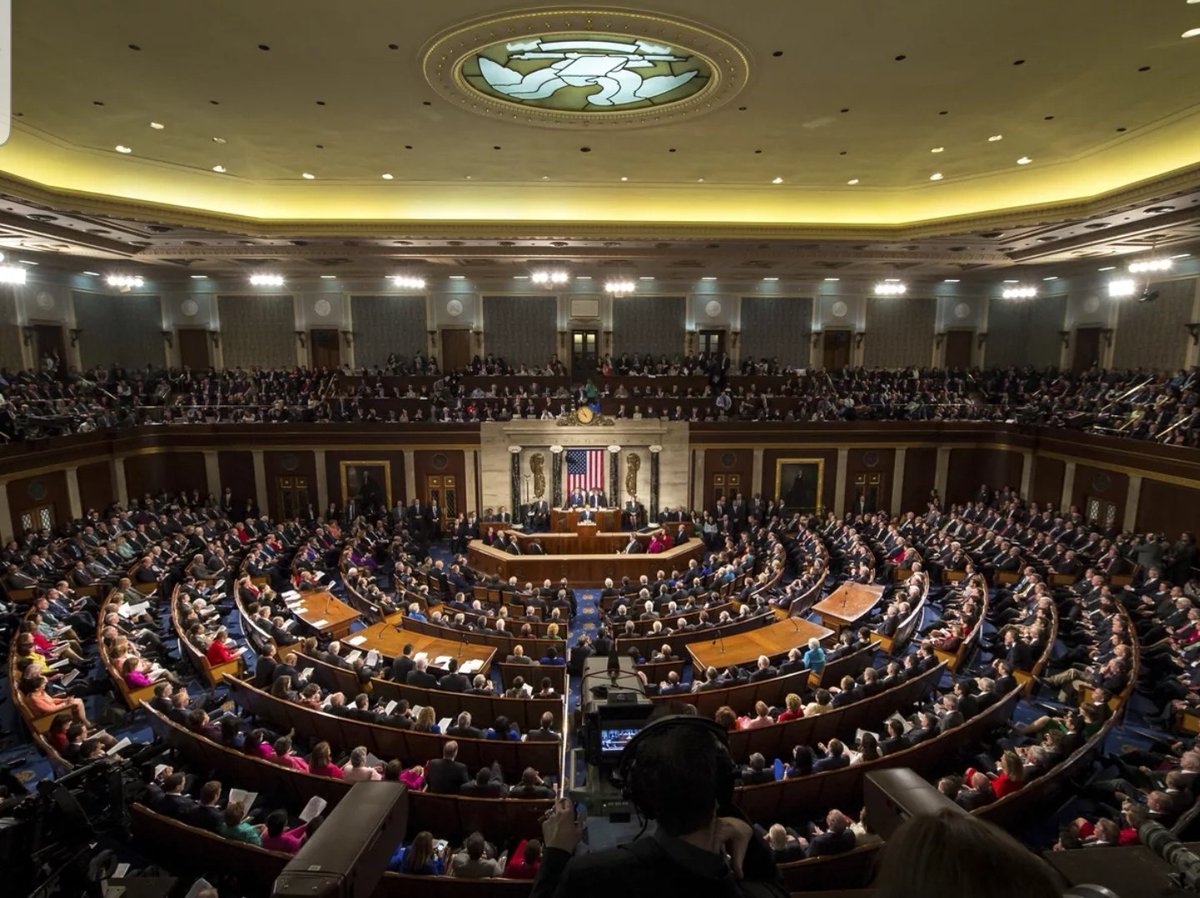
1. The House of Representatives. The lower house. It has 435 seats, but the number of these seats can increase by decision of Congress. The number of representatives from a state is proportional to the total population of that specific state, meaning the number of representatives shall not exceed one for every thirty thousand, provided that each state shall have at least one representative (Article I, Section 2)9.
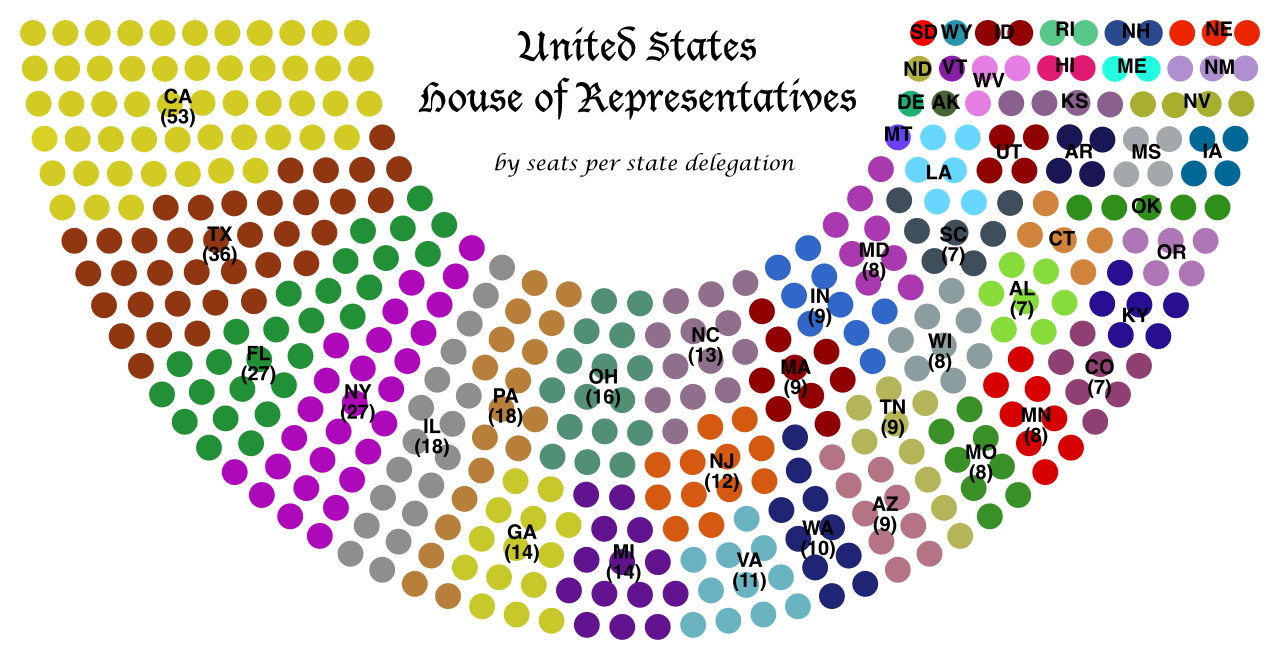
There are also representatives from territories that are not considered states, such as the District of Columbia, the island of Guam, American Samoa — one representative each — but since the representation of federal territories is not provided for by the Constitution, they do not have the right to a deciding vote.
To become a congressman (as representatives of the lower house are called), one must be at least 25 years old and have been a citizen of the United States for 7 years; also, a candidate for congressman must, when elected, be an inhabitant of that state in which he shall be chosen (Article I, Section 2). The House of Representatives is elected for 2 years.
2. The Senate. The upper house. There are only 100 seats in the Senate, with 2 representatives from each state (non-states are not represented here), who are elected for 6 years, but it is constantly refreshed through a process of rotation. This is necessary to ensure the continuity of the legislative branch.

First, the representatives are divided into “classes” or “groups” that remain in the Senate for 6 years, and then they are elected alternately — for example, Class 1 in 2012 (33 people), Class 2 in 2014 (33 people), and Class 3 in 2016 (34 people), and since a senator elected, say, to the 1st “group” serves for 6 years, if he is re-elected, his term continues. At the same time, the division works in such a way that two representatives from the same State cannot be elected at once, so they also change in stages. It is worth noting that there are actually 101 people in the Senate, as the Vice President, according to the Constitution (Article I, Section 3) shall be President of the Senate, but he shall have no vote, unless they be equally divided. And usually, instead of the Vice President, who is most often absent from the Senate, the chair is held by the President pro tempore of the US Senate.
Previously, senators were chosen by State Legislatures, but this was changed by the 17th Amendment to the Constitution1011.
To become a senator, specifically, one must be at least 30 years old and have been a citizen of the United States for nine years; a candidate for senator must, when elected, be an inhabitant of that state for which he shall be chosen. What unites both houses of Congress is that they are elected under a majoritarian system12. The differences on the electoral side lie only in the number of seats and a higher age and citizenship qualification for entering the Senate. Voting is allowed from the age of 18, according to the 26th Amendment to the Constitution. Voting follows a plurality system (though there are exceptions — for instance, the states of Louisiana, California, and Washington use an absolute majority system, albeit with their own unique features).
The pros of the majoritarian system most frequently include the following1314:
- It is universal, meaning it can be used both to choose a single representative in the person of the head of an authority (Mayor, Governor, President) and for elections to legislative bodies (municipal, regional, and national);
- Independent candidates can participate;
- The candidate communicates with voters personally;
- The system ensures that the winning party receives a significant number of its people in parliament, which allows for the formation of a stable government under mixed and parliamentary forms of government;
- The pressure of party interests is not present in a pronounced form;
- Direct accountability of the candidate to his voters and the population of the district emerges.
The cons of this system:
- Voting results heavily depend on the financial support of candidates from sponsors;
- There is room for frequent inconclusive elections, which leads to runoff or repeat elections;
- There is fertile ground for unpredictable actions by deputies;
- Those who receive a minor minority may not be represented in the government bodies at all;
- There can be a distortion of the real balance of power in the political structure of society;
- The possibility of victory for minor parties in elections is excluded;
- Gerrymandering (also electoral geometry or electoral geography) is possible — this is the arbitrary demarcation of electoral districts with the aim of artificially altering the balance of political power within them and, as a consequence, across the entire election territory15.
Proportional electoral system
The proportional system is a system in which a party receives seats in a representative body of power proportionally to the number of votes cast for its candidates in the election. Other definitions include:
- A type of electoral system under which seats in a representative body are divided in proportion to the number of valid votes cast for different party lists of candidates16;
- An electoral system in which voting takes place not for specific individuals, as in the majoritarian system, but for a party list or an electoral bloc list competing for a certain number of seats in parliament or local self-government bodies17.
It can be said that a proportional system is a type of electoral system in which a person votes for a list of candidates from a bloc, parties, or coalitions, and which is used for elections to representative bodies of power.
This system works only in elections to representative bodies of power, such as parliaments and municipal assemblies. It is applied in countries such as Denmark, Israel, Switzerland, and so on. Due to the specifics of this system, the districts here are multi-member, meaning that residents of a district choose several people from the proposed list. The system itself has many variations. For example, there is a difference based on party lists18, but before moving on to this difference, let us consider what a party list is.
A party list is a list of candidates from a particular association (mostly from a party, sometimes from a coalition of parties). Thanks to this list, parties receive seats proportionally to their share of the vote, and candidates receive them in order of priority on the party list. It is also a list of candidates nominated by an electoral association or its bloc in elections to representative bodies of state power conducted under a proportional electoral system. Party lists can be:
- Closed (Italy, North Macedonia, Turkey). They are characterized by the fact that you simply vote for the party list. Their downside is that they are compiled by political parties, which can lead to intra-party dictatorship. There is also the so-called “locomotive technology”, where popular personalities are placed at the top of the electoral list, who then resign their mandates, resulting in unknown individuals from the end of the list (“train cars”) entering parliament. This problem does not arise in the case of “open” party lists;
- Flexible (semi-rigid) lists19. Here, the voter does not influence the formation of the party list initially, but can influence it during voting by making their choice within the list. In some variations of this system, a voter can vote for one candidate, in others for several, and they can even completely restructure the content of the list, and then candidates standing at the end of the list who received a larger number of votes than candidates at the beginning of the list can obtain a mandate. This system is used, for example, in Denmark;
- Open (Belgium, Norway, Estonia, Switzerland). Here, people vote not only for the party list but also for candidates within the list, indicating them by degree of preference, which increases the chance for popular candidates to pass.
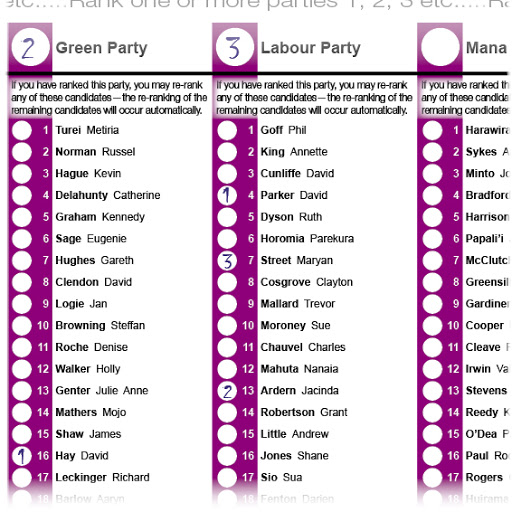
Proportional systems also differ by the presence or absence of an electoral threshold (under which, to enter parliament, a party must secure a certain minimum percentage of votes). An electoral threshold exists, for example, in Iceland, the Netherlands, and the Czech Republic. It does not exist, for instance, in Finland, Portugal, and North Macedonia. To better understand the operational principles of the proportional system, let us look at the lower house of the Austrian Parliament, namely the National Council of Austria.
It is elected in accordance with the principles of proportional representation (Article 26(1))20. The lists themselves are open, meaning that citizens can indicate their degree of preference for candidates, which can help them secure seats in parliament.
The territory of the Federation itself is divided into territorial electoral districts, and the boundaries cannot cross the borders of a Land (just like in the FRG, Land is the name of a region). These electoral districts (39 in total) are subdivided into regional territorial electoral constituencies.

The number of deputies from the voters of an electoral district must be distributed proportionally to the population of citizens in these districts. And, to get one seat in the National Council, a party must obtain a number of votes equal to the total number of votes cast divided by the number of seats assigned to the district. In different districts, and accordingly in regions, the number of seats varies21.
For example, if 150,000 votes are cast in a district from which 5 people will be elected, then 30,000 votes are required to obtain one seat. If a party wins 61,000 votes out of 150,000 cast votes, it is entitled to two seats, which must go to the first two candidates on the party’s local district list. Since 60,000 votes would have been sufficient to win two seats, 1,000 votes remain unaccounted for in the first round of vote counting. And if there are seats left that were not distributed at the district level (roughly speaking, remainders), they will be distributed at the regional level following the same principle as for districts, but here the surplus votes are taken into account. At the same time, if a party has not achieved 4% in the region or at least 1 seat at the district level, it will not receive seats from the regional distribution22. And if seats remain at the state (Länder) level, they will be distributed at the federal level using the D’Hondt method, while only parties that have won at least four percent of the votes nationwide or have at least one seat at the regional level, and which have put forward their candidates for further participation in the form of a “federal list”, are admitted to the distribution.
There are 183 deputies in total, and they are elected for 5 years23. One can vote from the age of 16, and be elected to the Federal Assembly from the age of 18 (Article 26(1)).
The proportional system has the following pros:
- A wide list of various political parties is presented, which represent the interests of minorities as well;
- It shows the real balance of power among organizations and parties;
- It makes it easier for voters to understand the political program of a candidate;
- Voting results in parliament on individual issues become more predictable;
- It also serves as a guarantor of representation for small and medium-sized parties in legislative bodies;
- If the lists are open, it allows voters to choose both the candidate and the political party, thereby reducing the influence of parties on the personal composition of their representatives in parliament.
However, it also has its cons:
- There is a monopoly of political parties on nominating candidates;
- Deputies chosen by party lists are accountable more to their parties than to the voters;
- Voters choose a list of candidates rather than individual people, and these candidates are often unknown to them;
- Parties that did not receive the minimum percentage of votes fail to enter representative bodies;
- Sometimes it is necessary to merge into blocs, which can harm party interests;
- Deputies can shift their accountability to their parties;
- The emergence of several small parties in parliament can lead to obstruction in making crucial decisions.
Although the third mentioned con is viewed by some as a pro — after all, a person essentially votes not for a leader, but for a party, which is, unlike a leader, a collective entity where mutual oversight is usually present. This also makes the formation of leaderism more difficult. Shifting the accountability of deputies to parties is not a critical downside either — after all, a party that cannot control its deputies will lose voters in such a case (most often, this leads to parties starting to control their deputies precisely, and their accountability only increases compared to a situation where ordinary citizens, who lack mechanisms for quick and direct impact on them, try to hold them accountable). Merging into blocs, while harming party interests, does not harm public interests and actually mirrors the opinion of voters better. A significant pro of the proportional system with open lists is that it is used in such successful societies as Norway and Switzerland.
Mixed system
The synthesis of the above systems is the mixed, or majoritarian-proportional system. This is a system used in elections to representative bodies, where part of the seats are distributed under the majoritarian system and part under the proportional system — thereby combining the advantages of both systems while trying to minimize their disadvantages. Such a system exists in many countries, including the FRG, Bulgaria, Italy, as well as the RF24. Under this system, a representative parliament is formed, and there is also a mandatory lower threshold to ensure that very small parties do not gain entry.
However, mixed systems differ significantly — for instance, in the Australian Parliament, the majoritarian absolute majority system is used by the lower house, the House of Representatives (150 deputies), while the proportional system is used by the upper house, the Senate (76 senators, 12 from each state and 2 from each continental territory)25. In Italy, the lower and upper houses, the Chamber of Deputies (630 deputies) and the Senate (321 senators, of whom 315 are elected), are chosen through a mixed system, but not evenly; that is, 232 deputies and 116 senators are elected under the majoritarian system, 386 deputies and 193 senators under the proportional system, and 12 deputies and 6 senators under the proportional system, but these represent Italians living abroad26. 6 senators are life peers because, according to Article 59 of the Constitution, these can be former Presidents of the Republic (unless they decline), and the President of the Republic may also appoint five citizens as senators for life who have brought honor to the Fatherland through outstanding achievements in the social, scientific, artistic, and literary fields27.
And to examine the mixed system, let us look at the elections to the Bundestag — the “lower” (why this is a debatable statement will be discussed later in the article on the political structure of the FRG) house of the German Parliament:
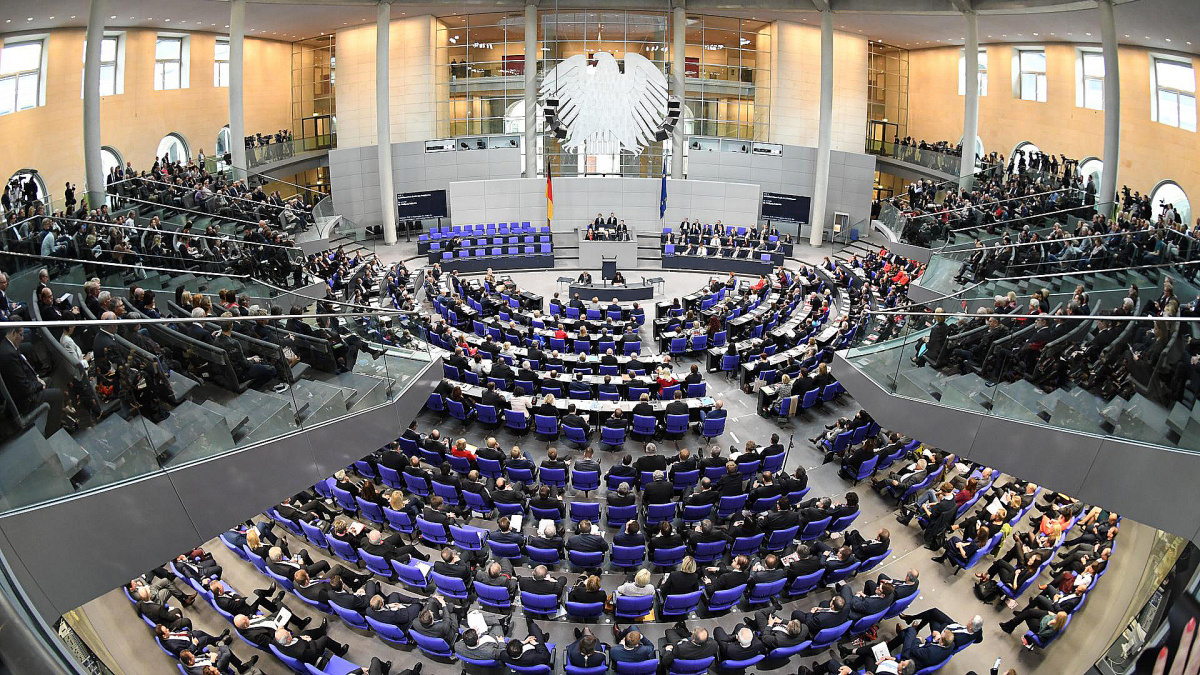
It is worth noting that German legal scholars and political scientists define their system as a “personalized proportional” system or as “electoral law based on the principle of proportional representation”28, since the proportional system plays a major role in it.
In theory, there are 598 seats in the Bundestag, and accordingly 299 people are elected under the majoritarian system (meaning candidates are chosen directly), and 299 under the proportional system (meaning a list of candidates is chosen). Therefore, every resident of Germany has 2 votes:
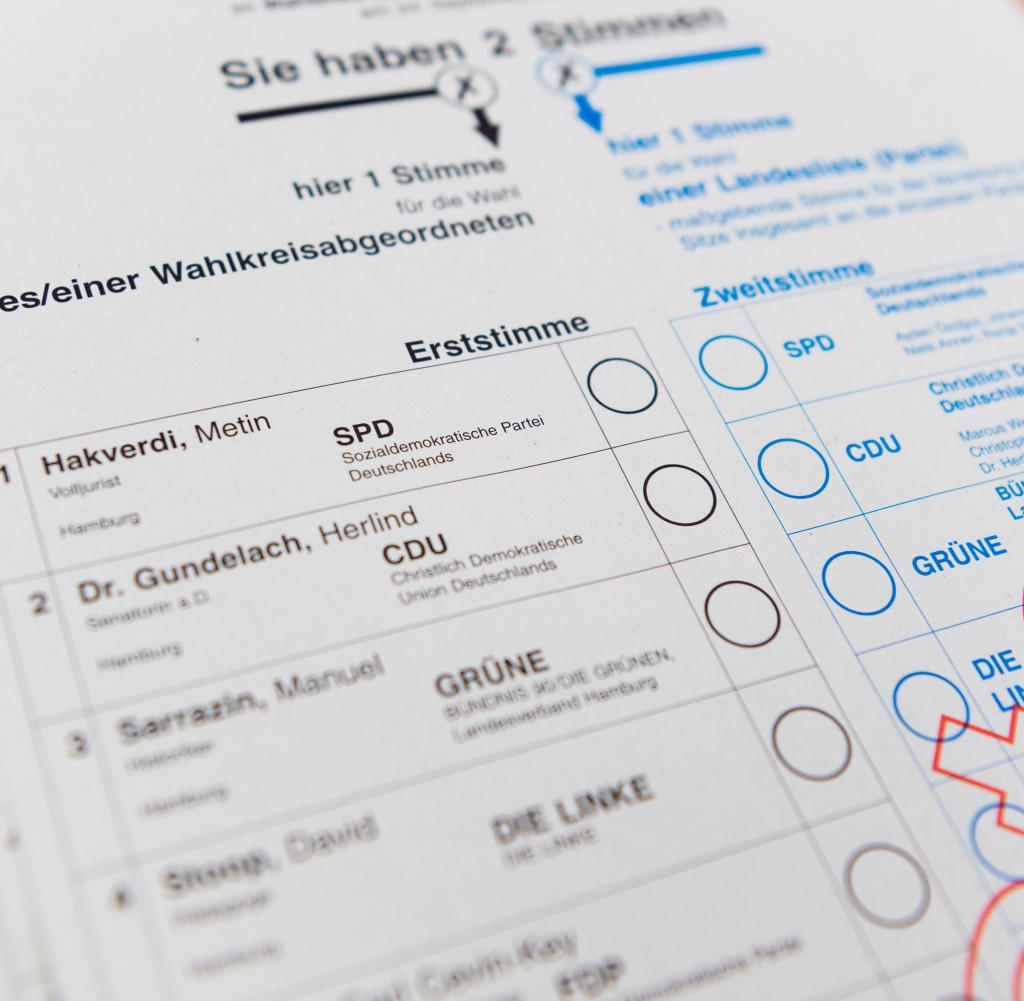
- The first — when voting for candidates;
- The second — when voting for a list of candidates.
But if you look at the number of seats as of March 27, 2021, there are as many as 709 seats.
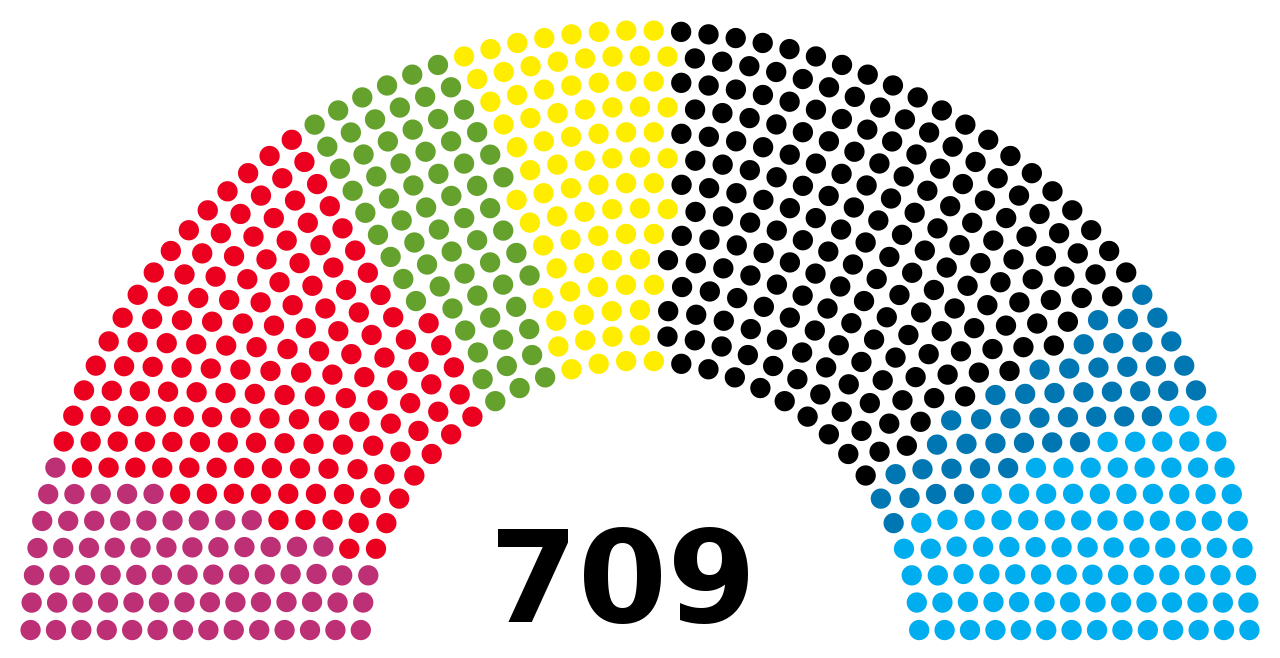
Why exactly is that? It is all due to the German system, in which the second vote, namely the vote for the list, carries more weight because it determines the balance of power in the country. Based on this, in addition to regular seats for deputies, two more types are allocated29.
1. Overhang seats. These seats appear if a party in one of the states (Länder) received more seats in the Bundestag for its candidates via first votes than it was entitled to have in that state based on the results of the second-vote count.
And what if there are fewer first votes and more second votes? If, for example, a party in a federal state received ten mandates according to its share of second votes and secured four direct mandates in the same state, then only six seats remain, which go to the candidates of this party from the state party list. Why were such seats introduced? In a mixed electoral system, it is not uncommon for a party—due to the success of its candidates in single-member constituencies — to receive more mandates in individual federal states than it would be entitled to by the number of second votes. A candidate who won the election directly in their constituency cannot be deprived of a seat in parliament. This is how overhang mandates arise.
In principle, such a system can help small parties occupy a certain number of seats (if they have passed the thresholds regarding the number of seats and percentage of support). As a result, a party gets a disproportionately large number of seats in the Bundestag, which led to debates within the FRG itself and the emergence of the second type of mandates.
2. Compensatory or leveling seats. These were introduced in 2013, because the Federal Constitutional Court of Germany ruled that the existence of “overhang seats” violated the constitutional guarantee that the electoral system must be equal and direct30. Members of the SPD and Alliance 90/The Greens, along with more than 3,000 citizens of the FRG, opposed the old system31.
The purpose of these seats is that the overhang seats will be compensated for by providing compensatory seats (leveling mandates) to the extent that ultimately ensures the distribution of seats is proportional to the results of the second-vote count. Each party that wants to enter the Bundestag must win at least five percent of the second votes nationwide (this is the electoral threshold, which prevents small parties from entering parliament to avoid a fragmentation of the party system that could weaken parliament). The only exception: if a party wins at least three direct mandates, it enters the Bundestag regardless of the five percent threshold, with its share of the second votes received.
As a result, as of March 27, 2021, due to the 111 overhang seats, the parliament looks like this: 299 seats are elected under the majoritarian system, and 410 under the proportional system. One can vote from the age of 18, provided they have lived directly in Germany for the last three months, and one can also be elected to the Bundestag from the age of 18. The modern system, which has existed since 2013, although complex at first glance, is very interesting and practical, as it balances political forces in parliament, preventing many parties from effectively becoming hegemons in parliament, and also ensures proportionality.
In Russia, the system is slightly similar but simpler than in Germany, which by itself does not seem to make it bad, but for certain reasons, it does not work effectively here, and to understand why, let us examine how our parliament is elected and what is wrong with the system as a whole.
The electoral system in Russia
In our country, the lower house of the Federal Assembly, namely the State Duma, is elected for a term of 5 years.
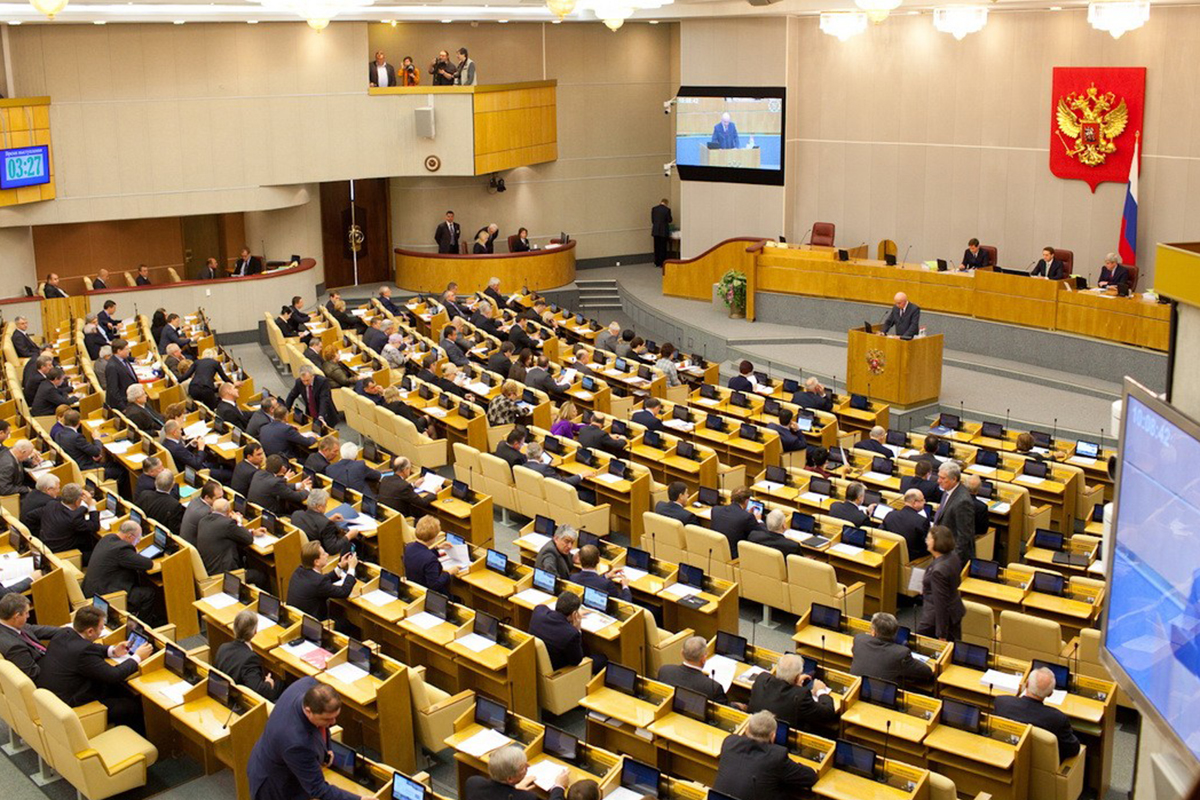
According to Article 95(7) of the Constitution of the RF, it consists of 450 deputies32, and, according to the Federal Law, the electoral system is in fact mixed33:
- 225 deputies are elected in single-member electoral districts (one district – one deputy);
- 225 deputies are elected in the federal electoral district (as the entire territory of the country is called) proportionally to the number of voters’ votes cast for federal lists of candidates for deputies of the State Duma (hereinafter – federal lists of candidates).
At the same time, to gain entry via the lists, a party must overcome a five percent threshold.
One can vote from the age of 1834, and be elected from the age of 21 (Article 91(1)). The system is fairly simple and in theory very logical, but it has its problems.
1. The presence of a ruling party, which today is “United Russia”. Usually, “United Russia” is called the dominant party (which, in fact, is visible by the number of seats in parliament), but what is a ruling party? There are quite a few definitions of this concept, and here are some of them35:
- Stable political-economic groupings consolidating around the head of state;
- A conglomerate of forces that make up the vertical of executive power (the president and his entourage, the government, regional authorities, and local elites); part of the representatives of the legislative branch (factions and deputies of the State Duma, members of the Federation Council in the center and locally) who carry out a pro-presidential and pro-government course in their activities; in addition, this includes a wide network of organizations and foundations performing organizational, consultative, and research functions, as well as remnants of the once-unified democratic movement;
- Bureaucratic parties created by the incumbent authorities in the interests of implementing their public policy.
In general, it can be said that a ruling party is a party that represents a conglomerate of representatives of the vertical of power, created by the incumbent authorities for the purpose of realizing their interests. Today, such a party is “United Russia”, which currently holds 336 seats in the State Duma, which amounts to 74.66%.

The existence of such a force is harmful because, due to its composition and resources, it does not simply lead, but literally substitutes all branches of power at all levels, not to mention that it is in fact a constitutional majority36, meaning it can amend the Constitution on its own, except for Chapters 1, 2, and 9. In this case, all the benefits that democracy provides are neutralized.
2. Unclear districts. Their existence is due to the fact that in the 2016 elections, districts were divided in such a way that they included both urban and rural territories. That is, in the vast majority of cases, large cities will be divided into parts to which villages will be attached.
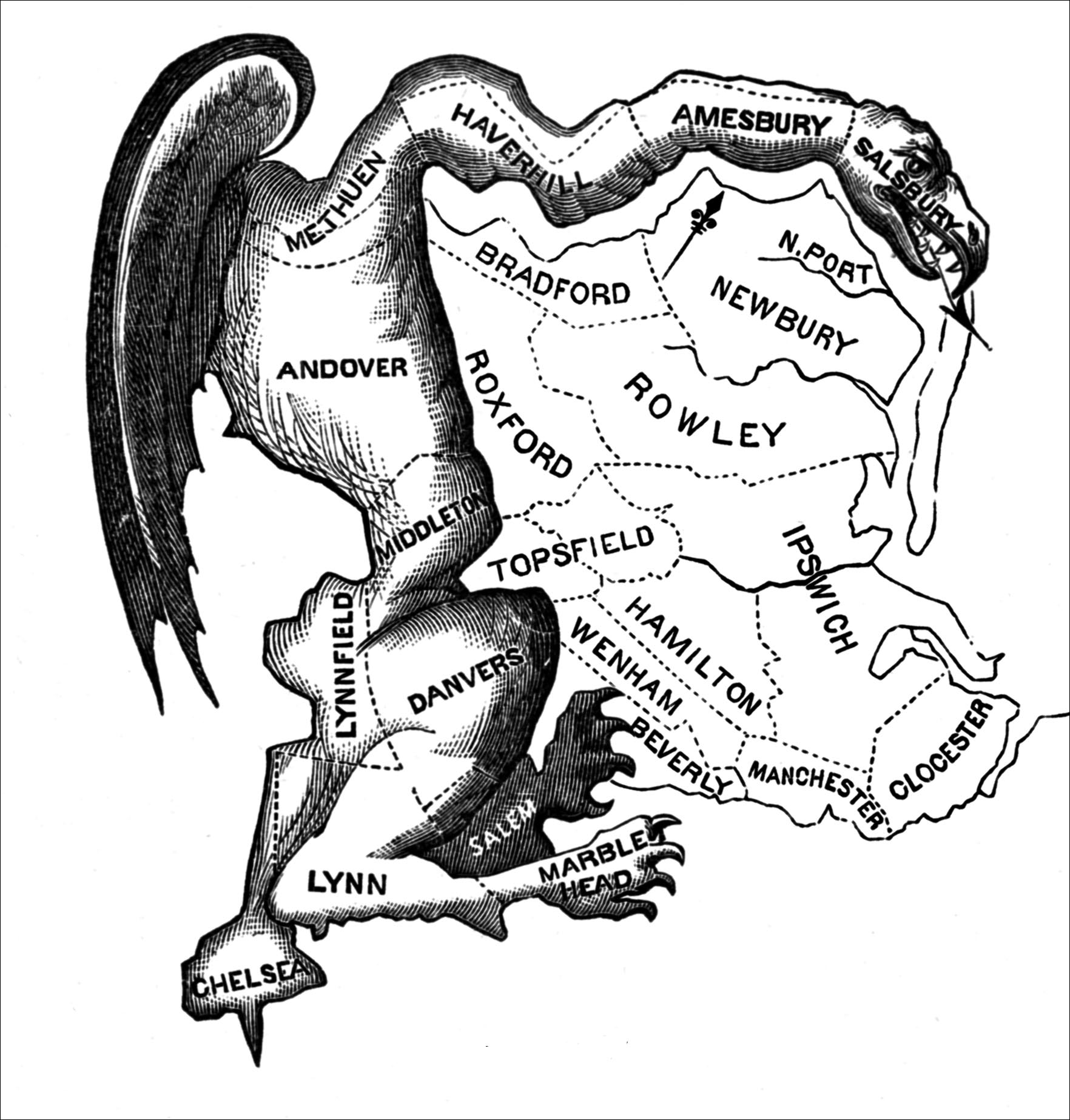
This sparked criticism even at the adoption stage within the relevant Duma committee. Thus, according to communist Vadim Solovyov, the opposition controls the cities, while the countryside is under the control of “United Russia”. In this way, United Russia members want to “reduce the advantages of the opposition and create a one-sided administrative advantage for themselves”. A member of “A Just Russia”, Alexander Ageev, noted in his turn that the electorate in villages and cities is completely different37. However, the idea ultimately passed review both in the committee and in the State Duma (303 deputies voted “for”, 86 voted “against”) and was signed into law by the President38.
3. Strange lists. In addition to regional lists (all our lists are regional, but de facto we have two types: regional and constituency-based), which exist in most countries with a proportional electoral system, there are also so-called “interregional party lists” (this is a list of candidates that will be chosen not by representatives of a single district or region, but by several constituent entities at once — for example, a list of 7 people chosen by residents of the Sverdlovsk, Chelyabinsk, and Tyumen regions combined). At the same time, a party must put forward enough interregional lists to cover at least 35 districts across the country.
By doing this, parties set themselves the task of maximizing the number of seats via lists, and to achieve this, they combine favorable and unfavorable regions for themselves, forming interregional lists of candidates. Thus, “United Russia” in Western Siberia, unlike in 2011, was represented by only two lists. One, headed by the Governor of the Kemerovo Region, A.G. Tuleev, combined the Altai Republic, Altai Krai, Kemerovo and Tomsk regions (consisting of 15 candidates), while the second combined the Novosibirsk and Omsk regions (9 candidates)39.
I do not know if there is anything similar in other countries, but this can be called foolishness, since in most countries party lists are regional/constituency-based (there are no interregional ones) — albeit with their own specifics — because regions also have their own interests, and such lists lead to a distortion of their interests and voting results [Note by E. Ivanov].
There is also a nationwide federal party list, which includes a maximum of 10 people, and if the party overcomes the five percent threshold, these candidates are guaranteed to receive mandates40. As a result of the existence of such a list, parliamentary mandates primarily go exactly to those who are included in it. The more candidates there are, the fewer mandates go to the regions (their number is determined proportionally to the party’s success in the respective region). Such a list is a strange phenomenon, as it represents a list of completely unelected people, which does not correspond to the principles of democracy; moreover, they also take away the opportunity to occupy seats from those people who actually earned their percentages on the lists.
4. Absence of regional parties. This problem is connected to the fact that the existence of the concept of federal-only parties severely damages regional representation, since regional parties could better represent the interests of the region itself, which may have its own specific nature; also, federal parties are harder to create (regional branches of such a party must be present in at least half of the constituent entities of the Russian Federation), not to mention all sorts of legal complexities that we will talk about later.
5. Illegal tactics. Russian elections are notorious for this problem, and the media usually highlight issues such as inflating voter turnout41, ballot stuffing, mass carousel voting using absentee ballots, falsification and theft of ballots, unlawful removal of observers, and significantly higher campaigning by state regional media for representatives of “United Russia”42, as well as forcing voters to vote through threats or for money43. Cases of government interference in the activities of parties, a high rejection rate of independent candidates due to signatures (92%), attacks on candidates and their detention by law enforcement agencies have also been recorded44, along with the use of “black PR”45. It can be said that honest candidates find it very difficult in regional elections, but there they at least have a chance to pass, whereas in federal elections it is an uphill battle.
6. Electoral anomalies. A number of Russian regions traditionally produce anomalous results in terms of turnout and ratings for the ruling party and its candidates across all levels of elections. Experts attribute this to the lack of independent oversight mechanisms in these regions, administrative-political features, traditions, and the influence of local elites on electoral processes. Such regions can be identified as the North Caucasus (apologies in advance), Bashkortostan, Mordovia, Tatarstan, Tuva, and so on. Granted, it is worth noting that in many of them, the results could actually be genuinely high46, but these are rare cases.
7. Special conditions. In many countries, parties collect signatures to nominate candidates for elections — for example, in Germany, for an individual single-member district candidate from any party to be admitted to parliamentary elections in a single constituency, it is sufficient to collect 200 signatures. For a party that wishes to run on a party list but is not represented in the Bundestag or a Landtag, it needs to present 2,000 signatures in each federal state where it wants to participate in the elections (one can participate in federal elections to the Bundestag even if the party list is put to a vote in only one state — for example, in Bavaria or Schleswig-Holstein). If a party that has never entered government bodies before wants to participate in parliamentary elections and be placed on ballots distributed across the entire territory of the country, it needs to collect a total of only 32,000 signatures — 2,000 in each of the 16 federal states47.
In the RF, it is also necessary to collect signatures, but there are specific parties that do not need to collect these signatures. Who is exempt from collecting them48:
- A federal list of candidates nominated by a political party that, based on the results of the most recent elections of deputies of the State Duma, was admitted to the distribution of deputy mandates or received not less than 3 percent of the votes of voters who took part in the voting in the federal electoral district;
- A list of candidates nominated by a political party that was admitted to the distribution of deputy mandates in the legislative (representative) organ of state power of at least one constituent entity of the Russian Federation of the convocation active on the day of the official publication of the decision to schedule the election of deputies of the State Duma.
If this is not the case, then at least 200 thousand voter signatures must be collected in support of the nomination of the political party and its federal list of candidates, provided that not more than 7 thousand signatures of voters registered in that particular constituent entity of the Russian Federation may come from any single constituent entity of the Russian Federation.
If a candidate is independent, they must collect voter signatures in an amount not less than 3 percent of the total number of voters registered within the territory of the respective electoral district, as specified in the federal law approving the scheme of single-member electoral districts, and if there are fewer than 100 thousand voters in the electoral district, not less than 3 thousand voter signatures.
8. The municipal filter. Although we are primarily talking about elections to the State Duma, local elections cannot be overlooked. Since 2012, in order to become a regional head (if, of course, they are directly elected), in addition to the signatures of ordinary voters, one must also obtain a certain percentage of signatures from municipal deputies (the nomination of a candidate must be supported by not less than 5 and not more than 10 percent of deputies, with the specific percentage being established by the constituent entity of the RF49).
At the same time, it is established that this must include not less than 5 and not more than 10 percent of deputies or heads of municipal districts and urban districts (with the exception of constituent entities that are federal cities having a single-level system of municipal formations); their exact percentage is similarly established by the laws of the constituent entities of the federation, and a candidate must obtain the support of these individuals in not less than 3/4 of the municipal districts and urban districts of the respective constituent entity. A single deputy/head can support only one candidate. It is worth noting that this is not an innovation of the RF — something similar exists in France. There, to nominate one’s candidacy for the post of President, it is necessary to collect 500 signatures from individuals holding certain elected offices (for example, members of Parliament, territorial councils, and so on). Furthermore, these individuals must represent at least 30 departments and overseas territories of France50. However, attention must be paid to the fact that the requirements imposed on candidates in Russia are more stringent than in France. Thus, in France, a presidential candidate needs to obtain support in only 1/3 of the departments (considering their total number), whereas in Russia, a candidate for the office of the highest official of a constituent entity must, among other things, obtain the support of elected officials in 3/4 of the municipal districts and urban districts of the respective constituent entity, and if we speak of constituent entities that are federal cities, it already means the support of deputies and heads of 3/4 of all municipal formations of the constituent entity.
The Report of the Russian Public Institute of Electoral Law, which is entirely dedicated to the study of the municipal filter, contains scientifically grounded data. Without going into details, the most significant conclusions based on the results of the study can be cited51:
- The application of the municipal filter allows for maintaining a stable level of competition (an average of 4.7 candidates);
- The filter is successfully overcome by candidates from parliamentary parties, as well as in most cases by a candidate from one non-parliamentary party or by one independent candidate;
- The average number of registered candidates in elections without the application of the filter and with its application does not fundamentally differ, which indicates a stable level of competition.
However, in reality, this system is very weak and has become a reliable means of filtering out “unwanted” opposition competitors and admitting spoiler candidates for the sole purpose of creating an illusion of political struggle, as well as the functioning of democratic institutions without any threat of losing power for the incumbent political elite.
A clear example: in accordance with Part 16 of Article 34 of the Electoral Code of the City of Moscow, a candidate for the office of mayor is required to collect 6 percent of signatures from deputies and heads in not less than 3/4 of Moscow municipalities52. In the 2017 municipal elections in Moscow, out of 1,502 elected deputies, 1,154 people represented the “United Russia” party53. And in 2018, during the Moscow Mayoral election, the head of the Krasnoselsky municipal district, Ilya Yashin, was forced to withdraw from the election because he could not obtain the required number of signatures from municipal deputies54, and according to him, it was precisely with the deputies from the aforementioned party that he could not agree on support, as the ban on this support came from the party’s leadership.
Conclusion
The proportional system with open lists seems to be a better option than the majoritarian one; however, since a mixed system allows for combining their advantages, we can and must reflect on exactly how such a mixed system should be structured in Russia. In the article about the chambers of parliament, we indicated that both chambers must be elected. Firstly, the lower house will be elected under a proportional system with open lists. The upper house can also be elected under a proportional system, or alternatively, under a majoritarian plurality system. In doing so, the following will have to be implemented:
- The abolition of the “United Russia” party and a subsequent change of the party system towards multi-party pluralism and political competition;
- Prohibit the merging of urban and rural districts; they must be kept separate;
- Introduce only constituency-based and regional lists; interregional and nationwide federal lists must be abolished;
- Allow regional parties;
- Simplify participation in elections (specifically, reduce the number of required signatures);
- Introduce a number of measures to combat illegal tactics in organizing elections;
- Abolish the municipal filter;
- To prevent regional anomalies, encourage the development of independent observers, and ensure the safety of these people if a region is dangerous.
And, despite the contradictions of electoral systems, we believe that although a mixed system will not solve them completely (and no single system will), it will minimize them, and our task is to facilitate this so that the political system of Russia works more effectively.
- P.A. Baranov. Social Studies: A New Complete Guide for Unified State Exam Preparation – 542 p. – M.: AST, 2017. – p. 342.
- M.V. Baglay. Chapter 21. Electoral System and Referendum of the Russian Federation // Constitutional Law of the Russian Federation: Textbook for Universities. – 5th ed., rev. and augm. – 784 p. – M.: Norma, 2006. – p. 390.
- A.B. Barikhin. The Great Legal Encyclopedia – 960 p. – M.: Knizhny Mir, 2010. – p. 269.
- M.A. Brikez, E.V. Gonchar, O.S. Rukavishnikova. “Electoral Law and the Electoral Process” a study guide for students of grades 10–11 of secondary general schools, vocational schools, and students of technical schools, colleges, and lyceums. – 171 p. – Kurgan: Electoral Commission of the Kurgan Region, Institute for Advanced Training and Retraining of Educators of the Kurgan Region, 2019. – p. 13.
- Mikhail Nikolaev. Majoritarian and proportional electoral systems – what is the difference // A News (anews.com). [Electronic resource]. URL: https://anews.com/novosti/114622727-mazhoritarnaja-i-proporcionalynaja-izbiratelynaja-sistema-v-chem-raznica.html (Accessed: 31.03.2021).
- D.Sh. Pirbudagova, T.B. Savzieva. Positive and negative aspects of majoritarian and proportional systems as components of a mixed electoral system // Legal Bulletin of Dagestan State University. 2015. No. 2. – p. 45.
- V.E. Chirkin. Majoritarian electoral system // Great Russian Encyclopedia. Volume 18. Moscow, 2011, p. 440. [Electronic resource]. URL: https://bigenc.ru/law/text/2155270 (Accessed: 30.03.2021).
- P.A. Baranov. Social Studies: A New Complete Guide for Unified State Exam Preparation – 542 p. – M.: AST, 2017. – p. 344.
- The Constitution of the United States. Russian translation text // Brighton Beach News (brightonbeachnews.com). [Electronic resource]. URL: https://brightonbeachnews.com/rus/constitution-of-the-usa-russian-text/ (Accessed: 31.03.2021).
- USA Elections in Brief. – 90 p. – Bureau of International Information Programs. U.S. Department of State. [Electronic resource]. URL: https://photos.state.gov/libraries/amgov/30145/publications-russian/USA_Elections_InBrief_Russian.pdf (Accessed: 31.03.2021).
- The Constitution of the United States. Russian translation text // Brighton Beach News (brightonbeachnews.com). [Electronic resource]. URL: https://brightonbeachnews.com/rus/constitution-of-the-usa-russian-text/ (Accessed: 31.03.2021).
- T.I. Nigmetzyanov. Modern Electoral Systems: A Comparative Analysis // Bulletin of Kostroma State University named after N. A. Nekrasov. 2015. No. 3. – pp. 186-190.
- P.A. Baranov. Social Studies: A New Complete Guide for Unified State Exam Preparation – 542 p. – M.: AST, 2017. – p. 349.
- Zainidin Kurmanov. Types of Electoral Systems: Through the Prism of Global and National Experience. Part 1 // Center for Political and Legal Studies (center.kg). March 10, 2018. [Electronic resource]. URL: https://center.kg/article/145 (Accessed: 31.03.2021).
- A.A. Cherenev. Politico-Geographical Methods and Factors in the Formation of Electoral Districts [Text] / A. A. Cherenev // Izvestiya of Irkutsk State University. Ser.: Political Science. Religious Studies. – 2017. – Vol. 21, No. 15. – pp. 126-133.
- V.E. Chirkin. Proportional electoral system // Great Russian Encyclopedia. Volume 27. Moscow, 2015, pp. 603-604. [Electronic resource]. URL: https://bigenc.ru/law/text/3180701 (Accessed: 30.03.2021).
- E.A. Shaposhnikova. Theoretical-Conceptual Approaches to Interpreting the Essence of the Proportional Electoral System // Socio-Humanitarian Knowledge. – 2015. – No. 3. – p. 292.
- D.M. Khudoley. Classification of Electoral Systems // Bulletin of Perm University. Legal Sciences, 2016. Issue 33. – pp. 258–267.
- E.A. Shaposhnikova. Party Lists: What Types Exist… // Political Sciences, Eurasian Union of Scientists ESU
- The Constitution of Austria // Constitutions of States (Countries) of the World (worldconstitutions.ru). April 29, 2010. [Electronic resource]. URL: https://worldconstitutions.ru/?p=160 (Accessed: 31.03.2021).
- Bundesgesetzblatt Für Die Republik Österreich // Rechtsinformationssystem des Bundes (www.ris.bka.gv.at). February 28, 2017. [Electronic resource]. URL: https://www.ris.bka.gv.at/Dokumente/BgblAuth/BGBLA_2017_II_53/BGBLA_2017_II_53.pdfsig (Accessed: 31.03.2021).
- Modern Foreign Electoral Law: A Monograph / ed. by A.G. Orlov, E.A. Kremyanskaya. Moscow State Institute of International Relations (University) of the MFA of Russia, Dept. of Constitutional Law. – 336 p. – M.: MGIMO-University, 2013. – (“Constitutional Law of Foreign Countries” Series). – p. 271.
- The Parliament of Austria // Republic of Austria. Parliament (www.parlament.gv.at). [Electronic resource]. URL: https://www.parlament.gv.at/LANG/ZUSD/PDF/RU.pdf (Accessed: 31.03.2021).
- S.P. Zaitseva. Mixed Electoral System: Advantages and Disadvantages – 2006
- Electoral System of Australia // Central Election Commission of the Russian Federation (old.cikrf.ru). [Electronic resource]. URL: http://old.cikrf.ru/international/australia.html (Accessed: 31.03.2021).
- B.P. Guseletov. Results of Parliamentary Elections in Italy. – Scientific and Analytical Bulletin of the Institute of Europe RAS, 2018, No. 1. – pp. 55-69.
- Constitution of the Italian Republic // Legal Agency Legal NS (legalns.com). [Electronic resource]. URL: https://legalns.com/download/books/cons/italy.pdf (Accessed: 31.03.2021).
- R.V. Antropov. Features and Modern Development Trends of the German Electoral System (Using the Example of the 2013 Elections to the German Bundestag) // Electoral Law, 2016. No. 2 (34). – pp. 30-32.
- Facts. The Bundestag at a Glance. – p. 32. // Deutscher Bundestag (www.btg-bestellservice.de). [Electronic resource]. URL: https://www.btg-bestellservice.de/pdf/80140400.pdf (Accessed: 31.03.2021).
- Leitsatz zum Urteil des Zweiten Senats vom 3. Juli 2008 // Bundesverfassungsgericht (www.bundesverfassungsgericht.de). July 3, 2008. [Electronic resource]. URL: https://www.bundesverfassungsgericht.de/entscheidungen/cs20080703_2bvc000107.html (Accessed: 31.03.2021).
- Vyacheslav Filippov. Enough mandates for everyone: the new convocation of the Bundestag might get crowded // TASS (tass.ru). September 23, 2017, 14:11. [Electronic resource]. URL: https://tass.ru/mezhdunarodnaya-panorama/4586996 (Accessed: 31.03.2021).
- New text of the Constitution of the RF with 2020 amendments // State Duma (duma.gov.ru). July 3, 2020, 15:31. [Electronic resource]. URL: http://duma.gov.ru/news/48953/ (Accessed: 11.02.2021).
- Federal Law of 22.02.2014 N 20-FZ (as amended on 09.03.2021) “On the Election of Deputies of the State Duma of the Federal Assembly of the Russian Federation”. Article 3. Electoral system applied in the election of deputies of the State Duma.
- Federal Law of 12.06.2002 N 67-FZ (as amended on 09.03.2021, with changes of 12.03.2021) “On Basic Guarantees of Electoral Rights and the Right to Participate in a Referendum of Citizens of the Russian Federation”. Article 4. Universal suffrage and the right to participate in a referendum.
- G.M. Amirova. “The Ruling Party”: concept, nature and main characteristics // Bulletin of Bashkir University, 2009. No. 2. – pp. 643-647.
- “United Russia” has a constitutional majority in the State Duma, newcomers failed to pass // RIA Novosti (ria.ru). September 19, 2016, 11:29. [Electronic resource]. URL: https://ria.ru/20160919/1477299900.html (Accessed: 31.03.2021).
- Maria Makutina. Redrawing of electoral districts faced resistance in the State Duma // RBC (www.rbc.ru). September 22, 2015, 15:03. [Electronic resource]. URL: https://www.rbc.ru/politics/22/09/2015/5601352a9a79477cc994337a (Accessed: 31.03.2021).
- Vladimir Putin signed the law on the “redrawing” of single-member districts // Kommersant (www.kommersant.ru). November 04, 2015, 14:26. [Electronic resource]. URL: https://www.kommersant.ru/doc/2846809 (Accessed: 31.03.2021).
- Ya.Yu. Shashkova. Principles of forming party lists in the 2016 elections of deputies to the State Duma of the RF in the regions of Western Siberia // Central Russian Bulletin of Social Sciences, 2016. Volume 11. No. 6. – pp. 209-218.
- One Duma. Two ballots. How Russia will choose the new composition of the State Duma // RIA Novosti (ria.ru). [Electronic resource]. URL: https://vid1.ria.ru/ig/infografika/a1/2016/duma/ (Accessed: 31.03.2021).
- Yaroslav Shimov, Elena Rykovtseva, Vladimir Kara-Murza, Leonid Velekhov, Mikhail Sokolov. Checkmarks are placed // Radio Liberty (www.svoboda.org). September 18, 2016. [Electronic resource]. URL: https://www.svoboda.org/a/27998094.html (Accessed: 31.03.2021).
- Elena Masyuk. This is continuous campaigning for the governor. What HRC members discovered in the Samara and Moscow regions // Novaya Gazeta (novayagazeta.ru). September 21, 2016, 06:45. [Electronic resource]. URL: https://novayagazeta.ru/articles/2016/09/21/69912-eto-sploshnaya-agitatsiya-za-gubernatora (Accessed: 31.03.2021).
- Sasha Sulim. Single voting day on September 18: main violations // Meduza (meduza.io). September 18, 2016, 16:39. [Electronic resource]. URL: https://meduza.io/feature/2016/09/18/edinyy-den-golosovaniya-18-sentyabrya-glavnye-narusheniya (Accessed: 31.03.2021).
- Maxim Ivanov. CEC conducted a complaint recount. Ella Pamfilova prepared the commission for the elections // Kommersant (www.kommersant.ru). September 15, 2016. [Electronic resource]. URL: https://www.kommersant.ru/doc/3089098 (Accessed: 31.03.2021).
- Arnold Khachaturov. Sterile mud. An overview of the dirty tricks of this campaign // Novaya Gazeta (novayagazeta.ru). September 19, 2016, 07:34. [Electronic resource]. URL: https://novayagazeta.ru/articles/2016/09/19/69892-sterilnaya-gryaz (Accessed: 31.03.2021).
- Alexander Atasuntsev, Egor Gubernatorov, Maria Istomina, Svetlana Burmistrova, Ilya Nemchenko, Dada Lindell, Vladimir Dergachev. Normal anomalies. How people vote in regions that are record-holders for turnout // RBC (www.rbc.ru). March 22, 2018, 17:59. [Electronic resource]. URL: https://www.rbc.ru/newspaper/2018/03/23/5ab0e12b9a79477b98c164cb (Accessed: 31.03.2021).
- Parliamentary elections in Germany: procedure and results // RIA Novosti (ria.ru). September 22, 2013, 10:00. [Electronic resource]. URL: https://ria.ru/20130922/964773637.html (Accessed: 02.04.2021).
- Federal Law of 22.02.2014 No. 20-FZ (as amended on 09.03.2021) “On the Election of Deputies of the State Duma of the Federal Assembly of the Russian Federation”. Article 44. Support for the nomination of federal lists of candidates, candidates
- Federal Law of 06.10.1999 N 184-FZ (as amended on 09.03.2021) “On General Principles of Organization of Legislative (Representative) and Executive Organs of State Power of the Constituent Entities of the Russian Federation”. Article 18. The highest official of a constituent entity of the Russian Federation (head of the highest executive organ of state power of a constituent entity of the Russian Federation)
- Modern Electoral Systems. Issue 8: Brazil, France, Czech Republic, South Korea / A.G. Orlov, M.A. Meshcheryakova, S.Ya. Pavlov, T.O. Kuznetsova; sci. ed. A.V. Ivanchenko, V.I. Lafitsky. – 488 p. – M.: RTSOIT, 2013. – p. 206.
- Russian Public Institute of Electoral Law. Report. The Municipal Filter. Analysis of Application Practice // ROIIP – M., 2017. [Electronic resource]. URL: http://www.roiip.ru/images/data/gallery/2_7545_Doklad_ROIIP_Munitsipal_niy_fil_tr.pdf (Accessed: 02.04.2021).
- Law of the City of Moscow of July 6, 2005 N 38 “Electoral Code of the City of Moscow”.
- What municipal deputies do in Moscow // TASS (tass.ru). September 11, 2017, 17:02. [Electronic resource]. URL: https://tass.ru/politika/4552976 (Accessed: 02.04.2021).
- Oppositionist Yashin refused to participate in the Moscow mayoral election // Interfax (www.interfax.ru). June 24, 2018, 18:09. [Electronic resource]. URL: https://www.interfax.ru/moscow/618273 (Accessed: 02.04.2021).