What is the free market and is it efficient?
The laissez-faire concept assumes a reduction of state intervention in the economy. Many believe this can solve certain economic problems and improve living standards. Let us examine what the practical application of this concept means and how it may affect various areas of social life.
We have previously published an article examining the reasons for the inefficiency of a planned economy. In this article, we will instead examine why the concept of a “free market” and the minimization of state intervention in the economy can be destructive in the long term, and therefore unacceptable for progressive social democrats, and why societal development in this direction may have negative consequences.
Contents
- What is a free market
- Free market as demagogic populism
- Widening income inequality
- The gap between poor and rich countries
- Tendency toward monopolization
- Some key innovations are financed by the state
- Limits to growth
- Decline in quality in certain industries due to commercialization
- Minimization of social state institutions
- Problems of the Fourth industrial revolution
- The free market does not mean fair competition
- The failure of the Washington consensus
- Russian experience
- State policy and economic success
- Other counterexamples
- A primitive understanding of freedom
- Common origins with marxism
- Threat to democracy
- Severe crises
- The environmental problem
- Opinions of the wealthiest business leaders
- Why is it popular?
- Conclusion
What is a free market
According to the Business Dictionary, a free market is defined as “a market free from government intervention, in which prices rise and fall depending on supply and demand”1. “Postnauka” cites economist Yaron Brook via Serious Science: “A free market is a market free from state intervention, regulation, coercion, and force”2. There is also a definition from the Encyclopaedia Britannica: “an unregulated system of economic exchange in which taxes, quality control, tariffs, and other forms of centralized economic intervention by the government either do not exist or are minimal”3; such a definition is generally typical of Western sources. However, here a problem of interpretation arises: what level of intervention should be considered “minimal” and what should not, and how a free market with state intervention differs from a mixed economy. In any case, we can say that systems with state-owned enterprises, subsidies, antimonopoly legislation, and progressive taxation cannot be fully classified as free markets; minimal state intervention is closer to the mere existence of state authority and the judicial system. We discussed economic systems and “formations” in more detail in a separate article.
For example, one of the Russian ideologues of libertarianism, Pavel Usanov, describes taxes as “legalized theft”: from his perspective, “it is desirable that they be as few as possible”4. In his work “The science of wealth”, he explicitly writes that any state regulation “does not work”5. One of the leading global ideologues of libertarianism and the free market, Murray Rothbard, writes that “the government should refrain from interfering in the economy, so dear to the hearts of Keynesians. It should not support unstable companies and industries, and should not rescue firms that have fallen into difficulty”6. He argues that the government should “eliminate — or at least radically reduce — the level of taxation”, lift bans on gambling and other state-imposed restrictions, and that “economic resources should no longer be spent on wasteful and unproductive needs — on multibillion-dollar space programs, public expenditures, the military-industrial complex, etc”.7, and that the government should legalize drugs8.
Therefore, in this article we will primarily consider not the neoliberal model, which is more flexible and does not exclude varying degrees of state intervention in the economy, but rather the model of minimal intervention or non-intervention (in the article on political ideologies, we classified supporters of such a model as libertarians — a category that includes classical liberals and anarcho-capitalists).
Definitions of the free market coincide with definitions of laissez-faire. According to the Encyclopaedia Britannica, laissez-faire is a policy of minimal state intervention in the economic affairs of individuals and society9. Doctor of Economics Vil Nusratullin noted that “according to this principle, the state withdrew from regulating economic processes, which primarily manifested itself in non-interference in the functioning of large capital”10. In general, we can agree with the Encyclopaedia Britannica’s definition and conclude that a free market is a system of economic exchange in which state intervention is either absent or reduced to minimal levels.
Free market as demagogic populism
It should be noted right away that supporters of the “free market” very often acknowledge the need for property rights protection (which is already a form of state regulation), restrictions on migration (many economists, it seems, do not even realize that they contradict themselves when they demand the free movement of everything except people), consumer protection, and other forms of regulation. This reveals the true essence of the idea of the free market: the scope of government influence cannot be precisely measured, and none of the proponents of laissez-faire has any clear list of what the state is allowed to do in the economy and what it is not. The well-known economist, Professor of Cambridge University Ha-Joon Chang, notes that “even if we accept as correct the economic theory of those who argue for the inefficiency of state intervention, it is still impossible to draw a clear boundary between economics and politics, because the exact boundary of the market is ultimately determined by politics, not by economic theory in any of its variations”11. Thus, the concept of the “free market” is nothing more than a tool of political populism.
There are those who understand free trade as two things: absolute freedom for manufacturers to produce goods without any restrictions on size, weight, form, color, etc., and an equally absolute freedom for merchants to distribute, export, and import whatever they wish, without restrictions, without excise duties, without tariffs, without customs fees. But such freedom exists nowhere on Earth; it can be found, perhaps, only on the Moon. It is especially rare in countries that understand trade better than others12.
Chang notes that before concluding transactions in a market, we need (explicit and implicit) rules about what can be sold, who can sell, and how it can be sold in the market13. All these rules are, in a sense, restrictive; therefore, no market can truly be called “free”. And these fundamental rules cannot be determined by economic logic. There is no “scientific” list of what should (or should not) be bought and sold on the market. This is a political decision.
All societies prohibit certain “goods” from being traded on the market: people (slavery), human organs, child labor, firearms, government offices, healthcare, licenses for medical practice, human blood, educational certificates, and so on. Nevertheless, there are no economic reasons to forbid trading these items on markets. In fact, all of the above have at various times and places been legal objects of market transactions. Restricting trade in such “goods” is a political decision, and removing such restrictions leads toward an extremely cruel and immoral society.
Widening income inequality
In March 1955, economist Simon Kuznets, in his work “Economic Growth and Income Inequality”, proposed the hypothesis that in countries at early stages of economic development, income inequality initially increases, but tends to decrease as the economy grows14. Kuznets’ findings were supported by data, which allowed him to conclude that “Marxists misunderstood the trend, relying on the study of England in the first half of the 19th century”, referring to the general law of capitalist accumulation discovered by Karl Marx, which stated that as capitalism develops, the impoverishment of the majority of society would increase15 (in terms of absolute impoverishment Marx turned out to be wrong; in terms of relative impoverishment, we will consider this further). At that time, most economists agreed with Simon Kuznets and adopted his theory.
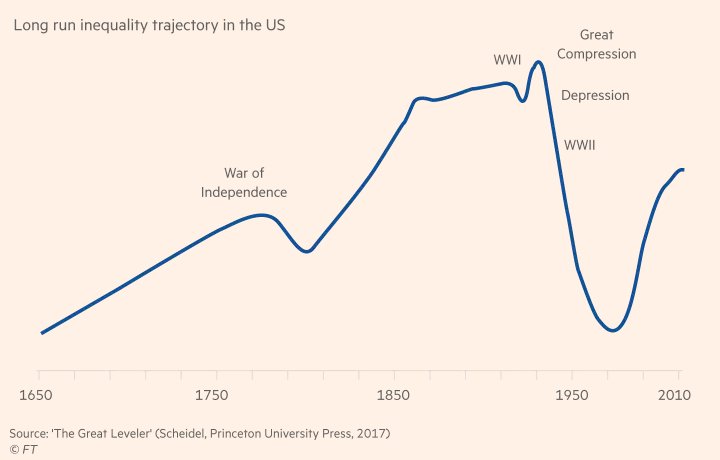
However, in August 2013, economist Thomas Piketty published “Capital in the Twenty-First Century”, which demonstrated that this theory held true only for the postwar “trente glorieuses” (the “glorious thirty years”), a period marked by the political gains of social democrats and overall economic growth following wartime devastation. After that, inequality began to rise sharply again, especially after the resurgence of right-wing liberalism in the 1980s16 (we provided a link to the classification of ideologies above). Piketty’s work was named Book of the Year by the Financial Times17 and received the British Academy Medal18. Right-wing liberals such as Ronald Reagan or Margaret Thatcher reduced the level of state intervention in the economy, which in some areas led to improvements, and in others to the worsening of problems.
Before examining these problems, let us discuss the types of impoverishment. There are two types of impoverishment: absolute and relative, corresponding to the concepts of absolute and relative poverty.
Today, in wealthy countries such as the United States or Germany, very few people suffer from absolute poverty. But we still talk about poverty in these countries because every society has certain consumption standards that are considered necessary to maintain “decency”. This idea goes back to Adam Smith, who argued that things become necessities when society considers it “indecent for respectable people, even of the lowest order, to be without them”. For example, in a well-known passage, he stated that a linen shirt “is not a life necessity”, but that “in most parts of Europe at present, a respectable day-laborer would be ashamed to appear in public without a linen shirt, the lack of which would denote a shameful degree of poverty”.
Such a concept of poverty is known as relative poverty. Based on it, most countries today define a national poverty line, which is typically set at a certain proportion (usually 50–60 percent) of median (not average) income. For example, in 2012 the U.S. government set the poverty line at $23,050 in annual income for a family of four.
Defined in this way, relative poverty is inseparable from inequality. It is entirely possible for a country, if it is sufficiently wealthy, to have no absolute poverty even if inequality is very high. However, in such a country, the level of relative poverty will be high19.
Absolute poverty, contrary to Marx’s prediction, is not increasing today. However, relative poverty, as Piketty has shown, is increasing. We have already explained in a separate article why high inequality is dangerous.
Today, processes of relative impoverishment of the majority of the population are being observed. In 2010, the number of poor people (those with incomes below the subsistence minimum) in the United States reached its highest level over the entire period of observation, that is, since 1959; the percentage of the poor in the total population was the highest since 1984, exceeding the figure of 46 million people2021. In Germany, as of 2015, nearly one seventh of the population (12.5 million people) lived at or below the national poverty line, and the number of poor people had increased by 30% over the previous 10 years2223. In Russia, in just 2014 alone, the number of poor people increased by 2.8 million24. In Southern European EU countries in the 21st century, the term “€1000 generation” became widespread, referring to a large share of the working population of the EU — young people aged 25–35 who, due to low wages, are unable to afford their own housing25. At the same time, in 2020, UN Secretary-General António Guterres stated that half of the world’s wealth is concentrated in the hands of 26 people26.
Rising inequality does not merely lead to the relative impoverishment of the majority of the population — this factor itself negatively affects the purchasing power of the market. And the fewer people are able to purchase goods and services, the lower economic growth and development become, which ultimately also harms the elites. A social-democratic economy can find ways to counter this problem. The free market cannot intervene in this matter.
The gap between poor and rich countries
A similar process is occurring in international relations. The well-known economist and Gunnar Myrdal Prize laureate Erik Reinert, in his study “How Rich Countries Got Rich… and Why Poor Countries Stay Poor”, which in 2008 was recognized as the best monograph by the European Association for Evolutionary Political Economy27, notes:
The gap between the poor and the rich on our planet has now reached a record level and continues to grow. Despite the massive financial inflows during the development decades that began in 1970, despite trillions of dollars spent on development aid, the situation remains dismal. Half of the world’s population lives on less than 2 dollars a day. In some countries, the maximum level of real wages was recorded as far back as the 1970s. According to expert estimates, in 1750 the gap between the richest and the poorest countries was 2:1; since then it has increased substantially28.
At the same time, Reinert emphasizes that rich countries became rich thanks to a combination of state intervention, protectionism, and strategic investments, rather than free trade. These conclusions are also supported by Ha-Joon Chang:
Per capita income in the richest country (Norway) was approximately 534 times higher than in the poorest country (Burundi) as of 2010. Even if we take less extreme cases, such as the United States (8th from the top with an income of $47,140) compared to Ethiopia (8th from the bottom with an income of $380), the difference is 124 times29.
The only way to eliminate this gap is through active intervention (below we will provide a reference to our article describing measures for such intervention) and assistance from advanced countries. However, when the IMF strategy promoted the concept of non-intervention, it did not help solve the problem, as we will discuss further below. There are no objective reasons to believe that for most countries in Africa, Asia, or Latin America, a reduction in the state’s role in the economy would enable them to reach a new level of prosperity. The examples of Japan, South Korea, and Singapore show that it is not the free market, but state intervention that acts as a catalyst for economic growth (we will also discuss this further below), whereas experiments with deregulation in Argentina, Indonesia, and Russia ended in collapse.

Tendency toward monopolization
The tendency of capitalism under a free market toward monopolization has been noted by many researchers. For example, the creation of antitrust legislation itself is an intervention in the free market. However, few would argue that fighting monopolies is necessary — for what reasons, we discussed in detail earlier. Some supporters of reducing the role of the state argue that monopolies arise through state action, but examples such as Standard Oil, or more recent ones like Google and Microsoft, show that the main cause lies elsewhere. One of the important theorists of neoliberalism, Wilhelm Röpke (who was held in fairly high regard by Friedrich Hayek30), acknowledged that a market economy contains internal contradictions:
Market economy means freedom of the market, free prices, and flexible costs; it means the producer’s ability to adapt to demand and submit to its dominance. In negative terms, it is the direct opposite of monopoly, concentration, and the anarchy of groupings that spread across all countries like Penelope’s suitors. A market economy means that instead of the rejected principle of collectivism, we choose a single regulating principle applicable to an extremely differentiated and high-tech society. But in order to truly regulate the economic process, it must be genuine, free from corruption by monopolies31.
Here we already see a contradiction typical of many positions held by supporters of non-intervention: on the one hand, a self-regulating market free from the constraints of regulatory policy is (mostly) promoted. On the other hand, monopolies are sharply criticized, and state oversight is demanded to prevent the erosion of competition through monopolistic formation. But this contradicts the very image of a “free market”: clearly, the market generates frictions that it cannot regulate on its own. Therefore, state intervention is still necessary.
Some key innovations are financed by the state
In 2013, Professor Mariana Mazzucato of University College London published “The entrepreneurial state: debunking public vs. private sector myths”, which was included in Financial Times’ list of the best books of the year. Mazzucato is a well-known economist and one of the three most important thinkers on innovation according to “The new republic”32, and a winner of numerous awards for the best books in economics33. In this work, she demonstrates the significant role of the state in the development of many innovations: the internet, GPS navigation, touchscreen technology, voice recognition technology, and so on34. We can also recall that practically all innovations in the field of space research were developed under state contracts. The ENIAC computer was developed for the U.S. Army35. Thus, state intervention in the economy is one of the important factors contributing to its development.

Limits to growth
The market requires continuous economic growth — this is embedded in the very idea of capital accumulation. Every entrepreneur wants to earn more, which is logical. And when growth stops, a crisis begins. To restore this growth, there are two main paths besides regulation — expanding markets (which have already been expanded to their limits; we previously provided a summary of Jack London’s presentation of the Marxist argument for this thesis) and increasing exploitation (which leads to rising social inequality, as described above). The second path can lead not only to a social catastrophe but also to an economic one, since it reduces the purchasing power of the majority of the population.
In other words, if the free market is not constrained, it organically leads either to the impoverishment of broad segments of the population and economic difficulties, or to war (which is itself a way of expanding markets). Candidate of Economic Sciences Yury Begma also draws attention to the problem of rising public debt, concluding that “the mechanism of free market competition is incapable of coping with the problems of the modern economy, and the participation of the state in managing the national economy is once again becoming relevant”36.
Decline in quality in certain industries due to commercialization
Under a free market and the absence of regulation, it becomes economically advantageous to produce goods with planned obsolescence. In order to maintain profits and production indicators, manufacturers sometimes create products that function properly only for a limited period of time, after which they break or stop working. This forces consumers to buy new products. The most famous example is the activity of the Phoebus cartel, which limited the lifespan of incandescent light bulbs produced by its members to 1,000 hours37, whereas the incandescent bulb in Livermore (the so-called “centennial bulb”) has been operating since 1901 and was still working at the time of writing (2021)38. There are other examples as well — for instance, printer cartridges often stop working due to a chip, optical sensor, or battery long before the ink runs out, forcing the owner to buy a new cartridge, which is far from cheap39. Far more examples are provided in Giles Slade’s “Made to break”.
Planned obsolescence is an inefficient waste of citizens’ resources and finances, and a harm to the environment.
This can only be corrected through intervention in the free market — active consumer protection, and possibly even the creation of competing state-owned enterprises producing more reliable and cheaper goods. However, the necessary foundation is strong and effective consumer protection legislation. For example, in the United Kingdom, when the batteries in early Apple iPod models began failing after 18 months, consumers, suspecting foul play, filed a lawsuit against the company (“Westley v Apple”)40. The case ended in a settlement that included an extended warranty and free battery replacements.

The pursuit of profit by participants in the free market also leads to disturbing outcomes – it becomes profitable for private clinics to prolong treatment of patients for as long as possible, while “investors” like Martin Shkreli acquire rights to life-saving medicines and drive prices up from 13 dollars to 75041. In general, in the pharmaceutical industry the logic of the market itself implies that the producer of medicines is not interested in curing the patient, but in turning that patient into a repeat customer. If we look at the Russian pharmaceutical market, for example, Doctor of Medical Sciences and President of the Interregional Society of Evidence-Based Medicine Specialists Vasily Vlasov reports that the popular drug “Arbidol” does not help patients with cold symptoms42. Another widely used drug, “Oscillococcinum”, contains as its active substance an extract of a “Barbary duck” that does not exist in nature, diluted at a ratio of 10400, which implies that not even a single molecule of the active substance is present in any package of the drug. These problems require a very serious strengthening of consumer protection.
There are also other sectors that cannot, while maintaining efficiency, be governed purely by commercial criteria (healthcare, education, science), yet are necessary for society. A free market by itself leads to the minimization of non-commercial sectors, making their existence dependent on the willingness of wealthy elites to finance them, which is far from always present. The free market also often fails to provide effective incentives for fundamental research43.
Those who are unable to work due to health conditions or old age do not fit into the logic of the free market. They do not meet the criteria of economic efficiency. Pensions, disability benefits, and unemployment benefits are usually paid primarily by the state, and any way of obtaining these funds constitutes an intervention in the free market. From the perspective of the free market, it would be most efficient to use labor from an early age, ideally increasing its wear to such an extent that it does not survive to retirement age.
Some entrepreneurs themselves raise wages for their employees, take on pension payments, and so on, but as long as they remain extremely few in number, the state is necessary for the existence of pensions and other social payments.
In addition, the market does not create incentives for the production of public goods and services, or for the construction of public infrastructure. In other words, building parks, playgrounds, or animal shelters, for example, is not economically rational in a system with minimal state influence. We covered this topic in more detail in the article on the state.
Problems of the Fourth industrial revolution
The Fourth Industrial Revolution means the robotization of production and everyday life, the transition to the “Internet of Things”, the reduction of labor-intensive sectors, and so on. Under free market conditions, this is highly likely to lead to a devaluation of low- and medium-skilled labor, unemployment, difficult barriers to entry into high-skilled labor markets, and social stratification44. This problem can be solved by the welfare state, which is in contradiction with the principles of the free market and the reduction of state influence on the economy.
The free market does not mean fair competition
Even if state regulation helps prevent monopolies, it is often insufficient to avoid the formation of a few market leaders (oligopolies), which pressure smaller producers and thereby undermine fair competition. As a result, formally there are no monopolies, but the problem remains.

Let us consider this using the example of the U.S. automotive industry. In the 20th century, the “Big Three” automakers emerged – Ford Motor Company, General Motors, and Chrysler Motor. Several talented entrepreneurs attempted to enter this market, but they all failed. For example, in 1948 Preston Tucker began producing the Tucker 48 “Torpedo”, a car whose design included a number of innovations previously unseen in mass-produced vehicles and later adopted almost universally: seat belts45, disc brakes, independent suspension on all four wheels, shatterproof glass, fuel injection system46, and so on. Already in 1949, Tucker was falsely accused of fraud; he won the case47, however by that time his company had gone bankrupt. In his open letter to the automotive industry, he noted that there was a very influential group which had conducted a carefully organized two-year campaign to prevent the American public from ever getting behind the wheel of his car48.
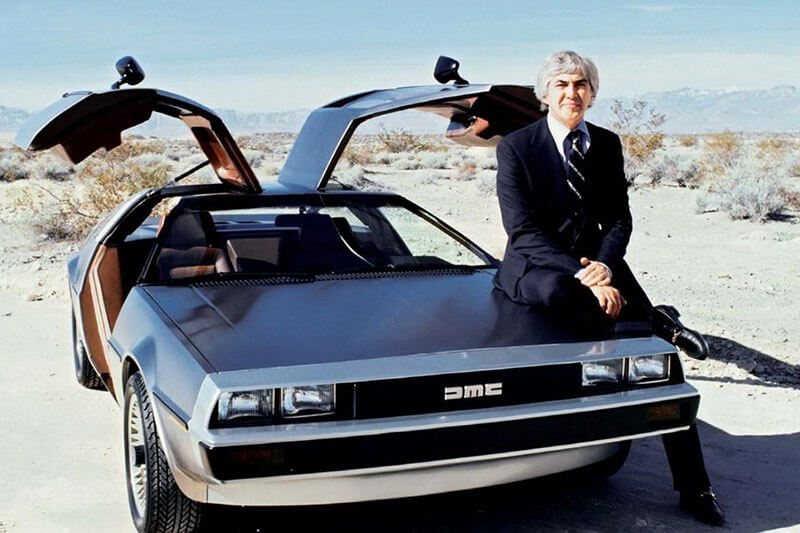
The story repeated itself with inventor John DeLorean, who founded his own company and began producing the innovative 1981 DMC-12 model with a stainless-steel body, a plexiglass frame, and gull-wing doors. In October 1982, he was charged with trafficking a large shipment of drugs (about 25 kg of cocaine). In court, John managed to prove that the case had been set up by certain FBI employees, and he was acquitted. The similarity of the cases led society and the media to speak about the involvement of the “Big Three”, especially since General Motors management was in extremely hostile relations with DeLorean49, and also used criminal methods when it hired private detectives and prostitutes in attempts to discredit Ralph Nader50, who had published the book “Unsafe at Any Speed” (in which he demonstrated unsafe methods of automobile design). We can therefore say that a market without proper state and public oversight tends not only toward unfair methods of competition, but also toward attacks on press freedom and democracy.
The failure of the Washington consensus
The “Washington Consensus” was formulated by the British economist John Williamson in 1989 as a set of economic policy rules for Latin American countries. Among other things, it implied lowering marginal tax rates and deregulating the economy and foreign trade (including reducing import tariff rates)51. Williamson himself acknowledged that his concept represented “free-market capitalism”52. The Consensus reflected the mindset of influential officials in the U.S. administration and international organizations (primarily an orientation toward an open economy and free-market capitalism), for whom it served as a policy instrument, which in turn ensured its public resonance. The idea was that without adopting such rules, countries would find it difficult to expect a favorable reception in Washington, and therefore also new loans, restructuring of old debts, or foreign investment53.
As noted above, systems with state-owned enterprises, antitrust legislation, and progressive taxation cannot be fully classified as a free market, and such states practically no longer exist today; through evolutionary processes they were displaced by more viable models. Therefore, as practical examples of free-market implementation (albeit incomplete), we can only consider those countries where state intervention is lower than elsewhere, or cases of deregulation. At the same time, it should be noted that not all cases of deregulation are failures, just as not all regulatory policies are successful. The position of social democrats is not to advocate for any and all deregulation or any and all increases in regulation, but to support the strengthening of effective regulation.
The Consensus recommendations were followed by most Latin American countries54, parts of Asian countries, and post-Soviet republics such as Russia and Ukraine. In 1994, adherence to these recommendations led to a crisis in Mexico, which allowed Paul Krugman to argue that the Consensus bubble was beginning to deflate55. A group of leading American economists — Nobel Prize laureates — also criticized shock therapy56. Its failure was acknowledged by Nobel laureate Joseph Stiglitz and development economist Dani Rodrik57. While countries that followed free-market recommendations suffered crises and poverty (from the wave of Asian financial crises in 1997 to the Argentine crisis of 2001–2002), economies that ignored the Consensus, such as India and China, grew58. Reinert noted that “in Mongolia, almost all industry was destroyed by the sudden introduction of free trade in the early 1990s”59. Williamson himself already in 1997 called even the doctrines of Friedrich Hayek and Milton Friedman “quixotic”60.
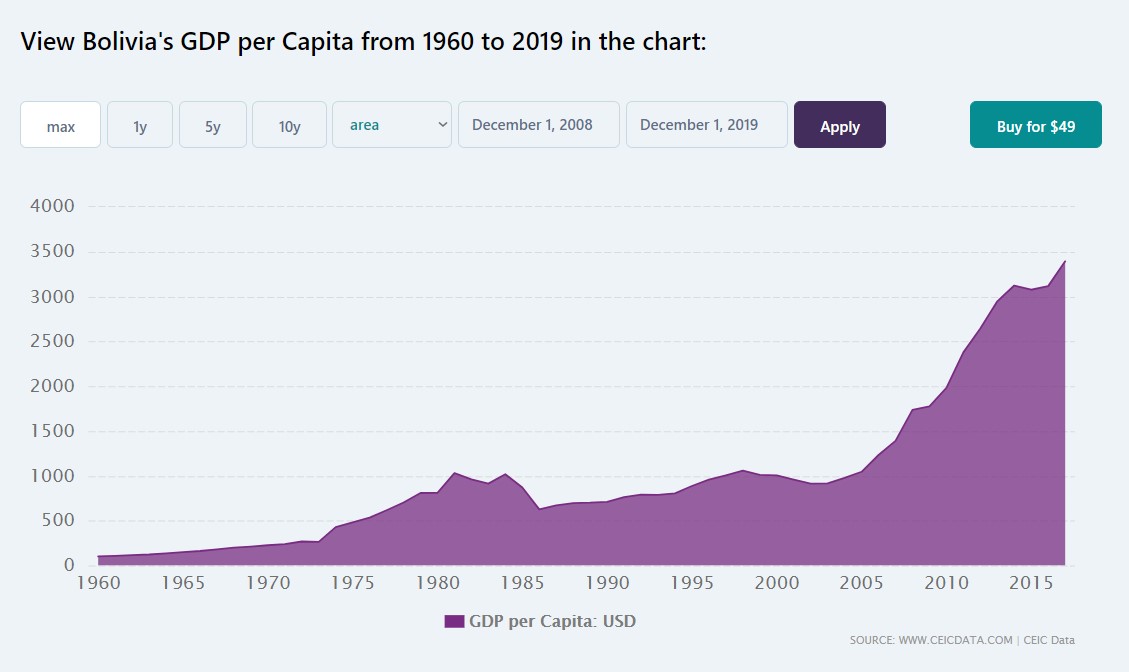
The growth rates of Latin American countries, when they strictly adhered to the neoliberal model throughout the 1990s, were twice as low as in the 1960s–1970s — during the “failed” (from a neoliberal perspective) import substitution policies, although those policies certainly had their own shortcomings. Bolivia serves as an example of a diligent follower of the Washington Consensus, which was forced to keep asking when achievements would appear after the bitterness of losses61.
Researchers of post-Soviet economies Hilary Appel and Mitchell Orenstein, in their study, noted that deregulation policies were implemented up until the early 2000s and included the introduction of a flat tax system, pension privatization, and other components of minimal state intervention. The authors conclude that most of these ideas failed62. In 2011, IMF Managing Director Dominique Strauss-Kahn acknowledged that the fundamental principles of the Washington Consensus had proven unsustainable and even dangerous63. This effectively marked the “burial” of the concept of the “free market”. Although the great economist John Maynard Keynes, included by “Time” magazine in its list of the 100 most influential people of the 20th century64, had already written in 1926 a work titled “The end of Laissez-Faire”65. Today, the consensus in the academic community is rather that the idea of the “free market” is bankrupt.
Russian experience
One of the countries where market deregulation policies were implemented was Russia in the 1990s. Proponents of non-intervention cite other reasons for the failure of reforms — such as the lack of lustration of the Soviet nomenklatura, which indeed was one of the causes of economic collapse; the problem is that the concept of non-intervention does not include mandatory lustration of the nomenklatura. On the contrary, it requires a capable state able to carry out such measures and demonstrate determination in their implementation. As Russian President Boris Yeltsin noted in 1997, a free-market policy was being pursued in Russia, but even he had to admit that it was incapable of ensuring economic growth66. One of the country’s most well-known entrepreneurs and a supporter of libertarian ideas, Evgeny Chichvarkin, noted that in the 1990s there was a “real free market” in Russia67.
In a 2001 study, economist Steven Rosefielde reported that between 1990 and 1998 there were 3.4 million premature deaths in Russia68, which, according to the author, were caused by “shock therapy” associated with adherence to Washington Consensus principles. Doctor of Economics Sergey Korablyn noted that voucher privatization in the former USSR became a mockery of the idea of market reforms69. The 1990s in Russian economic history were marked by the 1998 crisis (one of the most severe economic crises in the country’s history70, the first case in world history of a state defaulting on its domestic debt), rising unemployment (officially reaching 13.3% in 199871), impoverishment of the population, mass non-payment of wages and pensions, industrial collapse, sharp social polarization (inequality and stratification)72, rising crime rates, and so on.
Doctor of Economics Leonid Gordon noted that in the early 1990s the standard of living of the majority of the population declined across many indicators by 1.5–2 times – down to the levels of the 1960s–1970s73. As a result of the introduction of free-market institutions, 62% of Russians evaluated these reforms negatively, and only 19% positively74. It would have taken a great deal of effort for so many citizens to begin nostalgically recalling the relatively low standard of living that existed in the late Soviet Union.
State policy and economic success
It would be interesting to hear examples of successful implementation of a free-market strategy presented without distortion. The so-called “Asian tigers”, often cited as examples of successful laissez-faire policy, in fact developed under conditions of active government intervention in the economy.
The Washington Consensus reduced the role of the state to ensuring contract enforcement and protecting property rights. But East Asia went further and achieved significant success. In this regard, the industrial development of South Korea and Taiwan cannot be imagined without active industrial policy by their governments. When in other parts of the world businesses suffered from a shortage of capital, East Asian states supported their own exporters, especially in the technology sectors, which had positive externalities for the economic push of many other local enterprises75.
Ha-Joon Chang confirms that those Asian countries which achieved a significant economic leap (and today China can also be added to this list) did so not through non-intervention:
Until the 1980s, many people believed that the “economic miracle” of East Asian countries such as Japan, Taiwan, or Korea served as a model of free-market policy on the grounds that the governments of these countries had only a limited impact on the economy (judging by their budgets). However, this does not mean that they followed a non-interventionist approach. During the “miracle” period they strongly influenced the evolution of their economies through economic planning, regulation, and other guiding measures76.
In South Korea, five-year development plans were even implemented77 – of course, indicative ones: they have very little in common with a planned economy. Indicative planning was also used after World War II in economies such as Japan, the Netherlands, and West Germany78.
The impressive economic development of China, India, and South Korea is considered a striking example of successful globalization. However, for some reason no one asks the question: did these countries actually take the recommended medicine – immediate economic integration? The answer is no. China, India, and South Korea all followed, for 50 years, different variants of policies that the World Bank and IMF now prohibit in poor countries. Russia, by contrast, implemented the recommended shock therapy, and its consequences were catastrophic. Many industrial companies in Eastern Europe disappeared faster than they could calculate their own costs, as is customary in a market economy79.
It is also worth mentioning Singapore — proponents of laissez-faire cite it as an example of minimal state intervention, while in reality almost 80% of citizens live in housing built by the state-owned company HDB80. In addition, as noted by a Russian government analytical center, in Singapore “the state strictly controls the purchase of new cars by the population, setting annual quotas for the number of new vehicles. In order to avoid the need to build new roads (which, according to estimates, already occupy about 12–15% of the country’s territory), and also to prevent the growth of greenhouse gas and pollutant emissions, at the end of last year a zero quota was set for car purchases in 2018. This policy leads to a significant increase in car prices (a permit to purchase a vehicle costs about 35–40 thousand USD), but stimulates the development of the car rental market”81. To describe Singapore’s economy as an example of non-intervention would only be possible for someone who is unfamiliar with it.
Chang notes that “virtually all success stories of economic development have been facilitated, if not actively orchestrated, by the active role of the state”82. In the article on economic growth we also noted that one of the world’s most developed economies — the United States — developed largely thanks to regulatory ideas formulated by Alexander Hamilton in the Report on Manufactures of the United States, and that the rise of England as one of the most developed countries of its era was preceded by the protectionist policies of Henry VII, and so on.
Today Chicago economists… proclaim to the world that the state and municipal governments should not intervene in the economy. In reality, the mayor of Chicago spends millions of dollars of public funds creating incubators for high-tech industries… In Washington, the U.S. Small Business Administration annually spends $20 billion on loans and guarantees to support private American companies… A few years ago, the state of Alabama spent $253 million subsidizing a Mercedes-Benz plant. Officials claim that the plant generates revenue that allowed these costs to be recouped within five years, and moreover, the construction of one automobile plant in the state led to the construction of four more… Newsweek praised Alabama for its entrepreneurial initiative, but consistently criticizes poor countries when they attempt to act in the same way83.
Other counterexamples
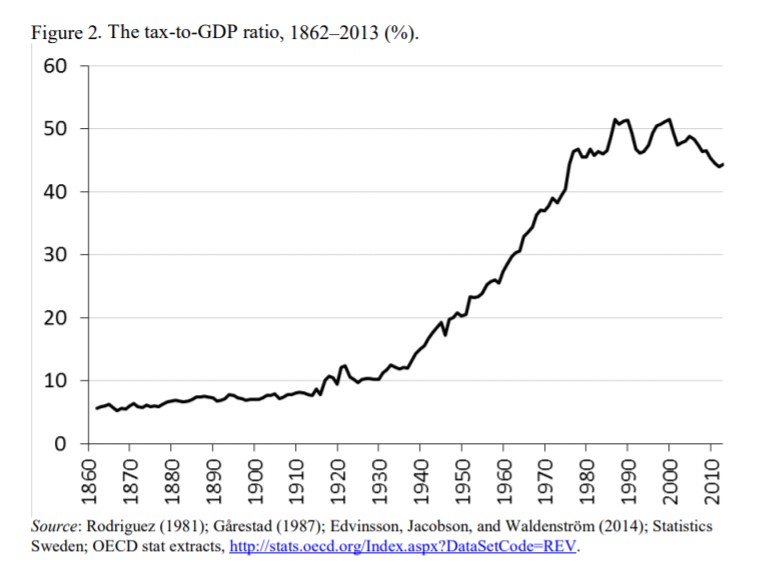
Proponents of the “free market” sometimes cite as examples of successful non-intervention… social-democratic countries such as Sweden or New Zealand. This is a misrepresentation – in these countries the level of economic regulation during periods of growth was very high. For example, in Sweden from 1936 to 1976, from 1982 to 1991, and in some other periods, the ruling party was the Social Democrats, and during these periods a program of social reforms, a centralized system of collective bargaining, and income equalization were implemented84, along with a large public sector and high progressive taxes – since the 1940s there has been an increase in the ratio of tax revenue to GDP in percentage terms85:
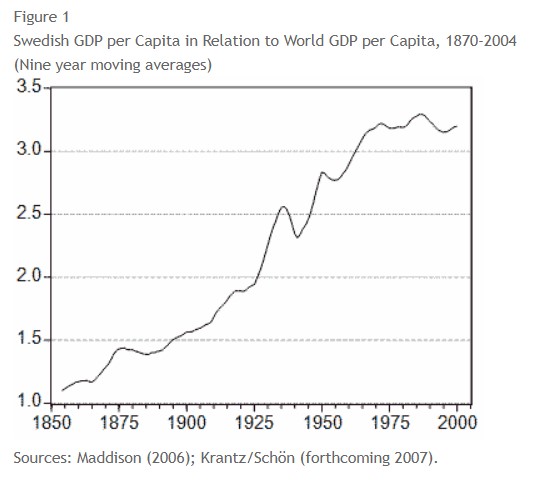
At the same time, there was growth in Sweden’s GDP per capita relative to world GDP per capita86:
Similarly, both GDP and GDP per capita in this country were increasing87:

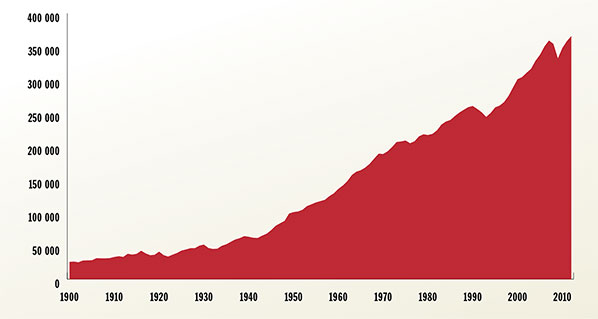
However, financial deregulation in Sweden, many of whose measures were implemented in the late 1980s88, led to a severe financial crisis in the early 1990s89, when the Swedish economy entered its deepest depression since the Second World War90. Thus, Sweden can by no means be regarded as an example of free-market success – and it is difficult to imagine this in relation to a country where Social Democrats remained in power for a record-long period. The MGIMO University of the Russian Ministry of Foreign Affairs publication “World and national economy” emphasizes:
The Swedish model provided for an active role of the state. The implementation of the Swedish model was the achievement of the Social Democrats, who relied on raising living standards through gradual reforms within capitalism, with a pragmatic approach both to goals and to the means of achieving them, taking into account practical expediency and a sober assessment of real possibilities91.
Social Democrats, in building the welfare state, also actively used mechanisms of state economic regulation in New Zealand:
Factories and plants were being built in cities. Jobs were created, and the government developed a plan for creating new industries and for more effective development of existing ones. Local industry was protected from foreign competition through licensing of foreign trade, tariffs, customs barriers, import quotas, etc. As a result, in 1938–1947 the volume of industrial output increased by 47%, and the number of people engaged in it already exceeded employment in agriculture92.
A primitive understanding of freedom
The very idea of the “free market” is based on a primitive understanding of freedom as the ability to do anything whatsoever, whereas the idea of social democracy is based on the view that freedom is the ability to do everything that does not harm another person. From the perspective of social democrats, freedom is not the absence of laws, but the presence of reasonable laws. This is also reflected in economics: freedom is not the absence of regulation, but the presence of reasonable regulation. Advocating for the absence of regulation or for its maximal reduction is essentially the same as advocating for the absence of laws or their maximal reduction. This is an anarchist rather than a democratic tradition.
Common origins with marxism
Despite the fact that supporters of the free market attempt to present themselves as opposed to Marxists, they share common roots and are very similar in many respects – in their attitude toward the state, in their belief in a certain economic rationality of agents, and in dividing the world into capitalism and socialism. Both free-market theories and Marxism are based on David Ricardo’s labor theory of value, i.e., the doctrine that human labor is the only source of value. Both train people to view the world through methodological and mathematical lenses, while overlooking factors of real life. The approach of evidence-based policy, by contrast, collects any factual evidence when it is relevant to the issue.
Both communism and liberalism (both Joseph Stalin and Milton Friedman) originate from Ricardo’s theory. Therefore, the Cold War was a civil conflict between two branches of Ricardian economic science, sharing several common beliefs. In particular, in their mature form both branches did not recognize either the importance of technology and entrepreneurship, or the role of the state. Under communism, for example, the state was supposed to “dissolve”. In order to achieve a mythical Ricardian equilibrium, communism simply replaced the market with a giant calculator. Just as social democrats were the first to fall in battles between communists and liberals, the tradition of the Other Canon was almost exterminated in the shootout between the right and left wings of Ricardian theory.
<…>
As I have already said, both poles of Ricardian economic science evolved into something resembling a religion, so during the Cold War, fact-based economics (the historical schools in Europe and the institutional school in the United States) was displaced and almost disappeared. A characteristic feature of Ricardian economics is the priority of form over reality93.
As Reinert further notes, “Ricardo’s theoretical constructions do not allow us to distinguish between an hour of labor from a prehistoric savage and an hour of labor from a Silicon Valley worker. Since the current theory of international trade ignores unemployment, it claims that free trade between Silicon Valley and a newly discovered Neolithic tribe in the Amazon would lead to economic harmony – the equalization of wages (prices of production factors)”94. This superficiality of Ricardo, his school, and his followers was also pointed out by Joseph Schumpeter:
The comprehensive vision of the universal interdependence of all elements of the economic system, which dominated the thoughts of Thünen, perhaps never cost Ricardo even one hour of sleep. He was interested in a clearly defined result of immediate practical importance. In order to obtain such a result, he cut up the whole system into pieces, tied together as large bundles of the system as possible, and put them “on ice” in order to fix and make as much as possible “given”. He then imposed one simplifying assumption upon another until only a few aggregate variables remained, between which, given these assumptions, he established simple one-sided relationships; thus, in the end, the desired results emerged, very much resembling tautologies. Take, for example, Ricardo’s famous theory that profits “depend on” the price of wheat. Under his implicit assumptions and his particular understanding of the conditions of the theoretical problem, this is not only correct but indisputable, even trivial. Profits cannot depend on anything else, since everything else is “given”, i.e., fixed. This is an excellent theory that can never be refuted – it contains everything except meaning95.
Part of the reason for this is that both Marxists and supporters of the free market very often become excellent theorists, and almost never excellent practitioners. We would hardly be far wrong in saying that free-market advocates are rebranded Marxists with changed labels, which, incidentally, also explains the relatively easy transition of the CPSU nomenklatura from Marxism to the camp of laissez-faire supporters at the time.
Threat to democracy
In the article on justice (linked above), we already discussed why a high level of social inequality poses a threat to democracy. The Friedrich Ebert Foundation textbook “Basics of Social Democracy” notes that within unrestrained capitalism, the economic freedom of some leads to the economic incapacity and unfreedom of others96. The consequence of an uneven distribution of material resources is unequal opportunities for citizens to participate in social life and democratic processes.
Severe crises
Many supporters of laissez-faire (especially the Mises Institute) actively try to argue that their concept was not discredited during the Great Depression, and that the policies of Franklin Delano Roosevelt (recognized by historians as one of the three greatest presidents in U.S. history97) were not effective. This issue requires separate consideration – at the beginning of the article we noted that the impact of government cannot be measured, and that a certain level of intervention is accepted as legitimate by many right-liberals. And since there is no precise way to determine which market is free and which is not, proponents of the free-market concept can declare all unsuccessful policies to be the result of state intervention, and successful ones to be aligned with their own views. We cannot fully analyze such flexible demagoguery within the scope of this article, but we can note that serious crises are often associated with deregulation policies:
The 1990s began with banking crises in Sweden, Finland, and Norway following financial deregulation carried out in these countries in the late 1980s. Then came the “Tequila” crisis in Mexico in 1994 and 1995. This was followed by crises in the Asian “miracle” economies – Thailand, Indonesia, Malaysia, and South Korea – in 1997, which were triggered by financial liberalization and deregulation in those countries in the late 1980s and early 1990s. The Asian crisis was closely followed by the Russian crisis of 1998. In 1999 came the Brazilian crisis, and in 2002 the Argentine crisis, both of which were largely the result of financial deregulation. And these are only the most well-known events. In reality, the world experienced many more financial crises beginning in the mid-1970s. According to a widely cited study98, in the period from the end of World War II to the mid-1970s, when the financial sector was tightly controlled, virtually no country in the world experienced a banking crisis. From the mid-1970s to the late 1980s, the share of countries experiencing banking crises rose to 5–10 percent, measured as a share of world income. In the mid-1990s, this figure jumped to nearly 20 percent. In the mid-2000s it briefly fell to zero for a few years, but then rose again to 35 percent, followed by the global financial crisis of 200899.
The environmental problem
Environmental protection does not fit into the concept of the free market, as it requires large investments that do not generate profit for a specific investor. In order to implement a transition to a circular economy based on resource renewal and environmental protection, state policy would have to be employed.
Climate change, driven mainly by material production and consumption activities, threatens the very existence of humanity. Moreover, many non-renewable resources (such as oil and minerals) are being rapidly depleted. Even the Earth’s capacity to produce renewable resources, such as agricultural and forestry products, does not always keep pace with ever-increasing demand. The planet’s resources will soon be exhausted unless we find ways to control the impact of economic activity on the environment.
<…>
No matter how rapidly our technologies develop, we are still constrained by the availability of non-renewable resources, including those that have not yet attracted human interest. In the near future, we will not completely exhaust any major resource. However, declining availability may make them prohibitively expensive for poor people, posing a threat to their health and even survival. Rising water prices are already harming low-income populations: the incidence of diseases caused by contaminated water is increasing, and crop yields are declining. Rising food prices are leading to increased hunger and malnutrition100.
Meanwhile, pollution is reaching alarming levels: “garbage continents” are forming in the oceans — two in the Atlantic and Pacific (north and south of the equator), and one in the Indian Ocean101. Estimates of the area of the Great Pacific Garbage Patch range from 700,000 to 1.5 million km² or more, and it continues to grow. According to oceanographer Charles Moore, more than one hundred million tons of waste are located in this area102.
Researchers believe that the bodies of 90% of seabirds contain plastic103, and in one way or another we consume our own waste that enters the environment — by some estimates, 83% of all tap water worldwide is contaminated with microplastics104, and it is also found in bottled water.
As for Russia, according to TASS, by 2018 the country had accumulated 43 billion tons of industrial and household waste, and the area of landfills (4 billion hectares) is comparable to the area of the Sea of Azov105. At the same time, Russians dispose of 70 million tons of household waste annually106, and 94% of waste disposal methods consist of landfilling.
The situation is no better when it comes to air pollution. According to the World Health Organization, in 2012 alone around 7 million people died – every eighth death worldwide – due to air pollution107. Scientists at the University of Texas at Austin believe that global air pollution reduces human life expectancy by an average of one year108.
The free market is incapable of solving the environmental problem; what is needed here is international coordination of state regulation. Examples of improving the situation include the introduction of environmental standards (such as Euro 5) or incentives for switching to electric vehicles in Norway109.
Opinions of the wealthiest business leaders
Salesforce founder Marc Benioff, who in 2019 was among the top 100 billionaires in Forbes, recently stated that “capitalism is dead”110. Bill Gates and Warren Buffett have spoken in favor of increasing the tax burden on the wealthy111, and Mark Zuckerberg acknowledged that “no one deserves to have a billion dollars”112. Nineteen billionaires, including George Soros, Abigail Disney, and Chris Hughes, signed an open letter to U.S. presidential candidates calling for a wealth tax increase113. Billionaire Nick Hanauer warns: “If we don’t do something to fix the obvious injustice of this economy, we will face pitchforks. No society can withstand such high inequality. In fact, there is no example in human history where wealth accumulated in such a way did not ultimately meet pitchforks”114. Alan Schwartz, head of the investment company Guggenheim Partners, said: “When the masses believe that elites are getting too much, one of two things happens: legislative redistribution of wealth or revolutionary redistribution of poverty”115. Investor Ray Dalio, with a fortune of $17 billion, wrote an extensive study explaining why the free market leads to impoverishment of the population, deterioration of education, fewer opportunities, and slower economic growth116. The World Bank’s chief economist Penny Goldberg stated: “Once the gap between rich and poor becomes too large, it becomes a threat. We have already seen major upheavals such as the French and the October Revolutions”117. Charles Geisst, author of “A history of Wall Street” and professor of economics and finance at Manhattan College, says that never in history has such a large number of “kings of capitalism” criticized the system118.
Some are already addressing the problem locally. For example, Dan Price, CEO of the American financial company Gravity Payments, gave up a million-dollar salary119 and raised wages for his employees.
If not only economists, ecologists, and political activists, but also representatives of the world’s wealthiest lists are raising concerns about the problems of the modern market economy and growing social inequality, we have grounds to assume that in the future an unregulated inequality-producing market is destined to decline, and that new forms of economic organization will appear on the agenda.
Why is it popular?
Why, despite its shortcomings, do free-market concepts still maintain a certain level of popularity? The first reason is the popularity of Ricardian theories. For many, admitting their incorrectness would mean invalidating and rendering useless their entire previous intellectual work and, in many cases, effectively starting the study of economics from scratch — something not everyone is willing to do. The second reason is that for many officials it is advantageous to promote the illusion of efficient non-intervention, since a widespread belief in the inefficiency of any intervention reduces public pressure on them and the demand for efforts to develop the economy, which would otherwise require significant work. This is also beneficial for those business actors whose goal is maximum possible enrichment. These lazy officials and greedy businessmen help keep free-market concepts afloat. The third reason is rhetorical flexibility: due to the lack of precise definitions, supporters of laissez-faire are able to evade refutations.
Conclusion
All of the above shows that laissez-faire policy is incapable of ensuring economic prosperity, especially for developing countries. Attempts to further implement it will hinder the resolution of humanity’s truly serious problems and may even worsen them. The very idea of the “free market” is fundamentally rhetorical and demagogic — perhaps the most ironic illustration of this occurred in 2020, when the Ayn Rand Institute, which promotes laissez-faire ideology, applied for a $1 million grant from the U.S. government under the Paycheck Protection Program, created to support businesses during the coronavirus crisis120 (in the article on the state, we mentioned how libertarians in the American town of Grafton were prevented from building their ideal society by bears). One of the most principled critics of planned economies, Mikhail Voslensky, wrote:
So, is the market perfect? No.
Although its self-regulation is economically efficient, in a number of cases it proves to be antisocial and inhumane. Such elements are simply not built into the market mechanism. That is why crises of overproduction, unemployment, and bankruptcies arise. The market mechanism gives a lot, but one cannot demand everything from it.121
According to researcher of market economics and liberal political movements Timofey Netesov, from late 2016 to January 2019 libertarianism in Russia experienced a “golden age”. However, the movement then began to fade. This was facilitated by several major events:
- The feuilleton “Tankies RR” (published in January 2019), which gained 13,000+ views. The material was essentially a copy-paste of Paul Cockshott’s column. Nevertheless, the authors managed to popularize his position.
- In spring–summer 2019, the “Plum” community with 50,000+ subscribers stopped advocating libertarianism, preferring the economic mainstream.
- In summer–autumn 2019, the “Classical liberal” group with an audience of 20,000+ also carried out an “Austrian purge”.
- In February 2020, a debate took place between Usanov and Vatoadmin on state regulation. Usanov demonstrated his complete incompetence and did not even bother to respond with a stream or article to the devastating criticism.
- The channels of Vatoadmin and Bazhenov gained a massive audience in 2019–2020. Vatoadmin regularly criticizes the Austrian School of Economics. Bazhenov, however, is still cautious in his statements. Still, in one of his videos he slightly criticized the Austrian School. It seems to me that the main materials are yet to come.
- Zelensky and Bolsonaro, who came into office in early 2019, have not shown any results over two years in power. Zelensky has even distanced himself from libertarianism, adopting a course of “social liberalism”. In addition, this president’s land reform is a direct path toward a “transit of power”, since it implies restricting foreign capital from participating in auctions. The absence of competition from foreign capital creates ideal conditions for Kolomoisky and others. However, market transformations in Ukraine are generally unfeasible. Under the influence of the harmful voucher privatization of the 1990s, a powerful Ukrainian nomenklatura was formed. It is naïve to think that today it will give up its positions and allow the Atlases to stretch their shoulders. Rather, it will squeeze them in regulatory vice.122
It is also important to note that our article criticizes a policy of non-intervention or minimal state intervention, rather than any form of deregulation. At certain moments, economic deregulation can be beneficial — however, this does not mean that it is always beneficial, nor does it imply minimal state intervention. In general, progressive social democrats must consider the creation of a regulatory system for a mixed economy that would correspond to progressive values in both its goals and methods of implementation. We have already described in a separate article our set of proposals for reforming the economy in this direction.
- Бизнес. Толковый словарь. — М.: «ИНФРА-М», Издательство «Весь Мир». Грэхэм Бетс, Барри Брайндли, С. Уильямс и др. Общая редакция: д.э.н. Осадчая И.М.. 1998
- Ярон Брук. Свободный рынок // ПостНаука (postnauka.ru). 8 февраля 2017 года. [Электронный ресурс]. URL: https://postnauka.ru/faq/72340 (дата обращения: 17.06.2020).
- Marc Orlitzky. Free market // Encyclopaedia Britannica (www.britannica.com). [Электронный ресурс]. URL: https://www.britannica.com/topic/free-market (дата обращения: 17.06.2020).
- П.В. Усанов. Наука о богатстве / Павел Усанов. – 208 с. – СПб.: Страта, 2017. – с. 125, 134.
- Там же, с. 16-17.
- М. Ротбард. К новой свободе: Либертарианский манифест / Пер. с англ. – 398 с. – М.: Новое издательство, 2009. – с. 219.
- Там же, с. 186-189.
- Там же, с. 133.
- Laissez-faire // Encyclopaedia Britannica (www.britannica.com). [Электронный ресурс]. URL: https://www.britannica.com/topic/laissez-faire (дата обращения: 14.02.2021).
- Принцип «laissez faire» в экономической теории и реальной практике // Экономический вестник Донбасса: Науч. жур. – 2007. – № 4(10). – с. 54–64.
- Ха-Джун Чанг. Как устроена экономика / Ха-Джун Чанг; пер. с англ. Е. Ивченко; [науч. ред. Э. Кондукова]. – 322 с. – М.: Манн, Иванов и Фербер, 2015. – с. 260.
- Antonio Genovesi. Storia del commercio della Gran Brettagna. 3 vols. Naples, 1757 – 1758. Vol. 1. P. 249.
- Ха-Джун Чанг. Как устроена экономика / Ха-Джун Чанг; пер. с англ. Е. Ивченко; [науч. ред. Э. Кондукова]. – 322 с. – М.: Манн, Иванов и Фербер, 2015. – с. 260.
- Kuznets S. Economic Growth and Income Inequality // The American Economic Review. Volume XLV. March, 1955. Number one. — American Economic Association (www.aeaweb.org). [Электронный ресурс]. URL: https://assets.aeaweb.org/asset-server/files/9438.pdf (дата обращения: 29.11.2019).
- К. Маркс. Капитал. Критика политической экономии. Том первый. К. Маркс, Ф. Энгельс, Собр. соч., изд. 2, т. 23, с. 659.
- Томас Пикетти. Капитал в XXI веке. — 592 с. — Москва: Ад Маргинем Пресс. 2015. — с. 42-46.
- Thomas Piketty’s «Capital» wins Business Book of the Year // Financial Times (www.ft.com). [Электронный ресурс]. URL: https://www.ft.com/content/b9e03c5c-6996-11e4-9f65-00144feabdc0 (дата обращения: 29.11.2019).
- British Academy Prizes and Medals Ceremony 2014 // The British Academy (www.thebritishacademy.ac.uk). 25 ноября 2014 года. [Электронный ресурс]. URL: https://www.thebritishacademy.ac.uk/events/british-academy-prizes-and-medals-ceremony-2014 (дата обращения: 29.11.2019).
- Ха-Джун Чанг. Как устроена экономика / Ха-Джун Чанг; пер. с англ. Е. Ивченко; [науч. ред. Э. Кондукова]. – 322 с. – М.: Манн, Иванов и Фербер, 2015. – с. 221.
- В США насчитали 46 миллионов бедняков // Лента.ру (lenta.ru). 13 сентября 2011 года, 23:53. [Электронный ресурс]. URL: https://lenta.ru/news/2011/09/13/poor/ (дата обращения: 29.11.2019).
- Income, Poverty and Health Insurance Coverage in the United States: 2010 // United States Census Bureau (www.census.gov). 13 сентября 2011 года. [Электронный ресурс]. URL: https://www.census.gov/newsroom/releases/archives/income_wealth/cb11-157.html (дата обращения: 29.11.2019).
- Poverty in Germany at its highest since reunification // Deutsche Welle (www.dw.com). 19 февраля 2015 года. [Электронный ресурс]. URL: https://www.dw.com/en/poverty-in-germany-at-its-highest-since-reunification/a-18268757 (дата обращения: 29.11.2019).
- Income inequality in Germany on the rise: study // Deutsche Welle (www.dw.com). 7 октября 2019 года. [Электронный ресурс]. URL: https://www.dw.com/en/income-inequality-in-germany-on-the-rise-study/a-50722073 (дата обращения: 29.11.2019).
- Ольга Кувшинова. По итогам первого полугодия за чертой бедности оказался каждый седьмой россиянин // Ведомости (www.vedomosti.ru). 8 сентября 2015 года, 21:02. [Электронный ресурс]. URL: https://www.vedomosti.ru/economics/articles/2015/09/09/608065-za-chertoi-bednosti-okazalos-217-mln-rossiyan-kazhdii-sedmoi (дата обращения: 29.11.2019).
- Amanda Mars. Spain’s €1,000-a-month generation, one decade on // El Pais (elpais.com). 15 мая 2015 года, 10:04. [Электронный ресурс]. URL: https://elpais.com/elpais/2015/05/14/inenglish/1431604981_253944.html (дата обращения: 29.11.2019).
- Генсек ООН заявил о сосредоточении половины богатств мира у 26 человек // РБК (www.rbc.ru). 18 июля 2020 года, 19:58. [Электронный ресурс]. URL: https://www.rbc.ru/rbcfreenews/5f1324139a794757fe550af8 (Дата обращения: 24.01.2021).
- Past Recipients of the Myrdal Prize // European Association for Evolutionary Political Economy (eaepe.org). [Электронный ресурс]. URL: https://eaepe.org/?page=awards&side=eaepemyrdal_prize&sub=past (дата обращения: 29.11.2019).
- Э.С. Райнерт. Как богатые страны стали богатыми, и почему бедные страны остаются бедными [Текст] / пер. с англ. Н. Автономовой; под ред. В. Автономова; Нац. исслед. ун-т «Высшая школа экономики». — 4-е изд. — 384 с. — М.: Изд. дом Высшей школы экономики, 2016. — с. 18.
- Ха-Джун Чанг. Как устроена экономика / Ха-Джун Чанг; пер. с англ. Е. Ивченко; [науч. ред. Э. Кондукова]. – 322 с. – М.: Манн, Иванов и Фербер, 2015. – с. 152.
- Дань уважения Рёпке. Стр. 231—236 // Хайек Ф. Судьбы либерализма в XX веке — М.: ИРИСЭН, Мысль; Челябинск: Социум, 2009.
- Röpke, 1946. С. 74
- John B. Judis. The Three Most Important Thinkers About Innovation You Need To Know // The New Republic (newrepublic.com). 21 августа 2013 года. [Электронный ресурс]. URL: https://newrepublic.com/article/114395/three-most-important-thinkers-about-innovation-you-dont-know (дата обращения: 29.11.2019).
- Professor Mariana Mazzucato // Marianamazzucato.com. [Электронный ресурс]. URL: https://marianamazzucato.com/about/cv/ (дата обращения: 29.11.2019).
- Мариана Маццукато «Государство-предприниматель: разоблачая мифы об общественном секторе»
- История компьютерной эры. Авторы: Дмитрий Макарский, Алексей Никоноров. — с. 66
- Госдолг – угроза финансового банкротства страны? // Экономический журнал. №1 (33). — 159 с. — М.: Российский государственный гуманитарный университет, 2014. — с. 59.
- Markus Krajewski. The Great Lightbulb Conspiracy // IEEE Spectrum (spectrum.ieee.org). 24 сентября 2014 года, 19:00. [Электронный ресурс]. URL: https://spectrum.ieee.org/tech-history/dawn-of-electronics/the-great-lightbulb-conspiracy (дата обращения: 30.11.2019).
- Longest burning light bulb // Guinness World Records (www.guinnessworldrecords.com) [Электронный ресурс]. URL: https://www.guinnessworldrecords.com/world-records/longest-burning-light-bulb (Дата обращения: 24.01.2021).
- Адам Хэдхейзи. “Запланированное устаревание”: коварный заговор производителей? // BBC News (www.bbc.com). 18 июля 2016 года. [Электронный ресурс]. URL: https://www.bbc.com/russian/vert-fut-36798142 (Дата обращения: 24.01.2021).
- Олег Строкатый — Теория развития рынка. Психология потребления
- Сергей Вафин. Доигрался: «инвестгангстера» Шкрели арестовали в США // Вести Экономика (www.vestifinance.ru). 18 декабря 2015 года, 3:07. [Электронный ресурс]. URL: https://www.vestifinance.ru/articles/65627 (дата обращения: 30.11.2019).
- Светлана Рейтер. Палка в колеса // Esquire (esquire.ru). 28 сентября 2010 года. [Электронный ресурс]. URL: https://esquire.ru/archive/1880-drugs/ (дата обращения: 30.11.2019).
- Экономическая теория. Микроэкономика-1,2. Мезоэкономика: Учебник / Под общ. ред. заслуженного деятеля науки РФ, проф., д-ра экон. наук Г.П. Журавлёвой. – 9-е изд., стер. – 934 с. – М.: Издательско-торговая корпорация “Дашков и Ко”, 2019. – с. 169.
- Илья Хель. Индустрия 4.0: что такое четвертая промышленная революция? // Hi-News.ru. 15 апреля 2015 года. [Электронный ресурс]. URL: https://hi-news.ru/business-analitics/industriya-4-0-chto-takoe-chetvertaya-promyshlennaya-revolyuciya.html (дата обращения: 30.11.2019).
- Career Movies: American Business and the Success Mystique — Jack Boozer, p.105
- Styles of Management — Effective and Ineffective — Ichak Kalderon Adizes, p.87
- Encyclopedia of Automobiles. Firms. Models. Designs. — 576 pp. — Moscow: CJSC “Book and Magazine Publishing House ‘Za Rulyom’”, 2001. — p. 441.
- Preston Tucker. An Open Letter to The Automobile Industry In The Interests Of The American Motorist By Preston Tucker President, Tucker Corp. // The Tucker Automobile Club of America (www.tuckerclub.org). [Electronic resource]. URL: http://www.tuckerclub.org/open-letter/ (accessed: 30.11.2019).
- Encyclopedia of Automobiles. Firms. Models. Designs. — 576 pp. — Moscow: CJSC “Book and Magazine Publishing House ‘Za Rulyom’”, 2001. — p. 136.
- Richard F. Weingroff. President Dwight D. Eisenhower and the Federal Role in Highway Safety // Federal Highway Administration, FHWA (www.fhwa.dot.gov). [Electronic resource]. URL: https://www.fhwa.dot.gov/infrastructure/safety.pdf (accessed: 30.11.2019).
- С.А. Кораблин. Вашингтонский консенсус: тогда и теперь / С.А. Кораблин // Экономика Украины. – 2017. – № 11. – с. 17-32.
- John Williamson. What Washington Means by Policy Reform / Chapter 2 from Latin American Adjustment: How Much Has Happened? Edited by John Williamson. Published April 1990 // Peterson Institute for International Economics (www.piie.com). [Electronic resource]. URL: https://www.piie.com/commentary/speeches-papers/what-washington-means-policy-reform (accessed: 26.01.2021).
- О. Ананьин, Р. Хаиткулов, Д. Шестаков. Вашингтонский консенсус: пейзаж после битв // Мировая экономика и международные отношения, 2010. № 12 — с. 15.
- Там же, с. 19.
- Krugman P. Dutch Tulips and Emerging Markets // Foreign Affairs. 1995. V. 74. № 4. P. 31– 32, 35– 36, 38– 39.
- См.: Заявление о намерениях Группы экономических преобразований // Проблемы прогнозирования. 1994. № 4; Реформы глазами российских и американских ученых. Под ред. О.Т. Богомолова. М., 1996
- С.А. Кораблин. Вашингтонский консенсус: тогда и теперь / С.А. Кораблин // Экономика Украины. – 2017. – № 11. – с. 17-32.
- О. Ананьин, Р. Хаиткулов, Д. Шестаков. Вашингтонский консенсус: пейзаж после битв // Мировая экономика и международные отношения, 2010. № 12 – с. 20.
- Э.С. Райнерт. Как богатые страны стали богатыми, и почему бедные страны остаются бедными [Text] / trans. from English by N. Avtonomova; ed. V. Avtonomov; National Research University Higher School of Economics. – 4th ed. – 384 p. – Moscow: Publishing House of the Higher School of Economics, 2016. – p. 141.
- See: Williamson J. The Washington Consensus Revisited. P. 50; idem. Did the Washington Consensus Fail? Speech at the Center for Strategic & International Studies. 06.11.2002.
- С.А. Кораблин. Вашингтонский консенсус: тогда и теперь / С.А. Кораблин // Экономика Украины. – 2017. – № 11. – с. 17-32.
- Appel, Hilary; Orenstein, Mitchell A. (2018). From Triumph to Crisis: Neoliberal Economic Reform in Postcommunist Countries. Cambridge University Press. p. 3.
- Анастасия Башкатова. Глобализм с человеческим лицом // Независимая газета (www.ng.ru). 06 April 2011, 00:00. [Electronic resource]. URL: https://www.ng.ru/economics/2011-04-06/1_globalizm.html (accessed: 24.01.2021).
- TIME 100 Persons of The Century // TIME (time.com). 06 June 1999. [Electronic resource]. URL: http://content.time.com/time/magazine/article/0,9171,26473,00.html (accessed: 24.01.2021).
- J. M. Keynes. The End of Laissez-Faire // trans. E.V. Vinogradova, 1998. Federal Educational Portal – Economics, Sociology, Management (ecsocman.hse.ru). [Electronic resource]. URL: http://ecsocman.hse.ru/data/675/645/1219/008Kejns1.pdf (accessed: 19.01.2021).
- Виктор Иванов. Ельцин в СФ. Президент объявил о закате свободного рынка // Коммерсантъ (www.kommersant.ru). 25 September 1997, 00:00. [Electronic resource]. URL: https://www.kommersant.ru/doc/184576 (accessed: 24.01.2021).
- «Тогда был настоящий свободный рынок». Как гражданам России разрешили торговать // Коммерсантъ (www.kommersant.ru). 29 January 2016, 14:15. [Electronic resource]. URL: https://www.kommersant.ru/doc/2902578 (accessed: 24.01.2021).
- Rosefielde, Steven (2001). “Premature Deaths: Russia’s Radical Economic Transition in Soviet Perspective”. Europe-Asia Studies. 53 (8): 1159–1176.
- С.А. Кораблин. Вашингтонский консенсус: тогда и теперь / С.А. Кораблин // Экономика Украины. – 2017. – № 11. – с. 17-32.
- История российского экономического кризиса 1998 года // РИА Новости (ria.ru). 16 August 2013, 09:20. [Electronic resource]. URL: https://ria.ru/20130816/956675756.html (accessed: 24.01.2021).
- Основные показатели рынка труда Российской Федерации // Federal State Statistics Service (rosstat.gov.ru). [Electronic resource]. URL: https://rosstat.gov.ru/bgd/regl/b11_36/isswww.exe/stg/d1/01-01.htm (accessed: 24.01.2021).
- Михаил Карпов. «Страна стояла на пороге гражданской войны». Почему реформы 90-х сделали россиян нищими // LENTA.RU (lenta.ru). 20 March 2018, 00:02. [Electronic resource]. URL: https://lenta.ru/articles/2018/03/20/90s/ (accessed: 24.01.2021).
- Гордон Л. Область возможного. Варианты социально-политического развития России и способность российского общества переносить тяготы переходного времени. М., 1995. С. 106-185.
- Евгения Кузнецова. Две трети россиян негативно оценили 90-е // РБК (www.rbc.ru). 06 April 2020, 07:00. [Electronic resource]. URL: https://www.rbc.ru/politics/06/04/2020/5e89d2549a7947ee2392f2b5 (accessed: 24.01.2021).
- С.А. Кораблин. Вашингтонский консенсус: тогда и теперь / С.А. Кораблин // Экономика Украины. – 2017. – № 11. – с. 17-32.
- Ха-Джун Чанг. Как устроена экономика / Ха-Джун Чанг; trans. from English by E. Ivchenko; [scientific ed. E. Kondukova]. – 322 p. – Moscow: Mann, Ivanov and Ferber, 2015. – pp. 264–265.
- Наталья Судакова. Как Корея за 40 лет из отсталой аграрной страны стала технологическим лидером // Ведомости (www.vedomosti.ru). 14 February 2019, 00:25. [Electronic resource]. URL: https://www.vedomosti.ru/partner/articles/2019/02/14/793589-futuristicheskaya-volna (accessed: 24.01.2021).
- А.А. Ткаченко. Индикативное планирование // Большая российская энциклопедия. Том 11. Москва, 2008, стр. 242. [Electronic resource]. URL: https://bigenc.ru/economics/text/2009079 (accessed: 19.01.2021).
- Э.С. Райнерт. Как богатые страны стали богатыми, и почему бедные страны остаются бедными [Text] / trans. from English by N. Avtonomova; ed. V. Avtonomov; National Research University Higher School of Economics. – 4th ed. – 384 p. – Moscow: Publishing House of the Higher School of Economics, 2016. – p. 148.
- About Us // HDB (www.hdb.gov.sg). [Electronic resource]. URL: https://www.hdb.gov.sg/about-us (accessed: 06.07.2023).
- Сингапур: социально-экономические основы процветания // Бюллетень о текущих тенденциях мировой экономики. Выпуск №36, сентябрь 2018. – с. 14.
- Ха-Джун Чанг. Как устроена экономика / Ха-Джун Чанг; trans. from English by E. Ivchenko; [scientific ed. E. Kondukova]. – 322 p. – Moscow: Mann, Ivanov and Ferber, 2015. – p. 266.
- Э.С. Райнерт. Как богатые страны стали богатыми, и почему бедные страны остаются бедными [Text] / trans. from English by N. Avtonomova; ed. V. Avtonomov; National Research University Higher School of Economics. – 4th ed. – 384 p. – Moscow: Publishing House of the Higher School of Economics, 2016. – pp. 51–52.
- Эволюция шведской модели // «Мировое и национальное хозяйство» Издание МГИМО МИД России (mirec.mgimo.ru). [Electronic resource]. URL: https://mirec.mgimo.ru/2007/2007-01/evolyuciya-shvedskoj-modeli (accessed: 24.01.2021).
- Magnus Henrekson and Mikael Stenkula. Swedish Taxation since 1862: An Overview // Institutet för Näringslivsforskning (www.ifn.se). [Electronic resource]. URL: https://www.ifn.se/wfiles/wp/wp1052.pdf (accessed: 24.01.2021).
- Lennart Schön. Sweden – Economic Growth and Structural Change, 1800-2000 // EH.net (eh.net) [Electronic resource]. URL: https://eh.net/encyclopedia/sweden-economic-growth-and-structural-change-1800-2000/ (accessed: 24.01.2021).
- Har Sverige blivit fattigare? // Ekonomihandboken (ekonomihandboken.se) [Electronic resource]. URL: https://ekonomihandboken.se/den-rika-offentliga-sektorn/har-sverige-blivit-fattigare/ (accessed: 25.01.2021).
- Peter Englund. The Swedish 1990s banking crisis. A revisit in the light of recent experience // Sveriges Riksbank Archive (archive.riksbank.se). [Electronic resource]. URL: http://archive.riksbank.se/Documents/Avdelningar/AFS/2015/Session%201%20-%20Englund.pdf (Accessed: 25.01.2021).
- Sweden’s economy: a success story // Official website of Sweden in Russian (ru.sweden.se). June 16, 2020. [Electronic resource]. URL: https://ru.sweden.se/ljudi/ekonomika-shvecii-istoriya-uspeha/ (Accessed: 25.01.2021).
- Lars Jonung. Financial Crisis and Crisis Management in Sweden. Lessons for Today // Asian Development Bank Institute (www.adb.org). [Electronic resource]. URL: https://www.adb.org/sites/default/files/publication/156020/adbi-wp165.pdf (Accessed: 25.01.2021).
- Evolution of the Swedish Model // “World and national economy”, MGIMO University publication of the Russian Ministry of Foreign Affairs (mirec.mgimo.ru). [Electronic resource]. URL: https://mirec.mgimo.ru/2007/2007-01/evolyuciya-shvedskoj-modeli (Accessed: 24.01.2021).
- L.G. Stefanchuk. The Formation of the Welfare State in New Zealand. // Southeast Asia: Current Development Issues. Issue XVIII. – Moscow: Institute of Oriental Studies, RAS, 2012. – pp. 300–315
- E.S. Reinert. How Rich Countries Got Rich and Why Poor Countries Stay Poor [Text] / trans. from English by N. Avtonomova; ed. by V. Avtonomov; National Research University “Higher school of economics”. – 4th ed. – 384 pp. – Moscow: Higher School of Economics Publishing House, 2016. – pp. 61–64.
- Ibid., p. 136.
- J.A. Schumpeter. History of Economic Analysis: In 3 vols. / Trans. from English, ed. by V.S. Avtonomov. Vol. 2. – 496 pp. – St. Petersburg: School of Economics, 2004. – pp. 619–620.
- Tobias Gombert, Julia Blesius, Christian Krell, Martin Timpe. Basics of Social Democracy – p. 68. // Friedrich-Ebert-Stiftung (www.fes.de). [Electronic resource]. URL: https://library.fes.de/pdf-files/akademie/07650.pdf (accessed: 26.10.2020).
- Rachel Gillett, Laura Casado, Allana Akhtar. These are the top 25 US presidents, according to historians and biographers (and why you won’t find Trump on the list) // Business Insider (www.businessinsider.com). July 2, 2020, 16:31. [Electronic resource]. URL: https://www.businessinsider.com/the-top-20-presidents-in-us-history-according-to-historians-2017-2 (Accessed: 25.01.2021).
- Carmen Reinhart, Kenneth Rogoff. This Time Is Different: Eight Centuries of Financial Folly. Princeton University Press, 2009 (fig. 16.1).
- Ha-Joon Chang. Economics: The User’s Guide / trans. from English by E. Ivchenko; ed. by E. Kondukova. – 322 pp. – Moscow: Mann, Ivanov and Ferber, 2015. – p. 205.
- Ibid., pp. 179–180.
- Ivan Dmitrienko. Plastic pollution of the planet is fraught with a catastrophe whose scale is difficult to calculate // Profile (profile.ru). March 19, 2019. [Electronic resource]. URL: https://profile.ru/society/ecology/zagryaznenie-planety-plastikom-chrevato-katastrofoj-masshtaby-kotoroj-slozhno-proschitat-133578/ (accessed: 29.11.2019).
- Kathy Marks. The world’s rubbish dump: a tip that stretches from Hawaii to Japan // The Independent (www.independent.co.uk). February 5, 2008, 01:00. [Electronic resource]. URL: https://www.independent.co.uk/environment/green-living/the-worlds-rubbish-dump-a-tip-that-stretches-from-hawaii-to-japan-778016.html (accessed: 29.11.2019).
- Chris Wilcox, Erik Van Sebille, and Britta Denise Hardesty. Threat of plastic pollution to seabirds is global, pervasive, and increasing // Proceedings of the National Academy of Sciences (PNAS) (www.pnas.org). September 22, 2015. [Electronic resource]. URL: https://www.pnas.org/content/112/38/11899 (accessed: 29.11.2019).
- Yana Rozhdestvenskaya. Scientists discovered plastic in drinking water // Kommersant Publishing House. “Kommersant”, 06.09.2017, 15:46. [Electronic resource]. URL: https://www.kommersant.ru/doc/3403450 (accessed: 29.11.2019).
- Arina Raksina, Alexander Bychkov, Valeria Skuratova. Waste routes // TASS (tko.tass.ru). [Electronic resource]. URL: https://tko.tass.ru (accessed: 29.11.2019).
- What to do with waste in Russia? // Greenpeace (www.greenpeace.org). [Electronic resource]. URL: https://www.greenpeace.org/russia/Global/russia/report/toxics/recycle/RUSSIA-GARBAGE_FIN.pdf (accessed: 29.11.2019).
- 7 million deaths annually are linked to air pollution // World Health Organization (www.who.int). March 25, 2014. [Electronic resource]. URL: https://www.who.int/ru/news-room/detail/25-03-2014-7-million-premature-deaths-annually-linked-to-air-pollution (accessed: 29.11.2019).
- University of Texas at Austin. Air pollution reduces global life expectancy by more than one year, study finds // Phys.org. August 22, 2018. [Electronic resource]. URL: https://phys.org/news/2018-08-air-pollution-global-life-year.html (accessed: 30.11.2019).
- Andrey Vratsky. Norwegian breakthrough: how the descendants of Vikings are being moved into electric cars // Forbes (www.forbes.ru). May 12, 2017, 15:37. [Electronic resource]. URL: https://www.forbes.ru/tehnologii/344131-norvezhskiy-otryv-kak-potomkov-vikingov-peresazhivayut-na-elektromobili (accessed: 30.11.2019).
- Alexander Pyatin. A billionaire from the top 100 of American Forbes declared the death of capitalism // Forbes (forbes.ru). October 15, 2019, 20:27. [Electronic resource]. URL: https://www.forbes.ru/newsroom/milliardery/385509-milliarder-iz-pervoy-sotni-amerikanskogo-forbes-zayavil-o-smerti (accessed: 30.11.2019).
- Carter Coudrié. Which billionaires want to pay more taxes // Forbes (forbes.ru). October 18, 2019, 15:06. [Electronic resource]. URL: https://www.forbes.ru/milliardery-photogallery/385693-kto-iz-milliarderov-hochet-platit-bolshe-nalogov (accessed: 30.11.2019).
- Alexander Pyatin. “No one deserves that much money”: Zuckerberg admitted billionaires should not exist // Forbes (forbes.ru). October 4, 2019, 9:22. [Electronic resource]. URL: https://www.forbes.ru/newsroom/milliardery/384801-nikto-ne-zasluzhivaet-stolko-deneg-cukerberg-priznal-chto-milliarderov (accessed: 30.11.2019).
- Tom Metcalf / Bloomberg. In Open Letter, Billionaires Co-Sign New Wealth Tax Proposal: ‘Revenue Should Come From the Most Financially Fortunate’ // TIME (time.com). June 24, 2019. [Electronic resource]. URL: https://time.com/5613228/billionaires-calling-for-wealth-taxes/ (accessed: 30.11.2019).
- Tatyana Glazkova. “We will face pitchforks”: how a Seattle billionaire is fighting for a higher minimum wage in the U.S. // RBC (www.rbc.ru). September 12, 2014, 00:02. [Electronic resource]. URL: https://www.rbc.ru/economics/12/09/2014/5704220b9a794760d3d4166f (accessed: 30.11.2019).
- Alexey Kalmykov. Reforming capitalism. Billionaires and business are ready to share: what frightened them? // BBC News Russian Service (www.bbc.com). July 16, 2019. [Electronic resource]. URL: https://www.bbc.com/russian/features-48975781 (accessed: 12.12.2019).
- Ray Dalio. Why and How Capitalism Needs to Be Reformed (Parts 1 & 2) // LinkedIn (www.linkedin.com). [Electronic resource]. URL: https://www.linkedin.com/pulse/why-how-capitalism-needs-reformed-parts-1-2-ray-dalio (accessed: 12.12.2019).
- Chief Economists Roundtable: Income Inequality Matters: How to Ensure Economic Growth Benefits the Many and Not the Few. April 13, 2019. 1:30 p.m. to 2:00 p.m. Meeting Halls A & B, HQ1 // IMF Connect (www.imfconnect.org). [Electronic resource]. URL: https://www.imfconnect.org/content/dam/imf/Spring-Annual%20Meetings/SM19/Seminars/ChiefEcon.pdf (accessed: 12.12.2019).
- The kings of capitalism are finally worried about the growing gap between rich and poor // The Guardian (www.guardian.com). [Electronic resource]. URL: https://www.theguardian.com/commentisfree/2019/apr/24/ray-dalio-jamie-dimon-kings-of-capitalism-concerned (accessed: 12.12.2019).
- Nicholas Kristof. The $70,000-a-Year Minimum Wage // The New York Times (www.nytimes.com). March 30, 2019. [Electronic resource]. URL: https://www.nytimes.com/2019/03/30/opinion/sunday/dan-price-minimum-wage.html (accessed: 12.12.2019).
- Helen Coster. In sign of the times, Ayn Rand Institute approved for PPP loan // Reuters (www.reuters.com). July 7, 2020, 03:26. [Electronic resource]. URL: https://www.reuters.com/article/us-health-coronavirus-ppp-ayn-rand/in-sign-of-the-times-ayn-rand-institute-approved-for-ppp-loan-idUSKBN248026 (Accessed: 25.01.2021).
- M. Voslensky. Nomenklatura: The Soviet Ruling Class (Second edition, revised and expanded), 671 pp. — Overseas Publications Interchange Ltd, London, 1990. — pp. 214–215.
- Timofey Netesoff. Corporate wastefulness in the 21st century // VKontakte (vk.com). December 24, 2020, 14:29. [Electronic resource]. URL: https://vk.com/@tnetesoff-rastochitelstvo-korporacii-pri-kapitalizme (accessed: 26.01.2021).