
Political system of the USA
This article by Evgeny Ivanov shows how the US political system is structured, allowing for a comparison with the previously reviewed Switzerland and Germany, and highlighting the differences. The US is one of the very first among currently existing democracies; therefore, its structure is partially outdated, yet it continues to function quite successfully. Let's break down what is effective and ineffective about it.
The United States of America is traditionally a benchmark for many supporters of a democratic system, and many mistakenly believe that its political system is among the most advanced in the world or is even ideal. However, despite the fact that American democracy is indeed highly developed and valuable experience can be drawn from its structure, it also possesses certain shortcomings that prevent it from being viewed as the primary benchmark. Let us begin our overview with the federal legislative bodies.
Contents
Legislative Branch
It is represented by the local equivalent of a Parliament — the Congress (according to Article I, Section 11 of the US Constitution), which consists of two chambers.
The first chamber is the House of Representatives. It is the lower house. There are 435 seats in total, but the number of these seats can grow by decision of Congress. The number of representatives from a state is proportional to the total population of that particular state, that is, one representative for every thirty thousand inhabitants at most, provided that each state has at least one representative (Article I, Section 2).

There are also representations from territories that are not considered states, such as the District of Columbia, the island of Guam, Eastern Samoa — one representative each — but since representation of federal territories is not provided for by the Constitution, they do not have a decisive vote. To become a congressman (as representatives of the lower house are called), a person must be 25 years of age or older and have been a citizen of the United States for 7 years; also, a candidate for congressman must be an inhabitant of that state for which he is chosen at the time of the election (Article I, Section 2). The House of Representatives is elected for 2 years.
The second chamber is the Senate. It is the upper house. There are 100 seats in total in the Senate, with 2 representatives from each state (territories that are not states are not represented here), who are elected for 6 years, but it is continuously renewed by rotation, according to Article I, Section 3. This is necessary for the continuity of legislative power.

Initially, representatives are divided into “classes” or “groups” that remain in the Senate for 6 years, and then they are elected alternately — for example, class 1 in 2012 (33 people), class 2 in 2014 (33 people), and class 3 in 2016 (34 people); since a senator elected, say, to “group” 1 serves for 6 years, if he is re-elected, his term continues. At the same time, the division works in such a way that two representatives of the same State cannot be elected at once, so they also change in stages.
It is worth noting that there are de facto 101 people in the Senate, because the Vice President, according to the Constitution (Article I, Section 3), is its President, but he cannot vote except when the votes are equally divided 50/50. Usually, the President pro tempore or Temporary President of the US Senate presides instead of the Vice President, who is most often absent from the Senate.
Previously, senators were chosen by State Legislatures, but this was changed by the 17th Amendment to the Constitution. To become a senator specifically, a person must be at least 30 years of age and have been a citizen of the United States for nine years; a candidate for senator must be an inhabitant of that state for which he is chosen at the time of the election.
What both chambers of Congress have in common is that they are elected under a majority system. The differences on the electoral side lie only in the number of seats and a higher age requirement for entering the Senate. One can vote from the age of 18, according to the 26th Amendment to the Constitution. Voting is conducted under a plurality system (but there are exceptions — for instance, Louisiana, California, and Washington use a majority system, though with their own specific features).
The powers of Congress include, first of all, a legislative function (Article I, Section 1). Secondly, in accordance with Article I, Section 8, Congress handles the following duties:
- To lay and collect taxes, duties, imposts and excises, to pay the debts and provide for the common defense and general welfare of the United States; but all duties, imposts and excises shall be uniform throughout the United States;
- To borrow money on the credit of the United States;
- To regulate commerce with foreign nations, and among the several states, and with the Indian tribes;
- To establish an uniform rule of naturalization, and uniform laws on the subject of bankruptcies throughout the United States;
- To coin money, regulate the value thereof, and of foreign coin, and fix the standard of weights and measures;
- To provide for the punishment of counterfeiting the securities and current coin of the United States;
- To establish post offices and post roads;
- To promote the progress of science and useful arts, by securing for limited times to authors and inventors the exclusive right to their respective writings and discoveries;
- To constitute tribunals inferior to the Supreme Court;
- To define and punish piracies and felonies committed on the high seas, and offenses against the law of nations;
- To declare war, grant letters of marque and reprisal, and make rules concerning captures on land and water;
- To raise and support armies, but no appropriation of money to that use shall be for a longer term than two years;
- To provide and maintain a navy;
- To make rules for the government and regulation of the land and naval forces;
- To provide for calling forth the militia to execute the laws of the Union, suppress insurrections and repel invasions;
- To provide for organizing, arming, and disciplining, the militia, and for governing such part of them as may be employed in the service of the United States, reserving to the states respectively, the appointment of the officers, and the authority of training the militia according to the discipline prescribed by Congress;
- To exercise exclusive legislation in all cases whatsoever, over such district (not exceeding ten miles square) as may, by cession of particular states, and the acceptance of Congress, become the seat of the government of the United States, and to exercise like authority over all places purchased by the consent of the legislature of the state in which the same shall be, for the erection of forts, magazines, arsenals, dockyards, and other needful buildings; — and to make all laws which shall be necessary and proper for carrying into execution the foregoing powers, and all other powers vested by this Constitution in the government of the United States, or in any department or officer thereof.
At the same time, both chambers have separate powers as well. For example, for the House of Representatives, these are:
- Originating bills for raising revenue (Article I, Section 7);
- The sole power of impeachment (Article I, Section 2).
The separate powers of the Senate are as follows:
- Article II, Section 2: approves public officials proposed by the President (ambassadors, other public ministers and consuls, judges of the Supreme Court, and all other officers of the United States, whose appointments are not otherwise provided for by the Constitution, and which shall be established by law). However, Congress may by law vest the appointment of such inferior officers, as they think proper, in the President alone, in the courts of law, or in the heads of departments;
- Approves by two thirds of the Senators present the President’s power to make treaties (Article II, Section 2);
- The sole power to try all impeachments (Article I, Section 3).
Executive Branch
In the US, it is represented by two bodies. The most important of them is the President. The US is a presidential republic, meaning that the President acts there not only as the head of state but also as the head of government (Article II, Section 1). Therefore, there is no position of a prime minister or its equivalent. What powers does the President possess?
According to Article II, Section 2:
- The President shall be Commander in Chief of the Army and Navy of the United States, and of the Militia of the several States, when called into the actual Service of the United States;
- He may require the Opinion, in writing, of the principal Officer in each of the executive Departments, upon any Subject relating to the Duties of their respective Offices;
- And he shall have Power to grant Reprieves and Pardons for Offenses against the United States, except in Cases of Impeachment;
- He shall have Power, by and with the Advice and Consent of the Senate, to make Treaties, provided two thirds of the Senators present concur;
- And he shall nominate, and by and with the Advice and Consent of the Senate, shall appoint Ambassadors, other public Ministers and Consuls, Judges of the supreme Court, and all other Officers of the United States, whose Appointments are not otherwise provided for by the Constitution, and which shall be established by Law: but the Congress may by Law vest the Appointment of such inferior Officers, as they think proper, in the President alone, in the Courts of Law, or in the Heads of Departments;
- The President shall have Power to fill up all Vacancies that may happen during the Recess of the Senate, by granting Commissions which shall expire at the End of their next Session.
According to Article II, Section 3:
- He shall from time to time give to the Congress Information of the State of the Union, and recommend to their Consideration such Measures as he shall judge necessary and expedient;
- He may, on extraordinary Occasions, convene both Houses, or either of them, and in Case of Disagreement between them, with Respect to the Time of Adjourlement, he may adjourn them to such Time as he shall think proper;
- He shall receive Ambassadors and other public Ministers;
- He shall take Care that the Laws be faithfully executed, and shall Commission all the Officers of the United States.
Also, according to Article I, Section 7, the President approves bills. If the head of state does not approve a bill, it shall be returned, with the President’s Objections to that House in which it shall have originated, who shall enter the Objections at large on their Journal, and proceed to reconsider it. If after such Reconsideration two thirds of that House shall agree to pass the Bill, it shall be sent, together with the Objections, to the other House, by which it shall likewise be reconsidered, and if approved by two thirds of that House, it shall become a Law. If any Bill shall not be returned by the President within ten Days (Sundays excepted) after it shall have been presented to him, the Same shall be a Law, in like Manner as if he had signed it, unless the Congress by their Adjournment prevent its Return, in which Case it shall not be a Law.
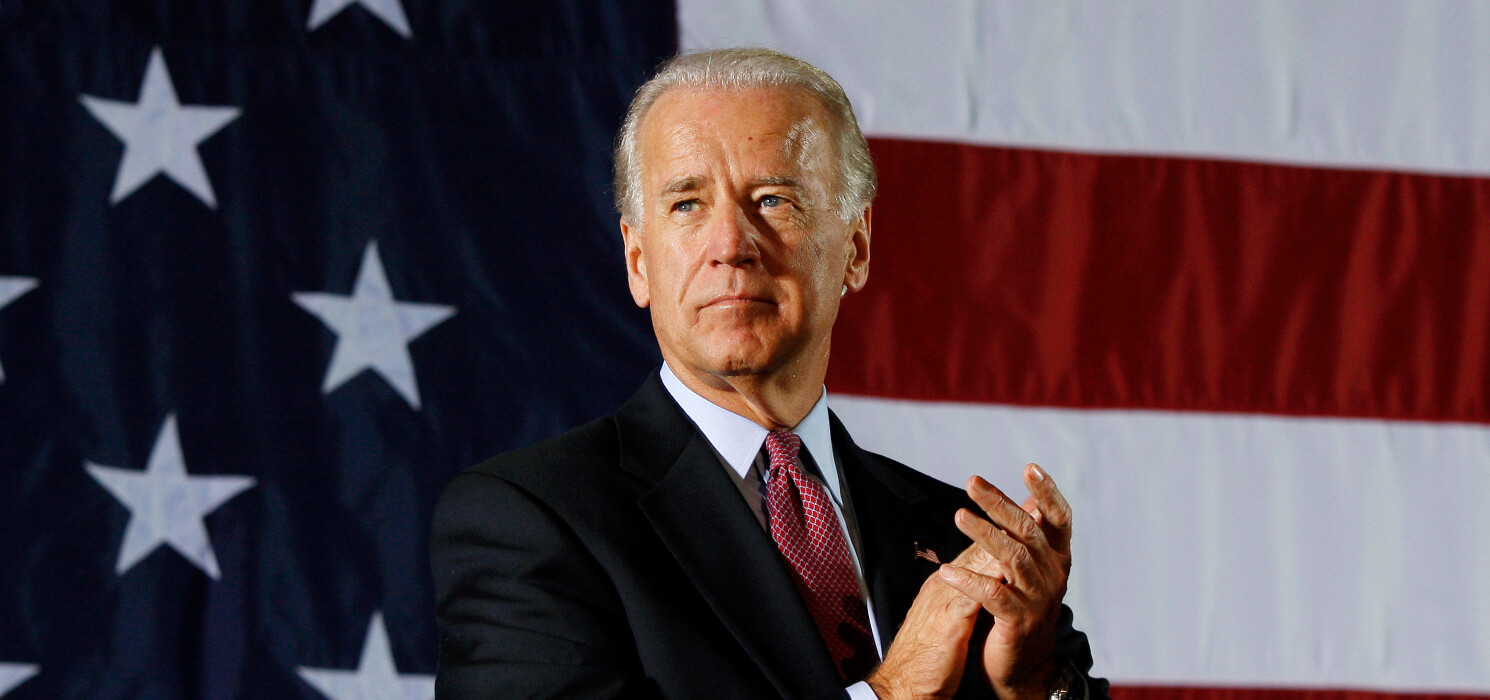
To become the US President, a person must be 35 years of age or older, a resident within the United States for fourteen years, and a natural born Citizen of the US (Article II, Section 1). The President is elected for no more than two terms, according to the XXII Amendment, Section 1 (previously there were no restrictions, but two terms were considered a tradition — this tradition was broken by Franklin Roosevelt, who was President for more than 12 years2).
In addition to the President, there is also the Vice President, who is the second highest official in the country. The Constitution did not vest the Vice President with any executive authority. He presides over the Senate, participates in government meetings, and carries out specific assignments for the President. However, the primary significance of this office is to replace the President in the event of his resignation, impeachment, or death. In such a case, he assumes the presidency until the end of the current mandate3. To be the Vice President, a person must be a US citizen, at least 35 years old, a natural born citizen of the country, and have permanently resided in the US for the past 14 years. At the same time, unlike the President, the Vice President can be elected an unlimited number of times. Candidates for the office of President and Vice President represent the same political party, but different states, because according to Article II, Section 1, they are forbidden from being inhabitants of the same State.
Presidential Elections
Let us turn to the election system in the US, which is very unusual, since, unlike most countries, it is a multi-stage process, which unfolds as follows.
Step I. First, Americans choose electors, who will directly vote for the President and Vice President of the US. What are electors? The Electoral College is a set of people who receive a mandate from their state to vote in a certain way at the Electoral College4. The college itself consists of US citizens elected (by states) during general elections with the sole purpose of ensuring the election of the President and Vice President of the US. The selection of electors occurs at party conventions in each state, or they are chosen by party leadership at the state level. Usually, senators and congressmen, popular politicians, or people personally close to the presidential candidate serve as electors.
Thus, by election day, there are two lists of electors in each state, represented mainly by the Democratic and Republican parties. There are a total of 538 electors in the College. Each State shall appoint, in such Manner as the Legislature thereof may direct, a Number of Electors, equal to the whole Number of Senators and Representatives to which the State may be entitled in the Congress. The largest number of electors (55 people) belongs to the state of California, Texas has 38, and Florida is represented by 29 electors. The smallest number of electors is found in Montana, Alaska, Vermont, Delaware, Wyoming, South Dakota, and North Dakota (three each). The District of Columbia also elects three electors (Amendment XXIII, Section 1).
Electors are elected according to the rules of a plurality majority electoral system, with the exception of two states (Maine and Nebraska), where electors are elected according to the rules of a proportional electoral system. This means that the presidential candidate who wins the majority of votes in a state receives the votes of all electors from that state.
Step II. Then the electors elect the President and Vice President. In theory, electors can vote for anyone, but in most states, the law prohibits electors from going against the choice of the voters5, meaning that if an elector is from the Republicans, they must vote for the Republicans. Those who vote otherwise are called “faithless electors”. Usually, the following is done to them6: they are fined (California, North Carolina), fined and their vote is canceled (Michigan, Colorado), or replaced (this was introduced in 2020 and adopted by some states, including Montana and Nebraska). They may do nothing (Florida, Vermont), and in some places there is no law on this matter (Texas, New York).
To be elected President and Vice President of the US, a candidate must receive at least 270 electoral votes. In other words, the candidate who receives an absolute majority of electoral votes, that is, at least 270 out of the 538 votes of the Electoral College, is considered elected.
And what happens if no candidate gets enough votes? According to the Constitution, specifically the XII Amendment, if this happens, the House of Representatives shall choose the President from the three candidates who received the highest number of votes. In this case, the votes shall be taken by States, meaning that the vote of the 53 congressmen from California is equal to 1 vote of the State of California. A quorum for this purpose shall consist of a member or members from two-thirds of the states, and a majority of all the states shall be necessary to a choice.
And what if the House of Representatives does not choose a President? Then the Vice President shall act as President, as in the case of the death or other constitutional disability of the President.
If no candidate for Vice President has a majority, then also according to the Constitution, the Senate shall choose the Vice President from the two highest numbers on the list; a quorum for the purpose shall consist of two-thirds of the whole number of Senators, and a majority of the whole number shall be necessary to a choice. If the President and Vice President are not chosen, the Congress may by law provide for the case wherein neither a President elect nor a Vice President elect shall have qualified, declaring who shall then act as President, or the manner in which one who is to act shall be selected, and such person shall act accordingly until a President or Vice President shall have qualified (XX Amendment, Section 3).
The results of the voting are certified by the governor of the state and sent to the President of the US Senate (the Vice President of the US). Then, at a joint session of the US Congress, which takes place on January 6 of the year following the election year, the electoral votes are counted, and the winner is declared President of the United States.
But why is the institution of electors needed at all? The Founding Fathers believed that this college would minimize the chances of future US presidents being elected through corruption, intrigue, or force to hold their office for life7. We consider this system to be insufficiently democratic, since a candidate who wins the fewest popular votes can still win if they secure the most electoral votes8. The most famous instance is the case of Donald Trump, when in the 2016 election he received fewer popular votes than Hillary Clinton, but became the winner due to the electoral votes.
This is not to mention the problems of the electoral system as a whole (the absence of a single Central Election Commission, different rules in different states), as well as the problems of the majority system (gerrymandering, the “winner-take-all” system, the impossibility of electing “outside candidates”, and so on9 — we wrote about this in the article about electoral systems).
Prior to the XII Amendment, the person having the greatest number of votes after the President became Vice President, but due to the problems in the election of 1800, when two candidates received the same number of votes10, it was decided to modify the system, and since 1804 it has been as we know it today, meaning that the president and vice president are elected separately.
The Cabinet
Separately, let’s talk about the US government, which is called the Cabinet. It is formed by the President, but the consent of the Senate is required to confirm appointments (the exception is the White House Chief of Staff, who is appointed by the President without Senate confirmation). The Cabinet answers only to the President, and he can also dismiss its members himself. There are 24 people in the Cabinet in total (not including the President and the Vice President), and they can be divided into 2 groups. The first group consists of secretaries who head the following executive departments:
- Department of State (performs functions similar to those of a ministry of foreign affairs11);
- Department of the Treasury;
- Department of Defense;
- Department of Justice;
- Department of the Interior;
- Department of Agriculture;
- Department of Commerce;
- Department of Labor;
- Department of Health and Human Services;
- Department of Housing and Urban Development;
- Department of Transportation;
- Department of Energy;
- Department of Education;
- Department of Veterans Affairs (this department handles home loans, life insurance, administration of pensions, benefits, and allowances (including disability compensation, survivor benefits, medical benefits, and burial benefits) for veterans of the US armed forces and their families12);
- Department of Homeland Security.
The second group includes, relatively speaking, everyone else (it should be noted that this group is not permanent — specifically, under one President, many may be part of the cabinet, while under another, some are not, and others are added instead. They are also not included in the line of presidential succession, meaning that if the President dies, the Vice President becomes the head, and if he also dies, the Speaker of the House of Representatives, and so on down to the Secretary of Homeland Security13 (at the same time, if a secretary was not born in the US, that secretary does not enter this line)):
- White House Chief of Staff;
- United States Trade Representative;
- Director of National Intelligence;
- Representative of the United States to the United Nations;
- Director of the Office of Management and Budget;
- Administrator of the Environmental Protection Agency;
- Administrator of the Small Business Administration;
- Director of the Office of Science and Technology Policy;
- Chair of the Council of Economic Advisers.
In addition to impeachment, there is another form of presidential removal: according to the 25th Amendment, the Vice President and a majority of the principal officers of the executive departments can transmit to the President pro tempore of the Senate and the Speaker of the House of Representatives their written declaration that the President is unable to discharge the powers and duties of his office. If Congress, within twenty-one days after receipt of the written declaration, or, if Congress is not in session, within twenty-one days after Congress is required to assemble, determines by a two-thirds vote of both Houses that the President is unable to discharge the powers and duties of his office, the Vice President shall continue to discharge the same as Acting President; otherwise, the President shall resume the powers and duties of his office.
In the US, according to Article II, Section 4, the President, Vice President and all civil Officers of the United States, shall be removed from Office on Impeachment for, and Conviction of, Treason, Bribery, or other high Crimes and Misdemeanors14.
States
The United States of America is a federal republic consisting of regions that differ in both status and powers. States are the primary constituent entities of the US, totaling 50 in number. The States possess residual powers, meaning that “powers not delegated to the United States by the Constitution, nor prohibited by it to the States, are reserved to the States respectively” (Amendment X). The powers themselves can be divided into two types:
The first type comprises powers exercised concurrently by the states and the federal government:
- Collecting taxes;
- Building roads;
- Borrowing money;
- Establishing courts;
- Making and enforcing laws;
- Chartering banks and corporations;
- Spending money for the general welfare;
- Taking private property for public use with just compensation upon nationalization.
The second type comprises the powers of the states themselves:
- Issuing licenses;
- Regulating intrastate and interstate business matters;
- Conducting elections;
- Establishing local governments;
- Ratifying amendments to the state Constitution;
- Addressing health and safety issues of the state population;
- Exercising powers not delegated to the federal government by the Constitution.
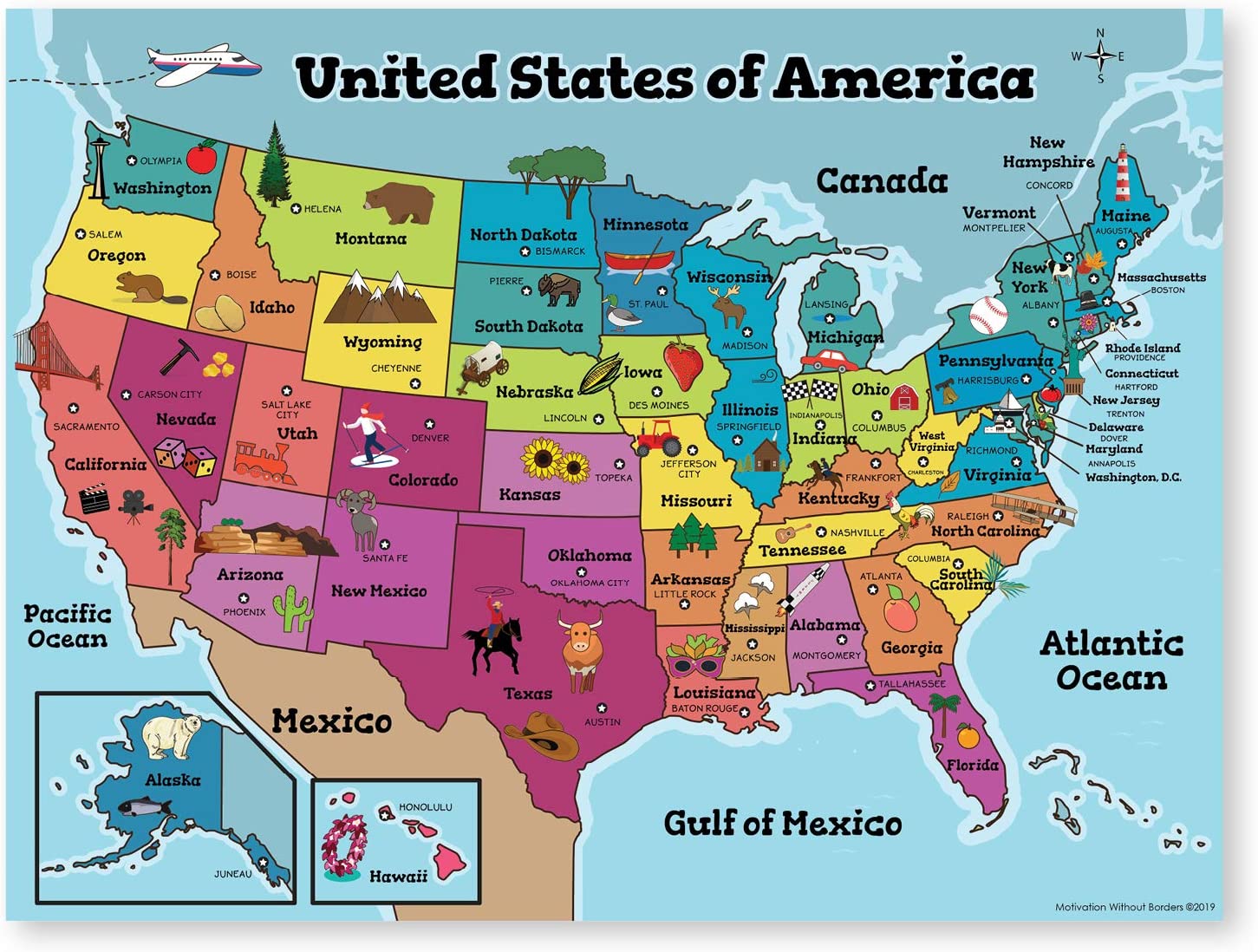
It should be noted that the States are highly independent in fields such as education, land use, internal trade, managing the organization and conduct of elections, and so forth. State governments have structures that closely parallel those of the federal government. Every state has a governor, a legislature, and a judiciary. Each state has its own constitution.
By analogy with the US Congress, all state legislatures are bicameral, with the exception of the state of Nebraska, which is unicameral15. State legislatures have the same responsibilities, but on a state scale — passing laws and budgets, confirming executive and judicial branch appointments, and exercising oversight over executive branch activities16. When amendments to a state constitution are proposed, their adoption typically requires the support of an absolute majority of legislators or the state population, and in several states — both. Furthermore, state legislatures have the right to ratify amendments to the US Constitution proposed by Congress.
In most states, the term of office for senators (members of the upper house) is four years, and for members of the lower house — two years. Parliaments assemble once a year for a session lasting from 30 days (New York) to 190 days (Michigan). Sometimes, a legislative council is elected to conduct lawmaking work during the period between sessions17. Parliaments mirror the organization of Congress. The lower house (comprising 35 to 400 members depending on the state) is headed by a speaker, while the upper house (17 to 65 members) is led by a Lieutenant Governor or an elected president, about whom we will talk a little later.
Candidacy requirements for members of local legislatures vary from state to state. In 24 states, the age requirement for both houses varies from 18 to 25 years. In 22 states, the age requirement for election to the upper house is higher than for the lower house — 25 to 30 years, while three other states formally impose no age requirements. A similar situation applies to residency requirements, which range from 30 days to seven years and can vary depending on the chamber. In all cases, US citizenship is mandatory. State legislators are elected on the basis of universal, equal, direct elections by secret ballot under a majority system. In most states, it is sufficient for the winner to receive a plurality of votes. However, in some states (Louisiana, Georgia), winning an election requires securing more than half of the votes cast. In 15 states, term limits apply to members of legislatures. For instance, in California, members of the lower house can be elected for no more than three terms (six years), and members of the upper house for no more than two terms (eight years). US citizens who have reached the age of 18 possess the right to vote.
The executive branch is represented by the following groups.
The first group consists of State Governors. The powers of governors also vary, with some state constitutions vesting significant authority in the chief executive (such as appointment and budgetary powers, as well as the power to veto legislation).

In some states, however, governors have quite limited power, although the constitution does allow them to veto legislative bills. Such is the case, for example, with the Governor of Texas, who, unlike their counterparts, is stripped of the ability to make most appointments available to others, because in addition to the traditionally elected treasurer, attorney general, auditor, and lieutenant governor, many other officials are elected in the state.
The main powers of a governor include:
- Proposing the budget;
- Introducing bills to the state legislature;
- Implementing economic and social policies;
- Protecting the rights and freedoms of residents;
- Serving as commander-in-chief of the state’s National Guard;
- Declaring a state of emergency;
- Representing the state in relations with other states and the federal government;
- Granting pardons or commuting sentences;
- In most states, the governor can appoint temporary senators in the event of a vacancy;
- Possessing the power to veto decisions of the legislature.
Currently, 49 governors possess veto power over legislative decisions, and 43 governors even have line-item veto power (frequently applied when reviewing a draft budget), whereas the President can only veto laws as a whole. The veto power is an important tool for shaping the relationships between heads of states and the legislature. However, a veto can be overridden by a majority of two-thirds to three-fifths of the votes in the legislature. In Tennessee and Kentucky, only a simple majority is required.
Governors are elected directly and for varying terms (typically ranging from two to four years); in some states, the number of terms a governor can serve is limited. A governor, just like the US President, can be removed from office through impeachment or by a recall referendum, as happened in 2003 in California with Governor Gray Davis (it is noteworthy that to save funds, the election for the next governor was held on the same day as the referendum, which would have been deemed invalid if the voters had not supported the recall).
There is also a body known as the Executive Council under the governor, which has remained in some States (New Hampshire, Massachusetts, North Carolina) from their colonial past. In New Hampshire, it consists of five members elected from respective districts with roughly equal populations for a two-year term (the governor also has a two-year term). The Council serves as a check on the governor’s power. The governor must obtain the council members’ approval for all pardons, contracts, payments, and transfers exceeding $5,000, as well as for most appointments; together, they approve reports from subordinate agencies and budget expenditures. In the event that the governor is unable to perform their duties, the members of the Executive Council initiate a recall. The council members work on a permanent basis and, thus, form a core part of the executive branch. In the states of Maryland, North Carolina, and Florida, there is also an Executive Council under the governor, but the difference is that it automatically includes elected state officials and has no specially elected representatives.
Governors are united in the National Governors Association — one of the most respected public organizations in the US. It acts as an intermediary between the White House, Congress, and state governments. The Association, through its internal consulting center, helps governors exchange experience and disseminate new practices and technologies. Each year, the association is headed alternately by a Republican and a Democrat.
In addition, governors have organizations based on party affiliation — the Republican Governors Association, the Democratic Governors Association — as well as by geography — the Southern Governors’ Association, the Western Governors’ Association, and so on.
The second group. In 42 states, there is also a vice governor or lieutenant governor, who is often elected independently of the governor and sometimes is not a member of the governor’s party. Lieutenant governors typically serve as the president of the state Senate.
The third group. The government is very similar to the Federal one, as there is also a cabinet, but there is also a staff. The differences between them are as follows — the cabinet is a collection of heads of departments and agencies responsible to the governor and executing their policy in their assigned fields. The staff includes the closest aides and advisers to the governor, who, as a rule, are appointed without the consent of the legislature. Everything else varies by State.
State governments have a wide range of functions covering the following areas:
- Environmental protection;
- Oversight of roads and transport;
- Public safety and correctional institutions;
- Professional licensing, regulation of agriculture, intrastate business, and industry, as well as certain aspects of education, public health, and social welfare.
It is separately worth mentioning that in the States, in addition to the Governor, the Lieutenant Governor, and the State Legislature, there are other elected officials.
The State Attorney General. The Attorney General acts as the legal advisor to the state government and simultaneously prosecutes cases in court on behalf of the state (all state law enforcement agencies must coordinate their actions with him on this matter, and he himself initiates and conducts many investigations. Most frequently, the area of the attorney general’s focus is consumer protection and antitrust cases). In the majority of States, he is elected. Elections are held on a partisan basis, with preliminary primaries. But not everywhere: in Alaska, Hawaii, New Hampshire, New Jersey, and Wyoming, they are appointed by the governors with the consent of the legislature; in Maine, the attorney general is chosen by the legislature (the State parliament); in Tennessee, he is appointed by the state supreme court.
The Secretary of State. Although his duties vary from state to state, in the vast majority of states, his powers consist of the following:
- Serving as the chief official responsible for elections (maintaining voter registries, overseeing campaign finance, and so forth);
- Overseing the execution of the Uniform Commercial Code and recording property rights;
- Approving corporate charters;
- Preserving title and statutory documents;
- Being responsible for the state archives and the preservation of official documents, as well as the Great Seal of the state;
- Managing the system of public notaries.
He is elected on a partisan basis in 35 states; in the remaining states, he is appointed by the governor with the consent of the state legislatures; in Tennessee and Maine, the secretaries of state are elected by the State Legislature.
The Treasurer. The chief financial official of the state — as a rule, elected by the entire population. His duties include managing the state’s money. However, this is not a head of a financial department in the Russian understanding who spends money, but a person acting as a banker, that is, investing the funds collected from taxpayers in order to preserve and multiply them. Treasurers are also involved in financial literacy, implement programs that allow saving for children’s education or purchasing a home, manage matters of unclaimed property, are responsible for the issuance of state securities, and participate in shaping economic policy. The treasurer is chosen on a partisan basis, except in Maryland — where he is elected by both chambers of the Legislature.
The Auditor. His task is to oversee the financial activities of the state government, its agencies, and educational institutions. His duties also include monitoring the finances of all municipal governments, including school districts and other “special districts” within the state. The auditor certifies payments on behalf of the state (meaning that without his signature they are invalid), monitors its pension system and the funds belonging to it; in some states, it is the auditor who is responsible for unclaimed property and collects taxes. The auditor can investigate any transactions and check the status of financial management in government bodies.
There are a great many elected positions in the US, and listing them all would take a lot of time — let’s just say that there is, for example, such a body as the Railroad Commission of Texas, which regulates oil and gas production, pipeline operation, safety in the oil extraction industry, and coal and uranium mines (despite the name, the commission has not been responsible for railroads since 2005 — it is simply a long-standing name that they decided to keep), and which consists of three commissioners elected for six years (every two years, one member is re-elected). They choose a chairman from among themselves. In California, an insurance commissioner is elected, who oversees the activities of insurance companies, agents, and brokers in the state (their licensing, approval of insurance rates, and investigation of fraud cases with the right to arrest suspects).
We all know about many of America’s strange laws. The reason for this is that the US belongs to the Anglo-Saxon legal family, in which judicial precedent is also a primary source of law. However, in Louisiana, for instance, unlike the rest of the states, the legal system is based not on Anglo-Saxon common law, but on the Roman-Germanic system, where the law is considered the primary source of law (such a system exists in Russia as well).
Counties
The largest division of local self-government is counties (called parishes in Louisiana or boroughs in Alaska). They vary in population from as few as 100 people to millions (for example, Los Angeles County). Municipalities, meaning cities, villages, and communes or their associations, are located on their territories. A fundamental difference between the American system of local self-government and, for example, the Russian one is that the boundaries of municipalities can cross county lines. This is explained by the fact that counties originated earlier than cities. Portland, Oregon can serve as an example. The city lies within the territory of three counties — Multnomah, Washington, and Clackamas, occupying a certain portion of each.
The role and powers of counties vary greatly from state to state. In some places, they have little power (New England) and have only a prosecutor and a judge, while in other places it is a purely geographical concept (Connecticut, Rhode Island). Where their bodies do have power, they are responsible for healthcare institutions, libraries, housing and public utilities, roads, parks, prisons, law enforcement, maintaining archives, and issuing necessary certificates and documents. In large counties, the scope of these functions can be broader and include the maintenance of museums, zoos, community centers, airports, and so on.
We will look at county governance using King County in the state of Washington as an example. At its head stands an executive executive, elected by the entire population for four years. Legislative power is exercised by a county council of nine people, also elected for four years, with council members from even- and odd-numbered districts being elected two years apart. In some places, for example, in Cook County, where Chicago is located, the highest official is the president of the board of commissioners, which combines legislative and executive powers. In other places, executive, legislative, and partly judicial collegial power is concentrated in the hands of the board. There is a president of the board of commissioners there, but often this role is purely ceremonial and is not publicly elected. The board can also hire a manager, which is the equivalent of a city manager, as in Los Angeles County.
There are also elected officials:
District Attorney. This is the official who prosecutes cases in court on behalf of the county government or the corresponding judicial district. He is the chief law enforcement officer in a given area, and he is charged with the primary task of combating crime and violations of citizens’ rights.
Sheriff. The chief law enforcement officer of a county. His role and functions vary greatly across different states. A traditional sheriff heads the local police force, conducts investigations, is authorized to apprehend criminals, provides security for government bodies, and performs many other functions. A sheriff with limited functions is most often responsible for keeping criminals in jail, delivering defendants to the courtroom, and selling confiscated property at auction.

Coroner. An official who investigates suspicious cases of sudden death. He possesses certain quasi-judicial powers — for example, the right to summon witnesses to give testimony under oath. In many counties, this position is called a “medical examiner” and can only be held by certified pathologists.
Assessor. This official is responsible for assessing property for the purpose of taxation by county authorities. In Cook County, for example, the assessment system for taxation is a two-stage process. After the assessor presents his proposals, they are reviewed by the Board of Review, consisting of three elected commissioners, and only after that is the tax amount finalized.
Clerk. Responsible for conducting elections, keeps records of deaths, marriages, and births, issuing the respective documents. In small counties with a small staff of officials, the clerk is the main administrative officer.
Recorder. Keeps records of real property and issues documents certifying rights to it. In some states, this official can certify company incorporation documents, issue military service certificates, and the like. Elected officials can also include the treasurer and auditor (where available).
Municipalities
Smaller administrative units include townships, villages, school districts, and special districts (such as housing authorities, conservation districts, and water authorities).
In terms of powers, drawing a strict line of distinction between counties and municipalities is quite difficult, due to significant variations even within a single state. Generally, it is accepted that the authorities of a county that contains small municipalities have more powers than a county where major cities are located. In the latter case, counties are usually responsible for roads outside of cities, waste disposal and garbage collection where there are no major settlements, while public safety (police and fire forces, emergency services) is assigned to city authorities. However, all of this is highly conditional, and one must evaluate each specific situation individually.

At the beginning of the 21st century, there were about 20,000 municipal governments in the United States. City authorities have a wide range of powers, but it is important to remember that everything varies from State to State:
- Housing, schools, parks, recreation areas, libraries, landscaping, stadiums, airports, bridges, public transportation;
- Police, fire department, ambulance services, prisons, sewage treatment plants, waste collection and recycling, environmental protection, the operation of municipal public utilities and urban infrastructure;
- Land use control, planning, zoning, preservation of historical monuments, regulation of property subdivision processes;
- Vehicle registration, driver’s licensing, traffic management, issuance of liquor licenses and professional licenses, regulation of cable television networks;
- Social services, including education, healthcare, assistance to the poor, unemployed, youth, and elderly citizens, as well as charitable activities of local communities and religious denominations;
- Planning, economic development, judicial and rule-making activities in the listed fields.
They are more diverse in structure than state governments. There are four main types of city government18.
The first type is the Mayor-council (Boston, New York, Philadelphia, Chicago, and thousands of smaller cities). Here, the authority consists of an elected mayor and a council. It can be divided into two subtypes:
- The “weak” mayor. The mayor is a member of the city council and is elected from among the council members, presides over council meetings and can propose draft council decisions, recommends candidates for heads of public utilities and administrative departments and dismisses them with the council’s consent, and may be granted the right of a line-item veto (to reject individual items of decisions proposed by the council, but not the decision as a whole). The council performs administrative and executive functions, for which specially created commissions and committees operate within it; it confirms (or approves) the appointment of key local self-government officials and gives consent to their dismissal, exercises direct oversight over the activities of executive bodies, and can terminate the mayor’s powers ahead of schedule.
- The “strong” mayor. Here, the mayor is elected by the population through popular vote, possesses full authority over the city administration, independently appoints and dismisses administrative officials and employees, prepares the draft city budget, and possesses the power of an absolute veto over council decisions. The council here focuses on legislative activity and issues binding ordinances (resolutions), regulates the management of the city economy, approves or rejects (but does not amend specific items of) the city budget and the report on its execution, and can override the mayor’s veto with a 2/3 vote of the total number of council members established for that council.
The second type is the Commission. In this type, which is used less frequently today than at the beginning of the 20th century (Portland), voters elect a number of commissioners, each of whom serves as the head of a city department; the presiding commissioner is usually the mayor. Let’s look closer at the system: Portland is governed by a city council consisting of a mayor, four commissioners, and an auditor. All of them are elected for four years from a citywide district, with the mayor and two commissioners elected at two-year intervals from the other commissioners and the auditor.
Meeting as a collective body (the commission), the commissioners perform the role of a city council with all the functions of the legislative branch. However, each commissioner is also a department head, meaning they perform executive functions in between council meetings. When the commission acts as a legislative body, it is presided over by one of the members, who is designated as the mayor.
The mayor is denied the right of veto, and his administrative powers do not extend beyond the department he heads.
Council members perform both legislative and executive functions simultaneously. In a sense, commissioners can be equated to deputy mayors (for the convenience of the Russian reader’s understanding). Each of them directly oversees several structural units in the city government: for instance, one might oversee the parks and recreation bureau, the bureau of telecommunications, and the bureau of housing.
The third type is the Council-manager. In the council-manager type, used in large cities such as Charlotte (North Carolina), Dallas (Texas), Phoenix (Arizona), and San Diego (California), an elected council hires a city manager to manage the city departments. The mayor, elected by the council, simply heads the council. In such a system, the council coordinates the manager’s work, formulates goals, and defines the main objectives of their activity.
The manager exercises all executive power, directs the administration, makes appointments and dismisses employees, and presents the draft city budget to the council. In some cities, the position of city manager is not abolished, but its functions are limited. For example, in Kansas City (Missouri), the city manager does not appoint the directors of the police and parks departments — they fall under the appointment authority of the city council, which also appoints the city auditor and clerk. At the same time, many places have also abandoned the city manager or limited their powers.
The fourth type is the Town meeting. It is common only in the New England states and has survived since the colonial period. This form operates only in small settlements or rural areas (as applied to the US, it is used in small towns and administrative districts covering several villages).
The primary method of town governance is the town meeting. Usually once a year, all town residents eligible to vote gather together and decide the most important issues of the municipality’s life (budget, local laws, and so on) by vote, thus acting as a legislative body. Since it is inconvenient to gather all residents when the population is large, for example, in Massachusetts, towns with a population of less than 6,000 operate under the “Open Town Meeting” rule, where anyone interested can participate in the meeting, while for larger populations, a “Representative Town Meeting” system is used, where representatives are elected to attend the meeting. Quite often, a finance committee that prepares the town budget is elected concurrently at the town meeting.
Before a town meeting is held, a warrant is issued — an official document that announces the date, location, and time of the meeting, the agenda, and includes the electors’ decision to hold the meeting. The town meeting is formed by a certain number of “electors” (100 or more people), chosen by the population, who represent the interests of the population at the meetings. Any voter can attend the discussion of issues and participate in their work, but only the electors possess the right to vote.
The town meeting elects a board of selectmen, a Board of Selectmen, consisting of 3-5 people, which provides general management in the intervals between meetings, is responsible for town property, issues licenses, manages town services, and calls special town meetings. Organizationally, the town meeting resembles a “weak mayor” system. But instead of a mayor, a Moderator acts here, and there is no right of veto. Recently, electors have also been electing a manager. Along with the Board, there are special officials — the town clerk, treasurer, tax collector, constable, and others, elected either by the population or by the electors themselves. Where the number of townspeople exceeds a certain threshold, the council can hire a town manager.
One can also separately distinguish villages, plantations (as in the state of Maine), or hamlets (as in the state of New York) and other names that vary from State to State. They act either as independent municipalities or as an administrative-geographic part of a larger municipality. Villages usually differ from cities in the scope of their powers (which is significantly smaller) and a minimal administrative apparatus. They are governed by a collective body that hires an administrator. Among other elected officials of the parish are the justice of the peace, road commissioner, assessor, constable, surveyor, and clerk. The authorities may also engage in maintaining libraries, addressing the problems of elderly people, disabled individuals, children and youth, and caring for cemeteries.
As in States with counties, there are also elected officials here — for instance, in Seattle, the city attorney and eight municipal court judges are elected. Regarding term limits for mayors and council members, the situation changes from city to city — for example, in New York, they can be elected for no more than two consecutive terms.
Special Districts or Special-Purpose Districts
These are administrative bodies created by a state to provide a specific area (e.g., an electoral district) with a single service or a limited set of services that fall outside the competence of local governments. Special districts are usually created in order to depoliticize a particular field of activity, and many of them are located outside urban areas. In each special district, a governing board (3-7 people) is established, which is either elected by the population or appointed by state (local) authorities.
There are 19 main types of special districts in the US: sanitary, school, drainage, water supply, soil conservation, housing and road construction, irrigation and water conservation, power supply, healthcare, and so on. The absolute majority of special districts are strictly single-purpose in their function. There are more than 35,000 such districts in the US in total, and school districts are their most common type. The boundaries of special districts often do not coincide with traditional administrative-territorial division units. They can occupy a wide variety of areas: from a small territory (most often covering rural areas) to several counties. A special district can also extend beyond the boundaries of any single state. In such cases, special districts are established jointly by two or more states that enter into a special agreement approved by the state legislatures.
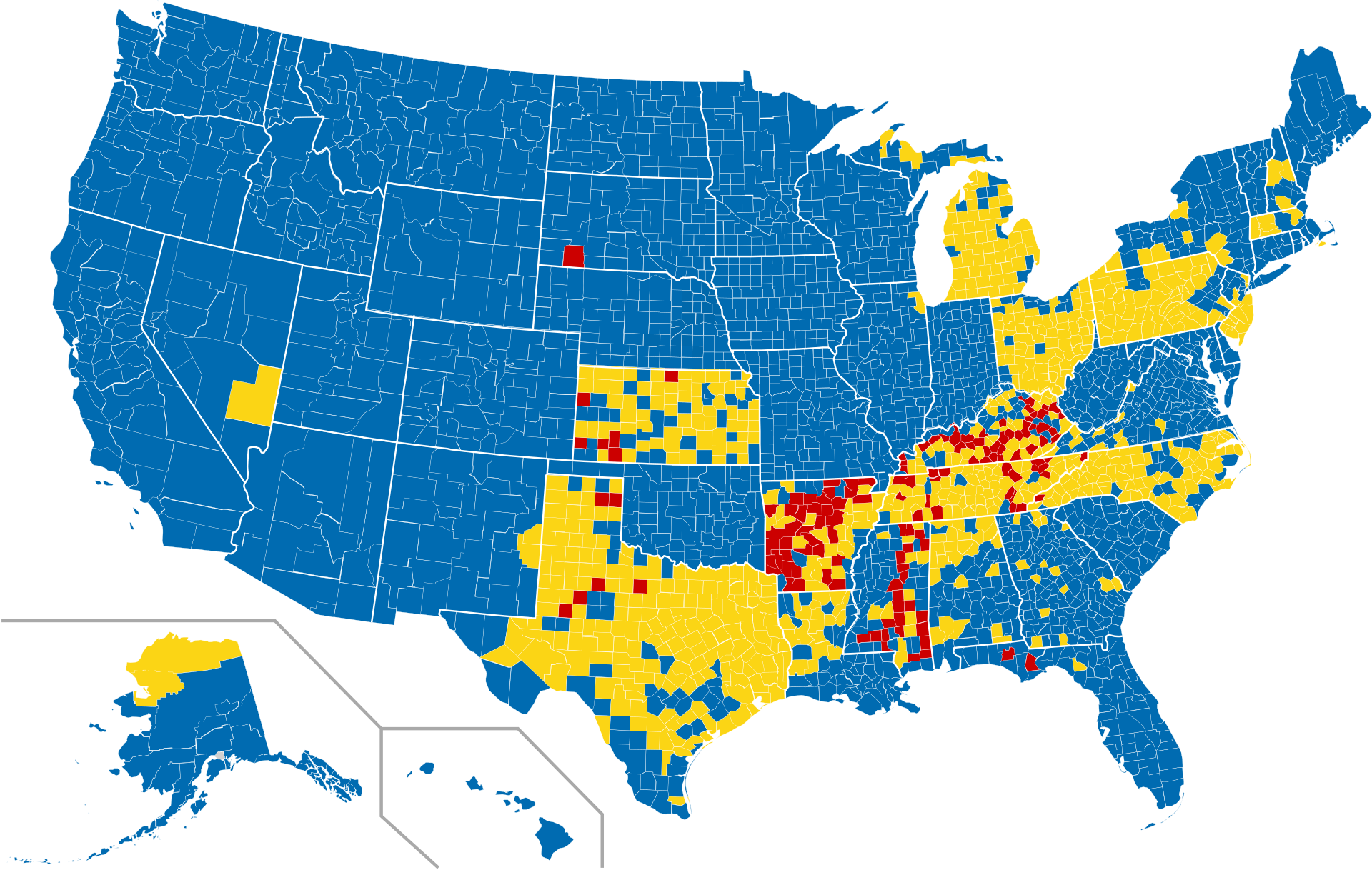
For example, we can consider the Houston Independent School District. The district is headed by a Board of Education of nine trustees, who are elected for four years from geographic districts within the school district. They meet once a month and determine educational policy, its goals, and priorities. The trustees appoint a superintendent of schools, who manages the day-to-day operations of the district and leads the administrative staff. The district is divided into five regional subdivisions, each headed by its own superintendent.
District of Columbia, or Washington
This territory is the nation’s capital, named after the first US President19, in which the federal authorities are located, specifically Congress and the White House. According to the Constitution, Congress has the power to exercise exclusive legislation in all cases whatsoever over this district. This territory is not a full participant in the federal system. In particular, it has issues with representation in Congress (it has a representative in the House of Representatives but they have no right to vote, and it has no representation in the Senate at all).
Prior to the XXIII Amendment to the Constitution, residents of the District of Columbia did not have the right to elect the President and Vice President.
This district did not even have its own local self-government, but everything changed in 1973 when the “District of Columbia Home Rule Act” was adopted. The legislative competence of the District is regulated in Section 30220. This rule provides that “except as provided in sections 601, 602, and 603, the legislative power of the District shall extend to all rightful subjects of legislation within the District consistent with the Constitution of the United States and the provisions of this Act”.
Section 601 establishes virtually unlimited capabilities for Congress, since “notwithstanding any other provision of this Act, the Congress of the United States reserves the right, at any time, to exercise its constitutional authority as legislature for the District, by enacting legislation for the District on any subject, whether within or without the scope of legislative power, as defined in this Act, of the Council and any such legislation legally enacted shall take precedence over any act of the Council”.
Section 602 determines that the District cannot impose taxes on property of the United States or the states, lend its public credit for the support of any private undertaking, pass any act, including any amendment or repeal of any Act of Congress, which affects the functions or property of the United States, or regulate the organization and composition of the courts of the District.
In accordance with Section 603, provision is made for preserving the status of Congress, the President, the federal Office of Management and Budget, and the Comptroller General regarding their functions in preparing, examining, submitting, evaluating, and enacting the budget of the District government.

It can be said that the Federal bodies have enormous power here. Within the district, the institutions of an elected mayor and Council are provided. The Council is the legislative body of the District of Columbia. It consists of 13 members: 8 are elected from the district’s wards, and the remaining 5, including the chairman, are elected at-large across the entire district (Section 401, b) (1)). The Council is elected for a term of 4 years, with two members elected at-large being elected every two years in rotation, i.e., 2 are elected in 2020, the other 2 in 2022 (Section 114 (4)). Also, by law, no more than three of the five Council members elected at-large in the district may be affiliated with the majority political party, which is why many candidates often become independent (Section 401 (2)). In accordance with Section 404, the Council may create or abolish any positions or units of the District government, define their powers, duties, and responsibilities, and adopt and publish rules and procedures, which must include provisions for adequate public notice of intended Council actions.
The Mayor is the head of the executive branch in the district. The Mayor’s duties include ensuring that city laws are enforced, and they possess the power to approve bills passed by the Council of the District of Columbia or to veto them. Furthermore, the Mayor oversees all city services, public property, police, fire protection, most public organizations, and the public school system within the District of Columbia. Among other things, the Mayor’s office manages the annual city budget (Section 422). He is elected for 4 years with no term limits. The City Administrator is appointed by the Mayor and is responsible for the day-to-day management of district government agencies, setting operational goals, and implementing legislative actions and policy decisions of the Mayor and the District Council.
The current organization of the district government also includes four Deputy Mayors who, reporting through the City Administrator, manage the day-to-day operations of agencies within specific clusters. While most district agencies report directly to the Mayor, some agencies are independent or classified as regional bodies. For instance, the Office of the Chief Financial Officer is an independent agency (an arrangement that is unique to the district government)21.
US Territories
In the US, there are territories that do not fall under the category of States, and, in addition to the District of Columbia and Indian lands, there are also several diverse types of territories22:
- Incorporated territories are territories to which the provisions of the US Constitution apply in full and which are in the process of being converted into a state;
- Unincorporated territories are characterized by the fragmentary application of the national Constitution.
Unincorporated territories are divided into two types:
- Unincorporated organized territories are territories where the US Congress has established a civil government through an organic act, on the basis of which a territorial constitution is established. Any changes to the organic act and the territorial constitution require the approval of Congress. Currently, unincorporated organized territories include: the American Virgin Islands, Guam, the Commonwealth of Puerto Rico (fun fact: they have held a status referendum 6 times with the aim of recognizing Puerto Rico as a State, most recently on November 3, 2020, with 52 percent voting for the change23), and the Commonwealth of the Northern Mariana Islands;
- Unincorporated unorganized territories are, as a rule, uninhabited and, accordingly, do not have a civil government, remaining under the direct control of the President of the United States or officials appointed by him. In the modern period, such territories include: American Samoa, Baker Island, Jarvis Island, Navassa Island, Wake Island, Howland Island, Kingman Reef, Bajo Nuevo Bank, Johnston Atoll, Midway Atoll, and Serranilla Bank.
The Congress shall have Power to dispose of and make all needful Rules and Regulations respecting the Territory or other Property belonging to the United States.
It is extremely important that these territories belong to the US, but are not a part of it.
Unincorporated territories have varying statuses, yet they possess the following common characteristics:
- The US Congress governs them in accordance with the authority provided by the Territory Clause of the Constitution (Article IV, Section 3, Clause 2 of the US Constitution);
- These territories are not sovereign independent states or states of the Union;
- Persons born in these territories hold US citizenship (in Eastern Samoa — they are Americans, but nationals, not citizens);
- Provisions of federal legislation apply to the territory in accordance with the discretion of Congress;
- No territory has representation at the federal level.
Regarding representation, it must be specified that the population of these territories is not entitled to participate in the elections of Congress and the US President (Article I, Section 2; Article II, Section 1 of the US Constitution), but some territories (Puerto Rico, American Samoa, Guam, the Northern Mariana Islands, the American Virgin Islands) send representatives to the lower house of the US parliament. These representatives do not possess the right to vote, but they may participate in exercising other functions of the US House of Representatives. Thus, the institution of representation is provided for, but it is formed in a truncated form.
We will not examine every territory, but it can be said that they are all different in terms of structure and powers, ranging from mere land to Puerto Rico and the Northern Mariana Islands, which enjoy major autonomy in local self-government institutions, and with very vague constitutional-legal statuses that depend to a decisive degree on law enforcement practice. This approach, with its political restrictions, does not comply with international human rights standards, including the Universal Declaration of Human Rights of 1948 and the International Covenant on Civil and Political Rights of 1966, both signed by the US.
Indian Reservations
An Indian reservation is considered a part of the land surface of the US designated for the permanent residence of a tribe or tribes by virtue of an agreement concluded with the US or in accordance with an executive order, federal statute, or administrative act. At the same time, the federal government retains the legal title to this territory in trust for the tribe24. An Indian is considered a person who is a member of an Indian tribe. In this case, the tribe must be recognized as such by the federal government, and the powers of the Bureau of Indian Affairs of the US Department of the Interior must extend to it.
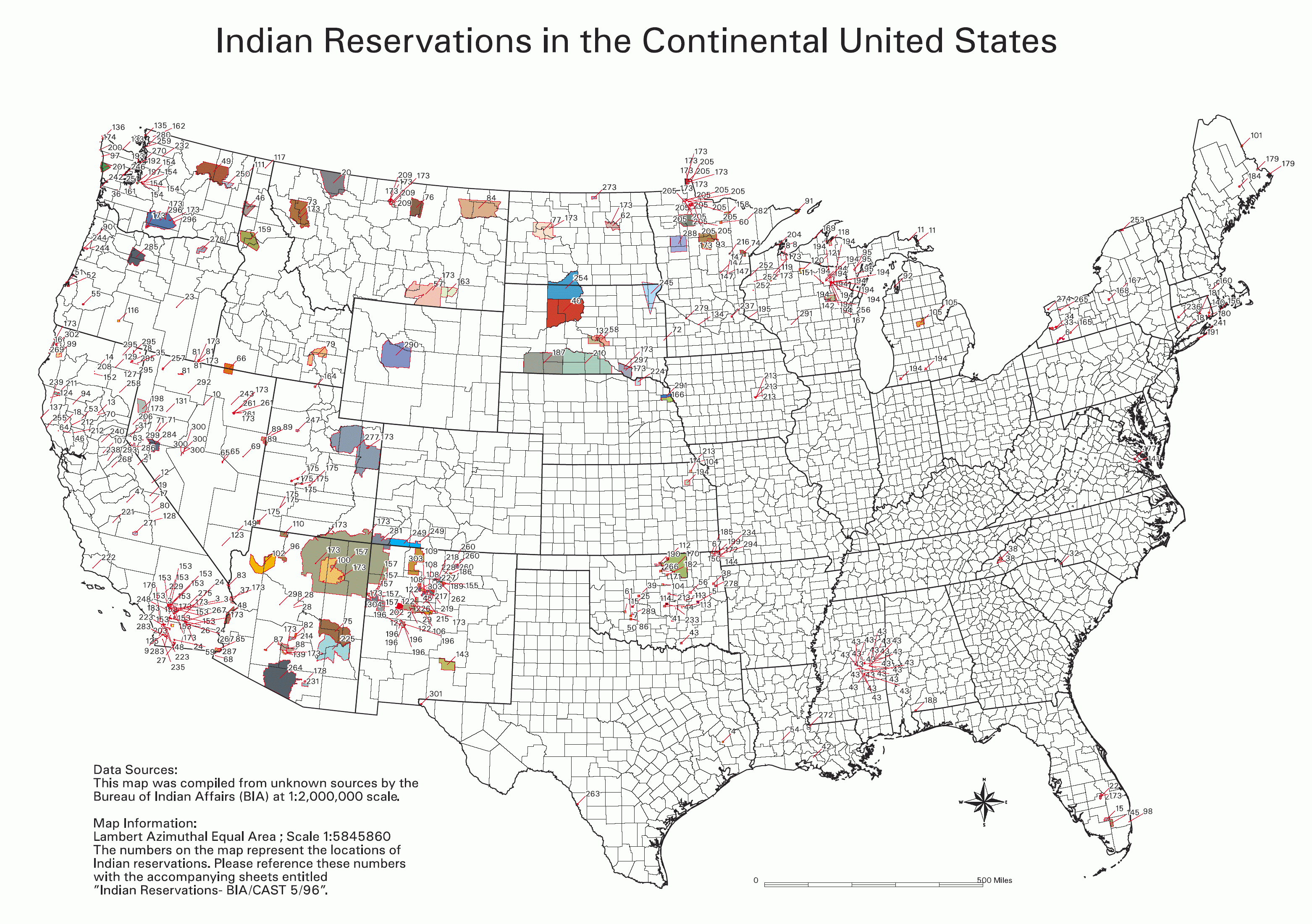
Relations with tribes fall within the exclusive competence of the US. According to Article I, Section 8 of the US Constitution, the Congress shall have Power to regulate Commerce with foreign Nations, and among the several States, and with the Indian Tribes. In the interpretation of the US Supreme Court, this provision means that Congress possesses “plenary power over the tribes”. At the same time, the relations between the tribes and the US are based on trust and the responsibility of the US for the tribes. In accordance with Section 1301 of Title 25 of the US Code, powers of self-government mean and include the inherent executive, legislative, and judicial powers of an Indian tribe, as well as the services, bodies, and tribunals through which these powers are exercised.
The competence of Indian communities is formed on a residual basis. This means that tribes can exercise self-government provided that they do not violate the jurisdiction of the federal center. This refers to cases where specific powers and subject matters belong to the federal government on the basis of agreements concluded with the Indians (such agreements have not been concluded since 1871) or when tribal powers have been revoked by an act of the US Congress. It can also be established by federal courts that the powers of a specific tribe fall under the regulation of current federal law or that these powers are incompatible with national US policy, and are therefore adopted in violation of competence. With certain exceptions, the legal regime of self-government within tribes is generally modeled after the American scheme of separation of powers (governance).
The uniform nature of the organization of the system of tribal public authorities is due to the existence of a model form of their constitutions approved by the US Secretary of the Interior, as well as the discretionary powers of the same department to approve constitutions and other tribal acts. The constitutions of Indian communities contain provisions on territorial jurisdiction and competence, define the specifics of tribal membership, the status of authorities and their powers, as well as the procedure for organizing and conducting elections, and establish the specifics of the civil rights belonging to them.
Now let us discuss their structure in more detail. The head of the tribal executive branch is typically called a chairman, chief, governor, president, mayor, speaker, or representative. This individual presides over meetings of the legislative and executive bodies. In the modern period, the chief executive and members of the tribal council are elected. The competence of the chief executive usually includes matters of executing tribal laws, introducing bills to the tribal council, appointing and removing employees in the services they oversee, monitoring and coordinating their activities, and representing tribal interests externally.
The legislative bodies are called the tribal council, village council, or tribal business committee. These bodies are elected from among the tribe and perform the functions of legislative regulation and ensuring the application of adopted acts; including the power to impose taxes, define requirements for tribal membership, regulate domestic relations, and license and regulate certain activities carried out within the reservation.
They may also have the following powers, taking the Legislative Council of the White Earth Nation (Minnesota) as an example: to initiate the introduction of other taxes and fees for the prosperity of tribal members, to carry out monetary policy (borrowing funds, issuing bonds), to take measures to develop and protect health, public welfare, safety, and to develop education, culture, and political sovereignty. Each reservation has its own unique characteristics.
Areas of activity of reservations:
- School education;
- Library services;
- Social welfare;
- Public improvements;
- Organization of recreation areas;
- Product quality control;
- Law enforcement;
- Fire safety;
- Tax collection;
- Conducting elections;
- Registration of vital statistics.
Local self-government bodies also manage their own enterprises and services, administer their property, and exercise other powers. Only federal laws and laws established by the tribes themselves apply within the reservations. Indians living on reservations are not subject to state laws. Indians pay the same taxes as other US residents; however, the land itself is not taxed, meaning the territory of the reservation and the income derived from it are tax-exempt. Additionally, the gaming business is permitted in many territories.
Conclusion
The US political system demonstrates that it possesses a significant degree of decentralization (states within it are quite independent from the center) and electability; furthermore, it abounds with various elected positions. It is highly flexible and utilizes special authorities and methods of territorial division. It shows that one should not fear an abundance of elected offices and regional independence. At the same time, it possesses certain archaisms from which the political systems of the future will be free.
- The Constitution of the United States of America 1787 // Faculty of History, Lomonosov Moscow State University (www.hist.msu.ru). [Electronic resource]. URL: http://www.hist.msu.ru/ER/Etext/cnstUS.htm (Accessed: 10.04.2021).
- Roosevelt, Franklin // TASS (tass.ru). [Electronic resource]. URL: https://tass.ru/encyclopedia/person/ruzvelt-franklin (Accessed: 01.05.2021).
- Vice President of the USA. Basic information. Dossier // TASS (tass.ru). November 7, 2016, 19:49. [Electronic resource]. URL: https://tass.ru/info/3757549 (Accessed: 01.05.2021).
- R.S. Mukhametov. A comparative analysis of presidential elections in the USA and the RF // Discourse-P, 2015. No. 3-4. – pp. 128-129.
- Vladimir Kozlovsky. Electoral College: a formality or the last hope of Trump’s opponents? // BBC News Russian Service (www.bbc.com). December 18, 2016. [Electronic resource]. URL: https://www.bbc.com/russian/features-38356788 (Accessed: 10.04.2021).
- Faithless Elector State Laws // FairVote (www.fairvote.org). [Electronic resource]. URL: https://www.fairvote.org/faithless_elector_state_laws (Accessed: 10.04.2021).
- K.V. Kudryashov, A.A. Sankova. Ensuring the legitimacy of presidential power in the USA: historical and legal aspect of the problem // Scientific-methodological electronic journal “Concept”. – 2018. – № 10 (October). – pp. 206–214.
- 2016 Presidential Election Results // The New York Times (www.nytimes.com). August 9, 2017, 9:00 AM. [Electronic resource]. URL: https://www.nytimes.com/elections/2016/results/president (Accessed: 10.04.2021).
- T.I. Nigmetzyanov. Modern electoral systems: a comparative analysis // Bulletin of Kostroma State University named after N.A. Nekrasov. 2015. №3. – pp. 186-190.
- The Election of 1800 // National Archives. Pieces of History (prologue.blogs.archives.gov). November 7, 2016. [Electronic resource]. URL: https://prologue.blogs.archives.gov/2016/11/07/the-election-of-1800/ (Accessed: 10.04.2021).
- About the U.S. Department of State // United States Department of State (www.state.gov). [Electronic resource]. URL: https://www.state.gov/about/ (Accessed: 10.04.2021).
- Benefits: Links // Veterans Affairs (www.va.gov). [Electronic resource]. URL: http://www.va.gov/landing_vba.htm (Accessed: 12.09.2014).
- Order of Presidential Succession // U.S. Presidents (www.presidentsusa.net). [Electronic resource]. URL: https://presidentsusa.net/orderofpresidentialsuccession.html (Accessed: 10.04.2021).
- D.Z. Mutagirov. Democracy as a universal value — 558 p. — M.: Logos, 2014. — pp. 390-391.
- State and local government // Encyclopaedia Britannica (www.britannica.com). [Electronic resource]. URL: https://www.britannica.com/place/United-States/State-and-local-government (Accessed: 01.05.2021).
- How state legislative elections are held in the US // TASS (tass.ru). November 3, 2020, 09:30. [Electronic resource]. URL: https://tass.ru/info/9893411 (Accessed: 01.05.2021).
- The structure and organizational support of the activities of the US legislative authorities [Text] / E. A. Kravtsova, A. V. Maksimenko, R. N. Shalaikin // Gaps in Russian Legislation. – 2015. – No. 3. – pp. 14-18.
- I.A. Krupornitskaya. Organization of self-government in the USA // Vestnik MGTU. 2001. Vol. 4, No. 2.
- E.M. Pospelov. Geographical names of the world. Toponymic dictionary / executive editor R. A. Ageeva. – 2nd ed., stereotype. – 512 p. – M.: Russian Dictionaries, Astrel, AST, 2002. – p. 91.
- District of Columbia Home Rule Act // ABF Associates (www.abfa.com). [Electronic resource]. URL: http://www.abfa.com/ogc/hrtall.htm (Accessed: 01.05.2021).
- DC Government Organization // Washington, DC (dc.gov). [Electronic resource]. URL: https://oca.dc.gov/page/dc-government-organization (Accessed: 01.05.2021).
- I.V. Irkhin. Constitutional and legal status of unincorporated territories of the United States // Pravovedenie. – 2018. – Vol. 62, No. 3. – pp. 484-500.
- Plebiscite Island Wide Results // Eventos Electorales (elecciones2020.ceepur.org). [Electronic resource]. URL: https://elecciones2020.ceepur.org/Noche_del_Evento_92/index.html#en/default/PLEBISCITO_Resumen.xml (Accessed: 01.05.2021).
- I.V. Irkhin. Constitutional and legal status of tribes and reservations of American Indians (in the context of the institution of territorial autonomy) // Lex russica (Russian Law). 2018 (6). – pp. 129-146.