Political systems and what they are
In this article, we will try to analyze the main forms of government and political regimes. Based on their analysis, we will draw a conclusion on which political system is best suited for the realization of progressive values and, therefore, meets the requirements of social democrats.
One of the most popular questions asked when discussing the future structure of a country is the question of what the political system should be. This is, perhaps, the most important question, but when discussing it, people often, firstly, confuse the form of government with the political regime, and secondly, cannot clearly explain how one political regime differs from another. For example, in Russia of the early 2020s, many people believe that democracy has been implemented in the country, and this leads to the false conclusion that the absence of democracy would have a beneficial effect on the situation. To avoid such mistakes, one should understand what political systems exist and how they differ.
First of all, we need to define what we mean by a political system. A political system is a set of institutions and agencies concerned with formulating and implementing the collective goals of a society or of major groups within it1. In order not to multiply unnecessary terms, by political system we will also mean the form of the state, that is, a concept that explains the organization of state power and the methods of its exercise2. That is, a political system is made up of 3 elements: the form of government, the form of state structure, and the political regime.
Contents
Forms of government
The form of government is an element of the political system that characterizes the structure of the highest organs of legislative and executive power3. According to the form of government, states are divided into monarchies and republics. The main difference between them lies in who occupies the post of head of state and in what manner. In a monarchy, the post of head of state is held indefinitely and by inheritance by a monarch, a person from a certain dynasty. A monarchy is a form of government in which supreme power in the state belongs entirely or partially to one person — a monarch (in some cases, co-ruling monarchs) — who possesses sovereignty and is the object of allegiance4. A republic is a form of government in which the head of state is an elected official5 (or an elected state body). The Ozhegov dictionary gives two definitions of a republic: “a form of government in which supreme power belongs to elected representative bodies” and “a country with representative organs of power elected for a certain term”6. Dal’s dictionary allows making an important addition: “popular government, rule by the people, a land governed without a sovereign, by the people themselves, through elected representatives”7. That is, it is important that a republic is a form of government without a monarch. In fact, a monarchy and a republic differ only in the presence or absence of a monarch.
It should be noted, however, that in many republics the head of state is not elected but, for example, comes to power as a result of a coup, and elections may be purely formal or absent altogether. Such republics are usually classified as dictatorships (a form of government in which power is concentrated in the hands of one person, a group of persons, a clique, or a party that monopolizes it8). Classifying them as republics is incorrect since they do not correspond to the above definitions, but due to the fact that they often call and position themselves as such, confusion arises.
On the other hand, we can see that, for example, some countries of Northern Europe, where social democrats are traditionally very strong, are not republics but monarchies — and this hinders the establishment of a high standard of living in these countries to an extremely low degree. Why?
At the end of the 18th century, two models of a republic emerged — presidential (modeled on the USA) and parliamentary (modeled on revolutionary France). Let us open a textbook on the theory of state and law to understand the differences between them:
A presidential republic is a republic whose president, under certain parliamentary control, forms a government responsible to him.
Peculiarities of a presidential republic. The presidential form of government is characterized by the fact that the president heads the executive branch and forms the government regardless of party composition.
As a rule, the president possesses the powers of both the head of state and the head of government (USA, Mexico, Brazil).
The positive aspect of a presidential republic manifests itself in political stability, which is due to the fact that the president heads the executive branch and forms the government, and in managerial efficiency, due to a monolithic government and prompt decision-making.
Disadvantages of a presidential republic: it is characterized by a tendency toward presidential authoritarianism; weak control over the government by the parliament; it does not ensure proper representation of socio-political interests in the government, for it expresses the interest of the president’s party.
A parliamentary republic is a republic whose parliament forms a government from its membership that is responsible to it (Italy, India).
Peculiarities of a parliamentary republic. A parliamentary form of government is characterized by the fact that:
- the parliament forms the government, and does so from among its own membership;
- the parliament determines the composition of the government;
- it accepts the resignation of the entire government or its individual members;
- the government bears political responsibility to the parliament.
Summarizing the listed peculiarities, it can be said that a parliamentary republic is built on the principle of the “supremacy of parliament”.
The merits of a parliamentary republic manifest themselves: in the unity of the highest echelons of power, since the head of the executive branch (the prime minister) and his cabinet are appointed and controlled by the parliament; in the responsibility of the government to the parliament, which obliges it to take into account the balance of power in parliament and, consequently, public opinion.
Disadvantages of a parliamentary republic. The parliamentary form is a system of party confrontation (the presidential one is centrist). It is less stable.
The threat of resignation due to an accidental change in the balance of power in parliament constantly hangs over the government; there is a real threat of authoritarianism, which can be created by a simple, real parliamentary majority; if the party system is underdeveloped, extremist parties may end up in the parliamentary majority9.
A monarchy, as we can see in the very same textbook, has a similar division — it can be absolute or constitutional, and the constitutional one is further divided into parliamentary and dualistic (the latter is rarely encountered today). Summarizing these data, we can state that decentralization and opposing dictatorship and absolutism (which corresponds to progressive values) are better served by parliamentary forms of government rather than forms of government that concentrate decision-making mechanisms in the hands of a monarch, president, general secretary, and so on.
As a rule, a high level of democratic implementation is possible only under those forms of government highlighted in green in the diagram above (we will describe why next). Under an absolute monarchy or a dictatorship, as a rule, there are no genuinely opposition parties or candidates who have the right to legally compete for political power. However, a parliamentary monarchy, a parliamentary republic, and a presidential republic do not in themselves guarantee a high realization of democracy. They only provide the basic conditions for its emergence. At the same time, the more functions a president or monarch has, the greater the concentration of power in the hands of one person, and the lower the level of democracy. This leads to presidential republics and parliamentary monarchies having additional opportunities to roll back from democracy to authoritarianism.
We are not considering anarchist forms of government here (that is, without a state; the reasons for their non-viability were reviewed by us here) or so-called “direct democracy” (in the corresponding article we examined that it is also non-viable; attempts to build it will ultimately lead either to a parliamentary democracy or to a dictatorship). The difference between a unicameral parliament and a parliament with several chambers was explained by us in a separate article.
Forms of state structure
The form of state structure is an element of the concept of a “political system” that characterizes the relations between the state as a whole and its constituent parts (territorial-political structure)10. This is more of a method for the territorial organization of states. Traditionally, a distinction is made between unitary states and federations based on the form of state structure. In a unitary state, its constituent parts are administrative-territorial units and do not have the status of a state entity. A unitary state has one constitution, one body of legislation, one citizenship, a single single-level system of state authorities and administration, one judicial system, a single budget and tax system, and so forth; all levels of government are integrated into a single nationwide administration11. A federation is a state whose constituent parts are relatively autonomous state entities (states, lands, cantons, and the like)12. A division of powers is carried out between the federation and its subjects, a separate system of state authorities is established within the subjects of the federation, and so on. Successful states can be either federations or unitary states, so the question of choice is not fundamental for social democracy; however, large states are most often federations (this allows for better expression of regional interests), which is why this system of state structure seems the most acceptable regarding Russia.

What is a political regime
In the formula of the University of Paris professor Maurice Duverger, it is noted that a political regime is rather a special social mechanism, a way of governing a society, which connects, on the one hand, basic models of elections, voting, and decision-making, and on the other hand, methods of political participation by parties and interest groups.
In a broad sense, a political regime is the form taken in a given social group by the distinction between rulers and ruled… A regime is also a certain combination of a party system, a voting method, one or more types of decision-making, and one or more pressure groups13.
The author of one of the most popular political science textbooks in France, “Western Political Regimes”, Jean-Louis Quermonne, attempted to make Duverger’s approach more comprehensive: “A political regime is understood as a combination of ideological, institutional, and sociological elements that contribute to the formation of the political governance of a given country for a certain period”14. In a well-known Russian-language political science textbook edited by Doctor of Philosophy Andrei Melville, the existing definitions of a political regime are summarized:
A political regime is a set of various types of relations between the authorities and society, among which the following indicators should be noted:
- The institutional method of interaction between the government and the citizen (compliance with constitutional norms, including the level of respect for fundamental human rights and freedoms; compliance of the activities of administrative bodies with the state-legal foundations; the significance of the official-legal sphere in the total volume of government actions);
- The degree of political participation of the population and its inclusion in the process of making state decisions, reflecting social representation, popular control, and expression of will;
- The level of opportunity for free competition between the ruling and opposition groups during the formation of state authorities;
- The role of open violence and coercion in state administration.
In other words, we are talking about a kind of “social contract” being concluded between the rulers and the ruled regarding the rules of their relationship, and the dynamics of exercising state administration constantly reflect the state of affairs in maintaining the order of power and the very nature of regulating relations between the state and the individual15.
What types of political regimes exist
Many researchers have tried to systemize political regimes and present their own typology of them — thus, Robert Dahl distinguished four types of political regimes: closed hegemony, open hegemony, competitive oligarchy, and polyarchy16, while Samuel Huntington presented such types of non-democratic regimes as: one-party, military, personal dictatorship, and racial oligarchy17. The typology of political regimes proposed by the American scholar Juan Linz received the widest acceptance; he identified five main types of regimes — democratic, authoritarian, totalitarian, post-totalitarian, and sultanistic. These regimes differ from each other in four main characteristics: the degree of political mobilization of citizens, the level of pluralism, the degrees of ideologization, and the constitutionality of the power of the leader or the ruling group18.
However, such a typology adds and multiplies unnecessary terms that can create unwanted confusion. To determine the most effective regimes, what matters is not the differences on a ceremonial level (as between many dictatorships and absolute monarchies), but the sum of institutions that provide citizens with access to political participation. Regimes should be divided according to the breadth of the representation of these institutions. According to formal-legal principles, a distinction is made between democratic regimes, where the law limits the actions of the authorities, and autocratic (from the Greek autokrateia — autocracy) ones with the arbitrariness of rulers who do not comply with the laws19. This may well be the basis for a gradation that corresponds better to reality.
Many for some reason are certain that regarding democracy, only two states are possible: its presence or its absence. But nowhere in the world is democracy at 0% or 100%. It exists everywhere to a greater or lesser extent. Thus, in the country with the highest level of democracy according to the Economist Intelligence Unit for 2018, that is, in Norway, the overall democracy rating was 9.87 points out of 10, while in the country with the lowest level, that is, in North Korea, it was 1.08 points. In Russia in the same year, this rating was 2.94 points20.
The International Encyclopedia of Political Science notes that the division into democratic and non-democratic regimes is key21, taking into account how democratic and how non-democratic they are. Indeed, when describing any separate regime, it would be much more constructive not to describe it as totalitarian, authoritarian, or democratic, but to indicate its scores in democracy indexes. Today, for example, one of the most professional rankings is the democracy index from the Economist Intelligence Unit. Thus, we can speak rather about a low or high level of democracy in a country.
Due to the desire to build a distinct typology, various terms appear to designate regimes that are called democratic and have some features of democracy, but are actually governed by non-replaceable narrow groups of people. Terms such as “managed democracy”, “hybrid regime”, “informational autocracy”, and even “liberal autocracy” are well known. In reality, all these terms can only speak of the weakness of democratic institutions. Does it turn out that gradation is not needed?
Not exactly—sometimes in conversation, for the sake of convenience, it is completely permissible to use labels to compare countries with low, medium, and high levels of democracy. This helps to identify which of them are managed more effectively and better realize progressive values. The EIU reports feature four categories of political regimes: full democracy (Denmark, Australia, Germany, etc.), flawed democracy (USA, Italy, Argentina, etc.), hybrid regime (Turkey, Nigeria, Ukraine, etc.), and authoritarian regime (Russia, Cuba, Iran, etc.). This division is, perhaps, the most professional for systemizing political regimes at the moment. Why democracy is more effective than dictatorship, we reviewed in the article on what democracy is and why it is needed.
What should be done to raise the level of democracy, if not to the highest in the world, then at least to the level of a full democracy? How do full democracies differ from flawed democracies and hybrid regimes? They differ in the set of democratic institutions existing within them. Let us assume that one of these institutions is the freedom of assembly, and creating this institution requires removing a whole range of legislative restrictions on the freedom of assembly, for example22:
- The organizer’s obligation either to agree to the alternative location and time proposed by the authorities for the rally, or to abandon holding it altogether;
- The increased period during which the authorities must respond to the notification of a public event;
- Restrictions on campaigning to participate in a public event;
- And so on.
The central institution among these is the rule of law, because without its implementation, the laws necessary to create and ensure the operation of other institutions will not be enforced. In the article on what democracy is, we also listed the basic set of democratic institutions.
To distinguish a full democracy from other types of political regimes, we must look at how democratic institutions are implemented in a country — what laws secure them, how those laws are enforced, and what efforts the authorities and civil society make to implement and improve each institution.
Why parliamentary democracy?
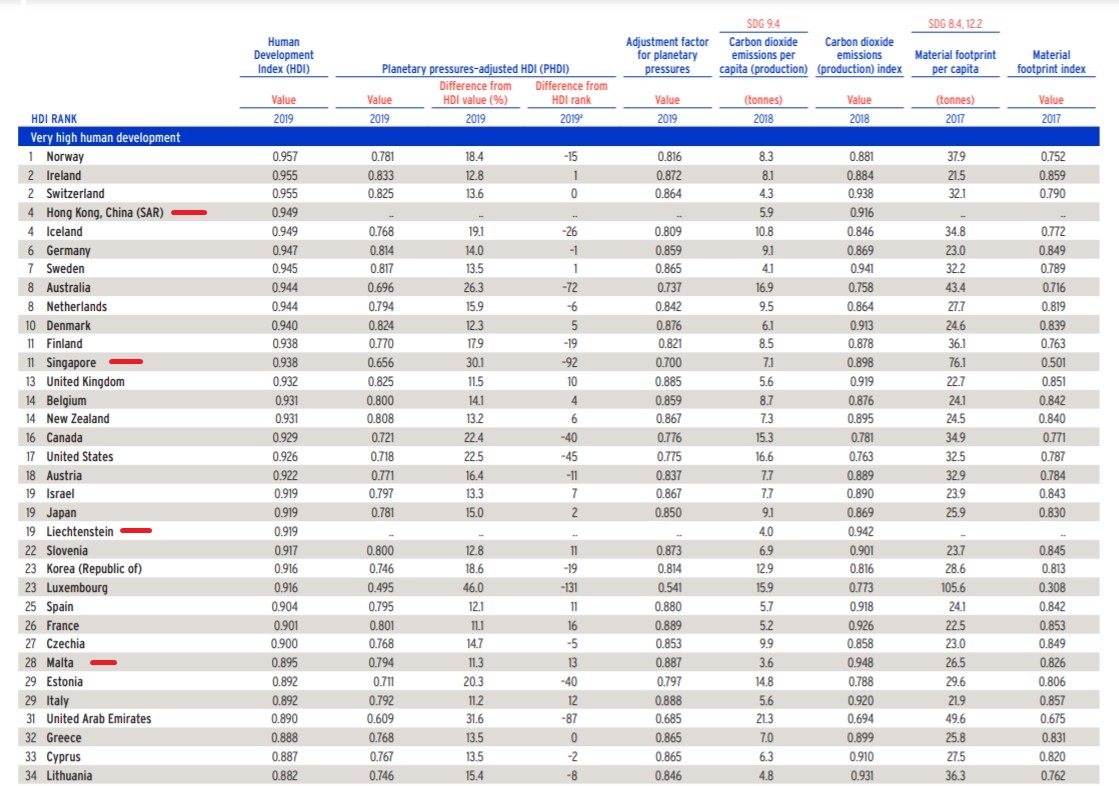
If we take the top 30 countries of the Human Development Index for 202023, excluding city-states, we will see that 13 countries (Ireland, Switzerland, Iceland, Germany, Finland, Austria, Israel, Slovenia, Czechia, Estonia, Italy, Greece, Lithuania) are parliamentary republics, and 12 (Norway, Sweden, Australia, Netherlands, Denmark, United Kingdom, Belgium, New Zealand, Canada, Japan, Luxembourg, Spain) are parliamentary monarchies, meaning that 25 out of 30 countries are parliamentary democracies. Another 4 countries among the leaders are presidential republics (USA, South Korea, France, and Cyprus), and one more is an absolute monarchy, or rather even a federation of absolute monarchies (UAE). Out of the top 10 countries, 10 are parliamentary democracies. Out of the top 20 countries, only two are presidential republics, and the rest are parliamentary democracies. If we take other indicators — such as GNI or GDP per capita — the situation will be roughly the same. Why does this happen, and for what reasons are parliamentary democracies more effective than presidential democracies and authoritarian regimes?
The first reason is decentralization. In a presidential republic, one person gains control over the government. In a parliamentary republic, the government is often formed by several parties. In this case, it is much harder for one of them to usurp power, because there are other parties with ministerial portfolios, and consequently, they possess power and broader opportunities to resist the usurper.
Blogger and director of the “Urban Projects” foundation Maxim Katz also explained that when several political forces at once win a significant number of votes, under a parliamentary democracy they will be represented equally in the government, meaning they will genuinely express the interests of their voters. In a presidential system, a second round occurs, and in the end, only one candidate remains who expresses the interests of their voters, while the interests of the voters of other political forces turn out to be unrepresented, and the level of democracy thus proves to be substantially lower.
Another reason is the difficulty of removing a president who has lost the confidence of society. The reasons for this were explained by Juan Linz in one of his articles:
The issue of replacing a president who has lost the confidence of his party or the people is extremely complex. Even when polarization leads to acts of violence and illegal deeds, a stubborn incumbent can pretend that nothing has happened. The cumbersome mechanisms providing for his removal in favor of a more capable and conciliatory successor may work too late. Impeachment is a much more uncertain and time-consuming process, especially when compared with a simple vote of no confidence in the government by the parliament. A militant president can manage affairs in such a way that his opponents will advocate for his removal from power without waiting for the expiration of his term of office, yet there are no constitutional ways to depose a president except for impeachment and forced resignation.
A prime minister involved in a scandal or who has lost the confidence of his party or majority coalition, whose stay in office could trigger serious trouble, can be removed from office much more easily than a corrupt or highly unpopular president… Parliament has the opportunity to eventually elect a new prime minister who will have to form a new government24.[/blockquote]
Linz writes that the established stereotype regarding the greater stability of the presidential system is erroneous, and it is precisely parliamentary systems that very rarely fall into deep crises, unlike presidential republics. We could observe this in the example of the former US President Donald Trump, who refused to concede his election defeat25, and we can observe this in Russia with the example of Vladimir Putin.
Also, it is precisely parliamentary democracy that best reflects the interests of a broad opposition coalition. Oppositionists may feud with each other, but they understand that under a parliamentary democracy they will get at least seats in parliament (and potentially ministerial portfolios) and some level of influence on politics, which allows them to still unite against an authoritarian regime under which they certainly would not get a chance for any significant influence. Finally, another plus of parliamentary democracy is that it allows for integration into the European community.
In addition to comparing presidential and parliamentary democracy, we have an article comparing the efficiency of democracy and authoritarianism, where we show why the latter loses in ensuring the standard of living.
If parliamentary democracy has so many advantages, then why do parliamentary democracies with a low standard of living and a backward economy exist? One of the reasons is that, as we noted above, the level of democracy — the degree of development of democratic institutions — is also important. Most often, backward parliamentary republics are countries with a low level of democracy. Naturally, there are risks of power usurpation under a parliamentary democracy as well. But that is exactly why social democrats advocate for the expansion of parliamentary democracy — first to the level of a full democracy and leadership according to independent indicators of democratic status, and then for the implementation of tools that expand democracy even further.
It is amusing that Russian conservatives like Vladimir Putin26 or Maksim Shevchenko27 say that parliamentary democracy has many problems and does not express the interests of the people, but the hypocrisy of such statements is obvious upon a comparative assessment of the problems and the degree of expression of citizens’ interests in presidential and parliamentary republics, which we conducted above.
Conclusion
The data we have show that the highest standard of living is achieved by countries that have a parliamentary republic as their form of government and the highest possible level of full democracy. Therefore, a parliamentary democratic republic is the basic political demand of social democrats, and the expansion of democratic institutions is a logical continuation of this demand and the second stage in the development of the political system of social democracy. A social-democratic country that has entered the list of world leaders in terms of the standard of living and the level of democracy can test hypotheses in practice to expand democratization, such as the hypothesis on professional councils, which was put forward by us in the article on the system of authorities of a social-democratic state.
The editors thank Evgeny Ivanov for his assistance in preparing the article.
- G. Almond, G.B. Powell Jr., K. Strøm, R.J. Dalton. Comparative Politics Today: A World View // Translated from English. – 537 p. – M.: Aspect Press, 2002. – p. 74.
- Form of the state // Great Russian Encyclopedia. Volume 33. Moscow, 2017, p. 481. [Electronic resource]. URL: https://bigenc.ru/law/text/4731936 (Accessed: 06.02.2021).
- Ibid.
- V.E. Chirkin. Monarchy // Great Russian Encyclopedia. Volume 20. Moscow, 2012, pp. 717-718. [Electronic resource]. URL: https://bigenc.ru/law/text/2226075 (Accessed: 06.02.2021).
- T.A. Vasilyeva. Republic // Great Russian Encyclopedia. Volume 28. Moscow, 2015, pp. 418-419. [Electronic resource]. URL: https://bigenc.ru/law/text/3506894 (Accessed: 06.02.2021).
- S.I. Ozhegov, N.Y. Shvedova. Explanatory Dictionary of the Russian Language: 80,000 words and phraseological expressions / Russian Academy of Sciences. V.V. Vinogradov Russian Language Institute. – 4th ed., supplemented. – 944 p. – M.: OOO “A TEMP”, 2006. – p. 677.
- V.I. Dal. Explanatory Dictionary of the Living Great Russian Language. Part Four. – M.: T. Ris Typography at the Myasnitskie Gates, Voykov House No. 2, 1866. – p. 83
- K.S. Gadzhiev. Dictatorship // Great Russian Encyclopedia. Volume 8. Moscow, 2007, p. 747. [Electronic resource]. URL: https://bigenc.ru/world_history/text/1955756 (Accessed: 06.02.2021).
- V.V. Kozhevnikov. Theory of State and Law: textbook / Kozhevnikov V.V., Kozhenevsky V.B., Rybakov V.A. – 464 p. – M.: Prospekt, 2016
- Form of the state // Great Russian Encyclopedia. Volume 33. Moscow, 2017, p. 481. [Electronic resource]. URL: https://bigenc.ru/law/text/4731936 (Accessed: 06.02.2021).
- K.A. Bekyashev. Unitary state // Great Russian Encyclopedia. Volume 33. Moscow, 2017, p. 44. [Electronic resource]. URL: https://bigenc.ru/law/text/4699517 (Accessed: 06.02.2021).
- Federation // Great Russian Encyclopedia. Volume 33. Moscow, 2017, p. 226. [Electronic resource]. URL: https://bigenc.ru/law/text/4707346 (Accessed: 06.02.2021).
- Political Science: textbook / A.Y. Melville [et al.]. – 618 p. – M.: Moscow State Institute of International Relations (University) of the Ministry of Foreign Affairs of Russia, TK Velbi, Prospekt Publishing House, 2008. – p. 132.
- Quermonne J.L. Les regimes politiques occidentaux. – Paris. Ed. du Seuil, 1986. – p. 12
- Political Science: textbook / A.Y. Melville [et al.]. – 618 p. – M.: Moscow State Institute of International Relations (University) of the Ministry of Foreign Affairs of Russia, TK Velbi, Prospekt Publishing House, 2008. – p. 133.
- D.V. Podlesny. Political Science: textbook / D.V. Podlesny; People’s Ukrainian Academy. – 164 p. – Kharkiv: NUA Publishing House, 2016. – p. 155.
- N. Baranov. Lecture 9. Political regime // Personal website of Nikolai Baranov (nicbar.ru). [Electronic resource]. URL: https://nicbar.ru/politology/study/kurs-teoriya-politiki/lektsii-po-kursu-teoriya-politiki-2002-2007-gg/78-lektsiya-9-politicheskij-rezhim (Accessed: 06.02.2021).
- Political Science: textbook / A.Y. Melville [et al.]. – 618 p. – M.: Moscow State Institute of International Relations (University) of the Ministry of Foreign Affairs of Russia, TK Velbi, Prospekt Publishing House, 2008. – p. 134.
- Ibid., p. 131.
- Democracy Index 2018: Me too? Political participation, protest and democracy // Economist Intelligence Unit (www.eiu.com). [Electronic resource]. URL: https://www.eiu.com/public/topical_report.aspx?campaignid=democracy2018 (Accessed: 06.02.2021).
- Siaroff A. Regime (Comparative Politics) // B. Badie, D. Berg-Schlosser, L. Morlino International Encyclopedia of Political Science. – Thousand Oaks, CA: SAGE Publications, 2011. – P. 2234-2238.
- Denis Shedov. Legislative restrictions on freedom of assembly at the end of 2020 // OVD-Info (ovdinfo.org). [Electronic resource]. URL: https://ovdinfo.org/reports/zakonodatelnye-ogranicheniya-svobody-sobraniy-pod-konec-2020-goda (Accessed: 06.02.2021).
- Pedro Conceição. Human Development Report 2020 // Human Development Reports (hdr.undp.org). [Electronic resource]. URL: http://hdr.undp.org/sites/default/files/hdr2020.pdf (Accessed: 06.02.2021).
- J. Linz. The Perils of Presidentialism // Journal of Democracy. 1990. Vol. 1. №1. P. 51-69.
- Evgeny Pudovkin. Donald Trump refused to transfer power to Joe Biden. However, the democrat’s team began preparing for the transition of power // RBC (www.rbc.ru). November 12, 2020, 00:00. [Electronic resource]. URL: https://www.rbc.ru/politics/12/11/2020/5faab60e9a794785807cd177 (Accessed: 06.02.2021).
- Putin declared the unacceptability of a parliamentary form of government for Russia // RBC (www.rbc.ru). March 10, 2020, 17:47. [Electronic resource]. URL: https://www.rbc.ru/rbcfreenews/5e67a0af9a794782a5c67020 (Accessed: 06.02.2021).
- AlfaNews MD. “Parliamentary democracy is absolute hypocrisy” // YouTube (www.youtube.com). December 20, 2013. [Electronic resource]. URL: https://www.youtube.com/watch?v=TFgXoL29mMU (Accessed: 06.02.2021).