Which political ideologies and parties exist
In this article, we will try to list all political movements and ideologies that are at all noticeable today, as well as to create an approximate structure for their better systematization and to facilitate subsequent analysis and criticism.
Why is it necessary to know the existing political movements? For those undecided about their political preferences, it is a way to choose the one that suits them best; for those who have decided, it is a way to navigate the political space: to understand who their allies, “fellow travelers”, and opponents are, to understand which movement an opponent belongs to, and to be ready for mutual criticism.
We will divide political movements primarily by the political system they prefer and practice. As a result, we get 4 groups of movements: democratic, hybrid, authoritarian, and anarchic. We will list them from left to right. In the article on right-wing and left-wing movements, we analyzed why the criterion here is the movement’s compliance with progressive or conservative values, and the standard of living they can provide. Progressive values are best met by democratic movements, conservative ones — by authoritarian ones. Within a group, we will also list movements from left to right. In evaluating movements, we will be guided not only by their declared values but also by the results of their practical implementation. Anarchic movements, as they cannot be successfully implemented in practice, we do not classify as either right-wing or left-wing.
In this article, we do not provide the history and examples of the implementation of political movements and ideologies; the task of the article is to outline differences and provide navigation. Also, we deemed it appropriate not to mention some offshoots that do not play a significant role.
Democracy
By democratic movements, we mean those movements that share or mostly share the principles of democracy that we outlined in the article about this political system. These principles presuppose the same rules of the game for everyone, mutual respect, and ultimately finding a common consensus, so democratic movements are much better able to reach agreements among themselves. While authoritarian movements are in constant confrontation with each other (due to the fact that each of them seeks to take all power for itself and prevent a strong opposition), democratic movements are the only ones capable of creating a broad coalition (we have already written about this in more detail previously) and a democratic system. Because each of these movements is ready to recognize the victory of another movement in elections and advocates for the pluralistic representation of various movements in power, for any democratic movement, another democratic movement is an opponent to a much lesser extent than any authoritarian movement.
Democratic socialists. As Doctor of Historical Sciences Aleksandr Shubin notes, democratic socialism is a direction in socialist and partly communist ideology that advocates for an inseparable combination of democracy and socialism1. In our article about economic systems and formations, we noted that socialism is public or state ownership of the means of production. Democratic socialists can include libertarian socialists and some Eurocommunists. At the same time, some democratic socialists do not share the principle of parliamentary democracy and give preference to direct democracy (here we described why this system is less effective than parliamentary democracy; it should also be noted that it is much closer to anarchy than to democracy). Usually, democratic socialist parties are members of the Party of the European Left; they do not have a worldwide international (some parties are members of the Progressive Alliance).

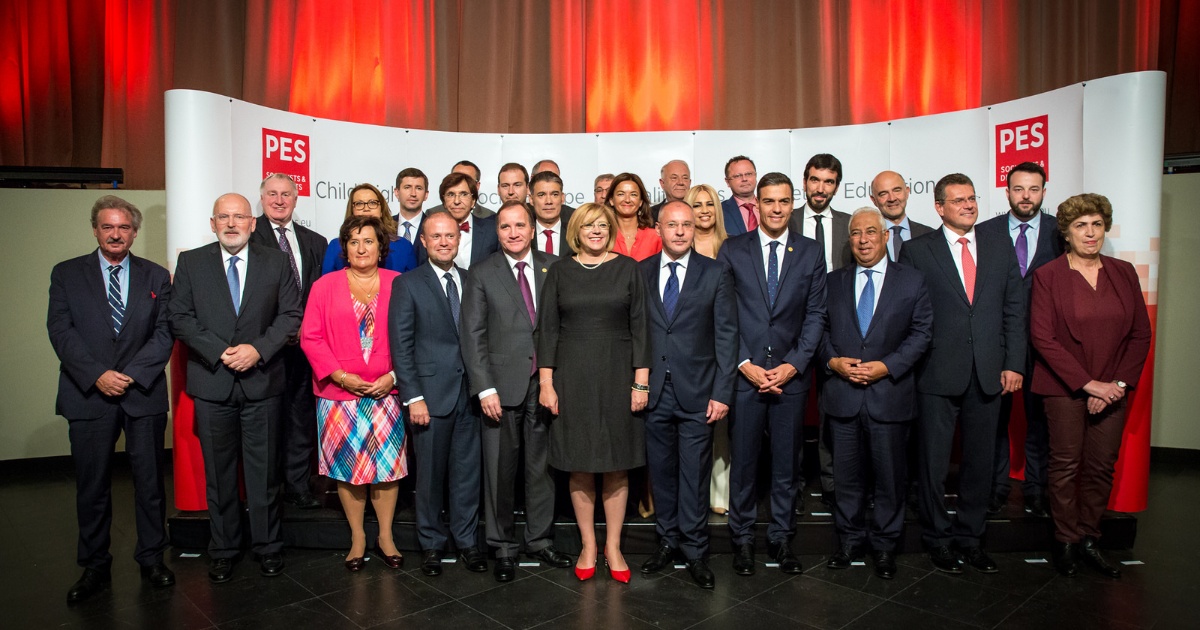
Social democrats. Since “Logic of Progress” is a social-democratic magazine, it should come as no surprise that we have a separate article on what social democracy is. Accordingly, soc-dems are that political movement that shares the principles outlined in that article. What distinguishes them from democratic socialists is that for them, the question of ownership is not fundamental. Social democrats believe that forms of ownership are unimportant; the main thing is that progressive values are best realized. The international of social democrats today is the Progressive Alliance, which is replacing the Socialist International.
Social liberals. Doctor of Philosophical Sciences Boris Kapustin gives this definition of social liberalism: “this is that branch of liberalism that understands the social conditioning of freedom. In all branches of social liberalism known to me, freedom is emphasized as an absolute priority… Social liberalism… also leaves the possibility of freedom: it considers the social conditions of its realization. This is the most important thing”2. That is, the welfare state is viewed by social liberals as a guarantor of freedom, while social justice interests them to a lesser extent, and in this they differ from social democrats, who place these values roughly on par. Accordingly, social liberals are not concerned with injustice in income differences — the main thing is that all citizens are provided for enough to ensure their freedom. Therefore, while advocating for a welfare state, they might not even support the idea of a progressive tax. More left-wing social liberals are members of the Progressive Alliance, while more right-wing ones, together with other liberals, are part of the Liberal International and the Alliance of Liberals and Democrats for Europe.

The “Greens”. In the Great Russian Encyclopedia, the “Greens” are defined as political parties and associations that advocate for environmental protection, the development of civil rights, disarmament, the pursuit of peace policies, and so forth3. These are the priorities of their politics, but otherwise, as a rule, their policies coincide with the demands of social liberals, social democrats, or democratic socialists. It is just that where a social democrat would prefer, relatively speaking, to direct state subsidies toward industrial development, the “Greens” will direct them toward the development of alternative energy sources. In short, what distinguishes them from the previous movements is their priorities. The international network of green parties is called the “Global Greens”.
Some “Green” parties, such as the Lithuanian Farmers and Greens Union, are not traditional “Greens” and base the core principles of their politics on conservatism; however, at the moment, such movements are not significant on a global scale.

Christian Democrats. Britannica defines Christian democracy as a “political movement that has been closely associated with Catholicism and its philosophy of social and economic justice. It incorporates both traditional church and family values and progressive values such as social welfare”4. One can say that the movement is very close to social liberals, and sometimes even to social democrats or democratic socialists, but at the same time shares some conservative values, which manifests itself, for example, in supporting the Church, opposing abortion, and so on. Usually, Christian Democratic parties are members of the Centrist Democrat International or the International Democrat Union (in both cases, conservative parties are also frequently included there). Christian Democrats and conservatives also form the European People’s Party.
Neoliberals. The GRE defines neoliberalism as a “set of economic, socio-philosophical, and political concepts that prioritize private interest, competition, and property rights over the principles of social justice, and evaluate the market, unconstrained by state intervention, as the optimal mechanism for coordinating economic resources and preserving and realizing personal freedoms”5. At the same time, Doctor of Political Sciences Nikolay Baranov notes that the main difference between neoliberalism and classical liberalism lies in a different understanding of the social role of the state. While classical liberalism opposed state intervention in economic life, modern liberals assign it a significant role in solving socio-economic problems6. Thus, the toolkit of neoliberals is relatively broad and does not imply non-intervention by the state, but it does not imply an obligatory welfare state either — according to neoliberals, it can be either created or reduced. However, given that social democrats and social liberals concentrate their activities on the creation and expansion of the welfare state, neoliberals are most often engaged precisely in reducing it. Usually, neoliberal parties are members of the Liberal International.
Classical Liberals. What is classical liberalism? According to Nikolay Baranov, “the ideological complex of classical liberalism included ideas about the intrinsic value of the individual, their freedom from group, class, and national restrictions, as well as ideas of cosmopolitanism, humanism, progress, and democratism”7. In addition, the core of classical liberalism is formed by the following propositions:
- the absolute value of the human personality and the initial (“from birth”) equality of all people;
- the autonomy of individual will;
- the existence of inalienable human rights (to life, liberty, property);
- the contractual nature of relations between the state and the individual;
- the rule of law as an instrument of social control;
- limitation of the scope and spheres of activity of the state;
- the protection — above all from state intervention — of a person’s private life and freedom of action (within the law) in all spheres of public life.
The core value of classical liberals is individual freedom. As a rule, for them this does not imply the necessity of social conditions for its realization, as it does for social liberals. Therefore, class-libs advocate for the maximum possible minimization of state intervention in the life of society, yet still not for a complete rejection of the state, which distinguishes them from anarcho-capitalists. Minarchism can certainly be classified under classical liberalism as well.

Parliamentary monarchists. As the GRE notes, “in a constitutional monarchy, a constitution is adopted and a parliament operates. Constitutional monarchy has two varieties: dualistic and parliamentary… In a parliamentary monarchy, the party that won the parliamentary elections rules: the government is formed by this party (or a bloc of parties holding a majority in parliament) and is accountable to the parliament, but not to the monarch. The monarch acts ‘on the advice’ of the government (the prime minister); the government is responsible for the monarch’s actions in governing the state”8. Supporters of a parliamentary monarchy, as a rule, advocate for democratic institutions and the political power of the parliament while limiting the power of the monarch, but retaining the institution of the monarch as a guarantor of the constitution and the political system, as well as the “darling of the people”, ensuring the legitimacy of the real power — the parliament — in the eyes of these people. In some countries, for example, in the Nordic countries, parliamentary monarchy has proven compatible even with the rule of social democrats. Therefore, the spectrum of views of parliamentary monarchists turns out to be quite broad, and they can be based on various currents from social democrats to national democrats.
National democrats. In defining the term “national democrats”, says Aleksandr Verkhovsky, director of the SOVA Center and a member of the Presidential Council for Civil Society and Human Rights, one should “first and foremost, look at groups that actually — not in name, not in occasional disclaimers — try in some way to combine nationalist and liberal-democratic values”9. That is, simply put, these are nationalists who at the same time recognize democracy as a fundamental value of their ideology and do not allow calls for the violation of human rights in their rhetoric. What distinguishes them from other democratic movements is a propensity toward restricting migration, nation-building, and other nationalist values that can be combined with democracy.
Hybrid
Between democracy and dictatorship, there exists a certain political zone that includes movements implementing either a transition from democracy to dictatorship, or creating a managed democracy, or allowing the use of both democracy and managed democracy or dictatorship (that is, the party can be democratic, but with a potential for transformation). For example, they may implement a multi-party system and the presence of an independent press, but at the same time persecute parties and media that are truly in opposition to them. Such a system can be called neither democracy nor dictatorship, so to represent this political zone, we will use the term “hybrid movements”. Let us not underestimate the flexibility of these movements and their ability to masquerade as various ideologies, but still, most often, various conservative movements belong to them. They are still not very well studied, so we will provide our own definitions.
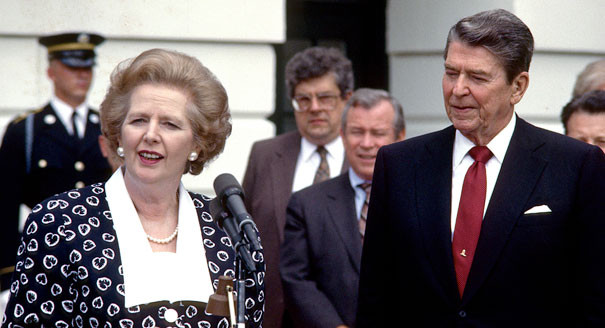
Candidate of Historical Sciences I.L. Larionova notes that modern conservatism unites three currents that differ little from one another: neoconservatism, traditionalist conservatism, and social conservatism10. By neoconservatism here is meant the policy of Ronald Reagan and Margaret Thatcher (in our classification, this is liberal conservatism), by traditionalist conservatism — what we will consider further as right-wing conservatism.
Hybrid movements are one of the greatest threats to democracy, as they can pass themselves off as democratic, but later transform into authoritarian ones to seize power. As a result of this, democratic movements may fail to recognize the threat from them in time.
Social conservatives. Like other conservatives, the ideology of this movement is mostly based on conservative values. The difference of social conservatism lies in the fact that it advocates for a welfare state.

Liberal conservatives. Unlike other conservatives, lib-cons can adopt some progressive values and can be much more democratic, but as a rule, they reduce the welfare state and advocate for the priority of private property in the economy, often carrying out privatizations and the maximum possible reductions in progressive taxation. Liberal conservatives do not necessarily have to be a hybrid movement; they can be a democratic movement as well (this often depends on their leadership — for example, before Donald Trump joined the leadership of the US Republican Party, it was a democratic liberal-conservative party, but Trump is a typical hybrid liberal-conservative politician). The Russian right-wing liberals we described are typical representatives of liberal conservatism.
Right-wing conservatives. The politics of these conservatives are most often accompanied by nationalist rhetoric and a strengthening of the role of religion, while in economic and political matters they are guided by considerations of populism.
Many conservative parties are members of the International Democrat Union or the Centrist Democrat International.
Authoritarianism
Authoritarian movements advocate for the establishment of a centralized power, a dictatorship, a one-party system, or an absolute monarchy; they do not share the generally accepted principles of democracy. This implies that if they obtain power, their organization will become the sole holder of power, removing all other parties from governance or restricting their participation as much as possible. That is, authoritarian movements express the interests primarily of their own members and supporters, rather than the majority of the country’s citizens (since citizens usually have different political views and preferences, which, moreover, change from time to time, as proven by election results in democratic countries). Thus, authoritarian movements express the interests of narrow elites (to be more precise — narrow groups seeking to become elites) and cannot be classified as left-wing. Also, because of their authoritarianism, they cannot create a long-lasting alliance among themselves (since in the end only one must remain), so without external help, they rarely have a chance to gather enough strength to overthrow an authoritarian regime.
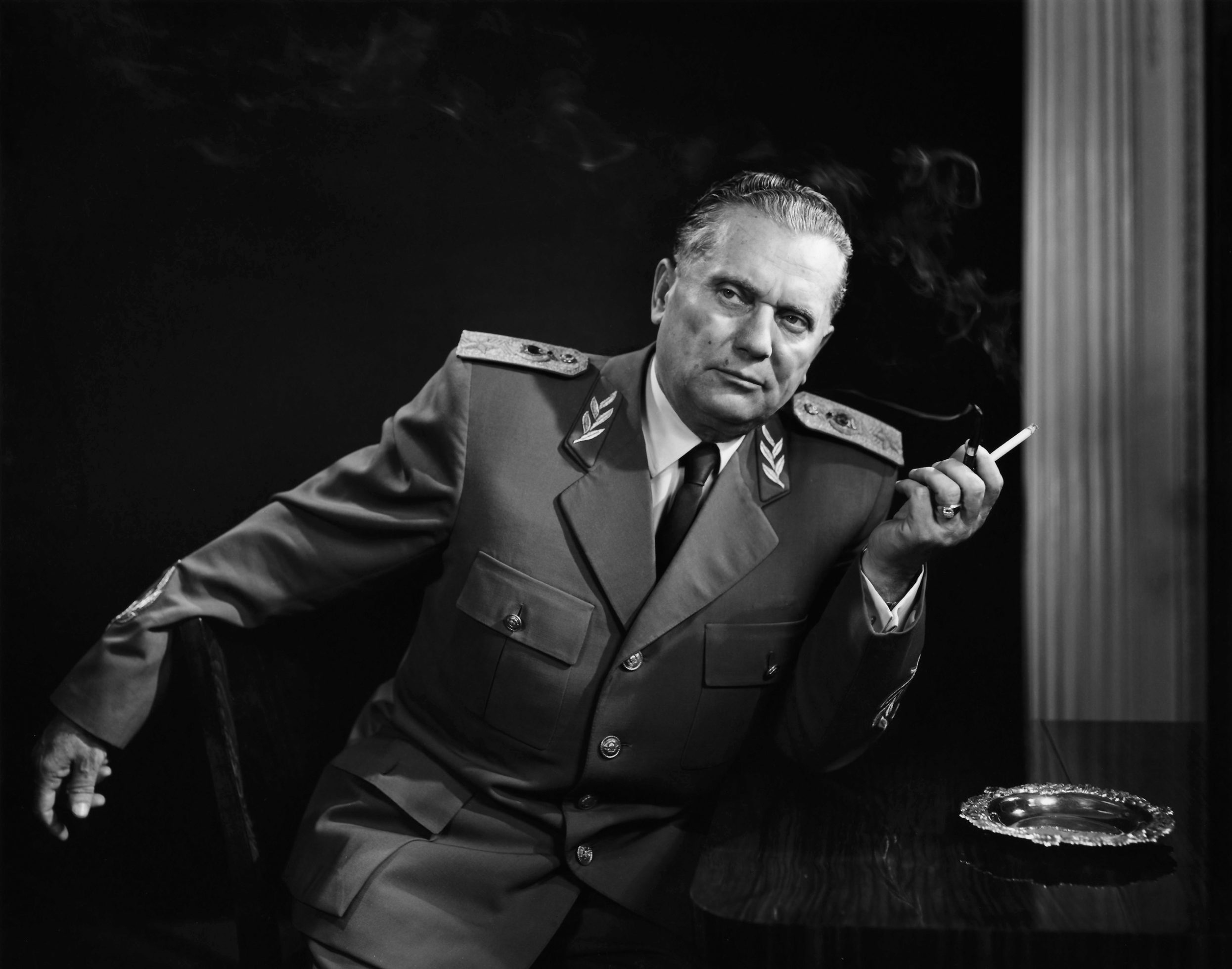
Titoists. As a political dictionary reports, Titoism is the “variety of communism associated with Josip Broz Tito… Tito’s socialism rejected centralized planning. He introduced a distinctive form of market economy based on worker self-management in industry and private enterprise in agriculture, and Yugoslavia became a genuinely federal state”11. In general, Titoism represents perhaps the mildest of the communist concepts — while maintaining authoritarianism and even a personal dictatorship, it implies economic freedoms and attempts to combine them with social justice in comparison with other communist movements. Market distribution is preserved, while forms of ownership are mixed. Today, Titoism as a political movement is not significantly represented, although interest in its “self-managing socialism” has always been high.
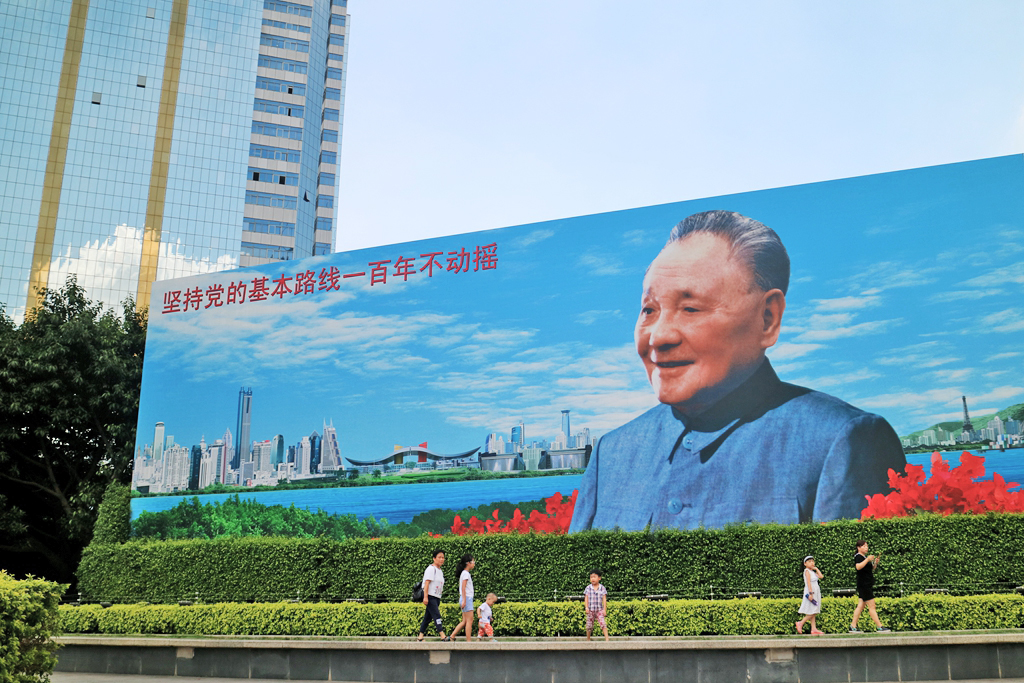
Market Marxists. Although no special term exists for this political movement, we still find it necessary to introduce one, because practice shows that this is the only form of Marxist movements in power that has managed to survive to this day and even achieve certain economic successes. Market Marxism is a political movement based on the ideas of Marxism, which presupposes the concentration of power in the hands of a communist party and the presence of a market sector in the economy. Typical examples of market Marxism are Soviet Russia during the NEP period and China starting from the era of Deng Xiaoping. At the same time, market Marxists share a considerable portion of progressive values. This form of Marxism has shown that it is capable of successfully carrying out industrialization, achieving economic growth, and raising the standard of living; however, like any authoritarian system, it has also shown its political vulnerability, as occurred during Joseph Stalin’s seizure of power — due to the absence of democracy, market Marxism is doomed to remain under the threat of transformation into a terroristic dictatorship. It is also incapable of ensuring a high level of civil liberties and human rights. In addition to all this, it is not yet clear what the limits of economic growth are under this form of socio-political structure — for example, the well-known economist Daron Acemoglu considers China’s economic growth a typical example of growth under extractive institutions, and notes that “even if an extractive growth is based on a significant degree of state centralization, it is not sustainable”12. Market Marxists differ from Titoists in that they do not possess a propensity for supporting worker self-management.
Trotskyists. According to the GRE, Trotskyism is a “variety of Marxism, an international radical left ideological and political current based on the ideas of L.D. Trotsky… Its core proposition is the concept of permanent (uninterrupted) socialist revolution. Trotskyism proceeds from the recognition of the objective readiness of the world economy as a whole for a socialist revolution, without which ‘the entire culture of mankind is threatened with catastrophe.’ One of the main ideas is the impossibility of building socialism in one separate country in conditions of increasing interdependence among countries”13. In fact, Trotskyism represents orthodox Marxism that implies the necessity of a world revolution and the abolition of private property. Trotskyists criticize the Stalinist USSR, considering it a degenerated bureaucratic state. In fact, Trotskyism differs from market Marxism only in its orientation toward world revolution and demands for the implementation of some democratic instruments (rotation of power), but sometimes Trotskyists do not share the principles of the NEP policy and demand immediate nationalization or socialization of property. Trotskyist organizations, as a rule, are members of the Reunified Fourth International, International Socialist Alternative, or the International Committee of the Fourth International.

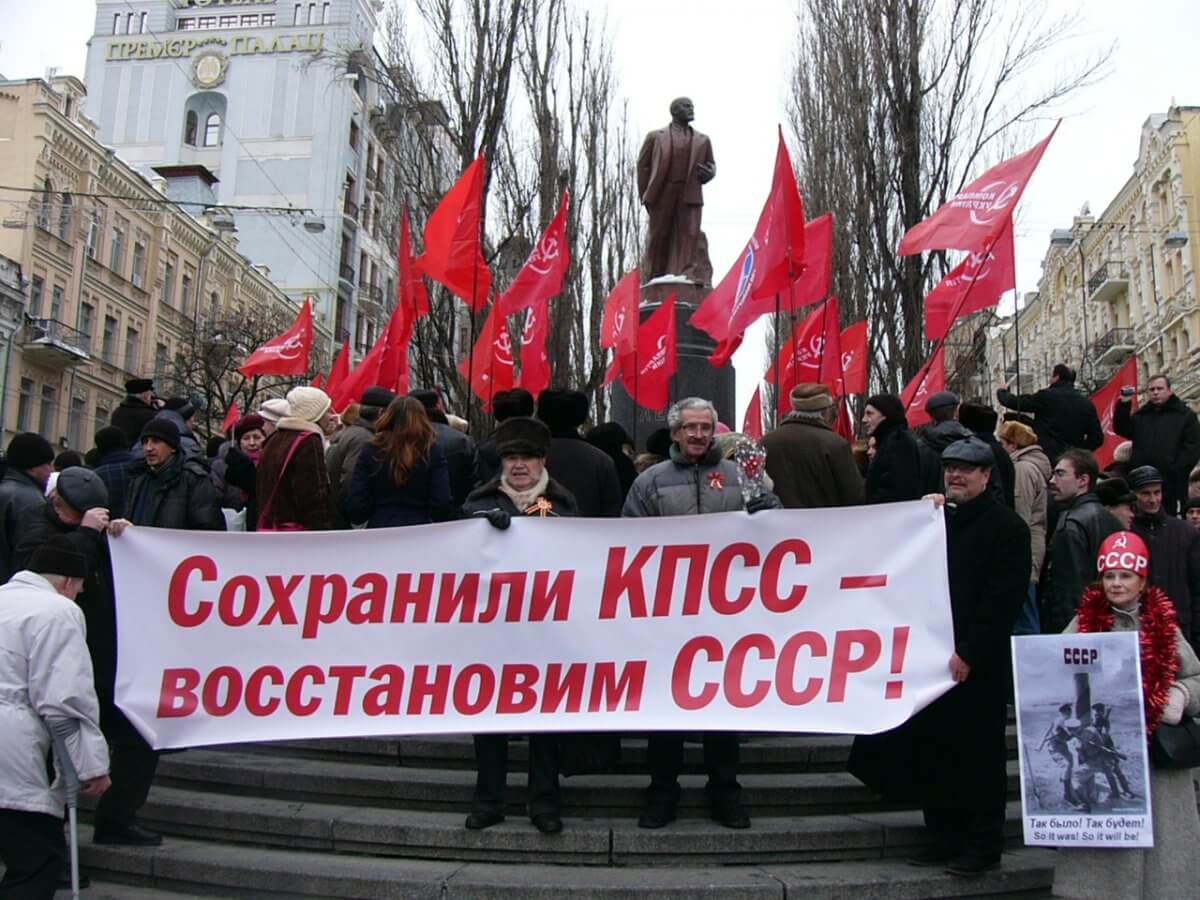
Soviet patriots. By this term we mean people who feel nostalgic for the USSR, or sympathize with the system that was established under Nikita Khrushchev/Leonid Brezhnev. This system is also known as “real socialism” or “developed socialism”. Real socialism is a type of socialist society built in the Soviet Union and other countries that were members of the socialist commonwealth: Bulgaria, Hungary, East Germany, Vietnam, Cuba, Mongolia, Poland, Romania, Czechoslovakia14. It implies state ownership of the means of production and a planned economy, a one-party dictatorship, as well as the adoption of mostly conservative values. Soviet patriotism differs from Stalinism by a noticeably lower propensity for terroristic methods, as well as the optional adoption of Marxism as a foundation — for Soviet patriotism, the ultimate goal is not a communist society, but simply the return of the system that existed in the USSR.
Soviet patriots, for the most part, are a local phenomenon relevant to Russia. We have included it in our list because the main language of “Logic of Progress” is Russian. Many other local ideologies, such as Peronism or Kemalism, are not included in this article.
Fundamentalists. Originally, fundamentalism is a type of conservative religious movement characterized by the advocacy of strict conformity to sacred texts15. However, with the emergence of Islamic Republics and the publication of Ayatollah Khomeini’s work “Islamic Government”, the term moved into the political sphere. From a political point of view, fundamentalism is a movement for the establishment of a theocratic or near-theocratic state system in which religion plays a major role in the state. Usually, fundamentalist movements are close to totalitarian in their practices. On an international scale, fundamentalists are represented by an organization such as the Muslim Brotherhood.

Stalinists. On the whole, we examined what Stalinism is in great detail in a separate article. Stalinism presupposes a one-party dictatorship, a planned economy, state ownership of the means of production, terroristic methods of governance, and (most often) a conservative value system. We prefer to include Maoism and Hoxhaism here as well, viewing them as variations of Stalinism. The Stalinists themselves prefer to call themselves Marxist-Leninists, and sometimes simply prefer to hide under the names “Marxists” or “Communists”, but, as we will examine further, these are block designations that include a wide spectrum of political movements. The role of the International for Stalinists and Soviet patriots today is fulfilled by the International Meeting of Communist and Workers’ Parties.
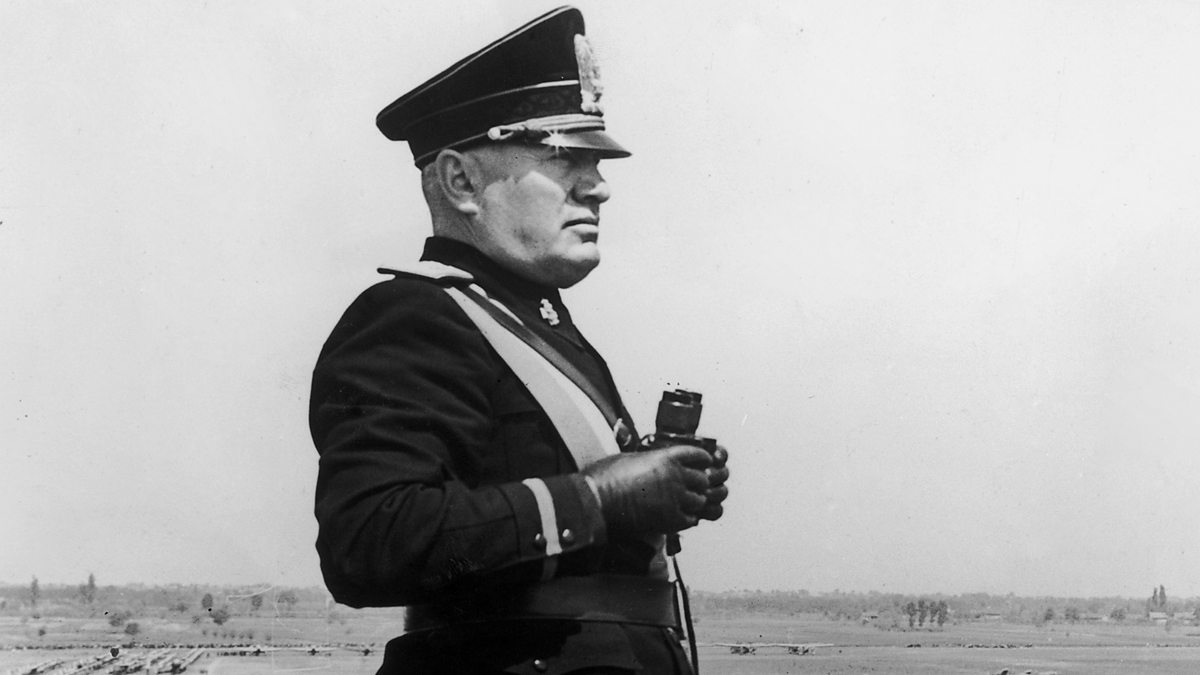
Fascists. By the definition of Dictionary.com, fascism is “a governmental system led by a dictator having complete power, forcibly suppressing opposition and criticism, regimenting all industry, commerce, etc., and emphasizing an aggressive nationalism and often racism”16. A similar definition is given by the Cambridge University dictionary: “a political system based on a very powerful leader, state control, and being extremely proud of country and race, and in which political opposition is not allowed”17. Fascism differs from Stalinism by its independence from Marx’s works, the absence of a planned economy, and a more conservative value system. In connection with the gradual departure in the DPRK from a planned economy and Marxism, the Juche ideology can also be included here.
Absolute monarchists. Absolutism is characterized by the ultimate concentration of power in the hands of the monarch18, and this power is most often inherited. Accordingly, supporters of an absolute monarchy advocate for one of the most anti-democratic systems imaginable. The fate of the entire country in this system heavily depends on what kind of monarch it gets. Moreover, he may advocate for democratization and the dismantling of this very absolute monarchy, or he may create a repressive militarized regime.
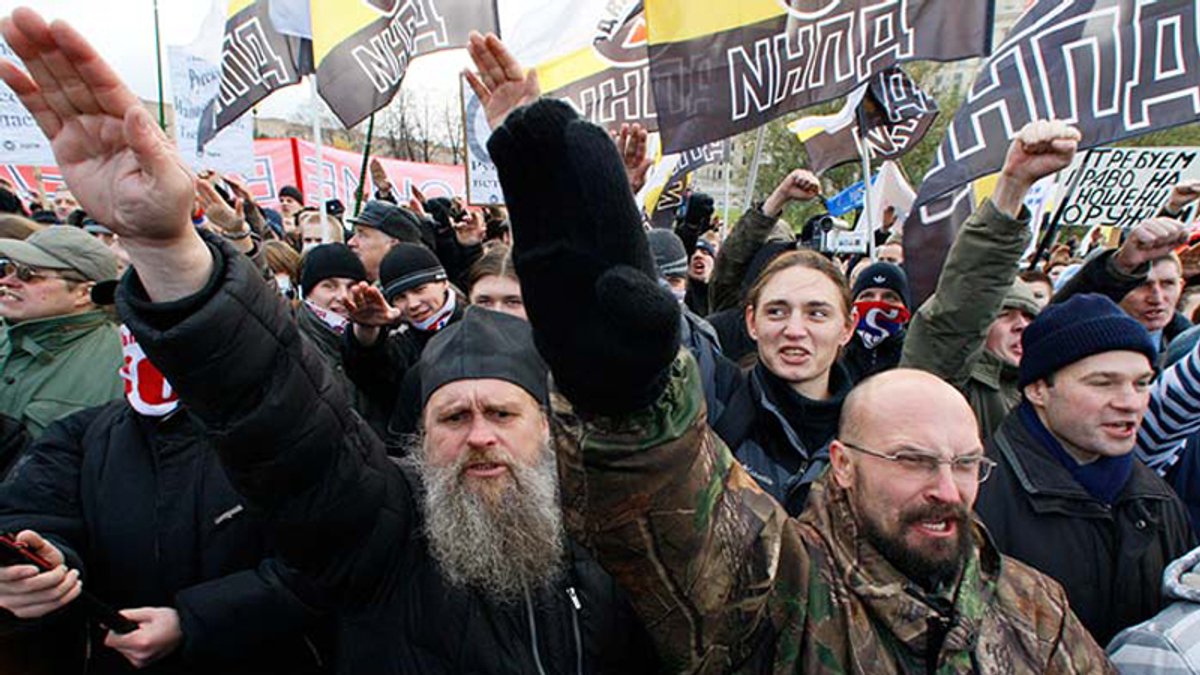
National Socialists. The most right-wing of all possible movements has no clear definition; we can only say that it is a totalitarian, Führerist movement that places the highest value on the nation/race and its leader, and advocates for the destruction of their enemies, including through terroristic and military methods. It is characterized by the highest level of intolerance. It differs from fascism by a higher level of repressive measures and mandatory racism.
Anarchy
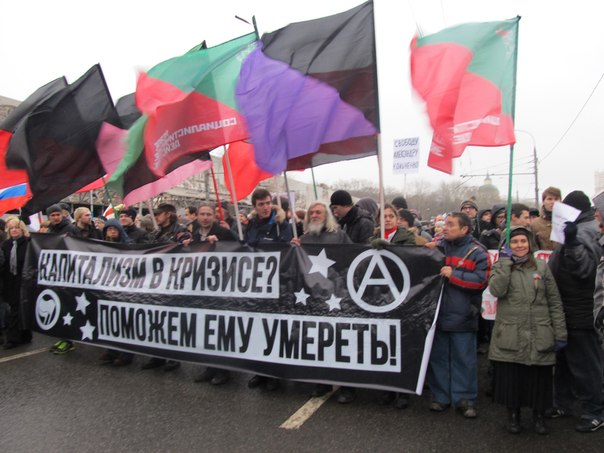
Anarchic movements presuppose the abolition of the state; why this idea is detached from reality, and its successful implementation in practice is highly unrealistic, we explained here. Despite the fact that originally anarchism was one of the most influential ideologies of the First International, by the last third of the 19th century it began to lose its influence as a result of the wide dissemination of other liberation ideas and movements (primarily social democracy)19. This is largely due to the problems that anarchism is unable to resolve. Today, anarchic movements are relatively few in number. Some of them participate in strengthening the trade union movement, the movement in support of environmental protection, and other organizations useful for a democratic society, while some perform a function, destructive to a democratic society, of denying the democratic state.
Anarcho-communists. Anarcho-communism is based on the ideas of Peter Kropotkin, who believed that the social revolution would lead simultaneously to anarchy (a society without a state) and communism (a society without capital and property)20. In his concept of anarcho-communism, Kropotkin imagined a “society, liberated from the yoke of capital and the state”, in the form of a federation of self-governing “communist associations for production, exchange, and consumption”, a stateless union of “free communes” — territorial (rural and urban), professional, and many other corporate associations and groups21. This also includes anarcho-syndicalism, because it represents a tactic rather than a goal22. Anarcho-syndicalism advocates for the organization of the working class into trade unions (in French — syndicates), which during the revolution take into their own hands production and the distribution of produced goods, replacing the state with organs of workers’ self-management23. Anarcho-communist organizations are usually members of the International of Anarchist Federations or the International Workers’ Association (the same applies to mutualists).
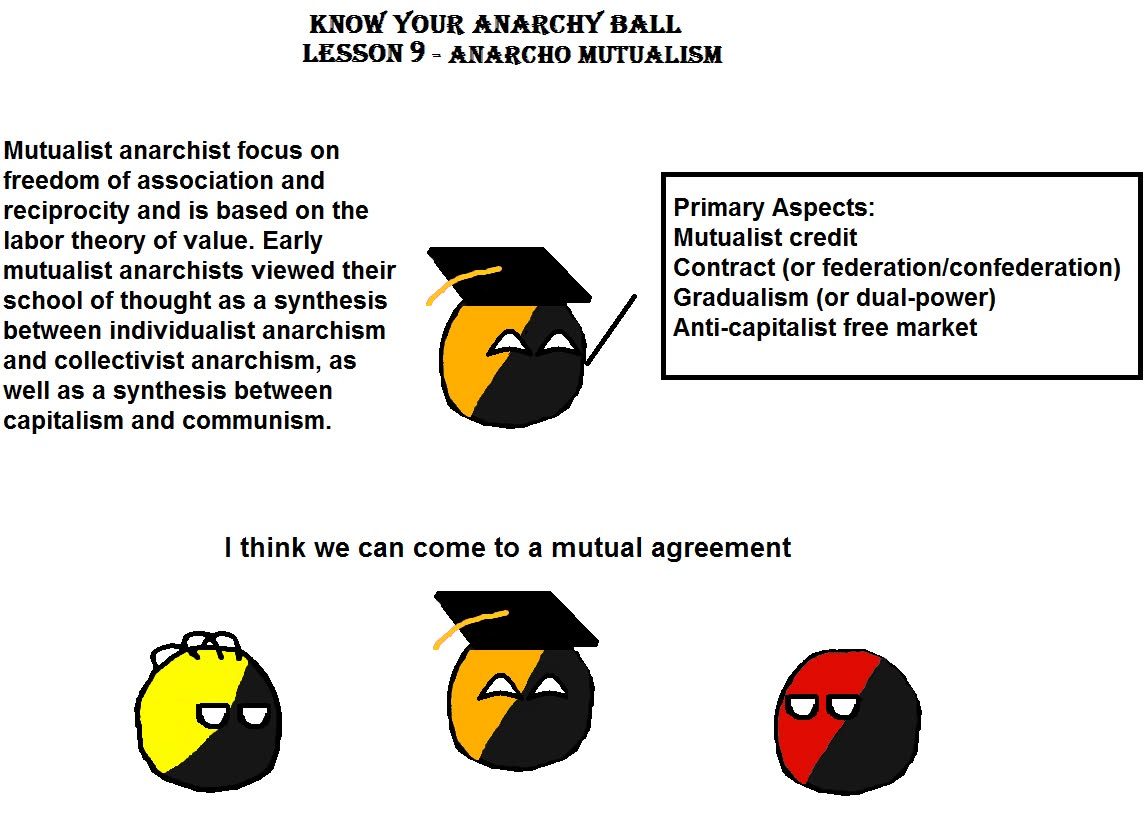
Mutualists. According to the theorist of this ideology, Clarence Lee Swartz, mutualism is “a social system based on equal liberty, reciprocity, and the sovereignty of the individual over himself, his affairs and the products of his labor, realized through individual initiative, free contract, cooperation, competition, and voluntary association for defense against trespass and for the protection of life, liberty and property of its non-aggressive members”24. To put it more simply, it is based on the production of goods, but with the replacement of wage labor by self-employed entrepreneurial activity and cooperatives25. It differs from anarcho-communism in that a market economy operates under it, and, accordingly, monetary circulation rather than direct barter. Sometimes this ideology is not entirely correctly called syndicalism.
Anarcho-capitalists. Anarcho-capitalism represents an individualistic political-economic theory that advocates for the elimination of the state in favor of individual independence within the framework of free market relations that exclude the possibility of fraud and coercion26. The formation of this concept, as well as the term itself, belong to the American economist and representative of the Austrian School of economics, Murray Rothbard, according to whom “capitalism is the fullest expression of anarchism, and anarchism is the fullest expression of capitalism”27. In short, anarcho-capitalists are supporters of the abolition of the state, but unlike left-wing anarchists, they are not against wage labor and private property.
Anarcho-primitivists. Anarcho-primitivism is a movement that combines the political framework of anarchism with the philosophy of primitivism28. They advocate for a reduction in the technological momentum of civilization in order to ultimately completely abandon its mechanisms, which includes even the abandonment of agriculture in favor of a hunter-gatherer lifestyle and a possible reduction of the population to approximately 100 million people, so that the species can return to living in the natural rhythms of the planet.

Table
The above movements can be represented similarly to Mendeleev’s periodic table, and our table will have 4 rows of elements distributed by the political system and arranged from left to right, from the leftmost to the rightmost.

Legend:
- Ds – democratic socialism;
- Sd – social democracy;
- Sl – social liberalism;
- Gr – the greens;
- ChrD – Christian democrats;
- Nl – neoliberals;
- Cl – classical liberals;
- Pm – parliamentary monarchists;
- Nd – national democrats;
- Scon – social conservatives;
- Lcon – liberal conservatives;
- Pcon – right-wing conservatives;
- Ti – Titoists;
- Rm – market Marxists;
- Mt – Trotskyists;
- SovP – Soviet patriots;
- F- fundamentalists;
- St – Stalinists;
- Fa – fascists;
- Am – absolute monarchists;
- Ns – National Socialists;
- AnCom – anarcho-communists;
- Mut – mutualists;
- AnCap – anarcho-capitalists;
- AnPrim – anarcho-primitivists.
Block designations
Sometimes a single name implies several of the above movements at once. For example, the name “democrats” implies the entire democratic row of political elements, while the name “anarchists” implies the entire anarchic row of political elements. Besides these obvious “block” designations, we also have some others, the contents of which should be disclosed separately.
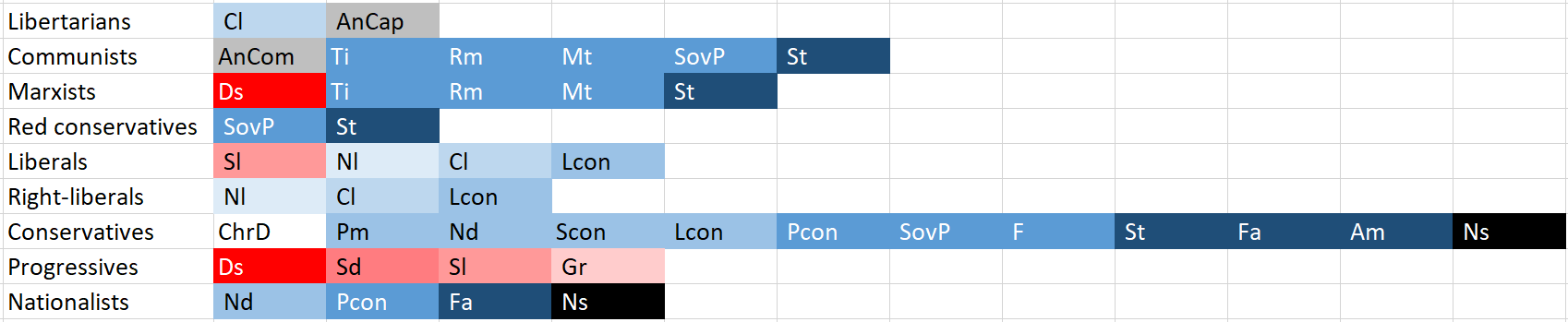
Libertarians. Libertarianism is a political philosophy that takes individual liberty to be the primary political value29. The website of the Libertarian Party of Russia states that “under the general term ‘libertarianism,’ two currents combine and coexist: anarcho-capitalism and minarchism”30. Previously, we classified minarchism under classical liberals, and Britannica even classifies libertarians as a whole under class-libs; however, we noted above that class-libs differ from anarcho-capitalists. The term “libertarianism” is used to unite these two ideologies. Libertarian parties usually belong to the International Alliance of Libertarian Parties.

Communists. In the article about economic systems and formations mentioned in the first half of the text, we provided a definition of communism and noted that it is quite broad. The Cambridge Dictionary writes that a communist is someone who believes in communism or supports its ideas, or a member of a communist party31. Under this designation, it is customary to understand the sum of the following movements: Titoists, market Marxists, Trotskyists, Soviet patriots, Stalinists, and anarcho-communists.
Marxists. According to the Cambridge Dictionary, a Marxist is someone who supports the social, political, and economic theories based on the writings of Karl Marx32. To be a member of a communist party or to believe in communism, one does not necessarily have to be familiar with Marx’s concepts. A communist might not recognize Marx at all, but still belong to a communist party or believe in communism. Therefore, Marxists differ from communists in that their views are based specifically on Marxist theory. For the most part, this includes democratic socialists, Titoists, market Marxists, Trotskyists, and Stalinists. All of them advocate for the abolition of private property (a central tenet of Marxist ideology). Some anarchists also advocate for the abolition of private property, but Marxists differ from them because they do not support the immediate dismantling of the state.

Red conservatives. Not long ago, the term “red-cons” (kraskony) began to be used, which means communists who largely share conservative values. Usually, this term implies the sum of Soviet patriots and Stalinists.
Liberals. In Russia, the term “liberalism” is one of the most difficult to interpret. As Doctor of Philosophical Sciences and former president of the Russian Political Science Association Olga Malinova notes, liberalism is “a liberal theory, a certain system of philosophical and political ideas that took shape in the West in the late 18th – early 19th centuries and relies on an entire tradition in European social thought, represented by the names of J. Locke, C. Montesquieu, A. Smith, I. Kant, W. Humboldt, J. Madison, J. Bentham, B. Constant, J.S. Mill, and others. However, historically, liberal theory is represented by a multitude of forms that do not coincide with one another and, in certain aspects, are even mutually exclusive. The concepts that form it justified different practices: there is the ‘classical’ liberalism of A. Smith, J. Bentham, and B. Constant, which professes the laissez-faire principle proposed by the physiocrats and the idea of the ‘minimal state’ (in the second half of the 20th century, this type of liberal theory was developed by the libertarians of the Chicago school and their followers) — and there is the ‘new’ liberalism of T.H. Green, L.T. Hobhouse, J. Dewey, J. Rawls, R. Dworkin, which defends the idea of positive freedom and equality of opportunity, and puts forward the concept of the ‘welfare state’… Secondly, the word ‘liberalism’ denotes a certain part of the political spectrum represented by adherents of gradual, moderate, and strictly legal changes”33. In accordance with this definition, the “liberals” group includes social liberals, neoliberals, classical liberals, and liberal conservatives. In Russia, however, due to the failure of right-wing liberal policies, the term “liberal” itself has become a label that often implies the entire spectrum of democratic movements, as well as liberal conservatives and anarcho-capitalists. Nevertheless, it is more correct to use the term “liberals” to mean specifically the sum of the four political movements we specified above.
Right-liberals. Another not very common designation, which differs from the “liberals” group only in that social liberals are excluded from it; thus, it consists of neoliberals, class-libs, and liberal conservatives.
Conservatives. Our article about conservative values provides an extensive list of the values upon which conservatives build their politics. At the same time, a conservative movement does not have to share all of these values — it only needs to share most of them or evaluate some of these values as a priority. This results in a rather large list, which can include Christian democrats, social conservatives, liberal conservatives, parliamentary monarchists, national democrats, right-wing conservatives, Soviet patriots, fundamentalists, Stalinists, fascists, absolute monarchists, and national socialists.
The sum of authoritarian conservatives, who are also united by a desire for world dominance, can be designated by the term “derzhavniki” (statists/imperialists); however, this is a separate issue that we considered in more detail here.

Progressives. We described the list of progressive values in a separate article, and, accordingly, progressives should include those movements that share most of these values or evaluate some of them as a priority. These are democratic socialists, social democrats, social liberals, and the Greens. Also, the combination of these movements is sometimes called “left-liberals”, though this is more of a label, as it is not a correct designation — as we examined above, democratic socialists and social democrats are not usually classified as liberals.
Nationalists. Nationalism is a political ideology and practice based on the idea of the nation and its interests as the supreme values34. As Britannica notes, nationalism is a ideology based on the premise that the individual’s loyalty and devotion to the nation-state surpass other individual or group interests35. Usually, we include national democrats, right-wing conservatives, fascists, and national socialists here. At the same time, from the point of view of national democrats, democracy itself is a form of expressing the interests of the nation.

Conclusion
There is a significant number of political movements and ideologies, which are divided primarily by the political system they accept (4 groups in total), and further by their value system, preferences in forms of ownership, forms of distribution of goods and services, and core priorities. The names of some ideologies are block designations that encompass several movements and ideologies. This article will also be supplemented and edited in the future.
- Democratic Socialism // Encyclopedia of World History (w.histrf.ru). [Electronic resource]. URL: https://w.histrf.ru/articles/article/show/diemokrati_chieskii_sotsiali_zm (Accessed: 03.01.2021).
- B. Kapustin. On the question of social liberalism. On the question of social liberalism (interview conducted by Boris Mezhuev) // Logos Journal. 2004. No. 6 (45). – p. 72
- V.V. Damye, D.V. Efremenko. The Greens // Great Russian Encyclopedia. Electronic version [Electronic resource]. URL: https://bigenc.ru/world_history/text/1991806 (Accessed: 03.01.2021).
- André Munro. Christian democracy // Encyclopaedia Britannica (www.britannica.com). [Electronic resource]. URL: https://www.britannica.com/topic/Christian-democracy (Accessed: 03.01.2021).
- G.D. Gloveli. Neoliberalism // Great Russian Encyclopedia. Electronic version [Electronic resource]. URL: https://bigenc.ru/philosophy/text/2259800 (Accessed: 03.01.2021).
- Nikolay Baranov. Lecture 2. Liberalism and Neoliberalism // Personal website of Nikolay Baranov (nicbar.ru). June 19, 2016. [Electronic resource]. URL: https://nicbar.ru/politology/study/kurs-politicheskie-ideologii/158-lektsiya-2-liberalizm-i-neoliberalizm (Accessed: 03.01.2021).
- Ibid.
- V.E. Chirkin. Monarchy // Great Russian Encyclopedia. Electronic version [Electronic resource]. URL: https://bigenc.ru/law/text/2226075 (Accessed: 03.01.2021).
- Mikhail Karpov. “The Soviet prevails over the ethnic”. Political scientists on the prospects of the national-democratic movement in Russia // Lenta.ru (lenta.ru). July 9, 2015, 08:56. [Electronic resource]. URL: https://lenta.ru/articles/2015/07/09/nazdem/ (Accessed: 03.01.2021).
- Political Ideologies of the 19th-20th Centuries. Liberalism. Conservatism. Socialism: Methodological recommendations for the courses “Political Science”, “Global Conflicts of Modern and Contemporary Times”, “Domestic History” / Moscow State Institute of Electronics and Mathematics; Compiled by Associate Professor, Candidate of Historical Sciences Larionova I.L. – 27 p. – M., 2004. – p. 18.
- D. Underhill, S. Barrett, P. Burnell, P. Burnham, et al. General editing by Doctor of Economics I.M. Osadchaya. Politics. Oxford Companion Dictionary. – 768 p. – M.: “INFRA-M”, “Ves Mir” Publishing House, 2001.
- Daron Acemoglu, James A. Robinson. Why Nations Fail: The Origins of Power, Prosperity, and Poverty / Daron Acemoglu, James A. Robinson. – 575 p. – Moscow: AST Publishing House, 2015. – p. 110.
- A.V. Gusev. Trotskyism // Great Russian Encyclopedia. Electronic version [Electronic resource]. URL: https://bigenc.ru/domestic_history/text/4205435 (Accessed: 03.01.2021).
- D.Z. Markovic. General Sociology: Textbook. 3rd revised and expanded ed. / Translated from Serbian. – 432 p. – M.: Humanitarian Publishing Center VLADOS, 1998. – p. 410.
- Henry Munson. Fundamentalism // Encyclopaedia Britannica (www.britannica.com). [Electronic resource]. URL: https://www.britannica.com/topic/fundamentalism (Accessed: 03.01.2021).
- Fascism // Dictionary.com (www.dictionary.com). [Electronic resource]. URL: https://www.dictionary.com/browse/fascism (accessed: 25.01.2020).
- Fascism // Cambridge Dictionary (dictionary.cambridge.org). [Electronic resource]. URL: https://dictionary.cambridge.org/dictionary/english/fascism (accessed: 25.01.2020).
- N.E. Koposov. Absolutism // Great Russian Encyclopedia. Electronic version [Electronic resource]. URL: https://bigenc.ru/world_history/text/661497 (Accessed: 03.01.2021).
- A.V. Shubin. Anarchism // Great Russian Encyclopedia. Electronic version [Electronic resource]. URL: https://bigenc.ru/domestic_history/text/1820647 (Accessed: 03.01.2021).
- Ibid.
- S.N. Zemlyanoy. Communism // Great Russian Encyclopedia. Electronic version [Electronic resource]. URL: https://bigenc.ru/philosophy/text/2085586 (Accessed: 03.01.2021).
- Economic theory of anarchism // Autonomous Action (avtonom.org). June 12, 2013, 12:56. [Electronic resource]. URL: https://avtonom.org/pages/ekonomicheskaya-teoriya-anarhizma (Accessed: 03.01.2021).
- A.V. Shubin. Anarcho-syndicalism // Great Russian Encyclopedia. Electronic version [Electronic resource]. URL: https://bigenc.ru/world_history/text/1820659 (Accessed: 03.01.2021).
- Clarence Lee Swartz. What is Mutualism? – 1927.
- Economic theory of anarchism // Autonomous Action (avtonom.org). June 12, 2013, 12:56. [Electronic resource]. URL: https://avtonom.org/pages/ekonomicheskaya-teoriya-anarhizma (Accessed: 03.01.2021).
- D.B. Polyakov. Anarcho-capitalism. Statelessness and the free market economy / D.B. Polyakov // Scientific Notes of the Transbaikal State University. – Chita. – 2015. – No. 4 (63). – p. 33–37.
- “Exclusive Interview With Murray Rothbard”. The New Banner: A Fortnightly Libertarian Journal. 25 February 1972 [Electronic resource] // Mises Institute. Austrian economics, freedom, and peace. Access mode: http://mises.org/library/new-banner-interview-murray-n-rothbard-0 (accessed: 22.02.2015).
- Taylor Loy. Anarcho-primitivism // Encyclopaedia Britannica (www.britannica.com). [Electronic resource]. URL: https://www.britannica.com/topic/anarcho-primitivism (Accessed: 03.01.2021).
- David Boaz. Libertarianism // Encyclopaedia Britannica (www.britannica.com). [Electronic resource]. URL: https://www.britannica.com/topic/libertarianism-politics (Accessed: 03.01.2021).
- Libertarianism // Libertarian Party (libertarian-party.ru). [Electronic resource]. URL: https://libertarian-party.ru/libertarianism (Accessed: 03.01.2021).
- Communist // Cambridge Dictionary (dictionary.cambridge.org). [Electronic resource]. URL: https://dictionary.cambridge.org/dictionary/english/communist (Accessed: 03.01.2021).
- Marxist // Cambridge Dictionary (dictionary.cambridge.org). [Electronic resource]. URL: https://dictionary.cambridge.org/dictionary/english/marxist (Accessed: 03.01.2021).
- O.Y. Malinova. Liberalism in the Political Spectrum of Russia: Illustrated by the Case of the “Democratic Choice of Russia” Party and the “Yabloko” Public Association – 207 p. – Monuments of Historical Thought, 1998
- V.A. Tishkov. Nationalism // Great Russian Encyclopedia. Electronic version [Electronic resource]. URL: https://bigenc.ru/ethnology/text/2252782 (Accessed: 03.01.2021).
- Hans Kohn. Nationalism // Encyclopaedia Britannica (www.britannica.com). [Electronic resource]. URL: https://www.britannica.com/topic/nationalism (Accessed: 03.01.2021).