Political structure of Switzerland
In a series of articles on the political structure of various countries, Logic of Progress will select several of the most interesting states to study. The information obtained will be used to develop a system of government authorities that will best suit Russia.
Switzerland is one of the democratic countries whose structure arouses the curiosity of researchers. In the democracy ranking by The Economist, the country ranks twelfth in the world for 20201, and is often associated in public opinion with institutions of direct democracy (however, it remains a parliamentary republic). Switzerland is also characterized by high development indicators, sharing second place in the world with Ireland in the Human Development Index2. A significant role in achieving such high indicators is played by the political structure of the country, which has been in place for a very long time (Switzerland is one of the oldest parliamentary democracies in the world — the transition to this form of government was carried out in 18483 and has not changed since then). Let’s see what this structure is.
Legislative body
In Switzerland, the federal parliament is the Federal Assembly, which consists of two chambers.
The first chamber is the Council of States (a canton is a region in Switzerland). This upper chamber (often referred to as the senate) of the Federal Assembly consists of 46 members, two from each of the twenty cantons and one from each of the half-cantons, regardless of their population size (it should be noted that this is the only difference between them).

At the same time, due to regional specificities, according to the Constitution, each canton chooses the election procedure for its representative itself. It is only specified that these procedures must be democratic. Because of this, there are unique features. Thus, the canton of Jura uses a proportional electoral system, meaning people vote for lists of party candidates. In the half-canton of Appenzell Innerrhoden, the representative is elected directly by an assembly of the people in the central square of its capital, Appenzell. This is because the canton itself is very small in both land area and population (16,128 people as of December 20194). In the remaining cantons, citizens elect the candidates themselves (majority system).
The second chamber is the National Council: this is the large chamber with 200 deputies, which is fixed in the Constitution (specifically in Article 149.1).
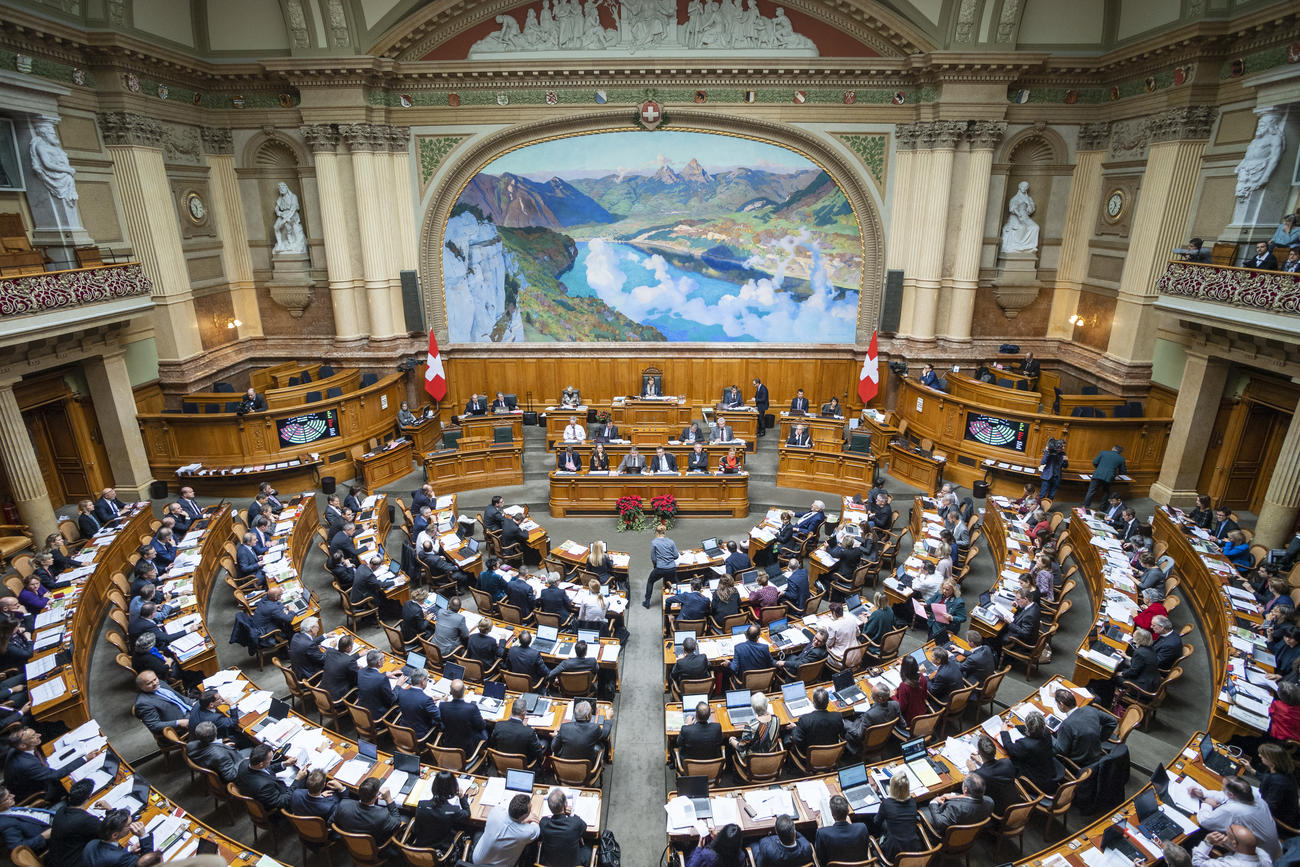
It is elected purely under a proportional system. At the same time, the number of deputies in this chamber depends on the population size in individual cantons. The exception consists of 2 small cantons and half-cantons where, due to the population size, only 1 deputy is elected.
Why did we only specify the manner in which these chambers are elected? Because these chambers are equal, meaning they both have equal powers, so calling them the upper and lower chambers is perhaps not entirely correct; it would be more accurate to call them the small and large chambers due to the difference in the number of deputies.
Also interesting is that the Swiss parliament is organized under a militia system, meaning most of its members have a primary profession and simultaneously perform the duties of parliamentarians on a part-time basis. Deputies dedicate an average of 60% of their time to parliamentary work5. This was done so that parliament would not turn into an inaccessible institution closed off from society, to prevent an isolated political “elite” from emerging in society, and to ensure that the federal center by no means receives “extra” power that would allow it to infringe upon the sovereignty of the cantons. However, the “militia status” of the Swiss parliament sometimes fails to provide parliamentarians with a sufficient level of competence in particularly complex areas. In this case, various tools specially designed for this purpose are used6:
“Motion”. A member of parliament or a group of parliamentarians instructs the government to draft a certain law by a certain time or to take certain measures in a specific problem area. A motion must pass both chambers of parliament and be approved there in order to become a binding instruction for the government. A motion is one of the most important tools of parliamentary activity.
“Postulat”. This tool is similar to a motion but is not as binding on the government. Its purpose is to task the government only to “examine” whether the need for legislative intervention is ripening in a particular area.
“Interpellation”. This tool is an appeal to the government demanding a report on the work it has done. The government’s response usually follows in written form at the next session of parliament.
“Fragestunde” (Question Time). Twice per session, making a total of eight times a year, members of the government orally answer parliamentarians’ questions for 90 minutes. Questions are submitted to the government in written form on the eve of the Fragestunde.
Powers and functions of the parliament (each of the chambers individually):
- Legislative (Article 164). In Switzerland, the federal authority retains in its exclusive legislative competence the spheres of foreign policy and defense, the financial system, civil and criminal law, patent law, transport, the postal service, social insurance, and nuclear energy7;
- International (Article 166). It participates in shaping foreign policy and oversees the maintenance of relations with foreign countries. It approves international treaties; exceptions are treaties whose conclusion falls within the competence of the Federal Council on the basis of a law or an international treaty;
- It decides on Confederation expenditure (meaning the Swiss Confederation as a state), adopts the draft budget, and approves the state report on its execution (Article 167). It exercises supreme supervision over the Federal Council and the federal administration, the federal courts, and other bodies entrusted with tasks by the Confederation;
- Oversight: it exercises supreme supervision over the Federal Council and the federal administration, the federal courts, and other bodies entrusted with tasks by the Confederation;
- It ensures the maintenance of relations between the Confederation and the cantons, guarantees the cantonal constitutions, and approves treaties made by cantons between themselves or with foreign countries, provided that the Federal Council or a canton raises an objection.
There are also specific powers of the joint United Federal Assembly (that is, the two chambers together):
- Conducting elections (Article 157, 1.a). This refers to the election of the Federal Council, the election of the Federal Chancellor, federal judges of various federal courts, and the General (this rank is conferred by the parliament in wartime, and he acts as the commander-in-chief of the armed forces), who are elected according to Article 168;
- Resolving conflicts of competence between the supreme federal authorities (Article 157, 1.b);
- Granting pardons (Article 157, 1.c);
- The Federal Assembly also convenes on special occasions and to hear declarations by the Federal Council (Article 157, 2).
What other powers and tasks does the parliament perform? According to the article, the Federal Assembly has the following tasks (Article 173):
a) It takes measures to safeguard external security, the independence and neutrality of Switzerland;
b) It takes measures to safeguard internal security;
c) Where exceptional circumstances so require, it may issue ordinances or simple federal decrees to fulfill the tasks in letters a and b;
d) It orders the mobilization of troops for active service, and for this purpose places the Army or parts of it on alert;
e) It takes measures to implement federal law;
f) It decides on the validity of popular initiatives that have been submitted;
g) It participates in major planning of state activities;
h) It decides on individual acts, where a federal act expressly so provides;
i) It decides on conflicts of competence between the supreme federal authorities;
k) It grants pardons and decides on amnesties.
The parliament is elected in full once every 4 years. One can vote and be elected to it from the age of 188.
A collective head of state
In Switzerland, the head of state is the Federal Council, which is, in addition to this, also the government of the country9. The Federal Council itself consists of the heads of the following departments (this is how ministries are called in Switzerland):
- Federal Department of Finance;
- Federal Department of the Environment, Transport, Energy and Communications;
- Federal Department of Home Affairs;
- Federal Department of Economic Affairs, Education and Research;
- Federal Department of Foreign Affairs;
- Federal Department of Defence, Civil Protection and Sport;
- Federal Department of Justice and Police.
Each head manages their own department, but executive decisions are made collectively (at the same time, the results of voting among the Council members are kept secret for 50 years). This is expressed, among other things, by the fact that they are forbidden to speak against each other in public, and they must defend the government’s decisions, regardless of their own views, since by tradition, party affiliation is rejected in the Council.
The heads of departments are elected by the deputies of both chambers of the Swiss parliament, namely the Federal Assembly, for a term of 4 years, since after new elections to the parliament, the deputies re-elect the members of the Council. While the position of President exists, in fact, he represents a first among equals, and he does not possess any powers, other than being the representative of the country on the international stage.
The President is also elected by the Federal Assembly from among the members of the Federal Council for a term of 1 year, and after the end of the term, the person who held this position cannot immediately run for a second term. A vice-president is also elected, who, by long-standing agreement, becomes president the following year (the former president, however, cannot become vice-president after leaving office).

What powers does the Federal Council possess? Its members perform exclusively executive functions; this collective body is fully accountable to the parliament and is elected by the parliament. These functions are as follows:
- Executive (Article 180). The Federal Council determines the objectives and means of its government policy. It informs the public fully and in good time about its activities;
- Right of initiative (Article 181). The Federal Council submits drafts of its acts to the Federal Assembly;
- Lawmaking and implementation (Article 182). The Federal Council enacts legislative provisions in the form of an ordinance, provided it is authorized to do so by the Constitution or by law. It ensures the implementation of legislation, of decrees of the Federal Assembly, and of judgments of the federal judicial authorities;
- Financial (Article 183). The Federal Council draws up the financial plan, drafts the budget, and submits the state report on its execution. It ensures proper budgetary management;
- Relations with foreign countries (Article 184). The Council is responsible for foreign affairs, subject to the participation rights of the Federal Assembly; it represents Switzerland abroad. It signs treaties and ratifies them. It submits them to the Federal Assembly for approval. Where safeguarding the interests of the country so requires, the Council may issue ordinances and rulings. Ordinances must be limited in duration;
- External and internal security (Article 185). The Federal Council takes measures to safeguard external security, the independence and neutrality of Switzerland. It takes measures to safeguard internal security. It may, directly relying on this Article, issue ordinances and rulings in order to counter existing or imminently threatening serious disruptions to public order or internal or external security. Such ordinances must be limited in duration. In urgent cases, it may deploy troops. If it mobilizes more than 4,000 army personnel for active service, or if it is anticipated that their deployment will last for more than three weeks, the Federal Assembly must be convened without delay;
- Relations between the Confederation and the Cantons (Article 186). The Federal Council conducts the relations of the Confederation with the cantons and cooperates with them. It approves cantonal acts when the implementation of federal law so requires. It may raise objections against treaties made by cantons between themselves or with foreign countries. It ensures compliance with federal law, as well as cantonal constitutions and cantonal treaties, and takes the necessary measures.
The Federal Council also has the following tasks and powers (Article 187):
- It supervises the federal administration and other bodies entrusted with tasks by the Confederation;
- It regularly reports to the Federal Assembly on its conduct of business as well as on the situation of Switzerland;
- It makes appointments that do not fall within the competence of other authorities;
- It deals with appeals, where the law so provides (the law may also assign further tasks and powers to the Federal Council).
How does this body interact with the parliament? It is elected by the Assembly, yet the Assembly cannot dissolve it (and the Council is accountable to the Assembly), just as the Council cannot dissolve the parliament. Furthermore, the Council does not have the right to veto a law; instead, the collegial body can give a recommendation on the law, expressed in the form of a Dispatch10.
The Federal Council serves for 4 years, but a change of government can occur, as there are no term limits within the Council — it is the executive power of a collective, not of an individual and subordinates.
What is the difference between this model and a regular parliamentary one? They are, in principle, very similar, but the main difference lies in collegiality: this model abolishes the institution of the Presidency in the sense we are used to, and creates a collective body that will make decisions. In a parliamentary republic, the President has certain powers, in particular, he signs federal laws, and in many he is even elected, but this position is in fact very formal and in theory makes no sense at all in the form that it exists. Collegiality implies that decisions are made by several people: in practice, this proves to be effective, as several different opinions can help in shaping balanced decisions.
Problems may include slower decision-making and the possibility of conflicts, and while the former can negatively affect performance efficiency, the latter is rare due to the special method of formation, in which the Federal Council is always formed by several parties, regardless of the election results. On the whole, it can be said that the model with a collective head of state is very similar to the classic parliamentary model, but unlike that model, here the government is the President in the form of the Federal Council.
Regarding the question of forming the government: in Switzerland, the so-called “magic formula” applies, which was established in 1959: the top three parties in terms of electoral support (percentage of votes in federal elections) receive 2 seats each in the cabinet, and the fourth party receives 1 seat, or “2+2+2+1”11. This is called the “principle of concordance” (from the Latin concordia, which means agreement, harmony). This is necessary, firstly, so that government decisions have a chance of passing the parliamentary “filter”. Secondly, so that subsequently these decisions have a chance of passing the referendum “filter”. Let us recall that any law, even one passed by parliament, can be put to a nationwide referendum. And then it may receive the approval of the popular majority. Or it may not. This is also necessary to maintain peace and tranquility in a country that is quite diverse in its national and political system.
The “formula” existed in its unaltered composition (two seats each for the Liberals, Social Democrats, and Christian Democrats, and one for the representatives of the People’s Party) until 2003. The predicate “magic” (owing to such a long duration: 1959-2003) was already “tacked on” to it by journalists. However, the term proved successful and subsequently even made its way into all Swiss political science textbooks. Yet, the system began to malfunction, as in 2003, two seats each went to the Social Democrats, the Populists, and the Liberals, while the Christian Democrats, having slipped to fourth place, received only one seat. By 2007, as a result of an internal party conflict within the Swiss People’s Party, there were two representatives of the new Conservative Democratic Party in the 2008 Council instead of the Populists, and in 2009, there were as many as five parties in the Council (since Eveline Widmer-Schlumpf, who was a member of the Council from 2007 to 2015, represented the “Populists” when she was elected to the Council, but became a member of the new party — the Conservative Democratic Party — after the split), and the system began to look like “2+2+1+1+1” (2 Social Democrats, 2 Liberals, 1 “Populist”, 1 Christian Democrat, 1 member of the Conservative Democratic Party). The system returned to its former 2+2+2+1 format only in 2015, but it ceased to be what it was from 1959 to 2003, and became what it was in 2003-2007 (2 Social Democrats, 2 “Populists” (Swiss People’s Party), 2 Liberals, and 1 Christian Democrat).
The system also began to lose its ideological consistency, as the “Greens” took 4th place in the 2019 federal vote and should have received 1 seat instead of the Christian Democrats (they were not given a seat due to historical reasons, as the Christian Democrats are the party of the losers of the 1847 civil war, which by Swiss standards was recent, and if this party is expelled from the cabinet, problems may arise regarding the idea of general reconciliation and “concordance”12), and this action could prove harmful in the future unless, of course, the “Greens” take leading spots in 2023, or the “formula” is updated.[/box]
Federation
The official name of Switzerland as a state is the “Swiss Confederation”. What is implied by this? A form of interstate union, the foundation of which is shared political interests related to the coordination and execution of joint actions by these states13. But in fact, Switzerland is a federation, and this can be understood by examining some features of a confederation:
- There is no single constitution, there is no single citizenship;
- The supreme bodies of a confederation do not have direct authority over the citizens of the confederation’s member states. Joint decisions require their ratification by the members of the confederation.
In Switzerland, a single Constitution exists (in addition to the cantonal ones) — the latest was adopted in 1999. In Switzerland, there are government authorities whose power extends to the entire territory of the Union (the Federal Assembly, the Federal Council, various Federal Courts, and so forth).
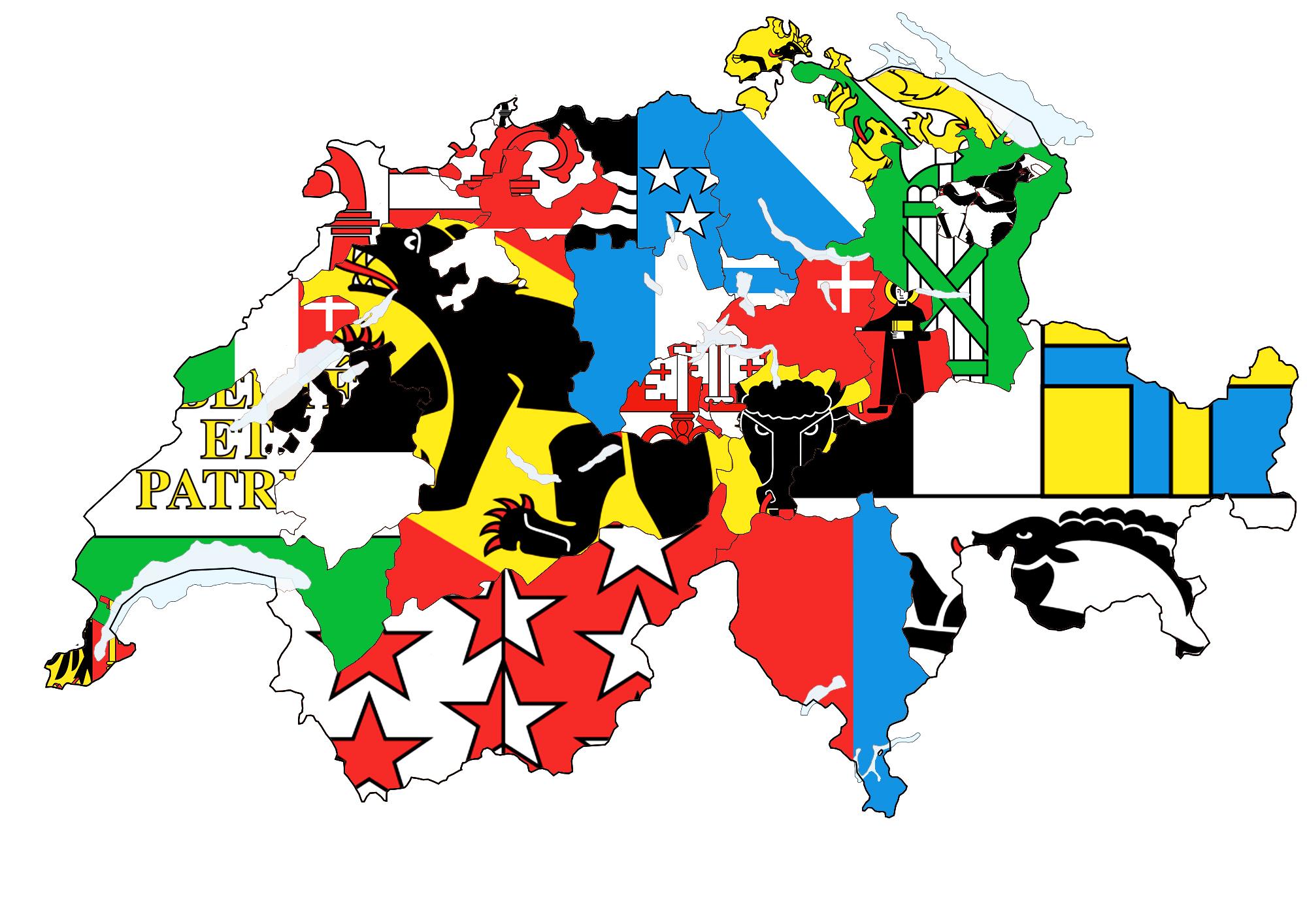
Switzerland can be called a soft federation, since the cantons possess quite extensive rights (except for those transferred to the Federation):
- Their own Constitution, which determines the structure of the canton and the degree of autonomy of the municipalities (Article 51);
- They can pass laws in those areas that are not provided for by the Federal Constitution, according to Article 5: the sphere of healthcare, social security, law enforcement agencies, public education, and they retain powers over taxation and so forth;
- They are also actors in international law — for instance, they can conclude treaties with foreign states (corresponding to Articles 48 and 56 of the Federal Constitution).
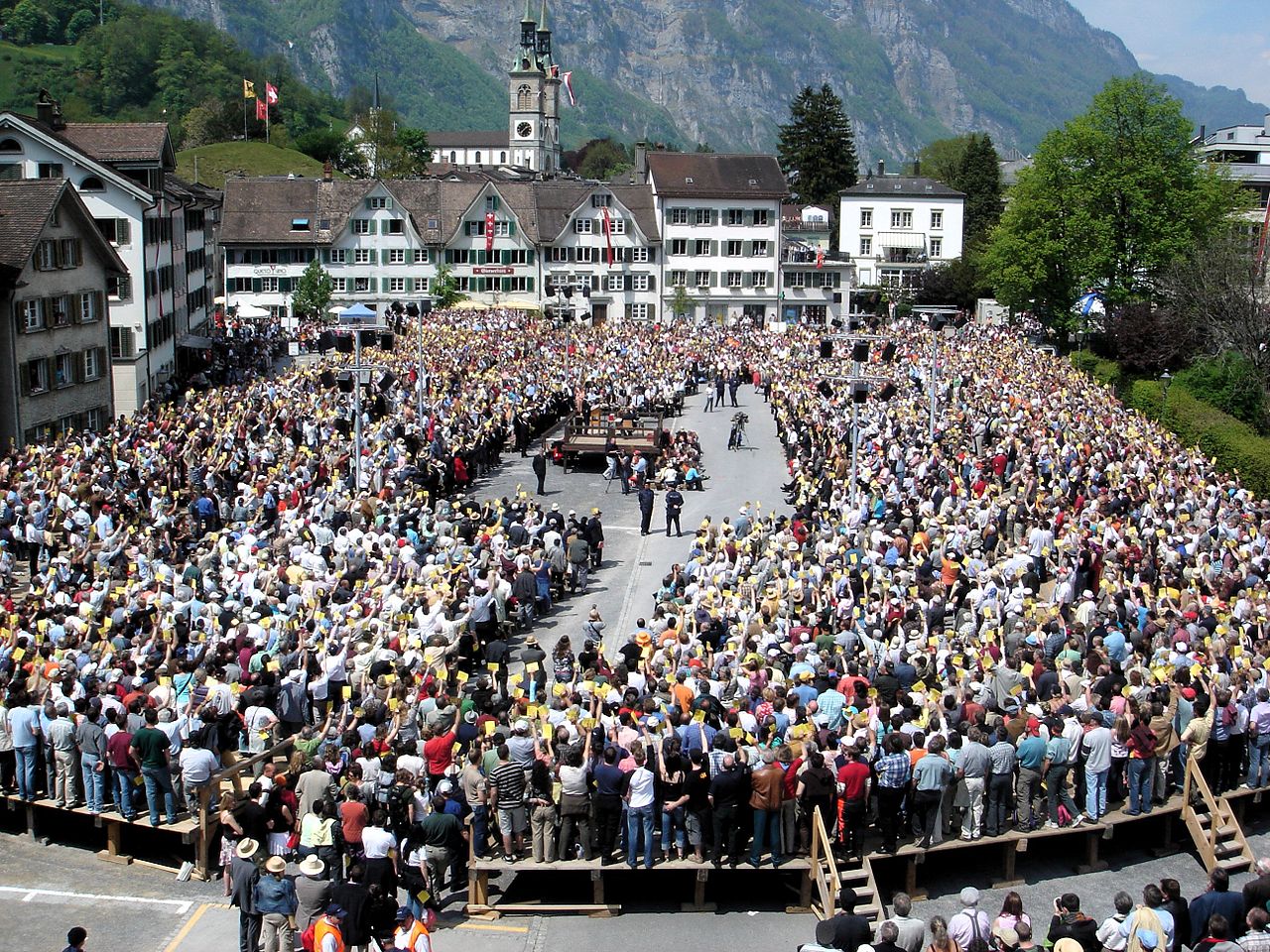
Because of this, they are diverse in structure, but the cantons are built on the federal system, with modifications14. Legislative power is represented in the form of unicameral parliaments; usually, the number of deputies ranges from 50 to 180 people. There are, however, exceptions, namely the half-canton of Appenzell Innerrhoden and the canton of Glarus, in which direct democracy operates, meaning the supreme authority of the canton is also the annual popular assembly15 (it must be mentioned here that parliaments exist there, but they are engaged in preparing legislative proposals and constitutional amendments together with executive councils, and they possess less power).
Executive power is represented in the form of a collegial body (the name varies by canton) consisting of 5-7 people, which is formed as a result of a popular vote. The head is the chairman of the council, who is chosen from among the council members for a term of 1 year (there are exceptions as well — for example, in Uri, Schwyz, Glarus, Zug, and Appenzell Innerrhoden, he is elected for 2 years) and he is a “first among equals”.
It is also worth clarifying that although most regions are legally cantons, there is in fact a division into 20 cantons and 6 so-called “half-cantons”. What are half-cantons? These are regions that were once part of cantons but were historically divided centuries ago. In principle, they have only two differences, and if the first one (the number of seats in the Council of States) was indicated above, the second will be related to referendums, which will be discussed further on. And these are the two most fundamental differences between them.
At the cantonal level, the canton itself can decide on voting rights; thus, the canton of Glarus allows voting at the municipal and regional level from the age of 16-17 (but not being elected). Also, in some parts of Switzerland, even foreigners can vote; thus, most cantons in French-speaking Switzerland grant foreigners the right to vote at the municipal level — usually after they have lived there for a certain period of time, and two cantons (Neuchâtel and Jura) give foreigners without a passport the right to vote on cantonal issues as well16.
Municipality
At this level, everything once again depends on the cantons, whose Constitutions define the internal organization of the canton, including the degree of autonomy granted to municipalities, which varies but almost always includes the right to levy taxes and pass municipal laws; some municipalities have their own police forces.
But what does the municipal level consist of? Municipalities in Switzerland are called “communes” and they are very different in size, but they all represent either cities (Zurich, Geneva, Bern (the de facto capital of the country), and so on) or villages (Monible, Clavaleyres, and so on).
They are granted wide opportunities for decision-making at the very grassroots level (usually education, medical and social services, public transport, and tax collection). They are also secured certain inherent rights: to merge with another commune, non-interference from above as long as the federal or cantonal Constitution is not violated, determining the governance structure within the framework of cantonal legislation, and freedom of action within the scope of powers that do not fall under the competence of the cantonal or federal level of government.
Communes can split, form, and in some cantons, communes merge into districts (they do not exist everywhere and have different names). Politically, they are simple: executive power is represented by a council headed by a mayor (he is merely the chairman of the council and is elected for 1 year), and legislative power is exercised at a town meeting of all citizens or in a municipal parliament, depending on the size of the municipality.
In Switzerland, a system of triple citizenship actually operates, meaning that Swiss citizens are citizens of their canton and, first and foremost, citizens of their municipality. So, by being a citizen of a commune, you are a citizen of the canton and a citizen of the country (but this citizenship must be acquired in accordance with federal legislation).
Referendums
Referendums can be called the pride of Switzerland and its trademark, because from June 6, 1848 (when the first Constitution was adopted, making Switzerland a de facto federation) to February 22, 2020, more than 656 referendums were held17. They are divided into the following types18:
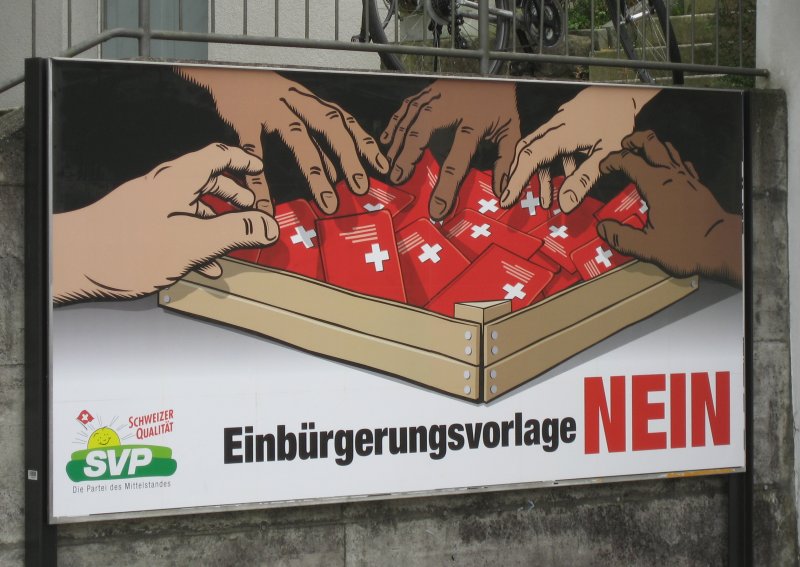
- The optional referendum allows citizens to demand that a law approved by the Federal Assembly be put to a popular vote. To hold it, it is necessary to collect 50,000 signatures within 100 days of the publication of the law;
- The popular initiative allows citizens to put forward proposals for amending the Constitution or expanding its scope. The power of a popular initiative lies in the fact that citizens can propose a specific topic for discussion to the relevant bodies or call for its reconsideration. In order for an initiative to be put to a popular vote, 100,000 signatures must be collected within 18 months. In response to a popular initiative, the authorities may propose their own project in the hope that the people and the cantons will give it preference;
- The mandatory referendum. Holding a referendum is mandatory in the event that parliament makes any changes to the Constitution. This means that the opinion of the people on this matter must be taken into account without fail. The question of Switzerland joining certain international organizations is also decided by holding a mandatory referendum.
At the same time, an unusual system of referendum operates in Switzerland at the Federation level, in which, in addition to the votes of the electors themselves, the votes of the cantons are also counted — that is, if the inhabitants of a canton voted against, then this is counted as the canton’s vote against19. And here is another difference between cantons and half-cantons — their vote is not counted as a canton’s vote, but as ½ of a canton’s vote20.
But a question arises: if the people voted “for” or “against”, but the result across the cantons is different, what should be done? According to Article 139 of the Constitution, if this happens, the project does not enter into force. In addition to federal ones, referendums are also held at both the cantonal and municipal levels.
To sum up, it can be noted that in the system of the political structure of Switzerland there are a number of interesting ideas (a collective head of the country, broader autonomy for regions, and so on) that can be used when developing the political structure of other countries, including Russia.
- Democracy Index 2020: In sickness and in health? // Economist Intelligence Unit (www.eiu.com). [Electronic resource]. URL: https://www.eiu.com/n/campaigns/democracy-index-2020/ (Accessed: 28.02.2021).
- The next frontier Human development and the Anthropocene // Human Development Reports (hdr.undp.org). [Electronic resource]. URL: http://hdr.undp.org/sites/default/files/hdr2020.pdf (Accessed: 28.02.2021).
- V.N. Streletsky, N.O. Telnova, I.O. Gavritukhin, V.M. Volodarsky, A.G. Matveeva, V.D. Nesterkin, V.S. Nechaev, V.I. Linder, A.V. Golubkov, N.A. Kemper-Bakshi, N.I. Frolova, S.N. Lebedev, P.M. Stepanova, V.A. Pogadaev /2017/. Update: edition of the GRE /2020/. Switzerland // Great Russian Encyclopedia. Electronic version (bigenc.ru). [Electronic resource]. URL: https://bigenc.ru/geography/text/5703063 (Accessed: 28.02.2021).
- Demographic balance by institutional units // STAT-TAB — interactive tables (FSO) (www.pxweb.bfs.admin.ch). [Electronic resource]. URL: https://www.pxweb.bfs.admin.ch/pxweb/en/px-x-0102020000_201/-/px-x-0102020000_201.px/ (Accessed: 11.02.2021).
- Federal Assembly // Federal Department of Foreign Affairs FDFA (www.eda.admin.ch). [Electronic resource]. URL: https://www.eda.admin.ch/aboutswitzerland/ru/home/politik/uebersicht/bundesversammlung.html (Accessed: 28.02.2021).
- Igor Petrov. The Swiss parliament: its tools, products and stages of lawmaking // SWI swissinfo.ch (www.swissinfo.ch). December 19, 2019, 14:04. [Electronic resource]. URL: https://www.swissinfo.ch/rus/выборы-2019_швейцарский-парламент–его-инструменты–продукция-и-этапы-законотворчества/45257086 (Accessed: 28.02.2021).
- M.G. Mironyuk. Modern Federalism. Comparative Analysis. textbook – 276 p. – M.: ROSSPEN, 2008. – p. 196.
- Modern Foreign Electoral Law: monograph / ed. by A.G. Orlov, E.A. Kremyanskaya. Moscow State Inst. of Internat. Relations (Univ.) of the MFA of Russia, Dept. of Const. Law. – M. : MGIMO-University, 2013. – 336 p. – (Series “Constitutional Law of Foreign Countries”) – p. 23.
- Federal Constitution of the Swiss Confederation // fedlex.data.admin.ch. 18 April 1999. [Electronic resource]. URL: https://fedlex.data.admin.ch/filestore/fedlex.data.admin.ch/eli/cc/1999/404/20200101/en/pdf-a/fedlex-data-admin-ch-eli-cc-1999-404-20200101-en-pdf-a.pdf (Accessed: 01.03.2021).
- Igor Petrov. The Swiss parliament: its tools, products and stages of lawmaking // SWI swissinfo.ch (www.swissinfo.ch). December 19, 2019, 14:04. [Electronic resource]. URL: https://www.swissinfo.ch/rus/politics/выборы-2019_швейцарский-парламент–его-инструменты–продукция-и-этапы-законотворчества/45257086 (Accessed: 01.03.2021).
- Michele Andina. The Swiss government and its “magic formula” // SWI swissinfo.ch (www.swissinfo.ch). May 13, 2019, 08:38. [Electronic resource]. URL: https://www.swissinfo.ch/rus/multimedia/видео-ликбез_швейцарское-правительство-и-его-магическая-формула/41808518 (Accessed: 28.02.2021).
- Sonia Fenazzi. The “magic formula” of the Swiss federal cabinet of ministers // SWI swissinfo.ch (www.swissinfo.ch). December 10, 2019, 15:00. [Electronic resource]. URL: https://www.swissinfo.ch/rus/швейцарское-правительство-_как-швейцарские-министры-договариваются-между-собой-/45423838 (Accessed: 28.02.2021).
- S.O. Azarov. Confederation as a special form of state structure. / Sociology and Law. 2011. №2 (8). – p. 38.
- Cantons // Eidgenössisches Departement für auswärtige Angelegenheiten EDA (www.eda.admin.ch). [Electronic resource]. URL: https://www.eda.admin.ch/aboutswitzerland/ru/home/politik/uebersicht/kantone.html (Accessed: 28.02.2021).
- Igor Petrov. Democracy in Glarus – folklore or true democracy? // SWI swissinfo.ch (www.swissinfo.ch). May 05, 2017, 14:59. [Electronic resource]. URL: https://www.swissinfo.ch/rus/главнаястраница/прямая-демократия_народоправство-в-гларусе—фольклор-или-истинная-демократия-/41412022 (Accessed: 28.02.2021).
- Thomas Stephens, Ludmila Clot. Who can vote in Switzerland? And who cannot? // SWI swissinfo.ch (www.swissinfo.ch). September 19, 2019, 14:34. [Electronic resource]. URL: https://www.swissinfo.ch/rus/главнаястраница/выборы-2019_кто-может-голосовать-в-швейцарии–а-кто—нет-/45237836 (Accessed: 02.04.2021).
- Votes // Swissvotes (swissvotes.ch). [Electronic resource]. URL: https://swissvotes.ch/votes (Accessed: 28.02.2021).
- Direct democracy // Eidgenössisches Departement für auswärtige Angelegenheiten EDA (www.eda.admin.ch). [Electronic resource]. URL: https://www.eda.admin.ch/aboutswitzerland/ru/home/politik/uebersicht/direkte-demokratie.html (Accessed: 28.02.2021).
- Cormon, Pierre (2015), Swiss Politics for Complete Beginners (2 ed.), Geneva, Switzerland: Slatkine
- Swiss Constitutional Law, Thomas Fleiner, Alexander Misic, Nicole Töpperwien, Kluwer Law International B.V., 2005, page 120