Unicameral or bicameral parliament?
A parliament is one of the most important government bodies, alongside the executive branch and the judiciary. But what is it, why is it needed, what are chambers, why are they necessary, and, most importantly, what kind of parliament should a country have?
What is a parliament? According to the definition from the Encyclopaedia Britannica, a parliamentary system is a democratic form of government in which the party (or coalition of parties) with the greatest representation in the parliament (legislature) forms the government, and its leader becomes the prime minister or chancellor1. One definition states that a parliament is a nationwide, representative body whose main function in the system of separation of powers consists of exercising legislative power2. A definition from a constitutional law textbook expresses the essence of a parliament as follows:
A parliament is the supreme body of popular representation, expressing the sovereign will of the people, designed to regulate the most important social relations primarily by passing laws, and exercising control over the activities of executive authorities and high-ranking officials3.
That is, a parliament is the supreme legislative body of a state. It represents the interests of citizens and is necessary for passing laws and controlling other branches of government. Parliaments themselves currently exist in two forms: unicameral and bicameral. Let us try to understand the differences between them.
Contents
Unicameral parliament
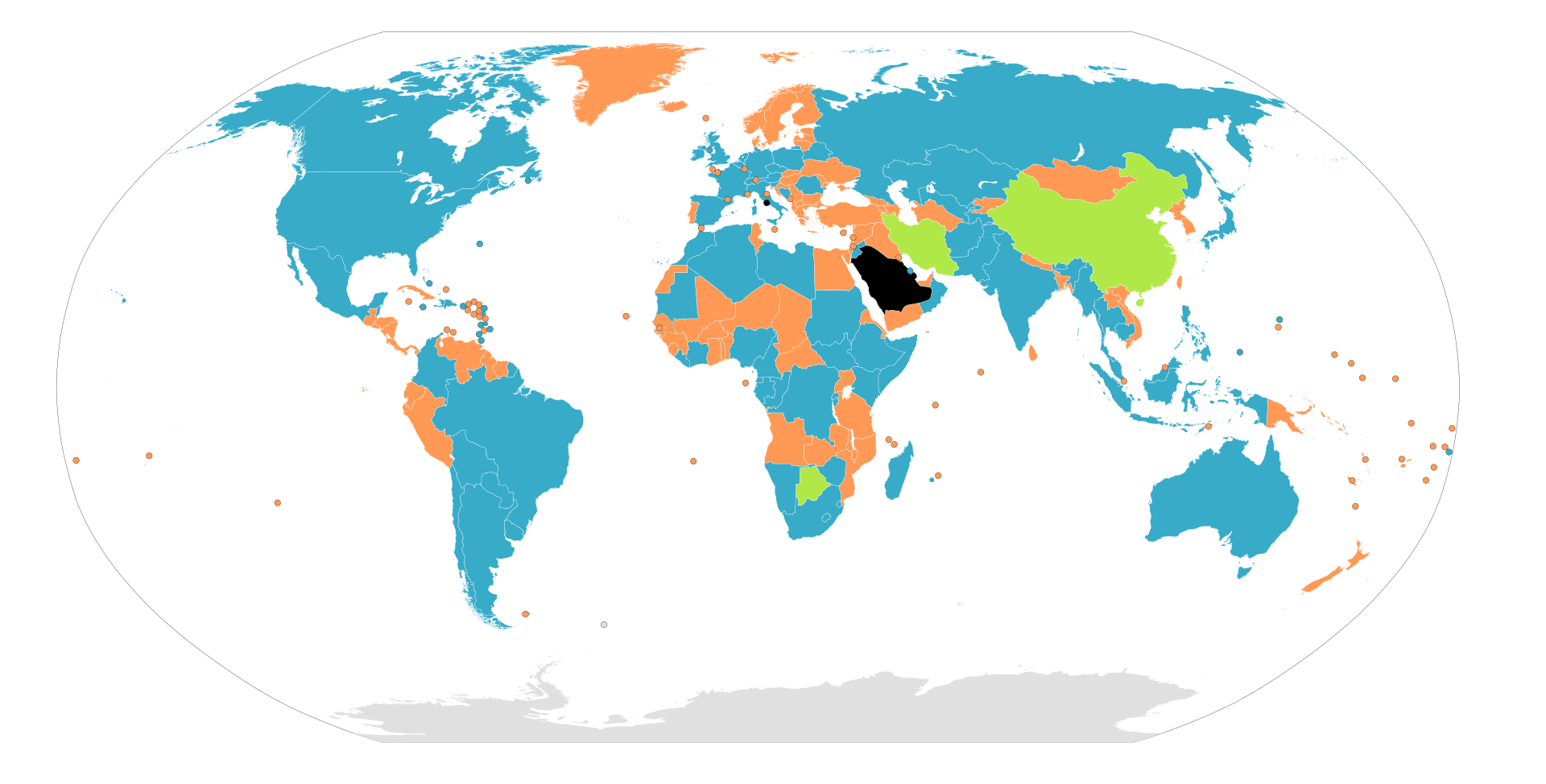
A unicameral parliament is a parliament that functions with one chamber. This is the most common type of parliament (about 60% of all parliaments in the world4), and it is characteristic of unitary states, although it is found in some federations (Comoros, Venezuela, Micronesia). On this map, unicameral parliaments are highlighted in orange, and bicameral ones in blue:
Unicameral parliaments have the following strengths5:
- They are simple and compact;
- They are usually elected directly by the entire population of the country;
- All deputies have equal status;
- Decisions are made faster in such a parliament; the legislative process is simpler;
- The structure of the parliament is easier for voters to understand;
- It is easier to control and prevent a situation in which a chamber would be elected undemocratically.
Nevertheless, unicameral parliaments have their drawbacks:
- The interests of the territorial units of the state are insufficiently represented;
- There is no counterbalance in the form of a second chamber;
- There is a danger of the parliament becoming radicalized and party dominance intensifying;
- The parliament can oppose itself to other state bodies and take on all functions.
Bicameral parliament
A bicameral parliament is a parliament that consists of two chambers. Usually, these are the lower and upper chambers. The lower chamber is considered the chamber of the people; it plays the role of a place where bills are created, which are then reviewed first by the upper chamber and then by the head of state. The upper chamber is considered the chamber of the regions, which is why the number of deputies for all subjects is most often the same, although this is not always the case. For example, in the FRG, specifically in its upper chamber, the Bundesrat (although officially there is no upper chamber, it is one de facto), there are 69 deputies, and the number of deputies for each region is different and depends on the population:
- Up to two million people (Bremen, Hamburg, Saarland, Mecklenburg-Vorpommern) – 3 deputies;
- From two to six million (Berlin, Brandenburg, Rhineland-Palatinate, Saxony, Saxony-Anhalt, Schleswig-Holstein, Thuringia) – 4 deputies;
- From six to seven million (Hesse) – 5 deputies;
- Over seven million (Bavaria, Baden-Württemberg, Lower Saxony, North Rhine-Westphalia) – 6 deputies.
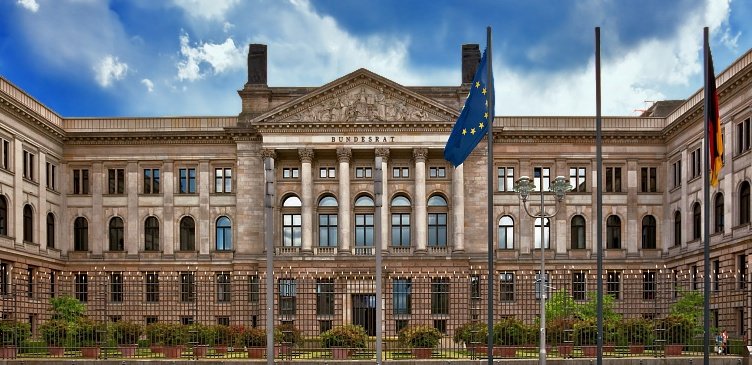
Similar systems function in Austria, France, and some other countries. Usually, the upper chamber plays the role of a filter for bills coming from the lower chamber. This is necessary to avoid hasty and ill-considered decisions. The upper chamber, unlike the lower one, is elected in many different ways, but there are only two most popular ones:
- Direct elections, but with their own differences from the elections to the lower chamber;
- Indirect elections, that is, citizens do not elect the chamber — instead, deputies are elected by regional parliaments, which are elected by the citizens.
To describe the second method, let us take as an example the upper chamber of the Austrian Parliament, specifically the Federal Council. There are 61 seats in the Federal Council. Deputies are elected by the parliaments (Landtage) of the states of Austria. The states are represented by a different number of deputies (from three to twelve) depending on the population of the federation’s state.
As for the first method, that is, direct elections, the differences from the elections to the lower chamber vary by country. Let us take Switzerland as an example of a developed federation and consider the upper chamber of the Swiss Federal Assembly, specifically the Council of States (a canton is a region in Switzerland).
The upper chamber (senate) of the Federal Assembly consists of 46 members, two from each of the twenty cantons and one from the half-cantons regardless of their population (it should be noted that this is the only difference between them). At the same time, due to their regional specificity, according to the Constitution, each canton chooses the procedure for electing its representative itself. It is only stipulated that they must be democratic. Because of this, there are certain peculiarities. For example, in the canton of Jura, a proportional system of elections is used, that is, people vote for party candidate lists. In the half-canton of Appenzell Innerrhoden, the representative is elected directly by the people’s assembly on the central square in its capital, Appenzell. This is due to the fact that the canton itself is very small both in area and in population (16,128 people as of December 20196). In the other cantons, citizens elect the candidates themselves (majoritarian system).
The lower house, the National Council, is elected purely by a proportional system. At the same time, the number of deputies in this house depends on the population in individual cantons. Exceptions are 2 small cantons and half-cantons, where only 1 deputy is elected due to the size of the population.
Usually, the term of office for members of upper houses is longer than that of lower houses, and the renewal of upper house members usually occurs in stages (in France, for 6 years with a renewal of 1/2 every three years7), although there are cases (Poland, Italy, Belgium, etc.) where both houses are elected for the same term and are renewed entirely.
Regarding powers, they vary from country to country, but usually, the lower house has broader powers and higher authority by law. At the same time, there are parliaments where the houses possess equal powers — for example, Switzerland, where the houses are called the small and large houses due to the number of members.
It is believed that the bicameral structure of parliament has become significantly widespread in many states of the world due to at least two of its advantages8. Firstly, the opportunity to ensure, alongside general representation of the interests of all citizens of the country, special representation of the collective interests of the population of individual large regions (in a federal state — subjects of the Federation) or the interests of other large groups of society playing some important role in it. Secondly, the opportunity to optimize, that is, to streamline, the legislative process by establishing a check and balance against probable hasty and insufficiently thought-out legislative decisions of one house.
As a result of researching various works analyzing the advantages and disadvantages of the bicameral form of parliament, Doctor of Law Oleg Bulakov highlighted its following merits9:
- The two houses exercise mutual restraint on various issues within the sphere of power;
- This parliamentary structure most effectively exercises restraint on executive power in various matters;
- The presence of a second chamber of parliament allows for the inclusion of more representatives from the electorate, which is especially important for multinational states (in particular, for Russia);
- The presence of both houses implies a more detailed elaboration of the country’s federal laws;
- With such a structure, the second chamber is an additional guarantor regarding compliance with the Constitution, as it allows for longer periods to consider controversial issues regarding bills and their socio-public discussion.
Simultaneously, the bicameral parliamentary structure has certain drawbacks, namely:
- A parliament with a unicameral structure is more effective in achieving results — the work of the second chamber often overly complicates or significantly hinders the process of adopting bills;
- Sometimes the second chamber can hinder the path to democracy — in particular, in a situation where the members of this chamber are not elected in principle, or are elected but using an indirect election procedure;
- With a bicameral structure of legislative power, there is a probability of conflict situations in various power structures;
- The presence of two chambers can in some way limit access to the state policy-making process when the final development of bills is managed by joint committees;
- The presence of a second chamber supports the currently existing constitutional order of the state, often represents the interests only of the country’s ruling elite, and can lead to a more conservative policy in the field of lawmaking.
A handbook on the constitutional law of foreign countries also notes the following merits of a bicameral parliament10:
- Society as a whole, as well as regions with their peculiarities, are represented more “comprehensively”;
- Usually, higher requirements are placed on candidates for membership in the upper house than on candidates for deputies of the lower house, and therefore people who are more literate, qualified, respected, experienced, and older in age are elected to the upper house;
- The upper house serves as a counterbalance to the lower one — it filters its decisions, calms passions, reduces party influence in favor of national interests, and prevents the lower house from becoming radicalized.
However, with such a system, the legislative process becomes more complicated; the upper house can become too conservative and hinder the activities of the lower house. As a result of this, the slowing down of progressive initiatives is not excluded. Usually, the upper house has a longer term of office and is renewed in stages, which prevents a sharp change in political course; as a rule, the upper house is not dissolved and functions at all times, and therefore, in the event of the dissolution of the lower house, the upper house (that is, half of the parliament) continues to work; in the event of the renewal of the lower house as a result of elections, the upper house ensures the continuity of the previous policy. Another drawback of the bicameral system is the emergence of an additional layer of deputies (higher budget costs for their maintenance, more privileges).
In general, the bicameral type of parliament is characteristic of a federation, but it also exists in some unitary republics — for example, in Italy, the Czech Republic, and Poland.
In the case of Russia, a bicameral parliament looks preferable out of the two options, since this state is a federation, which leads to the need for a separate chamber to represent the regions, and this becomes the decisive factor that influences the choice between the two options, each having its pros and cons.
A bicameral parliament has already been implemented in Russia, and this compromises the very idea of a bicameral parliament, creating the feeling that the second chamber is an anti-democratic body. To understand what the catch is here, let us analyze how this form of parliament works in the RF.
What are the problems with the Russian parliament?
The Russian parliament (the Federal Assembly), due to the country’s federal nature, consists of two chambers: its upper house is called the Federation Council, and the lower house is the State Duma.
The first problem with the Federal Assembly is the excessive tilt toward the powers of the country’s president. The Russian Constitution recognizes the separation of powers in theory, but the situation is different in practice. For example, according to Article 102 of the Constitution of the Russian Federation in its 2020 version11, the Federation Council now conducts consultations on candidates proposed by the President of the Russian Federation for the positions of Prosecutor General of the Russian Federation, Deputy Prosecutors General of the Russian Federation, prosecutors of subjects of the Russian Federation, and prosecutors of military and other specialized prosecutor’s offices equated to prosecutors of subjects of the Russian Federation.
Also, the Federation Council now advises the President on his proposed candidates for the positions of heads of federal executive bodies (including federal ministers) in charge of defense, state security, internal affairs, justice, foreign affairs, prevention of emergency situations, and disaster relief, as well as public security.
In addition to this, the Federation Council, upon the submission of the President of the Russian Federation and in accordance with a federal constitutional law, terminates the powers of the Chairman of the Constitutional Court of the Russian Federation, the Deputy Chairman of the Constitutional Court of the Russian Federation, judges of the Constitutional Court of the Russian Federation, the Chairman of the Supreme Court of the Russian Federation, Deputy Chairmen of the Supreme Court of the Russian Federation, judges of the Supreme Court of the Russian Federation, and chairmen, deputy chairmen, and judges of cassation and appellate courts in the event of their commission of an act discrediting the honor and dignity of a judge, as well as in other cases provided for by federal constitutional law that indicate a judge’s inability to exercise their powers.
Previously, the Federation Council itself appointed and dismissed the Prosecutor General of the Russian Federation and Deputy Prosecutors General of the Russian Federation.
The appointment of ministers, primarily those of the “power” ministries, leads to a situation where the executive branch is legally (according to the law) significantly controlled by the head of state. This can lead to corruption, the repression of dissenters, and a lack of parliamentary control over their activities by the Parliament of the Russian Federation.
The judicial system is also “going down the drain” — previously, a judge could only be removed by the Higher Qualification Collegium and could appeal that decision; now, however, this has turned into a swift procedure. The Constitution itself (Part 2, Article 46) assumes the right of all citizens to judicial protection, which, by virtue of Part 3, Article 56 of the Constitution, is not subject to restriction. Consequently, the proposed amendments not only violate Article 46 of the Constitution — the right to judicial protection — but also lead to a narrowing of judicial independence, as the President will now be able to initiate the resignation of Russia’s top judges, and the Federation Council will be able to remove them from their posts. Thus, while it is currently impossible to force a judge’s resignation bypassing their colleagues, with the adoption of the amendment, the judicial branch of government will become dependent.
This is one example of such an imbalance of power, but it already shows that the parliament has ceased to perform the legal control of the branches of government, which unties the President’s hands to establish a personal dictatorship.
The second problem is the ineligibility of the upper house by citizens. This problem has existed since 1996 (since the convocation from January 1994 to January 1996 was elected). And although the system has changed, the essence remains the same, namely that this body is not elected in any way.
In theory, the Federation Council represents the executive and legislative powers of the regions, and in general, this is not bad, because in the FRG (let us clarify that there is no official upper house there, but the Bundesrat performs its de facto role) and in Austria, something similar is implemented (though in the FRG only the executive branch is represented, and in Austria — the legislative branch), and the system of these federations, where the second chamber is elected by deputies of regional parliaments, seems quite reasonable. However, we still give preference to the Swiss system, in which regional parliaments choose the election procedure for their representative themselves (provided they meet democratic criteria).
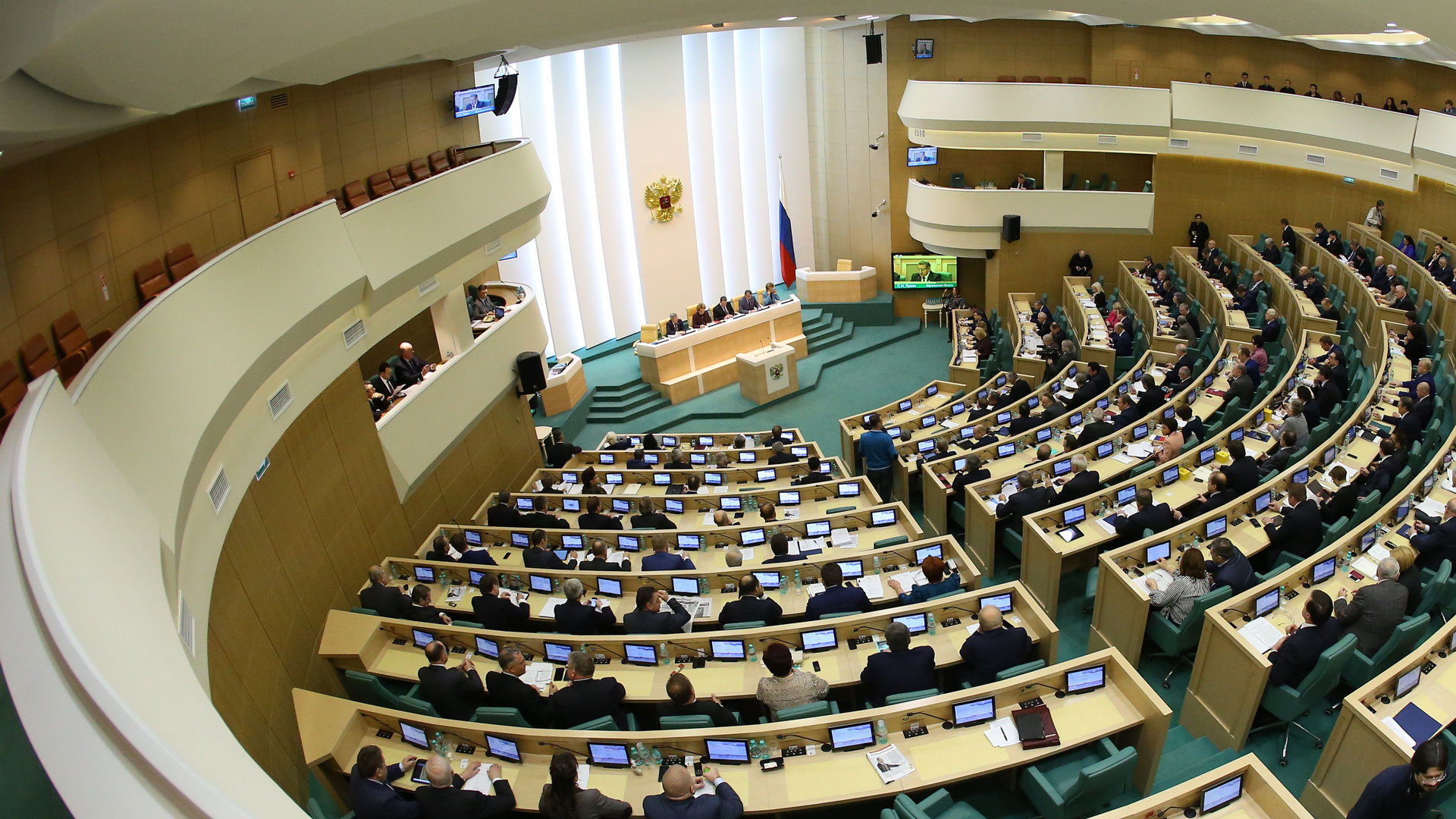
The third problem lies generally in the underdevelopment of democracy and civil institutions. We explained in our articles on political systems and in the article on what democracy is that the degree of institutional development is a crucial component, without which neither a unicameral nor a bicameral parliament will function effectively.
The fourth problem is the dominance of “United Russia” and pseudo-opposition parties. This is one of the greatest problems of modern Russia, and it manifests in the fact that the country has, in essence, implemented a dominant-party system (this is a political system in which opposition groups or parties are permitted, but one party dominates elections12). This system is effective if it is democratic in its structure (for example, in Sweden, where the Social Democratic Workers’ Party was dominant from 1932 to 2006, with short interruptions), but if the system is authoritarian, the party system will not function effectively.
Let us examine the seats in the State Duma at the beginning of 202113:
- United Russia – 336 seats;
- KPRF (Communist Party) – 43 seats;
- LDPR – 40 seats;
- A Just Russia – 23 seats;
- Non-factional – 2 seats (1 – Rodina, 1 – Civil Platform);
- Vacant – 6 seats.
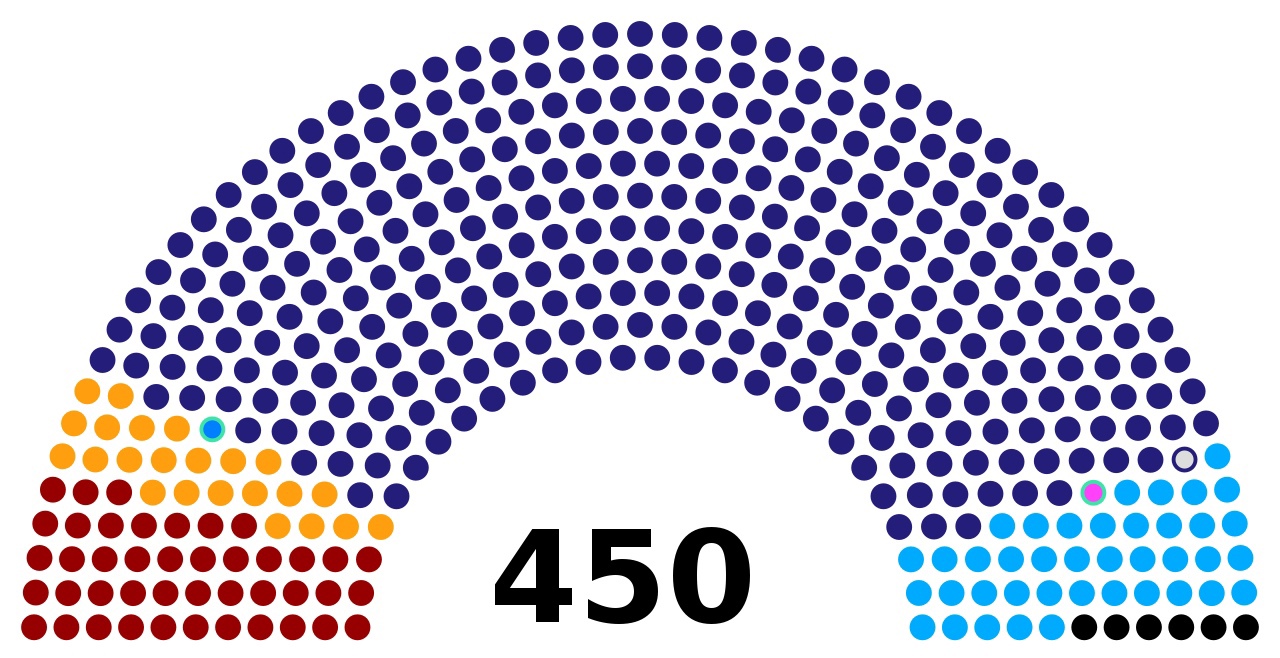
One can see that “United Russia” occupies 74.66% of the seats — this indicates that this party can make any decisions without discussion with other parties, and other parties cannot do anything due to the small number of their deputies.
Conclusion
Firstly, a transition to a parliamentary republic is necessary, which we substantiated in our article on political systems. As for the number of parliamentary chambers, the decision on whether a parliament should be unicameral or bicameral will differ for various countries, as there is no universal solution here for states with different territorial sizes and structures. In the case of Russia, a bicameral parliament would be preferable. Among the disadvantages of a bicameral parliament, we identified the following:
- Conservatism in decision-making;
- The possibility of creating a situation in which one of the chambers is elected undemocratically;
- The slowing down of the bill adoption process.
The first two problems are solved by ensuring the rotation of members of the second chamber, as well as by the Swiss system of electing its members. The third disadvantage is, unfortunately, inevitably linked to the merit of the second chamber as a counterbalance to probable hasty and insufficiently thought-out legislative decisions. But even while this disadvantage remains, our system minimizes the total sum of disadvantages and is, in our view, the optimal solution for the Russian Federation.
- Parliamentary system // Encyclopaedia Britannica (www.britannica.com). [Electronic resource]. URL: https://www.britannica.com/topic/parliamentary-system (Accessed: 11.02.2021).
- A.B. Shavkero. The correlation of the concepts of “parliament” and “parliamentarism” / A. B. Shavkero. – Text : direct // Young Scientist. – 2011. – No. 11 (34). – Vol. 2. – pp. 30-33.
- P.A. Matveev. Constitutional law of foreign countries: a course of lectures: textbook – 640 p. – M., Berlin: Direct-Media, 2016. – p. 207.
- A.B. Barikhin. Great Legal Encyclopedia. (Series “Professional Reference Books and Encyclopedias”) – 960 p. – M.: Knizhny Mir, 2016. – p. 534.
- O.P. Zhalmenova. Constitutional law of foreign countries. General part: Modular study guide for students and attendees of the Academy of Continuing Education of TSU named after G.R. Derzhavin – 221 p. – Tambov: TSU, 2004. – p. 167.
- Demographic balance by institutional units // STAT-TAB – interactive tables (FSO) (www.pxweb.bfs.admin.ch). [Electronic resource]. URL: https://www.pxweb.bfs.admin.ch/pxweb/en/px-x-0102020000_201/-/px-x-0102020000_201.px/ (Accessed: 11.02.2021).
- Mode d’élection des sénateurs // Accueil – Sénat (www.senat.fr). [Electronic resource]. URL: http://www.senat.fr/role/senate.html (Accessed: 11.02.2021).
- Igor Goloskokov. Unicameral or bicameral? // Nezavisimaya Gazeta (www.ng.ru). February 4, 2000, 00:00. [Electronic resource]. URL: https://www.ng.ru/ideas/2000-02-04/8_palata6.html (Accessed: 11.02.2021).
- O.N. Bulakov. Bicameral organization of the modern parliament. Black Holes in Russian Legislation. 2015. No. 2. Moscow, pp. 6-9.
- O.P. Zhalmenova. Constitutional law of foreign countries. General part: Modular study guide for students and attendees of the Academy of Continuing Education of TSU named after G.R. Derzhavin – 221 p. – Tambov: TSU, 2004. – pp. 167-168.
- New text of the Constitution of the Russian Federation with 2020 amendments // State Duma (duma.gov.ru). July 3, 2020, 15:31. [Electronic resource]. URL: http://duma.gov.ru/news/48953/ (Accessed: 11.02.2021).
- A.A. Ostroverkhov. In search of a theory of single-party dominance: world experience in studying dominant-party systems (I) // Politeia. – 2017. – No. 3 (87). – pp. 136-153.
- Factions // State Duma (duma.gov.ru). [Electronic resource]. URL: http://duma.gov.ru/duma/factions/ (Accessed: 11.02.2021).