Russian socialists of the 20th century on the path to progressive social democracy
In this article, Dmitry Bogrov sheds light on a question that is usually avoided in Russia — the history of the Russian socialist movement in the 20th century outside the country. Our reader will learn how it suffered defeat in Russia and how it developed in emigration.
The revolution in Russia and the victory of the Bolsheviks cast a whole stratum of socio-political thought abroad. Liberals and monarchists, Socialist Revolutionaries and Mensheviks, anarchists and left-wing oppositionists — they all found themselves cast out of their state. However, they did not cease their political activity, which, admittedly, was now expressed mainly through the press. The Russian emigration painfully experienced the catastrophe that had befallen it. Its participants faced the arduous task of comprehending and understanding what had happened to their country and how such a thing could have been possible at all. The intelligentsia of Germany would be tormented by similar questions after the collapse of Nazism.
In the émigré environment, sharp disputes took place regarding the causes of the Russian Revolution and the future path of Russia. And not only about that. All this stood in sharp contrast to the situation in the USSR, where one suffocating ideology reigned supreme and a feigned unanimity prevailed for many years. At the same time, the court “red professoriate” did not develop Marxism in any way. Life went on as usual, and Soviet Marx scholars were, in essence, rehashing the old. Here is how Russian political scientist Vadim Mezhuev describes it:
The failure of “real socialism” was nowhere so sharply evident as in the sphere of ideology. Official ideology bypassed the methodological and theoretical shifts in social science of the 20th century. The illiteracy of party “leaders” in the theory of socialism, their disregard for issues of its modernization, for enriching it with new facts and hypotheses, led to the fact that this theory itself acquired in the public consciousness the reputation of some kind of archaic and dogmatic monster. Marxism of the Soviet type, if it reacted at all to the achievements of modern science, did so in areas far removed from historical, social, and political thought. “Scientific communism” became an object of universal contempt and mockery, an example of scholasticism devoid of any scientific discourse. Is this not why the end of this pseudo-scientific discipline was met by everyone with a distinct sense of relief? The intellectual crisis of “real socialism” was the cause of all its other crises1.
Thus, the Russian emigration again had to answer Russia’s two eternal questions: “Who is to blame?” and “What is to be done?”. Accordingly, each political camp answered them in its own way. In this article, we will attempt to briefly analyze the evolution of Russian socialists toward a renewed and progressive social democracy.
Contents
The background of schisms and branches in the left camp
The left democratic camp of the Russian emigration was represented mainly by Socialist Revolutionaries (SRs) and Mensheviks. However, there was no unity among the former or the latter by that time. At one time, the RSDLP (Russian Social Democratic Labour Party) split into Bolsheviks and Mensheviks. Initially, the reason for the split — the question of the charter and party membership—seemed laughable and secondary to many. But later, events (the question of participation in the State Duma, the attitude toward the First World War, etc.) began to drive the Bolsheviks and Mensheviks further and further apart, ultimately turning them into their own opposites — radicals and moderates. Originally, all Marxist parties were called social democratic. A communist, a Marxist, a social democrat — it was all essentially the same thing. The divorce of Marxism from social democracy would happen later. Back then, both Mensheviks and Bolsheviks condemned almost all attempts to revise the dogmas of Marxism as “revisionism”. They were all orthodox and believed in a world revolution that would be carried out by the most oppressed working class (the proletariat), that the state and private property would disappear, and that humanity would arrive at a new communist formation.
The ideas of Eduard Bernstein were subjected to the greatest attacks at the time, as he proved that history was leading not to the deepening of the abyss between the magnates of capitalism and the proletariat, but to its filling with new democratic institutions within which the worker is free to defend their rights. Accordingly, Bernstein did not advocate for a social revolution, but for evolution; he put forward the idea that the state is a common home for everyone. That it is not an evil, but a necessary instrument in the life of society, a most important part of civilization that should not be destroyed, but set to work for the benefit of all. Bernsteiniasism was condemned at that time by Lenin, Plekhanov, and Kautsky. This is all the more amusing given that German social democracy would subsequently transition to the updated ideas of Bernstein. Including those who so tirelessly branded him.
With the PSR (Party of Socialist Revolutionaries), things were much more interesting. Officially, the party considered itself the heir to the ideas of Narodnism. The Narodniks demanded land and liberty for the peasants and believed that through the peasant commune, Russia would bypass capitalism and arrive immediately at socialism. But all this turned out to be insufficient for a full-fledged ideology. Already in emigration, the leader of the SRs, Viktor Chernov, hoped that in opposition to world Stalinism, Trotskyism, and fascism, there would be a world SR movement, and that Narodnism would become international. But this did not happen. And the reason is rooted both in the parochial nature of Russian Narodnism, its exclusivity, and in the vagueness of the idea. In fact, a very diverse public had gathered in the party. The Narodniks themselves were united by little: the rejection of autocracy, sympathy for the peasants, and the justification of terror. But many SRs soon began to move away from the latter.
Furthermore, Viktor Chernov himself was personally a very democratic leader against the backdrop of the chiefs of other parties. The Party of Socialist Revolutionaries was distinguished by extreme tolerance, which resulted in a dissonance within its own ranks. One is struck by the palpable difference between the strictly parliamentary politician and talker Alexander Kerensky, the radical terrorist Maria Spiridonova, and the right-wing republican Boris Savinkov. And yet they were all SRs! Members of the same party! Among the SRs were many people who used extremist methods — terrorism — but preached ideas that were by no means radical: the establishment of a democratic republic, a regular rule-of-law state. It is not for nothing that they were called “liberals with a bomb”. It is interesting that even then, Chernov proposed that both the SRs and the Social Democrats unite into one party (Russia was the only country represented by two socialist parties in the Second International). Back then, such a thing did not happen, but who would have known that decades later, the Russian emigration would come to this…
The Russian Empire at that time contained a whole bouquet of ailments: peasant discontent over a lack of land, worker discontent over labor conditions and a growing strike movement, the intelligentsia’s dissatisfaction with the lack of democratic institutions, and an exacerbated national question. The peak of mass unrest and political terrorism came with the events of 1905–1907, which are usually termed the “First Russian Revolution”. The Russo-Japanese War and the shooting of a peaceful procession in St. Petersburg finally ignited society. Strikes and demonstrations did not cease, railroads came to a halt, street fighting took place in Moscow, and entire partisan armies emerged in the forests — the Lbovtsy in the Kama region and the “Forest Brothers” in the Baltics. The country was swept by a wave of terrorism compared to which the “Narodnaya Volya” seemed like nothing. It seemed as though there was not a single citizen left in the entire country who supported the government.
The Tsarist government managed to hold on because it prudently made concessions. Pyotr Stolypin played a significant role in this, proclaiming a “double course” — shooting revolutionaries on sight, but extending a hand to the moderates. The Tsar’s Manifesto of October 17 established the State Duma, and now many parties could direct their struggle into parliamentary channels. Historian Sergei Oldenburg wrote: “P. A. Stolypin managed to break the vicious circle. Until this time, the implementation of reforms was invariably accompanied by a general weakening of authority, and the adoption of harsh measures signified a refusal of transformation. Now, a government was found that combined both tasks of authority; and broad social circles were found that understood this necessity”2.
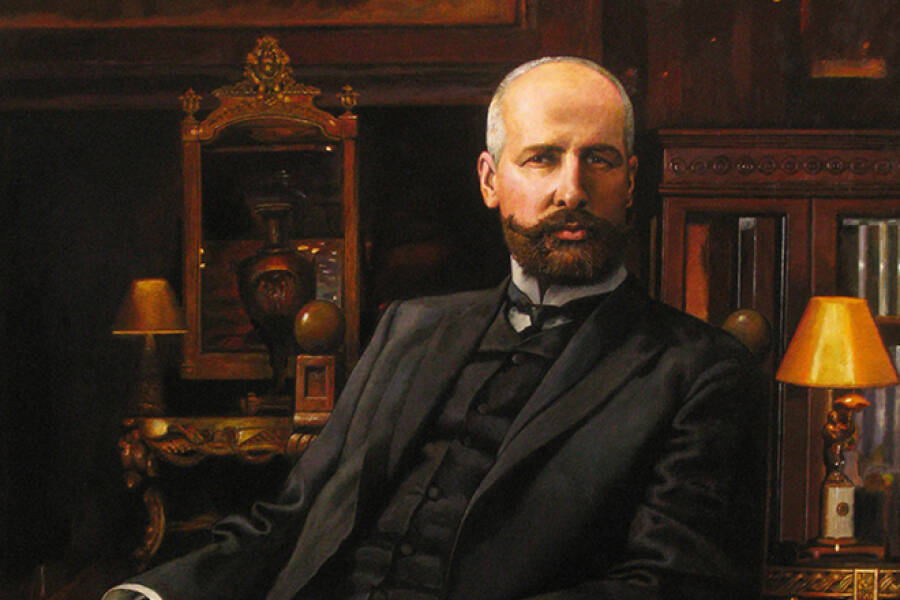
The Manifesto of October 17 split all the left-wing parties. Among both the Socialist Revolutionaries (SRs) and the Social Democrats, different points of view emerged. Radicals considered it necessary “not to buy into Tsarist hand-outs”, to boycott the State Duma, and to continue finishing off the regime. Moderates, however, believed that the manifesto opened up new possibilities for politics in Russia. It was much more interesting for the center-left to fight for a new Russia not on the barricades, but in parliament, in the press, and in socially useful commissions3. In the RSDLP, “liquidationism” appeared — a movement whose participants believed it necessary to liquidate (or reorganize) the revolutionary underground, establish themselves in legal organizations, and prepare for the creation of a legal Western-style working social democratic party. The most determined proponents of such views were Potresov, Axelrod, and Garvi. And this meant a step toward the terrible “revisionist” Bernstein.
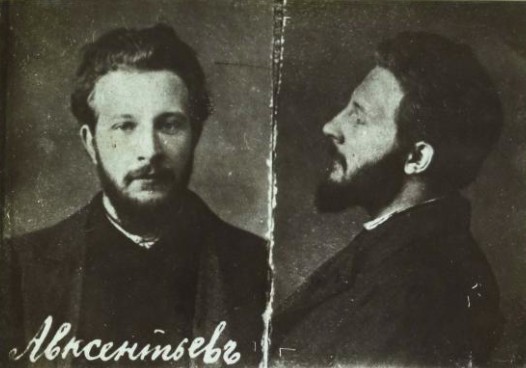
In the PSR, the leader of the right wing and a supporter of legal forms of struggle against the imperial regime was Nikolai Avksentiev. At the same time, the more right-wing Popular Socialist Party split off from the SRs, and in 1904, the left wing — the Maximalist SRs — separated. The leaders were Mikhail Sokolov and Grigory Nestroev. As one can understand from the name, these people rejected any minimum program and were irreconcilable enemies of “bourgeois” democracy, parliamentarism, and trade unions. The Maximalists believed in the possibility of Russia’s immediate transition to socialism, which would bring them closer to the Bolsheviks and their revolution in the future, but would not save them at all from communist repression. The Nerchinsk penal servitude in Transbaikalia can be considered the precursor to the appearance of a separate Left SR organization, where such prominent socialists as Maria Spiridonova (the future leader of the Left SRs), Irina Kakhovskaya, Iosif Zhukovsky-Zhuk, Anastasia Bitsenko, and others served their terms4. These individuals would subsequently participate in the creation of the Chita Committee of the PSR, which would distinguish itself with its anti-war resolution regarding the First World War. However, the feigned unity of the SR party continued to persist until the end of 1917, which would play a cruel joke on them. Also, a very big blow to the SR party was the exposure of the leader of the combat terrorist organization, Yevno Azef. It turned out that for many years, one of the leaders of the party had been working for the Tsarist police all along. The PSR continued to remain the most mass-based and popular party (both among workers and peasants), but this blow crippled it significantly. The only positive thing for it was that even more people were now moving away from terror toward other forms of activity.

But the greatest split among socialists was caused by the First World War. The Second International collapsed. The left split into “defensists” (supporters of their government in the war) and “defeatists” (supporters of immediate peace). Sharp polemics were conducted between all these groups, and passions ran very high! The left did not mince words in relation to their comrades of yesterday. Thus, Marxist internationalists acerbically ridiculed the “defensists” in their “Marseillaise of the Defensists”:
Let us renounce, friends, Marxism,
From our program forever!
The idol of chauvinism is dearer to us,
Than the idea of the brotherhood of labor.
Arise, stand up, Social-Democrat-patriot,
Stand up against the foreign enemy
And beat the worker-German.
Forward, forward, forward!
So cry Georgy Plekhanov himself,
Henderson, Bissolati, and Guesde,
In the State Duma, Buryanov
Sings along with them in unison..
Is it not time, brothers-Marxists,
To forget the class struggle?
The social-chauvinists call on us
To stand up for the fate of the bourgeois.
Let us cast away the red banner of freedom,
And boldly take up the tricolor,
And our proletarian platoons
We shall send against the German workers.
It seemed everyone was accusing the other of treason. The “defeatists” branded the “defensists” as social-chauvinists and traitors to the working class, while the “defensists” branded their opponents as anarcho-rebels and traitors to the fatherland. However, today, being free from the emotions of those days, we will be forced to admit that one “defensism” was not at all equal to another. And often, one set of “defensists” could not stomach the others at all. The same goes for the “defeatists”. Different socialists could advocate for peace or war from completely different positions and based on completely different convictions. For example, after the February Revolution and the overthrow of the monarchy in Russia, the majority took up positions of “revolutionary defensism” — that is, the refusal of any land seizures and imperial ambitions in the war, and exclusively the defense of the country. Thus, the same leader of the SRs, Viktor Chernov, who at the beginning of the war was a convinced “defeatist” in relation to the Tsarist regime, fully sided with the new democratic Russia after the revolution. But there were also imperial “defensists” who supported Russia’s initial expansionist goals in the war. Georgy Plekhanov belonged to these, from whom the other Menshevik-defensists distanced themselves from the very beginning.
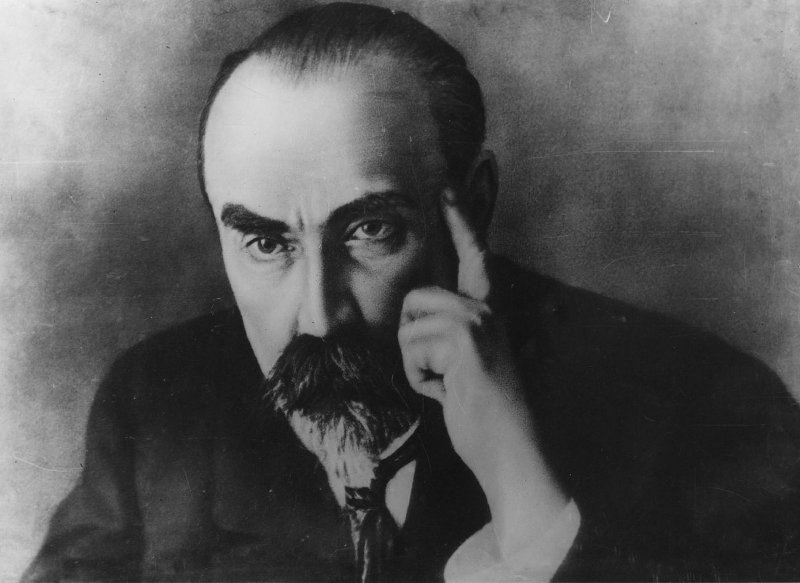
Separately, one can single out the “defensism” of the Left SRs and Left Bolshevik-communists after the Treaty of Brest-Litovsk. After all, they advocated precisely for a revolutionary war with Germany, for fueling a world conflagration. And they considered the Treaty of Brest-Litovsk a betrayal of the working class to the mercy of German imperialism. Of course, such “defensism” of the Left SRs had nothing in common with national-patriotic ideas and differed from the “defensism” of the right as heaven and earth. By the way, the abyss between the right and left SRs by that time was already much wider than between the Mensheviks and Bolsheviks. For if the latter allowed for some cooperation and coalitions, the SRs were already firing to kill at each other.
Then again, internationalism in the First World War had many faces, and anti-war positions differed from one another. Thus, the Mensheviks and the majority of SRs, unlike Lenin and the Bolsheviks, by no means called on soldiers to “turn weapons against their governments”. They called not for civil war, but only for an early democratic peace without annexations and indemnities. In September 1915, in the Swiss village of Zimmerwald, socialists from 11 countries signed a manifesto calling for an end to the war. Lenin’s slogan of “turning the imperialist war into a civil war” was not in it. From the social democrats of Russia, signatures were placed under it by the Menshevik Pavel Axelrod and the Bolshevik Vladimir Lenin.
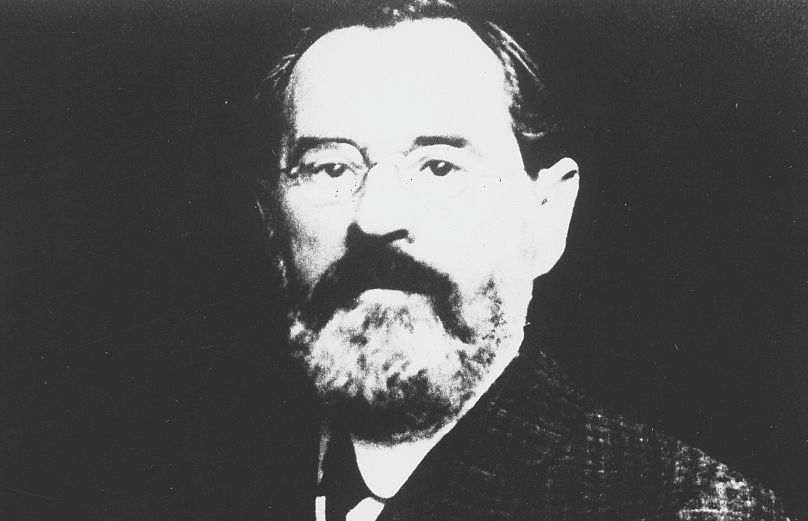
Speaking of the “defensists”, they were present both among the Mensheviks — Georgy Plekhanov, Alexander Potresov — and among the Bolsheviks — Mikhail Tomsky, Kliment Voroshilov. But the Bolsheviks in their future propaganda portrayed themselves as almost the sole internationalists in those events, which, of course, is untrue. And to this day, modern Marxist-Leninists credit Vladimir Lenin with his anti-war stance, keeping silent about other internationalists. Among the left Mensheviks, Julius Martov belongs to them, and among the centrists, Pavel Axelrod. Pavel Borisovich proposed the tactic of the “international struggle for peace”. This tactic consisted of workers exerting pressure on their governments, refusing to vote for military credits, and fighting everywhere for a democratic peace without annexations and indemnities. Axelrod saw the victory of the democratic Entente as the lesser evil, but at the same time he justified the German social democrats who supported their governments in the war, and believed in the revival of the Second International.
The right “defensist” wing of the SRs was formed by Nikolai Avksentiev, Andrei Argunov, Vladimir Zenzinov, Mark Vishniak, Pitirim Sorokin, Boris Savinkov, Alexander Gukovsky, and Ekaterina Breshko-Breshkovskaya. However, in spite of them, as early as February 1916 in Petrograd, the Northern Military Organization of the SRs took shape, standing on the Zimmerwald Platform. By May 1, they even issued their own anti-war leaflet. The internationalist SRs were represented by Viktor Chernov, Nikolai Rakitnikov, Maria Spiridonova, Boris Kamkov, as well as Russian writers Ivanov-Razumnik and Yevgeny Zamyatin. The Maximalist SRs also adhered to anti-war views.
Both “defensism” and “defeatism” were by no means monolithic currents, but included several more branches. All of them would prove significant for subsequent events and would not allow representatives of seemingly the same current to get along together in one organization. Therefore, today’s attempts to paint all “defensists” or “defeatists” with the same brush look foolish.
It seemed that the February Revolution in Russia would smooth over the contradictions between the left. But that only seemed so. After all, everyone evaluated its prospects differently. In general, each socialist’s positions regarding the Provisional Government echoed his views on the First World War. Here we can single out the right, the centrists, and the left. The herald of right-wing Menshevism became Alexander Potresov. Centrist positions among the social democrats were occupied by Pavel Axelrod, Irakli Tsereteli, and Fyodor Dan. And finally, left-wing Menshevism was again represented by Julius Martov. All the right-wing Menshevik-defensists became “statists”, “civil patriots”, and advocated for the broadest participation of socialists in the government. They believed that both workers and the bourgeoisie should feel like citizens responsible for the fate of their common country. While Lenin and the left-radicals demanded the overthrow of the temporaries and the transfer of all power to the soviets, the centrists, like the right, reasonably believed that demanding the overthrow of the Provisional Government was harmful, since neither the working class nor any other class individually could cope with running the state alone. At the same time, the centrists were skeptical about the participation of socialists in the government.
To the left Mensheviks, such an understanding of all these issues was alien. While right-wing Mensheviks and centrists called for the triumph of statehood, the left still viewed the state exclusively as something hostile, as a “machine for the suppression of all others by the ruling class”. The left thought in categories of the “upcoming world revolution”, the “class interests of the proletariat”, and other Marxist mirages. The left Mensheviks were still not ready to part with the dogmas of Marxism, while the right and centrists had already begun to gradually move away from them5.
The left stubbornly advocated for a “homogeneous socialist government” and sharply opposed the policy of Mensheviks entering the coalition Provisional Government. Julius Martov defended the gradual transfer of power to the left forces and considered everyone helping the Provisional Government to be “fools”. Thus, Russian social democracy split completely and presented a pathetic sight. All this would ruin the Russian social democrats and clear the way for the Bolshevik coup. One of the participants of the social-democratic gathering at the time said: “When I was going to the conference, everyone envied me, because here I was supposed to see our leaders. Now I have seen them and I envy those who are far away from here right now!”6 Many noted Axelrod’s desire to preserve the balance of power and party unity (in this he was similar to the SR centrist Chernov), but this was becoming increasingly difficult.
And what about the Socialist Revolutionaries? Already the first meetings revealed huge disagreements in their midst, first of all — regarding the ongoing war. Already at these meetings, extreme left calls for ending the war and for world revolution were voiced, which brought them one-on-one in proximity to the Bolsheviks. The leader of the Left SRs at that time was Boris Kamkov, as he was the first of his left-wing like-minded peers to find himself at the center of events in Petrograd in 1917. The left advocated for pressure on the government to force it into an immediate peace with Germany and the publication of all secret diplomatic treaties with war aims. However, the Left SRs were still a minority and did not dare to split and create their own party. Almost the only one to support Kamkov was Vladimir Trutovsky, one of the first to advocate for an immediate separate peace with Germany. The right, on the other hand, advocated for a single front of democracies against Germany, against any separate peace. Alexander Kerensky at the same congress called on everyone to stand up for the “defense of the revolution” from the external enemy. The majority of SRs decided not to escalate the conflict and to preserve the unity of the party, which, however, was cracking more and more at the seams.
Another sore point for the SRs was the question of their attitude toward the Provisional Government. The viewpoint of the far left was represented by Vladimir Algasov, who demanded that the bourgeois Provisional Government be opposed by a revolutionary Provisional Government. The right, conversely, unconditionally recognized the Provisional Government as the fully lawful and legitimate authority in Russia, and considered the participation of socialists in it desirable. According to Viktor Chernov, while the right and right-centrists believed in Kerensky’s enormous potential, the left-center group “increasingly came to the conclusion that this popularity is a spent bullet, and that from a factor of revolutionary development, Kerensky is turning into a heavy lead weight dragging the government into the abyss”7. Viktor Mikhailovich himself hopelessly tried to play the role of arbiter and threw all his authority onto the scales in order to prevent a split of the party. However, this was no longer possible. Chernov himself was always treated ambiguously by both political opponents and party comrades:
SR speakers, as is known, played different tunes in 1917. The party was as ununited as the Social Democratic party. There — from the internationalist Martov to Plekhanov; here — from the Left SR Kamkov to the grandmother of the Russian revolution Breshko-Breshkovskaya, and to Savinkov and Kerensky. Generally speaking, Savinkov and Kerensky (that is, the right SRs) were much closer to the youth than Kamkov and Spiridonov, and not only that: much closer than V. M. Chernov. I remember hearing the latter in Petrograd many times; already then, as a youth, I was irritated by the manner of speaking and arguing of this once-celebrated party leader.
V. M. Chernov immediately produced the impression as if his dialectical talent was entirely directed toward one goal: to palm off substandard material on the listener, as a clerk in a dubious little shop does. A cunning face, slightly skewed to the side, eyes wandering in different directions, and… a stream, an unstoppable stream of pretty words, the supply of which the speaker clearly has in inexhaustible amounts. A sweet smile and the gestures of a peasant “dad” only increased the integrity of the image. Such was V. M. Chernov to me in Petrograd, and such I knew him in Prague, when his revolutionary plumage had worn off significantly and the words had lost their former gloss. We, the youths, who did not belong to Chernov’s party of “publicists”, were especially irritated by his manner of polemicizing. There was in this manner a complete contempt for the truth. A complete lack of selectivity in the choice of arguments and an unusually unpleasant mocking smile; crude untruth and some sort of disrespect not only for the opponent, but generally for the listener, were replaced by lyrical “digressions” and pathetic appeals “not to be afraid of the revolution”: do not be overly afraid of Lenin’s political excesses — such is one of these sayings of Chernov that became famous. Foresight of events, as the reader sees, left much to be desired8.
For a short time, Chernov held the post of Minister of Agriculture in the Provisional Government. Besides him, among other prominent socialists who entered the government was Alexei Peshehonov, one of the founders of the Popular Socialist Party. Alexei Vasilyevich held the post of Minister of Food Supply. Peshehonov’s authority was considerable, and even the Bolsheviks were forced to flatter the minister. Trotsky’s words at the 1st All-Russian Congress of Soviets are well known: “…If I were told that the cabinet would be composed of 12 Peshehonovs, I would say that this is a huge step forward”9.
Why did the Russian moderate left miss the Bolshevik threat and hand power over to the left radicals? First of all, and this was noted by many, back then everyone feared the threat from the right, not from the left. They feared a monarchist conspiracy, a military coup by generals, and so on. They looked at left-wing extremists more calmly, turning a blind eye to many of their faults. All political parties glorified the revolution, celebrated one common victory over tsarism, and for a very long time were united in their magnanimity toward each other. In this context, the Bolsheviks were viewed by everyone as their own, as brother-revolutionaries, simply misguided. One of the few who foresaw the danger was the Menshevik Irakli Tsereteli, who noted that “the counterrevolution will come through Lenin’s gate”10. General Kornilov’s August mutiny frightened all left-wing parties even more and forced them to rally. In the atmosphere of fear of a military junta, the Bolshevik threat faded and was lost even further. Yet the Bolsheviks grew stronger precisely after the Kornilov mutiny. Their leaders were released from prisons, and Red Guards received weapons to fight the counterrevolution.
With the growth of Bolshevik influence and the approach of October, the left wing finally broke away from the SRs. The First Constituent Congress of the Party of Left Socialist Revolutionaries (PLSR) opened on November 19–21, 1917. The congress expressed ardent support for the Bolsheviks. Boris Kamkov said: “The isolation of Bolshevism is equivalent to dropping out of life, isolating ourselves from ongoing world events, and the relegation of the SR party to the back burner of history”11. Maria Spiridonova echoed him: “No matter how alien their crude steps are to us, we are in close contact with them, because behind them walks the masses, brought out of a state of stagnation”12. The Left SRs, together with the Bolsheviks, joined the Military Revolutionary Committee and helped them carry out the coup in Petrograd. A number of Left SRs received posts in the Council of People’s Commissars. Maximalists and Left SRs often acted in concert.
However, the alliance of the Left SRs with Lenin would be short-lived. After all, they viewed themselves as defenders of the interests of the peasantry and could not come to terms with Bolshevik policy in the countryside. I think this is precisely what led to their break with the Bolsheviks, and the Treaty of Brest-Litovsk was merely a pretext for the uprising. Moreover, what the Left SRs disliked about the treaty itself was not at all the capitulation to Germany, but the fact that a million peasants in Ukraine were now falling under the merciless plunder of the German military machine. In July 1918, the Left SRs launched an uprising in Moscow, which essentially became their political suicide. Maria Spiridonova and other leaders of the Left SRs were arrested, and they would be shot during the years of Stalinist terror. The communist-narodniks also split from the PLSR, condemning the uprising and supporting the Bolsheviks. Later on, they simply merged into the RCP(b), but this did not save them at all from a bullet in the dashing 1930s. In Ukraine, the left-SR organization “Borotba” continued its struggle, but they are a topic for a separate conversation.
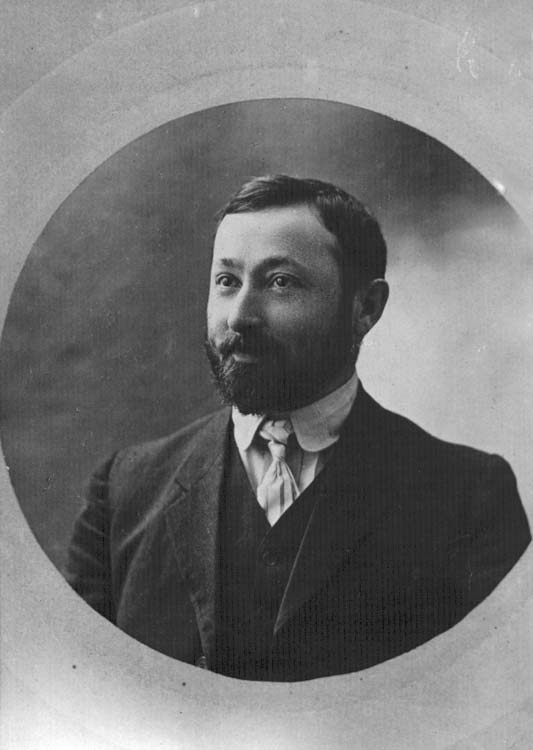
Menshevik intra-party groups also treated the October Bolshevik seizure of power differently. Centrist leader Axelrod condemned October as a putch and, in his work “Who Changed Socialism?”, predicted that the Bolshevik regime would degenerate into a “dictatorship over the proletariat” and a “regime of universal lawlessness, violence, and anarchy”. The left Mensheviks — Martov, Dan, and others — took the least justified position. Figuratively speaking, they called for seeking grains of sanity in October; they believed that the Bolshevik regime would evolve for the better, gradually moving toward democratization, while the working class, supposedly step by step, was wresting power from the Bolsheviks. Time has shown the utter naivety and erroneousness of such expectations. At the same time, both the left and the centrists believed that any armed struggle against Lenin’s dictatorship would serve the “cause of reaction”, the cause of the white generals. Therefore, Martov and others called “not to go against the proletariat”, even when deceived by the Bolsheviks13, which essentially meant inevitable support for the latter’s power. The left Mensheviks either sought an alliance with the Bolsheviks and entered coalitions, or increased the degree of criticism and were thrown out when no longer needed. But right up until their complete liquidation, they remained essentially the “pocket opposition” of the Bolsheviks, which the latter successfully used for their own purposes.
The right-wing Mensheviks categorically disagreed with this position. Alexander Potresov assessed October as the “murder of democracy”, and the political situation that emerged after it as “the socialism of fools”14. In protest against pandering to the Bolsheviks, Alexander Nikolayevich and his supporters left the RSDLP and formed the Provisional Bureau of Social Democrats. Right-wing Mensheviks supported armed methods of struggle against the Bolshevik dictatorship. Potresov, Rozanov, and Levitsky even joined the “Union for the Rebirth of Russia” — an underground anti-Bolshevik organization that united a very diverse public in its ranks, from white guards and cadets to SRs. Subsequently, Potresov evaluated his participation in the Union as a mistake.
The armed coup, the food crisis, the escalation of the conflict between the countryside and the city, the further usurpation of power in the hands of a single party, the closure of opposition parties and newspapers by the Bolsheviks, the dispersal of the Constituent Assembly, the beginning of repression, and the extremely severe Treaty of Brest-Litovsk — all of this made the Civil War inevitable. The total number of existing anti-Bolshevik governments was close to a hundred. In some of them, socialists played an important role. These include, for example, the Samara Komuch — the Committee of Members of the Constituent Assembly. As well as the Directory in Ufa, which positioned itself as the successor to the Provisional Government. The leadership of these governments was predominantly SR, and they even managed to create their own armed forces and achieve military victories.
On June 30, 1918, the SRs issued the proclamation “Down with the Executioners, Down with the Civil War, Long Live the Constituent Assembly!”. The document noted that Lenin had already killed far more people than Nicholas II, and therefore was equally worthy of the moniker “the Bloody”. “Never before has there been such famine, unemployment, lack of goods, and high prices in the country; never before has Russia been so reviled and beaten by enemies as during the rule of the ‘jesuits in bloody caps’ — Lenin, Trotsky, Zinoviev, Krylenko, Volodarsky, and others”15. The SRs demanded the immediate transfer of power to a nationally elected Constituent Assembly.
The Mensheviks, on the other hand, did not make as loud a statement in the Civil War and did not try as actively to become a “third force”, unlike the SRs. Among the militant Mensheviks, one can perhaps recall only Vladimir Strekopytov, who led the anti-Soviet uprising in Gomel. However, the Mensheviks managed to organize their own government in Georgia, which, nevertheless, suffered defeat. Among the democratic governments of the Civil War, a place of honor rightfully belongs to the Kuban Rada, in which left-wing parties were also represented. The Kuban People’s Republic possessed its own fundamental law (effectively a constitution) and its own armed forces16. Unfortunately, the Kuban government, which demonstrated a high level of parliamentarism, and that too under extreme conditions, is not covered as actively in the works of historians as one might wish.
Alas, the moderate left-wing governments could not come to agreement either with each other or ensure it even within their own ranks. Thus, Viktor Chernov condemned the SRs joining the Ufa Government on a par with right-wing parties, considering this a “betrayal of democracy”. The SRs also repeated the very controversial reform of the Provisional Government — they began the “democratization” of their army, abolished shoulder straps, and introduced soldier committees. All of this did not affect combat effectiveness for the better and caused irritation among the white officers who joined the fight. They had good reason to see “Kerenskyism” in the SR governments — that is, the very botched democracy in the spirit of Kerensky that had already ruined Russia once. The White Guards did not want to step on the same rake and removed the democratic governments, putting a dictator on the throne — Admiral Kolchak. A similar situation occurred in the north of Russia and in other regions. Almost everywhere, the democrats yielded their place to a military junta.
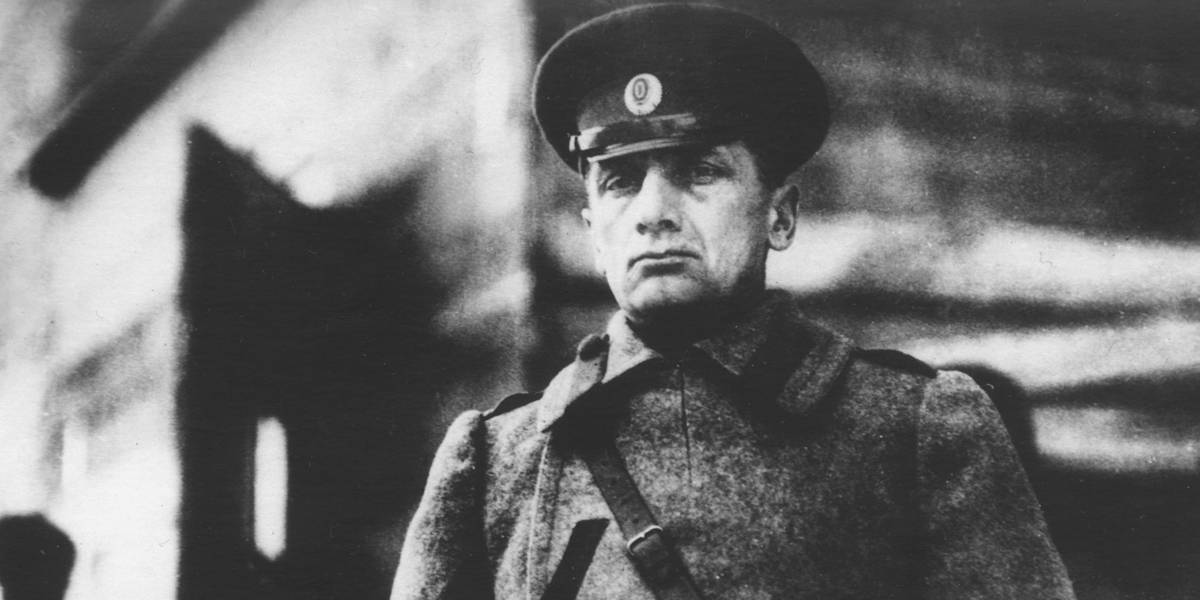
A number of socialists fought against the Bolsheviks with weapons in their hands. The SRs played a prominent role in the Izhevsk workers’ uprising. The Left SR Antonov became the leader of the largest peasant uprising in Tambov. The right SR Savinkov developed vigorous activity, organizing the uprising in Yaroslavl, a number of terrorist attacks, and combat formations. And in general, at the final stage of the Civil War, when the Reds were already waging war not against the Whites, but against the “greens” (that is, the insurgent peasants), it was the SRs and anarchists who were in the front ranks both in insurgent Siberia, and in Ukraine, and in the Volga region. But even here, squabbles and splits made themselves felt. In essence, all the leaders of the anti-Bolshevik uprisings remained isolated. Both the Menshevik and SR Central Committees continued to condemn these mutinies and considered them unpromising. Even the peasant uprising in Tambov was not resolutely supported by the SR party.
So what are the reasons why the Bolsheviks staged a coup so easily, easily dispersed the Constituent Assembly, and, with all their crazy policies, held onto power in an extremely extreme situation, defeating all their numerous opponents? First of all, one should frankly acknowledge the fact that the Bolsheviks found mass support in Russian society. But mass resistance as well. One did not contradict the other in the least, for often the very same people supported the Bolsheviks and then fought against them! As historian Boris Kolonitski correctly noted in the article “Reds against Reds”: “It was difficult for many rural residents to imagine how the same government could pursue such contradictory policies… Soviet power became both a mother and a stepmother to the peasants at the same time”17. And indeed: on the one hand, the Bolsheviks did what the other parties could not dare to do — they let the Russian peasant go home from the trenches of the First World War (at the cost of losing this war) and allowed him to divide the landlords’ land (at the cost of heavy bloodshed); on the other hand, they carried out merciless food requisition, the destruction of the habitual culture and way of life, and monstrous repressions. Therefore, the exact same peasant could riot against the Bolsheviks today and tomorrow, upon learning about the NEP, go back under Lenin’s banners. “Many remember an episode from the film “Chapaev”. The dashing division commander addresses a peasant gathering; he wants to secure the support of the local population, who are dissatisfied with the behavior of the Red Army soldiers (and perhaps with the policy of the new government: “the Reds are plundering…”). A wily peasant asks a tricky question: “Vasily Ivanovich, are you for the Bolsheviks or for the communists?”.. Chapaev would have had to think three times to find the right answer to a question that now seems so simple”18. It was completely real, this belief of the peasants in “the bad Bolsheviks who holed up in Moscow” and “the good communists who are our defenders and our guys”. Or vice versa…
We are used to viewing the Red Army in the Civil War as exclusively a Bolshevik branch, but one is by no means equal to the other. The Red Army is not the Bolshevik party! If we look, for example, at Ukraine in the first half of 1919, we will see that there was no Red Army in the “Bolshevik” sense there at all19! Just look at the Ukrainian commanders — the anarchizing sailor Dybenko, “bat’ko” Makhno and the adventurer Grigoriev, ataman Marusya, national-communist Shary-Bogunsky. Even commanders like Shchors, Kikvidze, Bozhenko simply managed to die early, and therefore entered the pantheon of Soviet heroes. Yet they were not orthodox Bolsheviks at all. Even the circumstances of their deaths raise many questions…
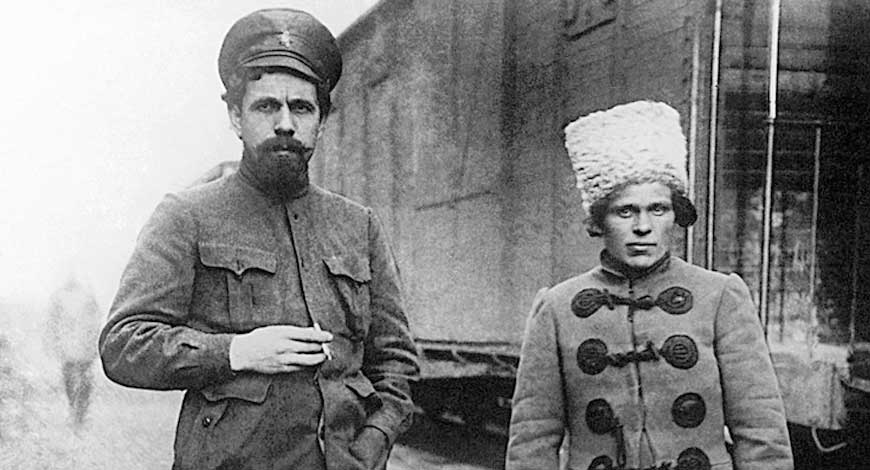
What am I getting at? Simply that both the Red Army and the entire Russian revolution were by no means limited to the Bolsheviks and are not their historical property. The revolution was made by grassroots activists, trade unionists, soldier orators, and village leaders of the Russian free spirit. It was they who helped Soviet power establish itself from Ukraine to the Far East. Various kinds of “committee men” — chairmen of soldier committees and village councils. It was they who became “bat’kos” and atamans; they went with the Bolsheviks one moment and challenged them the next. Moreover, the White Guards did not take these people into account at all! The leaders of the Russian free spirit fought for many people, but almost never for the Whites. Therein lies the secret of the White defeat. The talent of the Bolsheviks was that they managed to ride the popular wave, to subjugate all this great soldier-peasant freedom. Almost all popular leaders subsequently could not accept the entire policy of the Bolsheviks, could not remain silent upon seeing the humiliation and desecration of the Russian countryside. They turned their weapons against the single-party dictatorship and lost… It is also important that these people fought under left-wing slogans (“For soviets without Bolsheviks!”), under black or red banners, and often considered themselves “truly red”. The tragedy of all these leaders of the Russian free spirit and of our entire people is that poor Russian people ultimately endorsed a regime they did not want at all.
The radical policy of the Bolsheviks in the agrarian question, extremely accessible and aggressive propaganda, the ignorance and downtrodden state of the huge mass of the population, Lenin’s personal political flexibility — this is what worked for the victory of the communist regime. If the communists had not introduced the NEP in 1921, they would inevitably have lost the war to the peasant freedom. But the reasons for the Red victory lie not only in the persistence and cunning of the Bolsheviks. The main reason is the enormous disunity of all anti-Bolshevik forces and of Russian society as a whole, the inability of various parties to reach an agreement with each other, the absence of unifying points of contact. The peasants considered the officers to be upper-class masters, were mentally distant from them, and feared the return of the old order; the Cossacks considered the peasants “clodhoppers” while fancying themselves the elite; the officers despised the intelligentsia and considered it responsible for the collapse of Russia; democratic intellectuals, in turn, looked askance at the officers and considered them reactionaries. The Mensheviks mocked the SR fetish of the peasantry; the SRs considered the Mensheviks Marxist doctrinaires… And sitting at the same table with, say, the Kadets was altogether excruciatingly unbearable for Russian socialists… One can notice that totalitarian regimes and dictatorships came to power precisely in such extremely atomized societies experiencing an acute crisis and the collapse of former guidelines. Where there was no agreement among people. Where instead of uniting against an obvious catastrophe, confusion and vacillation reigned in society. Divide and conquer!
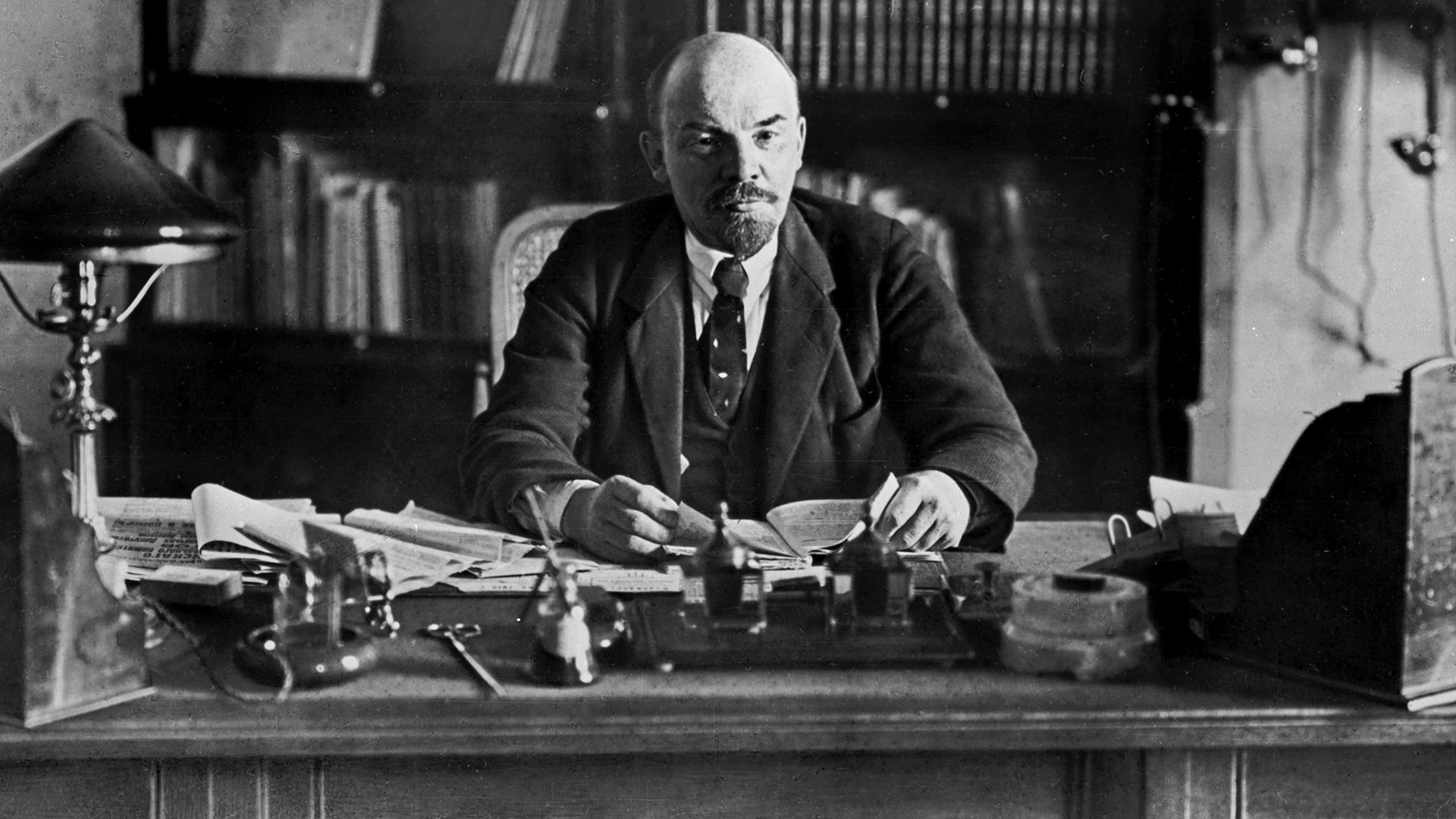
A huge problem was also the fact that in all parties, in all movements, there were quite a few people ready to take the Bolsheviks at their word, or even acknowledge that they were right. Yes, “Smenovekhovstvo” began to take shape even back then, even before emigration… Left SRs, Martov’s Mensheviks, red Cossacks, even monarchist officers — who didn’t find a “grain of sanity” in Bolshevism and switch to their side. The Bolsheviks split and stratified their enemies, and then crushed everyone one by one. The term “Stockholm syndrome” did not exist yet back then, but subsequently many Russian emigrants would take up this issue — how did it happen that a huge multitude of smart and educated people from among the opponents of the Bolsheviks nevertheless allowed themselves to be hypnotized?
The mistakes of the Russian moderate socialists were similar to the mistakes of the Provisional Government. The Russian intelligentsia, thrust to power by the wave of the February Revolution, brought all its qualities into it — democracy, humanism, magnanimity, decency, sincere love for its people, and… a sense of centuries-old guilt toward them. Those democrats were unlike today’s; they fought sincerely for an idea and did not take a single ruble or kopek for themselves anywhere… But at the same time, there were other qualities — inability to do administrative work, a tendency toward excessive theorizing, at times sectarianism, and an excessive belief in the righteousness of the people everywhere and always. “If the people are against me, then I am not right!” All this was quite explicable — for many years the Russian intelligentsia could not conduct normal political activity; it conducted it in underground conditions. Under such conditions, no other qualities could have formed in it. And when the hour came and the intelligentsia stood at the helm, they simply did not have the proper experience. The Russian intelligentsia could not have been different, but that is not their fault. As a result, the Russian moderate socialists suffered a historical defeat; it was necessary to draw certain lessons from this and rethink their ideas. This is what the Russian emigration set about doing.
Legal activity for the SRs and Mensheviks on Soviet territory soon became completely impossible. In the 1920s, the Bolsheviks did not yet dare to execute other left parties right and left, limiting themselves to banning them and imprisoning their leaders. International diplomatic recognition was important for the Soviet government at the time, so unnecessary noise in the West was of no use to the communists. In the summer of 1922, the trial of the SRs took place—12 people were conditionally sentenced to death, but the sentence was not carried out, largely due to a campaign in support of political prisoners organized by the Russian left-wing emigrants. And yet, very few of the left managed to bypass the Cheka dungeon. Alexander Potresov also ended up in confinement, where he finally undermined his health. Martov was the luckiest: as an old friend of Lenin, he enjoyed slightly more freedom. SR Osip Minor, upon being released from a Bolshevik prison, dedicated the following poem to a Cheka cell:
Whoever you might be, victim of bestiality,
Menshevik, S.R., S.N.,
Knight of Marx from “Edinstvo”
Or a gentleman from “Rech”.
Or a rebellious son of the Don,
Or a Polish cavalier,
Or from foreign Ukraine
A counter-revolutionary,
Striker from “Potel”,
Saboteur from “Zemsoyuz”,
Right wing from ex “Vikzhel”,
Remember this Hôtel de Luxe!
Among the Mensheviks, Julius Martov and Rafael Abramovich went abroad in the summer of 1920, and Fyodor Dan was exiled from the country at the end of January 1922. At the beginning of 1925, Alexander Potresov also emigrated from the country. The Mensheviks who ended up in emigration created the Foreign Delegation of the RSDLP headed by Martov. Starting in February 1921 in Berlin, they began publishing “Sotsialistichesky Vestnik”. Out of the members of the SR Central Committee, only three managed to emigrate — Viktor Chernov, Vladimir Zenzinov, and Nikolai Rusanov. Out of the candidates — only Vasily Sukhomlin. It was Sukhomlin’s departure and his creation of the Foreign Delegation of the PSR with a number of comrades that laid the foundation for the emigrant activity of the SRs.
For both the Mensheviks and the SRs, comprehending the events of 1917 was of paramount importance, essentially a matter of honor20. And although SR Mark Vishniak remarked, “I am not writing a history of the revolution… a contemporary is not given to be the historian of his time and, least of all, of the events in which he was somehow involved”21, no political person could pass by an analysis of the Russian revolution. And even now those events, alas, have still not passed into history. That is why there are so many disputes, why there are so many emotions. The figures of Lenin, Stalin, Nicholas II, and the white generals still remain political rather than historical. Thus, the most important question for the left-wing emigrants became “Why did Bolshevism win?” and “Where is the Bolshevik regime heading now?”.
In emigration, the split of the Mensheviks into right and left continued to worsen. The left stubbornly continued to consider the Soviet regime dual and to see a progressive proletarian beginning in the October Revolution, which, they claimed, was about to triumph. The leaders of these opinions were Martov, Dan, and others. The left wing managed to impose its line on the party, which, alas, became ruinous for Menshevism as a whole. Major miscalculations in assessing the essence of the Soviet regime and completely unjustified forecasts showed the theoretical insolvency and bankruptcy of left-wing Menshevism to many. Petr Abramovich Garvi in his letter to Fyodor Dan criticized in extremely harsh terms his entire many-year activity as the head of the party:
You justified your ruinous, shoving-aside policy of “preserving the form” by the need to save the “Martov line”, which you turned into a dead dogma. You sought by all means to preserve within the Foreign Delegation a “correlation of forces” favorable to your “current”. But by this you did not protect the Foreign Delegation from internal crises that threatened it with explosion and split time and time again. Instead of taking into account the new situation, restructuring, and gathering everything living that can be used for the future of the party, you continue the policy of bureaucratic “firmness”, which is not in the traditions of Menshevism and which the firmness of your political views does not correspond to in the least.
We all made mistakes, of course. But in light of what has happened in recent years and, especially, of what is happening now, tell me, Fyodor Ilyich, in all conscience: where is your mandate for political leadership and organizational firmness? Did your attitude — or that of the party opposition (mine, in particular) — toward Bolshevism, toward the evolution of Soviet power, toward Stalin’s policy turn out to be essentially correct? Remember your attitude toward the question of the united front (Yezhov and Böhm’s telegram), your attitude (especially at first) from which you refused to draw political conclusions. Your inexcusably optimistic attitude toward the new Soviet constitution, and on the other hand, internationally. Your former projects of merging the RSI with the Comintern, your experiments in ideologically combining democratic socialism with dictatorial communism, and especially your “military theses”, which oriented themselves toward the Soviet Union leading the anti-fascist coalition of powers — remember all of this and tell me in all conscience, is it “normal” that after all these mistakes, as if nothing had happened, you continue to represent the party, head the Foreign Delegation, and impose your stamp, the stamp of factionalism, on “S.V.”, this sole public manifestation of the party, while I have simply been written off with the approval of your compliant like-minded peers and, to my shame I must add, with the tacit connivance of two representatives of the opposition, whose motives I leave to the judgment of their own consciences”?22.
It is amusing that to this day the notion continues to live in society as though Vladimir Lenin is a genius and a great helmsman because he won, while all his opponents are political losers. That Vladimir Ilyich was a shrewd politician, I did not dispute. It is just that most of Lenin’s critics from the very beginning recognized the nature of his regime and how this whole thing would end. All those whom Soviet Marxologists, echoing the collected works of Lenin, branded for decades as “renegades”, “opportunists”, and “revisionists”, saw much further than the wise Ilyich. The great tactician Lenin was a mediocre strategist. Being a genius of momentary politics, he was poorly able to calculate the future of his actions. It seemed to him that once power was seized in Russia, the revolution would triumph everywhere. One just needs to start, and then the process will go on by itself! Lenin believed that communism would be built already by the 1930s–1940s23. At the same time, anti-authoritarian socialists immediately stated that the entire Bolshevik adventure would turn into a bloody dictatorship headed by a tyrant. While official Soviet propaganda trumpeted the “friendship of peoples”, here is what left social democrat Rafael Abramovich wrote about the fate of the Soviet Union:
The current Soviet Union represents, regardless of those territories which the Bolshevik government annexed over the years of its rule, a multinational government in which there develop, and as further capitalist development proceeds must inevitably continue to develop more and more, the very same processes that are connected with the national struggle… As a result, in the USSR, in which, according to the assurances of the communists, all national questions have supposedly already been finally resolved, a huge accumulation of nationalistic energy is taking place, and future national battles are being prepared.
The continuous growth of the petty-bourgeois proprietary element in the countryside and the city taking place before our eyes behind the facade of communist dictatorship, flooding more and more not only the apparatus of the Bolshevik dictatorship but the party itself, brings with it a rapid rise of the most exacerbated nationalism and Bolshevism among all nations, including the Russian one. The inevitable victory of bonapartism while preserving the current dictatorship — that is, the establishment of an outspoken dictatorship of the propertied strata — will be the beginning of reaction also in the sphere of national relations, a signal for a fierce struggle not only between the great-power chauvinism of Russian bonapartists and the separatism of nations and minorities, but also of various nations among themselves24.
Rafael Abramovich correctly noted that national problems in the USSR did not go anywhere, but were inherited from the Russian Empire, simply passing into a new quality. Provincial nationalism would still break out in the Soviet republics, and party bosses would soon head it, become local “princelings” among themselves, and tear the USSR to pieces. And the collapse of the state would occur precisely along the borders outlined by the Bolsheviks.
There is much to learn from all the democratic socialists of that period. Alas, while the works of Ulyanov-Lenin were published in our country in huge editions, literally every note and sneeze of his, thousands of other Russian socialists and other politicians, all their numerous works, were left overboard. And to this day they are little known to the Russian reader. Yet these were truly outstanding minds, recognized abroad, who influenced world sociology, political science, geography, history, and other sciences. The overall scale of the works of the Russian emigration simply cannot be measured. It is colossal!
It is also sad that while many Russian leftists continue to discover Trotskyist criticism of the USSR and admire the “wisdom” of Trotsky, who “predicted” the collapse of the USSR, they miss the Menshevik-SR criticism of the Soviet regime, which was much more well-thought-out and precise. And it did not contain such deep contradictions as Trotskyism. And these were noted back in the 1970s by the outstanding Marxologist Maxim Rubel:
The religious adherence to the myth of the “proletarian” October prevents Trotsky from acknowledging the obvious: “Stalinist bonapartism” corresponded to the degree of economic development of Russian society in 1917 in the exact same way that “Jacobin bonapartism” fit into the revolutionary process in France that began in 1789. The October Revolution was not “betrayed” by Stalin; on the contrary, thanks to Stalin, it revealed its true character, conditioned historically and economically. However, before noticing the “Thermidorian” and “bonapartist” character of Stalin’s rule, Trotsky argued as though “historical analogies with the Great French Revolution (the collapse of the Jacobins!), which liberalism and Menshevism feed and comfort themselves with, are superficial and untenable” (Trotsky L.D. The New Course). In 1927, Stalin did not miss the opportunity to remind Trotsky of this phrase, which over three years “managed to evolve toward ‘Menshevism’ and ‘liberalism'”25.
The inevitable collapse of the Soviet regime was also predicted by the leader of the right wing of social democracy — Alexander Potresov. The right-wing Mensheviks represented a smaller part of the Foreign Delegation of the RSDLP and grouped around the magazine “Zarya” edited by Semyon Osipovich Portugeis. Unlike the left-wing Mensheviks, the right did not believe for a minute in any evolution of the Soviet regime, considering it an absolute threat to all human civilization. Starting in 1931, Potresov published his own magazine “Notes of a Social Democrat”, in which he called on all democratic countries to unite against Bolshevism. What worried him most was the discreditation of the ideas of socialism by the Bolsheviks. Alexander Nikolayevich feared people’s disappointment in socialism:
Of course, first and foremost, the dictatorship of the ruling party will be found guilty, all the figures who were up there at the helm of governance. But the trouble is that not only they. All those ideas and concepts that were inextricably associated with this power, with this Bolshevik despotism now recognized as Russia’s misfortune, will also be found guilty. Socialism (in company with the truly guilty communism of the Bolsheviks), the proletariat, and even Karl Marx will be guilty without guilt.
The prejudice of the mass man who has experienced cruel disappointment will not delve into the “subtleties” of ideologies. Hacking from the shoulder, along with Bolshevik communism, it will chop down any state and public regulation of production, any “socialization”. Ten years of practice of the Bolshevik dictatorship will serve as indisputable evidence of the bankruptcy of all those sick-and-tired “isms” with which the unfortunate people, having fallen under the knife of the social experimenter instead of a rabbit, were forcibly stuffed to the point of complete stupefaction26.
The great paradox of the 20th century lay in the fact that communist ideas, conceived in Europe and written under the impression of the German and English working class, became a real power mostly… in Asian countries. In agrarian countries, predominantly peasant ones, with a small working class, a weak national bourgeoisie, a low political culture, and a strong authoritarian tradition. Russia was such a country as well. And the Russian revolution, in my opinion, is an unconditional part of the process called “the awakening of Asia”. Already by the 1920s, the Bolsheviks, who had placed their hopes on revolution in Europe, turned their eyes to the East. Even after formally abandoning world revolution, the Soviet Union would subsequently continue to provide financial and other assistance to a wide variety of “third world” states — from El Salvador to Ethiopia. Potresov also foretold the export of revolutions to Asian, African, and Latin American countries and the kind of farce this would turn into:
I am eagerly awaiting the moment when some near-zulu petty king (or a communist who has replaced this petty king) introduces the so-called “Soviet system” in his country and declares mandatory communist worship throughout his state. This will only be bringing to the point of absurdity what happened in Russia, or rather, — the Russian absurdity squared.
The introduction to capitalist civilization with all the contradictions and social antagonisms inherent in it of peoples with a completely different way of life puts on the order of the day by no means the problem of the approaching socialist system on a global scale. But rather the reverse — the problem of strengthening new varieties of capitalism, peculiar political forms that can be created from the combination of disparate cultures, frequently yielding at the same time a repetition with corresponding variations of that masquerade which we already had the misfortune to experience in Russia ourselves27.
And indeed, the Soviet regime spared no expense in helping those banana dictators who diligently dressed themselves in “red feathers”. As soon as any political scoundrel called himself a “communist”, he secured generous financial injections for himself. Potresov, of course, did not live to see either the Ethiopian dictator Mengistu Mariam, nor the “lord of all the beasts on the earth and fish in the sea” Idi Amin, nor the cannibal Bokassa. But he accurately described the general course of the Soviet Union to support other cannibalistic regimes.
An important milestone for the internal self-identification of Russian Mensheviks were the words of Pavel Axelrod: “I will say in passing that it is high time for us to call our party not Menshevik, but simply and exclusively Social Democratic. Since the Bolsheviks style themselves communists, in contrast to social democrats, and have even managed to induce their socialist opponents to recognize them as a genuinely “communist party”, it is unclear why we should retain the old moniker foisted upon us by the Bolsheviks and thereby nurture the old, finally deprived of any real basis notion of the presence in Russia of another, Bolshevik, social democratic party”28. Thus, Russian social democrats finally drew a line between themselves and the Bolsheviks, defining Bolshevism as a phenomenon alien to social democracy.
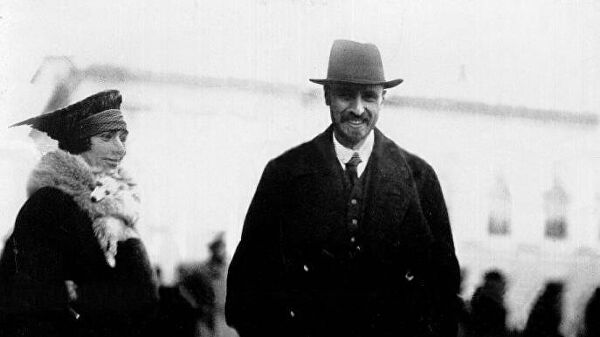
An unquestionably important episode for understanding the evolution of emigrant Menshevism is Irakli Tsereteli’s letter to “Sotsialistichesky Vestnik” on the occasion of its 25th anniversary. In it, Irakli Georgiyevich expressed thoughts that had already become indisputable for modern social democrats: “The center of gravity of socialist propaganda lay in the socialization of the economy; the propaganda of democracy occupied a subordinate place — it was a means to achieve the main goal, the socialist reorganization of the economy. In the light of the experiences lived through, it became clear that there was a fatal error in this system of propaganda. We saw how, in the course of the revolution, forces came forward that used democracy as a springboard to seize power and organized the country’s economy under the leadership of a central dictatorial power that turned the entire population into slaves with no right to defend their interests. The merit of “Sots. Vestnik” lies in the fact that, having understood the erroneousness of the old system of propaganda, it boldly restructured its work, placing at the forefront the idea that democracy is not a means, not a stepping stone, that democracy, the freedom of the human individual, is a necessary component of socialism, without which socialism itself is deprived of its soul. It was precisely the underestimation of freedom as an integral part of socialism that led not only to the defeat of the socialist movement in Russia, but also to the crisis of the socialist movement throughout the world”29.
In essence, this letter meant the long-awaited divorce of Russian social democrats from Marxism, the transition to Bernsteinism and other progressive ideas (at least, in the words of one man). Among German social democrats, they would finally triumph in the Godesberg Program of 1959, whereas in the Russian environment, progressive social democracy was still in its infancy. Over the past 30 years, hundreds of Marxist and other ultra-left parties had been born and died, but social-democratic ones — only three or four. Truly, the Marxist spirit of dead generations still weighs like a nightmare on the minds of the living…
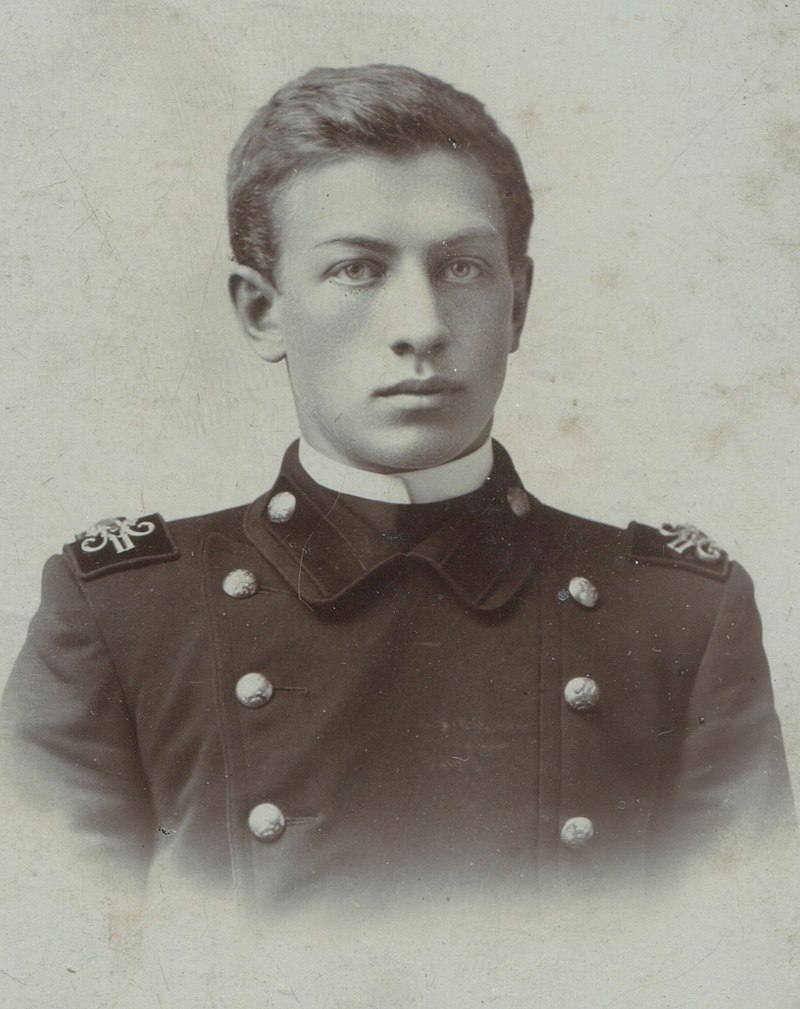
Also, many Mensheviks, being witnesses to both the Russian revolution and other epochal events, became almost the founding fathers of scientific Sovietology. Interest in Soviet history rose sharply in the West during the Cold War years, so the memoirs of the Mensheviks and their political analytics became a godsend for historians. Thus, the memoirs of Nikolai Valentinov-Volsky served a great purpose. In his youth, Nikolai Vladislavovich was initially an ardent supporter and close associate of Lenin, but subsequently broke with the Bolsheviks. His closeness to Lenin, the memory of his initial sympathy for him, and at the same time the realization of his past mistakes allowed Valentinov to describe the character and habits of the first Soviet leader more objectively than many. To show what in Lenin so attracted people and made them fall in love with his Bolshevism, and what inevitably should have repelled a thinking person. During the years of the New Economic Policy, Valentinov was engaged by the Soviet government to work as a specialist, and in the 1930s he emigrated. His memoirs about the NEP became one of the main sources on this period for foreign historians30.
Another iconic figure for historical science was the Menshevik Boris Nicolaevsky. It is said of this man that he performed a truly civic feat and is a most important witness to the difficult 20th century. This is hard to dispute. Indeed, Boris Ivanovich left behind over eight hundred boxes of archival materials; throughout his life he collected sources both on the history of the International, Marx, Engels, and on the history of the Russian revolution, collectivization, and communist repressions. Nicolaevsky twice saved not only Russian but also German archival documents from the Nazis, taking them out first, in 1933, to France, and then, in 1940, to the USA. Today, his works are kept at the Hoover Institution at Stanford University in the USA. The most famous of the books written by Boris Ivanovich was his work on the well-known SR-provocateur Azev, where the author argued that Azev was not at all a traitor in the service of the police, but from the very beginning was a double agent and played his own cunning game31.
The SR emigration left a large ideological and theoretical heritage, including memoir and scientific works, the study of which still awaits its researchers. The SRs published the magazines “Za narod!” and “Volya Rossii”. But the most significant was the magazine “Sovremennye zapiski”. Nikolai Avksentiev, Mark Vishniak, Fedor Stepun, as well as Ivan Bunin, Vladimir Nabokov, Marina Tsvetaeva, Andrei Bely, Zinaida Gippius, Dmitry Merezhkovsky, Konstantin Balmont, Mark Aldanov, Nina Berberova, and other prominent literary figures of the Russian emigration published in it.
Two ideological and political currents were clearly outlined in emigration — the right and the left-centrists. While the right were supporters of the Western liberal model of social development, the left-centrists continued to insist on the necessity of building democratic socialism on Russian soil32. The left-centrists suggested not rejecting wholesale all the actions of the Soviet government—the centrists looked at the collective farms with interest and considered it possible to leave them on a new democratic basis. The right SRs proceeded from the recognition of the special importance of the February-March Revolution and the Constituent Assembly dispersed by the Bolsheviks, and therefore defended the necessity of returning to the precepts of February. They believed that Russia would inevitably embark on the path of a civilized democratic society, in which all the theory and practice of Russian democratic socialists would be in demand. On December 12, 1920, a call appeared in the right-SR press for all former members of the Constituent Assembly to turn “from the red and white reaction to the precepts of the March revolution” and, neither more nor less, defend the name of democratic Russia before the peoples of the world. Such personalities as Alexander Kerensky, Nikolai Avksentiev, and Osip Minor signed the appeal.
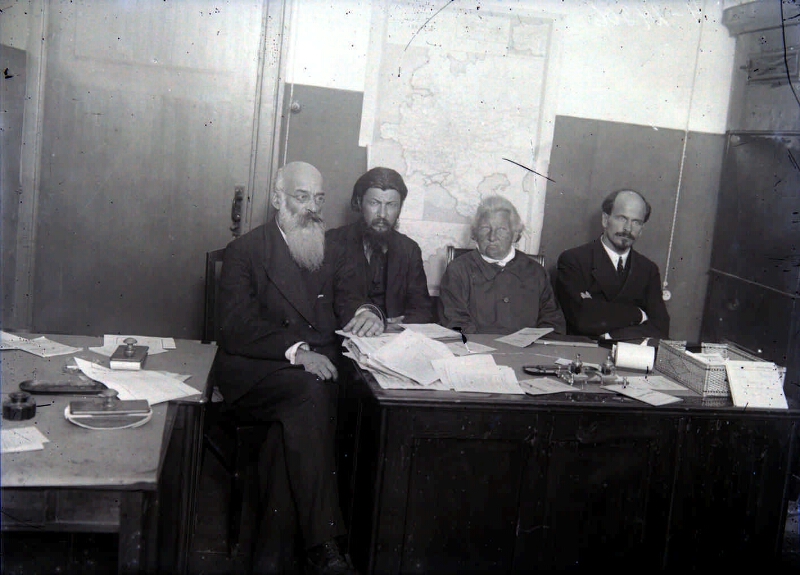
The radical left-SR emigration left practically no trace after itself. Their main leaders (Spiridonova, Kamkov, Karelin) were arrested, and in the 1930s shot. Those left SRs who managed to emigrate were not respected among democratic socialists and were considered renegades. The right SRs were now a hundred times more willing to cooperate with the Mensheviks than with their radical “brethren”. Isaac Zakharovich Steinberg can be considered the most prominent of the emigrated left SRs. He was a member of the faction of the PLSR and PSR (maximalists) of the International Bureau of Revolutionary Socialist Parties (Vienna International), engaged in literary and journalistic activity in Yiddish under the name Yitskhok-Nakhmen Steinberg. He was a theoretician of Jewish territorialism and the managing editor of the magazine “Afn shvel” (On the Threshold) in Berlin. In his work “The Moral Face of the Revolution”, Steinberg tried to single out the “good” beginning in the revolution — Dantonist, SR, and the “bad” one — Robespierrist, Bolshevik33. Steinberg’s work was rightly criticized for extreme idealism and an overall clumsy attempt to whitewash the left SRs.
In Paris, the right wing of the SRs predominantly prevailed with figures such as Kerensky and Avksentiev. In Prague, the centrists were led by Chernov. At the beginning of 1931, a serious theoretical conference of the Socialist-Revolutionary party took place in Prague. A total of 18 reports were presented, among them: “Ideological Foundations of Democratic Socialism in the Understanding of the PSR” (V.G. Arkhangelsky), “Socio-Economic Policy of the PSR” (E.A. Stalinsky), “Labor Policy of the PSR” (M.V. Kobyakov), “Agrarian Policy of the PSR” (P.D. Klimushkin), and others34. The political program underwent an evolution; now the SRs advocated the concept of a mixed economy, emphasized the significance of a multi-party system and democracy even more strongly, and considered the role of foreign capital important for the restoration of Russia.
The right-wing SRs criticized the past of their party. Thus, the SR Kalyuzhny, reflecting on the reasons for the defeat of the PSR, considered the reliance on the soviets to be mistaken. In his opinion, “The Provisional Government, the state authority responsible for its actions to the country, turned out to be a fiction, devoid of any significance and power. The actual power belonged to an irresponsible private political organization — the soviets. And the S.R. party, while still at the zenith of its significance and influence, not only permitted such a development of the soviets, but also contributed to it”. Kalyuzhny’s conclusion is quite definite — “the S.R. party proved to be non-state-minded and logically untenable”35.
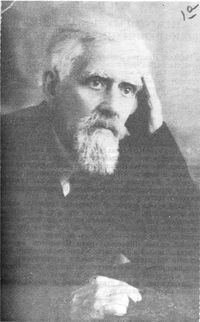
Sergei Porfirievich Postnikov, a former deputy of the Constituent Assembly, devoted the greatest attention to the reasons for the defeat of the PSR in his report at the Prague conference. He recalled Chernov’s well-known phrase: ““We ourselves may be bad, but our program is good”. Chernov, of course, did not suspect at the time how much truth would turn out to be in both parts of his phrase during the era of the 1917 revolution. Almost the entire people voted for our program, but we failed to use this and carry out our program, proving to be poor politicians and tacticians”36. And further, Postnikov generalized the reasons for the party’s failure — “… the advantage of the Bolsheviks was that they had an almost genius tactician and organizer in the person of their leader Lenin, whereas we, on the one hand, had only a theoretician Chernov as a leader, and on the other hand — Kerensky, the main hero of the February Revolution, although a political tactician, but organically unconnected with the party and often acting in an individual manner”. Sergei Porfirievich also criticized the position of the PSR during the era of the Treaty of Brest-Litovsk, “… when the party, to please principles, completely disregarded real reality. If the party had truly wanted the Constituent Assembly to have the opportunity to work on restoring the country and on implementing the demands of revolutionary democracy, first of all it was necessary to conclude some ‘modus vivendi’ with the Germans, rather than playing noble Don Quixotes in relation to the allies, who, as subsequent events showed, managed without Russia and very quickly forgot about the merits and rights of Russia”.
It is important that Viktor Mikhailovich Chernov did not make it to this conference. While Chernov’s authority as a theoretician was always, right up until his death, quite high, his positions as leader and head had long since been undermined. The key work for Chernov in those years was “Constructive Socialism”. To utopian and pseudo-scientific socialism, the author contrasted constructive socialism, which would absorb all the best from left-wing thought. Chernov began to consider northern, Scandinavian socialism his ideal37. Viktor Mikhailovich also began writing a history of the Russian revolution, but only two volumes of the planned four in the “Great Russian Revolution” series were published. The leader of the SRs believed that the strike detachments of the Bolsheviks in 1917 were not formed at all from the qualified working class, but from declassed elements — lumpens and outright criminals. He considered the three pillars of Bolshevik ochlocracy to be: non-working workers, non-fighting soldiers, and land sailors. The so-called — ochlos. The transition from one extreme to another is their natural state. “The plebeian pathos does not disappear anywhere — “strike”, “smash”, “crush”, “down with” — it is not so much important whom, the courage, the instinct of destruction, and the language of hate are what matter. Such a contingent suited the radicals perfectly for seizing power, but was completely unfit for state building, and most importantly — for a new army. It cost the Bolsheviks considerable effort to turn this unbridled rabble into the regular Red Army.
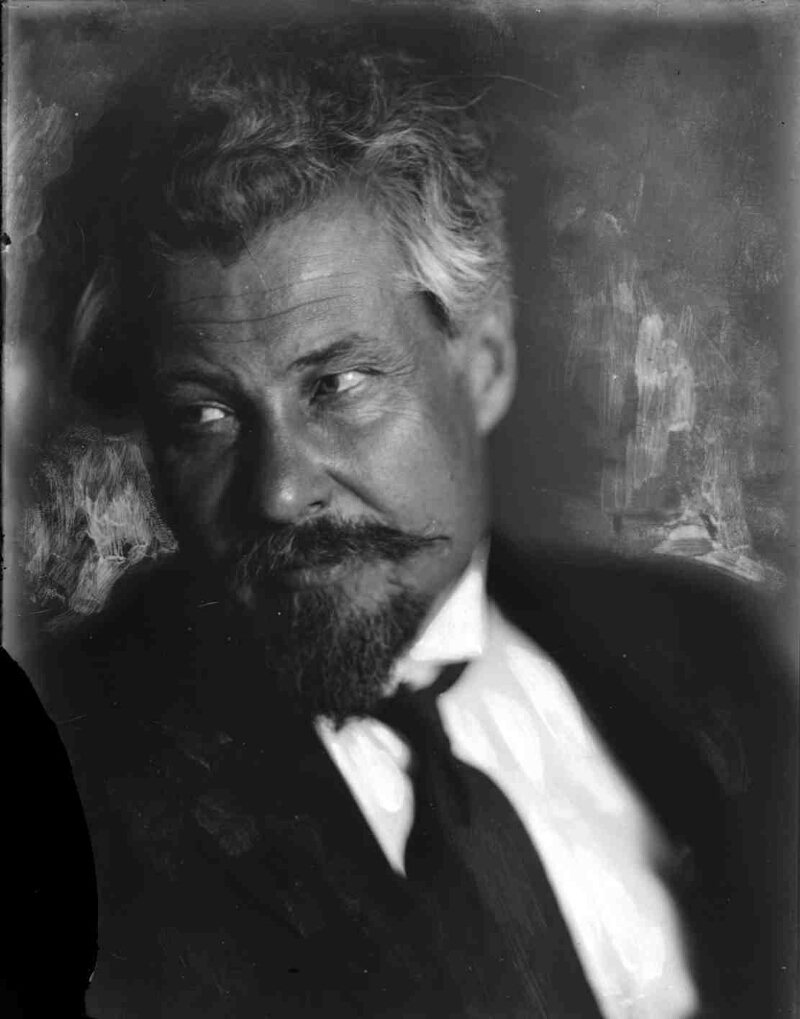
Viktor Chernov in his works drew attention to the German Revolution, which managed to stop at its democratic stage and not slide into dictatorship. If the Russian Revolution ended with October and the Bolshevik usurpation of power, Germany managed to stop at its “February”. Viktor Mikhailovich saw one of the reasons for this in the fact that the Germans turned out to be consistent democrats who understood that “goodness should have fists”. Chernov emphasized that good democracy is not a spineless permissiveness. Rather, it is an authority responsible to the people that is ready to punish those who do not respect the rights and freedoms of others. “No freedom for the enemies of freedom!”, — this is the actual slogan the aging party leader arrived at. He noted with sorrow that the Marxist-Bolsheviks continued to sit in the parliaments of European countries, while many democrats remained indifferent to such a state of affairs.
The irreconcilability of a number of Russian emigrants toward the USSR and the Bolshevik regime is well highlighted by the following incident. By that time, the Austrian social democrat Otto Bauer, to whom the authorship of the term “democratic socialism” is attributed, proposed moving away from narrow-class, “proletarian” socialism and replacing it with “integral” socialism, which would unite all adequate left-wing ideas of that time. That is — Bauer proposed taking a closer look at “Soviet socialism” and combining its achievements with social democracy. It is quite natural that the Russian left democrats could not agree with this. Therefore, Viktor Chernov subjected the inquiries of the patriarch of Austrian social democracy to criticism. From the perspective of today, it is obvious that Otto Bauer was right when he spoke about the necessity of putting an end to “socialism for the proletarians” and moving to “socialism for the majority”. But he was wrong when he thought that any unification of the democratic left with the Bolsheviks was possible, for in Soviet Russia all independent leftists were already being subjected to severe repressions at this time. And in the 1930s they would be physically destroyed altogether. It is obvious that all variations of communist regimes turned out to be extremely far from social democracy, and Otto Bauer started off well but ended up badly in his thought38.
Chernov began large-scale work on the history of the SR party, but did not bring it to completion. Already living in New York, he recalled with great warmth and love those with whom he shared life’s joys and sorrows, with whom he selflessly fought against autocracy in the name of a free and democratic Russia. He wanted to speak about them, to remind people of their contribution to the history of the Russian liberation movement. Thus, several biographical essays appeared — about Gershuni, the Gotz brothers, Natanson, Zhitlovsky, and other Narodniks. The leader of the SRs was one of the first to note the similarity of fascism, nazism, and bolshevism. Chernov believed that World War I with its psychosis created the prerequisites for totalitarianism. The “New Philosophical Encyclopedia” quite reasonably notes that Chernov and other SR theoreticians laid the foundations for the analysis of the phenomenon of totalitarianism39.
Russian socialists also returned to assessing the role of Alexander Fyodorovich Kerensky in the catastrophe that befell Russia. In our history, Kerensky is usually evaluated exclusively with a minus sign. All the more interesting is how the left evaluated this figure. And here everything is not so straightforward. Yes, Kerensky was left with a mass of ill-wishers, including among socialists. But there were also those who spoke a word in his defense, and not just one. Viktor Chernov, who was once his opponent, spoke out in support of Kerensky: “Dear Alexander Fyodorovich! There was a time when you had a countless number of friends. That was a time when you were at the zenith of glory and brilliance. Then came a time of decline — and you were left almost in complete solitude. You were declared a political corpse. And it is precisely now that I want to turn to you with words of friendly, heartfelt approval and sympathy… Now, when all past errors in the light of further events become clear and indisputable — now, when your own former admirers shout at all street corners about your activity as a solid accumulation of mistakes — it is precisely now that I am outraged by all the injustice of these exclamations. Yes, you were mistaken, like everyone, perhaps more than everyone — but the position you occupied was also more difficult than that of anyone else”40.
An interesting point of view on Kerensky was presented by Fyodor Avgustovich — an outstanding Russian philosopher and sociologist. During the revolution, he was close to the SRs, although in his views we can consider him a Christian democrat. He wrote:
I am deeply convinced that most of the mistakes made by Kerensky are explained not by that mixture of self-confidence and lack of will of which his enemies accuse him, but by a complete inability to technically organize the working day. A man who does not have a single quiet, focused hour at his disposal a day cannot govern a state. If Kerensky had an irresistible passion for fishing, he might not have lost Russia to the Bolsheviks. Intuition, the younger sister of prayer, loves silence and solitude.
…Feeling that the united, freedom-loving, all-people’s revolution dear to his heart was disintegrating more hopelessly every day into two party-based, extreme-flank counter-revolutions, he continued to insist that the only way out of the tragic situation was still the rallying of all living forces of the country in a strong, coalition-above-party government supported by state-thinking elements of the democratic masses organized in the All-Russian Council.
Kerensky lost the revolution. And nevertheless I continue to insist that Kerensky’s line was the only correct one. The general will of Russia was more with Kerensky than with the Bolsheviks, or with the right. The non-popular character of the Bolshevik power must be considered finally proven by the fact that espionage and terror still reign in Russia. The groundlessness of the military-bourgeois dictatorship was clearly revealed by the ease with which the Kornilov rebellion was crushed in three days by the “low-energy and spineless” Kerensky, as well as by the failure of the White movement. Kerensky’s fault, and a very big fault, is not that he led Russia along the wrong path, but that he did not lead it energetically enough along the right one41.
But the most ardent champion of Kerensky can be considered the “grandmother of the Russian revolution” Ekaterina Breshko-Breshkovskaya, who wrote about him: “He did not seek power, it came to him by itself. He persistently refused the role of dictator. Would there be even one person capable of enduring as much frank slander as Kerensky?.. How much simpler his task would have been if he had followed the example of the leaders of the French revolution and turned to a policy of mass repressions! However, history will remember forever that the Provisional Government led the colossal Russian state through the storms of the transition period from the old to the new regime by hitherto unknown methods, managing without the slightest bloodshed. It is impossible to say how long such a mild and peaceful regime would have lasted, as impatience, distrust, and a thirst for revenge were developing in the masses. But we know that during this period one man’s will restrained violence, despite the frantic calls for cruelty heard even among educated people”42.
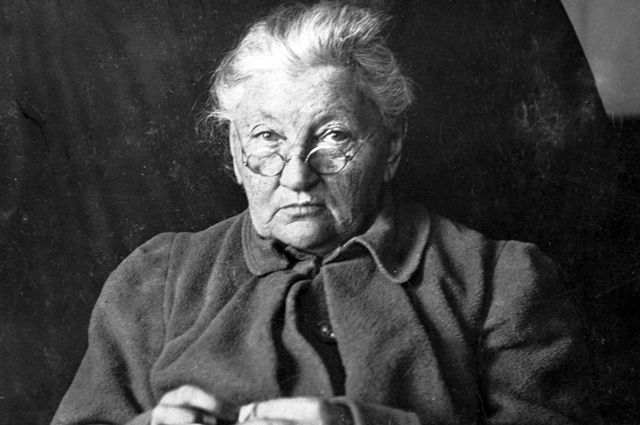
Ekaterina Konstantinovna’s authority as the first female convict-laborer among the Narodniks was very high. And Kerensky, at the very beginning of his political career, decided to visit Breshko-Breshkovskaya when she languished in distant and cold exile. As a result of this, incidentally, Kerensky contracted an illness that stayed with him for life. But he genuinely admired this personality, considered her a heroine, and could not miss the opportunity. And Ekaterina Konstantinovna remembered this for the rest of her life! Already having come to power, Kerensky did not forget about her, nor she about him. The touching friendship of these two people from different generations continued in emigration as well.

“Smenovekhovstvo” and other ideas of returning to the homeland struck all the political camps of the Russian emigration. These ideas began to captivate both the SRs and the Mensheviks, the monarchists, the right, and the left. The problem was also that subjective homesickness forced people to look for an ideological justification for their objective return. Socialists painfully experienced the actual capitulation of Peshekhonov, who was respected by many. The outstanding Russian economist missed Russia very much and made the decision to return. Alexei Vasilyevich Peshekhonov, in his articles, drew major conclusions from the Bolsheviks’ concession in the form of the NEP and believed that they would be forced to reckon with the peasantry more and more. He exaggerated the influence of the peasantry and believed that they would increasingly take power into their own hands in the RSFSR. All this shows that Alexei Vasilyevich could not part with typically Narodnik illusions. History did not justify his expectations. The misfortune was that everyone returning to the USSR was essentially deprived of the right to speak what they thought. They either had to lie or force themselves to believe the lie. One of Peshekhonov’s closest friends, the historian Myakotin, wrote on this occasion that “anyone who wants to return to Russia must defile his soul”43.
Yet the most striking representative of democratic socialism in the Russian emigration, in my view, was Mark Veniaminovich Vishniak. This man was an extraordinary thinker, a prolific publicist, and an irreconcilable opponent of any dictatorship. In 1917, Vishniak, as a representative of the SR party, took part in the work of the All-Russian Commission for Elections to the Constituent Assembly. To Vishniak belongs the credit for preserving the shorthand report of the Constituent Assembly for history. In his memoirs, he described how he stole the stenographic report from the publishing house. After the dispersal of the Constituent Assembly by the Bolsheviks, Vishniak acted decisively: “I was slowly walking down the stairs when the thought suddenly struck me: to return to the office and “pinch” the matrix — to take it away without permission. I was in luck: the manager was in the next room. Climbing onto a chair placed next to the bookcase, rising on tiptoe and taking the matrix was a matter of seconds”44.
Mark Veniaminovich’s role in the success of the magazine “Sovremennye Zapiski”, of which he was the editor for many years, is enormous. Until the end of his days, Mark Veniaminovich remained an ardent supporter of the February Revolution. Vishniak even considered the February Revolution “the birth of the Russian nation”. He remained its supporter even when many of its adorers turned away from it and cursed it. Defending the honor of February became one of the tasks of the editor of “Zapiski”. In his works, Vishniak often dwelt on the commonplace accusation against February that it “begot October”: ““In everyday life” one can still not distinguish between the two revolutions, one can reduce all post-revolutionary history to the fact that when the “tsar was gone”, life was gone too: money became cheaper, estates were taken away, pensions were abolished, “and away it went, and away it went”. But even legally — and all the more politically and historically — the revolution is not dissoluble in October and is not reducible to October. Such historiosophy overthrows itself. Following it, one would have to recognize even the autocracy only as a prologue and prelude to February, as its “natural and logical” completion…”45
Vishniak drew attention to the all-people’s, mass character of February and the conspiratorial, Blanquist character of October. And here there can be no two opinions — not a single political force in Russia, not a single social group spoke out against February. Everyone truly supported February. The monarchist parties shamefully hid themselves or changed their signboards, and all the rest put on red ribbons and praised the revolution! Whereas sooner or later, one way or another, almost everyone spoke out against October and the Bolsheviks! From the million-strong peasantry and Cossacks to a wide variety of parties! It was not so in February. Vishniak summarized:
The constitutive feature of a revolution is its all-people’s character. And therefore, a revolution is the more “genuine” and the more “great” the closer the masses participating in it coincide physically with the entire composition of the population, the stronger individual individuals, groups, classes are seized by a “mundane” feeling, permeated by the interests of a super-personal, transcendental whole”. From this point of view, the French Revolution of 1848 is greater than the revolution not only of 1830, but of 1870-71, because even the Commune of 1871 did not go beyond the limits of a local, Paris episode. And in this sense, the February Revolution of 1917 is incomparably “more” a revolution than October. Whether October was a revolution — or a coup — is generally decided not by whether October was violent, or proved victorious, or made intuitive (“Soviet”) law positive; but by — who made it: did the nation act in October? Was it active? Did the masses perceive their participation in October as a private and mercenary affair and only as such, or were they possessed by the consciousness of a common, national affair, of a state interest?
Precisely because October relied predominantly on “skin-deep” instincts, proceeded not from rallying, but from division, from party and class dictatorship and civil war, and not from civil peace and popular rule, from the idea not of a national, but of a world revolution, which made Russia a simple “bridgehead” and “detonator” of European revolutions and abolished Russia as a national-state unity, of the coming union of the USSR, — October was, if you will, a headquarters revolution, but not a revolution in its true and sole meaning and sense46.
Vishniak also devoted much attention in his works to the Constituent Assembly. He perceived its dispersal as the greatest drama of Russian democracy and a personal tragedy. He saw a positive point in the dispersal of the Constituent Assembly only in the fact that it clearly outlined the alignment of forces. Now all Russian democratic socialists, with the exception of the left SRs, began to evaluate the Bolsheviks and their October coup equally as a counter-revolution that rejected everything democratic that lay at the base of the February Revolution. And in place of the all-people’s will, it put its own party will, hostile to the huge mass of the population.
Vishniak also noted that if in the past dictatorship was always frankly colored in the dark colors of reaction, then from the second half of the 19th century it began to be clothed in the red colors of revolution. For the Bolsheviks, Marx’s notorious dialectic played no small role in this, which was summoned by them in order to justify the idea of dictatorship. And it was the marxists who made an attempt to “bring into harmony” the idea of the dictatorship of the proletariat with the idea of democracy, yet the doom of such an attempt is completely obvious to Vishniak, for “the problem of dictatorship has no more in common with the problem of democracy than a brain operation with the problem of logic”47.
Vishniak gave no justification to the Bolsheviks, nor was he a supporter of their policy on any issue. He was fooled neither by the NEP nor by the Soviet “turn to patriotism” during the Second World War. For himself, Mark Veniaminovich clearly distinguished between Russia and the Bolsheviks, the country and the state, power and the people: “October immediately, completely, and forever made me its implacable enemy. Even in the most bitter moments of émigré existence — poverty, unemployment, Hitler’s invasion — as well as in moments of the Bolsheviks’ highest triumph: during their international recognition and admission to the League of Nations, during the victory at Stalingrad or at the conferences in Tehran, Yalta, and Potsdam — it never occurred to me to doubt that Bolshevism was, is, and, as long as it endures, will remain a curse and an evil for Russia and all of humanity.
Neither the NEP, nor Stalin’s constitution, nor industrialization, nor the expansion of Russian possessions, nor the prestige of the Russian name tempted or seduced me. I always remembered by what means all this was achieved and carried out. The spread of literacy, the increase in the number of schools, theaters, the absence of unemployment, Dneproges, the Volga-Don Canal, and the Moscow metro were, of course, achievements. But alongside this, “organized lowering of culture”, or “feldsherism” in many areas of knowledge, entered as an inescapable element into everything the Bolsheviks created. The main thing, however, that if it did not negate, then devalued all these blessings, was the rivers of blood and tears that accompanied Soviet successes and achievements. Compared to the Bolshevik tyranny, the crimes and violence of all autocrats or of Mussolini and Franco paled”48.
Vishniak, as a convinced anti-fascist, drew attention to the similarity of the regimes of Mussolini, Stalin, and Hitler. The essence of Bolshevism, according to Vishniak, was “not at all in socialism and communism, not in the socialization of the means of production and not in the abolition of the exploitation of labor by private capital. Over three and a half decades, the Bolsheviks repeatedly changed their policy, tactics, and strategy. The mask of October also changed, but its essence remained equal to itself. The economy of the era of war communism is just as unlike the so-called NEP as the latter is unlike the economy of the five-year plans and total collectivization. But the VChK, GPU, NKVD, MVD, and MGB are blood brothers and sisters, all cut from the same cloth.
And therein lies the “soul” of October. Not in its proclamations, programs, and goals, which, as a rule, for all people and groups are noble: who strives for evil as evil, or for violence as violence. The essence of October was not IN THE NAME OF WHAT it acted, but HOW it acted, by what means and methods it became what it was. Whether the Bolsheviks renounced any annexation and contribution or seized foreign lands and peoples, oil sources and docks under the guise of “reparations”; whether they legalized abortions or persecuted for them; whether they rejected patriotism in the name of internationalism or embraced it, rejecting “rootless cosmopolitanism”; whether they concluded an agreement with Mussolini and Hitler or fought against them; whether they waged a campaign of godlessness or cooperated with the princes of the Church; whether they denounced democracy for “formalism” as an invention of plutocracy, or, conversely, glorified their system as the most perfect democracy — the Bolsheviks remain always equal to themselves”49.
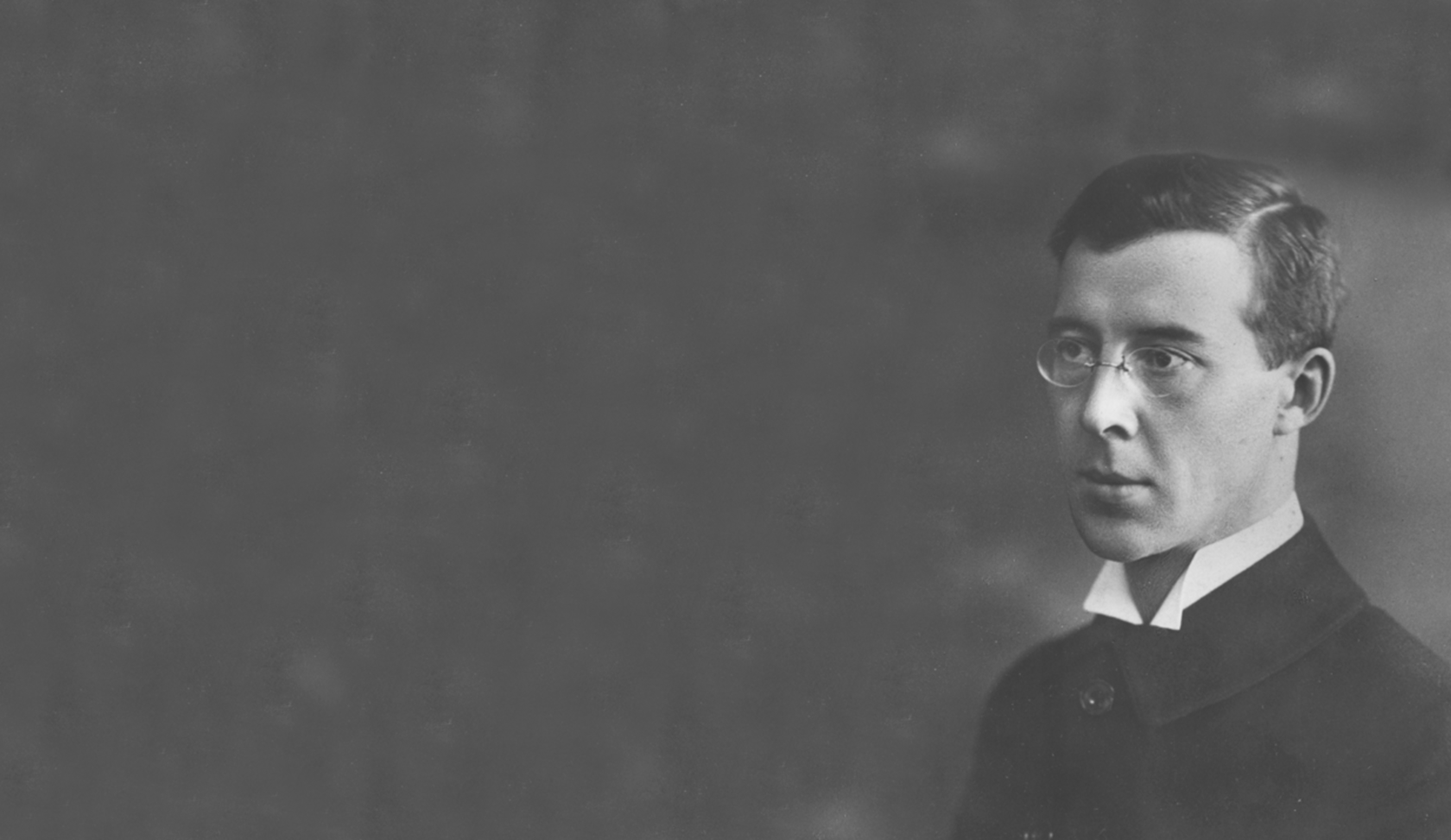
The future looked gloomy to the Russian socialists. The SR Pitirim Sorokin, a recognized genius of sociology, wrote in his foundational work “The Sociology of Revolution”: “The elements that perished among us were predominantly: a) the most biologically healthy, b) energetically capable of work, c) more volitional, gifted, psychologically morally and mentally developed… That is why I can no longer be either a troubadour or a romantic of war and bloody revolution. That is why I smile quietly and sadly when I hear praises to the latter. That is why I perceive with skepticism any — passive and refined — joy and raptures before the revolution… When, however, I see many and many who sincerely dream of the advent of revolution, I say: “It is a pity that humanity has poorly learned the lessons of history. These children are playing with fire that will burn them as well, and most of all the laboring classes themselves: they are causing a whirlwind that will spread death, murder, atrocities, famine, disease, devastation throughout the country, a whirlwind as a result of which the popular masses will suffer most of all… An unbridled mob, armed, thirsty for revenge and enraged; pikes, knives, and hammers; a gloomy, hushed city; the police at the family hearth; suspicion of any opinion; overheard speeches… noticed tears… relentless requisitions… forced loans… depreciated paper… war at the border… Ruthless proconsulates… Hard-hearted committees of safety… — these are the fruits of the social revolution”. And above all… death, death, and death… Death in all forms… death of the best”50.
Sorokin noted that the destruction caused by radical revolutions always outweighs their achievements. Such revolutions do not socialize people, but biologize them; they do not increase, but reduce all basic freedoms; they do not improve, but rather worsen the economic and cultural position of the working class. The results are achieved at a disproportionately high price. And it is not so much the aristocratic classes that suffer, but the millions of poorest workers: “I do not accept the bloody revolution and war now also because of their methods, for I know that the method of naked and bloody violence by its nature can give nothing except destruction and regress.. Let no one think that these lines mean that the revolution personally offended me, that I apparently lost a lot personally in it… No. Except for life and illusions, I had nothing to lose. I was poor — I remain such now. I am the son of a worker and a peasant — hence I could not lose privileges. I was neither an “aristocrat”, nor a “bourgeois”, nor an official — hence I could not lose anything here either… My life is still with me. My honor and conscience as well. The only loss is illusions. I had them too… One of them was a romantic idea of the revolution and the desire for its advent… Now I saw it. For five years I was in its whirlwind, for five years I looked closely into its face… Having seen it, I began to study the faces of former “deep” revolutions. And I understood: this is the face of a beast, not of a superman”51.
For us, the people of modern Russia, Fyodor Stepun’s forecasts about the future of Russia are of great interest. Looking at our current reality, it is difficult to read all these lines without shuddering. Fyodor Avgustovich wrote:
In the Russia of tomorrow there will be found not a few elements, as if specially adapted for transforming the red fascism ending in a terrible catastrophe into a new, nationalist militant fascism, Eurasian in the expression of its face and Orthodox in the spirit of everyday confessionism; single-party, with a historiography mandatory for all citizens, with an Asian contempt for the individual and with a fierce rejection of any freedom in the name of the titanic missionism of one-sixth of the world, which has just revived on the entire territory the sacred name of Russia.
At the service of such fascism will be: the universal fascization of the world, the immeasurable economic wealth of Russia, one of the most powerful armies in the world, the huge organizational experience of the GPU, the very large psychological resources of wounded national self-esteem, the habit of the entire population to naturally divide into representatives of the ruling selection and obedient herds of slaves, with only one thirst in their souls — to be left in peace and provided with a decent external life. Feeling this thirst of tortured Soviet people, one cannot doubt that if a dictator of the type of Western European leaders appeared in Russia, the subjective consciousness of Soviet citizens would be unconditionally made happy by this. Nevertheless — and this is the main thing that all post-revolutionary currents must agree upon — we not only dare not go to Russia with the preaching of Christian fascism, but we dare not even silently agree to it. Our task is to do everything in our power to ensure that the Bolsheviks are replaced not by nationalist fascism, but, despite all its inevitable authoritarian firmness, by a genuinely humane neo-democratic system52.
Many times the left emigration raised the question of the necessity of uniting with the liberal camp. The most ardent supporter of such unification was Sergei Melgunov, a historian, author of the famous book “The Red Terror in Russia”. He believed that the Russian emigration coddled and cherished completely secondary disagreements instead of rallying in a single anti-Bolshevik front. He said: “The mission of emigration is to awaken Russian emigrants with a free word and call them to rally”53.
As I wrote at the beginning of the article, Viktor Mikhailovich Chernov, at the very dawn of his political life, desired that the SRs and social democrats become a single party. One might say his dream eventually came true. On March 18, 1952, the magazine “Sotsialistichesky Vestnik” published the testament-letter of 14 Russian socialists titled “On the Way to a Single Socialist Party”54. It was signed by 14 prominent socialists, already veterans of the left movement — Rafael Abramovich, Mark Vishniak, Vladimir Zenzinov, Boris Nicolaevsky, and others. The letter was written as a testament to future generations who would build the social-democratic party in Russia. Social democrat Boris Sapir wrote: “In general, in modern Europe, the proper functioning of a democratic state presupposes the presence of a strong social democracy. The United States essentially does not represent an exception to this rule. Over the past 15-20 years, the government of America, especially during the presidency of Franklin Roosevelt, has embodied the most essential features of the so-called welfare state. Russia after the Bolsheviks will face the same problems as all modern states. Upon this is founded our conviction that democratic socialism has a future in Russia after the liquidation of the Soviet regime”55.
The SRs and social democrats stated that the past disagreements that had divided their parties had become a thing of the past. The dispute over the peasant commune, the prospects of capitalism in Russia, and the hegemonic class of the revolution had become a thing of the past. And conversely — the general assessment of the nature of the Soviet regime, the condemnation of all forms of totalitarianism, the drift toward a mixed economy, the recognition of the inviolability of the right to private property, the recognition of the inseparability of democracy and socialism — all this led the parties to an alliance. The letter stated:
There can no longer be any doubt that “socialism” without freedom means the worst kind of slavery and inhuman barbarism. All old disputes about the relationship between socialism and democracy have now lost their meaning. Democracy for us is an integral part of socialism itself, it enters into the very definition of socialism. As Vandervelde said: “Socialism will be the socialism of free men or it will not be at all”. Contrary to what many thought in the 1920s and 1930s, socialists all over the world now already know that there are no “different paths to socialism”. For man is not for socialism, but socialism is for man — in order to provide the maximum amount of material and spiritual benefits to the maximum number of people on the basis of maximum equality and freedom. The continuous rise in the living standards of the popular masses, the all-around free development of the individual, care for man, and not for the abstract state, which concretely takes the form of the party-bureaucratic apparatus, — this all-consuming and all-suppressing Moloch, such is the goal of socialism as understood by the world socialist movement, democratic, humanitarian, evolutionary, striving not to dominate its peoples, but to serve them.
The Russian socialist movement remained dogmatic longer than any other socialist parties of Europe, declaring the acceptance of a given philosophical-historical concept mandatory for every party member. In Western Europe, this had been abandoned long ago. If in the 1890s the German Social Democratic Party was built on the strict Marxist concept of the so-called “Erfurt Program”, then at the beginning of the 20th century both orthodox members, Bernsteinian revisionists, and even supporters of ethical and Christian socialism already existed in the party on equal terms. In France, after the unification of the Guesdists and Jaurèsists in 1905, the party ceased to be worldview-based in the narrow sense of the word, and Marxists and non-Marxists participated in it and played a major role. And in England, the Labour Party from the very beginning was not bound by any mandatory doctrine, Marxists in it were always a small minority, and, conversely, supporters of ethical and religious socialism played a very prominent role in it.
In Russia, where the Communist Party has been the actual monopolistic bearer of power for decades and lays claim to undivided dominance over the entire spiritual life of the country, post-Bolshevik democracy will sharply repel both the “monistic” party philosophy, which does not allow for any “deviations”, and the iron discipline of the “monolith”. A single socialist party in post-Bolshevik Russia will be broad, tolerant, humanitarian, and freedom-loving. Preparing the ground for the creation of such a party is the common task of all who remain faithful to the banner of democratic socialism56.

Rafail Abramovich recalled how, two days before Chernov’s death, he placed into his huge peasant fist that very issue of “Sotsialistichesky Vestnik” in which the appeal of the 14 “On the way to a single socialist party in future Russia” was published. He named Chernov among those teachers from whom Russian Marxists learned, because his criticism of Marxism helped to verify much more deeply and cast off what had become obsolete. “Viktor Mikhailovich never chased cheap polemical victories, but was a seeker of truth; criticizing us”, Abramovich said, “he, together with us, sought the correct answer to the problems of worldview and tactics that faced all of us”57.
At the memorial meeting, Mark Vishniak said about the leader of his party: “If to define in brief form who Chernov was, I would say he was a pluralist. Not only in the philosophical sense of the word, as the denial of some single principle — matter, spirit, economy, morality, law — supposedly determining everything else. No, Viktor Mikhailovich was a pluralist in a broader sense as well. He took a lively interest in many things and was drawn to various spheres of life and knowledge: politics and economics, philosophy and law, history and literature, poetry and folklore. Viktor Mikhailovich felt himself not only a native of the Volga, Samara, and Saratov, but also of Tambov and Moscow. A native Great Russian, he simultaneously felt himself a son of Russia, a European, a Slav, a citizen of the world. He found close friends among Ukrainians and Poles, Jews and Georgians, Estonians and Armenians, Czechs, Serbs, French. Is this not pluralism?”58
Well, as we can see, the pluralism that Viktor Chernov sowed all his life was not in vain. It sprouted, and moreover in the Marxist environment. With the letter of the 14, the birth of progressive social democracy begins for the Russian emigration, and utopian socialism ends. Our article is also coming to a conclusion.
Conclusion
In the Russian left-democratic environment there were ups and downs. This environment should not be idealized. Later on, having become emigrants and torn away from the homeland, they could not know everything, could not understand everything. And this was impossible. They were too much contemporaries of their era to be able to look as objectively as possible at the events of the difficult 20th century. And yet the Russian emigration, which did not know such fierce repressions to which the peoples of the USSR were subjected, managed to rethink its convictions, admit some of its mistakes, and come to new ideas.
There is much to learn from the Russian émigré socialists. The sensible, progressive, and magnanimous social democratic party that the emigrants called for is still awaiting its hour in Russia. It is already clear that the path to it will be difficult. Maximalism is still too strong in Russian society. And the doctrines of the past still drag domestic leftists to the bottom like ballast. It is ridiculous and bitter to see how seemingly adult people with education continue to propagate the anarchist, communist, and other chimeras of the 19th century that have failed with flying colors. Parting with delusions is always difficult. One can only hope that if the people of the distant past managed to do it, we can too.
- Mezhuev Vadim. Socialism as a space of culture (Once again about the socialist idea) // Znanie. Ponimanie. Umenie. 2006. No. 3.
- Oldenburg, Sergei. The Reign of Emperor Nicholas II. Belgrade, 1939.
- Akunin, Boris. History of the Russian State. After a severe prolonged illness. 2021.
- Leontiev, Yaroslav. Party of Left Socialist Revolutionaries. Documents and materials, Vol. 1. Moscow, 2000.
- Axelrod Pavel, Martov Julius, Potresov Alexander. On revolution and socialism (collection of works). Edited by L. A. Openkin. Moscow, 2010.
- Ibid.
- Minutes of meetings of the Central Committee of the Party of Socialist Revolutionaries (June 1917 – March 1918). Edited by Doctors of Historical Sciences Yu. G. Felshtinsky and G. I. Chernyavsky.
- Kutorga Ivan. Orators and masses. Rhetoric and style of political behavior in 1917.
- Trotsky Lev. History of the Russian Revolution. Volume 1. Moscow, 1997.
- Plekhanov Georgy. What exactly did the congress give?, “Edinstvo” No. 75, June 27, 1917.
- Leontiev Yaroslav. Party of Left Socialist Revolutionaries. Documents and materials. Volume 1. Moscow, 2000.
- Ibid.
- Axelrod Pavel, Martov Julius, Potresov Alexander. On revolution and socialism (collection of works). Edited by L. A. Openkin. Moscow, 2010.
- Ibid.
- Protasova Olga. Figures of democratic socialism in the context of the political culture of the first quarter of the 20th century. Moscow, 2017.
- Nikitin A. N. Sovereign Kuban. Experience of domestic parliamentarism (1917–1920). Moscow, 2010.
- Kolonitski Boris. Reds against Reds. “Neva” magazine, number 11, 2010.
- Ibid.
- Golovanov Vasily. Nestor Makhno. Life of Remarkable People, 2013.
- Political history of the Russian emigration. 1920-1940. Documents and materials. Edited by Professor A. F. Kiselev, 1999.
- Vishniak Mark. Tribute to the past. New York, 1953.
- Political history of the Russian emigration. 1920-1940. Documents and materials. Edited by Professor A. F. Kiselev, 1999.
- Lenin Vladimir. “Tasks of the Youth Leagues” // Speech at the 3rd All-Russian Congress of the Russian Communist Youth League on October 2, 1920. Lenin. PSS. Volume 41, p. 317. Moscow, 1963.
- Mensheviks in 1922–1924. / ed. Ziva Galili, Albert Nenarokov, Leopold Haimson. Moscow, 2004.
- Rubel Maxim. The weakest link: On the question of the law of uneven development. 1973.
- Potresov Alexander. My dispute with official Menshevism, 1927.
- Ibid.
- Axelrod Pavel, Martov Julius, Potresov Alexander. On revolution and socialism (collection of works). Edited by L. A. Openkin. Moscow, 2010.
- Tsereteli Irakli. Historical tasks of social democracy. “Sotsialistichesky Vestnik” magazine, no. 2. February 15, 1946.
- Valentinov Nikolai. The new economic policy and the crisis of the party after Lenin’s death. — Moscow: Sovremennik, 1991.
- Nicolaevsky Boris. The end of Azev. Berlin: Petropolis, 1931.
- Suslov Alexei. The evolution of the SR party in emigration: the conference of the Socialist-Revolutionary party in Prague (1931). Humanities. History. No. 1 (29), 2014.
- Steinberg Isaac. The moral face of the revolution. Berlin, 1923.
- Suslov Alexei. Evolution of the SR party in emigration: the conference of the Socialist-Revolutionary party in Prague (1931). Humanities. History. No. 1 (29), 2014.
- Ibid.
- Ibid.
- Avrus A.I., Goloseeva A.A., Novikov A.P. Viktor Chernov: the life of a Russian socialist. Moscow, 2015.
- Ibid.
- Avrus A.I., Goloseeva A.A., Novikov A.P. Viktor Chernov: the life of a Russian socialist. Moscow, 2015.
- Protasova Olga. Figures of democratic socialism in the context of the political culture of the first quarter of the 20th century. Moscow, 2017.
- Stepun Fyodor. The former and the unfulfilled. New York, 1956.
- Breshko-Breshkovskaya Ekaterina. Hidden roots of the Russian revolution. The abdication of the great revolutionary. 1873—1920 / Transl. from English by L. A. Igorevsky. — Moscow: ZAO Tsentrpoligraf, 2006.
- Protasova Olga. Figures of democratic socialism in the context of the political culture of the first quarter of the 20th century. Moscow, 2017.
- Vishniak Mark. “Sovremennye Zapiski”. Memoirs of an editor (Memoirs of remarkable people). Moscow, 2019.
- Vishniak Mark. Two paths. February and October. Paris, 1931.
- Ibid.
- Koritsky E. B., Begidov A. M., Shetov V. Kh. Socio-economic views of M. V. Vishniak.
- Vishniak Mark. Tribute to the past. New York, 1953.
- Ibid.
- Sorokin Pitirim. Sociology of revolution. Moscow: Territory of the future: ROSSPEN, 2005.
- Ibid.
- Stepun Fyodor. On freedom. “Novy Grad” magazine, no. 13.
- Protasova Olga. Figures of democratic socialism in the context of the political culture of the first quarter of the 20th century. Moscow, 2017.
- On the way to a single socialist party (testament-letter of 14 Russian socialists, 1952) / Appeal of the editorial board of the magazine “Sotsialistichesky Vestnik” (1952, no. 3)
- Sapir Boris. Problems of Russian socialism. “Against the current: A collection”. New York, 1952.
- On the way to a single socialist party (testament-letter of 14 Russian socialists, 1952) / Appeal of the editorial board of the magazine “Sotsialistichesky Vestnik” (1952, no. 3)
- Avrus A. I., Goloseeva A. A., Novikov A. P. Viktor Chernov: the life of a Russian socialist. Moscow, 2015.
- Ibid.