Soviets as bodies of authority
In this article, we will examine in detail the operational experience of the system of Soviets in the USSR and focus on the difficulties that arose during its implementation. We invite the reader to develop their own options for solving these difficulties and consider whether they will have a higher probability of successful implementation than a parliamentary republic.
Communists often express the point of view according to which the current parliamentary model of the political system is irrelevant and even harmful to the development of society, which is why it should be replaced with a model in which power by the people is realized through Soviets. We decided to study this topic and understand whether Soviets are an effective way to construct governing bodies and a permanent alternative to parliament as an organ of power.
What is it?
In Soviet-type states, Soviets are a state body possessing full power within its territory, simultaneously executing representative (legislative), executive-administrative, and supervisory functions (directly or through bodies created by them)1. Communist definition: popularly elected bodies of power in the USSR, the most representative and massive organizations, combining features of state bodies and public organizations; the most complete embodiment of the democratic character of the socialist state2.
The primary organ of government in the Union of Soviet Socialist Republics officially performed both legislative and executive functions at the all-Union, republic, oblast, city, raion, and rural levels3.
In the end, it can be said that Soviets are representative bodies of power that combine the features of state bodies and public organizations, executing simultaneously representative (legislative), executive-administrative, and supervisory functions (directly or through bodies created by them) at the all-Union, republic, oblast, city, raion, and rural levels.
History of the Soviets
The Soviets themselves appeared back during the Russian Revolution of 1905-1907 as self-organized bodies of workers’ power. The first of them appeared in the city of Alapayevsk on March 8, 1905, but more famous is the Council of Delegates, organized on May 15, 1905, by striking workers of textile and weaving enterprises in Ivanovo-Voznesensk (now Ivanovo) and operating within the scope of an entire city4. As we wrote briefly in the article on the dictatorship of the proletariat, after the first Russian revolution of 1905-1907, the soviets disappeared, but re-emerged in 1917, and as a result of the policies of the Bolsheviks, they became formal institutions of power up until Perestroika.
Lenin believed that the Russian Soviets were the “finally discovered” dictatorship of the proletariat as Marx had conceived it. At first, the Soviets — thanks to revolutionary initiative and broad participation of the masses — really produced such an impression. Trotsky saw in them a form as epochal as the parliaments born in the struggle against absolutism. But that was an illusion. From revolutionary bodies, the Soviets degenerated into a form that condoned the totalitarian dictatorship of a new class, the party5.
Now let us examine their history in greater detail. At first, after the Bolsheviks came to power, the Soviets were quite decentralized: thus, one report of the NKVD of the RSFSR noted that in the first post-revolutionary months, “Soviet power scattered into a whole series of seemingly independent provincial, county, and even volost Soviet ‘republics'”6. This did not suit the authorities: for example, at a statisticians’ congress held in December 1917, delegates noted that local soviets considered the organization of local statistical bureaus a “completely secondary” matter, allocated no funds for it, and in some cases, statistics were “largely neglected by the local Sovdep”789.
As early as January 1918, work began to unify the structure of local Soviet bodies. In a special instruction of the NKVD of the RSFSR, local soviets were instructed to create departments under their executive committees in strict accordance with the list of central commissariats. And in December of that year, a decree of the Council of Labor and Defense (STO) was issued, “On the Precise and Rapid Execution of Orders of the Central Authority and the Elimination of Bureaucratic Red Tape”, according to which any orders of local soviets running counter to the decrees of the central authority and hindering its activities were subject to cancellation10. These measures testified to a departure from the principle formulated earlier by Vladimir Lenin: “… the Soviets — from now on are plenipotentiary, decisive bodies of state power”11.
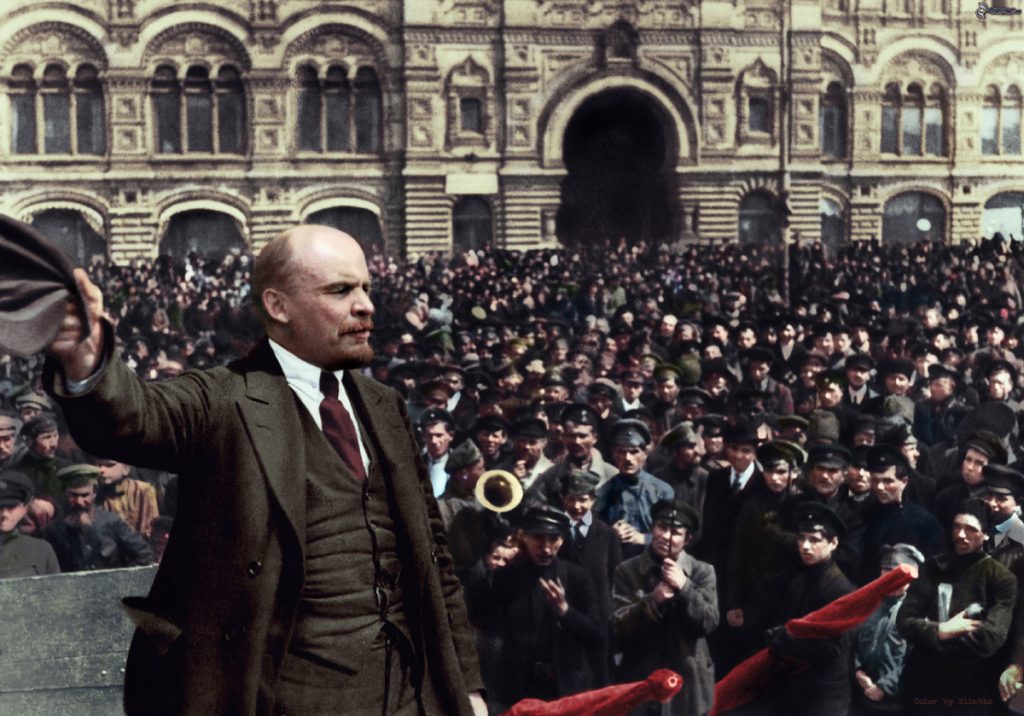
Real governing authority from 1918 onward began to concentrate in the hands of the top party leadership, which signified the actual collapse of the idea and practice of relative decentralization of the local governance system. Changes affected the soviets themselves as well. At various levels, a decline in the role of Soviet congresses and conferences was observed, and the adoption of most decisions shifted from these representative forums to executive committees of soviets or their presidiums, which, in particular, determined the procedure for issuing food rations, the possibility of holding religious meetings, the rules for searches and arrests, and even handled incidents involving hooligans in educational institutions — dozens of agenda items daily12.
At the same time, the executive committees themselves, as Soviet and Russian historian Valery Shishkin rightly noted13, also “proved limited in their authority, for the ‘vertical’ management built during the Civil War years led to the isolation of the actions of the apparatus of a number of departments from their provincial executive committees (military, Cheka, economic, and so on), which actually worked under the direction of the corresponding central departments — commissariats, VSNKH, VCHEKA — and were even funded by them”14. The increase in control over local soviets by the political center, as well as the strengthening of executive Soviet bodies relative to representative ones, was an important, but not final step on the path to subordinating local institutions to the highest party-state power. The solution to this task was achieved by establishing party body supervision over Soviet ones.
One might think that the Soviets consisted of workers and peasants. In reality, however, in the activities of the Soviets and public organizations, this was not the case everywhere; for example, according to data from the Council of National Economy of the Northern Region, by April 1, 1918, only 1.84% of workers were directly involved15. This means that the working class, while voting from time to time in elections to the Soviet, was occupied with the problems of its family and its enterprise, while a broader range of issues of “proletarian power” was resolved by activists who had actually left the enterprises for Soviet administrative work.
City Dumas (representative bodies that existed prior to the Soviets) also functioned for some time, but taking into account certain specifics. On November 18, the Sovnarkom granted the Soviets the right to dissolve city dumas. In doing so, the Soviets were to decide for themselves, depending on their readiness to take management into their own hands, when it was best to do so. But there was another motive to dissolve the duma and the board — their stubbornness. So the Soviets could resort to dispersing an annoying municipality that managed affairs better than the Soviet subsequently did. Prior to this, on November 16, the Petrograd Duma was dissolved. But on November 27-28, re-elections to the Duma were held. Socialists and Cadets boycotted them, so the composition turned out to be pro-Soviet. Formally, the Duma existed until the spring of 1918, acting under the control of the Petrograd Soviet. When district dumas were dissolved, boards were preserved, converting into departments of the Soviets. Officials had to decide whether they would work for the Soviets (for many, this was the only way to feed themselves). For the most part, the dissolution of dumas took place in January-April 1918 and was practically complete by the start of the full-scale Civil War16.

During the years of the Civil War, this process was only beginning, far from always and everywhere taking on finished forms. Thus, for example, the secretary of the Novgorod Provincial Committee of the RCP(b) in his report at the provincial party conference in July 1919 found it difficult to remember “what instructions the provincial committee gave to Soviet bodies”, but noted that mainly it carried out “the dismissal and appointment of people”17. The prospects of the changes that emerged during the civil war years were reflected quite clearly by Nikolai Osinsky (also known as V.V. Obolensky). In his speech at the VIII Congress of the RCP(b), he stated that “patronage of close people, protectionism, is developing vigorously among us, and in parallel – abuses, bribery”18 and “the ultimate tendency is heading towards introducing one-man management in all links of the Soviet apparatus. This means that … we will collapse under the weight of bureaucracy”, he noted speaking at the IX Party Congress19.
During the short period of alternative elections (1918-1920), unanimous support for the Bolsheviks on the part of workers and employees was not observed. Working-class strata generally adhered to socialist views, but this did not mean automatic support for the Bolsheviks; often they gave preference to the Mensheviks and Left SRs. In a number of cities where the Mensheviks and SRs enjoyed popularity, despite all the efforts of the Bolsheviks to counteract the election of representatives of opposition parties, they were elected to the soviets. From the very first electoral campaigns, the Bolsheviks actively prevented the election of representatives of opposition left parties to the soviets, using not only the power of persuasion, but also administrative resources20.
Thus, in March – early April 1918, re-elections to the Yaroslavl Soviet took place. There were 36 Bolsheviks for 47 Mensheviks and 13 SRs. An “anti-Soviet” Soviet was formed that was disloyal to the Soviet government. On April 9, the first meeting of the new Soviet was dispersed by the Red Guard. A protest strike began in the city. Workers seized weapons at the station, but did not use them against the Bolsheviks. The leaders of the SRs and Mensheviks were arrested. On April 18, a trial took place which, having outraged the defendants with numerous procedural violations, sentenced them to public censure, and the Menshevik leader I. Schleifer was exiled from the province for a year21. However, the dispersal of the undesirable Soviet in Yaroslavl made the position of the Bolsheviks in the city very precarious. In order to win the next elections, they deprived the Yaroslavl railway workers of representation. These events affected the mood of the workers on the eve of the uprising in Yaroslavl on July 6, 1918.
After the socialists (SRs and Mensheviks) won the elections in Kostroma on April 21-25, the Bolsheviks declared that they would not give power to the “counter-revolution”, that is, to the new majority of the Soviet. On May 23, the socialists held a mass demonstration under the slogan “Down with Soviet power and the grain monopoly!” Clashes occurred. In response, a state of emergency was declared, and the Bolshevik-Left SR faction of the Soviet decided that it could work without socialist deputies, that is, without a majority22. On May 18, the Council of People’s Commissars of the Kaluga Soviet Republic adopted a decision according to which “citizens who allow themselves anti-government, even if verbal, speeches shall be excluded from all lists and deprived of the opportunity to hold positions… in all government organizations. Or, depending on the strength of the speech and on its counter-revolutionary scale, arrested on the spot, even if the speech occurred at a permitted meeting, and even if the citizen who spoke was a delegate”23. Thus, the executive committee excluded opposition speeches at any meetings and congresses.
In most cases, opposition parties were prohibited from putting forward lists of their candidates for elections. Thus, in the 1920 elections in many Siberian cities, the Mensheviks and SRs were refused the submission of candidate lists in elections to city soviets24. For this reason, in Omsk, Tomsk, Novonikolayevsk, city soviets were elected that consisted exclusively of Bolsheviks25.
However, where opposition left parties had strong organizations, and also enjoyed the support of trade unions and workers at enterprises, the Bolsheviks did not dare to use administrative resources so shamelessly. A fierce election struggle between the Bolsheviks and Mensheviks unfolded in Irkutsk and Krasnoyarsk. The Mensheviks enjoyed the support of a number of trade unions in these cities (unions of printers, railway workers, metalworkers). Despite the pressure exerted on the workers by the Bolsheviks and the mobilization of the best forces to conduct the elections, in Irkutsk and Krasnoyarsk meetings of printers voted for the Menshevik list (in Irkutsk, 9 Mensheviks were elected to the city council)2627. Overall in 1920 across the RSFSR, 59 Mensheviks and 379 Left SRs were elected to county and provincial congresses (although these were fractions of a percent, 21,358 Bolsheviks were elected)28. One can also recall the Kronstadt Rebellion, where against the backdrop of the crisis they demanded the release from imprisonment of representatives of all socialist parties, as well as holding re-elections of the Soviets and expelling Communists from them29.
When the Bolsheviks finally purged the political space in 1921-1922, banning and repressing opposition parties, no mass protests by the population were recorded, which testified to the insufficient maturity of the voter and unreadiness to defend the ideas of freedom and democracy. At the same time, one should not underestimate the popularity of the Bolsheviks among the population, the appeal of their simple and accessible slogans to a significant part of both the urban and rural audiences. The Communists for their part showed extraordinary will and desire to retain power. In addition to using administrative resources, the Bolsheviks involved the best forces of agitators, popular party and Soviet workers in the elections. As a result, starting from 1922, non-party candidates became the only alternative to the Communists in Soviet elections30, and by the end of the 20s, among the top executive workers of district, regional, and okrug executive committees of Soviets, the overwhelming majority (from 72 to 81 %) belonged to the ruling party31.
Separately, the specifics of the Soviet electoral system should be characterized. Its most specific feature was the introduction of a labor qualification: only persons recognized by the authorities as “working people” possessed voting rights32, while the rest were excluded from participation in elections. An important feature of Soviet elections during the specified period was the holding of electoral meetings according to the production-territorial principle. There were also citizens deprived of voting rights in Soviet Russia, but their number did not exceed 5% of the adult population of the country33. Although there were also curiosities due to the incompetence of election committee members: voting rights were stripped from those who “arrived recently”, as well as elderly people34. Information was frequently encountered regarding the inclusion among the “deprived” of deaf-mutes, blind people, disabled people, “noticed in moonshining, and sometimes simply in drunkenness”35.
Voters were divided into organized (workers and employees, trade union members, Red Army men) and unorganized (craftsmen, artisans, housewives, unemployed, students, those living on their own holding, assisting family members)36. Characteristic features of Soviet elections were also multi-stage procedures, open voting for candidates at electoral meetings, and inequality of representation between different social groups (but we will talk about them separately). The frequency of holding elections was also unusual for modern electoral systems. Throughout the 1920s, they were held almost every year: in 1920, 1921, 1922, 1923, 1924, 1925, in the winter of 1926-1927, and in the winter of 1928-1929.
In the first half of the 1920s, the behavior of workers and employees at electoral meetings was often passive, and meetings for elections to city soviets took place with low voter turnout and a lack of interest in speeches – from 9 to 23 %37. In individual cities, turnout amounted to no more than 5% of voters. According to data from D.M. Korchagin, in Primorsko-Akhtarsk in October 1922, out of 18 thousand voters, 550 people (3 %) showed up, who elected 69 deputies and 26 candidate deputies to them. A similar situation existed at the station of Slavyanskaya in the Kuban-Black Sea Region: in October 1923, out of 14,064 voters, 599 people (4.3 %) attended the meeting38. One can also recall the autumn of 1924, when only 32.5 percent of voters turned out for elections to city soviets in Siberia. In October, at a plenum of the Central Committee of the RCP(b), the question was raised regarding the need to consider the past elections invalid in a number of regions of the country where the percentage of voter turnout was below 35. Elections were canceled completely in 12 provinces and regions of the USSR, and in 27 provinces – partially (including all provinces of Siberia)39. In this case, the number of voters was comparable to the number of persons deprived of voting rights (in cities it reached 5–7 %), and this gives reason to talk about the direct political meaning of excluding opponents of the Bolsheviks from elections to ensure victory. However, for cities with a significant population and higher turnout, this factor was not significant.
One of the reasons for the low activity of townspeople in elections was the formal work of city soviets, their lack of own budgets and even executive committees, that is, city administration (an example of a city without its own executive committee was Yekaterinburg (formerly Sverdlovsk), where it appeared in 194040). The resolution of pressing urban problems did not depend on their activity. At meetings, reports of chairmen of county or provincial executive committees and reports on the work of executive committees and soviets were heard, and necessary candidates, pre-approved by the corresponding party committee, were nominated. Subsequently, it turned out that “they nominated unauthoritative candidates”41.
As reasons for supporting “unauthoritative candidates”, one can name both fears of accusations of counter-revolution and the influence of administrative resources. And such things made sense, since threats followed refusal to vote for candidate lists pre-approved by party organs: voters were locked in premises and forced to vote for candidates loyal to the authorities4243. In Tver, for example, a cell secretary stated to a factory committee chairman who was outraged by a weak list of candidates: “the cell prescribed it, and there can be no talk”44. Deputy People’s Commissar of Internal Affairs Boldyrev gave a succinct characterization of the elections of the first half of the 1920s: “The elections represented not actual elections, but an empty bureaucratic procedure of “pushing through” deputies by means of a whole series of tricks and pressure on the part of a narrow group of rulers afraid of losing power”45 (what is amusing is that these words became part of Joseph Stalin’s speech in 192546).
Yet, the main reason why many workers, Red Army men, and partly employees actively supported the Bolsheviks in elections was identifying themselves with this power. Workers perceived the Soviet power as “their own”, especially since the Bolsheviks emphasized the privileged status of the proletariat in every way; therefore, the nuances of the electoral process mattered little to workers – it was a kind of collective mandate of trust.
The policy of “revitalizing the soviets” had a significant impact on the electoral process and the electoral behavior of the part of the urban population organized by production collectives. Thus, for example, in 1925 the rights of city soviets were significantly expanded, and they began to acquire features of real self-governing bodies; consequently, the resolution of specific urban problems could depend on their activity, and voter turnout increased. The system also became slightly different – for example, in the instructions on re-elections to the Soviets of the CEC of the USSR dated January 16, 1925, in cities provision was made for holding electoral meetings both by production units (for trade union members) and by territorial units (districts and plots) – “for citizens not belonging to enterprises or not organized in trade unions, such as: artisans, housewives, cab drivers, etc”.47. A similar procedure for holding elections by production and territorial units was established in the election instructions of the All-Russian Central Executive Committee dated October 13, 192548. Subsequently, in election instructions, the production-territorial procedure of elections was detailed, but its character remained unchanged49.
Nevertheless, problems remained, since the procedure for recalling deputies was predominantly implemented in city soviets. By the admission of Soviet workers, “in the countryside, voters do not exercise the right of recall”50. Only a few regions were named as an exception. Thus, in Vyatka Province in 1928, 129 deputies (0.5% of the composition of rural soviets) were recalled by voters, in Nizhny Novgorod Province – 92 deputies (0.9%)51. Poor reports by deputies (brief, formally and uninterestingly made) were not considered by voters as a reason for recall, because workers and peasants, artisans and housewives elected to the Soviets had no experience in public speaking (for the most part) and were not outstanding orators, due to which they lost their bearings at meetings52. There was also a problem with the education of deputies of those years: in 1925, in the city soviets of the RSFSR, 68.6 percent of deputies had primary education, 8.3 were semi-literate, and 0.9 were illiterate53. In Siberian cities, things were even worse: 64.1 percent of deputies had primary education, 18.5 were semi-literate, and 2.2 were illiterate54.
There were also sharp critical remarks that sounded against local Soviet and party bodies and leaders. At one of the electoral meetings in Tula, workers stated: “the city council presses harder than under the Tsar, the city council is paid well, it lays it down soft, but it’s hard for the worker to sleep”. In Ivanovo-Voznesensk, workers noted: “executive committees and city committees live well, but the worker lives in a basement just as he did, houses are built only for responsible workers”55. Even the founder of the Soviet state came under fire from criticism. At one of the electoral meetings in Tver, workers said: “Monuments to Lenin have been erected everywhere, but you don’t build housing”56.
Problems with holding electoral meetings for the unorganized part of the population emerged as early as 1925. The population took democratization “too literally” and began to demonstrate high activity at meetings, put forward various demands, create initiative groups, and so on. Electoral meetings of the “unorganized” population did not follow the planned script. People did not wish to listen to huge multi-hour reports by plenipotentiaries, deputies, and chairmen of executive committees about the achievements of Soviet power, either starting to get indignant and interrupt, or leaving the meeting room. City residents wanted a direct dialogue; they actively asked questions to representatives of authority present at the meetings, expressed their opinions, and took part in discussions.
What demands sounded at electoral meetings of the non-proletarian part of the population? A common demand became equating artisans in rights with workers, granting tax relief to artisans and craftsmen, creating trade unions for artisans, and improving living conditions in cities (construction of schools, hospitals, laundries, bathhouses, and so on). In a number of cities, political demands were also voiced. In particular, in Vesyegonsk, Nizhny Novgorod, and Uglich, common demands became independent organization of elections and non-participation of the Bolshevik Party in election preparation and pre-approval of candidate lists for deputies57. Members of the Vesyegonsk city soviet demanded free, democratic work of the city council, noting in a complaint that “under the current situation there is no interest in working in the city council, we sit silently on a chair, and if anyone squeaks to ask a question or speak in debate, that person is immediately recorded and all kinds of persecution begin, and in the end, arrest”58.
In addition, informants of the All-Russian Central Executive Committee recorded refusal to vote for the approved candidate list for deputies as a mass phenomenon. “Everywhere, the unorganized population did not wish to vote for the lists, preferring personal voting”59. At electoral meetings of artisans and housewives, the Communists could not count on a collective mandate of trust. Representatives of non-proletarian strata of the population insisted that only local residents who were taxpayers could be deputies. During the investigation of a conflict that occurred during the elections in the town of Vesyegonsk, Tver Province, in 1925, an instructor of the All-Russian Central Executive Committee noted that representatives of the unorganized population said: “how can trade union members and newcomers (sent party members) protect our interests when they themselves do not pay taxes or have privileges”60. It even reached this point: members of the Vesyegonsk city soviet from the unorganized part of the population wrote in a complaint sent to the Central Election Commission that on the eve of the electoral meeting, one of the members of the city council was arrested without the sanction of the Presidium of the city council. At the appointed time “voters arrived in full force and demanded from the chairman of the county executive committee the release of the city council member from under arrest. The request of the voters was not granted, a terrible noise arose, everyone shouted for the release of the arrested person, but since the request was denied, citizen voters of that entire district left the meeting hall, refusing to vote for the proposed candidacies; the militia was called, which began to intimidate the voters”61. During the review of the complaint, it turned out that the voters demanded “free elections” and “soviets without communists”.
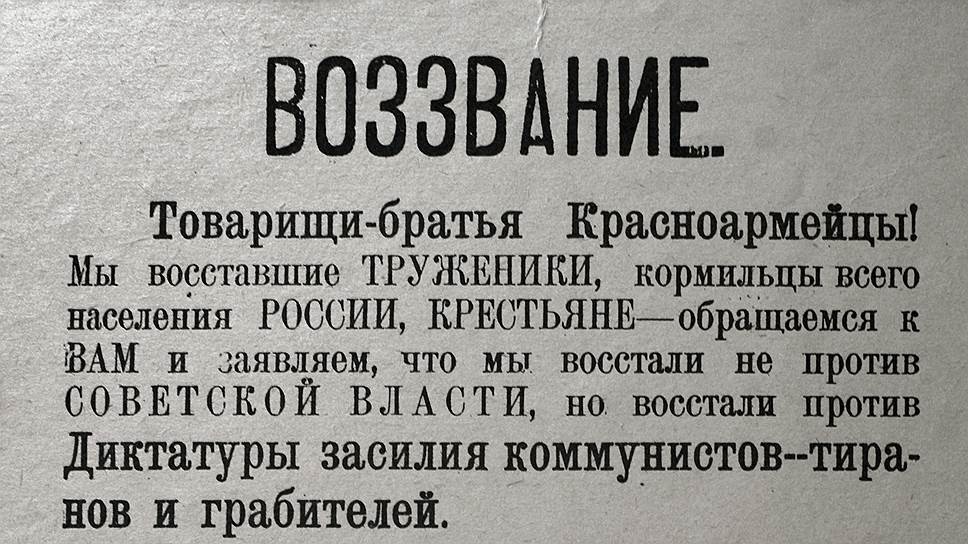
One can also recall the report of the Chairman of the All-Russian Central Election Commission Jan Poluyan on the results of the election campaign in 1925/1926: “a significant growth in the activity of the unorganized voter in cities poses to party and Soviet organs and trade unions the task of strengthening the activity of industrial workers and Red Army men; otherwise, the danger arises of the capture of city soviets by alien elements”62. This problem acquired particular urgency in small towns with a predominantly non-proletarian population.
All this worried the authorities, and the leadership of the country immediately reacted to this situation. At the Joint Plenum of the Central Committee and the Central Control Commission of the All-Union Communist Party (Bolsheviks), held in July 1926, a decision was made to significantly expand the circle of persons deprived of voting rights who were potentially disloyal to Soviet power63. The resolution of the specified Plenum indicated the need to “protect soviets in the countryside and in the city from being clogged with exploiting elements”, excluding “growing capitalist elements” from among the voters64. With the help of deprivation of voting rights, the Bolsheviks managed to discredit in the eyes of fellow villagers, coworkers, neighbors, and those around a small in size, but very influential and authoritative part of the prosperous peasantry and representatives of non-proletarian strata of the city65. But there were also problems with this: for example, in the 1926/1927 election campaign, the greatest difficulties for election commission members were caused by categorizing as “disfranchised persons” categories of peasants who used hired labor, and traders. As responsible instructor of the Siberian Regional Executive Committee I. Khamarmer noted on February 20, 1927, in a report on the results of the survey of preparation work for re-elections in the Kuznetsk Okrug66:
Regarding deprivation of voting rights, things are not entirely satisfactory in all districts. The Kuznetsk okrug election commission guided this part insufficiently firmly, as can be seen if only from the fact that in its resolution of January 24, 1927, the okrug election commission admits that individual points of the instruction regarding deprivation of voting rights are not clear to it [the commission. — note by E.V. Ivanov], and this is sent out to districts and district election commissions. Believing that the okrug election commission itself is unable to understand the instructions well, they lulled their alertness to this issue, as if to say, the okrug does not know whom to deprive, and well, we are small people, we won’t be held accountable.
Deliberate violations in the deprivation of voting rights were allowed most often in rural areas: members of election commissions did not want to deprive the most respected, authoritative fellow villagers of their rights. However, in cities, the human factor also had an effect: members of city election commissions had neighbors, coworkers, and relatives whom they did not want to deprive of civil rights67.
Direct manipulations of representation norms in elections were also observed. The All-Russian Central Executive Committee established different representation norms in elections for organized and unorganized populations. Workers, Red Army men, and employees elected deputies from the total number, while the unorganized population elected only from the number of those who showed up at the electoral meeting686970. Thus, for the city of Moscow in the 1926-1927 election campaign, workers and Red Army men elected one deputy per 100 people, employees – per 600 people, and the unorganized population – one deputy per 600 voters who showed up71. Manipulations with representation norms provided the industrial proletariat and Red Army men with a significant advantage in representation in city soviets. The preferences of Red Army men and workers were significant as early as the 1925-1926 election campaign: for every 1,000 voters, 11 deputies were elected from Red Army men and 12 — from workers (from the unorganized population, only 5)72. In 1926/27 and 1928/29, this advantage increased even more significantly, reaching a fivefold superiority (14 deputies from workers, 12 deputies from Red Army men against 3 from the unorganized part of the population)73. In cases where the listed measures did not help, the authorities resorted to direct repressions – arrests and intimidation74.
And even in such a system, there were cases of victories over the official authorities, as for example in elections in the cities of Siberia. This can be judged by the unfolding discussion of candidates. From the cells of the All-Union Communist Party (Bolsheviks), 36.2 percent of candidates did not pass, from trade unions — 84.5, and from electoral meetings — 85 percent75. Thus, in Minusinsk, artisan Tuzov delivered a speech at an electoral meeting stating that “the majority of the population consists of homeowners and artisans, and precisely them, not workers, should be nominated to the soviet”, was supported by the unorganized population, and became a deputy76.
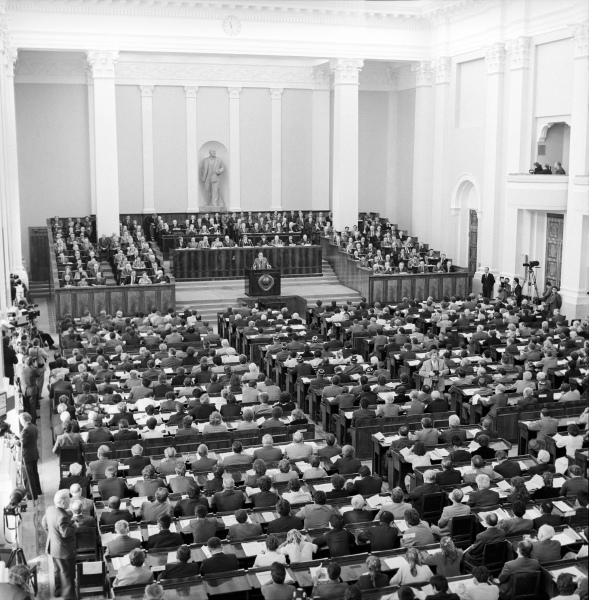
Separately, it is worth talking about such a body as Congresses of Soviets – the supreme body of authority in the Soviet Union77, in the Soviet republics (it first arose even before October 1917), in autonomous soviet socialist republics, and so on. They are interesting in that, unlike parliaments, they worked precisely as congresses, that is, for only a few days, and a multi-stage system was implemented in them. At the same time, there was also a body that was elected by the congress and worked between its sessions – for example, in the USSR, it was the Central Executive Committee (CEC), consisting of two chambers: the Council of the Union and the Council of Nationalities78. At the same time, the CEC also worked in sessions, and here power belonged to the Presidium of the CEC79, which consisted of only 21 people80.
In the 1930s, elections changed: Congresses disappeared, and in their place, conditionally permanently functioning representative bodies were introduced, which were elected directly – for example, the Supreme Soviet of the USSR, which also consisted of two chambers: the Council of the Union and the Council of Nationalities81 (at the same time, it worked mainly in sessions, and usually convened twice a year for several days82838485, while permanent power belonged to the Presidium of the Supreme Soviet of the USSR, which de jure was the head of state)86.
Regarding the Presidium – since legally it played the role of head of state, the Chairman of this very Presidium could be called the head of state, and if one acts according to this logic, then legally the real heads of the USSR were the following people87:
- Kalinin Mikhail Ivanovich (17.1.1938–19.3.1946);
- Shvernik Nikolay Mikhailovich (19.3.1946–15.3.1953);
- Voroshilov Kliment Yefremovich (15.3.1953–7.5.1960);
- Brezhnev Leonid Ilyich (7.5.1960–15.7.1964, 16.6.1977–10.11.1982);
- Mikoyan Anastas Ivanovich (15.7.1964–9.12.1965);
- Podgorny Nikolai Viktorovich (9.12.1965–16.6.1977);
- Andropov Yuri Vladimirovich (16.6.1983–9.2.1984);
- Chernenko Konstantin Ustinovich (11.4.1984–10.3.1985);
- Gromyko Andrei Andreyevich (2.7.1985–1.10.1988);
- Gorbachev Mikhail Sergeyevich (1.10.1988–25.5.1989).
There was also the position of Acting Chairman, held solely by Vasily Vasilyevich Kuznetsov, who served in this capacity as many as 3 times (10.11.1982–16.6.1983, 9.2.1984–11.4.1984, 10.3.1985–2.7.1985).
Equal, alternative, direct elections were legally secured in the Constitution of the USSR. The creation of the block of communists and non-party people became a new element. By 1937, there were not that many members of the All-Union Communist Party (Bolsheviks) in the country – only 1,453,828 people, and another 527,869 candidate members of the party. For comparison – in 1977 there were already 15,365,600 members and 616,531 candidate members of the party88. Filling all deputy seats in the Soviets of all levels would be completely irrational. Therefore, starting with the first election campaign of 1937, the idea was proposed to nominate one candidate in each electoral district as a representative of the block of communists and non-party people. It can be assumed that the idea of an electoral block of communists and non-party people was put forward taking into account the realities of the domestic political life of the USSR during the period of 1936–1938, which received the name “Yezhovshchina”.

A significant part of the population saw that heads of various levels, who were communists and held executive posts, were arrested in large numbers and sentenced to capital punishment. The authority of the All-Union Communist Party (Bolsheviks) could hardly remain at the same level as a result of such mass self-destruction. The block of communists and non-party people can be considered as a Soviet variety or version of the popular front. The nomination of one agreed candidacy from the “unbreakable block of communists and non-party people”, in the opinion of many specialists, changed the very essence of electoral right89. In fact, voters were offered to say “yes” or “no” to a particular sole candidate, to approve or not approve the policy of the Soviet state in the person of this candidate. In fact, the elections were turning into a plebiscite, or referendum.
At the same time, legally there could be more than one candidate, but the key decision on the undesirability of registering a number of candidates in one district was taken at the Plenum of the Central Committee of the All-Union Communist Party (Bolsheviks), held on October 11-12, 1937, or shortly before it. It was reflected in the resolution of the Plenum: “A performance of communist organizations with their candidates separate from non-party people would only push away and separate non-party people from communists, would prompt them to put forward competing candidates and split the votes, which plays into the hands only of the enemies of the working people”90. As was answered to this much later, as late as 198191:
This is not a requirement of the law (it does not restrict the number of running candidates), but an established tradition.
Note that in bourgeois states, too, usually not two or three, but only one candidate runs from each party in an electoral district. The total number of candidates for each deputy seat there, as a rule, corresponds to the number of parties taking part in the elections. We have one party – the Communist Party, and if it fields its candidate, then also one per seat.
At the same time, there were cases when people wanted to nominate more candidacies: thus, in 1947, in Kataysky District, the labor collective of the Petropavlovsk Machine and Tractor Station, in addition to the candidacy approved by the regional party committee, nominated two more people as candidates for deputies to the regional Soviet in one electoral district. At the general meeting, it turned out that none of them had the support of the majority of voters. The party leadership had to conduct explanatory work with members of the labor collective, explaining the features of the procedure for nominating Soviet candidates for deputies92. It was possible to nominate candidates only by the following groups: “communist party organizations, trade unions, cooperatives, youth organizations, cultural societies”93. The regulation did not provide for self-nomination or nomination by individual citizens, and those candidates who existed were checked by the Soviet authorities, which made the system very restrictive for people.
An important moment of the election campaign was the nomination of candidates. It had a strictly hierarchical character. First came the top figures of the state, then – leaders of the republican and local level, and only then – ordinary citizens. On October 25, 1937, the head of the department of leading party bodies Georgy Malenkov, “on the instruction of the Central Committee of the All-Union Communist Party (Bolsheviks)”, sent out a directive to the union republics, including the BSSR, which stated that “thirty-two candidacies of top management and famous people” were selected for nomination to the Supreme Soviet94. In addition to I.V. Stalin and his inner circle, N.K. Krupskaya, O.Y. Schmidt, V.P. Chkalov, and others figured among the nominees. A real wave of competitions in nominating candidacies from the leadership of the country swept across the USSR. The republican elite sought to secure influential party figures as candidates, counting on political and economic dividends in the future. In the Byelorussian SSR, a large-scale campaign of sending 190 thousand letters from working people to I.V. Stalin, V.M. Molotov, N.I. Yezhov, and K.E. Voroshilov with a request to run for the Supreme Soviet of the USSR from Byelorussia was organized. However, the wish of the working people hardly played any significant role: the nomination of high-ranking candidates was carried out by decision of the party leadership. In the Byelorussian SSR, such turned out to be the People’s Commissar of Defense K.E. Voroshilov, who was officially registered on November 10, 1937.
One can also highlight such a feature as the principle of gender representation, since women had to occupy a certain number of seats. Thus, the mass media reported in the 40s that there should be at least 30%95, and a little later – in the 60s-70s – about 45-50% of deputy seats for women (at the same time, an almost complete absence of women in executive posts was observed). Proportions of their own existed for workers and collective farmers, who acted as the foundation of the state, as well as for non-party people (in the 40s, their number in the composition of the deputy corps had to be at least 25–30 percent96) and Komsomol members, which was supposed to emphasize the all-national character of Soviet power and the absence of party dictatorship97. In fact, such a system was not fair, as it artificially created diversity, thereby restricting people in opportunities for both nomination and election.
As a result, elections ceased to be elections, as they did not provide an opportunity for the actual choice from among several candidates of the best representative for work in the Soviets of various levels. And even in such a system, legal problems existed – for example, in the Election Regulations of 1945, the following important points were absent98:
- Requirements for candidates claiming deputy mandates;
- Grounds for refusal of registration of a candidate;
- Rules for conducting election campaigning;
- Grounds in the presence of which a citizen could not be a member of an election commission;
- Grounds for declaring elections invalid or void.
There was also a problem with election commissions, which were not permanent and were formed only for the period of the election campaign99 (usually election commissions as state bodies work on a permanent basis, including after elections). Due to the fact that non-professionals worked in them (since if election commissions work infrequently, then why have professionals on a permanent basis), a wide variety of problems arose with compiling voter lists100101. In some cases, poor work of election commissions could even lead to the cancellation of election results102:
In addition, in 5 electoral districts, elections were declared invalid in connection with committed violations of the Election Regulations. In Arkhangelsk Region, in electoral districts 56, 57, 58, one ballot was printed. As a result, on election day voters of three districts voted simultaneously for each of the three candidates, thus making it impossible to establish the results of the elections for each of the districts. In electoral district 12 of Ivanovo Region, Anatoly Nikolayevich Kotov was registered as a candidate, but the ballot was printed for Aleksey Kotov. Voting was conducted using this ballot. In the Tatar ASSR, in electoral district 25, Gorshkov, a tractor driver from the same state farm, was included in the ballot instead of Karimov, a tractor driver from the state farm.
The real organ of power can be called the Communist Party, which formed the foundation of the state103:
The leading and guiding force of Soviet society, the core of its political system, of all state organizations and public organizations, is the Communist Party of the Soviet Union. The CPSU exists for the people and serves the people.
Armed with Marxist-Leninist teaching, the Communist Party determines the general perspectives of the development of society and the course of the home and foreign policy of the USSR, directs the great constructive work of the Soviet people, and imparts a planned, systematic and theoretically substantiated character to their struggle for the victory of communism. All party organizations shall function within the framework of the Constitution of the USSR.
Mikhail Voslensky also spoke about this104:
The decision-making centers are not the Soviets, so generously listed in the Constitution of the USSR, but the organs that are not named in it. These are party committees of various levels: from the Central Committee to the district committee of the CPSU. They, and only they, made every single political decision of any scale in the USSR.
The defining role of party bodies in interaction with the Soviets was also secured in the Law of the USSR of September 20, 1972 “On the Status of Deputies of the Soviets of Working People’s Deputies in the USSR”. In the preamble to it, it was stated that a deputy of the Soviet is called upon to “implement the election platform of the unbreakable block of communists and non-party people, embodying the policy of the Communist Party, the interests of the people”105.
In practice, this meant that party organs shifted from guiding the Soviets to supplanting them, although formally this was considered unacceptable. For example, the Resolution of the Central Committee of the CPSU “On Measures for Further Improving the Work of District and City Soviets of Working People’s Deputies”106, adopted in 1971, condemned facts of supplanting or petty tutelage of local Soviets by party organs. In reality, however, not only fundamental, but also routine issues were initially decided in party organs, and only then framed, for example, as decisions of the Soviets. Such duplication led to the Soviet apparatus becoming as if unnecessary. Even non-party citizens and on purely non-party matters preferred to turn to the district committees and regional committee of the CPSU.
All issues submitted to a session were also preliminary discussed at a party group, which, on an equal footing with standing commissions, introduced its proposals into the draft resolution. The defining role of the Communist Party is evidenced by the agenda of many sessions of the regional Soviet, where issues concerning the implementation of decisions of the CPSU congresses and Plenums of the Central Committee of the CPSU were considered. In addition, many resolutions were joint, such as resolutions of party organs (CPSU) and state organs (Soviets, Councils of Ministers, and so on)107108. The system itself did not change much until Perestroika, and the main changes by 1977 can be called a lowering of the age for election (from 23 years109 to 21 years110) and an increase in the term of office of the Supreme Soviet (from 4111 to 5112 years), as well as the emergence of a permanent Law on Elections to the Supreme Soviet of the USSR113, which continued to exist right up to Perestroika.
However, there were also attempts at serious reforms: for example, at the level of constituent entities under Khrushchev, in 1962 the Soviets were divided into 2 types: Industrial and Rural, but after Khrushchev’s removal in 1964 everything returned to its former state114. This system is interesting in that they attempted to make the Soviets more professional by setting up a separate Soviet for each group, and this model is similar to the model of Socialist Yugoslavia of those years, where the parliament of the republic, the Federal Assembly, consisted of five chambers: the Federal Council (as a council of delegates of citizens in municipalities and republics), the Economic Council, the Cultural-Educational Council, the Social-Healthcare Council, and the Organizational-Political Council (as a council of delegates of working people in working communities)115.
In February 1979, a dissident group “Elections-79” emerged, whose members intended to nominate their own candidates for the elections to the Supreme Soviet of the USSR. In total, they nominated two people, namely historian R.A. Medvedev and the wife of defector V.A. Agapov, L.G. Agapova, but in the end they could not participate, as the group that nominated them was not officially registered with the executive committee of the local Soviet, because they did not submit the charter and the list of founding members. This was the first attempt in the history of the USSR before Perestroika by the opposition to take part in elections116.
It is worth noting that many people did not like this system: thus, summarizing the election results, the party organs of many regions noted that among the inscriptions on the ballots there were critical ones, for example117:
– The electoral system does not satisfy. Whom is there to choose from?
– What is voting for? Candidates for deputies are actually appointed from above.
– Why these elections, since the CPSU manages everything?
– We waste time on elections for nothing, since deputies of local Soviets in higher authorities have no weight and authority.
Also, many ordinary people proposed changes: for example, veteran workers of the heavy machinery plant of the city of Irkutsk D. Afinogenov and O. Margukov did this118:
Drastically cut the number of elected deputies, because due to their large numbers, the very meaning of the Soviets is now being lost. Soviets of deputies are an organ of power where decisions are made on the basis of discussion. Every elected deputy should have the opportunity to participate in the discussion of affairs and speak out. Now, due to the large number of deputies, this does not exist, which is why it turns out that the majority of deputies travel to sessions to attend and regard their trips as sightseeing tours. At the present time, the Soviets do not have proper weight and authority, as they are supplanted by the Central Committee of regional committees and district committees of the party. Because of this, most of the deputies of local Soviets and even republican ones are inert. Party influence in the Soviets should be carried out through party fractions, and not through party committees.
There were also proposals to change the system119:
In the organization and holding of elections, a certain formality is observed, since, as a rule, one candidate for deputy is nominated per electoral district. The word elections means that from many best ones one must choose one, from the best — the best, but whom to choose if there is one candidate. During the period of nomination of candidates, there is no discussion of his business qualities. Negative sides are kept quiet about. The same can be said about the materials published in the newspaper. Elections will be more interesting if no less than two candidates for deputies are nominated for each electoral district. That is why I propose to record this in Article 99.
Let us talk separately about local Soviets, which had differences due to their small scale and number of people in the territory: in particular, here workers could influence who would be a candidate for the local Soviet, but not always, as the authorities still retained control over whom to field. A problem of specifically local Soviets can be called the problem with personnel, which was associated with a huge number of deputies: for example, in Chelyabinsk Region there were as many as about 18,000 deputies, and, naturally, one could not find a sufficient number of Heroes of Socialist Labor or representatives of authority. The Soviet system constantly experienced a cadre shortage120. A similar problem existed in other spheres of power: judging by letters, in some remote areas almost authoritarian regimes could take shape when the collective farm chairman made a deal with the police and higher organs and began to feel like a rightful master121:
If a collective farmer comes to the chairman to talk about his affairs, the chairman will beat him up and put him under arrest for 15 days; in addition, he has a small-caliber rifle and, as soon as he is drunk, shoots at anyone; We complained both to the district management and to the district committee, but our letters do not reach the region at all, they are not even passed through the post office. When we turned with a complaint to the chairman of the district department of agriculture, he replied that there was no one to put Anoshkin in his place.
Also, despite the expansion of powers of specifically local Soviets and improvements in their work122, grassroots structures of Soviets formally did not possess broad powers123, and, having no funds of their own, were forced to turn for help to higher state organs, ministries, and departments124. But much changed during Perestroika: in particular, in addition to permanent Soviets, the so-called Congresses of People’s Deputies also appeared (Article 108), which were elected by the people, worked for some time (once a year, according to Article 110125) in the form of congresses (thus, the first congress worked for only 16 days126), but they had differences from the Congresses of Soviets: in particular, they were elected for an already defined term, namely for 5 years (Article 90), as well as directly by the people (Article 95).“`
The Supreme Soviet remained, but it was elected by the Congress of People’s Deputies (Article 111), and worked in sessions (Article 112). The Congress of People’s Deputies of the USSR annually renewed 1/5 of the composition of the Soviet of the Union and the Soviet of Nationalities (Article 111). The head of the USSR, however, was defined as such in Articles 120 – 121, which specified the position of Chairman of the Supreme Soviet of the USSR (prior to this, the head was not specified anywhere, and the chairman was a formal head of state in a collegiate body), who also had his own powers, unlike in Switzerland, where the Federal President is merely the chairman of a collegiate body and has no special powers.
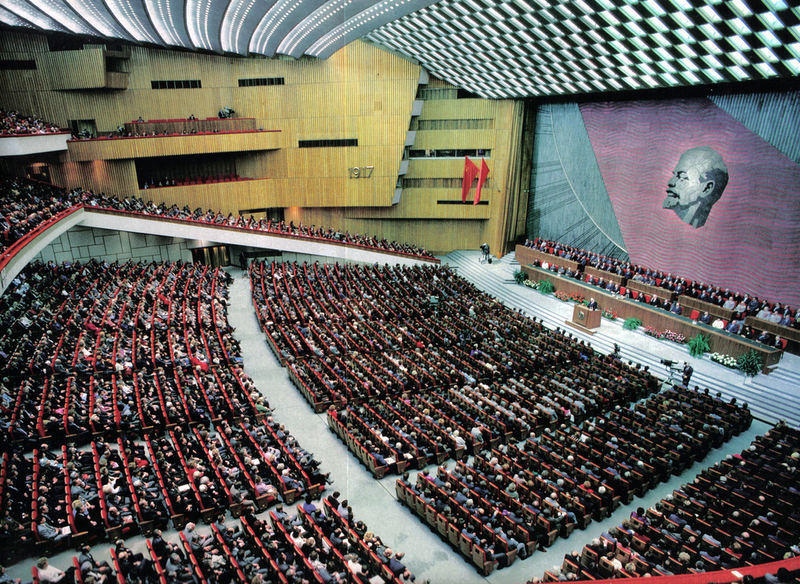
It is worth noting that this position existed in the Constitution for a short time, and in 1990 the position of President of the USSR appeared, who officially became the sole head of state with broad powers127. The powers of both the Union level and the Supreme Soviet of the USSR were also defined (previously this was not done, and it was indicated that the powers of the Supreme Soviet were the powers at the Union level128129). Many call the 1989 election of people’s deputies of the USSR the first free election in the history of the USSR, although, given the specific nature of the elections of those years, they can only be called partially free130131, as can also be seen in the election system (Article 109)132:
- 750 deputies – from territorial electoral districts with equal numbers of voters;
- 750 deputies – from national – territorial electoral districts according to the norms: 32 deputies from each Union republic, 11 deputies from each Autonomous republic, 5 deputies from each Autonomous region, and one deputy from each Autonomous area;
- 750 deputies – from all – Union public organizations according to the norms established by the Law on Elections of People’s Deputies of the USSR (of which 100 seats for the CPSU and 75 for the Komsomol133).
In the end, out of 2,250 people, 2,249 were elected, including 1,957 (87%) members and candidate members of the CPSU and 292 (13%) non – party members134. However, representatives of democratically minded circles of society were also among the deputies, obtaining the opportunity to use the Congress as a platform to express their views. The most liberal of these deputies formed the democratically opposition Inter – Regional Deputies Group. The core of this group numbered about 250 people.
The Union deputy corps paved the way for a new generation of politicians in Russia and the CIS and Baltic countries. Among the politicians of the deputy corps were Boris Yeltsin, Andrei Sakharov, Anatoly Sobchak, Yuri Karyakin, Yuri Ryzhov, Yuri Boldyrev, Galina Starovoitova, Alexei Kazannik, Evdokiya Gaer, Yuri Afanasyev, and many others. Among the first people’s deputies of the USSR were future heads of state of CIS countries: Askar Akayev, Islam Karimov, Petru Lucinschi, Nursultan Nazarbayev, and Saparmurat Niyazov. The Soviets themselves were undergoing changes: for example, in March 1990, the III Congress of People’s Deputies of the USSR spoke in favor of enhancing the role of the Soviets as the foundation of self – government of the people. Under the slogan “All power to the Soviets!”, on April 9, 1990, the Law of the USSR “On the General Principles of Local Self – Government and Local Economy in the USSR” was adopted135. According to it, the system of local self – government included local Soviets, bodies of territorial public self – government of the population, as well as local referendums, meetings, assemblies of citizens, and other forms of direct democracy; guarantees, clear powers, and delimitations appeared. However, this Law did not yet remove local Soviets from the system of bodies of state power. It most likely reflected a theory widespread in Soviet society, according to which the Soviets embodied two principles: bodies of state power and local (people’s) self – government136.
The Soviets continued to exist for some time after the collapse of the USSR – in particular, in Russia, but after the conflict between the Supreme Soviet and the President in 1993, as well as the adoption of the new Constitution, the Soviets as organs of power disappeared altogether, mostly surviving in the form of the name of the upper house of the Federal Assembly (Federation Council), parliaments of the subjects of the RF (for example, there is a State Council in the Republics of Adygea, Crimea, Tatarstan, Komi, Chuvashia, Khakassia), and in representative bodies at the municipal level.
Principles of the soviets
1. Denial of the idea of separation of powers, that is, the Soviets possessed executive and legislative power: “The Commune was to be a working, not a parliamentary, body, executive and legislative at the same time”137.
It is worth noting that this principle had some relaxations since 1936 – in particular, the Supreme Soviet of the USSR and the Supreme Soviets of the SSRs were declared the sole legislative bodies138139.
Social democrats oppose the principle of the combination of powers, as it is precisely their separation that is meant to create a reliable mechanism for monitoring the actions of public authority, and to eliminate or significantly limit the possibility of arbitrariness by officials. In a rule – of – law state, it is the separation of powers and the system of “checks and balances” that serve as the organizational conditions that rule out the monopolization of power by any individual, state body, or group of people, and ensure that public authority complies with the requirements of law and legality140. Montesquieu also spoke on this issue141:
When the legislative and executive powers are united in the same person, or in the same body of magistrates, there can be no liberty; because apprehensions may arise, lest the same monarch or senate should enact tyrannical laws, to execute them in a tyrannical manner.
On regimes where the branches of power are united142:
In what a situation must the citizen be in such a republic? The same body of magistrates are possessed, as executors of the laws, of the whole power they have given themselves in quality of legislators. They may plunder the state by their general determinations; and as they have likewise the judiciary power in their hands, every private citizen may be ruined by their particular decisions.
And on what is needed to avoid this143:
To prevent this abuse, it is necessary from the very nature of things that power should be a check to power. A government may be so constituted, as no man shall be compelled to do things to which the law does not oblige him, nor forced to abstain from things which the law permits.
Thus, political liberty is possible only in a rule – of – law state where power is divided into legislative, executive, and judicial.
There are also questions regarding the efficiency of a system with the combination of powers, since giving bodies such broad powers leads to a high intensity of work and a lack of time to study the problem being solved, which renders the quality of the Soviets’ work as institutions low. One could, of course, say that the problem is solved by the fact that part of such power between Sessions rests with a permanently operating Presidium, but it consists of a small number of people (for example, 39 people144 in 1977), which raises the question of whether this is legitimate at all, given the fact that in the USSR, people who were not even heads of state by virtue of presiding over the Presidium were considered as such, as we will discuss below.
France was one of the first to consolidate the principle of separation of powers in the Declaration of the Rights of Man and of the Citizen of 1789: “A society in which the observance of the law is not assured, nor the separation of powers defined, has no constitution at all”145.
If we address the problem of the separation of powers, it remains relevant for Russia to this day. Although Article 10 of the Constitution stipulates the separation of powers, in reality it “is fictitious in our country, and this is not even hidden. The executive branch fully controls the legislative and judicial branches, and, in strategically significant parameters, the fourth estate – that is, the media. Lawmakers in this power structure play the role of an authority that legitimizes the decisions of the executive branch, giving them formal legal force (as was the case first in Tsarist Russia, and then in the USSR). The vast majority of laws passed by parliament are written in the Government and the Presidential Administration of Russia. And although on a number of points the legislature can exert temporary and limited resistance to pressure from the administration and the government, in major matters decisions are made, of course, not in parliament. If a person controls something, they also create rules in such a way that the scope of control (and therefore influence) is as large as possible, and so that controlling all of this is as convenient as possible, preferably not to their own detriment. Thus, entire categories of apparatuses effectively delineate their feeding ground, while simultaneously writing corresponding business plans for extracting surpluses from the controlled portion of the population146“.
At the same time, it must be acknowledged that one of the branches will dominate in any case – either the executive, as in the US, or the legislative, as in Germany or Switzerland (there are, of course, mixed cases like France, but there the problem of interaction between branches of power exists). We advocate for the dominance of the legislative branch, since it is parliamentary power that reflects the interests of the people to a greater extent than appointed, rather than elected, officials. Parliament reflects the interests of the masses to a greater extent than the President, which we emphasized in the article on political systems.
2. The Soviets were part of a centralized management system (the so – called “democratic centralism”). An example is the Instruction of the Council of People’s Commissars (SNK) of December 24, 1917, in which “Soviets of workers’, soldiers’, peasants’ and farm labourers’ deputies … always act in accordance with the decrees and decisions of both the Central Soviet authority and those larger associations (uvezd, gubernia and oblast Soviets) of which they are part”147. This can work well in a unitary country or during a crisis, but in a federalist system such a method in peacetime is ineffective and is more likely to lead to the dependency of all authorities on the central ones.
3. A characteristic feature of the system of Soviets is the imperative mandate (according to which a deputy was required to report to the voters, and the voters themselves could in theory replace a deputy if he failed to carry out their will)148. We have already analyzed this feature in our article on the imperative mandate (where we described the reasons for its ineffective functioning in the USSR), and overall we advocate for a mixed version that combines imperative and free mandates.
4. Serving as a deputy was not considered a job per se (since deputies were directly employed in production, that is, they performed civic and state duties alongside their production activities). Overall, social democrats believe that in the long term it is possible to implement a militia – style parliament, as implemented in Switzerland, but its successful implementation requires at least a system of democratic institutions developed to a very high level. If militia status is implemented without this preparation, it will lead to deputies having no time or interest for high – quality governance, and they will turn into merely a tool controlled by the group of politicians wishing to bend such a system to their will.
5. The principle of “public organization”. The Soviets were formed by various types of public groups. Thus, the right to nominate candidates for deputies according to Article 100 of the 1977 Constitution belonged to “organizations of the Communist Party of the Soviet Union, trade unions, the All – Union Leninist Young Communist League, cooperative and other public organizations, work collectives, and meetings of servicemen in military units”149.
In the USSR, there was a problem with this: as noted, only 1 candidate was nominated in the USSR, and if one looks at Soviet ballots150, one can see that conditionally 1 candidate was nominated by a factory or factories, but at the same time different groups, like branches of the Komsomol, public organizations, and military units, often did not nominate alternative candidates; moreover, there were cases where various public organizations (for example, a military garrison, a theater, and a local Komsomol branch) nominated 1 joint candidate.
Here an interesting question arises: while at the municipal level it makes sense when well – known workers of the city and village are elected, how were deputies selected for a high level such as the Supreme Soviet of the USSR?
The procedure was as follows151:
- General meeting of workers at an enterprise, that is, a meeting was held at each enterprise where candidates were nominated;
- Further, the selected candidates from enterprises were considered at a district or city pre – election meeting;
- The remaining candidates went to an electoral district pre – election meeting, where party – state bodies selected just 1 candidate.
In such a system, elections seem to be present, since candidates are filtered through stages, but the following questions arise:
- The difficulty of defining a “worthy” person, since the concept of “worthy” is very diverse: in particular, various records, length of service, level of education, degree of loyalty, and so on can influence this;
- The difficulty in choosing a candidate at a level above the enterprise, since the candidate himself may be unknown, and by law he did not conduct campaigning.
At the same time, self – nomination or nomination by individual citizens is absent, which does not add to democracy, since people are limited only to their organizations, whereas in other countries self – nomination and nomination by individual citizens exist (in particular, in the FRG and the RF, despite all the flaws of our system). There are questions regarding the quality of the candidate: “There were cases when meetings revealed that certain recommended comrades, during everyday communication in the collective, allowed rudeness, exhibited arrogance, and conceit”152. There was a case when one candidate was rejected because his father in 1943 was a village elder (starosta)153. An effective weapon in this regard was also compromising material (kompromat): in 1969, 85 candidates were removed due to compromising materials, and in total 1,013 people were rejected154. Such formulations do not look sufficiently democratic, as professionalism is not evaluated here, but rather some ordinary human qualities or family ties.
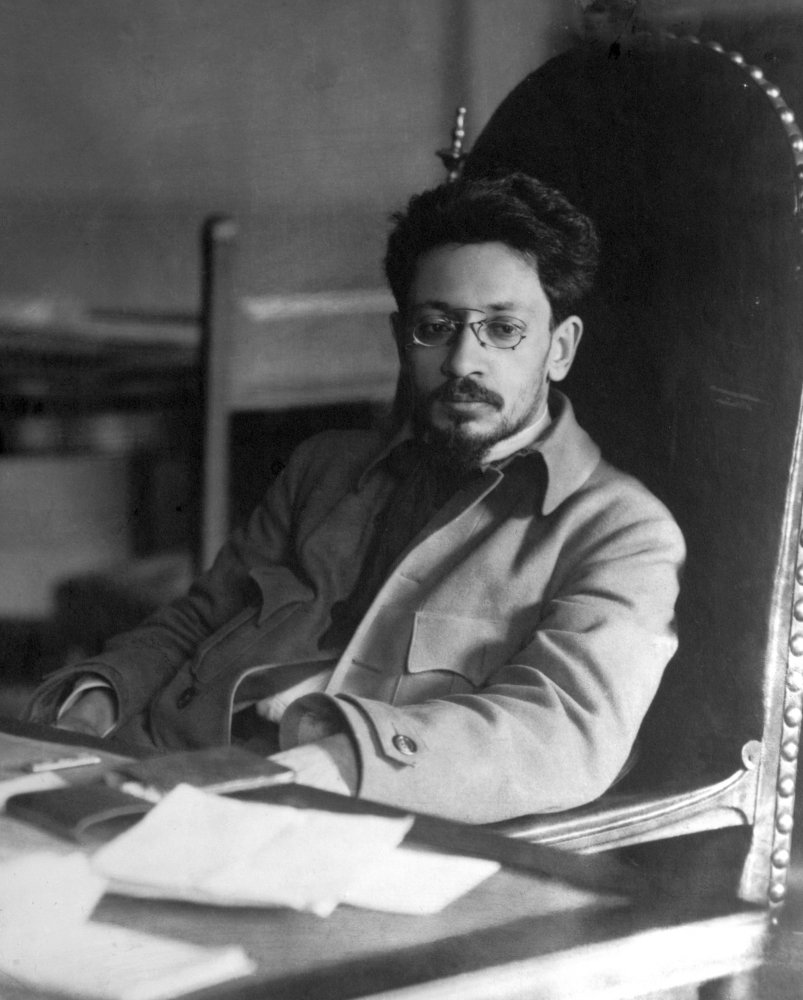
6. Short duration of operation. In the USSR, the Soviets worked for a small amount of time, unlike a parliament, which works in sessions. At first, there were congresses, and they were short – lived, at all levels, and lasted, as a rule, 2-4 days (for example, the Second All – Russian Congress of Soviets worked for only three days)155. In fact, regarding the congresses of Soviets, the practice of holding party forums in the form of conferences and congresses was adopted, the very nature of which did not imply long duration, since the delegates had a permanent type of activity in the territory from which they were elected to the congresses, and had to return to it. This circumstance was explained in a peculiar way by the Bolsheviks. Thus, Yakov Sverdlov pointed out that “it is impossible to drag out the congress, because we have pulled the best workers away from work – they are needed on the ground”156.
Such short duration of the congresses of Soviets played into the hands of the Bolsheviks, and they actively lobbied for it. The fact is that the Bolshevik party, having taken power into its own hands, in the preceding years through long discussions was able to form a rather clear, Marxist – based program of its actions aimed at building a socialist state, and the leaders of the Bolsheviks (Lenin, Trotsky, Stalin, and others) did not need additional theoretical discussions of a strategic nature regarding their activities – they focused on the practice of revolutionary transformations. And since one of the programmatic principles was “popular sovereignty of the working people”, instead of “bourgeois democracy”, it was possible to implement programmatic directives only through formal structures of public power, that is, through the Soviets and their congresses, with the latter being of greater importance, since it was at the congresses of Soviets that fundamental decisions (including constitutional acts) were adopted.
And from this point of view, the short duration of the congresses of Soviets assumed the advance preparation of draft resolutions, decrees, appeals, and other congress acts, and the managerial party – soviet apparatus was engaged in this, putting the necessary content into the documents. The delegates of the congresses of Soviets, being for the most part simple, insufficiently literate, but ideologically loyal comrades, as a rule, did not discuss such draft documents in detail, both due to lack of time and due to inability to properly comprehend their significance, relying on trust in party and executive committee workers.
After the abolition of the Congresses, the Soviets began to work a little longer, approximately a month, but also in sessions, that is, they met 2 times a year for a month. Main decisions were adopted mainly by the congresses of the CPSU, while the Soviets simply repeated their will.
7. Collegiality of management. In the USSR, one – man management was legally not provided for for a long time, and besides the Presidium of the Supreme Soviet of the USSR, which was mentioned earlier, there was also the Council of Ministers, which since 1979 was collegial, and its head was the Presidium of the Council of Ministers (which in turn had a leadership position in the form of the Chairman of the Council of Ministers of the USSR). In the USSR, in fact, the element of a collective head of state was not observed at all, and in practice one person influenced the policy being conducted significantly more than the rest (Lenin, Stalin, Khrushchev, Brezhnev, Andropov, Chernenko, Gorbachev). Let us also note that these people often could for some time not hold particularly important positions at all: thus, Stalin acquired an important state position only on May 6, 1941, when he was appointed chairman of the Council of People’s Commissars of the USSR157, and prior to this did not formally hold leading positions in government bodies (he was a member of the Central Executive Committee of the USSR in 1922–38, a member of the Council of Labor and Defense under the Council of People’s Commissars of the USSR in 1930–37)158, while he was still the head of government (in which collegiality in discussions and decision – making was also provided for), but by no means of the country.
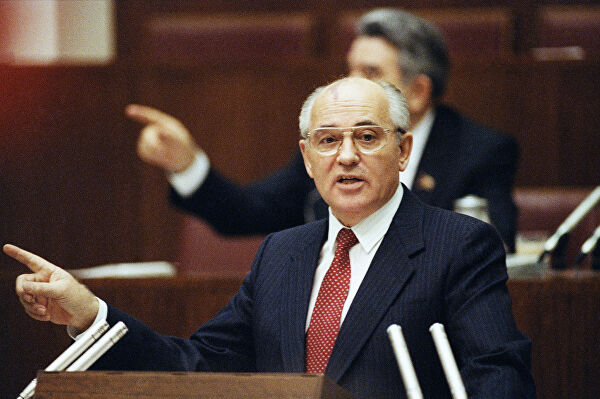
A sole head of state specifically appeared in 1990 in the form of the President of the USSR, who was only Mikhail Sergeyevich Gorbachev159. In addition to these, there were also principles that existed initially, but disappeared in 1936 (they existed even before the Bolshevization of the Soviets):
1. The principle of multi – stage formation. This principle existed both before the seizure of power by the Bolsheviks and in the USSR (until 1936). According to the 1924 Constitution of the USSR, the Congress of Soviets of the Union of Soviet Socialist Republics (this was the supreme body of authority in the USSR of those years) was composed of “representatives of town Soviets and Soviets of urban settlements calculated at 1 deputy per 25,000 voters and representatives of provincial congresses of Soviets – calculated at 1 deputy per 125,000 inhabitants. Delegates to the congress of Soviets of the Union of Soviet Socialist Republics were elected at provincial congresses of Soviets (county and town councils delegated participants to the provincial congress160). In those republics where there are no provincial associations, delegates are elected directly at the congress of Soviets of the given republic”161.
Let us note right away that indirect elections are not the same as multi – stage elections. Indirect elections imply that members of a collegial body of power or a sole head of a body are elected by electors – persons specially elected to carry out elections to the corresponding body of power. After fulfilling its duties, that is, a single vote, the elected body is abolished. Usually, the elected body reflects the opinion of the majority of its voters. An example of this is elections in the US, where the President is elected in this way. Multi – stage elections are similar in idea to indirect elections. A distinctive feature is the absence of abolition of the elected body after voting. Multi – stage elections involve the formation, through voter voting, of one representative body of power, which then elects a higher – level body of power. An example of multi – stage elections is the elections to the National People’s Congress (NPC). Citizens through direct elections elect village and township congresses of people’s deputies, which in turn from among their deputies elect city and district representations. City and district congresses elect deputies of provincial congresses, congresses of autonomous prefectures and autonomous regions, which from their composition elect deputies to the NPC162.
This system was not invented by the Communists, but was implemented as early as during the elections to the State Duma of the Russian Empire. Elections before the revolution were also indirect, or multi – stage; for different curias, a varying number of stages was provided (from two to four). For county landowners and urban voters of special cities, 2 stages were provided, for delegates from volosts – 3 stages, for delegates from workers – 4 stages. This system of indirect elections was also borrowed from the preceding acts on zemstvo and city self – government of 1864, 1890, and 1892. Initially, holders of electoral qualifications by curias elected electors; at the second stage, the electors, that is, participants of the provincial electoral assembly, jointly elected deputies of the State Duma163. Such a practice contradicted the program of the RSDLP adopted in 1903, which promoted the following:
Universal, equal, and direct suffrage in elections, both to the legislative assembly and to all local self – government bodies, for all citizens, male and female, who have reached 20 years of age…164
The plus of such a system was that deputies could be recalled at the grassroots level. There were more minuses:
- Less democracy compared to direct elections, since voters do not choose candidates for the upper levels;
- Increased burden on a deputy, as he is responsible for several levels of authority;
- Low quality of democracy, as municipal elections are famous for low turnout percentages, which puts the legitimacy of such a system for forming further bodies into question;
- It is not guaranteed that your deputy will make it to particular levels of authority, which will reduce the opportunity for influence.
2. The principle of occupational representation. This principle is based on the fact that constituencies are formed according to the occupational principle in the form of workplace electoral districts. A workplace electoral district is an electoral unit formed in accordance with the law, grouping voters by their place of work or study. This is a unit of election, meaning that individuals are directly elected from it by the electorate to representative bodies and to individual posts. Such electoral districts exist only in China. A similar practice was characteristic of a number of former socialist countries (the USSR until 1936, Yugoslavia, Poland)165. The essence of such districts is that while an ordinary district united the residents of that same district, a workplace district united those same workers around a place of work – for example, a factory.
Such a system has the advantage that working people can be represented in bodies of power, plus there is a high probability that there will be more of a wide variety of experts on various issues, but there are a number of disadvantages.
First, groups that cannot be represented are simply deprived of a portion of their voting rights: the unemployed (not to be confused with parasites; the unemployed are a part of the economically active population that does not have a job, but is looking for one166), individual entrepreneurs, priests, private traders, pensioners, students, and so on. Later, in the mid – 1920s, some unrepresented groups received the right to be elected, but due to power schemes in elections and pressure on voters (which we examined earlier), the system worked only in theory.
Second, the model of proportional election is unrealizable, and we wrote about the advantages of a proportional system in the article on electoral systems. Interestingly, in general, the system of Soviets in 1917 was characterized by significant chaos: besides Soviets of Workers’ and Soldiers’ Deputies and Soviets of Peasants’ Deputies, the following Soviets could also exist locally167:
- Soviets of Military Deputies;
- Soviets of Sailors’ and Officers’ Deputies;
- Soviets of Landless Peasants;
- Soviets of Cossack Deputies;
- Soviets of Student Deputies;
- Soviets of Shop Stewards;
- Soviets of Deputies of Working Intelligentsia, and so on.
According to researcher B. I. Kolonitsky, “Soviets of Pastors’ Deputies” were organized in the Baltic region168.
Third, inequality of votes. This feature persisted until 1936. Let us examine the essence through the example of the 1918 Constitution (which de facto existed until 1936, while the second Constitution of 1925 essentially repeated the first). In accordance with it, the All – Russian Congress of Soviets was composed of representatives of town Soviets calculated at 1 deputy per 25 thousand voters and representatives of provincial congresses of Soviets calculated at 1 deputy per 125 thousand inhabitants. To the Provincial congresses, according to the Constitution, representatives of town Soviets and volost congresses were to be delegated, calculated at 1 deputy per 10 thousand inhabitants, and from towns – one deputy per every 2 thousand voters, “but not exceeding 300 deputies for the entire province (district)”. County (district) congresses were formed “from representatives of village Soviets, calculated at 1 deputy per 1 thousand inhabitants, but not exceeding 300 deputies for the entire county (district)”. Volost congresses were composed “of representatives of all village Soviets of the volost, calculated at 1 deputy per every 10 members of the Soviet”169.
Such a system led to one group (urban residents, who supported the Bolsheviks) dominating over another (rural residents, who supported the SRs), which as a whole contradicted the principles of democracy, since a single seat in a representative body should everywhere be approximately equal to a certain number of the population (exceptions are, for example, reserved seats for small indigenous peoples). SR Konstantin Oberuchev held a similar opinion, believing that such a system was created specifically in the interests of the ruling Bolshevik party, as rural voters had less inclination toward Bolshevism than urban voters170.
It is worth noting that such a system also existed before the Bolsheviks, and was also of a highly chaotic nature: in the Rominskaya volost, 3 – 10 deputies were elected from a settlement, in the Podbuzhskaya volost — 3 deputies per 1,000 voters, in the Budskaya volost — 1 per 200, in the Yarovshchinskaya volost — 5 per settlement, in the Puppovskaya volost — 1 deputy per 10 households171; as can be seen, not only were representation norms not standardized, but even the units of measurement were not — in some cases it was a household, in others a certain number of inhabitants, and in others villages as a whole.
The fourth drawback is open voting. In the 1918 Constitution of the RSFSR, the voting procedure was not specified, which implied that it could be both secret and open. A similar provision on the autonomy of electoral commissions to choose a secret or open method of voting was also contained in the Decree of the All – Russian Central Executive Committee (VTsIK) “Instruction on the re – elections of city and rural soviets and on the convocation of volost (district), county (district), and provincial (regional) congresses of soviets” of 1924172.
A survey of elections conducted by VTsIK instructors in 1924 revealed that out of 46 surveyed volosts, only in one of them — in Tambov Governorate — secret ballot was used; in all other cases, open voting was used at meetings. In the event of holding a secret ballot, the candidates previously approved by the party cell were not elected, and the election results turned out to be unexpected for higher authorities173. The 1924 Constitution of the USSR moved away from enshrining the choice between secret and open voting, and moreover contained no norms regulating the electoral rights of citizens.
The non – alternative legal consolidation of open voting occurred in Article 41 of the VTsIK Decree “On approval of the Instruction on elections of city and rural soviets and on the convocation of congresses of soviets” of 1925174. Soviet legal scholars assessed the use of the open method as follows: “unlike in a bourgeois state, in a proletarian state voters have nothing to fear”175, and also noted the limited resources of the authorities to conduct such voting: “…illiteracy of the overwhelming majority of the country’s population and the lack of elementary technical means for organizing elections (paper, printing materials)”176. However, in our opinion, open voting in the Soviet state was used as an effective way of influencing the expression of people’s will in order to fully control their choice, as well as to identify opposition sentiments and subsequently suppress them, which we mentioned above.
In 1936, voting became specifically secret. Also interesting is the perception by political figures of the consolidation of the secret ballot principle in Soviet legislation. Vyacheslav Molotov, in his report “On Changes in the Soviet Constitution” at the VII Congress of Soviets on February 6, 1935, noted that “the very fact of the transition from open to closed elections vividly highlights the growth of proletarian democratism in the Soviet Union and the desire of Soviet power to place the work of its bodies under the increased control of workers and peasants”177.

Conclusion
What overall conclusion can be drawn from the above? The Soviets were an attempt to reconsider the system of representative authority in an alternative key to the parliamentary model, but historical and institutional problems ultimately led to the Soviets not only becoming part of the state – party apparatus, but ultimately disappearing altogether, becoming part of history. Can this system be fixed in such a way that it works? Theoretically it is possible, but for this the following is needed:
- Ensure the separation of powers;
- If the state is federal, remove democratic centralism;
- Ensure a phased transition to a militia – style system;
- Introduce a mixed mandate;
- Candidates should be nominated by parties and movements, initiative groups, and simply anyone who wishes;
- Ensure an adequate period of operation;
- Ensure the separateness and relative independence of the collective head of state, region, municipality;
- Avoid using archaic elements of the 1918-1936 structure, such as a multi – stage system of formation and open voting.
These problems are resolved in the model that we propose. It can be improved through a gradual transition to the militia principle, or, for example, through the introduction of a system of professional councils. The system of Soviets, which existed both in Russia during the February Revolution and during the Soviet power, cannot serve as a benchmark for the development of representative democracy.
- A.V. Barikhin. Great Legal Encyclopedia. – 960 p. – M: Knizhny Mir, 2010. – p. 780.
- V.V. Aleksandrov, V.V. Amvrosov, E.A. Anufriyev et al. Scientific Communism – 381 p. – M: Politizdat, 1980. – p. 303.
- Soviet // Encyclopedia Britannica (www.britannica.com). [Online resource]. URL: https://www.britannica.com/topic/soviet-government-unit (Accessed: 24.06.2021).
- K.E. Baldin, A.M. Semenenko. Ivanovo-Voznesensk. From the Past into the Future. – 248 p. – Ivanovo: Episheva O.V., 2011. – pp. 57-62.
- Milovan Djilas. The Face of Totalitarianism – 544 p. – M.: “Novosti” Publishing House, 1992. – p. 239.
- T.P. Korzhikhina. The Soviet State and Its Institutions: November 1917 – December 1991. – 418 p. – M: RGGU, 1994. – p. 52.
- Russian State Archive of the Economy (RGAE). F. 1562. Op. 1. D. 16. L. 22.
- RGAE. F. 1562. Op. 1. D. 16. L. 27.
- RGAE. F. 1562. Op. 1. D. 16. L. 87.
- E.P. Malysheva. Soviet Administrative Experience // Administrative Reforms in Russia: History and Modernity / under general ed. of R.N. Baiguzin. – 644 p. – M: ROSSPEN, 2006. – pp. 427-430.
- Decrees of the Soviet Power. Vol. 1: October 25, 1917 – March 16, 1918 / [prep. for publication by Dr. Hist. Sci. Prof. S. N. Valk et al.]. – 626 p. – M: Gospolitizdat, 1957. – p. 51.
- Central State Archive of the Moscow Region (TSGAMO). F. 2446. Op. 1. D. 49. L. 11-16.
- Valery Aleksandrovich Shishkin. // Saint Petersburg Institute of History of the RAS (www.spbiiran.nw.ru). [Online resource]. URL: http://www.spbiiran.nw.ru/2_shishkin_v_a/ (Accessed: 25.08.2021).
- V.A. Shishkin. Power. Policy. Economy: Post-Revolutionary Russia 1917-1928. – 399 p. – SPb: Dmitry Bulanin, 1997. – p. 20.
- A.V. Gogolevsky. Revolution and Psychology: Political Moods of Petrograd Workers Under the Conditions of the Bolshevik Monopoly on Power, 1918-1920. – 219 p. – SPb: Publishing House of St. Petersburg University, 2005. – p. 42.
- A.M. Andreyev. Local Soviets and Bourgeois Bodies of Power (1917). – 334 p. – M: Nauka, 1983. – pp. 280-282.
- T.M. Veronika, I.R. Iskra, S.A. Kovarskaya, S.D. Trifonov, A.N. Chistikov. Novgorod Land in the Era of Social Upheavals. 1918-1930: collection of documents: in 2 books. Book 1. – 340 p. – SPb: Nestor-Istoriya, 2006. – pp. 202-203.
- Eighth Congress of the RCP(b). March 18-23, 1919 / edited by Em. Yaroslavsky. – 560 p. – M: Party Publishing House, 1933. – pp. 189-190.
- Ninth Congress of the RCP(b). March-April 1920 / edited by N.L. Meshcheryakov. – 612 p. – M: Party Publishing House, 1934. – p. 133.
- V.I. Shishkin. Revolutionary Committees of Siberia During the Civil War Years (August 1919 – March 1921). – 333 p. – Novosibirsk: Knizhny Mir, 1978. – p. 274.
- Worker Opposition Movement in Bolshevik Russia. 1918. Assemblies of Plenipotentiaries of Factories and Plants: Documents and Materials / Comp., author of intro. art. and notes D. B. Pavlov. – 656 p. – M: ROSSPEN, 2006. – pp. 392-397.
- P.A. Podbolotov, L.N. Spirin. The Collapse of Menshevism in Soviet Russia. – 246 p. – L: Lenizdat, 1988. – pp. 92-93.
- I.N. Bergovskaya, V.Y. Filimonov. Kaluga Soviet Republic: History in Documents. – 176 p. – Kaluga: Zolotaya Alleya, 2012. – p. 126.
- State Archive of the Omsk Region (GAOO) F. 26. Op. 1. D. 80. L. 60.
- V.P. Andreyev, M.M. Petrukhina. Party Leadership of the City Soviets of Siberia (1920-1932). – 223 p. – Tomsk: Tomsk University Publishing House, 1983. – p. 24.
- Krasnoyarsky Rabochy. 1920. March 25
- Vlast Truda. 1920. September 4
- State Archive of the Russian Federation (GARF). F. 1235. Op. 99. D. 267. L. 12.
- A.S. Orlov, V.A. Georgiyev, N.G. Georgiyeva, T.A. Sivokhina. History of Russia. – 680 p. – M.: Prospekt, 2016. – p. 483.
- M.S. Salamatova. Electoral Behavior of Townspeople in Soviet Russia in the 1920s // Ideas and Ideals. – 2013 – No. 3. – pp. 72-85.
- E.G. Gimpelson. Soviet Executive Cadres: 1917 – 1920s // Russian History. – 2004 – No. 6. – pp. 61-67.
- Y.S. Kukushkin, O.I. Chistyakov. Essay on the History of the Soviet Constitution. – 367 p. – M.: Politizdat, 1987. – p. 256.
- GARF. F. 3316. Op. 20. D. 918. L. 60.
- State Archive of the Novosibirsk Region (GANO). F. 2-P. Op. 1. D. 134. L. 7.
- GANO. F. R. 1228. Op. 1. D. 67.
- Elections to the Soviets of the RSFSR in 1925-1926. Part 1: (City Soviets, Village Soviets, Volost Congresses, Volost Executive Committees and Audit Commissions). – 255 p. – M.: NKVD Publishing House, 1926. – p. 52.
- GARF. F. R. -393. Op. 29. D. 10a. L. 37.
- D.M. Korchagin. Soviet Electoral Campaigns of the 1920s (on Materials of the Kuban-Black Sea Region): dissertation of Candidate of Historical Sciences. – 217 p. – M.: Plekhanov Russian Academy of Economics, 2003. – p. 72.
- GANO. F. 3316. Op. 20. D. 282. L. 8.
- Heads of Yekaterinburg // Information Portal of Yekaterinburg (www.ekburg.ru) [Online resource]. URL: https://www.ekburg.ru/aboutcity/glava/ (Accessed: 21.07.2021).
- GARF. F. 1235. Op. 103. D. 637. L. 111.
- GARF. F. R.-1235. Op. 101. D. 151. L. 307–315.
- GARF. F. R.-1235. Op. 103. D. 83. L. 74–95.
- GARF. F. 1235. Op. 103. D. 637. L. 112.
- GARF. F. R.-393. Op. 1a. D. 153. L. 46.
- A.I. Denisov. History of the Soviet State and Law. – 566 p. – M.: Yuridicheskaya Literatura, 1946. – p. 212.
- Resolution of the Presidium of the CEC of the USSR dated January 16, 1925 “On Instructions on Re-elections to the Soviets” // SZ USSR. – 1925. – No. 6. – Art. 55.
- Decree of the All-Russian Central Executive Committee dated October 13, 1925 “On Approval of the Instructions on Elections to City and Rural Soviets and on the Convocation of Congresses of Soviets” // SU RSFSR. – 1925. – No. 79. – Art. 603.
- Decree of the All-Russian Central Executive Committee dated November 4, 1926 “On Approval of the Instructions on Elections to City and Rural Soviets and on the Convocation of Congresses of Soviets” // SU RSFSR. – 1926. – No. 75. – Art. 577.
- P. Mamayev. On New Forms of Reporting and the Connection of Soviets with Voters // Vlast Sovetov. – 1928 – No. 32. – pp. 17-19.
- On the Practice of Recalling Deputies // Vlast Sovetov. – 1928. – No. 35–36. – pp. 3–5.
- P. Mamayev. On New Forms of Reporting and the Connection of Soviets with Voters // Vlast Sovetov. – 1928 – No. 32. – pp. 17-19.
- S.M. Gurvich, N.A. Kokotov. Elections to the Soviets of the RSFSR in 1925-1926. Part 1. (City Soviets, Rural Soviets, Volost Congresses, Volost Executive Committees) // Statistical Collection. – 255 p. – M.: NKVD Publishing House, 1926. – p. 62.
- Ibid., p. 217.
- M.S. Salamatova. Electoral Behavior of Townspeople in Soviet Russia in the 1920s // Ideas and Ideals. — 2013 — No. 3. — pp. 72-85.
- GARF. F. 1235. Op. 103. D. 637. L. 110.
- GARF. F. 1235. Op. 104. D. 20. L. 37.
- GARF. F. 1235. Op. 104. D. 20. L. 39.
- GARF. F. 1235. OP. 103. D. 637. L. 111.
- GARF. F. 1235. OP. 104. D. 20. L. 46.
- Ibid.
- GARF. F. 1235. OP. 103. D. 721. L. 11.
- Russian State Archive of Socio-Political History (RGASPI). F. 17. Op. 85. D. 19. L. 83.
- RGASPI. F. 17. Op. 85. D. 19. L. 83-84.
- Y.I. Gulikov, V.I. Pinkin, L.I. Pystina, M.S. Salamatova, S.V. Sheikhetov. Marginals in Society. Marginals as Society. Siberia (1920-1930s). – 456 p. – Novosibirsk: Sibirsky Khronograf, 2004. – p. 97.
- GANO. F. 2-P. Op. 1. D. 1392. L. 43.
- GANO. F. 2-P. Op. 1. D. 431. L. 7.
- SU RSFSR. – 1926. – No. 5. – Art. 29.
- SU RSFSR. – 1927. – No. 2. – Art. 9-11.
- SU RSFSR. – 1927. – No. 6. – Art. 49-51.
- SU RSFSR. – 1927. – No. 2. – Art. 10.
- S.M. Gurvich, N.A. Kokotov. Elections to the Soviets of the RSFSR in 1925-1926. Part 1. (City Soviets, Rural Soviets, Volost Congresses, Volost Executive Committees) // Statistical Collection. – 255 p. – M.: NKVD Publishing House, 1926. – pp. 56-57.
- Results of Elections to the Soviets of the RSFSR in 1929: (Statistical Collection) / All-Russian Central Executive Committee, All-Russian Central Election Commission. – 103 p. – M.: Vlast Sovetov; 14th Printing House. – pp. 26-27.
- GARF. F. 1235. OP. 104. D. 20. L. 46.
- GANO. F.R. 47. Op. 1. D. 619. L. 15.
- B. Kavrakiysky, I. Khamarmer. Lessons of Class Struggle: Results of Elections of Soviets of Siberia. 1928–1929. – 120 p. – Novosib.: Sibkrayizdat, 1929. – p. 66.
- Y.S. Kukushkin, O.I. Chistyakov. Essay on the History of the Soviet Constitution. – 367 p. – M.: Politizdat, 1987. – p. 268.
- Ibid., p. 269.
- Ibid., p. 273.
- Ibid., p. 272.
- Ibid., p. 291.
- Ibid., p. 292.
- First Session of the Supreme Soviet of the USSR. January 12-19, 1938. – 207 p. – M.: Publishing House of the Supreme Soviet of the USSR, 1938.
- Second Session of the Supreme Soviet of the USSR. August 10-21, 1938. – 815 p. – M.: Publishing House of the Supreme Soviet of the USSR, 1938.
- Meetings of the Supreme Soviet of the USSR of the 5th Convocation, First Session (March 27-31, 1958): Verbatim Report. – 442 p. – M.: Publishing House of the Supreme Soviet of the USSR, 1958.
- Y.S. Kukushkin, O.I. Chistyakov. Essay on the History of the Soviet Constitution. – 367 p. – M.: Politizdat, 1987. – p. 292.
- Rulers and Leaders of Russia, USSR, RF // Great Russian Encyclopedia (bigenc.ru); [Online resource]. URL: https://bigenc.ru/domestic_history/text/5578161 (Accessed: 25.08.2021).
- Great Soviet Encyclopedia. – 576 p. – M.: “Soviet Encyclopedia”, 1977. – p. 176.
- Vladimir Zhuravlev, Vladimir Fortunatov. Electoral system and elections in the RSFSR in 1937-1987 // Journal about elections. – 2014 – No. 1. – p. 39-49.
- Y.A. Vedeneev, N.A. Bogodarova. Essays on the history of elections and electoral law: textbook – 692 p. – Kaluga.: “Simvol” Foundation, 2002. – p. 628.
- USSR. 100 questions and answers. – 135 p. – M.: Novosti Press Agency, 1981. – p. 45-46.
- Representative power in Zauralye: history and modernity / under the general editorship of M.N. Islamov. – 343 p. – Chelyabinsk: Auto Graf, 2009. – p. 138.
- Y.S. Kukushkin, O.I. Chistyakov. Essay on the history of the Soviet Constitution. – 367 p. – M.: Politizdat, 1987. – p. 312.
- National Archives of the Republic of Belarus (NA RB). F. 4p. Op. 1. D. 11858. L. 32.
- A.S. Kaigorodova. Special projects of the Election Commission of Sverdlovsk Region for the 75th anniversary of the first post-war elections // Elections and referendums. – 48 p. – 2021 – No. 1. – p. 31.
- Representative power in Zauralye: history and modernity / under the general editorship of M.N. Islamov. – 343 p. – Chelyabinsk: Auto Graf, 2009. – p. 138.
- A.A. Fokin. “Deputy is a servant of the people”: Principles of nominating candidates as an element of Soviet democracy in the 1960s–1970s // Management in modern systems. – 58 p. – 2014 – No. 3. – p. 45-53.
- A.S. Kaigorodova. Special projects of the Election Commission of Sverdlovsk Region for the 75th anniversary of the first post-war elections // Elections and Referendums. – 48 p. – 2021 – No. 1. – p. 16.
- Ibid., p. 15.
- Ibid., p. 23.
- Russian State Archive of Contemporary History (RGANI). F. 5. Op. 61. D. 24. L. 53.
- RGANI. F. 5. Op. 61. D. 24. L. 114.
- Y.S. Kukushkin, O.I. Chistyakov. Essay on the History of the Soviet Constitution. – 367 p. – M.: Politizdat, 1987. – p. 319.
- M. Voslensky. Nomenklatura. The Soviet Ruling Class (Second edition, revised and expanded), 671 p. – Overseas Publications Interchange Ltd London, 1990. – p. 127-128.
- Law of the Union of Soviet Socialist Republics “On the Status of Deputies of the Soviets of Working People’s Deputies in the USSR”. – 30 p. – M.: Izvestia of the Soviets of Working People’s Deputies of the USSR, 1972. – p. 1.
- K.M. Bogolyubov, P.G. Mishunin, E.Z. Razumov et al. Handbook of a Party Worker. Issue 11 – 496 p. – M.: Politizdat, 1971. – p. 345-353.
- Resolution of the Central Committee of the CPSU, the Presidium of the Supreme Soviet of the USSR, the Council of Ministers of the USSR, and the All-Union Central Council of Trade Unions of August 28, 1969 No. 723 “On the Procedure for Summarizing the Results in Socialist Competition in Honor of the 100th Anniversary of the Birth of V.I. Lenin and on Measures to Reward the Winners in this Competition”
- Resolution of the Central Committee of the CPSU, the Presidium of the Supreme Soviet of the USSR, and the Council of Ministers of the USSR “On the Preparation and Publication of the Code of Laws of the USSR” of September 2, 1976 No. 716.
- Y.S. Kukushkin, O.I. Chistyakov. Essay on the History of the Soviet Constitution. – 367 p. – M.: Politizdat, 1987. – p. 312.
- Ibid., p. 344.
- Ibid., p. 291.
- Ibid., p. 342.
- Law of the USSR of 06.07.1978 N 7772-IX “On Elections to the Supreme Soviet of the USSR”
- Representative power in Zauralye: history and modernity / under the general editorship of M.N. Islamov. – 343 p. – Chelyabinsk: Auto Graf, 2009. – p. 156.
- The Constitution of the Socialist Federal Republic of Yugoslavia / translated by Olga Cacklin. – 149 p. – Belgrade.: Federal Secretariat for Information, 1963. – p. 103.
- S.F. Artemova, A.N. Molkin. Group “Elections-79” // Modern scientific research and innovations. – 2015 – No. 3-3. – p. 42-44.
- RGANI. F. 5. Op. 61. D. 24. L. 77.
- RGANI. F. 5. Op. 61. D. 14. L. 31.
- RGASPI. F. 591. Op. 1. D. 212. L. 64.
- A.A. Fokin. “Deputy is a servant of the people”: Principles of nominating candidates as an element of Soviet democracy in the 1960s–1970s // Management in modern systems. – 58 p. – 2014 – No. 3. – p. 45-53.
- RGASPI. F. 591. Op. 1. D. 110. L. 31, 81.
- Representative power in Zauralye: history and modernity / under the general editorship of M.N. Islamov. – 343 p. – Chelyabinsk: Auto Graf, 2009. – p. 160.
- A.A. Fokin. Electoral procedures in the USSR as a mechanism for identifying public sentiment // Management in modern systems. – 2015. – No. 2. – p. 33-37.
- N.S. Timofeev. Local Soviets // Great Russian Encyclopedia. Volume 30. Moscow, 2015, pp. 559-560.
- Constitution (Basic Law) of the Union of Soviet Socialist Republics (adopted at the Extraordinary Seventh Session of the Supreme Soviet of the USSR of the Ninth Convocation on October 7, 1977) With amendments and additions from: December 1, 1988 // Constitution of the Russian Federation (adopted by popular vote on December 12, 1993) (as amended)
- Artem Kretchetnikov. USSR, 1989: the birth of a parliament // BBC News|Russian Service (www.bbc.com). May 22, 2009. [Online resource]. URL: https://www.bbc.com/russian/russia/2009/05/090522_ussr_first_congress (Accessed: 25.08.2021).
- Constitution (Fundamental Law) of the Union of Soviet Socialist Republics (adopted at the Extraordinary Seventh Session of the Supreme Soviet of the USSR of the Ninth Convocation on October 7, 1977). As amended on: December 1, 1988, December 20, 23, 1989, March 14, December 26, 1990. Chapter 15.1. President of the USSR.
- Yu.S. Kukushkin, O.I. Chistyakov. An Outline of the History of the Soviet Constitution. – 367 p. – M.: Politizdat, 1987. – p. 346.
- Ibid., p. 291.
- Igor Dmitrov. “If we hold out for ten days, it will be a different country” // Lenta.ru (lenta.ru). May 21, 2019, 00:02. [Online resource]. URL: https://lenta.ru/articles/2019/05/21/elections1989/ (Accessed: 25.08.2021).
- The History of a Delay // Kommersant (www.kommersant.ru). March 26, 2019, 14:14. [Online resource]. URL: https://www.kommersant.ru/doc/3923699 (Accessed: 21.07.2021).
- The Constitution of the USSR as amended on December 1, 1988 // Virtual Museum of Constitutional History of the RF (http://www.rusconstitution.ru/). [Online resource]. URL: http://www.rusconstitution.ru/library/constitution/articles/9680/ (Accessed: 25.08.2021).
- Election of People’s Deputies of the USSR in 1989 from public organizations // CEC of Russia (www.cikrf.ru). [Online resource]. URL: http://www.cikrf.ru/banners/20let_vib/churov_20let_vib_izbranie.php (Accessed: 25.08.2021).
- The First Free Elections of People’s Deputies of the USSR. Reference // Russia Today (ria.ru). [Online resource]. URL: https://ria.ru/20090326/166106064.html (Accessed: 25.08.2021).
- On April 9, 1990, the Supreme Soviet of the USSR adopted the Law of the USSR “On the General Principles of Local Self – Government and Local Economy in the USSR” // Virtual Museum of Constitutional History of the RF (www.rusconstitution.ru). [Online resource]. URL: http://www.rusconstitution.ru/timestream/event/89/ (Accessed: 25.08.2021).
- I.V. Uporov, N.V. Golubikhina. Evolution of local authorities in the Soviet state during the period from the 1977 Union Constitution to the collapse of the USSR (legal aspect) // Symbol of Science: International Scientific Journal. – 2017 – No. 2. – p. 200 – 204.
- V.I. Lenin. Complete Works. Fifth edition. Volume 33. The State and Revolution. – 433 p. – M.: Publishing House of Political Literature, 1969. – p. 46.
- Yu.S. Kukushkin, O.I. Chistyakov. An Outline of the History of the Soviet Constitution. – 367 p. – M.: Politizdat, 1987. – p. 291.
- Ibid., p. 295.
- V.N. Rudenkin. The Principle of Separation of Powers: Idea and Reality // Bulletin of the Ural Institute of Economics, Management and Law. – 2012 – No. 4. – p. 55 – 63.
- Ch.L. Montesquieu. The Spirit of Laws. / Transl. from French – 672 p. – M.: Mysl, 1999. – p. 138.
- Ibid., p. 139.
- Ibid., p. 137.
- Yu.S. Kukushkin, O.I. Chistyakov. An Outline of the History of the Soviet Constitution. – 367 p. – M.: Politizdat, 1987. – p. 350.
- Declaration of the Rights of Man and of the Citizen of 1789 // The Great French Revolution (larevolution.ru). [Online resource]. URL: http://larevolution.ru/declaration.html (Accessed: 21.07.2021).
- A.V. Rubtsov. The end of bureaucratism? // Nezavisimaya Gazeta (www.ng.ru). March 27, 2012, 00:00. [Online resource]. URL: https://www.ng.ru/scenario/2012-03-27/%2012_stolonachalie.html?insidedoc (Accessed: 21.07.2021).
- Triumphant March of Soviet Power [Text]: [Collection]: [In 2 parts]. Part 1. / [Comp. D. V. Oznobishin, N. S. Arkhangorodskaya, M. F. Zaloga et al.]. – 559 p. – M.: USSR Academy of Sciences, 1963. – p. 146.
- Collection of Enactments and Orders of the Government for 1917-1918 – 1483 p. – M.: Admin. of Affairs of the Sovnarkom of the USSR, 1955. – p. 681.
- Yu.S. Kukushkin, O.I. Chistyakov. An Outline of the History of the Soviet Constitution. – 367 p. – M.: Politizdat, 1987. – p. 344-345.
- State Archive of Administrative Bodies of Sverdlovsk Region (GAOOSO). F. R-1. Op. 2. D. 68839. L. 238.
- A.S. Kaigorodova. Special projects of the Election Commission of Sverdlovsk Region for the 75th anniversary of the first post – war elections. // Elections and Referendums. – 48 p. – 2021 – No. 1. – p. 32.
- RGANI. F. 5. Op. 61. D. 22. L. 99.
- RGANI. F. 5. Op. 61. D. 22. L. 144.
- RGANI. F. 5. Op. 61. D. 14. L. 18.
- I. V. Uporov, N. A. Sheudzhen, I. V. Yablonsky. Congresses of Soviets as an organizational and legal mechanism for implementing the principle of popular sovereignty (1917-1918) // Law and Practice – 2019 – No. 3. – p. 20-26.
- Ya. M. Sverdlov. Selected works in 3 volumes. Vol. 2. – 329 p. – M.: Gospolitizdat, 1959. – p. 231.
- Essays on the History of Soviet State Power Bodies: Materials for the Study of the History of Soviet State and Law – 358 p. – M.: State Publishing House of Legal Literature, 1949. – p. 265.
- V. A. Nevezhin. Stalin // Great Russian Encyclopedia. Volume 31. Moscow, 2016, pp. 149-154.
- Rulers and leaders of Russia, USSR, RF // Great Russian Encyclopedia (bigenc.ru); [Electronic resource]. URL: https://bigenc.ru/domestic_history/text/5578161 (Accessed: 25.08.2021).
- History of the Soviet and Russian electoral systems: dossier // TASS (tass.ru). February 14, 2014, 14:39. [Electronic resource]. URL: https://tass.ru/info/966625 (Accessed: 20.07.2021).
- Yu. S. Kukushkin, O. I. Chistyakov. An Outline of the History of the Soviet Constitution. – 367 p. – M.: Politizdat, 1987. – pp. 268- 269.
- Scientific Discussion of Modern Youth: Current Issues, Achievements, and Innovations: Collection of Articles of the III International Scientific and Practical Conference. In 2 parts. Part 2 – 216 p. – Penza: MCNS “Science and Enlightenment”. – p. 128.
- M. S. Salamatovna. Soviet electoral system 1918–1936: continuity and innovations // Historical and Legal Issues: A New Perspective. – 2013- No. 6. – p. 142-163.
- S. I. Linets, V. P. Ermakov. History of Political Parties and Movements in Russia: Textbook for Academic Bachelor’s Degree – 193 p. – M.: Yurait Publishing House, 2019. – p. 40.
- B. N. Topornik et al. Legal Encyclopedia. – 1272 p. – M.: Yurist, 2001. – p. 891.
- L. S. Savostina. Unemployment // Great Russian Encyclopedia. Volume 3. – 766 p. – M.: Great Russian Encyclopedia, 2005. – p. 172-174.
- M. S. Salamatovna. Soviet electoral system 1918–1936: continuity and innovations // Historical and Legal Issues: A New Perspective. – 2013 – No. 6. – p. 142-163.
- B. Kolonitsky. Reds against Reds // Neva. – 2010 – No. 11. – p. 144-164.
- Yu. S. Kukushkin, O. I. Chistyakov. An Outline of the History of the Soviet Constitution. – 367 p. – M.: Politizdat, 1987. – p. 253-254.
- K. M. Oberuchev. Soviets and Soviet Power in Russia. – 72 p. – New York: Narodopravstvo, 1919. – p. 41.
- O. I. Chistyakov. The Constitution of the RSFSR of 1918: A textbook for university students studying in the specialty “Law” – 215 p. – M.: Zertsalo – M, 2003. – p. 126.
- Instruction on the re – elections of city and rural soviets and on the convocation of volost (district), county (district), and provincial (regional) congresses of soviets: decree of VTsIK dated 11.08.1924 // SU RSFSR. 1924. No. 71, Art. 695.
- GARF. F. 1235, Op. 101. D. 151. L. 311.
- On approval of the Instruction on elections of city and rural soviets and on the convocation of congresses of soviets: decree of VTsIK dated 13.10.1925 // SU RSFSR. 1925. No. 79, Art. 603.
- P. I. Stuchka. Doctrine of the State of the Proletariat and Peasantry and Its Constitution of the USSR and RSFSR – 291 p. – M., L.: State Publishing House, 1926. – p. 158.
- Yu. S. Kukushkin, O. I. Chistyakov. An Outline of the History of the Soviet Constitution – 367 p. – M.: Politizdat, 1987. – p. 163.
- The Institute of Elections in the Soviet State of 1918-1937 in Documents, Materials, and the Perception of Contemporaries / Public scientific and methodological advisory council under the Central Election Commission of the RF, Russian Public Institute of Electoral Law; Authors and compilers I. B. Borisov, Yu. A. Vedeneev, I. V. Zaitsev, V. I. Lysenko, scientific ed. Yu. A. Vedeneev, I. B. Borisov. – 880 p. – M.: ROiIP, 2010. – p. 584.