
What methods of fighting against power exist
Many want their country to have a high standard of living, but are unwilling to do anything for it, or they are willing, but simply do not know how exactly to fight. No one can help the first group, and nothing will; their fate is to let themselves be made into slaves, because very few heroes will be found to take on the resolution of their problems — that is more of a cinematic plot (besides, these heroes will not break through to any levers of power without mass support). This article is designed to help the second group.
We are writing this article for those who are asking how they can help “Logic of Progress” and the social-democratic movement as a whole. First and foremost, one must act and fight. Carry out whichever of the described actions you are able to perform — the choice is vast, and everyone will be able to find something. Methods of struggle are divided into three large groups: critical research, informational struggle, as well as organizational and protest struggle, which we have combined into one group. The first group of methods is safe and involves no risks; the second group carries minor risks (which, as a rule, are mitigated by ensuring anonymity); the third already carries more or less tangible risks. When choosing the methods you will carry out, give preference to the most risky ones among those you can afford. This is because there are not as many people willing to engage in organizational or protest work as there are people willing to implement safer methods, and if they spend their strength and time only on critical research, the opposition movement will lose out. Important: after reading this article, do not put off your actions for later; sit down and decide which of these you will engage in and exactly when. Another good option is to reread this article once a month and evaluate what you are doing. Do not underestimate the importance of the methods of struggle: they should be used to the maximum, fighting for every inch of the political field, even if it seems not that important.
When developing these methods, we relied, among other things, on the guide by Gene Sharp1, but not only that — we supplemented his methods with many others. Let us immediately make one more important note: the following methods of struggle are suitable only for the situation within an authoritarian state; in a democratic state, issues must be resolved with the help of democratic institutions.
Critical research
Sometimes one can hear this phrase: “Well, I’m a girl/single mother/an old person/I have to support a family — what can I do?” At the very least, you can use methods of struggle from the “critical research” group to be ready for the moment when you can join a protest or start an informational struggle. They are, as a rule, safe even in many authoritarian regimes (though they may be dangerous in totalitarian ones), which means any person can perform them. Let us first list what you can do even if you represent the most vulnerable segments of society.
Study opposition materials. You can study books, materials, and articles on economics, political science, democratic theory, and so on (we compiled a list of literature useful for studying the theory of social democracy here); you can watch videos — in short, learn. For example, you can read all the articles of “Logic of Progress”. Why is this necessary? Firstly, when you know quite a bit of opposition information, it is less likely that you will be subjected to the influence of pro-government propaganda, and it will not gain an additional supporter. Secondly, you will be better prepared for other phases of the struggle (informational, organizational) at a critical moment.
Do not read pro-government media. In general, in the case of Russia today, it is better not to read Russian media (especially pro-Kremlin and state-aligned ones) in principle, with the exception of democratic ones, because state media are subordinate to a government that engages in the dissemination of disinformation and also allocates funds to finance pro-government articles in many media outlets independent of the government. From this point, the following one logically follows.
Read democratic media. Despite the fact that authoritarian regimes try to suppress most democratic media by all available means, they still exist: for example, in Russia, these are primarily those whose editorial offices have relocated to emigration, or those that are created abroad in the Russian language, as well as those operating underground. It is best to get news and information from these media outlets, rather than from pro-government ones that engage in the manipulation of consciousness in favor of the authorities.
Advise friends and acquaintances to read democratic media. You can casually start a conversation on the topic of where to get news, while noting the dishonesty of official media and giving a couple of examples. After that, you can mention one or several democratic media outlets that you trust. If you want to share some news with a friend, send a link to a democratic media outlet, and not to a random site. You can also send an article just “to read” or to ask what your acquaintances think about it. This will help to increase the recognition of democratic media, increase the reach of readers, attract additional clicks (which is good from the point of view of search engines), and, possibly, new readers. Advise your friends to read “Logic of Progress”.
Cite democratic media in scientific papers. If you are writing a term paper, thesis, or other material requiring the indication of a source base, you can provide links to democratic media. This can attract additional clicks to them, draw the attention of your academic advisor or other scientific staff to them, and provide additional citations. Try to cite “Logic of Progress”, or if you, for example, are a Wikipedian and can leave links to our site on Wikipedia, then you can thereby contribute to the development of the resource.
Do not support the authorities. Simply do not show any support for the authorities. Ignore state events (for example, the May 9 parade), do not repeat pro-government narratives — about patriotism, the greatness of the country, and so on. If they try to herd you to a pro-government rally — do not go, pretend to be sick, say that you arrived at the meeting place but were late (take a photo as proof, arriving at the meeting place a little later). A large number of excuses can be invented. In surveys, give answers that are as inconvenient for the authorities as you consider possible for yourself. This is already better than submission and support for the authorities — their representatives will lose confidence and will act more cautiously and less harshly if they see that they have no support. However, you can go further: sabotage and refuse to participate in any activity and events initiated by the state, official, and unofficial structures of the regime (except those where you can express dissent).
Sometimes it happens that Russians say or write to their friends who cover political issues: “aren’t you tired of writing about the Kremlin?”, “just leave Putin alone”, “it’s already bad here, and you’re writing too, it’s unpleasant to read” — this is working for the authoritarian regime; it should be explained that if a person wants to change something, they can at least not urge anyone to stop discussing politics. It is never enough! Neither writing nor doing. And if friends write this to you, send them this article. If they write it again — do not doubt it, they are supporting the regime.
Follow the news and be prepared for mass action. Keep track of what rallies and protests are taking place in your city (this is usually written about in democratic media). This is necessary in order not to miss the moment when a truly mass rally happens, so that you can join it. You will understand this by the conversations in your city, in your circle, and by the degree of intensity of the situation in the media. Perhaps you will decide that attending a rally in this case will be quite safe.
Vote in elections. In an authoritarian state, you are most often deprived of real opposition alternatives in elections, but in modern Russia, there are still some candidates who are less connected to the authorities than others — for example, in municipal elections, you can vote for candidates from the Yabloko party, and some candidates from the KPRF party may be adequate. The main thing is to study the candidates, and if you read democratic media, it will be easier for you to determine who among them is less pro-government, and you will be able to make the right choice. At lower levels, the success of opposition candidates is more possible, and in the case of success, these candidates can promote a democratic agenda (give publicity to election fraud, fight against careerist bureaucrats in government bodies, and so on). Note that this method does not apply to electronic voting: it is better not to participate in it at all, but to come and vote in person (since falsifying an electronic vote is much easier).
Boycott state corporations and private businesses that support the regime. Refuse to purchase products and services from state corporations and private companies/entrepreneurs who express support for the regime or are closely linked to the regime. If you regularly buy goods from a company — find out the attitude of its management toward the authorities and the attitude of its competitors’ management toward the authorities. Choose more opposition-minded or at least less pro-government options from among these. Withdraw your money from state banks and the banks of the dictator’s friends; close your accounts there. If you work at a company and have the authority to choose a supplier, choose a less pro-government one. In any commercial interaction (purchasing a service, leasing) — help less pro-government individuals and hinder more pro-government ones. Do not go to concerts by pro-government musicians, or to see movies by pro-government directors, choosing opposition (or at least neutral) ones instead. Send your child not to a state school, which is easier for an authoritarian state to control, but to a private one. Support independent cooperatives, buy their products. You can do all this both by openly declaring a boycott and without advertising that your decision is political, pretending instead that it is dictated by your taste, intuition, the desire of your husband/wife, and so on.
Block personal relationships with representatives of the authorities. You can also refuse to talk to, be friends with, date, or be intimate with representatives of the authorities. In a conservative society like Russia (where the man is more often the initiator of starting a relationship), this is more relevant for women, who can choose not to date these people and ignore their advances. It is permissible to “milk” them for money and gifts (without giving anything in return), especially if the funds are later used to sponsor the opposition. Optionally, the same can be done not with representatives of the authorities, but simply with supporters of the regime. The calculation here is that a decreased level of satisfaction with personal life will become one of the factors capable of prompting these people to change their political position.
Economic struggle against the authoritarian state. Here the struggle is conducted based on the principle of “take as much as possible, give as little as possible”. You should be aware of all the payments that are due to you by law (pension, stipend, and so on), and seek and demand that the state strictly fulfill all these payments. Fines that you can appeal — you must appeal. If you have the opportunity to dispute or not pay a tax (without consequences that might eventually prove beneficial to the authoritarian state) — then do so. Since all these are not political actions (if you do not declare their political justification at the same time), you fully have the chances to achieve this goal, which will help to redistribute financial resources from the authoritarian state to the democratic movement, which will weaken the former and strengthen the latter.
Some also boycott sponsoring the state in other ways — for example, by “riding for free” on public transport — however, this method, firstly, is punishable, and secondly, it rather reproduces a disrespect for legality, unlike the legal appeal of fines, so we do not advise using such methods.
Ignore the culture of the authoritarian regime, preferring works of opposition culture or the culture of democratic countries. In the conditions of Russia, this means refusing to watch, as well as condemning films like “Brother 2”, which are abundantly quoted by representatives of the authorities234 and which glorify the values of these authorities. Instead, one should engage in and introduce others to progressive culture — for example, films like “X-Men: First Class”, which promote progressive values. To fully possess this tool of struggle, you, of course, need to feel and understand the values conveyed by a work of culture (which is difficult without studying opposition materials).
Prepare for the worst. We all hope for a peaceful transition to democracy through reforms, however, when the authorities make a peaceful change of power impossible, they make a violent one inevitable. And if violence cannot be avoided in any case, then one should prepare for the side that is against violence in the future — that is, the democratic side — to win in it. Preparation for the worst may include various techniques: for example, attending martial arts classes and perfecting oneself in them. The Krav Maga hand-to-hand combat system, developed by activists of Jewish communities for self-defense against Nazis5, may prove relevant in the conditions of an authoritarian regime. It will be useful to gather groups of people around you in sports sections (especially in case the state institutions in the country collapse and a “war of all against all” begins). When using firearms (there are still legal ways to have these weapons, so it is better to use them), attending shooting practice or paintball may be useful in street combat conditions. Attend first aid courses. It also does not hurt to have a supply of long-term storage food and water filters at home, and not only for yourself but also for your comrades. Save the most important articles of “Logic of Progress” and other media on your computer or storage device.
In general, you can change the ways you spend your free time altogether, adapting them to be useful for the opposition. If the security forces, judges, and nomenklatura see that everyone around them either supports them or is afraid, they will be much more brazen and confident in carrying out a misanthropic policy. And the more they see that people do not support what they are doing, the higher the chance that they will act much less confidently, that they will be ready to “waver” and make concessions, including at a critical moment.
Informational struggle
We will designate the set of more tangible methods of struggle as the informational struggle. In most cases, it can be conducted today via the internet, so if you have managed to ensure your anonymity (using a VPN, registering social media accounts with non-existent data, and so on), these methods of struggle will be almost completely safe for you. The informational struggle has a tangible impact on the situation and the political landscape in the country. The study of the history of the Age of Enlightenment proves to us the great influence of informational work on the transformation of society. The informational struggle is important if only for the reason that without it there will be no organizational work, since organizational work requires opposition-minded cadres, and this mindset and opposition views are acquired mainly as a result of someone’s informational, educational work. In addition, the spread of democratic views can also lead to a change in the views of people at the levers of power. What are the methods of the informational struggle?
Create agitation materials. These may include: articles, books, videos, news, images (for example, caricatures), “samizdat”, slogans (an example is “All power to the Constituent Assembly!”), symbols (an example is the white-blue-white anti-war flag6), leaflets, poems, websites, channels and social media accounts, publications, songs, symbolic sounds and gestures, parodies of the authorities and pro-government actions, memes, works of art and culture (paintings, films), inscriptions and symbols on the ground (by plowing the soil, using stones, planting plants). The more such opposition materials there are, the higher their quality, and the more widespread they are, the more people can be interested in opposition ideas and activities, and consequently, the opposition will become stronger. And the stronger it is, the easier it will be for it to take power. Writing articles for “Logic of Progress” is one of the methods of political struggle, but you can not only write articles, but also create other agitation materials for us and the social-democratic movement. It is especially valuable if you do design work.
Run a YouTube channel. YouTube is one of the most important channels for delivering information today. Take video editing and YouTube promotion courses, create an opposition channel and promote it. Sometimes it is even unnecessary to invest a lot of effort into creating and formatting content — you can translate important political videos from other languages, you can comment on other videos (like Yegzy Sarmat does). Our magazine allows the use of its materials as a basis for creating videos and is open to mutual cooperation with YouTube bloggers who wish to create videos based on them.
Create a public page, account, or channel on any social network (VKontakte, Facebook, Odnoklassniki, Twitter, TikTok, and so on). This could be a public page like “Social Democrats of St. Petersburg”, or even not necessarily a political public page, but, for example, a public page with news of your district. Here it is very important not to be afraid to write, not to be afraid to make mistakes in your content — there needs to be a lot of it.
Create a website. An example of such a website is “Logic of Progress”, which is a database on social democracy. In the Russian language, there is a shortage of similar projects on social liberalism, democratic socialism, green politics, and Christian democracy. It is also possible to create a wiki project, a political movement website, an online library, a portal with a database of corrupt officials, an urban portal, and so on — there are many options.
Create a blog on LiveJournal or Yandex Zen. Basically, the era of LiveJournal has already passed, but this platform still retains quite a few audiences and a significant number of bloggers who have their own audience. The democratic blogosphere will only benefit from another democratic blog, especially if its author can also speak out in the comments of blogs of statists and other ideological opponents. Yandex Zen, on the other hand, is mostly cluttered with statist materials, so it would be nice to dilute them. However, a blog can be maintained not only in LiveJournal and Zen — you can, for example, post entries on sites like Pikabu.
The more informational resources the democratic forces have, the more popular the democratic movement becomes overall, since these resources can support each other with links, increasing their audience, and channels with a larger audience also attract the attention of other media, search engines, and so on. The creation of social-democratic informational resources helps “Logic of Progress”.
Translate articles and books. The propaganda machine of the authoritarian regime sometimes produces a huge amount of agitation materials, and the opposition simply does not have enough strength to produce an alternative to them. But you can translate articles and books promoting progressive values from English and some other languages — this is significantly simpler. Books can either be published and sold (if you arrange it with bookstore management) or distributed via the internet, and articles can be submitted for publication in democratic media (for example, in “Logic of Progress”).
Next, we will examine the methods of distributing opposition agitation materials, the work on which is no less, and perhaps even more important than their creation.
Send agitation material (or links to it) to friends and acquaintances. Example: first you start a conversation on a political topic — perhaps by discussing some news, and then you say that, well, “Logic of Progress” outlines how this problem can be solved, or that if at least Yabloko had a majority in parliament, then something could be resolved (thus you are informationally helping Yabloko). Then you can send them some materials — via social media direct messages, messengers, SMS, and so on. Since they know you, there will be more trust in you than in a bot. However, remember that in some cases you may lose friends (if they are under some strong influence of an opposing ideology).
Send to strangers. You can, of course, send agitation materials to random people on the internet from your own account, but it might get banned. Therefore, it is better to create a separate account (properly filling it out — avatar, information, music, and so on) and send these materials to various people in direct messages from it. Even more effective is to send agitation materials to various kinds of political chats, where you are usually invited if you actively communicate with various politically engaged people on social networks. By the way, one of the options for the struggle is to send this article to someone.
Sometimes it is not even necessary to send anything; it is enough to simply format your account properly and engage in mass following, or in other words, adding friends. You can set one of the symbols as your avatar (for example, the white-blue-white flag, the social-democratic rose, or the “Logic of Progress” logo), you can write in your description that you are a democrat, a supporter of the welfare state, and that you oppose dictatorship and authoritarianism (in general, you can write many things). Often you can specify additional information: for example, when you can indicate your favorite books, you can list works by George Orwell, Ivan Turgenev, Dmitry Glukhovsky, and others. On the social network VKontakte, you can also subscribe to democratic and progressive groups, add videos (for example, videos from democratic media), and add music (for example, songs like Viktor Tsoi’s “Peremen” or Sting’s “Russians”). Mass following works; it was precisely with its help, for example, that the MSU Initiative Group7 was formed, headed by Mikhail Lobanov.
Send to social media groups and comments. Agitation materials can also be sent to popular political (and other) groups, into the comments of posts in these groups (for example, to the most popular posts), and on popular accounts. Distributing agitation materials in the groups of ideological opponents is a rather important and underestimated direction of struggle. It is best to find the most popular groups and engage in distribution there, but you can also take small and sometimes even abandoned groups. Also, some groups allow suggesting a news item for publication — you can use this function to publish your agitation materials or news mentioning them.
Publish on your accounts. Sometimes it is enough to simply publish agitation materials on your social media accounts for many people to see and read them. This is especially effective if you are a well-known person or a very sociable individual with a large number of acquaintances.
Some social networks provide the ability to invite other users to groups — this feature should not be neglected.
Send to forums. Some forums are still “alive” and have a permanent audience and community. As a rule, real people sit there, not bots. If you participate in any forum (football fans, SEO specialists, and so on), it makes sense to declare your political position in one way or another — via your nickname, avatar, or other methods.
Send to comments on websites. Some websites open comments to users — sometimes, admittedly, leaving links, images, or other types of agitation materials is prohibited, but even in such a case, you can declare the advantages of democratic governance and expose the shortcomings of authoritarian rule.
Sing songs. Here it is enough to sing opposition, democratic, or progressive songs on the street with a guitar, in karaoke, or in other places where appropriate; play them in the car; call radio stations and ask them to play the given song, and so on.
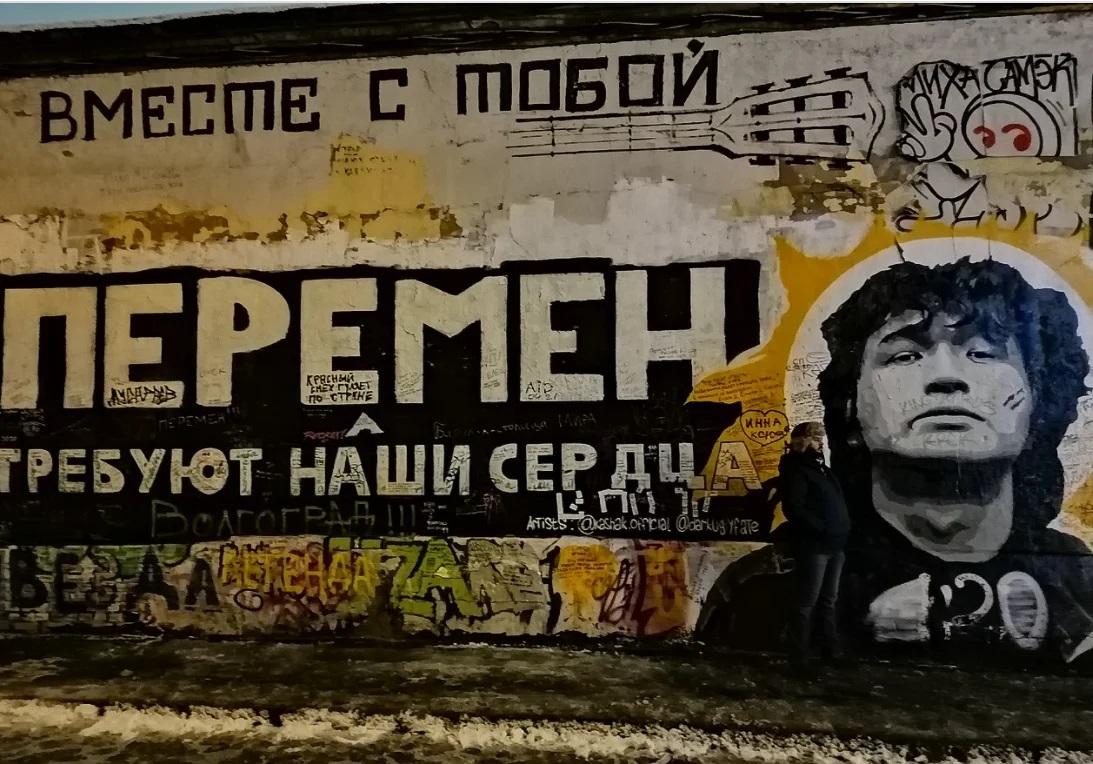
Distribute “samizdat”. In this case, agitation materials are printed and passed on to friends and acquaintances not via the internet, but tangibly. After all, if material is transmitted via the internet, it is easier to ignore or forget. For example, you can print out a sharp article from some democratic media outlet. You can also recommend opposition and democratic literature to your friends and acquaintances, which is especially effective if you work with people — for example, if you are a teacher at a school or university.
Send out press releases. When some new opposition event happens (a rally, a strike, the release of a new book), it makes sense to send out a press release about it to various media outlets (perhaps even pro-government ones — sometimes they might even pass) — both federal and regional. This increases audience reach.
Write agitation on banknotes. Paper banknotes often pass through a large number of hands, and sometimes they are examined. If you write (with a ballpoint pen, pencil, or typesetting stamp) a slogan and a link to a website on them (for example, the slogan “All power to the Constituent Assembly!” and a link to the “Logic of Progress” website), it is possible that this will bring additional supporters into the democratic movement.

Like and dislike. Most often, opposition-minded people watch videos and posts, read comments, and do not rate them, even despite the ability to do so. Yet, it depends on this how advanced the media outlet or author they are watching will be. If every opposition member made it a rule to always give a rating — to encourage materials or comments they like with a “like”, and always “dislike” pro-government comments — this would increase the popularity of democratic media by several important percentage points. You can also make it a rule to mark pro-government videos and comments as spam (or send other types of complaints about them) — if every democrat does this, bot factories will experience very serious problems, up to a “stoppage of production”, since their workers sometimes write from shared accounts or IPs, while real people have nothing to fear from a complaint, as they can always confirm their identity.
Organize information dissemination. Everything listed above will be much more effective with proper organization. You can create an “information group” with your acquaintances from real life or the internet and engage in information dissemination together. A workflow option: one person collects user databases — for example, collects the IDs of all users of the social network VKontakte who are studying at universities in Moscow, the second registers and formats accounts in the spirit of social democracy to add these users as friends, and the third handles the adding. And thus, all Moscow students from the social network VKontakte gradually become aware of the social-democratic movement. Another group can take students from another city, a third group can take representatives of another social group, and so on. Such extensive work cannot but end in the widespread dissemination of social-democratic ideas, which will eventually be formalized into an organization.
If you possess spare financial resources, you can delegate these processes. This does not require large financial expenditures in the post-Soviet space, where people in the provinces are forced to receive meager wages or pensions, or are entirely without work. For example, according to TASS, the average monthly wage in Kabardino-Balkaria (including representatives of the nomenklatura) was about 27,000 rubles in 20198, and in rural areas, a salary of 20,000 rubles per month was realistically considered good. If you find a person willing to engage in organizing the dissemination of information, they will be able to dedicate full-time hours to this, which, with proper organization of the task, will be more effective than if you were to dedicate part of your free time to it.
Write letters. You can write to authorities or their specific representatives with polite requests (aggression here is useless and will only cause a backlash) to adopt a bill, repeal a law, dismiss a person, and so on. You can inform them of problems — poor road quality in your district, a lack of trash bins, low pensions, and so on. You can advertise opposition media to them — for example, write that “Logic of Progress” proposes a reform program (“Progressive Course“) that you support and whose implementation you would like to see by this specific individual. This can be done both via email and in printed form. Of course, these letters will have a much greater effect if you do it in an organized manner — this is why one needs to create various kinds of organizations like parties or trade unions, or join them. If a large number of deputies are flooded with requests to repeal a law, it is possible that this will push them to begin the corresponding work.
Write to government representatives on social media. Many government representatives — State Duma deputies, municipal deputies, and so on — have social media accounts, often with open comments. You can write them roughly the same things as in the previous point.
Sign and create petitions. A petition (both online and via street signature collection) carries an informational message, serves as a pretext to start a political conversation, and draws the attention of various non-politicized individuals or political individuals who oppose democrats — for them, a petition can testify to the lack of support for their policy and the presence of opposition to their policy, which may affect their decisions. Therefore, creating petitions is one of the methods of informational struggle against the authorities, and signing petitions signals how many people oppose the authorities’ policy, and if this number is significant, it can influence their decision-making.
Write open protest letters and statements. Often, open letters are addressed to authorities or international organizations, which can be signed by well-known people, cultural figures, labor collectives, and other groups of people. For example, we know about the “Letter of Three Hundred”, which was the cause of the resignation of academician Trofim Lysenko and one of the factors ending “Lysenkoism”, the “Letter of Twenty-Five”, which slowed down the rehabilitation process of Joseph Stalin in the late USSR, and so on. It may seem that such letters do not influence the policy of the authorities, but in some cases, the authorities do take their content into account. Letters can be written not only to the authorities but also to international organizations — for example, demanding sanctions against any specific individual.
Participate in polls. You can either participate in polls or sociological studies, or conduct them yourself. In the first case, you influence the result and have the opportunity to start a political conversation, and in the second, you can also convey your message to the person being polled and to the readers/viewers of the poll results. Often, poll results are used to justify the need for implementing a policy, and in that case, they can influence the possibility of its implementation.
Argue. You can defend your position both on the internet and in live conversations. Of course, one must argue correctly (it is best to read the manual “The Art of Argument” by Sergey Povarnin before doing so), and by providing the opponent with as many facts, theses, and other information as possible. It is unlikely they will change their point of view after a single argument, but as a result of many arguments, it may change significantly; furthermore, it can also influence witnesses to the argument. Debating and broadcasting your position is better than remaining silent (even if you make mistakes during the discussion).
Utter protest phrases. Also, uttering or writing various opposition phrases in public or on social media is one of the methods of informational struggle. They are often retained in the audience’s mind, influencing the formation of an overall worldview, and they serve as a pretext for involvement in a political conversation. Also, as an option, you can ask someone you know how they feel about, for example, social democracy. This will help gauge the mood and provide a basis for debate.
Commemorate dates. This can be the celebration of important democratic dates in various ways, mourning the deceased, or laying flowers at a monument, place of murder, or burial site. For example, the Bolsheviks in 1905 turned the funeral of the tragically deceased Nikolay Bauman into a mass protest demonstration9 and used it to create combat squads.
Provide legal assistance to protesters. If you have a law degree in the relevant field, you can provide free legal assistance, which will help opposition members avoid punishment for their activities. By saving fighters for democracy from the punishing hand of the law of an authoritarian state, you risk very little, as you are simply doing your job, yet you make a significant contribution. It is enough to offer your help to organizations like OVD-Info (there is a “Protect Others” section on their website10) for such work to be found for you.
Help promote mobilization groups. Mobilization groups in social networks will be discussed further. Bringing information about these groups to the audience contributes to their growth and strengthening.
Tell jokes. Political jokes are a decent way to start a conversation about politics, test an interlocutor’s position, and convey a specific opposition message in an authoritarian society that has not yet grown into a totalitarian one and where people are not sent to prison for jokes.
Organizational and protest struggle
Organizational and protest struggle is relatively high-risk — as a rule, well-known and influential activists of opposition organizations are the first targets for repression. However, it also possesses quite high effectiveness and increases the effectiveness of other methods of struggle. Moreover, firstly, it does not always end in repression, especially if you observe conspiracy (but you might simply not be noticed). Secondly, sanctions do not always follow — you may be released, or you may challenge their imposition in court. Thirdly, if you are punished after all — as a rule, it will initially be a light punishment such as a fine, which you will be able to pay. Until you have experience receiving punishment, it is hardly possible to say that you have done everything in your power to correct the situation in the country. And, of course, the fewer people who engage in this, the lower the probability of change. Therefore, every democratic organizer and protester must be protected. What can they do?
Organize mobilization groups on social media. You can create, for example, a Facebook group or a Telegram chat, the purpose of which is to notify about all protest actions in your city, or simply to unite all residents ready to come out for a large protest. The principle is as follows: first, a certain number of people are gathered in this mobilization group (for example, 500,000 people for Moscow), after which they massively take to the streets for a protest at a specific time. The necessity for this arises because, in an authoritarian state, it is forbidden to hold mass opposition actions, but when a huge number of people come out (say, 200,000), the security forces will simply be afraid to disperse them, or will even defect to their side. Therefore, without such a mobilization group, the number of people coming out to protest will be small, and everyone understands this, so they are not going to join an action doomed to failure. In the case of a mass mobilization group, the number of people intending to come out to protest can increase significantly. However, these can be not only city-based but also professional mobilization groups — say, a group of transport workers in Moscow (which can coordinate a strike).
Creation of “affinity groups”. The “BezOpasny repost” (Safe Repost) Telegram channel suggests a format for uniting people in an offline mode. It reasonably notes that acting alone can lead to panic, while it is easier to act together. The method of action is explained in the cards.
Join organizations. You can join opposition organizations — parties, political movements, independent trade unions. Supporting these organizations by joining and participating in their activities strengthens them, makes them more influential, and when these organizations are strong enough, they will be able to influence government policy — organize rallies, strikes, and achieve registration and access to government bodies. If we have several strong organizations, they can unite and declare a general strike.
Create organizations. Sometimes civil society is so weakly developed that suitable organizations may simply not exist in it — for example, it may lack a social-democratic party or a courier trade union. In this case, such organizations need to be created. Of course, if a suitable organization with democratic institutions already exists, it is better not to create a new one but to join it, so that instead of several weak organizations, you have one strong one.
Recruit people into organizations. You can call on friends, acquaintances, and simply random people to join your organization, thereby strengthening it and increasing its level of influence.
Organize a strike. Strikes and various types of industrial action work the more effectively the wider their scale. A strike by the majority of workers at one enterprise can change the working conditions there; a strike by an entire industry can influence the policy of an entire country. Sometimes strikes seem to end in nothing, but this is incorrect — even an unsuccessful strike experience strengthens the awareness of solidarity among the strikers, gives them experience in struggle, and provides opposition-related information.
Organize mass protest actions. This can be a rally, a march, a parade, a motorcade, or actions of a different nature (for example, satirical award ceremonies, public destruction of some objects of your own property, and so on). Much depends on the quality of organization. Here, as in other matters, the more actions you conduct, the higher the level of skill you will do it with. However, you often need to possess organizational skills, connections in the protest environment (for better mobilization), knowledge of legal aspects (rules for conducting actions), and so on. For this, one also needs to monitor news hooks and correctly evaluate them for their protest potential.
Participation in protest actions and strikes. You may not be organizing protest actions, but you need to participate in them. The more people participate, the more noticeable they are. Separate material should be written about examples of successful protests and strikes.
Equivalents of trade unions are also possible at the university level, as was demonstrated in due course by the example of the MSU Initiative Group. If you are a student or a teacher, you can engage in creating an equivalent of such a group. A large number of such groups can even hold student strikes or organize a likeness of the events that took place in May 1968 in France, which began with student speeches11.
Build protest associations. Usually, if you are already the creator or leader of an organization, you can negotiate the establishment of protest associations together with the leaders of other organizations — for example, you can try to negotiate the creation of a broad coalition. Such united structures are usually more powerful and effective than fragmented organizations, but building them is not an easy task, especially in a society where radical and uncompromising political forces are strong, and the regime succeeds in stoking an atmosphere of mutual hatred and distrust.
Organize lectures. Among Marxists, this is commonly referred to as the “circle movement”12 — its essence lies in organizing a series of lectures and seminars (although they can also be held individually rather than in series) that convey a specific point of view to the listeners. Invitations to a “course”, the organization and preparation of lectures, are part of the political struggle that makes it possible to prepare organizational and agitation cadres for the opposition, as well as to build a system of connections between them.
Paste agitation materials. You can print agitation materials on self-adhesive flyers, but pasting them in apartment building entrances, elevators, public transport stops, public transport, and many other effective places is prohibited — it is allowed on official information boards (near public transport stops or entrances), but such places are usually checked more thoroughly, and such flyers do not last long under authoritarian regimes. Of course, if you cover a large number of entrances in a short time to inform about an upcoming protest action, the effect can be high. But remember that this may be considered a violation of the law.

Distribute flyers into mailboxes. It is slightly safer to print flyers and scatter them in mailboxes, but these flyers must catch the audience’s attention, be clear and relevant to them. And, of course, this requires the intercom codes for all entrances in the area, or you will have to use the old, proven method: ring the intercom for a random apartment and say that it is mail or entrance cleaning.
Single-person pickets. Single-person pickets often have the goal of conveying a specific message to those people who work or live near the location of such a picket. Usually, in democratic countries, such pickets can be held freely and without coordination, but, for example, in today’s Russia, people can be detained for an inconvenient message.
Sponsor the opposition. Some of the methods listed in the article require an infusion of financial resources that most opposition members do not have. It is necessary to support the activities of opposition media, professional opposition politicians, pay for hosting and programmers for internet projects, pay for the labor of designers, and so on, because political work takes a lot of time. A person who has a job does not have this time, and a person who does not have a job will not have the money to exist. Therefore, opposition activity must be supported financially, and a person with large financial capabilities can seriously influence the balance of political forces in the country if they know how to manage these finances effectively. Therefore, if you have enough spare finances and you want to change the country, there is no reason for you not to invest in those opposition organizations and media that you consider effective. Although not only well-off people can provide financial support commensurate with their income, but also a significant part of other citizens. Another option for sponsoring the opposition is purchasing advertising for it on your own initiative.
Entrism. This method means infiltrating an organization and fighting it from within; in this case, it refers to starting work in government bodies or their propaganda and making opposition decisions whenever possible. In the case of authoritarian regimes, the method is not particularly effective, since most decisions are made “at the top”, where it is extremely difficult for an outsider to break through.
Hang and wear protest symbols. The opposition often has its own symbols — for example, the white ribbon, the white-blue-white flag; for social democrats, it is the rose. You can hang these symbols, draw them, wear products with them, post images and put symbols on avatars in social networks, print a special book cover (to read in public transport). As a rule, it attracts attention, increases the recognition of symbols and interest in them, and through them — in opposition ideas.
Hang banners. Hanging banners with slogans or agitation for some political organization is also a method of struggle. The “BezOpasny repost” (Safe Repost) Telegram channel even made a series of images that help understand how best to do this (click to enlarge).
Tear down pro-government symbols. In today’s Russia, cases are frequent where statists use their symbols — for example, “Z” signs or the phrase “We can repeat” as posters, car stickers, and so on. Tearing down or spoiling these symbols is also one of the methods of protest struggle.
De-anonymize criminals. If someone possesses information about criminals in the regime’s service — poisoners, riot police who disperse rallies, lobbyists for anti-civil decisions, and so on — making this information public (preferably anonymously) is one of the methods of fighting the regime. It is very important to make public the data of “snitches” — for example, if someone has reported anti-dictatorial graffiti, then conscientious service workers who were summoned by the informant are obligated to make this person’s data public by passing it on to opposition media.
Propaganda in security structures. Representatives of security structures (police, army, special services) are the people who provide the protection for the regime, and without them, the regime would remain completely defenseless. Therefore, the role of propaganda within security structures was highly valued by many professional revolutionaries, but it is also considered a very dangerous method of struggle. If you have contacts with people employed in security structures, you must exercise extreme caution when conducting agitation — for example, send them agitation materials from a number they do not recognize via messengers, or from your fake social media pages.
Hiss at government officials. If a high-ranking official supporting the authoritarian regime appears in public, gives a speech at a mass event, and so on, one of the methods of struggle is to hiss at them, show no support, throw tomatoes at them, and so on. It is not to say that this is an effective way of fighting, however, it signals to officials the attitude toward their policy.
Hunger strike. Usually, this method of struggle is chosen by opposition members in the event that they are arrested. There are also collective hunger strikes. This is a dangerous method, as hunger strikes sometimes end in a person’s death. The hope in them is usually that government representatives, hoping to avoid the problems associated with a person’s death, will make certain concessions (achieve the release of political prisoners, change certain rules, protect life, and defend rights13). According to one version, the hunger strike and subsequent death of dissident Anatoly Marchenko caused a wide resonance in dissident circles and in democratic countries, and the reaction of their politicians prompted Mikhail Gorbachev to begin the process of releasing political prisoners, which was what Marchenko had demanded14.
Organize the celebration of dates. It is difficult to participate in celebrations of dates if they are not organized by anyone. Therefore, opposition members should take upon themselves the organization of festivals, celebrations of important democratic dates, mourning actions (for example, laying flowers at a grave), and so on. With competent and attractive execution of this point, festivals and celebrations can attract the attention of passersby, informing them at the same time about the opposition’s ideas and the existence of organizations.
Start a business. We already mentioned how social democrats in Belgium created cooperatives and even the Labor Bank, and the income from their activities allowed them to finance the social-democratic movement. If you create a successful business and hold democratic views, it allows you to have the means to sponsor the opposition, and, accordingly, it has a positive impact on the fight against the authoritarian regime. In Russia, there are also similar examples — such as the “Falanster” and “Tsiolkovsky” bookstores, which sell left-leaning literature15.
Draw graffiti and pictures on walls. One of the old and simple methods of informational struggle is drawing opposition symbols and slogans on walls in the form of graffiti, drawings, and inscriptions (it is also possible with a marker, paints, and so on). Due to the lack of safety of this method, we categorize it as a protest one. A classic option is to draw on walls located along public transport routes (for example, commuter trains). Such an option allows you to reduce the chances of being detained, while a large number of people looking bored out of the window of a minibus will see the drawings. The authorities try to paint over such agitation, however, it is not always possible to do it promptly, or to receive a report about it at all.

Shelter opposition members. Those who are persecuted by the authorities for opposition activities can temporarily reside in your house/apartment. In this way, you help preserve the freedom of a useful cadre, allow them to do more useful work for the opposition, and complicate the work of punitive bodies.
Sabotage criminal orders. People who are part of the system are often forced to carry out criminal orders — on dispersing a rally, on falsifying elections, on organizing budget-sector workers for the purpose of voting for the “correct” candidate, on military propaganda in schools, and so on. Such orders must be sabotaged, or at least executed half-heartedly. Suppose if ordered to shoot at a crowd, a person can “fulfill” the order, but intentionally miss, pretending that the miss is related to the fact that they are feeling unwell, or to the low quality of the weapon, or to anything else (anyone who wants to will find a reason). You can not show up for work due to illness, block the transmission of commands and information — there are many methods of sabotaging criminal orders that can be attributed to the human factor.
Personnel policy. If you hold a leadership position in the system, you can prioritize opposition-minded people when appointing them to better positions. Thus, human resources personnel, especially those deciding on appointments to high-paying positions, can improve the opposition’s provision of financial resources, and if we are talking about the state — also provide the opposition with levers of power.
Protest audio speaker. The Anarchy+ Telegram channel suggests the following implementation method. Buy a standalone audio speaker with a memory card (with cash). Do not leave fingerprints on it or wipe the surfaces with alcohol before installation. Record an audio message using a voice synthesizer or with the help of friends abroad. The device’s “timer” is a pause at the beginning of the mp3 track. Set a delay of about 3 minutes so you have time to place the device, walk away, and not wait too long to film it. At your discretion and ability, print out a camouflage “cover” resembling built-in speakers in transport or speakers in underpasses. Secure the cover and make a fastening on the bottom of the device that is convenient for quick installation: double-sided tape, a magnet, or something else. Before installation, check how the device works with your recording. Activate and install the device in any crowded place. Short tracks are better placed where people walk, and long ones where they stand. Pay attention to security control zones and police patrols. Pay attention to cameras. You should not behave nervously, placing the device and immediately walking away with a fast step. It seems that people around pay less attention to such things when they are moving in a flow rather than standing, say, at a bus stop. Local residents are most active in courtyards. Perhaps people in construction vests will arouse less suspicion from those around them. However, they are more noticeable on cameras.

Judicial struggle. You can initiate lawsuits against government structures or reactionary forces. Of course, in an authoritarian state, courts are subordinate to it and the chance of winning is quite small, but even in this case, it is possible with the correct framing of the issue – for example, CPRF lawyer Maxim Sikach, through a complaint to the Constitutional Court, achieved a ban on disqualifying competitors due to errors found in their documents by election candidates – this is how candidates undesirable to the authorities were often “cleansed”16. In addition, organizations and individuals like Yury Mukhin are more vulnerable to judicial struggle than government bodies – in the case of this author, one can, for example, sue him for justifying terrorism or defamation. One of the most famous examples of judicial struggle is Victor Kravchenko’s trial against the Stalinists.
Participation in election campaigns. While at least some election institutions remain, even if meager ones, it makes sense to use them at least to carry out educational work, involve new people in the work, and establish connections. You can participate in election campaigns as a candidate, as a member of an election headquarters, or as an observer (who records and publicizes violations). The theses that it is useless to participate in elections are refuted at least by the presence of opposition candidates in the Moscow City Duma17.
Next, there could be another subsection – revolutionary methods of struggle, but even calls for them are illegal, so we will only briefly note that we do not consider these methods justified at least at the stage when a significant part of society not only has not had time to tire of the authoritarians, but even supports them. At the initial stages, informational work should be carried out primarily to change the balance of sentiment in society.
Conclusion
If you are a member of a political party or movement, and it does not engage in the organized implementation of the effective methods of struggle from the second and third groups listed by us in this article, then your party or movement is useless and will achieve nothing in the form in which it exists now. These methods must be implemented both individually and in an organized manner. It is important to note that they can be directed not only against the authoritarian government, but also against forces supporting its course or demanding its tightening — for example, against statists. The more your party implements these methods, the more effective it will be.
Of, course, agents of authoritarian power, agency employees, the nomenklatura, and people connected with them will oppose all or part of the methods of struggle (without offering a suitable alternative for a person). The “useful idiots” deceived by them do the same. We must explain and prove to them the usefulness of the methods of struggle, but in case they are unteachable, one should not figure out whether they are agents of the regime or useful idiots, but fight any manifestations of this assistance to the regime — condemnation, isolation, and the exclusion of these persons from the community or movement are permissible. The passivity of citizens opens the way to their enslavement, and only the active implementation of methods of struggle opens the way to improving living conditions and to a democratic state.
We thank Artyom Kuznetsov for his help in writing the article.
- Gene Sharp. From Dictatorship to Democracy: A Conceptual Framework for Liberation. – Boston: The Albert Einstein Institution, 2002.
- Quote from “Brother 2” confused Putin // Lenta.ru (lenta.ru). December 20, 2018, 14:35. [Electronic resource]. URL: https://lenta.ru/news/2018/12/20/pravda/ (Accessed: 15.07.2022).
- Volodin responded to Biden’s statement with a phrase from the film “Brother 2” // Vesti (www.vesti.ru). March 26, 2022, 11:06. [Electronic resource]. URL: https://www.vesti.ru/article/2694483?ysclid=l5143luvre371648324 (Accessed: 15.07.2022).
- Sergey Lavrov explained Russia’s position with the words of Danila Bagrov // Delovoy Peterburg (www.dp.ru). April 6, 2018, 16:58. [Electronic resource]. URL: https://www.dp.ru/a/2018/04/06/Sergej_Lavrov_objasnil_po (Accessed: 15.07.2022).
- P. V. Liptser. Krav Maga. Israeli self-defense and total combat system for annihilation / “Special Forces System” series. – 208 p. – Rostov-on-Don: “Phoenix”, 2004.
- Flag of the wonderful Russia of the future // BSB (whitebluewhite.info). [Electronic resource]. URL: https://whitebluewhite.info/ (Accessed: 16.07.2022).
- MSU Initiative Group: Activity Overview (2009-Present) // MSU Initiative Group (chronicles.igmsu.org). [Electronic resource]. URL: https://chronicles.igmsu.org/igmsu/ig_summary/ (Accessed: 16.07.2022).
- Average salary in Kabardino-Balkaria grew by 10.2% over the year // TASS (tass.ru). February 6, 2020, 14:30. [Electronic resource]. URL: https://tass.ru/ekonomika/7698415 (Accessed: 16.07.2022).
- Bauman // Great Russian Encyclopedia. Volume 3. Moscow, 2005, p. 111. [Electronic resource]. URL: https://bigenc.ru/domestic_history/text/1856919 (Accessed: 16.07.2022).
- OVD-Info Home Page // OVD-Info (ovdinfo.org). [Electronic resource]. URL: https://ovdinfo.org/ (Accessed: 16.07.2022).
- M. Ts. Arzakanyan. The general strike of 1968 in France // Great Russian Encyclopedia. [Electronic resource]. URL: https://bigenc.ru/world_history/text/2334534 (Accessed: 16.07.2022).
- M. Lebsky. Goals and objectives of Marxist circles // Vestnik Buri (vestnikburi.com). June 8, 2019. [Electronic resource]. URL: https://vestnikburi.com/czeli-i-zadachi-marksistskih-kruzhkov (Accessed: 16.07.2022).
- Hunger strikes as a tool of a political prisoner: how they are conducted and how they end // OVD-Info (ovdinfo.org). February 8, 2019. [Electronic resource]. URL: https://ovdinfo.org/articles/2019/02/08/golodovki-orudie-politzeka-kak-oni-prohodyat-i-chem-zakanchivayutsya (Accessed: 16.07.2022).
- E. Polyakovskaya. The price of a hunger protest // Radio Liberty (www.svoboda.org). January 8, 2016. [Electronic resource]. URL: https://www.svoboda.org/a/27472427.html (Accessed: 16.07.2022).
- Boris Kupriyanov, co-founder of the “Falanster” bookstore // Lenta (lenta.ru). March 25, 2011, 18:03. [Electronic resource]. URL: https://lenta.ru/conf/kupriyanov/ (Accessed: 16.07.2022).
- Alexander Nedelko. A resident of Khabarovsk changed elections: in Russia, it was forbidden to disqualify candidates for errors // DVHAB (www.dvnovosti.ru). April 17, 2021, 2:00. [Electronic resource]. URL: https://www.dvnovosti.ru/khab/2021/04/17/128109/ (Accessed: 16.07.2022).
- The opposition won back part of the Moscow City Duma. What do they say and write about this? // BBC News (www.bbc.com). September 9, 2019. [Electronic resource]. URL: https://www.bbc.com/russian/news-49633466 (Accessed: 16.07.2022).