How should democrats fight against authoritarian countries?
Recently, democratic countries have been lackadaisical regarding the rise and path to power of tyrants like Vladimir Putin. Some of their politicians even embraced these usurpers during periods when they were crushing the democratic opposition. Today, they are reaping the rewards of such policies in the form of tyranny-driven aggression, issues like blackmail via resource or agricultural product supplies, the threat of nuclear war, and so on. As a result, when a tyrant and his clique become strong enough and begin to act with impunity, democratic countries impose serious sanctions packages, which, however, rarely help. How, then, should they fight so that the struggle yields positive results?
Authoritarian regimes pose a threat to humanity. Even a small authoritarian regime like the DPRK can be a threat, and the war in Ukraine has shown that the problem of authoritarianism can bring the world to the brink of annihilation. In this regard, leading developed democracies are obliged to work toward the overthrow of authoritarian regimes — this is a matter of survival and human lives, a matter of protecting human rights, and a matter of the existence of humanity. However, destroying authoritarianism by military means does not seem possible. Many authoritarian regimes possess nuclear weapons; moreover, military intervention can damage the reputation of democratic forces, as we saw in the example of Tony Blair.
What should be done to defeat dictatorships? We have already written about the need to create non-monolithicity in an authoritarian country. But we did not examine in that article how to act if it has already been created, and what developed democracies should do. First and foremost, developed democracies are unlikely to win without strengthening the democratic opposition in a specific authoritarian country. They can only help this opposition and guide it with advice, but the opposition will have to walk most of the path itself. Therefore, this article is a draft guide to action not only for democratic governments but also for oppositions in authoritarian countries. Joint action increases the chances of success. We will examine the situation primarily from the perspective of the situation in Russia.
Contents
Government in exile
One of the important tasks here is the creation of a government in exile (or a parliament of the country’s democratic parties in exile). Why is it needed? First, it is a center of coordination, a “beacon” for many opposition-minded citizens. Now, when an opposition activist leaves Russia, they are lost to the country — they do not know where to turn to conduct at least information work. We are losing, perhaps, thousands of people who could help with the work. Second, it is needed to answer the traditional question like “who, if not Putin”. Third, it is an important experience of coexistence for various democratic forces in a single governing body. It is a school of consensus, compromise, and as a result, democracy. Fourth, it is a landmark for crowdfunding. If people know that there is a government in exile and that it is leading the struggle, they also know one of the options for where they can donate money to fight the authorities. Fifth, if an organization from a particular country, for example, a British one, were to engage in the struggle against the authoritarian government, it would lead to threats against that country and the shutdown of all work. A government in exile, however, is not tied to any country, can change its location, and thus remain unreachable to usurpers and continue to organize work to remove them. Sixth, the activity of such a body cannot fail to attract attention, and it can become a mouthpiece for broadcasting opposition ideas. Seventh, it is an additional opportunity for imposing sanctions on an authoritarian government. After all, the world community can recognize it as illegitimate by recognizing the government in exile as legitimate, which will strike at the image of the authoritarian government. Eighth, the existence of such a government and an established dialogue with it will also help developed democracies better understand what is happening in an authoritarian country, how to fight the dictatorship more effectively, and what the citizens of that country want. In this case, they will be able to use more effective measures of struggle. Ninth, a government in exile can afford to speak more sharply and publish “keener” materials than the opposition remaining in the country. There are enough reasons to recognize the necessity of building a government in exile. One can call it the “Parliament of the Russian Republic”, one can call it the “All-Russian Democratic Council”, but the general essence is clear.
By what principles should such a government be built? First of all, it is electability, renewability, pluralism, collective management, and the rejection of authoritarianism. This means, first of all, that a government in exile must have the form of a parliament, without the position of a “leader” in whose hands a huge amount of power is concentrated. The most preferable approach here seems to be following the Swiss parliamentary model, where there is a collective head of government. All leadership positions must have a limited term of possible occupancy. By the rejection of authoritarianism, we mean a clearly spelled-out ban on admitting fascist, Nazi, communist, and other parties that do not share the principles of parliamentarism to such a parliament, as well as organizations that have compromised themselves — for example, in modern Russia, these are supporters of statism.
In essence, the following currents are sufficient for a democratic parliament: a social democratic party, a liberal party, Christian democrats, democratic socialists, and the “Greens”. These parties ensure the necessary pluralism. But how to ensure electability for such a body? After all, citizens are unlikely to be able to vote from an authoritarian country, and even if they do, there is a high probability, for example, of the authoritarian government mobilizing state employees to obtain the result it needs.
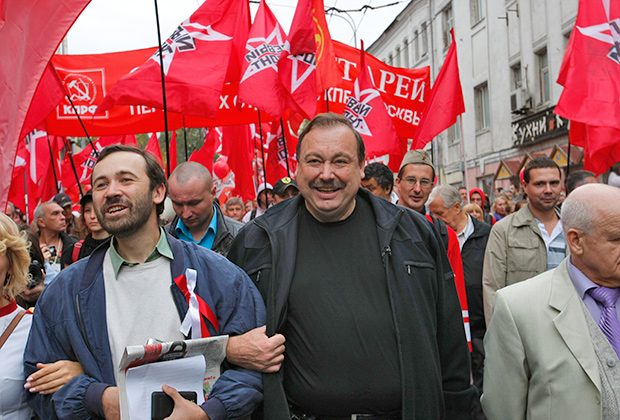
One of the options is to implement the following system: initially, the parliament is formed from several organizations that include the country’s most well-known political emigrants (Dmitry Gudkov, Ilya Ponomarev, Mikhail Khodorkovsky, Sergei Guriev, Roman Dobrokhotov, and so on). At the same time, any organization can submit an application for membership, which will be considered at a meeting of the parliament, where a decision will be made on whether to accept or reject the organization, as well as on the number of seats allocated to it. Further changes in the number of seats of a particular organization or a revision of the total number of seats in the parliament, as well as the exclusion of organizations, must be submitted for discussion at a meeting of the parliament. The parliament holds elections in which its members participate, electing the composition of the Administration. Which committees are part of the Administration:
- Finance Committee — handles financial issues, including crowdfunding and fundraising;
- Liaison Committee — handles communication with the governments of democratic countries, and also establishes contacts with opposition-minded representatives of the authoritarian government. Establishes connections with the open opposition in the authoritarian country. Assists in organizing the Resistance;
- Migration Committee — provides assistance to migrants from the authoritarian country;
- Information Committee. Compiles a database of pro-government media to oppose them, runs the website, social media, radio, and a television channel. Develops agitation materials (leaflets, books, slogans), and conducts events. Supports and promotes democratically minded figures of science and culture both in Russia and abroad;
- Committee for Coordinating the Struggle against Authoritarianism, which will develop methods of fighting authoritarians;
- Technical Committee. Resolves organizational issues: organizes government meetings, ensures the operation of the website, and so on;
- Trade Union Committee. Provides assistance in the creation, popularization, and development of the trade union and strike movement. This should be legal assistance and help in providing instructions on conducting strikes;
- Arbitration. Resolves disputes, consists of independent lawyers not affiliated with any figure of the government in exile.
Such an organization must have its own official website, social media channels, symbols, and a program that anyone interested can view on the website. Democratic countries should help such a government in exile by providing it with secured premises for meetings. In some cases, it is permissible to recognize it as a legitimate government and transfer the country’s foreign exchange reserves to it (the expenditure of which, however, must be carried out under strict control by democratic countries and be as transparent as possible).
Website of the government in exile
The website of the government in exile should fulfill the function of connecting and coordinating opposition forces. It must meet the need of an opposition-minded citizen to write to someone who can advise them on what to do to help fight the authoritarian regime. Therefore, it must necessarily have a contact form, and contacting individuals must be guaranteed a response within a maximum of 2–5 days. The Liaison Committee should handle this.
The website must also have forms for financial donations, which allow both one-time and recurring donations, with a large number of different payment methods. The Finance Committee should handle this. The most important statements and news of the government in exile should be published on this website. It should also contain:
- Methodological guides on the struggle. These are clear and detailed materials on various topics: how to ensure anonymity on the internet, how to use a VPN, how to behave during a search, how to organize a protest, how to recruit people, a database of independent media, and so on;
- A database of the regime’s crimes and a list of the main criminals. People must know them by sight, know their crimes, and know how they lie. People must know the answer to the question “who is to blame?” and why exactly;
- A database of agitation materials. This includes reports on corruption, books on the theory of democracy, and agitation posters/images — in short, a wide set of materials that a supporter of democracy can independently distribute inside the country and that allow for “decoding” citizens who have been zombified by authoritarian propaganda;
- Free hosting and an anonymous domain registrar for creating opposition media. The problem for journalists and content creators is that, in order to create a website, one must provide personal data, which can then be obtained by the authoritarian government’s law enforcement agencies. Therefore, many are afraid to create opposition websites. The government in exile should provide them with anonymity, and this should stimulate the development of opposition media. Of course, non-political and non-opposition websites and domains should be removed.
Information warfare
Democratic countries are obliged to wage an information war against authoritarian regimes. Unfortunately, developed democracies severely underestimate the role of information warfare, the importance of which has been fully appreciated by authoritarian regimes. By some estimates, the Kremlin allocated $1.4 billion in 2021–2023 just to support leading media outlets1. In May 2022, the citizens of Lithuania raised $5 million for a “Bayraktar” combat drone for Ukraine2, however, it is capable of destroying a certain number of military personnel, instead of whom the Kremlin will send new ones to their deaths, and this drone could be shot down. One cannot say that this is an ineffective method of struggle, but convincing thousands of people inside Russia, which could be done through competent information work with the same money, could have a more long-term and reliable effect. Until democratic countries understand this, victory over authoritarian regimes will be practically impossible.
Let us note, first of all, that one should not scatter forces here and try to work in all authoritarian countries at once. It is necessary to choose priority directions. At the moment, the priority direction for the democratic world is Russia — since it is a major center, and in the event of its democratization, the democratization of the entire post-Soviet space, as well as countries linked to it, is probable by the domino principle (for example, the democratization of Russia should affect the Middle East).
What should this include? First, subsidizing as many media outlets as possible, like “Voice of America” or “Radio Free Europe”, in the language of the authoritarian country. General coordination of them in mass exposure of the authoritarian country’s propaganda fakes, in promoting new media (websites, channels), and in mass exposure of the authoritarian regime’s crimes. Creating a database of the authoritarian regime’s fakes (one such database already exists — it is EUvsDisinfo). And it is necessary to ensure that information about them reaches every home in the authoritarian country.
Second, in cases where the authoritarian regime severely violates human rights by forcibly suppressing peaceful demonstrations, and especially when it starts military actions, it is appropriate to close the channels of its propaganda linked to the regime where possible — closing channels on YouTube, blocking websites on Google and Google News, blocking accounts on Facebook, Instagram, and Twitter (today, Google results are flooded with statist websites — Tsargrad, RIA Novosti, and so on). It is appropriate to subject websites that call for human rights violations, terror, authoritarianism, and war to cyberattacks and to obstruct their monetization. These measures will help independent media gain traction in the language of the authoritarian state. These independent media should be recommended to the viewer of the authoritarian state on Google, Facebook, Instagram, and other platforms. However, it is also important that ordinary bloggers are not affected in the process, as was done in 2022, when YouTube disabled monetization in Russia, which caused even bloggers with no relation to politics to lose money3, which, of course, did not help sway them to the anti-war side. This was a foolish strategy — it is better to block propagandists at an early stage than to take measures only at a late stage and force innocent people to bear economic losses.
Third, it is necessary to create a counterbalance to the “bot farms” and “troll factories” of authoritarian regimes by recruiting an “information militia”, part of which will be voluntary. People should distribute agitation materials on the internet, write comments, mark pro-government comments as spam, and “like” democratic materials. The fact is that authoritarian regimes instill “herd mentality” in citizens, and they become inclined to believe the information that is more prevalent. We, as democrats, cannot approve of such methods, but in conditions where they are used by the other side, we should level the playing field (all the more so because, first, these methods do not violate human rights, and second, we will be distributing information that corresponds to reality, not disinformation). Work should also be conducted not only online but also offline — people should paint over pro-government propaganda, tear down stickers, and so on.
Fourth, it is necessary to organize the translation of important books into the language of the authoritarian country, and in some cases, their free distribution. For example, Viktor Kravchenko’s important book “I Chose Freedom” has still not been fully translated into Russian, yet it is a crucial document of the democratic resistance against authoritarian power in Russia. Civil society supporters need, first, knowledge, and second, reliable and authoritative sources to back up their words and convince other people. It is necessary to translate important materials on the theory of democracy, economic mainstream, history, and so on.
Fifth, it is necessary to stimulate the creation and distribution of agitation materials. For example, in Russia, the “Vatnik” comics had a powerful effect against the imperial ideology — such materials should be developed, popularized, and perhaps adapted into an animated series. It is necessary to create and distribute images with a short and clear message (demotivators with Stalin at one time significantly helped strengthen Stalinism in the Russian Federation — why shouldn’t we distribute anti-Stalinist counterparts in response?), methodological guides, educational brochures, and printable leaflets. A successful project in this regard is Mikhail Khodorkovsky’s “Yashkin Krot”, which generates images with a short and clear message that allow an ordinary citizen to pay attention to the problems of Russian society. There should be more such projects. However, simply creating agitation materials is not enough; their distribution must be stimulated and organized. People need to be paid for their work in distributing these materials both online and offline within the territory of the authoritarian country.
Of course, it will never happen that the “two from the magic chest” — democratic states and the government in exile — will do everything for the citizens of the authoritarian country. If they do not do anything themselves and hope for others, the situation in their country will remain unsatisfactory, if not worsen. Therefore, each of them must take some actions themselves, and it is the business of democratic forces to notify them of what these actions can be (including in the form of a special instruction/brochure). However, these actions cannot be examined by us within the framework of this material; we have a separate article describing them.
Sixth, the coordination of free media should be carried out. What does this mean? Holding congresses with representatives of all democratically oriented media of the authoritarian country, creating shared chats for their editors-in-chief and exchanging contacts, as well as establishing their connection with the Information Committee of the government in exile. This network of free media should, first, “promote” new democratic resources. For example, the communist YouTube channel “Vestnik Buri” gained traction largely thanks to the help of Konstantin Semin, who told his audience about their material on Yury Dud. And Russian statists got another channel that partially supported them, while Semin did not lose his audience — on the contrary, thanks to his support of other communist channels, the communists’ audience expanded. The network of free media should act in the same way. Second, this network should jointly release materials refuting the fakes of authoritarian propaganda. When such refutations come out in a fragmented manner, they go unnoticed, but when they are released en masse across the entire network, they have a chance to take root in the public consciousness. We will convince many if our point of view sounds massive.
Assistance to opposition figures
This point largely applies to democratic governments — they must provide assistance to democrats in the authoritarian world. The first possible demand here is providing citizens of the authoritarian country with free VPNs and other anonymization tools to bypass blocks. In authoritarian countries, residents are usually very poor and do not have extra money to purchase a VPN (and besides, payment can be tracked by law enforcement agencies). As a result, the reach of democratic media decreases. At present, the United States is already taking useful steps in this direction by funding VPN services4.
In many villages and settlements of authoritarian countries, the internet has also not been installed: it simply is not there. If Elon Musk’s Starlink project works as it should and internet appears in these settlements, it will significantly help the spread of information in them, and consequently — reduce the popularity of the authoritarians. Therefore, the implementation of a project to provide free internet to all inhabitants of the Earth is in the interests of international democracy.
The second demand is to open the doors for emigration and obtaining residence permits for those citizens of authoritarian countries who provide proof of their struggle for human rights and democracy in their country. These people must be included in the struggle. While in an authoritarian country, many things are hard to say because it threatens safety and even life. Therefore, to effectively fight dictatorships, it is necessary to give people protection. Developed countries are obliged to change their immigration policy — not to grant citizenship and benefits to all representatives of a certain country indiscriminately, but to make an unequivocal priority for those who have proven their commitment to the values of democracy and human rights.
Brotherhood
The government in exile should also engage in creating a network of its supporters within the country’s state system — the “Brotherhood of Dissidents”, that is, an underground anti-government structure consisting of civil servants and related individuals of the authoritarian state. Officials, major businessmen, police officers, and military personnel must be given the opportunity to receive immunity after the fall of the authoritarian regime in exchange for helping the opposition (financial assistance, information leaks, easing political persecution, sabotage of directives on torture, refusal to disperse rallies, readiness at critical moments to side with the opposition and participate in the mobilization of people at rallies, replacing pro-government personnel with opposition personnel in state structures — all this must be described in a special manual for those wishing to help the opposition). These people must be provided with anonymity and the opportunity to prove the fact of helping the Brotherhood after the fall of the regime to avoid lustration.
Resistance
It is also necessary to facilitate the organization of Resistance (a civil counteraction movement consisting of a broad opposition coalition and underground organizations) in the authoritarian country. The tasks of the Resistance are broad:
- Creation of opposition cells while observing conspiracy rules;
- Distribution of agitation materials (especially outside the internet);
- Sheltering persecuted Resistance participants;
- Creation of dissident circles;
- Organization of mass protests;
- Preparation for a response to forceful methods of suppressing protests.
The Resistance will consist of opposition activists from various organizations remaining in the country. When the Resistance cells have a sufficient number of people, mass protests should be organized. In the event that the authorities show no desire to negotiate with the masses and meet even a part of their demands, instead suppressing any protest — a symmetrical response should be prepared. In this way, the change of power will be carried out — at a certain stage of the Resistance’s readiness. The main reason for the failure of protests in Russia is their disorganization and spontaneity, as well as the lack of preparation. The aforementioned measures are aimed at correcting these causes.
The slogan “All power to the Constituent Assembly” is extremely important. The Constituent Assembly itself must be formed from the forces of the Resistance, the Brotherhood, and the Government in exile.
Actions by democratic states
Democratic states can (and must) also take other measures to combat authoritarian ones. For example, even today there is a need to conduct investigations into suspicious members of the European Parliament and the parliaments of EU countries regarding their contacts with the Kremlin and Russian statists, and to exclude from political life those against whom a court proves a connection dangerous to European democracy. For example, Member of the European Parliament from Ireland Clare Daly constantly defends the Putin regime and promotes the Kremlin’s informational talking points: for instance, she blames the United States for the military actions in Ukraine5, accused Europe of Russophobia due to support for Alexei Navalny6, and so on. There is a whole list of “speakers who promote narratives congruent with Russian propaganda”7 — a thorough audit must be conducted regarding them, and measures must be taken based on its results. The same should be done regarding propagandists promoting Kremlin narratives.
A second measure here is to continue to apply pressure through economic sanctions. However, these sanctions must not be directed against opposition figures. The decision to block bank cards or YouTube monetization for all citizens of Russia is foolish — in this way, oppositionists and democrats in Russia are deprived of the opportunity to raise money for their activities, which ultimately strikes at them. What should the sanctions be like? To determine this, a separate study should be conducted — to identify against which countries sanctions were imposed and which of them led to successful results. But this is a matter for a separate study.
An advantage that could be utilized and that would give developed countries superiority is the advantage in technology. American culture has always emphasized the power of this tool (it suffices to recall Isaac Asimov’s “Foundation” series or the scene from the first “Iron Man” film, where one of the characters tells a terrorist that technology has always been the Achilles’ heel in their world), but developed countries practically do not use it. Meanwhile, it is extremely important to create secure and anonymous email, messaging, and internet wallet services for residents of authoritarian countries. If the latter were confident in the existence of such means of communication, protected from the intelligence services of authoritarian countries, it would give them confidence in coordinating their actions and would facilitate these actions for them. Additional opportunities may lie in using Apple and Windows notifications to inform citizens of authoritarian countries about upcoming protests.
Finally, it is necessary to pour money into the opposition. In Russia, the statists cut off a portion of funding to democratic and left-wing organizations by declaring them “foreign agents” (although it would be more correct to call them “agents of democracy”). After February 24, 2022, democratic states should have ignored this law and not only funded the democratic opposition but also significantly increased this funding. It is difficult to create high-quality content or a political organization when you have nothing to pay professionals with. The statists are sponsored by the Kremlin, which robs Russia and passes the finances to them, while Russian democrats have no ties either to progressive business representatives (which could be ensured through a government in exile) or to democratic states.
Conclusion
In the article about the foreign policy of social democrats, we examined three possible positions within our movement: neutrality, “soft power”, and the export of democracy. This article expresses, primarily, the position of proponents of “soft power”. This is not about armed invasions of authoritarian countries, yet it implies very decisive measures. Moreover, importantly, all these actions must be started as soon as an authoritarian regime is established in any country and human rights are violated there. The statists in Russia should have been pressured back in the 90s, when they had not yet managed to raise their heads and crush all their opponents. The same applies to Viktor Orbán in Hungary and Recep Tayyip Erdoğan in Turkey. By allowing dictators to suppress the free press and then democracy, developed countries ultimately get aggressive dictators threatening their security and all of humanity. Today, the price of getting rid of them will be significantly higher — by several times, or perhaps even by tens of times.
Only if the democratic opposition of an authoritarian country is organized and receives help from democrats of other countries will it be much more likely to strengthen, grow, increase its numbers, and eventually build up to a level that will allow it to take power. Therefore, the democratic opposition of authoritarian countries must organize, and democratic countries must help it. If these countries rely only on their own strength, if they ignore the democrats of an authoritarian country, then there will be no adequate forces capable of coming to power in authoritarian countries, which means that the struggle of democracies against authoritarian regimes will be waged to the death. We must strive not for this destructive scenario, but for the victory of peace-loving, negotiable forces of democracy. And for this, we need organization both on the part of democrats in authoritarian countries and on the part of democratic states — disorganized people will not be able to achieve anything, especially against dictatorships and their ferocious security services.
- D. Gorevoy. The price of propaganda: how much the Kremlin spends on state channels // TRT in Russian (www.trtrussian.com). July 8, 2021. [Electronic resource]. URL: https://www.trtrussian.com/mnenie/cena-propagandy-skolko-kreml-tratit-na-gosudarstvennye-kanaly-5980471 (Accessed: 08/13/2022).
- Residents of Lithuania raised €5 million for a “Bayraktar” for Ukraine // The Insider (theins.ru). May 29, 2022, 3:13 PM. [Electronic resource]. URL: https://theins.ru/news/251673 (Accessed: 08/13/2022).
- A. Dmitrieva. “Taking a regular job is a trauma”. How YouTubers from the RF reacted to the disabling of ads on YouTube // Medialeaks (medialeaks.ru). March 4, 2022, 2:07 PM. [Electronic resource]. URL: https://medialeaks.ru/0403aad-str-youtube-bloggers/ (Accessed: 08/13/2022).
- US to fund VPNs for Russians // The Moscow Times in Russian (www.moscowtimes.eu). June 15, 2022. [Electronic resource]. URL: https://www.moscowtimes.eu/2022/06/15/ssha-profinansiruyut-vpn-dlya-rossiyan-a21315 (Accessed: 08/13/2022).
- MEP called the US a warmonger in Ukraine // RIA Novosti (ria.ru). May 5, 2022, 12:30 PM. [Electronic resource]. URL: https://ria.ru/20220505/ukraina-1786966931.html (Accessed: 08/13/2022).
- V. Prokofyev. MEP from Ireland Clare Daly condemned Russophobia // Rossiyskaya Gazeta (rg.ru). January 11, 2021, 11:16 PM. [Electronic resource]. URL: https://rg.ru/2021/02/11/evrodeputat-iz-irlandii-kler-dejli-osudila-rusofobiiu.html (Accessed: 08/13/2022).
- C. O’Loughlin, S. Mulgrew. Clare Daly responds after Ukraine puts her on list of people who allegedly promote Russian propaganda // Independent.ie (www.independent.ie). July 27, 2022, 08:37 AM. [Electronic resource]. URL: https://www.independent.ie/irish-news/politics/clare-daly-responds-after-ukraine-puts-her-on-list-of-people-who-allegedly-promote-russian-propaganda-41871091.html (Accessed: 08/13/2022).