Internationalism and its alternatives
For a long time, the understanding of internationalism has not undergone any significant revision in left-wing circles — it is generally considered to be the ideology that best enables equality between people regardless of nationality or race. Let us take another look at this concept.
In the articles on racism and patriotism, we examined specific reasons why these values are unacceptable for modern social democrats. What, then, should the left-wing view on the national question be, on policies regarding territorial and natal identities? The usual choice has been between two concepts – internationalism and cosmopolitanism/stateless nationalism. Closely related to them are, respectively, multiculturalism and the so-called “melting pot” model. Let us first clarify what these concepts are.
Contents
What internationalism is
What is internationalism? Most dictionaries, such as Ozhegov’s dictionary, provide a vague definition such as “an ideology and policy of equality and solidarity of all peoples regardless of nationality”1. This concept is further clarified in the work of Candidate of Philosophical Sciences Irina Lysenko, “The Concept of ‘Internationalism’ in Philosophical Discourse”, where the author writes: “if in the Marxist version internationalism was considered as the convergence and dialogue of nations while preserving sovereignty, then cosmopolitanism, which implies dialogue, assumes the absence of national borders and the creation of a single political space. Thus, the conditions of cosmopolitanism are characterized by the disregard of distinctiveness, unique manifestations of national culture, worldview, religious traditions, etc”.2. The Dictionary of Scientific Communism confirms that the basis of internationalism is “national sovereignty”: “the close unification of the Soviet republics took place in forms that did not infringe upon their national sovereignty”, “peoples who previously had no national statehood received broad autonomy within the republic”3. The 1928 Program of the Communist International proclaims among other demands: “Recognition of the right of all nations, regardless of race, to full self-determination, i.e. self-determination up to and including state separation”4.
What is national sovereignty? A social studies textbook states that “the content of national sovereignty is the full power of the nation and its political freedom to choose its state-legal organization and its form of relations with other nations”5. For the Bolsheviks, this was expressed in the form of the demand for the “right of nations to self-determination”, which was partly formulated in Vladimir Lenin’s work “Critical Remarks on the National Question”6. We can summarize that internationalism is an ideology and policy that recognizes the sovereignty of nations, as well as their equality and solidarity.
In other words, internationalism recognizes political rights for nations, just like nationalism does. This means the recognition of all nationalisms simultaneously, granting all nationalisms equal rights.
Cosmopolitanism
According to the Great Russian Encyclopedia, cosmopolitanism is a worldview of “world citizenship” that places the interests and values of all humanity above the interests of any individual nation or state7. As Britannica reports, it is the belief that all people are entitled to equal respect and recognition, regardless of their citizenship status or any other affiliation8 (it is not entirely clear how this differs from internationalism). The definition from the Encyclopaedia of Sociology: “a theory that justifies the rejection of national traditions and culture, denies state and national sovereignty in the name of the unity of the human race”9. And here is what the Efremova explanatory dictionary says: “An ideology consisting in the rejection of national identity, national traditions and culture, in neglect of one’s own national interests, and putting forward the idea of a single world state and citizenship”10.
As we can see, there is currently no single unified definition of cosmopolitanism. In other words, there are in fact several variations of it. The vagueness of the term is also confirmed by the fact that, according to Doctor of Economics and well-known Russian sociologist Vladislav Inozemtsev, even one of the most significant contemporary thinkers in the field of cosmopolitanism – Ulrich Beck – does not seek to present his methodological approaches in detail or to define the concepts he uses11. At the same time, in his work “Cosmopolitan Vision”, Beck himself provides a large number of indicators of the inevitability of the process of societal cosmopolitanization12, with which Inozemtsev, in the introduction to the book, generally agrees.
Multiculturalism
According to the Collins Dictionary, multiculturalism is a situation in which all different cultural or racial groups in a society have equal rights and opportunities, and none of them is ignored or considered unimportant13. The Merriam-Webster Dictionary gives a more precise definition: multiculturalism is cultural pluralism or diversity, as well as a state, theory, or policy that promotes or protects such a condition14. Thus, multiculturalism means a policy of granting all rights and opportunities to all cultural groups within a country.
The melting pot
The so-called “melting pot” policy is, according to the Dictionary of Sociolinguistic Terms, “a metaphorical term for a national-language policy aimed at uniting different ethnic groups into a single whole and promoting monolingualism”15. However, its main principles (using the example of the United States) are better explained by Associate Professor of the Department of European Studies at the Faculty of International Relations of St. Petersburg State University, Stanislav Tkachenko:
The “melting pot” model assumed that representatives of different nations come to America, adopt the existing culture, and abandon their national characteristics, becoming Americans. In other words, the state set the conditions, and people either agreed with them or did not16.
Overall, the definition from the sociolinguistic dictionary is correct. It is commonly believed that the “melting pot” policy was implemented in the United States; however, by the 1960s the U.S. had in fact shifted toward a multiculturalism model17. This was done under pressure from ethnocultural minorities.
Non-nationalism
An ideology whose main ideas are expressed in the Manifesto of Non-nationalism18. It was written by Eugène Lanti – one of the founders of the “Non-national World Association”, which still exists today. Here is its author’s definition:
Non-nationalism is a cultural doctrine whose main goals are:
- The disappearance of all nations;
- A unified system of the world economy and the rational use of all energy and resources for the benefit of all people on our planet;
- The unification of all systems of weights and measures;
- The use of a non-national language (Esperanto) with the aim of turning it into the only language of culture19.
Lanti quite foresightedly (as we will show later) criticized the policy of internationalism in the USSR, where “the authorities do not set the goal of eliminating national differences – on the contrary, they help small peoples develop their own distinct national cultures”. In his 1935 book “Is Socialism Being Built in the USSR?”, Lanti was also ahead of many other researchers in identifying the essence of Stalin’s dictatorial regime: the creation of a “new oligarchy” – that is, the nomenklatura, the transformation of Marxism-Leninism into a religion, and he also concluded that a form of red fascism had been established in the USSR20. Many of Lanti’s claims, however, are overly categorical and maximalist, and in some cases simply incorrect (for example, his statement that “to preach non-nationalism to non-Esperantists would be as ridiculous and inappropriate as teaching literature to an illiterate”21; this is contradicted by the fact that today English is established as an international language). However, this only means that his theory requires revision; it does not mean that its foundations are incorrect.
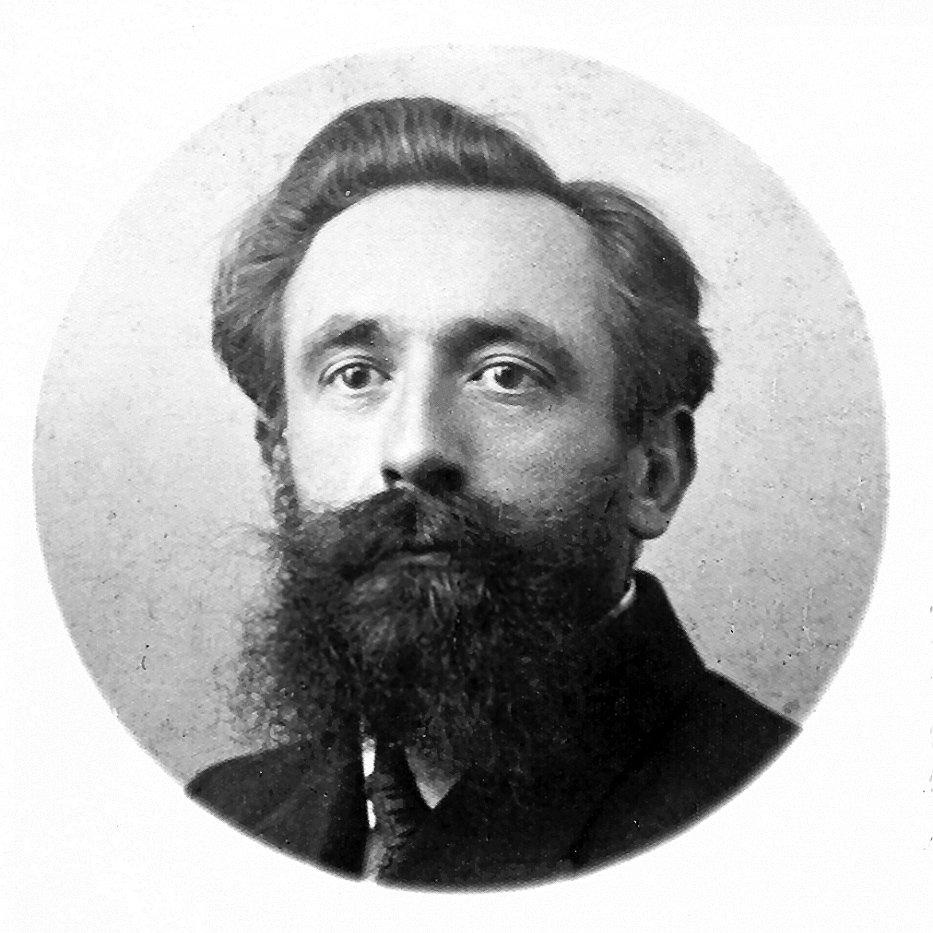
The “Manifesto” states that national languages and national cultures will eventually disappear or will mainly remain only a subject of study for historians, like the language and culture of the ancient Greeks and Romans22. It also states that non-nationalists “refuse to participate in any national struggle and recognize as necessary and useful only class struggle aimed at eliminating classes, nationalities, and exploitation”23.
Is internationalism an effective policy?
Let us start with the most important point: internationalism is not a concept hostile to nationalism. By regarding nationality or a nation as a political subject and recognizing their right to sovereignty, internationalism thereby acknowledges all nationalisms and grants them the right to exist. This is reflected in the very name of the term itself. Accordingly, it produces the same problems as nationalism.
What does it actually mean to recognize a nation as a subject of politics? It means endowing a nation with political interests, that is, recognizing the existence of “interests of Russians”, “interests of Tatars”, “interests of Uzbeks”, and so on. This is precisely nationalism.
It is not difficult to name examples of countries that pursued a policy of internationalism. These include, for example, the USSR, Yugoslavia, and Czechoslovakia. And if the breakup of Czechoslovakia was relatively peaceful, the cases of the USSR and Yugoslavia require closer examination.
In the USSR, a national-territorial principle of forming a federal union was used24, derived from and consistent with the right of nations to self-determination. A constitutional law textbook states:
In the Marxist-Leninist concept of federalism, the national-territorial principle of forming a federation is dominant. This means that federal subjects should be created on a national basis, in territories where a given ethnic group (in Marxist theory usually referred to as nations) lives compactly. The national-territorial principle formed the basis of the former Yugoslav federation, which collapsed in 1991, and Czechoslovakia, which ceased to exist on 1 January 1993 due to its division into two states: the Czech Republic and Slovakia. The Soviet Union, built on the national-territorial principle, also collapsed. The use of this principle without regard for the real situation in a number of cases gave rise to separatism25.
In the national republics, accordingly, a nomenklatura was formed which, in addition to class interests, also had national interests. Both the so-called “parade of sovereignties” and the Belovezha Accords represented the realization of these national interests of the nomenklatura. According to the former Chairman of the Supreme Soviet of the Russian Federation Ruslan Khasbulatov, “the main role in the destruction of the Union was played by subjective factors, such as the incompetence of the Union leadership, the selfish desire of the leaders of the union republics to free themselves from the control of the central authorities and to use Gorbachev’s democratic reforms to destroy the foundations of the state and society”26.
The collapse of the USSR was accompanied by conflicts on ethnic grounds, often violent. One can recall events such as Jeltoqsan in 1986, the Nagorno-Karabakh conflict of 1987–1991, the Novo-Uzen massacre in 1989, the Sukhumi riots of 1989, the Fergana pogroms of 1989, the Osh massacre of 1990, the Armenian pogrom in Baku in 1990, the Transnistria war of 1992, the Chechen wars, and so on. Such events begin with the recognition of certain interests among ethnic groups that unite them. Most often, these interests consist in establishing their own (usually ethnic) governance. The authors of the monograph “Political, Ethnic, and Interfaith Conflicts in the Modern World” note:
Many causes of modern ethnic conflicts in the Russian Federation were already laid in the Soviet period. Thus, the coincidence of power structures with the national-administrative division, which presupposed a hierarchy of ethnic “majorities” and “minorities”, led to the identification of central authority with Russian power, and republican authority with the power of the indigenous or titular nationality, and so on. This resulted in the displacement of negative relations into the interethnic sphere already under Soviet rule, although at that time they were largely concealed27.
Doctor of Historical Sciences Aleksandr Shubin argues that national consolidation became an important factor in the social life of the USSR, and regional elite clans had already begun to consider the possibility of using “national revival” as a means of struggling against the center in order to expand their powers28, while national policy as a whole led to an intensification of socio-economic conflicts expressed in ethnic form, which manifested, among other things, in the outflow of the Russian population from the national republics29. This is what resulted from the policy of internationalism in the USSR:
In the ethno-national conflicts of the perestroika period, two main forces were at work: first, an emotional mass popular movement led by radical marginal elements and the national intelligentsia, for whom national culture, due to worldview and sometimes professional specialization, was the main value; second, a pragmatic republican nomenklatura, which found itself under pressure from mass mobilization but was ready, when possible, to use it for its own interests.
<…>
In 1990–1991, the leaders of the communist parties of most union republics decided that it would be more advantageous for them to be independent from the union center and from the CPSU leadership headed by M.S. Gorbachev. Therefore, even in places where national movements did not have majority support (such as in Ukraine and Belarus), the republics began pursuing a policy of “sovereignty” and establishing regional control over the economy and resources. This led to the breakdown of economic ties within the USSR. From autumn 1990, the republics began limiting transfers to the union budget, which in fact led to the bankruptcy of the USSR — an outcome that the United States had unsuccessfully tried to achieve in 1981–1986. Even falling oil prices did not have as devastating an effect as the independence of regional bureaucratic clans and the “initial accumulation” of private capital through state enterprises30.
Under Josip Broz Tito in Yugoslavia, more than twenty peoples and ethnic groups lived together, and all of them were granted equal rights31, while the republic maintained the same national-territorial division. As a result of events in the autonomous province of Kosovo and Metohija in 1968, when Kosovar Albanians took to the streets demanding unification with Albania, the Serbian word “Metohija”, meaning (from Greek) property of the Orthodox Church, was removed from the region’s name as it was considered unacceptable to Albanians32. The flag of Kosovar Albanians was recognized, as was the equal status of the Albanian and Serbian languages in education. Macedonians and Montenegrins were recognized as nations, as well as representatives of the Islamic religious community33. Tito’s biographer Yevgeny Matonin notes that all these experiments in the national sphere became ticking time bombs and exploded in the early 1990s34.
Divided into republics formed along national lines and granted increasingly broad rights, nationalist forces were able to strengthen to such an extent that it led to the breakup of Yugoslavia and civil war. Nationalists defended their interests — one only needs to recall the history of the SANU Memorandum (a manifesto of Serbian nationalists), and the “May Declaration”, which included the demand to create a “sovereign state of the Slovene people”35, and so on. When Tito was alive, he suppressed nationalist uprisings (the “Croatian Spring”, unrest in Kosovo), but he fought the symptoms rather than the cause, which only worsened the situation. The true causes lay in the ideology of internationalism and in the very principle of granting political rights to nations.
In the 1990s, Yugoslavia was shaken by ethnic conflicts
From the examples of the USSR and Yugoslavia, we can most clearly see that the policy of internationalism provides fertile ground for the formation of multiple nationalisms within a single country, and as a result can lead to outcomes ranging from a soft takeover of power by nationalist elites at the local level to full-scale civil war. In theory, political dictatorship may suppress local nationalists under a policy of internationalism, but in practice it merely serves to accumulate contradictions that will later erupt with significant consequences. Increasing the level of democracy in the state sometimes helps, but does not fully solve the problem — for example, after Spain’s democratization, the problem of nationalist terrorism persisted for a long time, and resolving it required harsh measures that contradicted social-democratic values (we mentioned this here). For these reasons, internationalism is ineffective and hardly preferable for social democrats.
However, there are complex situations in which nationalism can be used. For example, in the case of a strong authoritarian empire, secession from which may help the newly formed state achieve democratization. The collapse of the USSR allowed at least the Baltic states to follow a democratic path; Ukraine’s separation resulted in its pursuit of democratization and a European development trajectory. Thus, as a result of nationalist secession, at least some of the newly formed states moved toward democracy, while the empire itself was weakened, thereby strengthening the position of the democratic bloc and weakening global authoritarianism. Therefore, when deciding whether to use nationalism as a tool, a large number of factors must be taken into account. Sometimes it may be acceptable for weakening aggressive empires and freeing at least part of their population from authoritarianism, but its applicability in a democratic society is highly questionable.
The crisis of multiculturalism
The policy of multiculturalism in developed countries initially produced positive results, until it encountered the problem of mass immigration. When the influx of migrants into a country is large-scale, they form ethnocultural diasporas. Accordingly, if migrants come from a country with a less developed and less progressive culture, these diasporas reproduce their own culture and practices locally, contributing to a decline in the overall cultural development and progress of the receiving country.
In its time, a scandal was caused by the book “Germany: Self-Destruction” by Thilo Sarrazin, a member of the Social Democratic Party of Germany and a board member of the Bundesbank, in which he noted that Germany’s high standard of living relieves migrants from Islamic countries of the need to change their traditional way of life, to make efforts to learn the language, to seek employment, and to grant their wives more Western European freedom36. Sarrazin writes:
The hope that the integration of Muslim migrants, measured by education, participation in the labor market, and proficiency in the German language, would progress over the years has not been fulfilled. The degree of integration and willingness to integrate appears, on the contrary, to have declined. The reasons for this include insufficient educational and employment outcomes among Muslims, a very significant inflow from their countries of origin due to family reunification, but also a strong attachment to their native culture37.
As Ulrich Beck notes, within the very strategy of multiculturalism “there is a contradiction: national homogeneity is both presupposed and, at the same time — theoretically and politically — called into question… Among the most sophisticated paradoxes of multiculturalism is that it categorically denies the reality of national homogeneity while defending minority rights, yet easily falls into the trap of essentialism… Well-meaning multiculturalists can easily align with cultural relativists, giving free rein to tyrants who appeal to the right to difference. Internally, this in some sense leads to the growth of nationalism, strengthening a contradictory form of national multiculturalism…” 38
In Denmark, in the Tingbjerg district of Copenhagen, a Muslim enclave emerged which over time began demanding the introduction of Sharia zones in the city39, discriminating against people because of their sexual orientation40, and cultivating other principles characteristic of less developed Eastern societies (from which many members of the enclave themselves preferred to leave). The Minister for Social Integration, Karen Hækkerup, stated regarding the Muslims of Tingbjerg: “I would like to see an open and multicultural society here, but not when it comes to people who threaten democracy”41. This is largely a healthy social-democratic position. Social democrats cannot be ideologically tolerant toward conservative ideologies and groups representing them, including ethnic groups that are carriers of conservative ideologies, and for this reason multiculturalism is an unacceptable concept for them.
We need to choose a type of national policy that will most fully implement the progressive values of social democrats, including equality of people regardless of race and nationality. The second task in the field of national policy is to eliminate the problems caused by racism, nationalism, and patriotism (and, as we have established above, internationalism and multiculturalism as well). We may take some theory as a basis for reform in this area, but this in no way means that it should become a dogma.
Social democrats may position themselves as cosmopolitans or non-nationalists, but it is important to understand that this refers to the fundamental principles (and not specific details) — that is, the non-recognition of the interests of races, nations, and nationalities. We have already seen in the examples of the USSR and Yugoslavia that the recognition of national sovereignty, national interests, and national-territorial divisions leads to interethnic conflicts (including armed ones), as well as the establishment of local nationalist nomenklatura power structures. For this reason, we cannot speak about the right of nations to self-determination, or about the rights of nations in general. A nation should not be regarded as a political subject, not only because of this, but also because this concept is often tied to ethnic origin. Instead, we can and must speak about civil rights, human rights, and workers’ rights.
Can cosmopolitanism or non-nationalism serve as a state ideology? Yes, they can. Moreover, as noted by Associate Professor of the Department of Social Philosophy at RSUH, Candidate of Philosophical Sciences Alexander Loginov, “many modern researchers note that nation-states are in a state of deep and irreversible crisis”, and “the diagnosis turns out to be very serious: the nation-state is dying”42. This is also supported by a number of signs of the cosmopolitization of society identified by Ulrich Beck43, as well as by globalization processes. There are quite a number of processes leading to the decline of national cultures:
- Spread of the English language, the increasing role it plays in the everyday life of citizens in a large number of countries, and the penetration of Anglicisms into languages worldwide;
- Mixing of races and nationalities, transnational marriages;
- Transition of countries to the metric system. At present, all countries in the world have completed the transition (units such as arshin, li, league, etc. are no longer in use), except for the United States, Liberia, and Myanmar44, while Liberian officials have begun to discuss the need for transition45. One of Eugene Lanti’s requirements has thus almost been fulfilled;
- Growth of international mobility (migration flows, international tourism, and cross-border purchases via online marketplaces);
- Import and export of cultural products (the penetration of foreign films, TV programs, and music into all cultures);
- Expansion of dual citizenship practices and the emergence of the “world citizen” passport;
- Increase in international communication (for example, via the Internet);
- Beginning of processes toward a single currency (such as the adoption of the euro by European Union countries).
National state ideologies are thus becoming a thing of the past; they are fading away. Anti-globalists attempt to resist the introduction of unification and standardization measures that in practice only increase the level of comfort and quality of life (according to well-known journalist Alexander Nevzorov, “modern humanity has realized that having no homeland is very convenient, and like everything convenient, it will undoubtedly become the norm”46), trying to turn history backward. Social democrats, however, can only take the position of alternative globalization — without denying processes of cultural unification, but preventing those aspects of globalization that contradict a progressive value system, namely the concentration of capital and the strengthening of transnational corporations. This is why cosmopolitanism or non-nationalism can not only serve as a state ideology, but are likely to become one — in conditions of healthy economic development, it is merely a matter of time.
At the same time, we prefer the use of the term “non-nationalism”, since the term “cosmopolitanism” sometimes implies the creation of a single world state, which contradicts the interests of social democrats and requires separate justification.
In addition, the rejection of national sovereignty does not imply the rejection of state sovereignty, which is necessary for non-nationalists. We described the reasons for this in the article on the necessity of the state; moreover, according to the Legal Encyclopedia, state sovereignty means that state power is independent and autonomous in relation to other states that possess similar power47. The loss of such independence and autonomy would imply a risk of falling under the influence of nationalist states. The necessity of the existence of states should not be denied by non-nationalists. So what are the arguments of opponents of non-nationalist policy?
Counterarguments
The most important argument is that non-nationalist policy may be implemented through forced assimilation48 and will encounter resistance from conservative groups — for example, nationalists. This is indeed the case. However, we are faced here with a choice — either defeat nationalists and conservatives or allow them to prevail. One must choose one of the two, and for social democrats the choice is obvious. Any compromise here would be temporary and unstable, as the issue is fundamental.
Next, we encounter the claim that universal human culture is formed from the achievements of individual nations, and that literature, art, and music without roots in the people are unable to produce great works. This is a misconception, refuted by the example of the United States — the most culturally developed country at the beginning of the 21st century, whose culture is more supranational than national.
Another argument against non-nationalist policy is that it will supposedly make the entire world uniform. This is also a misconception, and it is likewise refuted by the example of the United States, where, for instance, Texas, California, Hawaii, Florida, Hollywood, Washington, and many other states/cities/entities have unique and recognizable cultures, which are not national in character. As stated in the Manifesto of Non-Nationalists, “national differences will disappear, but individual differences will remain”49. There are a vast number of differences in the world beyond national ones, so this argument cannot be considered convincing.
Let us also consider, as an example, the arguments of blogger Vasily Sadonin in his video on cosmopolitanism, which is aimed at criticizing cosmopolitanism:
Cosmopolitanism is an idealistic concept that does not recognize the real prerequisites for the emergence of the state.
Here Sadonin uses demagogic technique No. 2, “arguing with the form rather than the content” (the full list of demagogic techniques of conservative propaganda is outlined here), immediately labeling it an “idealistic concept”, which in Marxist jargon has a derogatory connotation. He further does not explain what, in his view, the real prerequisites for the emergence of the state are — apparently in order to avoid criticism himself. Therefore, we are dealing here not with an argument, but with an unsubstantiated assertion that something is incorrect.
Cosmopolitanism can serve as a justification for the self-serving interests of capitalists when they evade taxes in their own country by changing citizenship and hide behind cosmopolitan slogans.
Sadonin does not provide concrete examples of “cosmopolitan slogans”, which means we are again dealing with an unsubstantiated claim. In addition:
- The justification for changing citizenship and avoiding tax payments can be anything — for example, illness or a desire to change one’s environment. Should we then expect a video in which Sadonin explains that one should not get sick or want to change one’s surroundings? If not, then this argument is insufficient;
- Will Sadonin say that internationalism can serve as a justification for the self-serving interests of the nomenklatura and national elites? If not, then this statement is one-sided and reflects the interests of the nomenklatura;
- In the video, this quote is accompanied by photographs of Gérard Depardieu, who migrated to a far from cosmopolitan Russia. Did Russia’s national policy prevent this? If not, then the statement is demagoguery — neither nationalism nor internationalism prevents people from evading taxes or changing citizenship.
Utopian cosmopolitanism is an ideological weapon of international corporations.
This statement contains two demagogic techniques at once — No. 2 “arguing with form rather than content” and No. 2.3 “appeal to Hitler”. Sadonin attaches the label “ideological weapon” without providing examples of cosmopolitanism being used as an “ideological weapon” to the detriment of the masses. Moreover, it is possible that international corporations do indeed share some principles of cosmopolitanism, but this in itself is not an argument against cosmopolitanism. After all, if international corporations say that two plus two equals four, Sadonin would hardly respond that this is a utopian concept serving as their ideological weapon? Therefore, here we are dealing with the demagogic ad Hitlerum technique.
Judge for yourselves: cosmopolitanism is an ideology that places the interests of all humanity above the interests of individual states and peoples, but who defines the interests of all humanity? Who will govern on a planetary scale? In our time, the interests of the European Union and the United States are taken as the interests of all humanity.
The interests of all humanity are universal human values. We have already discussed progressive values above. Among them are the most basic ones — human life, standard of living, and so on. It is hard to believe that Sadonin truly does not know this. And if he does not want to place the interests of humanity above those of states and peoples, it follows that he recognizes the interests of states and peoples (nations) and demands that they be placed at least on the same level as the interests of all humanity, if not higher. This leads to the same outcomes of internationalism and nationalism that we discussed above. After this, Sadonin searches for Western interests, which we addressed in a separate article on “anti-Westernism”.
Further in the video there are hints that cosmopolitanism hinders the development of Third World countries. But how could, for example, the adoption of a single world language hinder their development, if in that case the peoples of these countries would gain much broader and easier access to knowledge, scientific works, and the culture of all developed civilizations? How would this hinder their development? Above, we already cited the statement of the Liberian minister, according to which the refusal to adopt the metric system (i.e., unification, which cosmopolitanism also calls for) creates barriers to normal communication with neighboring economies. In other words, Sadonin’s claims that cosmopolitanism does not help but rather hinders the development of Third World countries not only do not correspond to reality — they directly contradict it.
Finally, let us address the “utopian nature” of cosmopolitanism. If Sadonin had lived at the end of the 18th century, by the same logic he could have called the French idea of a universal transition to the metric system a utopia. In that same century, the idea of spaceflight could also have been labeled utopian. Therefore, the “utopian nature” of cosmopolitanism is nothing more than a demagogic label, especially since we have already mentioned that processes of unification are a reality, and therefore claims of “utopianism” constitute falsification.
Opposition to non-nationalist policy is usually voiced by conservatives, who use their characteristic demagogic techniques. It is nationalist and internationalist policies that express the interests of elites, since it is the elites who benefit from the division of peoples, the preservation of different languages among them, national hostility, stricter borders, and the rise of nationalist sentiments (to which recognition of national sovereignty leads). Why this is so has been explained in the articles on patriotism and racism.
Social-democratic non-nationalism
Progressive social democrats cannot treat the basic principles of non-nationalism as dogma (dogmatic thinking is in general the enemy of any social democracy). Therefore, for example, the proposal that Esperanto should serve as a mandatory basis for future linguistic unification is debatable. Such a basis could also be English, or possibly an artificial language that avoids some of Esperanto’s shortcomings (such as the presence of diacritical letters absent from standard keyboard layouts).
Moreover, according to Lanti’s definition, one of the main goals is the establishment of a “single system of the world economy”. However, it should be clarified here that social democrats oppose the creation of a world state (or world government) and oppose the centralization of the global economy. Power and capital must not be concentrated in the hands of small groups of people, otherwise the risk of dictatorship increases. Therefore, this part of Lanti’s theory is, from the perspective of “Logic of Progress”, incorrect.
In conclusion, we can formulate the main requirements of social-democratic non-nationalism in domestic policy:
- Non-recognition of national sovereignties;
- Abandonment of territorially based national division;
- Opposition to nationalism and patriotism;
- A “melting pot” policy toward migrants;
- Replacement of national identity in state ideology with professional, value-based, and class identity;
- Attempts to initiate processes of linguistic unification at the international level.
This does not mean that we must abandon the institution of citizenship or the concept of nationality altogether; however, we must build a system of priorities in accordance with what we wrote in the article on constructed identities. In addition, non-nationalism is primarily a goal, and the transition to it is not an immediate task.
These measures are aimed at establishing dialogue and cooperation with other countries, integrating less developed countries into the community of advanced civilizations, combating racial and national consciousness (and consequently racial and national hatred, as well as populism that exploits it), focusing state policy on the implementation of progressive values (rather than militarism and confrontation with other states), controlling elites (who attempt to disguise their crimes under the guise of “national unity”), and raising the overall level of culture and scientific thinking among citizens. However, these are only general principles, which we develop in more detail in the article containing the draft program of social-democratic national policy.
- S.I. Ozhegov, N.Yu. Shvedova. Explanatory Dictionary of the Russian Language: 80,000 words and phraseological expressions / Russian Academy of Sciences. V.V. Vinogradov Russian Language Institute. – 4th ed., expanded. – 944 p. – Moscow: LLC “A TEMP”, 2006. – p. 250.
- I.S. Lysenko. The Concept of “Internationalism” in Philosophical Discourse // Manuscript – Tambov: Gramota, 2019. Vol. 12. Issue 8. – pp. 92–98
- Friendship of Peoples // Scientific Communism: Dictionary / V.V. Aleksandrov, A.A. Amvrosov, E.A. Anufriev et al.; ed. A.M. Rumyantsev. – 4th ed., expanded. – 352 p. – Moscow: Politizdat, 1983
- Program and Statutes of the Communist International. Second edition – 193 p. – Moscow: Party Publishing House, 1982. – p. 85.
- M.V. Vasilyev, S.M. Vezovitov, N.A. Yarmolich. Social Studies: Textbook for high school students and university applicants. 3rd edition – 360 p. – Pskov: Pustoshkinskaya Printing House, 2014. – pp. 195–196.
- V.I. Lenin. Complete Works. Fifth edition. Volume 24. September 1913 – March 1914. – 567 p. – Moscow: Publishing House of Political Literature, 1973. – pp. 113–150.
- Cosmopolitanism // Great Russian Encyclopedia (bigenc.ru). [Electronic resource]. URL: https://bigenc.ru/world_history/text/2101947 (accessed: 11.04.2020).
- Gillian Brock. Cosmopolitanism // Encyclopaedia Britannica (www.britannica.com). [Electronic resource]. URL: https://www.britannica.com/topic/cosmopolitanism-philosophy (accessed: 11.04.2020).
- Cosmopolitanism // A. Antinazi. Encyclopaedia of Sociology, 2009. [Electronic resource]. URL: http://sociology.niv.ru/doc/encyclopedia/socio/fc/slovar-202-3.htm (accessed: 12.04.2020).
- T.F. Efremova. New Dictionary of the Russian Language. Explanatory and word-formation. – Moscow: Russian Language, 2000
- У. Бек. Космополитическое мировоззрение. – 336 с. – М.: Центр исследований постиндустриального общества, 2008. – с. XIX.
- Там же, с. 139-141.
- Multiculturalism // Collins Online Dictionary (www.collinsdictionary.com). [Электронный ресурс]. URL: https://www.collinsdictionary.com/dictionary/english/multiculturalism (дата обращения: 11.04.2020).
- Multiculturalism // Dictionary by Merriam-Webster (www.merriam-webster.com). [Электронный ресурс]. URL: https://www.merriam-webster.com/dictionary/multiculturalism (дата обращения: 11.04.2020).
- Словарь социолингвистических терминов (отв. ред. д.ф.н. В.Ю. Михальченко) – 312 с. – М., 2006. – с. 167.
- Анна Плотникова. «Плавильный котел», «миска с салатом» или «историческая общность»? // Голос Америки (www.golos-ameriki.ru). 25 сентября 2011 года, 03:00. [Электронный ресурс]. URL: https://www.golos-ameriki.ru/a/ap-europe-day-2011-09-25-130524863/245640.html (дата обращения: 11.04.2020).
- А.Л. Сафонов, А.Д. Орлов. Этнос и глобализация: этнокультурные механизмы распада современных наций: монография. – 336 с. – СПб: ЛИТЕО, 2017. – с. 61.
- Eŭgeno Lanti. Manifesto de la sennaciistoj kaj dokumentoj pri sennaciismo // SAT (Sennacieca Asocio Tutmonda) (www.satesperanto.org). [Электронный ресурс]. URL: http://www.satesperanto.org/frakcioj/sen_ms.html (дата обращения: 11.04.2020).
- Там же.
- Bormsboom E., P.137 17. Utopias./ Ed. by Alexander P., Gill R. — L.: Dyckworth, 1984.
- И.В. Симонов. Э. Ланти: «безнационализм», эсперантизм, антидогматизм // Свет свободомыслия. – Н.Новгород, Нижегородский мемориальный музей им. А.Д. Сахарова, 1995. – с. 37-40
- Там же
- Eŭgeno Lanti. Manifesto de la sennaciistoj kaj dokumentoj pri sennaciismo // SAT (Sennacieca Asocio Tutmonda) (www.satesperanto.org). [Электронный ресурс]. URL: http://www.satesperanto.org/frakcioj/sen_ms.html (дата обращения: 11.04.2020).
- V.Yu. Zorin. National policy of the Russian state in the 20th – early 21st century: textbook for undergraduate and graduate studies. – 251 pp. – 2nd ed., revised and expanded. – Moscow: Yurait Publishing House, 2018. – p. 123.
- S.V. Toropov. Textbook for vocational colleges on constitutional law of foreign countries – “Scientific Book”, 2009.
- R. Khasbulatov: “Communists destroyed unity, and today tear their shirts on their chests” // KM.ru. [Electronic resource]. URL: https://www.km.ru/front-projects/belovezhskoe-soglashenie/kommunisty-razrushili-edinstvo-segodnya-rvut-na-grudi-rubakh (accessed 11.04.2020).
- S.V. Murashyova, N.I. Pupykina, I.V. Baranova, E.A. Antokhina. Political, ethnic, and interfaith conflicts in the modern world: monograph. – 211 pp. – Orel: Orel State University, 2015. – p. 73.
- A.V. Shubin. The collapse of the USSR: objective causes and subjective factors // Russia and the Asia-Pacific Region. 2016. No. 3. – p. 26.
- Population of Russia 1993. Annual demographic report. Moscow: Eurasia, 1993. 87 pp. – pp. 64–65.
- A.V. Shubin. The collapse of the USSR: objective causes and subjective factors // Russia and the Asia-Pacific Region. 2016. No. 3. – pp. 27–32.
- E.V. Matonin. Josip Broz Tito. – 462 pp. – Moscow: Young Guard, 2012. – p. 376.
- A.P. Baryshev. World politics and the United Nations, 1945–2009 – 1340 pp. – Moscow: Society for Friendship and Cooperation with Foreign Countries, 2009. – p. 332.
- E.V. Matonin. Josip Broz Tito. – 462 pp. – Moscow: Young Guard, 2012. – pp. 379-380.
- Ibid., pp. 381-382.
- N.N. Starikova. Slovenian writers and the “Velvet Revolution” // Slavic Almanac. — 2015. — No. 1-2. — p. 221.
- T. Sarrazin. Germany: Self-Destruction: translated from German. – 400 pp. – Moscow: Reed Group, 2012. – p. 135.
- Ibid., p. 231.
- U. Beck. Cosmopolitan Vision. – 336 pp. – Moscow: Center for Post-Industrial Society Studies, 2008. – pp. 100-102.
- Islamists introduce Sharia zones in Copenhagen // Ekstra Bladet (ekstrabladet.dk). October 18, 2011, 00:19. [Electronic resource]. URL: https://ekstrabladet.dk/nyheder/samfund/article4241616.ece (accessed 11.04.2020).
- Tingbjerg: one neighborhood’s nightmare // Human Rights Service (www.rights.no). [Electronic resource]. URL: https://www.rights.no/2009/10/tingbjerg-one-neighborhoods-nightmare/ (accessed 11.04.2020).
- Islamists want to introduce Sharia zones in Copenhagen // Jyllands-Posten Inland (jyllands-posten.dk). [Electronic resource]. URL: https://jyllands-posten.dk/indland/ (accessed 11.04.2020).
- A.V. Loginov. Crisis of the modern state and the ideology of cosmopolitanism // Bulletin of RSUH, 2011. – No. 15. – p. 22.
- U. Beck. Cosmopolitan Vision. – 336 p. – Moscow: Center for Research of Post-Industrial Society, 2008. – pp. 139-141.
- V.P. Fedko. Product Policy of an Organization: Textbook for Universities. Third-generation standard – 608 p. – Saint Petersburg: Piter, 2018. – p. 244
- Robin Dopoe. Gov’t Pledges Commitment to Adopt Metric System // Liberian Observer (www.liberianobserver.com). May 25, 2018. [Electronic resource]. URL: https://www.liberianobserver.com/business/govt-pledges-commitment-to-adopt-metric-system/ (accessed: 11.04.2020).
- Nevzorov on patriotism // YouTube (www.youtube.com). February 14, 2018. [Electronic resource]. URL: https://www.youtube.com/watch?v=7CdMLRDgYBk (accessed: 24.02.2020).
- A.B. Barikhin. Big Legal Encyclopedia. – 960 p. – Moscow: Knizhny Mir, 2010. – p. 164.
- Great Soviet Encyclopedia (in 30 volumes). Ed. A.M. Prokhorov. 3rd ed. Vol. 13. – 608 p. – Moscow: Soviet Encyclopedia, 1973. – p. 262.
- Eŭgeno Lanti. Manifesto de la sennaciistoj kaj dokumentoj pri sennaciismo // SAT (Sennacieca Asocio Tutmonda) (www.satesperanto.org). [Electronic resource]. URL: http://www.satesperanto.org/frakcioj/sen_ms.html (accessed: 11.04.2020).