What is patriotism and is it useless
Patriotism is usually discussed in a positive context, and in society there is a widespread belief in its usefulness. Very few people talk about its negative sides. Let us try to identify them, and also find out whether patriotism has any practical benefit.
If active talks about patriotism have begun, it means we’ll have to endure. And if they’ve started calling us a great people, we’ll have to endure for a long time.
Usually, when the word “patriotism” is mentioned, it is perceived as something lofty and inherently positive, rather than as a useless, populist, and vague string of letters. Even questioning patriotism, almost like questioning a god, is seen as nearly sinful, and a person who claims that patriotism is harmful is instinctively perceived in countries with strong patriotic propaganda as almost a traitor or someone wishing harm upon others. However, if we examine the issue in more detail, a different picture emerges. What is the attitude of progressive social democrats toward patriotism? Let us try to examine it.
Contents
- What is patriotism
- Expresses the interests of elites
- The substitution of objective thinking with patriotic thinking
- Justifies the deterioration of living standards in the country
- Generates populism
- Prevents personal achievements
- Complicates international interaction
- Makes war more likely
- Forces the search for an enemy
- Transformation into fascism and Nazism
- This is not the most successful ideological construct
- It is hypocrisy
- Patriotism is useless, and therefore unnecessary
- There is an alternative
- Conclusion
What is patriotism
According to the Encyclopaedia Britannica, patriotism is a feeling of attachment to a country, nation, or political community1. The Great Russian Encyclopedia states that it is a conscious love for one’s homeland, one’s people, and their traditions2. It is also noted there that “in the Middle Ages, patriotism implied not so much love for one’s country and people as, first and foremost, loyalty to faith and service to a suzerain… With the establishment of absolutist regimes in Europe in the early modern period, the patriotic idea of ‘service to the state’ became identical to the idea of ‘service to the monarch’”. According to Ozhegov’s dictionary, patriotism is “devotion and love for one’s fatherland and one’s people”3. Finally, the Merriam-Webster dictionary defines the concept as “love for or devotion to one’s country”4. That is, according to the sources, patriotism is love and devotion to one’s country.
Two major problems immediately arise in connection with patriotism. First, why should love be directed specifically at one’s own country? When we positively evaluate patriotism, meaning love for one’s own country rather than love for all countries and all of humanity, we implicitly create a contrast: loving one’s own country is good, therefore loving other countries may not be good — or may even be bad. With such a specification, it is not surprising that many people perceive patriotism as hostility toward other countries.
The second problem is that the word “love” can refer to a very wide range of actions. Frederick Clegg from John Fowles’ novel “The Collector” also loved Miranda Grey, but in a rather perverted way. Love can also exist between a slave and their master, but such love deserves only contempt. The desire to create a Thousand-Year Reich in which all Germans would be happy at the expense of the suffering of others is also love for one’s country — distorted, like the collector’s love in Fowles’ novel, but still the same patriotism.
The concept of “patriotism” includes both positive actions:
- Supporting local producers of goods and services in order to keep capital within the country;
- Investing funds in the development of the country’s economy;
- Practical actions aimed at improving living conditions in one’s place of residence — cleaning streets, helping people in distress, and so on;
- Defending the country in case of military invasion by other states;
- Fighting for democracy in one’s own country.
And negative ones:
- Verbal “love” for one’s country or its administrative units and ritualism. This includes, for example, pride in the achievements of other people or groups (so-called “national pride”) or placing propaganda stickers on cars;
- Statements that primarily reflect the interests of elites;
- Hostile reactions to criticism of one’s government;
- Participation in wars of aggression and the initiation of military actions on the territory of other countries;
- Incitement of hostility and hatred between countries, contempt for diplomatic solutions to conflicts and international compromises.
However, the key point is that positive actions do not require patriotism. They are possible without it. If we want to explain to people that they should help those in distress, we should explain exactly that, not patriotism. Patriotism, however, is an amalgam that serves to smuggle in negative values under the cover of positive ones. Let us not be deceived by this amalgam and instead examine what the promotion of patriotism in society leads to and what it is for.
Expresses the interests of elites
A patriot is a peasant living in a hut with a thatched roof, but who fervently takes pride in the fact that his master has the tallest house in the entire district5.
Propaganda machine suggests that the characteristics of patriotism reflect the interests of all residents of a country; however, patriotic ideology mostly reflects only the interests of elites — most often the nomenklatura and big capital. And the fact that in 2017 the member of the Federation Council, Elena Mizulina, was strongly outraged that lessons of patriotism in some schools began to be replaced with lessons on anti-corruption education6 is not a coincidence or the eccentricity of an elderly woman, but a completely rational calculation by a representative of the nomenklatura.
An ordinary patriot cannot give a coherent answer to the question of what exactly he personally gains from, for example, the expansion of state territory, or what his personal benefit from it is. He may try to argue that he will be able to travel to new territories without customs barriers; however, for example, in Russia the vast majority of such people do not travel either to Surgut, Sviyazhsk, Khabarovsk, or to many other cities. At the same time, the annexation of new territories may result in condemnation (as in the case of non-recognition of the annexation of Crimea7) and economic sanctions8 from the international community, which cannot positively support aggressive foreign policy, and this will definitely affect the patriot’s benefit, but in a negative way. So the benefit of territorial expansion for patriots is unclear. However, it is very clear in what way the nomenklatura and the government benefit from it — they can control new territories, govern them, and force them to share their budgets with the state treasury.
A patriot cannot answer what personal benefit he gains from the absence of criticism of the government (patriots refer to this as “Russophobic statements”9, “anti-Russian propaganda”, and so on). In principle, this is difficult to answer, but it is easy to answer what benefit this brings to the government and the nomenklatura. In all the other negative properties of patriotism listed above, we likewise clearly see the interests of the nomenklatura and the government, and not those of the majority of citizens.
Thus, during the revolution of 1905–1907, Pyotr Stolypin opposed patriotism to the popular movement, uttering the phrase “They need great upheavals; we need a great Russia!”10. The Bolshevik Leon Trotsky, however, held a different view:
We are accused of being bad patriots. Yes, comrades, while bourgeois, landowner-bureaucrats stood at the head of our country and drove the grey cattle, Russian soldiers, to shed their blood for their interests, we were bad patriots of their profits, their gains, for we were always patriots of the working class11.
From these two positions, social democrats are closer to Leon Trotsky’s viewpoint, since a social democrat can only be a “patriot” of their social group or value system, not of a country. Presenting patriotism (and not merely concrete socially beneficial actions) as beneficial for society as a whole means engaging in propaganda on behalf of elites. Patriotism forms a national identity rather than a professional one. On such a basis, values that serve the interests of the nomenklatura or big capital, rather than broad layers of society, will grow far more favorably.
The substitution of objective thinking with patriotic thinking
Patriotism is the conviction that your country is superior to all others because you were born in it12.
Patriotic thinking replaces critical thinking. That is, for example, in a society largely free from patriotism, if a car manufacturing plant produces poor-quality cars, the management of that plant critically evaluates its work (as do society and the media), identifies weak points, and works to fix the shortcomings, resulting in continuously improving product quality. In a patriotic society, a different principle operates — the idea of “the superiority of one’s country” dominates, and therefore everything “domestic” must be glorified (“Russia is the homeland of elephants”, “our trains are the most train-like trains”, “Soviet paralysis is the most progressive in the world”, and so on); criticism is either rejected under the principle that “what is ours is the best”, or is equated with enemy propaganda (“today he criticizes VAZ, tomorrow he will sell out the Motherland”). As a result, product quality either does not improve or declines, since engineers, plant management, and workers do not receive criticism and see no need to fix anything.
The same applies to other areas of life. For instance, criticism of the government is also not accepted or is equated with enemy propaganda, as a result of which the effectiveness of its activity also decreases, corruption grows, and freedom of the media and opposition activity are destroyed. Citizens adopt the logic of patriotism, the logic of its propagandists, cease to acknowledge their own mistakes, and likewise degrade. Because patriotism declares the country (and consequently the state) the highest value, people are unable to protest due to fear of undermining the integrity of the state, and they place the preservation of territories by the bureaucratic apparatus above their own well-being and that of their loved ones, which leads to impoverishment, while the collapse of the state is not prevented — only postponed.
The highest point of madness, patriotic thinking reached in Russia during the “struggle against cosmopolitanism” in the USSR, when leading scientific figures were criticized and dismissed for “anti-patriotic” statements — for example, in physics these included Lev Landau, Pyotr Kapitsa, Abram Ioffe, and others13. The substitution of critical thinking with patriotic thinking is harmful even today: for instance, many citizens are not inclined to trust researchers who present a complex set of causes for the collapse of the Soviet Union based on the scientific method, but are inclined to believe that simply “Gorbachev sold out to the West for money”14 or that “the sword of our Empire fell into the hands of pygmies”15. Such propaganda, reminiscent of the Nazi “stab-in-the-back myth” (German: Dolchstoßlegende), is much easier to implant in the mind of a person who thinks in a patriotic way.
Claude Fischer, professor at the Graduate School of Sociology at the University of California, notes the shortcomings of American patriotism:
We believe that we are first in practically all indicators, although in reality we are far below first place in many areas — health care, education, working conditions, and so on. Does our pride blind us, preventing us from seeing the possibility of learning something from other countries?16
Patriotism can make a fool of its bearer, as happened with a member of the Paris Academy of Sciences, Michel Chasles. Attempting to prove that the law of universal gravitation was discovered not by Isaac Newton but by the Frenchman Blaise Pascal, he purchased “Pascal’s letters” from the forger Denis Vrain-Lucas17. The documents caused great excitement and enthusiasm in the academy of sciences; however, after very long disputes and investigations, during which Chasles continued buying further forged documents from Vrain-Lucas supporting his position, the forgery was eventually proven. This severely damaged Chasles’s reputation and made him a laughingstock across France.
When in 2009 a Commission was created in Russia to counter attempts to falsify history in ways detrimental to Russian interests, it did not present the country’s leadership in the best light in the eyes of the international academic community:
They are idiots if they think they can change, on an international scale, the course of the debate on Soviet history, but they may make it harder for Russian historians to teach and publish their work. It seems we are returning to earlier times18.
Historians had to explain to Russian patriots things that are obvious within their own profession, exposing them as even greater amateurs:
Debate is essential for the study of history. There is no absolute historical truth about any major historical event19.
Justifies the deterioration of living standards in the country
On all the crossroads I have passed,
they held me, wishing me happiness,
the steel embrace of the Motherland
on both my neck and my wrists.
Patriotism introduces the idea of an abstract “superiority of the country”, although it is not clear in what exactly. Setting a goal, for example, to achieve the highest standard of living in the world can be done without patriotism. But if, for instance, the nomenklatura needs military superiority in order to threaten other countries and, like a street thug, extort something from them (as well as have forces at hand to suppress its own citizens if necessary), then such a goal cannot be stated directly – citizens may not want their taxes to go to tanks instead of building hospitals. This is where patriotism is needed. It says that “the superiority of the country” is good, but does not explain in what exactly this superiority should manifest itself. And citizens believe that many tanks, the highest national income, the largest gold reserves are good because it is the country’s superiority and its “development”. Although the lion’s share of national income may be concentrated in the hands of the nomenklatura and big capital, and most citizens are by no means granted access to the gold reserves. But, quite in Rubinstein’s spirit, they will be proud that their master has a tall house.
And citizens are asked to endure certain hardships for the sake of this “superiority”. For example, Nazi propaganda offered its citizens a choice between guns and butter20. Deceived citizens immediately heard the “correct” answer – the choice in favor of guns, but often tacitly approved it, mistakenly thinking it would benefit them, since it was “patriotic”.
A patriot can turn a blind eye to the fact that his salary is decreasing, that his relatives were taken by the NKVD, that the retirement age has been raised, if he hears that “at least the world fears us more than Americans” or “at least our GDP growth is the highest in the world”.
One example of the negative influence of patriotism is the failure of the Provisional Government to withdraw from the First World War. Instead of stopping the war, as the situation required, it declared that “the Russian people will not allow the Motherland to leave the great struggle humiliated and weakened in its vital forces”21, and Minister Pavel Milyukov additionally stated that “the Provisional Government, in safeguarding the rights of our Motherland, will fully observe the obligations undertaken toward our allies”22. As a result, this led to catastrophic failures on the front lines, the collapse of the Provisional Government, the escalation of social conflicts, and the coming to power of the Bolsheviks. And this is without even mentioning the betrayal by the patriotic wing of the Social Democrats, which disrupted the resolutions of the Stuttgart, Copenhagen, and Basel congresses obliging socialists, in response to any war “started by the bourgeoisie and governments”, to respond with intensified preaching of civil war and social revolution23, thereby effectively supporting a senseless slaughter and the killing of millions of people.
Patriots travel to the Maldives,
Patriots travel to Thailand,
For patriots, opera divas
From La Scala showcase their talent,
Patriots, strengthening “traditional values”,
Donate generously to temples without hesitation…
And Semyon Kuzmich – a “State Department agent”! –
Muddles through the mud in the backwater,
Curses the government with pleasure,
Debating politics with his wife.
The bastard is rocking the boat
Already simply by being alive.
Generates populism
Be proud of Germany! You must be proud of the Fatherland for which millions have given their lives24.
A patriot often evaluates a politician’s competence not by how professionally they handle their field or how they affect the country’s standard of living, but by how strongly they hate enemies and how loudly they proclaim their love for the country and its citizens. For many politicians, it is enough to do nothing at all: it is sufficient to speak a great deal about patriotism in order to be elected or appointed to high office. And the more such populists there are in government, the worse life in the country becomes. We have already explained the harm of populism in a separate article.
And I have always been curious: why, in fact, are patriotism and theft so tightly fused together? Because experience shows us that the most ardent patriots are simultaneously the most shameless thieves. And it has become absolutely impossible to ignore this connection. In fact, today in Russia the concept of “patriot” already means “thief”25.
For example, Alexey Mitrofanov, who was one of the leaders of the LDPR party, gained political weight through various patriotic actions: participation in the creation of the erotic film “Yulia”, which mocked Ukraine and Georgia; calls for a thermonuclear strike on the United States2627, or accusations that America had gone mad28, and later used this influence for profit: he was an accomplice in an organized group that extorted $200,000 from businessman Zharov, and was accused of involvement in the murder of Oleg Dergilev, the former owner of the “Gorilka” retail chain, to whom he owed 67 million rubles, and so on29.
Another notorious patriot, Vladimir Zhirinovsky, supported the idea of instilling patriotism from kindergarten30 and proposed cleansing the Russian language of “Americanisms”31, while himself traveling in a German Maybach limousine32 and owning various real estate in Spain and Dubai (in total worth more than 9 billion rubles)33.
In September 2007, he presented a photocopy of a receipt allegedly signed by Mitrofanov, in which the latter committed to pay Zhirinovsky’s party 2 million euros for being included in the LDPR party list for the 2003 State Duma elections34.
If the government cultivates patriotism, it most likely means that its professional capabilities are sufficient only to ensure economic growth through territorial expansion and the efforts of individual patriotic enthusiasts, while it is unable to ensure effective development of production and institutions of the welfare state.
Prevents personal achievements
Arthur Schopenhauer believed that “the cheapest form of pride is national pride. For whoever is possessed by it reveals thereby a lack of individual qualities of his own to be proud of, since otherwise he would not need to resort to what he shares with millions”35.
When someone treats other people’s achievements as their own, it kills the motivation to develop independently, because the motivation for any achievement is often the desire to become famous or to be able to take pride in it. But why strive to make a scientific discovery yourself if you can simply say that “Russia is famous for its great scientists” and thereby, in a sense, “attach yourself” to these scientists, taking a share of their glory? Why should a provincial football coach train children into a winning team if he can say that “our team performed brilliantly at the Euros” and steal a share of the glory from people to whose achievements he has no relation?
In a healthy society, a person should have the right to be proud only of their own achievements. And those who try to steal part of someone else’s glory should be treated on the level of petty pickpockets or “pilferers”. Only then will people have an incentive to achieve things that are beneficial to society on their own.
Patriotism proclaims pride in one’s country, yet it has long been known how harmful pride and boastfulness are. They create in people a desire to elevate themselves above others, which leads to rudeness, to “do you know who I am?” behavior, and so on. So-called “national pride” is nothing more than baseless narcissism and self-admiration. And it should be treated accordingly.
Complicates international interaction
It is sad that, in order to be a good patriot, one must become the enemy of all mankind36.
When patriotic values prevail in a country, it becomes clear to everyone around that its government replaces the pursuit of universal human goals with the pursuit of national ones. Accordingly, such a country will be treated with greater caution.
If, for example, several people are painting a wall and each of them works properly, the result is that the wall is painted quickly and well, everyone achieves the shared goal and is satisfied with one another. If, however, one of these people starts thinking about how to do less work than the others while getting more money and claiming that he did everything himself – that is what patriotism is. There is nothing surprising if the others then try to “rein in” this unpleasant person and force him to work, and treat him not as an equal but much worse. This is completely normal.
Therefore, patriotism complicates integration into the global community. It hinders the integration of an individual state into global culture and leads to isolation within its own one (since it harbors prejudice toward other states and reverence for national traditions), which prevents the perception and assimilation of other countries’ experience. Such states as, for example, the Native American polities, the Ottoman Empire, or even the USSR, ceased to exist largely because of this.
Nationalism is our form of incest, our idolatry, our insanity. Patriotism is its cult. It hardly needs to be explained that by “patriotism” I mean an attitude in which one’s own nation is placed above humanity, above the principles of truth and justice, and not at all a loving interest in one’s people, meaning care for its spiritual and material well-being, but (by no means!) a striving for domination over other peoples. Just as love for one person without love for others is not truly love, so love for one’s country, if it is not part of love for humankind, is not love but idolatry37.
Russian patriots do not like hearing “Dagestan is strength” or “Chechnya is cool”, but when they themselves say “Russians forward”, it is somehow considered normal for them, although both are phenomena of the same kind – expressions of Caucasian and Russian “patriots”. Social democrats do not suffer from such hypocrisy: a Dagestani social democrat and a Russian social democrat both fight against nationalists, whether their own or foreign.
Makes war more likely
Patriotism is the willingness to kill and be killed for trivial reasons38.
The very mindset of a patriot, who approves of expanding state territories or influence, predisposes toward the initiation of military aggression – both for conquest and in the interests of officials. The Russian writer Leo Tolstoy believed that the cause of wars is “the desire for exclusive good for one’s own people”39. Emma Goldman also agreed that patriotism is a cause of war:
Patriotism assumes that our earth is divided into little plots, each surrounded by an iron fence. Those who are fortunate enough to be born in a certain place consider themselves better, nobler, and wiser than the living beings inhabiting other places. Therefore, those who live in this chosen place must fight, kill, and, if necessary, die in an effort to impose their superiority on all others40.
Albert Einstein:
I am so sick of heroism on command, senseless brutality, and all the vile nonsense that goes under the name of “patriotism”, just as I despise vile war, that I would rather be torn to pieces than be part of such actions41.
Indeed, if you are proud of your country and consider it the best, while objective reality shows that this is not the case, then the mind begins to reason in the direction that if your country is the best but many things in it are bad, then other countries must be interfering. And therefore it makes sense to “rein them in” so they stop interfering, or at least to demonstrate strength to them.
Often, when you ask children which of two incompatible things they choose — both of which they very much want — they answer: both. What do you want: to go for a ride or to stay at home and play? Both to go for a ride and to stay at home and play.
In the same way, Christian nations answer the question posed to them by life: what do they choose out of two things — patriotism or peace? They answer: both patriotism and peace, although combining patriotism and peace is just as impossible as going for a ride and staying at home at the same time42.
Forces the search for an enemy
Patriotism is fertile ground for creating an image of the enemy. A patriotic population will ask far fewer questions if the authorities accuse dissenters of “betraying the country and its interests” — such dissenters can then be easily eliminated. And the image of an external enemy is just as easily constructed. The fact that the search for “traitors of the Motherland” and “national traitors” usually begins at moments of sharp growth in societal patriotism is not a coincidence. The logic is the same: if “we are the best” in theory but not in practice, then someone must be to blame. These are both other countries and fellow citizens who are not patriotic enough.
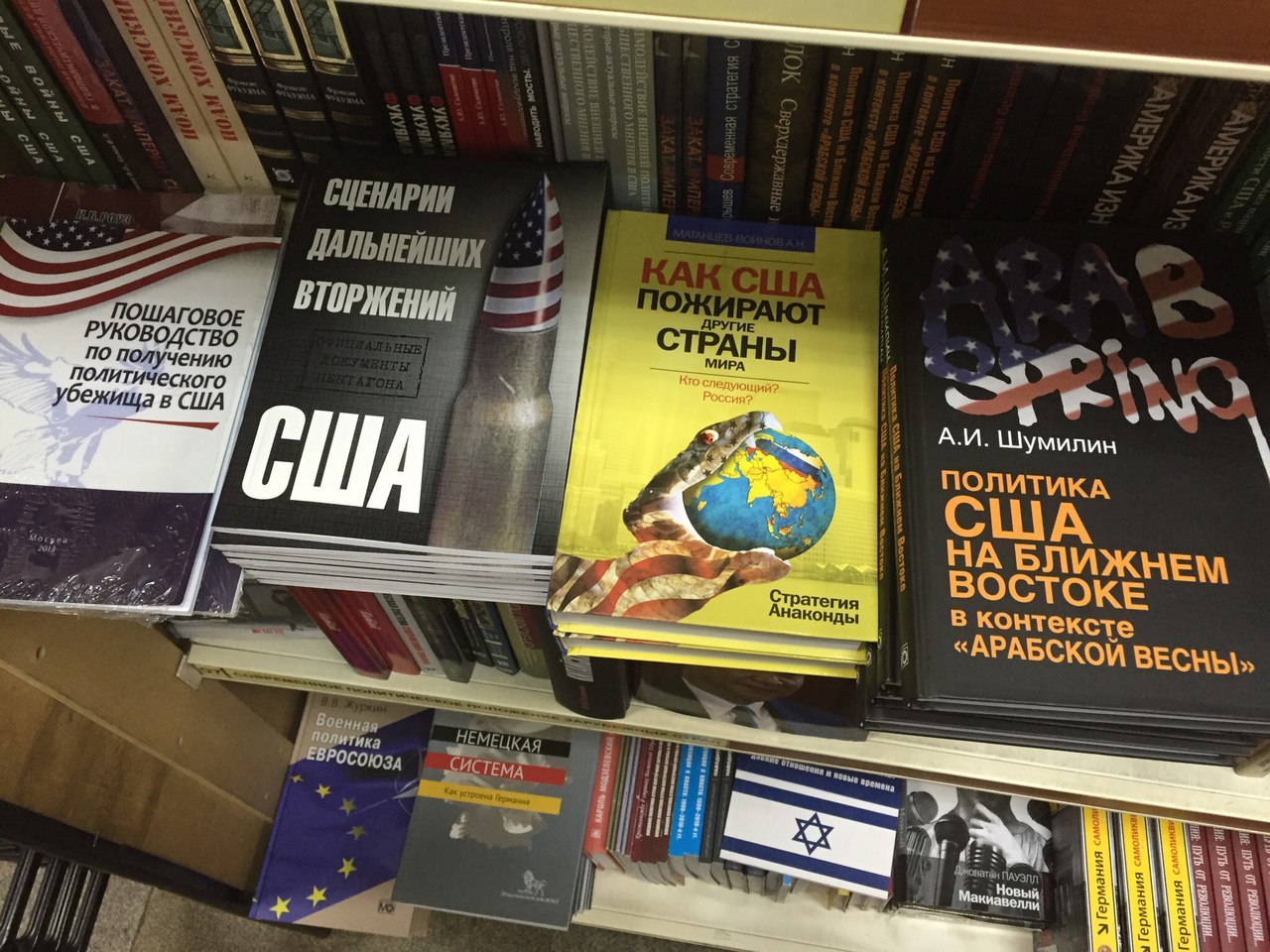
Patriotism also breeds hatred within the state. Anyone who does not accept the traditions and rituals of patriots is portrayed as a monster or a traitor.
Transformation into fascism and Nazism
If the citizens of a country mostly believe that their country stands on the highest moral platform, it logically follows that the positions of other countries are lower. In the film “Ordinary fascism”, Soviet director Mikhail Romm states: “Obviously, fascism begins where national arrogance begins: when a person believes he is better than another simply because he is German”43.
As mentioned above, it is much easier to implant fascist and even Nazi slogans into the mind of a person who thinks in a patriotic way, since most of them are based on the same logic. When patriotism transforms into fascism and Nazism, it acquires additional flaws inherent to dictatorship, racism, and terror.
The very idea of patriotism is the dissolution of one’s individuality in exchange for belonging to a powerful force, and a willingness to suffer and humiliate oneself, to inflict pain, to kill and be killed in exchange for this belonging (Erich Fromm called this “sadomasochism”44). This same belonging removes personal responsibility. On such ground, a totalitarian society is able to grow — whoever seeks belonging to a powerful force will find it in the form of dictatorship.
I want to be a cog in the system,
A gear in a powerful mechanism,
An element in a perfect scheme,
An organ in a vast organism.I want to serve in a flawless way!
Without bumps or obstacles at all.
So that the master is pleased, of course.
So that my duty to the Motherland is fulfilled.
This is not the most successful ideological construct
According to the well-known Russian journalist Alexander Nevzorov, who has visited many “hot spots”, “there are no such things as ‘Motherlands.’ There is only a sequence of regimes”, and “the task of any regime is to skillfully disguise itself as the Motherland”45.
And indeed, not so long ago many people were patriots of the USSR, and when that country ceased to exist, they became patriots of Russia. If tomorrow another state is established in the places where they live, these same people will become its patriots. But the most important point is that they do not decide whose patriots they will be. This is decided by those “at the top”, meaning the elites whose interests patriotism in fact serves.
As early as the Middle Ages, the concept of patriotism was seemingly de-emphasized, replaced by loyalty to the monarch46. Only by the late 17th century did the most progressive governments begin replacing the former ideology with it. It is not an innate human trait – it is an ideology implanted into citizens’ minds by the machinery of propaganda. Emma Goldman wrote:
Patriotism… is a prejudice artificially created and maintained through a network of lies and falsehoods, a prejudice that deprives a person of self-respect and dignity while increasing their arrogance and pride47.
It is hypocrisy
There are no patriots when it comes to taxes48.
Those patriots who truly prefer everything domestic and genuinely benefit their country — for example, by picking up litter from its streets and throwing it into trash bins — are extremely few. The rest do not understand that many people around them see their patriotism as lies and hypocrisy, and therefore perceive the patriot itself as a liar and hypocrite. After all, if a person drives a Mercedes while at the same time boasting about “how we bent those Germans over in ‘45”, their interlocutor understands that they are dealing with a liar and a hypocrite, and should be treated accordingly.
The hypocrisy of patriots is all-encompassing — they buy villas on Lake Como49 after patriotic shouting on television50; they call their fellow citizens (whom they are supposedly supposed to love) traitors and foreign agents51; they govern Russia while sending their children to live in other countries52.
In the West itself, people often laugh at their own “patriots”, recognizing their hypocrisy and lies:
Patriotism is useless, and therefore unnecessary
We have presented arguments against patriotism, but what do studies say? Do they prove the usefulness of patriotism?
States with a highly developed ideology of patriotism — Nazi Germany, the USSR, Japan, and Italy — ultimately collapsed in the face of more cosmopolitan and tolerant societies.
The Gallup organization conducted a study on how willing people in different countries are to fight for their country53.
The most “patriotic” countries turned out to be Morocco, Pakistan, Afghanistan, and Papua New Guinea, while developed countries such as Japan, the Netherlands, Germany, and Belgium were at the very bottom of the list. At the same time, in the event of a military confrontation, it is far more likely that Japan would defeat Papua New Guinea than the other way around.
The National Opinion Research Center at the University of Chicago (NORC) conducted a 2006 study of national pride in 33 different countries. The leaders were Venezuela, the United States, Australia, and South Africa. Countries with the lowest levels of patriotism included Germany, Latvia, Sweden, and Slovakia54.
According to The Business Insider, citing a YouGov study, a similar survey was conducted in 2016 across 19 countries. The top five included India, the United Arab Emirates, and Saudi Arabia, while among high-income social democratic countries Denmark ranked 10th out of 19, Norway 12th, Finland 13th, and Sweden 15th. The last two places were taken by Germany and France55. At the same time, countries with weak economies were largely not included in the survey.
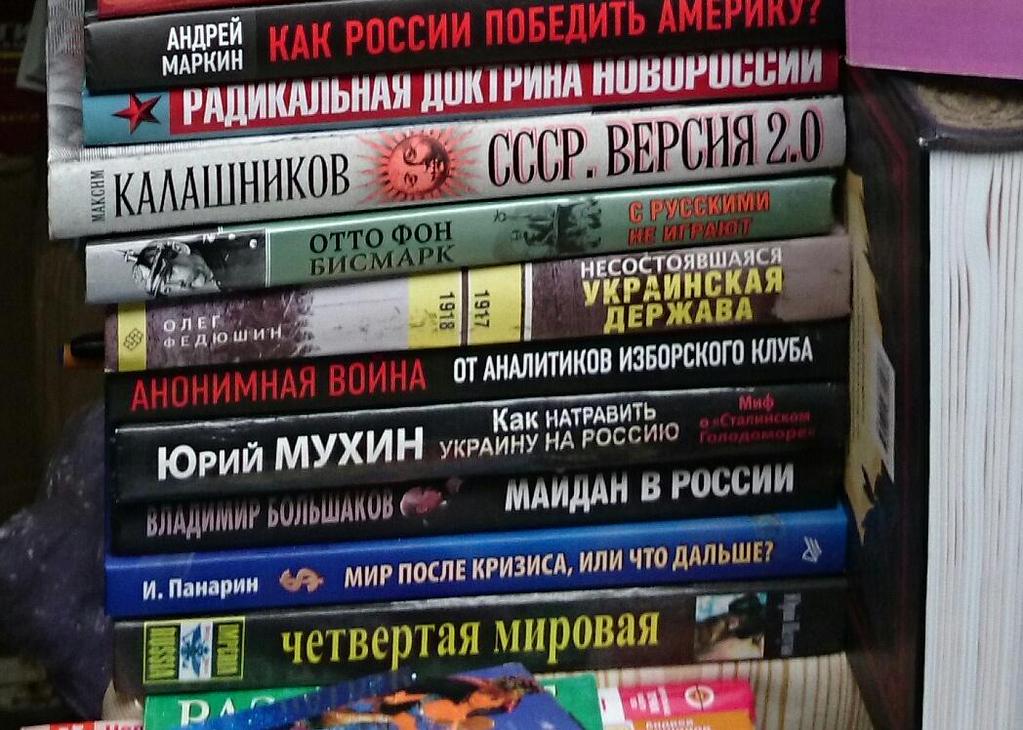
In 2018, amid a decline in living standards and the introduction of sanctions with all their consequences, the level of patriotism in Russia rose to 92%, compared to 84% in 201456.
So far, studies have not proven the harm of patriotism or a direct link between its growth and a decline in living standards, but they do demonstrate that it brings no benefit. Promoting a useless ideology is harmful in any case — it consumes resources that could be spent on promoting a useful one.
There is an alternative
When James Joyce was asked whether he was prepared to die for Ireland, he replied, “Let Ireland die for me”57. He was hardly referring to the people of the country; rather, he meant the very principle of territorial division and the criminal government that believes someone should die for it.
It is not necessary to fight for the territory defined by your government when you can instead fight for your family and loved ones, for all of humanity as a whole, and for every honest person in particular, against wars and injustice. This is non-nationalism— a part of progressive social democracy.
Thinking men and women throughout the world are beginning to realize that patriotism is too narrow and limited an idea to meet all the needs of our time.
<…>
When we destroy the lie of patriotism, we shall clear the way for the building of a new, truly free society, in which all nationalities will unite on the basis of universal brotherhood58.
According to Alexander Nevzorov, “modern humanity has realized that not having a Motherland is very convenient, and like everything convenient, it will undoubtedly become the norm”59.
Patriotism is based on inherited xenophobia. Russian patriotism is imperial, expansionist patriotism. Responding to Nikolai Turgenev’s remark that one should love the Fatherland more than humanity, I would reverse the order. My feeling toward my country is a sense of responsibility, in which there is much shame. It is completely clear that imperial ideology fundamentally contradicts the basic principle of the modern state — the rule of law. Until our national consciousness, as well as our domestic and foreign policy, rid themselves of the imperial complex, there can be no hope of human rights being respected in our country60.
Conclusion
Patriotism contradicts progressive values, fosters hostility between countries and the perception of their inequality, hinders progress, and is both a lie and a producer of lies. It also shares many of the shortcomings inherent in racism, which we discussed in this article. Therefore, social democrats should primarily oppose patriotic ideology rather than support or promote it. And we have only one Motherland — the planet Earth.
- Andrea Baumeister. Patriotism // Encyclopaedia Britannica (www.britannica.com). [Electronic resource]. URL: https://www.britannica.com/topic/patriotism-sociology (accessed: 25.02.2021).
- Patriotism // Great Russian Encyclopedia (bigenc.ru). [Electronic resource]. URL: https://bigenc.ru/philosophy/text/2324213 (accessed: 25.02.2021).
- S.I. Ozhegov, N.Yu. Shvedova. Explanatory Dictionary of the Russian Language: 80,000 words and phraseological expressions / Russian Academy of Sciences. V.V. Vinogradov Institute of the Russian Language. – 4th ed., expanded. – 944 pages. – Moscow: LLC “A TEMP”, 2006. – p. 496.
- patriotism // Dictionary by Merriam-Webster: America’s most-trusted online dictionary (www.merriam-webster.com). [Electronic resource]. URL: https://www.merriam-webster.com/dictionary/patriotism (accessed: 25.02.2021).
- Lev Rubinstein, Grigory Chkhartishvili. Zen patriotism // Big City (bg.ru). 06 June 2011. [Electronic resource]. URL: http://bg.ru/society/dzen_patriotizm-8822/ (accessed: 23.02.2020).
- Mizulina was outraged by school anti-corruption lessons // BBC News Russian Service (www.bbc.com). 29 March 2017. [Electronic resource]. URL: https://www.bbc.com/russian/news-39429832 (accessed: 23.02.2020).
- The UN did not recognize the annexation of Crimea by Russia // BBC News Russian Service (www.bbc.com). 27 March 2014. [Electronic resource]. URL: https://www.bbc.com/russian/international/2014/03/140327_un_crimea_russia_referendum_illegal (accessed: 23.02.2020).
- All Western sanctions against Russia // TASS (tass.ru). 6 September 2016, 21:25. [Electronic resource]. URL: https://tass.ru/mezhdunarodnaya-panorama/1055587 (accessed: 23.02.2020).
- Vladislav Inozemtsev. “Russophobia” on the march: how Russian authorities became fascinated with a fake concept // RBC (www.rbc.ru). 28 June 2017, 19:14. [Electronic resource]. URL: https://www.rbc.ru/opinions/politics/28/06/2017/59539f189a7947230ea53eb7 (accessed: 23.02.2020).
- P.A. Stolypin. We Need a Great Russia. The Most Famous Speeches and Letters. – 416 p. – Moscow: AST, 2013. – p. 122.
- L.D. Trotsky. How the Revolution Was Armed (On Military Work). Materials and Documents on the History of the Red Army in Three Volumes. Volume One. 1918. – 430 p. – Moscow: Supreme Military Editorial Council, 1923. – p. 256.
- George Bernard Shaw in The World (15 November 1893). Cited in Not Bloody Likely!: And Other Quotations from Bernard Shaw (1996), p. 142
- R.L. Krasilnikov. History of Russian Culture. 20th Century: textbook for secondary vocational education. – 203 p. – Moscow: Yurait Publishing House, 2019. – p. 87
- L.K. Gurdzhiev. Stalinism – the Salvation of Russia. – 636 p. – Moscow: Yauza-Press, 2010. – p. 61
- M. Kalashnikov. The Broken Sword of the Empire. – 512 p. – Moscow: AST, 2008
- Claude S. Fischer. We’re #1 ! // Made in America (madeinamericathebook.wordpress.com). July 21, 2010. [Electronic resource]. URL: https://madeinamericathebook.wordpress.com/2010/07/21/were-1/ (accessed: 23.02.2020).
- P. Köhler. Fake. The Funniest Forgeries in Art, Science, Literature, and History – Kuchkovo Pole Publishing, 2015
- Andrew Osborn. Medvedev Creates History Commission // The Wall Street Journal (www.wsj.com). May 21, 2009, 12:01. [Electronic resource]. URL: https://www.wsj.com/articles/SB124277297306236553 (accessed: 23.02.2020).
- James Rodgers. How Russia is fighting “historical falsification” // BBC News Russian Service (www.bbc.com). July 24, 2009. [Electronic resource]. URL: https://www.bbc.com/russian/russia/2009/07/090724_russia_history.shtml (accessed: 23.02.2020).
- K.V. Dushenko. Dictionary of Modern Quotations: 4,300 commonly used quotations and expressions of the 20th century, their sources, authors, dating – 628 p. – M.: Agraf, 1997 – p.88
- L.S. Gaponenko. Revolutionary Movement in Russia after the Overthrow of Autocracy. – 855 p. – Publishing House of the Academy of Sciences of the USSR, 1957. – p. 445
- P.N. Milyukov. Memoirs. – 528 p. – Moscow: Politizdat, 1991. – p. 494.
- V.I. Lenin. Complete Collected Works. Fifth Edition. Volume 26. July 1914 – August 1915. – 590 p. – Moscow: Publishing House of Political Literature, 1969. – p. 20.
- S. Voropaev, A. Egazarov. Encyclopedia of the Third Reich. – 587 p. – Moscow: LOKID-MIF, 1996 – p. 133.
- Alexander Nevzorov, Olga Zhuravleva, Irina Ananina. Nevzorov Wednesdays // Echo of Moscow (echo.msk.ru). September 18, 2019, 21:05. [Electronic resource]. URL: https://echo.msk.ru/programs/nevsredy/2503045-echo/ (accessed: 23.02.2020).
- A.V. Mitrofanov. Steps of New Geopolitics. – 286 p. – Moscow: Russian Vestnik, 1997
- Alexey Mitrofanov. Steps of New Geopolitics. Chapter 20. USA and England // Alexey Valentinovich Mitrofanov – Official website of the deputy (www.alexeymitrofanov.ru). [Electronic resource]. URL: https://www.alexeymitrofanov.ru/books_geopolit20.html (accessed: 23.02.2020).
- Alexey Mitrofanov: “America is reaching the limits of madness in violating human rights” // Newsru (www.newsru.com). November 2, 2001, 12:32. [Electronic resource]. URL: https://www.newsru.com/russia/02nov2001/ldpr_mitrofanov.html (accessed: 23.02.2020).
- Dina Ushakova. Circus without a Clown // Lenta.ru (lenta.ru). September 23, 2014, 19:39. [Electronic resource]. URL: https://lenta.ru/articles/2014/09/23/mitrofanov/ (accessed: 23.02.2020).
- Vladimir Zhirinovsky: Ideology is not needed to foster patriotism // LDPR (ldpr.ru). December 5, 2012. [Electronic resource]. URL: https://ldpr.ru/events/Vladimir_Zhirinovsky_To_foster_patriotism_does_not_need_an_ideology/ (accessed: 23.02.2020).
- Maxim Ivanov, Natalia Romashkova. Vladimir Zhirinovsky will cleanse the Russian language of Americanisms // Kommersant (www.kommersant.ru). Kommersant, 22.01.2013, 11:50. [Electronic resource]. URL: https://www.kommersant.ru/doc/2110268 (accessed: 23.02.2020).
- Andrey Kotov. Where did Zhirinovsky’s Maybach come from // Vedomosti (www.vedomosti.ru). December 18, 2009, 00:02. [Electronic resource]. URL: https://www.vedomosti.ru/politics/articles/2009/12/18/otkuda_u_zhirinovskogo_maybach (accessed: 23.02.2020).
- Yulia Lukyanova, Mikhail Rubin, Maria Zholobova, Roman Badanin, with participation of Ilya Rozhdestvensky. JSC “Party”. Investigation into how LDPR became a business for Vladimir Zhirinovsky’s family and entourage // Proekt (www.proekt.media). March 1, 2019. [Electronic resource]. URL: https://www.proekt.media/investigation/ldpr-business/ (accessed: 23.02.2020).
- Korgunyuk Yu. G. Financing of parties in post-Soviet Russia: between business and power // Politeia: Analysis. Chronicle. Forecast (Journal of Political Philosophy and Sociology of Politics). – 2010. – No. 3-4. – pp. 108-109
- A. Schopenhauer. Aphorisms on the Wisdom of Life [trans. from German by Yu. I. Aikhenvald]. – 368 p. – Moscow: RIPOL Classic, 2016. – p. 92.
- Joseph Demakis. The Ultimate Book of Quotations. Lulu Enterprises, Inc. – Raleigh, N.C., United States, 2012. P. 299
- E. Fromm. The Sane Society. The Dogma of Christ: [trans. from German] – 571 p. – Moscow: AST: Tranzitkniga, 2005. – pp. 70–71.
- Bertrand Russell, Sceptical Essays (1928), Ch. 13: Freedom in Society
- Patriotism or Peace? // L.N. Tolstoy. Complete Works. Volume 90. Works, diaries, letters 1835–1910. – 475 p. – Moscow: State Publishing House of Fiction, 1958. – p. 48.
- Patriotism – A Menace to Liberty // Goldman E. Anarchism / Trans. from English – Moscow: Voice of Labor, 1920
- David Livingstone Smith. The Most Dangerous Animal: Human Nature and the Origins of War. Ch. 2 Einstein’s question
- Patriotism or Peace? // L.N. Tolstoy. Complete Works. Volume 90. Works, diaries, letters 1835–1910. – 475 p. – Moscow: State Publishing House of Fiction, 1958. – p. 45.
- “Ordinary Fascism” (dir. Mikhail Romm, 1965).
- Erich Fromm. Escape from Freedom. The Revolutionary Character. // A.I. Fet. Collected Translations. – 231 p. – Philosophical Arkiv, Sweden, 2016. – pp. 219–220.
- Alexander Nevzorov on patriotism // YouTube (www.youtube.com). May 28, 2018. [Electronic resource]. URL: https://www.youtube.com/watch?v=G415Yp0IFGM (accessed: 23.02.2020).
- I.V. Lysak, I.V. Nalivaichenko. Patriotism: an obsolete value or a current trend? – 120 p. – Taganrog: Southern Federal University Publishing House, 2013. – p. 6.
- Patriotism – A Menace to Liberty // Goldman E. Anarchism / Trans. from English – Moscow: Voice of Labor, 1920
- George Orwell, Peter Hobley Davison (Editor). A Life in Letters – 542 p. – Harvill Secker, 2010
- Alexey Navalny. You won’t believe it: we found another villa in Italy // FBK (fbk.info). January 22, 2019, 17:00. [Electronic resource]. URL: https://fbk.info/blog/post/478/ (accessed: 23.02.2020).
- Ivan Apuleyev. “An emotional evening”: Solovyov shouted in support of the Soviet people // Gazeta.ru (www.gazeta.ru). September 24, 2019, 09:43. [Electronic resource]. URL: https://www.gazeta.ru/politics/2019/09/24_a_12682699.shtml (accessed: 23.02.2020).
- Putin signed a law on “foreign agents”. We explain its essence in 100 and 500 words // BBC News Russian Service (www.bbc.com). December 2, 2019. [Electronic resource]. URL: https://www.bbc.com/russian/features-50406548 (accessed: 23.02.2020).
- Katerina Fladung. Russian officials and parliamentarians whose children studied abroad // Ridus (www.ridus.ru). February 7, 2018, 07:29. [Electronic resource]. URL: https://www.ridus.ru/news/269917 (accessed: 23.02.2020).
- WIN/Gallup International’s global survey shows three in five willing to fight for their country // Gallup International (www.gallup-international.bg). May 7, 2015. [Electronic resource]. URL: https://www.gallup-international.bg/en/33483/win-gallup-internationals-global-survey-shows-three-in-five-willing-to-fight-for-their-country/ (accessed: 23.02.2020).
- William Harms. NORC: Americans, Venezuelans most proud // The University of Chicago Chronicle. March 2, 2006. Vol. 25 No. 11. [Electronic resource]. URL: http://chronicle.uchicago.edu/060302/norc.shtml (accessed: 23.02.2020).
- Thomas Colson. RANKED: How patriotic 19 world-leading economies are // Business Insider (www.businessinsider.com). November 23, 2016, 11:19. [Electronic resource]. URL: https://www.businessinsider.com/yougov-19-most-patriotic-countries-in-the-world-2016-11 (accessed: 23.02.2020).
- Sociologists recorded a record level of patriotism in Russia // BBC News Russian Service (www.bbc.com). June 9, 2018. [Electronic resource]. URL: https://www.bbc.com/russian/news-44424032 (accessed: 23.02.2020).
- James Joyce. Chamber Music = Chamber Music. — New York: Viking, 1955. — P. 9–44. — (Collected Poems).
- Patriotism – A Menace to Freedom // Goldman E. Anarchism / Trans. from English – Moscow: Voice of Labor, 1920
- Nevzorov on patriotism // YouTube (www.youtube.com). February 14, 2018. [Electronic resource]. URL: https://www.youtube.com/watch?v=7CdMLRDgYBk (accessed: 24.02.2020).
- Sergey Kovalyov, Ksenia Larina, Vitaly Dymarsky. Is patriotism useful for society? // Echo of Moscow (echo.msk.ru). March 13, 2015, 20:07. [Electronic resource]. URL: https://echo.msk.ru/programs/year2015/1510240-echo/ (accessed: 10.08.2021).