
What is russophobia and does it exist
While progressive movements fight against any racism in principle, conservatives in various countries try to prove that the problem exists only in relation to their audience. Russian conservatives speak of Russophobia, German ones of Germanophobia, French ones of Francophobia, and so on. However, they often engage in a substitution of concepts, which is exactly what we will analyze in our article.
According to the definition from Efremova’s dictionary, Russophobia is an unfriendly attitude toward everything Russian, toward Russians themselves as a people foreign and dangerous to representatives of another nation1. Depending on the interpretation, it can be a biased, suspicious, hostile, or unfriendly attitude toward Russia and/or Russians. According to Russian nationalists and certain other conservatives, Russophobia is a significant phenomenon in global and Russian society (there was even a “round table” dedicated to the “problem of Russophobia in the world”2).
Contents
Does russophobia exist?
What is usually implied by the term “Russophobia” is widespread among racists, nationalists, and conservatives of other countries, but in the minds of these groups, it does not stand out much from a long list of many other phobias — Judaeophobia, hatred of the USA, Francophobia, Anglophobia, and so forth. There is an utterly negligible number of people who hate only Russians while treating all other nations as equals to themselves.
Thus, the following turns out to be true: in most cases, what is meant by Russophobia is ordinary racism or xenophobia. However, Russian conservatives are often racists themselves, so they substitute the concept of racism with the term “Russophobia” in order to fight racism only when it is directed against themselves, while maintaining the ability to exhibit and cultivate racism toward everyone else.
The very use of the term “Russophobia” in relation to ordinary racism, rather than specifically to animosity exclusively toward Russians, is essentially a manipulation of consciousness and a substitution of concepts. If a person is biased and hostile not only toward Russians but also toward representatives of at least one other nationality, they are no longer a Russophobe, but a racist.
Despite the fact that Russian conservatives try to convince society that there is a special hatred toward Russians worldwide, even the Russian state is not the most hated in the world today. Thus, according to the portal The Top Tens, the top three most hated countries in the world in 2020 are North Korea, the United States, and Israel3. Only after them come Russia and China. Those countries that do not pursue an active foreign policy or within which systematic violations of human rights do not occur are usually not hated.
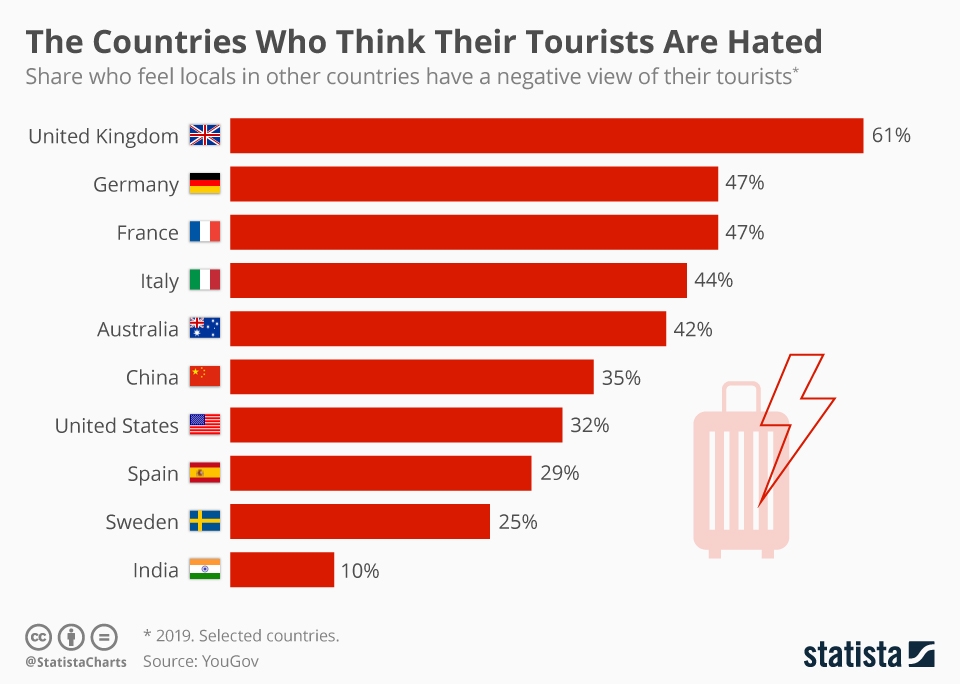
However, of course, Russophobia also exists in its actual definition — when a person bears hatred only toward Russians and/or what is associated with them. True, the majority of such Russophobes consist either of Russian right-liberals themselves, or of a portion of representatives of non-Russian nations living in Russia or who used to live in the USSR. This, as a rule, is a consequence of racist thinking.
Russophobia and the substitution of concepts
Most often, conservatives try to pass off any criticism of the Russian government as Russophobia. Such criticism is linked to the actions of the Russian nomenklatura, which is engaged in the annexation of Crimea, and which suppresses its own citizens and their rights. Many people in developed countries hate Vladimir Putin, and Russian propaganda presents this as Russophobia. For example, most of the “Russophobic” statements cited by the American professor Stephen Cohen4 are directed not against all Russians, but against the ruling elites. Thus, the statement that “Putin’s Russia is an anti-Western power with a different, more sinister vision of global politics” refers to the Kremlin’s foreign policy, while the statement that Moscow is a “gangster paradise” is an indication of the Kremlin’s domestic policy that maintains lawlessness within the country. Sergey Kara-Murza also tries to substitute the concept: “Russophobia is the presentation of the Russian Empire as a despotic tyranny, a strangler of all thought and freedom”5. This is not Russophobia, but simply criticism of the Russian government.
The poet and journalist Lev Rubinstein also noted that “Russophobia” is a label affixed by nationalist organizations to everything that is disadvantageous to these organizations, and is used to manipulate their audience:
As a rule, “Russophobia” is understood to mean any forms of disagreement with certain statements or actions of certain citizens or organizations that position themselves as “Russian”6.
The newspaper “Kommersant” noted that certain circles in Russia perceive “any unflattering remark as an anti-Russian attack, and any critic as an inveterate Russophobe”7. “Nezavisimaya Gazeta” also wrote about this:
Russophobia is not an aversion to Putin or distrust of Russian foreign policy. It is an aggressively defensive, stereotypical attitude toward a people and their cultural practices. For example, the following statement can be considered Russophobic: “Russians are dirty barbarians who do not wash, do not know how to use a fork, drink all the time, and only think about how to destroy our developed civilization”. Or this one: “Russians are so obsessed with the idea of enslaving the peoples of Europe that always and at all times they will choose aggressive politicians as their leaders”. Something along those lines… A cautious attitude toward Russian policy, of course, can be caused by Russophobia, but in itself, it does not testify to Russophobia. If only because in the post-Soviet and post-communist space Russia behaves very actively, and some of its actions, purely typologically, can be perceived as aggressive.
The term “Russophobia” in political articles is an apology for oneself, a rejection of self-criticism, a reluctance to examine one’s own actions from different points of view8.
At the same time, when using accusatory formulations, foreign conservatives may blame all Russian citizens as a whole rather than the Russian nomenklatura for the problems created by the latter. Thus, they perform three functions — first, they incite inter-ethnic animosity (which benefits conservatives), second, they condition their citizens not to see problems in the elites (which they themselves want to become), and third, they help like-minded conservatives in another country deceive their local society. To effectively fight the Russian authorities, it is necessary to emphasize that they are precisely the ones guilty of human rights violations in Russia. Perhaps many ordinary Russian people bear part of the blame due to their non-participation in politics, but their blame is already secondary. Thus, the two most common causes of Russophobia are the policy of the Russian government and the propaganda of nationalists (both local and foreign). The existence of nationalists and conservatives is cause number one. When nationalist ideology is minimized, all forms of racism will be minimized as well. Therefore, the fight against racism and xenophobia is a fight against Russophobia.
If, however, we take practice rather than words for Russophobia, then it is Russian conservatives and statists who are the real leaders in Russophobia — it was precisely during the peak of the statists’ power (the beginning of the 20th century, the dictatorship of Joseph Stalin, the “stagnation”, the late 2010s) that Russia experienced a very low standard of living, which often led to major political upheavals.
Social democrats and russophobia
For social democrats, Russophobia is unacceptable, as it is a manifestation of racist thinking. That is, statements that endow citizens of Russian nationality with certain special innate qualities are racist and, for this reason, must not be used by social democrats. At the same time, social democrats cannot approve of the policies of the Tsarist government, the policies of the Communists in the Stalinist and post-Stalinist USSR, or the policies of the Russian government after the collapse of the USSR. Abundant criticism of these policies by social democrats may be presented by conservative forces as Russophobia, but it is not Russophobia. Criticism of the values implanted by the elites, and therefore prevailing on the territory of Russia, is also not Russophobia. Social democrats must always emphasize that conservative Russian governments, rather than the Russian peoples, are reactionary.
The world cannot be free until the people on one-sixth of it — the peoples of my homeland — live under a dictatorship, under the violence of the greatest police power history has ever known.
Therefore, it is not true that every nation gets the government it deserves! This formula is valid only for those countries where democratic, rather than totalitarian, orders exist.
This formula, used all too often, incites Western countries not against the Soviet regime, but against the peoples of Russia, and thereby, with the help of Kremlin propaganda, turns them into opponents of the West, rather than friends and allies in the struggle against all forms of dictatorship.
<…>
The West’s understanding of Soviet reality is a positive factor, but often the comments on the Soviet Union made by some Western politicians and the press take a clearly anti-Russian form, crude and offensive to the peoples of Russia, and thereby allow the Kremlin to arouse the peoples of my country against the outside world.
Thus, the Russian-eaters arm, rather than weaken, the Soviet dictatorship!9
The nomenklatura on russophobia
Nationalist propaganda sometimes attempts to claim that hardships stem from Russophobia (and, as we have already established, by this it primarily means criticism of the Russian government). However, we see that today an immense number of deputies are “fighters against Russophobia”, yet life in the country is not getting any better — only worse, and Russia’s prospects are dwindling more and more.

One of the prominent fighters against “Russophobia” is Vladimir Putin. For instance, he complained that in Ukraine they are “trading in Russophobia”10, that “caveman Russophobes” are trying to shrink the space of the Russian language in the world11, that Russophobia from some countries is “gushing over the edge”12, and so forth.
Putin’s press secretary, Dmitry Peskov, completely gave himself away when he called Barack Obama’s criticism of Putin (at the time, Obama expressed displeasure that the Russian president sends his opponents to prison) a manifestation of “dyed-in-the-wool Russophobia”13. He also labeled accusations against the Russian intelligence services as “Russophobia”14. These are very vivid examples of attempts to shield the nomenklatura behind all representatives of the Russian nationality as a whole.
Other members of the nomenklatura are not lagging behind either. For example, State Duma Deputy Alexey Zhuravlyov responded to a US Congress resolution listing human rights violations by Russian authorities in Russia (which means it was not Russophobic — on the contrary, the congressmen stood up for the Russian people) as follows: “The American collection of anti-Russian resolutions has been replenished with another strange scrap of paper. Someday we will gather all these artifacts and display them for public viewing in the Museum of Russophobia”15. State Duma Deputy Alexey Pushkov called the Belarusian writer Svetlana Alexievich’s criticism of Kremlin policy “the malicious stupidity of Russophobia”16. Secretary of the Security Council of the Russian Federation Nikolai Patrushev stated that “naked Russophobia is being nurtured by the West”17.
As Meduza notes, “either Russophobia has suddenly spread across the globe, or the Russian authorities have decided to use it to explain certain phenomena that were not previously considered Russophobia”18.
Summary
Russophobia as a phenomenon is highly overrated and blown out of proportion by conservatives. Ordinary racism and criticism of the Russian authorities are passed off as Russophobia. The latter is indeed a widespread phenomenon both in the world and within Russia itself, and it provides a reason to reflect on the competence of the government. Most likely, when you hear speeches about Russophobia, but the “Russophobe” also exhibits hatred toward other peoples — you are dealing with manipulation, where racism is passed off as Russophobia. If, however, you hear accusations of Russophobia, but the object of the accusations speaks negatively only about the Russian authorities, then here criticism of the Russian nomenklatura is being passed off as Russophobia. For social democrats, the way out is this — not to yield to these manipulations, and to avoid making Russophobic statements themselves, instead focusing everyone’s attention on the policies of the Russian government.
- T.F. Efremova. New Dictionary of the Russian Language. Explanatory and Derivational. – M.: Russkiy Yazyk, 2000
- Experts spoke about the reasons for Russophobia in the West // RIA Novosti (ria.ru). February 19, 2020, 17:27. [Electronic resource]. URL: https://ria.ru/20200219/1564976770.html (accessed: 26.11.2020).
- Most Hated Countries // The Top Tens (www.thetoptens.com). [Electronic resource]. URL: https://www.thetoptens.com/most-hated-countries/ (accessed: 26.11.2020).
- Cohen gave examples of Russophobia in the American media // RIA Novosti (ria.ru). April 07, 2018, 12:10. [Electronic resource]. URL: https://ria.ru/20180407/1518127408.html (accessed: 26.11.2020).
- S.G. Kara-Murza. Soviet Civilization / S.G. Kara-Murza. – 1200 p. – M.: Algoritm, Eksmo, 2008. – p. 105.
- Lev Rubinstein. RuSSStsians on the march // WayBack Machine (web.archive.org). November 03, 2006, 10:50. [Electronic resource]. URL: https://web.archive.org/web/20080907044611/http://www.charter97.org/bel/news/2006/11/03/ru (accessed: 26.11.2020).
- Mikhail Zygar. The Price of the Issue // Kommersant (www.kommersant.ru). May 19, 2006. [Electronic resource]. URL: https://www.kommersant.ru/doc/674580 (accessed: 26.11.2020).
- Stanislav Minin. Russophobia as an Ideological Weapon // Nezavisimaya Gazeta (www.ng.ru). December 18, 2009, 00:00. [Electronic resource]. URL: https://www.ng.ru/columnist/2009-12-18/100_rusophobia.html (accessed: 26.11.2020).
- N.N. Berberova. The Last and the First: [Novel]; The Kravchenko Case: [Chronicle of the trial of one of the first Soviet “defectors”, France, 1949] / N. N. Berberova. – 316 p. – M.: Izd-vo im. Sabashnikovykh, 2000
- Kyiv trades in Russophobia and anti-Russian sentiments, Putin said // RIA Novosti (ria.ru). October 18, 2018, 17:27. [Electronic resource]. URL: https://ria.ru/20181018/1530997169.html (accessed: 26.11.2020).
- Putin: “caveman Russophobes” and nationalists declared war on the Russian language // TASS (tass.ru). November 5, 2019, 16:00. [Electronic resource]. URL: https://tass.ru/obschestvo/7080708 (accessed: 26.11.2020).
- Meeting with heads of international news agencies // President of Russia (www.kremlin.ru). June 1, 2017, 13:30. [Electronic resource]. URL: http://www.kremlin.ru/events/president/news/54650 (accessed: 26.11.2020).
- The Kremlin called Obama’s words about Trump and Putin “dyed-in-the-wool Russophobia” // RBC (www.rbc.ru). September 14, 2016, 13:06. [Electronic resource]. URL: https://www.rbc.ru/rbcfreenews/57d91e229a7947f0d63ac14b (accessed: 26.11.2020).
- Peskov called accusations against Russians of cyberattacks a “relapse of rampant Russophobia” // Vedomosti (www.vedomosti.ru). October 20, 2020, 14:54. [Electronic resource]. URL: https://www.vedomosti.ru/politics/news/2020/10/20/843923-peskov-nazval-retsidivom-ogolteloi-rusofobii-obvineniya-rossiyan-v-kiberatakah (accessed: 26.11.2020).
- Alexey Zhuravlev: A new exhibit for the future museum of Russophobia was created in the US // Rodina Party (rodina.ru). May 12, 2020. [Electronic resource]. URL: https://rodina.ru/novosti/Aleksej-ZHuravlev-V-SSHA-sozdali-novyj-ehksponat-dlya-budushhego-Muzeya-rusofobii (accessed: 26.11.2020).
- Alexey Pushkov’s Twitter // Twitter (twitter.com). December 6, 2015, 15:35. [Electronic resource]. URL: https://twitter.com/alexey_pushkov/status/673480984000598016 (accessed: 26.11.2020).
- Patrushev: The West wants to destroy the single humanitarian space of the CIS // RIA Novosti (ria.ru). November 11, 2019, 18:12. [Electronic resource]. URL: https://ria.ru/20191111/1560820332.html (accessed: 26.11.2020).
- Dmitry Kartsev. Meduza’s absolutely exhaustive guide to Russophobia (including the dyed-in-the-wool and rampant kind) // Meduza (meduza.io). July 18, 2019, 09:00. [Electronic resource]. URL: https://meduza.io/feature/2019/07/18/absolyutno-ischerpyvayuschiy-putevoditel-meduzy-po-rusofobii-v-tom-chisle-mahrovoy-i-ogolteloy (accessed: 26.11.2020).