
On nationalization and the public sector
How should progressive social democrats view the nationalization of enterprises? Due to the long-standing dominance of communists in Russian society, there is a strong stereotype that the left-wing movement and demands for nationalization are inextricably linked. At the same time, progressive social democratic parties also carry out privatizations. Decisions on what is best for the left should be guided not by stereotypes, but by the practice of achieving goals for the public good.
One of the popular political beliefs of the 20th century was the thesis on the benefits of nationalization, and that it reflects the interests of the majority of citizens. The logic was as follows: large corporations belong to small groups of large businessmen, but if they are nationalized, all citizens will be able to participate in management and, accordingly, reap the benefits. However, the practice of nationalization has frequently led to completely different results, and not only in authoritarian states.
Contents
What is nationalization
The Great Russian Encyclopedia notes that nationalization is the transfer into state ownership of property belonging to private individuals or collective owners, on a compensatory or uncompensated basis1. The Civil Code of the Russian Federation confirms – according to its definition, this is the conversion into state property of property owned by citizens and legal entities2. Properly speaking, nationalization should be distinguished from expropriation, since in the first case the transition to state ownership is accompanied by compensation to the former owner, whereas in the second case compensation is absent. However, the terminology has evolved in such a way that the concept of “nationalization” generally implies any transition to state ownership, thus including expropriations as well.
Experience of the USSR
The first large-scale experience of property nationalization in history was the Soviet one3. It was carried out in several stages, legislatively reflected in the Decree on Land (later specified by the “Regulations on Socialist Land Management and Measures for Transition to Socialist Agriculture” of February 14, 1919), the decision of the All-Russian Central Executive Committee and the Council of People’s Commissars of November 14, 1917 on introducing workers’ control at enterprises (the refusal of enterprise owners and administration to comply with workers’ control requirements triggered hasty and spontaneous nationalization at that time, initiated by factory committees and radically minded local authorities), and the decree of the All-Russian Central Executive Committee “On the Nationalization of Banks” of December 14, 1917. The maritime and river merchant fleet, railways and railway transport also passed into state ownership, and a state monopoly on foreign and domestic trade was established. By the decree of the Council of People’s Commissars of June 28, 1918, the nationalization of entire industries was initiated. By the autumn of 1918, over 9.5 thousand enterprises had been nationalized, and in the spring of 1919, the nationalization of large-scale industry was almost completely finished. In the summer of 1919, mass nationalization was extended to medium and small enterprises, and by the resolution of the Supreme Council of the National Economy of November 29, 1920, all enterprises with more than 5 workers using a mechanical engine or more than 10 without a mechanical engine were nationalized. As a result, the total number of nationalized enterprises exceeded 37 thousand.
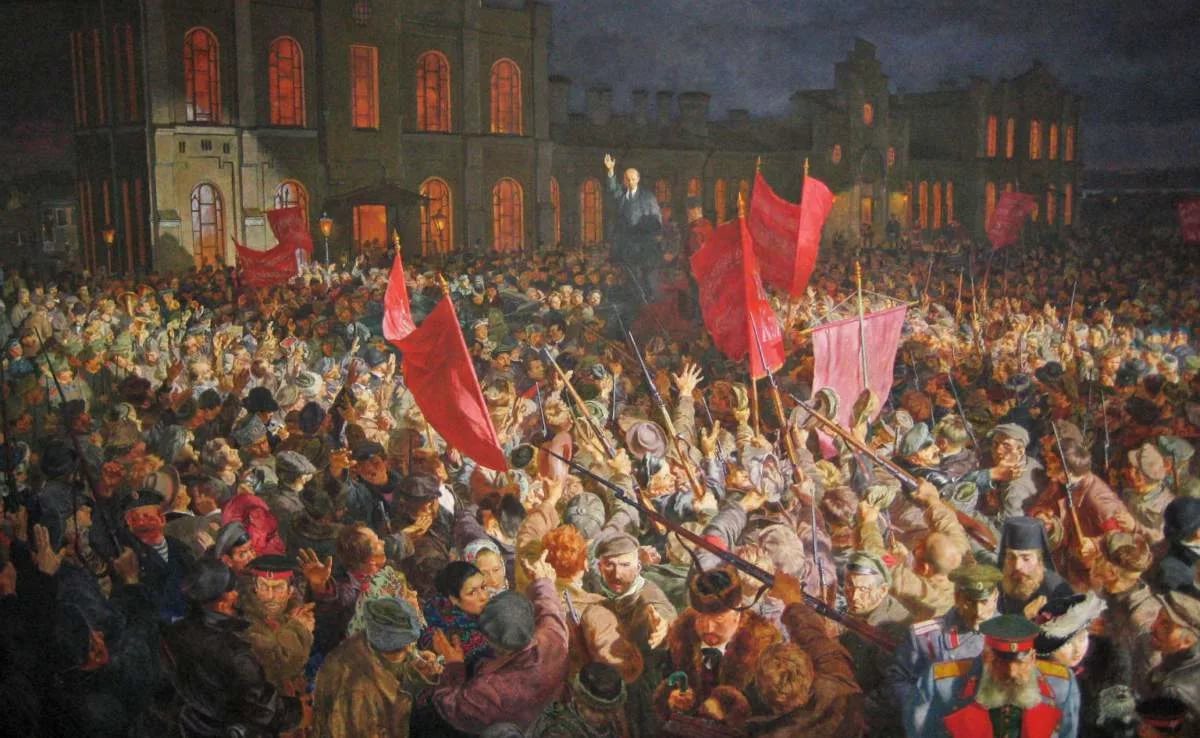
How did this experience end? The so-called “war communism”, within the framework of which these measures were carried out, suffered failure. The disorganization of the country’s economy led to mass famine: in 1921 – early 1922, up to 1/4 of the country’s population was starving. According to demographic historians, no fewer than 8 million people fell victims to famine and epidemics in 1918 – 204. Discontent with this policy resulted in mass uprisings, such as the Tambov rebellion of 1920 – 1921 and the Kronstadt rebellion of 1921. The communists were forced to acknowledge the failure of the “war communism” policy and proclaim the transition to the New Economic Policy (NEP), and in 1921 – 1922 partial denationalization was carried out, which made it possible to achieve successes in raising the standard of living of citizens. In essence, only the “commanding heights” in the economy remained in the hands of the state – 4,500 large enterprises with 80% of industrial workers5. The curtailment of the NEP policy in the late 1920s once again led to catastrophe, mass famine, anti-government uprisings during the period of collectivization, and other manifestations of a declining standard of living, which we examined in detail here. As a result, even Stalin’s government found itself compelled to urgently return personal plots, as Doctor of Historical Sciences Oleg Khlevniuk reports:
In February 1933, at the first congress of shock-worker collective farmers, Stalin promised that the government would help every collective farm household acquire a cow within one to two years6. Over time, peasants were legally guaranteed ownership of household plots of certain sizes. The expansion of personal plots was of fundamental importance for the countryside. It formed the basis of a new compromise between the state and the peasantry. Stalin, with a heavy heart, agreed to a forced concession of an anti-collective-farm character. For peasants, who received nothing or almost nothing on the collective farms, small personal plots allowed them to make ends meet somehow. Even personal plots, crushed by exorbitant taxes, demonstrated surprising vitality. According to official Soviet data, occupying a negligible amount of land compared to collective farms, personal plots produced over 38 % of vegetables and potatoes and 68 % of meat and dairy products in 19377. It was personal plots that made it possible to survive with far fewer casualties the next famine that broke out after the poor harvest of 1936. This course of events once again underscored the flaws of the early 1930s collectivization. Preserving personal plots already at the initial stage of collectivization would have been a far better solution than the mindless total socialization that ruined the peasants in the blink of an eye8.
This brief digression did not help raise the efficiency of the Soviet economy to the level of developed countries, and in 1987 – 1990 the government was forced to pursue a policy of large-scale denationalization, while large-scale privatization unfolded starting in 1992.
Experience of other countries
Nationalization led to similar results not only in the Soviet Union. For instance, after the victory of the communists in China, Mao Zedong nationalized all land and destroyed all property rights at once9. He dealt harshly with large landowners (as well as everyone he deemed opponents of the regime). The market economy was henceforth banned. Rural residents were organized into communal households. Instead of money and wages, “work points” were introduced, a certain amount of which could be exchanged for various goods. All industry was also nationalized, and Mao launched an ambitious program of rapid industrialization using “five-year plans” borrowed from Soviet practice.
This ended in failure. Industrial production declined, and serious difficulties arose in supplying the population with all types of goods, first of all food products. Cereal yields dropped to the level of 1951. A famine began in the country, which claimed the lives of, according to various estimates, from 10–14 to 30 million people10. This was accompanied by campaigns like the “four pests campaign”11, during which Chinese citizens, following the party’s orders, exterminated sparrows, and were subsequently forced to import them from the USSR (because without sparrows, a sharp increase in the reproduction of pest insects began, which caused enormous damage to agriculture). Further collapse of the country’s economy was halted only after minor concessions – peasants were returned their household plots and personal property, permitted to keep pigs and poultry, public canteens were liquidated, and markets were reopened12. However, without large-scale market reforms, rural residents, who made up 3/4 of the country’s population, continued to systematically suffer from famine, and in terms of per capita production of manufactured goods and food, the PRC found itself at the bottom globally. Only after transitioning to a new policy, which implied economic liberalism13 and the implementation of privatizations14, did China’s economy begin rapid growth. As He Xueyan from the Center for Economic Development of the Chinese Academy of Social Sciences notes, since the beginning of the reforms and the “open door” policy in 1978, China has achieved significant successes that have attracted the attention of the global community. The average annual growth of the Chinese economy was around 9%; in 1984 the growth rate reached 15.3%, in 1985 – 13.2%, in 1992 – 14.1%, and in 1993 – 13.1%15.
In Ethiopia, after the death of Emperor Haile Selassie in prison in 1975, the communist Derg council nationalized land ownership, including all urban and rural land, as well as almost all private property16. The authoritarian actions of the regime provoked a chain of resistance outbursts across the country. The wealth that fell upon the communists as a result of nationalization soon corrupted them. Dawit Wolde Giorgis, one of the associates and ministers of dictator Mengistu Haile Mariam, recounts in his memoirs:
At the beginning of the Revolution all of us refused to have anything to do with the old times. We did not drive cars or wear suits, and a tie was considered almost a crime. Any detail of appearance that made you look well-groomed and bourgeois, anything that hinted at well-being and refinement, was rejected by us as part of the old order.
But in 1978 all this began to change. Material well-being gradually came to be considered acceptable and then necessary. Fashionable clothing from the best European designers became the uniform of all top officials and members of the Provisional Council. We had the most luxurious things – the best houses, luxury cars, chic whiskey, champagne, food. It was a complete abandonment of the ideals of the Revolution17.
In the 1970s and 1980s, the economic situation in Ethiopia steadily deteriorated. In 1983–1985, a famine struck the country, claiming the lives of over 1 million people, and opposition sentiments grew within the country, including in the army and among the peasantry dissatisfied with the collectivization policy18. In 1989, anti-government forces united into the Ethiopian Peoples’ Revolutionary Democratic Front (EPRDF). Under these conditions, in 1990 Mengistu announced a course toward liberalization and transition to a market economy, and at a plenary meeting of the WPE Central Committee admitted that the socialist orientation “did not yield the expected result”. However, these measures did not stop the civil war, and in 1991 the EPRDF announced the launch of a general offensive on the capital. On the eve of the capture of Addis Ababa by the rebels on May 21, 1991, Mengistu, along with his family and supporters, fled to Kenya, from where he moved to Zimbabwe on May 23, where he received political asylum; in Ethiopia, he and 18 of his supporters were sentenced to death in absentia.

Quite a few other countries carried out large-scale nationalization – the DPRK, Cuba, and others, yet in none of them did it lead to success, invariably ending in failure. We can also recall an ancient example – Venice:
This was another step toward more extractive economic institutions. The next step was taken in 1314, when the republic set about nationalizing trade. A system of state-owned merchant galleys was organized, and starting in 1324, citizens who wished to engage in commerce began to be heavily taxed. International trade finally concentrated in the hands of the old families. This was the beginning of the end for Venice as a prosperous state. After all major areas of business turned out to be monopolized by a narrow stratum of the elite, the decline only accelerated. Venice could have become the world’s first inclusive society, but failed to do so as a result of political intrigues19.
Targeted nationalizations
Some developed countries have also carried out the nationalization of enterprises, and it was not only unsuccessful, but in certain cases relatively successful. Thus, nationalization was carried out by the Labour Party in the UK – between 1945 and 1951, the coal and steel industries, railway and aviation transport enterprises, passenger and freight road transport companies, as well as the energy sector, came under state control20. Initially, the policy of the Labour Party was very popular and successful, but they had to revise their views on nationalization after the severe economic crisis of the 1970s21 (although it should be noted that the crisis was rather caused by events in the oil market, and was also felt acutely in the USA, where there were no such noticeable waves of nationalization), when the low efficiency of state-owned enterprises became one of the reasons for Margaret Thatcher coming to power and implementing her “shock therapy” with mass privatization of enterprises. The productivity indicators of the coal and steel industries were somewhere around 40th place in the global ranking22. The government spent nearly £1 billion a year just to keep the coal industry operational. British Steel suffered net losses of £4.3 billion between 1976 and 1983, which amounted to about $500 a year for every average British family of 423. During the economic restructuring undertaken by Thatcher, it was necessary to carry out mass closures of inefficient enterprises and lay off thousands of workers. British Labour Party members came to the conclusion that the nationalization of enterprises could lead to similar crises in the future, followed by conservative election victories and the implementation of such anti-labor policies. At the same time, we note that privatization and deregulation did not lead to positive results in all sectors. In the housing and utilities and transport sectors, a significant increase in tariffs was observed24. Bus services were severely reduced, and transport discrimination against certain areas began to be observed. Against the backdrop of partial problems with privatization, the “We Own It” movement began to gain momentum25, advocating for the return of state ownership in certain sectors.
What can we say about privatization in general? Not every privatization is beneficial, something that Russian citizens are extremely well aware of. We have already written in the article about social democratic economics that we should strive for a form of ownership without a primary shareholder, and accordingly, privatization must be carried out in accordance with this requirement. Bidding should be open to the participation of any citizen. At the beginning of the article, we mentioned the stereotype “large corporations belong to small groups of large businessmen, but if they are nationalized, all citizens will be able to participate in management and, accordingly, reap the benefits”. But in reality, citizens will only reap the benefits when broad strata of them own shares in enterprises, rather than when officials own them.
Relatively successful was the nationalization of railways, as well as tobacco production and sales, under Otto von Bismarck26. Before it was carried out, the number of freight tariffs reached several hundred, which significantly complicated usage, whereas nationalization allowed for unification. Over time, the railway business became a very important source of stable income for the state. Freight and passenger transport brought over 4 billion marks into the treasury each year.
One of the attempts to carry out partial nationalization accompanied the policy of Salvador Allende in Chile. He nationalized enterprises in the copper sector belonging to US companies without paying compensation27. This led to a sharp cooling in relations with the USA, as well as a decrease in investor confidence in Chile (few people want to invest in a country where your property can be taken away without any compensation). Allende also continued the nationalization of mining companies and production facilities from local owners, and printed a large amount of unsecured currency to cover the costs of acquiring these companies. Such a policy led to rising inflation, falling real wages, production stagnation, and mass strikes28. This ended with power passing as a result of a coup d’état to General Augusto Pinochet, who pursued an ultra-right policy. At the same time, during Pinochet’s rule, Chilean copper mines remained under state control29.
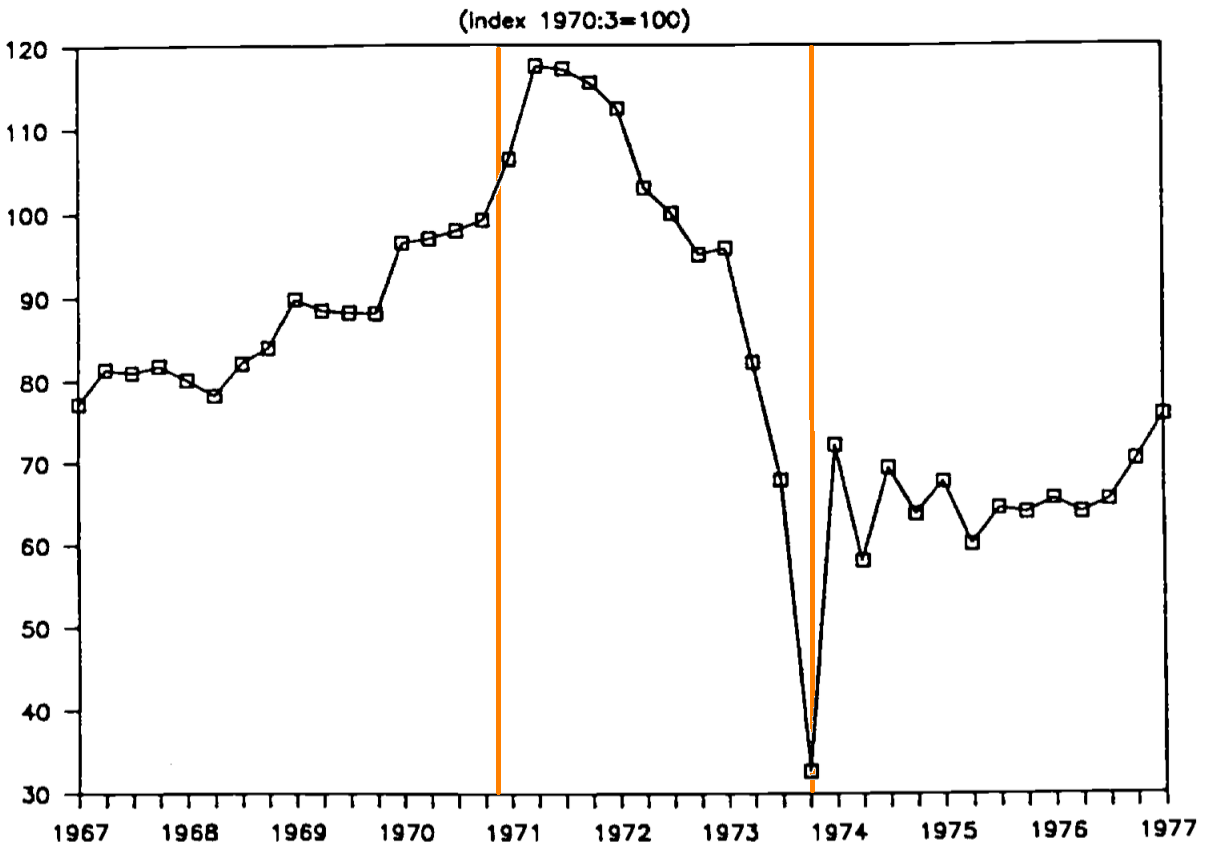
Nationalizations of large enterprises were also carried out in many African countries – for example, in Sierra Leone in 1970, Siaka Stevens effectively nationalized Sierra Leone Selection Trust and created a company called National Diamond Mining (Sierra Leone) Ltd based on it, in which the government (and in fact Stevens personally) owned 51%30. Thus, Stevens began systematically taking diamond mining in the country into his own hands. However, the dividends from nationalization were received not by the citizens of Sierra Leone, but by Stevens himself and his inner circle. Under Stevens’ rule, the railway line built by the British colonial administration was even dismantled, after which it was sold along with its rolling stock: he feared that it would contribute to the economic development of the southern regions, where the opposition party SLPP was strong31.
France also carried out nationalization – its first wave was observed in the period after World War II (collaborator enterprises were nationalized without compensation, for example, Renault car factories), and the second wave in 1982, when 36 banks passed into state ownership, as a result of which the credit system almost entirely ended up in the hands of the state32. France’s post-war economy operated and developed quite well. However, the French had to carry out mass privatization – for instance, parts of the Usinor-Sacilor group were nationalized in 1982, but their period of state ownership turned out to be extremely unsuccessful for them. Over 23 years, they cost taxpayers no less than a hundred billion francs and the loss of 100,000 jobs33.
Milestone events included the de facto bankruptcy of Europe’s largest French bank Crédit Lyonnais and the opening of the automobile manufacturing firm Renault to private capital. The former, nationalized in 1981, was saved from collapse only through the state buying up its debts, while the latter, which passed into the public sector back in 1945 due to the owner’s collaboration with Hitler’s occupiers during the war, became a mixed joint-stock company. In the same context, one can note the cessation of operation of the unprofitable Franco-British supersonic passenger airliner Concorde, serious financial difficulties of the company operating the Channel Tunnel, the failure of the government’s plan to develop computer production (the Plan Calcul), and so on. In all these cases, even the high efficiency of the state’s technical solutions could not compensate for the financial losses of investment projects.
As a result, over the period 1985–2003, the number of public sector enterprises decreased from 1,856 (excluding communications and telecommunications) to 1,117, and their share in the total number of employees dropped by half – from 10.5% to 5.2% (1.1 million people)34.
Taking these facts into account, in 1998–2002 French social democrats abandoned the practice of nationalizations and continued the privatization policy.
Another example is state-owned companies in Russia during the era of Vladimir Putin. These include companies such as Gazprom, Rosneft, Russian Railways, Aeroflot, and so on35. The share of the public sector in the modern Russian economy is quite broad – according to various estimates, it ranges from 3036 to 70%37 (the head of the Accounts Chamber Alexei Kudrin claimed in 2020 that over the past 20 years it has been 46–48%38), yet estimates with a more understandable calculation methodology still settle on the figure of 30–40%; in any case, this share is significant. However, at the same time, Russia is one of the world leaders in the level of wealth inequality39, and the level of corruption in it is very high. The heads of Rosneft and Gazprom are close associates of Vladimir Putin, Igor Sechin and Alexei Miller, whose names regularly appear in anti-corruption investigations40, while in 2020 the state budget underreceived about a trillion rubles from Gazprom41, and revenue per employee at Rosneft in 2015 was 7.8 and 4.4 times less per employee than at foreign competitors such as ExxonMobil or Chevron42. As doctors of economic sciences Valery Zubov and Vladislav Inozemtsev noted, all additional inflationary income associated with the fall of the ruble exchange rate is appropriated by Gazprom, and the funds received are often channeled into unrequested infrastructure projects, the costs of which amounted to 2.5 trillion rubles as of 201543. The UAC, which received nearly 24 billion rubles in state subsidies in 2018–201944, spent colossal money on developing the Superjet-100 aircraft, which private companies refuse to use. The level of democracy and civil liberties in Russia is steadily declining.
In general, the efficiency of the public sector is quite debatable. Various studies have shown that government housing construction projects are 20% more expensive than comparable private ones45. Public garbage collection costs 50% more than private collection46. A study of private school transportation in Indiana showed that it was generally 12% cheaper than similar transportation provided by local authorities47. However, Nobel laureate Joseph Stiglitz emphasizes that “not all studies show that state enterprises perform significantly worse than private ones”48. Thus, Sam Peltzman of the University of Chicago found that in state-run liquor stores, prices were 4–11% lower than those of private merchants49. Meanwhile, the report by the Public Services International Research Unit of the University of Greenwich concludes that there are no fundamental differences in efficiency between the public and private sectors50 (of course, within the framework of a mixed economy). The report also notes the following:
Public services must include structures ensuring the achievement of public goals, must be continuously strengthened and controlled by democratic mechanisms of accountability and public engagement. Such mechanisms include formal accountability to elected public bodies such as municipalities or governments; structures for public participation in decision-making, including complete transparency of information; and active participation of representative organizations such as community associations.
What is the reason for the failures of nationalization
From the above we can conclude that large-scale nationalization in practice most often leads to the collapse of the economy followed by famine, foreign policy problems (Suez Crisis), sometimes even civil war, and almost never ensures the growth of living standards. Only targeted nationalizations are successful, but far from always, and even in the event of success they can result in failure in the future.
The main reason for the failure of nationalizations is that, essentially, nationalization represents the transfer of property into the disposal of officials. In most cases, they have far less ability to manage enterprises and raise their efficiency than entrepreneurs, because the latter manage enterprises based on previous experience, and inefficient ones go bankrupt as a result of competition, whereas an official can be appointed to a position even without experience. Moreover, in the event of an enterprise’s failure, the entrepreneur loses their own money, while an official can simply move to another position. Therefore, officials most often lack the qualities necessary to run a business. For example, in 1984 a study by a presidential commission was released in the US that presented 2,500 recommendations to eliminate unnecessary government spending. Among the noted shortcomings were such things as, for example, purchasing ordinary screws at a cost of $91 each, despite the fact that in hardware stores such screws were sold for 3 cents51.
In the event of enterprise unprofitability, it is extremely difficult for the government to pursue a policy of cutbacks, as this casts a shadow on the reputation and deprives the ruling party of voters, which forces it to maintain these unprofitable enterprises to the detriment of the economy (to solve the problem, it turns out to be necessary to create state retraining programs). State-owned companies have to care less about bankruptcy and, consequently, about competition. State-owned enterprises can live with a large deficit for a long time, which we already saw above using the example of British Steel.
A problem that constantly accompanies the public sector is lower service quality. In the absence of competition and the presence of a government monopoly, a decline in the quality of manufactured goods and services may be observed. However, even under conditions of competition, public schools or clinics can on average be significantly inferior to private ones.
Another reason is that nationalization often represents a violation of property rights, which is not only a violation of Article 17 of the Universal Declaration of Human Rights adopted by General Assembly resolution 217 A (III) of December 10, 1948, but is also economically inefficient, as we explain in the article about private property.
Finally, a large number of state-owned companies creates the temptation to order their employees to vote for the desired candidate, attend political events required by the ruling party, and perform other actions that destroy democracy in the country. When public sector workers are herded into votes, party primaries, and so on – this is one of the important stages in the establishment of authoritarianism. This is not the only problem of state-owned companies contributing to the growth of authoritarianism. Another lies in the greater level of sycophancy among their management. It is harder for them to express disagreement with state policy, since their tenure in office depends on the state, which makes personnel decisions. Owners of private companies, on the other hand, are more independent and therefore more likely capable of resisting, for example, the establishment of authoritarianism in the country.
This may seem paradoxical for Russian leftists today, but for nearly 50 years in power in Sweden, local social democrats did not nationalize industry, and right-wing governments between 1976 and 1982 engaged in nationalization much more broadly52. The fact is that the Socialization Committee created by the social democrats in 1920, which was tasked with studying the possibility of socializing enterprises, failed to come to a conclusion about its necessity over 15 years. The committee studied the attempts of Finnish social democrats to organize a socialist economy during the Finnish Civil War, the Soviet experience, the ideas of Austrian social democrats, and so on. It was decided that socialization would not ensure the achievement of the social democrats’ goals – the creation of a free, prosperous, and fair society. Therefore, until the emergence of the Meidner plan, Swedish social democrats did not consider the possibility of socializing enterprises, and even this plan was rejected rather quickly.
In what cases can nationalization be effective
Doctor of Economic Sciences Oleg Sukharev notes that there are tasks for which it is justified to use a tool such as nationalization. Among them are the main ones53:
- Conducting military operations (the start of a large-scale war) or the need to counter emergency situations in the region (for example, natural disasters or to ensure the production of a large number of medical masks during an epidemic);
- Ensuring the preservation of a specific asset or type of activity that might disappear while continuing to remain in the private sector (for example, after the bankruptcy of Rolls-Royce in 1971, it was nationalized, thereby saving the brand54);
- Countering crisis phenomena in the economy regardless of the nature of the crisis – cyclical, transitive, or mixed.
According to some analysts, state management of nationalized property is effective only over a short distance – in a situation requiring the mobilization of resources55.
It should also be noted that nationalization is justified in sectors providing services that will not be provided by the market, or if they are, then in insufficient quantities. And in these same sectors, the presence of the public sector is also not only justified, but preferable. For example, fire brigade services are usually provided by the state to avoid problems with their payment. After all, if a house is on fire, and the residents of not all apartments have paid for the firefighters’ services, the fire needs to be put out in all apartments anyway. This necessity encourages some residents to refuse payment, and puts the remaining residents under the threat of firefighters refusing to do their work. To ensure that fire brigades put out all apartments in a building, and that the presence of these firefighters does not depend on the profitability of their business in a given area, fire services were made state-run, and this is justified.
Approximately the same can be said about other public goods, such as national defense or the provision of social security. As Stiglitz notes, if a public good is produced privately by some firm, it must charge a fee for its use, and any such fee will reduce people’s desire to use it. Thus, in the case where public goods are produced privately, the result is their underutilization56.
Nationalization works in the field of natural monopolies (which can include pipeline gas transportation, electric and thermal energy transmission services, railway transport, transport terminal services, ports, airports, and so on57). For example, nationalizations of railways have often proven effective – besides the aforementioned Germany, this includes, for example, the nationalization of railways in South Korea and the creation of the Korail operator, nationalization in Japan with the creation of Japanese National Railways, and so on.
The experience of Singapore is quite interesting. The state leads in rankings of the ease of doing business and is often presented as an example of a well-functioning economy with a predominance of private property. But at the same time, the state owns about 90% of the land58, a larger share of housing (about 80% of Singapore’s population lives in government apartments59), as well as two large funds that, in turn, own shares in major Singaporean enterprises. One of the best airlines in the world, Singapore Airlines, is 57% state-owned60.
We can notice that the public sector works quite well in the field of particularly complex industries. For example, in the space industry, the recognized leaders for a long time were the American government agency NASA and the Soviet Ministry of General Machine Building. This indicates that the creation of state-owned companies is justified in these industries.

State property is relatively widespread in the mining and electric power industries. Oil companies of the Persian Gulf countries, including Saudi Aramco, one of the world’s largest companies by capitalization, are predominantly state-owned. In Europe, among the largest state-owned companies in the mining and energy industries, one can highlight Électricité de France, Equinor ASA (formerly Statoil and StatoilHydro), and LKAB.
It is very difficult to find examples of efficient nationalized companies or simply public sector companies in manufacturing not related to public goods or natural monopolies, so they are rather exceptions. One such exception is the Volkswagen corporation, created as a result of a government order61. True, under the Nazis, citizens never received the promised “people’s car”, which was produced in minuscule circulations – the Hitler government geared the enterprise toward the production of military vehicles. However, after the war, the plant first came under the control of the British government, and was later transferred to the disposal of the government of Lower Saxony, after which its production began to grow at a tremendous pace (later, in the 1960s, 60% of the company’s shares were sold off to citizens, and the corporation awaited even greater growth in the future).
We can also attribute to the strengths of nationalization and the public sector the possibility of setting lower prices and tariffs for services (which, however, does not guarantee the realization of this possibility). A state-owned company can be less oriented toward profit and profitability indicators and set lower prices and tariffs for services. The public sector can also invest in projects with a long payback period (the aviation industry in Brazil, the steel industry in South Korea62).
Conclusion
The first conclusion we can make is that sweeping nationalization is completely unacceptable for social democrats. The second conclusion is that uncompensated nationalization (expropriation) is also unacceptable, as it is a gross violation of rights (respectively, it seriously worsens the investment climate in the country and harms economic development) and can provoke a civil war. The third conclusion is that nationalizations are possible in emergency situations like a large-scale war or natural disasters, as well as in the following cases:
- Natural monopolies;
- Ensuring the preservation of a specific asset or type of activity that might disappear while continuing to remain in the private sector.
With a very high level of democracy, it is permissible to partially nationalize the mining industry, as well as the enterprises of owners who have committed serious state crimes (collaboration with occupiers, participation in mass murders, and so on). However, without developed democratic institutions, such nationalization can even backfire.
Ensuring social justice, however, should be carried out through tax policy. Therefore, nationalization today is not a fetish for social democrats, quite the contrary. Many authoritarian leftists advocate for nationalization for the sole reason that they expect to come to power and gain access to nationalized resources and the income from them. Social democrats, on the other hand, are guided by the public good rather than personal gain. However, all of the above does not mean abandoning the public sector. In some cases, the creation of state-owned enterprises is justified. For example, social democrats can create them in industries requiring large financial injections that cannot be provided by individual citizens, and then carry out their privatization in the public interest.
We express our gratitude for the help in writing the article to Yegor Chernyshev and Daniil Primerov.
- D. V. Kovalev, V. L. Telitsyn. Nationalization // Great Russian Encyclopedia. Electronic version (bigenc.ru). Accessed February 16, 2022 [Electronic resource]. URL: https://bigenc.ru/domestic_history/text/2252762 (Accessed February 16, 2022).
- “Civil Code of the Russian Federation (Part One)” dated November 30, 1994 N 51-FZ (ed. dated December 21, 2021) (with amendments and additions, entered into force on December 29, 2021)
- Nationalization // Encyclopedia World History (w.histrf.ru). [Electronic resource]. URL: https://w.histrf.ru/articles/article/show/natsionalizatsiia (Accessed February 16, 2022).
- L. G. Novikova. War Communism // Great Russian Encyclopedia. Electronic version (bigenc.ru). [Electronic resource]. URL: https://bigenc.ru/domestic_history/text/1923764 (Accessed February 16, 2022).
- Yakov Mirkin. NEP. Longing for the new. Why the lessons of the new economic policy of the Bolsheviks are still relevant a century later // Rossiyskaya Gazeta (rg.ru). January 1, 2020, 13:27. [Electronic resource]. URL: https://rg.ru/2020/01/20/pochemu-uroki-nepa-bolshevikov-tak-aktualny-i-spustia-stoletie.html (Accessed February 16, 2022).
- I. V. Stalin. Works. Vol. 13. M., 1951. P. 252.
- The Economic Transformation of the Soviet Union / ed. by R.W. Davies, M. Harrison and S.G. Wheatcroft. P. 127.
- O. Khlevniuk. Stalin. Life of One Leader: Biography. – 464 p. – M.: AST-CORPUS, 2015. – p. 178-179.
- Daron Acemoglu, James A. Robinson. Why Nations Fail: The Origins of Power, Prosperity, and Poverty / Daron Acemoglu, James A. Robinson: [translation from English by Dmitry Litvinov, Pavel Mironov, Sergey Sanovich]. – 575 p. – Moscow: AST Publishing House, 2015. – p. 459-460.
- E. N. Samburova, L. M. Gudoshnikov et al. China // Great Russian Encyclopedia. Electronic version (bigenc.ru). [Electronic resource]. URL: https://bigenc.ru/geography/text/2068564 (Accessed February 16, 2022).
- E. E. Shergalin. History of the notoriously famous campaign to exterminate sparrows in China // Russian Ornithological Journal 2015, Vol. 24, Express Issue. – p. 2658.
- E. N. Samburova, L. M. Gudoshnikov et al. China // Great Russian Encyclopedia. Electronic version (bigenc.ru). [Electronic resource]. URL: https://bigenc.ru/geography/text/2068564 (Accessed February 16, 2022).
- V. N. Usov. Deng Xiaoping // Great Russian Encyclopedia. Electronic version (bigenc.ru). [Electronic resource]. URL: https://bigenc.ru/world_history/text/1972326 (Accessed February 16, 2022).
- S. Guriev. Myths of Economics: Misconceptions and Stereotypes Spread by the Media and Politicians. 4th ed. – 312 p. – M.: Alpina Business Books. – p. 191
- He Xueyan “Chinese Miracle”: Experience of Economic Development of the 1990s // Economic History. Review. Iss. 9 / Edited by L. I. Borodkin. Moscow: Moscow State University Publishing House, 2003. P. 154-160 – http://www.hist.msu.ru/Labs/Ecohist/OB9/he.htm
- Daron Acemoglu, James A. Robinson. Why Nations Fail: The Origins of Power, Prosperity, and Poverty / Daron Acemoglu, James A. Robinson: [translation from English by Dmitry Litvinov, Pavel Mironov, Sergey Sanovich]. – 575 p. – Moscow: AST Publishing House, 2015. – p. 397.
- Dawit Wolde Giorgis (1989). Red Tears: War, Famine and Revolution in Ethiopia. Trenton, N. J.: Red Sea Press
- Mengistu Haile Mariam // TASS (tass.ru). [Electronic resource]. URL: https://tass.ru/encyclopedia/person/mengistu-hayle-mariam (Accessed February 16, 2022).
- Daron Acemoglu, James A. Robinson. Why Nations Fail: The Origins of Power, Prosperity, and Poverty / Daron Acemoglu, James A. Robinson: [translation from English by Dmitry Litvinov, Pavel Mironov, Sergey Sanovich]. – 575 p. – Moscow: AST Publishing House, 2015. – p. 178.
- Egor Nizamov. Selection at the highest level // Kommersant (www.kommersant.ru). May 11, 2009, 00:00. [Electronic resource]. URL: https://www.kommersant.ru/doc/1167800 (Accessed February 16, 2022).
- Evgeny Arsyukhin. Do not bend the pipe. Euphoria from the strengthening of the state in the economy will dissipate as soon as oil prices fall // Rossiyskaya Gazeta (rg.ru). March 2, 2006, 05:00. [Electronic resource]. URL: https://rg.ru/2006/03/02/dmitriev.html (Accessed February 16, 2022).
- Egor Nizamov. Selection at the highest level // Kommersant (www.kommersant.ru). May 11, 2009, 00:00. [Electronic resource]. URL: https://www.kommersant.ru/doc/1167800 (Accessed February 16, 2022).
- Joseph E. Stiglitz. Economics of the Public Sector. – 3rd ed. – New York: W. W. Norton & Company, 2000. – p. 194.
- Public and private sector efficiency // EPSU (www.epsu.org). [Electronic resource]. URL: https://www.epsu.org/sites/default/files/article/files/EN_EFFICIENCY%20for%20web.pdf (Accessed February 16, 2022).
- We own it (weownit.org.uk). [Electronic resource]. URL: https://weownit.org.uk (Accessed February 16, 2022).
- E. F. Borisov. Economic Theory: Textbook. – 399 p. – 3rd ed., revised and enlarged. – M.: Yurait-Izdat, 2005. – p. 63.
- Salvador Allende // Britannica (www.britannica.com). [Electronic resource]. URL: https://www.britannica.com/biography/Salvador-Allende (Accessed February 16, 2022).
- Salvador Allende Gossens. Presidentes de la República de Chile // Biblioteca del Congreso Nacional de Chile (www.bcn.cl). [Electronic resource]. URL: https://www.bcn.cl/historiapolitica/resenas_biograficas/wiki/Salvador_Allende_Gossens (Accessed February 16, 2022).
- Codelco // Britannica (www.britannica.com). [Electronic resource]. URL: https://www.britannica.com/topic/Codelco (Accessed February 16, 2022).
- Daron Acemoglu, James A. Robinson. Why Nations Fail: The Origins of Power, Prosperity, and Poverty / Daron Acemoglu, James A. Robinson : [translation from English by Dmitry Litvinov, Pavel Mironov, Sergey Sanovich]. – 575 p. – Moscow: AST Publishing House, 2015. – p. 377.
- Ibid., p. 372.
- M. V. Konotopov, S. I. Smetanin. Economic History: Textbook for Universities. – 488 p. – 6th ed. – M.: Publishing and Trading Corporation “Dashkov and Co”, 2003. – p. 266.
- Privatization in France continues // Kommersant (www.kommersant.ru). June 15, 1995, 00:00. [Electronic resource]. URL: https://www.kommersant.ru/doc/111024 (Accessed February 16, 2022).
- France. In Search of New Paths / Executive Editor Doctor of Historical Sciences Yu. I. Rubinsky. – 624 p. – M.: Publishing House “Ves Mir”, 2007 – p. 114.
- List of state-owned companies // Moscow Aviation Institute (mai.ru). [Electronic resource]. URL: https://mai.ru/events/irf/ip/list_companies.php (Accessed February 16, 2022).
- Olga Ageeva. IMF estimates the state’s share in the Russian economy at 33% // RBC (www.rbc.ru). March 12, 2019, 21:58. [Electronic resource]. URL: https://www.rbc.ru/economics/12/03/2019/5c879e0c9a79472f59316a90 (Accessed February 16, 2022).
- Ekaterina Mereminskaya. State capitalism in Russia has reached a new level // Vedomosti (www.vedomosti.ru). April 30, 2019, 17:34. [Electronic resource]. URL: https://www.vedomosti.ru/economics/articles/2019/04/30/800603-goskapitalizm-v-rossii-vishel-na-novii-uroven (Accessed February 16, 2022).
- Kudrin allowed for the growth of the public sector’s share in the Russian economy due to the pandemic // TASS (tass.ru). August 10, 2020, 19:04. [Electronic resource]. URL: https://tass.ru/ekonomika/9166587 (Accessed February 16, 2022).
- Russia leads the world in the level of wealth inequality // Forbes (www.forbes.ru). October 9, 2013, 19:11. [Electronic resource]. URL: https://www.forbes.ru/news/246002-rossiya-lidiruet-v-mire-po-urovnyu-imushchestvennogo-neravenstva (Accessed December 24, 2019).
- Olga Demidova. FBK published an investigation into the property of the heads of state corporations of the Russian Federation // DW (www.dw.com). October 12, 2018. [Electronic resource]. URL: https://www.dw.com/ru/фбк-опубликовал-расследование-об-имуществе-глав-госкорпораций-рф/a-45857556 (Accessed February 16, 2022).
- Denis Pisarev. The budget underreceived a trillion rubles from Gazprom // Nezavisimaya Gazeta (www.ng.ru). September 2, 2021, 19:02. [Electronic resource]. URL: [Electronic resource]. URL: https://www.ng.ru/economics/2021-09-02/100_190202092021.html (Accessed February 16, 2022).
- Valery Zubov, Vladislav Inozemtsev. Economy of “miracles”: why state-owned companies are so inefficient // RBC (www.rbc.ru). September 28, 2015, 14:44. [Electronic resource]. URL: https://www.rbc.ru/opinions/economics/28/09/2015/560923639a79472a14442d47 (Accessed February 16, 2022).
- Ibid.
- Billions in “aid” to state-owned companies: how much and why the state spends money on business whales // Novye Izvestia (newizv.ru). [Electronic resource]. URL: https://newizv.ru/article/tilda/26-03-2020/milliardy-dlya-goskompaniy-skolko-byudzhetnyh-deneg-uhodit-na-podderzhku-kitov-biznesa (Accessed February 16, 2022).
- R. Muth. Public Housing. Washington D.C.: American Enterprise Institute, 1973.
- S. Savas. The Organization and Efficiency of Solid Waste Collection. Lexington, MA: D.C. Health, 1977.
- R. A. McQuire, N. T. Van Cott. Public vs. Private Activity: A New Look at School Bus Transportation. Public Choice 43 (1984).
- Joseph E. Stiglitz. Economics of the Public Sector. – 3rd ed. – New York: W. W. Norton & Company, 2000. – p. 189.
- S. Peltzman. Pricing in Public and Private Enterprises: Electric Utilities in the United States. Journal of Law and Economics 14 (1971).
- Public and private sector efficiency // EPSU (www.epsu.org). [Electronic resource]. URL: https://www.epsu.org/sites/default/files/article/files/EN_EFFICIENCY%20for%20web.pdf (Accessed February 16, 2022).
- Joseph E. Stiglitz. Economics of the Public Sector. – 3rd ed. – New York: W. W. Norton & Company, 2000. – p. 189.
- Timothy A. Tilton. Why don’t the swedish social democrats nationalize industry? Scandinavian Studies, Spring 1987, Vol. 59, No. 2, Rethinking the Welfare State (SPRING 1987), pp. 142-166
- Oleg Sukharev. Entrepreneurship development institutions: privatization and nationalization // Institute of Economics of the Russian Academy of Sciences (inecon.org). [Electronic resource]. URL: https://inecon.org/docs/Sukharev_ENP_2014_4.pdf (Accessed February 16, 2022).
- Rolls-Royce // Za Rulem (www.zr.ru). [Electronic resource]. URL: https://www.zr.ru/cars/rolls-royce/about/ (Accessed February 16, 2022).
- Yana Voytsekhovskaya. Public sector puts pressure on privatization // Kommersant (www.kommersant.ru). June 6, 2019, 00:00. [Electronic resource]. URL: https://www.kommersant.ru/doc/3990003 (Accessed February 16, 2022).
- Joseph E. Stiglitz. Economics of the Public Sector. – 3rd ed. – New York: W. W. Norton & Company, 2000. – p. 125.
- R. M. Nureyev. Natural Monopoly // Great Russian Encyclopedia. Electronic version (bigenc.ru). [Electronic resource]. URL: https://bigenc.ru/economics/text/1978680 (Accessed February 16, 2022).
- Anne Haile. Urban Land Rent. Singapore as a Property State. – Wiley Blackwell, 2016. – p. 216.
- PopulationTrend 2021 // Singapore Department of Statistics (www.singstat.gov.sg). [Electronic resource]. URL: https://www.singstat.gov.sg/-/media/files/publications/population/population2021.pdf (Accessed February 16, 2022).
- Vladimir Popov. Privatization in Theory and Practice // IQ Scientific and Educational Portal (iq.hse.ru). February 18, 2011. [Electronic resource]. URL: https://iq.hse.ru/news/177672893.html (Accessed February 16, 2022).
- Volkswagen Group // Britannica (www.britannica.com). [Electronic resource]. URL: https://www.britannica.com/topic/Volkswagen-Group (Accessed February 16, 2022).
- Vladimir Popov. Privatization in Theory and Practice // IQ Scientific and Educational Portal (iq.hse.ru). February 18, 2011. [Electronic resource]. URL: https://iq.hse.ru/news/177672893.html (Accessed February 16, 2022).