Economic systems and formations
There is a certain amount of confusion in economic terms — for example, few can say with precision whether a mixed economy is capitalist, or if only a "free market" state, where state intervention is minimal, should be considered capitalism. Let us try to bring order to the main body of terminology.
The attitude toward the economy is one of the factors that divide political movements and organizations. We have already written in a separate material that the division between right and left is not based on economic principles. But beyond such a division, political movements are divided, for example, into pro-capitalist and anti-capitalist. To understand the principle by which they are divided, let us first deal with the basic economic terms according to which this division occurs.
Economic systems
What is an economic system? A dictionary of economic terms under the general editorship of Candidate of Economic Sciences Tatyana Silyuk states:
An economic system is a method of organizing production that reflects the mechanism and forms of ties between producers and consumers of goods. Distinctive features of economic systems: the prevailing form of ownership, the method of coordination (reconciliation) of actions between economic agents (tradition, market, command), and the economic role of the state. Traditional, capitalist (market), command-administrative, and mixed economies are distinguished1.
A definition from a dictionary of modern economic terms: “a historically arisen or established set of principles, rules, and legally enshrined norms operating in a country, which determine the form and content of the main economic relations arising in the process of production, distribution, exchange, and consumption of an economic product”2. Oddly enough, this issue is less thoroughly developed in the dictionaries and encyclopedias of democratic countries — for instance, the Cambridge Dictionary gives a vague definition: “the way in which an economy works, creates money, and uses goods and labor”3. Britannica writes that it is “the system by which a society organizes the production, distribution, and consumption of goods and services”, and that there are three types of economic systems: traditional, command, and market4. Therefore, we will use the first definition from the dictionary of economic terms.
As we might infer from what we read in the Encyclopaedia Britannica, it considers a mixed economy to be a type of market economy (likely because market mechanisms — such as competition — underlie it). But objectively, there is a big difference between a free-market economy and a mixed economy, so we will designate them as separate economic systems (while it is acceptable to classify both as market-based — provided one remembers that this is a block term that includes both systems). Before we move to the definitions, let us note that a traditional economy relates primarily to simple reproduction of goods under conditions of subsistence farming5, so we will not consider it today, nor transitional models. We will take the 3 main systems — free market, mixed economy, command-administrative economy.
Free market — according to the Dictionary of Business, it is “a market that is free from government intervention, in which prices rise and fall depending on supply and demand”6. PostNauka cites the words of economist Yaron Brook with reference to Serious Science: “A free market is a market free from government intervention, regulation, coercion, and force”7. There is also a definition from the Encyclopaedia Britannica: “an unregulated system of economic exchange in which taxes, quality controls, quotas, tariffs, and other forms of centralized economic intervention by government either do not exist or are minimal”8; such a definition is, in principle, characteristic of Western sources. However, here a problem of interpretation arises: which intervention is considered minimal and which is not, and how does a free market with government intervention differ from a mixed economy? But in any case, we can say that systems with state-owned enterprises, antitrust legislation, and progressive taxes cannot be classified as a free market; minimal government intervention is rather the mere existence of state power and the judicial system. We examined the drawbacks of the free market in this article.
Mixed economy — according to the Dictionary of Economic Terms, it is “an economic system characterized by the presence of elements of different types of economic systems: the integrated coordination mechanism includes traditions (historical and national), the market (supply-demand, competition), and the command system (directive orders, social policy)”9. The definition from the Great Russian Encyclopedia says that it is “a socio-economic system that ensures the process of reproduction based on the integration of private, social, and state interests, provided that the improvement of the welfare of any participant in the integration process should not worsen the welfare of another (‘Pareto optimum’)”10.
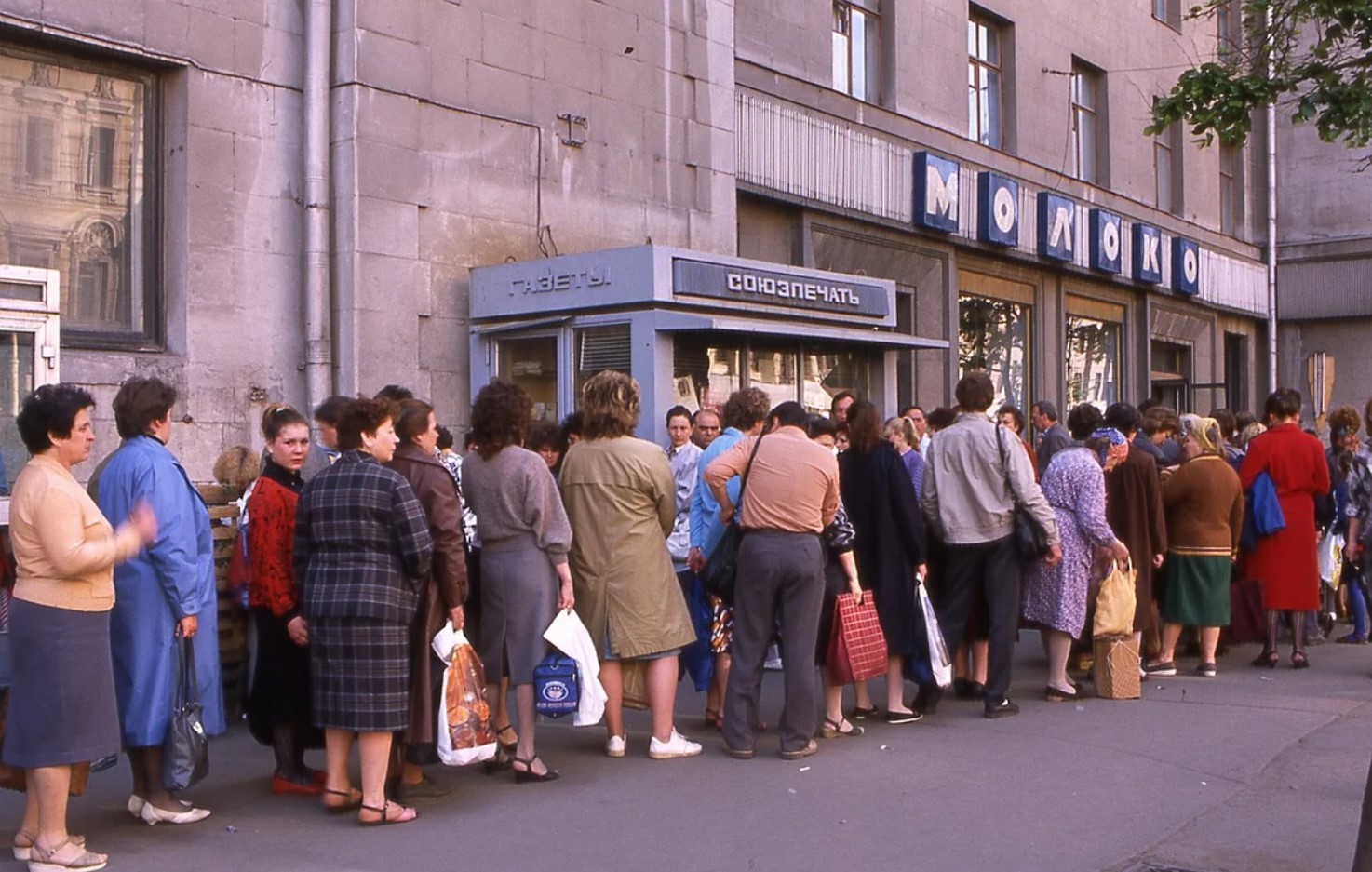
Command-administrative system — “an economic system based on state ownership, centralized planning, resource allocation, state-fixed prices, and significant state regulation of economic processes”11. Here we described why a planned economy is understood specifically as centralized planning, that is, a command-administrative system. Thus, it is impossible to be a supporter of both a planned economy and a mixed economy simultaneously, as one excludes the other.
Why do we not include, for example, anarchist systems based on collective ownership of the means of production in the list of economic systems? The fact is that, as we designated above, an economic system mainly reflects the mechanism and forms of ties between producers and consumers, that is, the distribution of goods, and in this regard, there are only three main economic systems. Thus, an economy based on collective ownership, but using market mechanisms for the distribution of goods, will refer to market-based systems (to the free-market economy or the mixed economy). Forms of ownership, meanwhile, are an issue that should be considered separately.
Social democrats advocate for a mixed economy system — we have already examined the drawbacks of a planned economy and a free market in detail.
Socio-economic formations
The concept of socio-economic formations was introduced by the philosopher and economist Karl Marx, who distinguished between “the Asiatic, ancient, feudal, and modern bourgeois modes of production”12 and designated them as “progressive epochs in the economic formation of society”13. However, as the New Philosophical Dictionary notes, Marx did not formulate a complete theory of socio-economic formations; Vladimir Lenin identified it with the mode of production and reduced it to a system of production relations14. And socio-economic formations are primarily connected with forms of property, and secondly with methods of distributing goods. The canonization of the concept of formations in the form of the so-called “five-member scheme” was carried out by Joseph Stalin in the “Short Course of the History of the Communist Party of the Soviet Union (Bolsheviks)”. The New Philosophical Dictionary also notes:
As a result of turning Marx’s hypothesis into an infallible dogma in Soviet social science, formational reductionism was established, i.e., the reduction of the entire diversity of the human world solely to formational characteristics, which was expressed in the absolutization of the role of the general in history, the analysis of all social ties along the lines of the base–superstructure, and the ignoring of the human element in history and the free choice of people. In its established form, the concept of the S.E.F. (socio-economic formation), together with the idea of linear progress that gave birth to it, already belongs to the history of social thought. However, overcoming formational dogmatics does not mean refusing to pose and solve questions of social typology. Types of society and its nature, depending on the tasks being solved, can be distinguished by various criteria, including the socio-economic one. It is important, however, to remember the high degree of abstraction of such theoretical constructs, their schematic nature, the inadmissibility of their ontologization, direct identification with reality, as well as their use for building social forecasts and developing concrete political tactics. If this is not taken into account, the result, as experience shows, is social deformations and catastrophes15.
Under the influence of Marx’s concepts and as a result of their development, several notions characterizing socio-economic relations were formed, including concepts such as capitalism, socialism, and communism. These are the concepts we should examine in more detail.
Capitalism — according to the definition of the Great Russian Encyclopedia, it is a “socio-economic system characterized by the dominance of private property, a free market, and competition as the main mechanisms for resource allocation and coordination of economic activity, the hiring of labor on the basis of its purchase and sale, and profit as the driving motive and goal of production. Capitalism is a self-developing system containing internal incentives and impulses for self-transformation and transformation”16. According to the definition from Britannica, it is “also called free-market economy or free-enterprise economy, economic system dominant in the Western world since the breakup of feudalism, in which most means of production are privately owned and production, prices, and incomes are determined by markets”17. According to the Merriam-Webster dictionary, it is an “economic system characterized by private or corporate ownership of capital goods, by investments that are determined by private decision, and by prices, production, and the distribution of goods that are determined mainly by competition in a free market”18. As we can see, all dictionaries equate capitalism with the free market. However, the authors of Britannica for some reason believe that this system dominates the Western world, although the economy of a significant number of countries in the Western world is based not on a free market, but on the principles of a mixed economy. Thus, we can see that today, according to generally accepted definitions of capitalism and the free market, many countries are no longer living under conditions of capitalism. Difficulties in using this term are created by communist propaganda, which seeks to declare all countries where the “correct” communist party does not rule as capitalist. We wrote about this in a separate material.
It is interesting that some researchers — for example, the famous historian, director of the French Center for Historical Research, and one of the founders of world-systems theory, Fernand Braudel — believe that capitalism (in the sense that we defined it, that is, a free market) comes into conflict with the market economy, as it tends to monopolize exchange, control and regulate it in its own interests19.
Socialism — in the interpretation of the Great Russian Encyclopedia, it is a “socio-economic system based on the principle of universal equality and social justice; in Marxism — the first phase of the communist socio-economic formation”20. Most likely, “universal equality” here refers to equality in rights, not in social status, otherwise there would not be a qualification about “social justice”, which does not mean social equality. According to the Ozhegov dictionary, it is a “social order in which the basis of production relations is public ownership of the means of production and the principles of social justice, freedom, and equality are proclaimed”21. Britannica defines socialism as a social and economic doctrine that calls for public ownership or control of property and natural resources22. This concept is much better analyzed in the Merriam-Webster dictionary, where several definitions are given:
1: Any of various economic and political theories advocating collective or governmental ownership and administration of the means of production and distribution of goods.
2a: A system or condition of society in which there is no private property.
2b: A system or condition of society in which the means of production are owned and controlled by the state.
3: A stage of society in Marxist theory transitional between capitalism and communism and distinguished by unequal distribution of goods and pay apportioned according to the work done23.
In general, summarizing the definitions provided above, we can say that socialism is most often understood as a socio-economic system based on collective or state ownership. The confusion in existing perceptions is related to the fact that socialism is considered a system without private property, yet some theorists of socialism believe that under this system collective ownership will prevail (which by definition refers to private property, which we examined here). Accepting the definition we have provided allows avoiding such confusion.
Communism — “a general term for various versions of an ideal social order, characterized by social equality, the absence of private property, and, in most cases, the absence of the state”24 (Great Russian Encyclopedia). If one is to believe Joseph Stalin, one of the characteristics of a communist society is the absence of social classes and state power25. But today, this concept is broader, and it often refers to meanings fully listed in the Merriam-Webster dictionary:
1a: A system of social organization in which goods are available to each as needed;
1b: A theory advocating the elimination of private property.
2a: A doctrine based on revolutionary Marxist socialism and Marxism-Leninism which was the official ideology of the U.S.S.R.;
2b: A totalitarian system of government in which a single authoritarian party controls state-owned means of production;
2c: A final stage of society in Marxist theory in which the state has withered away and economic goods are distributed equitably;
2d: Any of the regimes with the rule of communist parties26.
Conclusion
We see, therefore, that modern states with a mixed economy do not fall under the Marxist division of “capitalism-socialism-communism”, and the definitions of socialism and communism have become blurred and polysemous over time. There is also a constant problem with the interpretation of terms. It would be much easier if the founders of the doctrine themselves had left clear definitions such as “socialism is…”, but they did not do so. The result of this has been a huge number of irresolvable discussions about the nature of the socio-economic system of the USSR and other countries under the leadership of communist parties. Perhaps this has become one of the reasons that, as the authors of the Great Russian Encyclopedia note, “from the mid-20th century, socialism in the West acquired an increasingly pronounced reformist character; the very concept of ‘socialism’ began to fall out of use in the parties of the Socialist International. It was replaced by the concept of ‘social democracy'”27.
Therefore, progressive social democrats for the most part do not use the theory of formations (advocating for the non-linearity and polyvariance of the historical process; we examined this issue in more detail here), do not call themselves socialists, and do not declare socialism their goal, in order to distance themselves from movements advocating for state ownership of the means of production (we examined the issue of social democrats’ attitude toward forms of ownership in the article on private property, which we linked to above), which leads to the dictatorship of the nomenklatura. The complexity of the historical process is confirmed by the opinions of major economists — for example, Daron Acemoglu and James Robinson, who argue that “when we look back at the past, it seems to us that many historical events were inevitable, but in reality, the path of history is not predetermined”28. The term “capitalism” is used today as a shorter synonym for the concept of a “free market” (in accordance with generally accepted meanings), that is, when using such terminology, social democrats can be classified as anti-capitalist movements. However, the communists’ desire to monopolize the interpretation of this term today complicates the possibilities for its use. Social democrats, on the whole, prefer to operate with the names of economic systems rather than formations — as we saw above, this is more scientifically justified. The goal of social democrats is the most complete realization of progressive values through state policy in the field of democratic reforms and a mixed economy (we examined the basic principles of social-democratic economy here).
- Dictionary of economic terms: for students of the faculty of pre-university training for foreign citizens / N.N. Borisevich [et al.]; under the general editorship of T.S. Silyuk; Brest State University named after A.S. Pushkin. – 28 p. – Brest: BrSU, 2014. – p. 11.
- B.A. Raizberg. Dictionary of modern economic terms / B.A. Raizberg, L.Sh. Lozovsky. 4th ed. – 480 p. – Moscow: Iris-press, 2008. – pp. 437-438.
- Economic system // Cambridge Dictionary (dictionary.cambridge.org). [Electronic resource]. URL: https://dictionary.cambridge.org/dictionary/english/economic-system (accessed: 17.06.2020).
- Peter J. Boettke, Robert L. Heilbroner. Economic system // Encyclopaedia Britannica (www.britannica.com). [Electronic resource]. URL: https://www.britannica.com/topic/economic-system (accessed: 17.06.2020).
- Dictionary of economic terms: for students of the faculty of pre-university training for foreign citizens / N.N. Borisevich [et al.]; under the general editorship of T.S. Silyuk; Brest State University named after A.S. Pushkin. – 28 p. – Brest: BrSU, 2014. – p. 11.
- Business. Explanatory dictionary. — Moscow: “INFRA-M”, “Ves Mir” Publishing House. Graham Betts, Barry Brindley, S. Williams, et al. General editorship: Doctor of Economics I.M. Osadchaya. 1998
- Yaron Brook. Free market // PostNauka (postnauka.ru). February 8, 2017. [Electronic resource]. URL: https://postnauka.ru/faq/72340 (accessed: 17.06.2020).
- Marc Orlitzky. Free market // Encyclopaedia Britannica (www.britannica.com). [Electronic resource]. URL: https://www.britannica.com/topic/free-market (accessed: 17.06.2020).
- Dictionary of economic terms: for students of the faculty of pre-university training for foreign citizens / N.N. Borisevich [et al.]; under the general editorship of T.S. Silyuk; Brest State University named after A.S. Pushkin. – 28 p. – Brest: BrSU, 2014. – p. 11.
- A.G. Zeldner. Mixed economy // Great Russian Encyclopedia. Volume 30. Moscow, 2015, p. 478. [Electronic resource]. URL: https://bigenc.ru/economics/text/3839401 (accessed: 17.06.2020).
- Dictionary of economic terms: for students of the faculty of pre-university training for foreign citizens / N.N. Borisevich [et al.]; under the general editorship of T.S. Silyuk; Brest State University named after A.S. Pushkin. – 28 p. – Brest: BrSU, 2014. – p. 11.
- K. Marx, F. Engels. Collected Works. Second Edition. Volume 13. – 771 p. – Moscow: State Publishing House of Political Literature, 1959. – p. 7.
- Ibid.
- New Philosophical Dictionary / Comp. A.A. Gritsanov. – 896 p. – Minsk: V.M. Skakun Publishing, 1998. – pp. 482-483.
- Ibid.
- S.A. Khavina. Capitalism // Great Russian Encyclopedia. Volume 13. Moscow, 2009, p. 21. [Electronic resource]. URL: https://bigenc.ru/economics/text/2043060 (accessed: 17.06.2020).
- G.D. Gloveli, A.B. Gofman. Marx // Great Russian Encyclopedia. Volume 19. Moscow, 2011, pp. 167-171. [Electronic resource]. URL: https://bigenc.ru/philosophy/text/2187272 (accessed: 17.06.2020).
- Capitalism // Dictionary by Merriam-Webster (www.merriam-webster.com). [Electronic resource]. URL: https://www.merriam-webster.com/dictionary/capitalism (accessed: 17.06.2020).
- V.V. Cheshev. F. Braudel on the History of Capitalism // Ideas and Ideals, 2014. – No. 3 (21), vol. 1. – p. 24.
- Socialism // Great Russian Encyclopedia. Volume 30. Moscow, 2015, pp. 749-750. [Electronic resource]. URL: https://bigenc.ru/world_history/text/3638996 (accessed: 17.06.2020).
- S.I. Ozhegov, N.Yu. Shvedova. Explanatory Dictionary of the Russian Language: 80,000 words and phraseological expressions / Russian Academy of Sciences. Institute of the Russian Language named after V.V. Vinogradov. – 4th ed., supplemented. – 944 p. – Moscow: OOO “A TEMP”, 2006. – p. 752.
- Terence Ball, Richard Dagger. Socialism // Encyclopaedia Britannica (www.britannica.com). [Electronic resource]. URL: https://www.britannica.com/topic/socialism (accessed: 17.06.2020).
- Socialism // Dictionary by Merriam-Webster (www.merriam-webster.com). [Electronic resource]. URL: https://www.merriam-webster.com/dictionary/socialism (accessed: 17.06.2020).
- S.N. Zemlyanoy. Communism // Great Russian Encyclopedia. Volume 14. Moscow, 2009, p. 654. [Electronic resource]. URL: https://bigenc.ru/philosophy/text/2085586 (accessed: 17.06.2020).
- I.V. Stalin. Works. Volume 10. 1927 (August-December). – 399 p. – Moscow: State Publishing House of Political Literature, 1949. – p. 134.
- Communism // Dictionary by Merriam-Webster (www.merriam-webster.com). [Electronic resource]. URL: https://www.merriam-webster.com/dictionary/communism (accessed: 17.06.2020).
- Socialism // Great Russian Encyclopedia. Volume 30. Moscow, 2015, pp. 749-750. [Electronic resource]. URL: https://bigenc.ru/world_history/text/3638996 (accessed: 17.06.2020).
- Daron Acemoglu. Why Nations Fail: The Origins of Power, Prosperity, and Poverty / Daron Acemoglu, James A. Robinson; trans. from English by D. Litvinov, P. Mironov, S. Sanovich. – 693 p. – Moscow: AST Publishing House, 2019. – pp. 444-445.