
Why some countries are rich and others poor
Before we examine the methods through which progressive social democrats intend to develop the economy, it will be useful to study one of the most prominent theories of development economics – institutional theory. We will do this based on perhaps the most famous and popular work on the subject – "Why Nations Fail: The Origins of Power, Prosperity, and Poverty" by Daron Acemoglu and James Robinson.
How can economic growth and competitiveness be ensured to improve the material well-being of citizens and, as a consequence, their standard of living? To answer this question, one must first understand how and through what means those countries whose economies are growing manage to secure this growth. We have already analyzed in separate articles why neither geographical conditions nor so-called neo-colonialism can prevent the building of a prosperous society. We have also analyzed why racial theory is untenable, and why the abolition of private property does not help to raise the standard of living. But since the abolition of private property does not help (which invalidates the core foundation of a theory like Marxism), and prosperity is possible even for present-day Russia, social democrats need answers to the questions: why are some countries destitute, why is there such a large gap in wealth between nations, and why is there such a large wealth gap between elites and society, sometimes even in relatively prosperous countries? And most importantly – how to achieve prosperity in one’s own country?
Daron Acemoglu, the world’s most cited economist as of April 20201, along with the former Harvard Professor of Government, James Alan Robinson, believe that the main cause of countries’ poverty is that their political and economic elites build institutions aimed at preserving their own power and capital, which leads to the robbery of the people, stripping them of important political rights and incentives for development, and ultimately manifests as the impoverishment of the entire nation. In their study on why nations are rich or poor, they put forward several key tenets of institutional theory, which we will now begin by examining.
Contents
- Institutional theory in the interpretation of Acemoglu and Robinson
- Extractive institutions
- Inclusive institutions
- Examples of the operation of extractive institutions
- Examples of the operation of inclusive institutions
- How inclusive institutions are formed
- Is everything determined by economics?
- What can be added
- Conclusions
Institutional theory in the interpretation of Acemoglu and Robinson
The concept of “institutionalism” includes two aspects: “institutions” as norms and customs of behavior in society, and “institutes” as the consolidation of these norms and customs in the form of laws, organizations, and establishments. Institutes are the forms and boundaries of human activity. They manifest as political organizations, forms of enterprise, and systems of credit institutions. These include tax and financial legislation, the organization of economic support, and much more related to economic practice2. Institutionalists consider spiritual, moral, legal, and other factors examined in a historical context to be the driving force of the economy alongside material factors. In other words, institutionalism brings forward both economic and non-economic problems of socio-economic development as the subject of its analysis3.
Institutions can vary. Taking the concept of social institutions as an example, Mikhail Glotov, Doctor of Sociological Sciences, notes that “the range of phenomena and processes that sociologists denote by the concept of ‘social institution’ is quite wide”4. To understand what this includes, one should look at his article “Social Institute: Definition, Structure, Classification”, but for our purposes here, it is sufficient to cite the definition he arrives at by the end of his study: “by a social institution one should understand the forms of organization of people’s social life established in the process of historical development for the purpose of regulating their social actions and social ties”5. In their work, Acemoglu and Robinson generally use “institutions” to refer to a wider spectrum of institutions, including not only social but also, for instance, legal institutions; that is, under the term “institutions” we can understand a set of methods for creating, forming, and functioning organizations and establishments, as well as a set of prevailing traditions, practices, values, and laws in society:
No two societies have the same institutions; they have different traditions and different property rights, right down to how the carcass of a killed animal or booty taken from neighbors should be shared. Some recognize the authority of elders, some do not; some achieve a degree of political centralization early, some do not. Broadly similar economic and political conflicts are resolved differently in different societies depending on historical context, the role of individuals, and just coincidence.
These differences are small to begin with, but they cumulate. Just as genes in two isolated populations of organisms will drift apart over time because of genetic drift, the accumulation of random genetic mutations, two initially similar societies will also drift apart institutionally. Although “institutional drift”, like genetic drift, has no predetermined direction and does not even have to be cumulative, when it goes on for centuries, it can lead to distinct, sometimes radical differences. The differences created by institutional drift then matter for how society responds to political and economic challenges. It is at these critical junctures that small differences matter6.
The authors of “Why Nations Fail” divide institutions into political and economic ones, as well as into extractive and inclusive ones. Economic institutions, in their understanding, are primarily related to matters of production and property, while political ones are related to the functioning of power. However, we are most interested in the division into extractive and inclusive institutions, since they constitute the central thesis of their theory regarding the poverty and wealth of nations. When looking at examples of these, we will not divide them into political extractive and economic extractive, since some institutions, such as the rule of law, influence both the politics and the economy of a country to an equal degree. We should also note right away that such institutions operate much better as a complex, and some cannot function at all unless a portion of the others is fulfilled.
It also needs to be emphasized that the foundation for the formation of both types of institutions is a centralized state. Even a state with extractive institutions, if it is centralized, usually proves to be more efficient than states without a central authority: “a sufficiently centralized and powerful state is also critical. This is vividly illustrated by the comparison with an East African nation like Somalia… political power in Somalia has long been fractured among different factions. In the absence of any player strong enough to control the others and decide what they can and cannot do, society is divided between irreconcilable clans, and none can emerge as a dominant force. The power of each clan is limited only by the strength of another”7. Without centralization, the state cannot fulfill its function of maintaining law and order, let alone providing public goods and supporting and regulating economic activity8. Put simply, the state must be strong enough to suppress any individual force that violates the rules established for everyone (we have also explained the necessity of the state for social progress in a separate article). At the same time, however, there must also be forces that, acting in concert, could suppress the state if necessary, which we will examine further.
In addition to Somalia, the authors of “Why Nations Fail” also cite examples of the Maya civilization, where the lack of a centralized state led to an outbreak of clan wars and the demise of the civilization, Afghanistan, and two neighboring ethnic groups in the DR Congo – the Lele and the Bushong, where the former live much poorer than the latter. Crucially, the only difference between them lay in the centralization of the tribes, through which it was possible to ensure the enforcement of law and order.
Extractive institutions
Extractive institutions, as defined by Acemoglu and Robinson, are designed to extract incomes and wealth from one subset of society to satisfy the enrichment of a different subset9. We can add that they are also aimed at the formation and protection of a society’s elite. In any society, processes occur through which a layer of managers is formed (in the article containing a critique of direct democracy, we explained that due to differences in human interests, not everyone can participate in governance all at once). It may be in the interests of these managers to use their position, on the one hand, to extract benefits (in the series of articles on the nomenclature, you could read that even the communists could not resist this temptation), and on the other, to retain this position. For these purposes, a system of extractive institutions is constructed. For example, Egypt is poor precisely for the reason that it “has been ruled by a narrow elite who have organized society for their own benefit at the expense of the vast mass of people”10; furthermore, this explanation of the causes of poverty is universal and can be applied to any poor country.
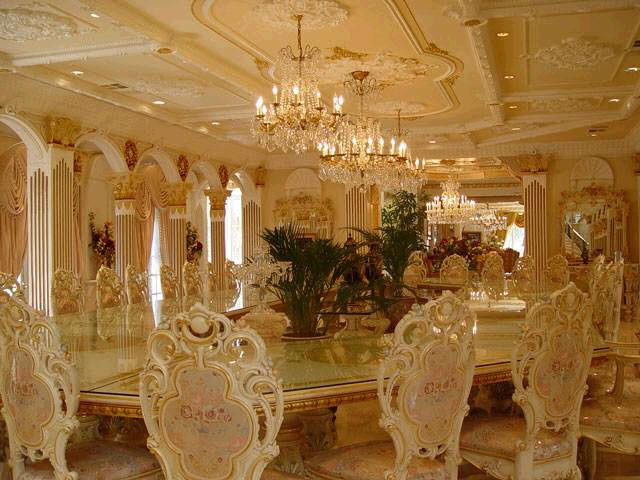
Such an elite can be formed either politically or economically. In the first case, these are representatives of authority (the embryo of the nomenclature) who attempt to build extractive political institutions to concentrate political power in their hands (an authoritarian regime), after which they attempt to concentrate economic power as well, usually through institutions such as the expropriation of property. In the second case, these are representatives of the largest capital who attempt to build extractive economic institutions, such as fighting anti-monopoly legislation, to concentrate economic power in their hands, and subsequently political power as well, usually through institutions such as bribing politicians or promoting political forces under their control. At the same time, Acemoglu and Robinson note that both political and financial elites are interested in mutual support, but political elites play a more significant role in the formation of extractive institutions:
From the point of view of those who control political power, there is no necessity to introduce more beneficial institutions for economic growth or the welfare of citizens if the current institutions serve the interests of the power holders much better. The powerful and the rest of society often disagree on which institutions should remain and which should be changed. Carlos Slim would not be happy if all his political connections suddenly evaporated and the barriers to entry protecting his businesses disappeared — no matter if the entry of new businesses would enrich millions of Mexicans.
Because there is no such consensus, it is the political elites (i.e., those who hold power) who determine the rules under which society will live (and how the elites can dispose of this power). Carlos Slim has the power to get what he wants. Bill Gates’s power is much more limited. This is why our theory is not just an economic theory but a political theory11.
The result of the operation of extractive institutions is the enrichment of elites and their preservation. For example, the Guatemalan sociologist Marta Casaús Arzú identified 22 Guatemalan families tied by marriage to another 26 families outside the core group. Her genealogical and political science study showed that these very families have controlled the economic and political life of Guatemala since 1531. Even under the broadest interpretation of which families belong to the elite, the total number of these families does not exceed 1% of the country’s population (data from the 1990s)12. Let us look at examples of extractive institutions that allow for the creation of such elites.
Irreplaceability of power. This can manifest in the establishment of a dictatorship, absolutism, managed democracy, and other forms of authoritarian regimes. The fact is that when political power is replaceable, the next administration can punish the previous one. To secure themselves from this and to have the opportunity to engage in the unpunished seizure of property, the irreplaceability of power is established beforehand.
Oprichnina. To protect their power and help establish its irreplaceability, a reorganization of the political police is usually carried out for these tasks, so they can eliminate political competitors, carry out repressions, and suppress opposition demonstrations. This has already happened in history with the Roman Praetorians and Agentes in rebus13, the oprichniks, the NKVD, the Gestapo, the Securitate, and so on.
Lawlessness. One of the most important tools of the elites is providing a judicial and legal system in which laws are largely not enforced in practice, or which contributes to legislative norms being applied differently to different social groups. This allows the elites to carry out the seizure of property, remain unpunished in conflicts with the population (for instance, if an official’s car strikes and kills a person, the lack of guarantees of law enforcement can guarantee that he avoids punishment), falsify elections, and perform other actions aimed at strengthening personal power and property ownership.
Expropriations of property. When property is not protected by guarantees of the rule of law, the elite will use various types of expropriations, be it raider takeovers or the appropriation of property under the guise of nationalization. In this manner, it is possible to concentrate not only political but also economic power in one’s hands.
Monopolization. When an enterprise has no competitors or they are placed in a position where it is impossible to create a competing product, this guarantees stable profits for such an enterprise and creates new opportunities to expand these profits. Monopolization allows big capital not only to increase the siphoning of money from the population but also turns it into a serious political force. Examples of capitalist monopolies include Standard Oil, Google, and Microsoft (the issues regarding their formation were examined here). However, it is also beneficial for the nomenclature and other power structures to create monopolies for the same purposes. Examples of such monopolies are Gazprom, the East India Company, and the wine monopoly in the Russian Empire.
Inequality. It is beneficial for the elites to create oppressed layers of society for several purposes — to create cheap labor (and lower the cost of the remaining labor force), to create the image of an internal enemy (who can be blamed for one’s own failures), to use as a financial reserve (which can be “dekulakized” in a difficult economic situation), and so forth.
Binding workers to their place of work. This practice allows not only to prevent the emergence of new contenders for a place in the elite but also to make labor cheaper by reducing competition in this area, and to strengthen control over it for easier suppression of protests, and so on.
Naturally, this is only a fraction of a massive system of extractive institutions. For example, the lack of practice in raising workers’ wages as company revenues grow is also an extractive institution, because in such a case, the owner or the person authorized by him who distributes revenues values his own labor in organizing production above its real worth. Even a small bill can set another extractive institution into motion.
Inclusive institutions
Institutions called inclusive are aimed at enriching all citizens as a whole. Since they weakly express the interests of elites, they are implemented in most cases under pressure from grassroots organizations that clearly know their interests and values and put forward demands that facilitate their realization. Inclusive institutions not only limit the opportunities of elites to build extractive institutions, but also break their will to do so. Acemoglu and Robinson write:
Inclusive economic institutions that enforce property rights, create a level playing field, and encourage investments in new technologies and skills are more conducive to economic growth than extractive economic institutions that are structured to extract resources from the many by the few… Inclusive economic institutions foster economic activity, productivity growth, and economic prosperity. Secure private property rights are central, since only those with such rights will be willing to invest and increase productivity. A businessman who expects his output to be stolen, expropriated, or taxed away by a pitiless government will have little incentive to work, let alone any incentive to undertake investments and innovation. But these rights must be inclusive and extend to the great majority of people in society14.
The authors believe that “countries such as Great Britain and the United States became rich because their citizens overthrew the elites who controlled power and created a society where political rights were much more broadly distributed, where the government was accountable and responsive to citizens, and where the great mass of people could take advantage of economic opportunities”15. Let us consider examples of inclusive institutions that contribute to such a scenario.
Collective authorities. Usually, parliamentary republics (or even parliamentary monarchies) are much more democratic than those ruled by a dictator or an absolute monarch (or a president with a wide range of powers), and this is no coincidence. We analyzed in the article on political systems why parliamentary democracies are the most prosperous states (we also have material proving that democracy is more effective than authoritarianism). In collective authorities, it is more difficult to introduce and pass a decision that is unfavorable to society, as there is a risk of being expelled from this body, a risk of debates arising, a risk of making the incident public, and so on. Therefore, collective authorities are an inclusive institution.
Irreplaceability of power. We examined in detail in a separate article why the changeability of power is a vital condition for democracy, and why it increases the efficiency of authority.
Strong opposition. It is much more difficult to build extractive institutions if there is a strong opposition ready to mobilize society to fight against the construction of extractive institutions, creating political competition that increases the efficiency of power.
Freedom of the media. When freedom of the media is guaranteed, journalists act as “cleaners” (or, as they are also commonly called, “muckrakers”16) who investigate and expose the crimes of those who build extractive institutions – both politicians and big business. Making incidents public allows for the cleaning out of unscrupulous representatives of the elites, exerting pressure on them, identifying weak points in the system, and working toward their correction.
Strong grassroots democratic organizations. These are independent trade unions, human rights organizations, non-profit organizations, and so forth. Such organizations often form and promote the initiatives that best reflect the interests of the majority of citizens and hit the elites the hardest. It is possible that our project for a system of professional councils will help take a new step toward an even greater inclusiveness of institutions.
Rule of law. In other words – the principle according to which legislative norms must be applied in the same manner to all citizens. Where a constitutional state is built and there are guarantees of law enforcement, it is much harder for elites to evade responsibility for crimes and for attempts to build extractive institutions. It is in the interest of society to have protection against the arbitrariness of elites, which is provided precisely by the rule of law and the guarantee that the law applies equally to everyone. We analyzed this issue in more detail here.
Protection of property rights. In a separate article (the link to it was above), we have already analyzed why it is in the interest of the majority of citizens to have guarantees for the protection of property.
Ensuring economic competition. The fight against big capital and monopolies allows for a multitude of producers and service providers, ensuring the level of competition between them necessary to improve product quality. This includes such an inclusive institution as anti-monopoly legislation, for example.
Equality. By providing equal access to education and work, this institution opens a path to the top for effective personnel who might have been cut off from the economy under discrimination based on any characteristics. Ultimately, these personnel make a significant contribution to the growth of society’s well-being. The right to a free choice of profession can also be included here.
This is also only a part of the inclusive institutions that trigger mechanisms for economic growth and the well-being of the population. And these institutions are just the foundation on the basis of which other institutions are created:
Inclusive economic institutions also pave the way for two other engines of prosperity: technology and education. Sustained economic growth is almost always accompanied by technological improvements that enable people, land, and existing capital (buildings, existing machines, and so on) to become more productive… Intimately linked to technology are education, skills, competencies, and know-how of the workforce, which are acquired in schools, at home, and on the job… The level of technology in an economy depends on science and entrepreneurs such as Thomas Edison, who apply science to create profitable businesses. The process of innovation is enabled by economic institutions that encourage private property rights, enforce contracts, create a level playing field, and encourage and allow the entry of new businesses that can bring new technologies to life17.
Let us now consider how inclusive and extractive institutions work in practice. We will examine the main stages of their formation and establishment in detail using the examples of the Roman Empire (for extractive institutions) and England (for inclusive ones); other examples you will be able to study in the book.
Examples of the operation of extractive institutions
Acemoglu and Robinson note that “the seeds of the future fall of Rome were planted at the very moment of transition from Republic to Principate, and subsequently to Empire”18. Indeed, while republican Rome emerged as the victor over Carthage19, the Roman Empire was defeated by barbarian tribes20. This is no coincidence – the reasons lie in the principles of institutional formation. We must first describe the rise of Rome, which was linked to inclusive institutions, in order to better understand the effect of extractive ones later.
The institutions of the Roman Republic could be called inclusive by the standards of their time. In 510 BC, citizens overthrew the last Roman king (Tarquin the Proud), after which a system was formed in which the city was governed by magistrates (officials) who were re-elected annually. There was, of course, a division into patricians and plebeians; however, the latter had their own body of self-government – the Plebeian Assembly, which elected a tribune (a representative of the plebs) who possessed the right of veto over the decisions of the magistrates, as well as the right of legislative initiative:
The plebeians won these rights by seceding — going on strike. They walked out of the city, refused to cooperate with the patrician magistrates, and stayed out until their demands were met, a threat that was particularly potent when there was a war underway. It was during one of these secessions, in the fifth century BC, that the plebeians won the right to elect their own tribunes and to pass laws regulating the plebs. These political and legal guarantees, though limited by our current standards, created economic opportunities for the citizens and introduced a degree of inclusiveness into the economic institutions. One consequence was a boom in Mediterranean trade during the Roman Republic. Archaeological evidence suggests that, while the living standard of most citizens of the Republic and of slaves was only slightly above subsistence, many Romans, including some ordinary citizens, had substantial incomes and access to public amenities, such as municipal sewage systems and street lighting21.
However, this system, which ensured the flourishing of Rome, began to falter after the military commander Julius Caesar crossed the Rubicon River with his legions in 49 BC, and then with renewed force when Octavian Augustus became the first Roman emperor. As the authors of “Why Nations Fail” note:
The old republican regime, privileged though the senators and wealthy Romans were, was not absolutist and did not allow the concentration of all power in one hand. The changes initiated by Augustus, as with the Serrata in Venice more than a millennium later, were political, but they had major economic consequences. The outcome of this process of change was that by the fifth century, the Western Roman Empire was weak economically and militarily, and on the brink of collapse22.
<…>
The fall of Rome can be traced back to the time when Augustus concentrated power in his single hand, leading political institutions to drift slowly toward extractiveness. For instance, the military changed in structure. The abolition of the secession deprived society of its most important tool, which had previously ensured political representation for ordinary Romans. Emperor Tiberius, who succeeded Augustus in AD 14, abolished the Plebeian Assembly and transferred its functions to the Senate… Following the reforms of Augustus, emperors began to rely not on a citizen army but on the Praetorian Guard, a group of privileged professional soldiers created by the Princeps. Over time, the Guard became a completely independent player on the political field, and the Praetorians decided more than once who would become the next emperor. This issue was often resolved not peacefully, but through conspiracies, coups, and civil wars. Augustus took measures to strengthen the patrician aristocracy against ordinary citizens, and the inequality that had once led to Tiberius Gracchus’s conflict with the patricians grew and intensified.
The concentration of power in single hands led to a reduction in the security of property rights for ordinary Romans. As the empire grew, the area of public lands also increased (as a result of confiscations), making up more than half of the total territory in many regions23.
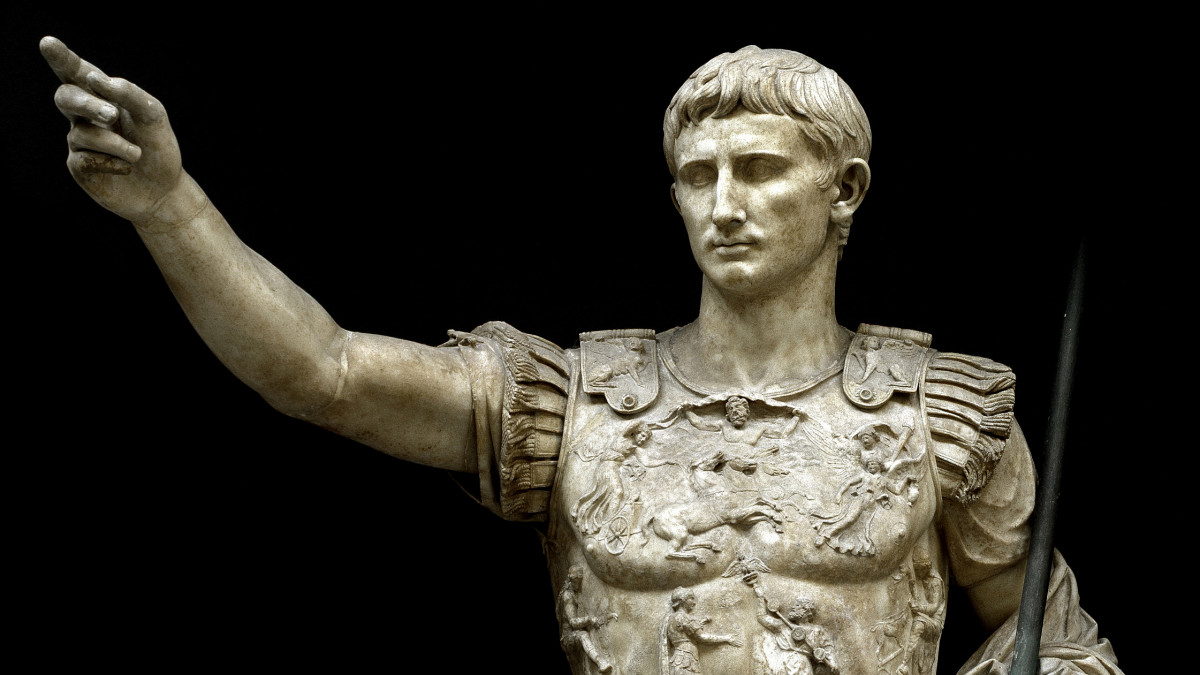
As we can see, the concentration of power and the absence of opportunities to attain power democratically also led to civil wars between ruling factions.
With political instability came other changes that made economic institutions even more extractive. Though Roman citizenship was granted to almost all free inhabitants of the empire in AD 212, the status of citizen had been transformed. Any theoretical notion that citizens were equal under the law had vanished. For example, during the reign of Emperor Hadrian (AD 117–138), legal rules were explicitly varied by category of citizen. The role of the citizen was fundamentally altered from what it had been in the Republic. Citizens could no longer use popular assemblies to influence political or economic decisions.
Slavery also remained, though historians disagree on whether the proportion of slaves actually declined or rose over the centuries. Equally important was that as the empire developed, more and more formerly free peasants became bound to the soil as tenant farmers, coloni. The status of coloni was heavily debated in later legal documents, such as the Theodosian and Justinian codes, but the inception of binding peasants to the soil seems to have occurred under Emperor Diocletian (AD 284–305). The rights of a landlord over his coloni became increasingly extensive. Emperor Constantine in AD 332 allowed a landlord to chain a colonus whom he suspected of planning an escape, and from AD 365, coloni were forbidden to sell their own property without their master’s permission.
<…>
The Romans inherited literacy, basic technology, iron tools and weapons, and some agricultural and construction skills. In the early days of the Republic, they invented concrete, the force pump, and the water wheel. But during the Empire, technological change stanchly declined. For example, there was no innovation in shipping; they failed to invent the sternpost rudder, and ships were still steered by a steering oar. The diffusion of the water wheel was slow, and it never revolutionized the Roman economy. Even great achievements like aqueducts and municipal sewage systems relied on older technology perfected by the Romans24.
The authors also cite examples of a glassmaker who invented unbreakable glass and was ordered to be beheaded because the emperor feared that the introduction of this technology would devalue gold. Or how another inventor proposed a technology that significantly eased the hoisting of columns onto the Capitoline Hill, which required the labor of thousands of men, but the emperor chose not to implement it, justifying it with the words “let me feed my poor people”. As for the operating principles of the Praetorians, we could see an approximate model of them in Ridley Scott’s famous film “Gladiator”.
We know the effect of extractive institutions well from the experience of the USSR. There, as we remember, Joseph Stalin also established sole power (with the help of his Praetorians from the NKVD), suppressed political opposition (similar to the secessions and the abolition of the popular assembly), strengthened the nomenclature and its privileges (by analogy with the Roman aristocracy), carried out expropriations and nationalization, planted lawlessness in the judicial system, and bound peasants to collective farms and workers to factories (as in the case of the coloni), while the planned economy (as we examined here) created problems for the promotion of innovation. The effect of this on the standard of living was also described by us.
Following similar principles, extractive institutions are created in other places as well. If we take the system of North Korea, we can see that private property is banned there, a command economy has been built in the country, there is no political pluralism, and the “Juche” ideology dominates. As a result, while the living standards of the residents of South Korea are on par with Portugal and Spain, the standard of living in the DPRK is comparable to that of sub-Saharan Africa, which is approximately ten times lower than in the South25.
Acemoglu and Robinson raise the question – why is Mexico, despite having a very advantageous geographical location, a poor country? Why, on the whole, are the countries of Latin and Central America so poor? The roots of this grow from the colonial practices of Spain and Portugal, which were based on such extractive institutions as the encomienda, the travajon, and the Potosí mita (the places where it operated remain noticeably poorer today than even their neighbors). The colonists cultivated high taxes, forced labor, and high prices for goods (the purchase of which was mandatory). However, after liberation from colonial rule, the new political elites did not engage in dismantling the extractive institutions but instead restructured them for their own benefit. As a result, investments in Mexico could only be made by the elite, and if we take the banking sector as an example, there was almost no competition between banks: they granted credit only at high interest rates, so that only representatives of the elite could obtain a loan, and the loop closed.
The authors provide other examples of the operation of extractive institutions – in Austria under Francis I of Habsburg, in the Kingdom of Kongo, Sierra Leone, in China under the Qing dynasty, in Ethiopia, in tsarist Russia, in modern Uzbekistan, and so forth.
Examples of the operation of inclusive institutions
We will take the model of England for our consideration. Here, inclusive institutions were formed over a long period of time. Just as elsewhere in Europe, there was quite ordinary feudalism here with all its inherent extractive institutions. A small change, which largely determined all subsequent development, was that in 1215, as a result of a conflict between the king and the feudal lords, the Magna Carta was adopted, limiting the king’s power by a council of barons26, from which parliament later grew. The critical juncture occurred after the plague pandemic, which peaked between 1346 and 1353, and after which, according to various estimates, up to 60% of the population of Europe died27. Under these conditions, the British elites attempted to reinforce extractive institutions by passing the Statute of Laborers in 1351, which stated:
Because a great part of the people, and especially of workmen and servants, late died of the pestilence, many seeing the necessity of masters, and scarcity of servants, will not serve unless they may receive excessive wages… we, considering the grievous incommodities, which of the lack especially of ploughmen and such labourers may hereafter come, have… ordained:
That every man and woman of our realm of England… shall be bounden to serve him which so shall require him; and take only the wages, livery, meed, or salary, which were accustomed to be given in the places where he oweth to serve, the twentieth year of our reign of the king that now is, or five or six other common years next before28.
It was also decided to punish moving from one lord to another with imprisonment. However, this scheme of the elites failed: a peasant revolt broke out in 138129, and the rebels, led by Wat Tyler, even managed to capture most of London. The revolt was suppressed and Tyler was killed; however, no further attempts to enforce the Statute of Laborers were made. Feudal dues were reduced, an inclusive labor market began to form in England, and consequently, the earnings of peasants began to grow. This created a base for the further development of inclusive institutions. In the XVII century, the struggle of English citizens for their rights became even more fierce, culminating in the Civil War of 1642–1651 and the Glorious Revolution of 1688.
The Glorious Revolution limited the power of the king and his ministers and transferred to Parliament the power to determine economic institutions. At the same time, it opened up the political system to a broad cross section of society, who were able to exert considerable influence on how the state was run. The Glorious Revolution was the foundation for creating a pluralistic society, and it induced a accelerated process of political centralization. It created the world’s first set of inclusive political institutions.
As a consequence, the economic institutions also started becoming more inclusive. Neither serfdom nor the rigid feudal restrictions of the Middle Ages existed in England by the start of the seventeenth century. Even so, there were many restrictions on economic activity. Both domestic and international trade were beset by monopolies. The king and his ministers arbitrarily levied taxes and manipulated the legal system. The archaic property rights system in land made investment risky, since land could seldom be sold.
All this changed after the Glorious Revolution. The government adopted a set of economic institutions that provided incentives for investment, trade, and innovation. It steadfastly enforced property rights, including patents granting property rights for ideas, which was highly significant for fostering innovation. It protected law and order. Unprecedentedly in English history, the application of English law extended to all citizens. Arbitrary taxation ceased, and almost all monopolies were abolished. The government actively promoted commerce, especially manufacturing and trade, not only by removing domestic barriers to entrepreneurs but also by placing the powerful English navy at their disposal. By clearly defining property rights for all assets, the government encouraged a rapid expansion of infrastructure, especially roads, canals, and later railways, which would become the key driver of the next phase of economic industrialization30.
The patent system led to the emergence in England of such inventors as James Watt, Richard Trevithick, Richard Arkwright, and many others, which led to the Industrial Revolution, the invention of the spinning frame, the steam locomotive, and so forth. Watt wrote to his father: “Dear Father, after a series of various and violent oppositions, I have at last got an Act of Parliament vesting the property of my new Fire Engine in me and my assigns, throughout Great Britain & the Plantations, for the next twenty-five years, which I hope will be very beneficial to me, as there is already a considerable demand for it”31. England became the first country capable of making a breakthrough and achieving sustained economic growth in the XVII century. Because English monarchs failed to monopolize trade with the Americas, it led to the emergence of wealthy merchants who played a key role in the revolutions.
In 1621, there were seven thousand monopolies in the country, but in 1623, parliament won a major victory and passed the Statute of Monopolies, which prohibited James I from establishing new monopolies within Britain. However, existing monopolies still remained in force, and the new king, Charles I, decided to launch an offensive to introduce extractive institutions, introducing the practice of forced loans and a multitude of new dues and taxes (including “ship money”); furthermore, the king attempted to destroy the independence of the judicial system. All this led to a civil war breaking out between the king and parliament in 1642. However, parliament’s victory in that war led to the dictatorship of Oliver Cromwell (although progressive measures were also taken – for instance, the abolition of domestic monopolies), and later the restoration of the monarchy took place.

In 1688, James II’s attempt to restore the absolute monarchy caused another crisis and another civil war, and this time parliament won again, but it already had a better understanding of its subsequent actions. The following year, the Bill of Rights was adopted32, which asserted that the monarch could not suspend or dispense with laws and that no tax was valid without parliamentary consent; the army could also only be raised with the consent of parliament. The petitioning of the king was permitted, the hearth tax and press censorship were abolished, and the Bank of England was opened (which widely issued loans to the population). At the same time, parliament expanded its capacity to collect taxes: thus, the number of excise officers grew from 1,211 people in 1690 to 4,800 in 178033.
This was how the system of inclusive institutions in England was formed, which provided the country with the highest economic growth in the world, the Industrial Revolution, and one of the highest standards of living at that time.
The United States developed along similar lines — initially, land ownership was granted to every male settler (due to the impossibility of exploiting the defiant local Indians, they had to develop agriculture through their own efforts), and in 1619, the General Assembly was established: every man could now participate in the drafting of laws and the governance of the colony. Americans also benefited from the English patent system (Acemoglu and Robinson detail how it became the foundation of US industrial growth; moreover, in the US, anyone could obtain a patent, which accelerated this growth even further), and had a large number of small banks that competed with one another and therefore provided loans at low interest rates to businessmen and inventors. Large banks here attempted to lend money to politicians in order to gain control over them, but due to the changeability of power, this idea failed34. The book “Why Nations Fail” examines why the emergence of inventors like Thomas Edison or Bill Gates became possible in the US. When the development of capitalism in the US led to the emergence of the so-called “robber barons”35 — monopolists and owners of large companies — the US government responded by fighting monopolies: passing the Interstate Commerce Act (1887) [Translator’s note: the text mentions 1890, but the Act was passed in 1887], creating the Interstate Commerce Commission (thus beginning the development of federal regulation in industry), passing the Sherman Antitrust Act, the Hepburn Act, and the Clayton Act, establishing the “Pujo Committee” and the Federal Reserve System, breaking up Northern Securities, and dissolving Standard Oil. This was largely driven by antitrust petitions sent to Congress by farmers’ organizations.
Journalists also played a significant role in the fight against monopolies — for example, Ida Tarbell, whose book “The History of the Standard Oil Company” largely led to the dissolution of that monopoly, or Louis Brandeis, who investigated a series of financial scandals in his book “Other People’s Money and How the Bankers Use It”. Acemoglu and Robinson also describe a situation where Franklin Roosevelt tried to limit the powers of the Supreme Court and alter its composition but met fierce resistance, and his initiative was rejected; meanwhile, in Argentina, which at the beginning of the twentieth century was one of the richest countries in the world, the Peronists succeeded in implementing similar measures, which became the basis for the establishment of Juan Perón’s dictatorship and the impoverishment of the country36.
Similar to the Roman story is the history of the development of Venice, which became one of the richest areas on the planet thanks to the limitation of the doges’ power, the creation of a parliament (the Great Council), the changeability of power, the so-called “commenda” (an investment system), and other inclusive institutions. As Acemoglu and Robinson note, the “commenda” led to massive economic growth and high social mobility: “in Venetian documents of the time, we see new names propping up again and again. In documents from 960, 971, and 982, the percentage of new names was 69 percent, 81 percent, and 65 percent, respectively”37. Later, through a series of clever initiatives, the elites gradually managed to make membership in the Great Council hereditary. The commenda was also banned, which led to the freezing of economic elites. The result was the subsequent degradation of Venice and its transformation from the economic capital of the world into a museum city.
In Japan during the mid-XIX century, during the Meiji Restoration, the lords created two legislative bodies — the Upper and Lower Houses, and the Tokugawa clan, which had previously ruled the country, was subjected to something akin to lustration — its domain was abolished and its lands confiscated. A civil war broke out, resulting in the complete defeat of the Tokugawa clan. This was followed by the abolition of the feudal system, the creation of centralized taxation, an elected parliament, an independent judiciary, the proclamation of equality before the law for all social groups, the right to private property, and the abolition of all restrictions on internal movement, trade, and the choice of profession. All these measures led to immense economic growth in Japan at the end of the XIX century. The authors of “Why Nations Fail” also describe the development of inclusive institutions in South Korea, Australia, revolutionary France, and so forth.
How inclusive institutions are formed
Acemoglu and Robinson emphasize: “while economic institutions are critical for determining whether a country is poor or prosperous, it is politics and political institutions that determine what economic institutions a country has”38. Furthermore:
People who suffer from the extractive economic institutions cannot look to the rulers to voluntarily change political institutions and redistribute power in society. The only way to change these political institutions is to force the elite to create more pluralistic institutions39.
Political institutions determine whether citizens can control politicians and influence the decisions they make. In other words, whether politicians will act (albeit with caveats) in the interests and on behalf of citizens, or whether they will be able to use the power entrusted to them by society (or even usurped by them) for their own enrichment and to pursue policies that benefit only themselves but are completely disadvantageous to voters.
How then are inclusive political institutions created? From the point of view of those who control political power, there is no necessity to introduce institutions that are more beneficial for economic growth or the welfare of citizens if the current institutions serve the interests of the power holders much better. Moreover, inclusive institutions are disadvantageous to the political and economic elite because their implementation threatens the loss of power and capital; consequently, they will strive to resist it in every possible way. Therefore, the creation of such institutions depends on the opposition (for example, strong political parties and trade unions) and on the emergence of “critical junctures” (such as the plague of 1346–1353).
British democracy was not given by the elite to the masses. It was taken by the masses, who were empowered by the political processes that had developed in Britain over the previous centuries. Reform was forced on the governing classes because they realized that the alternative was a revolution. Earl Grey, in his famous speech to the Parliament in favor of political reform, put it beautifully:
“There is no man more dedicated to an annual Parliament, universal suffrage, and the ballot than I am. My main objective is not to encourage these innovations, but to put an end to all hopes and projects of the kind… The goal of my reform is to prevent the necessity of a revolution. These changes are designed to preserve, not to overthrow, the existing order”40.
In addition to the already mentioned Wat Tyler’s Rebellion and the struggle of parliament against the king (including the Civil War and the Glorious Revolution), acts of struggle in Britain include the Chartist movement, the Swing Riots, the Spa Fields riots, the Peterloo Massacre, and so on. All these decisive popular demonstrations, competently organized and carrying correctly formulated demands, determined the development of England. Here are also other conditions that, according to Acemoglu and Robinson, made the creation of inclusive institutions possible (by “creative destruction” they mean the process during which new technologies and economic sectors develop, leading to the loss of power and capital by former elites):
Three factors were crucial for the emergence of more inclusive political institutions in the wake of the Glorious Revolution and the French Revolution. The first was new merchants and businessmen who wanted creative destruction, who were key parts of the revolutionary coalitions, and who did not want to see a new set of extractive institutions set up to feed another group.
The second factor was the nature of the broad coalition that formed in both England and France. The Glorious Revolution was not a coup by a narrow group who then set up their own narrow interests; it was a broad-based movement supported by merchants, industrialists, gentry, and various political groups. The same was true for the French Revolution.
The third factor was rooted in the history of English and French political institutions. They provided a background against which new, more inclusive political regimes could develop. In both cases, there were traditions of parliaments and power sharing, going back to the Magna Carta in England and the Assembly of Notables in France. Moreover, in both cases, the revolutions took place in the context of historical processes that had already weakened the absolute or aspiring absolutist regimes. In both cases, the existing political institutions made it difficult for any single ruler or narrow elite to control the state, usurp economic resources, and establish unchecked, permanent political power. Though the French Revolution saw a small group of Jacobins under Robespierre and Saint-Just capture power, with horrific results, this was temporary and did not prevent the ultimate emergence of inclusive institutions.
This picture contrasts sharply with societies that have a long history of deeply extractive economic and political institutions and an unchecked ruler. In these societies, there was no new, powerful group of merchants or businessmen to support (even financially) resistance against the regime and to push for inclusive economic institutions; there were no broad coalitions to place checks on any one group’s single power; and there were no political checks to stop a new ruler from usurping power41.
The key factor in all situations where a shift toward inclusive institutions occurred, as the authors note, was that a broad coalition was able to become a sufficiently influential political force to stand in solidarity against absolutism and replace absolutist institutions with more inclusive and pluralistic ones42.
Is everything determined by economics?
In Russia, there is still a very popular stereotype that if you change the economy, it will change everything else. It stems from the philosophical concept of Marxism that “it is changing being that determines consciousness”. But if this stereotype is correct, then it turns out that it is impossible to change the economy — it can only change itself (and then there is no point in engaging in politics — yet such an idea itself is extremely dangerous for the opposition movement). This is refuted by the uneven development of various countries. The very phrase that “it is not the consciousness of men that determines their being, but, on the contrary, their social being that determines their consciousness”43 contains a logical error: it provides the audience with only two options and excludes a third, correct answer — both being determines consciousness, and consciousness determines being.
Acemoglu and Robinson believe that it is a grave mistake to assume that economics determines politics while politics does not determine economics: “economists have traditionally ignored politics, but understanding the political system is the key to explaining world economic inequality”44. On the contrary, from their point of view, it is precisely with political institutions that the formation of the economy begins:
Political institutions are the rules that govern incentives in politics. They determine how the government is chosen and which part of the government has the right to do what. Political institutions determine who has power in society and to what ends that power can be used. If the power is unchecked and concentrated in a single person or hand, we have an absolutist political institution (forms of government that have been common throughout history across the world).
Absolutist political institutions, such as those in North Korea or colonial Latin America, help those with power to structure economic institutions to enrich themselves and further augment their power at the expense of society. Political institutions that distribute power broadly in society and subject it to constraints are pluralistic. Instead of being vested in a single individual or a narrow group, political power rests with a broad coalition or a plurality of groups45.
Above, we gave examples of exactly how politics changed the economy; in the book “Why Nations Fail”, many more are provided. The famous economist Abba Lerner believed that the economic well-being of Western countries was created solely because order had already been established in the political field: “economics has gained the title of queen of the social sciences by choosing solved political problems as its domain”46.
A very important role in the success of the economy is also played by the dominant values in society. For instance, religion is one of the institutions that determine development. Acemoglu and Robinson note: “Egyptians are mostly Muslims, and this religion is also incompatible with economic success”47. And indeed, it will be difficult for us to find successful Islamic economies that are not based on the export of raw materials. We also additionally analyzed how the standard of living is affected by patriotism, internationalism, and how overcoming history contributes to the growth of living standards. The principle is simple — if, for example, a propaganda machine instills in citizens the thought of the value of the state’s power instead of the value of human life, then it increases the probability that, say, representatives of the judicial system will violate the rule of law in individual cases and convict an innocent person just because he is inconvenient to the state. This nullifies the entire rule of law (leading to rampant corruption, abuse of authority, and so on) and the incentives of ordinary citizens to develop. Thus, attempts to change the economy through purely economic reforms are akin to replacing a single tire on a car when all of them are flat.
What can be added
There is a similar study by another famous economist — Erik Reinert — “How Rich Countries Got Rich … and Why Poor Countries Stay Poor”48, and in it Reinert proves that rich countries became rich to no lesser extent thanks to a combination of government intervention, protectionism, and strategic investments. We have additionally considered these undoubtedly important issues in the article on how to achieve economic growth.
If one wishes, the shortcomings of the book “Why Nations Fail” can include the fact that Acemoglu and Robinson do not propose ideas for creating new inclusive institutions, but merely describe existing ones. At the same time, modern economic and political systems are not without flaws, some of which are pointed out by Thomas Piketty in his work “Capital in the Twenty-First Century”49. Proposals for correcting these shortcomings we describe in the article on social democratic economics.
Conclusions
Progressive social democrats should not overlook institutional theory when developing their economic program — they ought to create their own plan for establishing inclusive political institutions. This is also needed for forming protest demands since, as practice shows, the implementation of inclusive political institutions facilitates the introduction of inclusive economic institutions, so if the state is forced to make concessions, it can trigger a mechanism for a gradual transition to development and social democracy.
But Acemoglu and Robinson’s theory is useful in another aspect as well — it shows that revolutions that allow launching the process of forming inclusive institutions occur as a result of actions by a broad coalition. That is, social democrats need allies, including among those with whom there are some differences in the vision of development. These can even be liberal-conservatives and national-democrats. In exactly the same way, social democrats need a democratic opposition.
- Top 10% Authors (Last 10 Years Publications), as of April 2020 // IDEAS/RePEc (ideas.repec.org). [Electronic resource]. URL: https://ideas.repec.org/top/top.person.all10.html (accessed: 04.06.2020).
- L.V. Sinelnik. History of Economic Doctrines. 3rd edition. Textbook. – 288 p. – M.: KNORUS, 2014
- T.A. Frolova. History of Economic Doctrines: lecture notes. – Taganrog: TRTU, 2004
- M.B. Glotov. Social Institute: Definition, Structure, Classification // Sociological Research. – 2003. – No. 10. – p. 13
- Ibid., p. 18
- Daron Acemoglu. Why Nations Fail: The Origins of Power, Prosperity, and Poverty / Daron Acemoglu, James A. Robinson. – 544 p. – New York: Crown Business, 2012.
- Ibid.
- Ibid.
- Ibid., p. 108.
- Ibid., p. 14.
- Daron Acemoglu. Why Nations Fail: The Origins of Power, Prosperity, and Poverty / Daron Acemoglu, James A. Robinson. – 544 p. – New York: Crown Business, 2012. – pp. 55-56.
- Casaús Arzú, Marta (2007). Guatemala: Linaje y Racismo. 3rd ed., rev. y ampliada. Guatemala City: F&G Editores
- The Oxford Dictionary of Byzantium: [in English]: in 3 vol. / ed. by Dr. Alexander Kazhdan. – N. Y.; Oxf. : Oxford University Press, 1991. – P. 36-37
- Daron Acemoglu. Why Nations Fail: The Origins of Power, Prosperity, and Poverty / Daron Acemoglu, James A. Robinson. – 544 p. – New York: Crown Business, 2012. – pp. 74-75.
- Ibid., p. 3.
- A.K. Malakhovsky. “Muckrakers”: a trace in the history of modern American journalism // Universum: philology and art criticism. No. 12 (46), 2017
- Daron Acemoglu. Why Nations Fail: The Origins of Power, Prosperity, and Poverty / Daron Acemoglu, James A. Robinson. – 544 p. – New York: Crown Business, 2012. – pp. 77-78.
- Ibid., p. 227.
- N.S. Almazova. Punic Wars // Great Russian Encyclopedia. Volume 27. Moscow, 2015, pp. 746-747. [Electronic resource]. URL: https://bigenc.ru/world_history/text/3173188 (accessed: 10.06.2020).
- A.V. Koptev et al. Ancient Rome // Great Russian Encyclopedia. Volume 28. Moscow, 2015, pp. 497-516. [Electronic resource]. URL: https://bigenc.ru/world_history/text/3509580 (accessed: 10.06.2020).
- Daron Acemoglu. Why Nations Fail: The Origins of Power, Prosperity, and Poverty / Daron Acemoglu, James A. Robinson. – 544 p. – New York: Crown Business, 2012. – p. 165.
- Ibid., p. 170.
- Ibid., pp. 172-173.
- Ibid., pp. 173-175.
- Ibid., pp. 70-73.
- Dmitry Poldnikov. Magna Carta // PostNauka (postnauka.ru). July 20, 2015. [Electronic resource]. URL: https://postnauka.ru/longreads/50386 (accessed: 10.06.2020).
- Austin Alchon, Suzanne. A pest in the land: new world epidemics in a global perspective. – Albuquerque: University of New Mexico Press, 2003. – p. 21
- The Statute of Laborers; 1351. Henderson, Ernest F. Select Historical Documents of the Middle Ages London: George Bell and Sons, 1896 // Avalon Project (avalon.law.yale.edu). [Electronic resource]. URL: https://avalon.law.yale.edu/medieval/statlab.asp (accessed: 10.06.2020).
- S.G. Mereminskiy. Wat Tyler’s Rebellion of 1381 // Great Russian Encyclopedia. Volume 33. Moscow, 2017, p. 54. [Electronic resource]. URL: https://bigenc.ru/world_history/text/4699989 (accessed: 10.06.2020).
- Daron Acemoglu. Why Nations Fail: The Origins of Power, Prosperity, and Poverty / Daron Acemoglu, James A. Robinson. – 544 p. – New York: Crown Business, 2012. – pp. 101-102.
- Ibid., p. 103.
- English Bill of Rights 1689. An Act Declaring the Rights and Liberties of the Subject and Settling the Succession of the Crown // Avalon Project (avalon.law.yale.edu). [Electronic resource]. URL: https://avalon.law.yale.edu/17th_century/england.asp (accessed: 10.06.2020).
- Daron Acemoglu. Why Nations Fail: The Origins of Power, Prosperity, and Poverty / Daron Acemoglu, James A. Robinson. – 544 p. – New York: Crown Business, 2012. – p. 192.
- Ibid., p. 34.
- Stephen Schneider. Robber baron // Encyclopaedia Britannica (www.britannica.com). [Electronic resource]. URL: https://www.britannica.com/topic/robber-baron (accessed: 10.06.2020).
- Daron Acemoglu. Why Nations Fail: The Origins of Power, Prosperity, and Poverty / Daron Acemoglu, James A. Robinson. – 544 p. – New York: Crown Business, 2012. – pp. 319-322.
- Ibid., p. 154.
- Ibid., p. 55.
- Ibid., p. 84.
- Ibid., p. 302.
- Ibid., pp. 352-353.
- Ibid., p. 356.
- K. Marx, F. Engels. Works. Second Edition. Vol. 13. – 771 p. – M.: State Publishing House of Political Literature, 1959. – p. 7.
- Daron Acemoglu. Why Nations Fail: The Origins of Power, Prosperity, and Poverty / Daron Acemoglu, James A. Robinson. – 544 p. – New York: Crown Business, 2012. – p. 68.
- Ibid., pp. 79-80.
- Abba P. Lerner. The Economics and Politics of Consumer Sovereignty // The American Economic Review. Vol. 62, No. 1/2 (Mar. 1, 1972), pp. 258-266
- Daron Acemoglu. Why Nations Fail: The Origins of Power, Prosperity, and Poverty / Daron Acemoglu, James A. Robinson. – 544 p. – New York: Crown Business, 2012. – p. 2.
- E.S. Reinert. How Rich Countries Got Rich … and Why Poor Countries Stay Poor [Text] / trans. from English by N. Avtonomova; ed. by V. Avtonomov; National Research University “Higher School of Economics”. – 4th ed. – 384 p. – M.: Publishing House of the Higher School of Economics, 2016.
- Thomas Piketty. Capital in the Twenty-First Century. – 592 p. – Moscow: Ad Marginem Press. 2015.