Anti-Westernism in Russia: “enemies everywhere”
We often hear how various failures are blamed on the machinations of the so-called "West". Let us look into what "the West" actually is and whether it is truly intent on organizing any sabotage or diversion, or if it is simply a propaganda talking point invented to justify the unsuccessful or criminal policies of local authorities.
Anti-Western rhetoric became entrenched in Russia in the middle of the 19th century during the confrontation between Slavophilism and Westernism. The preceding events were the French Revolution, its impact on Europe and on Russia, which culminated, among other things, in the Decembrist revolt in 1825. As a counterweight to the supporters of democratic reforms, the Slavophilism movement emerged, advocating for “Russia’s special path”, which would help “bring Orthodox truth to the European peoples who have fallen into heresy and atheism”1. In fact, the Slavophiles decided to localize, in this way, the ideology of English conservatives, and it was then that the tradition of anti-Westernism appeared. It was aimed at protecting power and autocracy, against a repetition of the French revolution in Russia.
The rhetoric proved to be resilient and applicable by the majority of Russian conservatives – monarchists, nationalists, Stalinists, and so on. For example, the well-known fighter against reptilians, Igor Prokopenko, believes that it is no less important to also resist the West:
The strengthening of Russia and the peaks of black PR by Western competitors completely coincide. Now the global PR machine is once again launched against Russia…2
Stalinist Valentin Katasonov, proceeding from the fact that Western sanctions (caused by the crimes of the Russian nomenclature) negatively affect the standard of living in Russia, intensifies anti-Western rhetoric even more:
The West is trying to use Russia’s foreign debt as a “pain point” and aggravate Russia’s problems with its sanctions…
… The West expects to cause additional trouble for Russia…3
All these books and materials find who is to blame for the low standard of living in Russia, for the criticism of it abroad, for the lack of economic development, and other problems. This culprit turns out to be not the Russian nomenclature at all, but “the West”. The entire fire of citizens’ discontent is transferred to this image, through the efforts of anti-Westernists of various directions.
Contents
What is “the West”?
An exact and generally accepted definition of the term “the West” does not exist, as it is an indefinite and unofficial collective image. If you ask a person who employs anti-Westernism – for example, one who says that “the West has always wanted to destroy Russia”4 – about what “the West” actually is, they will with a high degree of probability answer that it is the USA and Western European countries.
However, if you give them examples of your acquaintances from the USA or Western European countries who wish Russians only the best and by no means want to destroy them, or the example of Rubén Ibárruri, who fought for the Soviet army and died near Stalingrad5, it will turn out that it is no longer the USA and Western European countries (and, as a consequence, all their citizens), but “I meant something else”. It will turn out that it is the governments of the USA and Western European countries. If you then bring up the Lend-Lease program, approved by the governments of “the West”, as an example, it will turn out that “it was beneficial to them”. That is, it will turn out that the governments of “the West” did not always want to destroy Russia. And if you look into each specific issue separately – for example, into the reasons for the sanctions imposed on Russia during the rule of Vladimir Putin, then in this case these reasons will turn out to be, for instance, human rights violations in Russia and the murder of Sergei Magnitsky6. That is, the governments of “the West” wanted to harm not the whole of Russia (because it is beneficial to the majority of its inhabitants for the country to have legality and a high level of the rule of law, rather than lawlessness), but the nomenclature. And by such a simple analysis, it turns out that in the phrase “the West has always wanted to destroy Russia”, almost every word contains a lie.
Anti-Westernism is an ideology and style of rhetoric aimed at shifting attention from criticizing the problems of one’s own country to criticizing countries classified by a representative of this ideology as “Western”. Anti-Westernism does not include specific criticism, when concrete political forces and their specific actions are criticized (and at the same time, the state of affairs in one’s own country in the sphere of these actions is better).
Is “the West” against Russia or for it?
Many pose the question exactly this way, but the answer choices given within it are foolish. It is known that during the “Kravchenko case”, the French newspaper “Les Lettres françaises”, the Dean of Canterbury Cathedral Hewlett Johnson, the writer André Wurmser, and many other citizens of Western countries spoke out in support of the Stalinist government7. That is, there are many people in the West who defended even the Stalinist regime (and groundlessly so, having believed its propaganda), and therefore the entire West cannot possibly be against Russia or its elites. Actually, if one reads the materials of the Kravchenko case, it can be noted that for the most part, it is the French (communists or communist sympathizers) who defend the Stalinist regime, while former Soviet citizens oppose it.
Furthermore, not only is it not all citizens of the West who oppose Russia – there is also no single united pressure on Russia among the governments of the countries classified as “the West”. For instance, many countries – Austria, Portugal, Switzerland, and others – refused to expel Russian diplomats8 in connection with the Skripal case.
In a number of cases, it turns out that the governments and citizens of countries classified as “Western” provided invaluable assistance to the Russian government and its citizens. If we take recent times, this includes, for example, Operation Provide Hope, as a result of which in 1992-1994 the Americans, seeing the unsatisfactory results of the rule of Boris Yeltsin and other nomenclature officials, sent more than 4,400 thousand tons of food and medical supplies to the CIS countries9. Even earlier, starting from 1990, the cheap chicken legs imported into the country, popularly dubbed “Bush legs”, were just about the only available meat product in the country, “Argumenty i Fakty” writes10. For two years, they arrived in the USSR practically at the cost of transportation.
U.S. assistance to Russia has a long history. Back during the famine of 1891-1892, the American Red Cross collected and sent five steamships with food to Russia11. During the famine in the Volga region in 1921-1922, the U.S. Congress allocated 20 million dollars (a huge sum for those times) to help the starving, and in total, the Americans raised 60 million. One can also recall the Lend-Lease program and the West’s help in the fight against Hitler (and the fight against other Axis members – Japan and Italy).
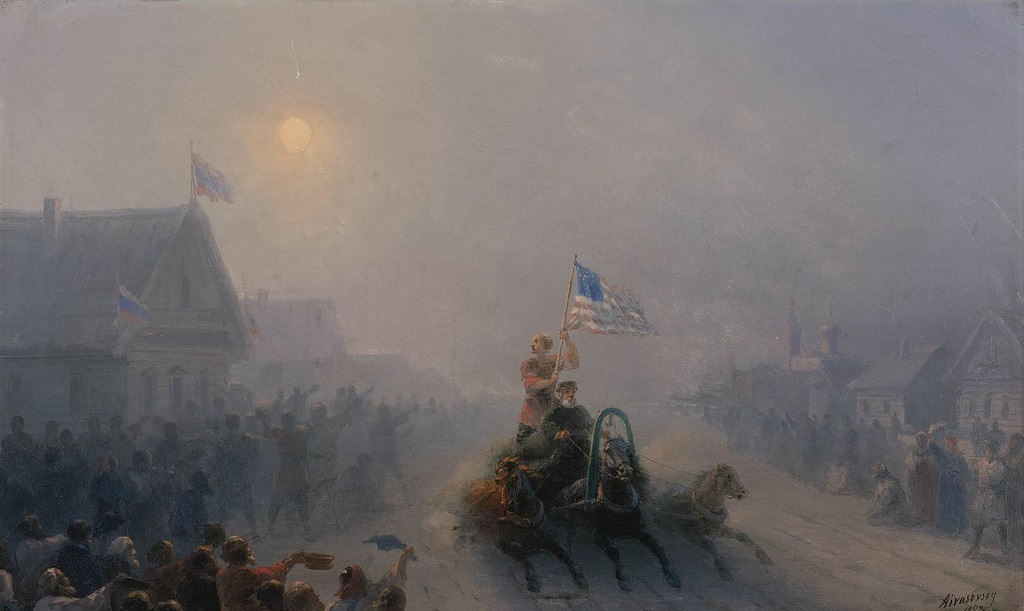
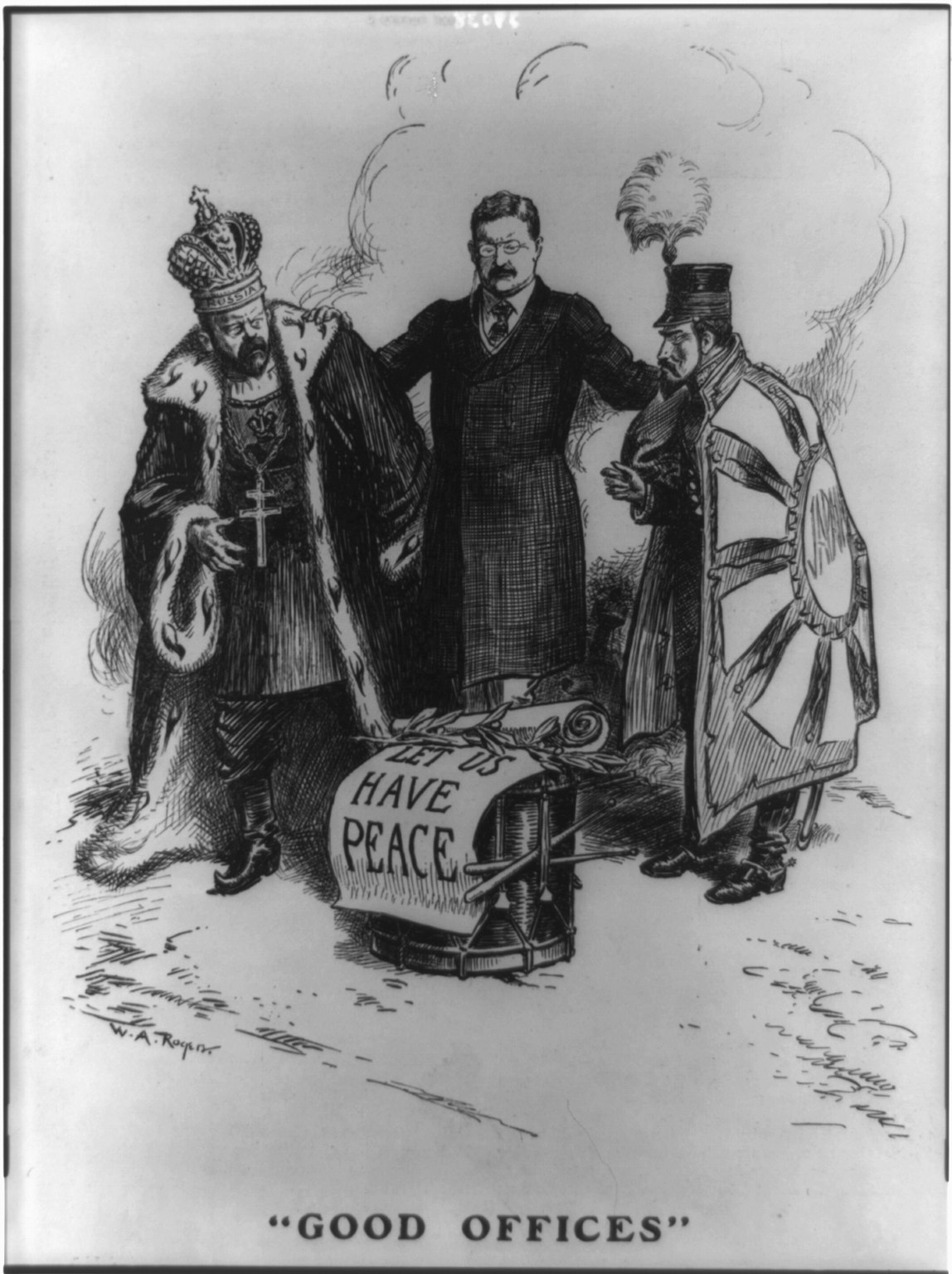
In the Russo-Japanese War, after the Battle of Tsushima, the West could literally destroy Russia in Asia, if the goal of destroying Russia were set as such. Instead, the Treaty of Portsmouth occurred, the terms of which even caused riots in Japan12.
During World War II, American workers placed various kinds of gifts – whiskey, stewed meat, and so on – into the barrels of Sherman tanks supplied under Lend-Lease:
In 2000-2006, the European Union allocated 4.875 billion euros for the TACIS program, which was aimed at the development of CIS countries13. As “Komsomolskaya Pravda” wrote, in Russia this money was squandered without ever launching many development projects14, after which the European Parliament shut down the aid program. We can say with certainty that the enemies of Russian citizens are not Europe and the USA at all, but those who squandered this money. The Europeans realized that the problem lay in corruption, and did not abandon their attempts to help Russians. As the Russian channel “Zvezda” reported, in 2017 the EU acted more cautiously – it allocated only 2.5 million euros to fight corruption in Russia15. Training seminars for entrepreneurs were conducted with these funds, but this was too little to remedy the truly disastrous situation with corruption in Russia.
What does the confrontation between the West and Russia actually look like?
As we can see, there is no “West” that opposes Russia – there are alliances of politicians in the governments of Western countries that oppose alliances of politicians in the government of Russia in specific cases. However, these Russian politicians hide behind the backs of ordinary citizens, commissioning their propagandists to produce as many “songs” about “the West against Russia” as possible to convince society that it is not a fraction of Western politicians opposing the actions of a fraction of Russian ones (especially considering that the actions of Russian politicians are often opposed by their own fellow citizens), but the entire West opposing the whole of Russia. This is a fraud. In this way, propagandists substitute the truth (e.g., “a fraction of politicians in Western countries”) with deception (e.g., the collective image of “the West”).
There is also no specific emphasis exactly on Russia – for instance, the aggressive actions of Saddam Hussein caused a far more negative reaction worldwide than the annexation of Crimea. And any country whose propagandists stir up nationalistic slogans (like “confronting the West”) will evoke only a negative reaction. This is just as natural as disliking a neighbor who shouts at night that they have the best kitchen stove and blames you for not letting them develop.
In Soviet times, the image of “the West” was replaced by “capitalism” (which, according to generally accepted definitions, practically no longer existed in most developed countries, as we found out in this article) and the global bourgeoisie; however, after the collapse of the planned economy, the nomenclature’s propaganda returned once again to the image of the West as its main target, while using the struggle against “capitalism” as an auxiliary tool serving to divert the blows of the left opposition away from the nomenclature and toward the “centers of world capitalism”, that is, to turn them into a form of anti-Westernism.
Interestingly, Russian politicians, while criticizing the West and calling it an enemy, nevertheless send their children to live exactly there:
Who benefits from anti-Westernism?
As we have already said above — the nomenclature. It does not want citizens to blame it for the plight of affairs in the country. It wants society, when looking for the culprits, to pay attention not to them, but to someone else — to “khokhols”, to “Jews”, to “traitors” (and it also wants to steal, including Western aid). And it is very convenient, when searching for enemies, to create some vague image — like “the West” — so that society does not get angry at the nomenclature, and the “enemy” cannot prove their innocence — since the term is vague, one can always say “I meant something else”. Naturally, the nomenclature does not sit idly by, but instructs its propaganda machine to introduce anti-Westernism everywhere. This includes the television box, state schools, publicists, and so on.
Justifications for anti-Westernism
Sometimes, the following argument is put forward to justify anti-Westernism: suppose we have even a very effective and democratic government, but the conservatives in Western governments establish an economic blockade. In such a case, wouldn’t anti-Western rhetoric be justified, since it would be based on objective reality? No, it would not be based on objective reality, because in that case, the reasons must be sought in conservative governments, and not in the collective image of “the West”, since this image would then also include people who sympathize with us — for example, social democrats and ordinary working people of Western countries, and with such rhetoric, we will only alienate them against us. Anti-Westernism is in any case a deception in favor of the nomenclature.
Conclusion
Since anti-Western rhetoric expresses the interests of its own government and harms the brotherhood of all peoples against their own elites — the nomenclature and big capital — its use is completely unacceptable for all democratic forces. The individuals who use it are either state propagandists or persons deceived by state propagandists.
- Political Science: Dictionary-Reference Book / M. A. Vasilik, M. S. Vershinin et al.. – 328 p. – Moscow: Gardariki, 2001
- Igor Prokopenko. Evil Myths About Russia. What Do They Say About Us in the West? – 288 p. – Moscow: Eksmo, 2017
- Valentin Katasonov. The Stalinist Response to Western Sanctions. Economic Blitzkrieg Against Russia: Chronicle of Events, Consequences, Ways of Counteraction – 286 p. – Moscow: Knizhny Mir, 2015
- It does not matter at all what regime is in Russia. The West has always wanted to destroy Russia as a state // Colonel Cassad – LJ (colonelcassad.livejournal.com). July 28, 2019. [Electronic resource]. URL: https://colonelcassad.livejournal.com/5166088.html (accessed: 13.07.2020).
- The Courageous Son of the Spanish People // Military-Historical Journal: Organ of the Ministry of Defense of the USSR, Issues 1-6 – pp. 55-56.
- The “Magnitsky Case” and the Reaction to it in the USA and Europe // RIA Novosti (ria.ru). January 10, 2017, 10:05. [Electronic resource]. URL: https://ria.ru/20170110/1485375580.html (accessed: 11.07.2020).
- Boris Nosik. This Strange Paris Trial. – 256 p. – Moscow: Moskovsky Rabochiy, 1991.
- Which countries did not expel Russian diplomats following London // BBC News Russian Service (www.bbc.com). April 6, 2018. [Electronic resource]. URL: https://www.bbc.com/russian/features-43668777 (accessed: 11.07.2020).
- Daniel L. Haulman. Provide Hope // Air Mobility Command Museum (amcmuseum.org). [Electronic resource]. URL: https://amcmuseum.org/history/provide-hope/ (accessed: 11.07.2020).
- Elena Slobodyan. What are “Bush legs”? // Argumenty i Fakty (aif.ru). July 16, 2019, 00:12. [Electronic resource]. URL: https://aif.ru/food/products/chto_takoe_nozhki_busha (accessed: 12.07.2020).
- Victoria Zhuravleva. A Shared Past: How Russians and Americans Helped Each Other // RBC (www.rbc.ru). March 13, 2016, 11:42. [Electronic resource]. URL: https://www.rbc.ru/opinions/society/13/03/2016/56e2a7739a7947f8afe48a05 (accessed: 12.07.2020).
- I.V. Lukoyanov. Treaty of Portsmouth 1905 // Encyclopedia of World History (w.histrf.ru). [Electronic resource]. URL: https://w.histrf.ru/articles/article/show/portsmutskii_mir_1905 (accessed: 12.07.2020).
- European Commission. Guidelines “Combining financing for Tacis and INTERREG programs” // European Commission (ec.europa.eu). [Electronic resource]. URL: https://ec.europa.eu/regional_policy/archive/interreg3/documents/tacis_ru.pdf (accessed: 13.07.2020).
- Maxim Chizhikov. Russia accused of squandering 5 billion euros // Komsomolskaya Pravda (www.kp.ru). April 22, 2006, 02:00. [Electronic resource]. URL: https://www.kp.ru/daily/23695/52314/ (accessed: 13.07.2020).
- The EU allocated 2.5 million euros to fight corruption in Russia // “Zvezda” TV Channel (tvzvezda.ru). February 1, 2017, 09:18. [Electronic resource]. URL: https://tvzvezda.ru/news/201702010926-jwkq.htm (accessed: 05.08.2023).