
The dangers of geographic determinism
In this article, we will examine what geographic determinism is, how it manifests, and why it is a harmful concept for society, aimed at protecting the interests of elites.
We often hear the thesis from conservatives that Russia has a terrible climate, and for this reason, economic success cannot be achieved here. For example, the “red guard” Maxim Kalashnikov writes in his book “Forward to the USSR-2”:
Russia is a unique country in terms of its natural, geographical, and climatic conditions. It is a country that is “unprofitable” and “high-cost” by definition, by the standards of the current global market. Therefore, our drama also lies in the fact that Russians, with all their desire, cannot use any of the recipes for economic growth known today1.
The same thesis is promoted by another guardian, former FSB officer2 Andrei Parshev in his book “Why Russia is not America” — in it, he writes that “the fact that our industries are uncompetitive is no secret. The secret is that the factors causing its [uncompetitiveness] are unfixable”3. Conservatives hammer into the reader’s head that we have our own chosen path, which means we are doomed to suffer and can do nothing about it. Or, if we can, it requires an oprichnina, slavery, a dictator, or some other phenomenon beneficial to conservative elites that has no place in truly developed and civilized countries. However, history knows many examples that refute the theses both that a bad climate makes economic prosperity impossible and that a good climate is a guarantee of it.
Contents
What is geographic determinism
Geographic determinism is a worldview concept that explains the socio-economic development of peoples and countries of the world by geographic factors — geographical location, topography, climate, water, soil-vegetation, and mineral resources4. As Doctor of Historical Sciences and Candidate of Philosophical Sciences Yuri Semyonov notes, “the influence of the geographic factor on society and its development is indisputable. No one has ever denied it. And the recognition of this fact in itself cannot be called geographic determinism. We can only talk about geographic determinism when the natural environment is taken as the main, primary factor determining the character of social life”5.
Indeed, when we say that geographic and climatic conditions influence the economy or create a certain specificity, this is a perfectly adequate view of things. However, when it is said that any country cannot become prosperous because of its climate, this is already geographic determinism.
We are not referring to lands not developed by humans. It is clear that it is very difficult to create prosperity in Antarctica. We are talking about those lands where human settlements have existed for a long time.
Bad climate and prosperity
To begin with, let us cite examples of countries with a climate bad for human living and economic activity. First of all, the example of Japan comes to mind. As Nippon.com reports, the Japanese summer is characterized by abundant precipitation, the rainy season lasts for an entire month, and so-called “guerrilla storms”6 and typhoons are often observed. As a travel guide to Japan reports, in winter “it is truly bone-chillingly cold outside, although the temperature very rarely drops below zero”7. There is also very unhealthy geological activity here. Earthquakes and tsunamis occur often — as Express reports, the state is shaken by about 1,500 earthquakes of varying magnitude annually8. The climate is very dependent on seasonal winds. The soil is poorly suited for agriculture.
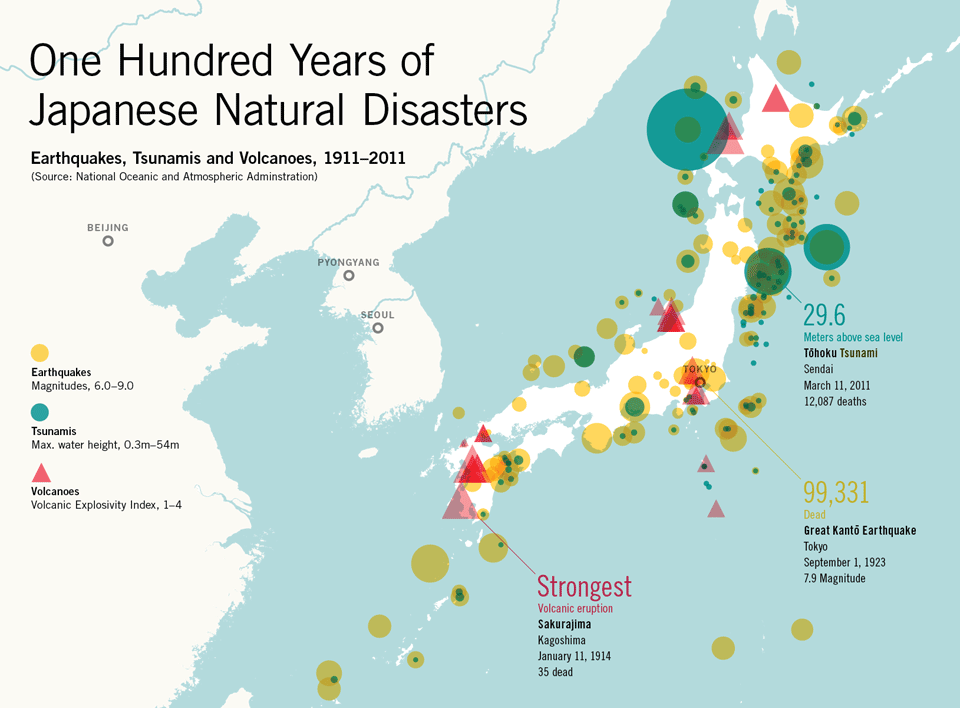
Today, this country is one of the world’s economic leaders. According to the World Bank, Japan ranked 3rd in the world in GDP in 20199. The Japanese corporation “Toyota Motor” became the world’s largest automobile manufacturer in 200710. Besides the automotive industry, the country is a leader in many high-tech industrial sectors. The Tokyo Stock Exchange ranks third in the world among the largest stock exchanges by market capitalization11. Japan is among the top 20 world leaders in the Human Development Index (HDI)12.
Finland is a country with far from the most favorable weather conditions. Here, there is a warm (but short) summer and a harsh winter — long, freezing, with strong winds and an abundance of snow13. Bogs cover almost a third of the country’s land14, and forests cover over 75% of the territory15. This does not prevent the country from ranking 12th in the world in HDI.
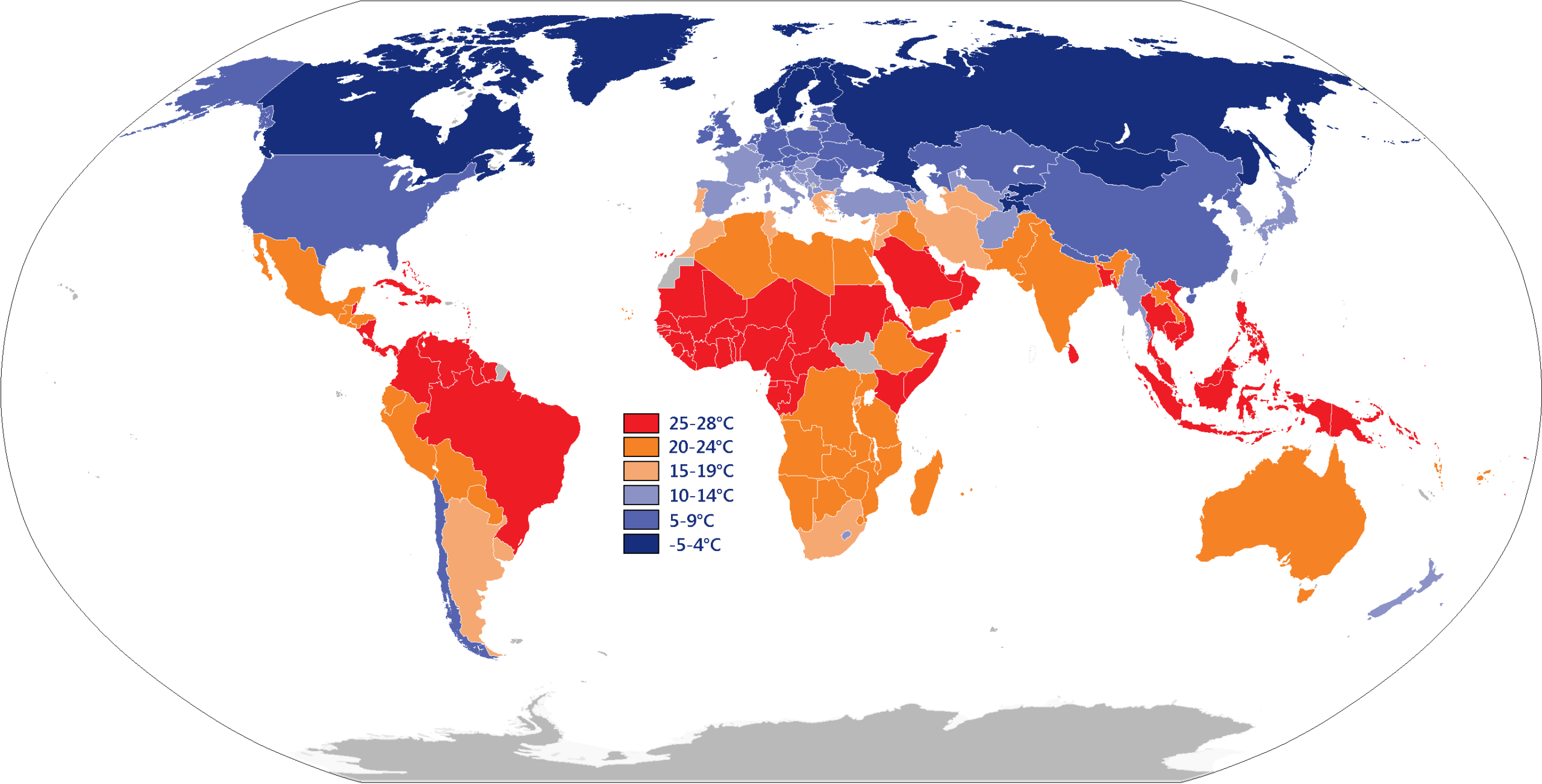
Great Britain — the climate in the “Foggy Albion” is very rainy, with wet winters and wet summers16; the country constantly experiences contrasting and changeable weather17. Some Americans complain to the British tabloid press about the constant rain and that a “real” summer might never arrive18. The country spends about 2.6 billion pounds a year on flood protection19. Britain is also a world leader in the number of tornadoes in proportion to land area20. For all this, Great Britain was a global economic leader for a long time21, and even today, it is among the 15 most developed countries in the world by HDI.
Switzerland also has its reasons to invent excuses for the inept governance of the country; it is landlocked, and 70% of its territory is occupied by the Jura Mountains and the Alps22 (crossing which by the armies of Hannibal and Alexander Suvorov is considered almost a feat of military art). New Zealand also has its reasons, being significantly distant from many centers of civilization and living under conditions of heightened volcanic and tectonic activity (more than 15,000 earthquakes annually23). However, all these countries focused on development rather than promoting excuses.
How do countries solve their problems? For example, if a bad climate leads to problems with diseases and health, one can create tools that solve these problems:
In nineteenth-century England, there were also serious health problems, but the government gradually invested in the construction of water supply systems, sewage and wastewater treatment systems, and ultimately in creating an effective healthcare system24.
Well-known Norwegian economist Erik Reinert also notes how Europe got rid of malaria through industrialization and development — more advanced and intensive agriculture led to the draining of swamps, while irrigation canals made shallow bodies of water with standing water, in which malaria thrives, incompatible with economic development. In addition, active vaccination was carried out in Europe, and the healthcare system worked at full capacity25. Where there was a competent government, problems were solved.
As we can see, neither a bad climate nor difficult geographic conditions are an obstacle to ensuring a country’s economic prosperity.
Good climate and lagging behind
Just as a bad climate is not a valid justification for a country lagging behind, an excellent climate is not a guarantee of its prosperity. According to the Travelask portal, Ecuador has the best climate of all countries26 — the air temperature here is always stable, and there are no sharp changes. Summer here lasts all year round, and the temperature is usually at the level of 24–25 degrees Celsius. In the International Living ranking, Ecuador takes second place27.
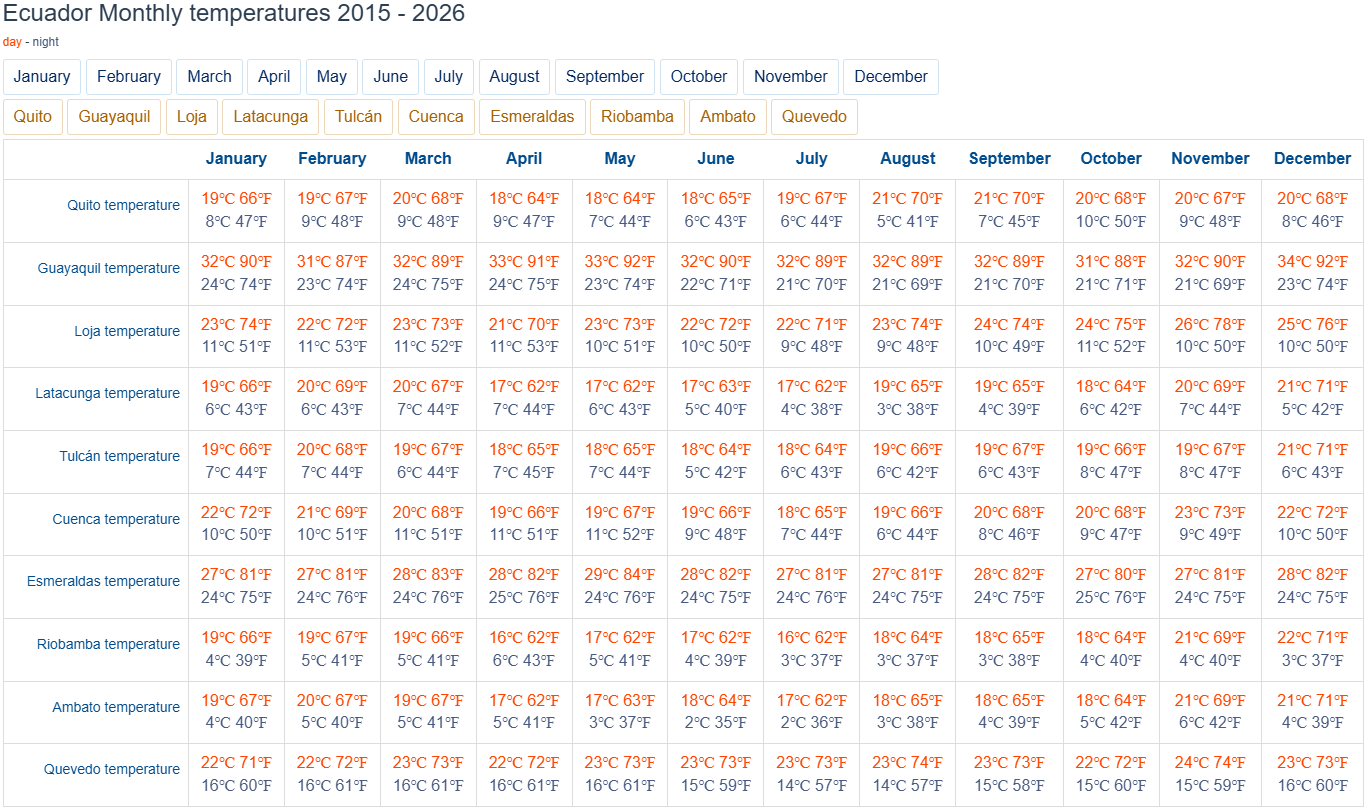
Did practically ideal climatic conditions help Ecuador in economic development? In the HDI ranking, it occupies 85th place in the world — lower than Armenia, Algeria, Belarus, or cold Canada, Finland, and Russia. Over 178 years, Ecuador has defaulted 7 times28, the last times being in 1999 and 2008.
Third place in the same ranking of countries with the best climatic conditions from International Living is occupied by Mexico. According to HuffPost, the best climate in the world is in Costa Rica29. These countries occupy 76th and 68th place in the HDI ranking, respectively. Perhaps they are being robbed by the USA (we dismantled the myth about the robbery of poor countries by developed ones here)? Then let’s take the “fighters against the USA” from Cuba, which also has beautiful climatic conditions. Cuba occupies 72nd place in the HDI ranking. Portugal, which takes first place in the International Living ranking, lags significantly behind other Western European countries in development, occupying only 40th place in the HDI ranking.
Different levels of prosperity under the same climate
The concept of geographic determinism is refuted by a multitude of examples showing how completely different economic conditions are formed under the same geographical conditions (sometimes even within the same time period). For example, today we can see different levels of development in neighboring cities — in Moscow and in Tver. While the average salary in Moscow in 2019 was 79.7 thousand rubles30, in Tver, which is located very close by and has similar weather conditions, it was 33.3 thousand rubles in the same year31. More than half of the Bentley cars sold in Russia in 2018 — 73 vehicles — were registered in Moscow32; there is no statistics for Tver, however, judging by the fact that it is not mentioned among the leaders, no more than 2 units of these cars were sold there. It is obvious that the reason for such a discrepancy is not the climate, but primarily the different level of development of goods production and the service sector, and secondly, the fact of Tver’s subordination to Moscow. But even without subordination to each other, cities have differences in development, such as Las Vegas and Henderson.
The first cities in history appeared on the territory of modern Iraq33, and metal was first smelted on the territory of modern Turkey34. At that time, these regions were at the forefront of the development of all humanity, but today Iraq and Turkey are considered rather “developing” countries. Although climatic and geographical conditions here have not changed since then. Geographic determinism is also incapable of explaining why Japan and China, at different periods of their history, were sometimes lagging behind and sometimes technically advanced countries (for example, Richard Tames speaks of the profound transformation of Japan over 50 years from a policy of “backward feudal isolation” to the status of a “great power”)35.
As prominent economists Daron Acemoglu and James Robinson note in their study on the wealth of nations, before colonization, more developed civilizations were created on the territory of modern Central and Latin America than on the territory of modern North America; today, the situation is the exact opposite, despite the preservation of the climate:
History shows that there is no simple long-term relationship between climate and geography on the one hand and economic prosperity on the other. In particular, it has not always been the case that people in the tropics were poorer than those in temperate latitudes. As we saw in the previous chapter, at the time of Columbus’s discovery of America, south of the Tropic of Cancer and north of the Tropic of Capricorn (that is, on the territory of modern Mexico, Central America, Peru, and Bolivia), there existed the great civilizations of the Aztecs and Incas. These were politically centralized and quite complex empires whose governments knew how to build roads and organize assistance for their subjects during famines. The Aztecs had writing and money; the Incas, although they lacked these two crucial elements of advanced civilization, knew how to record large amounts of information using complex rope bundles and knots called quipu. By contrast, the civilizations that existed to the north and south of them during the times of the Aztecs and Incas (that is, on the territory of modern USA, Canada, Argentina, and Chile) lived for the most part in the Stone Age and did not possess such advanced technologies. The American tropics, therefore, were much wealthier than the American temperate latitudes36.
The authors also provide the example of the Mexican and American parts of the city of Nogales — effectively the same city, only in the Mexican part, wages are on average three times lower, the majority of adult residents have not finished school, and there is a high level of infant mortality and other attributes of poverty37.
Finally, one of the most egregious examples is the neighboring cities of Kirkenes (Norway) and Nikel (Russia), which are separated by a border:
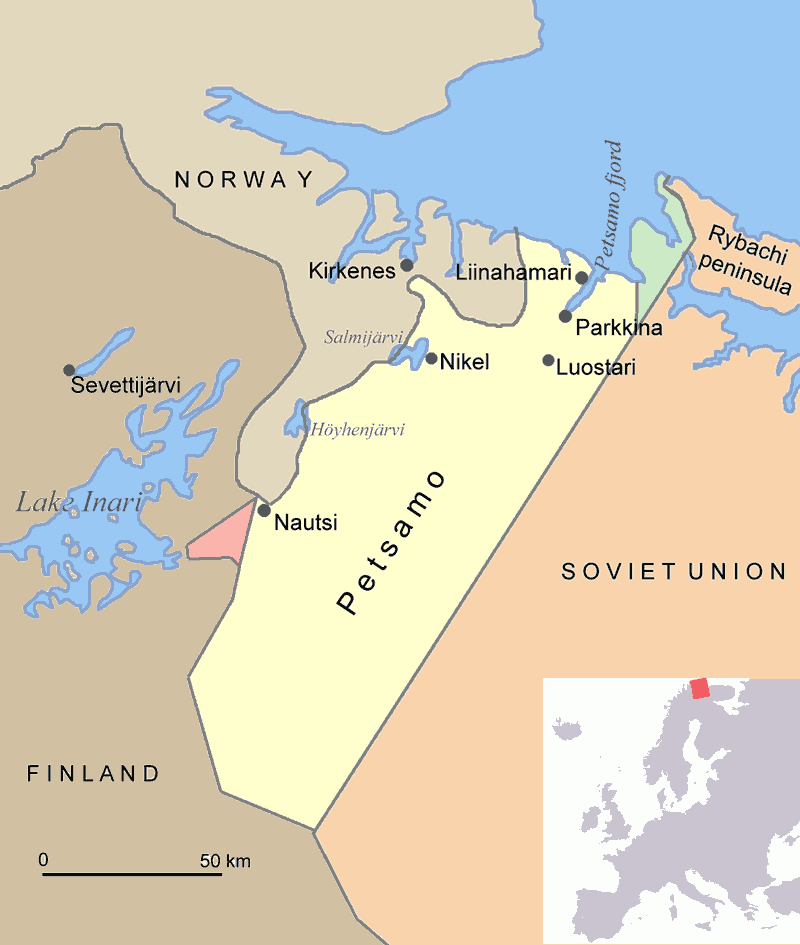
At the same time, the difference between the cities is colossal. A detailed photographic comparison of them can be viewed on Ilya Varlamov’s blog38. As the blogger notes, “on one side, there are soldiers and barbed wire; on the other side, there are beaches and complete freedom. On one side, there is black snow and destroyed nature; on the other, heavenly beaches and pristine tundra. On one side, you are invited for a crab safari; on the other, you can go to prison for catching a crab. On one side is Norway, on the other is Russia”39. Here are several photographs taken by him in the Russian town of Nikel:
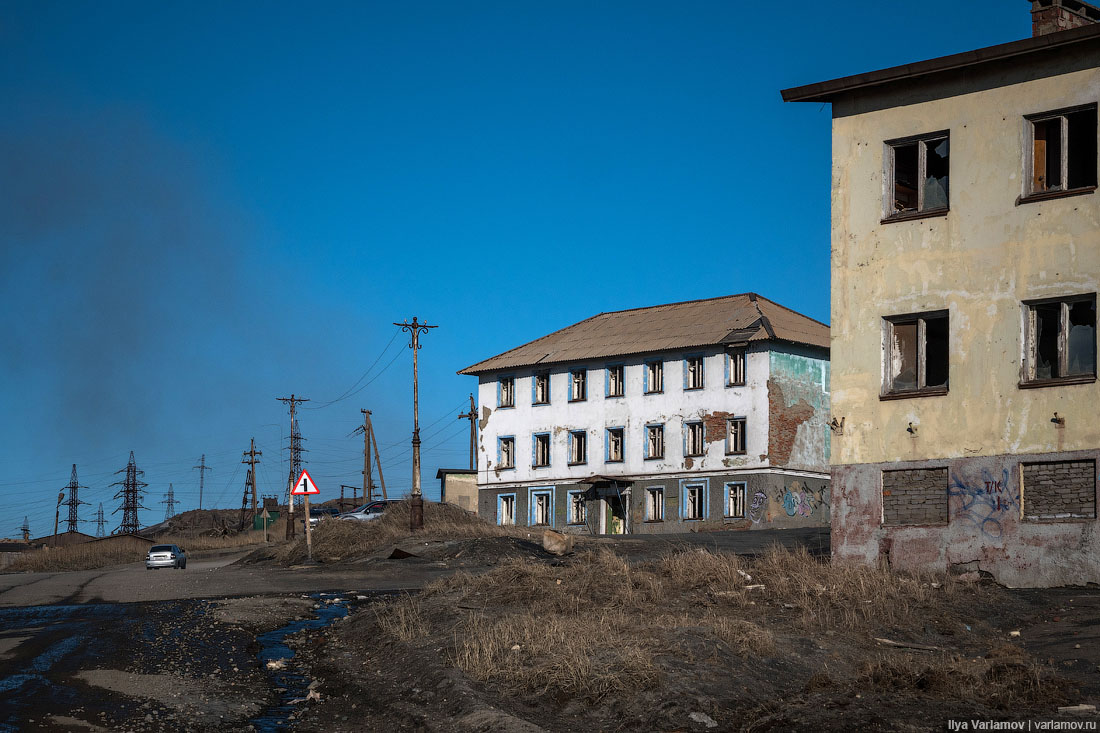

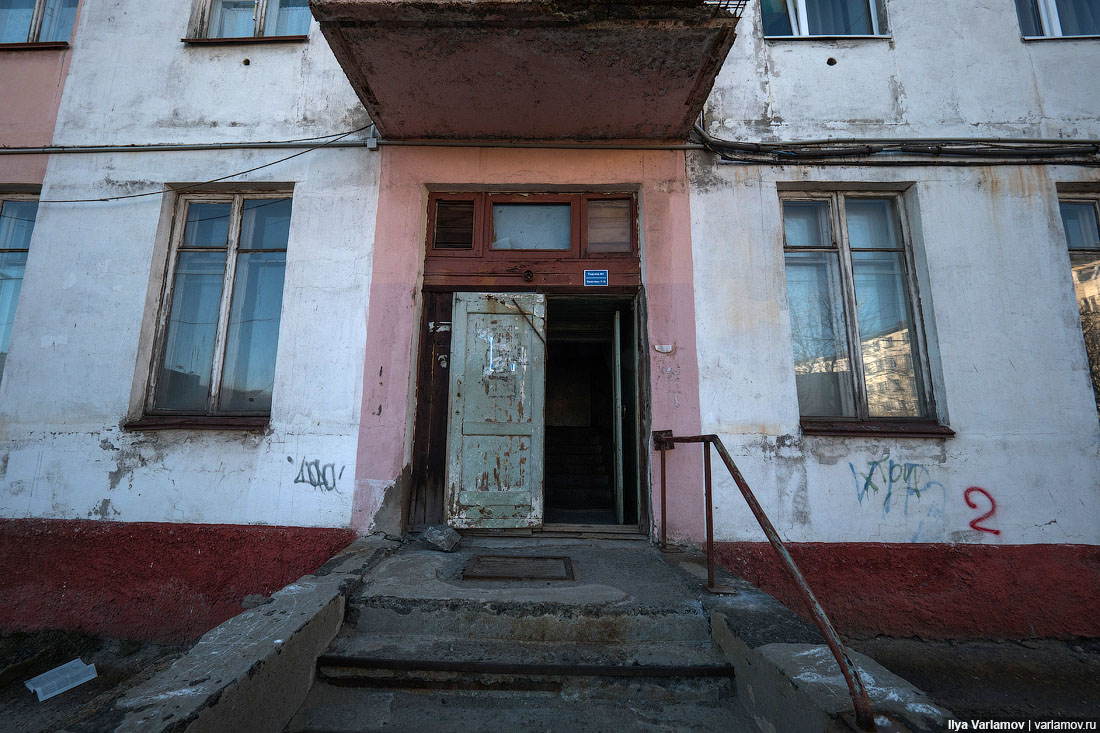
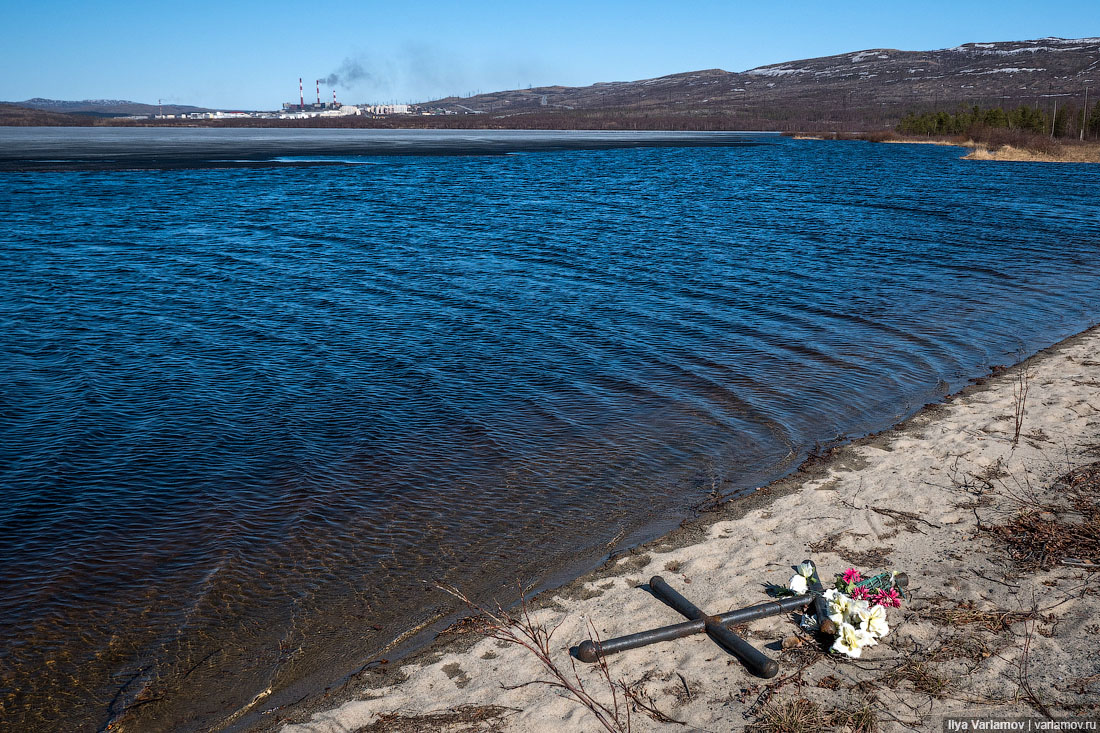
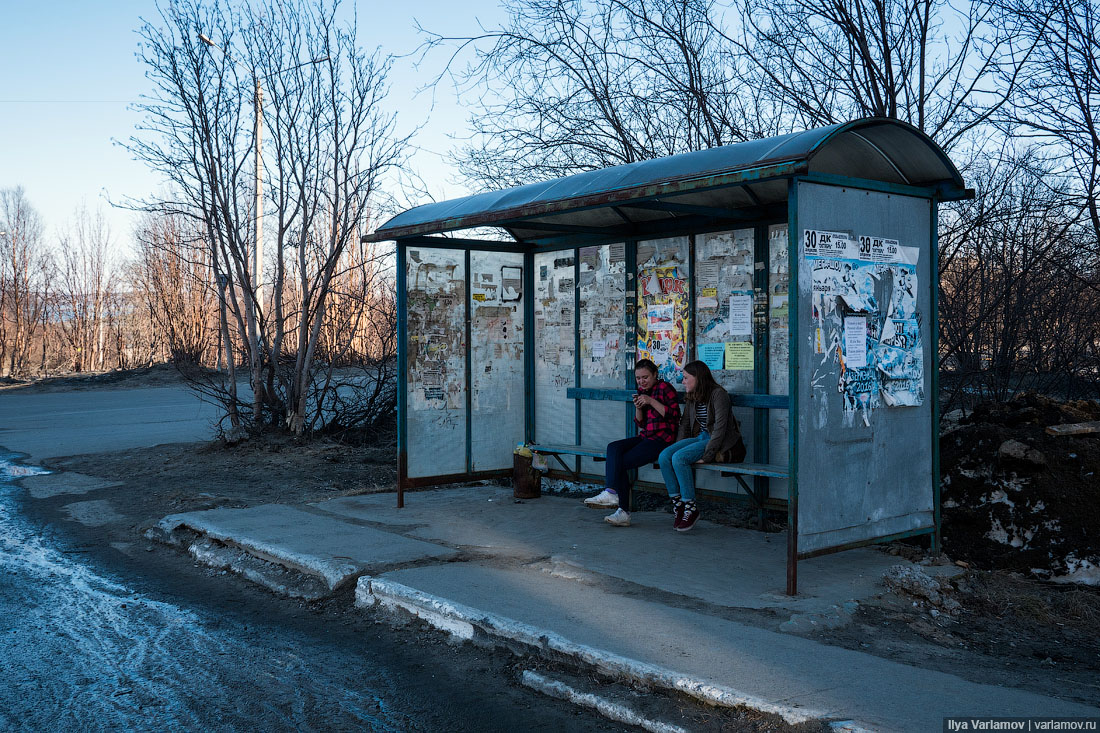
And these are photographs from the Norwegian town of Kirkenes:
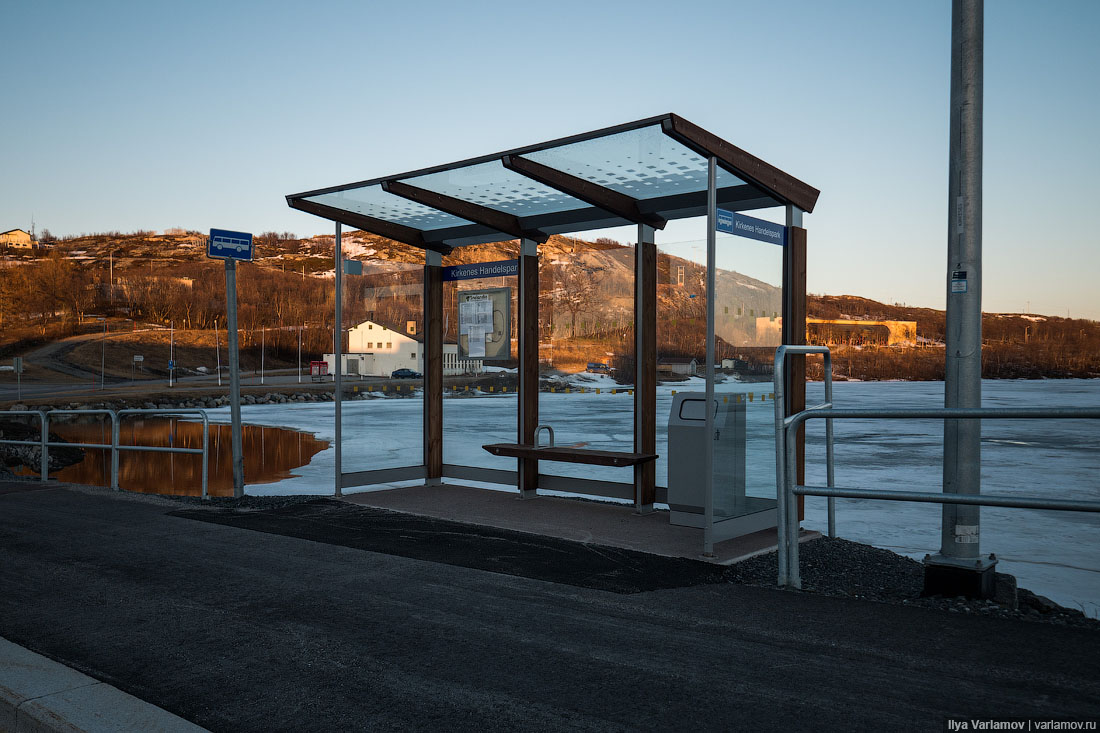
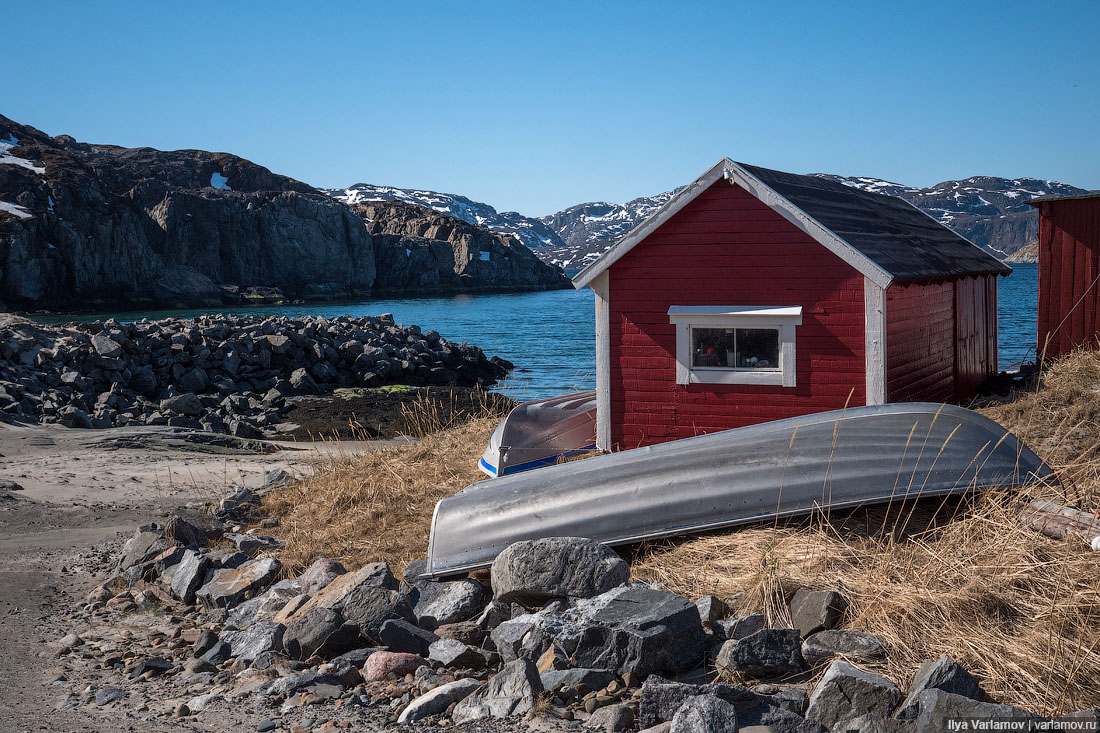

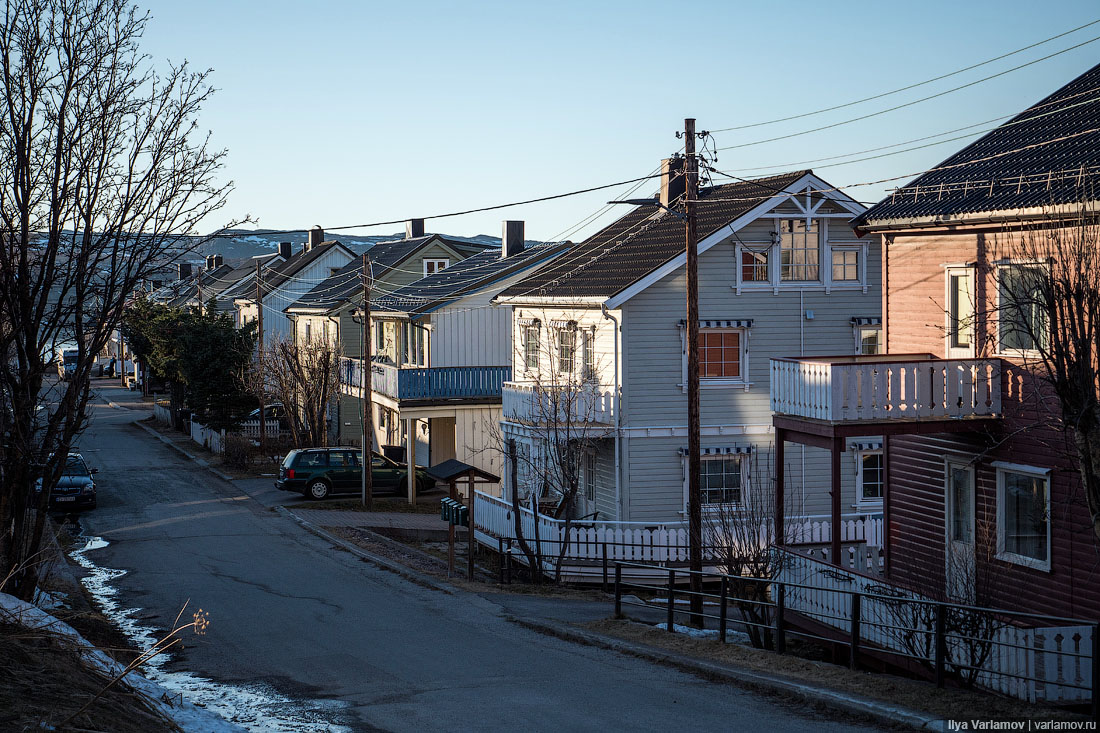
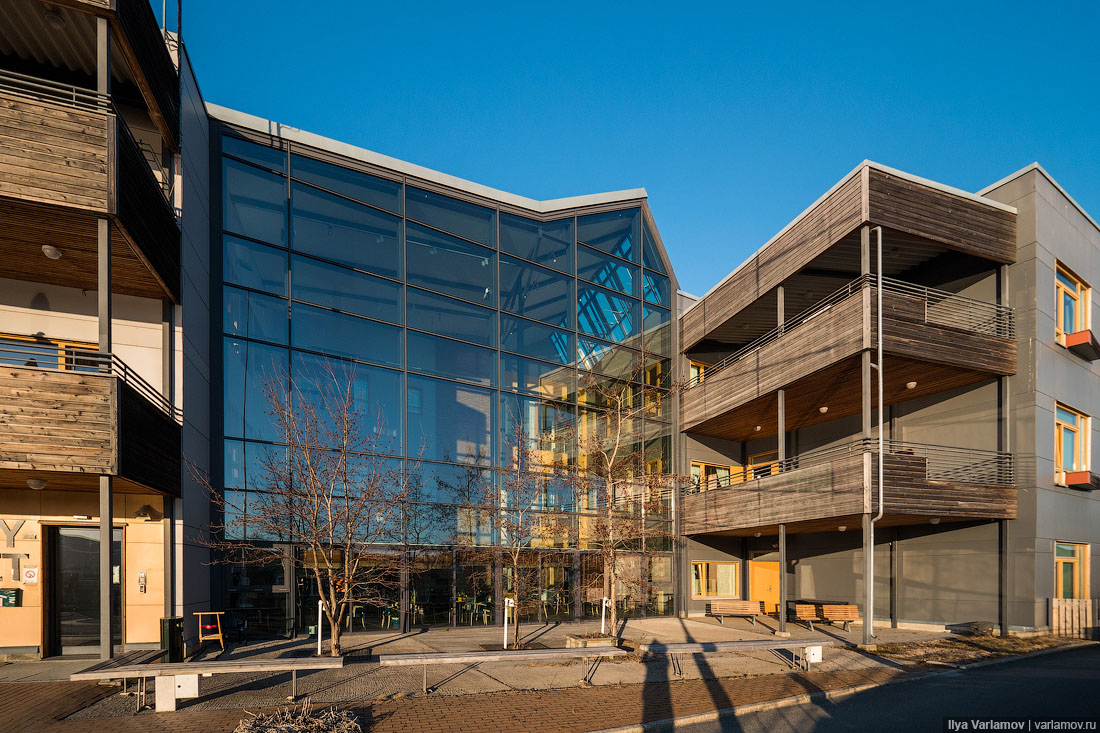
It is enough to visit both cities to doubt that it is the climate that prevents the creation of prosperity.
All the above examples completely refute the geographic theory. You may ask, what is actually the cause of prosperity? We refer you to our article on why some countries are rich and others are poor, as well as to our article on how economic growth is ensured. In short, the cause of prosperity is sound government policy and the building of inclusive institutions.
Resources
Partially related to geographic determinism, and determinism in general, is the assumption that countries rich in resources should supposedly be richer than those that are poor in resources. However, practice also refutes this assumption. There even exists such a concept as the “commodity” or “resource curse”, the idea of which is that significant stocks of natural resources hinder a country’s economic development — it entered scientific circulation thanks to Jeffrey Sachs and Andrew Warner in the mid-1990s40. As Doctor of Economic Sciences Vladislav Inozemtsev notes, in 1970–1989, economies whose natural resource exports exceeded 10% of their GDP grew 2.9 times more slowly than those where this figure was less than 2%41. For such resource-rich countries as Russia or the DR Congo, this wealth did not help in achieving prosperity. On the other hand, resource endowment does not mean a guarantee of the absence of economic growth or a high level of poverty, as the examples of Norway and the UAE show. Inozemtsev also cites examples of economic growth in resource-oriented Malaysia and Brazil.
As scientists investigating the phenomenon of Holland and Venice during the Renaissance and Enlightenment argued (today we would expand this list with Japan and Switzerland), in the resource lottery, those who do not have resources are the lucky ones. The country is forced to seek an artificial, man-made comparative advantage, not letting it use the advantage of natural origin, which, as a rule, carries diminishing returns. The great Montesquieu (1689 – 1755) wrote: “The sterility of the land makes people industrious, temperate, hardened to labor, courageous, and fit for war; for they must procure for themselves what the soil refuses them42.”
In general, it can be summarized that neither geography nor resources can either facilitate or hinder a country’s prosperity if competent policy is pursued.
One of the countries that successfully avoided the “resource curse” is social-democratic Norway, meaning that social democrats successfully cope even with this problem.

Conclusion
A good climate and favorable geographical conditions, while being a plus in development, are neither a guarantee of development nor an obstacle to it. In essence, their influence is insignificant. And in any case, the climate cannot be a justification for a country’s poverty. The poverty of a country is always primarily the fault of its political elites, and secondly of the economic ones, which failed to influence the political elites. And when politicians launch propaganda claiming that a country cannot achieve economic success due to climatic conditions — this is the most vivid evidence of the absolute political impotence of the elites. Therefore, every social democrat must know that he is capable of achieving a high standard of living in his country, or at least setting a vector for improvement.
- Maxim Kalashnikov. Forward to the USSR-2. – 416 p. – Moscow: Yauza, Eksmo, 2003
- Putin’s Revolution // First Yaroslavl TV Channel (1yar.tv). September 25, 2007, 00:00. [Electronic resource]. URL: https://1yar.tv/article/revolyuciya_putina/ (accessed: 10.10.2020).
- A.P. Parshev. Why Russia is not America. – 352 p. – Moscow: Algoritm, 2018
- A.P. Gorkin. Geography. Modern illustrated encyclopedia. – 624 p. – Moscow: Rosman-Press, 2006
- Yu.I. Semyonov. Philosophy of History. (General theory, main problems, ideas and concepts from antiquity to the present day) – 776 p. – Moscow: “Sovremennye tetradi”, 2003. – p. 267.
- Climatic features of Japan // Nippon.com (www.nippon.com). April 2, 2016. [Electronic resource]. URL: https://www.nippon.com/ru/features/jg00059/ (accessed: 10.10.2020).
- K. Golovina, E. Kozhurina. Japan: a non-standard guidebook. – 232 p. – St. Petersburg: KARO, 2006. – p. 49.
- Rachel Russell. Japan earthquake: Why are there so many every year? How can people stay safe in earthquake // Express (www.express.co.uk). June 22, 2018, 15:56. [Electronic resource]. URL: https://www.express.co.uk/news/world/978227/Japan-earthquake-why-so-many-Osaka-stay-safe-earthquake (accessed: 10.10.2020).
- Gross domestic product 2019 // The World Bank (databank.worldbank.org). July 1, 2020. [Electronic resource]. URL: https://databank.worldbank.org/data/download/GDP.pdf (accessed: 10.10.2020).
- “Toyota” has become the leader of the global auto industry // Vesti (vesti.ru). December 22, 2007, 10:33. [Electronic resource]. URL: https://vesti.ru/finance/article/2305006 (accessed: 10.10.2020).
- Top 10 largest stock exchanges by capitalization // Vesti (vesti.ru). June 2, 2020, 12:25. [Electronic resource]. URL: https://vesti.ru/finance/article/2416714 (accessed: 10.10.2020).
- Pedro Conceição. Human Development Report 2019 // Human Development Reports (hdr.undp.org). [Electronic resource]. URL: http://hdr.undp.org/sites/default/files/hdr2019.pdf (accessed: 10.10.2020).
- N.O. Telnova, E.E. Demidova, et al. Finland // Great Russian Encyclopedia. Volume 33. Moscow, 2017, pp. 386-401. [Electronic resource]. URL: https://bigenc.ru/geography/text/4713984 (accessed: 10.10.2020).
- Yury Somov. Finland: A fence-less land of lakes, forests, islands, and bogs // RIA Novosti (ria.ru). November 2, 2010, 18:43. [Electronic resource]. URL: https://ria.ru/20101102/222851593.html (accessed: 10.10.2020).
- N.O. Telnova, E.E. Demidova, et al. Finland // Great Russian Encyclopedia. Volume 33. Moscow, 2017, pp. 386-401. [Electronic resource]. URL: https://bigenc.ru/geography/text/4713984 (accessed: 10.10.2020).
- The climate of the UK // BBC (www.bbc.co.uk). [Electronic resource]. URL: https://www.bbc.co.uk/bitesize/guides/zpykxsg/revision/3 (accessed: 10.10.2020).
- Factors affecting the UK’s climate // BBC (www.bbc.co.uk). [Electronic resource]. URL: https://www.bbc.co.uk/bitesize/guides/zpykxsg/revision/4 (accessed: 10.10.2020).
- Hayley Richardson. Americans reveal what they hate about Brits, from our bad weather and ‘terrible bacon’ to our ‘Royal obsession’ // The Sun (www.thesun.co.uk). February 28, 2017, 16:59. [Electronic resource]. URL: https://www.thesun.co.uk/living/2976781/americans-reveal-what-they-hate-about-brits-from-our-bad-weather-and-terrible-bacon-to-our-royal-obsession (accessed: 10.10.2020).
- Building flood defences fit for the future // GOV.UK (www.gov.uk). April 17, 2020. [Electronic resource]. URL: https://www.gov.uk/government/news/building-flood-defences-fit-for-the-future (accessed: 10.10.2020).
- U.S. Tornado Climatology // National Centers for Environmental Information (www.ncdc.noaa.gov). [Electronic resource]. URL: https://www.ncdc.noaa.gov/climate-information/extreme-events/us-tornado-climatology (accessed: 10.10.2020).
- Yu.N. Krivuts. England – world leader of the 40s–80s of the XIX century / Yu.N. Krivuts // Bulletin of Transport and Industry Economy. – 2016. – No. 55. – pp. 129-137.
- Geography of Switzerland // About Switzerland (www.about.ch). April 24, 2016. [Electronic resource]. URL: https://www.about.ch/geography/index.html (accessed: 10.10.2020).
- Powerful quake off north-east New Zealand coast // BBC (www.bbc.com). September 2, 2016. [Electronic resource]. URL: https://www.bbc.com/news/world-asia-37249108 (accessed: 10.10.2020).
- Daron Acemoglu, James A. Robinson. Why Nations Fail: The Origins of Power, Prosperity, and Poverty / Daron Acemoglu, James A. Robinson: [translation from English by Dmitry Litvinov, Pavel Mironov, Sergey Sanovich]. – 575 p. – Moscow: AST Publishing House, 2015. – p. 61.
- E.S. Reinert. How Rich Countries Got Rich… and Why Poor Countries Stay Poor / Trans. from English by N. Avtonomova; ed. V. Avtonomov; National Research University “Higher School of Economics”. 4th ed. – 384 p. – Moscow: Publishing House of the Higher School of Economics, 2016. – p. 268.
- Zhanna Galaktionova. The most favorable climate for humans // TravelAsk (travelask.ru). [Electronic resource]. URL: https://travelask.ru/articles/samyy-blagopriyatnyy-klimat-dlya-cheloveka (accessed: 10.10.2020).
- 5 Places to Retire to With the World’s Best Climate // International Living (internationalliving.com). January 28, 2020. [Electronic resource]. URL: https://internationalliving.com/the-best-climates-in-the-world/ (accessed: 10.10.2020).
- Maxim Ivanov. Ecuador entered default twice // Dp.ru (www.dp.ru). December 15, 2008, 12:09. [Electronic resource]. URL: https://www.dp.ru/a/2008/12/15/JEkvador_voshel_v_defolt_dv (accessed: 10.10.2020).
- Malte Zeeck. Top 10 Countries With the Best Weather and Climate // HuffPost (www.huffpost.com). May 08, 2016, 11:44. [Electronic resource]. URL: https://www.huffpost.com/entry/top-10-countries-with-the_b_11328900 (accessed: 10.10.2020).
- Mosgorkomstat named the average salary in Moscow at the beginning of the year // Izvestia (iz.ru). April 25, 2020, 09:20. [Electronic resource]. URL: https://iz.ru/1004408/2020-04-25/mosgorstat-nazval-sredniuiu-zarplatu-v-moskve-na-nachalo-goda (accessed: 10.10.2020).
- Tverstat named the average salary in the Tver region in 2019 // Argumenty i Fakty Tver (tver.aif.ru). February 26, 2020, 15:43. [Electronic resource]. URL: https://tver.aif.ru/society/details/tverstat_nazval_razmer_sredney_zarplaty_po_tverskoy_oblasti_v_2019_godu (accessed: 10.10.2020).
- Bentley sales in Russia grew by 17% // Kommersant (www.kommersant.ru). August 09, 2018, 10:30. [Electronic resource]. URL: https://www.kommersant.ru/doc/3708438 (accessed: 10.10.2020).
- Nikita Kharchevnikov. The most ancient cities on the planet where people still live // Vokrug Sveta (www.vokrugsveta.ru). October 04, 2017, 00:15. [Electronic resource]. URL: http://www.vokrugsveta.ru/article/279276/ (accessed: 10.10.2020).
- Hideo Akanuma. The Significance of Early Bronze Age Iron Objects from Kaman-Kalehoyuk, Turkey // Japanese Institute of Anatolian Archaeology (www.jiaa-kaman.org). [Electronic resource]. URL: http://www.jiaa-kaman.org/pdfs/aas_17/AAS_17_Akanuma_H_pp_313_320.pdf (accessed: 10.10.2020).
- R. Tames. Japan: A Country’s History / Trans. from English by E. Vasilyeva. – 416 p. – Moscow: Eksmo; St. Petersburg: Midgard, 2009. – p. 167.
- Daron Acemoglu, James A. Robinson. Why Nations Fail: The Origins of Power, Prosperity, and Poverty / Daron Acemoglu, James A. Robinson: [translation from English by Dmitry Litvinov, Pavel Mironov, Sergey Sanovich]. – 575 p. – Moscow: AST Publishing House, 2015. – p. 60.
- Ibid., pp. 14-15.
- Ilya Varlamov. Russia – Norway: what’s out there? // Varlamov.ru (varlamov.ru). May 21, 2018. [Electronic resource]. URL: https://varlamov.ru/2930314.html (accessed: 10.10.2020).
- Ilya Varlamov. The border between Russia and NATO // Varlamov.ru (varlamov.ru). May 18, 2018. [Electronic resource]. URL: https://varlamov.ru/2927243.html (accessed: 10.10.2020).
- Sachs, Jeffrey and Warner, Andrew. Natural Resource Abundance and Economic Growth, Cambridge (Ma.): NBER Working Paper 5398, Dec. 1995)
- Vladislav Inozemtsev. Bad habit: is it possible to get rid of oil dependence? // RBC (www.rbc.ru). Feb 20, 2016, 09:44. [Electronic resource]. URL: https://www.rbc.ru/opinions/economics/20/02/2016/56c7f9ad9a794720f77b5fe6 (accessed: 10.10.2020).
- E.S. Reinert. How Rich Countries Got Rich… and Why Poor Countries Stay Poor / Trans. from English by N. Avtonomova; ed. V. Avtonomov; National Research University “Higher School of Economics”. 4th ed. – 384 p. – Moscow: Publishing House of the Higher School of Economics, 2016. – p. 218.