“US aggression in Iraq”
The Gulf War (1990-1991) and the Iraq War (2003-2011) are associated with a large number of rumors and speculations, which anti-American media mostly boil down to the claim that the US organized an invasion of Iraq for no particular reason, purely out of malice. Various opponents of foreign policy of the United States call this "US aggression", "imperialism", and so on. Is that really the case?
Various information resources of statists spread the thesis about “US aggression against Iraq” — for instance, the propaganda channel RT writes that it was an “aggression against a sovereign state”1. Here it should be noted right away that the act of aggression in the Persian Gulf was committed by Iraqi dictator Saddam Hussein, who decided in 1990 to annex Kuwait, justifying this intention by claiming that Kuwait was part of the Basra Vilayet along with Iraq during the Ottoman Empire, as well as alleging that Kuwait exceeded oil production quotas2. In August, Iraqi troops occupied Kuwait, and the UN Security Council adopted Resolution 660, condemning the aggression and demanding that Hussein withdraw troops from the country’s territory. Hussein refused to do so, and a new resolution, Resolution 678, was adopted, authorizing the start of air and ground operations by an international coalition to expel Iraqi armed forces from Kuwait. Assistance from US troops and other developed nations was requested, among others, by the government of Saudi Arabia, which feared becoming the next victim of Iraqi aggression3. On January 17, 1991, the operation known as “Desert Storm” began4; it was completed in late February, and Kuwait’s independence was restored. That is, aggression was displayed by Iraq in 1990, while the US merely came to the defense of Kuwait in 1991.
Interestingly, no peace treaty was concluded in the process; instead, an armistice was signed5, the conditions of which formed the basis for a new Resolution 687, adopted by the UN Security Council in April 19916, which instructed Iraq to respect the inviolability of the border between Iraq and Kuwait, eliminate all stockpiles of weapons of mass destruction on its territory and industrial capacities for their production, ensure conditions for the continuous operation of disarmament inspectors (UNSCOM, hereinafter — “the commission”), and compensate Kuwait for direct losses caused by Iraqi aggression. Therefore, the Iraq War is essentially not a second war, but a continuation of the Gulf War, and its ground was the violation of the armistice terms by Hussein’s government.
Saddam Hussein’s regime did not comply with the armistice requirements7, and at times grossly violated them. Here are a few examples of violations concerning only the work of UN disarmament inspectors starting from 19978:
- June 1997: the Iraqi military accompanied a commission helicopter and attempted to physically prevent the helicopter from flying toward its intended destination, threatening the safety of the helicopter and its crew;
- September 17, 1997: the Iraqi military attacked an inspectors’ helicopter while an inspector was trying to photograph unauthorized movement of Iraqi vehicles at sites designated for inspection;
- September 25, 1997: inspectors check an Iraqi “food laboratory”. One of the inspectors, Dr. Diana Seaman, enters the building through a back door and catches several people leaving with suitcases. The suitcases contained logbooks with information on the creation of prohibited chemical agents and bacteria. The logbook pages bear the stamps of the President’s Office and the President’s Security Service. Inspectors tried to inspect offices, but were denied entry;
- April 8, 1998: inspectors report to the UN Security Council that Iraq’s declaration of its biological weapons program is incomplete and inadequate;
- August 5, 1998: Iraqi authorities completely cease cooperation with the commission.
After Iraq ceased cooperation with the commission, US patience ran out, and on September 29, 1998, Congress passed a law titled the “IRAQ LIBERATION ACT”, providing for the overthrow of Saddam Hussein’s regime9. However, this apparently failed to impress the latter, and on October 31, the Iraqi dictator completely expelled the inspectors from the country. On the same day, US President Bill Clinton signed the aforementioned act, but did not rush to implement it, despite many other violations by Iraq. Only after the victory of Republican George W. Bush did the practical implementation of this law begin. Article 40 of the Convention Respecting the Laws and Customs of War on Land clearly states that “any serious violation of the armistice by one of the parties gives the other party the right of denouncing it, and even, in cases of urgency, of recommencing hostilities immediately”10.

Contrary to the mythology that “the US and its satellites invaded Iraq” because of the September 11, 2001 bombings, or intelligence data regarding the possible presence of weapons of mass destruction in Iraq, the decision was made long before these events and was tied to violations of the armistice terms by Hussein’s regime. The rise of international terrorism and intelligence reports regarding the potential presence of weapons of mass destruction in Iraq were merely additional straws that broke the camel’s back for the US and its allies, and among many factors behind military action to overthrow Hussein’s criminal regime. Although the fact that the Iraqi dictator funded terrorism11, not to mention suspicions of funding Al-Qaeda, the terrorist organization that carried out the September 11 attack, could not fail to play its role. Those who claim that searching for weapons of mass destruction was the sole or primary reason for US military intervention have formed their viewpoint not from studying historical materials, but from consuming pop culture works.
However, many also forget the fact that weapons of mass destruction could have been held by the Iraqi regime and could have been moved out before they could be detected. This option cannot be ruled out. US military actions in Iraq were already being conceived in 1998, and Hussein’s regime had plenty of time to dispose of evidence. The Iraqi dictator himself admitted that he had possessed such weapons and needed them to “defend against Iran and Israel”, but by 2003 these weapons were no longer at his disposal12.
Iraq was a base for ISIS even before US intervention: back then, there were two terrorist Salafi groups, Jama’at al-Tawhid wa al-Jihad and Ansar al-Islam, and their leader was Abu Musab al-Zarqawi, who renamed his organization “Al-Qaeda in Iraq”. It was joined by former military officers and intelligence personnel from Saddam Hussein’s regime. ISIS was able to expand its influence only after the withdrawal of US troops in 2011.
Another example of mythology from propaganda systems of authoritarian regimes, which turned out to be frightened by the prospect of their citizens being liberated by US troops, is the myth that the US “attacked Iraq for oil”. Oil&Gas Middle East magazine published the results of bidding for the development of Iraqi fields in 2009, and it turned out that there were no American companies among them. As the magazine noted, “the absence of US oil majors among the winning bids surprised many industry experts, and appears to contradict claims that they would end up as the main developers of Iraq’s vast hydrocarbon reserves”13. If the assertion that the US invaded Iraq for oil were true, the opposite bidding outcome would be logical. However, reality is the reverse — it was Iraq that invaded Kuwait for oil, not the US invading Iraq. Authoritarian propaganda, as usual, projects its own crimes onto democratic nations. We have not yet been able to find data indicating that American companies, let alone the US government, acquired rights to any significant oil fields as a result of the war.
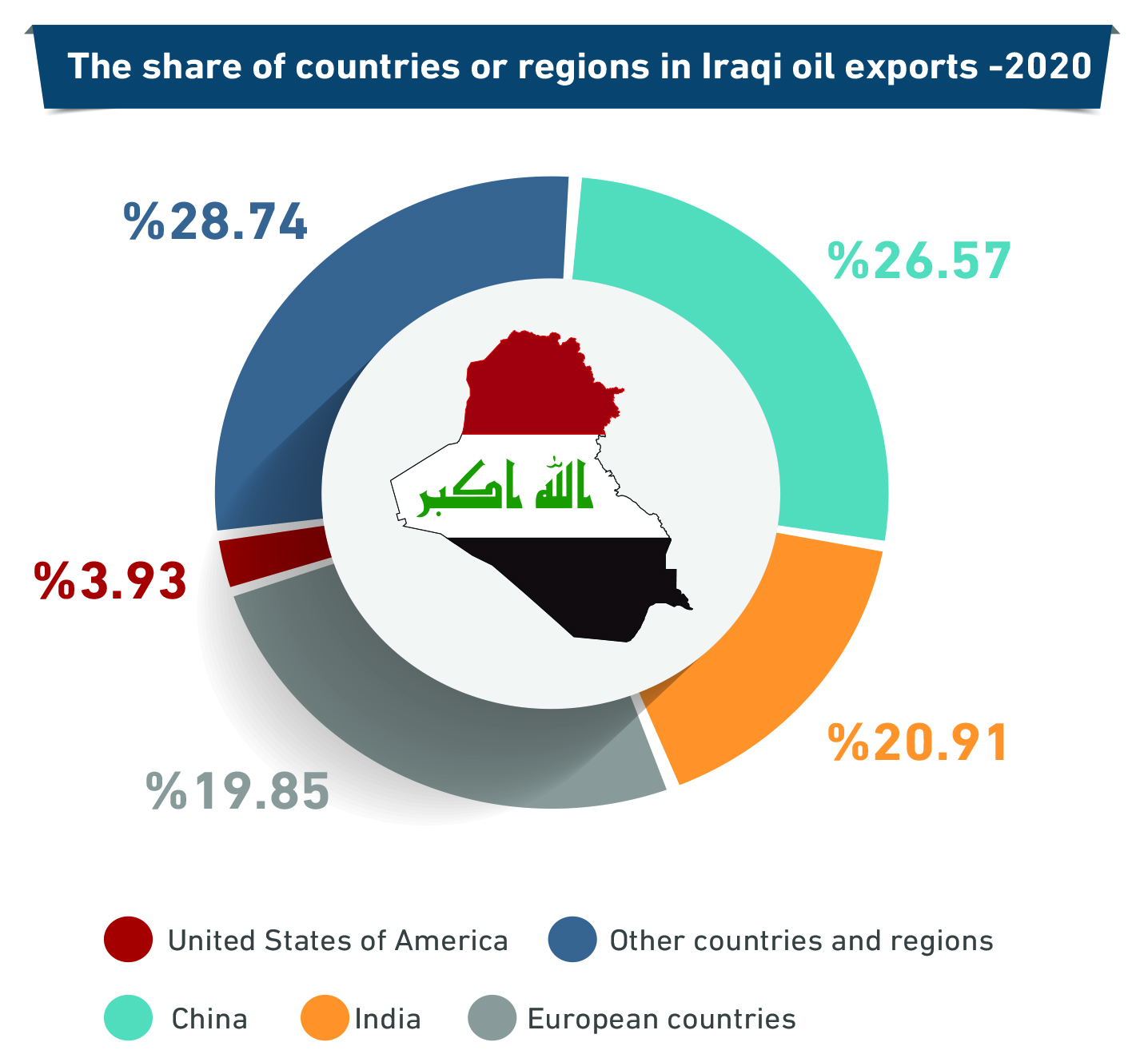
The tender for the development of the Iraqi West Qurna-2 field was won by Russian “LUKOIL”14, while “Gazprom Neft” signed a contract to develop the Badra field15. However, this cannot serve as a basis for conspiracy claims that the war began so that Russian companies could gain control over oil fields.
Interestingly, the Persian Gulf War cost the US 61 billion dollars, but 54 billion of that was reimbursed by other states16 — mainly by Kuwait itself, interested in preserving its independence, Saudi Arabia and the UAE, which feared the strengthening of an aggressive Iraq, as well as Germany and Japan, which after World War II were interested in gaining a reputation as fighters against aggression rather than aggressors. Therefore, the US was not merely invited there as a key member of the peacekeeping coalition, but had most of its military expenses covered.
Did US intervention and the elimination of Saddam Hussein’s regime prove to be a catastrophe for Iraq? If we look at the dynamics of this state’s GDP, we see that until 2003, Iraq’s economic development proceeded at an extremely slow pace17, with the exception of a sharp surge in 1990 when Kuwait was seized. And after Hussein’s elimination in 2003, GDP indicators went sharply upward:

In 2003, Iraq’s GDP was 21 billion dollars; 10 years later, it reached 234.6 billion. That is more than a tenfold increase. As we can see, no catastrophe occurred for the economy; on the contrary, we observe significant growth. However, this growth did not turn Iraq into a country with a high standard of living, as Iraqis failed to capitalize on getting rid of a dictator as successfully as, for example, the Italians did after American troops helped them get rid of Mussolini’s regime. But here the fault no longer lies with the US — since they do not set imperialist goals to seize and establish control over the country, they do not have the power to carry out their policies in these territories. A portion of Iraqi citizens, instead of following the path of the FRG or Japan, decided to organize guerrilla resistance against American troops and, after the withdrawal of American forces, to support ISIS, which escalated into a civil war. Under such conditions, repeating the German post-war success was no longer possible. It is this segment of Iraqis that bears responsibility for the country’s failures.
The bottom line is this: US military intervention in Iraq cannot be called aggression, nor was it organized by the US alone; it was the pacification of the aggressive, imperialist policy of the “Middle Eastern Hitler”, Saddam Hussein. And the US helped neutralize this dictator, who posed a major threat to security and peace in the region. Those who oppose US actions in this case thereby advocate for the ability of dictators of underdeveloped regimes to attack other countries, destroy their own people, keep them deprived of rights, and sponsor terrorism. That is, it is precisely these people who are the real imperialists and supporters of aggressive regimes that unleash wars to seize control over resources. Defending such authoritarian regimes is beneficial to the nomenklatura — irreplaceable officials in authoritarian countries. It is primarily the media controlled by such regimes that spread condemnation of US actions in Iraq.
We thank Artyom Kuznetsov and Nikita Malinovskiy for their assistance in writing the article.
- S. Knyazev. “Aggression against a sovereign state”: how the US “saved” the world from Iraqi weapons of mass destruction // RT (russian.rt.com). July 12, 2018. [Online resource]. URL: https://russian.rt.com/science/article/535709-irak-ssha-agressiya-cru (Accessed: 12.01.2024).
- E.S. Melkumyan. Kuwaiti crisis 1990-91 // Great Russian Encyclopedia (bigenc.ru). [Online resource]. URL: https://bigenc.ru/world_history/text/2118765 (Accessed: 21.10.2021).
- W.L. Ochsenwald, J. Teitelbaum. The Persian Gulf War and its aftermath // Encyclopedia Britannica (www.britannica.com). [Online resource]. URL: https://www.britannica.com/place/Saudi-Arabia/The-Persian-Gulf-War-and-its-aftermath (Accessed: 12.01.2024).
- I.V. Pivovarov. “Desert Storm” // Great Russian Encyclopedia (bigenc.ru). [Online resource]. URL: https://bigenc.ru/c/buria-v-pustyne-6abe9b (Accessed: 22.01.2024).
- War in the Persian Gulf zone 1991 // Military Encyclopedic Dictionary of the Ministry of Defense of the Russian Federation (encyclopedia.mil.ru). [Online resource]. URL: https://encyclopedia.mil.ru/encyclopedia/dictionary/details.htm?id=4516 (Accessed: 12.01.2024).
- RESOLUTION 687 (1991) // Federation of American Scientists (www.fas.org). April 8, 1991. [Online resource]. URL: http://www.fas.org/news/un/iraq/sres/sres0687.htm (Accessed: 03.08.2014).
- E.S. Melkumyan. Kuwaiti crisis 1990-91 // Great Russian Encyclopedia (bigenc.ru). [Online resource]. URL: https://bigenc.ru/world_history/text/2118765 (Accessed: 21.10.2021).
- Iraq disarmament crisis timeline 1997-2000 // Fact Index (www.fact-index.com). [Online resource]. URL: http://www.fact-index.com/i/ir/iraq_disarmament_crisis_timeline_1997_2000.html (Accessed: 12.01.2024).
- IRAQ LIBERATION ACT OF 1998 // U.S. Government Publishing Office (www.govinfo.gov). October 31, 1998. [Online resource]. URL: https://www.govinfo.gov/content/pkg/PLAW-105publ338/pdf/PLAW-105publ338.pdf (Accessed: 12.01.2024).
- Convention Respecting the Laws and Customs of War on Land // BYU (net.lib.byu.edu). [Online resource]. URL: https://net.lib.byu.edu/~rdh7/wwi/hague/hague5 (Accessed: 12.01.2024).
- Palestinian Terrorism: Saddam Hussein Give Financial Support for Palestinian Terrorism // Jewish Virtual Library (www.jewishvirtuallibrary.org). November 7, 2007. [Online resource]. URL: https://www.jewishvirtuallibrary.org/saddam-hussein-give-financial-support-for-palestinian-terrorism (Accessed: 12.01.2024).
- S. Hussein: Iraq possessed weapons of mass destruction // RBC (www.rbc.ru). March 17, 2003, 19:20. [Online resource]. URL: https://www.rbc.ru/politics/17/03/2003/5703b54e9a7947783a5a4588 (Accessed: 12.01.2024).
- Iraq oil contracts: the winners // Oil and gas (www.oilandgasmiddleeast.com). December 14, 2009, 5:34. [Online resource]. URL: https://www.oilandgasmiddleeast.com/news/article-6633-iraq-oil-contracts-the-winners (Accessed: 12.01.2024).
- LUKOIL lost the tender for the development of the Iraqi field // Kommersant (www.kommersant.ru). November 5, 2009, 12:55. [Online resource]. URL: https://www.kommersant.ru/doc/1269049 (Accessed: 12.01.2024).
- S. Romashenko. “Gazprom Neft” signed a contract with Iraq // Deutsche Welle (www.dw.com). January 28, 2010. [Online resource]. URL: https://www.dw.com/ru/газпром-нефть-заключил-контракт-с-ираком/a-5178630 (Accessed: 22.01.2024).
- F. Horan. How much did the Gulf War cost the US // Cornell University (www.cornell.edu). May 20, 1997. [Online resource]. URL: Source: http://people.psych.cornell.edu/~fhoran/gulf/GW_cost/GW_payments.html (Accessed: 29.09.2011).
- Iraq – GDP // Index mundi (www.indexmundi.com). [Online resource]. URL: https://www.indexmundi.com/facts/iraq/gdp (Accessed: 12.01.2024).