Felipe González Márquez and his policies
In this article, Artyom Kuznetsov examines the political biography of one of the greatest social democratic leaders at the turn of the 21st century, who could rival Tony Blair in the quantity and quality of socio-economic reforms in the country and contribution to strengthening democracy in the world.
Felipe González Márquez is a former Prime Minister of Spain and General Secretary of the PSOE (Spanish Socialist Workers’ Party), who was the country’s prominent statesman for 14 years (from 1982 to 1996). During this time, Spain underwent significant changes that helped make it a truly European and democratic country. Let us try to consider the main highlights of his biography and political activity.
Contents
Early years
Felipe González Márquez was born on March 5, 1942, in the city of Seville in southern Spain. He grew up in a farmer’s family. His father was the head of the Casa del Pueblo — one of the democratic educational organizations in Andalusia during the Spanish Revolution (1931-1939)1. Felipe was the only one of five children to graduate from college. Initially, he studied to be a civil engineer at the University of Seville, later transferred to the faculty of law, and then enrolled in a preparatory course to obtain a degree in economics at the Catholic University of Leuven in Belgium2.
From his student days, he fought against the dictatorship. He collaborated with the university youth Christian movement “Catholic Action”, which preached active charity, an active social position, non-violence, and a simple community life. In 1962, he joined the “Socialist Youth of Spain” organization organized by the PSOE. Two years later, he joined the PSOE itself and soon became an elected member of the party’s provincial committee. It should be noted that the party had been banned since 19393, and Felipe belonged to it under the alias Isidoro4.
Having graduated from law school in 1965, he began using his knowledge to defend workers, so he, like no one else, knew about the difficulties of working people under the dictatorship of Francisco Franco. He also helped the General Union of Workers (UGT) create its branches in the capital and in small towns of the province of Seville5. Further growth in the party occurred in 1969 — Felipe became a member of the National Committee, and as early as 1970, he joined the Executive Committee6.
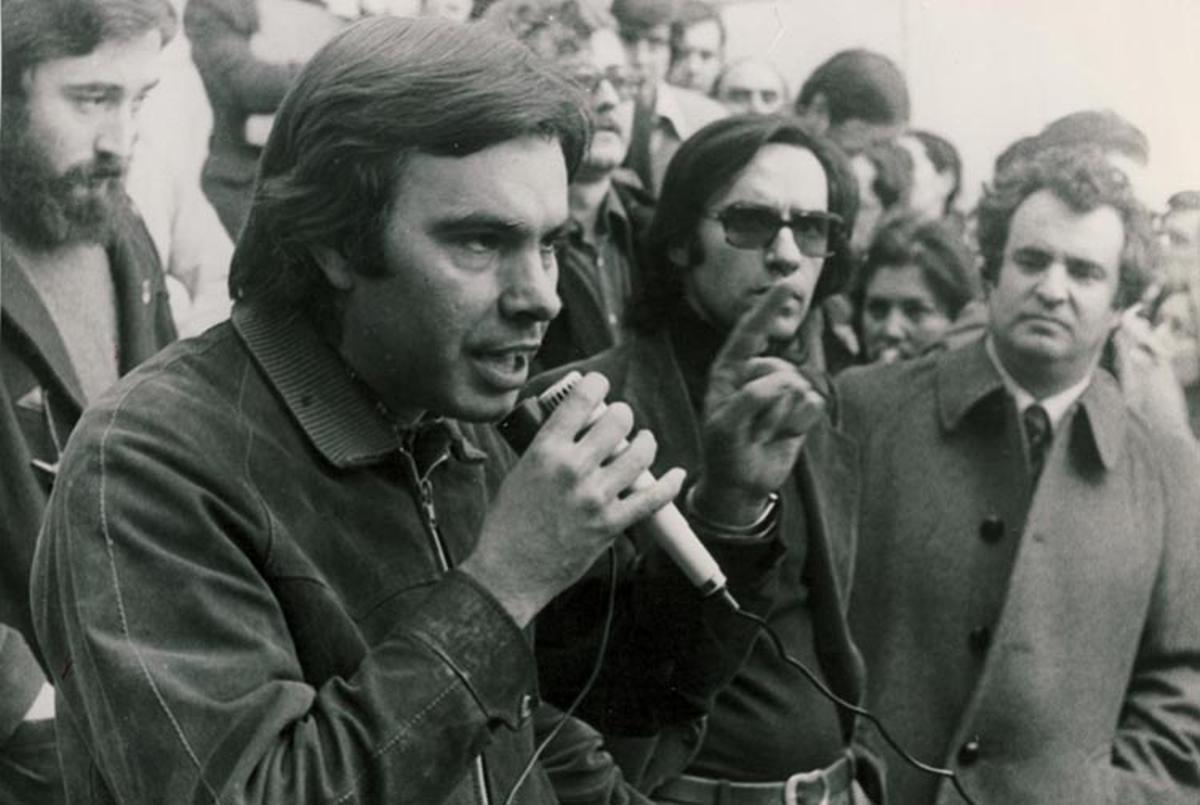
Meanwhile, a split was brewing in the party. The old leaders who were in exile and based in Toulouse were losing touch with the reality of what was happening in Spain, which caused the party’s popularity to drop. Members located in Spain itself wanted to correct the situation, but by 1972 the split had become obvious. Supporters of the party executives who were in emigration were nicknamed the “historic faction”, and supporters of renewal located in Spain itself were nicknamed the “renovators”7. They stood on positions of reformism.
In August 1972, González represented the Executive Committee of the Internal Party (renovators) at the 25th Party Congress, which took place in Toulouse, France. Two years later, in October, the 26th Congress took place, also held in France, and at this congress, Felipe González, who stood on centrist positions, was elected General Secretary of the party. From that moment, the reformist wing prevailed in the party, the split was eliminated, and over time the party became one of the main political forces in Spain8.

On the road to power
After the death of General Franco in November 1975, González headed part of the opposition in Spain — he became the head of the “Platform of Democratic Convergence”, which in March 1976 merged with the Democratic Council, supported by the Communist Party of Spain (PCE). This led to the creation of the coalition “Democratic Coordination”, also known as Platajunta9.
In December 1976, the 27th Congress of the Socialist Party was held in Madrid, which was the first congress held in Spain after the end of the Civil War, and at this congress González was confirmed as General Secretary. A resolution was also passed at the congress, affirming the PSOE as Marxist, international, and democratic. Famous social democrats of the time, such as Willy Brandt and Olof Palme, took part in this congress10.
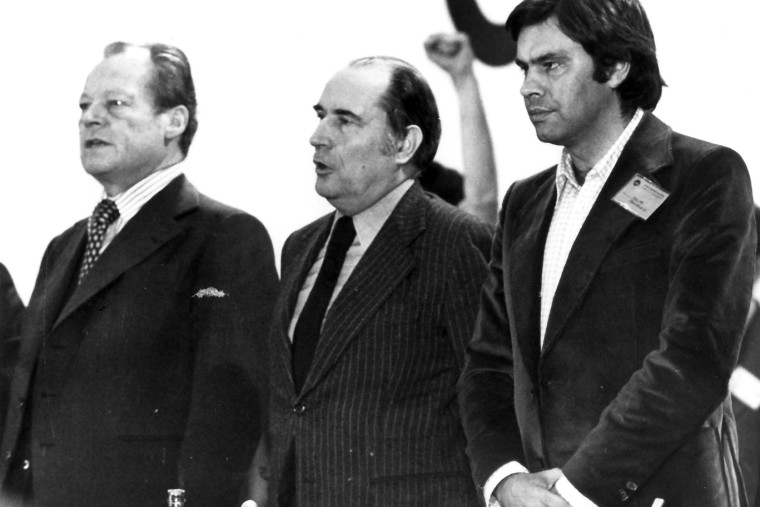
In 1977, Adolfo Suárez’s government legalized the party, allowing it to participate in the first general democratic elections that same year. By that point, the PSOE’s influence was already relatively broad. The election was won by the UCD (Union of the Democratic Centre) party with 34.44% of the vote, receiving 165 seats in parliament. The PSOE received 29.2% of the vote and 118 seats, becoming the second political force in the country, far ahead of the communists, who received only 20 seats.
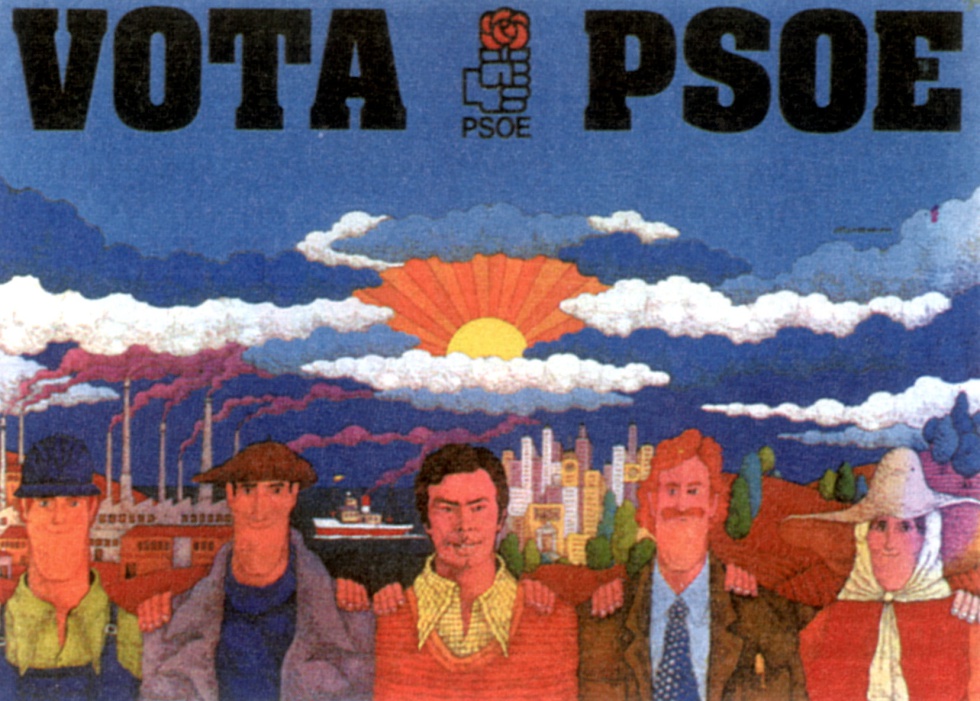
In the parliamentary elections of March 1979, the PSOE slightly consolidated its result, taking 121 seats. In the municipal elections, the party performed brilliantly. Despite this, it did not win the general election. This result convinced Felipe that further transformations were necessary. At the 28th Congress in 1979, González proposed a plan to reform the party, namely to officially abandon Marxist tenets and move closer to modern social democracy. This initiative was rejected, leading Felipe to resign11. Power passed to an interim committee. But at an extraordinary congress held in September of the same year, 86% of party members voted for Felipe González, which signaled the defeat of the Marxist wing12. He managed to remove the characterization “Marxist” from the PSOE’s definition, and the party began calling itself “class, mass, democratic, and federalist”13.
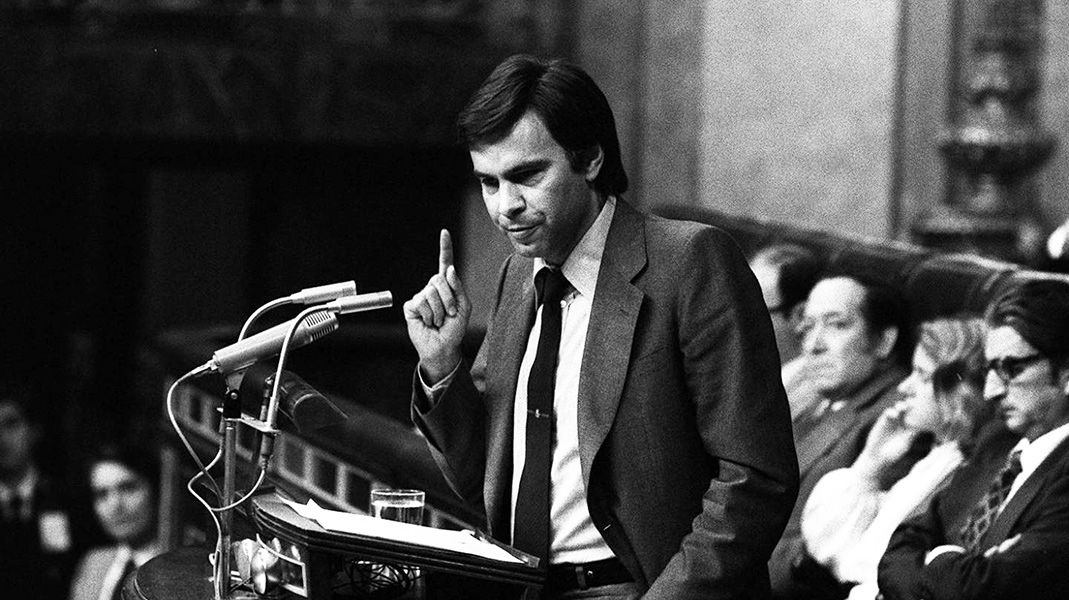
The growing crisis in the UCD, the failed coup attempt of February 23, 1981, and the worsening economic and social condition of society demonstrated the insolvency of the Spanish government’s past policies. The country was in need of new reforms14.
General elections were set for October 28, 1982, and the PSOE won a decisive victory running under the slogan “For a fair and egalitarian society”. The election campaign’s “Program for Change” did not foresee anti-capitalist transformations. González advocated “change within the realm of the possible”. The party received 48.3% of the popular vote in these elections, 202 parliamentary seats, 134 Senate seats, and almost half of the total valid ballots cast. It was the first absolute majority won by any party. Never before had a left-wing party in the country achieved such results, and to this day it remains the best result for any political organization since Spain’s democratic period began following the 1978 Constitution15.
The day before the new elections, a new military coup attempt was organized — this time more organized and larger in scale — but the conspirators were exposed. The government and the media downplayed the news to avoid alarming the public.
On December 2, 1982, Felipe González took office as Prime Minister of the socialist government, receiving 207 votes in favor, 116 against, and 21 abstentions. The government was formed on December 3. The 40-year-old González became the youngest head of government in Europe16.

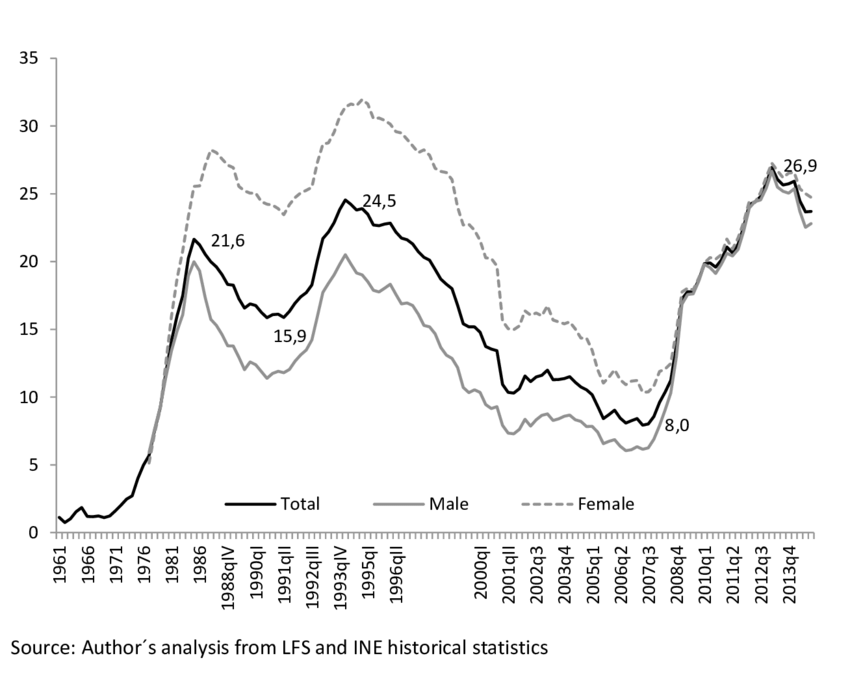
The social democrats inherited a country in a very difficult, disjointed state. The fragile democracy required a skilfully executed democratic transition (we can see from Russia’s example how difficult a task this is), and at any moment this transition could have been interrupted by a military uprising. Spain was regularly shaken by terrorist attacks by separatists, whose emergence was driven by Franco’s policies. In 1975, a sharp economic downturn began due to Spain importing 70% of its energy resources from other countries, which hit it hard during the energy crisis. When the PSOE came to power in 1982, the situation was truly severe — annual inflation stood at 16%, the country’s debts totaled 4 billion US dollars, and foreign exchange reserves were virtually depleted17. It was in the mid-1970s that an explosive growth in the country’s unemployment rate began18.
Moreover, even during economic growth under Franco, the standard of living in the country was not high, and between 1959 and 1973, about 2 million Spaniards left the country in search of earnings19. More than a fifth of the population in 1975 was employed in agriculture20. This was also reflected in social relations — for example, under Franco, a married woman could not apply for a passport or sign a contract without her husband’s permission.
In power
Despite all the above-mentioned troubles, it is worth noting that Spanish citizens handed the social democrats a very important trump card. The absolute majority of ministerial portfolios were now held by the PSOE (it should be added that their number had been reduced — the ministries of finance, economy, and commerce were merged into a single Ministry of Economy and Finance21), so the party had the opportunity to carry out broad transformations in accordance with its goals.
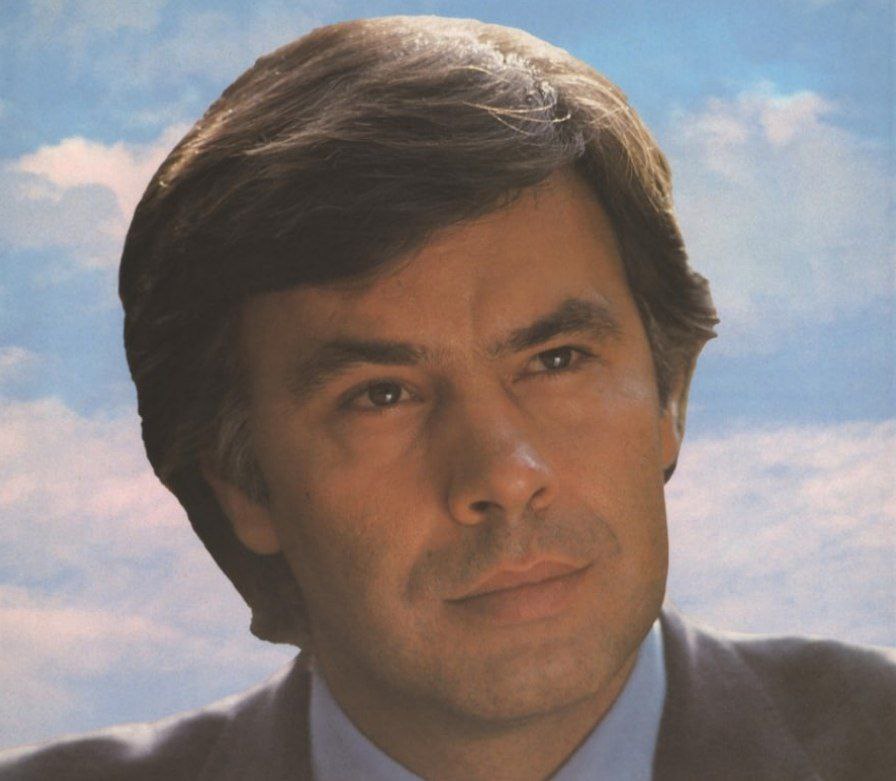
The implementation of the PSOE program was meant to bring Spain closer to the developed countries of Europe. According to the party’s vision, all of Spanish society was to undergo modernization. Abandoning the practice of frequent nationalizations, creating 800,000 new jobs, restructuring the economy for greater efficiency and competitiveness, assisting small and medium-sized companies while altering the structure of large ones, establishing a more egalitarian society with a national system of healthcare, education, and pensions22 — this was what characterized the policies of the PSOE.
As Santos Juliá noted, the party committed to “change everything without revolutionizing anything”, as part of a “project for the regeneration of the state and society”. The program was ambitious even for a stable situation, and Spain at that time was far from it. Economic stagnation, unemployment, high inflation, and a high budget deficit had been observed for a long time and had not disappeared anywhere. Let us begin with the changes that were carried out in the military, as one of the main threats to democracy came from there.
Military reform
Reforming the army began even before the PSOE came to power. Under the socialist government, the command structure was gradually reduced by 20%, as there were too many officers who were engaged in bureaucratic procedures instead of commanding troops. But far more important was the passage of Organic Law 1/1984 (Ley Orgánica 1/1984). It established that the Joint Chiefs of Staff would now become an advisory body reporting to the Minister of Defense and the Prime Minister. The Navy, Air Force, and Land Army were unified into a single organizational structure, creating a new figure — the Chief of the Defense Staff, who reported directly to the Minister of Defense. Furthermore, the legislation clearly established the supremacy of civilian authority over the armed forces and restricted the powers of military justice by creating a special chamber of the Supreme Court and reducing the number of military regions from nine to six23.

These measures culminated in the final integration of the military into the administrative structure through the creation of the position of Secretary of State responsible for the army’s economic resources, as well as a Deputy Secretary responsible for personnel policy. This made it possible to appoint civilians to leadership positions in the Ministry of Defense, which served as a barrier against coup preparations24. By Royal Decree 1/1987 (Real Decreto 1/1987), the Directorate-General for Defense Policy came under the direct control of the government25 . The duration of mandatory military service was reduced from 15 to 12 months in 1984 and from 12 to 9 months in 199126, and conscientious objection to military service was regulated27, which, after coming into force in 1988, led to a massive influx of thousands of young people wishing to perform social service instead of military service. In 1988, the admission of women to service in certain arms and branches of the armed forces was regulated28.
Despite all these measures, a military coup attempt was nevertheless made in 1985. However, it failed, and it was the last attempt by the military to seize power. Though, who knows? The 1985 coup attempt was not known to the public until 1997, when Felipe González disclosed it himself29. In any case, it can be said that Spain successfully managed to avoid a reactionary military coup, and no small credit for this goes to the social democrats.
Anti-terrorist policy
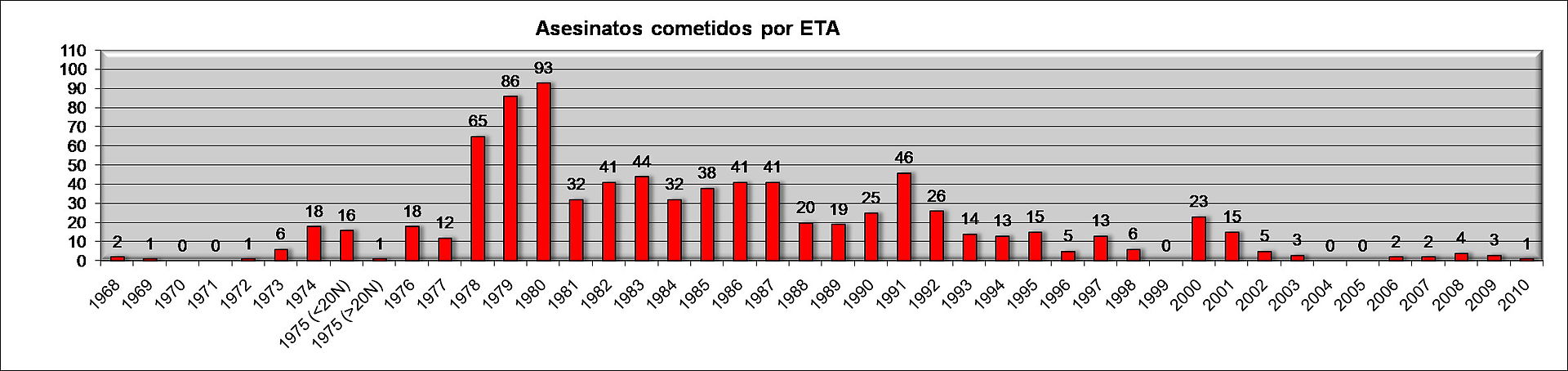
One of the acute problems the PSOE government had to fight was terrorism. Spain had long suffered from the activities of various terrorist groups that proliferated under the Franco regime — ETA, MPAIAC, GRAPO, Terra Lliure, and so on. The most famous of them was ETA — Euskadi Ta Askatasuna (Basque Country and Freedom). This was a Basque radical left-wing group that originally opposed the Franco regime, but later became separatist and used terrorist methods. In the 1960s and 1970s, the group became more active and carried out numerous terrorist attacks. In one of them, Luis Carrero Blanco, Franco’s potential successor, was killed. One might have thought that after the fall of the fascists, ETA would cease terrorist activities, but the opposite happened — their activity increased30. In 1979 and 1980, the number of murders committed by the organization was estimated at 86 and 93 people, respectively.
Felipe González’s government initially tried to solve the problem through negotiations with the leadership of ETA that would lead to self-dissolution, as had happened with the political-military wing of ETA in 198131. However, the so-called Algiers talks did not lead to any results32. Therefore, it was decided to conclude a major anti-terrorist pact with parties in the Basque Country to work together to eradicate ETA. Negotiations with them were successful, and the Agreement for the Normalization and Pacification of the Basque Country was signed, better known as the Ajuria Enea Pact33.
In 1986, on March 13, Organic Law 2/1986 was enacted. Now the National Police Corps and the Higher Police Corps (the secret police) were merged, while the Civil Guard was preserved34. The first social democratic government adhered to a policy of social reintegration for imprisoned terrorists who denounced ETA’s violence and distanced themselves from it35. Later it became known that the first PSOE government acted against terrorism through more than just diplomatic means. Specially to counter ETA, the GAL “death squads” were created, which fought Basque terrorists using their own methods — namely kidnappings, torture, and assassinations36. Later this would be called the “dirty war”. The disclosure of data about GAL would lead to a high-profile scandal.
A few months after the signing of the Ajuria Enea Pact, two police officers involved in kidnappings and other crimes committed by GAL were arrested. The assistance provided by the Ministry of the Interior to this organization became known, after which Minister of the Interior José Barrionuevo resigned37. He was replaced by José Luis Corcuera, who passed a citizen security law, known popularly as the “kick in the door law”, because it allowed law enforcement forces to burst into a house where, in the opinion of law enforcement officers, a crime was being committed, without judicial authorization. The law would later be struck down by a ruling of the Constitutional Court38.
However, state terror must be condemned even toward terrorists themselves, as it undermines trust in state institutions, violates the principles of humanism, and greatly increases the chance of maiming or even killing innocent people in the course of such activity.
In the PSOE’s last year in power — 1996 — the number of people killed by ETA dropped to 5. The group gradually weakened, and in 2011, under the government of social democrat José Luis Rodríguez Zapatero, it announced a permanent cessation of armed activity39. The activities of other terrorist groups were stopped even earlier, and today the level of terrorist threat in Spain can hardly be assessed as higher than in other developed countries.
Democracy and autonomies
When the PSOE took the reins of Spain, it was a country with a fragile young democracy threatened by terrorism and the danger of a military coup (however, a significant number of democratic reforms had already been carried out by that time). It is difficult to assess how high the success was by 1996, when Felipe González ceased to be prime minister, since authoritative democracy indices did not yet exist then. However, in the first index published in 2006 by The Economist, Spain already occupied a very respectable 16th place and was classified as a “full democracy”40. Britannica notes that the González government played a major role in consolidating democracy in Spain41.
Spain comprised many regions that wanted greater self-government. The democratic authorities knew this and decided to accommodate them. According to the adopted Constitution of 1978, Spain became a unitary decentralized state. However, there were still enough issues that needed regulation. And Felipe González made his contribution to their resolution. In 1981, he signed a pact with Calvo-Sotelo’s UCD on regional policy42, and on July 30, 1982, the Organic Law on the Harmonization of the Autonomy Process (LOAPA) was passed. Nationalist parties considered the law unconstitutional, and the Constitutional Court upheld their appeal43. Following the introduced amendments, Law 12/1983 (Ley 12/1983) was ultimately issued. This law granted several remaining regions the status of autonomous communities and carried out a large-scale decentralization of the state budget, which in the end transferred to the regions the powers provided for in their statutes (previously, these powers were managed by the central government)44. By 1988, the average spending of the autonomous communities had already reached 20% of total public expenditure and continued to grow. Spain was following the path of decentralization, in which it succeeded greatly45.
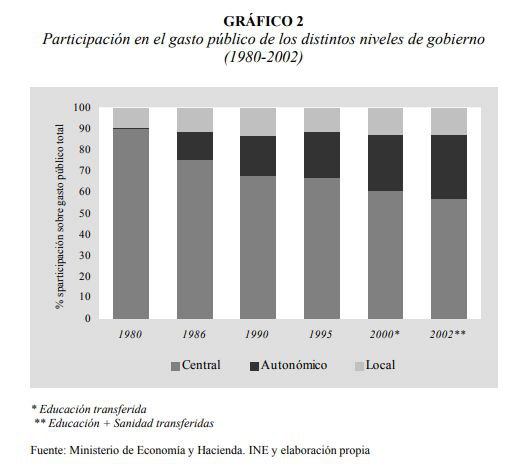
In 1992, a second regional pact was concluded between Felipe González and José María Aznar. Under it, 32 competencies were transferred to the autonomous communities46. 10 additional legislative reforms affecting this issue were passed by Congress in 1993. But even these measures did not satisfy everyone (recalling ETA). Spain achieved success in this direction during the period of democratic consolidation, but even now the problem of regional autonomy has not been fully resolved47.
Strengthening rights and expanding freedoms
Organic Law 6/1984 added the Habeas Corpus procedure to the Spanish legal process. This is a procedure aimed at preventing unlawful detention, guaranteeing the rights of the detainee and providing them with access to effective judicial protection. A suspect could now challenge their detention in court48. And thanks to Organic Law 7/1985, foreigners were guaranteed the same freedoms as Spanish citizens. The types of penalties for offenses were also set out49.
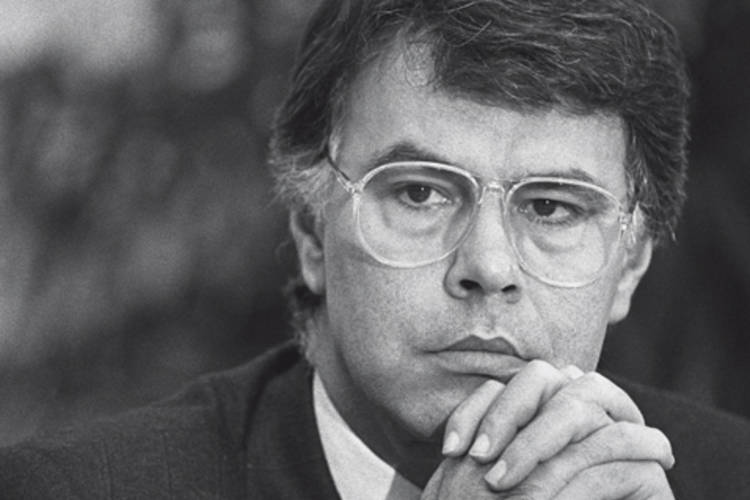
A major achievement was Organic Law 9/1983, which replaced the previous regulation of public assembly. It was passed because the previous law no longer complied with the constitution. Authorization from the authorities was no longer required for assemblies and rallies, and defending this right in court was simplified. In addition, organizers of rallies were required to notify the administration if protests were planned in areas of public traffic — the authorities could veto such protests, but compelling reasons were required for a ban50.
One of the most controversial was the Abortion Law (Ley Orgánica 9/1985). The Catholic Church and the Popular Alliance party tried to prevent or overturn it, but without success. This law did not fully decriminalize abortion, permitting it only in three cases: a serious risk to the physical or mental health of the pregnant woman, rape, and malformations or defects (physical or mental) in the fetus. However, this was quite significant progress, as abortion had previously been banned in any form51.
Freedom of the press was expanded and the independent functioning of the judicial system was ensured52. The reform of the Supreme Court is worth noting. Previously, the Cortes (the name of the Spanish parliament) could select only 8 out of 20 judges, while the rest were elected within judicial bodies. Now all judges were chosen by the Cortes. This decision was made because of the right-wing and even reactionary views of Supreme Court judges. Not everyone liked this decision, and attempts were made to overturn it by appealing to the Constitutional Court, but it rejected the appeal. To the author of the article, this also seems a dubious decision, since the principle of separation of powers is violated (critics of the reform also noted the violation of this principle)53.
Social and economic reforms
“During their years in power, the Socialists reduced the workweek (to 40 hours) and increased paid leave (to 30 days), strengthened the progressive nature of taxation favorable to low-income individuals and pensioners, raised benefits and pensions for large families, integrated millions of Spaniards into the state healthcare system, passed laws expanding worker representation at enterprises, and took measures to democratize general and higher education. In 1986, the country joined the European Economic Community, which was accompanied by a sharp increase in the import of Western capital, equipment, and technology. González made a major contribution to the deep democratization of Spanish society and the modernization of the economy, thereby laying the foundations for its further surge”.
Felipe González’s government paid significant attention to education. The Spanish educational system was rather archaic and required modernization to bring it into compliance with the Constitution and later with European Union standards. One of the laws — LODE (Organic Law Regulating the Right to Education) — stipulated that parents themselves could choose an educational institution for their child, whether private, state, or religious. It regulated the distribution of grants between the state and private schools. Autonomous communities could now influence the curriculum in their region. A school council was also created in schools — a body through which teachers and parents regulated the educational process54.
The LOGSE law (Organic Law on the General Regulation of the Education System) provided for the introduction of an education system for children with special needs55. It ensured universal and free public education for children up to 16 years of age56. LOPEG (Organic Law on Participation, Evaluation and Governance of Educational Establishments) developed school councils. Now they could include: teachers, students, families, administrative and service personnel, representatives of municipalities, and owners of private schools. School councils chose school directors, selected changes to school lessons, or resolved issues regarding the introduction of new subjects57.
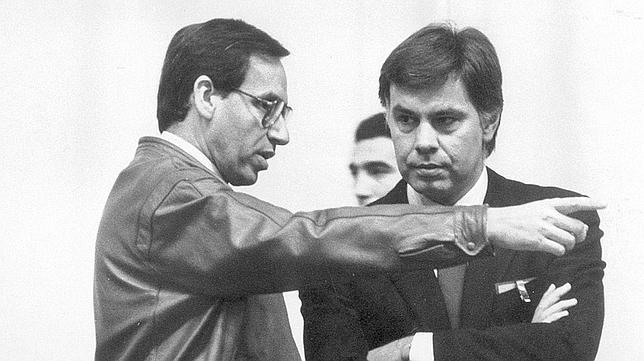
In 1986, the Cortes passed Law 14/1986 (Law 14/1986 of April 25, General Health Act), thereby establishing universal free healthcare in the country. Now every citizen and working foreigner could receive free medical care (except for dental services, complex surgical operations, or cosmetic surgery)58. A comprehensive social security system was established59.
The González government’s economic reforms can be characterized as involving hard choices. Before the reforms, Spain’s economy in part resembled that of the USSR, primarily in the number of military, obsolete, and redundant state-controlled industries, which became particularly noticeable against the backdrop of the 1970s oil crisis60. You may remember how hard Russia went through its transformational crisis. The situation in Spain was not as dire, but the measures that had to be taken were clearly unpopular with the population, which became one of the main causes of the PSOE’s61 future crisis.
The first law that attempted to reform the country’s industry62 was passed in 1981, before the PSOE came to power. The next, more advanced law was passed by the Social Democrats63. In 1984, the Law on Reconversion and Reindustrialization [reconversion is the process of converting once-civilian enterprises that became military back to civilian ones; reindustrialization is the restoration of industry — A.K.] was passed, which was in force until the end of 1986 (Ley 27/1984, de 26 de julio, sobre reconversión y reindustrialización). The goal of the law was to increase profitability and productivity by restructuring financial liabilities and eliminating excess capacity through workforce reductions and the introduction of new technologies. The counterweight to job cuts was investment in new technologies in high-growth potential sectors, as well as retraining measures64. The steel industry and the related shipbuilding industry suffered the most. The remaining steel enterprises tied to production were merged into a single company known as Corporación Siderúrgica Integral (CSI)65.
After Spain joined the EC, Brussels issued recommendations to continue this policy. As a result of the reconversion, many factories were closed, and personnel and capacity were severely reduced, causing many people to take early retirement or become unemployed altogether. However, the crisis in the steel industry was overcome, and it became competitive66.
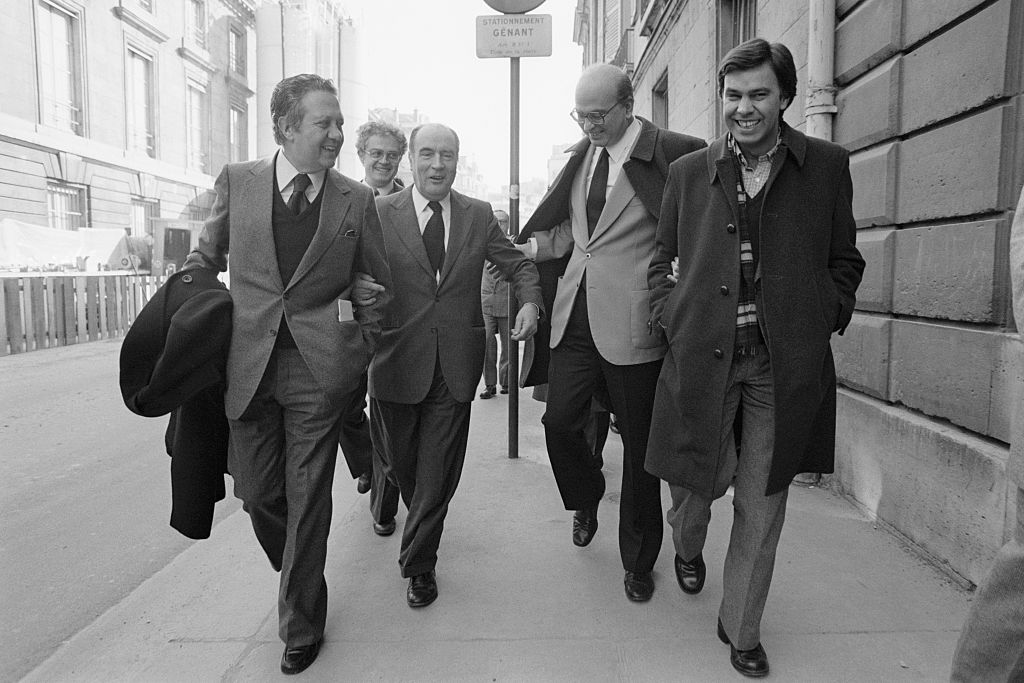
Privatization was a rather popular measure in combating the crisis during those years, not only in the post-Soviet space, but also in Europe. Spain did not escape this measure either. The goals of this policy remained the same: to make enterprises efficient, relieve the budget of expenses, and raise money from company sales to cover the budget deficit. In doing so, the state often retained a substantial percentage of company shares.
Privatization took place in 2 stages. In the first wave, loss-making enterprises were privatized. In the second wave, privatization was partial and served as a source of additional revenue67. Examples of the first wave include corporations such as SEAT and ENASA (2 major automotive companies). Examples of the second wave are Endesa, Repsol, Argentaria, or Telefónica (oil, banking, and telecommunication companies). A total of 80 companies were privatized68.
Along with privatization, one can highlight the nationalization of one holding company — Rumasa. Initially, the party’s program did not include a plan to nationalize this holding company, but the corporation became mired in debt that it could not repay, even though 60,000 people worked for the company (the holding company spanned the most diverse sectors of the economy, from cosmetics and military shipyards to department stores and banks). Given the crisis prevailing at that time, the collapse of such a huge company could not be allowed. The holding company was expropriated and then reprivatized in parts (the holding company was so large and diversified that finding a buyer for the entire structure would have been problematic). The reprivatization process was completely finished only in 2002 (for context: it was initiated in 1983)69.

As a result of the reforms, inflation fell to 4.5 percent by 198770. By the mid-1980s, Spain had attained a high level of economic performance.
Foreign policy
The foreign policy of Felipe González’s cabinet was aimed at the final opening of the country to the world after the fall of the Franco regime. Geographic and cultural positioning gave Spain quite specific ideas about which countries it should closely interact with. In this regard, the most promising direction was the European Union. Accession to the EEC (European Economic Community — the name of the EU prior to 1993) did not cause controversy among any opposition governments during Franco’s rule, as the Community (EEC) and the government in exile cooperated. Europeans sheltered the Spanish opposition on their territory and also conveyed in every possible way that Spain could become part of the union only as a democracy, which was naturally supported by the opposition. Although even the dictator Franco wanted to cooperate with the EEC for economic reasons71.
The first step toward accession was taken back in 1962 by Franco’s Minister of Foreign Affairs, Fernando Castiella. In 1977, the already democratic government submitted an application for accession. However, time was needed to prepare Spain’s integration into the EEC structures, as Spain had to confirm its democratic status, reach an agreement with France regarding competition in agribusiness, and prepare its structures for integration72. Finally, on June 12, 1985, Felipe González signed the acts of accession of Spain to the European Community. On January 1, 1986, Spain’s official entry into the EEC took place. On the same day, neighboring Portugal also joined the EEC. It now consisted of 12 countries73. After integration, Spain still faced adaptation, but it began receiving grants from the Community. This led to strong GDP growth — this indicator grew faster than anywhere else in the EU until 199374.

In 1991, Spain signed the Schengen Agreement, and in 1992, the Maastricht Treaty (a treaty regulating economic relations, which established the grounds for transitioning to the euro). In 1994, the Cohesion Fund was created for EU member states whose GNI per capita was below 90% of the EU average, thanks to which Spain received money from this fund. It developed environmental and infrastructure projects75. In 1993, González was awarded the Charlemagne Prize for his contribution to European unity, becoming the third Spaniard to receive this award. In 1994, he was nominated for the post of President of the European Council, but he declined due to the large number of still unresolved problems in his own country76.
Establishing relations took place not only between Spain and the Community, but also between individual countries, which, of course, was also important for joining the EEC. Felipe González initiated regular summit meetings with Germany and Italy, and even earlier with France and Portugal. He had particularly good relations with German Chancellor Helmut Kohl (despite the fact that Kohl was a Christian Democrat). In 1990, Kohl thanked González for his firm support of German reunification (for instance, Thatcher was opposed to it, and Mitterrand spoke of it with regret), and Germany supported Spain in the EEC.
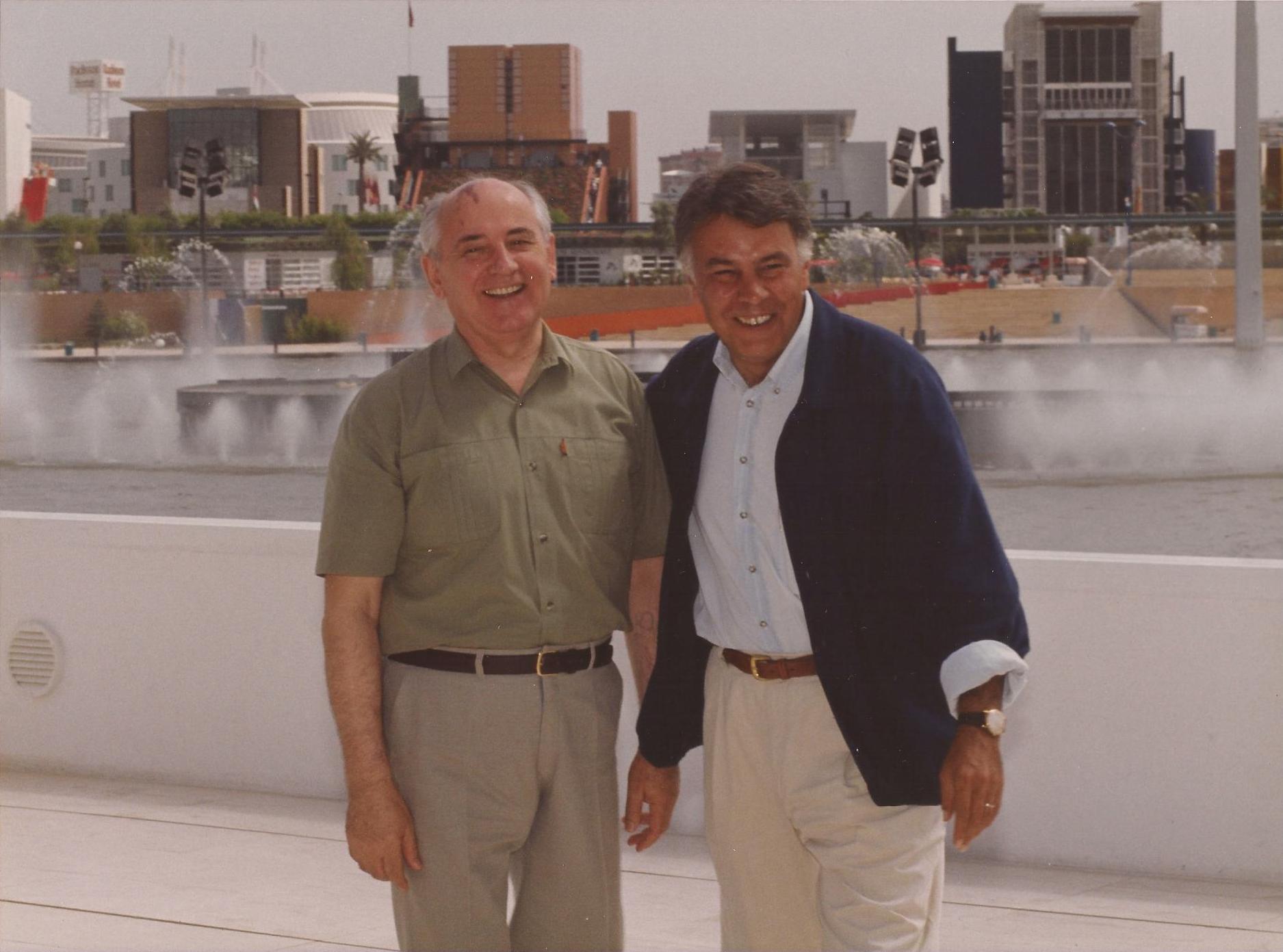
Spain’s accession to NATO cooled relations between the USSR and Spain, but after the start of Perestroika, relations became positive. The King of Spain paid an official visit to the USSR in 1984. Gorbachev was invited to Madrid in 1990, and in July 1991, the Spanish-Soviet Treaty of Friendship and Cooperation was signed. In December 1991, Spain recognized the independence of the Russian Federation. During a visit to Madrid, Boris Yeltsin and González signed the Spanish-Russian Treaty of Friendship and Cooperation in 1994, and in 1995, a meeting between the two politicians was arranged in Moscow77.
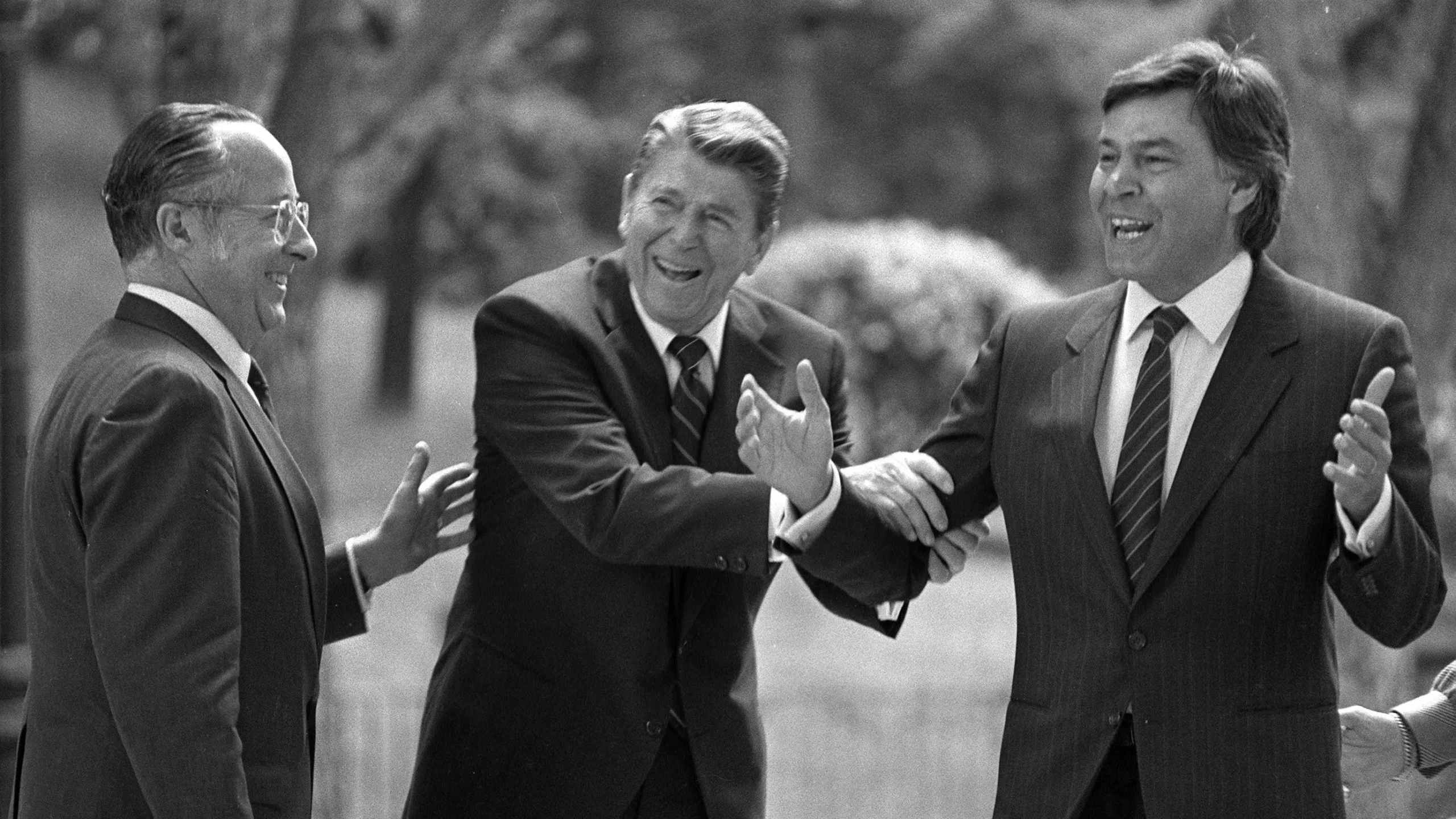
On June 20, 1983, González made an official visit to Washington, where he was received by President Ronald Reagan, who described González in his diary as a “sharp, articulate young man, a moderate and pragmatic socialist”78. Further, in 1985, two meetings of the leaders of these countries took place: one in Madrid, the other in Washington. In 1989, a defense cooperation agreement was signed, allowing the US to use certain Spanish military facilities79. On June 7, 1989, an agreement on cultural and educational cooperation was signed80.
Relations between the new Spain and Cuba were not easy to build. For instance, after Franco’s death, mourning was declared in Cuba (despite one regime being communist and the other fascist, they cooperated); Fidel Castro also spoke unflatteringly of the monarchy in Spain and helped harbor ETA members. However, some friendly ties were established: for example, in 1982, an agreement on cultural and educational cooperation was concluded. During his Latin American tour, González visited Cuba, where he received the Order of José Martí. Castro, for his part, visited Spain for the second Ibero-American Summit and visited the cities where his father was born and grew up81.
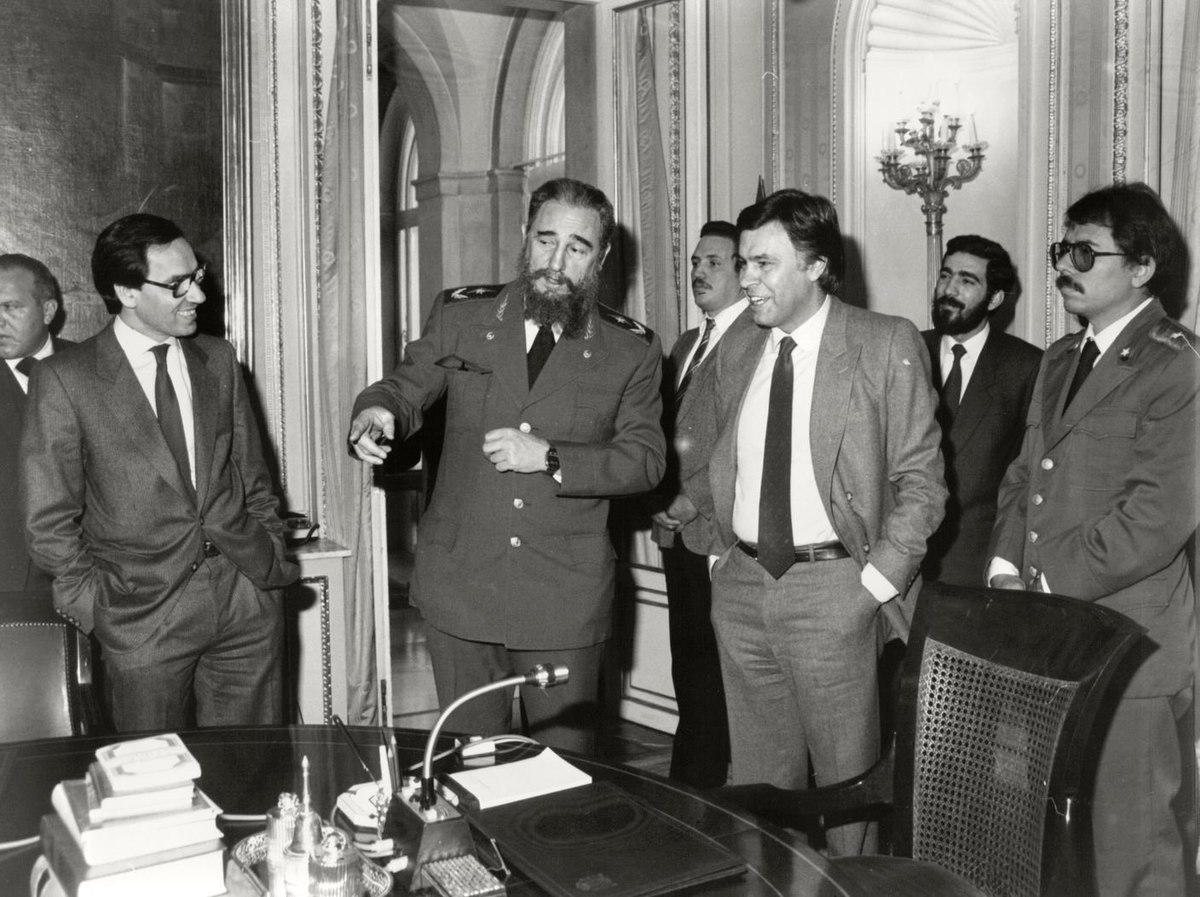
Spain became the main initiator of the Ibero-American Summit. The aim of these summits was to expand cooperation between Spanish- and Portuguese-speaking countries. It included most countries of South and North America82. The first summit was held in Mexico, and the second in Madrid on the 500th anniversary of the discovery of the New World.
On January 17, 1986, Spain recognized Israel83. Initially, the PSOE was opposed to the country joining NATO, but over time the party’s position on this issue began to change, and in 1984 Felipe González delivered a decalogue (a collection of 10 principles) on peace and security, in which, among others, important principles of Spain’s participation in NATO were formulated:
- Spain’s participation in the Alliance will not entail its inclusion in the integrated military structure (that is, Spanish troops will be commanded by the Spanish General Staff, not by NATO Headquarters);
- The prohibition on the entry of nuclear weapons into Spanish territory, their installation, or storage will be maintained.
On May 12, 1986, a referendum on the country’s participation in NATO took place, where 52.54% of the votes were cast “in favor”. Although the referendum was largely consultative, from that moment on Spain began its participation in all NATO committees, working groups, agencies, budgets, and defense planning, with the exception of the integrated military structure. An agreement was concluded with the US and NATO that the deployment of Spanish troops in NATO missions would be agreed upon on a case-by-case basis; the allies would retain operational control, but allied troops in Spain would be commanded by Spanish commanders84.
In 1992, Barcelona hosted the 25th Olympic Games. These were the second games held in a Spanish-speaking country (the first was Mexico), and for the first time in many years there was not a single country that boycotted the games. Many new facilities were restored and built in the city, some of which were dismantled, but most found new uses85. In the same year, the international exposition Expo ’92 was organized in Seville86. Like Barcelona, the city also underwent reconstruction – for example, a new railway station was built, which began receiving the first high-speed trains in Spain along the Madrid-Seville line87. Madrid, for its part, received the status of “European Capital of Culture” in 199288. Finally, 1992 marked the 500th anniversary of the discovery of America.
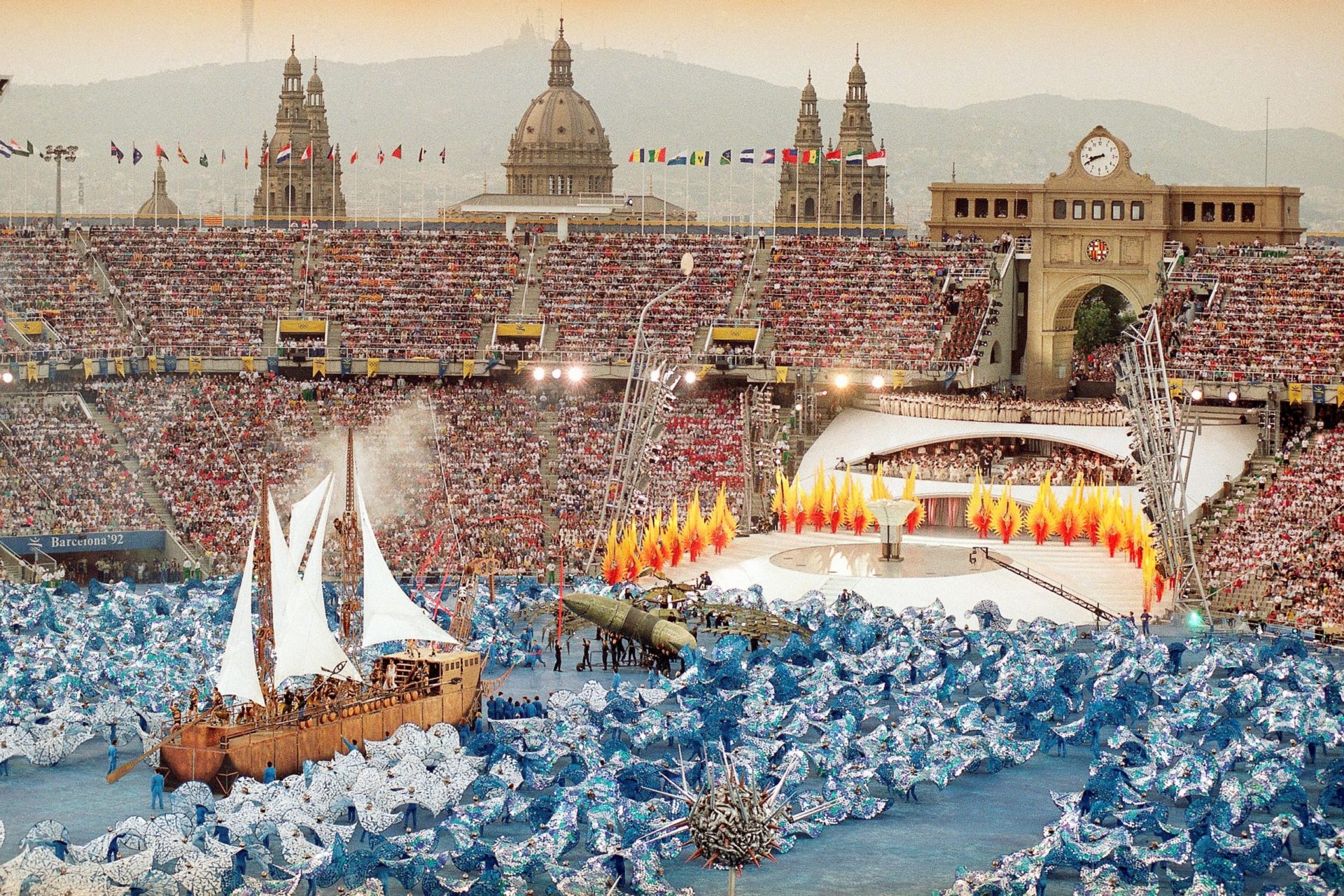
Felipe González’s main achievement here was that he carried out European integration, and Spain became a European country, a full member of the European Union, feeling unity with Europe. Spain’s openness to the world, the awareness of it as a normal country that poses no threat to others, and the enhancement of its prestige on the international stage also came over time.
Crisis
The economic policy of reconversion and reindustrialization, along with González’s labor reforms, was initially accompanied by a reduction in unemployment, but at the same time many production facilities were closed, which caused discontent among citizens. It escalated into strikes and rallies that continued practically throughout Felipe’s entire term in power (as is well known, social democrats usually favor citizens’ rights to hold strikes and express their civic position). The largest of the rallies occurred at the end of Felipe González’s second term in power, in 1988. It was caused by the Plan de Empleo Juvenil (Youth Employment Plan) law. The strike engulfed and paralyzed the entire country. Public transport was not running, the streets were empty, and even national television channels stopped broadcasting. The government made concessions to the protesters89. 10 months later, national elections were held, the results of which allowed the PSOE to retain an absolute majority of seats; however, a decrease of 800,000 voters compared to the previous elections was revealed.
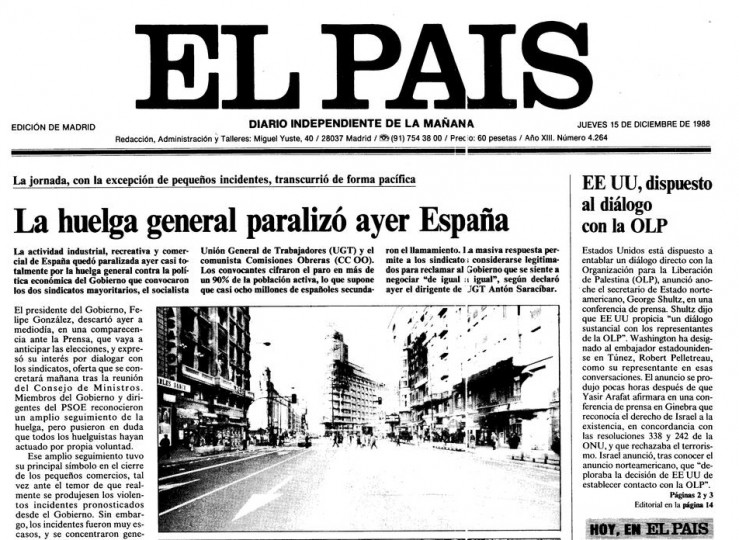
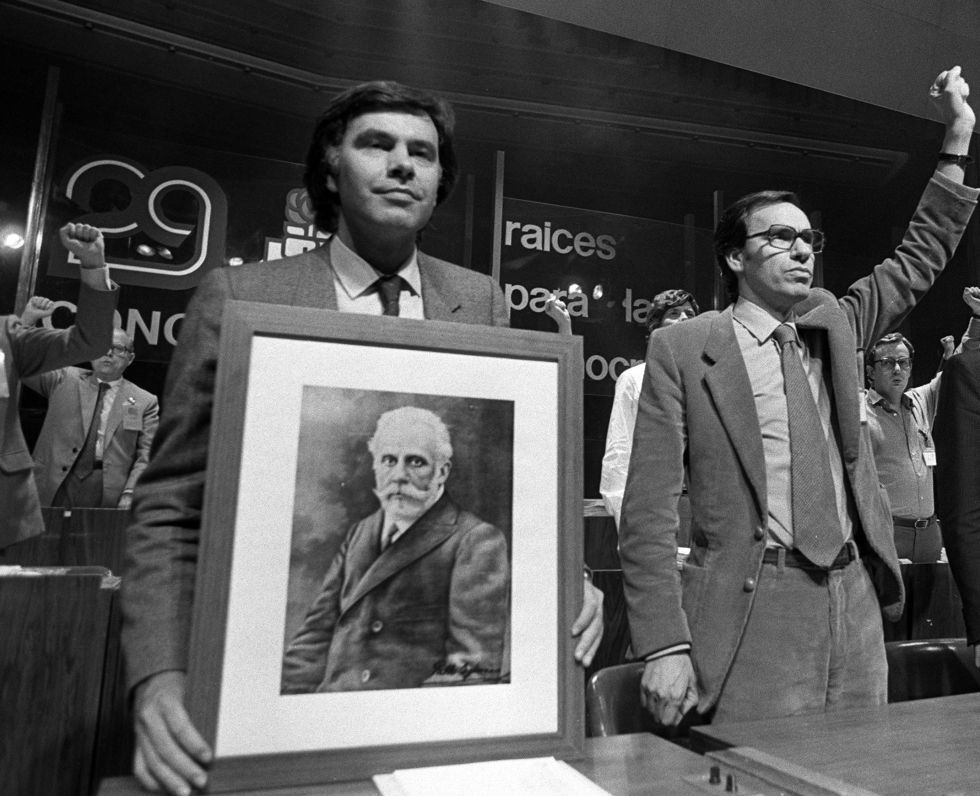
The 1988 general strike and the results of the 1989 elections caused a split into two wings – guerristas (warriors) and renovadores (renewers). The leader of the guerristas was Alfonso Guerra, González’s deputy. The leader of the renewers was considered to be Solchaga (the Minister of Economy, who advocated the idea of economic liberalization). For observers, the struggle was less ideological and more of an apparatus conflict. At the party’s 32nd Federal Congress, the power of the guerristas diminished. González, relying significantly on the renewers90, was re-elected head of the party.
The total decline of the guerrista faction occurred after Guerra resigned on January 12, 1991, following the exposure of his younger brother in corruption, tax evasion, and abuse of power91. Earlier, González had said that if anyone secured Guerra’s resignation, he would resign himself92. However, the promise was not fulfilled. In place of Guerra, the prime minister chose Narcís Serra, which dealt a severe blow to the guerristas. But the resignations did not end there; they continued throughout the 1990s.
The social democrats were in power for 14 years – from 1982 to 1996 – and this could not fail to negatively affect their efficiency. People voted for them because they were effective, but over such a long time in power, any political force tends to deteriorate, which is what happened to the PSOE. On January 13, 1992, Minister of Health and Consumer Affairs Julián García Valverde resigned, presumably due to his involvement in illegal land transactions93. On November 19, 1993, Minister of the Interior (since 1988) José Luis Corcuera Cuesta resigned after his law (“kick-in-the-door law”) was declared unconstitutional94. Antoni Asunción Hernández, who replaced Corcuera, stayed in his post for just over five months. He had to resign on April 30, 1994, to take political responsibility for the escape and disappearance of the former Director General of the Civil Guard, Luis Roldán Ibáñez, accused of corruption amounting to more than 100 million pesetas. Later, in 1995, Ibáñez was detained in Laos95. Due to corruption, Minister of Agriculture, Fisheries and Food Vicente Albero Silla also resigned96.
Baltasar Garzón Real resigned just one day after leading the Ministry of the Interior, as the functions of his Ministry of Justice were reduced. He received the 2nd place on the election lists in Madrid after González himself. Baltasar accused González of a passive attitude toward corruption97. However, despite this, the PSOE won the 1993 elections98. However, it lost the European Parliament elections to its main opponent — the People’s Party (Christian Democrats). Defeats also befell the PSOE in the 1994 municipal and regional elections99.
But the most important event occurred on July 28, 1995, when Vice President Serra and Minister of Defense Julián García Vargas resigned due to a scandal involving illegal wiretapping of statesmen, judges, businessmen, and even the king by Spain’s intelligence service100. Felipe González’s involvement in corruption, wiretapping, or GAL was never proven. Added to the corruption scandals was the 1993 economic crisis caused by the crisis in Japan and the Persian Gulf War: unemployment figures rose, reaching 24% in 1994, a 1% drop in GDP in 1992 was observed, along with high inflation rates101.
The upcoming elections were moved from July 6, 1997, to March 3, 1996, because the government failed to agree on a budget. After all these scandals, González no longer wanted to lead the party into the elections, but no other candidates for this role could be found. The PSOE campaigned by frightening voters with the possible dismantling of the welfare state if they lost, which resonated with socialist voters102. However, despite the PSOE losing the elections, the collapse predicted for it did not follow — the party won 37.6% of the vote, which was 1% less than the winning People’s Party. González called these elections a “sweet defeat”. This brought an end to the longest single-party rule since Spain’s democratization103. The social democrats would return to power in the future, with renewed personnel.
After the premiership
In December 1996, Felipe González headed the OSCE group in Belgrade, where he investigated alleged irregularities in the municipal elections and mediated between Milošević and the opposition. Later, in 1998, he became the joint OSCE and EU envoy for Kosovo, but Belgrade refused to receive him104. In 1998, he was offered the post of President of the European Commission again, but he declined105.
At the 34th PSOE Congress in 1997, Felipe González stepped down as secretary general of the party. For many Spaniards, this came as a surprise. Perhaps he realized that his time had come and the party needed to move forward106. On January 29, 1998, González, who held a parliamentary seat for Madrid, officially distanced himself from the post of party leader. His parliamentary career ended after the PSOE victory under Rodríguez Zapatero in 2004107.

In 1978-1999, Felipe González was one of the vice-presidents of the Socialist International and was appointed to a commission tasked with creating a new manifesto for social democratic ideology in response to globalization108. The text of this manifesto is now seen as a synthesis of Tony Blair’s “New Labour” and Lionel Jospin’s more classical path. The former Spanish prime minister is also a member of the Club of Madrid — a non-profit association of former presidents and prime ministers promoting democracy worldwide, founded in 2002109. For some time, he has been a full member of the Club of Rome (a public organization that includes politicians, economists, scientists, and cultural figures working on the perspective of harmonizing humanity and nature)110.
On December 14, 2007, the EU government appointed him chairman of the reflection group “Future of Europe”, also known as the “Committee of Wise Men”. The committee develops EU policy across various areas: from economics and ecology to energy and international security. Work in the committee is not mandatory, but deadlines for creating documents exist. In January 2008, in an interview with the British newspaper Financial Times, Felipe González warned that Europe, in terms of economy, technology, and competitiveness, is “losing influence in the geopolitical sphere”, and that decisive action must be taken to reverse this trend111.
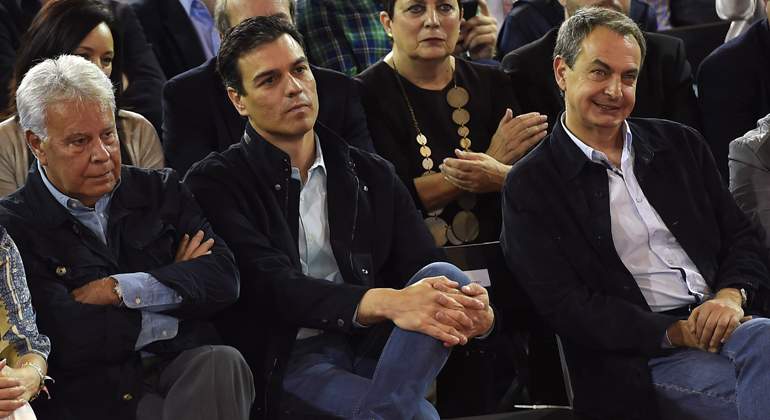
After González’s departure from government, King Juan Carlos of Spain offered him a noble title. Felipe thanked him for the offer, but declined for reasons of personal and political consistency based on his status as leader of a party that declared itself socialist and worker-oriented. In 1998, his native autonomous community awarded him the honorary title “Favorite Son of Andalusia”.
We thank Elizaveta Balakina for her assistance in editing the article.
- S. M. Khenkin. González Felipe // Big Russian Encyclopedia (old.bigenc.ru). [Online resource]. URL: https://old.bigenc.ru/world_history/text/5903903 (Accessed: 04.03.2023).
- M. Ray. Felipe González Márquez // Encyclopedia Britannica (www.britannica.com). [Online resource]. URL: https://www.britannica.com/biography/Felipe-Gonzalez-Marquez (Accessed: 04.03.2023).
- R. O. Zárate. Biography Felipe González Márquez // Biography Felipe González (www.felipegonzalez.es). [Online resource]. URL: https://www.felipegonzalez.es/en/biography/ (Accessed: 04.03.2023).
- S. M. Khenkin. González Felipe // Big Russian Encyclopedia (old.bigenc.ru). [Online resource]. URL: https://old.bigenc.ru/world_history/text/5903903 (Accessed: 04.03.2023).
- Ibid.
- Ibid.
- Ibid.
- Ibid.
- M. Ray. Felipe González Márquez // Encyclopedia Britannica (www.britannica.com). [Online resource]. URL: https://www.britannica.com/biography/Felipe-Gonzalez-Marquez (Accessed: 04.03.2023).
- Felipe Gonzalez // Fundación Euroamerica (www.euroamerica.org). [Online resource]. URL: https://www.euroamerica.org/felipe-gonzalez-cv (Accessed: 04.03.2023).
- Felipe González: “Hay que ser socialistas antes que marxistas” // El País (elpais.com). May 22, 1979, 00:00. [Online resource]. URL: https://elpais.com/diario/1979/05/22/espana/296172016_850215.html (Accessed: 04.03.2023).
- M. Ray. Felipe González Márquez // Encyclopedia Britannica (www.britannica.com). [Online resource]. URL: https://www.britannica.com/biography/Felipe-Gonzalez-Marquez (Accessed: 04.03.2023).
- S. M. Khenkin. González Felipe // Big Russian Encyclopedia (old.bigenc.ru). [Online resource]. URL: https://old.bigenc.ru/world_history/text/5903903 (Accessed: 04.03.2023).
- 23-F: Una crónica en tres actos. Así lo contó EL PAÍS // El País (elpais.com). February 23, 2021, 09:07. https://elpais.com/espana/2021-02-19/23-f-una-cronica-en-tres-actos.html (Accessed: 04.03.2023).
- A. Serrano. Fotogalería: 40 aniversario de la victoria del PSOE de 1982 // El País (elpais.com). October 28, 2022, 16:42. [Online resource]. URL: https://elpais.com/espana/2022-10-28/fotogaleria-40-aniversario-de-la-victoria-del-psoe-de-1982.html (Accessed: 04.03.2023).
- M. Ray. Felipe González Márquez // Encyclopedia Britannica (www.britannica.com). [Online resource]. URL: https://www.britannica.com/biography/Felipe-Gonzalez-Marquez (Accessed: 04.03.2023).
- E. Solsten, W. Meditz. Spain a country study. — 339 p. — Federal Research Division: Library of Congress, December 1988. — p. 144.
- F. P. Hernández. Reducing precarious work in Europe through social dialogue: The case of Spain. — 132 p. — University of Salamanca, November 2016. — p. 11.
- C. E. González. Are Spaniards emigrating? // Real Instituto Elcano (www.realinstitutoelcano.org). October 2013. [Online resource]. URL: https://www.realinstitutoelcano.org/en/analyses/are-spaniards-emigrating/ (Accessed: 04.03.2023).
- W. Chislett. Spain 40 years after General Franco: change of a nation // Real Instituto Elcano (www.realinstitutoelcano.org). October 2015. [Online resource]. URL: https://www.realinstitutoelcano.org/en/analyses/spain-40-years-after-general-franco-change-of-a-nation/ (Accessed: 04.03.2023).
- Real Decreto-ley 22/1982, de 7 de diciembre, sobre medidas urgentes de reforma administrativa.
- Por el cambio // PSOE (web.psoe.es). [Online resource]. URL: http://web.psoe.es/source-media/000000550500/000000550978.pdf (Accessed: 04.03.2023).
- Ley Orgánica 1/1984, de 5 de enero, de reforma de la Ley Orgánica 6/1980, de 1 de julio, por la que se regulan los criterios básicos de la defensa nacional y la organización militar.
- R. R. Barrios. La reforma militar en el proceso democrático español. — 15 p. — p. 13.
- Real Decreto 1/1987, de 1 de enero, por el que se determina la Estructura Orgánica Básica del Ministerio de Defensa.
- M. Gonzalez. La reducción de la ‘mili’ en tres meses se aplicará en 1991 // El País (elpais.com). October 4, 1989, 00:00. [Online resource]. URL: https://elpais.com/diario/1989/10/04/espana/623458805_850215.html (Accessed: 04.03.2023).
- Ley 48/1984, de 26 de diciembre, reguladora de la objeción de conciencia y de la prestación social sustitutoria.
- Real Decreto-ley 1/1988, de 22 de febrero, por el que se regula la incorporación de la mujer a las Fuerzas Armadas.
- M. Gonzalez. Militares y civiles ‘ultras’ planearon asesinar al Rey y al presidente en el desfile de A Coruña de 1985 // El País (elpais.com). December 9, 1997, 00:00. [Online resource]. URL: https://elpais.com/diario/1997/12/09/espana/881622001_850215.html (Accessed: 04.03.2023).
- La historia de ETA en cifras: 853 asesinatos, 3.500 atentados y más de 7.000 víctimas // ABC España (www.abc.es). October 20, 2021. [Online resource]. URL: https://www.abc.es/espana/abci-historia-cifras-853-asesinatos-3500-atentados-y-mas-7000-victimas-202110200115_noticia.html (Accessed: 04.03.2023).
- J. L. Ibáñez. Disolución de ETA político-militar // Nueva Tribuna (www.nuevatribuna.es). October 19, 2022, 18:34. [Online resource]. URL: https://www.nuevatribuna.es/articulo/cultura—ocio/disolucion-eta-politico-militar-cultura-libros/20221019134839204050.html (Accessed: 04.03.2023).
- G. P. Raquel. Las Conversaciones de Argel // Expansión (www.expansion.com). [Online resource]. URL: https://www.expansion.com/especiales/20aniversario/20diasespana/argel.html (Accessed: 04.03.2023).
- J. U. Guimón, A. T. Marco, K. U. Aulestia, J. M. Benegas, J. A. Ardanza. El Pacto de Ajuria Enea // El Mundo (www.elmundo.es). [Online resource]. URL: https://www.elmundo.es/eta/documentos/pacto_ajuria_enea.html (Accessed: 04.03.2023).
- Ley Orgánica 2/1986, de 13 de marzo, de Fuerzas y Cuerpos de Seguridad.
- D. R. González. La España democrática (1975-2000). — 256 p. — Madrid, España: Editorial Síntesis. — p. 76.
- J. Garcia. La ‘guerra sucia’ contra ETA comenzó tras el asesinato del expresidente de Gobierno Luis Carrero Blanco // El País (elpais.com). January 6, 1984. [Online resource]. URL: https://elpais.com/diario/1984/01/06/espana/442191603_850215.html (Accessed: 04.03.2023).
- M. Gonzalez. El exministro José Barrionuevo: “Yo ordené liberar a Segundo Marey” // El País (elpais.com). November 6, 2022, 5:40. [Online resource]. URL: https://elpais.com/espana/2022-11-06/el-exministro-jose-barrionuevo-yo-ordene-liberar-a-segundo-marey.html (Accessed: 04.03.2023).
- El Constitucional anula la ‘Patada en la puerta’ de la ley Corcuera // El País (elpais.com). November 18, 1993, 00:00. [Online resource]. URL: https://elpais.com/diario/1993/11/18/portada/753577201_850215.html (Accessed: 04.03.2023).
- ETA decreta un alto el fuego ‘permanente, general y verificable’ // El Mundo (www.elmundo.es). January 10, 2011. [Online resource]. URL: https://www.elmundo.es/elmundo/2011/01/10/espana/1294656456.html (Accessed: 04.03.2023).
- Economist Intelligence Unit democracy index 2006 // The Economist (www.economist.com). [Online resource]. URL: https://www.economist.com/media/pdf/DEMOCRACY_TABLE_2007_v3.pdf (Accessed: 04.03.2023).
- M. Ray. Felipe González Márquez // Encyclopedia Britannica (www.britannica.com). [Online resource]. URL: https://www.britannica.com/biography/Felipe-Gonzalez-Marquez (Accessed: 04.03.2023).
- S. Aparicio. Los pactos autonómicos // El Mundo (www.elmundo.es). [Online resource]. URL: https://www.elmundo.es/especiales/2005/06/espana/estatutos_autonomia/historia2.html (Accessed: 04.03.2023).
- La resaca de la LOAPA // El País (elpais.com). August 15, 1983, 00:00. [Online resource]. URL: https://elpais.com/diario/1983/08/16/opinion/429832801_850215.html (Accessed: 04.03.2023).
- Ley 12/1983, de 14 de octubre, del Proceso Autonómico.
- España es el país más descentralizado de la OCDE por el reparto fiscal // El País (elpais.com). December 17, 2013, 11:07. [Online resource]. URL: https://elpais.com/economia/2013/12/17/agencias/1387274857_814771.html (Accessed: 04.03.2023).
- Ley Orgánica 9/1992, de 23 de diciembre, de transferencia de competencias a Comunidades Autónomas que accedieron a la autonomía por la vía del artículo 143 de la Constitución.
- A. V. Baranov. The crisis of the Spanish “State of Autonomies” and the radicalization of the separatist movement in Catalonia: mutual influence // CyberLeninka (cyberleninka.ru). [Online resource]. URL: https://cyberleninka.ru/article/n/krizis-ispanskogo-gosudarstva-avtonomiy-i-radikalizatsiya-separatistskogo-dvizheniya-v-katalonii-vzaimovliyanie/viewer (Accessed: 04.03.2023).
- Ley Orgánica 6/1984, de 24 de mayo, reguladora del procedimiento de «Habeas Corpus».
- M. Mazkiaran. Recorrido por las leyes de extranjería en España // MUGAK (www.mugak.eu). [Online resource]. URL: http://www.mugak.eu/revista-mugak/no-29/recorrido-por-las-leyes-de-extranjeria-en-espana (Accessed: 04.03.2023).
- Ley Orgánica 9/1983, de 15 de julio, reguladora del derecho de reunión.
- Ley Orgánica 9/1985, de 5 de julio, de reforma del artículo 417 bis del Código Penal.
- M. Ray. Felipe González Márquez // Encyclopedia Britannica (www.britannica.com). [Online resource]. URL: https://www.britannica.com/biography/Felipe-Gonzalez-Marquez (Accessed: 04.03.2023).
- F. J. Perez. La reforma que condicionó al Poder Judicial // El País (elpais.com). November 26, 2018, 15:36. [Online resource]. URL: https://elpais.com/politica/2018/11/25/actualidad/1543148481_334195.html (Accessed: 04.03.2023).
- Ley Orgánica 8/1985, de 3 de julio, reguladora del Derecho a la Educación.
- Ley Orgánica 1/1990, de 3 de octubre, de Ordenación General del Sistema Educativo.
- M. Ray. Felipe González Márquez // Encyclopedia Britannica (www.britannica.com). [Online resource]. URL: https://www.britannica.com/biography/Felipe-Gonzalez-Marquez (Accessed: 04.03.2023).
- Ley Orgánica 9/1995, de 20 de noviembre, de la participación, la evaluación y el gobierno de los centros docentes.
- Ley 14/1986, de 25 de abril, General de Sanidad.
- R. O. Zárate. Biography Felipe González Márquez // Biography Felipe González (www.felipegonzalez.es). [Online resource]. URL: https://www.felipegonzalez.es/en/biography/ (Accessed: 04.03.2023).
- Las ZUR, resultado natural de la reconversión // El País (elpais.com). December 6, 1984, 00:00. [Online resource]. URL: https://elpais.com/diario/1984/12/06/espana/471135618_850215.html (Accessed: 04.03.2023).
- D. C. Lopez. Los 80, una época económica difícil para España // Economipedia (economipedia.com). [Online resource]. URL: https://economipedia.com/definiciones/historia/los-80-una-epoca-economica-dificil-para-espana.html (Accessed: 04.03.2023).
- Real Decreto-ley 9/1981, de 5 de junio, sobre medidas para la reconversión industrial.
- Real Decreto-ley 8/1983, de 30 de noviembre, de Reconversión y Reindustrialización.
- Ley 27/1984, de 26 de julio, sobre reconversión y reindustrialización.
- La Reconversión // La Fundación de Trabajadores (www.ftsi.es). [Online resource]. URL: http://www.ftsi.es/historia/la-reconversion (Accessed: 04.03.2023).
- A.V. Cuesta. La reconversión de la siderurgia integral española, un modelo exportable // TÉCNICA INDUSTRIAL (www.tecnicaindustrial.es). January 1, 2009. [Online resource]. URL: https://www.tecnicaindustrial.es/la-reconversion-de-la-siderurgia-integral-esp/ (Accessed: 04.03.2023).
- N. Rius. Las dos décadas de euforia privatizadora en el Estado // Ara (es.ara.cat). October 18, 2021. [Online resource]. URL: https://es.ara.cat/economia/decadas-euforia-privatizadora_1_4152506.html (Accessed: 04.03.2023).
- R.O. Zárate. Felipe González Márquez // CIDOB (www.cidob.org). [Online resource]. URL: https://www.cidob.org/biografias_lideres_politicos/europa/espana/felipe_gonzalez_marquez#2 (Accessed: 04.03.2023).
- A. Lara. 1983: Rumasa, el mayor holding español, es expropiado // Economist&Jurist (www.economistjurist.es). November 30, 2021. [Online resource]. URL: https://www.economistjurist.es/articulos-juridicos-destacados/1983-rumasa-el-mayor-holding-espanol-es-expropiado/ (Accessed: 04.03.2023).
- E. Solsten, W. Meditz. Spain a country study. – 339 p. – Federal Research Division: Library of Congress, December 1988. – p. 145.
- C.D. Sanz. Aislamiento y divergencia democrática: España y el proceso de construcción europea bajo la dictadura de Franco (1945-1975 // CVCE.eu (www.cvce.eu). [Online resource]. URL: https://www.cvce.eu/recherche/unit-content/-/unit/es/87c372a8-360d-4846-876e-d9d64705a918/12c7a694-b2dc-4209-a3da-5776f4311be7 (Accessed: 04.03.2023).
- R.O. Zárate. Felipe González Márquez // CIDOB (www.cidob.org). [Online resource]. URL: https://www.cidob.org/biografias_lideres_politicos/europa/espana/felipe_gonzalez_marquez#2 (Accessed: 04.03.2023).
- España en la UE // Commission Europa (spain.representation.ec.europa.eu). [Online resource]. URL: https://spain.representation.ec.europa.eu/quienes-somos/espana-en-la-ue_es (Accessed: 04.03.2023).
- Crecimiento del PIB per cápita (% anual) – Spain // World Bank Group (datos.bancomundial.org). [Online resource]. URL: https://datos.bancomundial.org/indicator/NY.GDP.PCAP.KD.ZG?locations=ES (Accessed: 04.03.2023).
- España en la UE // Commission Europa (spain.representation.ec.europa.eu). [Online resource]. URL: https://spain.representation.ec.europa.eu/quienes-somos/espana-en-la-ue_es (Accessed: 04.03.2023).
- J.M. Marti. González obtiene el Premio, Carlomagno por su trabajo por la construcción europea // El País (elpais.com). January 20, 1993, 00:00. [Online resource]. URL: https://elpais.com/diario/1993/01/20/espana/727484422_850215.html (Accessed: 04.03.2023).
- R.O. Zárate. Felipe González Márquez // CIDOB (www.cidob.org). [Online resource]. URL: https://www.cidob.org/biografias_lideres_politicos/europa/espana/felipe_gonzalez_marquez#2 (Accessed: 04.03.2023).
- Ibid.
- Convenio entre el Reino de España y los Estados Unidos de América sobre Cooperación para la Defensa, anejos y canjes de notas anejas al mismo, hecho en Madrid el 1 de diciembre de 1988.
- E.S. Barcia. El acuerdo sobre cooperacion cultural y educativa con EE UU abre la vía a la inciativa privada // El País (elpais.com). June 2, 1989, 00:00. [Online resource]. URL: https://elpais.com/diario/1989/06/02/sociedad/612741604_850215.html (Accessed: 04.03.2023).
- R.O. Zárate. Felipe González Márquez // CIDOB (www.cidob.org). [Online resource]. URL: https://www.cidob.org/biografias_lideres_politicos/europa/espana/felipe_gonzalez_marquez#2 (Accessed: 04.03.2023).
- P. Schwarze. Ausencias marcarán Cumbre Iberoamericana de Cartagena de Indias // La Tercera (www.latercera.com). October 25, 2016, 10:42. [Online resource]. URL: https://www.latercera.com/noticia/ausencias-marcaran-cumbre-iberoamericana-cartagena-indias/ (Accessed: 04.03.2023).
- I. Cembrero. España sólo reconoce las fronteras que Israel tuvo hasta la “guerra de los seis días” // El País (elpais.com). January 18, 1986, 00:00. [Online resource]. URL: https://elpais.com/diario/1986/01/18/espana/506386813_850215.html (Accessed: 04.03.2023).
- España en la OTAN // Ministerio de Asuntos Exteriores (www.exteriores.gob.es). [Online resource]. URL: https://www.exteriores.gob.es/RepresentacionesPermanentes/otan/es/Organismo/Paginas/España-en-la-OTAN.aspx (Accessed: 04.03.2023).
- Barcelona 1992 // Olympics (olympics.com). [Online resource]. URL: https://olympics.com/es/olympic-games/barcelona-1992 (Accessed: 04.03.2023).
- Home // Expo92 (www.expo92.es). [Online resource]. URL: https://www.expo92.es/inicio/index.php (Accessed: 04.03.2023).
- Línea Madrid – Sevilla // ADIF (www.adifaltavelocidad.es) [Online resource]. URL: https://www.adifaltavelocidad.es/-/lav-madrid-sevilla-historia (Accessed: 04.03.2023).
- P.L. Entralgo. El 92: Madrid capital cultural de Europa // El País (elpais.com). July 13, 1989, 00:00. [Online resource]. URL: https://elpais.com/diario/1989/07/13/opinion/616284009_850215.html (Accessed: 04.03.2023).
- D. Gracia. La huelga general de 1988 // Expansion (www.expansion.com). [Online resource]. URL: https://www.expansion.com/especiales/20aniversario/20diasespana/14d.html (Accessed: 04.03.2023).
- R.O. Zárate. Felipe González Márquez // CIDOB (www.cidob.org). [Online resource]. URL: https://www.cidob.org/biografias_lideres_politicos/europa/espana/felipe_gonzalez_marquez#2 (Accessed: 04.03.2023).
- J.I. Gonzalez. Guerra afirma que dimite para facilitar “un buen Gobierno” // El País (elpais.com). January 13, 1991, 00:00. [Online resource]. URL: https://elpais.com/diario/1991/01/13/espana/663721210_850215.html (Accessed: 04.03.2023).
- R.M. Vargas. ¿Dos por el precio de uno? // El País (elpais.com). June 14, 1997, 00:00. [Online resource]. URL: https://elpais.com/diario/1997/06/14/espana/866239224_850215.html (Accessed: 04.03.2023).
- García Valverde dimite como ministro de Sanidad por el escándalo de Renfe // El País (elpais.com). January 14, 1992, 00:00. [Online resource]. URL: https://elpais.com/diario/1992/01/14/espana/695343617_850215.html (Accessed: 04.03.2023).
- H.I. Gonzalez, B. Cuadra, A. Diez. Corcuera comunica a González su decisión de dimitir // El País (elpais.com). November 19, 1993, 00:00. [Online resource]. URL: https://elpais.com/diario/1993/11/19/espana/753663618_850215.html (Accessed: 04.03.2023).
- J. Duva. La fuga de Roldán obliga a Asunción a dimitir // El País (elpais.com). May 1, 1994, 00:00. [Online resource]. URL: https://elpais.com/diario/1994/05/01/espana/767743215_850215.html (Accessed: 04.03.2023).
- Albero Silla, Vicente // Fundación Pablo Iglesias (fpabloiglesias.es). [Online resource]. URL: https://fpabloiglesias.es/entrada-db/15456_albero-silla-vicente/ (Accessed: 04.03.2023).
- Garzón dimite al sentirse desoído por Felipe González // El País (elpais.com). May 7, 1994, 00:00. [Online resource]. URL: https://elpais.com/diario/1994/05/07/portada/768261601_850215.html (Accessed: 04.03.2023).
- Sucedió en 1993: resultados electorales // PSOE (www.psoe.es). [Online resource]. URL: https://www.psoe.es/el-socialista/sucedio-en/sucedio-en-1993-resultados-electorales/ (Accessed: 04.03.2023).
- Rotunda victoria del PP en las europeas // El País (elpais.com). June 13, 1994, 00:00. [Online resource]. URL: https://elpais.com/diario/1994/06/13/portada/771458402_850215.html (Accessed: 04.03.2023).
- D. Miro. 1995: cuando el espionaje hacía caer a vicepresidentes y ministros // Ara (es.ara.cat). April 19, 2022. [Online resource]. URL: https://es.ara.cat/politica/1995-espionaje-caer-vicepresidentes-ministros_129_4344303.html (Accessed: 04.03.2023).
- España sufrió en 1993 la peor recesión económica registrada en los últimos 30 años // El País (elpais.com). March 4, 00:00. [Online resource]. URL: https://elpais.com/diario/1994/03/04/economia/762735606_850215.html (Accessed: 04.03.2023).
- R.O. Zárate. Felipe González Márquez // CIDOB (www.cidob.org). [Online resource]. URL: https://www.cidob.org/biografias_lideres_politicos/europa/espana/felipe_gonzalez_marquez#2 (Accessed: 04.03.2023).
- Ibid.
- Felipe González será representante especial de la OSCE en Serbia // El País (elpais.com). September 20, 1997. [Online resource]. URL: https://elpais.com/diario/1997/09/20/internacional/874706415_850215.html (Accessed: 04.03.2023).
- A. Diez. El PSOE presiona a González para que aspire a presidir la Comisión Europea // El País (elpais.com). May 18, 1998, 00:00. [Online resource]. URL: https://elpais.com/diario/1998/05/18/espana/895442403_850215.html (Accessed: 04.03.2023).
- A. Diez. Felipe González abandona la secretaría general para forzar a renovacion del partido // El País (elpais.com). June 21, 1997, 00:00. [Online resource]. URL: https://elpais.com/diario/1997/06/21/espana/866844002_850215.html (Accessed: 04.03.2023).
- R.O. Zárate. Felipe González Márquez // CIDOB (www.cidob.org). [Online resource]. URL: https://www.cidob.org/biografias_lideres_politicos/europa/espana/felipe_gonzalez_marquez#2 (Accessed: 04.03.2023).
- A. Diez. González deja la vicepresidencia de la Internacional Socialista // El País (elpais.com). November 8, 1999, 00:00. [Online resource]. URL: https://elpais.com/diario/1999/11/08/espana/942015609_850215.html (Accessed: 04.03.2023).
- G. Altares. Dirigentes mundiales crean el Club de Madrid para ayudar a las democracias incipientes // El País (elpais.com). October 28, 2001, 00:00. [Online resource]. URL: https://elpais.com/diario/2001/10/28/internacional/1004220016_850215.html (Accessed: 04.03.2023).
- Primos y reconocimientos // Biography Felipe González (www.felipegonzalez.es). [Online resource]. URL: https://www.felipegonzalez.es/participa-en/ (Accessed: 04.03.2023).
- Felipe González presidirá el ‘grupo de sabios’ de la UE // El País (elpais.com). December 15, 2007. [Online resource]. URL: https://elpais.com/internacional/2007/12/14/actualidad/1197586813_850215.html (Accessed: 04.03.2023).