The causes of the collapse of the USSR
The collapse of the Soviet Union is one of the most sensitive events for many residents of the former republics. Some even call the disintegration of this state "the greatest geopolitical catastrophe of the century". Why did the USSR enter a phase of crisis and cease to exist? Viktor Antonov, with the participation of Avel Rodionov and Alexander Andropov, attempts to identify a complex of causes.
The disappearance of the Soviet Union as a state still remains an uncomprehended problem: in the post-Soviet space, and especially in Russia, any attempt to discuss it leads to a profound polarity of views and an irreconcilability of opponents’ positions. The most subjective part of such a discussion is the question of the reasons for the USSR’s collapse. What is the reason for such discussions, which more often produce conspiratorial rather than objective modeling of the historical plot?
Discussions of this kind often resemble a struggle over a blanket between two bulldogs. The side that manages to “pull” the blanket of facts and arguments toward itself, forcing the rest of the audience to merely agree while submissively retreating from further defending their position, emerges as the one that gained the most political advantage in this situation. Most often, the cause of the USSR’s collapse is declared to be the betrayal by the ruling elite (additionally, external influence via special intelligence services and hostile ideological propaganda centers is as if “combined into a single criminal proceeding”), as is explicitly stated, for example, by Vl. Kvachkov1 and A. Savelyev2 in their publications, or a series of economic failures of the Soviet government during the years of Perestroika (1985-1991)3, or the actions of the USA (for example, one publicist claimed that “the hype raised by the Americans around their ‘Star Wars’ hoax really scared the decrepit and cowardly nomenclature of the Kremlin”4, which became the reason for the change in political course). Such a one-sided approach, which does not take into account the variability and interdependence of factors in the historical process, prevents the extraction of positive social experience from the past – by conservatives and liberals, as well as representatives of the statist-protectionist political idea.
There is also no consensus in the scientific community regarding an objective assessment of the reasons for the USSR’s collapse. The Russian historian A.N. Medushevsky, for example, identifies seven main theories that explain the reasons for the collapse of the Soviet project: the imperial theory, the theory of nationalism, the national-demographic theory, the socio-economic theory, the theory of the crisis of modernization, and the theory of “external pressure, internal conspiracy, or a combination thereof”5.
This text is not intended to be the ultimate truth, as it might seem at first glance. On the contrary, it is intended to pave the way for reflections on the social experience of the past: both positive and negative. The text outlines the contours for possibly more serious and fruitful discussions, which are currently presented mainly in marginal discourse. So, what were the reasons for the collapse of the USSR?
Contents
Inability to achieve a high standard of living
We have prepared a separate informative text about the standard of living in the USSR, as well as about similar indicators during the Stalinist period. Although the late Soviet Union surpassed many third-world countries in its standard of living, it did not hold up well in comparison with most developed countries. For many years, the country was in the role of “catching up with and overtaking the West”, but it could never manage to reach a similar level, which gave rise to the corresponding conclusion – its economic system, built on command-and-control principles, is incapable of solving such a task. “Imported” goods became a cult, there was a shortage of many goods and services in the country, the institutions of the welfare state were of low quality, and the entertainment industry was very weakly developed. A part of Soviet society strove to leave the USSR at any opportunity, and the ability to travel the world was extremely difficult or unavailable at all. The Soviet person was familiar with such forms of voluntary-compulsory labor activity as unpaid work on “subbotniks”, service in the army (where rightlessness and hazing were not a rarity), and they were not allowed to join political parties or freely complain about the system’s flaws in the press. The state intervened in spheres of life where its intervention was not just unnecessary, but harmful. This entire complex of problems convinced citizens that the Soviet system did not belong to the most efficient and did not express their interests. Elites understood that if the situation was not corrected, mass discontent would increase the probability of a revolutionary overthrow of power with all the ensuing consequences.
Inefficient economy
The previous point was a direct consequence of this point. The low standard of living was conditioned by the Soviet model of a planned economy, which could not ensure a high level of consumption and was characterized by a constant crisis of underproduction. We examined the reasons for this in detail in an article on why the planned economy is inefficient.
Key problems of the Soviet planned economy began to manifest themselves immediately after the initial setup in the 1920s and 30s. The founding fathers of the Soviet planned system, G. Krzhizhanovsky and V. Kuibyshev, under the influence of new political circumstances in the mid-1920s, formed a concept that was a compromise for the ruling elite, which turned out to be generally unsuccessful in a historical perspective. Its positive qualities, revealed in the extreme mobilization of human and material resources, the prompt reorientation of the entire economy toward solving specific tasks, and the construction of new science-intensive industrial sectors (nuclear, space industries), seem significant when it comes to the extreme conditions of historical time – for example, as happened during the years of the Second World War and the restoration of the national economy in the post-war period. However, in peaceful, non-mobilization times, the planned economic system proved incapable of providing a decent standard of living, increasingly reflecting its historical futility.
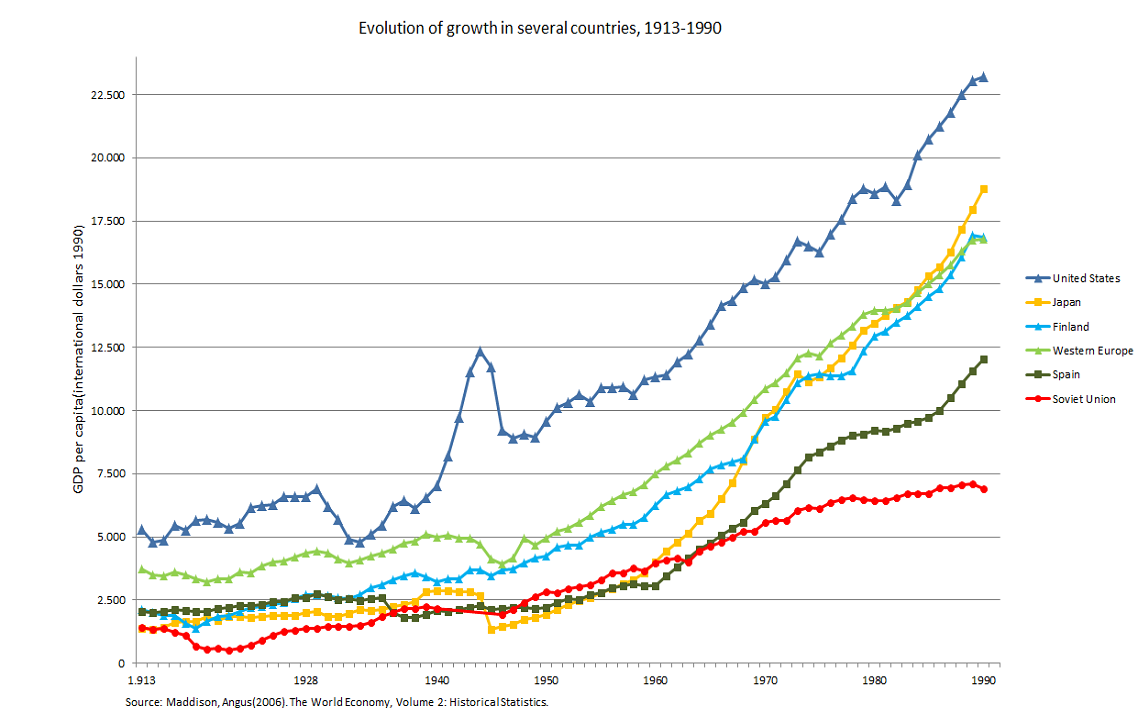
Evidence of the evolutionary dead-end of the command-planned system is observed, first of all, in the technical lag behind industrially developed states. More and more resources had to be consumed for the production of a single product, and more and more technical defects arose in mass production (even though it did not satisfy the needs of the population).
The institutions formed within the Soviet planned system proved very poorly prepared to adapt to the forces of the global market, which the country could not control. The Soviet Union did not form stabilization funds to smooth out falls in oil prices (though, at that time, few people did this), because it had never encountered such situations before. It could not react with a devaluation of the national currency – there would have been little sense in this, as the civilian industry constantly experienced a deficit of resources (because the highest-quality resources were directed to the military-industrial complex) and would not have been able to sharply increase output. And agriculture was incapable of sharply increasing yields due to chronic problems accumulated over decades6.
Inefficient political system
In the late Soviet Union, a paradoxical situation developed: the economy, being in a state of approaching crisis, required the implementation of reforms; the ruling elite, in whose power it was to make appropriate political decisions and implement them in social reality, did not desire and sabotaged in every way the very idea of changing the state of affairs that had been established for decades. According to the memoirs of M.S. Gorbachev, Marxist and even pseudo-Marxist dogmas, even if expressed in “slightly modern language”, hindered the formulation of truly realistic assessments of the situation of the Soviet state and society, wafted with the spirit of fundamentalism, and did not suggest the advancement of any ideas7.
The vicious circle of problems stole from the Soviet state the historical time to carry out the reforms proposed by the new top leadership, which, as we know from the history of Perestroika, appeared not only imperfect and unfinished but also unstable. The Italian historian G. Boffa noted in this regard: “What Gorbachev lacked, as well as the ‘children of the 20th Congress,’ was a precise plan of action. Everyone felt the need for reforms, but no one had a clear idea of either their content or the sequence of their implementation. This gap contained the heaviest legacy of the 20-year Brezhnev rule”8. His French colleague, N. Werth, disagrees in his assessments of the insufficient development of the reform program by Gorbachev’s team: “This reform was not born in a vacuum. Its main directions were widely discussed, first privately and unofficially, then in the depths of the leading party instances, which is confirmed, in particular, by the fate of the ‘Novosibirsk Report’ [this refers to the report by researchers of the Institute of Economics and Organization of Industrial Production of the Siberian Branch of the USSR Academy of Sciences – note by G.K.]”9. At the same time, he supplements his judgment with an important remark: “However, in the mid-80s, the social crisis was so deep that the call for reform immediately found a response in the aspirations of the ‘lower classes,’ nurtured over the two preceding decades. Along with this, the call for reform also caused a storm of discontent and resistance, forcing the supporters of change, and above all Gorbachev, to constantly adapt their programs to the demands and specific rhythm of movement determined by the dialectic of reforming, as well as the ‘dissonance’ in recipes for solving social and national problems initiated by the liberated press. The movement that had begun became more and more difficult to keep within the initially intended boundaries”10.
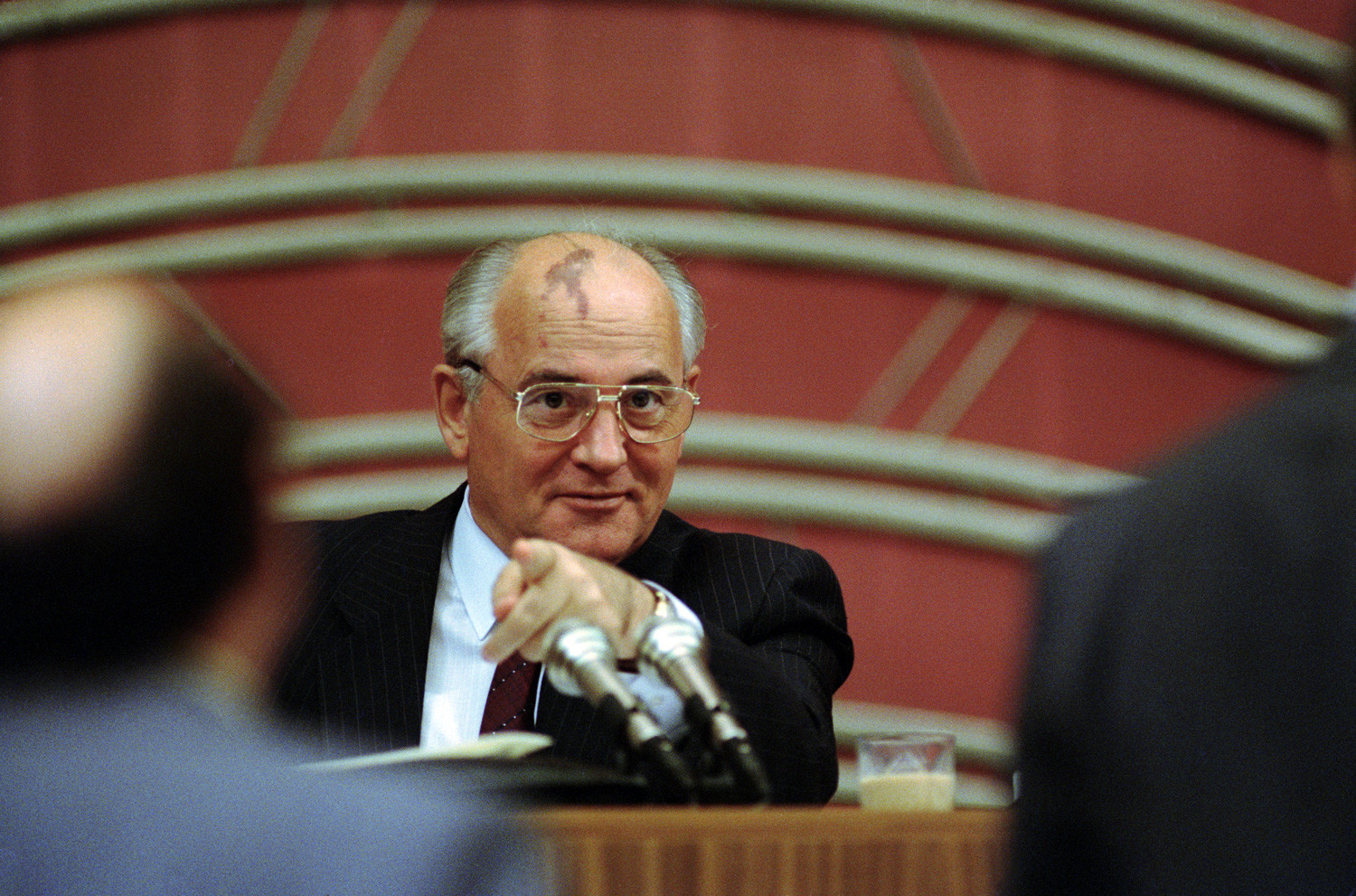
Economic policy, therefore, was incomplete and led first to the disintegration of the all-Union ruling elite, and then to the disintegration of the political-economic space and a unified statehood.
It turned out that, in the language of Marxist analysis, the socio-economic base was held captive by its own superstructural structures: political, cultural, ideological, and legal. By 1988, and precisely within the Soviet party elite, a split clearly emerged between reformists (supporters of carrying out reforms within the compromise framework of a socialist choice) and conservatives (opponents of violating the political and economic systems of the USSR that had existed for decades and which they believed had been successful). M.S. Gorbachev repeatedly recalled in his memoirs that it was from the party elite that the greatest (and, moreover, hidden) protest against reforms emanated, and it was from the party-Soviet nomenclature that the “sabotage” of Perestroika’s policy came.
Why did this happen? Why did the political system prove incapable of resolving deep-seated contradictions? Stephen Kotkin considered the biggest mystery to be the reason “why the numerous Soviet elite, possessing armed-to-the-teeth internal troops loyal to the authorities, despite all their power, proved incapable of protecting either socialism or the Soviet Union?”11.
The most important reasons for the inefficiency of the Soviet political system lay in the absence of pluralism and competition (a), freedoms (b), and legal procedures and guarantees for the rotation of ruling elites (c). These problems should be considered together, since each of them supplemented and strengthened the other, thereby generating a cumulative effect.
a) Absence of pluralism and competition. The impossibility of debating a wide variety of issues led to the cessation of the generation of new political concepts and programs. The “skeletonizing” foundation of Pax Sovetica was the official ideology, which was produced, reproduced, and represented to the social masses by numerous ideological apparatuses of the CPSU: institutes and academies, journals and newspapers, television and radio. Its highest governing link, the apparatus of the Central Committee and the Politburo, was the tuning fork in a giant ideological mechanism, and no other source for interpreting ideological discourse could exist.
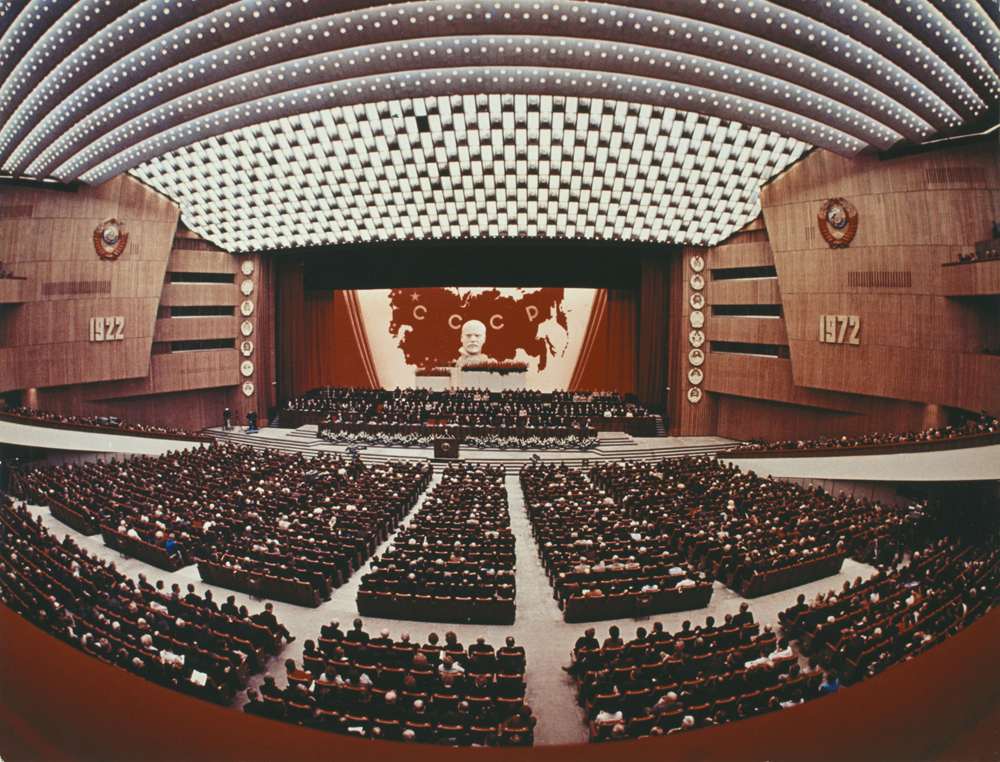
However, the cessation of the production of new discourses led not only to the hollowing out of the theoretical-political and philosophical thought of Marxism-Leninism, locking it exclusively within itself, but also to the loss of bearings and hopes for the renewal of society, and the debunking of people’s faith in the image of a better future. By the end of the 1980s, the political ideas of Marxism-Leninism, developed socialism, and communism, as represented in the social reality of Soviet society, had acquired a toxic and discredited character for the active Soviet public (as, indeed, for the social masses as a whole).
The ruling elite, which for the most part did not have other, alternative, and independent sources of new information, except for those that were exclusively under its control, and did not strive to acquire them, proved incapable of seeing and designing new political solutions corresponding to the realities and needs of Soviet society. Such an approach led to the fact that the country’s new top leadership found itself a hostage to its own environment – the Soviet nomenclature. A.N. Yakovlev, one of the representatives of M. Gorbachev’s team, head of the ideological direction in the CPSU Central Committee during the years of Perestroika, emphasized in his memoirs the difficulty of implementing new policy: “In the specific conditions of 1985, it would have been political childishness and disastrous adventurism to propose to the ruling nomenclature some kind of ‘plan’ for a fundamental reformation of the social system, including the liquidation of mono-power, mono-ideology, and mono-property. Who would have accepted it? Who? The party and state apparatus? The KGB? The general staff? It was a question of changing the way of life…”12.

b) The absence of pluralism was exacerbated by the lack of freedoms. The declared political principles in the Constitution of the USSR did not represent high value for the ruling elite and Soviet society. Finding themselves in disgrace with the state, the Soviet person lost all opportunities to find protection: they were hounded and persecuted by a multiple system of repressive bodies. Moreover, measures of influence on the Soviet person came not only from classical law enforcement institutions, but also from completely ordinary ones that did not possess legal means of coercion, for example, at work and in places of habitation (kindergarten, school, and university, the local housing office/ZhEK). The application of such “preventive” political and repressive measures to a dissenter or a person who disagreed, according to the logic of the state apparatus and the ruling elite themselves, referred to legal violence – on a par with the everyday detention of a serial killer or a pickpocket. In conditions of the absence of guaranteed freedom of thought and speech, the Soviet person did not have truly accessible ways to communicate about themselves and their needs.
Persecution of religious communities and dissidents also created special groups that were radically disposed against the authorities and sought their dismantling.
c) Absence of legal procedures and guarantees for the rotation of power. The attempts undertaken by N.S. Khrushchev for the co-optation and rotation of the party elite at the center and in the regions were almost immediately neutralized by the group of L.I. Brezhnev that came to power. The overthrow of N.S. Khrushchev had limited success, and this only for the ruling party elite itself – for almost 20 years, personnel changes ceased in the echelons of party-Soviet power. In a strategic perspective, this led to colossal negative consequences: it took M.S. Gorbachev’s team at least three years to convince the smaller part of the party elite of the need for radical reforms, and the larger part to depart and renounce their claims to political power. It turns out that the history of the first three years of Perestroika is, first and foremost, the history of M.S. Gorbachev’s personnel revolution and his political struggle with the conservatively minded partocracy, which did not agree to reforms and the forced loss of part of its political and economic power over the state and society.
Another, no less important factor is the absence of really effective, legal ways to exit from leadership without serious negative consequences for the ex-leader. The impossibility of leaving the governing bodies of power forced the ruling elite to reject the very idea of the rotation of leadership and genuine competition acting in the public space and on acceptable terms. And for the new top leadership, this invariably turned into conflicts and unacceptable “deals with one’s conscience”, when it was necessary to refuse and force part of the ruling elite to retire, even if this very same part was loyal to its leader13.
Particular attention has always been paid to the nature of Soviet power – this was the historically developed fusion of party and state authorities (d), which became the most complex problem in the Perestroika political reform program. The absence of a system of separation of powers (e), exacerbated and burdened by the phenomenon of nomenklatura and privileges in the form of improved conditions and special services (which will be discussed further), compounded this problem.
d) The fused party and Soviet authorities did not allow for the possibility of political alternatives in the USSR. In every body and organization, there invariably existed party cells of the CPSU, which played an important role in its political hegemony. Article 6 of the 1977 USSR Constitution guaranteed the immutability of this hegemony, as the CPSU was declared the core of the Soviet political system. This is precisely why the protest of conservatively minded party leaders against any reforms proved effective – it tied the entire Soviet management system hand and foot. The 19th All-Union Conference of the CPSU in 1988 showed how complex and compromise-laden political reform and the transit of political power from party bodies to the system of Soviets would be14.

e) An additional aggravating condition was the lack of a clear separation of the power system into legislative, executive, and judicial branches. Although the 1977 USSR Constitution stated that the highest body of power was the Supreme Soviet, everyone understood perfectly well where the center for making all political decisions actually resided. The practice of rubber-stamped joint resolutions of the CPSU Central Committee, the USSR Council of Ministers, the Presidium of the Supreme Soviet of the USSR, the AUCCTU, and the Komsomol Central Committee is vivid evidence of this. Subsequently, this had a negative impact on the practice of political decision-making, provoked confrontation between various authorities, destabilized the entire political system, and the apogee of this was the standoff in already post-Soviet Russia between the institution of the President and the Supreme Soviet of the RSFSR.
f) Rash and poorly developed political decisions. During the years of Perestroika, the most varied decisions were made, both well-considered and unreasonable. Most often, political decisions were characterized by half-measures, inconsistency, and a lack of clearly explained intended applied results to the public. Instead, in the first years, ideological policy prevailed over public policy, which was caused by previous problems (a, b, d). This led to the final discrediting of official ideology: Marxism-Leninism lost its appeal both among the splintered elites and among the intelligentsia; the ideological Soviet project it defended no longer interested the citizens.
The anti-alcohol campaign, launched in 1985, became evidence of the incompetence of party and state authorities. Pompously and extravagantly promoted, it led rather to negative economic consequences and a dubious political reputation for the top leadership. M.S. Gorbachev recalled that the campaign led to “budget holes” (“Nikolai Ivanovich [referring to Nikolai Ivanovich Ryzhkov – Chairman of the USSR Council of Ministers from September 27, 1985, to January 14, 1991 – note by G.K.] was in tears – about the money we are losing”) and queues, the disappearance of sugar from stores, and worsening support among parts of the population: “But I believe that the anti-alcohol campaign was, after all, a mistake in the form in which it was carried out. These were excesses with the closure of stores, especially in Moscow. Huge queues. Growth of moonshining. Sugar disappeared from the stores. It was necessary to conduct not a campaign, but a systematic, long-term fight against alcoholism. The sobering of society cannot be carried out by a headlong rush. This takes years. And one must fight continuously, constantly”15.
The lack of a clearly defined anti-alcohol program, reduced to a priority on quantitative rather than qualitative indicators, the never-appearing genuine compensation for the replacement of alcohol products, and the destruction of high-quality viticulture all testified rather to the impromptu implementation of decisions made at the top by regional leaders. The last Minister of Trade of the USSR, K.Z. Terekh, said in an interview that the political decision made in the Politburo of the Central Committee with great delay and not fully worked out “led to the budget beginning to crack. There was no sugar on sale because moonshining had broken out. Purchases of food abroad were reduced, people began to poison themselves from consuming alcohol-containing beverages, they started cutting down vineyards…”16.
The exacerbation of this problem is also connected with censorship in the media, the ideologization of the policy of Glasnost, its deformation toward populism, and insufficient fact-checking for the active public. Restrictions on the dissemination of information, including non-political information, led to negative consequences for the country’s residents (the undermining of national health after the Chernobyl disaster), the discrediting of official authorities, and the generation, against this background, of various rumors, myths, and conspiracy theories.
Failed reforms
The analysis conducted above of the Soviet state system shows what exactly prompted Gorbachev’s team to pursue reforms. A new and final stage of the USSR began, which received the name “Perestroika”. The main task consisted of preserving state socialism and securing the interests of the nomenclature that had formed these politicians and advanced them to the top. The chosen means was cautious reform of social structures, primarily the economy. But a holistic and well-developed concept of how to do this was absent, or represented a set of non-concrete principles and ideas, little understood even by the ruling elite, that outlined the limits of possible reform. Very often, Gorbachev’s team followed social processes rather than leading them. Basically, this was connected with the lateness of the reforms and the crisis. Other circumstances also played their part. During the years of Perestroika, there were no serious socio-political forces capable of exerting pressure on the leadership, prompting it to seek a way out of the prevailing situation.
On April 25, 1985, at the Plenum of the Central Committee of the CPSU, a course toward accelerating the country’s socio-economic development was proclaimed – M.S. Gorbachev’s report outlined the contours of a new and initially limited policy of reforms, which evolved into Perestroika over the next two years17. This was to be achieved through the scientific and technological revolution, technological renewal, and the activation of the human factor. The reliance on enthusiasm without the necessary technology and worker qualifications led not to acceleration, but to a sharp rise in man-made disasters (which we will mention later). The largest of these occurred on April 26, 1986, at the Chernobyl Nuclear Power Plant. From the mid-1980s, campaigns began across the country: the already mentioned fight against alcoholism and the fight against unearned income. The destruction of vineyards and a sharp reduction in the sale of alcoholic beverages led to speculation in alcohol and the poisoning of citizens due to wine surrogates18. And the fight against unearned income boiled down to attacks by local authorities on the subsidiary plots of ordinary citizens. However, the corrupt part of the state apparatus continued to engage in shadow economic operations. In 1987, the rights of enterprises were noticeably expanded. Now they could independently enter the foreign market and interact with foreign firms. The number of ministries and departments was reduced. Then the government introduced “full economic accountability (khozraschyot), cost accounting, self-financing, and self-management” into all branches of the national economy19. Labor collectives were given the opportunity to elect their director – though this idea was later abandoned. The directive plan was replaced by state orders. In the countryside, five forms of farming were established: sovkhoz (state farm), kolkhoz (collective farm), agro-combine, lease collectives, and peasant farms.
From mid-1988, laws were passed that opened the possibility for private activity in more than 30 types of production of goods and services20. A side effect was the legalization of the shadow economy and its capital, accumulated by various means, including corruption and embezzlement. The Law on Leasing and Lease Relations adopted in 198921 granted rural and urban residents the right to lease land for hereditary use for up to 50 years with the freedom to dispose of the produce. However, the land still belonged to the Soviets and collective farms, and they were reluctant to share it. By the end of 1991, only 2% of the arable land in the country belonged to private individuals. The next and one of the most important resolutions was “On the Concept of Transition to a Regulated Market Economy” in 1990 from the Supreme Soviet of the USSR22. Other significant acts were also adopted. They provided for the gradual decentralization of the economy, demonopolization and privatization of property, the development of private entrepreneurship, the establishment of joint-stock companies and banks, and so on. However, the implementation of these measures was incomplete.
In general, Gorbachev’s policy was inconsistent and half-hearted, which intensified the economic crisis. Moreover, most of the measures taken were stifled at the local level by the nomenclature, as it considered them a direct threat to its well-being. The economic situation only worsened. Thus, in 1988 there was a reduction in agricultural production, and in 1990 – in industry23. Inflation rose due to the budget deficit. Gold reserves decreased tenfold compared to 1985, amounting to 240 tons24. The standard of living fell rapidly, which caused citizens to doubt economic reforms. Money depreciated due to inflation. And in 1989, mass workers’ strikes began25.
Gorbachev’s team, faced with growing difficulties in the economy, decided to reform the political system of the USSR, which they regarded as the main link in slowing down reforms – it was decided to hold the 19th All-Union Conference of the CPSU in the summer of 1988. The conference itself “became a battlefield between the reformist and conservative wings of the CPSU”26. This was not the only thing that pushed for reforms: alternative options for social transformation appeared, as well as new political forces capable of eliminating the monopoly of the CPSU. The “political fabric” of the CPSU was disintegrating, inside which, in a formerly monolithic state, political clubs, platforms, and splintered factions began to appear27.
The primary task was to strengthen the leading role of the CPSU in society through the revitalization of the Soviets. In accordance with the decisions of the 19th All-Union Conference of the CPSU, a new supreme body of state power was established – the Congress of People’s Deputies of the USSR. The election of deputies was held in 1989 on an alternative basis. From among the people’s deputies, the Supreme Soviet of the USSR was formed. Simultaneously, Supreme Soviets were created in other republics. A new post was also created – Chairman of the Soviet. Mikhail Gorbachev, General Secretary of the CPSU Central Committee, became Chairman of the Supreme Soviet of the USSR, and Boris Yeltsin became Chairman of the Supreme Soviet of the RSFSR.
Back in 1987, a course towards Glasnost was proclaimed, that is, towards controlled mitigation of censorship, the release of previously banned books, the liquidation of “spetskhran” (special storage) in libraries, and so on. However, the ruling elite lost absolute control over the public sphere and proved unable to contain the huge flow of information that poured onto the Soviet person.
From 1917 until the 1990s, Russia had never seen such a diverse range of parties, from monarchist to anarchist, as it did at the end of Perestroika. Mass movements began to emerge in the republics, often with a nationalist agenda (such as the Popular Fronts). There were also pro-communist parties that were in opposition to the CPSU (such as “Unity – for Leninism and Communist Ideals”, the “Marxist Workers’ Party – Party of the Dictatorship of the Proletariat”28, and the “United Front of Workers”). The absolute majority of new parties took an overtly anti-Soviet and anti-communist stance, reflecting dissatisfaction with the authorities’ inability to solve economic and political problems. Conventionally grouped under a liberal platform, such political parties and movements as the LDPSR, the Union of Constitutional Democrats, the Democratic Party, the Liberal Christian Party, the Christian Democratic Union of Russia, the “Shield” union, and “Memorial”, coordinated by “Democratic Russia”, defined their political orientation through the struggle against the CPSU29.

All of this resulted in the disintegration of the union republics, their withdrawal from the USSR, and members leaving the CPSU.
Nomenklatura privileges
The nomenklatura and special benefits were the main objects of criticism from the growing opposition and the population in the country. Playing on the negative feelings of Soviet citizens, B.N. Yeltsin managed to form his image as a fighter against unjust privileges. Nomenklatura lists strictly prohibited democratic election procedures – neither for Soviet citizens in the matter of choosing future leaders, nor for opposition leaders seeking to occupy an elected position. The nomenklatura, which had turned into a heterogeneous corporate structure connected by the highest party leadership (lists were coordinated in governing bodies at every administrative level of the party – district committee, city committee, regional committee, and so on), represented that very Soviet elite, the fact of whose existence was denied in every possible way in the public space.
V.I. Boldin explained the concept of the Central Committee nomenklatura as “…a list of positions in various spheres of society’s life, and mainly in management, production, and ideology, which were under the control of party committees”30. The entire party-Soviet layer of the ruling elite represented an administrative conclave of individuals who were appointed rather than elected, and therefore unaccountable to citizens in general and to the active civil public in particular. This led to extremely negative consequences during the years of Perestroika. “Our experience, as I believe is the case with other communist parties, has shown quite convincingly that no inventions or ruses, including the admission of factionalism, can serve as a reliable guarantee against bureaucratization and ossification”, M.S. Gorbachev tells the reader in his memoirs. – “Of course, this does not apply to the mass of rank-and-file members. We are talking about the leading layer, which very quickly developed a taste for power and was prepared to do anything not to part with it. Over 70 years, this layer reproduced several generations of the party-state elite, the defining feature of whose consciousness was the conviction of their natural and inalienable right to always be in power. In their time, the nobility felt roughly the same way”31.
Special services for nomenklatura workers were the embodiment of the inefficiency of the planned economic system. The impossibility of providing all strata of citizens with the necessary goods and services led to the most scarce and sought-after items turning into objects of a special “administrative market”. Possessing a position for a Soviet person opened access to stores closed to ordinary citizens, goods, services in hotels, airports, hospitals, and other privileges that we discussed in detail in this article. All of this, in conditions of acute shortages in the country’s food market, led to the increased discrediting of the party elite and a lack of trust in it on the part of the population.
National policy
The Soviet people, a commonwealth of nations, or a prison for nations? In 1985, many believed that the national question had been solved, and that despite individual nationalistic perversions, there existed a Soviet people within the Soviet state – a supra-ethnic identity for hundreds of other nations. At this time, the national movement was defined as the realization of cultural and educational tasks32. By 1991, not only had the articulation of the concept of the Soviet people ceased in politics, but civil confrontation had begun in some territories of the disappearing Soviet country. “As usually happens in authoritarian multinational states, the liberalization of the regime and democratization, first of all, lead to the mobilization of forces ready to exploit national feelings”, concludes E.T. Gaidar in his work33. This resulted in armed conflicts, ethnic cleansing, and mass expulsions from former places of residence. How could such a paradox arise? Why is it highly similar to the Yugoslav scenario?
In our article on internationalism, we have already stated that, in effect, it represents an acknowledgment of all nationalisms (we also mentioned there the consequences this policy led to in the USSR). And when there are several constructed national identities within a country, their interests will clash, leading to hostility and subsequent secession with the results to which nationalism can lead. This is exactly what happened in Yugoslavia and the USSR. As early as 1921, the 10th Party Congress announced a course toward so-called “korenizatsiya” (nativization of personnel)34, which in essence meant the beginning of the formation of a national bureaucracy, a nomenklatura with national interests. Doctor of Historical Sciences Gennady Kostyrchenko notes that, for example, Ukrainization “practically boiled down to the ostracism of employees of Russian and Jewish descent. The latter suffered especially, for such a fate had been prepared for them long ago”35. In 1926, one of the high-ranking Jewish communists, A.N. Merezhin, noted that “since the 12th Congress, we have been intensely removing Jews from responsible posts”36. Naturally, this led to ethnic-based conflicts, and the nomenklatura with national interests desired secession and was prepared to fight for it.
National policy turned out to be, as it were, mutually exclusive. On one hand, future generations were to be raised in the spirit of internationalism, brotherly friendship, and mutual assistance; on the other hand, the Soviet people and the peoples of the Union were supposed to have national interests and a patriotic spirit in case of war with an external imperialist enemy. Both principles provoked an extremely uneven national policy, and taking into account the impact of censorship and the suppression of dissent, they only produced extremely radical forces. Thus, the national intelligentsia, experiencing various restrictions, felt infringed upon in their freedom; the Soviet all-Union intelligentsia, gutted by the end of the USSR’s existence as a result of bureaucratization and the carrot-and-stick policy, failed to find better and just justifications for the people and the elites to defend the Soviet state.
For national elites, including those from the Russian people, the thesis regarding the primacy of the class principle and the establishment of a new ethnic identity — the Soviet people — caused certain contradictions. These contradictions surfaced alongside the deepening economic crisis and the reduction of material and financial subventions to national-state entities37.
However, there was another extremely negative trend in the national policy of the USSR — the exploitation of Russian nationalism for the purpose of legitimizing the political power of the CPSU. “Not believing in real federalism and the market, civil, and liberal foundations natural to it, and not feeling under their feet a new, modernized soil for strengthening the durability of the USSR, its leadership, as in many other cases, staked everything on traditional methods of mobilizing social will, and revived, albeit in a somewhat disguised form, the idea of a ‘sovereign’ people, whose interests most closely coincide with the interests of the empire”38, concludes economist and demographer A.G. Vishnevsky in his work. Russianness could be traced in the deep dimensions of Soviet political, cultural, and ideological discourses. This led to two consequences: first, it gave a carte blanche to emerging nationalist counter-elites and intelligentsia to fight against the Soviet project, which they identified as “imperial Russian”, and second, it unfairly placed Russians across the entire Soviet space in the position of being guilty for all the vices and mistakes of the past in the Soviet Union; third, due to sharply increased antagonistic sentiments toward Russians, nationalist discourses also rose sharply among this people, which also led to the destruction of both national harmony in the country and the union statehood as a whole.
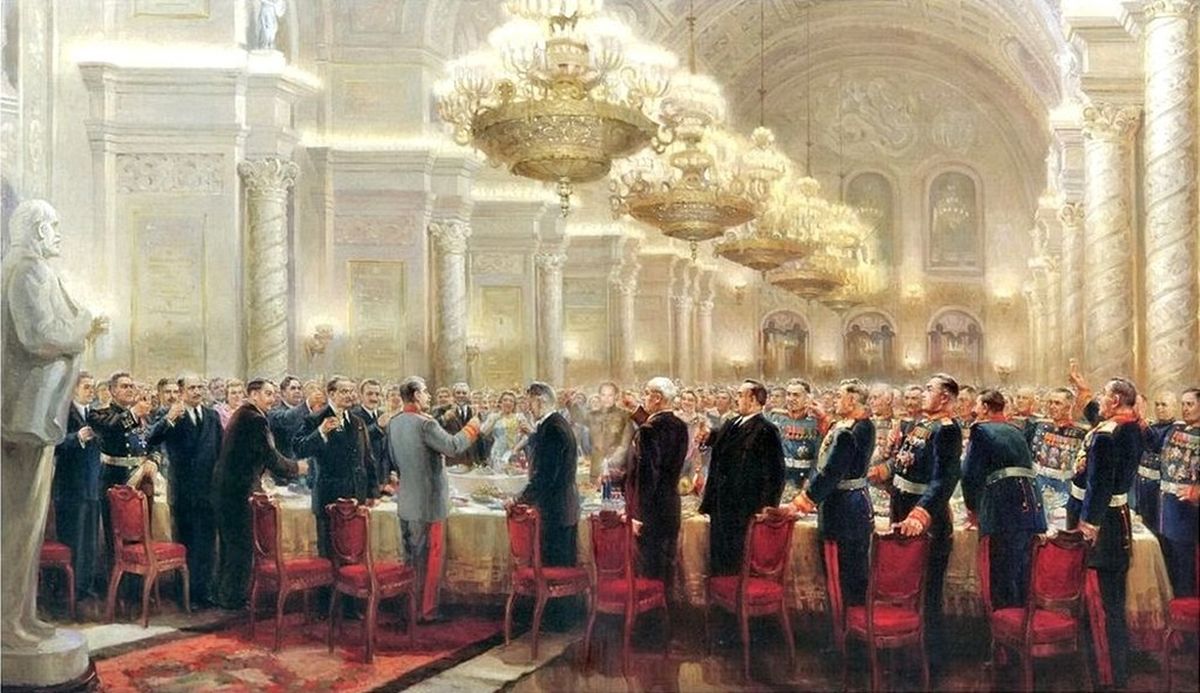
National policy during the years of Perestroika could no longer solidarize Soviet society under one supra-ethnic collective identity. Glasnost was doing its job, and the dark pages of history that had previously been tabooed in favor of historical-ideological policy were now “rediscovered” for all the peoples of the USSR. Such a “rediscovery” of historical memory became too traumatic an experience to lead to the solidarization of the masses for the continuation of the Soviet project.
Outdated ideology
For several decades, the only official ideology in the Soviet Union was that of the CPSU. A multiple network, deeply branched and integrated into the institutions (social, political, economic, cultural) of Soviet society, consisting of the Communist Party’s ideological apparatuses, produced a power discourse to legitimize the political authority of the all-Union elite.

During the years of Perestroika, one of the fundamental pillars of the USSR paradoxically also became one of its gravediggers. A super-superstructure, intended on one hand to fulfill the task of legitimizing political power and, on the other hand, to organically connect the social space of the past, present, and future into a unified and outwardly consistent picture, turned into a subject of endless disputes and strife within the country’s highest leadership. This split inevitably influenced the disintegration of the all-Union ruling elite, which, in order to retain political power, resorted to searching for alternative political projects.
The discrediting of the political ideas, principles, and values of Marxism — and, more precisely, its Leninist concept, supplemented and completed during the Stalinist years of rule — piqued the interest of a segment of the elite in alternative political intellectual traditions. During the years of Perestroika, the pace of development and institutionalization of national, democratic, and other movements, including radical ones, was so high that the official ideological apparatuses of the CPSU literally could not keep up with constructing discourse. The uncovering of dark pages of the historical past only accelerated the debunking of constructed ideological images. People naturally questioned: if there was a lie yesterday, why wouldn’t there be one today? The fall of false gods, with the roar and crash characteristic of the politics of Glasnost, was associated far more in the eyes of society with justice than the official power discourse of the CPSU.
Marxism was outdated in many of its components (we wrote about this), and many of its forecasts did not come true in practice. However, instead of acknowledging the error of these components and updating or reforming them, supporters of this ideology chose to fight for the dogma, trying in every way through deceptive means to present it as fully relevant. Instead of acknowledging the crimes of Stalinism and the mistakes of the Bolsheviks, the communists invented excuses: that it was all untrue, that “the first airplane didn’t fly immediately either”, they resorted to conspiracy theories, and fought against social democracy with the help of myths — all this only cemented their defeat on the ideological front.
Although the top ideological leadership of the CPSU made attempts to “restart” the official ideology, to update it and align it with the new emerging realities in the country, the orthodox part of the electorate, which represented the majority, did not support these innovations. Moreover, by the end of the USSR’s existence, it began to institutionalize itself to oppose reformist trends. The Communist Party of the RSFSR, established in 1990, almost immediately turned into an extremely conservative socio-political organization and began accumulating political forces to prevent the abandonment of the ideological heritage of Marxism-Leninism. This could not but affect the mood within the ranks of the ruling all-Union elite, which was experiencing the varying influence of the old power Center and the emerging new ones.
Finally, the ideological blunders of Perestroika in the form of pompously constructed agitation and propaganda campaigns of the CPSU, the supposed fruits of which almost no one saw, finally dispelled any belief in the rationality of the socialist choice. By 1991, neither in Soviet society nor among its elites could the official ideology continue to perform a solidarizing function; the caustic irony regarding the past and present policy of the CPSU gave it no historical chance for further existence. Soviet citizens did not attach much importance to the disappearance of the Leninist concept of socialism in the power discourse, preferring imaginary ideological changes to real ones, which could be seen in the economy, first and foremost; the ruling elites, for their part, abandoned not only the socialist choice but the Soviet project as a whole, which was reflected in the collapse of Soviet statehood.
Foreign policy mistakes
By 1985, it had become clear that not only domestic but also the foreign policy of previous years had become toxic. This toxicity, if one can put it that way, in foreign policy was conditioned by its dogmatism and ideology, which resulted in deep problems in the relationships between the USSR and other states, rooted in the historical past.
Severe problems in foreign policy were observed in the Western direction (USA, countries of Western and Southern Europe), the Asian direction (the question of Euro-missiles), and along the lines of the socialist community (China, Eastern European socialist countries).
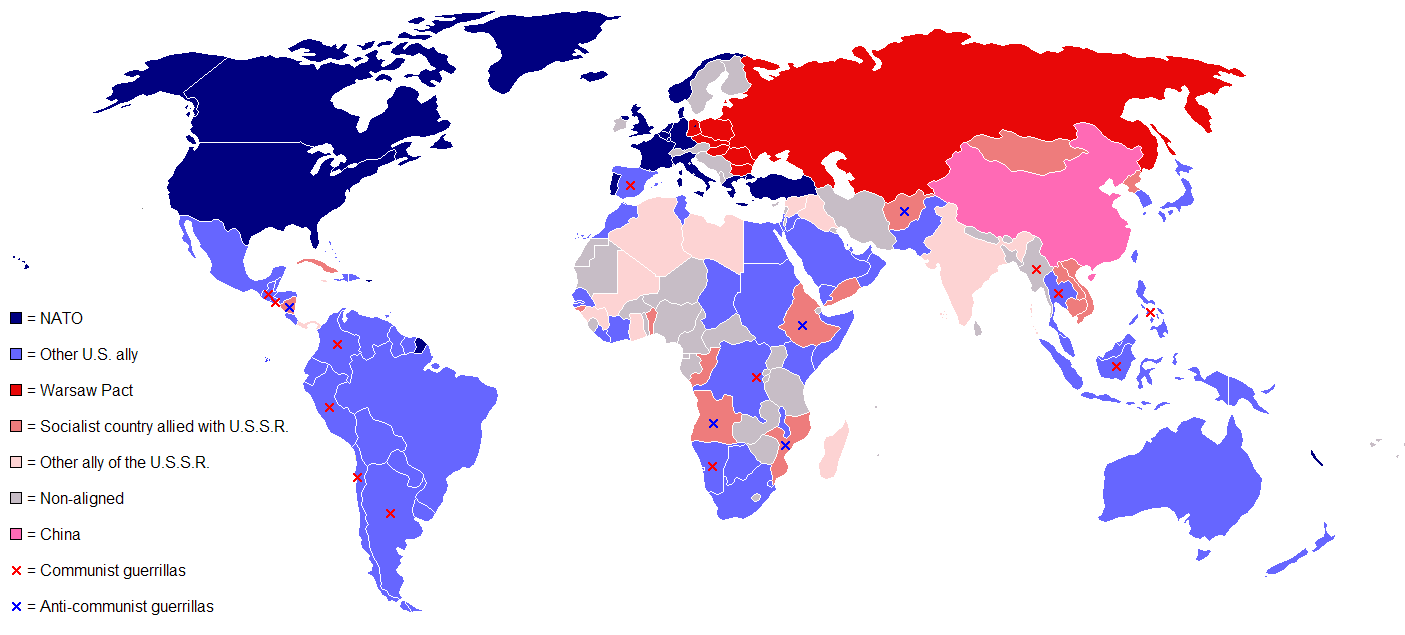
In all directions, the nuclear question loomed like a Damoclean sword. By that time, the arms race had led not only to the overloading of national economies with defense projects but also to the oversaturation of the armed forces with strategic assets. NATO and Warsaw Pact countries possessed armaments unsuited for traditional battle tactics: nuclear weapons, as well as their delivery vehicles, were deployed at almost every level of army units. For confrontation on difficult sections of the front, there were operational-tactical nuclear weapons; for the suppression of strategic communications and objects in the deep rear, medium- and shorter-range missiles could be used; for delivering a stunning blow to a likely adversary, there were strategic missiles — intercontinental and cruise — in underground silos, on heavy haulers, submarines, and aircraft.
The policy of oversaturation with nuclear weapons transformed the armed forces of the opposing Cold War blocs into systems more akin to an “Armageddon machine”—not for victory, but for mutual destruction. Such a policy did not make countries free from war (for conflicts still occurred in disputed territories), but on the contrary, it brought closer the day when a chain of coincidences, coming together at the right time and in the right place, would cause a catastrophe. Besides the fact that such a policy provoked a nuclear catastrophe, which in itself made states obligated rather than free, it also acquired a self-sufficient character, operated according to its own rules, and did not tolerate global alternatives. Did the USSR install RSD-10 “Pioneer” missiles in socialist countries? Take a Pershing-2 and sign for it. Are the Americans intensely building up their nuclear presence in the Pacific? No big deal, we’ll increase the number of our own nuclear-powered missile submarines there by a dozen or two, so that if anything happens, at least one of them fires. By 1991, the number of projected nuclear munitions in all configurations exceeded all possible and impossible limits, reaching an estimated number of 30,000 nuclear warheads (in the USA, as the main competitor — 13,000 and 14,000 plutonium cores for reassembly)39, and this number was not justified by any rational need.
Lack of freedom was based on more than just nuclear policy. Obligations to socialist countries and countries of socialist orientation, as well as the obligations of the United States to its allies, imposed exorbitant restrictions on the USSR in foreign policy, primarily of a financial and material nature.
Although the policy of Perestroika was promising in its foreign policy aspect, in the countries of Western Europe and the United States, its first years were perceived as a ruse similar to that which occurred during the Brezhnev period of détente. Because of this, many highly promising negotiations between the USSR and the USA, for example, in Geneva (1985) and Reykjavik (1986), ended in nothing. G. Boffa defined the obstacles that arose between the negotiators as “historically insignificant”, and the practical results of the foot-dragging in international relations resulted in the emergence of M.S. Gorbachev’s dependence on the little time remaining for political actions within the country40.
Contradictions within the socialist camp (the world system of socialism) were conditioned both by strategic errors made in the historical past and by the peculiarities of the establishment of the Soviet model of a socialist state. The Soviet model (and its embodiment in the political regime) represented an authoritarian system of political institutions where political power was highly personalized. International relations within the world system of socialism depended deeply on the personal relationships between its leaders, and not just on objective circumstances.
In the countries of the socialist bloc itself, popular unrest flared up from time to time, which had to be quelled with the help of Soviet troops in order to keep communist governments there. The most notorious incidents were the suppression of the Hungarian Uprising in 1956 and the deployment of troops into Czechoslovakia in 1968. They struck a very painful blow to the international prestige of the USSR, as the communists began to look like the gendarmes of Europe, and not like supporters of freedom and democracy. The popularity of communist ideology fell seriously after this.
The Afghan War exerted serious pressure both on the economy of the USSR and on the general state of international relations. Conducting combat operations required diverting significant material and human resources from more important tasks in the economy, and the constant bloody battles based on the principles of guerrilla warfare convinced the world community of the illegitimacy of the presence and activities of the Soviet armed forces in Afghanistan. Although M.S. Gorbachev indicated the need for a “realistic plan” at the very beginning of his rule, the conflict was concluded only in the fifth year of his leadership41. And every year, month, and day of the undeclared war cost the Soviet state money, resources, and, most importantly, people.
The economy was also burdened by obligations of financial and military aid to countries of the socialist camp and to so-called “young revolutions”.
Problems of culture
Soviet culture made its significant contribution to the global heritage of human civilization. It was within it that such a vivid articulation of the ideas of equality between men and women and the cultural enlightenment of the social masses took place. However, in Soviet society in the last two decades of its existence, the contradiction between the declaration of the reasonable, free, and just, on one hand, and cynical disregard in social reality became completely visible.
Moral vices of Soviet society were officially not shown in the public media space. Through television, newspapers, magazines, and radio, Soviet culture testified to the oppressive atmosphere of the capitalist system, which was about to die once and for all, and conversely, painted an exclusively cheerful picture of the life of Soviet citizens. But problems began to peek through in critical notes as early as the beginning of the 1980s: “The press began to wonder why prestigious Soviet films were not a success with viewers: ideologically correct, they turned out to be commercial failures; soldiers or schoolchildren were herded to see them, and attendance figures were padded. But it was becoming harder and harder to hide the truth. The example of Sergey Bondarchuk’s ‘Red Bells’ (1982) proved particularly eloquent — filmed in Mexico with the participation of Western stars, this revolutionary epic was met with complete viewer indifference”42. Only during the years of Perestroika did genuine — rather than cultivated and emphasized by official ideology — problems of spirituality come to light, which resulted in a generally incorrect perception of the so-called “chernukha” (grim/dark) period in late Soviet culture. The liberation of Soviet culture from official ideology began with cinema. At the V Congress of the Union of Cinematographers in May 1986, Soviet officialdom with its completely detached ideas and illusions about social reality was buried.
The basis of all the cultural problems of Soviet society lay in lack of freedom. Soviet representatives of the intelligentsia could not carry out their creative pursuits outside the meager limits outlined by Soviet and party authorities. But cultural creativity, like culture as a whole, can only reproduce a canon legalized by circulars in such conditions, rather than produce a new product. That is precisely why Soviet people from the creative world could create masterpieces and high culture, while simultaneously having a critical, if not negative, attitude toward their own work. The paradox came to the surface precisely during the years of Perestroika, when creativity acquired genuine freedom.
However, long decades of creative restrictions led to an inevitable result: the Soviet intelligentsia turned away from the Soviet project and from the ideas of Marxism-Leninism; having come to hate the historical past, they became engaged in radically filling the sphere with cultural creations that rather provoked confusion in society and a sense of incredible vulgarity, decadence, and moral decline, undermining spiritual foundations. In this sense, the Soviet ruling elite found itself a hostage to history — sooner or later, the unleashing of the creativity of Soviet people would have had to be done, but such emancipation led to the disintegration of Soviet collective identity, a significant part of which was, undoubtedly, mass culture.
The new nascent Soviet culture, standing exclusively on the positions of reflection on existence — which was complex and contradictory in those years — could not solidarize Soviet society. The contradictions of existence, hyperbolized, emphasized, and therefore emotionally aggravated by creativity, figuratively speaking, “blew up” the Soviet person.
Unfavorable oil price dynamics
In 1985, the share of raw materials in Soviet exports amounted to more than 64%43, and fuel and energy accounted for 52.8% of total exports. According to expert estimates, the total oil and gas rent accounted for approximately 40% of the USSR state budget44. Oil production became one of the important factors on which the country’s economy depended. In 1987, at a meeting of economists, one of the officials of the USSR Gosplan remarked: “Had it not been for Samotlor oil, life would have forced us to start restructuring the economy 10–15 years ago”45. Director of the Russian Studies Department at Princeton University Stephen Kotkin noted:
…oil money made it possible to increase wages among the Soviet elite. Thanks to oil, the USSR gained the opportunity to acquire Western technologies for the production of automobiles, synthetic fibers, and other consumer products, as well as to purchase feed necessary for animal husbandry. In the future, residents of the USSR would recall the [Leonid] Brezhnev era with warmth, when sausage products were available in abundance in state stores at subsidized prices. It appears that oil allowed the USSR to safely survive the 1970s. But this only delayed its inevitable collapse46.
During the Soviet period, oil prices reached a peak in 1980 (88 dollars per barrel), after which they gradually fell to 50 dollars/barrel in 1985 (a drop of 43%), followed by a collapse to 26 dollars/barrel in 1986 (then they recovered slightly — to 36 dollars/barrel in 1990 — and continued a sharp decline in 1991)47. At the peak of the development of the oil and gas industry in 1980, USSR revenues from oil sales amounted to about 3,100 dollars per capita, and by 1991, they had decreased by approximately 2/3, to 1,050 dollars per capita48.
According to Candidate of Economic Sciences Sergey Ermolaev, one cannot unequivocally state that oil played a key role in the collapse of the Soviet system, and yet the oil and gas factor also played a very important role in this49.
A series of man-made disasters
To this day, there is no clearly formed understanding in society regarding the reasons for the excessively large number of man-made disasters in the USSR in the second half of the 1980s. Each of them had a unique complex of causes, but in one way or another, some of these causes were linked to the organic vices of the Soviet system — for example, the politicization of the country’s nuclear science and technology is cited among the root causes of the Chernobyl NPP accident50. Naturally, this series of disasters could not help but influence public opinion regarding the Soviet system.
An impression was formed that it was incapable of ensuring the effective prevention of such accidents. This became another reason for the collapse of the USSR, as such a situation violated the ideologically stable social space. Chernobyl blew up the myth of the infallibility of the Soviet man of science and Soviet science in general; accidents on nuclear submarines debunked the myth of the faultlessness of affairs in the army and navy.
The most traumatic for Soviet society were the accident at the Chernobyl NPP, the sinking of the steamer “Admiral Nakhimov”, the railway disaster on the Asha-Ulu-Telyak section, the wreck of the “Aurora” train, the Arzamas railway disaster, the accidents on nuclear submarines K-219 and K-278 “Komsomolets”, the radiation accident in Chazhma Bay, the crash of a Tu-154 near Uchkuduk, and the explosion at the Sverdlovsk-Sortirovochny station. All of this was exacerbated by the fact that information about all these events was hushed up, yet still leaked into society, which only led to an increase in discontent.
Instead of a conclusion
The controversy surrounding the collapse of the USSR will not cease as long as it continues to exist and be discussed in the public post-Soviet space. The post-Soviet world is shrouded in multiple questions, contradictions, and conflicts, and they all require new reflection. One can expect new approaches and scientific dimensions to this topic, as well as social theories, including those of a conspiratorial or marginal nature. The following chain of questions, to which there is no unambiguous answer among socialists themselves, remains relevant:
- Is the policy of Perestroika a socialist policy aimed at building genuine socialist institutions in society, directed toward the liberation of the individual and their harmonious development?
- If the policy of Perestroika was socialist, then from what period? From the very beginning of M.S. Gorbachev’s rule, with the onset of radical economic (January Plenum of the CPSU Central Committee 1987) and political (XIX All-Union Conference of the CPSU 1988) reforms, or with the establishment in 1990 by the country’s top leadership of a new political-party program based to a greater extent on the political principles of democratic socialism?
- Kvachkov V. Gorbachev is a traitor and a turncoat. Why look for good qualities in a demon? // Tsargrad. 2021. March 2. [Electronic resource]. URL: https://tsargrad.tv/experts/gorbachjov-predatel-i-izmennik-zachem-iskat-u-besa-horoshie-kachestva_328646. (Accessed: 03.06.2021).
- Savelyev A. How the USSR was killed: who became a billionaire, the fateful 90s, the destruction of the Soviet Union, the birth of the oligarchy. M.: Knizhny Mir, 2012. 349 p.
- Gaidar E.T. Death of an Empire. Lessons for modern Russia. 2nd ed., rev. and exp. – M.: “Russian Political Encyclopedia” (ROSSPEN), 2006. pp. 131-205, 233-245, 310-376; Economy of the Transition Period: Essays on the Economic Policy of Post-Communist Russia, 1991-1997 / Institute for the Economy in Transition; head of auth. team – E. T. Gaidar et al. – Moscow: Institute for the Economy in Transition, 1998. pp. 39-79.
- Kalashnikov M. The Broken Sword of the Empire. 3rd ed., rev. and exp. – M.: AST: Astrel, 2002. 509 p.
- Medushevsky A.N. Perestroika and the reasons for the collapse of the USSR from the perspective of analytical history // Russian History. 2011. No. 6. pp. 3-30.
- S.A. Ermolaev. Oil and gas dependence of the Soviet Union: lessons for modern Russia – pp. 94-95
- Gorbachev M.S. Life and Reforms. Book 1. M.: Novosti, 1995. p. 277.
- Boffa G. From the USSR to Russia. History of an unfinished crisis. 1964-1994. M.: Mezhdunar. Otnosheniya, 1996. p. 138.
- Werth N. History of the Soviet State. 1900-1991: Trans. from Fr. M.: Progress: Progress-Academy, 1992. p. 440.
- Ibid. p. 441.
- Kotkin S. Armageddon Averted. The Soviet Collapse, 1970-2000. M.: New Literary Observer, 2018.
- Yakovlev A.N. Twilight. M.: Materik, 2003. pp. 5-6.
- Boldin V.I. The Collapse of the Pedestal. Strokes for a portrait of M.S. Gorbachev. M.: Respublika, 1995. pp. 196-198.
- History of the Communist Party of the Soviet Union. M.: Political Encyclopedia, 2013. p. 377.
- Mikhail Gorbachev: One shouldn’t have introduced sobriety like an ax to the head // Komsomolskaya Pravda. 2015. May 15. [Electronic resource]. URL: https://www.kp.ru/daily/26381/3259739 (Accessed: 03.06.2021).
- The last Minister of Trade of the USSR // Delovaya Pressa. 2005. December 05. No. 87-88 (281-282). [Electronic resource]. URL: http://www.businesspress.ru/newspaper/article_mId_21962_aId_362860.html (Accessed: 03.06.2021).
- Gorbachev M.S. Selected Speeches and Articles. Vol. 2. — M., 1987. pp. 152–173.
- Izvestia of the CC CPSU No. 1, 1989, “On Some Negative Phenomena in the Fight Against Drunkenness and Alcoholism (Information)”
- Central Committee of the CPSU. Council of Ministers of the USSR. Resolution of June 11, 1987, No. 665 “On the Transfer of Associations, Enterprises, and Organizations of Branches of the National Economy to Full Economic Accountability and Self-Financing”
- RSFSR Law “On Enterprises and Entrepreneurial Activity”. Dossier // TASS (tass.ru). December 24, 2015, 15:40. [Electronic resource]. URL: https://tass.ru/info/2555172 (Accessed: 03.06.2021).
- Presidium of the Supreme Soviet of the USSR. Decree of April 7, 1989, N 10277-XI “On Leasing and Lease Relations in the USSR”
- Resolution of the Supreme Soviet of the USSR of June 13, 1990, N 1558-I “On the Concept of Transition to a Regulated Market Economy in the USSR”
- The National Economy of the USSR in 1990 – 751 p. – Moscow: Finansy i Statistika, 1991. – pp. 5-14.
- Alla Salkova. “I made one mistake. I should have gone all the way” // Gazeta.ru (www.gazeta.ru). December 25, 2016, 13:05. [Electronic resource]. URL: https://www.gazeta.ru/science/2016/12/25_a_10447847.shtml (Accessed: 03.06.2021).
- L.N. Lopatin. History of the Kuzbass Workers’ Movement (1989-1991) – 303 p. – M. Institute of World Economy and International Relations of the RAS, 1995.
- History of the Communist Party of the Soviet Union. M.: Political Encyclopedia, 2013. p. 377.
- Deryabina E.S. The Birth of Political Opposition in the CPSU in the Conditions of the Formation of a Multi-Party System in the USSR (1985-1991) // Actual Problems of Humanities and Natural Sciences. 2013. No. 6. pp. 75-84.
- History of the Communist Party of the Soviet Union. M.: Political Encyclopedia, 2013. p. 397.
- Ibid. p. 398.
- Boldin V.I. The Collapse of the Pedestal. Strokes for a portrait of M.S. Gorbachev. M.: Respublika, 1995. p. 203.
- Gorbachev M.S. Life and Reforms. M.: Novosti, 1995. p. 478.
- Kushkhabiev A.V. The Formation of the Kabardian National Movement (1985-1991) // Electronic journal “Caucasology”. 2020. No. 1. p. 167.
- Gaidar E.T. Collapse of an Empire. M., 2006. p. 297.
- G.V. Kostyrchenko. Stalin’s Secret Policy. Power and Anti-Semitism. 2nd ed., exp. – 784 p. – M.: “Mezhdunarodnye Otnosheniya”, 2003. – pp. 53-55.
- Ibid.
- Bulletin of the Jewish University in Moscow. – No. 2 (6), 1994. – p. 38
- Pikhoya R.G. Moscow. Kremlin. Power. Two Histories of One Country. Russia at the Turn of the Millennium. 1985-2005. M.: Rus-Olimp: Astrel: AST, 2007. pp. 375-379.
- Vishnevsky A.G. The Sickle and the Ruble. Conservative Modernization in the USSR. M.: OGI, 1998. pp. 349-350.
- Norris, R. and Kristensen, H., 2010. Global nuclear weapons inventories, 1945–2010. Bulletin of the atomic scientists, 66 (4), P. 79.
- Boffa G. From the USSR to Russia. History of an Unfinished Crisis. 1964-1994. M.: Mezhdunar. Otnosheniya, 1996. p. 155.
- Gorbachev M.S. Life and Reforms. M.: Novosti, 1995. p. 276.
- Plakhov A. The Last Modernist Revolution: How the Fifth Congress of Cinematographers Buried Soviet Officialdom. Iskusstvo Kino. 2019. October 04. [Electronic resource]. URL: https://kinoart.ru/opinions/poslednyaya-modernistskaya-revolyutsiya-kak-pyatyy-sezd-kinematografistov-pohoronil-sovetskiy-ofitsioz (Accessed: 03.06.2021).
- National Economy of the USSR in 1985: Stat. Yearbook/CSU of the USSR. – 655 p. – M.: Finansy i Statistika 1986. – p. 575.
- Sergey Ermolaev. Formation and Development of the Oil and Gas Dependence of the Soviet Union – 61 p. – M.: Moscow Carnegie Center, 2017. – p. 35.
- Arbatov A., Feygin V., Smirnov V. Unrelenting Oil Addiction // Russia in Global Affairs. – 2005. – № 2. [Electronic resource]. URL: http://eng.globalaffairs.ru/number/n_4960 (Accessed: 03.06.2021).
- Ross M. The Oil Curse: How Wealthy Hydrocarbon Reserves Set the Direction of State Development. – M.: Gaidar Institute Press, 2015. – p. 155
- 2006 BP Statistical Review of World Energy.
- Ross M. The Oil Curse: How Wealthy Hydrocarbon Reserves Set the Direction of State Development. – M.: Gaidar Institute Press, 2015. – p. 157
- S.A. Ermolaev. Oil and Gas Dependence of the Soviet Union: Lessons for Modern Russia – p. 94
- Causes and scale of the accident // ChNPP (chnpp.gov.ua). [Electronic resource]. URL: https://chnpp.gov.ua/ru/about/history-of-the-chnpp/42-about/accident-of-1986/529-2012-02-01-08-01-38529 (Accessed: 03.06.2021).