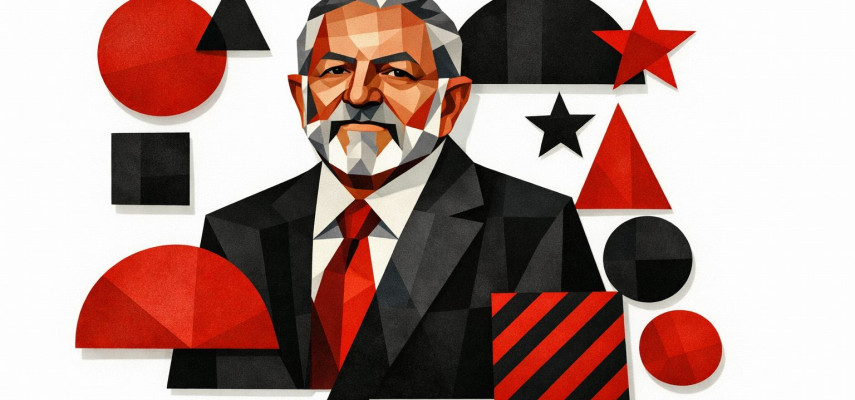
Who is Lula da Silva
General elections will be held in Brazil this year, and currently, polls show that the far-right populist Jair Bolsonaro, who has thoroughly exhausted many and is an apologist for right-wing dictatorships, repression, racism, and sexism (in 2020, along with several other conservative leaders, he received an Ig Nobel Prize for his views on COVID-19), is trailing behind social democrat Lula da Silva. The latter has already served as president of Brazil. How did that go, and who is Lula?
Luiz Inácio Lula da Silva, most often referred to simply as “Lula” (as is often customary in Brazil), is one of the most significant leaders of South American social democracy. He was born in 1945 into a working-class family in the town of Caetés, state of Pernambuco. From the age of 12, Lula engaged in working activities1. Already at the age of 19, he became an activist in the Union of Workers trade union organization. In 1975, he became president of the regional metalworkers’ union in São Paulo. During the years of the military dictatorship, Lula was repeatedly arrested.
In February 1980, at the height of the military dictatorship, he, among a group of scholars, intellectuals, and trade union leaders, became one of the founders of the leftist Workers’ Party. In 1983, he helped create the Brazilian trade union federation. In 1985, his party shifted away from Marxism and “liberation theology” toward social democracy and reformism2. In 1986, Lula became a member of the country’s parliament. In 1989, 1994, and 1998, he ran for president of Brazil, but unsuccessfully. Without giving up, Lula improved himself and made changes to his program. A person with a loser mindset would have decided that several defeats in a row showed that he could not influence anything and that running was useless, but da Silva has a different type of mindset, and in 2002 he finally won the election in the second round.
Presidency
Lula was president of Brazil from 2003 to 2010. During this period, the country paid off the large foreign debt that had formed back in the 1980s. Thanks to economic successes, Brazil’s leadership at the regional level was strengthened, primarily within MERCOSUR. From 2003 to 2010, as a result of Lula’s economic policy, unemployment in the country decreased from 9.99% to 7.74%3. Brazil became the eighth largest economy in the world4. Overall, the economic concepts implemented by the president’s government were closer to the “Third Way of social democracy”, similar to Tony Blair’s policy in the UK. Thanks to sound economic policies, Brazil was not severely affected by the consequences of the 2008 global financial crisis.

A broad range of social programs was implemented in the country, for instance, the Bolsa Família program. Those in need were helped with payments for housing, secondary, and higher education. The Fome Zero (Zero Hunger) program to combat hunger and poverty in the country gained fame and popularity5. The official national minimum wage increased by 25% in real terms6. As a result of these programs, about 20 million people in the country were lifted out of poverty7 (overall, the poverty level in the country dropped from 41.7 to 24%8). During Lula’s first term alone, the rate of child malnutrition in Brazil fell by 46%, and in May 2010, the UN World Food Programme awarded Lula da Silva the title of “World Champion in the Fight Against Hunger”9. As noted in The Economist, a sharp decrease in inequality was also recorded under him, which as early as 2006 was at its lowest level in 30 years in Brazil and continued to decline10. However, this was largely also connected to the reforms of the previous president, Fernando Henrique Cardoso of the centrist Social Democratic Party, who introduced universal primary education and a new labor law.
At the same time, as usually happens with social democrats, their traditionalist wing did not want sound economic policies, but a plunge into poverty through the implementation of insane economic theories, so they began to attack Lula11. However, he did completely the right thing in focusing on progressive values, needs, and the interests of the masses in this regard, rather than trying to please a group of marginals, and in the end it was he who achieved success and popularity.
When Lula came to power, he stated: “Under our government, the poor will be treated as human beings”12. His projects to supply clean water and build urban infrastructure in the favelas are assessed as successful. Up until 2010, more than 15 billion euros were invested in them, and more than 40 billion in the construction of new housing, which was three and two times more, respectively, than the funds spent on these purposes during Lula’s first presidential term, which he was forced to largely dedicate to developing the economy, ensuring a favorable investment climate, and reassuring markets that were alarmed by such a leftist leader coming to power.
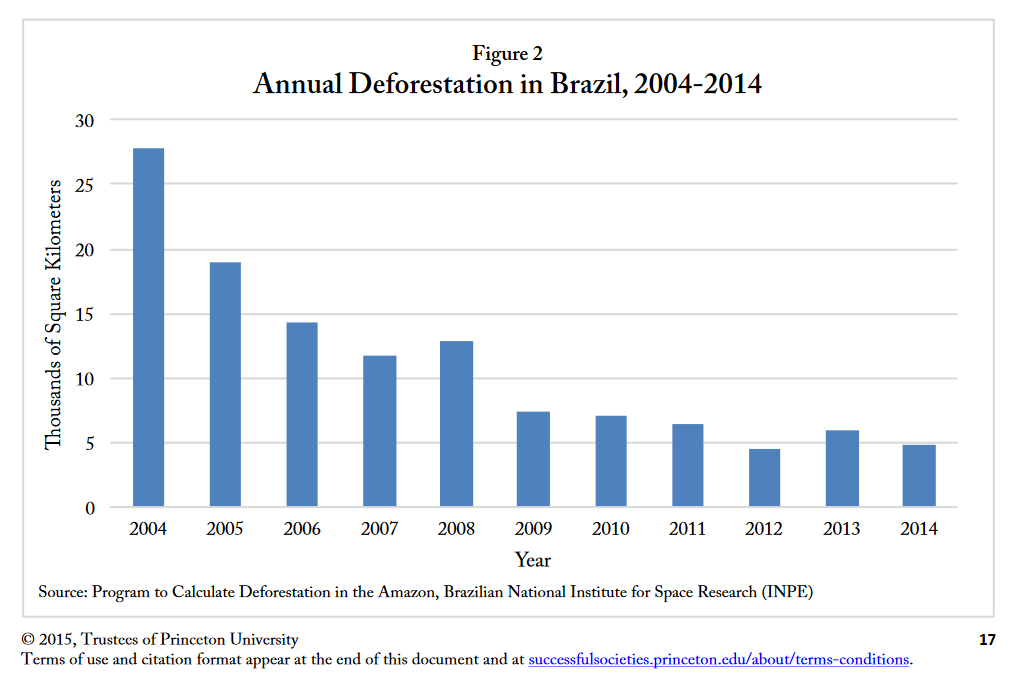
The creation of nature reserves and sanctuaries led to a significant reduction in deforestation during Lula’s presidency13. In 2010, Lula submitted a bill to parliament prohibiting corporal punishment of children14, which was soon passed. He also pursued policies aimed at achieving equality for people regardless of their ethnic background15.
In 2010, Time magazine named Lula “the most influential person in the world”16. By the end of his second term, he had an approval rating of 87%, but did not seek an extension of his presidency. In the 2011 election, his ally Dilma Rousseff won, largely continuing his reforms. Today, Lula is considered a “nationally beloved ex-president”17.

However, not everything in Lula’s policy was flawless. Unfortunately, he never managed to achieve major successes in the fight against crime in Brazil. Nor did he manage to defeat corruption, the level of which remained high. He is also distinguished by extreme indiscriminate foreign policy – during his first presidential terms, he managed to have good relations with left-wing populist Hugo Chávez and Republican George W. Bush18, and today he claims that not only Vladimir Putin is to blame for the start of the war in Ukraine, but also Ukrainian President Volodymyr Zelenskyy and US President Joe Biden, and that the US and Europe should have convinced the Kremlin that Ukraine would not join NATO19. One Washington Post columnist even called Lula “the tyrants’ best friend in the democratic world”20. The old disease of many leftists – a love for anti-American dictators – still remains a big problem.
After the presidency
In July 2017, Lula was convicted on charges of money laundering and corruption in a controversial trial and sentenced to nine and a half years in prison.
As it turned out later, the charges were illegal (in 2021, Lula was fully acquitted), and the federal judge who handled this case – Sergio Moro – later became Minister of Justice and Public Security in Jair Bolsonaro’s government21, and later the Federal Supreme Court managed to find out that Moro handled the case with bias and was in collusion with the prosecution22. In April 2018, da Silva was arrested, later sentenced to 17 years in prison23 and was forced to spend 580 days in confinement. After the ex-president was released in 2019, all charges were annulled in 202124.
Overall, the story of Lula da Silva once again demonstrates the power of social democracy and reformism over communists who strive to turn the economy upside down and establish a dictatorship. This story is a story of successful transformations in the interests of the masses, rather than a path to poverty, hunger, and failure.
We thank Artem Kuznetsov for his help in writing the article.
- Silva // Great Russian Encyclopedia. Volume 30. Moscow, 2015, p. 164.
- D. Molodtsov. Lula’s Domestic Policy. Left Turn in Brazil // Popular Science Journal “IKSTATI” (spb.hse.ru). November 9, 2022. [Electronic resource]. URL: https://spb.hse.ru/ixtati/news/415971283.html (Date of access: 10.06.2022).
- Ibid.
- J. Forero. Brazilian president’s handpicked successor leads, faces runoff // The Washington Post (www.washingtonpost.com). October 4, 2010. [Electronic resource]. URL: https://www.washingtonpost.com/wp-dyn/content/article/2010/10/03/AR2010100304612_pf.html (Date of access: 10.06.2022).
- D. Molodtsov. Lula’s Domestic Policy. Left Turn in Brazil // Popular Science Journal “IKSTATI” (spb.hse.ru). November 9, 2022. [Electronic resource]. URL: https://spb.hse.ru/ixtati/news/415971283.html (Date of access: 10.06.2022).
- Lula’s leap // The Economist (www.economist.com). March 2, 2006. [Electronic resource]. URL: https://www.economist.com/the-americas/2006/03/02/lulas-leap (Date of access: 10.06.2022).
- Silva // Great Russian Encyclopedia. Volume 30. Moscow, 2015, p. 164.
- D. Molodtsov. Lula’s Domestic Policy. Left Turn in Brazil // Popular Science Journal “IKSTATI” (spb.hse.ru). November 9, 2022. [Electronic resource]. URL: https://spb.hse.ru/ixtati/news/415971283.html (Date of access: 10.06.2022).
- M. Rocha. Cuál es el balance social de Lula? Le Monde diplomatique (mondiplo.com). September 2010. [Electronic resource]. URL: https://mondiplo.com/cual-es-el-balance-social-de-lula (Date of access: 10.06.2022).
- Lula’s leap // The Economist (www.economist.com). March 2, 2006. [Electronic resource]. URL: https://www.economist.com/the-americas/2006/03/02/lulas-leap (Date of access: 10.06.2022).
- Ibid.
- C. Rayes. Et Lula apporta l’eau et la lumière aux favelas // Libération (www.liberation.fr). August 11, 2007, 9:09. [Electronic resource]. URL: https://www.liberation.fr/futurs/2007/08/11/et-lula-apporta-l-eau-et-la-lumiere-aux-favelas_99729/ (Date of access: 10.06.2022).
- A credible commitment: Reducing deforestation in the Brazilian amazon, 2003–2012 // 2015, Trustees of Princeton University.
- Authorities to ban Brazilians from hitting children // Rossiyskaya Gazeta (rg.ru). December 15, 2011, 2:15. [Electronic resource]. URL: https://rg.ru/2011/12/15/braziliya-anons.html (Date of access: 10.06.2022).
- Brazil // Vokrug Sveta (www.vokrugsveta.ru). [Electronic resource]. URL: https://www.vokrugsveta.ru/encyclopedia/index.php?title=Бразилия (Date of access: 10.06.2022).
- O. Sulkin. Son of Brazil, or When Lula Was Little… // Voice of America (www.golosameriki.com). January 14, 2012, 3:00. [Electronic resource]. URL: https://www.golosameriki.com/a/lula-brazil-movie-2012-01-14-137341838/250002.html (Date of access: June 10, 2022).
- J.-F. Stürk, A. Schossler. Nationally Beloved Ex-President da Silva to Go to Prison (photogallery) // Deutsche Welle (www.dw.com). April 5, 2018. [Electronic resource]. URL: https://www.dw.com/ru/всенародно-любимый-экс-президент-да-силва-отправится-в-тюрьму-фотогалерея/a-43268198 (Date of access: June 10, 2022).
- Lula’s leap // The Economist (www.economist.com). March 2, 2006. [Electronic resource]. URL: https://www.economist.com/the-americas/2006/03/02/lulas-leap (Date of access: June 10, 2022).
- Former Brazilian President Lula da Silva Believes Russia Is Not Solely Responsible for Conflict in Ukraine // SWI (www.swissinfo.ch). May 4, 2022, 18:39. [Electronic resource]. URL: https://www.swissinfo.ch/rus/экс-президент-бразилии-лула-да-силва-считает–что-не-только-россия-виновна-в-конфликте-на-украине/47567720 (Date of access: June 10, 2022).
- J. Diehl. Lula: Stonewalled by Iran // The Washington Post (voices.washingtonpost.com). August 3, 2010, 11:53. [Electronic resource]. URL: http://voices.washingtonpost.com/postpartisan/2010/08/lula_stonewalled_by_iran.html (Date of access: June 10, 2022).
- T. Phillips. Bolsonaro appoints judge who helped jail Lula to lead justice ministry // The Guardian (www.theguardian.com). November 1, 2018, 14:59. [Electronic resource]. URL: https://www.theguardian.com/world/2018/nov/01/bolsonaro-sergio-moro-brazil-justice-ministry-anti-corruption (Date of access: June 10, 2022).
- Lula judge was biased, Brazil supreme court rules, paving way to challenge Bolsonaro // The Guardian (www.theguardian.com). March 24, 2021, 00:06. [Electronic resource]. URL: https://www.theguardian.com/world/2021/mar/24/lula-judge-was-biased-brazil-supreme-court-rules-paving-way-to-challenge-bolsonaro (Date of access: June 10, 2022).
- Former Brazilian President Sentenced to 17 Years in Prison // RBC (www.rbc.ru). November 28, 2019, 03:40. [Electronic resource]. URL: https://www.rbc.ru/rbcfreenews/5ddf12bd9a794783637fee4e? (Date of access: June 10, 2022).
- Brazilian Court Annuls Corruption Charges Against Ex-President Lula da Silva // RBC (www.rbc.ru). March 9, 2021, 02:16. [Electronic resource]. URL: https://www.rbc.ru/politics/09/03/2021/6046a8309a794715bb517c73 (Date of access: June 10, 2022).