
Corruption and ways to combat it
Corruption is one of the main causes of poverty in many countries, and successful fight against it can become one of the primary factors of prosperity. Therefore, social democrats cannot help but pay special attention to the ways of solving this problem. In this article, we will try to create a foundation for a comprehensive set of such methods.
One of the most serious problems of the Russian Federation and one of the reasons for the low standard of living throughout the country as a whole is corruption on a very large scale. In the Corruption Perceptions Index, the country ranks 137th in the world (out of 179 countries presented in the rating)1. The RF shares this spot with countries such as Papua New Guinea, Uganda, and Liberia. In the future, we will write a separate article about the scale of corruption in modern Russia. On the whole, it will be news to no one in the country that a significant portion of public finance settles in the personal budgets of high-ranking civil servants. If we solve this problem, it will free up some funds to implement a plan of social-democratic transformations.
Contents
What is corruption
To fight anything effectively, one must first clearly understand what it is. The Great Russian Encyclopedia, citing documents from the 34th session of the UN General Assembly (1979), gives the following definition: “the performance by a public official of any actions or omission in the sphere of his official powers for remuneration in any form in the interests of the person giving such remuneration (both with violation of official instructions and without their violation)”2. As the Britannica Encyclopedia notes, the concept of corruption includes, among other things, bribery and extortion3. The world’s leading organization in the fight against corruption — Transparency International — defines it as the abuse of entrusted power for private gain4. On the whole, we can highlight several main areas of corruption:
- Bribery. This also includes a situation where a person receives some kind of “gift” supposedly “just because” from some other person or organization, but later renders a service beneficial to that person or organization;
- Inefficient waste of public funds. This includes, for example, a case where a government official ordered the laying of road pavement from an organization belonging to his good friend at a price above the market rate;
- Theft and privatization of state resources and funds;
- Appointing one’s friends or relatives to important positions;
- Abuse of authority or official position. This also includes intimidation and torture;
- Manipulation of regulation (falsification of elections, making decisions in favor of one group or person);
- Electoral violations (vote buying, tampering with election results);
- Concealing information about corruption.
Causes of corruption
Corruption is born as a result of a combination of causes. One of these possible causes is low remuneration for labor. Simply put, sometimes employees lack enough wages even to satisfy their basic needs, and they are forced to look for methods to earn additional income.
The second reason is the lack of inevitability of punishment. An individual weighs all the costs and benefits of his criminal actions and rationally decides to commit a crime if the expected utility of such actions is higher than in the case where he would have remained honest and spent his time and resources in a different way. Low remuneration for labor and the lack of inevitability of punishment combined cannot help but breed corruption. From this stems the unaccountability of the executive power to the legislative and judicial branches.
Based on the approach proposed by Nobel laureate Gary Becker5, the profit expected by a potential criminal from corruption is described by the expression: U = D – pf, where D is the income obtained from committing the crime, p is the probability of the criminal being punished, and f is the monetary equivalent of the punishment. The value of pf can be viewed as the price (or “tax”) that the criminal pays for committing the crime. In cases where criminals are rational in their choice, an increase in this value will lead to a reduction in crime, just as an increase in the price of a normal good entails a decrease in demand for it. To achieve the optimal effect (in reducing crime), the price should be raised, or at least the crime should be made economically unprofitable; that is, its price should be increased to a level at which the expected benefit from committing the crime takes a negative value.
If the probability of punishing the criminal turns out to be very low (say, for example, p<0.1 or even p<0.01), then the following two factors become significant. First, the criminal (including a potential one) considers himself invulnerable, as psychologically he is inclined to round up the probability that he will manage to remain uncaught. Therefore, the severity of the punishment no longer plays any role for him. Second, the severity of the punishment cannot grow indefinitely. Therefore, if the probability of punishment is small enough, the expected punishment (the value of pf) will also be small. For this reason, introducing executions for corruption, as many erroneously believe, helps very little on its own. A system in which corruption threatens “only” a year of imprisonment, but this punishment is guaranteed to await every (or almost every) offender, will be far more effective than a system where execution is provided for corruption, but there is no normal control over compliance with the law.
Professor Robert Klitgaard also formulated the “classic” formula of corruption, which looks like this: Corruption = Monopoly + Discretion – Accountability6. This means that when there is a monopoly of officials on decision-making, a low level of accountability to citizens (the absence of the institution of election or merely the appearance of its presence), an excess of officials’ powers to act at their discretion, while there is no system for monitoring the legality of managerial decisions made and no system for monitoring the income of public servants — corruption is born out of this. The MGIMO Journal of the Ministry of Foreign Affairs of the Russian Federation “World and National Economy” also notes:
- First, the higher the level of economic well-being (GDP per capita), the less prone officials are to resort to illegal methods of making profit, the stricter the anti-corruption measures, and the stronger the civil society.
- Second, the more developed democracy is, the greater the risk for an official to lose his post, and the more opportunities anti-corruption authorities have.
- Third, the development of the judicial system also prevents the expansion of corruption processes.
- Fourth, the larger and more complex the bureaucratic apparatus is, the more opportunities open up for corruption. The centralization of the state plays an important role: in most rigidly centralized empires, corruption reached unimaginable proportions, as in the Roman and Byzantine empires. On the other hand, not all experts are inclined to consider decentralization a guarantee of a low level of corruption.
- Fifth, although until recently researchers neglected historical factors, the author considers it necessary to examine this group of causes as well. For instance, in “old” states, corruption mechanisms have been fine-tuned by many years of practice and are to a greater extent a socio-cultural phenomenon — such as, for example, in the Russian Empire7. On the other hand, in “young states”, large-scale privatization and the underdevelopment of state mechanisms provide almost limitless opportunities for corruption — and the best illustration of this will be not only the Russian Federation, but also practically all the countries of the former socialist camp.
- The role of geographical factors (combined with the factor of power centralization) can be clearly illustrated by the same Roman Empire. The huge size of the country inevitably entails difficulties in management and control over the activities of officials on the ground (recall the comedy “The Government Inspector” by N.V. Gogol). In addition, state control over natural resources8 (which are also classified as geographical factors) opens up one of the most profitable areas of corrupt activity for officials, both in the form of extortion and in the form of a bribe9.
Thus, the third cause of corruption is the low level of democracy and political competition. If an official is not afraid of losing his position (this fear is ensured by rotation and election), he is not afraid of committing a corruption offense either. In Russia, the absence of democracy under the USSR led to the nomenklatura later carrying out a “division” of production facilities, popularly known as “prikhvatizatsiya” (grabitizaion), as a result of which production began to be managed not by people who created and expanded business in a competitive struggle, but by nomenklatura officials, which led to extensive ties between business and government, as well as the transfer of the corruption practices of the nomenklatura into business.
Indirectly, the lack of inevitability of punishment is due to the fourth cause of corruption — the lack of transparency in the state system. This is a high level of opacity in the work of government agencies, a cumbersome reporting system, a lack of transparency in the legislative system, and a weak state personnel policy that allows the spread of sinecures and opportunities for promotion regardless of the actual performance of the employees’ work10.
The fifth cause is the complexity and cumbersome nature of the bureaucratic apparatus. This is a breeding ground for the emergence of numerous bureaucratic procedures and making it harder to track corruption crimes.
As the sixth cause, one can distinguish the socio-cultural prerequisites of corruption, such as the demoralization of society, insufficient information and lack of organization among citizens, and public passivity regarding the arbitrariness of those “in power”. Out of this stems the lack of proper public control by civil society institutions over the functioning of the bureaucratic apparatus.
The seventh cause is the links between the bureaucracy and business, including members of the official’s own family. The fate of a business often depends in the most direct way on the administrative support provided by an unscrupulous official11.
There may be more causes of corruption, but here we have highlighted those that, in our opinion, are the most common. It is these causes that we will have to neutralize.
Experience of other states in combating corruption
There are states where corruption has been defeated (this means it has been reduced to low levels, not completely eliminated). Sometimes Stalin’s USSR is mistakenly included here, but in a separate article we examined that corruption in it was a very widespread phenomenon. A classic example of a successful fight against corruption is the example of Singapore; other successful examples are the countries holding the leading positions in the Corruption Perceptions Index (as of 2019, these are Denmark, New Zealand, Finland, Sweden, Switzerland12). We are also interested in the example of Georgia, because it is a post-Soviet country that managed in 13 years to advance in the ranking from 124th place in the world (out of 133 at that time) in the success of the fight against corruption (200313) to 44th place (201614).
What was done in Singapore? Having gained independence in 1965, Singapore was a country with one of the highest levels of corruption in the world. To correct the situation, the following steps were taken15:
- Strict regulation of officials’ actions, simplification of bureaucratic procedures, and the most rigorous supervision over compliance with high ethical standards;
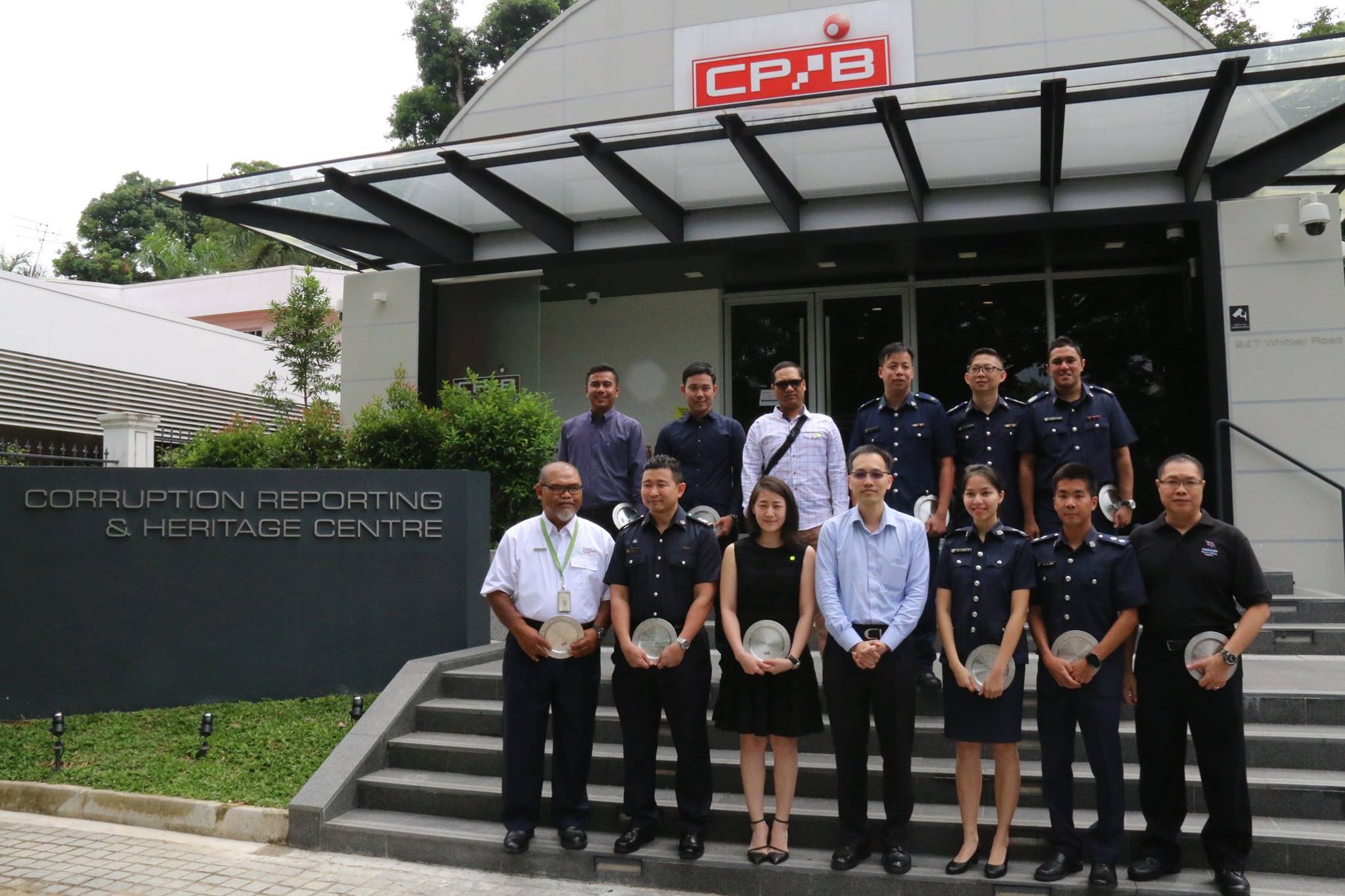
- The Corrupt Practices Investigation Bureau (CPIB) was created as an autonomous body. It received and investigated complaints alleging corruption in public and private spheres, investigated cases of malpractice and negligence committed by civil servants, and checked the activities and transactions carried out by civil servants in order to minimize the possibility of corrupt acts being committed;
- Legislation was tightened, the independence of the judicial system was increased, economic sanctions were introduced for giving a bribe or refusing to participate in anti-corruption investigations, and harsh actions were taken up to the wholesale dismissal of customs employees and other public services;
- Deregulation of the economy;
- Raising the salaries of officials and training qualified administrative personnel.
It is noteworthy that corrupt officials, in addition to serving a conventional court sentence, are obliged to return the value of the bribe received. For those who are unable to make full restitution, a more severe court sentence is handed down. If the person accused of corrupt relations has already died, his property is confiscated. In 2019, Singapore ranked 4th in the list of the least corrupt countries16.
In Sweden, the emphasis was shifted to a system of incentives that encourage the population to counter corruption. Its distinctive features are:
- The main instruments are taxes, benefits, and subsidies;
- Free access to internal government documents;
- An independent and effective justice system;
- Establishing high ethical standards for government officials;
- High salaries for civil servants.
At the beginning of the anti-corruption campaign, the salaries of civil servants exceeded those of workers by 12–15 times17, but over time this difference decreased to 2–3 times. The country hosts seminars and lectures for business and authorities by NGOs specializing in corruption, which help people draw the line between what is corruption and what is part of an official’s job18. In 2019, Sweden shared 4th place with Singapore in the list of the least corrupt countries, while its neighbors Denmark and Finland, where similar methods are used, ranked 1st and 3rd.
In Sweden, anyone can call, for example, the tax office and, giving a citizen’s personal identification number over the phone, find out all the information. Obtain data about income, property, available vehicles, and even their debts. The response will be sent by mail or via the internet upon request.
‒ You can, for example, give my name. They will tell you everything ‒ where I work, how much I make, whether I am married, if there are children, and what their income is. Everything is as open as possible, ‒ says Helena19.
In Georgia, following the “Rose Revolution” of 2004, a comprehensive set of anti-corruption measures was also adopted. In 2003, the country occupied one of the top places in the world in terms of bribery and red tape in government bodies. The government of Mikheil Saakashvili undertook, among others, the following measures20:
- Reducing the number of ministries and civil servants;
- Raising the salaries of the remaining civil servants by 10–15 times;
- Staff renewal (for example, the entire composition of the Georgian traffic police, numbering about 20 thousand people, was dismissed wholesale in a single day21);
- Adopting a number of legislative acts that simplified the procedure for detaining officials suspected of corrupt practices and provided for the confiscation of their property if they could not prove the legality of its acquisition;
- High-profile arrests and heavy fines of high-ranking officials and “thieves in law”, which were widely covered in the media.
In parallel with this, the reorganization of state bodies was underway. The reform of one of the most corrupt systems in Georgia — the traffic police — was carried out instantly and radically. In the summer of 2004, in a single day, more than 15 thousand workers were dismissed from the ranks of the then traffic police (former GAI), and a completely new structure was created — the patrol police. The selection of employees for this structure was carried out very carefully. The police received the most modern equipment, and its employees were provided with a good salary by local standards — 5–6 times more than before.
An important step in the fight against corruption was the introduction of the “one-stop-shop” principle in almost all structures, which reduced bureaucratic barriers and delays to a minimum. This principle operates, in particular, in the Service Agency of the Ministry of Internal Affairs of Georgia, which performs many different functions, such as receiving complaints from the population, issuing driver’s licenses and various certificates, as well as registering cars. It became possible to get a license or re-register a car in a matter of minutes. In 2008, an electronic document management program began to operate, which enabled citizens of the country to obtain all necessary documents — from birth certificates and ID cards to enterprise registration certificates — in the shortest possible time. The Georgians paid attention even to small details — for example, in police buildings, the walls of offices and doors were made of transparent glass, so that no one could give an official a bribe “quietly”22.
What needs to be done
Based on the identified causes of corruption, as well as the experience of fighting this phenomenon in other countries, we can formulate the main methods that will help social democrats defeat corruption.
Lustration. We have already written in the article on lustration of the nomenklatura that when replacing authoritarianism with democracy, lustration of the nomenklatura is necessary, and we explained in more detail what this might include. The above-described experience of Georgia only confirms the benefit of this method. Along with lustration, we will also have to carry out a reduction of the state apparatus (including the sale of non-core assets by state-owned companies and state-owned banks).
Creating democracy. In the article about what democracy is, we analyzed what is included in this concept and why democracy is needed. As we wrote above and in that article, it is also necessary for fighting corruption. The creation of democracy — let us emphasize this once again — necessarily implies the creation of political competition and a strong opposition, which allows competitors to regulate each other and exert mutual pressure.
Ensuring the rule of law. Perhaps the main cause of corruption is the confidence in impunity. We have already written a separate material on how to ensure the rule of law in the country, but here we will simply say that when officials lose their power over the court and it judges them according to the law rather than connections, then they will become far more defenseless against the fight against corruption and against the media. Furthermore, without the rule of law, it will be impossible to guarantee punishments for giving bribes to any extent (these punishments are an important additional tool for deterring corruption).
Improving legislative anti-corruption norms. This point implies adequate penalties for corrupt acts. The thing is that too long a sentence for a minor offense can even push the prosecution to acquit the accused. Therefore, penalties must be reasonable and must include economic sanctions for corruption offenses (punishments must concern not only those who take bribes, but also those who give them). This will affect the decisions of officials in assessing financial risks, and will also allow turning corruption from a parasite on the budget into a source of state revenue. Social democrats will also be obliged to minimize norms that allow a subjective interpretation of regulatory acts, introduce/tighten laws on the disclosure of conflicts of interest, on lobbying, and on standards for information disclosure (including ultimate beneficiaries) of companies supplying services and goods to the state and state-owned companies. In the beginning, compliance with international law norms can also help us, for example, the full and unconditional ratification of the United Nations Convention against Corruption23 and bringing legislation into line with it, as well as measures such as implementing the ISO 37001 standard in enterprises.
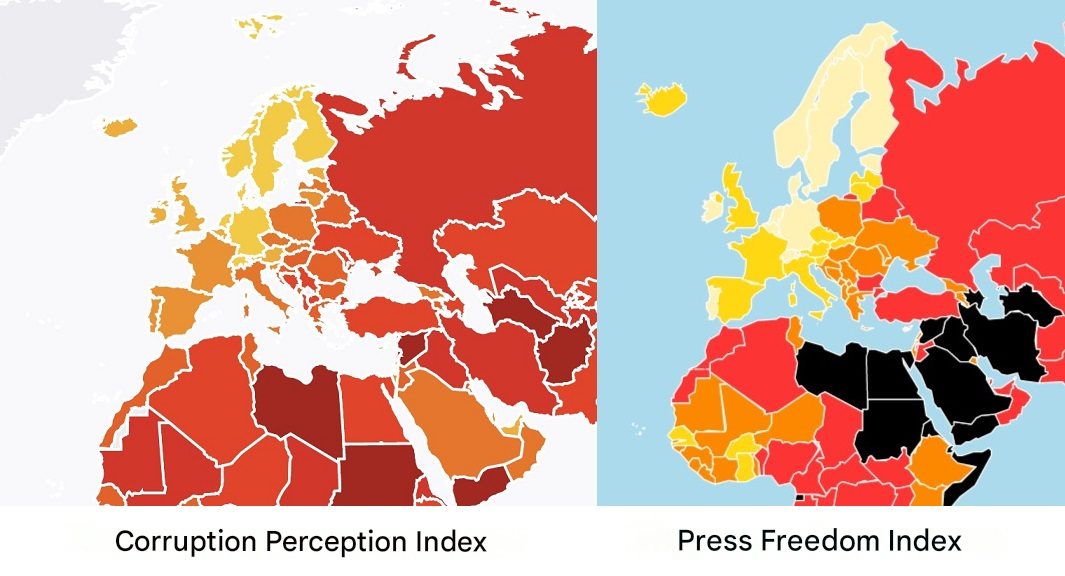
Ensuring freedom of the press. Freedom of the press is necessary for fighting corruption, since it is journalistic investigations that uncover a significant portion of officials’ crimes. Helena Sundén, Secretary-General of the Swedish “Institute Against Bribes”, even claims that in Sweden, business is much more afraid of journalists than the police24. We must do everything so that the journalist is protected (to which the rule of law also contributes), and minimally dependent on the state or representatives of big capital. The topic of ensuring freedom of the press was also examined by us in a separate material.
Raising salaries for civil servants. In part due to the aforementioned reduction of the state apparatus, we can afford to carry out a wage increase for civil servants in order to eliminate the need to obtain funds through corrupt methods and even make them value their position. Furthermore, our economic program implies creating a welfare state and raising the standard of living of citizens as a whole, which also indirectly contributes to eradicating the need for corruption.
Elimination and prohibition of state provisioning for officials. A ban on the so-called “self-provisioning” of officials (does not apply to rank-and-file police officers, medics, firefighters) must be clearly prescribed in the Constitution — social democrats must not allow any state dachas and apartments, any state cars, meals at state expense, and so on. Officials must not receive presidential suites for 1.4 million rubles at the expense of the state, like the head of the Ministry of Industry and Trade Denis Manturov25, but must instead pay for their accommodation themselves (in this case, they will not rent such expensive suites, but will engage in optimizing expenses themselves). Government buildings must not have fences and enclosures, and officials must not have flashing lights on their cars and police escorts.
Ensuring transparency of the state mechanism. It is important to ensure free and simple access to government documents, information about the property of high-ranking officials, the state procurement system (with supplier ratings and citizens’ comments from their official accounts, which will help anti-corruption authorities identify suspicious transactions faster), and so on. As Alexei Navalny notes, transparency requirements must also apply to state-owned companies26. This way, we will be able to involve a larger number of citizens in controlling the state. Following the example of Sweden, it is necessary to create an opportunity for any citizen to obtain information about the income, property, and debts of another citizen using their personal identification number.
Moving bureaucratic procedures online. The more actions related to receiving government services citizens perform online, without a “live” intermediary, the less space there will be for corrupt maneuvering and the more we can reduce the state apparatus. The “one-stop-shop principle” should be expanded and improved to the maximum for all public services. It should be possible to obtain any documents, register and dissolve marriages, open a company, and so on in a single place, similar to the Georgian Public Service Halls27 (a foundation for such a system already exists in Russia in the form of the MFC network).
Creating an autonomous anti-corruption committee. The state body for investigating corruption crimes must possess broad powers, while being transparent, democratic, and financially independent of the government (the government must also not have management authority over it). The evaluation of the effectiveness and salaries of this body’s employees should be tied to the country’s position in independent international corruption perceptions indexes. Citizens should have the opportunity to apply to participate in “stings” against corrupt officials with the assistance of the Committee, for which they will receive a portion of the financial resources paid by the caught corrupt official as a fine. Investigations should also cover the private sector, not just the public sector.
Show trials. Implementing the entire set of tools is not enough for it to start yielding results immediately — it is important to convey to every citizen that corruption is now actually punishable (and not just on paper), to show the public a shift in vector. A good way to do this is through show trials and high-profile arrests followed by nationwide judicial proceedings against high-ranking corrupt officials specifically on corruption charges (including for giving bribes). Special publicity should be given to cases in which independent citizens participate in uncovering the matter, to show the entire society that even an ordinary citizen can and must participate in the fight against corruption on the part of even high-ranking officials, and has the capacity for a successful fight. By demonstrating the pattern of action and its operation in practice, we will thereby encourage citizens to replicate this pattern. In addition, it is important for social democrats to monitor those members of their own party who “will not understand” after the victory and obtaining government posts what the purpose of a social democratic party is, and try to use power for their own benefit. Such people should be imprisoned first and foremost — party affiliation and personal connections do not remove responsibility here, but only increase it.
Establishing ethical standards of conduct for officials. Just as portraits of Vladimir Putin in the offices of modern Russian officials28 program them for subordination and loyalty to the nomenklatura, the tools of the social democrats that will replace such contrivances must program officials to comply with laws, work effectively, and promote universal human values. Instead of a portrait of a political leader, the code of ethics of a civil servant should hang in offices, prescribing, among other things, the fight against corruption by all possible means, and explaining the most crucial permissible and impermissible actions for a civil servant (sometimes corruption is simply due to the fact that people do not understand what is allowed and what is not). Inside the administrative buildings themselves, there can be many elements that program for the honest performance of duties.
Eradication of illiteracy. Through party and state media (though we believe that state media should be kept to a minimum), we can provide an impetus to the study of corruption problems, to conveying methods of struggle to the broad masses of citizens, and to the informational criminalization of cronyism and nepotism. Independent media will most likely pick up and develop this impetus. On the whole, social democrats must use the media and the education system to teach as many citizens as possible how to govern the state (how it is structured, which body has what area of responsibility, how these bodies are elected, where to complain to solve a problem, and so on), how to use the judicial system, how to use public services online, and how and where to report facts of corruption. It is within our power to create an entire army of capable fighters for civil society, against which corruption will be powerless. Furthermore, following the example of Sweden, we can subsidize lectures for business and civil servants that explain what corruption is and how to fight it.
Receiving assistance from the EU. Social democrats will not neglect the help of those European countries that have achieved significant success in the field of fighting corruption. Our planned rapprochement with the EU will help us obtain their experience in creating institutions resilient to corruption, and possibly some financial resources to implement these reforms.
Moving the capital to another city. To minimize personal contacts of the country’s highest bureaucracy with big capital, which can often lead to deals, lobbying of interests, and other corrupt actions, in the case of Russia, it would be advisable to move the country’s capital from a financial center like Moscow to a purely administrative center (a small provincial town, such as Kamyshin or Volsk, would be suitable for this). A similar experience is shared by the USA (Washington), Australia (Canberra), Canada (Ottawa), South Africa (Pretoria), and Brazil (Brasilia). It might make sense to perform a similar operation with regional capitals as well.
Restricting the circulation of cash. Large monetary expenditures must be allowed only through bank cards. If there is no such control, it makes it easier for an official to spend money received “in an envelope”. If all large transactions pass through a bank, however, we have much more complete information about the movement of financial resources, which makes it easier to identify people whose spending does not correspond to their official income. Not all officials, let alone citizens and legal entities, possess the necessary capabilities (such as accounts in foreign banks) to bypass this system, and methods for detecting corruption due to suspicious transactions will acquire many new effective mechanisms29. This is already becoming normal practice in most developed countries — for example, Australia banned cash payments of more than 10,000 US dollars30, and in France, the threshold for cash payment for goods was reduced in 2015 from 3,000 to 1,000 euros (furthermore, banks were obliged to report to Tracfin every withdrawal or deposit of cash exceeding €10 thousand from a bank card or account31).
Training qualified administrative personnel. A system of high-quality political and managerial education should be created, the curriculum of which will be developed with a broad and deep consideration of the experience of the most successful countries. We must create advanced breeding grounds for personnel who will be familiar with the latest world research in matters of public administration, including the necessity of fighting corruption.
Conclusion
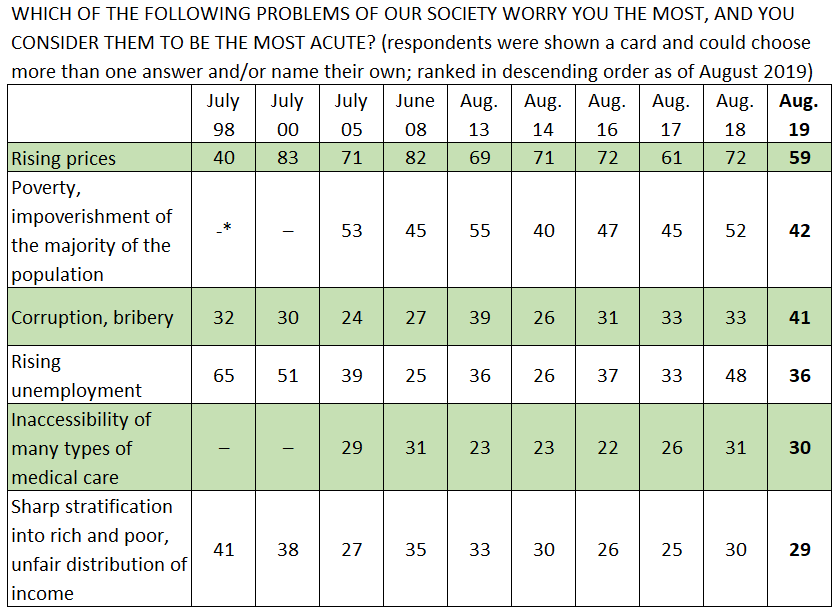
The fight against corruption is one of the key aspects of social democratic policy. We know the causes of corruption and we know the tools with which corruption can be reduced to minimal indicators. The fact that we have a program of action to fight corruption can have a beneficial effect on popularizing the ideas of social democracy, especially in countries plagued by corruption. For example, in Russia in 2019, this phenomenon was named the third largest problem among those that trouble the citizens of the country32:
While the proposals of most non-democratic political opponents boil down to unprofessional and populist demands for harsher punishments or the creation of new state bodies, our proposals include a truly broad complex of proven methods.
- Corruption perceptions index 2019 // Transparency International (www.transparency.org). [Electronic resource]. URL: https://www.transparency.org/en/cpi/2019/results/afg# (Accessed: 03.01.2021).
- Ya.I. Gilinsky. Corruption // Great Russian Encyclopedia. Electronic version [Electronic resource]. URL: https://bigenc.ru/law/text/2100030 (Accessed: 03.01.2021).
- Corruption // Britannica (www.britannica.com). [Electronic resource]. URL: https://www.britannica.com/topic/corruption-law (Accessed: 03.01.2021).
- What is corruption? // Transparency International (www.transparency.org). [Electronic resource]. URL: https://www.transparency.org/en/what-is-corruption# (Accessed: 03.01.2021).
- G.S. Becker. Crime and punishment: an economic approach. – Journal of Political Economy vol.76. n.2, 1968. – p. 169-217
- Committee for Urban Planning and Architecture. St. Petersburg State Public Institution “Research and Design Center for the Master Plan of St. Petersburg”. Measuring corruption / comp. and layout by I.A. Ksenofontova. [Electronic resource]. URL: http://gugenplan.spb.ru/UserFiles/BUKLET_corruption%20measuring%2030%2006%202017.pdf (Accessed: 05.01.2021).
- For details, see: I.A. Golosenko, “The Phenomenon of the ‘Russian Bribe’: An Essay on the History of Domestic Sociology of Bureaucracy”
- For details, see: Carlos Leite, Jens Weidmann, “Does Mother Nature Corrupt? Natural Resources, Corruption, and Economic Growth”, IMF working paper, 1999
- Corruption: causes of occurrence, influences, and methods of struggle // “World and National Economy”. Edition of MGIMO MFA of Russia (mirec.mgimo.ru). December 5, 2008. [Electronic resource]. URL: https://mirec.mgimo.ru/2009/2009-01/korrupciya-prichiny-vozniknoveniya-vliyaniya-i-metody-borby2 (Accessed: 03.01.2021).
- Yury Latov. Corruption // Krugosvet Encyclopedia (www.krugosvet.ru). [Electronic resource]. URL: https://www.krugosvet.ru/enc/ekonomika-i-pravo/korrupciya (Accessed: 03.01.2021).
- E.V. Platov. Causes of corruption in Russia // Electronic scientific journal “Science. Society. State” 2018. Vol. 6, No. 4 (24)
- Corruption perceptions index // Transparency International (www.transparency.org). [Electronic resource]. URL: https://www.transparency.org/en/cpi (Accessed: 03.01.2021).
- Corruption perceptions index 2003 // Transparency International (www.transparency.org). [Electronic resource]. URL: https://www.transparency.org/en/cpi/2003 (Accessed: 03.01.2021).
- Corruption perceptions index 2016 // Transparency International (www.transparency.org). [Electronic resource]. URL: https://www.transparency.org/en/cpi/2016 (Accessed: 03.01.2021).
- Corruption: causes of occurrence, influences, and methods of struggle // “World and National Economy”. Edition of MGIMO MFA of Russia (mirec.mgimo.ru). December 5, 2008. [Electronic resource]. URL: https://mirec.mgimo.ru/2009/2009-01/korrupciya-prichiny-vozniknoveniya-vliyaniya-i-metody-borby2 (Accessed: 03.01.2021).
- Corruption Perceptions Index // Transparency International Kyrgyzstan (www.transparency.kg). [Electronic resource]. URL: https://www.transparency.kg/dejatelnost-centra/issledovania/indeks-vosprijatija-korrupcii2.html (Accessed: 03.01.2021).
- Lindbeck A. Swedish lessons for post-socialist countries. — Institute for International Economic Studies, Seminar Paper No. 645, Stockholm, 1998, p.4
- How Sweden fights corruption // Sweden (ru.sweden.se). December 04, 2019. [Electronic resource]. URL: https://ru.sweden.se/ljudi/provesti-chertu-kak-v-shvecii-boryutsya-s-korrupciej/ (Accessed: 03.01.2021).
- Ibid.
- The fight against corruption, Georgian-style: the “shock therapy” method // TASS (tass.ru). May 11, 2012, 19:53. [Electronic resource]. URL: https://tass.ru/arhiv/659270 (Accessed: 03.01.2021).
- Nina Akhmeteli. Georgian police – a new monster or a formula for success? // BBC News (www.bbc.com). June 29, 2010. [Electronic resource]. URL: https://www.bbc.com/russian/international/2010/06/100629_georgia_policelaw (Accessed: 03.01.2021).
- Georgy Zotov. 10 years in prison for 100 bucks. How do they fight corruption in Georgia? // Argumenty i Fakty (aif.ru). December 21, 2011, 00:05. [Electronic resource]. URL: https://aif.ru/money/corruption/29998 (Accessed: 03.01.2021).
- United Nations Convention against Corruption // UN (www.un.org). [Electronic resource]. URL: https://www.un.org/ru/documents/decl_conv/conventions/corruption.shtml (Accessed: 03.01.2021).
- How Sweden fights corruption // Sweden (ru.sweden.se). December 04, 2019. [Electronic resource]. URL: https://ru.sweden.se/ljudi/provesti-chertu-kak-v-shvecii-boryutsya-s-korrupciej/ (Accessed: 03.01.2021).
- Klara Minak. Presidential suite for 1.4 million rubles: experts calculated Manturov’s business trip expenses // Forbes (www.forbes.ru). June 25, 2019, 10:20. [Electronic resource]. URL: https://www.forbes.ru/obshchestvo/378567-prezidentskiy-nomer-za-14-mln-rubley-eksperty-podschitali-rashody-na-komandirovki (accessed: 05.01.2021).
- To fight corruption, not tolerate theft // Navalny 20!8 (2018.navalny.com). [Electronic resource]. URL: https://2018.navalny.com/platform/4/ (Accessed: 03.01.2021).
- Public Service Hall in Georgia: what it is // adagamov.info. June 26, 2012, 19:27. [Electronic resource]. URL: https://adagamov.info/3743610.html (accessed: 15.08.2020).
- Dmitry Kamyshev. Two in the room — me and Putin // Kommersant (www.kommersant.ru). January 15, 2002. [Electronic resource]. URL: https://www.kommersant.ru/doc/305541 (Accessed: 03.01.2021).
- Yury Schastlivy. Giving up cash. New transparency or new totalitarianism? // Ekonomika i Zhizn (www.eg-online.ru). May 24, 2017. [Electronic resource]. URL: https://www.eg-online.ru/article/345465/ (Accessed: 03.01.2021).
- Igor Zubkov. Shadow boxing. Australia introduced a ban on paying for large purchases in cash // Rossiyskaya Gazeta (rg.ru). // [Electronic resource]. URL: https://rg.ru/2018/05/13/avstraliia-vvela-zapret-na-oplatu-krupnyh-pokupok-nalichnymi.html (Accessed: 03.01.2021).
- Five countries that rid themselves of cash // VC.RU (vc.ru). April 24, 2018. [Electronic resource]. URL: https://vc.ru/promo/36743-pyat-stran-kotorye-izbavilis-ot-nalichnyh (Accessed: 03.01.2021).
- Worrying problems // Levada Center (www.levada.ru). September 25, 2019. [Electronic resource]. URL: https://www.levada.ru/2019/09/25/trevozhashhie-problemy-2/ (Accessed: 03.01.2021).