“Democracy is not established by force”
The Russian opposition is drifting from one extreme to another — some argue that one should engage only in revolution, while others insist on peaceful protest alone. Apparently, their "system unit" can simply no longer handle two simultaneous processes, which is why they propose focusing on just one. Often, false assertions are cited to justify such a position. Let us analyze a few of these examples.
What you could not — you will be forgiven.
What you would not — never.
In the Russian political sphere, the following belief is still quite prevalent: democracy cannot be established through revolutionary means, or the revolutionary path necessarily leads to the establishment of a dictatorship. Such statements are also spread by some Western politicians — for instance, Jacques Chirac, who argued that “democracy cannot be exported in an armored car”1 (as we will see later, this statement is false). The Russian nomenklatura gladly picked this up: Sergey Lavrov said that “democracy is not established by force”2. This assertion is also spread by some leaders of the Russian opposition. For example, not so long ago, Maxim Katz released another video on this topic.
Before dissecting Maxim’s points, let us first examine the most successful examples of establishing democracy, taking the top 30 leaders from the Democracy Index for 20223 (we will remove the states with the smallest populations — Luxembourg, Iceland, and Mauritius — due to the difficulty of finding information regarding their history). For convenience, let us break them down into groups:
- North America (USA, Canada, Costa Rica);
- Australia and Oceania (New Zealand, Australia);
- Western Europe (Netherlands, Great Britain, France, Switzerland, Germany, Ireland);
- Southern Europe (Greece, Portugal, Spain);
- Northern Europe (Norway, Sweden, Denmark, Finland);
- Asia (Japan, South Korea, Taiwan, Israel);
- Eastern Europe (Czech Republic, Estonia);
- South America (Uruguay, Chile).
Our goal is precisely for a country to rank among the most democratic, which is why the best examples are taken for comparison. If the goal is partial democratization, a return to a hybrid period similar to the 1990s, one can take other, less successful examples, but in this case, one should be fully aware that one will have to count on rather mediocre results.
Contents
North America
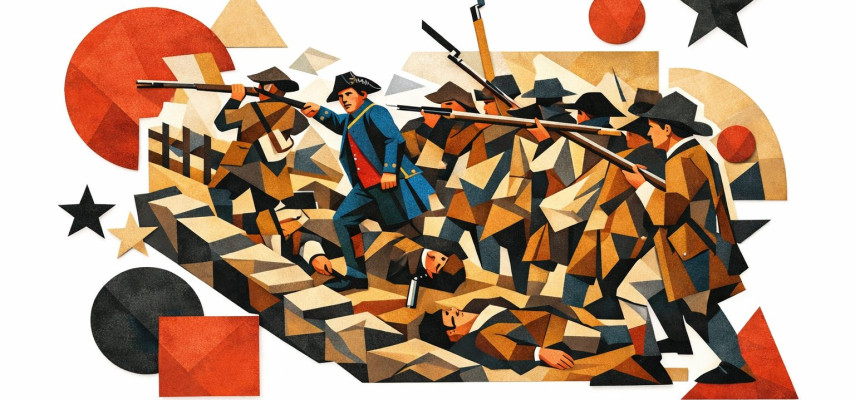
In the USA, democracy was established by force of arms as a result of the American Revolution4. This is a statement with which Maxim Katz does not argue either. Here (and in many other places below), true enough, we will inevitably encounter the point of view that at their founding, the United States and many other democracies were not democratic by today’s standards, meaning their transition to democracy should be marked with a different date. However, this will almost always contradict most sources, which, as a rule, take as the date of democracy’s establishment the adoption of a constitution or another legal act establishing that key powers are concentrated in the hands of an elected representative body (while ensuring real political competition between democratic parties). In such cases, a regime is established that is reformable and, through reform processes, increases its level of democracy (which reaches today’s indicators and is capable of reaching even higher indicators in the future). One could try to use a different date, but this would be difficult to justify and would diverge from sources. Furthermore, if today’s democracies are not considered democratic compared to the democracies of the future, this is not a convincing reason not to classify them as democracies. Therefore, we will take as our primary starting point precisely the adoption of a democratic constitution that put an end to authoritarian rule (we will also take into account previous instances of democracy’s establishment — in cases where it is most important).
Canada received its parliament in 1867 with the support of Great Britain, but one should not think that the British granted it purely out of the goodness of their hearts. In 1837–1838, a series of armed rebellions5 and clashes with the British occurred in Canada; the revolutionaries believed that the country should become independent or join the USA. Only after this did John George Lambton, 1st Earl of Durham, in his Report on the Affairs of British North America (1839), recommend reforms to the government and advise making concessions to the Canadians. Gradual reforms began after that. The British cautiously tried to reverse them — for instance, in 1849 they passed an act compensating victims of the 1837–1838 rebellions, in response to which Canadians burned down the parliament in Montreal6. What finally prompted the British to grant Canadians self-government was the fear of a US invasion following the victory of the North in the Civil War (England and Canada had supported the Southerners)7: they wanted Canadians to fight for them in that scenario, rather than against them, as had happened during the armed rebellions. Thus, democracy in Canada is largely the result of armed uprisings.

Costa Rica lives under the Constitution of 1949. This constitution was adopted following the Civil War of 1948, when reformists staged an armed uprising against the ruling coalition, which was engaged in electoral fraud8. Having won the war, they established democratic governance in the country.
Australia and Oceania
The aforementioned Lord Durham Report, in which he investigated the issues that led to the Canadian rebellions, influenced other British colonies as well. In particular, it is considered the first step on the path toward an elected government in New Zealand9. In 1852, the New Zealand Constitution Act was passed, which marked the beginning of democracy in these lands10.
In Australia, however, similar measures were delayed, and in 1854 the Eureka Rebellion took place on the continent, whose participants demanded electoral reforms (as Britannica notes, it influenced their introduction11). In Australia, the first parliament began working in 185612. Thus, in this part of the world, parliaments were granted partly under the influence of violent uprisings.

Western Europe
The democratization of Europe began largely with the Dutch Revolution (before that, small Italian republics also existed, but that is a separate topic). In 1566, local nobles submitted petitions to the Spaniards ruling these territories, warning that failure to fulfill them could cause a “general revolt and rebellion”13, but the Spaniards turned a deaf ear to these petitions. That same year, an iconoclastic fury broke out, which was suppressed by the Spaniards. In 1567, the Spaniards sent a penal army led by the Duke of Alba to restore order. The opposition was forced to leave the country; however, they did not give up, but began recruiting a mercenary army to invade the Netherlands. In 1571, the people took up arms, began forming armed detachments, and defeating the Spaniards (the opposition leader William of Orange then sent an army to help the rebels). After a long war, a truce was concluded in 1609, and the Netherlands gained independence. The Republic of the Seven United Provinces was formed with the highest state office — the Grand Pensionary; he was elected14, and during the existence of the republic, 20 pensionaries were replaced15. This was not yet democracy in the modern sense, but its embryonic form. The current constitution was established in 1815 after European armies ousted Napoleon’s troops from the Netherlands16. That is, democracy in the Netherlands was always established by force of arms.

A turning point in the spread of democracy around the world was the Glorious Revolution in England in 1688, after which power was redistributed in favor of parliament and the Bill of Rights was issued. When King James II attempted to return to an absolutist form of rule, parliament summoned the Dutch stadtholder William III of Orange, who landed in England with an army, whereupon James II fled the country17. After this, a constitutional monarchy was established in the country. Thus, England’s transition to democracy began with the landing of another state’s troops. However, the history of this country is quite complex, and another date could also be used, as the first British written constitution (known as the “Instrument of Government”) was adopted in 165318, following the civil war and the establishment of Oliver Cromwell’s Protectorate; however, that experience was not as successful as the experience of 1688. One way or another, England’s transition to democracy was accompanied by a violent struggle.
One hardly needs to explain the role of violent forms of protest in France, a country historically shaken by revolutions; however, it should be noted that the last transition from authoritarianism to democracy occurred not as a result of a revolution, but as a result of the arrival of Allied troops, who, in alliance with Resistance forces (which also used far from peaceful methods of struggle19), pushed the Nazis out of the country’s territory. As a result of these actions, the Fourth Republic was created in 1946. The Third Republic, on the other hand, emerged as a result of the Franco-Prussian War, when on September 4, 1870, the people, enraged by the defeat at Sedan, stormed the Palais Bourbon20, and Léon Gambetta, after futile attempts to calm the revolutionary situation, declared the fall of the empire. As we can see, a violent path took place in France as well, rather than a peaceful one.
One of the first stable democracies in Europe arose in 1848 in Switzerland. The website of the Federal Department of Foreign Affairs of Switzerland reports that this occurred after a civil war between Protestant and Catholic cantons21. In that year, a constitution was adopted that remains in force to this day22. The essence of the civil war was that in 1844 Jesuits were permitted to take charge of religious education in Lucerne, and liberals who hated the Jesuits organized a punitive expedition23. Catholic cantons began forming the Sonderbund, in response to which liberals decided to dissolve this organization, draft a new Federal Pact, and expel the Jesuits from the country. The Sonderbund was defeated in battles with the liberals, and modern Swiss history began with this.
The democratic system in Germany was formed with the entry into force of the Basic Law of 1949. This democratic system arrived in the country on the bayonets of Allied troops, who established an occupation regime here. Of course, Germans had already won democratic freedoms for themselves through the revolutions of 1848 and 1918, but nevertheless, the democratic institutions created as a result turned out to be too weak for Germans to build a sustainable democracy on their own. In any case, democracy in Germany was established not through peaceful means, but by force of arms.
Democracy in Ireland was not established through peaceful means. Here there were both the Easter Rising of 1916, the creation of the IRA, and the Irish War of Independence of 1919–192124, before Ireland became independent in 1922, adopted a constitution, and elections were held in 1923. That is, there is no speaking of a peaceful transition to democracy here.
Southern Europe
In Greece, the current democracy was established in 1973–1975. The process of its establishment began with the uprising of November 14–17, 1973, at the Athens Polytechnic, which was raised against the regime of the “Black Colonels”25. 2,000 students then seized the institute’s campus and demanded the overthrow of the government; as a result of the clashes that broke out, 14 police officers were hospitalized26. Clashes also began in other cities. It was after this that the associates of dictator Georgios Papadopoulos decided to overthrow their leader, and in 1974, under the threat of war with Turkey, decided to hand over power to democrats, knowing after the uprising that the people might not fight for the government. Yes, here power was handed over to democrats. But before that, there were violent clashes.
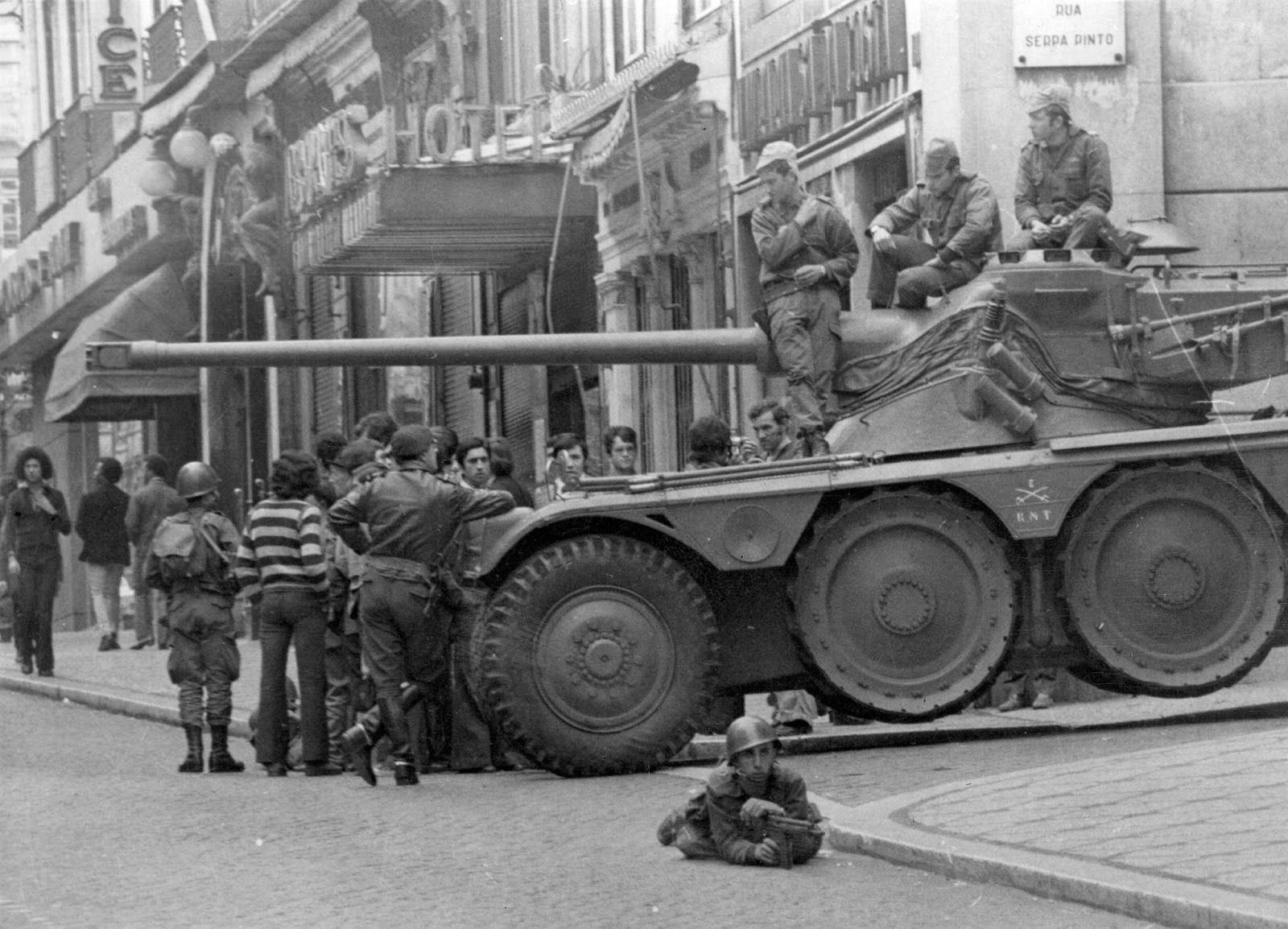
In Portugal, the democratic regime was established by the Armed Forces Movement, which carried out the Carnation Revolution in the same year, 1974 (the Constitution was adopted in 1976). This revolution was not bloodless, as many believe (four civilians were shot dead by police27), but the casualties were few. Nevertheless, the Armed Forces Movement did bring tanks and soldiers onto the streets28. That is, the revolution was armed.
One can sometimes encounter opinions that Spain’s transition to democracy is an example of a bloodless and non-violent transition to a democratic system. Indeed, in 1975, Juan Carlos I was proclaimed king, and in 1976 he appointed liberal Adolfo Suárez as Prime Minister, who began carrying out democratic reforms. However, in this beautiful story, some details are forgotten, such as the fact that in 1973 Prime Minister Luis Carrero Blanco, whom Francisco Franco considered his actual successor29, was assassinated by terrorists from the opposition separatist group ETA30. As we already wrote in a separate article, if not for Blanco’s death, the democratization of Spain could have been postponed for a long time; moreover, it could have been bloodier. On the one hand, Spain can be cited as an example of a democratic transition; on the other hand, this transition was achieved not without the help of armed struggle.
Northern Europe
We move on to the calmest region — Northern Europe, and we will start here with Norway. The constitution of this country was adopted in 1814. What happened? Since the 14th century, the country had been under Danish rule31. In 1813, Sweden launched an attack on Denmark, and under the Treaty of Kiel, the latter was forced to cede its rights to Norway to the Swedish king32. Then in 1814, a rebellion against the Treaty of Kiel took place in Norway33, in the organization of which the Danish Prince Christian Frederick took part. Initially, he wanted to declare Norway’s independence and become an absolute monarch, but this idea proved unpopular. The nobles he assembled demanded the convocation of a Constituent Assembly. It adopted the constitution, and in that same year of 1814, independent Norway was forced to wage military operations against Sweden. The Norwegians were defeated, but they defended their constitution — although the states were to have a common king (the Swedish one), Norway retained self-government. Thus, Norway did not win its democracy bloodlessly either.
Finland in 1905 actively participated in the Russian Revolution and served as a base for Russian revolutionary groups34, after which it achieved some democratic reforms (for example, women were given the right to vote). After the February Revolution, the “Russified” Senate of Mikhail Borovitinov was replaced by a Finnish one. In July 1917, the Finnish government proclaimed Finland’s independence from Petrograd35, but later this decision was revoked due to the fact that the Provisional Government had not fallen, as previously believed. However, already in December, after the Bolsheviks came to power in Russia, Finland adopted a declaration of independence permanently36. After that, there was an attempt by the Communists to seize power in Finland by force of arms and subject it back to themselves37, which led to the Civil War of 1918, during which the Finns won back their democracy and adopted the constitution of 1919. Thus, Finland also became democratic not without the help of weapons.
In Denmark, after the French Revolution of 1830, many representatives of the property-owning classes demanded the introduction of a liberal constitution38, and the government made small concessions by introducing consultative assemblies. As Britannica writes, under the influence of the European revolutions of 1848, the new king Frederick VII established the so-called March Cabinet and convened a Constituent Assembly, which decided to establish a constitutional monarchy. Overall, here one can speak of a bloodless and non-violent democratic transition (despite the influence of the revolutions).
Sweden, after its defeat in the Great Northern War and the death of Charles XII, realized that his policy of building Sweden as a contender for hegemony in Europe had failed, and a transition to a parliamentary system of government occurred in the country39. Parliament turned out to be strong and proactive enough to push through these reforms40. Despite the role of military defeat in democratization, here we are dealing with a bloodless and non-violent transition to democracy.
Asia
In Japan, the current democratic system was established with the entry into force in 1947 of a new constitution during the Allied occupation of the country41, who entered it after Japan’s defeat in the war. That is, here democracy was established by force of arms.

In South Korea, the history of establishing democracy is more complex. An authoritarian regime under President Park Chung-hee operated here; however, in 1979, the director of Korean intelligence, Kim Jae-gyu, shot him42, motivating this by the necessity of the assassination in order to restore liberal democracy in the country43. In 1980, student demonstrations in Gwangju escalated into clashes with troops and police. The military then staged a coup in the country, dissolved parliament, and restored the activity of political parties44. Throughout the 1980s, student protests and the campaign for democracy continued45, as a result of which the authoritarian regime collapsed in 1987–1988 when the government was forced to agree to a referendum, following which parliament received expanded powers46. Thus, forceful resistance to the regime played an important role in its democratization, even though authoritarianism collapsed somewhat later.
In Taiwan, the non-violent struggle of democrats led to the lifting of martial law in 1987 and gradual democratic reforms47. Here we are not dealing with a revolutionary transformation.
Israel originally arose thanks to a UN General Assembly resolution in 1948 (prior to this, as a result of World War I, this territory came under British administration48), but immediately faced an invasion by Arab states49. The country defended its right to democracy with weapons in hand, and in 1949 the first elections were held. One can hardly speak of a non-violent establishment of democracy in a situation where Israel effectively won its independence as a result of a war.
Eastern Europe
In Czechoslovakia, the “Velvet Revolution” took place in 1989. In this year, on November 17, about 15,000 students gathered in Prague to honor the memory of Jan Opletal. After the end of the main march, however, the students did not disperse, but contrary to police orders headed toward the center of Prague to express protest against the policies of the country’s communist leadership. On Národní Avenue, police cordons blocked the path of the unarmed students and began brutally beating the demonstration participants, injuring about 600 people50. After this, students and several other public groups declared a strike, which later grew into a general strike51 and forced the communists to enter negotiations, as a result of which the authoritarian regime collapsed. Thus, the Czech Republic’s transition to democracy was achieved through non-violent forms of protest.

In Estonia, the transition to democracy also occurred through a bloodless path52 in 1990–1992. In the same period, armed clashes occurred in Lithuania53, and public reaction likely had a favorable effect on the absence of armed clashes in Estonia, but here the transition was non-violent.
South America
In Uruguay, a military dictatorship was established by 1980; however, in a plebiscite in the same year, 57% of citizens voted against a new draft of an authoritarian constitution54. This launched processes that in 1985 led to the collapse of authoritarianism in the country. But it should be remembered that researchers cite the institutional structure remaining from the time of the previous democratic regime as the most important factor in this success55. And its formation was largely influenced by the revolution of 1897, because after it the first transparent legislative elections in many years took place56. One can, of course, say that non-violent protest succeeded here, but to the exact same extent it should be said that without the achievements of the past accomplished by armed means, this success might not have happened.
A similar situation occurred in Chile in 1988. Then the Chilean dictator Augusto Pinochet decided to hold a plebiscite, which was supposed either to extend his powers or to end them and hold elections57. Citizens voted for the second option. After Patricio Aylwin’s victory in the elections, democratic reforms began. This is also, essentially, democratization by non-violent means, but it should be remembered that in Chile the influence of past democratic regimes still persisted, and parliamentary democracy arose in Chile after the Civil War of 1891, in which the parliamentarians won. The situation, let us emphasize once again, is similar to the Uruguayan one.
In brief
Based on the above, the democratization of major countries from the top 30 most democratic regimes in the world occurred approximately as follows. Democracy was established through the armed struggle of its citizens in these countries: the USA, Costa Rica, Switzerland, Ireland, Portugal, Norway, Finland, and France should also be included here. Democracy arrived on the bayonets of foreign troops in the following countries: the UK, the Netherlands, Japan, Germany (though here there was pre-war democratic experience of the Weimar Republic), and conditionally Israel can be included here. Uprisings of their citizens (or other methods of their violent struggle) significantly influenced the establishment of democracy in these states: Canada, Australia, Spain, Greece, South Korea. We saw victory through non-violent means in the following examples: New Zealand, Denmark, Sweden, Taiwan, Czechoslovakia, Estonia, Uruguay, Chile.
Here we must, however, note that Uruguay and Chile nevertheless did not manage without conquering democracy by violent means earlier. As for Czechoslovakia and Estonia, the peaceful democratization of these countries became possible only as a result of external factors — the collapse of the USSR. There are extremely few grounds to believe that, given the stability of communist rule, peaceful methods would have given the necessary result. The case with New Zealand is special: the connection between violent actions and democratization there is clear, but it is unclear to what extent these actions can be considered to have occurred in another state (both Canada and New Zealand were British colonies). In the top 30 of the index, there remain only three examples of democratization that took place without violent actions by the opposition and was not mainly conditioned by external events: Denmark, Sweden, and Taiwan.
We also have not considered here certain other examples — Italy, where a democratic republic was established after a civil war between democratic forces and fascists, we have not considered the Ukrainian case (which, unlike the peaceful protests in Russia and the Republic of Belarus, yielded a result in the form of the overthrow of the regime) and many others, because they did not enter the top 30, and writing an overview of all regimes would be extremely laborious. It should also be noted that in the cases of Denmark, Sweden, or Taiwan, there was an enlightened autocrat or parliament ready to support democratization, whereas in its absence, the prospects of non-violent protest become rather dim.
Thus, we arrive at the following conclusions. First, assertions that the revolutionary path is incapable of establishing democracy (or leads most often to dictatorship) are false. Among Russian liberals, they are based on a narcissistic illusion stemming from viewing world history through the prism of Russian history exclusively (the revolution in Russia ended in the establishment of a Bolshevik authoritarian regime — therefore, by such logic, every revolution must end in the establishment of authoritarianism, as if no other countries exist on the planet besides Russia). We have seen many examples above where a democratic system was established not just after a revolution, but also after a civil war.
Second, assertions that the majority of democratic regimes were established as a result of peaceful resistance are also false if we take only the most successful examples, that is, the leaders of the democracy index. In fact, the non-armed path is not an exception to the rule; on the contrary — for the most successful examples, a purely non-violent path is rather the exception (most often we are dealing with a combination of violent and non-violent practices of struggle).
Third, assertions that democracy cannot be brought by foreign troops are also false. The UK, after the arrival of democracy with foreign troops, became a leading world power (perhaps the greatest in all of world history), Germany and Japan experienced an economic miracle and became key economies in their regions. All of these countries became more democratic, meaning that the arrival of democracy “on bayonets” benefited them.
Analysis of Maxim Katz’s theses
Maxim, in the aforementioned video, allowed himself some statements that should be analyzed in more detail.
People who come to power on a tank are people who do not share our views. They are not our audience. They are killers… The new ones will not stop at the previous killers. The last thing we can expect from those who take power by force and blood is that they will lead us to the Beautiful Russia of the Future… Normality will not return until all these fine people wipe each other out in the struggle for power.
As we can see from what we examined above, these predictions show that Maxim makes a dubious oracle. In fact, he thereby called the founders of American, Swiss, or Irish democracies killers, and declared that they were incapable of building a prosperous country. In reality, many of those who took up arms and won freedom through weapons from authoritarians, defenders of slavery and lawlessness, built democratic and prosperous states. There were reverse cases as well, but they do not give the right to assert that all cases will be similar to them.
Why are talks of forceful resistance so bad? First, because they devalue any actions that are not forceful. If we are all together waiting for battles with the Rosgvardia on Tverskaya, then our queues to collect signatures, educational activity, any support for political prisoners and independent media — all of this makes no sense whatsoever.
This assertion is false. Maxim Katz thinks binarily here, not entertaining the thought that both educational and human rights measures as well as radical ones are needed. Such narrow binary thinking in an “either-or” style (either you are for communism, or for anarcho-capitalism; either you are for Stalin, or for Hitler, and so on) is also inherent to many members of the opposite camp — proponents of forceful resistance. They cannot allow themselves the thought that one should act with various tools and at the same time together. They cannot entertain the thought that cooperation is necessary between supporters of both methods. If the leaders are incapable of understanding this, then the Russian opposition should replace these leaders, and their audience should replace their preferred speakers.
Such behavior by Russian protest leaders, however, is not necessarily explained by their working for the Kremlin, which many immediately want to accuse them of. This can be explained more sensibly. The point is that now many Russian liberal opinion leaders are successfully developing bloggers with millions of subscribers. In the event of a victory of radical protest in the eyes of the public, it would turn out that their very position that “radical protest is not needed” made no sense. This would lead to a loss of audience and oblivion. Why take such risks if, with the current state of audience and advertising earnings, things are not going too badly? On the other hand, if non-violent methods work, proponents of radical protest will be forgotten. Katz and Varlamov will be able to obtain some government positions and promote democratic reforms from within the system, while those who spoke of the need for revolution will become losers. At the same time, Katz understands that in this case his implacability toward radical protest will play into his hands in relations with the authorities. This prevents him from going for reconciliation with them. However, all of this is merely an assumption; we do not know the true reasons for such behavior by Russian leaders of radical and non-violent protest.
Where these advisors get their salaries and why they are trying to mock and demotivate us, we know.
If Maxim knows, let him share. We have already heard about “radicals on the payroll” when the Maidan was taking place in Ukraine. Back then, the Kremlin and its propaganda accused the protesters of being paid by the Americans or someone else. Is this not what Maxim means? Here he ought to explain himself. Such accusations are not characteristic of democrats; one senses someone else’s handwriting here, and this cannot fail to be frightening.
If you seized power through a bloody coup, then that is the only thing it rests upon.
This statement is unclear. Does this assertion mean that a significant portion of the democracies we listed above rests upon a “bloody coup”?
There are the United States, born in a bloody revolution, but that is rather an exception than the rule. Far more often, power taken by force does not acquire stable institutions.
Above, we examined why this assertion is incorrect. There is no universal rule here. And in any case, the forceful establishment of a democratic system is not an exception. Democracies are established both by forceful means and non-violent ones. Rejecting one of these methods would be unwise.
In our case, it is much more effective not to scare anyone into hiccups, cementing them around Putin, but to be agents of normality.
Such tactics have been used by Russian liberals for more than 30 years. The Russian nomenklatura saw a weakness in them that could be exploited to crush them, and proved to be right. Like yard “hooligans” who are only amused by an intellectual’s request to leave him alone, whereas a punch to the jaw or a response that is too bold forces them to back down. Now democrats in Russia are tortured in prisons, killed, and Alexei Navalny did not escape this fate either. At the same time, among the broad masses, the heroism and sacrifice of individual democrats hardly allowed them to shake off the image of “liberal traitors” (toward Yevgeny Prigozhin, behind whom stood force, few such ill words were observed). One wants to ask Russian liberals a single question:
We have to look for allies not among them, but among those for whom violence is not the norm, who are frightened by or avoid violence.
Practically here Katz is convincing us that one should not conduct agitation in the army and other security forces, that is, not engage in the most vital revolutionary practice. In the place of the nomenklatura, one could only admire how convenient this is for them.
Right now, forceful protest from our flank has neither the resources nor achievable goals.
Of course it does not. And where would they come from if one conducts such agitation? Ask yourself such a question and try to answer it. Notably, in the comments to Maxim’s video, a critical attitude toward his position prevails.
That is, a certain demand among the people is observed. It is one thing when people do not want radical actions — then calling on them is morally difficult. But when there is a demand and people are ready to fight for their rights through radical methods, despite the danger, not satisfying it is simply criminal from the perspective of democratizing the country. To such a noble and selfless impulse, it is better to extend a hand.
We arrayed against the foe
And boldly rushed ahead,
You dragged along somewhere behind,
Where the supply train always crawls.And from the columns fell a shadow
Upon your flabby bodies;
Midway in the hours of heat,
That shadow was sweet to you!When the battle began,
You remained true to yourselves:
You grabbed us by the hands,
Tried to hinder the fight.“Back, back!” you cried out,
And raised a cowardly howl:
“Why shoot? Why shoot?
The gunpowder smoke terrifies us!Back! There is still time,
There is a chance, there is a chance,
To run home, to run home
And sit quietly by the stove!Better let the whip strike,
Than the saber chop off a head.
Hurry home, for the lash —
Is no saber, it doesn’t beat to death!”Such a battle song
You sang behind our backs.
The Lord helped, and this fight
Ended in a great victory!Then a flock of precious birds
Arose from behind our backs, —
And these owls, that is, you,
Hooted a victory hymn!Ah, if it’s hard for you to keep silent,
Could you at least sing a bit quieter.
For modesty we will respect
You more… Why clamor?You are only fooling yourselves,
Imagining every time,
That your Judas-like delight
Is capable of fooling us!
Recently, 2 years of the war passed, and at approximately the same time Alexei Navalny died. What successes has Russian peaceful protest achieved during this time? It was unable to stop the war, but instead was often offended by reasoning similar to the following.
Perhaps one should at least stop taking offense and start supporting those who nevertheless have enough heroism for more risky actions. Some of the opposition leaders, however, are already beginning to change their position on this matter.
Conclusion
From what is written above, it follows that a forceful wing is as necessary to the democratic movement as a non-violent one. They must cooperate with each other and recognize the necessity of each other’s existence. None of us knows for sure whose methods will ultimately work. Demanding the abolition of one of the methodologies essentially means depriving the democratic movement of one of its tools. We previously wrote about “revolutionary defencism”, when some oppositionists deny the need to use peaceful methods of protest, justifying this by the need to make a revolution (and they do not make it). But “non-violent defencism” also harms the democratic movement. We are being drilled that we cannot use two tools (why?), in order to weaken us, deprive us of one of them, and lower our chances of victory. Such a stereotype works for the Russian nomenklatura and serves its interests.
Understandably, the most stubborn from the camp of “non-violent defencists” will devise more and more excuses (“show revolutions over the last 30 years”, “show revolutions over the last 4 months”, “show using the example of Russian history”, and so on). We can refute all of this ad infinitum, but usually one false assertion and the examples we analyzed above are already enough to understand that not impartiality, but confidence in their own righteousness drives these people.
Some people think that accepting the above means they are being called upon right now to take up arms and go build barricades. This is incorrect. If you are not ready for radical protest — act through non-violent methods, but there is no need to tie the hands of people who are ready, and there is no need to talk them out of it. Perhaps the military is already thinking about removing the dictator, but put yourself in their shoes, and you will understand that when assessing risks, they will think about public evaluation, about whether any public groups, at least the opposition, will support them. If even the opposition clearly makes it understood that it will condemn an armed coup, the military may assess the potential success of the undertaking extremely negatively. And then there is no need to complain that we have no von Stauffenberg. Why should he exist if even the opposition will not appreciate it?
- Jacques Chirac died // Gazeta.ru (www.gazeta.ru). September 26, 2019, 15:04. [Online resource]. URL: https://www.gazeta.ru/politics/2019/09/26_a_12688825.shtml (Accessed: 09.04.2024).
- Lavrov: threats of US representatives against Maduro have nothing to do with democracy // TASS (tass.ru). May 14, 2019, 18:00. [Online resource]. URL: https://tass.ru/politika/6429169 (Accessed: 09.04.2024).
- Democracy Index 2022 // Economist Intelligence Unit (www.eiu.com). [Online resource]. URL: https://www.eiu.com/n/campaigns/democracy-index-2022/ (Accessed: 09.04.2024).
- Willard M. Wallace. American Revolution // Encyclopedia Britannica (www.britannica.com). 4 April, 2024. [Online resource]. URL: https://www.britannica.com/event/American-Revolution (Accessed: 09.04.2024).
- Discover Canada – Canada’s History // Government of Canada (www.canada.ca). [Online resource]. URL: https://www.canada.ca/en/immigration-refugees-citizenship/corporate/publications-manuals/discover-canada/read-online/canadas-history.html (Accessed: 11.04.2024).
- The union of Canada // Encyclopedia Britannica (www.britannica.com). [Online resource]. URL: https://www.britannica.com/place/Canada/The-union-of-Canada (Accessed: 09.04.2024).
- S.A. MacKenzie, 2017. But There Was No War: The Impossibility of a United States Invasion of Canada after the Civil War. American Review of Canadian Studies, 47(4), 357–371.
- E.V. Baranchikov, N.O. Telnova et al. Costa Rica // Great Russian Encyclopedia. [Online resource]. URL: https://old.bigenc.ru/geography/text/2102261 (Accessed: 09.04.2024).
- H.T. Manning. Lord Durham and the New Zealand Company // New Zealand Journal of History (www.nzjh.auckland.ac.nz). [Online resource]. URL: https://www.nzjh.auckland.ac.nz/docs/1972/NZJH_06_1_02.pdf (Accessed: 11.04.2024).
- New Zealand’s first Constitution Act passed 165 years ago // New Zealand Parliament (www.parliament.nz). June 30, 2017. [Online resource]. URL: https://www.parliament.nz/en/get-involved/features/new-zealand-s-first-constitution-act-passed-165-years-ago/ (Accessed: 11.04.2024).
- Eureka Stockade // Encyclopedia Britannica (www.britannica.com). 5 December, 2023. [Online resource]. URL: https://www.britannica.com/event/Eureka-Stockade (Accessed: 09.04.2024).
- 1856 to 1889 – Responsible Government and Colonial Development // Parliament of New South Wales (www.parliament.nsw.gov.au). [Online resource]. URL: https://www.parliament.nsw.gov.au/about/Pages/1856-to-1889-Responsible-Government-and-Colonial-.aspx (Accessed: 11.04.2024).
- G.A. Shatokhina-Mordvintseva. Dutch Revolution of the 16th Century // Great Russian Encyclopedia. [Online resource]. URL: https://old.bigenc.ru/world_history/text/2265835 (Accessed: 09.04.2024).
- The Correspondence of Johan de Witt // Early Modern Letters Online (emlo.bodleian.ox.ac.uk). [Online resource]. URL: http://emlo-portal.bodleian.ox.ac.uk/collections/?catalogue=johan-de-witt (Accessed: 11.04.2024).
- G.A. Shatokhina-Mordvintseva. Pensionary // Great Russian Encyclopedia. [Online resource]. URL: https://old.bigenc.ru/world_history/text/2710673 (Accessed: 09.04.2024).
- Randall Lesaffer. The Formation of the United Kingdom of the Netherlands (1814–1815) // Oxford Public International Law (opil.ouplaw.com). [Online resource]. URL: https://opil.ouplaw.com/page/932 (Accessed: 11.04.2024).
- Glorious Revolution // Great Russian Encyclopedia. [Online resource]. URL: https://old.bigenc.ru/world_history/text/3624956 (Accessed: 09.04.2024).
- Instrument of Government // Encyclopedia Britannica (www.britannica.com). 23 June, 2019. [Online resource]. URL: https://www.britannica.com/event/Instrument-of-Government-England-1653 (Accessed: 16.04.2024).
- Resistance Movement in France // History.rf (histrf.ru). [Online resource]. URL: https://histrf.ru/read/articles/dvizhieniie-soprotivlieniia-vo-frantsii (Accessed: 11.04.2024).
- Léon Gambetta // Chemins de mémoire (www.cheminsdememoire.gouv.fr). [Online resource]. URL: https://www.cheminsdememoire.gouv.fr/en/leon-gambetta (Accessed: 11.04.2024).
- The way to modern direct democracy in Switzerland // House of Switzerland (houseofswitzerland.org). [Online resource]. URL: https://houseofswitzerland.org/swissstories/history/way-modern-direct-democracy-switzerland (Accessed: 11.04.2024).
- I. Petrov. The Swiss Constitution Turned 175 Years Old // SWI swissinfo.ch (www.swissinfo.ch). April 12, 2023, 15:52. [Online resource]. URL: https://www.swissinfo.ch/rus/business/уроки-истории_конституции-швейцарии-исполнилось-170-лет/44391930 (Accessed: 11.04.2024).
- Sonderbund // Encyclopedia Britannica (www.britannica.com). 9 February, 2011. [Online resource]. URL: https://www.britannica.com/topic/Sonderbund-Swiss-political-organization (Accessed: 09.04.2024).
- The 20th-century crisis // Encyclopedia Britannica (www.britannica.com). [Online resource]. URL: https://www.britannica.com/place/Ireland/The-20th-century-crisis (Accessed: 09.04.2024).
- “Dictatorship of the Black Colonels” 1967–1974 // Great Russian Encyclopedia. [Online resource]. URL: https://bigenc.ru/c/diktatura-chiornykh-polkovnikov-1967-1974-2acf2e (Accessed: 09.04.2024).
- Troops in Athens move on campus to quell protest // The New York Times (www.nytimes.com). November 17, 1973. [Online resource]. URL: https://www.nytimes.com/1973/11/17/archives/troops-in-athens-move-on-campus-to-quell-protest-use-tank-to.html (Accessed: 11.04.2024).
- E.S. Williams. Your guide to the Carnation Revolution // HistoryExtra (www.historyextra.com). September 30, 2021, 17:27. [Online resource]. URL: https://www.historyextra.com/period/20th-century/carnation-revolution-guide-facts-coup-portugal-estado-novo-regime/ (Accessed: 11.04.2024).
- Portugal’s Carnation Revolution: April 25, 1974 // UC Berkeley Library Update (update.lib.berkeley.edu). March 11, 2014. [Online resource]. URL: https://update.lib.berkeley.edu/2014/03/11/portugals-carnation-revolution-april-25-1974/ (Accessed: 11.04.2024).
- F. Lalaguna. A Traveller’s History of Spain. – 6th ed. – Interlink Books, 2008.
- V. Cheretsky. Who ordered the killers of Carrero Blanco. Terrorist-patriots in action // Radio Liberty (www.svoboda.org). March 14, 2007. [Online resource]. URL: https://www.svoboda.org/a/382759.html (Accessed: 15.04.2024).
- Norway. History // Great Russian Encyclopedia. [Online resource]. URL: https://bigenc.ru/c/norvegiia-istoriia-8615aa (Accessed: 09.04.2024).
- The Treaty of Kiel // Encyclopedia Britannica (www.britannica.com). [Online resource]. URL: https://www.britannica.com/place/Norway/The-Treaty-of-Kiel (Accessed: 09.04.2024).
- 1814. The Incredible Year // Stortinget (www.stortinget.no). [Online resource]. URL: https://www.stortinget.no/globalassets/pdf/grunnlovsjubileet/plakatutstillingen/poster-english297x420mm-uten-kuttemerker.pdf (Accessed: 11.04.2024).
- V.I. Musaev. “Red Rear of the Revolution”: Finland and the Russian Revolutionary Movement in the Early 20th Century // St. Petersburg Institute of History of the Russian Academy of Sciences (www.spbiiran.nw.ru). [Online resource]. URL: http://www.spbiiran.nw.ru/wp-content/uploads/2021/02/r-mysaev-kr-tyl.pdf (Accessed: 11.04.2024).
- M. Vitukhnovskaya-Kauppala. Carl Enckell, the Last Minister Secretary of State of Finland (April — November 1917), and His Russian Political Contacts // Petersburg Historical Journal. 2015. No. 3. P. 117–131.
- Decree on State Independence of Finland Adopted // Presidential Library (www.prlib.ru). [Online resource]. URL: https://www.prlib.ru/history/619861 (Accessed: 11.04.2024).
- T. Tepora. Finnish Civil War 1918 // International Encyclopedia of the First World War (encyclopedia.1914-1918-online.net). October 8, 2014. [Online resource]. URL: https://encyclopedia.1914-1918-online.net/article/finnish_civil_war_1918 (Accessed: 11.04.2024).
- Reformation and war // Encyclopedia Britannica (www.britannica.com). [Online resource]. URL: https://www.britannica.com/topic/history-of-Denmark/Reformation-and-war (Accessed: 09.04.2024).
- The 18th century // Encyclopedia Britannica (www.britannica.com). [Online resource]. URL: https://www.britannica.com/topic/history-of-Sweden/The-18th-century (Accessed: 09.04.2024).
- Ice Age, Iron Age, IT Age. This is your quick guide to the history of Sweden // Sweden.se (sweden.se). [Online resource]. URL: https://sweden.se/culture/history/history-of-sweden (Accessed: 11.04.2024).
- Occupation and Reconstruction of Japan, 1945–52 // Office of the Historian (history.state.gov). [Online resource]. URL: https://history.state.gov/milestones/1945-1952/japan-reconstruction (Accessed: 11.04.2024).
- K.V. Asmolov. Park Chung-hee // Great Russian Encyclopedia. [Online resource]. URL: https://old.bigenc.ru/world_history/text/2703443 (Accessed: 09.04.2024).
- [Focus] “Kim Jae-gyu miscalculated two things” // Naver News (n.news.naver.com). November 4, 2005, 11:42. [Online resource]. URL: https://n.news.naver.com/mnews/article/033/0000007473 (Accessed: 11.04.2024).
- N.N. Alekseeva, Kim Yong-un et al. Korea // Great Russian Encyclopedia. [Online resource]. URL: https://old.bigenc.ru/geography/text/3905368 (Accessed: 09.04.2024).
- J. Nilsson-Wright. Contested politics in South Korea // Chatham House (www.chathamhouse.org). July 28, 2022. [Online resource]. URL: https://www.chathamhouse.org/2022/07/contested-politics-south-korea/2-south-koreas-democratic-evolution (Accessed: 11.04.2024).
- N.N. Alekseeva, Kim Yong-un et al. Korea // Great Russian Encyclopedia. [Online resource]. URL: https://old.bigenc.ru/geography/text/3905368 (Accessed: 09.04.2024).
- M. Harrison. The end of martial law: An important anniversary for Taiwan // Chatham House (www.chathamhouse.org). July 13, 2017. [Online resource]. URL: https://www.lowyinstitute.org/the-interpreter/end-martial-law-important-anniversary-taiwan (Accessed: 11.04.2024).
- L.A. Belyaev, S.B. Grigoryan et al. Palestine // Great Russian Encyclopedia. [Online resource]. URL: https://old.bigenc.ru/world_history/text/2704591 (Accessed: 09.04.2024).
- A.V. Fedorchenko, B.A. Strashun et al. Israel // Great Russian Encyclopedia. [Online resource]. URL: https://old.bigenc.ru/geography/text/2003352 (Accessed: 09.04.2024).
- L. Vašková, I. Ruchkina. November 17 — the day when Czechs and Slovaks defended freedom and democracy // Radio Prague International (ruski.radio.cz). November 17, 2020. [Online resource]. URL: https://ruski.radio.cz/17-noyabrya-den-kogda-chehi-i-slovaki-otstoyali-svobodu-i-demokratiyu-8700279 (Accessed: 11.04.2024).
- Velvet Revolution // Encyclopedia Britannica (www.britannica.com). 22 March 2024. [Online resource]. URL: https://www.britannica.com/topic/Velvet-Revolution (Accessed: 09.04.2024).
- E.V. Baranchikov, N.O. Telnova et al. Estonia // Great Russian Encyclopedia. [Online resource]. URL: https://old.bigenc.ru/geography/text/4916043 (Accessed: 09.04.2024).
- A. Radzevičiūtė. Vilnius: remembering the bloody January of 1991 // BBC News Russian Service (www.bbc.com). January 12, 2011. [Online resource]. URL: https://www.bbc.com/russian/international/2011/01/110112_vilnius_13jan_20_anno (Accessed: 11.04.2024).
- D. Chavez. 50 years after the coup d’état in Uruguay // Transnational Institute (www.tni.org). June 27, 2023. [Online resource]. URL: https://www.tni.org/en/article/50-years-after-the-coup-detat-in-uruguay (Accessed: 11.04.2024).
- Uruguayan Democracy // McGill Journal of Political Studies (mjps.ssmu.ca). February 15, 2017. [Online resource]. URL: https://mjps.ssmu.ca/2017/02/15/uruguayan-democracy/ (Accessed: 11.04.2024).
- The struggle for national identity // Encyclopedia Britannica (www.britannica.com). [Online resource]. URL: https://www.britannica.com/place/Uruguay/The-struggle-for-national-identity (Accessed: 09.04.2024).
- A.S. Sysoeva, N.O. Telnova et al. Chile // Great Russian Encyclopedia. [Online resource]. URL: https://old.bigenc.ru/geography/text/4686220 (Accessed: 09.04.2024).