What should be included in a lustration program for the nomenklatura
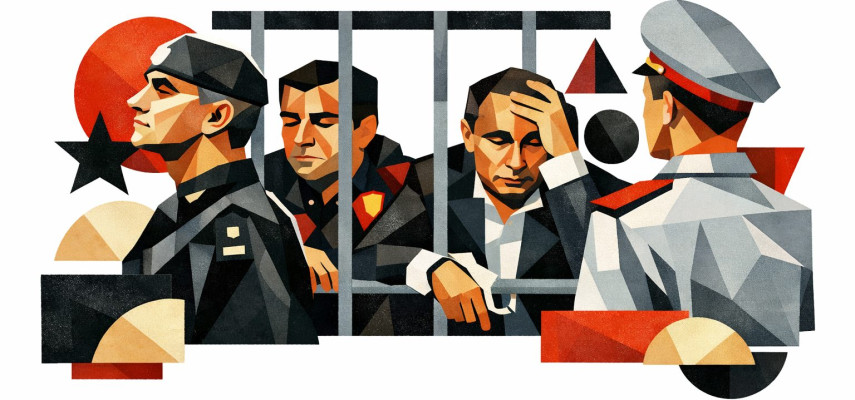
In today’s Russia, the authorities and officials are heavily criticized, yet most political movements for some reason do not seek to demand lustration of the nomenklatura and do not even attempt to formulate such demands. Since for social democrats the demand for lustration is very important in the transition from an authoritarian regime to a democratic one, let us try to understand what actions this would require.
We have already examined how the nomenklatura in the USSR extracted resources from citizens, what privileges it enjoyed, and we have also discussed that it did not disappear after the collapse of the Union, but has largely continued to control the political field in many of its former territories. It is obvious that the existence of the nomenklatura is one of the main problems of modern Russia, and for social democrats there can be only one solution here: the lustration of the Russian nomenklatura.
Contents
What lustration is
According to the Great Legal Dictionary, in a number of Eastern European countries (Hungary, the Czech Republic, Estonia, Latvia, Romania) it is a special procedure for vetting individuals holding senior public offices, as well as candidates for such positions, regarding their past affiliation with the leadership of communist parties, state security services, or cooperation with those services. Lustration was carried out on the basis of special laws (adopted in 1990–1993), usually by special bodies (for example, in Hungary these were committees elected by parliament consisting of three judges). If, during lustration, facts of cooperation with a totalitarian regime were established, the individual was given a choice between voluntary resignation (with the secrecy of the revealed facts preserved) and forced resignation (with the public disclosure of compromising information)1. The Encyclopedic Dictionary of Constitutional Law also states that lustration is either a comprehensive vetting of citizens for illegal cooperation with the special services of the former state or regime, or a selective but mandatory vetting of persons applying for public office, parliamentary seats, and so on2. In general, we can say that lustration is a procedure for checking citizens for their affiliation with and cooperation with the leadership of the former government, and removal from office in case a certain threshold of such cooperation is exceeded.
Sometimes it is argued that lustration is repression; however, in most cases the result of lustration is simply a temporary ban on holding public office, and it is not accompanied by imprisonment or even deprivation of property. Although this depends on many factors — the willingness of the authorities to cooperate voluntarily, the severity of their crimes, and so on (we will return to this later).
What the nomenklatura is, we have already discussed in a separate article. In general, lustration applies to the governing bodies of all political parties and media outlets that are determined by a special commission to have contributed to the preservation of the regime, as well as the executive and legislative branches of power (lower- and mid-level officials and civil servants are not included here). Exceptions will be made for those who belong to the above categories but have mitigating circumstances — for example, those who publicly opposed the policies of the previous regime, were not involved in corruption or human rights violations, or financed or otherwise supported opposition political organizations and media.
Early experience of nomenklatura lustration
The very idea of nomenklatura lustration is not new. One of the earliest examples in history was the measures taken against the NSDAP as part of the denazification of Germany. We have one of the documents concerning such measures — Control Council Directive No. 38 in Germany, “Arrest and Punishment of War Criminals, Nazis and Militarists; Internment, Control and Surveillance of Potentially Dangerous Germans”. It sets out the basic provisions for identifying groups of responsible persons and defines sanctions for members of these groups. Among these sanctions, for example: “their property may be confiscated; however, they shall be left with means for a minimum subsistence level, taking into account their family situation and possible income”3. In general, the Russian nomenklatura should familiarize itself with this document in order to understand what awaits it in the event of a strict lustration scenario.
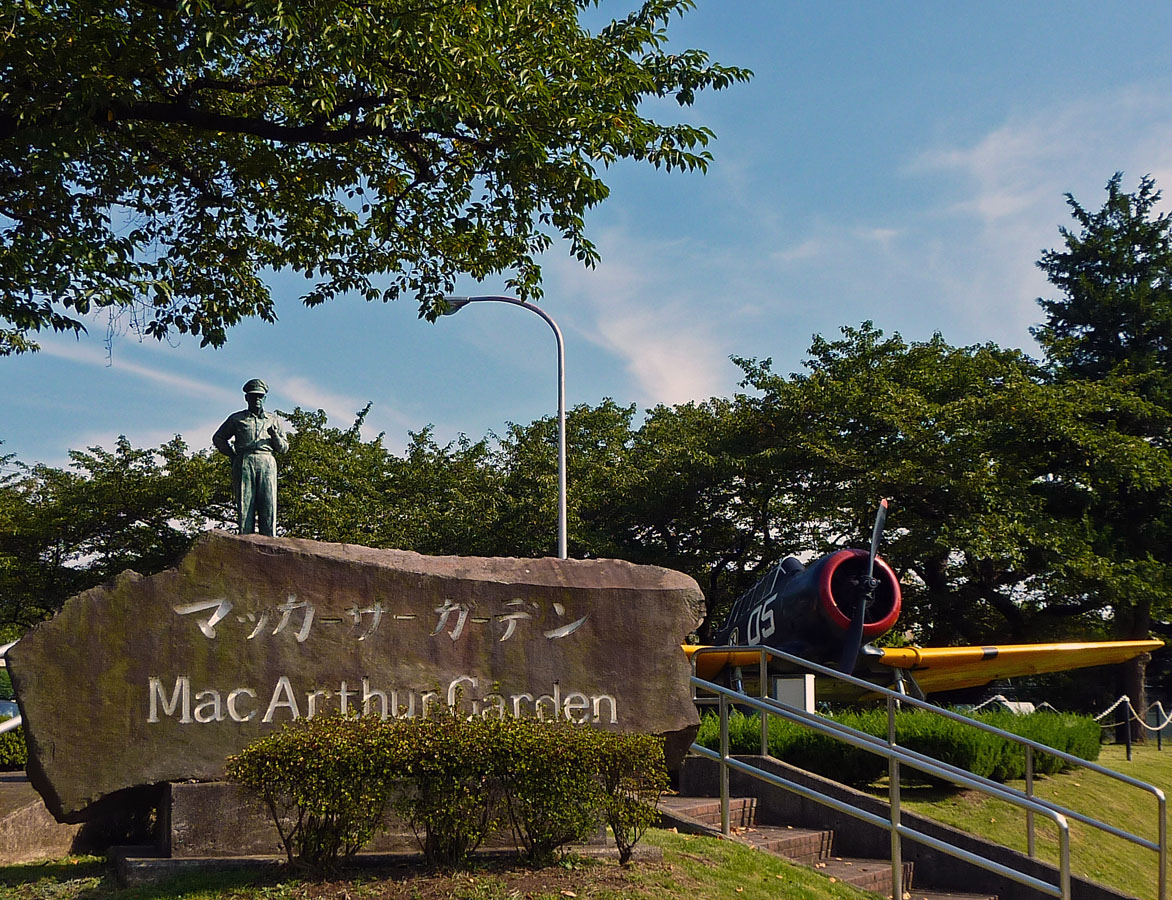
Lustration of the nomenklatura was also carried out in Austria, Italy, and Japan. General Douglas MacArthur, commander-in-chief of the occupation forces in Japan, replaced the personnel of the Japanese police three times in order to combat corruption (according to journalists from “Profile”4). He was also the organizer of the Tokyo Trials. MacArthur granted women the right to vote, organized anti-monopoly measures, legalized trade unions, and carried out many other reforms, thanks to which modern Japanese people do not feel a desire for revenge against Americans for the war’s outcome. Douglas MacArthur himself received the nickname “Gaijin Shogun” (foreign shogun)5, a monument was erected to him in 19956, various public places are named after him7, and in the city of Atsugi there is a garden named after the general8. In other words, the nomenklatura and big capital brought Japan to such a state that its citizens ended up commemorating representatives of the occupation authorities who were able to provide the foundations of normal governance.
Including through nomenklatura lustration, Germany, Japan, Italy, and Austria experienced significant post-war economic growth. However, in Italy denazification was carried out insufficiently thoroughly. Although the Fascist Party was removed from power, most major war criminals were not punished9; generals who had committed crimes in Libya, East Africa, Yugoslavia, Greece, and Albania were left unpunished and went on to participate in the formation of the Italian Social Movement — the post-war fascist party. The use of chemical weapons in Abyssinia was officially acknowledged in Italy only in 1996. A film about the war crimes of Mussolini’s regime, produced in the United Kingdom in 1989, was banned in Italy and only allowed to be shown 15 years later, in 200310. Mustafa Akkad’s film “The Lion of the Desert” about the leader of anti-Italian resistance Omar al-Mukhtar was also banned in Italy in the 1980s. Such a policy of half-measures in denazification resulted in a small-scale civil conflict between ultraleftists and fascists in the 1970s–1980s (the so-called “Years of Lead”11). Overall, the more strongly lustration affected the nomenklatura, the more beneficial its impact was on the country’s level of prosperity and democracy.
The wave of communist party lustrations
We also have another lustration experience — the lustration of former communist parties in Eastern European countries, which began after regime change. For example, in 1993 in Czechoslovakia the “Law on the Illegality of the Communist Regime” was adopted, under which around 140,000 individuals who had collaborated with the regime between 1948 and 1989 were deprived of the right to hold public office for five years12. Here, lustration was carried out more radically than in other countries of the former Warsaw Pact. For instance, provisions granting the Ministry of Defence and the Ministry of the Interior the right to keep certain information secret for reasons of national security were declared unconstitutional and unenforceable13. In the Czech Republic, lustration also required those being vetted to submit sworn written declarations specifying all forms of cooperation with the nomenklatura and any committed offenses. Providing false information carried criminal liability.
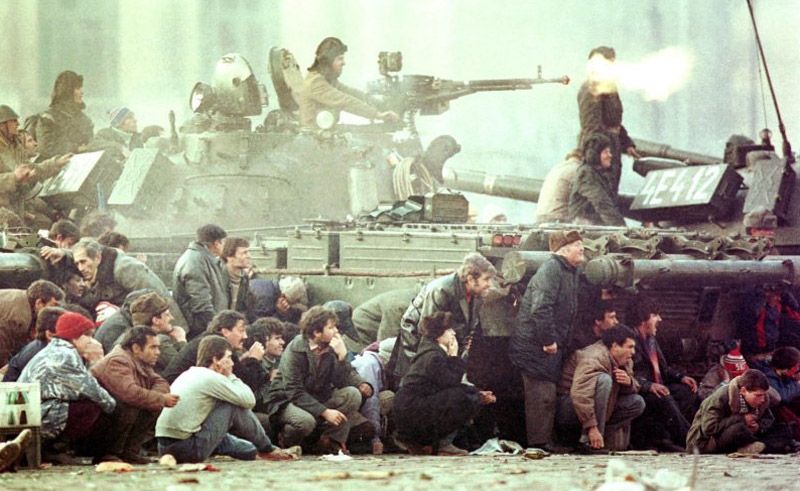
Nevertheless, lustration in Eastern European countries was, on the whole, carried out in too mild a form: it was primarily focused on identifying those who had collaborated with security services and subsequently banning them from holding certain positions (usually in public administration). Mass dismissal of rank-and-file personnel — for example, those working in the police or border service — was not carried out in any of the former Eastern Bloc countries. As noted by Mediazona in an article written jointly with Deutsche Welle, many observers and researchers agree that lustration laws were most successfully implemented in cases where the nomenklatura and bureaucratic elite were unable to fully preserve their influence during the transition period. However, over time the reality became more complex: even in the Czech Republic, former members of the Communist Party eventually managed to build a semi-oligarchic system and became a support base for President Miloš Zeman14.
In 1996, the Parliamentary Assembly of the Council of Europe adopted Resolution No. 1096, “Measures to dismantle the heritage of former communist totalitarian systems” (English: Resolution 1096 (1996) “Measures to dismantle the heritage of former communist totalitarian systems”15), which summarizes the practice of lustration in post-socialist countries. It also outlines requirements for implementing lustration through an independent civic commission, removing those subject to lustration from public office for no more than five years, and other democratic principles of this process. It is also one of the key documents that should be used as a reference in carrying out lustration. Among its important provisions:
No one shall be subjected to lustration solely for membership in any organization or for activities carried out on behalf of any organization that were lawful at the time of such membership or activity… guilt, being individual and not collective, must be established on an individual basis16.
As for Russia, lustration of the nomenklatura was never carried out, and as a result the nomenklatura remained in power. On December 17, 1992, Galina Starovoitova submitted to the Supreme Soviet of the Russian Federation a draft law “On the Ban on Professions for Implementers of Totalitarian Policy”17, however, such a law was not adopted. According to RBC, in 1997 Starovoitova attempted to submit this bill to the State Duma18. In 1998 she was murdered.
The tasks of lustration
One of the most important tasks of lustration is to dismantle the organically inherent methods and mechanisms of the nomenklatura for behind-the-scenes decision-making, interpersonal and group interactions in the process of preparing and adopting such decisions, as well as the established corrupt networks and mechanisms at the highest levels of power. A complete replacement of the country’s top leadership would make it possible to break these entrenched corrupt ties.
Social democrats should also eliminate the system of state privileges that fed the Soviet nomenklatura (we previously linked to an article discussing this system) and continues to feed today’s one. This system of privileges is one of the major expenditure channels directing state budgets in an anti-egalitarian direction. It is also important to deprive the nomenklatura of mass media outlets (and the most egregious propagandists of capital as well), which could otherwise enable new attempts to rehabilitate Stalinism. One of the reasons lustration is necessary is that the old nomenklatura will not allow progressive democratic reforms to be carried out:
Bankers push for looser financial regulation, industrialists demand greater protection of trade, trade unions insist on higher minimum wages, and all of them do so without considering the consequences for national financial stability, consumer prices, or unemployment… Even if the state apparatus has managed to solve the problem of incomplete information and somehow designed sound policies, it may, especially in poor countries, simply lack the human and financial resources to implement them properly19.
Therefore, it is necessary that the new property-owning and ruling strata of society have fewer capacities to resist reforms. Lustration is needed because the old nomenklatura will simply not allow reforms to be implemented. Finally, another task is to strike a truly serious blow against the nomenklatura’s ideology — statism, which is close to fascism and helps justify abuses of power in the country.
To combat corruption and ensure favorable conditions for the creation of a fully functioning democracy — these are the goals that nomenklatura lustration is intended to help achieve.
Some argue that lustration in Russia would be impossible because there would be no personnel to replace those removed. However, first, lustration does not necessarily have to be mass-scale — it may affect only a few thousand of the most influential state officials and closely associated individuals. Second, in the summer of 2004, the Georgian government under Mikheil Saakashvili dismissed more than 15,000 employees of the then-road police (former traffic police) in a single day and created an entirely new structure — the traffic police20. Shortly afterward, Georgia became one of the safest countries in Europe.
Soft or hard scenario
There are two main scenarios for carrying out nomenklatura lustration — soft and hard. The first may be implemented if the nomenklatura, without significant threats to its regime, agrees to negotiate with the opposition and voluntarily transfers power to a broad opposition broad coalition in exchange for guarantees of its security and freedom. If, however, a change of power requires violent actions, then a hard scenario is more likely, similar to denazification in Germany.
In both cases, as mentioned above, lustration should be carried out by an independent civic commission formed from candidates proposed and approved by the highest bodies of the new government (additional maximum protection must be ensured for members of the commission). At the same time, the new authorities must be prepared for the commission’s independence to be verified by external actors, such as the Council of Europe or representatives of the mass media.

Hard scenario
The general step-by-step procedure for implementing a hard lustration scenario is as follows:
- Removal of the current Russian nomenklatura from all positions held by its representatives;
- Complete dismantling of the system of state provisions for public officials, replacing it — where necessary — with increased salaries (along with full public transparency of such data);
- Compiling lists of individuals subject to lustration;
- Defining categories of responsible persons and sanctions for each of these categories;
- Requiring individuals from the above-mentioned lists to submit sworn written declarations in which they must disclose all abuses of power they have committed;
- Establishing an independent commission to investigate crimes of the nomenklatura and the outcomes of the nomenklatura privatization of the 1990s;
- Conducting court proceedings based on the results of these investigations;
- Holding public trials for offenders from the first category of responsible persons.
Following these measures, a publicly accessible report on the progress of the investigations and on the property of the accused should be published. Foreign assets belonging to individuals found to have acquired them illegally must be immediately confiscated and sold, with proceeds directed to state funds responsible for economic development. A comprehensive vetting of the close social circles of nomenklatura representatives must be carried out to determine whether they have engaged in illegal cooperation with the nomenklatura, and investigations must be conducted with all ensuing legal consequences if such links are confirmed.
Liberal conservatives are unlikely to accept such a package of measures, as they would fear investigations into the outcomes of privatization. Stalinists, although they speak about this issue extensively, are unlikely to develop a real plan of action, as they represent the interests of the nomenklatura. Social democrats, however, cannot fear nomenklatura lustration, since they represent the interests of the majority of citizens, rather than financial elites.
What kind of punishments should lustration entail? We have already stated in a separate article that the death penalty is unacceptable for social democrats. For first-category responsible individuals, the most likely penalties would be imprisonment of up to 20 years with confiscation of property. However, for the majority of individuals, taking into account their subordination within a dictatorial system, only substantial monetary fines (proportional to each individual’s participation in corruption schemes) and a ban on holding public office, as well as on interacting with mass media and political organizations, for a period of 5–10 years should be imposed. Our goal is not revenge or filling prisons and thereby increasing hostility in society, but the creation of a democratic society. Naturally, people who carried out orders of the nomenklatura against their own will should not be deprived of a chance for rehabilitation. Mitigating circumstances must be предусмотрed for those who can prove their active resistance to the nomenklatura regime.
«Mediazona» noted that the more radical lustration legislation is, the more problematic it becomes in terms of the international obligations assumed by the countries adopting it. Lustration has repeatedly become the subject of proceedings in the European Court of Human Rights and, in most cases, was found to be incompatible with the European Convention on Human Rights. Lustration has also been criticized by the European Union and numerous international organizations, including the UN21. This should not deter social democrats, because the nomenklatura regime has much in common with fascism and deserves measures comparable to those applied to the NSDAP in Germany (especially considering the inadequacy of lustration processes in Eastern Europe). Otherwise, it will continue to pose a threat to the welfare of Russian citizens and to the security of humanity as a whole. In this article, we have outlined general requirements for the process of nomenklatura lustration, which, if necessary, can be developed into a comprehensive project.
The “soft” option
We believe there is also an option in which it is not necessary to conduct trials, property expropriations, or imprisonments. This option is possible only upon the conclusion of a Voluntary Lustration Agreement between the nomenklatura and a broad coalition of opposition democratic forces, as a result of which the nomenklatura hands over all state positions to the coalition, loses the right to hold them (as well as to engage in educational activities) for 5 years, and undertakes to sell its enterprises to non-nomenklatura private owners. In return, the nomenklatura receives full protection from political persecution, money, respect (as people who had the courage to abandon their dictatorship), and the opportunity to start a new, honest life in a progressive democratic country. Even in cinema, a negative character can ultimately become a positive hero if, in the end, they decide to abandon their ambitions:
All segments of society would benefit from such an agreement. The nomenklatura would also benefit, since, firstly, it would secure itself and its families from possible repression, and secondly, from full expropriation (both of which are highly likely, as the nomenklatura has already brought Russia to the brink of collapse). Any member of the nomenklatura who does not seek a Voluntary Lustration Agreement may put the freedom, welfare, and even the lives of their loved ones at risk.
Some may object: why pay them money at all? So that the nomenklatura can continue living in luxury, consuming what was stolen from the people? However, under a social democratic economy with its tax system, that part of the nomenklatura that is unable to effectively organize a business will gradually go bankrupt, meaning its capital will be redistributed in favor of society. The part that does manage its capital effectively, however, we see no reason to persecute, as it will prove beneficial to the economy. Therefore, there is no problem with such a soft lustration model, especially if social democrats are the leading party in the coalition and implement their demands for expanding democratic institutions and reforming the tax system.
- Great Legal Dictionary / ed. Sukharev, A.Ya.; Krutskikh, V.E. et al. — Moscow: Infra-M, 2009. — 864 p.
- Constitutional Law: Encyclopedic Dictionary / Avakyan S.A. – Moscow, 2001, 676 p.
- Control Council Directive No. 38 in Germany “Arrest and Punishment of War Criminals, Nazis and Militarists; Internment, Control and Surveillance of Potentially Dangerous Germans” // Krasnoyarsk Memorial Society (www.memorial.krsk.ru). [Electronic resource]. URL: http://www.memorial.krsk.ru/DOKUMENT/USSR/19461012.htm (accessed: 15.03.2020).
- Alexander Ageev. Archive publication from 2001: “All power to account!” // Profile (profile.ru). May 21, 2001. [Electronic resource]. URL: https://profile.ru/archive/vsya-vlast-k-otvetu-106049/ (accessed: 15.03.2020).
- Jules Archer. Frontline General. Douglas MacArthur: America’s Most Controversial Hero. 2017
- Jack R. Swike. The Missing Chapter: Lee Harvey Oswald in the Far East. — p. 64
- MacArthur Garage (www.macarthurgarage.com). [Electronic resource]. URL: http://www.macarthurgarage.com (accessed: 15.03.2020).
- Atsugi Naval Air Facility // TravelJapanBlog (traveljapanblog.com). September 26, 2009. [Electronic resource]. URL: http://traveljapanblog.com/wordpress/2009/09/atsugi-naval-air-facility/ (accessed: 15.03.2020).
- Angelo Del Boca. Italiani, brava gente? — Neri Pozza, 2009
- Gianni Oliva. Si ammazza troppo poco: i crimini di guerra italiani, 1940–43. — 230 p. — Mondadori, 2006. — p. 169
- Vladimiro Satta. I nemici della Repubblica: Storia degli anni di piombo — 894 p. — Rizzoli, 2016
- Pehe J. Parliament Passes Law on Getting Official / rap. E. Eur. 1991. 25 Oct.
- A.A. Larin. Lustration as a basis for restricting electoral rights // Theory and Practice of Social Development. No. 4. — pp. 246–249
- Vitaly Vasilchenko. Lustration is not what it seems. How Eastern European countries dealt with their recent past // Mediazona (zona.media). November 13, 2019. [Electronic resource]. URL: https://zona.media/article/2019/11/13/lustratio (accessed: 15.03.2020).
- Measures to dismantle the heritage of former communist totalitarian systems // Parliamentary Assembly of the Council of Europe (assembly.coe.int). June 3, 1996. [Electronic resource]. URL: http://assembly.coe.int/nw/xml/xref/x2h-xref-viewhtml.asp?fileid=7506&lang=en (accessed: 15.03.2020).
- Ibid.
- Draft “On the Ban on Professions for Implementers of Totalitarian Policy” // The National Security Archive, at The George Washington University (nsarchive2.gwu.edu). [Electronic resource]. URL: https://nsarchive2.gwu.edu/rus/text_files/EastUropeProblems/1993-37-38/1993-37-38%20(7-9).pdf (accessed: 15.03.2020).
- The Verkhovna Rada adopted a lustration law // RBC (www.rbc.ru). September 16, 2014, 19:07. [Electronic resource]. URL: https://www.rbc.ru/politics/16/09/2014/5704223d9a794760d3d41877 (accessed: 15.03.2020).
- Ha-Joon Chang. Economics: The User’s Guide / Ha-Joon Chang; trans. from English by E. Ivchenko; [scientific ed. E. Kondukova]. – 322 p. – Moscow: Mann, Ivanov and Ferber, 2015. – p. 257.
- The fight against corruption in the Georgian way: the “shock therapy” method // TASS (tass.ru). May 11, 2012, 17:53. [Electronic resource]. URL: https://tass.ru/arhiv/659270 (accessed: 15.03.2020).
- Vitali Vasilchenko. “Lustration is not what it seems. How Eastern European countries dealt with their recent past” // Mediazona (zona.media). November 13, 2019. [Electronic resource]. URL: https://zona.media/article/2019/11/13/lustratio (accessed: 15.03.2020).