Russian right-wing liberals and why they are disliked
In Russia there is an opposition, many of whose members call themselves “liberals”. Why do these opposition figures fail to find understanding among the broader public? Why are they often accused of duplicating the policies of the Putin regime? In this article, we offer our own answers to these questions.
The term “liberalism” is a rather proud word, denoting a broad range of political and civil freedoms. Its very etymology, the origin of the word, implies an association with freedom. In fact, most of its value system overlaps with progressive values. However, as with all political movements, liberalism has its branches, and, in contrast to social liberalism aligned with social democrats, one of them is Russian right-wing liberalism, which has absorbed a significant portion of conservative values. This makes it rather different from liberalism that primarily focuses on expanding rights and freedoms. Such right-wing liberalism has its own set of characteristic features that distinguish it from social liberalism. In Russia, right-wing liberalism has acquired certain traits that have shaped its image in the public consciousness, and although not all right-wing liberals share them, this combination is fairly common overall. Let us examine and analyze these features.
Contents
- Free market
- Focus on Vladimir Putin’s personality
- Hostile attitude toward the left
- Attitude toward dissent
- Bulgakov and Solzhenitsyn
- Lack of constructiveness
- Love for the 1990s
- “The Russia we lost”
- Hatred of migrants
- Right-wing liberal media
- Spirituality
- What if right-wing liberals come to power?
- What should be done?
Free market
To this day, there is a clear distinction worldwide between liberals as supporters of the welfare state and conservatives as adherents of laissez-faire — a distinction that formed at least a century ago. Only in Russia are supporters of the free market and limited state influence on economic life called liberals, while the group that has effectively placed the entire economy under state control and its institutions is called conservative. At the same time, those who introduced such exotic definitions are surprised that they are not understood in the West1.
Russian right-wing liberals believe in the free market and in the idea that only reducing state influence on it can improve the economy, including the Russian one (we analyze the concept of the free market in detail in this article). In their view, if this is implemented, Russians will live “like in the West”. This position originates from the 19th century and the debate between “Westernizers” and “Slavophiles”, where the former supported following the path of Western countries, while the latter advocated a “special path”. This eventually evolved into simplistic generalizations such as “do everything like in the West” and “do everything unlike in the West”, which are not constructive, since the criteria for political decision-making should be different — based on scientific methods rather than adaptation to such generalizations. However, it should be noted that, overall, Westernizing ideas are more progressive than Slavophilism, which later developed into statism.
Focus on Vladimir Putin’s personality
If we listen to Russian right-wing liberal media, we can see that a very significant portion of airtime is devoted specifically to criticizing Vladimir Putin. Often, they are not as concerned with the political and economic system as a whole or the problem of the nomenklatura, but rather with a single individual.
Because of this focus, people fear that right-wing liberals, after removing Vladimir Putin, would not fundamentally change anything else and would instead preserve much of the extractive institutions. There is some criticism from them of the силовики (security elites) and the “Ozero” OPG, which is of course quite justified, but few right-wing liberals criticize the nomenklatura and oligarchy, which includes figures such as Boris Berezovsky, who were instrumental in bringing the “Ozero” OPG to power. There is almost no discussion about how to prevent the emergence of a new nomenklatura in the event of a change of power in the country — right-wing liberals seem not particularly interested in this. A logical question arises: perhaps this is because they do not intend to prevent it at all?
Hostile attitude toward the left
Right-wing liberals, as a rule, strongly dislike the left in any form and refer to them as “Shvonders”. In order to oppose them, they support the conservatives’ legendarium, including such short theses as “the left wants to take everything away and redistribute it”, and so on. Russian right-wing liberals use falsifications, just like Stalinists (and to a large extent, the revival of Stalinism in Russia became possible precisely thanks to such falsifications, which gained traction through “exposés”). A truly democratic system cannot be built without both left-wing democrats and right-wing democrats. The “Logic of Progress” journal prepares its readers for this. However, many right-wing liberals are aggressive and hostile toward social democrats (without whom they cannot build a real democracy), downplay their presence, and refuse informational cooperation and joint coordination. In this case, it can be said that such right-wing liberals are not democrats and would not build any democratic system with a strong opposition.
Attitude toward dissent
The Russian right-wing liberal, as we have already noted, is not a liberal in the full sense of the word. Instead of acknowledging that their opponent is also a human being, and that their position should be explained in a humane way — while being ready, if necessary, to admit mistakes — they prefer to simply label them as “riffraff”. Right-wing liberals hate dissent, and often do not even attempt to present constructive arguments or accept the possibility that people may simply agree to disagree. As a result, they often argue even among themselves about who is the “most liberal”.
They fanatically believe in their own correctness (due to a lack of critical thinking, they are not even capable of seriously considering the possibility of revising some of their beliefs), and they do not consider it necessary to explain their views to those who question them.
Bulgakov and Solzhenitsyn
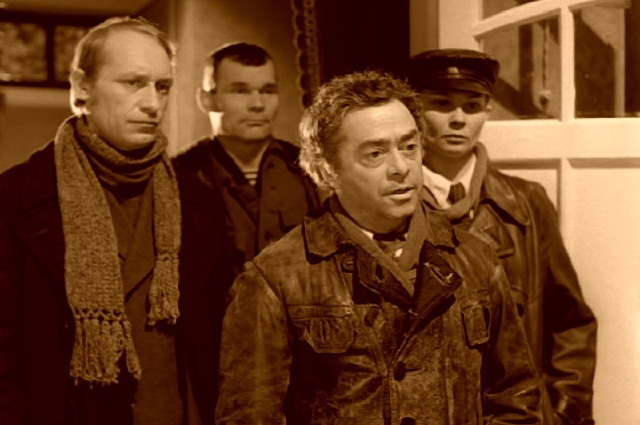
Many Russian right-wing liberals were raised on the books of Mikhail Bulgakov, which they read with satisfaction as “anti-government” works. However, they were not disturbed by the fact that these “anti-government” books were published in massive print runs (as part of preparing society for a shift in ideological and economic direction), adapted into films, and by the 1980s there was practically no one who had not read them.
Doctor of Philological Sciences, Chair of the All-Russian Bulgakov Foundation Mariietta Chudakova emphasizes: “we did not know this writer at all, and he appeared all at once23”. And this is despite the fact that before the war in the USSR many plays by Mikhail Bulgakov were staged, and works such as “The White Guard”, “The Fatal Eggs”, and many others were published. In other words, in public memory Mikhail Bulgakov had simply been forgotten as a secondary author, and then was “brought back” from above. In 1966, the novel “The Master and Margarita” was published in the magazine “Moskva” (circulation of 150,000 copies); on June 7, 1972, the Secretariat of the CPSU Central Committee issued a resolution “On the republication of artistic works by M. Voloshin, O. Mandelstam, Vyach. Ivanov, N. Klyuev, M. Bulgakov and other writers of the 1920s”, marked “Top Secret”, while at the same time Russian right-wing liberals were convinced that they were reading a work inconvenient for the authorities.
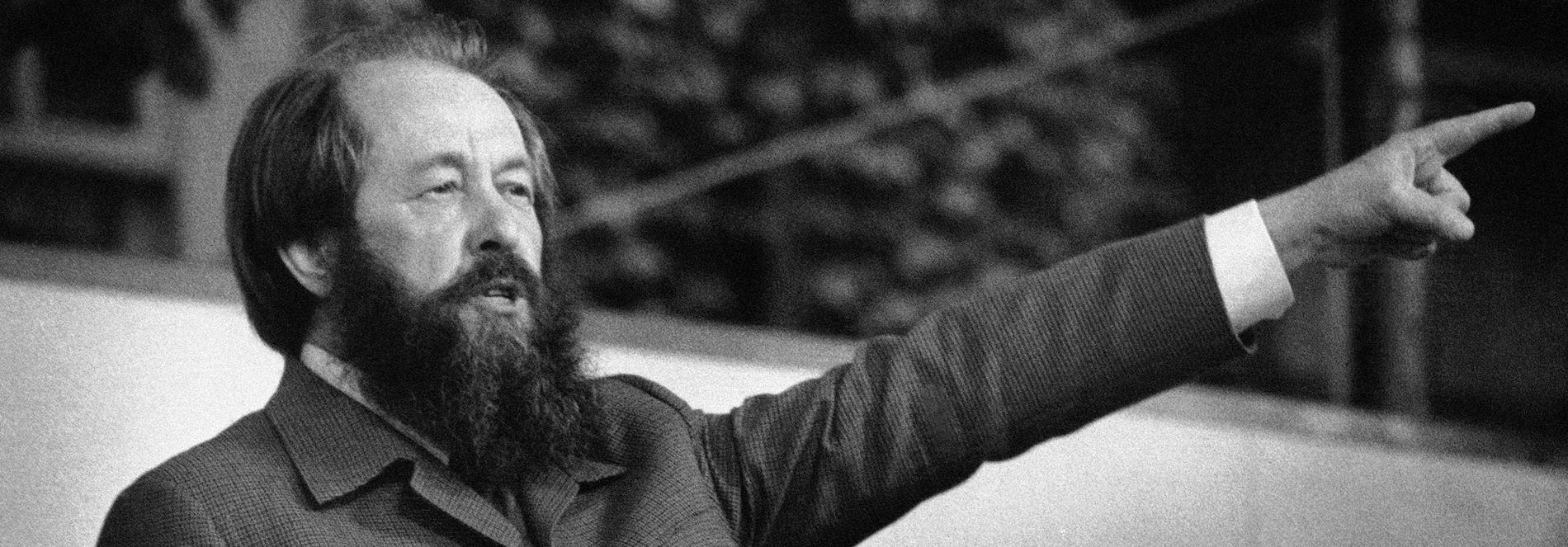
Another inspiration for Russian right-wing liberalism is Aleksandr Solzhenitsyn. This author had a significant influence on the historical views of right-wing liberals in Russia, which was a destructive factor, since Solzhenitsyn is not a historian but a publicist (due to the fact that conducting a truly scientific historical study in the USSR was not possible), with all the consequences that follow — his works often contain inaccurate information, and at times even the promotion of conservative values, as in the racist book “Two Hundred Years Together”. Part of the Solzhenitsyn phenomenon also helps explain why part of society tends to trust similar publicists of a pro-Stalinist orientation rather than academic historians with doctoral degrees.
Lack of constructiveness
It is rare to hear from typical Russian liberals what exactly should be changed and how. In contrast, for example, to the liberal Ilya Varlamov, a journalist who offers his own solutions with a high level of expertise in areas such as urban planning.
However, a significant part of Russian right-wing liberals consists largely of not particularly useful journalists such as Yulia Latynina, who enjoy criticizing dissenters without offering their own solutions (at best, vague abstractions like “How should we organize Russia”) and without being part of any political party or organization that proposes such solutions. Emotional criticism without any constructive program tends to serve the interests of those in power more than those of society.
Love for the 1990s
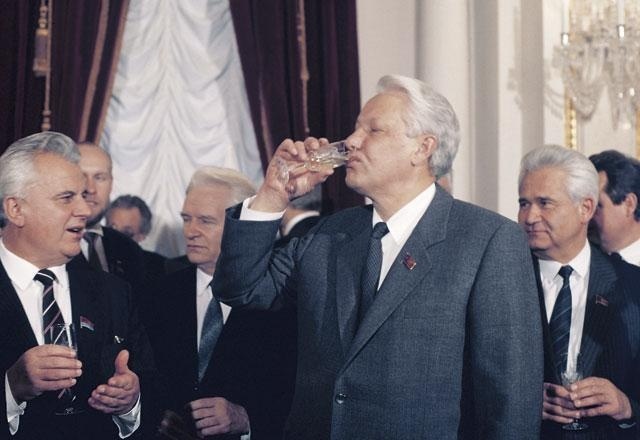
The Boris Yeltsin era is remembered by most of the country’s population (especially in the provinces) with disgust, and is associated with the mass closure of enterprises, rampant crime, unemployment, inflation, economic crisis, nomenklatura privatization, unpaid pensions and wages, Anatoly Chubais’s “two Volgas”, the Chechen War, fraudsters such as State Duma deputy Sergey Mavrodi, Boris Yeltsin’s violations of the Constitution, and so on. However, Russian right-wing liberals are fond of the 1990s, justifying this by claiming that there were broad opportunities, freedom, and legality. Broad opportunities did indeed exist, although mostly for the former Soviet nomenklatura and their families, as well as for criminal groups.
Freedom was significantly greater than in the USSR, but clearly fell short of developed democracies — in most cases, inconvenient people were simply eliminated (the most common method being a “criminal attack”), such as Vladislav Listyev, Dmitry Kholodov, Galina Starovoitova, Lev Rokhlin, Larisa Yudina, and others. When Yuri Shutov, who criticized Anatoly Sobchak in the book “Sobchak’s Heart”, survived after having his head smashed with a hammer, he was later “framed” for the murders of St. Petersburg Vice-Governor Mikhail Manevich and the aforementioned Galina Starovoitova, after which he remained imprisoned until the end of his life. Oligarchs, of course, were not killed, but they were still kept under control — Alexander Korzhakov recalled how Boris Yeltsin ordered him to “deal with” Vladimir Gusinsky’s “out-of-control” NTV channel4, as a result of which Gusinsky had to leave for London for six months. However, none of the above prevents right-wing liberals from remembering Boris Yeltsin’s time with nostalgia and speaking of the freedoms of that period.
“The Russia we lost”
A Russian right-wing liberal often believes the theses presented by Stanislav Govorukhin in the film “The Russia We Lost”, which became a key catalyst for the myth of a prosperous pre-revolutionary Russia. He is not disturbed by the fact that Stanislav Govorukhin was a member of the much-hated “United Russia” party and the former head of the election campaign headquarters of the equally hated Vladimir Putin — in other words, a court propagandist. Nor is he disturbed by the fact that regarding the film from the same series, “You Can’t Live Like This”, Govorukhin publicly stated: “When making this film, I was a prostitute5” (the only inaccuracy here lies in the word “was”). For right-wing liberals, this is not a reason to question the concept or to study the issue in a genuinely conscientious way.
In general, in any civilized society, a liberal who supports the regime that existed in the Russian Empire before the February Revolution would be considered insane. For a right-wing liberal, such doublethink is not uncommon. He also becomes very angry when his statement “life in Russia was wonderful, the empire fed the whole world” is met with the reply that today, under Putin, life is also wonderful, and Russia feeds the whole world with oil.
Hatred of migrants
The Russian right-wing liberal laughs loudly at Putinist propaganda that tells how “evil Ukrainians crucified a three-year-old boy in front of his mother”. He is baffled by how “Russian scum” and “Sharikovs” can believe such nonsense, the falsity of which can easily be checked on the internet. Then he goes to “Echo of Moscow”, reads articles about how migrants are allegedly raping Europe67, and forgets that he is not “Russian scum” and not a “Sharikov”, and forgets that he can easily verify the data on the internet. In him awakens hatred toward the lawlessness of various Arabs and Africans, whom he considers second-class human beings (liberals in civilized countries, if they learned about such views of his, would refuse to sit at the same table with him). He is not even interested in the article by Ilya Varlamov on the same “Echo”, where Varlamov tries to debunk these myths:
And in Cologne, the story with sexual harassment is roughly as follows. The police really messed up a bit in the sense that they missed the arrival of a large group of refugees by train. Somewhere in Helsinki they immediately detected this at the station and unloaded them back, dispersing the crowd. And here they arrived. The facts of rapes… In general, when there is such a gathering of a million people, someone always gets grabbed. It’s a normal situation, so to speak. In Berlin there is the biggest New Year’s party. A million people gather. And there, from time to time, someone gets touched. It’s just that in this case everything went into the media, and women filed reports. I think there were more than 450 complaints filed. Among these complaints were reports of thefts. Pickpockets always operate in such places8.
Right-wing liberals are also not particularly interested in data from the Federal Criminal Police Office of Germany, cited by The New York Times9, according to which migrants make up about 10 percent of Germany’s population, while accounting for only 6 percent of crime statistics, and only 5 percent in cases of sexual violence.
The Russian right-wing liberal believes that migrants in Europe only receive welfare benefits and do nothing else. A study by University College London showing that migrants pay more in taxes than they receive in benefits10 is for him nothing more than empty noise. The Council of Europe, which confirms this thesis11, is also not an authority for him. But journalists from Republic.ru (formerly “Slon” — like “Dozhd”, it is owned by banker Alexander Vinokurov and his wife Natalia Sindeeva), who churn out propaganda articles about how “migrants will destroy Europe12” — that is a truly competent source, from the perspective of right-wing liberals.
Right-wing liberal media
Russian right-wing liberals consider “Echo of Moscow”, the already mentioned “Dozhd” and Republic.ru, as well as “Meduza” and several other smaller websites, to be the only honest media outlets. The fact that “Echo of Moscow” is part of Gazprom-Media13 does not bother them. They do not realize that the notorious OPG “Ozero”, which they hate so much, fully understands the weaknesses of right-wing liberals described in this article, and that due to these weaknesses, right-wing liberal ideas are absolutely guaranteed to be rejected by the broader masses. This means that maintaining the features of Russian right-wing liberals that we are describing is extremely beneficial to the authorities. Thus, newly emerging protesters, absorbing the ideology of “Echo of Moscow”, are completely neutralized and continue to stew in this same ideological broth, believing that they are truly anti-systemic.
The owner of “Dozhd” (TV Rain), Natalya Sindeeva, admitted in an interview with “Forbes” that she considers a key moment in the channel’s history to be Dmitry Medvedev’s visit, when he came to the small digital channel and added it on his Twitter account, after which “advertisers became more willing to sign contracts, and negotiations with cable networks — the broadcasters of ‘Dozhd’ — became easier. Solid officials began appearing on programs. In less than three years, the youngest of Russian internet TV channels turned into a well-recognized brand14.”
“Meduza” does not disclose the names of its investors15. However, its political stance became clear in the Ivan Golunov case, when many people went out to protest against his arrest, and after his release and on the eve of a planned new march, “Meduza” editor-in-chief Ivan Kolpakov wrote on his Facebook page:
About the march. Our position: we got our guy out, thank you all very much. This is a shared victory, the result of incredible cooperation between people. But we are not engaged in activism and do not want to be heroes of resistance, sorry. Therefore, we are not calling for tomorrow’s action16.
Many interpreted this as “abandoning the protest”. It must be said that they interpreted it quite correctly. Meanwhile, the editor-in-chief of another right-liberal outlet, Znak.com — Dmitry Kolezev — supported “Meduza”, while also mocking the “beautiful Russia of the future” that the protesters had envisioned17. And, of course, this is not the first time Russian right-wing liberals have abandoned protests. Perhaps the clearest illustration is Tonya Samsonova, editor-in-chief of Slon.ru (now Republic) and a host on “Echo of Moscow”, who explained on “Dozhd” in 2011 that “none of us needs a revolution18”. Later, she was apparently granted significant funding for the information project The Question, otherwise it is difficult to explain its rapid rise in popularity.
It should also be surprising how easily Ksenia Sobchak — daughter of Senator Lyudmila Narusova and former mayor of St. Petersburg Anatoly Sobchak, at whose baptism Vladimir Putin was present19 — entered the ranks of right-liberal leaders.
Spirituality
Many Russian right-wing liberals are religious and Orthodox Christians, and some even believe in astrology, fortune-tellers, and “charging water” in front of the television. Therefore, Orthodox articles are readily published on “Echo of Moscow”20, and they express outrage over the ban on supporting Orthodoxy in the hated Ukraine21. For example, the late Valeria Novodvorskaya often spoke about the lofty ideals of Christianity:
…when Christ was dying on Golgotha, he of course had to know, and he did know, that he was not saving people at all. He was saving only his conscience and his honor. And people were supposed to draw their own conclusions and repeat his path…22
What if right-wing liberals come to power?
They are not actually pursuing such a goal, due to their strong dependence on large capital, especially banking capital, which owns or holds major shares in the media outlets associated with Russian right-wing liberals (the already mentioned banker Alexander Vinokurov, former banker Vladimir Gusinsky, former banker Alexander Lebedev, and many others own or are major shareholders of Dozhd, Novaya Gazeta, Newsru, and others). Because of this dependence, they are not interested in a complete replacement of the nomenklatura (which would carry the risk of investigations into its crimes, often involving bankers and oligarchs). The Russian right-wing liberal movement is useful to them only for pushing certain initiatives and signaling positions to the ruling nomenklatura, which is generally achieved through media influence and relatively small-scale protests. The ordinary right-wing liberal here serves merely as a tool for achieving these goals.
However, let us assume that right-wing liberals manage to gain financial or political independence from major sponsors and win elections or take power by other means. The Putin-era nomenklatura also dislikes dissent, foreign media, migrants in Europe, and the left, believes in the “growth rates” of the Russian Empire, opposes progressive taxation and criticism of the nomenklatura and oligarchy, and uses emotional propaganda rather than logical argumentation. Do you see the similarity? Yes, the Ozero group does not oppose security services and does not want Vladimir Putin removed. However, if right-wing liberal leaders come to power, these minor differences would gradually disappear, and given their hostility toward dissent and their racism, we would very soon see a return of the same pattern. Initially, there might be improved relations with the West, democratic reforms, attempts to build the rule of law, and economic deregulation, which — without a welfare state and without reducing inequality — would lead to the formation of new elites and a renewed strengthening of large capital. And when these new elites are formed while living standards remain unchanged, some explanation will be needed for why people in Russia are still living poorly. In that case, there will be a real risk of hearing again about “enemies from the West” supposedly preventing normal life, about a “fifth column” inside the country, and so on. And figures like Sobchak and Latynina, who initially praised the new government, would enter yet another cycle of protest activity, still continuing to earn their living in the same way.
What should be done?
Russian right-wing liberals have little in common with social liberalism. In fact, they are closer to conservatives than to liberals. It is very telling that the conservative camp — open defenders of the regime — recognize them as “their own”. For example, one of the leading figures of reactionary philosophical thought, Alexander Dugin, although he calls Russian right-wing liberals “serfs”, “Smerdyakovs”, “lackeys and bastards”, nevertheless emphasizes that “the Russian liberal is a deeply Russian person”, “essentially one of us”, and that “the historical experience of Europeans is absolutely alien and closed to our liberal”:
It would be excellent if Russian right-wing liberals drew only the best from Russia’s historical experience, but they, like conservatives, mostly adopt outdated and failed ideas. In the left-wing movement there are similar conservative “rats” who have hijacked the agenda — these are the Stalinists, guided by the FSB. Progressive social democrats face extremely difficult struggles against Stalinists, and similarly modern social liberals are obliged to fight right-wing liberal conservatives. Until we understand that the “rats” in both movements control the non-systemic opposition in their own interests, and possibly even on Kremlin instructions, there will be no significant progress in the Russian opposition movement.
It is necessary to create independent media and actively criticize manifestations of right-wing liberalism in existing media, doing everything possible to redirect them toward constructive paths. Those liberals who read this and who truly stand for freedom and the right of citizens to a decent life are called upon to unite and coordinate their work on their own media platforms. We are not calling on you to join us—we will solve our own problems ourselves. We, progressive social democrats, must go through the same path and the same struggle. The security services are significantly stronger than former bankers. Therefore, we conclude this article by saluting all fighters for genuine freedom and democracy!
- Vladislav Inozemtsev. “Liberals” and “Fascists” in Russian Wonderland // Republic (republic.ru). June 4, 2015. [Electronic resource]. URL: https://republic.ru/posts/52296 (accessed: 27.11.2019).
- The Resurrection of “The Master and Margarita” (Transcript). Content of the fifth lecture from Mariietta Chudakova’s course “The World of Bulgakov” // Arzamas (arzamas.academy). [Electronic resource]. URL: https://arzamas.academy/materials/1184 (accessed: 27.11.2019).
- AUDIO. The Resurrection of “The Master and Margarita”. From the course “The World of Bulgakov” // YouTube (www.youtube.com). June 26, 2018. [Electronic resource]. URL: https://www.youtube.com/watch?v=AkX2mfOfQbw&list=PLeNbGOow-rnfo052qFcD1wdZie2t1HbKL (accessed: 07.12.2019).
- Alexander Korzhakov. Boris Yeltsin: From Dawn to Dusk. – 479 pp. – “Interbuk” Publishing House, 1997. – p. 285.
- Sergey Grachev. “I Have No Reason to Complain”. The Incorrect but Lucky Life of Stanislav Govorukhin // Argumenty i Fakty (aif.ru). June 23, 2018, 00:06. [Electronic resource]. URL: https://aif.ru/culture/person/mne_greh_zhalovatsya_nepravilnaya_no_vezuchaya_zhizn_stanislav_govoruhina (accessed: 27.11.2019).
- Zhanna Spitkovskaya. Witches’ Sabbath of migrants in Cologne // Echo of Moscow (echo.msk.ru). January 6, 2016, 19:06. [Electronic resource]. URL: https://echo.msk.ru/blog/hemera/1689760-echo/ (accessed: 27.11.2019).
- Zhanna Spitkovskaya. Report record of the senior police commissioner on New Year’s night in Cologne // Echo of Moscow (echo.msk.ru). January 7, 2016, 17:47. [Electronic resource]. URL: https://echo.msk.ru/blog/hemera/1690244-echo/ (accessed: 27.11.2019).
- Ilya Varlamov. German refugees: girl Lisa, rapes in Cologne and much more // Echo of Moscow (echo.msk.ru). February 8, 2016, 10:00. [Electronic resource]. URL: https://echo.msk.ru/blog/varlamov_i/1708660-echo/ (accessed: 27.11.2019).
- Melissa Eddy. Bild Apologizes for False Article on Sexual Assaults in Frankfurt by Migrants // The New York Times (nytimes.com). February 16, 2017. [Electronic resource]. URL: https://www.nytimes.com/2017/02/16/world/europe/bild-fake-story.html (accessed: 28.11.2019).
- Positive economic impact of UK immigration from the European Union: new evidence // UCL: London’s Global University (www.ucl.ac.uk). November 5, 2014. [Electronic resource]. URL: https://www.ucl.ac.uk/news/2014/nov/positive-economic-impact-uk-immigration-european-union-new-evidence (accessed: 28.11.2019).
- Nils Muiznieks. Time to debunk myths and prejudices about Roma migrants in Europe // Council of Europe (www.coe.int). July 16, 2015. [Electronic resource]. URL: https://www.coe.int/en/web/commissioner/-/time-to-debunk-myths-and-prejudices-about-roma-migrants-in-europe (accessed: 28.11.2019).
- Maxim Samorukov. Migrants will destroy Europe not with a caliphate, but with Soviet-style stagnation // Republic (republic.ru). June 29, 2012. [Electronic resource]. URL: https://republic.ru/posts/l/805807 (accessed: 28.11.2019).
- Echo of Moscow // Gazprom-Media Holding – official website (www.gazprom-media.com). [Electronic resource]. URL: http://www.gazprom-media.com/ru/company/show?id=22 (accessed: 28.11.2019).
- Anastasia Zhokhova, Elena Tofanuk. On what money the Dozhd TV channel was created and why it never became a business // Forbes (www.forbes.ru). June 24, 2013, 10:17. [Electronic resource]. URL: https://www.forbes.ru/kompanii/internet-telekom-i-media/241075-na-kakie-dengi-sozdan-telekanal-dozhd-i-pochemu-tak-i-ne-st (accessed: 28.11.2019).
- Elizaveta Surganova. Galina Timchenko: “None of us dreams of making ‘The Bell’” // Forbes (www.forbes.ru). September 15, 2014, 15:10. [Electronic resource]. URL: https://www.forbes.ru/kompanii/internet-telekom-i-media/267611-galina-timchenko-nikto-iz-nas-ne-mechtaet-delat-kolokol (accessed: 28.11.2019).
- Ivan Kolpakov’s page (ivan.kolpakov). Facebook (www.facebook.com). June 11, 2019, 10:49. [Electronic resource]. URL: https://www.facebook.com/ivan.kolpakov/posts/10220196857938244 (accessed: 28.11.2019).
- Dmitry Kolezev. Did “Meduza” sell out the beautiful Russia of the future? // Echo of Moscow (echo.msk.ru). June 12, 2019, 09:40. [Electronic resource]. URL: https://echo.msk.ru/blog/kolezev_d/2443891-echo/ (accessed: 28.11.2019).
- Hatred is good fuel for a revolution and bad for… // YouTube (www.youtube.com). December 8, 2011. [Electronic resource]. URL: https://www.youtube.com/watch?v=n8ZhqdHfNVE&feature=youtu.be (accessed: 28.11.2019).
- Jessica Rach. Daily Mail (UK): Vladimir Putin’s “goddaughter” Ksenia Sobchak gets married again // InoSMI (inosmi.ru). September 19, 2019. [Electronic resource]. URL: https://inosmi.ru/social/20190919/245856203.html (accessed: 28.11.2019).
- Yuri Belanovsky. Why will Entio and his “God’s Will” be fine? // Echo of Moscow (echo.msk.ru). September 10, 2015, 12:31. [Electronic resource]. URL: https://echo.msk.ru/blog/belanovskyy/1619612-echo/ (accessed: 28.11.2019).
- Dmitry Skvortsov. Support for Orthodoxy declared a violation of the Constitution of Ukraine // Echo of Moscow (echo.msk.ru). August 13, 2014, 23:04. [Electronic resource]. URL: https://echo.msk.ru/blog/andrei_skvortsov/1379430-echo/ (accessed: 28.11.2019).
- V.I. Novodvorskaya. My Carthage Must Be Destroyed: From the Philosophy of Russian History. – 288 pp. – Moscow: Olimp, 1999. – p. 44.