
Study program for “Logic of Progress” articles
On this page, we systematize most of our most significant articles into a cohesive theory. If you previously did not know where to start studying "Logic of Progress" and how not to miss the most important articles, this material is for you, and you can bookmark it for the duration of your study of the theory. If you read all the articles from the list, you can consider yourself knowledgeable about progressive social democracy.
To change power in a country, one must first build an influential party capable of carrying this out. To build an influential party, one must construct an effectively functioning organization. To construct an effectively functioning organization, one needs a union of people with similar views and an understanding of what needs to be done. And for this, one should formulate a system of views and organize its study. Creating such a system of views is what “Logic of Progress” does. Therefore, the creation of a social democratic party is fostered, firstly, by readers studying our articles independently, and secondly — by teaching them or delivering lectures based on them.
However, the following problems exist. Firstly, some readers do not understand where best to start studying the magazine’s articles. The second problem — many important articles are overlooked by a portion of readers, and as a result, they ask questions to which we have already provided answers. We are writing this article so that the reader can begin studying the articles independently, knowing where best to start and which articles should not be lost sight of, as well as to assist in compiling a program for those who would like to organize the study of the articles. Furthermore, a social democratic coordinator must be able to answer at least the basic questions they will face when working with the public. “Logic of Progress” will not give answers to absolutely every question, but it is a basic training school that will allow a party member to become significantly stronger.
Another important remark. Why did democratization during the Third Hybrid Regime (conventionally 1986-2012) in Russia fail? There are many reasons for this, and from our perspective, one of the key ones is the lack of a truly strong (ideologically and organizationally) democratic movement. In the 1990s, many people who abruptly became “democrats” (real democrats were very few) actually knew virtually nothing about democracy. In the country, there were vague notions that democracy meant multi-party elections and voting, but such notions often ended right there. There was no strong democratic movement united not only organizationally, but also ideologically, possessing a shared and clearly formulated system of views. Ideological platforms were chosen by people because they had an existing organization or leader, or due to following political fashion, rather than because people were confident in the correctness of their main tenets (and were well acquainted with those tenets). Therefore, people could easily turn from communists into liberals, from liberals into fascists, and so on — about all these ideologies they had, as a rule, a superficial understanding. In 1990s Russia, a multi-party system, elections, and certain other elements of a democratic structure were implemented, yet dozens of important democratic institutions were not created. Nevertheless, quite a few people decided that since there is a multi-party system, it means there is democracy, and if everything is bad now, then democracy is bad. Such a position indicates ignorance of the basics of democracy, and this is a huge problem. A person who possesses a system of views and understands it well will most often not demonstrate such superficial thinking and change self-identification so easily. They will not succumb to foolish mirages such as the one according to which a multi-party system and elections alone are sufficient for democracy.

Also, with the arrival of the market economy in the country, people who began doing business often had no convictions, no values whatsoever. They simply knew that the communist value system, which people used to believe in, turned out to be wrong, so they had no political views. Some decided to find life values in the church, but that was usually the very same church whose patriarch or supreme mufti today justifies war12. Therefore, it is not surprising that entrepreneurs of the Third Hybrid Regime were mostly apolitical or reactionary, and opposition democratic movements received virtually no financial support, or that support went to incompetent forces. If by the beginning of the transition to a market economy there had been a sufficient number of committed social democrats in the country, some of them could have entered the emerging entrepreneurial class and provided financial support for creating social democratic political forces, but this did not happen or such cases were isolated. In the same way, some social democrats could have entered the state administration apparatus as well.
That is why we need a system of views. People who do not understand why democracy is better than other systems and cannot prove it will be unable to fight for democracy or convince others of its necessity. And without such people, the spread of democratic convictions in the country will hardly be realistic. A system of views allows one to gain a clear understanding of the necessity of democracy, knowledge of how it should be structured, and a person possessing such knowledge and the will to fight for the realization of democracy represents a real fighter in the social struggle, while together they constitute a social group. If democracy is established without a sufficient number of committed democrats in the country, the people will choose authoritarianism. For us, it is a priority to create a movement of true democrats before the establishment of an actual democratic regime. Materials by “Logic of Progress” form such a system of views, which is why we strongly advise anyone wishing to improve the standard of living in the country to familiarize themselves with this article and introduce others to it. Studying the materials listed in it will also be useful for those who intend to criticize social democracy. Without being well acquainted with the main tenets of social democracy, without knowing the probable counterarguments of social democrats, it is impossible to conduct effective criticism.
We also note for readers located in Russia. The Russian nomenklatura governing the state engages in disinformation on a permanent basis and possesses a propaganda apparatus of exceptional stultifying power. Certain parts of it have been embedded into opposition of all degrees of radicalism and create entire legendariums of disinformation. Therefore, we cannot vouch for media outlets not belonging to democratic ones, and we advise following them strictly in measured amounts and critically, otherwise achieving decoding from propaganda disinformation will be difficult for you.
So, let us begin. First of all, we cannot study any ideology without understanding why we need it in the first place, what tasks it must solve, and what it should give us. Therefore, we must first decide on values — progressive or conservative. Indeed, everyone must decide what is more important for them — living normally or certain “spiritual bonds”, normal salaries or “national greatness”, the ability to travel the world or the size of the state’s territory, a life without hatred or homophobia, and so on. Depending on the choice we make, we will be either left-wing or right-wing. Values are the goals we set for ourselves. Social democrats unambiguously stand for progressive values, such as a high standard of living (we examined standard of living indicators here). Right away we must also note that to develop methods for achieving goals we must use the scientific method — it is the foundation for developing the toolkit of social democracy, and therefore this ideology constantly changes and develops as experience accumulates.
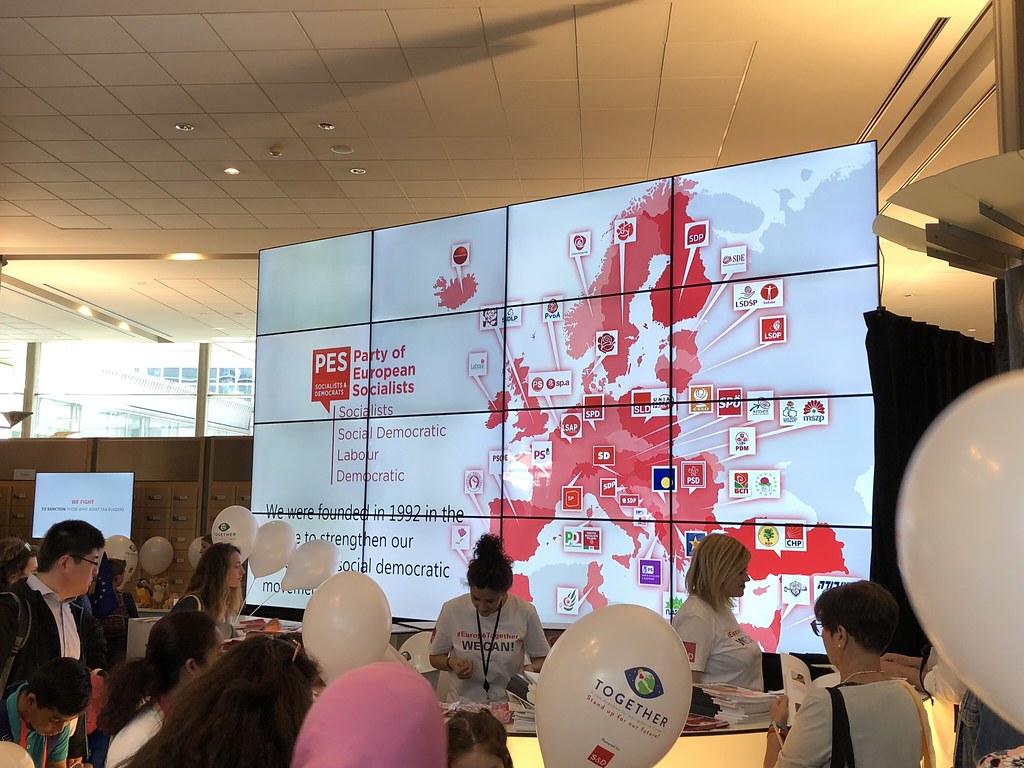
Next, we must understand who social democrats are, their place among other political ideologies, familiarize ourselves with the main social democratic parties of the world, as well as with examples of social democratic reforms, such as those of Tony Blair or Lula da Silva, and with the main myths about social democracy. Then it is important for us to understand what makes a society prosperous, what makes it wealthy. Therefore, we should study articles on why some countries are rich and others poor, how society works, as well as the article on how to achieve economic growth. Social democrats must work on a whole multitude of factors in order to make a specific country prosperous. Here one should also read about the social democratic position on the issue of material equality, where it is explained why social democrats are against egalitarianism and in favor of the principle of social justice, rather than the principle of equality in property and income.
One of the most important factors is the state structure, especially the political system. First of all, it is essential for us to understand what a state is and get rid of crude anarchic misconceptions, which is helped by this article. Next, we will need to study an article on what types of political systems exist. One of the political regimes and a crucial component of social democracy is democracy itself, and in this article we explained what it is (and we also wrote about what peaceful transfer of power is and why it is needed). You can familiarize yourself with the structure of the political system using the examples of Switzerland, Germany, and the USA. At the same time, you should definitely familiarize yourself with the structure of the Russian political system as well — without this, many do not understand that a super-presidential system is currently established in our country, where the president’s influence on the state is truly colossal. Another mandatory article to read is about choosing between representative and direct democracy. Based on this, we form a political model that is optimal from the perspective of social democracy.
Next comes the economic system. We need to cut off inefficient utopias, dead ends that lead to economic insolvency. The traditional dead end of the left is the planned economy, whose inefficiency we proved here. Of course, communists invent various excuses to remain captive to illusions pleasant to them — for example, about computerized communism or “decentralized planned economy”, but we have analyzed those as well. The second traditional left-wing dead end is the Marxist fetish of fighting against private property. Why this fetish turned out to be erroneous we showed here, developing the thought in the article on nationalization — the state sector is not harmful in all cases, but wholesale nationalization poses a danger (there is also a threat in the case of wholesale or excessive socialization of property, which we wrote about in this material). Unfortunately, often people, especially young radicals, due to economic determinism and a desire for a sharp breakdown of the system, having rid themselves of these prejudices, rush into the trap of the opposite radicalism, which consists in eliminating all state economic intervention, even effective intervention (which, of course, will slow down such a society in development compared to societies that possess an effective state). We substantiated the fallaciousness of this type of radicalism here, building upon what was outlined in the article on the role of the progressive tax. Proceeding from these considerations, among others, we have a rough idea of our economic model.
After economics comes culture. The main problem of backward societies is illusions of their own exceptionalism and a special path, leading to a reluctance to repeat working development programs and, as a consequence, to poverty. These illusions grow out of patriotism, and are often accompanied by racist prejudices. We must part with these dangerous illusions, reducing the significance of the concept of nations and prioritizing political and ideological identity. We wrote about this in articles on anationalism and the national policy of social democrats. Also, we must wage a struggle against the plague of anti-Westernism, with which our country is particularly severely afflicted. Speaking of culture, one cannot bypass the question of religion either. Our articles on whether God exists, on the authenticity of religion, as well as on the harm and benefit of religion indicate that a social democrat is unlikely to be religious, yet it is also not fitting for us to eradicate religion. The principles of our work in this area are described here. The entire sum of cultural work is set forth by us in the article on deconservatization.
Provisionally, one can name three pillars of progressive social democracy: parliamentary democracy (in politics), reduction of inequality (in economics), westernization (in culture). What measures should social democrats take to build a successful, prosperous society, in addition to implementing the requirements we mentioned above? First of all, it is raising the level of the rule of law. Secondly, it is the fight against corruption. Thirdly, it is raising the level of press freedom. We also assign a significant role to a peaceful and reasonable foreign policy. All of the above leads us to the provisions of the Progressive Course and the draft program of a modern social democratic party in Russia, which will undoubtedly be further refined.
Many also run well ahead of the engine and, having achieved nothing so far and not having learned to conquer even foreseeable heights, already inquire whether progressive social democrats have a model of the future, some kind of utopian concept. In place of a utopian project, we have concepts that are genuinely attainable through the expansion of reforms, which we described in articles on the Fourth Industrial Revolution and the city of the future. We do not deceive people or promise them a future where there will be no need to work while being able to get whatever one wants. We are realists and know that only the labor and will of society create its prosperity. And at the same time, our future, if we do everything right, is undoubtedly better than our present and promises us a much higher standard of living.
Having studied the basics of social democratic theory, we move on to the question of how, actually, to achieve power and proceed to the implementation of our program? In the material on how to achieve a change of power in an authoritarian country, we explained that we need to achieve superiority in the cultural space. We must do this by creating parties and media outlets, through regular political struggle by all means, bypassing populism and remaining in line with our values. We must understand how propaganda and brief talking points work, how demagogic techniques should be recognized and how to argue with an opponent. We would prefer a peaceful way of changing society, but in case the regime does not wish to compromise, revolutionary methods are permissible. But even if social democrats take a radical course, they must not indulge in the illusions of revolutionary defencism and Bolshevism. We must act within a broad coalition with our allies.
In addition to the specified articles, we also have a considerable number of others, the study of which is desirable, but already optional (they are available in our knowledge base). For example, further on we can familiarize ourselves with the main political opponents of social democrats, such as statists and communists, study the history of democracy in Russia, as well as understand why projects like the USSR or models of the Stalinist era should not be viewed as adequate reference points.
We do not recommend getting fixated on analyzing a single topic. For example, many like to get stuck discussing the differences between political ideologies. It is important to understand that what is written on “Logic of Progress” is not a dogma; our magazine merely sets the task of introducing the basics of the subjects. You can delve into the differences between ideologies later, on your own initiative. And develop your own vision, differing from what is outlined on “LP”.
- I. Nosalsky. Kirill offered Russians to “wash away sins” in exchange for death in the war against Ukraine // RBC-Ukraine (www.rbc.ua). September 25, 2022, 20:38. [Electronic resource]. URL: https://www.rbc.ua/ukr/news/kirilo-zaproponuvav-rosiyanam-zmiti-grihi-1664127212.html (accessed: 10.11.2022).
- Mufti of Chechnya called the invasion of Ukraine a “war for the prophet and Islam”, and those who died in it — “martyrs”. Do Muslims in Russia really think so? // RBC-Ukraine (www.rbc.ua). April 22, 2022, 12:46. [Electronic resource]. URL: https://meduza.io/episodes/2022/04/22/muftiy-chechni-nazval-vtorzhenie-v-ukrainu-voynoy-za-proroka-i-islam-a-pogibshih-na-ney-shahidami-musulmane-v-rossii-pravda-tak-schitayut (accessed: 10.11.2022).