
How the party system should be structured
One of the most underrated components of democracy is the structure of a country's party system. Unfortunately, very few people understand that if parties are leader-centric organizations with permanent leadership that holds total control over internal party elections, the level of democracy in the country will be extremely low. In this article, we will examine this issue in more detail.
To begin with, we should explain such an important phenomenon in politics as a party. We often hear about them, and we frequently either criticize them, neglect our civic duty and refrain from voting, or do not know what they are at all. It is our firm belief that a social institution such as a party is crucial for building a constructive political system. To understand why, we will examine the following questions in this text:
- Foundational knowledge of a political party;
- A party’s goals in politics;
- Problems of the party movement in Russian political reality;
- Ways to solve the issues addressed.
Contents
What is a party?
A political party (from Lat. pars (partis) — part, group) is an organization uniting individuals on the basis of a commonality of political views and the recognition of a certain system of values, which find their expression in a program that outlines the main directions of state policy1. The famous French researcher of parties, Maurice Duverger, gave the following characterization: “great popular organizations that express public opinion in modern democracies”2.
In Russia, according to federal legislation, a political party is defined as “a public association created for the purpose of participating by citizens of the Russian Federation in the political life of society through the formation and expression of their political will, participation in public and political actions, in elections and referendums, as well as for the purpose of representing the interests of citizens in bodies of state authority and bodies of local self-government”3. According to the Encyclopædia Britannica, a political party should be understood as a group of persons organized to acquire and exercise political power4. Maurice Duverger once noted that “in fact, the history of genuine parties barely spans a century”5.
In Russia, however, the history of the party movement officially began only in 1905. From the 1920s to the 1990s, the party system in Russian history consisted of only one party due to the CPSU’s monopoly on power. And even after the emergence of various parties and the disappearance of the USSR, we continue to gather the “artifacts” of a single-party autocracy in Russian political culture to this day.
Ultimately, it can be said that a political party is an association of citizens that represents the interests of certain social groups and seeks to realize its goals and objectives through political processes.
Key characteristic features of a political party
Political parties have a number of features that distinguish them from other socio-political movements:
- Orientation toward acquiring and exercising power;
- Presence of a political program, i.e., a document formulated with goals and tasks both in terms of participation in political life and for the event that the party comes to power;
- Presence of an organization (party headquarters, bureaucratic apparatus, party cadre, and rank-and-file party members);
- Presence of governing bodies — both central and local — tasked with developing strategies and tactics for the party’s political activity;
- Characterized by membership, i.e., consisting of a strictly defined number of members who usually pay membership dues and participate in party activities in a specific way;
- Existence of a Charter, i.e., a document establishing the most important rules of intra-party life;
- Presence of an extensive network of local organizations whose core is formed by volunteer activists;
- Serving as the bearer of a certain ideology or a specific worldview of society and humanity;
- Long-term operation.
Functions of a political party
Parties exist in order to perform certain functions67. What are these functions and for what purpose, accordingly, do parties exist?
Determination of goals, tasks, and tools for their implementation. In developing ideology and a program, parties seek to define guiding strategies and convince citizens of the possibility of implementing actions alternative to those of the authorities. The elaboration of program objectives should be particularly highlighted here. Qualified ideological and propaganda personnel are involved in the development of modern strategies.
Expression and aggregation of public interests. Other organizations can also express people’s interests, but only parties consolidate them into a form that directly influences the decisions of central state bodies.
Mobilization and socialization of citizens. Parties seek to increase the political activity of citizens and create a basis for long-term political activity. A party also aims to shape corresponding public opinion regarding itself using the media for this purpose. The party also educates its supporters and citizens in general in the spirit of the traditions, values, and ideals it shares.
Formation of government and authority; ensuring connections between representative government bodies and society; forming, together with other political institutions, the mechanism of state and public administration; ensuring the stability of government bodies and structures. Political parties have program documents published for public information. Political parties have the right to nominate candidates for deputies, conduct pre-election campaigning, and use state mass media.

Typology of parties
Political parties are divided into types according to various principles. For example, according to Duverger, they are divided by method of organization into cadre and mass parties8.
Cadre parties are associations of so-called “notables”, who are influential representatives of social and economic elites. The emergence and establishment of cadre parties dates back to the birth of democracy in Europe, when suffrage was limited and the main masses of the population were excluded from active political life. In such parties, preference is given to recruiting professionals rather than mass party membership. The activity of cadre parties reaches its peak during elections (the main area of work becomes propaganda in support of candidates) and noticeably decreases in the periods between electoral campaigns. They carry a more decentralized nature of executing the decisions of governing bodies and possess less developed structural cohesion. Among such parties, one can recall the Republican9 and Democratic parties of the USA10, in which, for example, there is no permanent membership, and its members consist of the party apparatus.

Mass parties, on the contrary, seek to mobilize broad groups of people. The reason for their appearance was the introduction of universal suffrage and the formation of socialist parties that attempted to unite entire social communities. Duverger noted that “the technique of mass parties replaces the capitalist method of financing elections with a democratic one… Mass parties are characterized by an appeal to the public — it will pay and allow the party’s election campaign to avoid dependence on moneybags; responsive and active, it receives political education and acquires an instrument for participating in the life of the state”11. Mass parties are based on fixed membership and party dues, which requires a much more orderly organization. Therefore, an extensive management apparatus arises, which relies on a well-functioning administrative mechanism, has a clearly defined hierarchical character, and is managed by party functionaries and apparatus workers.
Also, parties are divided by participation in the exercise of power into ruling and opposition parties. The latter, in turn, are divided into legal, semi-legal, and illegal.
By political spectrum, parties are divided into left, right, and centrist. We explained the difference between left and right parties in a separate article. But one should remember the inaccuracy of this type of division and prefer a more specific division by ideology — that is, into social-democratic, liberal, conservative, and other parties. We attempted to systematize all more or less noticeable ideologies in this article.
In addition, parties are divided by membership type into open and closed — the former have free membership and anyone interested can join, while the latter have complex admission procedures.
Finally, parties can be divided by methods of influence into reformist and revolutionary. Reformist parties strive for the gradual transformation of society using legal means of influencing power and legal means of attaining power. Revolutionary parties, on the other hand, desire to improve society through the use of illegal and violent means of struggle.
Party systems
The totality of parties participating in the formation of legislative and executive power structures is called a party system. A party system is also defined as a totality of political parties linked by stable relations with one another12.
In the world, non-party political systems exist. In such systems, as you might have guessed, political parties either do not exist or are banned. Such examples are found in a number of Muslim countries: Saudi Arabia, Oman, Kuwait, Qatar, and the UAE. The prejudice existing there regarding political parties is based on the assumption that a party leads to the destruction of the ummah — the Muslim community of believers13. However, for the sake of fairness, we note that there are states where the Muslim population constitutes a majority and in which a party system exists (for example, the Republic of Turkey). Also, political parties are officially absent in Eswatini, Tuvalu, Vatican City, and several other countries.
One-party system. In such a system, power officially belongs to one ruling party, and usually only one party exists altogether (examples – Cuba, Vietnam, Laos), but there are also countries where power officially belongs to one party, and at the same time other parties exist that hold no power and are included together with the ruling party in a single coalition (PRC14, DPRK15). It can be said that these are effectively one-party systems. Such systems are characteristic of authoritarian and totalitarian regimes.
Two-party system. This is a system dominated by two parties (although there may be more parties). A similar principle operates in the USA, Australia, Great Britain, and so on. This is usually characteristic of countries with a plurality/majority electoral system. In two-party systems, more than two parties actually operate in most cases — specifically, in the USA, there are the Conservative Party of New York State16, the Libertarian Party17, the Green Party18, the Vermont Progressive Party19, and even the Communist Party20, which also participate in politics, but due to size, funds, and the electoral system, these parties cannot participate as broadly in political life as the two dominant parties.
Advantages of a two-party system21:
- Provides a high degree of government stability;
- Allows uniting representatives of one political orientation in parliament;
- Ensures the constant presence of parties in governing bodies;
- Can soften ideological conflicts, as each party in a two-party system absorbs principles of several ideologies, leading to ideological convergence of the entire system;
- Ensures the stability of the center of the two-party system, where practically all party activity is concentrated.
Disadvantages:
- Does not ensure representation of all strata and social groups of the population, which reduces voter activity;
- Similarity of party platforms is possible, leading to reduced party competitiveness, lower voter interest in elections, and decreased participation in politics overall;
- Constant generation of “third” parties — carriers of missing ideologies — leading to instability of the party system as a whole.
Multi-party system. Such systems are characterized by the presence of a larger number of parties genuinely competing for power than two. Compared to a two-party system, a multi-party system has significant advantages:
- Ensuring each “share” of citizens a minimum of freedom, that is, offering every social group the opportunity to vote for “its own”, ideologically close party;
- Imparting greater balance to the system due to the presence of not only centrist parties, but also flank political forces.
A dangerous pitfall of multi-party systems is the potential formation of an atomized system, where the number of parties is so large (ten, twenty, or more) that it becomes not only inefficient, but also dysfunctional22. The most efficient and functional system is one of limited pluralism, which is introduced through registration schemes and percentage thresholds for entry into governing bodies, although we should note that there are some developed democratic countries where there is either no percentage threshold, such as in Finland and Portugal, or it is quite low, as in Luxembourg (approximately 0.667% is needed to enter parliament)23.
Such a type of party system is encountered quite frequently — both in developed countries like Switzerland, Germany, Austria, and France, and in countries with imperfect democracies like Brazil, Chile, and Peru.

There are numerous classifications of multi-party systems. Often, political parties in such a system have to form coalitions to solve particular problems. Multi-party systems can also be divided into systems with a dominant party and systems without a dominant party. In Scandinavian countries, social-democratic parties dominated for a long time (for example, in Sweden), while in Italy, it was the Christian Democratic Party24. Another example is the rule of the Liberal Democratic Party of Japan and the Socialist Party of Portugal. Frequently, in a multi-party system, a dominant party factor does not emerge. In Russia, a multi-party system with a dominant party theoretically operates, but there are many caveats that call the established view into question.
Problems of the party system in Russia
The first and primary problem of the party system in Russia is the presence of the party of power and pseudo-opposition parties. The political party that wins elections is dominant in terms of the number of deputies. The prevailing political party in the modern party system of Russia is the “party of power”, which we briefly wrote about in our article on electoral systems. Such a phenomenon is not new to Russia; political parties with roughly similar parameters have existed here before25:
- Egor Gaidar’s “Democratic Choice of Russia” (1993);
- Viktor Chernomyrdin’s “Our Home – Russia”;
- Sergei Shoigu’s Interregional Movement “Unity” (1999, which later became the foundation for forming the “United Russia” party).
Functions of the party of power:
- A stabilizing function aimed at reducing the likelihood of conflicts between the executive and legislative branches of power by effectively subordinating parliament to the president through the formation of a “majority party”. The “party of power” consolidates the electorate in order to win parliamentary seats. In other words, the “party of power” is an organizationally structured political entity created by the ruling elite to participate in parliamentary elections;
- A consolidation function aimed at unifying elite groups (administrative, economic, political) that support the activities of the president and government, institutionally formalized.
At the same time, it is worth noting that despite the party’s monolithic appearance, internal party confrontation can also occur within the party of power, albeit less overtly. Because of such a party, the Russian system is inefficient, as governing bodies are controlled by the party of power at all levels, which prevents not only the political system but the entire country from developing.
Pseudo-opposition parties are those parties that declare opposition to the party of power, and in the regions even fight against official authorities, but in fact support them. These include the main parliamentary parties (CPRF26, A Just Russia27, LDPR28). To be sure, there are more of them (we plan to produce a series of articles on this topic), but one thing is clear: such parties are essentially needed to maintain the appearance of struggle and create an image of democracy and pluralism.
As noted in the article on cultural policy and de-conservatization, such parties must be dissolved, and their leadership temporarily deprived of political rights (voting, participating in political activity, working in or writing for mass media), while rank-and-file members — among whom there are many decent people—will not be affected. Such an action neutralizes the danger coming from them and creates the conditions for the formation of new, healthy political forces.
The second problem of the Russian party system is spoiler parties. The term itself originates from the English word “to spoil” — “to ruin” or “to damage”. This is the name given to political parties that engage in “siphoning off” votes from competitors, which can help their opponents. As the main criteria for classifying parties in this category, Arkady Lyubarev, candidate of legal and biological sciences29, council member of the “Golos” movement30, and expert at the Committee of Citizens’ Initiatives31, highlights the following32:
- A brief and low-substance program;
- Unknown leaders (or leaders known primarily as political strategists);
- Lack of an active website and social media presence.
The criteria can also include the absence of income and expenses33. Among the techniques used by spoiler parties, the following can be cited:
- Putting forward identical lists in all regions;
- Campaigning not for themselves, but against a competing party;
- Compiling voter lists from residents of other regions;
- Imitating the campaign style of a competitor party.
Voters are misled not only through similar party names, but also with the help of similar slogans and election paraphernalia. Thus, in 2013 in Vladimir, due to the fault of the regional election commission, ballots were used in which images of the logo of the “Civil Position” party were printed with errors, making it virtually identical to the logo of “Civic Platform”, and the “spoiler” party (in this case — “Civil Position”) was placed higher on the ballot, which, according to representatives of “Civic Platform”, misled voters34.
Such parties are also created to combat opponents: for instance, opposition politician Alexey Navalny wanted several times to register his party under the names “People’s Alliance”35, “Party of Progress”36 (here it is also worth noting that the party of Navalny and his supporters with a similar name passed registration on the first attempt37, but it was later revoked38), and “Russia of the Future”39, but each time some other party registered that name404142.
Such parties actively participate in elections, and they are admitted to them virtually without obstacles. Truly non-system parties, on the other hand, find it quite difficult to collect the required number of valid signatures, as well as to register a candidate in elections, since they systematically face groundless refusals by electoral commissions to register their candidate lists, as occurred with the Libertarian Party43 and the Pirate Party44. Spoiler parties are hard to contend with, because even if an authoritarian political regime is removed, the risk of anti-democratic forces emerging remains.
The question arises: upon whom should fall the function of controlling the “quality” of political party activity? Under a social-democratic political system (here we described its project), this will be handled by the Democratic Committee of the Republic, specifically the Commission for the Protection of Civil Political Rights. In the event of a violation of rules of conduct by parties and other subjects in the socio-political system, the following liability measures regarding the offending party can be provided for:
- Giving broad publicity (including through mass media) to violations committed by political parties or their regional branches;
- Inclusion on a “black” list of political parties, with subsequent informing of voters;
- Imposition of a fine on the political party, and so forth.
A necessary condition is specifying the right to judicial protection and administrative challenge of acts of this Commission.
The third serious problem is the complexity of creating a political party and obtaining admission for it to elections. To create a party in Russia, it is necessary to fulfill the following conditions45:
- Have no fewer than 500 members of the political party;
- The political party must have regional branches in no fewer than half of the constituent entities of the Russian Federation, and only one regional branch of a given political party may be created in a constituent entity of the Russian Federation.
Since there are as many as 85 constituent entities in the RF, such a system makes party registration exceedingly difficult. Very large resources are required to work across many regions in order to register a party. For comparison, let us turn to the experience of the FRG. There, a minimum number of founding members is not provided for; however, the executive committee of a party must consist of no fewer than three members46. The same applies to election matters — as we wrote in our article on electoral systems, in the RF parties are not equal in terms of election opportunities, whereas in Germany a party needs to collect only a small number of signatures. Likewise, participating in political life in Russia is much more difficult due to a number of features of the electoral system, which sets its political system apart from the political system of the FRG — and not for the better.
The fourth problem is the lack of regional parties. As we wrote in that same article on electoral systems, regional parties can better represent the interests of the region itself, which may have its own specifics, and they are capable of doing so both within the region itself and within the framework of the country. One of the most famous examples of such parties is the Christian Social Union (CSU) in Bavaria, which holds influence in Bavaria47, and which, together with the Christian Democratic Union, forms the CDU/CSU bloc in the Bundestag. Besides the CSU, one can highlight parties like the “South Schleswig Voters’ Association”48 and the “Bavaria Party”49.
The fifth problem is populism. The word itself comes from the French populisme, which in turn derives from the Latin populus — people. It denotes political practice and related rhetorical styles designed to quickly gain popularity and mass support50. We have already written about the harm of populism, and in Russia parties suffer greatly from this ailment; the “United Russia” party became particularly famous for this51. We see the solution to this problem partly in the introduction of a so-called mixed mandate, which will allow politicians to propose their ideas while retaining the possibility of recall (read more about this in the article on the imperative mandate).
The sixth problem is state funding. Political parties are entitled to receive federal budget funds in one of the following cases52:
- If the federal candidate list nominated by a political party in elections of deputies to the State Duma of the Federal Assembly of the Russian Federation received at least 3 percent of the votes of electors who participated in voting across the federal electoral district;
- If a registered candidate for the post of President of the Russian Federation nominated by a political party received at least 3 percent of the votes of electors who participated in voting.
Yet besides state funding, there are also donations, revenues from events held by the political party, income from entrepreneurial activities, and receipts from civil law transactions53. As a result, some parties have an advantage over others in terms of budget and capabilities; state funding leads to the dependency of such parties on the state, while other receipts often raise questions, including in Western countries.
The issue of party financing in general is extremely complex. There are three most obvious paths for improvement here. The first path is to restrict the formation of party budgets exclusively to membership fees. However, in this case, party budgets will be too small for them to be a sufficiently serious force to oppose the bureaucratic apparatus. The second path is to implement a radically new solution — for example, obligating individuals over the age of 18 to indicate the party they sympathize with (or indicate “against all”) and transfer a portion of their taxes in favor of that party (a similar system is implemented and works successfully with religious policy in Germany, which we wrote about here). However, here there will be a problem with the method of specifying this party so that there are no falsifications and pressure on people. The third path is to gradually develop a system of reasonable financing restrictions. For example:
- State funding must remain, and parties should be allocated subsidies proportional to the votes cast for them in elections. However, due to an overall increase in the level of democracy and the refinement of democratic institutions (transition to parliamentary democracy, a package of measures to raise the level of press freedom, simplification of party registration, and so on), as well as clearly prescribed criteria for allocating funds, state funding will not be able to serve as a means of controlling parties. Right now, the problem is that money is distributed by “United Russia”, which is able to regulate who gets how much, and that it is virtually impossible to register new parties that are inconvenient for UR. When “UR” is lustralized, a parliament with several competing parties will form, and registration will be simplified, state funding of parties will cease to be an evil in itself;
- All financial reporting of parties must be published in open access;
- The amounts of donations from individuals, as well as enterprises and firms, must be limited;
- A ban on anonymous donations.
Many of these solutions are already used in developed countries54. Progressive social democrats will choose between the second and third paths, and it is most likely that the final choice will be made in favor of the more stable third path.
The seventh problem is the lack of democratic mechanisms within the parties themselves. We are convinced that intra-party democracy of a modern party in a democratic society must meet a number of institutional and procedural criteria55:
- Electability of party bodies and officials (usually done at party congresses);
- Regular and periodic holding of free and fair intra-party elections without coercion mechanisms;
- The party must lack qualifications and discrimination in forming intra-party institutions;
- Party members must have a real, guaranteed right to be elected to the governing bodies of the party;
- Intra-party pluralism: party members must have the right to freely express their opinions and the right to form intra-party factions.
In a social-democratic party system, these requirements must be mandatory for all parties participating in elections; specific individual violators of these requirements will be subject to lustration (which, however, can be appealed in an independent court), and the party will be issued a warning (after several warnings, a penalty similar to deducting points in soccer will be imposed on such a party in upcoming elections).
In addition to intra-party elections, in which candidates are chosen only by party members (this is called a closed primary), there is also an open primary — this is when the opportunity to choose a party candidate is accessible to all registered voters regardless of party affiliation, while representatives of one party can vote for one of the opponents56. Such a system exists in the USA when choosing a presidential candidate (it should be clarified that in some states they are closed, meaning only registered party members can vote, and there are semi-closed ones, but more on them later); in Italy, primaries at the regional level have been held since 2004, and at the national level since 2005. These are open elections initiated by party coalitions. In France, primaries are the nomination or self-nomination of candidates supported by the voter. Such a system works in Denmark and Belgium.
In our country, this is also used, for example, by the “United Russia” party, but these elections are criticized because public sector workers are forced into them under various pretexts5758 and there are cases of falsification59. Also, besides closed and open primaries, there are two more types of primaries:
- Semi-open primaries: a registered voter does not declare in advance which party they will vote for. Before entering the voting booth, they request a ballot for a specific party. The essence of semi-open primaries is very similar to open primaries, but the difference lies in the voter using a specific party’s ballot;
- Run-off voting: characterized by the ballot not being limited to one party, and two candidates for general elections are elected regardless of their party affiliation. A feature of this type of preliminary voting is that a second round is required only if no candidate receives a majority of votes in the first round.
And if democracy at the state level cannot function without parties, should parties be internally democratic regarding their own internal decision-making practices and the distribution of power within the party?
It can be said that intra-party democracy is a pressing necessity. This form of democracy acquires particular significance for parties and regimes undergoing a process of democratic establishment and consolidation. Many believe that intra-party factionalism can undermine party unity and paralyze party decision-making processes. It is obvious that in dominant-party hegemonies operating in non-democratic regimes, any opposition, including intra-party opposition, will be subjected to persecution and repression, and the question of internal party unity does not arise. In democratic regimes, however, party factions perform the following functions60:
- Development of political programs and policies in their respective spheres of activity;
- Structuring party activists;
- Attracting new members to the party;
- Providing an alternative channel of influence on rank-and-file members alongside regional leaders;
- Providing support to their members in elections;
- Delegating function.
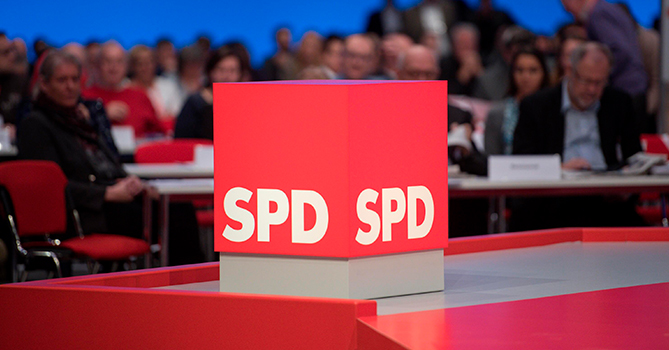
An example of intra-party factionalism is the British Labour Party, where there are factions such as the “Socialist Campaign Group”, which is ideologically democratic socialist61, the partially conservative “Blue Labour”62, and a group of supporters of Tony Blair and the “Third Way” concept named “Progress”63. In continental Europe, one can highlight the SPD, where there is a faction of left-wing social democrats “Parlamentarische Linke”, right-wing social democrats “Seeheimer Kreis”64, as well as “Forum Demokratische Linke 21”65. In the USA, one can highlight the Democratic Party, which also includes factions like the social-liberal “New Democrat Coalition”66, the social-conservative “Blue Dog Coalition”67, as well as social democrats and democratic socialists of the “Congressional Progressive Caucus”68. In modern Russian political practice, there is only one example of factional division within a party — the Russian United Democratic Party “YABLOKO”69.

The eighth problem is parties of authoritarianism. That is, these are parties that do not recognize the democratic system and values, do not recognize parliamentary democracy, do not demand it in their program, and, in the event of coming to power, will establish a dictatorship. We have seen what happens if the activities of such parties are permitted, using the examples of the NSDAP and the RSDLP(b). If such parties are banned while pluralism among democratic parties is maintained, this leads to an increase in the system’s degree of democracy and standard of living indicators, which we substantiated in more detail in this article. In Russia, many parties today are hostile to democratic institutions and progressive values (what kind of ideologies create such parties, we described in the article on ideologies). Such parties are represented in the RF in the form of the RKRP, “The Other Russia”, the Russian All-People’s Union, and so on. Parties that do not have a program for the political structure of the country, or whose program of political structure does not contain requirements for parliamentary democracy, multi-party systems, and the transferability of power (a full list of such requirements should be drawn up and clearly outlined), must be dissolved and denied registration.
Summary
A political party is one of the most important elements of the political system in a society. It represents specific social groups seeking to realize their goals through political processes. Currently, a decline in the party movement can be observed in Russia, and to stop it, social democrats propose implementing the following recommendations:
- Dissolution of the “United Russia” political party and pseudo-opposition parties, temporary removal of their leaders from political life, as well as further changes to the party system toward multi-party pluralism and political competition;
- Changing the concept of regulation regarding parties. We must remove foolish restrictions like the requirement to have branches in half of the constituent entities of the RF, simplify party registration, and set a list of requirements to ensure intra-party democracy: electability of governing bodies, transferability of power, factionalism, the ability of party members to recall party leaders, and so on. Attempts to falsify intra-party elections should be examined in an independent court and severely punished;
- Regional parties should be permitted;
- Introduction of a mixed mandate;
- Changing the system of party financing.
These measures should significantly raise the level of democracy in the country as a whole.
- S.M. Baramidze. Concepts and Signs of Political Parties in the Russian Federation // Bulletin of Udmurt University. Series “Economics and Law”. – 2009 – No. 2. – pp. 179-184.
- Duverger M. Political Parties / Trans. from French. – 538 p. – M.: Akademichesky Proekt, 2000. – p. 21.
- Federal Law of 11.07.2001 N 95-FZ (as amended on 30.04.2021) “On Political Parties”. Article 3. Concept of a political party and its structure.
- Maurice Duverger. Political party // Encyclopaedia Britannica (www.britannica.com). [Online resource]. URL: https://www.britannica.com/topic/political-party#ref36659 (Accessed: 05.08.2021).
- Duverger M. Political Parties / Trans. from French. – 538 p. – M.: Akademichesky Proekt, 2000. – p. 21.
- L.S. Vagina. Theoretical Foundations of Research into the Activities of Political Parties as a Subject of Politics in Modern Russia // Bulletin of Orenburg State University. – 2011 – No. 5. – pp. 37-42.
- Yuri Irkhin. Political Science in 2 Parts. Part 2. Theory of Political Science 2nd ed., rev. and exp. Textbook for Academic Bachelor’s Degree. – 459 p. – M.: Yurait, 2017. – p. 285.
- A.V. Lazarev. Classification and Distinctive Features of Modern Political Parties // Theory and Practice of Social Development. – 2011 – No. 3. – pp. 226-229.
- A.A. Iserov. Republican Party of the USA // Great Russian Encyclopedia. Volume 28. Moscow, 2015, pp. 427-428.
- M.O. Troyanovskaya. Democratic Party of the USA // Great Russian Encyclopedia. Volume 8. Moscow, 2007, p. 511.
- Duverger M. Political Parties / Trans. from French. – 538 p. – M.: Akademichesky Proekt, 2000. – p. 117.
- G.V. Pushkareva. Political Science: textbook and workshop for academic bachelor’s degree. – 295 p. – M.: Yurait Publishing House, 2016. – p. 164.
- P.A. Matveev. Constitutional Law of Foreign Countries: course of lectures: textbook – 640 p. – M., Berlin: Direct-Media, 2016. – p. 116.
- A.V. Barinkova, E.V. Kremnev. The Party System of the PRC in a Typological Aspect: One-Party System or Non-Competitive Multi-Party System? // Crede Experto: Transport, Society, Education, Language. – 2015 – No. 3. – pp. 129-142.
- A.N. Lankov. The Destruction of Non-Communist Parties in the DPRK (1945 – 1959) // DPRK Yesterday and Today. An Informal History of North Korea. – 448 p. – M.: Vostok-Zapad, 2004. – p. 148.
- Conservative Party of New York State // CPNYS (www.cpnys.org). [Online resource]. URL: https://www.cpnys.org/ (Accessed: 05.08.2021).
- Libertarian National Committee // Libertarian Party (www.lp.org). [Online resource]. URL: Inc. https://www.lp.org/ (Accessed: 05.08.2021).
- The Green Party of the United States // Green Party (www.gp.org). [Online resource]. URL: https://www.gp.org/ (Accessed: 05.08.2021).
- The Vermont Progressive Party // The Vermont Progressive Party (www.progressiveparty.org). [Online resource]. URL: https://www.progressiveparty.org/ (Accessed: 05.08.2021).
- Communist Party USA // Communist Party USA (cpusa.org). [Online resource]. URL: https://cpusa.org/ (Accessed: 05.08.2021).
- B.A. Isaev. The Party System of Russia: Multi-Party System or Two-Party System? // Bulletin of Saint Petersburg University. Political Science. International Relations. – 2017 – No. 3. – pp. 210-225.
- B.A. Isaev. Current State of the Theory of Parties and Party Systems. // Social-Humanitarian Knowledge. – 2008 – No. 2. – pp. 128-140.
- Who can vote and for whom? How the Dutch electoral system works // DutchNews (www.dutchnews.nl). [Online resource]. URL: https://www.dutchnews.nl/features/2017/01/who-can-vote-and-for-whom-how-the-dutch-electoral-system-works/ (Accessed: 05.08.2021).
- A.S. Turgaev, A.E. Khrenov. Political Science in Diagrams and Comments: textbook for secondary vocational education – 313 p. – M.: Yurait Publishing House, 2021. – p. 113.
- R.S. Mukhametov. The Role of the “United Russia” Party in Consolidating Elites at the Municipal Level // ARS ADMINISTRANDI. – 2015 – No. 1. – pp. 85-94.
- Gennady Zyuganov: Putin heard the CPRF. // Red Line (www.rline.tv). October 8, 2020, 15:00. [Online resource]. URL: https://www.rline.tv/news/2020-10-08-gennadiy-zyuganov-podrobno-rasskazal-o-vstreche-s-putinym/ (Accessed: 05.08.2021).
- “A Just Russia” announces support for constitutional amendments // REGNUM (regnum.ru). June 19, 2020, 19:08. [Online resource]. URL: https://regnum.ru/news/2987470.html (Accessed: 05.08.2021).
- Zhirinovsky declared the fate of the world depends on Putin // MK – Ural (eburg.mk.ru). Sverdlovsk and Kurgan Regions (https://eburg.mk.ru/?noredirect=1). April 21, 2021, 18:28. [Online resource]. URL: https://www.mk.ru/politics/2021/04/21/zhirinovskiy-zayavil-o-zavisimosti-sudby-mira-ot-putina.html (Accessed: 05.08.2021).
- E.A. Lyubarev. Correlation Analysis of Voting Results in Russian Federal and Regional Elections 2011–2018 // Political Science, 2021. – No. 1. – pp. 205-225.
- Arkady Lyubarev // Golos (www.golosinfo.org). [Online resource]. URL: https://www.golosinfo.org/blogs/41-arkadiy-lyubarev (Accessed: 05.08.2021).
- CGI Expert Arkady Lyubarev on reforming electoral legislation // Committee of Citizens’ Initiatives (www.komitetgi.ru). June 27, 2017, 21:38. [Online resource]. URL: https://www.komitetgi.ru/analytics/3307/ (Accessed: 05.08.2021).
- G.G. Aminova. Spoiler Parties as a Threat to the Development of Political Competition // Problem Analysis and Public Administration Projection, 2015. – No. 2. – pp. 127-132.
- Evgenia Kuznetsova, Maya Babenko, Lyubov Poryvaeva. Spoilers marked by zeros // RBC (rbc.ru). March 17, 2021, 21:38. [Online resource]. URL: https://www.rbc.ru/newspaper/2021/03/18/605214739a79470a6639197c (Accessed: 05.08.2021).
- Sergey Smirnov. In Vladimir Oblast, party logos were mixed up on the ballot // Vedomosti (www.vedomosti.ru). September 8, 2013, 13:48. [Online resource]. URL: https://www.vedomosti.ru/politics/articles/2013/09/08/grazhdanskaya-platforma-na-vyborah-vo-vladimire (Accessed: 05.08.2021).
- Navalny’s associates submitted documents for party registration // Lenta.ru (lenta.ru). August 1, 2012, 16:08. [Online resource]. URL: https://lenta.ru/news/2012/08/01/party/ (Accessed: 05.08.2021).
- Navalny’s party began registration at the Ministry of Justice. For the seventh time // Meduza (meduza.io). January 11, 2018, 16:56. [Online resource]. URL: https://meduza.io/news/2018/01/11/partiya-navalnogo-nachala-registratsiyu-v-minyuste-v-sedmoy-raz (Accessed: 05.08.2021).
- Navalny’s party received registration // Lenta.ru (lenta.ru). February 28, 2014, 12:12. [Online resource]. URL: https://lenta.ru/news/2014/02/28/progress/ (Accessed: 05.08.2021).
- Ministry of Justice stripped Navalny’s party of registration // Interfax (www.interfax.ru). April 28, 2015, 19:28. [Online resource]. URL: https://www.interfax.ru/russia/439105 (Accessed: 05.08.2021).
- Navalny’s team established a new party // RBC (rbc.ru). May 19, 2018, 12:55. [Online resource]. URL: https://www.rbc.ru/politics/19/05/2018/5afef0769a7947d9c793c226 (Accessed: 05.08.2021).
- Ministry of Justice suspended registration of Navalny’s “People’s Alliance” // Lenta.ru (lenta.ru). January 20, 2014, 20:33. [Online resource]. URL: https://lenta.ru/news/2014/01/20/stop/ (Accessed: 05.08.2021).
- Former associate of Alexey Navalny registers Party of Progress. Navalny is sure his party is being stolen. That’s true // Meduza (meduza.io). January 11, 2018, 16:56. [Online resource]. URL: https://meduza.io/feature/2018/02/22/byvshiy-soratnik-alekseya-navalnogo-registriruet-partiyu-progressa-navalnyy-uveren-chto-u-nego-kradut-partiyu-tak-i-est (Accessed: 05.08.2021).
- Ministry of Justice once again refused to register Navalny’s party // Radio Liberty (www.svoboda.org). May 27, 2019. [Online resource]. URL: https://www.svoboda.org/a/29965717.html (Accessed: 20.09.2020).
- Kira Dyuryagina. The Libertarian Party submitted registration documents again // Kommersant (www.kommersant.ru). January 11, 2018, 21:11. [Online resource]. URL: https://www.kommersant.ru/doc/4490975 (Accessed: 05.08.2021).
- Pirate Party of Russia moved closer to legal registration! // Pirate Party of Russia (pirate-party.ru). September 21, 2014, 17:49. [Online resource]. URL: https://pirate-party.ru/content/piratskaya-partiya-rossii-stala-blizhe-yuridicheskoy-registracii (Accessed: 21.09.2015).
- Federal Law of 11.07.2001 N 95-FZ (as amended on 30.04.2021) “On Political Parties”. Article 3. Concept of a Political Party and Its Structure
- Parteigründung // Der Bundeswahlleiter (www.bundeswahlleiter.de). [Online resource]. URL: https://www.bundeswahlleiter.de/parteien/parteigruendung.html (Accessed: 05.08.2021).
- CSU, Christian Social Union // Deutsche Welle (www.dw.com). [Online resource]. URL: https://www.dw.com/ru/хсс-христианско-социальный-союз/t-17917065 (Accessed: 05.08.2021).
- About SSW // SSW (www.ssw.de). [Online resource]. URL: https://www.ssw.de/en/the-party/about-ssw (Accessed: 05.08.2021).
- Grundsatzprogramm // Bayernpartei (bayernpartei.de). [Online resource]. URL: https://bayernpartei.de/programm/ (Accessed: 05.08.2021).
- O.S. Beryozkina. Populism // Great Russian Encyclopedia. Volume 27. – 766 p. – M.: Great Russian Encyclopedia, 2015. – p. 157.
- Darya Kozlova. The Russia we were promised // Novaya Gazeta (novayagazeta.ru). January 24, 2020, 02:41. [Online resource]. URL: https://novayagazeta.ru/articles/2020/01/24/83603-rossiya-kotoruyu-nam-obeschali (Accessed: 05.08.2021).
- Federal Law of 11.07.2001 N 95-FZ (as amended on 30.04.2021) “On Political Parties”. Article 33. Federal budget funds allocated to political parties.
- Financing of political parties. Speech by Chairman of the CEC of Russia V.E. Churov at the conference “The Role of Political Parties in a Democratic Society: Legal Bases of Organization and Activity”, organized by the Constitutional Court of the Russian Federation // CEC of Russia (www.cikrf.ru). [Online resource]. URL: http://www.cikrf.ru/activity/relevant/detail/30072/ (Accessed: 05.08.2021).
- Financing of political parties in other countries of the world // Kommersant (www.kommersant.ru) [Online resource]. URL: https://www.kommersant.ru/doc/716253 (Accessed: 05.08.2021).
- R.Sh. Kasymov. Party discipline as a factor of intra-party democracy // Kazan Social and Humanitarian Bulletin. – 2016 – No. 2. – pp. 13-16.
- T.S. Bolkhovitina. Primaries as a form of political participation: history of the formation of the institution // News of Tula State University. Humanitarian Sciences – 2017 – No. 2. – pp. 3-8.
- Daniil Rumyantsev. “Alenka’s Children”: who won the “United Russia” vote, participation in which was rewarded with chocolates // E1.RU Yekaterinburg Online (www.e1.ru). May 31, 2021, 10:51. [Online resource]. URL: https://www.e1.ru/text/politics/2021/05/31/69943007/ (Accessed: 05.08.2021).
- Nationwide mobilization into “United Russia” // Meduza (meduza.io). May 25, 2021, 10:56. [Online resource]. URL: https://meduza.io/feature/2021/05/25/obschenarodnaya-mobilizatsiya-v-edinuyu-rossiyu (Accessed: 05.08.2021).
- Sergey Shpilkin. Primaramus // Novaya Gazeta (novayagazeta.ru). June 2, 2021, 11:37. [Online resource]. URL: https://novayagazeta.ru/articles/2021/06/02/praimarazm (Accessed: 05.08.2021).
- A.V. Tabalov. Intra-party factionalism: a threat to party unity or a condition for its survival // Socium and Power, 2010. – No. 3. – pp. 53-57.
- Who we are // The Socialist Campaign Group of Labour MPs. (socialistcampaigngroup.com). [Online resource]. URL: https://socialistcampaigngroup.com/who-we-are/ (Accessed: 05.08.2021).
- About // Blue Labour (www.bluelabour.org). [Online resource]. URL: https://www.bluelabour.org/about-us (Accessed: 05.08.2021).
- Progressive Britain // Progressive Britain (progressonline.org.uk) [Online resource]. URL: https://progressonline.org.uk/home/ (Accessed: 05.08.2021).
- Die Seeheimer Historie // Seeheimer Kreis (www.seeheimer-kreis.de). [Online resource]. URL: https://www.seeheimer-kreis.de/ueber-uns/die-seeheimer-historie (Accessed: 05.08.2021).
- Forum Demokratische Linke 21 e.V. // Forum DL21 e.V. | Die Linke in der SPD (www.forum-dl21.de). [Online resource]. URL: https://www.forum-dl21.de/ (Accessed: 05.08.2021).
- About Us // New Democrat Coalition (newdemocratcoalition.house.gov). [Online resource]. URL: https://newdemocratcoalition.house.gov/about-us (Accessed: 05.08.2021).
- The Blue dog political action committee // Blue Dog PAC (bluedogdems.com). [Online resource]. URL: https://bluedogdems.com/ (Accessed: 05.08.2021).
- Progressive caucus // Progressive Caucus (weareprogressives.org). [Online resource]. URL: https://weareprogressives.org/ (Accessed: 05.08.2021).
- Factions // Yabloko Party (www.yabloko.ru). [Online resource]. URL: https://www.yabloko.ru/Fraction/index.html (Accessed: 05.08.2021).