
Why social democracy is not democratic socialism
A distinction should be drawn between social democrats and democratic socialists, as there are a number of important differences between them that do not allow these ideologies to be called identical. The text of the article will largely overlap with excerpts from the book "History of Social Democracy", which will soon be published by us.
Some attempt to prove that social democracy and democratic socialism are the same thing. For example, something similar was asserted by Dmitry Mikhailov (who later participated in the seizure of the SDR party channel). Once upon a time, this was indeed the case. At the origin of the movement in 1848, it emerged as a movement for “democratic socialism”. Nevertheless, today it must be stated that the situation has changed; it is simply not the first time the Russian Left falls behind leftist trends by 50-150 years. As the Great Russian Encyclopedia notes, “from the mid-20th century, socialism in the West acquired an increasingly pronounced reformist character; the very concept of ‘socialism’ began to fall out of use in the parties of the Socialist International. It was replaced by the concept of ‘social democracy'”1. The leftist magazine Dissent even speaks of an “unheralded battle between democratic socialism and social democracy”2. The Encyclopedia of Political Science also makes a distinction, stating that “democratic socialism is a term intended to denote a form of socialism that occupies an intermediate position between, on the one hand, authoritarian and centralized forms of socialism, and on the other, social democracy”3, and a similar distinction is drawn in articles by Oxford University Press4.
This is also confirmed by leading economists, such as Nobel laureate Daron Acemoglu, who wrote in his article “Social Democracy Beats Democratic Socialism”:
Most recent attempts to socialize production (such as those in Latin America) relied on non-democratic mechanisms… To simplify, European social democracy is a system that regulates the market economy rather than replacing it… This system did not presuppose the socialization of the means of production. On the contrary, it supported the market economy because it allowed productive firms to flourish, invest, and expand at the expense of less competitive rivals. Because wages were set at the industry level, a firm that raised its productivity directly benefited (in profits) from this… what is needed is not market fundamentalism or democratic socialism, but social democracy. America needs effective regulation to curb market power. It needs stronger worker rights and public services and safety nets. Last but not least, it needs a new technology policy ensuring that the trajectory of economic development serves everyone’s interests. None of this can be achieved by socializing firms, especially in an era of globalization and technology-based companies5.
A clear line is drawn between social democracy and democratic socialism. Encyclopedia Britannica also makes this distinction: “Modern democratic socialists vary widely in their views on how a truly socialist economy should function, but all share the goal of abolishing capitalism rather than improving it through state regulation (as social democrats prefer)”6. It is not mentioned here that some social democrats, such as ourselves, consider “capitalism” to be a less than fortunate term for serious analysis, and that one should distinguish “capitalism” from a mixed economy. But what matters more here is that Britannica also makes the distinction.
Why is it that, while initially being the same movement, today they are two different movements? Over the years that communists were in power in the USSR, they managed to promote their own definition of the concept of “socialism” in society, which meant that it was a socio-economic formation characterized by public or state ownership of the means of production. Over time, this definition of socialism took root and was formalised in many dictionaries and sources.
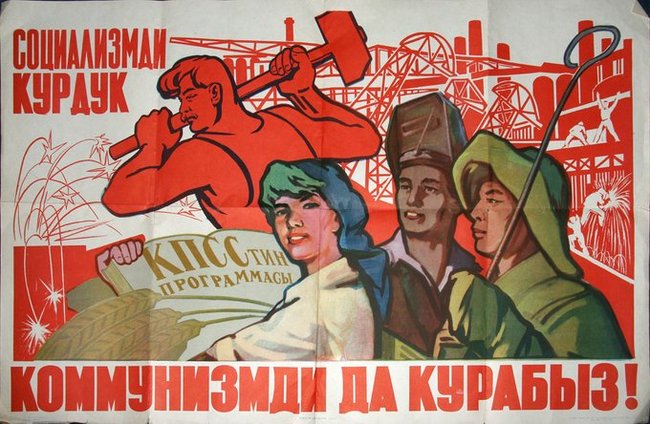
For example, the Merriam-Webster dictionary states that socialism is, primarily, any of various egalitarian economic and political theories advocating collective or governmental ownership and administration of the means of production and distribution of goods7. Other definitions from this dictionary also show that this term refers to a socio-economic formation or system based on collective or state ownership. Similar definitions are given by the Encyclopedia Britannica8 or National Geographic magazine9.
The Internet Encyclopedia of Philosophy writes the same thing10: socialists put forward two main strategies for the socialization of property. These are the nationalization of property and its “democratization” through cooperatives and similar measures. Granted, the question arises: where is the line between “capitalism” and “socialism”? In many countries, a certain number of cooperatives and various mechanisms of worker participation in enterprise management are observed11; can it be said that socialism has been implemented in them? It is unlikely that democratic socialists themselves would argue that socialism is implemented in such countries. And, as a rule, cases where they argue such things are rare. Rather, it refers to an economic system where state or cooperative ownership absolutely prevails, while joint-stock and individual forms are either observed on a small scale or absent altogether.
The definitions of socialism by communists gained widespread prevalence. Thus, Vladimir Lenin declared that “socialism is merely the next step forward from state-capitalist monopoly… socialism is nothing but state-capitalist monopoly which is made to serve the interests of the whole people and has to that extent ceased to be capitalist monopoly”12. On November 25, 1936, Joseph Stalin, in a report at the Extraordinary VIII All-Union Congress of Soviets, declared the following: “Our Soviet society has already achieved the stage where it has, in the main, realized socialism, has created a socialist system, i. e., has brought about what Marxists in other words call the first, or lower, phase of communism. Hence, we have already in the main realized the first phase of communism, socialism”13.
Lenin’s and Stalin’s definitions, as well as the designation of countries under communist rule as the socialist bloc, influenced the fact that socialism came to be understood by many as a system close to the one that had taken shape in the USSR by 1936. But still, modern definitions understand this term more broadly: as a system based on state or collective ownership (we wrote about this additionally here).
That is, socialism is not only an ideology, but also an economic system. By calling yourself a socialist (including a democratic one), you may not mean that you are a supporter of this economic system, but many people will perceive you as precisely such a supporter, as this is one of the common definitions of the term “socialism”.
Such an understanding of socialism became heavily compromised after Bolshevik rule, the failures of Salvador Allende and Mikhail Gorbachev, the unsuccessful attempt by Olof Palme to peacefully start a path toward a socialist system in Sweden, and even more so after the collapse of the Socialist Bloc. When left-wingers called themselves socialists at a time when the practice of understanding socialism as a regime based on state or collective ownership had developed, they became associated in the public consciousness with people striving to realize unreasonable goals. Therefore, a need arose to replace the goal with “social democracy”, and this very term is used in certain future manuals14.
Many social democrats, following an old tradition of calling themselves socialists, began to abandon socialism as a goal in favor of striving for a welfare state, and when some people today argue that democratic socialism and social democracy are the same thing, they overlook that there is a broad group of social democrats for whom socialism is not a goal, and, accordingly, calling them socialists is incorrect — it is an attempt to attribute one’s own views to them. That is, they deny a whole political identity the right to their own vision of the situation, sometimes purposefully attempting to subordinate it to themselves and their beliefs.
Against the background of the collapse of the Socialist Bloc, the compromise of the very concept of “socialism”, as well as failures in Chile and Sweden, the Labour Party in the UK had not won an election since 1979. In 1994, 15 years had passed since the party lost power. It could not continue like this. It was decided to make serious changes, and first and foremost, attention was paid to the fact that Clause IV of the Labour Party constitution since 1918 stated that its aim was to ensure the equitable distribution of the fruits of workers’ industry “upon the basis of the common ownership of the means of production”15.
The practical implementation of this clause had been abandoned back under MacDonald and Attlee, but at the same time it remained in the constitution as a remnant, and no one dared to touch it. After the defeat in the 1959 general election, Hugh Gaitskell (the Labour leader at the time) believed that public opposition to nationalization led to the party’s poor results. He proposed amending Clause IV, but socialist elements in the party fought back and defeated attempts to make changes.
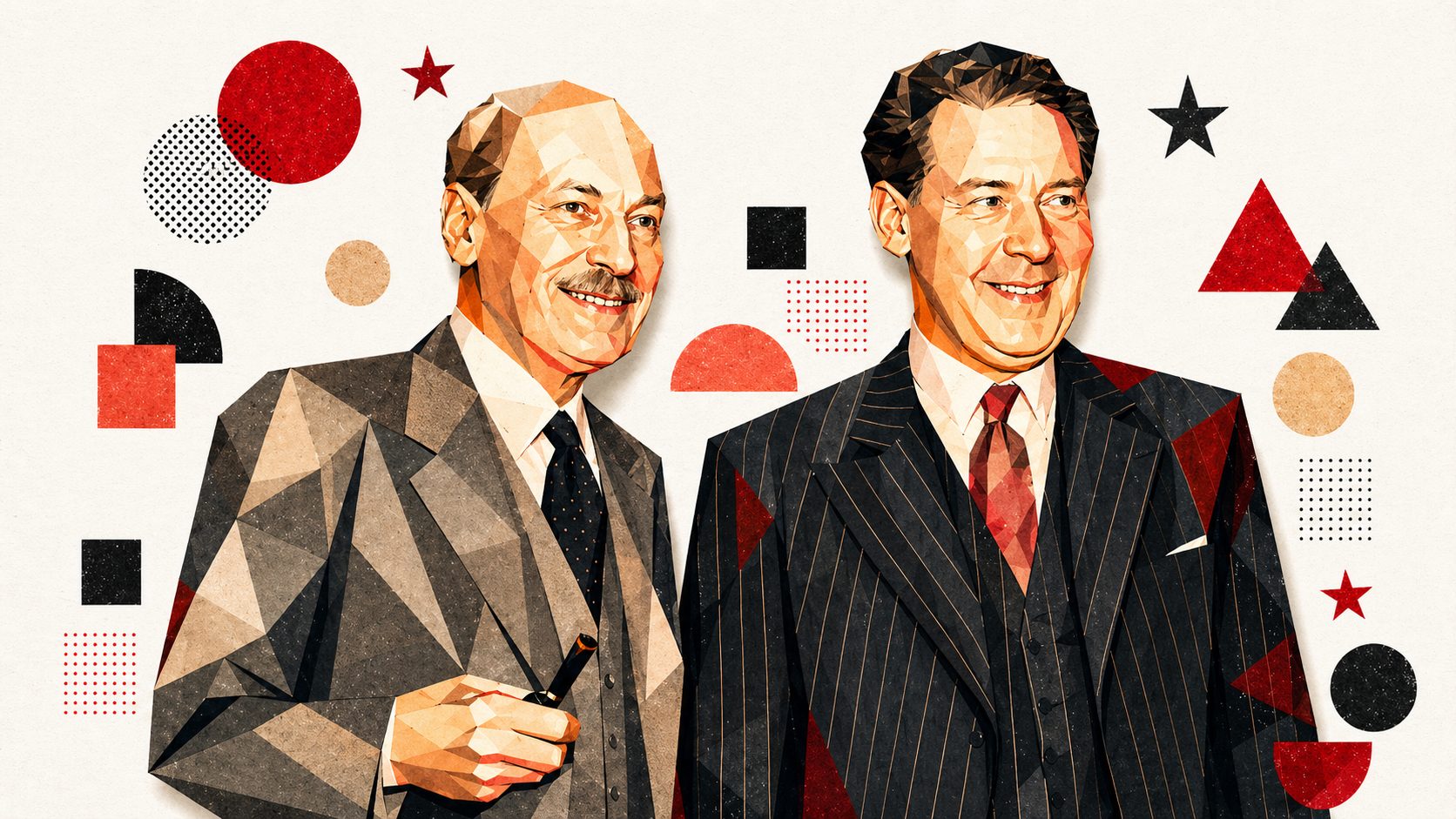
Under Harold Wilson, who sometimes called himself a “socialist”, a crisis began in the British economy, although overall Wilson’s rule was quite successful. After the defeat in the 1979 election, Labour tried to shift toward socialism16, but long years of defeat followed. They adopted a new, more socialist manifesto, which some social democratic Labour members (namely Gerald Kaufman) called “the longest suicide note in history”, and suffered a defeat with it in the 1983 election17. So this course did not work.

However, factors such as the economic crisis of the 1970s, the defeats of the trade union movement, and the decline in influence of the Communist Party of Great Britain led to a strengthening of the positions of Labour Party members who opposed Marxist ideology and its components. Attacks on the Labour Party as “socialist”, along with claims that it would lead the UK down the Soviet path — justified by references to Clause IV — had by that time become one of the most reliable propaganda elements for the Conservatives. Thus, in 1989, Margaret Thatcher stated in her speech: “The Opposition are socialists, and they want Clause IV: the nationalisation of the means of production”18. These threats worked well on voters and had a basis beneath them, so Labour continued to lose. Meanwhile, Bill Clinton of the US Democratic Party was winning and achieving success.
Against this background, social democratic organizations abandoned the socialist concept, which allowed them to temporarily halt the counteroffensive of conservatives and market radicals that began after the failures in Great Britain, Chile, and Sweden, as well as the collapse of the Soviet bloc. As a result, in the 1990s, social democratic forces played a leading role in most Western countries, but they did not take the important next step — revenge in restoring high progressive taxes to fight inequality, and their dominance would come into question after 2008. However, that is a topic for a separate article.
The adjective “socialist” has been preserved in the names of many parties, organizations, and documents of the social democratic movement, but mainly as a remnant. Since the proclamation of “socialism” in the USSR, a process of abandoning the use of this term has been slowly underway, and it is also far from complete today, but to some extent it continues. For example, in 2013, a new international was established — the Progressive Alliance. While until that time the main international had been the Socialist International, one of the consequences of the process of abandoning the concept of socialism, which has been going on since the mid-20th century, was the establishment of a new international, in whose name there is not even a hint of socialism.
The concept of “socialism” is an integral part of the concept of “democratic socialism”. Consequently, by advocating democratic socialism, you promote what is understood by the term “socialism”. That is, essentially — the socialization of property, the notions that private entrepreneurs should disappear and be replaced by the state and/or cooperatives. We have a separate article where, among other things, this issue is addressed. This is precisely what is understood by this term in society, and democratic socialists themselves, if you try to casually find out from them (although, if you directly ask them what they think about what is written in this material, they will likely deny everything) about the meaning of democratic socialism, as a rule, will confirm this. It will turn out that either they are supporters of a mass transition to collective ownership, supporters of a “democratic” planned economy, or supporters of a revamped Soviet model altogether. But not of social democracy, which they view at best merely as a model for a transition period.

Some people try to promote the concept of “ethical socialism”, which often implies that socialism is a set of values rather than an economic system. However, these people are hardly heard among references to the mainstream understanding of the term.
Therefore, by considering oneself a social democrat and asserting that social democracy and democratic socialism are the same thing, a person thereby promotes socialism as well, works for it, and thus not for the concept of the welfare state, not for social democracy.
Initially, communists tried to convince society that socialism had been built in the USSR. And from their words, it turned out that “socialists” stand for what was built in the USSR. Socialists eventually began to abandon the term “socialism”, but now a similar “trick” is being attempted with them: convincing social democrats that they are democratic socialists, thereby forcing them to work for their ideology and gaining an additional opportunity to recruit members for themselves. In general, democratic socialists should be allies of social democrats, but on the condition that they do not try to subordinate the movement to themselves and their goals.
There are also a few factors influencing why the situation in democratic countries is slightly different than in Russia. First of all, in democratic countries, social democrats are far more numerous than communists and socialists, so the latter act as junior partners in the struggle for left-wing reforms, and these reforms have almost no chance of ending in a victory for communist or socialist programs. As a result, communists and socialists essentially work for social democratic reforms, as they dissolve into social democratic parties. In Russia, on the contrary, communists and socialists are far more numerous, which is why social democrats dissolve into their parties and work for their reforms. So here, social democrats cannot afford to operate under the same principles. If one is not the predominant force in an organization or does not have a separate one, “dissolution” is inevitable. This is the first factor. The second factor is that in Russia, there was much more propaganda for the concept and definition of socialism that were promoted by the communists. Therefore, any socialist organization is extremely vulnerable to straying toward these concepts.
Why can the merging of social democrats and democratic socialists into a single party play a negative role? The fact is that they accumulate different audiences. Democratic socialists generally attract people who see a threat in the existence of business as such, whereas social democrats attract people who do not share such dangerous beliefs for the economy and are aimed at achieving social justice through harmonious measures such as targeted state investment, taxes, and so on. If in a country where there is no purely social democratic party (but there are dem-soc parties), such a merger occurs and the program of democratic socialists is adopted by the party, the accumulation of people with social democratic views around such a party will cease. As a result, people with such views will be removed from organized politics, and this is a fairly substantial audience. This harms the opposition movement, while the nomenklatura and security forces benefit directly from it.
In the end, a number of differences exist between social democrats and democratic socialists. First of all, democratic socialists want to build a society based on state or collective ownership. For social democrats, forms of ownership are not important, what matters is the standard of living, and the proportions of different forms of ownership in the economy can vary. This is the most fundamental difference. Often for democratic socialists, the “socialism” component is more important than the “democracy” component. Often they share the theory of socio-economic formations and consider themselves supporters of Marxism. Also very often, they consider themselves supporters of direct rather than representative democracy. Finally, they often treat communists and the experience of the USSR with sympathy or full favorability. But the most fundamental difference is the obsession with forms of ownership. Differences between social democrats and democratic socialists are recognized everywhere today, and the “divide” is documented by a large number of sources.
We thank Artyom Kuznetsov for his help in writing the article.
- Socialism // Great Russian Encyclopedia. Volume 30. Moscow, 2015, pp. 749–750. [Electronic resource]. URL: https://bigenc.ru/world_history/text/3638996 (Accessed: 17.06.2020).
- S. Berman. Unheralded Battle: Capitalism, the Left, Social Democracy, and Democratic Socialism // Dissent (dissentmagazine.org). Winter 2009. [Electronic resource]. URL: https://dissentmagazine.org/article/unheralded-battle-capitalism-the-left-social-democracy-and-democratic-socialism/ (Accessed: 04.30.2026).
- 2011. Democratic Socialism. In: The Encyclopedia of Political Science. George T. Kurian Editor, Washington, DC: CQ Press. pp. 402
- Kenworthy, Lane, Would Democratic Socialism Be Better? (New York, 2022; online edn, Oxford Academic, 19 May 2022), https://doi.org/10.1093/oso/9780197636800.001.0001, accessed 23 Apr. 2026.
- Daron Acemoglu. Social Democracy Beats Democratic Socialism // Project Syndicate (www.project-syndicate.org). February 17, 2020. [Electronic resource]. URL: https://www.project-syndicate.org/commentary/social-democracy-beats-democratic-socialism-by-daron-acemoglu-2020-02 (Accessed: 15.10.2020).
- A. Volle. Democratic socialism // Encyclopedia Britannica (www.britannica.com). [Electronic resource]. URL: https://www.britannica.com/topic/democratic-socialism (Accessed: 04.30.2026).
- Socialism // Merriam-Webster (www.merriam-webster.com). [Electronic resource] URL: https://www.merriam-webster.com/dictionary/socialism (Accessed: 08.09.2025).
- Socialism // Encyclopedia Britannica Money (www.britannica.com). [Electronic resource] URL: https://www.britannica.com/money/socialism (Accessed: 08.09.2025).
- Socialism // National Geographic (www.nationalgeographic.org). [Electronic resource] URL: https://education.nationalgeographic.org/resource/socialism/ (Accessed: 08.09.2025).
- Socialism // Internet Encyclopedia of Philosophy and its Authors (iep.utm.edu). [Electronic resource] URL: https://iep.utm.edu/socialis/ (Accessed: 08.09.2025).
- A. Rodionov. Social Democratic Economy // Social Democratic Journal “Logic of Progress” (logikaprogressa.com). August 15, 2020, 17:08. [Electronic resource] URL: https://logikaprogressa.com/ekonomika/sd.html (Accessed: 08.09.2025).
- V. I. Lenin. Collected Works. Volume 25. June — September 1917. — Moscow: Progress Publishers, 1964. — p. 362.
- J. V. Stalin. On the Draft Constitution of the U.S.S.R. Report Delivered at the Extraordinary Eighth All-Union Congress of Soviets, November 25, 1936. – Moscow: Foreign Languages Publishing House, 1945. – p. 12.
- Tobias Gombert, Julia Bläsius, Christian Krell, Martin Timpe. Foundations of Social Democracy // Friedrich-Ebert-Stiftung (www.fes.de). [Electronic resource]. URL: https://library.fes.de/pdf-files/akademie/07650.pdf (Accessed: 14.10.2020).
- Clause IV: a brief history // The Guardian (www.theguardian.com). [Electronic resource] URL: https://www.theguardian.com/politics/2015/aug/09/clause-iv-of-labour-party-constitution-what-is-all-the-fuss-about-reinstating-it (Accessed: 08.09.2025).
- E. A. Susloparova. “New Labour” // Great Russian Encyclopedia (bigenc.ru). October 10, 2023, 16:23. [Electronic resource] URL: https://bigenc.ru/c/novyi-leiborizm-7ef5af (Accessed: 08.09.2025).
- “Class” in the Development of British Labour Party Ideology, 1983–1997 // [Electronic resource] URL: https://library.fes.de/pdf-files/afs/bd53/17_sutcliffe.pdf (Accessed: 08.09.2025).
- HC S: [Debate on the Address] // Margaret Thatcher Foundation (www.margaretthatcher.org). [Electronic resource] URL: https://www.margaretthatcher.org/document%2F107824 (Accessed: 08.09.2025).