History of the Spanish Socialist Workers’ Party
In this article, we will examine the history of one of the oldest socialist, and later social democratic, parties in the world — the PSOE (Spanish Socialist Workers' Party). Its complex history, part of which was spent in underground struggle, can also be useful for Russian social democrats.
PSOE is one of the oldest left-wing parties in the world and the oldest in Spain; it was heavily involved in the turbulent process of establishing democracy in this country. Moreover, during this time it has not lost its drive and is still carrying out transformations in Spain. Russian social democrats certainly have much to learn here. Therefore, we will consider the history of the party from its founding up to 2019 (in that year PSOE became ruling again and at the time of publication of the article its rule continues, so the ongoing policy and its results may change).
Contents
- Birth and establishment of the party
- During the dictatorship of Primo de Rivera
- During the Second Republic
- In a divided house…
- In exile and underground
- In the underground
- The second stage of underground resistance
- On the threshold of change
- Transition period and the revival of the PSOE
- New times and new challenges
- Period of Zapatero’s premiership
- Back in opposition
- Conclusion
Birth and establishment of the party
The history of the party begins in Madrid, in a small bar-restaurant Casa Labra. It was there on May 2, 1879, that the party was founded by a group of intellectuals and workers led by Pablo Iglesias. On July 20 of the same year, 40 party members adopted the organization’s program. In the following years, the party gradually developed, opening its branches across the country, creating and editing documents regulating its activities.

The next landmark event in the life of the party took place in 1888. The PSOE held its first convention or, as it is customary to call it in Spain, congress. At it, the party program was adopted, its structure defined, and leadership elected1. It was also decided to send its delegate to the Workers’ Congress in Paris, where the Second International was to be established; among other things, the provision on opposition to “bourgeois” parties was approved2. It is also worth noting that a few days before the congress, the General Union of Workers (UGT) was founded, a trade union co-founded by Pablo Iglesias, so the union had and would continue to have strong ties with the PSOE3.
The party tried to advance its deputies in elections to the Spanish parliament, but succeeded only in 1910, when Pablo Iglesias was elected by 41 thousand Spaniards, after which he became the first deputy from the PSOE in parliament4. At that time, as can be noticed, the party did not have broad support due to various reasons: for example, the ideas of anarcho-syndicalism were popular in the country, and there was simply a small number of workers due to the overall underdevelopment of Spain; moreover, people joining the party had to prove they held views aligned with the party line, and there was a strict selection process based on this criterion5 (this is normal for new parties).
From the beginning of World War I, the PSOE advocated for Spain’s neutrality in the war, but it had sympathies toward the Entente, since although it was, from a Marxist point of view, an alliance of some capitalist countries against others, it was overall more progressive in nature, meaning its victory was more preferable6.

A truly major event in the history of the PSOE was the general strike of 1917, organized by the PSOE and UGT. Although Spain did not enter the war, it felt its consequences quite strongly (inflation, unemployment, wealth inequality, and even famine). That strike was supposed to be indefinite and change the political system of Spain, and during the strike, railways were paralyzed for about a week in many parts of the country, but in the end everything concluded with the suppression of the strikers and the arrest of the instigators. But some leaders managed to be released and elected as deputies in 19187.
In 1919, the PSOE was not spared by the “crisis of the Internationals”. In that year, the Bolsheviks announced the creation of the Third International, which went down in history as communist, and to join it, one had to accept 21 conditions. At an Extraordinary Congress of the party, a decision was made to temporarily join the new international, but far from everyone liked the indecisiveness of the managers, because of which a faction of party members split off from the PSOE8. In 1921, at the third extraordinary congress, the majority refused to join the Comintern and aligned with the restored Second International, causing another faction to split off from the party9.
The split-off factions of the PSOE merged, founding the Communist Party of Spain (PCE).
During the dictatorship of Primo de Rivera
Let us step away a bit from the history of the PSOE and talk about the situation in Spain at that time in general and about the dictator who ruled at that time. Miguel Primo de Rivera was a general in the Spanish army and came to power through a violent coup. It is worth saying that such a step was received quite positively by the population, as legitimacy of the government was eroded due to failures in wars, corruption, and economic problems. However, elections to the Cortes (parliament of Spain) could not be called fair at that time: essentially, everything was decided by the will of the king1011. The king supported the arrival of the dictator and immediately gave him full power, that is, the ability to send draft laws for approval directly to him12. Many wanted a “firm hand” that would fix the mess, and even liberal newspapers were not against the coup, provided that de Rivera stepped down after three months in office, but, as you understand, this period was dubbed a dictatorship for a reason13.
Primo de Rivera was not a dictator in the full sense of the word. Among his first decisions were bans on communist and anarchist organizations; however, he did not ban the PSOE and even sought cooperation with this party14. One could talk at length about the features of his dictatorship, but let us return to the PSOE.
During the dictatorship, the party preferred to continue protecting the rights and improving the lives of workers instead of fighting the dictator, because performing these tasks openly was much more effective than from the underground, and in this way the party tried to accumulate as many supporters as possible. This approach ultimately justified itself; the PSOE and the UGT trade union became some of the most popular political organizations in the country. And PSOE members were in many state structures of Spain at that time and resolved various social issues, such as labor disputes between workers and entrepreneurs1516. It is also worth noting the Labor Code of 1926, which was very progressive for its time and written with the help of the PSOE17.
A sad day was December 9, 1925, when the founder of the PSOE, Pablo Iglesias, passed away in Madrid at the age of 75. He died in his home from illness. He was not known for his health, often falling ill even in his youth, yet he stubbornly continued to work even in the last days of his life. Many newspapers of that time, even those not of a left-wing orientation, paid him their respects. Thousands of people from all over Madrid and even beyond its borders came to his funeral18. Julián Besteiro was elected as the next leader of the party.
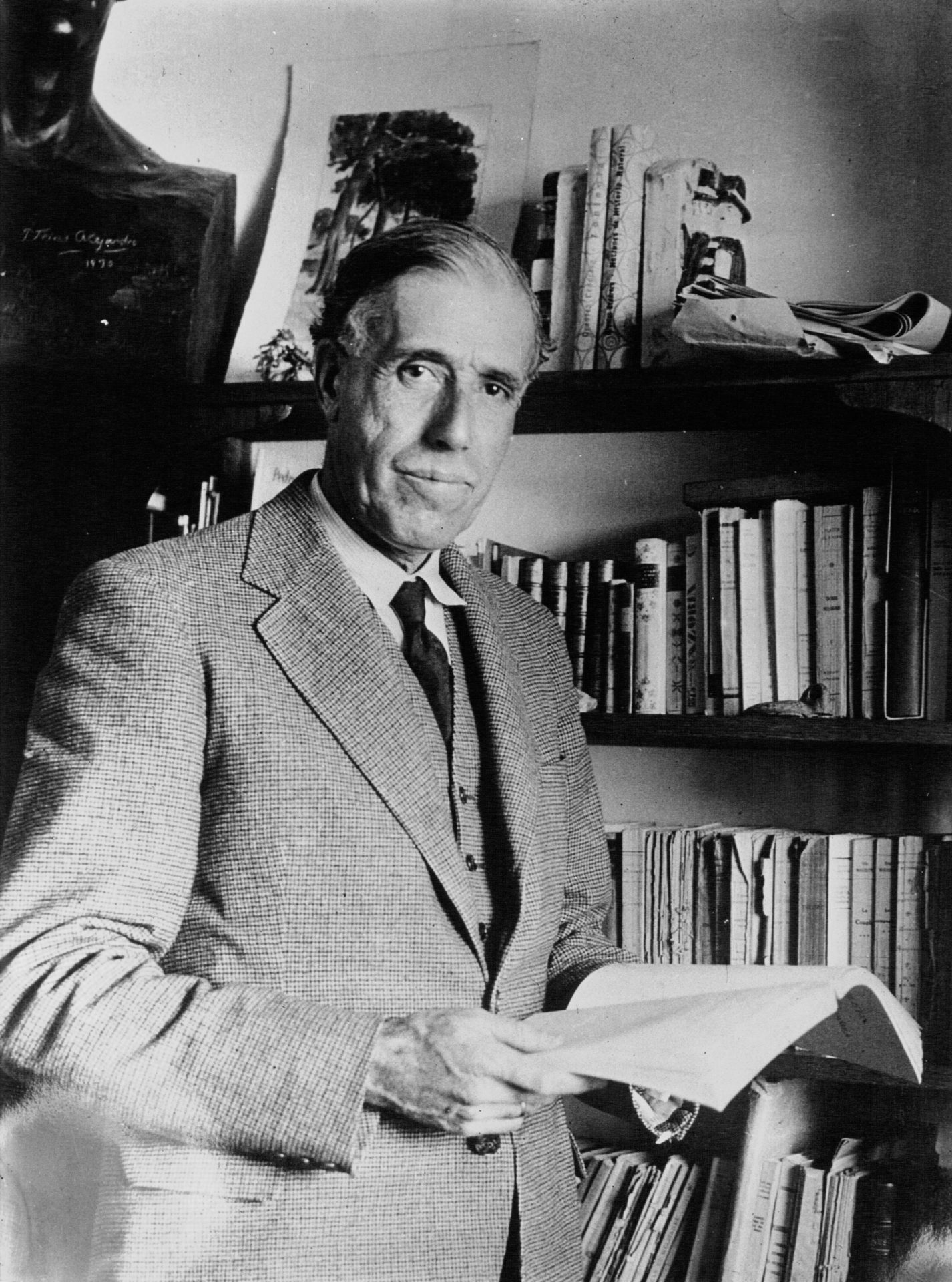
In 1925, tension began regarding interaction with the regime. The leader of the group advocating for cooperation with the dictatorship was Julián Besteiro himself, while the leader of the opponents of cooperation was Indalecio Prieto. In 1927, the National Assembly was convened to draft a new constitution. The dictator invited the PSOE there as well, but they refused, which he did not take positively19. The party finally severed ties with the dictatorship in 1929. The government of Primo de Rivera organized a preview of the new constitution; the PSOE rejected it and demanded a democratic, republican constitution. Despite this, the dictator offered them 5 seats in the National Assembly in an attempt to save the regime, which had begun to crack at the seams. This was becoming increasingly obvious, so the socialists rejected the offer20.
In 1930, Primo de Rivera resigned, but the dictatorship did not end there; he was succeeded by another general, Dámaso Berenguer. In October of that year, the PSOE joined the Pact of San Sebastián. The pact was aimed at overthrowing the monarchy. The authorities decided to return democracy to the country, so general elections in Spain were scheduled for April 12 (in an attempt to lend legitimacy to the regime). The elections were constituent in nature, and therefore the monarchy could fall as a result, which, in fact, is what happened. Pro-republican parties decisively defeated conservative forces. Alfonso XIII (the King of Spain at the time) decided to suppress the will of the people, but the generals refused to carry out the king’s order. After this, the monarch realized that his rule was finished and fled to France. As soon as this news became public, the establishment of the Second Republic was proclaimed at various levels of government. Massive celebrations took place in the streets21. The Revolutionary Committee (the governing body of the pact participants), which included socialists, declared itself the Provisional Government.
During the Second Republic
The Reformist Biennium
Elections to the constituent Cortes were scheduled for July 28, 1931. An innovation in the elections was the right of women to run for parliamentary office, although they were not yet given the right to vote themselves. Among other changes, the age requirement for voting was lowered from 25 to 23 years, and the controversial articles 29 and 24 were repealed, according to which, among other things, one had to be a deputy or an ex-deputy to become a candidate. Some other changes were also introduced22.
In the 1931 elections to the constituent Cortes, the PSOE took first place in the number of votes received; this was the first victory for the socialists in Cortes elections, of which there would be many more in the history of the party. However, first place did not yet mean an absolute majority; the PSOE received only 24%, but the composition of the future coalition was already clear to everyone. Almost all progressive forces united into a Republican-Socialist bloc, starting after this the “two-year period of reforms”, as it was dubbed in historiography23.
Let us briefly note what was done during this time. Moderate secularization was carried out, freedom of religion and voluntary religious education were proclaimed. Moreover, the dissolution of marriages became the prerogative of the state, and funerals were secularized. According to the new constitution, state funding for the church and part of the possibilities for selling property were abolished, and some other privileges were also canceled. At the same time, the burning of churches began, as the church had long been an accomplice of the regime in putting pressure on civil society, and the latter could not help but remember this against it. All this, of course, did not please the church, but an attempt to rebel against the new laws led to the arrest of Cardinal Segura24.
In the military sphere, a reduction of the officer corps was carried out, and the law on the assignment of ranks and the subordination of the army to civilian institutions was changed. A significant part of the military was unhappy with this; for example, the future dictator Francisco Franco was demoted during the reform25. The government adopted 7 decrees in the agrarian sphere, as a result of which wages grew from 3.5 to 5 pesetas per day. Such results were achieved by expanding the rights of workers, which landowners were not happy about. After this, an agrarian reform was carried out, in accordance with which land was expropriated, but in the end it was recognized as unsuccessful due to the slowness of distribution26.
In social terms, the compulsory pension insurance program was expanded, a mandatory 7-day vacation was introduced, the right to strike was protected, women finally received the right to vote and were equalized with men in labor rights. Privileges were abolished. An 8-hour workday was introduced, and child labor was banned27. In the field of education, a decisive policy was pursued to eliminate illiteracy. In almost 2 years, 10 thousand schools out of the projected 27 thousand were built, which was within schedule. Mandatory and free primary education under the jurisdiction of the state and of a secular nature was established, as well as the exclusive competence of the state in awarding academic and professional degrees.
However, the economic situation was worsening, and resistance from conservative municipal deputies was also observed28. It was generally an uneasy time, tension flared up even between left-wing political forces, and the reforms increasingly alienated conservatives from progressive forces. Attempts were made to carry out a coup d’état — first by General José Sanjurjo, and then by anarchists from the CNT (Confederation of Labour)29, although both proved unsuccessful30.
The Revolution of 1934
In the 1933 elections, a radical electoral shift occurred: right-wing, predominantly pro-conservative forces won in the country. The PSOE dropped to 3rd place, while coalition allies dropped even further. The second two-year period under a right-wing government began, which would roll back many of the previous cabinet’s reforms. The defeat can be briefly explained by the disunity of left-wing parties, as well as the consolidation of right-wing parties and their electorate.
Meanwhile, a radicalization of views was taking place within the PSOE. The main leader of the radical wing was Largo Caballero, also known as the “Spanish Lenin”. Following the collapse of the Republican-Socialist coalition in September 1933, the PSOE doubted democratic approaches, especially after the results of the second round in December of the same year. Socialists were hostile toward CEDA (the new fascist-leaning party that won the highest number of votes), and a day after the election results were announced, they issued an ultimatum: if CEDA enters the government, the PSOE will initiate a revolution. The global situation also pushed toward an armed scenario: Adolf Hitler’s rise to power in Germany, as well as the suppression of social democrats in Austria by the fascist government.
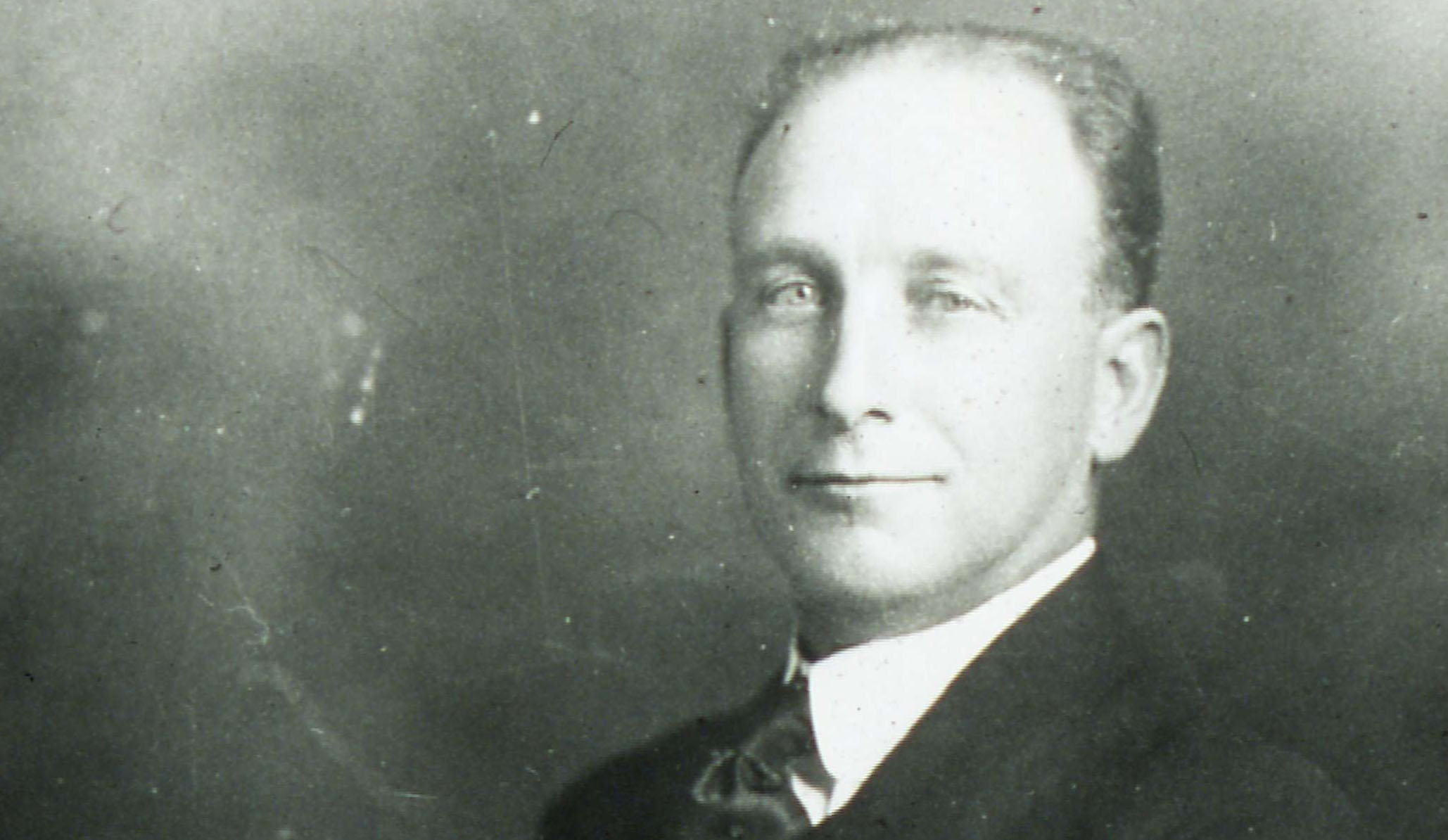
However, not everyone agreed to follow the path of violence (Julián Besteiro was among the dissenters), though Caballero had the support of influential PSOE member Indalecio Prieto. The two opposing sides created their own projects for the reorganization of Spain. On January 27, 1934, the national committee of the UGT voted for Caballero’s project, which meant the victory of the revolutionary wing within the party as well, and Besteiro resigned. From that time on, Caballero became the general secretary of the party and the trade union. Following his victory, a Mixed Commission was created within the party to deal with preparations for the revolution. To increase its chances, the PSOE joined the “Workers’ Alliance” — a small left-wing organization that also harbored animosity toward CEDA. It is worth noting that preparations generally did not go very successfully: weapons often did not reach recipients, and it was not possible to secure support among law enforcement structures.
After the end of the parliamentary recess on October 1, CEDA refused to support the center-right coalition without cabinet portfolios, and on the same day the PSOE announced a general revolutionary strike. Thus, on October 5 at 0:00, the revolution began.
Strikes and armed uprisings took place in almost all developed cities of the country. Catalonia declared its independence from dictatorial Spain and at the same time its adherence to the future Spanish Federal Republic. However, the uprising was quickly suppressed in almost all regions, as its organization was weak, and hopes for the army to join the revolution did not materialize. Also, an important factor in the failure was the lack of support from rural residents, who were controlled by the CNT. The anarchists, severely weakened after the recent unsuccessful uprising, nevertheless organized serious resistance to the regime wherever they were able to support the revolutionaries (namely in Asturias).
Within three days, almost the entire region was controlled by the insurgents; during this time, the “Socialist Republic” was formed. Over the next ten days, 30 thousand workers formed the “Asturian Red Army”, which considered the possibility of a campaign on Madrid. Also during this time, attempts were made to build “libertarian communism” — for example, money was replaced by vouchers, but this experiment did not last long.

The government, seeing the gravity of the situation, withdrew some of its troops from Africa. General Franco himself commanded the suppression forces31. This choice was by no means accidental: the government feared the military would defect to the side of the uprising, so it sent troops from Morocco who had previously proven themselves to be extremely brutal, a trait that would also manifest during the suppression of the rebellion32. Within a few days, the uprising was completely suppressed. Between 1,500 and 2,000 people were killed during the battles, and later 15,000 to 30,000 were repressed33. The consequences for the PSOE and UGT were not fatal; they were not even banned, but many of their key figures were sent to prison34. Caballero, however, remained free with the help of parliamentary immunity and defense lawyers35. Death sentences were handed down to only two rebels, but many people were subjected to persecution and torture, during which the PSOE was seriously weakened.
Let us list the reasons for the failure again and add a few more points: poor planning, the naivety of the idea that the military would switch to their side, the weakness of allied forces, lack of support among law enforcement agencies, and excessive decentralization.
The Popular Front
After the defeat of the uprising, many trials were held, and one of the most high-profile was that of the leader of a small republican-leaning party (“Republican Action”) — Manuel Azaña. The trial was widely covered in the press, and its repressive nature toward an innocent man turned the latter into a martyr in the eyes of the masses36. After his release, Azaña began uniting left-wing forces to oust the right-wing in the next elections.
The first person he sent a letter to regarding the union was Indalecio Prieto, and the latter, though not immediately, expressed solidarity. The problem was that Prieto was the leader of the moderate faction, not the party as a whole, so it was necessary to secure the agreement of Caballero, who had not abandoned hope for a revolution. However, after the communists joined the coalition, he accepted the proposal, on the condition of a future amnesty for the participants of the October uprising. At the same time, a split was brewing in the party due to the confrontation between the moderate Prieto and the radical Caballero. Within the PSOE, Prieto’s views began to prevail, which caused Largo to step down as party leader, although he remained head of the UGT, which had more branches across the country and a larger membership. Caballero began cooperating with communists and syndicalists who wanted the nationalization of banks, expropriation of land, and the like, which the republicans definitely did not like37. But in the end, they all joined the alliance38.
In February 1936, the third elections in the history of the Second Republic took place, in which the Popular Front prevailed, although it outperformed its opponents by less than a percentage point — 47% against 46% (the remaining 5 percent were won by nationalists and centrists). But due to the peculiarities of the electoral system, the Popular Front received significantly more seats in parliament than their competitors39.
Immediately after the announcement of the election results, riots began in the country. Leftists of all persuasions, inspired by the victory, began to free prisoners themselves or hold strikes in solidarity. Prisons were set on fire, prisoners rebelled, and those municipal administrations where CEDA had replaced left-wing politicians after the 1934 uprising were seized. Right-wingers and conservatives tried to prevent this, and blood was spilled in the streets40. But everything was settled without serious bloodshed, although even then the degree of tension in society was visible, which would erupt into a civil war in less than six months. In any case, even during these few months, the Popular Front managed to begin implementing promised reforms. The first important decree of the new government was the decree on the amnesty of all participants of the 1934 uprising41. The law on the autonomous status of Catalonia was ratified, and there were preparations to grant it also to the Basque Country and Galicia4243. Agrarian reform was carried out44.
Growing violence
After the victory of the left-wing coalition, a sharp increase in the number of the Phalanx, i.e., fascists, began. On March 12, Falangists made an unsuccessful assassination attempt on Jiménez de Asúa, a socialist deputy and one of the drafters of the republican constitution. For this, law enforcement agencies detained the leader of the Falangists, José Antonio Primo de Rivera (son of the former dictator), as well as other leaders of the organization. The Falangists responded by setting fire to Largo Caballero’s house. On April 13, Falangists murdered the supreme judge for serving as a rapporteur at the trial regarding the assassination attempt on Jiménez de Asúa.
However, the events of April 14 and 15 turned out to be much more resonant. A parade was supposed to take place in Madrid in honor of the fifth anniversary of the republic, but the situation was tense, not festive, and, as it turned out, for good reason. An explosion occurred during the parade, and a Civil Guard ensign was killed in the exchange of fire. Left-wingers and right-wingers accused each other of this45. A shootout also occurred during the funeral, which only the Civil Guard was able to suppress46. Tensions continued to rise, although by the end of May the number of murders began to decline. But on July 12, another high-profile murder occurred: Civil Guard Lieutenant José del Castillo (who trained squads of left-wing groups) was killed, and it was presumed that Falangists did it, which is why, in response, José Calvo Sotelo (a prominent CEDA figure, an adherent of fascist ideas) was kidnapped and murdered by PSOE militants on July 1447. The July events became the pretext for the military coup of July 17, which, in turn, is considered the date of the start of the Spanish Civil War.
In a divided house…
Initial period of the Civil War
Military units stationed in Morocco revolted immediately, and the next day the uprising spread to Spain itself. The rebel army quickly took key city centers and was sympathized with by about 80% of officers. The government was in confusion but managed to issue a decree on distributing weapons to pro-republican — or rather, anti-Falangist — citizens of Spain. The first combat clash occurred on the morning of July 19, 1936: rebel military personnel entered Barcelona and seized the telephone exchange, but anarchists drove them out. From then on, the once-warring guards and anarchists became allies. On July 20, the rebel forces in Barcelona were completely routed48. In Madrid and the surrounding area, the rebels also suffered defeat, as they did in Valencia. In Asturias, the participants of the October uprising returned to power. The Falangists achieved success in the northwestern regions.

It is worth mentioning the balance of power. The rebel groups had about 50 thousand soldiers against 22 thousand remaining loyal to the republic, and 10 thousand officers against 1 thousand for the republic. The rebels also had 32 thousand well-trained soldiers in Morocco. Aviation, the navy, and the Civil Guard remained predominantly loyal to the republic: in aviation, the republic had 3 thousand personnel against 2 thousand for the insurgents; in the navy, 13 thousand against 7; in the Civil Guard, 18 thousand against 1449. Since the overwhelming majority of officers joined the rebels, the republic’s army was initially disorganized, and the creation of new units was quite chaotic — sometimes people gathered together and chose a commander they respected (no matter for what, even for the most skillful game of dominoes) and went to the front50.
At the beginning of the civil war, rank-and-file republicans engaged in acts of vandalism and terror, burned churches, and killed officers and priests — long-standing grievances broke free. However, the government fiercely fought against this, aided by society itself, and by 1937 these excesses were successfully curbed. As a result of left-wing terror, approximately 40 thousand people were killed, with 80% occurring in the first months of the war. Falangist terror, by comparison, led to the deaths of approximately 140 thousand, and moreover, this terror was systematic in nature, whereas for the left it was grassroots vigilantism51.
By July 20, the situation of the insurgents seemed quite difficult; most of the country’s territory was under government control, as was aviation and the navy predominantly, so transporting African units was problematic. Especially since the formal leader of the insurgents, José Sanjurjo, died in a plane crash52. Command of the rebellion was assumed by a junta, which would later choose Franco as its head. Lifesaving aid for the right-wing rebels came from abroad. Franco sent a letter requesting assistance to Hitler, and the latter did not refuse. On July 28, under German air cover and amid the hesitant actions of the Republican navy, African units were transferred to the Iberian Peninsula. Soon Germany and Italy began transferring aircraft (287 sent planes by 1936), as well as instructors, ammunition, and simply money. The Reich also sent the Condor Legion, which provided air support, plus 70 thousand “volunteers” from Italy arrived, who were already organized into regiments and divisions. Because of these measures, the advance of the republicans stopped53. The rebellion began to turn into a civil war with foreign intervention.
Was there foreign support for the republicans? Yes, but it could not compare with the support for the nationalists. France and Britain sometimes even refused to sell weapons, and the USSR initially only provided preferential prices for purchasing fuel. Paris and London, of course, tried to hinder German and Italian supplies using the neutrality pact, but the fascist regimes had no intention of fulfilling it, unlike France itself. The USSR decided to help the Republic more seriously, but in order not to violate the agreement, it did so through Mexico, which was not a member of the neutrality pact and openly supported the republicans54 (the president there at the time was social democrat Lázaro Cárdenas). Also, an important asset for the republicans became the universally known International Brigades (for instance, George Orwell fought in their ranks).
Coalition government
Azaña instructed Caballero to involve communists and anarchists in the government, since it was precisely their structures that put up a good fight against the rebels. Of course, this step was not easy to take, but in order to defeat advancing fascism, such measures had to be taken. As a result of negotiations, Largo was able to form a government on September 4, where the majority of portfolios were held by the PSOE — for example, Prieto became Minister of Air and Navy, and they also held the Ministry of the Interior, the Ministry of Foreign Affairs, and the Ministry of Finance. The communists got the ministries of agriculture and education.
The republicans got only 2 representatives in the government, but things were more complicated with the anarchists. Since anarchists generally abhor any cooperation with the state and its derivatives, negotiating with them took longer, so the new government cabinet with anarchists began working only on November 4. This decision was prompted by Franco’s advance on Madrid and the effectiveness of the syndicalist troops. As a result, the anarcho-syndicalists received 4 ministries (trade, industry, health, and justice)55.
The new government turned out to be quite close to the left-radical and carried out a number of important reforms that greatly changed life in the Spain controlled by it:
- The abortion law, which, however, was adopted only by the Generalitat of Catalonia. But this was already a great progress for that time56;
- Collectivization of the economy. Unlike the USSR, it was a genuinely popular idea among the grassroots and was not directed from above, although it could be coordinated by the state or trade unions. Small property could be preserved, and markets were not banned at all. Absurd cases and confusion were unavoidable, but the government tried to correct them5758;
- Army reform, which Largo Caballero carried out personally. Universal conscription was introduced for men aged 20-45. A General Commissariat was created. Militia battalions merged with regular units59.
However, not everything was calm within the government. The communists tried to increase their influence (primarily in the army) in order to seize power after the war. There were also attempts to merge the PCE and the PSOE, since both parties were Marxist at the time, but this led to nothing. Later, Caballero began to be wary of the PCE increasing its influence, as well as the etatist statements of its members. Therefore, he began to pursue a policy of removing communist and pro-communist commanders. Largo Caballero was sympathized with by the anarchists, who were the main opponents of the communists due to ideological views. To the communists, the plans and actions of the anarchists seemed idealistic, and they were not alone in this — the right wing of the PSOE did not like the current course either. Because of this, an alliance was built between them and the PCE. Prieto (the leader of the right wing of the PSOE) was an anticommunist, but in 1937 he successfully concealed this in order to receive help from the communists60.
The PCE launched a campaign to discredit Largo Caballero, to which the latter responded by calling for the resignation of the PCE representative — Jesús Hernández — and in response initiated his own campaign to discredit the communists61. The outcome of these confrontations was the May Days clashes in Barcelona in May 1937. Communists and guards clashed with anarchists and Trotskyists; the battle lasted for 4 days, claiming the lives of 500 people, while another thousand were wounded. As a result, a political crisis loomed, and Largo Caballero was unable to form a new government (since he actively supported the anarchists, but his opponents were stronger), which led to his resignation. The new Prime Minister became Juan Negrín López, a native of the PSOE’s right wing, who would rule until the end of the Republic. Because of this, the position of the anarchists and the left wing of the PSOE clearly worsened62. Repressions against the anarchists began, the main organizer of which was the PCE, carried out with the direct support of the NKVD. The anarchist press was shut down, a government monopoly on radio was introduced, anarchist patrols were disbanded, and public criticism of the USSR was banned. The most high-profile case was the murder by communists of the leader of the anti-Stalinist Marxist party POUM, Andreu Nin63.
It is worth noting that the author would like to diversify the sources, but finding detailed and accessible information about the past of the PSOE is quite difficult, so in this part of the article we rely very heavily on the information of Alexander Shubin. Although he is a fairly respected historian, he did have sympathies for the anarchists. Considering all of the above, one should treat the assessments regarding the anarchists that can be made as a result of reading with caution.
Following these scandals, the pro-communist Minister of the Interior was dismissed. Subsequently, the repressions began to wane, and reviews of court cases even commenced. It is worth saying that judicial proceedings were generally conducted in accordance with legal norms, and no pressure on suspects was observed64.

The May events also affected the internal life of the Socialist Party (PSOE). The Caballeristas wanted to secure representation in the National Committee, but were refused, as this was only possible at a congress, and the congress was scheduled to take place only after the end of the war. The National Committee was much more concerned with the issue of merging with the PCE. During the discussions, a decision was made in favor of a merger in the long term. The ousting of Caballeristas in executive committees across Spain began — they were accused of factionalism. The ousting of Caballeristas also took place in the UGT. At one time, pro-communist members helped Largo Caballero become the head of the trade union, but now the reverse process was underway, though this time Largo’s supporters were being ousted. It was not possible to completely purge the former prime minister’s people from the party, but the “May victors” came to control the party65.
A more powerful blow was dealt to the Caballeristas before the Cortes elections. In September, a new UGT executive committee was elected, causing Largo’s supporters to lose any perceptible influence in the socialist leadership66. In the new elections, the anarchists nevertheless managed to return to power, but only at the regional level. The elections as a whole were held under the slogans of unity and consolidation into a common “Anti-Fascist Popular Front”67.
After consolidating his political power, Negrín proceeded to centralize Spain’s economy for military needs. Several reforms were implemented in this direction. In August, collectivization was abolished in metallurgy, mining, and the Republic’s military industry, which negatively affected rifle production. In addition, crediting for syndicalist enterprises was canceled68. On September 16, 1937, the Ministry of Industry gained the right to introduce state management at enterprises. At the same time, previous managers, meaning worker committees and their representatives, could be retained. On September 23, 1937, the Ministry of Defense created its own Military Industry Commission, which replaced the Catalan MIC, leaving it with only 15 enterprises. On November 20, 1937, a decree on special cases of introducing state management was adopted, expanding the possibilities for establishing government control; earlier, in October, state management was introduced in the United Electrical Services69. The results of these reforms were disappointing; returning to previous production figures was only achieved by the time of Catalonia’s imminent fall.
In military terms, Prieto decided to create new brigades instead of supplementing existing ones, despite the fact that on many fronts the republicans already had a numerical advantage. For the purpose of depoliticizing the army, a ban on political propaganda within the military was enacted on June 27. Just a few days later, the PCE realized that the law was a measure directed against them. Prieto set about increasing the number of socialist commissars. On October 25, a ban was introduced preventing officers holding command posts from participating in political events70.
There were also changes in the headquarters. Instead of a maneuverable strike in Extremadura, a plan was adopted to strike Franco’s rear in the Madrid direction. Vicente Rojo became the head of the general staff, and this appointment was disliked by the generals, who considered him an upstart. The outcome of these actions was the failure of the attack in the Madrid direction and the loss of the initiative in the war, although this was not yet a complete rout71. And the longer the war went on, the more squabbles grew among various forces, supply lines were disrupted, and where they existed, incompetent command botched operations, ultimately leaving the soldiers demoralized72.
Subsequent actions represented minor republican successes, which the Francoists later crushed before launching an offensive of their own. At the beginning of 1938, small chances for a Republican victory still remained, but the longer military operations continued, the fewer hopes were left; moreover, war was approaching in Europe, and world powers lost interest in the war in Spain. Furthermore, by 1938 the Axis powers had more than adequately saturated the rebels with weapons, by autumn the Francoists’ superiority in weaponry became obvious, and later superiority in manpower was established73.
Fall of the Republic
On February 16, 1939, Negrín met with army commanders; in their reports, they described a hopeless situation on the fronts and stated that the republic would fall within the next few months. On February 27, Great Britain and France recognized Franco’s government, which prompted Azaña (the President of the Republic) to resign on the same day74. Negrín understood the direness of the situation, so he prepared an evacuation plan for high-ranking officials, but at the same time he did not want to surrender, which is why he promoted communists to more important posts, since they retained the desire to fight to the end, while other forces wanted to hasten the acceptance of the inevitable and save as many human lives as possible. But despite the reshuffling, supporters of prompt capitulation nevertheless staged a mutiny, the main organizer of which was the commander of the Central Front, Segismundo Casado75.
On March 6, Casado launched his mutiny. On the same day, the creation of the National Defense Council was announced, which included representatives of all major forces except the communists (even anarchists participated). Interestingly, in the declaration of the NDC and later in radio broadcasts, they explicitly spoke out against defeatism. It is also noteworthy for us that Besteiro served on the NDC as the chief ideologist. Negrín soon flew to France, as a result of which the communists lost the legitimacy they needed. And in the end, they lost. Thus began negotiations with Franco, in which the dictator had no intention of showing leniency76.
On March 27, Franco launched a general offensive and had no intention of granting the requested time for evacuation. Supporters of the republic fled chaotically as best they could; only Besteiro stayed at his post, where he was captured (he would die in prison in 1940). The fascist troops met no serious resistance along their way. And already in early April, they reached the entire coast, where they captured thousands of republicans who failed to leave Spain. Mass terror against anti-fascist citizens began. Thus the republic died77.

In exile and underground
Situation in emigration
Many significant leaders of the PSOE and UGT managed to leave Spain before being captured by Franco’s men. Of course, in such a rush everyone saved themselves as best they could, but most socialists settled in France and Mexico, as well as in England and the USA. The PSOE left the country in a state of a split. There were 2 camps: supporters of Prieto and Negrín, which is why the process of party reorganization in exile was stalled.
Some viewed Negrín as one of the main culprits of the defeat, but he also had sympathizers. Negrín settled in France, where many Spaniards emigrated due to the proximity and safety of the regime. Indalecio Prieto settled in Mexico, where many important socialist members and simply prominent republicans went. Mexico became one of the main havens for far from accidental reasons. As early as 1938, Prieto went on an official mission to Chile to attend the inauguration of President Pedro Aguirre Cerda, and his unofficial task was to meet with Mexican President Lázaro Cárdenas to prepare for a very probable evacuation. Lázaro, being a leftist, readily agreed to Prieto’s proposal78 (it is worth saying that both Cerda and Cárdenas were progressive politicians remembered for favorable reforms for their countries)7980.
In March 1939, Negrín, together with the governments of Mexico, France, and Popular Front allies, created SERE (Evacuation Service for Spanish Refugees), which handled registration, accommodation, and further emigration of Spaniards to third countries. But competition arose here as well. A few months later, Prieto created his own assistance service for Spanish refugees, JARE (Aid Board for Spanish Republicans), which did the exact same thing81.
An important turning point in the confrontation between Negrín and Prieto was the latter’s interception of the yacht Vita, which contained the rescued property of the republic: there was not only money, but also expensive jewelry, as well as items of cultural heritage82. Thus, Negrín was left without significant funds. The final blow to Negrín was the war between France and Germany, which forced him to hurriedly emigrate once again, this time to England, but even before that, the French police, on the eve of the war, began putting pressure on SERE. Following these events, Negrín finally began to lose his influence, not only within the party, but also in the Spanish political field as a whole.
Before the war, the French government gave Spanish refugees a choice: take up a job, join the Foreign Legion, or face deportation to Spain, where they would certainly face a “trial”. Under German occupation, captured Spaniards were sent to death camps. The largest such camp for Spaniards was Mauthausen (not only Spaniards were sent there, but also, for example, Soviet citizens)83. A certain portion of republicans fled again, but there were also those who joined the French Resistance. Some managed to join de Gaulle’s liberation army, forming several companies, among which the 9th Company stood out in particular, known for its battles in Africa and its actions during the advance on Paris8485.

In September 1944, the 14th Congress of the party (the first in exile) was held in Toulouse: after the liberation of France from the Nazis, JARE actively united party members in that country. A coordination committee was formed, since this was the most organized core of the party, remaining so even under German occupation. The Negrín sector of the party in Mexico rejected the request to participate in the congress, so its legitimacy was incomplete. But about 500 delegates representing 600 party branches came to the assembly. At the congress, the party showed itself to be more united, the factions did not have serious contradictions, which made it possible to carry out fruitful work. Resolutions were adopted on opposing the communists and Negrinists. Decisions were also made on building ties with “internal Spaniards” (people who remained inside Spain itself) and that proposals to “internal Spaniards” are only consultative in nature (although there were those who criticized this approach, commitment to it would persist until the 1970s).
In foreign policy interaction, red lines were developed regarding potential allies, and commitment to the transition to a republican system after the fall of the dictatorship was affirmed (some political forces were in favor of restoring the monarchy). New PSOE leaders were elected: Enrique de Francisco became president, Trifón Gómez vice-president, and Rodolfo Llopis general secretary (he would lead the party until the arrival of Felipe González)86. A decision was made to resume the publication of the newspaper El Socialista (for the first time since the civil war)87.
Rodolfo Llopis was a Freemason.
Already at the beginning of the 1940s, the opposition began to unite to resist Franco’s dictatorial regime. Such attempts initially did not have much success, but already in November 1943, a major opposition alliance, the JEL (Spanish Junta of Liberation), headed by Prieto, was created, which included all major political forces except the communists, Negrinists, and republicans. The JEL, by the way, tried to convene the first meeting of the Cortes abroad from deputies elected prior to Franco’s Spain, but Prieto opposed this decision, citing an insufficient quorum (only 76 deputies out of 470 arrived: many of the deputies had either died or remained in Spain, and some simply could not attend). Most likely, Prieto feared the strengthening of Negrín’s positions, but later he would soften his attitude towards this issue, realizing that Negrín no longer posed a danger88.
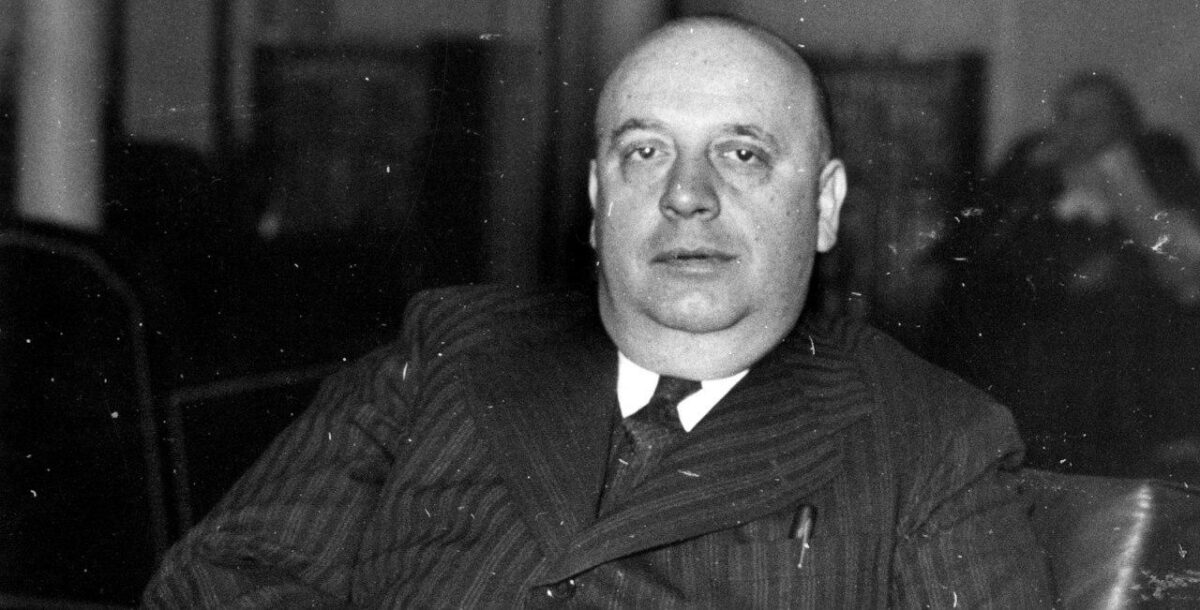
Meanwhile, the American Committee for the Spanish Republic was created in the USA, which convened a press conference for JEL representatives held on May 21 and June 9, 1945. Prieto participated in the conference, outlining his plan for the restoration of the Republic:
- Condemnation of the Franco regime at the San Francisco conference (at which the UN would be established);
- Severance of diplomatic relations by all UN members with the regime;
- Creation of a provisional government consisting of the Cortes;
- Recognition of this government by the UN (he singled out the last point as the most important).
Juan Negrín was present at the meeting and spoke in favor of the four great powers — the USA, the USSR, Britain, and France — severing relations with Francoist Spain. Negrín made a proposal to the JEL leadership for a meeting and negotiations, but Prieto rejected this idea89.
Of interest is the statement by future British Labour Prime Minister Clement Attlee on the eve of the vote on the Spanish question. Addressing the members of the JEL, he stated: “I think that Mexico’s proposal will not pass, but do not let this worry you too much. We, the Labour Party, will win the upcoming elections and after that, breaking with Franco’s government, we will provide you with assistance greater than any other country will provide”. The resolution in the UN on the Spanish question on behalf of the opposition passed, and the Labour Party indeed won, but on the Spanish question Attlee later moved far away from what he had previously stated in his speech, adopting Churchill’s more restrained doctrine regarding Spain90.
Upon returning to Mexico, the JEL decided to support the project of the republican Cortes as the only body capable of ousting Franco. As a guide for further action, the plan outlined by Prieto in San Francisco was adopted. On the horizon loomed the question of forming a government in exile. For this same purpose, Negrín flew to Mexico in July 1945. He argued that it would be a mistake to reject his government, elected back in Spain, because the new government would lack legitimacy, and to resolve this issue, a vote of confidence in his government needed to be held. However, the socialists led by Prieto were against this and called for a different procedural order. As a result, Negrín submitted his resignation, which was approved by the Cortes91.

There were 2 candidates claiming the post of prime minister — Juan Negrín and José Giral (Giral had previously been head of government in 1936). The latter was chosen as head of the government in exile. Giral offered Negrín the post of deputy prime minister, but the latter refused, citing irreconcilable political differences. Prieto was also offered a ministerial post, but he too refused out of a desire to retain freedom of action (it is possible that he wanted to become head of government himself). Shortly after the creation of the government in exile, the JEL considered its goal fulfilled and dissolved itself92.
By November 1945, the government had been formed. Most of the seats in it belonged to republican, Catalan, and Basque parties, with deputies from the PSOE and UGT present, as well as independents. Giral demonstrated this to world powers, showing the representation of broad forces in the government, which was supposed to add legitimacy to the exiles, but to world powers, none of this looked promising. Especially to the Soviet side, which saw the government as puppets of the British and Americans, although those same British and Americans themselves doubted the Spanish opposition government. Be that as it may, Giral tried to cooperate with the Soviets, inviting them to return once again to the Spanish agenda with the question of the failure of many UN members to observe their own principles, which was expressed in the continuation of diplomatic and other relations with Francoist Spain. However, this request was ignored. In November 1945, Giral gave a speech in which he said that he would prefer a peaceful scenario for a change of power, but did not rule out forceful actions if no other choice remained.
One cannot fail to mention another interesting episode from the life of the government. After the Cortes expressed their confidence in Giral’s government, Prieto spoke. In his statement, he noted the fact that the government had been formed in violation of the constitution, so the socialists could participate in it only until another way of resolving the issue became possible. Thus, he significantly weakened Giral’s government. Soon Prieto explained what “another way” meant: after the fall of the Franco regime, a neutral provisional government should be created, the Falange disbanded, political prisoners released, refugees returned, freedoms restored, and, importantly, a referendum on the form of government held. This statement came as a shock to many, including his own party, which continued to be loyal to the ideals of the Republic.
To this Giral reacted with a manifesto in which he rejected the possibility of holding a referendum in which the restoration of the monarchy was possible, and it was mentioned that the UN should already start taking measures against Franco. On December 12, 1945, the first session of the UN began, where Giral intensively developed the Spanish agenda, touching upon the similarity of Spanish fascism and Italian fascism, their closeness to Nazi Germany, as well as the Axis countries’ assistance to Franco’s regime. However, this did not yield anything significant, so in February Giral included communists in his government and declared his readiness for forceful actions. This bore fruit: in April 1946, Poland raised the Spanish question in the UN, calling for international sanctions. In May, Giral himself spoke during a UN session, which became a major success for the opposition. After that, there were also speeches in the parliaments of Britain and France.
The UN General Assembly was approaching, where the Spanish socialists hoped for the adoption of concrete decisions, and for this purpose Giral published a new manifesto in which he removed the radical elements of the program, thus demonstrating his sanity in political affairs. To gather the necessary number of votes, he personally communicated with numerous delegates from different countries. The outcome of all these actions was… a recommendation to recall the ambassadors of UN countries from Francoist Spain, formally without even terminating diplomatic relations with it, and the government in exile was not mentioned at all in the resolution, which demonstrated the impotence of this body.
Just 2 days after the adoption of this resolution in Mexico City, Prieto delivered a report in which he launched a scathing critique of Giral’s government and advocated an alliance with supporters of the monarchy. In the same speech, he argued that it was necessary to facilitate British intentions to form a provisional government consisting of moderate right-wingers and centrists. And he urged the PSOE to withdraw its representatives from the republican body, which had failed to cope with its mission. Under this pressure, Giral’s government resigned. He was replaced as head by the socialist general secretary Llopis. Vicente Uribe entered it from the Communist Party. The new government already spoke out in favor of a referendum on the political regime, counting on Britain’s support, and received recognition from the French parliament. But Llopis was head of the body for a short time; on August 6, 1947, he was replaced by Álvaro de Albornoz. His government no longer included socialists (who had already begun negotiations with monarchists) and communists (the Cold War was beginning, and the exiles were betting on democratic countries). Albornoz ran the government until 1950, having achieved practically nothing93.
The hope that the victorious powers, having just defeated Nazism, would leave no stone unturned of Franco’s regime, and the hope in the resoluteness of the UN, as it turned out, were in vain. The Cold War that had begun only worsened the situation: the two superpowers, looking for allies against each other all over the globe, were not interested in some opposition figures who essentially could not help in this confrontation. And this situation became especially obvious in 1950 when the Korean War broke out, causing the USA to push through the UN the cancellation of the resolution on the termination of diplomatic relations with Francoist Spain94 (Prieto95 and Albornoz resigned after this). The subsequent admission of Spain to the UN in 1955 demonstrated the complete collapse of the opposition.
Franco, realizing his precarious position, began to change and distance himself from fascism: at least, he tried not to display its attributes to external observers, which even further reduced the world’s support for the opposition96. Of course, this did not mean the cessation of the government in exile’s existence, but only republican forces remained in it, which did not add weight to it. This was the darkest time for the anti-Francoist forces. Emigration failed to prove itself, and the partisans inside Spain were suppressed, but as everyone knows, it is always darkest before the dawn. Soon a new wave of anti-fascist resistance would begin in 1956, inside Spain itself. But before that, it is necessary to tell how the PSOE and the opposition as a whole fought inside Spain itself after the end of the civil war.
In the underground
The reorganization of the PSOE for the new conditions began in prisons and penal colonies, where party members created their cells. The center of transformations was the Albert concentration camp, one of the harshest institutions of this type in Spain97. Party members who remained at liberty gathered their cells in bars, barbershops, and similar establishments. From 1942, the first attempts began to coordinate the fragmented cells at the local level, and from 1943 already at the national level, and the printing of their own newspapers was revived. In 1944, when the first party leaders began to be released from prisons, the first executive commission was created9899.
Members of all cells set themselves one main task — to survive and preserve the organization until the moment the regime falls. The same strategy was chosen by some other forces in Spain, which in October 1944 created a coalition called the ANDF (National Alliance of Democratic Forces). The alliance included republicans, socialists, and anarchists (communists, Negrinists, and regional nationalists created their own coalition). The goal of the coalition was to create a provisional government that would restore democratic freedoms and schedule general elections. There were also secret agreements which stated that the 1931 constitution was obsolete and therefore a constituent assembly needed to be held (this also meant that the monarchy could be restored, which was useful for rallying with those monarchists who opposed Franco)100.
Through this coalition, the PSOE began to restore its influence among other opposition forces101. The opposition was recovering and heartened as the Allies pressured the Axis. A major event in 1944 was the invasion of the Aran Valley by partisans called “Maquis” (maquis is the name of thick brushwood in elevated terrain, the name migrated from French partisans), and although it was unsuccessful, it was a serious blow to the regime102. This year was the zenith of resistance in that period.
Francoist secret services began to act by infiltrating their people into cells and carrying out major raids against the opposition. From February to March 1945, during raids, a large part of the first executive committee of the internal PSOE was arrested, including its head Juan Gómez. Many were sentenced to long prison terms, although some were released early. During these raids, one of the members of the PSOE propaganda apparatus died103. Things became especially difficult after 1946: state security agencies began to put more pressure on the opposition, isolating its participants104.
In 1948, the partisans in Asturias were destroyed, and the Francoists directed the freed-up resources to roundups in major cities of Spain. The survival of the opposition was due to previously adopted plans for reorganization in case party members were caught, which were designed so that the surviving members could recover as soon as possible and continue activities, but gradually the socialists, as well as other groups, grew weaker105. Meanwhile, it became obvious that help from abroad should not be expected.
Despite all the pressure, the PSOE continued its existence, but it was dealt an almost fatal blow in 1953. On February 15, the secret police seized Tomás Centeno, president of the Seventh Executive Committee, which had barely even had time to form (Centeno was accused of banditry and counterfeiting). He was brutally tortured in the dungeon of a prison. Unable to bear the torture, he chained himself to an iron bed, next to which he died. Numerous bruises and beatings were discovered on his body, and his face had been disfigured106. The press in Francoist Spain covered his death, however, labeling him the “leader of a dangerous gang”.

This loss deeply shook the PSOE both morally and organizationally. The party lost any organization on a nationwide scale, cells throughout Spain began to exist on their own, and the internal PSOE (a conventional name for party members who remained inside Spain) ceded its leading role to the French PSOE. The internal branch of the party was broken and was losing influence in society107; however, other opposition forces were faring little better. That was when it became clear that Franco’s regime would not fall due to armed struggle.
The second stage of underground resistance
1956 was the beginning of a new round of resistance, which would manifest itself in the very heart of the regime, at the University of Madrid. It is worth noting that the university had expressed its disloyalty to the regime before, and in 1955 a raid even took place there, in which José Ortega y Gasset, a famous publicist and philosopher who openly criticized Franco until the end of his life (he would die that same year), was seized108.

The events at the university began due to the actions of proactive students who wished to draft a declaration in which human rights were the main theme. After drafting it, they read the declaration at all classes and were able to collect the signatures of 3,000 students on it. This note, circulated in the first days of February, was a call for the creation of an independent student union, thus challenging the SEU (Spanish University Syndicate), which was controlled by the regime and imposed its own notions of correct behavior for students and teachers. And this had its effect: the leaders of the SEU suspended the elections that were taking place at the time, subsequently adopting a decree suspending classes and imposing a state of emergency109.
On the same day, students reacted to the actions of the SEU by organizing a rally (the first one since the end of the civil war) and heading towards the building of the Ministry of Education. Such a bold action could not go unnoticed, so the next day, while the document was being discussed in an auditorium, Falangists armed with batons, sticks, and socks filled with sand burst into the university. They intimidated and beat students and smashed furniture. The students responded by attacking the SEU building, tearing the coat of arms and Francoist symbols from it110.
But what would make these events resonate would happen later. The next day marked the death of the famous Falangist Matías Montero, whose funeral service was to be held at the Faculty of Law (the center of these events). A group of oppositionists going to a new rally met a group of Falangists going to the funeral service; a fight broke out between them, and eventually, a young Falangist was shot. This incident became high-profile, and although the student did not die, the Falangists were still thirsty for revenge111. They spread ideas about the beginning of a new “Night of the Long Knives”, compiling “blacklists” of 50 names, which also included names from the Ministry of Education, rectors, and one dean from the Faculty of Law.
Detentions of students began, some of them were sent to the Carabanchel prison (the Spanish equivalent of the Russian Lefortovo), and the Minister of Education was dismissed. As it turned out, among the suspects were the children of high-ranking people in the system, and their cases, of course, were “hushed up”. The situation was eventually calmed112. This event became the first act of student disobedience, which lowered the authority of the SEU. It would push subsequent major oppositionists, such as Ramón Tamames, Enrique Múgica, Fernando Sánchez Dragó, or Javier Pradera, to active actions. Enrique Múgica, for example, would join the PSOE and become a deputy in the Cortes in the first democratic elections, and later Minister of Justice in one of González’s cabinets. One can also mention Dionisio Ridruejo, who during the civil war headed the Falangist propaganda department: he was a fighter in the Blue Division, but during the war, he rethought his views and became an opponent of dictatorships. And he, too, became one of the participants in the events of 1956, and later would become one of the creators of the Democratic Convergence Platform, in which Felipe González participated.
That is, the student riots prepared a new young generation of Spaniards, which was ready to self-organize and resist the regime, regardless of their background. Now the resistance had to be built on the youth and not on dreams of a long-deceased Republic: the communists would be the first to understand this, and following them, the rest of the political forces. Two years later, the formation of a new focus of disloyalty occurred: workers, dissatisfied with working conditions, began to hold strikes, especially in Andalusia and Catalonia (despite the fact that striking was prohibited). During the strikes, “workers’ commissions” were created, which operated by bypassing the Francoist trade unions and negotiating directly with business owners. But a truly major strike would take place four years later, in 1962.
It all started with the dismissal of eight workers at the Nicolasa mine, where they were protesting against difficult working conditions, to which other workers responded and, in a sign of solidarity, staged a strike. Information about it gradually spread, and workers from other mines across the entire region began to participate in the strikes113. A week later, the Asturian branch of the PSOE joined the strike, spreading information about it, as well as helping the workers financially114. The strike lasted 2 months, and about 300,000 people took part in it. It was supported by many women and students, who picketed and sang the song “Asturias, Patria Querida”. The strike was supported by the progressive part of the clergy; they prepared free lunches for the workers and their children115.
Also, the action was supported by cultural figures, and thus it gained international fame (nothing like this had happened in Spain since 1934). It was also called a “silent strike”, since the strikers showed no violence, which surprised the police, as the miners of Asturias were famous for their ardor. However, the Francoists did not appreciate this and used violence against the strikers, up to and including torture116. However, a significant event of the strike was the regime’s acceptance of the strikers’ conditions — before this, the Francoist dictatorship had not made concessions and would no longer do so117.

The next strike would happen just a couple of months later — from 1962 the labor movement grew more and more, despite the pressure. As Nicolás Sartorius, a young agitator (who was arrested in Asturias in May 1962), very well noted: “On November 20, 1975, Franco died in bed, but his dictatorship died in the street”. Not only workers offered resistance, but also regional nationalists and even the clergy, but the PSOE was not involved in their protests.
One can speak of another important event in the history of the opposition, namely the so-called “Munich Arrangement” in 1962. This was a meeting of all forces opposed to Franco (including the PSOE), gathering 118 deputies from Spain itself and from exiles. At this meeting, the future of Spain was discussed. Such diverse forces that had once fought each other were able to agree on holding a referendum, which would decide the form of government of future Spain — a republic or a monarchy. At the same time, everyone agreed that the main goal would be the establishment of democracy118.
Franco was very displeased with this congress; all media controlled by him immediately began writing about traitors and anti-Spaniards (familiar rhetoric), and the authorities organized rallies where the participants of the congress were denigrated. Upon returning to Spain, participants were given a choice: either internal exile or deportation. In response to this, the opposition demonstrated internal solidarity and helped those who fell victim to repression119. The EEC did not like the reaction of the Franco regime to the congress, so they issued an ultimatum for Spain’s entry into the EEC — to carry out democratization. Which was actually an unpleasant blow to Franco, who wanted to join the Community, but now had no chances left for it120.
On the threshold of change
By the 1970s, Francoism approached considerably weakened. New opposition groups appeared, old ones strengthened, and Franco himself was already old. Everyone understood that the dictator was at an age where he could die literally any day, and his health no longer allowed him to actively rule the country, because of which the monolithicity of power began to wane. The regime managed to independently exacerbate all these problems by initiating the so-called “Burgos Trial”.
In 1968 and 1969, the separatist organization ETA (“Basque Country and Freedom”), which had already emerged by this time, assassinated two police officers, and to suppress such actions and intimidate the opposition in general, the regime decided to combine 16 cases into one, with sensational sentences. Six people were sentenced to death, and the total sum of prison terms for the 16 people would amount to 516 years. The trial became a high-profile case that attracted the entire opposition, resulting in numerous rallies and strikes (especially in the Basque Country); the international community pressured Franco (especially Germany, since ETA had kidnapped the FRG ambassador and demanded pressure be exerted on the regime), even the church condemned the trial, and moreover, part of the military expressed disagreement with it. Franco tried to suppress the discontent by force once again, but he failed, so he backed down. The sentences were commuted and softened121122. Since then, the small ETA became world-famous, and the regime became even more disunited.
In 1973, the next loud event happened: ETA used explosives to kill Franco’s successor, Carrero Blanco, a man who was clearly conservative and shared the essence of the dictatorship built by Franco. Had Blanco remained alive, the dictatorship could have lasted longer123. Franco’s next successor was already King Juan Carlos de Borbón, and here the Spaniards were lucky — his father, who was an opponent of the dictatorship, managed to influence him. Later, Juan Carlos would indeed become the conduit of democratic reforms.
In the last 2 years of the Francoist regime, the opposition would take significant steps towards unification. First, in 1974, the “Junta Democrática de España” (Democratic Junta of Spain) was formed, the core of which became the PCE. A year later, the “Plataforma de Convergencia Democrática” (Democratic Convergence Platform) was formed, which was already initiated by the PSOE and had a more centrist position; it even included independent Christian Democrats. At the same time, the 1970s oil crisis struck Spain, which increased unemployment, which in turn led to the most massive rallies in the entire history of Francoism124. Even in the army, from where Franco originated, plans for a democratic transition ripened, inspired by the Carnation Revolution in neighboring Portugal125.
The demonstration on October 1 was Franco’s last public appearance before the people. It was supposed to show the unity of citizens and loyalty to the dictator. The need for a demonstrative rally arose due to the security forces’ execution of five prisoners, members of terrorist groups, but the unfair trial and subsequent execution met with loud disagreement among Spanish citizens and the governments of other countries: for example, social democrat Olof Palme collected money on the street to support the defendants when the trial was just beginning126.

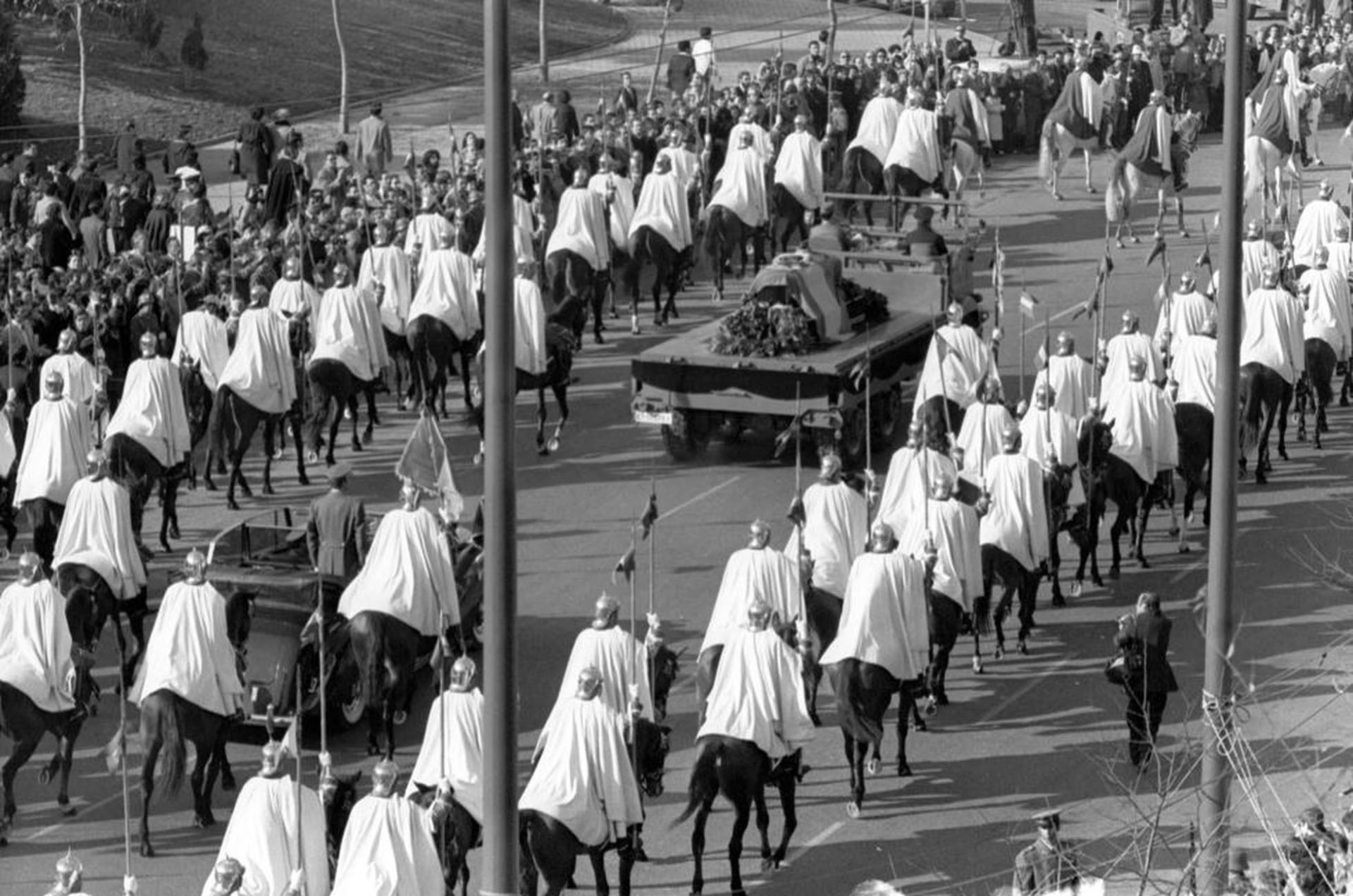
In less than 2 months after these events, on November 20, 1975, Francisco Franco himself died, and thus a new chapter in the history of Spain begins.
Transition period and the revival of the PSOE
We have slightly deviated from the history of the PSOE to understand the general situation in the country during that period, however, at the very same time, fundamentally important processes were taking place within the party, which must be highlighted.
The new generation
Before the beginning of the 1970s, the position of the PSOE was not the best, not to say deplorable: the party still lived under the pressure of the dictatorship; it had supporters in Spain, it continued to remain a visible political force in the country, but the PSOE clearly did not have primacy in the opposition. Of course, surviving under the heel of the dictatorship was in itself a fairly good result, but at such a pace it was impossible to become a truly major force. But changes soon came. A new generation of Spaniards, full of energy and ideas, actively entered the party, confronting the old generation of socialists. The split between them began to grow slowly, and by 1972 it became obvious.
Two groups stood out: the “renewers” — PSOE R — and the “historical faction” (they can be briefly called “historians”) — PSOE H. The leader of the historical faction was Secretary General Rodolfo Llopis (recall that he had held this post since 1944), and the leader of the renewers was a young socialist from Seville, Felipe González. The renewers accused the old exiles of being out of touch with affairs in Spain and incapable of change, while the veterans pressed upon the inexperience of the young politicians127. For example, the renewers advocated an alliance with the PCE against Franco, while the “historians”, accordingly, opposed this, as they saw no possibility of cooperation with totalitarian organizations (which they considered the communists to be). Most likely, the renewers were influenced by French socialism, which cooperated with Eurocommunists, although similar processes were taking place in many European countries128.
In August 1972, the 25th Congress of the PSOE took place, at which the balance had already shifted in favor of the renewers. However, Llopis did not step down from his post, which led to the split of the party into PSOE R and PSOE H. Matters tilted even further toward the renewers when, in January 1974, the Socialist International took their side129. As a result, apart from legitimacy, the “historians” also lost money. In October 1974, at the 26th Congress of the party, the final victory of the renewer faction took place, at which Felipe González was elected the new Secretary General of the party130. Also at the congress, 3 resolutions were adopted. The first contained eleven points for establishing democracy in Spain, which included items such as freedom of speech, assembly, strikes, the return of property confiscated from political organizations, and so on. The second resolution was about the right to self-determination, and the party also spoke out in favor of decentralization up to federation. The third resolution was a supplement to the second131. Later, Llopis would create his own party, the PASOC (Party of Socialist Action). However, he would not succeed in popularizing it132.
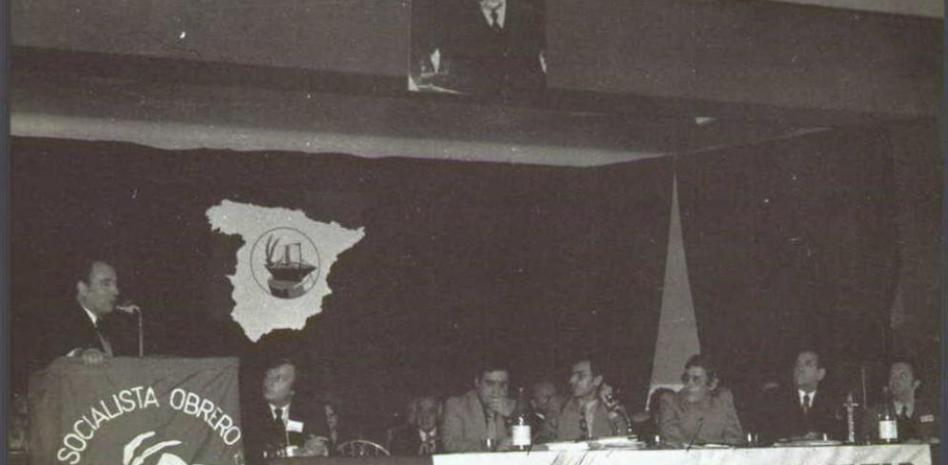
Thanks to the renewers, the party received the support of French socialists, who rented premises and trained PSOE activists, as well as provided courses which, however, were of a Marxist nature. In December 1974, the leaders of the PSOE and the French PSF met and agreed on the further training of activists and on the exchange of information. The PSOE also tried to achieve exclusive cooperation with the PSF; the French agreed, but not immediately, as such actions would worsen relations with other socialist groups in Spain133.
In 1975, the socialist conference of Southern European parties, initiated by the PSF, took place. It discussed the problems of interaction between Portuguese socialists and communists and the same problems for the Spaniards. González justified the difficulty of cooperating with communists in Spain, the main problem of which was the different weight of the parties. The PSOE at that time was not equal in popularity to the PCE, so the latter would hardly have built an equal partnership with them. Also, Felipe substantiated the idea of negotiations with people from the government for as smooth an establishment of democracy as possible, but at that time such interlocutors were hard to find. Although a general Southern European strategy was not developed, the meeting is considered successful, especially since the parties agreed on a new international conference in Marseille. Many media outlets regarded the new meeting as the fading of the social-democratic path and the rise of democratic socialism as the main ideological base134.
The social-democratic parties of Europe were generally dissatisfied with the prospects of the weakening of their ideology, and therefore they held their own congress, at which they decided on active interaction with the PSOE, which was to become a leftist counterweight to the communists. The SPD took the lead on the issue of cooperation with the PSOE, mainly through the Friedrich Ebert Foundation. Thus, in the spring of 1975, the battle of two concepts for the Iberian Peninsula began135. The German social-democrats succeeded in their plan, and therefore after some time the PSOE abandoned its alliance with the PCE and became more moderate, although radical statements were still heard from the party. Through the diplomatic channels of the SPD, the Spanish social-democrats were able to establish contact with members of the Spanish government. Such changes, of course, did not please the communist forces in Spain, nor the French socialists.
Thanks to the Socialist International, the PSOE acquired new channels for communication with Spanish citizens. The party made it clear that it firmly occupied left-wing positions and was ready to interact with other left-wing forces. At the same time, for the less politicized citizens of Spain, they emphasized their moderate-left position, making promises for a pro-European course and positioning themselves as a German-type party and social-democratic in general136. The help of the SPD helped the PSOE raise its recognition and change its organizational structure. The party also concentrated its efforts on creating its own coalition. The rhetoric about the rapprochement of the left for the establishment of democracy and the social state became confident, but they also made it clear that it was an alliance, not a merger into a single organization137.
Because of all this, relations with the French socialists deteriorated, as they saw the PSOE’s desire to follow the Northern European path rather than the French one. They also disliked the fact that the German social-democrats had intervened in the affairs of Southern Europe at all. Because of this, and also because of disagreements within the PSF itself, support for the PSOE was declining, yet it could have come in handy after Franco’s death. However, detente occurred in Paris in January 1976, during the first conference of Southern European socialist parties. This meeting was of great importance for the socialists of France and their intentions to consolidate their ideological line in Southern Europe. For the PSOE, it was necessary to secure the image of Southern European socialists. At the meeting, the Spaniards were tasked with an important assignment: to form a coordination strategy and an answer to the question of whether to rapproche with other leftists or not, and if so, how exactly. Alfonso Guerra, then press secretary of the PSOE, called for the unification of the left into an alliance in the Southern European regions, but pointed out that there could be no single path to rallying due to differing conditions in the countries. However, such conferences were supposed to help in fulfilling this task. Felipe González himself also spoke at the conference: he called for the unification of all democratic forces in Spain before the end of the dictatorship, but he did not believe in the prospects of uniting the left, since such an alliance could provoke resistance from the military. He also urged not to view the conference as a break between Southern socialists and Northern social-democrats, but called for their merger, since they were working toward the same goal — the building of a free and social Europe138.
Throughout 1976, the PSOE gave vague formulations regarding the issue of an alliance with the left, but due to the instability of the regime, repression intensified, which forced the opposition to draw closer together, and eventually led to the unification of the “Democratic Junta” and the “Platform of Democratic Convergence” into “Democratic Coordination”. The French were pleased with such a step, while the leadership of the PSOE sent messages to the German social democrats that this merger was purely tactical in nature. In addition, the PSOE managed throughout that year to participate in negotiations with the Spanish government, partly thanks to Germany (combining this with the pressure of Democratic Coordination on the regime). The socialists were ready to participate in the elections even without the communists, and the government knew about this, but in public they maintained the opposite position; besides, the PSOE had to act in such a way that the PCE would not accuse them of cooperating with the regime. That same year, Guerra published an article where he again supported the idea of uniting the left, and he did not consider what happened in Spain to be a simple tactical move. Thus, some PSOE leaders could, at least theoretically, perceive the unification of the left as a desirable phenomenon139.
In the second half of 1976, relations between the PSOE and the PSF deteriorated again: after the PSOE became involved in negotiations with the government, the need for the PSF disappeared, which the PSF itself noted. They admitted that they had not helped the PSOE materially and morally to a sufficient degree, especially in material terms at such an important moment in Spain’s history. Other parties of the Socialist International (Belgian, Italian, Dutch, Norwegian, and Swedish) helped much more effectively and significantly, and the SPD most consistently and regularly supported the Spaniards. Because of this, the French should have increased their support if they did not want to lose their influence on the PSOE.
Blanco’s report states: “The PSOE, both at leadership and grassroots level, wants to have the PSF as a priority partner. Their approach is very close to ours. However, there is a bitter feeling at our leadership level regarding the reluctance [to give them full support] that they felt they saw from our side […]. They are annoyed that we favor Santiago Carrillo (head of the PCE), despite our explanations based on the situation in France”140.
In December 1976, the 27th Congress of the PSOE took place – the first party congress held within Spain after the end of the Civil War (despite the fact that the party had not yet been legalized at that time). This alone was already a landmark event, but this congress was also distinguished by the participation of such important social democratic politicians as Willy Brandt, François Mitterrand, Olof Palme, Pietro Nenni, and Michael Foot. At the congress, a statement was made regarding the party’s Marxist ideology, however, it reconciled it with moderate positions. There was a certain duality in the statements, which gave the party its distinctive features: for example, the PSOE agreed to adopt the concept of self-managed socialism (something akin to a cooperative economy), but refused to enter into a long-term alliance of left-wing forces.

During the struggle of the two concepts and transformations within Spain itself, the PSOE managed to create an attractive image for the voter, as well as to obtain large assistance from outside, which they effectively applied141. For example, the ITE (Institute for Electoral Technology) was founded, which performed the functions of press and agitation; its delegates traveled to Germany, and a comprehensive training program was developed there for Spanish socialists. The seminars held at the PSOE summer school were aimed at overcoming the “bunker mentality” (mutual distrust, unwillingness of cells to share information, and the like) and at reducing the party’s radicalism142.
On February 8, 1977 (for the first time in 44 years), the rules for party registration in Spain were changed, which the leadership of the PSOE learned about a few hours later, and immediately ordered the initiation of the procedure for preparing documents to be submitted to the Ministry of the Interior. Already on February 15, the PSOE’s application was approved, which was reported by state media. And now, decades later, the PSOE fully returned to Spain143. But the main work was still ahead. Following the approval in the referendum on January 4, 1977, of the law on political reform, which envisaged holding general elections, political forces awaited the start of the election campaign. And finally, on April 15 of the same year, Adolfo Suárez (who was Prime Minister at the time) signed a decree to hold general elections on June 15.
There was little time — only 21 days of the election campaign (according to the decree, the campaign began on May 24, and it was considered at the time that this period was sufficient)144, and the importance of the first elections since the beginning of the civil war was complemented by the fact that they were constituent, and those who won them would be able to determine Spain’s political structure for years to come. 3 days after the elections, the results were announced: 34% of the vote for the UCD (Suárez’s Centrist Party), 29% of the vote for the PSOE, and 9% for the PCE (other parties participated as well, but they won fewer votes). No violations were found during the elections.
The results were in a way unexpected — the main surprise was the PSOE. The party that during the dictatorship could only survive and carry out limited support for rallies became the second political force in the country in its very first elections. The PSOE’s campaign was clearly successful and even the most effective among all political forces because, among other things, it was oriented toward the future rather than the past, unlike the PCE. González said that if they had had another couple of weeks, they could have taken first place. As we can see, monetary support, material aid, the foundation of the ITE, as well as training in political processes in other countries, bore fruit, and the PSOE managed to rise from the ashes145. Many considered the election results a triumph for the PSOE, but a true triumph awaited them ahead.

Suárez’s cabinet created an interesting electoral system for the elections of 1977, 1979, and 1982. The Congress of Deputies consisted of 350 seats, elected by a proportional representation system using the D’Hondt method, which gives preference to majority candidates; a 3% threshold was established; 52 provincial constituencies with 2 seats each were created, except for two single-member constituencies. In fact, in most constituencies with a small number of representatives, the system was majoritarian, so conditions were created for a two-party system, which actually resulted in the end (though the two-party system in Spain is still much less pronounced than in the USA or Great Britain). This system was created to accommodate pro-Franco forces that advocated a majoritarian system and the PSOE, which advocated a proportional one. It also reduced fragmentation (the process by which many parties sit in parliament, which is good on the one hand, but in a newly created system could have led to the creation of too many parties, complicating the process of forming and operating a government), which was preferable for a country experiencing a less than stable period146.
The battle for power
The PSOE, having become one of the key political forces in the country, actively participated in drafting and adopting laws improving social guarantees, and took an equally active part in writing the new constitution of Spain147. The PSOE played a major role in concluding the “Moncloa Pacts” (named after the place where the pact was signed; later the Moncloa Palace would become the permanent residence of the government), which were concluded due to the aggravation of the economic situation in Spain. Suárez’s government needed carte blanche to carry out reforms, which was to be obtained as a result of a consensus between all major parties, which was ultimately achieved. Economic reforms were, so to speak, exchanged for political ones (for example, the ban on torture, the decriminalization of adultery, the restriction of military-criminal jurisdiction, and much more148).
The PSOE clearly did not want to stop at being the second political force in the country, and in October 1977 the Pablo Iglesias Foundation was re-established — a public archive and library on the history of Spanish socialism, which is also engaged in restoring the history of the PSOE149. The next step in the development of the party was the active opening of provincial branches and the expansion of existing ones, which required complex personnel logistics and financial investments — here the Ebert Foundation helped again. At the PSOE summer school in 1977, 250 party members were trained who would work in municipalities in the future. González also asked the Ebert Foundation for support in creating an institute for training socialists, resulting in the appearance of the CEA (Center for Administrative Studies), which would be created by the autumn of 1978, and its seminars in 1979 would be fully funded by the Ebert Foundation150. In the very first municipal elections after the end of the dictatorship, the joint efforts of the social democrats paid off. Out of 50 regions, the PSOE won in 23, which was more than the UCD (20). As a result of an agreement with the PCE151, the left-wing forces controlled 2/3 of the municipalities, including all major cities, including Madrid and Barcelona152. By 1983, most of the work would be completed, so the Ebert Foundation would stop funding.
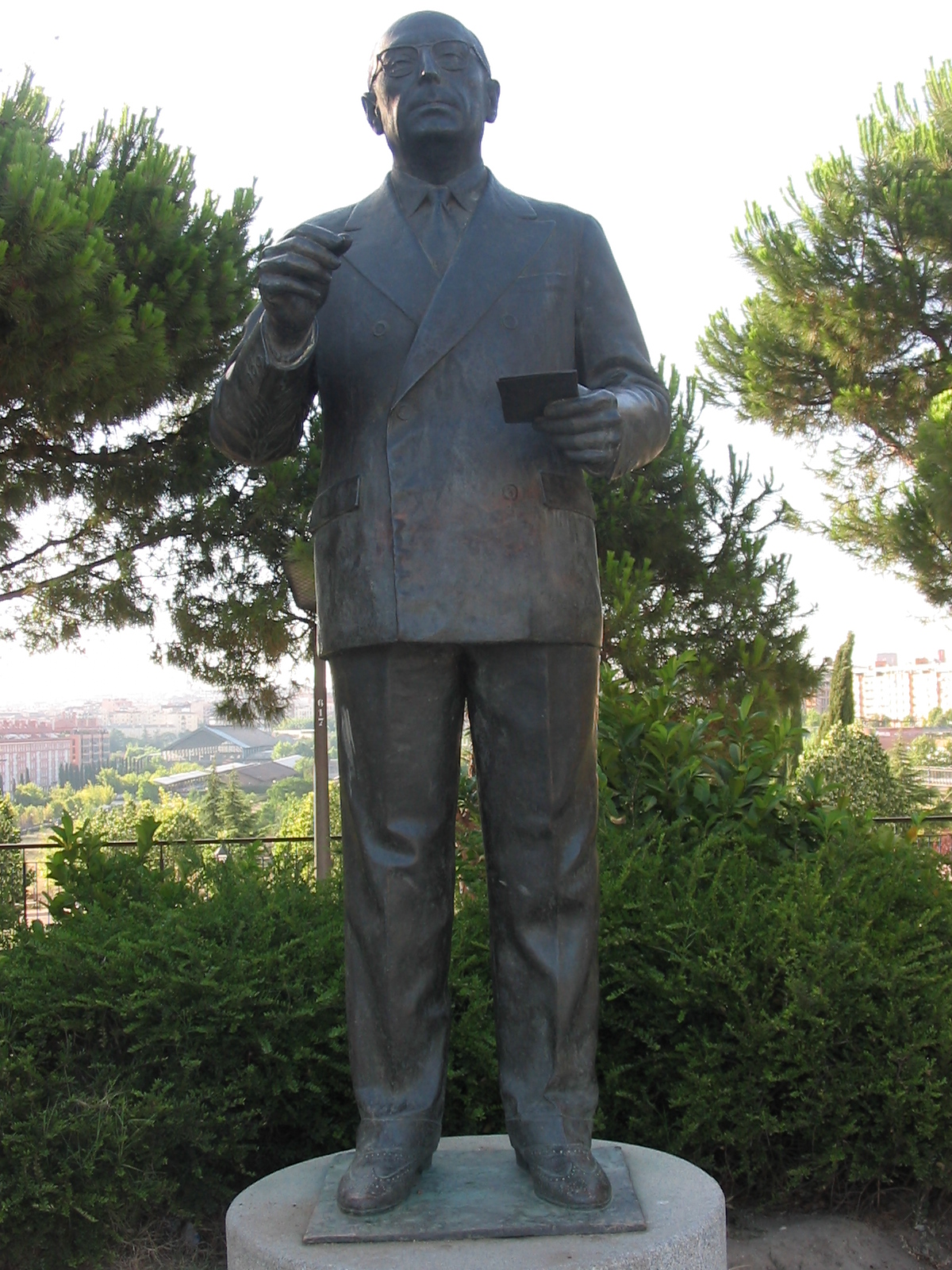
But before the municipal elections in 1979, new general elections in Spain were held, in which the PSOE failed to significantly improve its result, which became another reason to think about changes. After the party’s defeat, Felipe González made a bold decision — to abandon Marxism, and on May 8, 1979, he made a statement that at the upcoming congress the party should move away from Marxism while continuing to call themselves socialists. This statement shocked the party and left-wing organizations in general. On May 17, at the first session of the 28th Congress, Felipe evaluated the last three years and approached the problem of Marxism from a critical position. Hard arguments arose at the congress. During the session, González made it clear that if the decision to abandon Marxism did not pass, he would resign as head of the party, which many delegates did not believe. However, when his resolution was rejected, he actually left. For several months the party was managed by a collegial body, which was supposed to prepare an extraordinary congress153. As a result, at the September extraordinary congress of the PSOE, Felipe González was again elected Secretary General of the party, and parallel to this, a new program was adopted which generally moved away from Marxism, although it partially remained as a method of analysis, but was no longer a guide to action154.
An unexpected side saw positives in the PSOE’s defeat in the 1979 elections — the SPD. The German social democrats considered their Spanish colleagues unready for public administration, since there was a lot of ideological ardor in the PSOE, but little practical experience. And in order to eliminate this omission, the IESA (Institute for Applied Economic and Social Research) was founded, a socialist “think tank” that connected the PSOE with the intellectual leaders of other parties and also organized trips for PSOE members to EU countries155.
Not only the party developed, but also the friendly trade union UGT, which survived the dictatorship in an even more deplorable state: it had to be restored almost from scratch. The transformation of the UGT was harder, as its members perceived advice from the Ebert Foundation as alien approaches “from intellectuals for intellectuals” that supposedly did not work. In 1977, the development of the trade union was taken up more actively, since the party had already begun to recover, which could not be said about the UGT. The DGB (German Trade Union Confederation) joined the work, allocating money directly and on credit. In addition, the Ebert Foundation was able to develop a special training program for local and provincial UGT officials. By the end of 1977, hundreds of trade union members had already gone through the program.
In 1978, the first democratic trade union elections were held (elections where workers choose their representatives), which exhausted the union’s finances due to the election race, so they had to turn to the Ebert Foundation again, which agreed to allocate funds, albeit a little. In the elections, the UGT received 21.7% of the vote, which was a good result for an organization that was on its last legs just a couple of years ago. However, every defeat of the UGT was a victory for the PCE, which is why the SPD actively increased its assistance to the trade union. That same year, the Ebert Foundation held a seminar for the UGT and the CEOE (a trade union allied with the UGT). Then the seminars became regular, and during these seminars, the union tried to deradicalize, which yielded results in 1979. The UGT and the CEOE signed an agreement on social pacts, abandoning their previously inherent radicalism in solving issues. Taking a risk, they managed to achieve success, and in the 1982 elections, the UGT bypassed CCOO (the communist trade union). All this helped gain popularity for the PSOE itself, and would also help during the painful reforms of González’s cabinet, although the trade unions would later hold rallies against some of the reforms proposed by this cabinet156.
By 1980, the situation had improved for the PSOE. The municipal elections showed the growing popularity of the party. González managed to overcome the crisis within the party, thereby strengthening his positions in the political arena. The assistance received from other countries had already significantly improved the quality of personnel and party management. Meanwhile, the ruling party’s worsening situation due to the issue of autonomies, terrorism, and the economic crisis led to a crisis within the UCD as well, and against this background, González made a political move. On May 28, he announced a motion of censure against Suárez’s government, pointedly and charismatically outlining Spain’s problems and offering his party and his program as an alternative. Although the motion did not pass, this move can be characterized as politically correct. Shortly after it, in opinion polls, Spaniards began to prefer González to Suárez157.
Amid the growing crisis within his party, Adolfo Suárez resigned on January 29, 1981, announcing Leopoldo Calvo-Sotelo y Bustelo as his successor. However, his candidacy had to be approved by parliament. The session was scheduled for February 23, but it was interrupted by 200 Civil Guard soldiers led by Francoist Lieutenant Colonel Antonio Tejero. An hour later, another commander initiated the seizure of Valencia, declaring a state of emergency and seeking support from other officers. The whole country froze in anticipation, and at one o’clock in the morning, King Juan Carlos I of Spain delivered a speech urging the coup plotters to surrender and preserve the constitutional order chosen by the Spaniards in the referendum. The following morning, the so-called “Pacto del Capo” was signed, according to which the coup leaders surrendered in exchange for immunity from prosecution for those of the rank of lieutenant and below, and at 11:45 AM the deputies of the Cortes were released158. 3 days later, large demonstrations in support of the democratic system took place across Spain; the King’s popularity grew significantly as a result159. The first serious crisis in democratic Spain was overcome, which spoke to a certain resilience of the regime, but the very fact that it happened pointed to problems within the system.
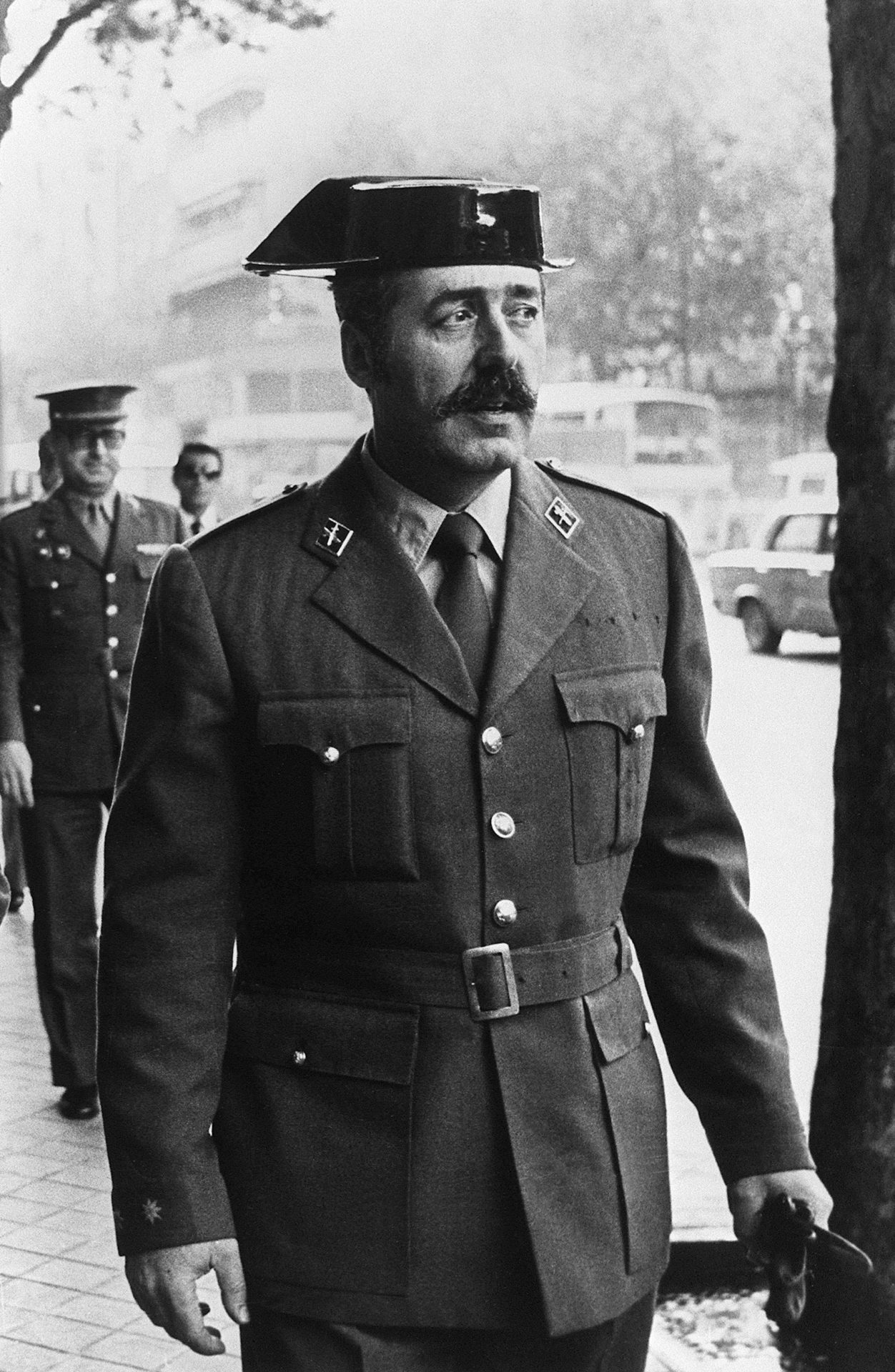
On October 28, 1982, the day of Spain’s third general election, 80% of voters turned out at the polls — the highest turnout in the history of modern Spain at that time. These were the elections that would usher in a golden age in the history of the PSOE. After a long journey under the dictatorship and intense internal work, the PSOE once again became the ruling party, achieving its best result since the advent of democracy up to that time — 48% of the vote and 202 seats160. This was a true triumph for the PSOE. These elections in Spain brought the transition era to a close and began a new epoch of democratic consolidation, which would proceed entirely under socialist governance. By the end of this epoch, Spain would become wealthier, with a stable democracy, integrated into the new world, and boasting a more social economy.
Earlier, “Logika Progressa” published an extensive article on Felipe González’s reforms, so we will not dwell on this period and will instead move directly to 1997, when the PSOE lost an election for the first time since 1982.
New times and new challenges
The 14-year rule of the PSOE, marked by a vast number of successes, ended as loudly as it began, only this time in a negative sense. For a long time, voters unfailingly cast their ballots for this party due to the evident improvements in the country’s life, but an economic crisis matured as a result of the final terms of excessively long rule, coupled with unpopular decisions regarding labor relations, the royal wiretapping scandal, GAL (a punitive organization directed against ETA that used illegal methods and was connected to the Minister of the Interior during González’s administration), as well as a series of corruption scandals (a dark stain that the PSOE’s opponents still recall to this day) led to the party’s defeat in the snap elections of 1996. Although the defeat even after a string of scandals was not devastating (as many expected) — the party lagged behind its competitors by only 1% — it was clear that routine changes had to take place within the party. At the upcoming meeting in July 1997, PSOE members were preparing to discuss their vision for future development, but these plans were interrupted by Felipe González’s resignation from the post of Secretary General of the party, which came as an unexpected turn of events for the party members. González himself had thought about this for a long time, and he shared these thoughts with the party’s top leadership, ultimately deciding to step down because he realized he could no longer bring anything new to the party, that the lack of leadership turnover as usual leads to negative results, and after 14 years in power he was simply tired of the heavy workload of political labor161.
The search for a new path
During the same congress, Joaquín Almunia was elected as the new Secretary General — a prominent and experienced PSOE figure, an economist by training who had previously worked in González’s government and had not been implicated in any scandals162. In addition, changes in economic policy were adopted, promoting ideas of a welfare state that would meet EU criteria, which meant implementing measures to curb inflation (which had not been done under González’s administration) and preserve budgetary stability. In the labor sphere, trends originating from the French socialists were noticeable, consisting of shortening the workweek to 35 hours and creating more flexible work schedules163. Joaquín himself advocated for a more egalitarian society between men and women, as well as sexual minorities. He particularly emphasized the role of education in shaping an egalitarian society, making educational reform a priority in his program164.
Under his leadership, the party held primaries for the first time (intra-party elections to select a candidate for the post of head of government), which were won by Josep Borrell (you may have heard his name, as today he serves as the EU’s High Representative for Foreign Affairs and Security Policy). However, Borrell resigned the very next year after his associates became entangled in a corruption scandal, even though his own conscience was clean165.
In 1999, municipal elections were held in which the PSOE strengthened its positions, almost tying with its opponent the PP (Popular Party), which gave hope for a good outcome in the 2000 general elections. But in those elections, the PSOE lost ground even further, while the PP won an absolute majority of seats. Because of this, Joaquín Almunia resigned, although he would continue to participate in politics and take up the post of one of the Vice-Presidents in the EU. Forecasts had predicted a more favorable outlook for the PSOE, but the block with IU (United Left) caused bewilderment among their electorate, as they had previously frequently criticized each other, and such a decision proved unacceptable for a portion of their voters166. Following Almunia’s departure, the party was led by a collective body, the Political Committee, until a new party congress. Within the party itself, the search for a new leader and a new development vector naturally took place, and it was precisely at this moment that the previously unknown José Luis Rodríguez Zapatero stepped onto the political stage.
Zapatero became known to the general public after he announced the creation of his faction within the PSOE, named “New Way” (“Nuevo Camino”), having gained the support of several party veterans. His New Way project was inspired by Tony Blair’s Third Way and Gerhard Schröder’s “New Centre” (“Neue Mitte”). The foundation of such doctrines was pragmatism and efficiency in revising the relationship between the state and the citizen, as well as the acceptance of market mechanisms as the most appropriate tools for ensuring public well-being. The “New Way” was meant to completely renew the PSOE ideologically in the face of the challenges of globalization and its rapid pace. Much attention was paid to the problems of multiculturalism, the involvement of women in politics and economics, and research activities. The idea of private enterprise as the engine of the economy was defended, while theories claiming that only market mechanisms guarantee universal prosperity were refuted. Such ideas seemed fresh to the party members, and, of course, debatable167.

That same year, the 35th Congress took place under the slogan “The Necessary Impulse” — it was there that a new party leader was to be elected. The struggle was between four candidates: Zapatero himself, the frontrunner José Bono Martínez, Matilde Fernández Sanz (a former minister under González), and Rosa Díez González (a Member of the European Parliament and a prominent figure in Basque socialism). The race was not easy; Bono was popular but equally disliked by his opponents, which made Zapatero a compromise figure against Bono. In the end, he received 41.7% of the delegates’ votes, which was only 1% more than José Bono, but it proved sufficient to become the new party leader. Upon taking office, he delivered a speech in which he promised quiet and calm, yet confident, changes in the party. With the arrival of Rodríguez, new, young, and energetic people took over management posts; they had no history of corruption scandals behind them, although they lacked significant political experience. This renewal of personnel became the most notable generational shift in scale since the 26th Congress in Suresnes (that is, since 1974)168.
A new race
Just a couple of months later, Zapatero demonstrated himself and his election strategy. He understood that José María Aznar, the leader of the People’s Party, was a formidable opponent who had built a disciplined party with high-quality personnel and had achieved certain accomplishments; however, he was becoming increasingly complacent and closed to criticism, which caused him to miss some nuances of the country’s regional and social problems.
At the beginning of this stage, there was a lot of skepticism regarding Zapatero’s strategy, which built the campaign on thoughtful, clear, and concise rhetoric, remaining open to cooperation and avoiding harsh criticism. He was so “soft” that for a segment of the public critical of the PP’s actions, he seemed insufficiently combative. This style of political discourse was more characteristic of the Northern European region. It seems that he was more inclined toward persistence and persuasion than toward verbal attacks and harsh rebuttals as tools for electoral gain. In 2001, the center-right began making controversial decisions, and Zapatero found new topics for criticism, such as media censorship — something the People’s Party itself had previously accused the PSOE of when the latter was in power169.
In 2002, the first general strike against the PP took place in the country, during which Zapatero appealed to Aznar and asked to make changes to the unemployment protection system. After the annual state of the nation debate in July 2002, Zapatero’s rating rose significantly, as he was able to perform quite successfully in these debates, if not win them outright. A year later, polls showed higher support for Zapatero than for Aznar, and Zapatero’s position both inside and outside the party strengthened. Previously, his talk of winning the 2004 elections was considered overly optimistic, but now the situation had changed. In October 2002, the Federal Committee announced Zapatero as the candidate for Prime Minister of Spain. He continued to denounce the problems of the Aznar cabinet in the areas of housing, employment, education, healthcare, and scientific research.
In November, an ecological disaster occurred — an oil tanker spill off the coast of Spain, to which the government responded sluggishly, insisting on the minor significance of the problem, with which Zapatero disagreed. By the end of the year, the ratings of the PSOE and the PP had equaled, and citizens noted that they saw Zapatero as a politician more concerned with the daily problems of ordinary people. In 2003, heated debates erupted over the upcoming invasion of Iraq, during which Zapatero maintained an anti-war position, which resonated with citizens, although the government’s economic and anti-terrorist successes mitigated the success of his anti-war speeches170.
In the 2003 municipal elections, the PSOE managed to slightly edge out its competitor, but later the party and its leaders suffered a blow to their image. By forming an alliance with the ERC (Republican Left of Catalonia), as it turned out, they made a short-sighted move. The leader of the ERC, Josep-Lluís Carod-Rovira, had secretly met with terrorists from ETA, which ABC (a Spanish media outlet) later discovered, accusing him of concluding a truce with that organization. Carod admitted that the meeting did indeed take place, but Zapatero knew nothing about it. Therefore, the latter rejected the accusation of a truce with ETA. In the end, the scandal was overcome, but an unpleasant impression remained, especially since only months remained before the elections171.
In economic terms, the PP promised 3% GDP growth per year, while the PSOE bet on long-term and sustainable growth, which would be achieved through productivity growth, increased public investment, the development of technological innovations, the stimulation of savings, and increased competitiveness in the international market through qualified labor and investments in high value-added sectors. Attention was also paid to solving the problem of the housing bubble, which had grown noticeably during the PP’s rule, but alongside this, there were plans to build affordable housing. In the labor sphere, attention was paid to the problem of temporary contracts. Promises were made to carry out judicial reform for faster service provision, solve part of the environmental agenda, and ensure gender equality172.
In foreign policy, Zapatero advocated for a model of “global democratic security” based on mechanisms of multilateral action, preventive diplomacy, and the expansion of UN rights. The new diplomacy was to be accompanied by measures to reduce “poverty, hunger, and despair”, as well as to ensure human rights, since terrorism “is not the only problem of humanity”. The EU, in Zapatero’s opinion, needed to become more self-sufficient and independent of US influence173.
On the eve of the vote, polls showed a victory for the PP, although without obtaining an absolute majority of votes. Despite this, Zapatero spoke of his party’s victory, albeit with a simple majority, which was a very optimistic forecast, as little time remained before the vote. After this, the unforeseen happened. On the morning of March 11, the country awoke to terrible news that would leave a mark on the memory of the Spaniards and change the course of the elections: the murder of 191 commuter train passengers as a result of explosions occurring a few minutes apart, using a dozen camouflaged explosive devices. In total, 1,858 people were wounded; among the dead were 49 foreign citizens. At first, blame for the attack was placed on ETA, especially when the Interior Ministry found some characteristic traces of that group’s work; however, Al-Qaeda later claimed responsibility for the attack. Intelligence services from other countries had been informed of this version, and before the national rally, ETA declared its non-involvement in the terrorist attack.
All this caused doubts about the truthfulness of the government’s words, which desperately ignored the version involving Islamic militants. Earlier, they had warned of their intentions to strike at Spain due to the government’s support for the invasion of Iraq. Zapatero latched onto this and was able to mobilize society, forcing them to tell the citizens the whole truth. On March 13, the Spanish Interior Ministry announced the arrest of Islamic radicals, and in the evening, a videotape was published featuring a man who identified himself as a “military spokesman for Al-Qaeda in Europe” and claimed responsibility for the attacks, stating directly that the attack was staged due to participation in the war in Iraq, which the government had championed. At the same time, it had failed to ensure security from terrorists. All of this led to the Spaniards voting for the PSOE at the polling stations.
Period of Zapatero’s premiership
It is better to write a separate article on such topics, as we previously did with the periods of Felipe González or Tony Blair in power, since a description of all the measures and reforms carried out by this politician and his government would clearly greatly increase an already voluminous article. Here, we will only briefly write about the reforms he carried out and the political situation surrounding the party.
First term
The new government’s first decision was the withdrawal of troops from Iraq, with a call for other coalition participants to take the same actions174. This decision greatly cooled relations with the US, despite Spain increasing its contingent in Afghanistan. The PP, which was now in opposition, accused the PSOE of “manipulating” public opinion, which allowed them to win the election. They demanded the creation of a special parliamentary commission to investigate the terrorist attack for signs of ETA involvement, the participation of foreign intelligence services, and the possible complicity of individuals from the PSOE within law enforcement agencies in tampering with evidence, which supposedly together created a false trail of Islamists. The Zapatero government agreed, but limited the duration of the commission’s investigation to the period between March 11 and March 14. A year later, the commission would publish its report, in which it confirmed the involvement of Islamists in the attack175.
In July 2004, Zapatero continued to fulfill his promises by raising the minimum wage to 600 euros, and in the first phase of the increase implementation, the wage rose to 490 euros176. In 2006, the Dependency Law was passed177. One of the main achievements of the first term and of Zapatero’s rule as a whole were the cultural changes. Same-sex marriage was legalized (Spain became the fourth country in the world to recognize this right)178, and the “express divorce” law was adopted: it became much faster and cheaper to divorce by mutual consent179. Another important innovation was the so-called “Equality Law”, which was generally aimed at improving the position of women in labor, legal, and political spheres180. Nor can we forget the Historical Memory Law, designed to restore the names of those killed in the Civil War, create benefits for affected families, restore citizenship to those who lost it during the war, and get rid of symbols glorifying Francoism181. All these laws, and especially the education reform (which became more secular), caused dissatisfaction within the Catholic Church and the PP, who held demonstrations against them.
It is customary to highlight the dispute over the status of Catalonia separately. Upon forming an alliance with Catalan forces, the PSOE gave them a promise to expand the autonomy of this region, and in 2006, it began to implement the agreements. Disputes arose in Spain regarding the expansion of autonomy, as Catalonia became highly self-reliant, thus violating the unitary structure of Spain, but the law was passed (with amendments). However, in 2010, the Constitutional Court upheld the PP’s claim regarding the unconstitutionality of the law, which led to a noticeable decrease in Catalonia’s autonomy, leading to loud protests and the holding of a referendum on the region’s independence182.
After the Cortes rejected the “Ibarretxe Plan” (a Basque plan to transform their region into a freely associated state, similar to Puerto Rico), Zapatero announced on February 1, 2005, his readiness for peace negotiations with ETA if they ceased armed struggle (ETA increasingly moved toward dialogue over time183, and the number of terrorist attacks decreased, not without the effective work of the police, which gave hope for signing a peace deal). In May of that year, the Cortes authorized the government to begin a dialogue with the group if they renounced violence. In February 2006, Zapatero stated that this was the best time to end the conflict. In March 2006, after three years without casualties, ETA announced a “permanent ceasefire” with the goal of “promoting a democratic process in the Basque Country”. “Overcoming the conflict here and now is possible”, the group declared.
This unexpected statement was received with hope184. But on December 30, ETA carried out a terrorist attack at an airport, where 2 people died185. The government announced the suspension of the peace process, but still tried to negotiate with the group, until in December 2007, ETA announced the complete end of the truce186. Soon after, two civil guards were killed by the group, to which the government responded with police and judicial resistance, and in October, the police arrested the heads of ETA’s allied group – Batasuna187. ETA responded by assassinating a former PSOE mayor of Mondragón188. Seeing the government’s desperate attempt to achieve a peaceful solution, and how ETA disregarded it, the population of the Basque region increasingly realized that the terrorists were not fighting for their freedom, but for bloody crimes. Support for the group began to decline, allies from Batasuna abandoned it, and police persecution became increasingly harsh189.
In 2005, the Cortes passed a new immigration law, which significantly simplified their legalization. Migrants who have lived in Spain for a long time and came from EU countries or those having special friendly agreements gained the right to vote in municipal elections190. New municipal elections took place in May 2007, in which the PP overtook the PSOE by less than 1%, but thanks to coalition building, the left-wing government remained the most popular191. In the 2008 general election, the PSOE won again, even slightly increasing its support. In this election, blind people were able to vote by themselves for the first time, without outside help. Not many people took advantage of this opportunity, but the system implemented to facilitate such voting proved its functionality192.
Second term
The new term began with an economic crisis. Since 2007, the first signs had appeared that this crisis would become global, and by the elections, it was clear that the financial crisis would affect Spain, making the economy the main topic of the election debates. Economists were already predicting that the crisis would be quite severe, but despite this, Zapatero promised that during his second term he would reduce unemployment even further — this was a rather hasty statement193.
Initially, the government avoided the word “crisis” altogether and was in no rush to introduce any special measures; however, at the end of the year, “Plan E” was adopted, the main essence of which was to stimulate employment through small public works, which, however, proved ineffective. Trying to apply classical Keynesian approaches, the government failed to resolve the crisis, and as a result, the national debt increased noticeably. After Zapatero insisted on continuing the implementation of the plan, Pedro Solbes (Minister of Economy), who had previously warned that this measure would have dubious consequences, ultimately left the government194. But after the Bank of Spain intervened in the case of Caja Castilla La Mancha (which likely prevented the collapse of the country’s financial system), Zapatero began to listen to the advice of economists.
In 2010, the “adjustment policy” began, which meant cutting social benefits and implementing structural reforms during which the retirement age was raised by 2 years, and the contribution period required to receive the maximum pension was increased from 35 to 38 years. In addition, the labor market became more “flexible”, meaning that dismissing an employee became easier (though hiring a new one did as well). All of this culminated in a general strike, the first during Zapatero’s premiership195.
Zapatero’s government bore some responsibility for the crisis, as it failed to implement the promised tax reforms and did not address the housing bubble, which ultimately burst, and when the crisis did begin, Zapatero delayed introducing the necessary measures. However, the primary blame for the crisis did not lie with his government — it was a consequence of global economic problems as a whole, as well as thirty years of accumulated problems in the Spanish economy. Zapatero ultimately managed to take measures that were difficult for a left-wing politician and steer the economy toward recovery, despite the unpopularity of such decisions196. The party’s ratings suffered greatly as a result, especially since the PP actively blamed the PSOE for the severity of the crisis. There was no doubt at the time that the PSOE would lose the election. In the spring, Zapatero announced that he would not run for the next election. He did not designate clear successors, though there were two strongest candidates for the role of party leader: Carme Chacón and Alfredo Pérez Rubalcaba, with the winner to be determined at a primary197.
At the end of the term, good news arrived. During the elections in Catalonia, the PSOE candidate Patxi López came to power, who, together with other parties, called on ETA to end terrorism. On October 17, an international peace conference was convened in San Sebastián, attended by former heads of state: Ireland (Bertie Ahern), Norway (Gro Harlem Brundtland), the US (Jimmy Carter), the UK (Tony Blair), and former UN Secretary-General Kofi Annan. And on October 20, 2011, ETA announced the final cessation of its armed struggle, without any preconditions. Zapatero viewed this with optimism, calling it a historic event198. There were reasons for doubt — ETA had broken truces before — however, over the preceding four years by that time, their support among Basques had dropped significantly, international pressure was actively being applied to the organization, and state security agencies had captured all leaders responsible for the 2007 attack. Thus, the group was at the end of its strength, and such a statement sounded quite plausible, even though the PP did not trust it.
The next day, Tony Blair stated in The New York Times: “Governments must stand firm to defend themselves, their principles and their people against terrorists. This requires good police and intelligence work, as well as political resolve. [However] strong security pressure on terrorists must be combined with an offer of a way out, so they realize they cannot win through violence. Terrorist groups are rarely defeated by military means alone”. Thus, Blair positively assessed the Spanish experience of reconciliation199. With this, Zapatero’s premiership came to an end. We omitted a lot due to format limits, but the main events were covered.
Back in opposition
At the primary, Alfredo Pérez Rubalcaba was chosen as the candidate for Prime Minister — an experienced politician of the González era who had worked in Zapatero’s cabinet heading the Ministry of the Interior and had proven himself well in that role. However, in the snap general election of 2011, this did not help the PSOE; the party lost 15% of the vote and 59 seats in parliament — a rather sensitive defeat200. After the election, the Federal Committee scheduled a party congress for February 3, 2012. The purpose of the congress was to elect a new party leader and determine the future direction of the party’s activities, as Zapatero intended to step down. The main candidates for the post of General Secretary were Alfredo Rubalcaba and Carme Chacón (the first female Minister of Defense in Spain); Zapatero did not support anyone, remaining silent, but González expressed a preference for Alfredo, and Josep Borrell for Chacón201. The candidates ran neck and neck, but Rubalcaba managed to win by getting only 22 more votes (a narrow margin — the total number of delegates reached nearly a thousand people202).
However, Alfredo Rubalcaba’s leadership did not last long. In 2014, in the European Parliament elections, the PSOE suffered a defeat, and Alfredo took full responsibility upon himself203 and stepped down from all posts. He remained in office a little longer than promised because Juan Carlos I decided to abdicate in favor of his son, and in order for the vote on the abdication to go smoothly, Rubalcaba stayed on until the moment of the vote204. For July, he scheduled an extraordinary party congress to elect a new General Secretary205. The post of party leader was now contested by 3 candidates: Pedro Sánchez (a young economist who gradually climbed the political ladder and won the PSOE primaries that same year), Pérez Tapias (a professor of philosophy and former Spanish delegate to the OSCE), and Eduardo Madina (a deputy in the lower house of parliament and overall a talented person). A distinctive feature of this election was direct voting; previously, candidates were elected via delegates (similar to the US Electoral College system). As a result of the election, Pedro Sánchez was chosen as the new General Secretary, capturing nearly half of the votes, while his closest competitor, Eduardo Madina, received 36% of the votes206.
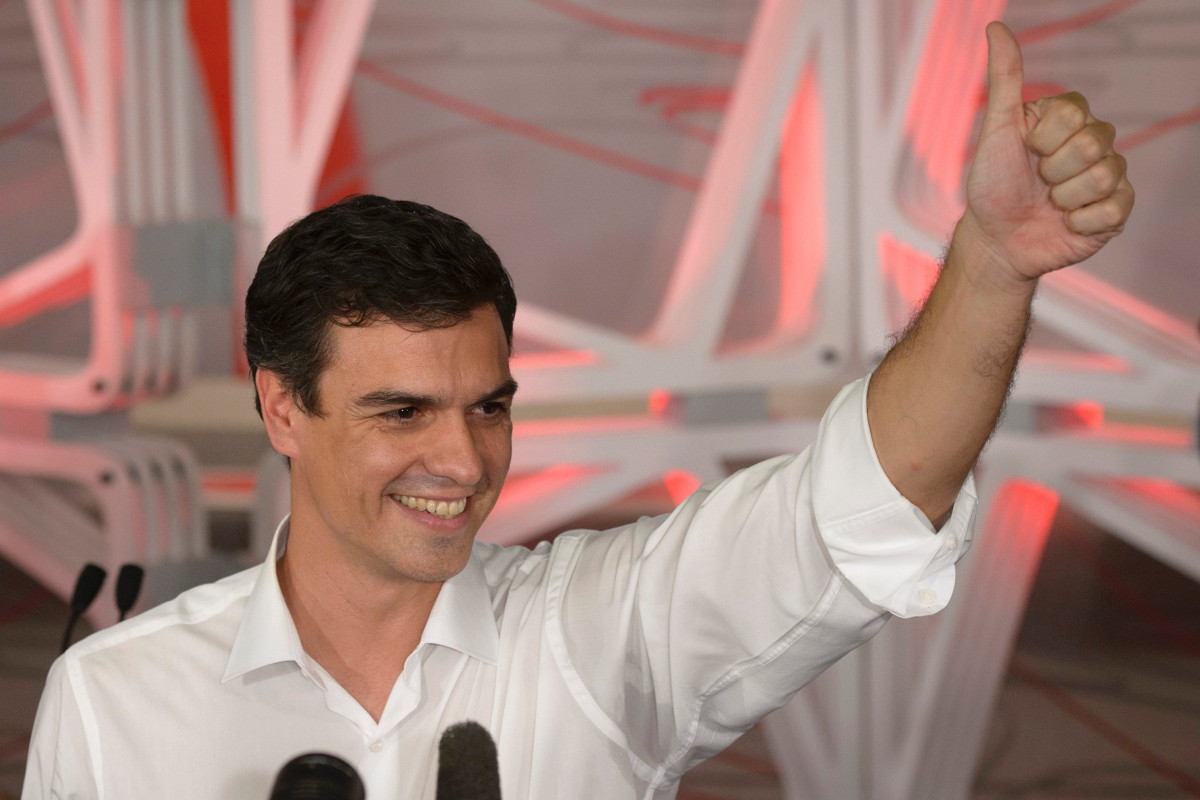
The difficult path to victory
The new party leader had a lot of work ahead of him. The PSOE was in far from its best shape, there was a threat of the party falling apart, and new parties had emerged that were drawing popularity away from it (although new popular parties were emerging on the right as well).
In his election campaign for the post of General Secretary, Sánchez gradually developed a program for his personal platform, which would subsequently become the party’s new strategy. In general, Sánchez described it as a “turn to the left” with a “restoration of signs of identity” and with a “model of reformist social democracy” that was intended to restore the identity of the PSOE. The PSOE had to once again become more attentive to socially vulnerable groups and to citizens who had suffered from the economic crisis, which had only just begun to subside. Also, in his opinion, the number one problem in Spain was inequality, which was being exacerbated by the decisions of the PP government207.
Sánchez promised voters he would implement a “second economic and social transition”, that is, to fight inequality and protect public services, without forgetting about the problems of productivity deficits and competitiveness in the manufacturing sector. The main inspirations for modernization and reform for Sánchez were Felipe González and the then-Prime Minister of Italy, Matteo Renzi. He considered them successful examples of left-wing reformism. The new leader also wanted to amend the constitution — among other changes, he wanted to transform Spain into a federal state, thus attempting to solve the problem with Catalonia and potential problems with other regions208.
However, the PSOE (and in this, it agreed with the PP) did not approve of the independence referendum that the Generalitat of Catalonia planned to hold unilaterally. And the reform of the territorial structure, which corresponded to the Granada Declaration approved by the PSOE in 2013, was not intended to define Catalonia as a nation or to eliminate the unique funding systems of the Basque Country and Navarre. The changes were supposed to consist of a reform of the Senate, a precise delimitation of the powers of the state and the autonomous communities, as well as the recognition of the specificities of some of them. Other topical issues for Sánchez were education and green energy, as well as tax reform intended to combat the transfer of money to offshore accounts209.
Sánchez promised to be uncompromising toward corruption — an evil that had long been shaking Spain’s political field. Because of it, both the PP and the PSOE were losing their supporters, and this became one of the reasons for the crisis of the two-party system that had been established in the 1980s. In his inaugural speech at the extraordinary congress, Sánchez stated that the PSOE had now become a “party of uncompromising honesty”. And in this sense, a draft of a new code of ethics for the social democrats was already on the table210. The new leader drew attention to the PSOE’s new competitors: Podemos (more socialist in orientation than the PSOE) and Ciudadanos (a new center-left party), noting that these parties were protest-based, and that society could not be transformed for the better through protests and demagoguery alone; for this, serious and qualified politicians, such as those in the PSOE, were needed.
The first major tests were the municipal and regional elections, which predicted a serious decline for the PSOE and the loss of its primacy among left-wing parties, which was unacceptable to Sánchez. His team had to work quickly in the run-up to the elections to specify and systematize their proposals. The goal was to create a program with clear differences from the positions of Podemos, but at the same time, it was necessary to create points of contact with them, because although the party was critical of Pablo Iglesias (the leader of Podemos — it so happened that he is a full namesake of the founder of the PSOE), it understood that he was a likely ally for a coalition, as was Albert Rivera (leader of Ciudadanos)211. Another obstacle, besides external opponents, was internal division. Despite the fact that Sánchez had recently won the elections within the party, he still had major opponents. The main rival was Susana Díaz, the influential General Secretary of the Andalusian branch of the PSOE212; furthermore, Carme Chacón was a rival, and internal criticism also emanated from Zapatero.
After the elections were over, their results seemed positive to Pedro Sánchez. The PSOE was able to strengthen its position slightly, and their main opponents in the PP, although they retained primacy, fell sharply in the number of votes cast for them, and now the PSOE’s lag was small213. These elections also showed that the time for full-fledged coalitions was coming, and the two-party system was collapsing, and therefore the PSOE began to enter into negotiations with Podemos and Ciudadanos.
On June 3, Sánchez announced his candidacy for the primaries. On June 21, the Federal Committee proclaimed him the winner, as he had no rivals this time. At that point, no other member of the party was running for the post of Prime Minister214. The PSOE entered the general election on December 20, 2015, concerned about the bleak prospects painted by opinion polls. And the results for the socialists proved to be the worst in the 38 years of democracy. The number of seats they held in parliament fell from 110 to 90 deputies, and they lost more than six points, dropping to 22% of the vote, which is half as much as, for example, Zapatero had in 2008, and Podemos drew close to the PSOE215. However, the PP lost 63 seats, thereby leaving Rajoy (leader of the PP) in an extremely difficult situation — practically insurmountable to retake the post of Prime Minister without a grand coalition. If the left-wing parties had united, they could have won a majority of seats. According to Sánchez, Spaniards, through their vote, made it clear that they wanted a “left-wing” country and that Spain must “change”216.
The 2015 Spanish general election was the first (after the adoption of the constitution) to be held on schedule, rather than early.
After the election, the situation was complex, and processes for forming a governing coalition began. Rajoy suggested that Sánchez unite and even include Ciudadanos in the coalition, thus forming a grand coalition, but Sánchez rejected this plan. The PSOE considered cooperation with Podemos if they softened their position on Catalonia (they advocated for holding a referendum in Catalonia). After this, Rajoy added fuel to the fire by refusing to form a new government on the King’s instruction, and at this awkward moment, Pablo Iglesias proposed a coalition in which Podemos would receive key portfolios and Iglesias himself would become Prime Minister. A decisive move, but one that would be just as decisively rejected by Sánchez.
On February 2, the King proposed that the second political force in the country, that is, Sánchez’s party, form a government. Negotiations took place between the same forces. Sánchez proposed broad social and political reforms, however, federalism again became a stumbling block. Later, Sánchez did manage to reach an agreement with Albert Rivera (leader of Ciudadanos), but Iglesias remained adamant. As a result, by the beginning of March, Sánchez had failed to organize a vote to appoint him head of government. On May 2, the deadline for creating a government expired, so Felipe VI (King of Spain) called new elections. This was the shortest-lived legislative body in history since the adoption of the Spanish Constitution — it existed for less than four months (all this time the country was governed by the old government)217.
In the new elections, the situation became slightly better for forming a government, but not for the PSOE, as it lost 5 seats (although its main allies did as well), while the People’s Party, on the contrary, gained votes, but it was still not enough for it to form a government218. Later, Ciudadanos joined the PP, which gave the latter hope of forming a government. Pedro Sánchez again received an invitation to join the coalition, but he refused categorically once again, responding as follows: “Spain needs a government, but not a bad government”. And subsequently, he would not change his opinion. The constitutional clock began to tick, setting a deadline of October 31; if a new government were not formed by that time, new elections would be called, and if that had happened, it would have been the first such precedent in Europe, if not the world. Such adherence to principles by Sánchez began to annoy the public and the party. And the failure that the Galician and Basque socialists suffered in the elections on September 25 in their autonomous communities sharply weakened Sánchez in the eyes of his internal detractors.
The perplexed General Secretary proposed moving the 39th Federal Congress to December by holding primaries in October; in this way, it would have been possible to resolve the disagreements regarding the election of Rajoy and, ultimately, settle the power struggle within the party. This proposal had to be approved by the Federal Committee, but on September 28, 17 members of the Federal Executive Committee resigned in order to force Sánchez to resign immediately, and this plunged the party into chaos. For four days, there were heated debates on the issue of the primaries and the removal of Sánchez. On October 1, he finally lost the vote in the Federal Committee on the immediate holding of primaries, thereby losing leadership of the party, after which he stepped down as General Secretary. Thus, power passed to an interim commission. However, Sánchez did not intend to give up219.
On October 29, 2016, a few hours before the inauguration of Rajoy, who was to be elected Prime Minister of Spain thanks to the abstention of 68 PSOE deputies (although 15 party members violated group discipline and voted against), Sánchez resigned his parliamentary seat and became a “grassroots party member”, but with the aim of being re-elected as General Secretary at the party’s 39th congress. With this decision, he resolved the dilemma his colleagues had dragged him into: either disobey the mandate of the Federal Committee or abandon his “campaign pledge” not to facilitate the formation of a new PP government220.
Sánchez had half a year before the new congress to secure the support of his fellow party members. And as a result of the new congress, he won, gaining 50% of the vote; his opponent, Susana Díaz, received 40%, and the third candidate, Patxi López, received 10% of the vote221. Sánchez’s victory, as resounding as it was unexpected, was perceived by the press as a personal revenge for a stubborn and resilient politician against whom most of the federal and regional apparatus of his party had rallied. Sánchez’s persistent “no” regarding Rajoy ran counter to the party leadership but found approval among rank-and-file members. Opinion polls at the time showed a sharp rise in the popularity of the PSOE. Having gained legitimacy, he was able to create a team consisting entirely of people he trusted completely, pushing his critics into the background222.
After the summer, the acute Catalan question, which had turned into a state crisis, forced Sánchez to take a firm position. On one hand, he agreed with Rajoy in rejecting the referendum on October 1, which had been scheduled by the Generalitat government and declared illegal by central authorities; in that referendum, 90% of the 42% of citizens who participated voted for Catalonia to become “an independent state in the form of a republic”. But on the other hand, Sánchez urged Rajoy and Catalan President Carles Puigdemont to pave the way for “dialogue, negotiation, and consensus”223.
Unexpected success
On May 24, 2018, a nine-year court investigation concluded regarding the largest corruption case involving the PP — an illegal financing scheme known as Gürtel. It fundamentally changed the political course of events in Spain after the guilty verdicts were handed down224. The PSOE executive body held an emergency meeting, following which Sánchez announced that his party was preparing to present a “constructive” motion of no confidence against Rajoy “to guarantee governability, to form a PSOE government with a solid foundation and a clear roadmap for reforms”. Other political parties were also preparing to remove the government, but with different nuances. Podemos announced its readiness to vote for the social democrats. Ciudadanos could have taken the same step, but on the condition that the PSOE would facilitate the earliest possible calling of snap elections and would not attempt to drag out the work of the legislative body that would be managed by the PSOE.
Events developed rapidly. On May 25, the parliamentary group of social democrats registered a motion of no confidence in parliament in connection with the ruling on the Gürtel case, which, according to Sánchez, “has tested our institutions and the quality of our democracy”. The socialist leader emphasized that Spain was experiencing “an extremely serious institutional crisis” and that his party was moving forward with a motion of no confidence “to restore democratic dignity”. If Rajoy, who refused to resign, were to be censured, the new government would belong exclusively to the PSOE and would “implement a social program”. A cabinet of ministers chaired by him would call for elections; however, he did not specify a timeframe for holding them, because first it was necessary to “restore stability, clean up state institutions, and address social problems that the current government is not paying attention to”. In other words, Sánchez intended to drag out the work of his government, which did not please Ciudadanos and Podemos, although the latter were still ready to vote for the resignation. The opinion of the PNV — the ruling party in the Basque Country — became decisive. The negotiations were difficult, and until the last moment, the result was unclear, but the Basque nationalists finally decided to cast their votes for Sánchez after he guaranteed that his government would respect the general budgets previously agreed upon with the PP, which were beneficial for the Basque regional treasuries. But on the eve of the ruling on the Gürtel case, the PSOE had voted against that budget (in the opinion of this text’s author, it was a dishonorable move)225.
On June 1, 2018, the Congress held a vote on the motion of no confidence, which passed with 180 votes in favor and 169 against. Since then, Pedro Sánchez has been the Prime Minister of Spain.
This is the first motion of no confidence in Spain since the adoption of the constitution that has been approved.
Given Sánchez’s atheistic positions, religious symbols at the inauguration, such as the Bible, were excluded for the first time. On the same day, in Barcelona, the government of Catalonia was sworn in under the presidency of Quim Torra, Carles Puigdemont’s deputy after the elections, which put an end to the application of Article 155 in Catalonia226. Now it was time to form a government team, “modernizing and progressive”, according to its leader, as well as firmly pro-European. But the situation was not simple — the PSOE did not have a coalition as such. The ministers were presented on June 6 and took office the following day.
The composition of Sánchez’s cabinet caused a sensation in Spain and abroad due to the professional qualifications and experience of its members, who represented a technical profile, and also because there were more women than men among the ministers; in fact, it was the government with the highest female representation in the history of Europe, and possibly the world. Out of 17 positions, 11 were allocated to women, including the posts of Vice President, Minister of Defense, Justice, Finance, and Economy227. And 8 months later, Sánchez would announce the date of the general elections228, in which the PSOE would regain primacy but would not be able to approve its government in the Cortes, which would necessitate calling new elections that same year, where the PSOE would lose a few votes. By that time, the right and, moreover, the far-right were becoming more popular, but the PSOE managed to secure the support of the remaining parties and form a new government, albeit in a rather precarious situation229, which continues to persist to this day. However, the left-wing government continues to work, despite internal problems and external ones (the coronavirus and events in Ukraine). The period of Sánchez’s premiership is not yet finished at the time of writing.
Conclusion
The history of the PSOE has been eventful, filled with triumphant victories and brutal defeats that seemed fatal, and now, at times, it seems to some that a new defeat is the beginning of the end. But the PSOE was reborn from the ashes even after its apparent death during the era of the Francoist dictatorship; it tenaciously adapts to new conditions and moves Spain forward. Not every party can exist for so many years, falling, then rising, and once again becoming the ruling party. In the author’s view, this deserves admiration, and the Spanish social democrats definitely have something to learn from.
The history of this party continues, we will keep an eye on it, and perhaps we will write more articles related to one of the oldest active left-wing and social democratic parties in the world.
- S.P. Pozharskaya. Spanish Socialist Workers’ Party // Great Russian Encyclopedia (old.bigenc.ru). [Online resource]. URL: https://old.bigenc.ru/world_history/text/2024438 (Accessed: 17.12.2023).
- T.L Manuel. El movimiento obrero en la historia de España 1832-1899 p. 290, 1972 (1977).
- S.P. Pozharskaya. General Union of Workers // Great Russian Encyclopedia (old.bigenc.ru). [Online resource]. URL: https://old.bigenc.ru/world_history/text/2334590 (Accessed: 17.12.2023).
- El PSOE homenajea a sus parlamentarios desde Pablo Iglesias // El Pais (elpais.com), April 25, 2010, 12:11. [Online resource]. URL: https://elpais.com/elpais/2010/04/25/actualidad/1272183419_850215.html (Accessed: 17.12.2023).
- D. Share. Spanish Socialist Workers’ Party // Encyclopedia Britannica (www.britannica.com). November 14, 2023. [Online resource]. URL: https://www.britannica.com/topic/Spanish-Socialist-Workers-Party (Accessed: 17.12.2023).
- Cuando el PSOE acordó presentar candidaturas propias en 1890 // El Obrero (elobrero.es). October 16, 2021. [Online resource]. URL: https://elobrero.es/component/k2/75944-cuando-el-psoe-acordo-presentar-candidaturas-propias-en-1890.html (Accessed: 17.12.2023).
- J. Martin. Huelga general, barricadas, muertos… Marzo de 1917: la revolución llega a España // El confidencial (www.elconfidencial.com), March 12, 2017, 17:19. [Online resource]. URL: https://www.elconfidencial.com/cultura/2017-03-12/huelga-marzo-de-1917-espana-rusia-zares_1345372/ (Accessed: 17.12.2023).
- M. Amoros. Un congreso socialista para la historia // Centenario (www.lavanguardia.com). April 12, 2021, 11:21. [Online resource]. URL: https://www.lavanguardia.com/historiayvida/historia-contemporanea/20210409/6631579/congreso-socialista-historia.html (Accessed: 17.12.2023).
- Comienza el Congreso Extraordinario del PSOE en Madrid // Fundación Pablo Iglesias (fpabloiglesias.es). [Online resource]. URL: https://fpabloiglesias.es/events/comienza-el-congreso-extraordinario-del-psoe-en-madrid/ (Accessed: 17.12.2023).
- Turnismo // Gizapedia (gizapedia.org). [Online resource]. URL: https://gizapedia.org/turnismo (Accessed: 17.12.2023).
- L. E. Togores.. Esperando al general Primo de Rivera tras el supuesto golpe de Estado // El debate (www.eldebate.com), November 4, 2022. [Online resource]. URL: https://www.eldebate.com/historia/20221104/esperando-general-primo-rivera_69757.html (Accessed: 17.12.2023).
- M. P. VILLATORO. Los secretos del dictador Primo de Rivera para convertir España en una potencia económica: “Creó Iberia y Telefónica” // ABC Historia (www.abc.es), December 17, 2022. [Online resource]. URL: https://www.abc.es/historia/secretos-dictador-primo-rivera-convertir-espana-potencia-20221217010151-nt.html (Accessed: 17.12.2023).
- D. Gilmart. La dictadura de Primo de Rivera (i): La caida del regimen parlamentario // Historico Digital (historicodigital.com), March 5, 2022. [Online resource]. URL: https://historicodigital.com/la-dictadura-de-primo-de-rivera-i-la-caida-del-regimen-parlamentario.html (Accessed: 17.12.2023).
- L. E. Togores. El gran salto adelante de la UGT durante la dictadura de Primo de Rivera // El debate (www.debates.com), March 26, 2022. [Online resource]. URL: https://www.eldebate.com/historia/20220326/gran-salto-adelante-ugt-durante-dictadura-primo-rivera.html (Accessed: 17.12.2023).
- L. E. Togores. El día que murió Pablo Iglesias // Larazon (www.larazon.es), October 5, 2022. [Online resource]. URL: https://www.larazon.es/cultura/20201208/3ziyb5mzxzhkhm4swrvxsuvwvm.html (Accessed: 17.12.2023).
- E. Montagut. El modelo sindical de la Dictadura de Primo de Rivera // Nuevatribuna.es (nuevatribuna.es), March 29, 2016, 15:09. [Online resource]. URL: https://www.nuevatribuna.es/articulo/historia/modelo-sindical-dictadura-primo-rivera/20160321151123126621.html (Accessed: 17.12.2023).
- Código de Trabajo de 1926 // De lo social y mucho más (delosocialymuchomas.blogspot.com), March 24, 2014. [Online resource]. URL: http://delosocialymuchomas.blogspot.com/2014/08/codigo-de-trabajo-de-1926.html (Accessed: 17.12.2023).
- Fallece Pablo Iglesias en Madrid // Fundación Pablo Iglesias (fpabloiglesias.es). [Online resource]. URL: https://fpabloiglesias.es/events/9-12-1925-fallece-pablo-iglesias-en-madrid/ (Accessed: 17.12.2023).
- E. C. González. La España de Primo de Rivera. – pp. 331-332. – Alianza Editorial; edición, 2005. – 464 p.
- E. C. González. La España de Primo de Rivera. – pp. 332-333. – Alianza Editorial; edición, 2005. – 464 p.
- II República: ¿Qué pasó el 14 de abril de 1931 en España? // Publico (www.publico.es), April 13, 2023, 17:04. [Online resource]. URL: https://www.publico.es/politica/segunda-republica-paso-14-abril-1931-espana.html (Accessed: 17.12.2023).
- II República Española 1931-1939 // Congreso de los Diputados (www.congreso.es). [Online resource]. URL: https://www.congreso.es/es/cem/iirepesp (Accessed: 17.12.2023).
- Elecciones a Cortes Constituyentes 28 de junio de 1931 // Historia electoral (www.historiaelectoral.com). [Online resource]. URL: https://www.historiaelectoral.com/e1931.html (Accessed: 17.12.2023).
- Constitución española de 1931 // Enciclopedia Humanidades (www.historiasiglo20.org). [Online resource]. URL: http://www.historiasiglo20.org/HE/13a-1.htm (Accessed: 17.12.2023).
- Ibid.
- El bienio reformista // El siglo XX (educazonia.com). [Online resource]. URL: http://educazonia.com/maes2020/Angel-Sanjuan-Siglo-XX-en-Espana/el_bienio_reformista.html# (Accessed: 17.12.2023).
- M. Martinez. Los proyectos republicanos perdidos con el estallido de la Guerra Civil // Publico (www.publico.es). April 20, 2022, 12:50. [Online resource]. URL: https://www.publico.es/sociedad/republica-espanola-proyectos-republicanos-perdidos-estallido-guerra-civil.html (Accessed: 17.12.2023).
- Constitución española de 1931 // Enciclopedia Humanidades (www.historiasiglo20.org). [Online resource]. URL: http://www.historiasiglo20.org/HE/13a-1.htm (Accessed: 17.12.2023).
- L. Rajadel. Diciembre de 1933, la revolución que incendió el Bajo Aragón // Heraldo (www.heraldo.es). January 22, 2020, 16:41. [Online resource]. URL: https://www.heraldo.es/noticias/aragon/teruel/2020/01/22/diciembre-de-1933-la-revolucion-que-incendio-el-bajo-aragon-1354738.html (Accessed: 17.12.2023).
- Ibid.
- V. ARROGANTE. Octubre revolucionario. La revolución de 1934 // Nuevatribuna.es (www.nuevatribuna.es). October 5, 2020, 15:08. [Online resource]. URL: https://www.nuevatribuna.es/opinion/victor-arrogante/octubre-revolucionario-revolucion-1934/20201005150830179820.html (Accessed: 17.12.2023).
- Ibid.
- Revolución de Octubre de 1934 // Fundación Pablo Iglesias (fpabloiglesias.es). [Online resource]. URL: https://fpabloiglesias.es/events/revolucion-de-octubre-de-1934/ (Accessed: 17.12.2023).
- J. B. Ortega. Octubre de 1934: revolución en Asturias y proclamación de ‘l’Estat Català’ // Descubrir la historia (descubrirlahistoria.es). October 5, 2021, 13:05. [Online resource]. URL: https://descubrirlahistoria.es/2021/10/octubre-de-1934-revolucion-en-asturias-y-proclamacion-de-lestat-catala/ (Accessed: 17.12.2023).
- A. Vigil. La revolución del 34 lleva a juicio a Azaña, Largo Caballero y Prieto // Expansion.com (www.expansion.com). [Online resource]. URL: https://www.expansion.com/2014/08/29/juridico/1409328360.html (Accessed: 17.12.2023).
- Manuel Azaña // Encyclopedia Britannica (www.britannica.com). [Online resource]. URL: https://www.britannica.com/biography/Manuel-Azana (Accessed: 17.12.2023).
- S. G. Payne. 1936: Victoria del Frente Popular // El Mundo (www.elmundo.es). February 15, 2016, 20:25. [Online resource]. URL: https://www.elmundo.es/grafico/la-aventura-de-la-historia/2016/02/15/56c2165e22601d12128b4599.html (Accessed: 17.12.2023).
- D. Share. Spanish Socialist Workers’ Party // Encyclopedia Britannica (www.britannica.com). November 14, 2023. [Online resource]. URL: https://www.britannica.com/topic/Spanish-Socialist-Workers-Party (Accessed: 17.12.2023).
- Elecciones a II Cortes de la República 16 de febrero de 1936 // Enciclopedia Humanidades (www.historiasiglo20.org). [Online resource]. URL: https://www.historiaelectoral.com/e1936.html (Accessed: 17.12.2023).
- D. Delgado. ¿Cómo empezó la Guerra Civil Española? // Muy interesante (www.muyinteresante.es). July 15, 2020, 13:19. [Online resource]. URL: https://www.muyinteresante.es/historia/33432.html (Accessed: 17.12.2023).
- D. Escribano. Amnistías en el Estado español (1832-1977) (I) // Conversacion sobre historia (conversacionsobrehistoria.info). November 22, 2022. [Online resource]. URL: https://conversacionsobrehistoria.info/2022/11/23/amnistias-en-el-estado-espanol-1832-1977-i/ (Accessed: 17.12.2023).
- by Sonia Aparicio // Elmundo.es (www.elmundo.es). [Online resource]. URL: https://www.elmundo.es/especiales/2005/06/espana/estatutos_autonomia/estatutos/catalunya.html (Accessed: 17.12.2023).
- Segunda República en España // Enciclopedia Humanidades (www.historiasiglo20.org). [Online resource]. URL: http://www.historiasiglo20.org/HE/13a-2.htm (Accessed: 18.12.2023).
- J. Simpson, J. Carmona. Reforma agraria y orígenes de la guerra civil española (I) «Why Democracy Failed» // Conversacion sobre historia (conversacionsobrehistoria.info). [Online resource]. URL: https://conversacionsobrehistoria.info/2020/06/14/reforma-agraria-y-origenes-de-la-guerra-civil-espanola/ (Accessed: 18.12.2023).
- A. Coteno. El atentado contra Jiménez de Asúa y la ilegalización de Falange // República y Guerra en Madrid (republicayguerraenmadrid.wordpress.com). [Online resource]. URL: https://republicayguerraenmadrid.wordpress.com/2020/03/23/el-atentado-contra-jimenez-de-asua-y-la-ilegalizacion-de-falange/ (Accessed: 18.12.2023).
- L. E. Togores. El asesinato del alférez De los Reyes, detonante de la sublevación de 1936 // Larazon (www.larazon.es). October 19, 2022, 3:18. [Online resource]. URL: https://www.larazon.es/cultura/historia/20221019/u4yzqaimczg5hkphkpfk5qegra.html (Accessed: 18.12.2023).
- A. A. Garcia. ¿Quién mató al teniente Castillo? // El debate (www.eldebate.com). July 20, 2022, 4:51. [Online resource]. URL: https://www.eldebate.com/historia/20220720/quien-mato-teniente-castillo.html (Accessed: 18.12.2023).
- A. V. Shubin. The Great Spanish Revolution. – pp. 93-96. – M.: Knizhny Dom “LIBROKOM”, 2012. – 640 p.
- A. V. Shubin. The Great Spanish Revolution. – pp. 97-98. – M.: Knizhny Dom “LIBROKOM”, 2012. – 640 p.
- A. V. Shubin. The Great Spanish Revolution. – p. 99. – M.: Knizhny Dom “LIBROKOM”, 2012. – 640 p.
- A. V. Shubin. The Great Spanish Revolution. – pp. 100-102. – M.: Knizhny Dom “LIBROKOM”, 2012. – 640 p.
- Sanjurjo, José // Great Russian Encyclopedia (old.bigenc.ru). [Online resource]. URL: https://bigenc.ru/c/sankhurkho-khose-ee24fb (Accessed: 18.12.2023).
- A. V. Shubin. The Great Spanish Revolution. – pp. 104-105. – M.: Knizhny Dom “LIBROKOM”, 2012. – 640 p.
- A. V. Shubin. The Great Spanish Revolution. – pp. 173-181. – M.: Knizhny Dom “LIBROKOM”, 2012. – 640 p.
- Ibid.
- P. Campelo. La Segunda República despenalizó el aborto con la ley más avanzada de Europa // Publico (www.publico.es). February 15, 2014, 17:24. [Online resource]. URL: https://www.publico.es/actualidad/segunda-republica-despenalizo-aborto-ley.html (Accessed: 18.12.2023).
- S. Córdoba. Cuando la guerra se convirtió en revolución: las colectividades durante la Guerra Civil // El Salto. (www.elsaltodiario.com). January 27, 2017. [Online resource]. URL: https://www.elsaltodiario.com/guerra-civil/revolucion-colectividades-durante-guerra-civil (Accessed: 18.12.2023).
- Colectivización // Fuentes para la historia del anarcosindicalismo en Catalunya (https://cgtcatalunya.cat). [Online resource]. URL: https://cgtcatalunya.cat/memoriahistorica/fonts/?page_id=17 (Accessed: 18.12.2023).
- A. V. Shubin. The Great Spanish Revolution. – pp. 258-259. – M.: Knizhny Dom “LIBROKOM”, 2012. – 640 p.
- A. V. Shubin. The Great Spanish Revolution. – pp. 290-300. – M.: Knizhny Dom “LIBROKOM”, 2012. – 640 p.
- A. V. Shubin. The Great Spanish Revolution. – pp. 335-337. – M.: Knizhny Dom “LIBROKOM”, 2012. – 640 p.
- J. Casanova. Mayo de 1937 // El Pais (elpais.com). May 3, 2007. [Online resource]. URL: https://elpais.com/diario/2007/05/03/opinion/1178143212_850215.html?event_log=go (Accessed: 18.12.2023).
- A. V. Shubin. The Great Spanish Revolution. – pp. 417-419. – M.: Knizhny Dom “LIBROKOM”, 2012. – 640 p.
- A. V. Shubin. The Great Spanish Revolution. – pp. 422-426. – M.: Knizhny Dom “LIBROKOM”, 2012. – 640 p.
- A. V. Shubin. The Great Spanish Revolution. – pp. 447-448. – M.: Knizhny Dom “LIBROKOM”, 2012. – 640 p.
- Ibid.
- A. V. Shubin. The Great Spanish Revolution. – pp. 449-450. – M.: Knizhny Dom “LIBROKOM”, 2012. – 640 p.
- A. V. Shubin. The Great Spanish Revolution. – p. 454. – M.: Knizhny Dom “LIBROKOM”, 2012. – 640 p.
- A. V. Shubin. The Great Spanish Revolution. – p. 453. – M.: Knizhny Dom “LIBROKOM”, 2012. – 640 p.
- A. V. Shubin. The Great Spanish Revolution. – pp. 459-461. – M.: Knizhny Dom “LIBROKOM”, 2012. – 640 p.
- A. V. Shubin. The Great Spanish Revolution. – pp. 463-481. – M.: Knizhny Dom “LIBROKOM”, 2012. – 640 p.
- Ibid.
- Spanish Civil War // Encyclopedia Britannica (www.britannica.com). December 3, 2023. [Online resource]. URL: https://www.britannica.com/event/Spanish-Civil-War (Accessed: 18.12.2023).
- A. V. Shubin. The Great Spanish Revolution. – pp. 545-546. – M.: Knizhny Dom “LIBROKOM”, 2012. – 640 p.
- A. V. Shubin. The Great Spanish Revolution. – pp. 546-549. – M.: Knizhny Dom “LIBROKOM”, 2012. – 640 p.
- I. Viana. La eterna polémica del coronel Casado: esa «alimaña» republicana que quiso negociar la rendición con Franco // ABC (www.abc.es). November 22, 2022. [Online resource]. URL: https://www.abc.es/historia/abci-eterna-polemica-coronel-casado-alimana-republicana-quiso-negociar-rendicion-franco-202011220136_noticia.html (Accessed: 18.12.2023).
- A. V. Shubin. The Great Spanish Revolution. – pp. 557-560. – M.: Knizhny Dom “LIBROKOM”, 2012. – 640 p.
- Indalecio Prieto Tuero // Real Academia de la Historia (dbe.rah.es). [Online resource]. URL: https://dbe.rah.es/biografias/10236/indalecio-prieto-tuero (Accessed: 18.12.2023).
- AGUIRRE CERDA // Great Russian Encyclopedia (old.bigenc.ru). [Online resource]. URL: https://old.bigenc.ru/world_history/text/1851174 (Accessed: 18.12.2023).
- I. V. Selivanova. CÁRDENAS CÁRDENAS Y DEL RÍO LÁZARO // Great Russian Encyclopedia (old.bigenc.ru). [Online resource]. URL: https://old.bigenc.ru/world_history/text/2046005 (Accessed: 18.12.2023).
- Instituciones de ayuda humanitaria // Centro de Información Documental de Archivos (CIDA) (www.culturaydeporte.gob.es). [Online resource]. URL: https://www.culturaydeporte.gob.es/cultura/areas/archivos/mc/centros/cida/4-difusion-cooperacion/4-2-guias-de-lectura/guia-exilio-espanol-1939-archivos-estatales/instituciones-ayuda.html (Accessed: 18.12.2023).
- C. Carabana. ¿Dónde fue a parar el tesoro republicano del Vita? // La Vanguardia (www.lavanguardia.com). January 28, 2020, 12:20. [Online resource]. URL: https://www.lavanguardia.com/historiayvida/historia-contemporanea/20191207/472058603147/tesoro-vita-segunda-republica-nevado-toluca.html (Accessed: 18.12.2023).
- L. Bocanegra. Breve historia del exilio republicano: el gran éxodo de 1939 // E-xiliad@s (www.exiliadosrepublicanos.info). [Online resource]. URL: https://www.exiliadosrepublicanos.info/es/historia-exilio (Accessed: 18.12.2023).
- J. Berrueta. De los besos al olvido: los republicanos españoles que derrotaron a los nazis y liberaron París // El Español (www.elespanol.com). August 25, 2019, 2:32. [Online resource]. URL: https://www.elespanol.com/cultura/historia/20190825/besos-olvido-republicanos-espanoles-derrotaron-liberaron-paris/423708545_0.html (Accessed: 18.12.2023).
- E. BAYONA. Las otras fuerzas españolas que derrotaron a Hitler // Público (www.publico.es). August 4, 2019, 8:35. [Online resource]. URL: https://www.publico.es/politica/otras-fuerzas-espanolas-derrotaron-hitler.html (Accessed: 18.12.2023).
- Clausura del primer Congreso del PSOE en el exilio // Fundación Pablo Iglesias (fpabloiglesias.es). [Online resource]. URL: https://fpabloiglesias.es/events/clausura-del-primer-congreso-del-psoe-en-el-exilio/ (Accessed: 18.12.2023).
- Sucedió en…1944. Primer Congreso del PSOE en el exilio // PSOE (www.psoe.es). [Online resource]. URL: https://www.psoe.es/el-socialista/sucedio-en/sucedio-en-1944-primer-congreso-del-psoe-en-el-exilio/ (Accessed: 18.12.2023).
- A. A. Sagomonyan. Spanish “Government in Exile” (1945-1945): The Collapse of the Anti-Francoist Project // CyberLeninka (cyberleninka.ru). [Online resource]. URL: https://cyberleninka.ru/article/n/ispanskoe-pravitelstvo-v-izgnanii-1945-1946-krah-antifrankistskogo-proekta/viewer (Accessed: 18.12.2023).
- Ibid.
- Ibid.
- Ibid.
- Ibid.
- Ibid.
- N. Krasnoshchyokov. Military-political contacts of Spain and the USA (1948-1950) // CyberLeninka (cyberleninka.ru). [Online resource]. URL: https://cyberleninka.ru/article/n/voenno-politicheskie-kontakty-ispanii-i-ssha-1948-1950-gg-v-usloviyah-diplomaticheskoy-izolyatsii-rezhima-f-franko/viewer (Accessed: 18.12.2023).
- PRIETO Tuero, Indalecio // Fundación José Barreiro (fsa-psoe.org). [Online resource]. URL: https://fsa-psoe.org/fjb/biografico/indalecio-prieto/ (Accessed: 18.12.2023).
- J. D. González. LA ADMISIÓN DE ESPAÑA EN LA ONU // Global Politics and law (globalpoliticsandlaw.com). [Online resource]. URL: https://globalpoliticsandlaw.com/blog/2020/08/19/entrada-espana-onu/ (Accessed: 18.12.2023).
- R. R. Fundazioa. No solo los comunistas combatieron a Franco: así sobrevivió el PSOE en España tras la Guerra Civi // El Espanol (www.elespanol.com). May 20, 2021, 1:24. [Online resource]. URL: https://www.elespanol.com/cultura/historia/20210520/no-combatieron-franco-psoe-espana-guerra-civil/582443132_0.html (Accessed: 18.12.2023).
- Ibid.
- G. G. Bravo. La reconstrucción del socialismo durante el franquismo // Conversacion sobre historia (conversacionsobrehistoria.info). July 6, 2021. [Online resource]. URL: https://conversacionsobrehistoria.info/2021/07/06/la-reconstruccion-del-socialismo-durante-el-franquismo/ (Accessed: 18.12.2023).
- Alianza Nacional de Fuerzas Democráticas // Wikipedia (es.wikipedia.org). [Online resource]. URL: https://es.wikipedia.org/wiki/Alianza_Nacional_de_Fuerzas_Democráticas (Accessed: 19.12.2023).
- R. R. Fundazioa. No solo los comunistas combatieron a Franco: así sobrevivió el PSOE en España tras la Guerra Civi // El Espanol (www.elespanol.com). May 20, 2021, 1:24. [Online resource]. URL: https://www.elespanol.com/cultura/historia/20210520/no-combatieron-franco-psoe-espana-guerra-civil/582443132_0.html (Accessed: 19.12.2023).
- R. R. Fundazioa. No solo los comunistas combatieron a Franco: así sobrevivió el PSOE en España tras la Guerra Civi // El Espanol (www.elespanol.com). May 20, 2021, 1:24. [Online resource]. URL: https://www.elespanol.com/cultura/historia/20210520/no-combatieron-franco-psoe-espana-guerra-civil/582443132_0.html (Accessed: 19.12.2023).
- Donoso Recio, Antonio // Fundación Pablo Iglesias (fpabloiglesias.es). [Online resource]. URL: https://fpabloiglesias.es/entrada-db/4876_donoso-recio-antonio/ (Accessed: 19.12.2023).
- R. R. Fundazioa. No solo los comunistas combatieron a Franco: así sobrevivió el PSOE en España tras la Guerra Civi // El Espanol (www.elespanol.com). May 20, 2021, 1:24. [Online resource]. URL: https://www.elespanol.com/cultura/historia/20210520/no-combatieron-franco-psoe-espana-guerra-civil/582443132_0.html (Accessed: 19.12.2023).
- G. Martinez. La historia de cómo el socialismo español consiguió reconstruirse a pesar de la represión de la dictadura franquista // Publico (www.publico.es). May 22, 2012. [Online resource]. URL: https://www.publico.es/politica/historia-reconstruccion-del-socialismo-espanol-represion-dictadura.html (Accessed: 19.12.2023).
- Centeno Sierra, Tomás // Fundación Pablo Iglesias (fpabloiglesias.es). [Online resource]. URL: https://fpabloiglesias.es/entrada-db/4077_centeno-sierra-tomas/ (Accessed: 19.12.2023).
- G. Martinez. La historia de cómo el socialismo español consiguió reconstruirse a pesar de la represión de la dictadura franquista // Publico (www.publico.es). May 22, 2012. [Online resource]. URL: https://www.publico.es/politica/historia-reconstruccion-del-socialismo-espanol-represion-dictadura.html (Accessed: 19.12.2023).
- José Ortega y Gasset // Encyclopedia Britannica (www.britannica.com). [Online resource]. URL: https://www.britannica.com/biography/Jose-Ortega-y-Gasset (Accessed: 19.12.2023).
- L. Cruz. 1956: el movimiento estudiantil antifranquista nace en San Bernardo // El diario.es (www.eldiario.es). May 21, 2014, 12:22. [Online resource]. URL: https://www.eldiario.es/madrid/somos/malasana/1956-el-movimiento-estudiantil-antifranquista-nace-en-san-bernardo_1_6424408.html (Accessed: 19.12.2023).
- Ibid.
- Ibid.
- Ibid.
- B. G. Huerta. Las huelgas que vencieron a Franco // El diario.es (www.eldiario.es). May 18, 2022, 5:30. [Online resource]. URL: https://www.eldiario.es/opinion/tribuna-abierta/huelgas-vencieron-franco_129_8997810.html (Accessed: 19.12.2023).
- LA FSA-PSOE EN LA HUELGA DE 1962 // Fundación José Barreiro (fsa-psoe.org). May 7, 2022. [Online resource]. URL: https://fsa-psoe.org/fjb/la-fsa-psoe-en-la-huelga-de-1962/ (Accessed: 19.12.2023).
- F. Palacios. Aquella primavera del 62 // La Nueva Espana (www.lne.es). April 9, 2012, 3:00. [Online resource]. URL: https://www.lne.es/cuencas/2012/04/09/primavera-62-20914374.html (Accessed: 19.12.2023).
- Ibid.
- B. G. Huerta. Las huelgas que vencieron a Franco // El diario.es (www.eldiario.es). May 18, 2022, 5:30. [Online resource]. URL: https://www.eldiario.es/opinion/tribuna-abierta/huelgas-vencieron-franco_129_8997810.html (Accessed: 19.12.2023).
- G. Martinez. El Contubernio de Múnich 60 años después: la antesala de la Constitución española // Publico (www.publico.es). June 16, 2022, 8:55. [Online resource]. URL: https://www.publico.es/politica/contubernio-munich-60-anos-despues-antesala-constitucion-espanola.html (Accessed: 19.12.2023).
- Ibid.
- Ibid.
- L. R. AIZPEOLEA. Un soborno al juez más duro del proceso de Burgos // El Pais (elpais.com). November 14, 2020, 8:55. [Online resource]. URL: https://elpais.com/espana/2020-11-13/un-soborno-al-juez-mas-duro-del-proceso-de-burgos.html (Accessed: 19.12.2023).
- D. Albin. 50 años del Proceso de Burgos, el juicio que levantó una ola de repudio mundial contra Franco // Publico (www.publico.es). December 2, 2020, 22:26. [Online resource]. URL: https://www.publico.es/politica/50-anos-proceso-burgos-juicio-levanto-ola-repudio-mundial-franco.html (Accessed: 19.12.2023).
- M. Yuste. El día en que voló Carrero // El País Digital (www1.udel.edu). December 14, 1998. [Online resource]. URL: https://www1.udel.edu/leipzig/071198/ele141298.htm (Accessed: 19.12.2023).
- C. Sudria. El ajuste económico de la transición // El Pais (elpais.com). February 13, 10:04. [Online resource]. URL: https://elpais.com/economia/2012/02/10/actualidad/1328871012_734915.html (Accessed: 19.12.2023).
- L. Galaup. El ostracismo de la UMD, la agrupación perseguida por defender valores democráticos en el ejército franquista // El diario.es (www.eldiario.es). [Online resource]. URL: https://www.eldiario.es/sociedad/ostracismo-umd-agrupacion-perseguida-defender-valores-democraticos-ejercito-franquista_1_9775693.html (Accessed: 19.12.2023).
- A. REDACCIÓN. Varios actos recuerdan a los últimos fusilados por Franco // Ara info (arainfo.org). September 27, 2015, 14:37. [Online resource]. URL: https://arainfo.org/varios-actos-recuerdan-a-los-ultimos-fusilados-por-franco/ (Accessed: 19.12.2023).
- A. G. González. La evolución del PSOE en la Transición. Entre el socialismo del sur de Europa y la socialdemocracia europea // Ayer (www.revistasmarcialpons.es). [Online resource]. URL: https://www.revistasmarcialpons.es/revistaayer/article/view/la-evolucion-del-psoe-en-la-transicion-entre-el-socialismo-del-s/1138 (Accessed: 19.12.2023).
- Ibid.
- Reconocimiento de la Internacional Socialista // Fundación Pablo Iglesias (fpabloiglesias.es). [Online resource]. URL: https://fpabloiglesias.es/events/reconocimiento-de-la-internacional-socialista/ (Accessed: 19.12.2023).
- R. O. Zárate. Biography Felipe González Márquez // Biography Felipe González (www.felipegonzalez.es). [Online resource]. URL: https://www.felipegonzalez.es/biografia/ (Accessed: 19.12.2023).
- Felipe González: 1974 (Suresnes)- 1997 (Madrid) // El imparcial (www.elimparcial.es). [Online resource]. URL: https://www.elimparcial.es/files/congresopsoe/datos/historico1.html (Accessed: 19.12.2023).
- E. ALFARO. El Pasoc se proclama heredero de los ideales socialistas defendidos por Pablo Iglesias // El Pais (elpais.com). May 28, 1990, 00:00. [Online resource]. URL: https://elpais.com/diario/1990/05/28/espana/643845604_850215.html (Accessed: 19.12.2023).
- A. G. González. La evolución del PSOE en la Transición. Entre el socialismo del sur de Europa y la socialdemocracia europea // Ayer (www.revistasmarcialpons.es). [Online resource]. URL: https://www.revistasmarcialpons.es/revistaayer/article/view/la-evolucion-del-psoe-en-la-transicion-entre-el-socialismo-del-s/1138 (Accessed: 19.12.2023).
- Ibid.
- Ibid.
- Ibid.
- Ibid.
- Ibid.
- Ibid.
- Ibid.
- Ibid.
- G. Barnés. La fundación alemana que puso en el poder a Felipe González // El confidencia (www.elconfidencial.com). February 28, 2016, 20:26. [Online resource]. URL: https://www.elconfidencial.com/alma-corazon-vida/2016-02-28/como-socialismo-aleman-reinvencion-puso-poder-psoe-felipe-gonzalez_1158700/ (Accessed: 19.12.2023).
- Sucedió en febrero de 1977: La legalización del PSOE // PSOE (www.psoe.es). [Online resource]. URL: https://www.psoe.es/el-socialista/sucedio-en/sucedio-en-febrero-de-1977-la-legalizacion-del-psoe/ (Accessed: 19.12.2023).
- 15-J. Elecciones en libertad y sin ira // la vanguardia (www.lavanguardia.com). June 15, 2017, 7:39. [Online resource]. URL: https://www.lavanguardia.com/hemeroteca/20120615/54311087696/elecciones-democraticas-democracia-espana.html (Accessed: 19.12.2023).
- Ibid.
- Ibid.
- Historia de la Constitución de 1978 // la vanguardia (www.lavanguardia.com). December 6, 2019, 10:51. [Online resource]. URL: https://www.lavanguardia.com/politica/20191206/472047482134/dia-de-la-constitucion-constitucion-1978-historia-articulos-claves.html (Accessed: 19.12.2023).
- M. A. Noceda. Los Pactos de la Moncloa, el acuerdo que cambió España hace 40 años // El Pais (elpais.com). October 21, 2017, 23:34. [Online resource]. URL: https://elpais.com/politica/2017/10/20/actualidad/1508514039_177535.html (Accessed: 19.12.2023).
- Historia de la Fundación Pablo Iglesias // Biography Felipe González (www.felipegonzalez.es). [Online resource]. URL: https://fpabloiglesias.es/nosotros/historia-de-la-fundacion/ (Accessed: 19.12.2023).
- G. Barnés. La fundación alemana que puso en el poder a Felipe González // El confidencia (www.elconfidencial.com). February 28, 2016, 20:26. [Online resource]. URL: https://www.elconfidencial.com/alma-corazon-vida/2016-02-28/como-socialismo-aleman-reinvencion-puso-poder-psoe-felipe-gonzalez_1158700/ (Accessed: 19.12.2023).
- Pacto PSOE-PCE para lograr ayuntamientos con mayoría de la izquierda // El Pais (elpais.com). April 5, 1979, 00:00. [Online resource]. URL: https://elpais.com/diario/1979/04/05/espana/292111208_850215.html (Accessed: 19.12.2023).
- Sucedió en 1979: Las primeras elecciones municipales de la democracia // PSOE (www.psoe.es). [Online resource]. URL: https://www.psoe.es/el-socialista/sucedio-en/sucedio-en-1979-las-primeras-elecciones-municipales-de-la-democracia/ (Accessed: 19.12.2023).
- Felipe González renuncia a su reelección como secretario general del PSOE // la vanguardia (www.lavanguardia.com). May 21, 2019, 8:57. [Online resource]. URL: https://www.lavanguardia.com/hemeroteca/20140520/54407999771/politica-transicion-partidos-politicos-psoe-marxismo-socialdemocracia-28-congreso.html (Accessed: 19.12.2023).
- Clausura del 28º Congreso del PSOE // Biography Felipe González (www.felipegonzalez.es). [Online resource]. URL: https://fpabloiglesias.es/events/clausura-del-28o-congreso-del-psoe/ (Accessed: 19.12.2023).
- G. Barnés. La fundación alemana que puso en el poder a Felipe González // El confidencia (www.elconfidencial.com). February 28, 2016, 20:26. [Online resource]. URL: https://www.elconfidencial.com/alma-corazon-vida/2016-02-28/como-socialismo-aleman-reinvencion-puso-poder-psoe-felipe-gonzalez_1158700/ (Accessed: 20.12.2023).
- Ibid.
- Sucedió en 1980. La primera moción de censura de la democracia // PSOE (www.psoe.es). [Online resource]. URL: https://www.psoe.es/el-socialista/sucedio-en/sucedio-en-1980-la-primera-mocion-de-censura-de-la-democracia/ (Accessed: 20.12.2023).
- G. H. Pané. 23f: el fallido golpe de estado de tejero en españa // National Geographic (historia.nationalgeographic.com.es). February 23, 2023. [Online resource]. URL: https://historia.nationalgeographic.com.es/a/23f-el-fallido-golpe-de-estado-de-tejero-en-espana_19164 (Accessed: 20.12.2023).
- F. M. Hoyos. 23-F CRONOLOGÍA DE UN GOLPE DE ESTADO // La Vanguardia (stories.lavanguardia.com). [Online resource]. URL: https://stories.lavanguardia.com/historia-y-vida/20210222/34699/23-f-cronologia-golpe-estado (Accessed: 20.12.2023).
- Elecciones Generales 28 de octubre de 1982 // Historia electora (www.historiaelectoral.com). [Online resource]. URL: https://www.historiaelectoral.com/e1982.html (Accessed: 20.12.2023).
- J. E. Navarro. González abandona la secretaría general // Expansion (www.expansion.com). [Online resource]. URL: https://www.expansion.com/especiales/20aniversario/20diasespana/gonzalez.html (Accessed: 20.12.2023).
- Joaquín Almunia // Socialist International (www.socialistinternational.org). [Online resource]. URL: https://www.socialistinternational.org/socialist-affairs/socialist-affairs-issue-2-volume-48-1999/profile/ (Accessed: 20.12.2023).
- J. E. Navarro. González abandona la secretaría general // Expansion (www.expansion.com). [Online resource]. URL: https://www.expansion.com/especiales/20aniversario/20diasespana/gonzalez.html (Accessed: 20.12.2023).
- Joaquín Almunia // Socialist International (www.socialistinternational.org). [Online resource]. URL: https://www.socialistinternational.org/socialist-affairs/socialist-affairs-issue-2-volume-48-1999/profile/ (Accessed: 20.12.2023).
- A. Gil. La caída de un líder socialista: el caso de Josep Borrell // El diario.es (www.eldiario.es). October 1, 2016, 22:19. [Online resource]. URL: https://www.eldiario.es/politica/josep-borrell-ultimo-tumbado-psoe_1_3811155.html (Accessed: 20.12.2023).
- J. PRIETO. Aznar consigue una histórica mayoría absoluta // El Pais (elpais.com). March 13, 2000, 18:17. [Online resource]. URL: https://elpais.com/diario/2000/03/13/espana/952902014_850215.html (Accessed: 20.12.2023).
- R.O. Zárate. José Luis Rodriguez Zapatero // CIDOB (www.cidob.org). [Online resource]. URL: https://www.cidob.org/biografias_lideres_politicos/europa/espana/jose_luis_rodriguez_zapatero#1 (Accessed: 20.12.2023).
- Ibid.
- Ibid.
- Ibid.
- Ibid.
- Ibid.
- Ibid.
- M. GONZÁLEZ. Las tropas españolas salen de Irak 33 días después de ordenarlo Zapatero // El Pais (elpais.com). May 22, 2004, 5:11. [Online resource]. URL: https://elpais.com/diario/2004/05/22/espana/1085176802_850215.html (Accessed: 20.12.2023).
- La Comisión del 11-M concluye que Aznar ‘manipuló y tergiversó’ la información con fines electorales // Elmundo.es (www.elmundo.es). June 23, 2005, 8:05. [Online resource]. URL: https://www.elmundo.es/elmundo/2005/06/22/espana/1119449530.html (Accessed: 20.12.2023).
- A partir de julio el salario mínimo sube hasta los 490,8 euros // SER (cadenaser.com). June 25, 2004, 13:48. [Online resource]. URL: https://cadenaser.com/ser/2004/06/25/espana/1088121018_850215.html (Accessed: 20.12.2023).
- Aprobación en el Congreso de los Diputados de la Ley de Dependencia // Fundación Pablo Iglesias (fpabloiglesias.es). [Online resource]. URL: https://fpabloiglesias.es/events/aprobacion-en-el-congreso-de-los-diputados-de-la-ley-de-dependencia/ (Accessed: 20.12.2023).
- El Congreso aprueba la ley del matrimonio homosexual // El Pais (elpais.com). June 30, 2005, 10:52. [Online resource]. URL: https://elpais.com/sociedad/2005/06/30/actualidad/1120082402_850215.html (Accessed: 20.12.2023).
- Divorcio express: qué es, requisitos y cuánto cuesta // Divorcios.me (www.divorcios.me). [Online resource]. URL: https://www.divorcios.me/divorcio-express/ (Accessed: 20.12.2023).
- El Congreso aprueba la Ley de Igualdad con la abstención del PP // El Pais (elpais.com). March 15, 2007, 20:51. [Online resource]. URL: https://elpais.com/sociedad/2007/03/15/actualidad/1173913202_850215.html (Accessed: 20.12.2023).
- El Congreso aprueba la Ley de Memoria Histórica sin el apoyo del PP y de ERC // El Pais (elpais.com). October 31, 2007, 13:19. [Online resource]. URL: https://elpais.com/elpais/2007/10/31/actualidad/1193822222_850215.html (Accessed: 20.12.2023).
- “La Constitución no conoce otra nación que la española” // El Pais (elpais.com). July 9, 2010, 15:07. [Online resource]. URL: https://elpais.com/elpais/2010/07/09/actualidad/1278663426_850215.html (Accessed: 20.12.2023).
- ETA insta a Zapatero a adoptar ‘gestos valientes’ con Euskadi // Iblnews (web.archive.org). March 21, 2004. https://web.archive.org/web/20060614025924/http://iblnews.com/noticias/03/103584.html (Accessed: 14.6.2006).
- Alto el fuego // Elmundo (www.elmundo.es). [Online resource]. URL: https://www.elmundo.es/eta/negociaciones/tregua_2006.html (Accessed: 20.12.2023).
- J. A. RODRÍGUEZF, J. BARROSO. ETA revienta la tregua con un atentado en Barajas que deja dos desaparecidos // El Pais (elpais.com). December 31, 2006, 00:07. [Online resource]. URL: https://elpais.com/elpais/2006/12/31/actualidad/1167556617_850215.html (Accessed: 20.12.2023).
- ETA anuncia que da por finalizado el ‘alto el fuego’ a partir de esta medianoche // El Mundo (www.elmundo.es). June 5, 2007, 11:10. [Online resource]. URL: https://www.elmundo.es/elmundo/2007/06/05/espana/1181003116.html (Accessed: 20.12.2023).
- J. Yoldi. Detenida la cúpula de Batasuna // El Pais (elpais.com). October 5, 2007, 00:00. [Online resource]. URL: https://elpais.com/diario/2007/10/05/espana/1191535201_850215.html (Accessed: 20.12.2023).
- ETA asesina a tiros a un ex edil del PSOE en Mondragón // El Pais (elpais.com). March 7, 2008, 19:08. [Online resource]. URL: https://elpais.com/elpais/2008/03/07/actualidad/1204881429_850215.html (Accessed: 20.12.2023).
- P. Águeda. Todo lo que Zapatero puede reivindicar de la derrota de ETA // elDiario.es (www.eldiario.es). June 14, 2023, 10:00. [Online resource]. URL: https://www.eldiario.es/politica/zapatero-reivindicar-derrota-eta_1_10291386.html (Accessed: 20.12.2023).
- Zapatero anuncia una reforma de la Ley de Extranjería en 2005 // SER (cadenaser.com). June 23, 2004. [Online resource]. URL: https://cadenaser.com/ser/2004/06/23/espana/1087948223_850215.html (Accessed: 20.12.2023).
- TOTAL ESPAÑA // El Pais (resultados.elpais.com). [Online resource]. URL: https://resultados.elpais.com/elecciones/2007/municipales/ (Accessed: 20.12.2023).
- El PSOE gana unas elecciones con alta participación // SER (cadenaser.com). March 9, 2008, 23:58. [Online resource]. URL: https://cadenaser.com/ser/2008/03/09/espana/1205023820_850215.html (Accessed: 20.12.2023).
- Zapatero se marca un farol: España logrará pleno empleo en 2012 pese a la crisis // Liberemercado (www.libertaddigital.com). March 4, 2008, 19:37. [Online resource]. URL: https://www.libertaddigital.com/economia/zapatero-se-marca-un-farol-espana-lograra-pleno-empleo-en-2012-pese-a-la-crisis-1276325053/ (Accessed: 20.12.2023).
- J. M. Triper. Solbes, jubilado y con tres pagas de pensionista… más trabajo // elEconomista.es (www.eleconomista.es). September 18, 2008. [Online resource]. URL: https://www.eleconomista.es/espana/noticias/1548874/09/09/5/Solbes-jubilado-y-con-tres-pagas-de-pensionista-mas-trabajo.html (Accessed: 20.12.2023).
- Los sindicatos convocan la primera huelga general contra Zapatero para septiembre // El Pais (elpais.com). June 14, 2010, 13:33. [Online resource]. URL: https://elpais.com/economia/2010/06/14/actualidad/1276500776_850215.html (Accessed: 20.12.2023).
- J. FRANCÉS. El legado económico de Zapatero // El Pais (elpais.com). January 28, 2012, 14:13. [Online resource]. URL: https://elpais.com/politica/2012/01/27/actualidad/1327696909_903846.html (Accessed: 20.12.2023).
- Zapatero: “No voy a ser candidato en las próximas elecciones generales” // El Pais (elpais.com). April 2, 2011, 11:13. [Online resource]. URL: https://elpais.com/elpais/2011/04/02/actualidad/1301732218_850215.html (Accessed: 20.12.2023).
- L. R. AIZPEOLEA. ETA pone fin a 43 años de terror // El Pais (elpais.com). October 21, 2011, 00:05. [Online resource]. URL: https://elpais.com/politica/2011/10/19/actualidad/1319056094_153776.html (Accessed: 20.12.2023).
- A Basque Peace // The New York Times (ghostarchive.org). October 21, 2011. [Online resource]. URL: https://ghostarchive.org/archive/k4owr (Accessed: 29.12.2021).
- TOTAL ESPAÑA // El Pais (resultados.elpais.com). [Online resource]. URL: https://resultados.elpais.com/elecciones/2011/generales/congreso/ (Accessed: 20.12.2023).
- S. S. Martín. Quién apoya a quien en el 38 Congreso federal del PSOE // rtve (www.rtve.es). February 1, 2012. [Online resource]. URL: https://www.rtve.es/noticias/20120201/quien-apoya-a-quien-38-congreso-del-psoe/494464.shtml (Accessed: 20.12.2023).
- En directo: Rubalcaba cierra el congreso // La Vanguardia (stories.lavanguardia.com). February 5, 2012, 14:04. [Online resource]. URL: https://www.lavanguardia.com/politica/20120203/54248586232/congreso-psoe-rubalcaba-chacon.html (Accessed: 20.12.2023).
- F. GAREA. Rubalcaba tira la toalla y convoca en julio un congreso extraordinario tras la debacle // El Pais (elpais.com). May 24, 2014, 16:30. [Online resource]. URL: https://elpais.com/politica/2014/05/26/actualidad/1401102768_248408.html (Accessed: 20.12.2023).
- F. Rayón. Rubalcaba, ante la abdicación de Juan Carlos I: “Me viene fatal, pero contad conmigo” // La Razon (web.archive.org). May 11, 2019, 15:16. [Online resource]. URL: https://web.archive.org/web/20190513170233/https://www.larazon.es/espana/me-viene-fatal-pero-contad-conmigo-FL23285918 (Accessed: 13.5.2019).
- F. GAREA. Rubalcaba tira la toalla y convoca en julio un congreso extraordinario tras la debacle // El Pais (elpais.com). May 24, 2014, 16:30. [Online resource]. URL: https://elpais.com/politica/2014/05/26/actualidad/1401102768_248408.html (Accessed: 20.12.2023).
- A. M. Concejo. Así fue el anterior Congreso del PSOE // SER (cadenaser.com). June 17, 2017, 9:36. [Online resource]. URL: https://cadenaser.com/ser/2017/06/16/politica/1497635585_824715.html (Accessed: 20.12.2023).
- R.O. Zárate. Pedro Sánchez Pérez-Castejón // CIDOB (www.cidob.org). [Online resource]. URL: https://www.cidob.org/biografias_lideres_politicos/europa/espana/pedro_sanchez_perez_castejon (Accessed: 20.12.2023).
- Ibid.
- Ibid.
- Ibid.
- Ibid.
- Ibid.
- TOTAL ESPAÑA // El Pais (resultados.elpais.com). [Online resource]. URL: https://resultados.elpais.com/elecciones/2015/municipales/ (Accessed: 20.12.2023).
- R.O. Zárate. Pedro Sánchez Pérez-Castejón // CIDOB (www.cidob.org). [Online resource]. URL: https://www.cidob.org/biografias_lideres_politicos/europa/espana/pedro_sanchez_perez_castejon (Accessed: 20.12.2023).
- L. G. Torres. Podemos se convierte en tercera fuerza política del Congreso con 69 escaños // rtve (www.rtve.es). December 20, 2015, 22:01. [Online resource]. URL: https://www.rtve.es/noticias/20151220/podemos-resultados-elecciones-2015/1276348.shtml (Accessed: 20.12.2023).
- R.O. Zárate. Pedro Sánchez Pérez-Castejón // CIDOB (www.cidob.org). [Online resource]. URL: https://www.cidob.org/biografias_lideres_politicos/europa/espana/pedro_sanchez_perez_castejon (Accessed: 20.12.2023).
- Ibid.
- Cronología: ¿Qué ha pasado en España desde las elecciones generales del 20-D? // 20minutos (www.20minutos.es). [Online resource]. URL: https://www.20minutos.es/noticia/2825230/0/cronologia-que-ha-pasado-desde-elecciones-diciembre/ (Accessed: 20.12.2023).
- R.O. Zárate. Pedro Sánchez Pérez-Castejón // CIDOB (www.cidob.org). [Online resource]. URL: https://www.cidob.org/biografias_lideres_politicos/europa/espana/pedro_sanchez_perez_castejon (Accessed: 20.12.2023).
- A. Diez. J. Marcos. Pedro Sánchez deja el escaño y lanza su candidatura a la secretaría general // El Pais (elpais.com). October 30, 2016, 19:57. [Online resource]. URL: https://elpais.com/politica/2016/10/29/actualidad/1477735635_217414.html (Accessed: 20.12.2023).
- La Comisión Federal de Ética y Garantías proclama hoy a Pedro Sánchez secretario general del PSOE // PSOE (www.psoe.es). [Online resource]. URL: https://www.psoe.es/actualidad/noticias-actualidad/la-comision-federal-de-etica-y-garantias-proclama-hoy-a-pedro-sanchez-secretario-general-del-psoe/ (Accessed: 20.12.2023).
- R.O. Zárate. Pedro Sánchez Pérez-Castejón // CIDOB (www.cidob.org). [Online resource]. URL: https://www.cidob.org/biografias_lideres_politicos/europa/espana/pedro_sanchez_perez_castejon (Accessed: 20.12.2023).
- Ibid.
- Tamara Gil. Rajoy: qué es el caso Gürtel, la trama de corrupción que tumbó al presidente de España // BBC News Mundo (www.bbc.com). June 1, 2018. [Online resource]. URL: https://www.bbc.com/mundo/noticias-internacional-44337117 (Accessed: 06.01.2024).
- R.O. Zárate. Pedro Sánchez Pérez-Castejón // CIDOB (www.cidob.org). [Online resource]. URL: https://www.cidob.org/biografias_lideres_politicos/europa/espana/pedro_sanchez_perez_castejon (Accessed: 20.12.2023).
- Redacción. Por qué es tan polémica la investidura de Pedro Sánchez como presidente de gobierno de España tras una ajustada votación // BBC News Mundo (www.bbc.com). January 7, 2020. [Online resource]. URL: https://www.bbc.com/mundo/noticias-internacional-51020744 (Accessed: 06.01.2024).
- Los ministros del Gobierno de Pedro Sánchez // El Pais (elpais.com). June 7, 2018, 18:28. [Online resource]. URL: https://elpais.com/politica/2018/06/06/actualidad/1528281293_900923.html (Accessed: 20.12.2023).
- C. E. CUÉ. Pedro Sánchez convoca elecciones generales el 28 de abril // El Pais (elpais.com). February 15, 2019, 19:33. [Online resource]. URL: https://elpais.com/politica/2019/02/15/actualidad/1550216540_890788.html (Accessed: 20.12.2023).
Quién ganó las últimas elecciones generales: estos fueron los resultados de 2019 // SER (cadenaser.com). July 23, 2023, 19:36. [Online resource]. URL: https://cadenaser.com/nacional/2023/07/23/quien-gano-las-ultimas-elecciones-generales-estos-fueron-los-resultados-de-2019-cadena-ser/ (Accessed: 20.12.2023).