Mediocre puppeteers: did the “West” try to set the Third Reich against the USSR?
The whole world is against us! Everyone wishes us evil! This is one of the favorite tricks with which propaganda tries to redirect social tension from domestic problems to other countries. It is necessary to convince citizens that other countries have always wanted to attack us, that our troubles are the result of their intrigues, but not of government policy and the weakness of our own elites. Today we will examine one of the theses used to convince people of this.
Among many modern Russian “patriots”, supporters of the “strong hand” and the “confrontation with the West” – both left and right – the thesis that the “West” tried to direct Hitler’s aggression against the USSR is extremely popular. This is stated not only by conspiracy-theorist publicists from the Izborsk Club like Nikolai Starikov1, but also by people with academic backgrounds2 prone to searching for another “anti-Russian conspiracy”. Actually, this point of view is not new and is an invention of Stalinist propaganda itself:
In a speech dubbed in the West as the “speech about roasted chestnuts”, Stalin warned the British and French that he was not going to pull chestnuts out of the fire for them, and that he considered them provocateurs seeking to pit the USSR against Germany. To the Germans, Stalin stated that the Western countries had failed “to raise the fury of the Soviet Union against Germany, poison the atmosphere, and provoke a conflict with Germany without visible grounds for it”. Literally a few days later, the fragile truce in Europe was blown apart. Hitler, confident in his impunity, seized all of Czechoslovakia3.
In this article, we will examine those arguments of this theory that may seem most convincing. They revolve around several events in pre-war Europe:
- Germany’s withdrawal from the restrictions of the Treaty of Versailles;
- The introduction of German troops into the demilitarized Rhineland;
- The Sudeten Crisis and the Munich Agreement;
- The occupation of Czechoslovakia and Germany’s preparation for the attack on Poland;
- The Wehrmacht’s Polish campaign and the “Phoney War”.
Stalinists accuse England and France of reacting weakly to the Germans’ bypassing of certain conditions of the Treaty of Versailles, the introduction of troops into the Rhineland, the Sudeten Crisis, and the occupation of Czechoslovakia (presumably, a sufficient reaction from their point of view should have been an immediate declaration of war and the establishment of a communist dictatorship in their own countries), as well as concluding the Munich Agreement of 1938 (according to which Czechoslovakia had to cede the Sudetenland to Germany), and this constitutes almost their entire evidentiary base in favor of the idea that England and France were Germany’s puppeteers and tried to organize its attack on the USSR.
First of all, let us immediately note that England and France never conducted negotiations regarding an alliance with Germany, which would have been logical if they wanted to use it against the USSR. Let us also note a second point: England and France did not even conclude a non-aggression pact with Germany, such as the latter concluded with the USSR. In 1938, they issued peace declarations – Anglo-German and Franco-German – which, however, contained no information about the division of spheres of influence (unlike the Molotov-Ribbentrop Pact) that could have directed Germany to the East, and indicated that the purpose of these declarations was “to consolidate the position in Europe and maintain universal peace”4 and “to contribute to ensuring peace in Europe”5. Strange behavior for those whose goal is to organize a general campaign of the “West” against the USSR.
Before examining the arguments of the supporters of the theory of such a campaign, let us ask ourselves – what exactly was necessary for the start of a full-scale war in the mid-20th century? Wars of that period between major land powers had to be fought by multi-million-strong armies on fronts hundreds of thousands of kilometers long. To support a modern army of such a size, a large military-industrial complex was also necessary, capable of producing not only simple hand firearms and ammunition for them in millions of quantities, but also thousands of guns, tanks, aircraft, and other types of military equipment. In addition, all this equipment is operated by people, so qualified personnel had to be trained who could effectively use all these types of weapons (pilots, tank crews, artillerymen, officer corps, and so on).
Now, knowing all this, we recall that Germany had restrictions imposed on it by the Treaty of Versailles. According to these restrictions, the total strength of the German army was not to exceed 100,000 men6; a ban was imposed on the purchase of armaments7, and both their stocks and production on German territory were restricted8; military conscription and mobilization were prohibited, and military schools were reduced9; the construction of fortifications on the territory of the demilitarized Rhineland was prohibited, and existing ones were to be dismantled10. A separate provision prohibited third countries from assisting Germany in bypassing these restrictions through the sale of armaments, warships, or the establishment of training centers for the German army on their territory11.
As we can see from the provisions of the Treaty of Versailles, Germany could neither have a modern army nor the industrial capacity to quickly build up this potential; consequently, at first glance it might seem that Germany was incapable of waging a full-scale war.
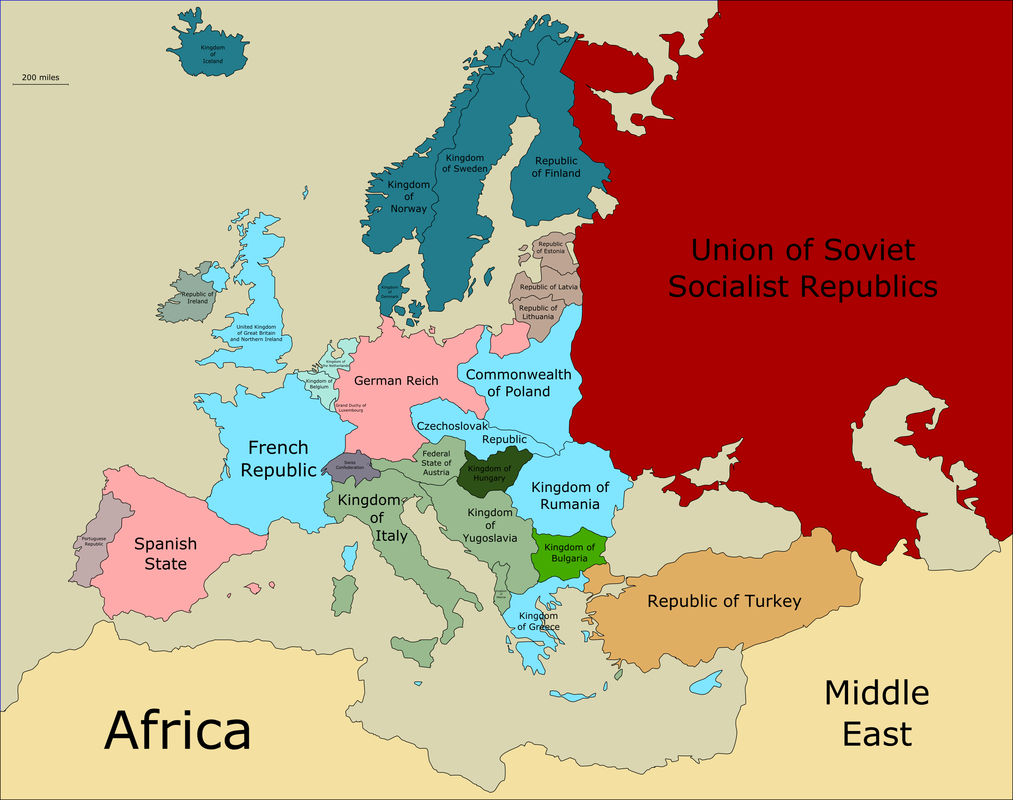
Also, analyzing the possibility of a war between Germany and the USSR, let us consider where the front line between these parties should have run. Here is the right time to remember that until October 1939, these countries did not have a common border – they were separated by Poland and the Baltic states, meaning that without their involvement, a war between the Germans and the Soviets would have been unlikely. Let us keep this in mind.
Now let us examine the arguments of the supporters of the concept of “directing Hitler to the East”. How, from their point of view, was Germany supposed to build up its army and military complex in the shortest possible time and gain access to the territory of the USSR? Let us start with the economic and organizational component. On March 16, 1935, Germany officially renounced the military restrictions imposed on it by the Treaty of Versailles. At first glance, this action passed for Germany without serious consequences from the former victorious countries, which sent a note of protest to Berlin.
However, on March 13, even before the official statement of the German side, another White Paper was published, which quite clearly stated the need to prevent war “if the aggressor is shown that there is such a superiority in forces against him that he has not a single chance of success”12. Germany was implied almost outright as the aggressor, which “has left the League of Nations and begun rearmament in bypass of the Versailles agreements”13. France, on the other hand, passed a new two-year conscription law on March 1114.
At the same time, the communists themselves condemned the Treaty of Versailles. Thus, at the Fourth Congress of the Comintern in 1922, the treaty was condemned as “imperialist”. Germany was portrayed in it as a victim that had come to depend “…on the mercy of the imperialist powers…” and turned into “…a toy in the hands of England and France”, therefore the communists had to fight against the Treaty of Versailles15. And if we take specifically Germany and the German Communist Party, on August 24, 1930, the “Programmatic Statement on the National and Social Liberation of the German People” was issued, which condemns the Treaty of Versailles and accuses the Nazis of hypocrisy on the issue of repealing the treaty, as well as of betrayal. In addition, the communists themselves announced that after coming to power they would tear up the treaty16. Thus, while the “West” sought to comply with the terms of the Treaty of Versailles (albeit without special principle), the communists actually advocated for its abolition, which would have allowed Germany to arm itself.
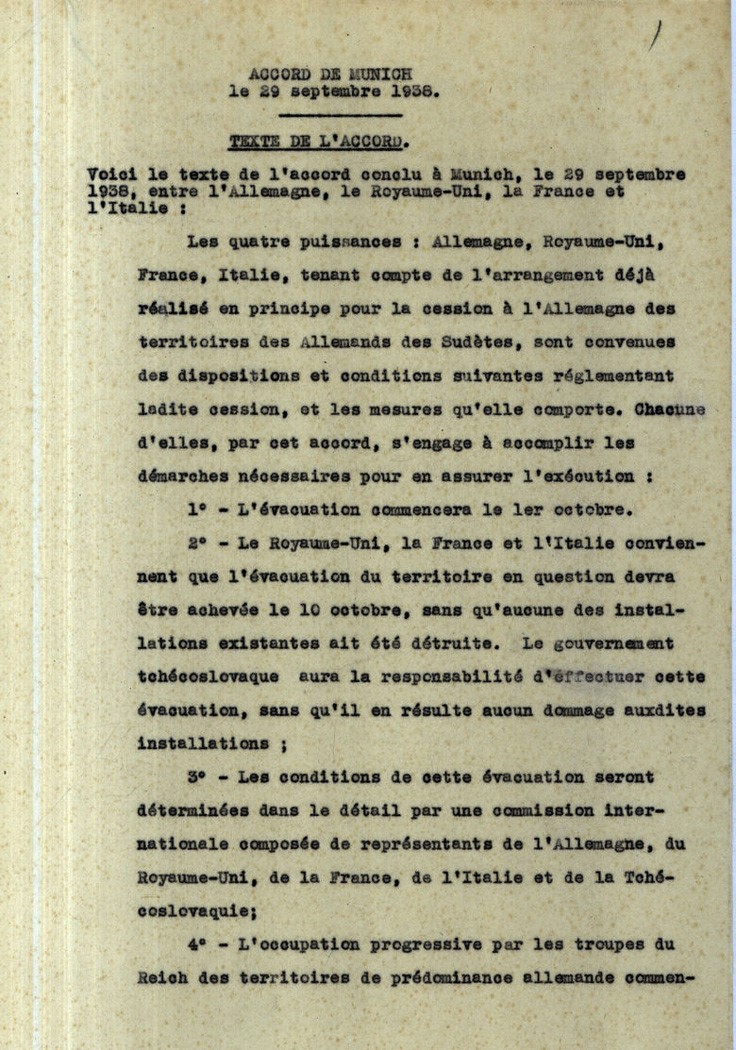
On March 7, 1936, German troops entered the Rhineland, demilitarized under the Treaty of Versailles, which was a grossest violation of the Treaty of Versailles. An even grosser violation was the Anschluss, that is, the “reunification” of Austria two years later. However, the crown of border revisions was the Sudeten Crisis, following which Germany received the Sudetenland – the border territories of Czechoslovakia. The Munich Agreement, according to which the Reich received the Sudetenland, became simply the epicenter of all conspiracy theories.
At first glance, assumptions about the “West’s” pandering to the Germans may seem convincing: Hitler was allowed to revive the army, remilitarize the Rhineland, annex Austria and the Sudetenland. However, let us look at the capabilities of England and France – at what they could respond with to the actions of the Germans.
Let us start with the state of the French army, which was supposed to hinder Germany. In 1932, the strength of the French army was 320,000 men, but only 2/3 of them were sufficiently trained and could be effectively deployed17, and by 1938 the army had grown to only 438,00018. At the same time, by 1933 the Germans had 100,000 regular troops, excluding paramilitary organizations like the SA, and by mid-1935 already 400,000, increasing by 1 division (approximately 16,000 people) every month19. A similar situation existed in Great Britain – British War Secretary Duff Cooper assumed that Britain would not be able to wage a full-scale war with Germany until the summer of 193920.
Public opinion is also worth mentioning separately. In France, against the backdrop of the exacerbation of the economic crisis, military actions against Germany could have been approved by the public only in the event of direct aggression against France21. A similar view existed in England. Many remembered the horror of the First World War and did not want a new bloody slaughter over a minor, as it then seemed, issue22. Nor should one underestimate the threat from Italy and Japan – a war by England and France against Germany would have untied their hands23. Stalinists apparently do not understand that in democratic countries, the start of a war without public support threatens the resignation of the government with all the ensuing consequences, and the governments of England and France, remembering the revolutions in Germany and Russia, could only start a war at a certain stage of the conflict’s escalation, which they did in 1939, having convinced their citizens that they had done everything possible to avoid war and not put them under arms. In particular, the Munich Agreement was supposed to show that an attempt had been made to negotiate with Hitler, especially since he stated that in the event of the transfer of the Sudetenland, he would not make any further territorial claims in Europe. The violation of this promise allowed the allied governments to declare war and convince their citizens that their interests had been respected, but war could by no means be avoided. It is authoritarian countries that are capable of declaring war and sending their citizens to the slaughter without taking their opinion into account. For democratic countries, declaring war is always a difficult process, and this is good for their citizens.
In addition, one should not think that Germany stopped complying with military restrictions only in 1935: already in 1934 the German army exceeded the established norms by 2.5 times, and by 1935 armored (3 divisions) and aviation troops appeared; the production of military equipment was also moved abroad24. It must also be mentioned that Germany spent much more on rearmament than its potential opponents.
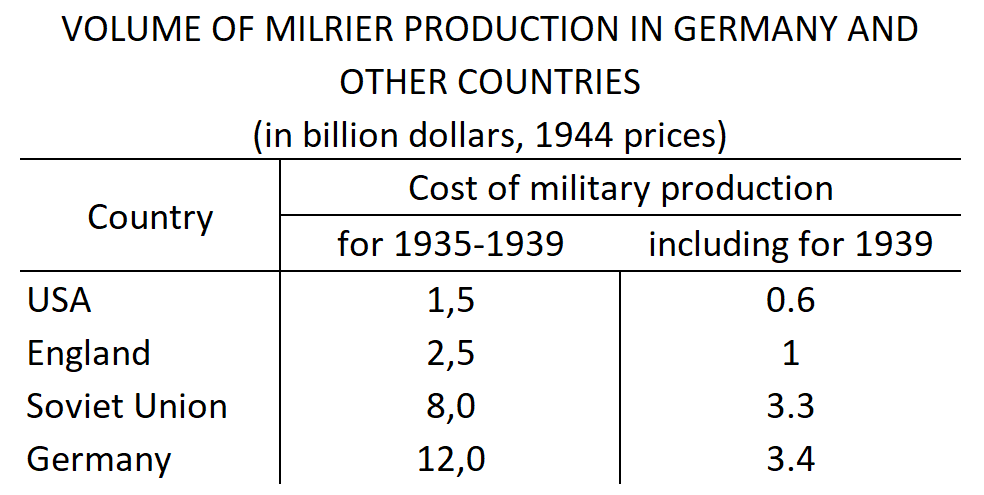
Thus, we see that the “West” could not stop Germany immediately: the situation in the world had developed maximally in favor of the Third Reich, and the forces of England and France alone were insufficient to immediately stop the Germans. It is therefore strange to accuse these countries of not starting a war against Hitler immediately, but instead trying to delay it.
Now let us look at whether the “West” tried to give Germany a common border with the USSR so that it could invade it, for this is precisely what the main “Western” aspiration is according to conspiracy theorists. Most of the time, they harp on the remilitarization of the Rhineland and the annexation of the territories of Austria and Czechoslovakia. Let us return to the map of 1933 and see that the seizure of none of these countries brought Germany any closer to the border with the USSR. Let us also recall that neither England nor France approved the seizure of all of Czechoslovakia in any way; the Munich Agreement transferred only the Sudetenland to Germany, and the complete annexation was a gross violation of this agreement.
However, there was a country whose annexation would have allowed Germany and the USSR to get a line of contact. This country was Poland. And it is precisely when it comes to Poland that the theory of “directing Hitler to the East” begins to look maximally weak. After all, England and France gave Poland defense guarantees on March 31, 193925, when Germany once again violated its obligations by seizing all of Czechoslovakia. At that time, these guarantees were not questioned even by Soviet representatives, as evidenced by a telegram from the Plenipotentiary Representative of the USSR in Great Britain, I. M. Maisky, to the People’s Commissariat for Foreign Affairs of the USSR dated March 31, 1939:
Yesterday, after the announcement of the declaration in parliament, Chamberlain invited Lloyd George to exchange views on international issues. During the conversation, Lloyd George sharply raised the issue of the USSR’s participation in the bloc of peace-loving powers, to which the prime minister replied that he completely agreed with this in principle, but that the position of Poland and Romania made the practical involvement of the USSR difficult for now. Then Lloyd George asked how, under such conditions, Chamberlain risked coming out with his declaration, threatening to draw England into a war with Germany. The prime minister objected that, according to the information he possessed, both the German General Staff and Hitler would under no circumstances go to war if they knew they would have to fight on two fronts simultaneously – west and east. Lloyd George asked where this “second front” was. The prime minister replied: “Poland”. Lloyd George burst out laughing, began to mock Chamberlain and prove that Poland had neither any decent aviation nor sufficient army mechanization, that the armament of the Polish forces was more than mediocre, that economically and politically Poland was weak. There could be no “eastern front” without the active help of the USSR. In conclusion, Lloyd George stated: “In the absence of a firm agreement with Russia, I consider your statement today an irresponsible gamble which may end very badly”26.
In such a situation, the purported “plan” begins to look frankly absurd – the West directs Germany to the East, against the USSR, but at the same time does not allow it to smoothly invade Poland, which separates this Germany from Soviet territories. In addition, such guarantees inspired confidence in the Polish leadership, ruling out the possibility of a Polish-German treaty regarding Danzig27.
The attempts of Western European states to build a system of confrontation against Nazi Germany, including with the participation of the USSR, also contradict the Stalinist thesis – for example, in May 1935, a treaty of mutual assistance was signed between the USSR, France, and Czechoslovakia28. However, after the Great Purge, the Stalinist regime ceased to be perceived in developed countries as an adequate ally:
One of the consequences of the Great Purge was the deterioration of the international reputation of the USSR. Stalin undoubtedly understood that Western public opinion, especially its left wing, was shocked by the executions of honored Bolsheviks. He took care to ensure that the repressions were accompanied by an energetic propaganda campaign. Materials from the Moscow trials were published in European languages in large print runs, in which the defendants – Lenin’s associates and other old Bolsheviks – confessed to preparing terrorist acts against Stalin and to ties with foreign intelligence services. Western public figures invited to Moscow, such as the German writer L. Feuchtwanger, were used as a kind of agents of influence. Caught between the hammer of Nazism and the anvil of Stalinism, they were ready to overlook much and deceive themselves in many ways. However, Western politicians making real decisions had every reason not only to distrust Stalin, but to view the explosion of terror and the hysteria of identifying “enemies” as evidence of the weakness of his regime. One of the key arguments of the skeptics was the purge of the Red Army’s command staff. Stalinist and Western perceptions of the consequences of terror clearly diverged. Stalin, obsessed with the idea of destroying the “fifth column”, simply did not understand that in the West arrests and executions could be perceived otherwise than as evidence of strength… At the same time, it would be incorrect to claim that only repressions against the military and the Western leaders’ perceptions of the USSR’s weakness played a key role in the deterioration of relations between Stalin and his Western partners. Rather, mass arrests in the USSR gave additional arguments to those who already saw plenty of reasons not to trust Stalin29.
The resignation in early May 1939 of People’s Commissar for Foreign Affairs Maxim Litvinov, who had tried to rally anti-Hitler forces in Europe, meant the impossibility of a further agreement between the USSR, France, and Great Britain, which signaled to Hitler that he could play on this. Judging by a diary entry of Comintern leader Georgi Dimitrov, Stalin did not agree “on the price” with the democratic countries regarding a military agreement (in 1941, the cost would be measured in millions of lives of USSR citizens). At a meeting on September 7, 1939, he stated:
We preferred an agreement with the so-called democratic countries and therefore conducted negotiations. But the British and French wanted to have us as farm laborers and besides that pay nothing for it! We, of course, would not have gone as farm laborers and even less so for nothing in return30.
In that same diary, Dimitrov cites other interesting phrases of Stalin:
– The war is being fought between two groups of capitalist countries (poor and rich regarding colonies, raw materials, etc.). For the redivision of the world, for domination over the world!
– We do not mind if they fight each other thoroughly and weaken each other.
– It would not be bad if the position of the wealthiest capitalist countries (especially England) were shaken by Germany’s hands.
– Hitler, without understanding or desiring it himself, is shaking and undermining the capitalist system31.
We can also recall other testimonies, for example, Margarete Buber-Neumann, the widow of German Communist Party Politburo member Heinz Neumann:
Neumann urged striking a blow against National Socialism wherever you met it. In the autumn of 1931, the slogan changed. Neumann was recalled to Moscow for a conversation with Comrade Stalin. This was in December 1931. Stalin said to him at the beginning: “Don’t you think, Comrade Neumann, that if the fascists take power in Germany, they will be so busy with the West that we will be able to peacefully build socialism in Russia?” Neumann was of a different opinion, so he was recalled to Moscow to work in the Comintern, and then sent to Spain, to the editorial office of “Mundo Obrero”… Soon he was removed from work in Spain and recalled to Zurich32.
Based on this information, the picture shapes up in such a way that it was rather Stalin who harbored hopes of dealing with the “West” through Hitler’s hands, but nothing came of it.
In this article, we have not cited all the arguments that refute the conspiracy theory about the “inciting West”: we could have analyzed the Munich Agreement in more detail; we could have pointed out that Hitler’s policy until the summer of 1940 was primarily anti-French in nature, and so on. In addition, Stalinist conspiracy theorists often cite other dubious arguments like the “West’s” sponsorship of the NSDAP33 or the “West’s” trade with Germany during the Second World War34, which we will analyze in other articles. However, the facts already cited are sufficient to refute the thesis of “incitement”.
- Larisa Kaftran. Did England and and the US force Hitler to attack the USSR? // Komsomolskaya Pravda (www.kp.ru). June 23, 2011, 2:00. [Electronic resource]: https://www.kp.ru/daily/25708.3/907821 (Accessed January 17, 2022).
- Natalia Naryshkina: “The West did not want Hitler to stop after Munich” // Narotchnitskaya.ru (narotchnitskaya.com). October 3, 2008. [Electronic resource]: http://narotchnitskaya.com/in-archive/nataliya-narochnitskaya-quot-zapad-ne-hotel-chtobyi-posle-myunhena-gitler-ostanovilsya-quot.html (Accessed January 17, 2022).
- O. Khlevniuk. Stalin. Life of One Leader: A Biography. – 464 p. – M.: AST-CORPUS, 2015. – pp. 230-231.
- Documents and Materials of the Eve of the Second World War. 1937–1939. Vol. 1. November 1937 – Dec. 1938 / Ministry of Foreign Affairs of the USSR; Editorial Board: Zemskov I. N. et al. – 302 p. – M.: Politizdat, 1981. – p. 257.
- Ibid., p. 241.
- Peace Treaty between the Allied and Associated Powers and Germany and Protocol, signed on June 28, 1919, Article 160
- Ibid., Article 170.
- Ibid., Articles 164-169.
- Ibid., Articles 173, 176-178.
- Ibid., Article 180.
- Ibid., Article 179.
- British White Papers on Empire defence, Horowhenua Chronicle, 13 March 1935 – p. 7.
- Ibid.
- Robert A. Doughty. The Seeds of Disaster: The Development of French Army, 1919-1939 – p. 24.
- Fourth Congress of the Comintern. November 5 – December 5, 1922. The Treaty of Versailles // Communist International in Documents: Decisions, Theses and Appeals of the Congresses of the Comintern and Plenums of the ECCI, 1919-1932. – M.: Party Publishing House, 1933. – p. 343.
- Ernst Thälmann. Selected Articles and Speeches, Vol. 2. Foreign Languages Publishing House, Moscow, 1958. – pp. 368-375
- Robert A. Doughty. The Seeds of Disaster: The Development of French Army, 1919-1939 – p. 23
- Ibid., p. 24
- Benjamin Thomas Reynolds. “The British Government and the Rhineland Crisis”. The University of Melbourne. 2010. – p. 35.
- Ibid., p. 34
- Helmut-Dieter Giro. Frankreich und die Remilitarisierung des Rheinlandes. Heinrich-Heine-Universität. Düsseldorf. 2005. – p. 86.
- Robert A. Doughty. The Seeds of Disaster: The Development of French Army, 1919-1939 – p. 12
- Ibid., p. 44
- Ibid., p. 87
- Parl. Debs, 5th ser., House of Commons, vol. 345, col. 2415.
- AVP USSR, f. 059, op. 1, p. 300, d. 2076, l. 65–66. Published in: USSR in the Struggle for Peace… pp. 290-291.
- Tippelskirch K., Geschichte des Zweiten Weltkrieges. Bonn, 1954. – p. 17.
- O. Khlevniuk. Stalin. Life of One Leader: A Biography. – 464 p. – M.: AST-CORPUS, 2015. – pp. 192-193.
- O. Khlevniuk. Stalin. Life of One Leader: A Biography. – 464 p. – M.: AST-CORPUS, 2015. – pp. 228-229.
- Politburo of the Central Committee of the RCP(b) – All-Union Communist Party (Bolsheviks) and the Comintern. 1919-1943. Documents / ed. by G. M. Adibekov et al. (eds.). M., 2004. pp. 780-781.
- Russian State Archive of Socio-Political History. Fond 146. Inventory 2. File 5. Sheets 54-56.
- B. Nosik. This Strange Paris Trial. – 256 p. – M.: Moscow Worker, 1991. – p. 214.
- Elena Minushkina. Who was Hitler’s main sponsor and created the Third Reich? // Kramola (www.kramola.info). January 6, 2020, 21:09. [Electronic resource]: https://www.kramola.info/vesti/vlast/kto-byl-glavnym-sponsorom-gitlera-i-sozdal-tretiy-reyh (Accessed January 21, 2022).
- Lend-Lease for Hitler // Military Review (topwar.ru). November 5, 2013. [Electronic resource]: https://topwar.ru/35451-lend-liz-dlya-gitlera.html (Accessed January 21, 2022).