“Stalin prepared the USSR well for the war”
Supporters of a dictatorship often consider its efficiency, primarily in terms of mobilization and military capability, to be one of its justifications. However, upon closer examination, it turns out that its results can hardly be called efficient. Let's examine this using the example of Stalin's Soviet Union, which some believe was able to prepare effectively for the war.
Among defenders of the regime, patriots, Stalinists, and other representatives of Russian conservative movements, a popular viewpoint is that the USSR prepared well for World War II, and did so thanks to Joseph Stalin. For example, political strategist Oleg Matveychev, who cooperates with the administration of the President of the Russian Federation1, writes:
It is ridiculous to talk about Stalin being “unprepared for the war”, he had been preparing for it for more than 10 years2.
A portal named “Heirs of Victory” echoes him:
Stalin scraped everything out of the country, including church utensils and unique paintings, but he prepared the army and industry for the war3.
Indeed, the sacrifices were very large — we have described, for instance, here the low standard of living in Stalin’s USSR. Perhaps, in exchange for these sacrifices, the citizens received truly high-quality and equivalent protection from a military invasion? Let’s find out.
Contents
Foreign policy
The USSR entered the war with the main aggregator of the continent — Nazi Germany — on June 22, 1941, without a single ally in Europe. An alliance with Great Britain was concluded only on May 26, 19424, and the Soviet-American agreement was signed on June 11 of the same year5. Moreover, the Stalinist government concluded treaties with the Nazis before the war, and according to the secret protocols of the Molotov-Ribbentrop Pact, it actually tried to divide Eastern Europe with them. It can be said that it made the most serious mistakes possible in foreign policy — failing to find strong allies, except for the one that attacked it.
Did the USSR have opportunities to find strong allies before the events of 1938, when the Munich Agreement was concluded, and thereby avoid them? Despite the genuinely difficult situation, such opportunities did exist (for example, the Franco-Soviet Treaty of Mutual Assistance could have been developed), but they should be analyzed in a separate article. Had the Communists not been in power, Russia would have had every chance of being in a bloc like the Triple Entente, in which it had been prior to the Communist takeover.
Immediately after England and France entered the war, Joachim von Ribbentrop persistently began to suggest that the USSR move Soviet troops into Poland. The German leaders calculated that the Western powers would then declare war on the Soviet Union, dragging it into the war on Germany’s side and forcing it to share the blame for unleashing it. To Ribbentrop’s inquiries regarding the military intentions of the Soviet government, Molotov replied “that Soviet troops would move within a few days”. The Soviet Union did indeed send in its troops, and today many consider the USSR to be one of the powers that unleashed World War II, for which they can say “thank you” to Stalin’s government.
Furthermore, the Stalinist government also supplied Nazi Germany with 1.5 million tons of grain, 2 million tons of petroleum products, a million tons of cotton, 1.5 million tons of timber, 140 thousand tons of manganese, and this list is far from exhaustive6. Freight trains rolled dutifully into Germany right up until June 22, 1941, and the last train carrying Soviet grain crossed the bridge over the Western Bug toward Terespol just 1 hour and 15 minutes before the German attack on the USSR7. There exists an “Agreement on mutual commodity deliveries for the second contract period under the Economic Agreement of February 11, 1940, between the Union of Soviet Socialist Republics and Germany”8. After May 1940 (the German attack on France) and until June 22, 1941, Hitler received 70% of all imported raw materials precisely from Stalin’s government9.
The military-industrial complex
In the last pre-war five-year plan, the USSR emphasized the military-industrial complex and the militarization of the economy in the form of further pumping money from the state budget into the defense sector. To say that as a result the army was equipped radically better technically than Nazi Germany, which had far fewer resources (not to mention the USA), is quite difficult.
It is impossible, of course, to deny that the Soviet military-industrial complex developed certain models of equipment that became, arguably, the most successful of all that existed at the time. These include, primarily, the T-34 and KV-1 tanks (“Klim Voroshilov”: Western businessmen named the cars they manufactured after their own surnames, whereas Soviet “businessmen” named tanks), the Il-2 ground-attack aircraft, the PPSh submachine gun, and the BM-13 multiple rocket launcher system (“Katyusha”). All of these are exceptionally successful examples of military hardware.
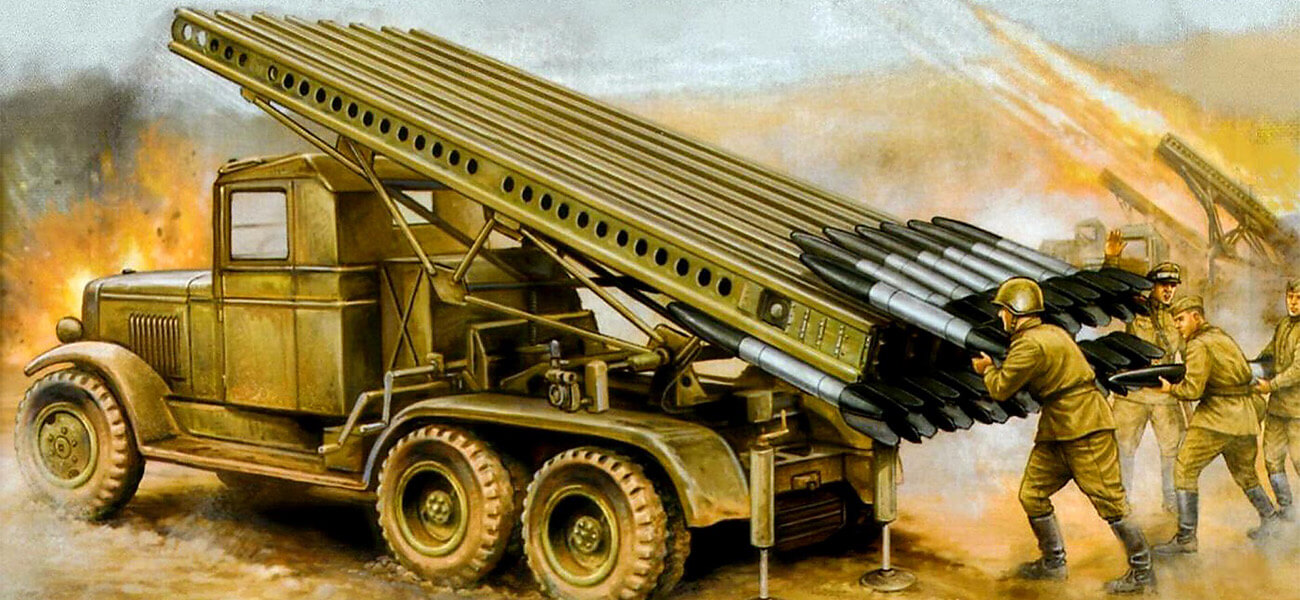
However, their presence was largely devalued by their utilization at the beginning of the war — vast territories fell under Nazi occupation (as we will mention below), and a large number of equipment specimens were captured and studied by the Hitlerites. Soviet citizens, who had already experienced the low standard of living and the highly repressive nature of the Stalinist regime, surrendered en masse, fled, and abandoned combat equipment (however, this is a topic for a separate article). This, by the way, was one of the factors that prompted the Nazi attack on the USSR — for instance, Joseph Goebbels wrote in his diary on May 1, 1941, that “Bolshevism will collapse like a house of cards. And probably nowhere will our soldiers be received as joyfully as they will be met there”10. That is, all the sacrifices made for the sake of developing the military-industrial complex turned out to be in vain — the effect of accelerating development through repressions (if there even was any) was neutralized by the behavior of the citizens, which was caused by these very repressions. Stalin wrote to Klim Voroshilov and Andrei Zhdanov on September 9, 1941:
Where did the KV tanks go, where did you deploy them, and why is there no improvement on the front despite such an abundance of KV tanks in your possession? After all, not a single front has even half the number of KVs that you have on your front. What is your aviation busy with, why does it not support the actions of our troops on the field? The assistance of Kulik’s divisions has reached you — how are you using this assistance? Can one hope for any improvement on the front, or will Kulik’s assistance also be reduced to zero, just as the colossal assistance in KV tanks has been reduced to zero?11
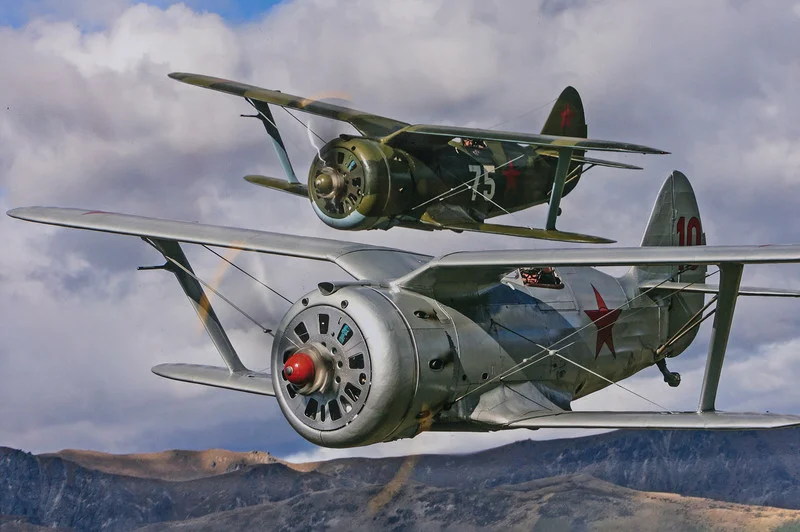
Despite the availability of modern equipment models in the ground forces, the USSR possessed a very weak navy, which played no significant role in the war. The equipment of the air force was also not advanced for that period — a significant portion of the fighters consisted of the I-15, I-16, and I-153, which were obsolete and had shown their low competitiveness against German models as far back as the Spanish Civil War12. The USSR Air Force had no modern heavy bombers, and the main medium bomber, the ANT-40 (SB), was also obsolete by 1941.
As for the equipment of the land forces, a number of models that began entering service in 1940–1941 proved to be combat-ready throughout the entire war. But their mass production had not yet been established. Therefore, most of the Soviet weaponry was inferior to the enemy in its tactical and technical characteristics. The production of small arms lagged behind, primarily submachine guns, anti-aircraft artillery, and especially radio communication equipment. There was an acute shortage of transport vehicles and repair shops in the troops. The navy lacked minesweepers and submarine chasers, had no magnetic mines, and so on.
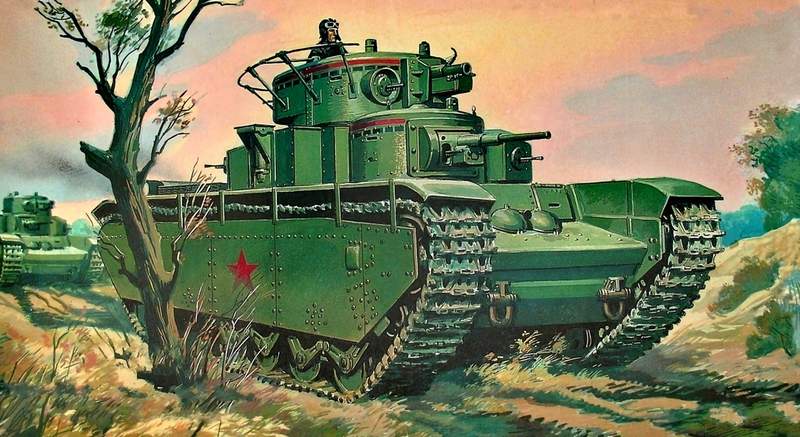
In addition, a significant amount of resources was spent on the production of less effective types of armaments, such as the T-35 and T-26 tanks, and the T-27 tankette. Some equipment models, for example, the ZiS-2 anti-tank gun, were developed without consideration for real-world application — the shells of the ZiS-2 pierced right through the armor of German light tanks, sometimes causing no harm at all to the crew13, so this gun was even discontinued during the initial period of the war.
At the same time, Soviet industry lagged in the production of certain critical types of machinery. For example, the number of trucks delivered under the Lend-Lease program significantly exceeded the number produced in the USSR, which clearly points to their shortage (about 427,000 trucks were delivered to the Soviet Union under the Lend-Lease program14, while the USSR industry manufactured a total of only 344,024 vehicles in 1941–194515). In general, Lend-Lease assistance and its scale should be evaluated in a separate article.
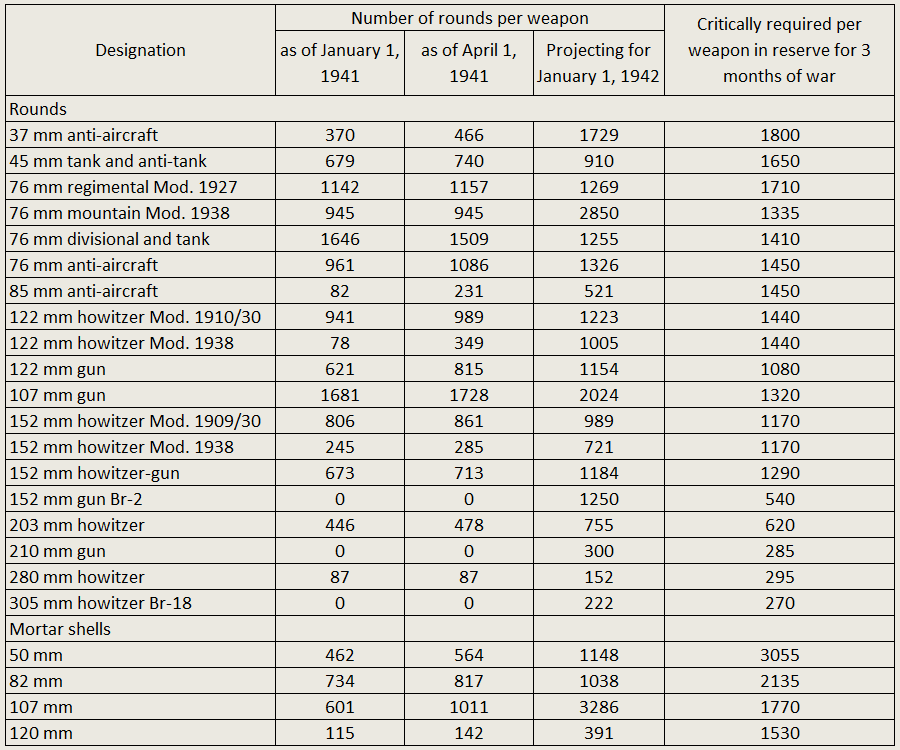
The Soviet troops were not sufficiently supplied with ammunition. A memorandum from the Deputy Head of the Ground Artillery Armament Directorate of the Main Artillery Directorate of the Red Army, M.V. Bushmelev, to the People’s Commissar of State Control of the USSR, L.Z. Mekhlis, dated January 3, 1941, reported that “having a significantly more powerful industry, we have not surpassed the Russia of 1916 in ammunition output over three years”16. The People’s Commissar of Defense, S.K. Timoshenko, informed Stalin and Molotov on April 18, 1941, about the ammunition supply: “the production of rounds is insufficiently expanded for all new models of artillery pieces”17. His report included a table from which it is clearly evident that the plan for ammunition reserves was extremely far from being fulfilled.
Personnel problems
Due to the unjustified pre-war “purges” in the Red Army (we examined the fabricated nature of the repressions here) and the rapid growth of new military formations in a short space of time, it was impossible to solve the problem of supplying it with the necessary number of qualified commanding personnel. More than 80 divisions were still in the process of formation18.
The role of commanders in the army has always been one of the defining factors at all times. Very often, troops that were significantly superior in numbers and in the degree of supply organization suffered defeats from troops of substantially smaller numbers. It has always been ineffective to fight without knowing the art of warfare. And there is no point in the most advanced technology if you handle it poorly. For this reason, the personnel issue is exceptionally important in military affairs — perhaps it is even the most important of all.
A telling incident occurred in the summer of 1944, when the People’s Commissariat of Defense was developing proposals for the training of officer personnel in the postwar period19. Upon receiving the relevant report from the head of the Main Personnel Directorate of the NKO, Filipp Golikov, Marshal Georgy Zhukov sent him his comments. This two-page document, dated August 22, 1944, was exceptionally frank and critical. First of all, Zhukov stated that when training commanders, it was necessary to take into account the bitter experience of the initial stage of the war. On the eve of the war, Zhukov wrote, “we did not have pre-selected and well-trained commanders of fronts, armies, corps, and divisions. At the head of the fronts stood people who failed one thing after another… The situation was even worse with the commanders of divisions, brigades, and regiments”. Naming specific individuals, Zhukov placed General Pavlov, who was accused of treason, in the same row as the relatively secure recent favorites of Stalin, Marshals Budyonny and Timoshenko. Zhukov proposed carefully training personnel in peacetime and criticized the military education system. Zhukov’s statement, which could well be considered political, looked provocative: “The qualities of will of our commander — initiative, the ability to take responsibility — are insufficiently developed, and this had a very detrimental effect on the course of the war in the first period”20.
Stalinists believe that thanks to the repressions “we had no spies and traitors” (for example, one Stalinist in the Express Gazeta argued that Stalin’s repressions and the destruction of “traitors” saved the country from defeat in the war21). But, firstly, what is the use of this if the Wehrmacht still attacked at the moment of almost the greatest weakness of the Red Army? Secondly, this is a falsification. People who are commonly referred to as traitors were present in large numbers: Generals Andrey Vlasov, Vasily Malyshkin, Fyodor Trukhin, Boris Richter, Pavel Bogdanov, and there were plenty of them among civilians too — Tonka the Machine-Gunner, Alex the Fierce, and so on. In total, up to 1.5 million Soviet citizens volunteered for frontline, auxiliary, and security units of the Wehrmacht, Waffen-SS, punitive formations of the SD and SS, and police groups22. Meanwhile, people like the future Marshal Konstantin Rokossovsky fell under the wheel of repression, and with the outbreak of the war, he had to be released from prison due to the shortage of military personnel. A significant number of designers, engineers, medical workers, and other vital personnel who were capable of positively influencing the course of the war were also repressed. Rather, the case was exactly the opposite — it is precisely the cruelty of the repressions that explains such a massive number of people who went over to the side of the Nazis.
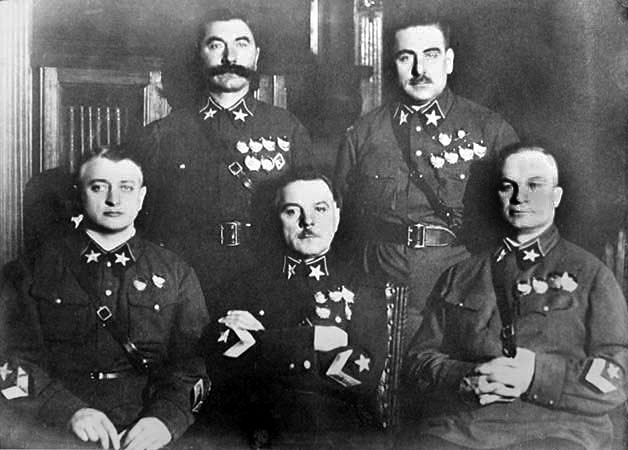
At the same time, the best military commanders of the Civil War — Mikhail Frunze, Mikhail Tukhachevsky, and Vasily Blyukher, who had a large number of successfully conducted military operations to their credit — were already dead by June 22, 1941. We will not talk about the involvement of Stalin’s secret services in the death of Frunze, as it is still unproven, but the deaths of Tukhachevsky and Blyukher, as well as many other experienced military specialists, are the result of their work (the Stalinist mythology regarding Tukhachevsky, created to justify the repressions, should be analyzed in a separate article). Kasian Chaykovsky, commander of the world’s first mechanized corps of the armed forces, August Kork, head of the Frunze Military Academy, Pavel Rychagov, an ace pilot, and many others were destroyed. Regarding Rychagov, Zhukov wrote:
The report on the topic “Air Forces in an Offensive Operation and in the Struggle for Air Supremacy” was made by the head of the Main Directorate of the Red Army Air Force, Lieutenant General P. V. Rychagov, who had particularly distinguished himself in Spain. It was a very substantial presentation. The tragic death of this talented and brave general during the years of Stalin’s cult of personality was a great loss for us. Shortly after the conference, he was shot23.
Zhukov also noted that the repressions inflicted moral trauma on the army and navy. Marshal Aleksandr Vasilevsky went even further, believing that:
Without the year thirty-seven, there might have been no war at all in forty-one. The fact that Hitler decided to start the war in forty-one was largely due to his assessment of the scale of destruction of the military cadre that had occurred in our country24.
Military actions in the initial period
At the initial stage of the war, due to the actions of the Nazis, the Stalinist government managed to acquire certain territories. Thus, in 1939, an order was given by the Supreme Commander-in-Chief, Marshal Edward Rydz-Śmigły, to the Polish troops, which prescribed: “Do not engage in combat with the Soviets, only in case of an offensive on their part or in case of attempts to disarm our units… which the Soviets have approached closely; in this case, it is necessary to negotiate with them with the aim of withdrawing the garrisons to Romania or Hungary”25. That same night (September 18), the Polish government crossed the Polish-Romanian border.
In the Baltic States, the almost final ultimatum from the Soviet Union in late September and early October regarding the conclusion of mutual assistance agreements was perceived by the governments of Lithuania, Latvia, and Estonia as the lesser of two evils. The contracting parties pledged to render each other all kinds of assistance, including military aid. Provision was made for the creation of military bases on the territories of Latvia, Lithuania, and Estonia and the deployment of contingents of Soviet military units on them (25,000 men each in Latvia and Estonia, 20,000 men in Lithuania)26. Due to the intensification of pro-German sentiments in the ruling circles of these republics, the Soviet government sent notes to the leadership of Lithuania (June 14), Latvia, and Estonia (June 16), stating that it considered it absolutely necessary and urgent to form such governments in them that could ensure the “honest implementation” of the mutual assistance treaties with the USSR, and also demanded an increase in the size of Soviet troops on the territory of the Baltic states. On July 14–15, elections were held in Latvia, Lithuania, and Estonia. In Lithuania and Latvia, People’s Seims were elected, and in Estonia, the State Duma. They proclaimed Soviet power in the “Baltic Republics” and decided to request the Supreme Soviet of the USSR to admit Soviet Latvia, Soviet Lithuania, and Soviet Estonia into the Soviet Union, which took place in August 1940.
Thus, neither the actions in Poland nor the actions in the Baltic States could demonstrate the actual readiness of the Soviet army. It was eloquently demonstrated by the military actions in the Winter War.
After a period of unsuccessful negotiations with Finland, in which the Stalinist government failed to obtain the territories it needed by peaceful means, on November 30, troops of the Leningrad Military District crossed the border without a declaration of war. The Soviet-Finnish War began. On December 1, in the town of Terijoki, a pro-Soviet “Government of the Democratic Republic of Finland” was created in opposition to the legitimate government of Finland, headed by Otto Kuusinen, a prominent figure in the Finnish Communist Party and the Comintern. The Soviet government recognized this government as the sole representative of Finland, and on December 2, signed a treaty of mutual assistance and friendship with it. In response to an inquiry from the League of Nations on December 4, 1939, aimed at clarifying whether the USSR had denounced the non-aggression pact with Finland and the peace treaty of 1920, Vyacheslav Molotov stated that “the Soviet Union is not in a state of war with Finland”, but “is in peaceful relations with the Democratic Republic of Finland”27. On December 14, the League of Nations condemned the actions of the USSR and expelled it from its membership.
At the beginning of the Finnish campaign, Soviet troops had some success. However, as they advanced, the enemy increased resistance, developing active diversionary and guerrilla activities in the immediate rear of the Red Army and creating strong pockets of resistance on the flanks. The supply of Soviet units and formations was disrupted due to traffic jams of transport and military equipment on the roads. Tanks bogged down in the snow and stopped before numerous obstacles. Some formations, for example, the 44th Rifle Division, were surrounded, and the personnel, having abandoned a significant part of their military equipment, broke through to the Soviet border in small groups. During the battles with the Finnish army in December 1939 – January 1940, the 44th, 163rd divisions, and a number of other units of the 9th Army suffered heavy losses, were fully or partially surrounded by the enemy, and were forced to fight their way out of the encirclement28. Stalin’s telegram to the head of the Main Political Directorate of the Red Army, Lev Mekhlis, regarding the operational summary of the Finnish command on the destruction of the 44th Division of the Red Army stated:
TO MEKHLIS
The White Finns have published their operational summary, which states: “The goal of the battles of recent days in the Suomussalmi sector has been fully achieved by the destruction of the 44th Division of the Red Army. More than 1,000 men were taken prisoner, and 102 guns, 1,170 horses, and 43 tanks were captured”.
Report first — whether this operational summary corresponds to reality; second — where the military council and the chief of staff of the 44th Division are, how they explain their shameful behavior, why they abandoned the division to its fate; third, why the military council of the 9th Army has kept completely silent and does not inform us about the scale of losses and the reasons for the defeat of this division. Awaiting an answer29.
Following the Soviet offensive in February 1940, a peace treaty was concluded between the USSR and Finland on March 12. The Soviet side managed to achieve territorial acquisitions (while Kuusinen’s government was left with nothing), but the USSR’s losses amounted to 126,875 dead, while the Finns lost 48,243 people30.
In the course of the hostilities, many shortcomings of the Red Army in organization, tactics, armament, and troop command were revealed. For example, Corps Commander Pyotr Shelukhin, attached to the headquarters of the Northwestern Front, wrote to the People’s Commissar of Defense:
The state of combat training of air units is at an extremely low level… bombers do not know how to fly and especially how to maneuver in formation. In connection with this, it is impossible to create fire interaction and repel the attacks of enemy fighters with massed fire. This allows the enemy to deal sensitive blows with their negligible forces. Navigational training is very weak, which leads to a large number of wanderings even in good weather; in poor visibility and at night — mass wanderings. The pilot, being unprepared for the route, and due to the fact that the responsibility for navigation lies on the pilot-observer, is careless in flight and loses orientation, relying on the pilot-observer. Mass wanderings have a very detrimental effect on the combat capability of units, because they lead to a large number of losses without any enemy action and undermine the crews’ faith in their own strength, and this in turn forces commanders to wait for weeks for good weather, which sharply reduces the number of sorties… Speaking about the actions of aviation as a whole, one should speak most of all about its inaction or action mostly in vain. For there is no other way to explain the fact that our aviation, with such a colossal superiority, could do almost nothing against the enemy for a month…31
All this contributed to reinforcing the opinion in the West, including in Germany, about the weakness of the Red Army. In fact, the Stalinist government disgraced itself before the entire world — the population of Finland in 1939 was about 3.7 million people32, while the population of the USSR was 170 million33. It failed to prepare the army even for a war with a state whose population was nearly 45 times smaller.
In the summer of 1940, the question arose of seizing territories near the southwestern borders of the USSR. On June 23, Molotov informed the German ambassador in Moscow, Schulenburg: “the settlement of the Bessarabian question brooks no delay”, making it clear that the Soviet government expected that Germany “would not hinder but would support Soviet actions”. On June 27, the USSR demanded that the territory of Bessarabia and the northern part of Bukovina be cleared of Romanian troops “within four days, starting from 14:00 Moscow time on June 28”34. On June 28, 1940, the Red Army entered Bessarabia and Northern Bukovina. On August 2, the Moldavian SSR was formed on the greater part of Bessarabia and the Moldavian Autonomous Republic, which had existed since 1924 on the left bank of the Dniester. Northern Bukovina and the southern regions of Bessarabia became part of Soviet Ukraine. After such behavior by the Stalinist government, it was not at all surprising that both Finland and Romania ended up on the side of the Nazis after June 22, 1941 — the aggressive policy of Stalin’s government in the initial period of World War II is partly to blame for the fact that their soldiers devastated and killed Soviet citizens.
Still, one cannot speak of the absolute failure of the Stalinist preparation for war, the reason being the successes in the Far East, where Japanese troops suffered defeats during the military clashes at Lake Khasan and the Khalkhin Gol River. These defeats became the main reason for Japan’s non-participation in military actions against the USSR after the Nazi invasion. However, readiness would still be more objectively measured by the European fronts.
The attack of Nazi Germany
That Nazi Germany would sooner or later attack the USSR in the course of the war was obvious — Adolf Hitler himself wrote about this in plain text:
We National Socialists consciously draw a line beneath the foreign policy tendency of our pre-War period. We take up where we broke off six hundred years ago. We stop the endless German movement to the south and west, and turn our eyes toward the land in the east. If we speak of soil in Europe today, we can primarily have in mind only Russia and her vassal border states.
Direct preparations of Germany for the war against the USSR were completed in June 1941. In total, the German armed forces prepared for the attack on the USSR numbered 4.1 million men, 40.5 thousand artillery pieces, about 4.2 thousand tanks and assault guns, more than 3.6 thousand combat aircraft, and 159 ships35. By Hitler’s decision, the troops of Finland, Romania, and Hungary were drawn into the anti-Soviet aggression. Taking them into account, about 5 million men, 182 divisions and 20 brigades, 47.2 thousand guns and mortars, about 4.4 thousand tanks and assault guns, more than 4.3 thousand combat aircraft, and 246 ships were allocated for the invasion of the USSR36.
In the ground forces of the Red Army, there were 303 divisions, including 61 tank and 31 motorized divisions. In total, the armed forces of the USSR possessed 117,989 guns and mortars, 18,691 tanks and self-propelled artillery mounts, and 16,052 combat aircraft37. This was a colossal force, which in terms of personnel numbers was inferior only to the German Wehrmacht, and in terms of the number of formations, guns, tanks, and aircraft had no equal in the world. At the same time, the combat readiness of the Soviet armed forces was low due to the incompleteness of their reorganization and committed miscalculations.
The formation of numerous new formations and equipping them with a large quantity of the main types of armaments began without taking into account the real capabilities of the military sector of Soviet industry. Thus, to fully equip the tank formations and corps according to the established tables of organization, 37.9 thousand tanks were required, meaning that in June 1941, another 19.2 thousand were still missing. Moreover, within a year, the factories were expected to deliver only about 4.2 thousand combat vehicles. At such production rates, full equipment of the tank formations was to be expected no earlier than in 4 years. Due to the disproportion between the number of tank formations and the quantity of weaponry, a situation arose where, despite the Red Army having nearly 19 thousand tanks, only one out of 29 mechanized corps turned out to be fully equipped. For the Red Army Air Force, 20,607 combat aircraft were required by the tables of organization, while 16,052 were available (including 2.3 thousand unserviceable ones). For equipping units with field artillery and the artillery reserve of the Main Command (RGK), 5.6 thousand guns were missing. The number of motor vehicles amounted to 36% of the wartime table of organization. Of these, slightly more than half were serviceable38.
A significant portion (more than 2 million men) of Soviet troops in 1940 was relocated to the territories annexed to the USSR in the West, which were not in a position to provide for their normal accommodation. The troops had to engage in the construction of barracks, parks for combat vehicles and artillery, training fields, test sites, firing ranges, airfields, and so forth by themselves. No more than 2 to 4 hours per week were allocated for their combat training. By decision of the Soviet leadership, permanent defensive fortifications began to be erected on the new western border. By the beginning of June 1941, the plan for their construction was fulfilled by only 25%39. Fortifications on the old border were partially dismantled for the purpose of equipping fortifications on the new western border. This also had a negative impact on the state of the Red Army’s combat capability.
On the whole, implementing a realistic plan for conducting the war against Germany at the initial stage of the war failed. Should a preemptive strike be delivered against the enemy? What would be the lines of defense and troop actions in the event of a sudden attack and an offensive against the enemy deep into the country? These crucial questions of grand strategy, on which the effectiveness of repelling the aggressor depended, were being decided in the final days before the war. Little attention was paid to studying the probable enemy, the methods by which they achieved surprise of attack, the massed employment of tanks and aviation, which required a revision of many previously established tenets of Soviet military strategy, operational art, and tactics, as well as the moral and psychological preparation of their own troops for military actions under incomparably more difficult conditions than in Mongolia or Finland. The statement of the People’s Commissar of Defense, Semyon Timoshenko, at the conference of the higher commanding staff of the Red Army (December 21–30, 1940) that “in terms of strategic creativity, the experience of the war in Europe, perhaps, offers nothing new…” looked difficult to explain40 (given that the USSR had more time to prepare for the blitzkrieg and study it than, for instance, France or even more so Poland). With none of the emerging tasks did the political and military leadership of the country, having sufficient time, means, and resources, fully cope.
Strategic plans for conducting the war with Germany were built on the incorrect assumption that in the event of an attack, the Nazi command would strive first and foremost to seize the economically developed regions of Ukraine and the Caucasus. In connection with this, the Soviet military command believed that the main blow should be expected from the southeastern regions of Poland toward Kiev and, accordingly, gave preference to building up its forces in Ukraine rather than in Belorussia and the “Baltic Republics”. But that was only half the trouble. Strategic plans as a whole were built on the basis of the pre-war doctrine of a “retaliatory blow”, according to which the cover armies of the western military districts were to repel the enemy’s offensive with active defense in order to ensure the deployment of the main forces intended for their defeat in the course of a strategic counteroffensive on their own territory. The drawback of this plan was that it initially left freedom of action to the enemy, who, guided by the concept of “lightning war”, immediately delivered a sudden and maximally powerful blow with their main forces already deployed for the attack. With such a development of events, the Red Army could find itself in an extremely difficult position.
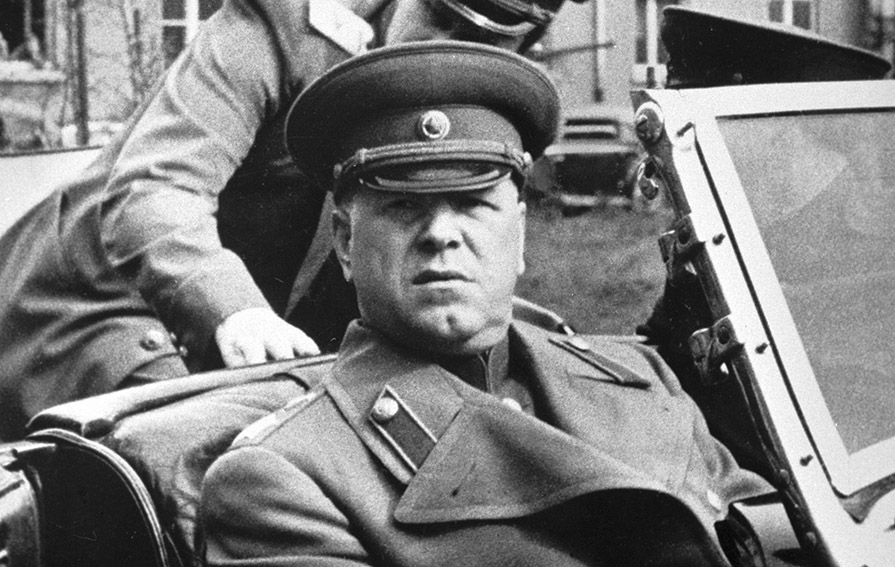
It was necessary to decide how to prevent the enemy from seizing the strategic initiative already in the border battles. This question troubled the General Staff of the Red Army, which at that time was headed by General of the Army (subsequently Marshal of the Soviet Union) Georgy Zhukov. In early May 1941, a document was prepared in the General Staff, which pointed to the growing concentration of German troops near the Soviet borders and to the fact that the already mobilized German army with deployed rears “has the capability to anticipate us in deployment and deliver a sudden strike”. In order to prevent the surprise of an attack and the enemy’s seizure of the strategic initiative, the draft document proposed to “anticipate” the German army in deployment and defeat it on the territory of Poland and East Prussia “at the moment when it will be in the deployment stage and will not yet have time to organize the front and the interaction of branches of the armed forces”41.
According to some reports, Stalin rejected this plan on the grounds that preparation for its implementation could serve as a pretext for Hitler’s aggression. In addition, he believed that it was disadvantageous for Germany to open military operations against the USSR without finishing the war against England. Many other leaders of the country held a similar opinion.
The information received in the Kremlin at that time regarding Germany’s immediate goals was highly contradictory and complicated the analysis of an already difficult situation, preventing the disclosure of the main objective of the Nazi leadership’s disinformation campaign — to achieve surprise for the Wehrmacht’s first blow. Historians of Soviet intelligence, while noting its positive results, nonetheless concluded that “being reported to the country’s leadership in a fragmented form, the information about military preparations did not create a cohesive picture of the ongoing events and did not answer the main question: for what purpose are these preparations being carried out, has a political decision to attack been made by the rulers of Germany, when should aggression be expected, and what will be the strategic and tactical goals of the enemy’s combat operations”42.
The Soviet leadership understood that the Red Army was not yet ready for war. Therefore, its primary goal in 1941 was to avoid war at all costs, to delay it at least until 1942, to buy time and complete the country’s preparation to repel the aggressor. In itself, this goal is understandable and justified. But in the Kremlin, they convinced themselves that it was realistic and achievable. As a result, putting the troops of the western border districts on combat readiness was constantly postponed, and the decisions made, including in the final days before the war, reflected growing uncertainty and confusion in the actions of Stalin personally, as well as his closest political and military leadership. Thus, the People’s Commissar of Defense and the Chief of the General Staff, by an order dated June 18, 1941, which was three days before the start of the war, instructed the command of the western districts to complete the construction of operational airfields. On June 20, they signed an order for the urgent camouflage of the country’s military airfields. A directive prepared by the General Staff warning of a possible attack between June 22–23 and demanding that the sudden strike of the Germans be met in full combat readiness43 was transmitted to the western military districts only on the night of June 22. It took more than four hours to convey this directive to the district commands, armies, corps, and divisions. Most formations and units were alerted not by order, but by enemy bomb strikes and artillery fire. Goebbels wrote in his diary on June 14, 1941:
The Russians, it seems, suspect nothing yet. At any rate, they are deploying their forces in just the way we would wish them to: heavily massed, making them easy booty for encirclement44.
For a long time, it was impossible to establish reliable communication with the troops. Thus, Stalin upbraided his subordinates:
Even the Chinese and Persian armies understand the importance of communications in commanding an army; are we really worse than the Persians and the Chinese? How can one command units without communications? […] It is impossible to tolerate this savagery, this shame any longer45.
Summary
The army was not prepared in terms of personnel, the government failed to build an effective diplomatic policy, and due to incorrect domestic policies at the initial stage, people surrendered en masse into Nazi captivity or lacked the incentive to resist (had the Nazis not pursued an even more brutal policy than Stalin’s group, it is not ruled out that the war would have ended very quickly). The Stalinist government’s estimates regarding the approximate date of the Nazi attack proved to be incorrect, which became one of the reasons why the re-equipping of the army was not completed in 1941, and the troops were not placed on combat readiness.
By September 1942, 1,926,000 square kilometers fell under Nazi occupation46, which is approximately equal to the area of three Frances. Roughly speaking, if the Stalinist government had ruled a country equal in territory to France, the Wehrmacht would have been able to capture it three times over. 46% of the USSR population found themselves under occupation47, and in the very first year of the war, 3.8 million people surrendered to the Nazis as prisoners48.
By December 31, 1941, the combat losses of the Soviet Air Force amounted to 10,300 combat aircraft, and the total losses (including non-combat losses) were 17,900. In total, combat losses (including training, transport, and other aircraft) amounted to 10,600 aircraft, and total losses reached 21,20049. A significant portion of military equipment fell into the hands of the Germans and was used against Soviet troops. Moreover, during the retreat of the troops, the Stalinist government gave instructions to blow up factories and other industrial facilities, and to burn crops and supplies, so that mistakes in preparing for the war largely nullified the effects of the ongoing industrialization as well.
All the facts presented by us in this article indicate that the Stalinist government failed to prepare for the war, and, consequently, the repressions, dictatorship, and low standard of living in Stalin’s USSR cannot be justified by this preparation, and the blame for such a high number of war casualties lies primarily on the Stalinist government.
- Elena Mukhametshina. Natalya Rotenberg, State Duma deputies, political strategists and other “leaders of Russia” // Vedomosti (www.vedomosti.ru). March 20, 2020, 01:13. [Electronic resource]. URL: https://www.vedomosti.ru/politics/articles/2020/03/20/825724-natalya-rotenberg (accessed: 30.10.2020).
- O. Matveychev. The Imperative Mood of History. – 464 p. – M.: Eksmo, 2010 – p. 123.
- Historians are blatantly lying! By ’41, Stalin had prepared his country with an A-plus // Heirs of Victory (naslednikipobedi.ru). February 19, 2020. [Electronic resource]. URL: http://naslednikipobedi.ru/news/istoriki_naglo_vrut_k_41-mu_godu_stalin_svoyu_stranu_podgotovil_na_pyat_s_plyusom/ (accessed: 30.10.2020).
- I.N. Zemskov. Diplomatic History of the Second Front in Europe. – M.: Politizdat, 1982. pp. 277 – 280.
- Ivan Krivushin. Anti-Hitler Coalition // Krugosvet Encyclopedia (www.krugosvet.ru). [Electronic resource]. URL: https://www.krugosvet.ru/enc/istoriya/ANTIGITLEROVSKAYA_KOALITSIYA.html (accessed: 30.10.2020).
- Geoffrey Roberts. Stalin’s Wars: From World War to Cold War, 1939-1953. – 496 p. – New Haven and London: Yale University Press, 2008. – p. 42
- Paul Carell. Unternehmen Barbarossa. Verlag Ullstein GmbH. Frankfurt/M – Berlin, 1963
- AVP RF. F. 3a. Germany. D. 316. Original.
- Edward E. Ericson. Feeding the German Eagle: Soviet Economic Aid to Nazi Germany, 1933-1941 / Edward E. Ericson. – 265 p. – London, Praeger, 1999. – p. 208.
- E.M. Rzhevskaya. Goebbels. Portrait against the Background of the Diary. – 400 p. – M.: AST-PRESS KNIGA, 2004. – p. 250.
- Stalin I.V. Works. – Vol. 18. – Tver: Information and Publishing Center “Soyuz”, 2006. P. 254. / Izvestiya Tsk KPSS. 1990. No. 10. P. 217.
- V.A. Bakursky, B.V. Solomonov, S.L. Fedoseev. Weapons of Victory – 184 p. – M.: ROSMAN, 2020. – p. 96.
- V.N. Shunkov. Red Army. – 352 p. – M.: AST, 2008. – p. 104.
- I.S. Ratkovsky, M.V. Khodyakov. History of Russia: 20th Century: A Manual for University Applicants. – 459 p. – St. Petersburg: Piter, 2005. – p. 268.
- National Economy of the USSR in the Great Patriotic War of 1941–1945. P. 66.
- AP RF. F. 3. Op. 46. D. 344. L. 1-16. Original.
- AP RF. F. 3. Op. 46. D. 345. L. 195 200. Original.
- Samsonov A. M. The Collapse of Fascist Aggression. 1939–1945: An Historical Essay. M., 1975. P. 119.
- O. Khlevniuk. Stalin: New Biography of a Dictator. – 464 p. – M.: AST-CORPUS, 2015. – p. 330.
- RGASPI. F. 17. Op. 163. D. 1420. L. 95-96; Istochnik. 1996. No. 2. pp. 137–138.
- Mikhail Vasiliev. Traitors must be shot: Stalinist repressions saved the USSR from defeat in the war // Express Gazeta (www.eg.ru). July 16, 2019, 08:00. [Electronic resource]. URL: https://www.eg.ru/politics/754991-predateley-nado-rasstrelivat-stalinskie-repressii-spasli-sssr-ot-porajeniya-v-voyne-055722/ (accessed: 30.10.2020).
- S.I. Drobyazko. Soviet citizens in the ranks of the Wehrmacht. On the question of numbers // The Great Patriotic War in the Assessment of the Young. M., 1997. p. 133.
- G.K. Zhukov. Memoirs and Reflections. In 2 vols. Vol. 1. – 415 p. – M.: OLMA-PRESS, 2002
- Kommunist magazine, 1988, No. 9, p. 88
- International background of the aggression of the German Reich against Poland in 1939. Warsaw, 1987. p. 193.
- War and Politics. 1939-1941 / Ed. by A.O. Chubaryan. M., 1999. p. 196
- Izvestia. 1939. Dec. 5.
- US. Library of Congress. Manuscript Division. “Volkogonov Collection”.
- US. Library of Congress. Manuscript Division. “Volkogonov Collection”.; TsAMO. F. 5. Op. 176705 ss. D. 1. L. 25
- The Clasified Status Has Been Removed: Losses of the Armed Forces of the USSR in Wars, Combat Operations, and Military Conflicts: A Statistical Study / V. M. Andronikov, P. D. Burikov, V. V. Gurkin, et al.; Under the general ed. of G. F. Krivosheev. – 415 p. – M.: Voenizdat, 1993. – pp. 122- 123.
- F.34980, Op. 12, D. 1774, L.23 ob.
- Mariya Kiseleva, Vitaliy Chervonenko, Yuriy Baranyuk. “Back then we still didn’t believe it was a real war”. Veterans on the Winter War 80 years later // BBC News Russian Service (www.bbc.com). November 30, 2019. [Electronic resource]. URL: https://www.bbc.com/russian/features-50550415 (accessed: 30.10.2020).
- Population of the USSR on January 17, 1939. By districts, regional centers, cities, workers’ settlements, and large rural localities. According to the data of the All-Union Population Census of 1939. – 266 p. – M.: Gosplanizdat, 1941. – p. 6.
- Foreign Policy of the USSR. Collection of Documents. Volume IV (1935 – June 1941) / Ed. by S.A. Lozovsky. – 647 p. – M.: 1946. – p. 516.
- The Great Patriotic War. 1941-1945. Military-Historical Essays. Book One. Severe Trials. – 544 p. – M.: Nauka, 1998. – p. 113.
- Ibid.
- Ibid., p. 90.
- Ibid., pp. 83-90.
- Ibid., pp. 86-87.
- Russian Archive: The Great Patriotic War: On the Eve of the War. M., 1993. Vol. 12(1). p. 339
- The Great Patriotic War. 1941-1945. Military-Historical Essays. Book One. Severe Trials. – 544 p. – M.: Nauka, 1998. – p. 118.
- Hitler’s Secrets on Stalin’s Desk: Intelligence and Counterintelligence on the Preparation of German Aggression against the USSR. March-June 1941. Documents from the Central Archive of the FSB of Russia. – 253 p. – M.: Publishing House of the “Mosgorarkhiv” Association, 1995. – p. 12.
- A.M. Samsonov. The Second World War. 1939-1945: An Outline of the Most Important Events. – 583 p. – M.: “Nauka” Publishing House, 1985. – p. 106.
- E.M. Rzhevskaya. Goebbels. Portrait against the Background of the Diary. – 400 p. – M.: AST-PRESS KNIGA, 2004. – p. 258.
- Russian Archive. The Great Patriotic War. Stavka VGK. 1941 / ed. by V. A. Zolotarev. Vol. 16 (5–1). M., 1996. pp. 92–93. Stalin’s conversations with the command of the western direction troops, July 26, 1941.
- The Great Patriotic War. Jubilee Statistical Collection: Stat. coll. / Rosstat. – 190 p. – M., 2015. – p. 31.
- Under the Germans. Memoirs, Testimonies, Documents. Historical-Documentary Collection / Compiled by K.M. Aleksandrov. – 608 p. – St. Petersburg: Scriptorium, 2011. – p. 165.
- V.N. Zemskov. “Statistical Labyrinth”. The total number of Soviet prisoners of war and the scale of their mortality // Demoscope Weekly (www.demoscope.ru). Published in the journal “Russian History”, 2011, No. 3, pp. 22-32. [Electronic resource]. URL: http://www.demoscope.ru/weekly/2013/0559/analit04.php (accessed: 30.10.2020).
- W. Schwabedissen. The Russian Air Force in the Eyes of the German Commanders. / Trans. from English. – 528 p. – Mn.: Harvest, 2003. – p. 356.