Stalin and antisemitism
As we know, antisemitism is one of the most persistent forms of racism, and anyone who makes antisemitic statements is a racist. Accordingly, no leftist, social democrat, socialist, or communist can be an antisemite, and anyone who is an antisemite cannot be considered left-wing. Let us examine whether Joseph Stalin can be regarded as a leftist.
Accusing Joseph Stalin of antisemitism is a rather serious matter, because if he was an antisemite, this would provide additional evidence that he was neither a communist nor a socialist, but was instead closer to Nazism. We have already discussed the harm of racism and Nazism in a separate article, and have also examined why the distinction between the left and the right is not an economic one, but a value-based one. Thus, if the General Secretary was a racist, this provides additional grounds for classifying him as far-right. Therefore, let us examine various pieces of evidence on this issue in order to answer the question of whether Stalin was an antisemite.
Contents
Struggle against antisemitism
Up until the events of the Great Terror of 1937–1938, when mass extermination of socialists was organized, Joseph Stalin publicly spoke out against antisemitism, and in general manifestations of antisemitism in the Soviet Union were officially considered harmful. On January 12, 1931, Stalin responds to a request from the Jewish Telegraphic Agency in America (first published in the newspaper “Pravda” No. 329, November 30, 1936):
National and racial chauvinism is a relic of misanthropic customs characteristic of the period of cannibalism. Antisemitism, as an extreme form of racial chauvinism, is the most dangerous relic of cannibalism.
Antisemitism benefits the exploiters as a lightning rod that diverts capitalism from the blows of the working masses. Antisemitism is dangerous for the working masses as a false path that leads them away from the correct path and into the jungle. Therefore, communists, as consistent internationalists, cannot but be irreconcilable and sworn enemies of antisemitism.
In the USSR, antisemitism is strictly prosecuted by law as a phenomenon deeply hostile to the Soviet system. Active antisemites are punished under USSR law by the death penalty1.
The speech delivered in December 1927 at the 15th Congress of the All-Union Communist Party (Bolsheviks) was also aimed at combating antisemitism:
We have certain sprouts of antisemitism not only in known circles of the middle strata, but also among a certain part of the workers and even among some links of our Party. This evil must be fought, comrades, with full ruthlessness2.
Undoubtedly, young Stalin spoke out against antisemitism on numerous occasions:
The constantly persecuted and insulted Jews are moaning, deprived of even those miserable rights which other Russian subjects enjoy — the right to live anywhere, the right to go to school, the right to hold public office, etc.3
And this gives us the right, if we so wish, to argue that the General Secretary was a fighter against antisemitism. However, if we examine the matter impartially, we cannot draw conclusions based solely on public statements (Vladimir Putin also declares that he wants to fight the stagnation of Russians’ incomes4, Adolf Hitler referred to the peoples of the Soviet Union as friendly5 and so on); therefore, we must also look at non-public statements and practical actions. All the more so because the reply to the Jewish Telegraphic Agency, as noted, for example, by Doctor of Philosophical Sciences Vadim Rogovin6, might have been published (as indicated by the publication date – 1936, whereas the reply was written in 1931) due to the fact that the onset of the trials against the Zinovievites had aroused public suspicion regarding the antisemitic nature of these trials.
Contrary statements
In his 1907 article “The London Congress of the R.S.D.L.P.”, Stalin quotes an antisemitic joke by Grigory Aleksinsky — what is important for us is that he saw fit to include it in the article:
No less interesting is the composition of the Congress from the standpoint of nationalities. Statistics showed that the majority of the Menshevik faction consists of Jews (not counting the Bundists, of course), then come Georgians, then Russians. On the other hand, the overwhelming majority of the Bolshevik faction consists of Russians, then come Jews (not counting Poles and Latvians, of course), then Georgians, etc. In this connection, one of the Bolsheviks remarked jokingly (I think it was Comrade Alexinsky) that the Mensheviks are a Jewish faction and the Bolsheviks a true-Russian faction, so it would not be a bad idea for us Bolsheviks to arrange a pogrom in the party7.
Leon Trotsky wrote regarding this:
Even now one cannot help being astonished that in an article intended for the workers of the Caucasus, where the atmosphere was poisoned by national strife, Stalin found it possible to quote a joke with such a suspicious aroma. This was by no means a matter of accidental lack of tact, but of deliberate calculation… It may be assumed that the Menshevik faction in Baku was at that time led by Jews and that by his joke about a pogrom the author wanted to compromise his factional opponents in the eyes of the other workers… Let us add that Alexinsky’s “joke” did not arise by accident either: this ultra-Left Bolshevik subsequently became an outright reactionary and anti-Semite8.
Following this ill-quoted joke, Stalin became far more cautious in his official works and speeches regarding Jews. Moreover, as we will learn further from the testimonies of people who worked with him, he was at one time suspected of antisemitism, making such jokes highly dangerous for the General Secretary. Meanwhile, numerous oral testimonies and practical steps directed against Jews as a national community have been documented.
Antisemic policy in Stalin’s USSR
A Jew fills out a questionnaire. “Have you been a member of other parties?” “No”. “Have you been in territory occupied by the enemy?” “No”. “Have you ever been on trial or under investigation?” “No”. “Nationality?” “Yes”.
Strictly speaking, the groundwork for antisemitic policy was already laid within the very principles of internationalism, which provided the theoretical basis for forming regional elites along national lines; thus, Stalin is not the root cause here. As early as 1921, the Tenth Party Congress announced a policy of “indigenization” (“korenizatsiya”) of cadres9, which essentially marked the beginning of the formation of a national bureaucracy — a nomenklatura with national interests. Doctor of Historical Sciences Gennady Kostyrchenko notes that, for example, Ukrainization “practically amounted to the ostracism of employees from among Russians and Jews. The latter suffered particularly, for such a fate had been prepared for them for a long time”10. In 1926, one of the high-ranking Jewish communists, A.N. Merezhin, noted that “since the Twelfth Congress, we have been intensively removing Jews from responsible positions”11. By that time, Stalin had already concentrated most of the personnel policy in his hands.
Under Stalin, Jews were almost entirely removed from the nomenklatura. Boris Bazhanov, who was one of the leader’s secretaries in the mid-1920s, recalls:
Lazar Moiseyevich Kaganovich is remarkable for being one of the two or three Jews who continued to remain in power throughout the entire period of the Stalin regime. Given Stalin’s antisemitism, this was possible only thanks to Kaganovich’s complete renunciation of all his relatives, friends, and acquaintances. For instance, it is a known fact that when Stalin’s Chekists raised before Stalin the case against Kaganovich’s brother, Mikhail Moiseyevich, the Minister of the Aviation Industry, and Stalin asked Lazar Kaganovich what he thought about it, Lazar Kaganovich — who knew perfectly well that a sheer murder without the slightest basis was being prepared — replied that it was a matter for the “investigative organs” and did not concern him. Before his arrest, Mikhail Kaganovich shot himself12.
Valery Engel, Candidate of Historical Sciences and Director of the Institute for the Study of National Policy and Inter-ethnic Relations, also confirms the policy of removing Jews from responsible positions based on nationality:
In 1937, N. Yezhov carried out a purge of Jews from the NKVD organs; in 1939, on the eve of concluding the pact with Germany, M. Litvinov, a Jew and a proponent of rapprochement with Britain and France to form an anti-fascist bloc, was removed from his post as People’s Commissar for Foreign Affairs. His successor, V. Molotov, conducted a “racial purge” in the Commissariat, telling the staff: “We will do away with the synagogue here forever”. By the late 1930s, only two Jews remained in Stalin’s inner circle — L. Kaganovich and L. Mekhlis13.
Pavel Sudoplatov, who served as an MVD General under Stalin (the very same man who directed the operation to eliminate Trotsky), also confirms this thesis, providing some intriguing testimonies:
The situation worsened even more in 1947. I remember an oral instruction from Obruchnikov, the deputy minister of state security for personnel, not to accept Jews for officer positions in the state security organs. I could not imagine that such an openly anti-Semitic order came directly from Stalin, and I believed that it was all Abakumov’s doing. It became clear to me that the grandiose plan to use the Soviet Jewish intelligentsia to strengthen international cooperation with world Jewry had been rejected. Eitingon, who was constantly complaining about the harassment of his relatives at the university and in medical institutions, was convinced that anti-Semitism was an essential element of state policy. Looking back, I admit that he understood the situation much better than I did14.
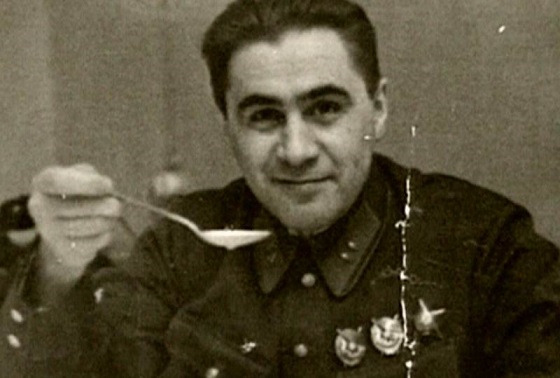
Oleg Khlevniuk, Doctor of Historical Sciences and Chief Specialist of the State Archive of the Russian Federation, notes:
Not least under the influence of Nazi propaganda, anti-Semitic sentiments spread quite widely in the Soviet Union during the war years. Even high-ranking functionaries did not shy away from anti-Semitic outbursts in reports to Stalin. In January 1944, Deputy Commander of the Air Force General G. A. Vorozheykin wrote to Stalin and other Soviet leaders about an overabundance of Jewish servicemen in headquarters and various military institutions, including trade ones: “At the front they call them not ‘voentorg’ [military trade] but ‘abramtorg’ […] All these ‘abramtorgs’ should be sent to fight”15. In Stalin’s post-war mail, preserved in his personal archive, we also find letters of an anti-Semitic nature and complaints about the spread of anti-Semitism in the country.
<…>
The essence of such sentiments was described in one of the letters selected for a report to Stalin in 1949: “Just as the entire German people bears responsibility for Hitler’s aggression, so the entire Jewish people must bear responsibility for the actions of the bourgeois cosmopolitans”1617.
The fact that generals allowed themselves such anti-Semitic remarks in communication with Stalin (knowing perfectly well what kind of person he was) indicates, at the very least, that no fight against anti-Semitism was being waged. Moreover, Khlevniuk Formulates:
The anti-Semitic accusations brought against Molotov’s wife were part of a general policy of state anti-Semitism initiated by Stalin on the wave of intensifying confrontation with the West. In early 1948, on Stalin’s orders, the state security organs liquidated the prominent Jewish public figure and theater director Mikhoels. In late 1948, by Stalin’s order, the Soviet Jewish Anti-Fascist Committee (JAC), created during the war to mobilize international support for the USSR, was liquidated. The committee was declared a center of “espionage” linked to foreign intelligence. Over the next few years, the “JAC case” gradually expanded, culminating in a closed trial in May–July 1952. All the defendants, with the exception of one, were shot18. Along with the arrests of Jewish public figures and representatives of Jewish culture, a broader state campaign under the banner of the struggle against so-called “cosmopolitism” intensified from 1949. Its victims were many Soviet Jews, who were arrested, dismissed, subjected to discrimination and insults19.
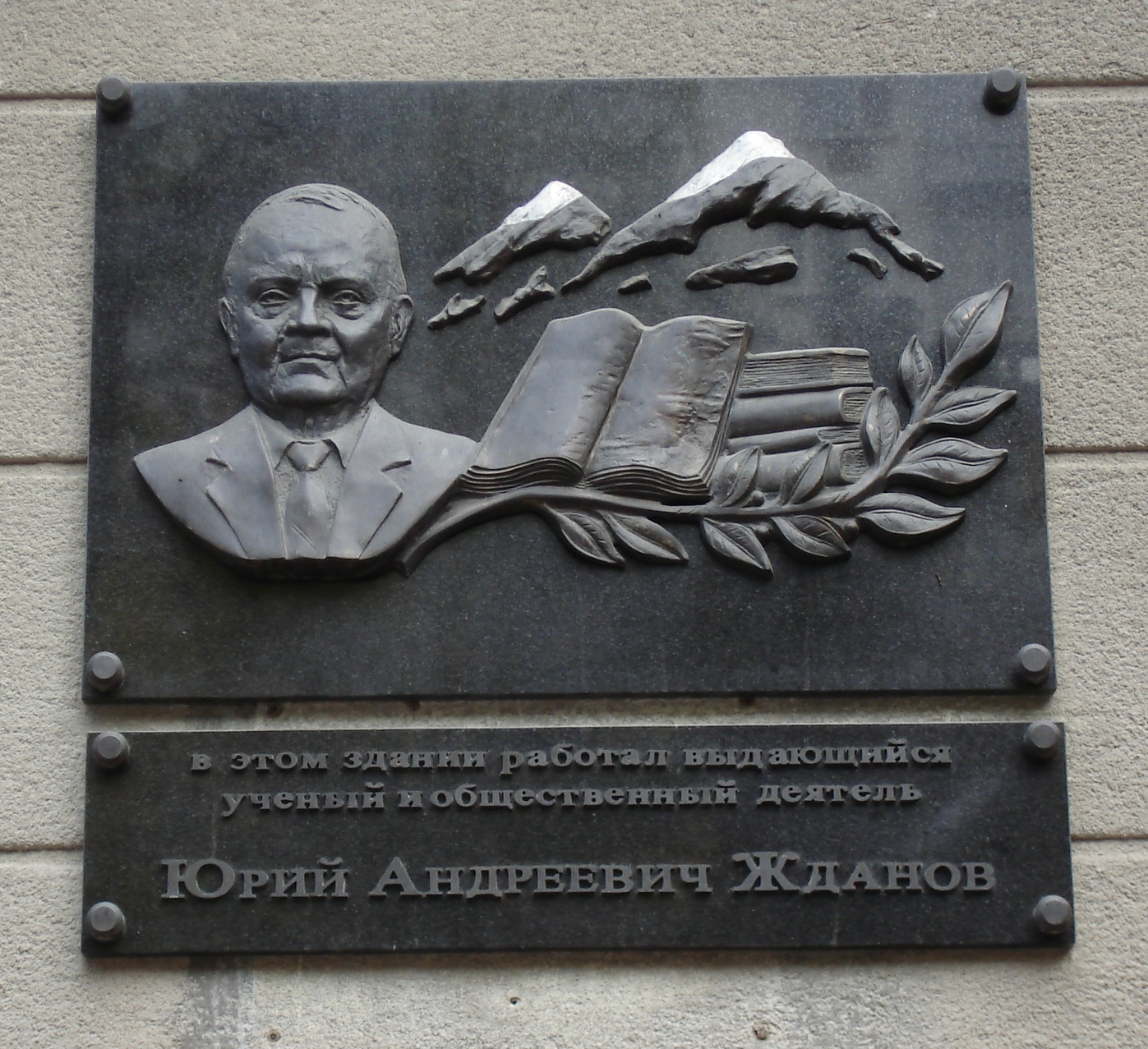
Even before the destruction of the JAC members — in June 1946 — the head of the Soviet Information Bureau, Solomon Lozovsky, was accused by a Central Committee commission of an “unacceptable concentration of Jews” in the Sovinformburo20. On November 23, 1950, Yuri Zhdanov, head of the Department of Science and Higher Educational Institutions of the Central Committee of the VKP(b), wrote to the Secretariat of the Central Committee of the VKP(b):
In the leadership of the laboratory of the Institute of Physical Chemistry, where work on a special topic is conducted, Jews make up about 80%. All the theorists of the institute (Meiman, Levich, Wolkenstein, Todes, Olevsky) are Jews. The head of the design department, the scientific secretary, the head of supply, and the head of the distribution of imported reagents are also Jews.
<…>
During the period from 1943 to 1949, under the guidance of Frumkin, Roginsky, and Rehbinder, 42 people prepared doctoral and candidate dissertations, 37 of whom were Jews. In the Lebedev Physical Institute, out of 19 laboratory heads, 26% are Russians and 53% are Jews. In the optical laboratory led by Academician Landsberg, senior research scientists are 33% Russian and 67% Jewish. In the Institute of Economics, out of 20 Doctors of Sciences, only 7 are Russian21.
Such letters were not isolated incidents. Thus, on December 15, 1950, the Propaganda and Agitation Department of the Central Committee of the VKP(b) wrote to the Secretariat of the Central Committee of the VKP(b):
In a number of institutes of the Academy of Sciences of the USSR, there is a biased selection of personnel along national lines, which has led to the formation of nationalist groups among scientific staff linked by mutual cover-up. Thus, for example, in the Institute of Physical Problems, only 20% of the laboratory heads are Russian, and only 1 is a member of the VKP(b). In the theoretical physics department, headed by Academician Landau, all leading scientific staff are Jews. Laboratories in which work on a special topic is conducted are 80% headed by Jews22.
A document dated October 1, 1944, in which the Cadres Directorate of the Central Committee of the VKP(b) writes to Georgy Malenkov that the leadership of the Lithuanian SSR is “approaching the solution to the Jewish question incorrectly”:
The Central Committee of the KP(b)L and the SNK are approaching the solution to the Jewish question incorrectly. The Central Committee of the KP(b) of Lithuania is, in essence, following the lead of the Jewish community in solving the Jewish question.
<…>
Comrade Ioffe, the head of Glavlit for the Lithuanian SSR, has staffed 80% of his apparatus with Jews23.
At that time, numerous letters began to reach Stalin with complaints about the authorities’ anti-Semitic policies. In June 1946, Yakov Braul, a member of the VKP(b), citing specific examples and names, wrote that Jews in Crimea were not being hired, and that those currently employed were being targeted for dismissal by all possible means, and that he, just as before 1917, had begun to feel like “Braul the Jew”24. There is a collective letter dated September 1, 1945, from Jewish frontline veterans, in which they complain about a Jewish pogrom in Kyiv, and about mass beatings and insults directed at Jews, which were condoned by local Soviet authorities25. There is a collective letter from the employees of “Altayselmash”, which testifies to unpunished mass beatings of Jews in Rubtsovsk26. And so on.
There is a document in which the head of the Propaganda and Agitation Directorate of the Central Committee of the VKP(b) informs Andrei Zhdanov that a book describing Nazi atrocities against Jews cannot be published because supposedly “the idea runs through the entire book that the Germans plundered and destroyed only Jews”27. A short while later, Zhdanov’s son, Yuri, complains to the Central Committee Secretariat that “half of the leading scientific staff in the laboratory of technical applications are Jews”, “in the theoretical physics department headed by Landau, all leading scientific staff are Jews”, and again calculates the percentages of Jews28, and in yet another letter laments that “laboratories in which work on a special topic is conducted are 80% headed by Jews”29.
Pavel Sudoplatov reported on racial purges in the state security organs: “Vasilevsky was dismissed from the security organs in 1948 — becoming one of the first victims of the anti-Semitic campaign that had begun”30. Moreover, according to his testimony, such a policy was also pursued before the war:
I recall that in 1939 we received an oral directive obliging us — this was already after the mass repressions — to monitor the percentage of individuals of a given nationality in the leadership of the most critical departments from a security standpoint. But this directive turned out to be much deeper in its intent than I had expected. For the first time, a quota system came into effect31.
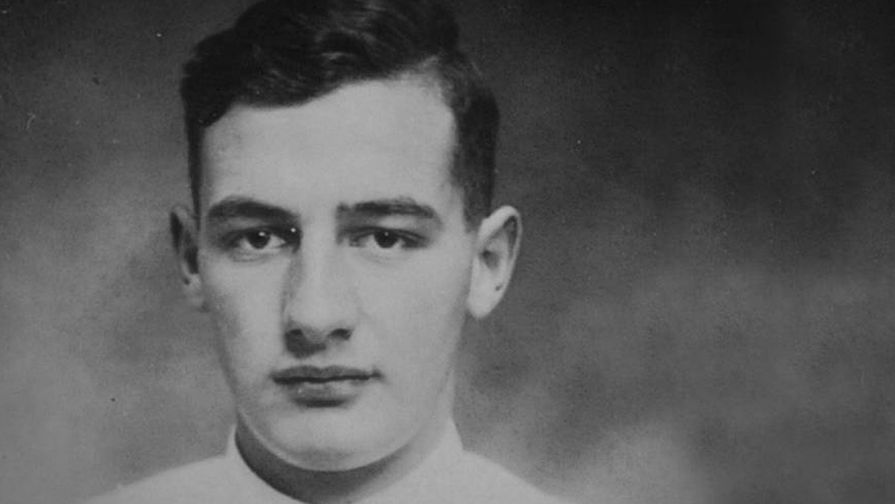
At the end of the Second World War, the Swedish diplomat Raoul Wallenberg, who saved the lives of tens of thousands of Hungarian Jews during the Holocaust, disappeared in the Soviet Union. Under Stalin, Wallenberg’s presence on USSR territory was denied; on February 6, 1957, as a result of the persistence of official Stockholm and the international community, the First Deputy Minister of Foreign Affairs of the USSR, A.A. Gromyko, handed Ambassador R. Sohlman a memorandum on the results of the investigation into materials concerning R. Wallenberg. It contained the text of a report by the head of the medical service of the Internal (Lubyanka) Prison, Colonel of Medical Service A.L. Smoltsov, addressed to the Minister of State Security of the USSR, V.S. Abakumov. This document, dated July 17, 1947, stated, in particular, that “the prisoner Wallenberg, who is known to you, died suddenly in his cell tonight, presumably as a result of an acute myocardial infarction”32. Here is how Pavel Sudoplatov describes the events involving Wallenberg:
By the time of his arrest by military counterintelligence, Raoul Wallenberg was known for his activities in saving and transporting Jews from Germany and Hungary to Palestine. We knew of Wallenberg’s high reputation among the leaders of international Zionist organizations. To arrest him, like any Western diplomat, without a direct order from Moscow was unthinkable. Even if one assumes that he was detained by accident (at the same time, more than thirty diplomats from several European countries were detained, almost all of whom were released a few months later in exchange for prisoners of war and Soviet Army personnel who remained in the West), the heads of military counterintelligence in Budapest were bound to report this to Moscow. It is now known that Bulganin, Stalin’s deputy in the Commissariat of Defense, signed the order for Wallenberg’s arrest, and the order was immediately executed.
<…>
Wallenberg’s interrogations were conducted by intelligence officers, most frequently by Lieutenant Colonel Kopelyansky, who spoke fluent German. He was dismissed from the organs in 1951 because of his Jewish origin33.
Here is how the post-war anti-Semitic policy developed as a whole from the perspective of Sudoplatov, who held important positions in the state security organs:
In the second half of 1946, Stalin took a position of active opposition to the activities of international Jewish organizations and Anglo-American policy on the Palestine issue — he was irritated by the demands of Soviet Jews for better living conditions upon their return from evacuation. He began to fuel the anti-Semitic campaign in the USSR: purges began in the party apparatus, the diplomatic service, the military leadership, and intelligence. The culmination of the campaign was the “Doctors’ Plot” and accusations of Zionism against Jewish doctors. The anti-Semitic campaign became a repetition of the purges of the 1930s, another Stalinist maneuver to reshuffle the entire party and Soviet apparatus in order to replace the old leadership — Molotov, Mikoyan, Beria, and others — with new people who would not threaten his position as the sole ruler of the country.
In October 1946, the bugbear of Jewish bourgeois nationalism was raised for the first time as a threat to communist ideology. Abakumov, newly appointed as Minister of State Security, in a letter to the leader accused the leaders of the Jewish Anti-Fascist Committee of nationalist propaganda, stating that, in his opinion, they placed Jewish interests above the interests of the Soviet country. Such an accusation sounded like a serious warning. Kheifets, who had distinguished himself brilliantly in obtaining information on the atomic bomb and had managed to establish high-level contacts in the American Jewish community, fell into disgrace. He continued to work in the Jewish Anti-Fascist Committee as secretary for foreign relations, but was forced to sever his contacts with the American Jewish public.
<…>
After Stalin launched the campaign against cosmopolitans in 1946–1947, middle-level management and rank-and-file party officials began to perceive anti-Semitism as the official party line. The term “rootless cosmopolitan” became a synonym for the word “Jew”: it meant that Soviet citizens of Jewish nationality shared the worldview of Western Jews and, by virtue of this, could not be completely loyal to the Soviet state34.
Here is how Oleg Khlevniuk describes Stalin’s anti-Semitic policy as a whole:
Judging by many signs, in the final years of his life Stalin regarded Jews as a suspicious, ‘counterrevolutionary’ nation, much as he had viewed Poles, Germans, and North Caucasian peoples before and during the war. The repressions of the 1930s, the Holocaust, and postwar anti-Semitism had eroded the revolutionary spirit characteristic of many Soviet Jews in the early years of Soviet rule. Now, Stalin believed, Jews had turned their gaze toward the West, toward the United States, and were ready to serve it with the same enthusiasm with which they had joined the Russian Revolution. ‘Every Jewish nationalist is an agent of American intelligence. Jewish nationalists believe that their nation was saved by the USA (there you can become rich, a bourgeois, etc.). They consider themselves indebted to the Americans,’ Stalin stated at a meeting shortly before his death, on December 1, 1952.35 These suspicions of Stalin’s were only amplified by the Jewish wives of his closest associates, the Jewish husband of his daughter, and so on. Stalin’s political anti-Semitism escalated, becoming an important tool of domestic and international policy in the last years of his life36.
<…>
In October 1951, Stalin summoned Ignatyev to the south and instructed him to ‘remove all Jews’ from the MGB. To Ignatyev’s blurted question, ‘Where to?’ Stalin explained to the inexperienced minister: ‘I am not telling you to throw them out onto the street. Lock them up and let them sit there […]’37. As subsequent events showed, Ignatyev learned this lesson well. Mortally terrified, he obediently intensified arrests and the fabrication of cases regarding a ‘Zionist’ conspiracy in his department. The extension of the state anti-Semitism campaign to the MGB was a completely logical and understandable step for Stalin. Jews, as representatives of a ‘suspicious’ nation and potential accomplices of world imperialism, could not work in the holy of holies of the regime38.
Under Stalin, not only were racial purges conducted — Stalinist propaganda remained silent about what the Hitlerites were doing to Jews in the occupied territories, thereby jeopardizing many Soviet Jews. Professor, Doctor of Law Arkady Leizerov believes that official Soviet propaganda during the war purposefully suppressed information about the genocide of Jews in the occupied territories39. Candidate of Historical Sciences Ilya Altman believes that the primary responsibility for the deliberate suppression of the genocide of Jews during the war years lies with the head of the Agitation and Propaganda Directorate of the Central Committee of the VKP(b), Georgy Aleksandrov, behind whom stood Aleksandr Shcherbakov40.
We will not cover the Doctors’ Plot in detail here, confining ourselves merely to mentioning it, as it is material for a separate article. According to the Electronic Jewish Encyclopedia, “Stalin was the chief architect of the policy of state anti-Semitism, which became an integral attribute of the totalitarian regime he created”41. The work of Doctor of Historical Sciences Gennady Kostyrchenko, “Stalin’s Secret Policy: Power and Antisemitism”, contains a vast amount of additional information on the execution of anti-Semitic policies, personnel purges based on nationality, and so forth. In that same work, the genesis of anti-Semitism in Stalin’s USSR is organized chronologically. Our article, however, aims only to prove its existence, not to trace its origins.
Witness testimonies
The head of the personnel department looks thoughtfully at a Jew:
– You do not fit our profile.
Perhaps the first surviving memoir concerning Stalin’s antisemitism was left by the Georgian Social Democrat Razhden Arsenidze — he noted that in 1905, Stalin, while addressing the Georgian workers of Batumi, said:
Lenin is outraged that God sent him such comrades as the Mensheviks! Indeed, what a people! Martov, Dan, Axelrod — circumcised Yids. And that old hag V. Zasulich. Try and work with them. You can neither go into battle with them nor have fun at a feast. Cowards and shopkeepers!42
On October 13, 1927, communist A.V. Grossman sent a statement to the Moscow Zamoskvorechye District Party Committee, accusing the leader of the “counterrevolutionary Decist organization” T.V. Sapronov of sharing the following recollection at one of the opposition meetings:
“Once I was talking to Stalin, and suddenly he said to me with his characteristic Georgian accent: ‘Great antisemitism!’ I asked Stalin: ‘And what should be done?’ To this, Stalin replied briefly: ‘Too many Jews in the Politburo. We must throw them out. A Russian man like you should be represented in the Politburo’ — Stalin paid me a compliment43.
The former secretary to the leader, Boris Bazhanov, had virtually no doubt about Stalin’s antisemitism. In his memoirs, he wrote:
I am constantly learning new details about Stalin. Suddenly, I find out that Stalin is an anti-Semite, which explains a great deal to me over the next two years.
I find out about this by chance. We are standing and talking with Mekhlis (Mekhlis is a Jew). Stalin comes out of his office and approaches us. Mekhlis says: “Here, Comrade Stalin, a letter has been received from Comrade Faivilovich. Comrade Faivilovich is very dissatisfied with the behavior of the Central Committee. He protests, reprimands the Central Committee, demands, considers the policy of the Central Committee erroneous”, etc. (It must be explained: Comrade Faivilovich is the fourth secretary of the Komsomol Central Committee; it has long been established that the Komsomol is an auxiliary organization for raising youth in the communist spirit, but its members and leaders are not yet party members and have no right to discuss the political problems of the party — at least within the framework of the Komsomol — and any attempts of this kind are sharply cut short: where are you pushing in; it’s too early for you; this matter is not yet for your brains).
Stalin flares up: “What does this lousy little Yid imagine himself to be!” Immediately, Comrade Stalin realizes that he has said too much. He turns around and goes back into his office. I look at Mekhlis with curiosity: “Well, Lyovka, did you swallow that?” — “What? What? — Mekhlis pretends to be surprised. — What’s the matter?” — “What do you mean what’s the matter? — I say. — After all, you are a Jew”. — “No, — says Mekhlis, — I am not a Jew, I am a communist”.
<…>
I am still interested, however, in how Stalin, being an anti-Semite, gets along with two Jewish secretaries, Mekhlis and Kanner. I very quickly find out that they were taken for the purpose of camouflage. During the Civil War, Stalin headed a group of freewheelers on the fronts who hated Trotsky, his deputy Sklyansky, and their Jewish staff in the Narkomvoen [People’s Commissariat for Military Affairs], which gave rise to suspicions of Stalin’s antisemitism among the party leadership. In the subsequent transition to civilian work, Stalin, in order to dispel these suspicions, took Kanner and Mekhlis as his closest staff, first as his staff in the People’s Commissariat of Workers’ and Peasants’ Inspection, of which Stalin was the nominal head in 1921–1922, and then into his secretariat at the Central Committee. He never had to regret this choice. Kanner and Mekhlis were always his devoted staff. However, he still had Kanner shot in 1937 just in case — Kanner had been his confidant and executor in far too many dark affairs44.
On December 3, 1941, during a conversation with the head of the Polish government-in-exile, W. Sikorski, in the presence of General W. Anders, Polish Ambassador S. Kut, and V. Molotov, Stalin said, “Jews are inferior soldiers”, and then added, “yes, Jews are bad soldiers”45. Economist Nikolai Valentinov, a Bolshevik since 1903 and former deputy editor-in-chief of the VSNKh organ “Torgovo-Promyshlennaya Gazeta” (Commercial and Industrial Gazette) in the 1920s, testifies to his conversation with Alexei Rykov:
From my conversations with Rykov, I can report how outraged he was by the antisemitism of Stalin, who said that “we have now removed all the little Yids from the Politburo”. This was after the removal of Trotsky, Kamenev, and Zinoviev from the Politburo46.
Pavel Sudoplatov recalled what Lavrentiy Beria told him regarding this matter:
“According to him, in 1939 he received an order from Stalin to arrest Ehrenburg as soon as he returned from France. At the Lubyanka, a telegram from the NKVD resident in Paris, Vasilevsky, awaited Beria, in which he highly praised Ehrenburg’s political contribution to the development of Soviet-French relations and his anti-fascist activities. Instead of carrying out Stalin’s order, Beria showed him Vasilevsky’s telegram at their next meeting. In response, Stalin muttered:
– Well, if you love this Jew so much, keep working with him”.47.
Conclusion
There is a vast amount of evidence regarding Joseph Stalin’s antisemitic policies and his remarks of an antisemitic nature. Thus, we have sufficient grounds (more so than the opposing point of view) to position the General Secretary as an antisemite and to speak of a policy of racial purges under Stalinism.
- I.V. Stalin. Works. Volume 13 (July 1930 – January 1934). – 423 p. – Moscow, State Publishing House of Political Literature, 1951. – p. 28.
- I.V. Stalin. Works. Volume 10 (1927, August – December). – 399 p. – Moscow, State Publishing House of Political Literature, 1949. – p. 324.
- J.V. Stalin. Works. Vol. 1 (1901-1907). – 427 p. – Moscow, State Publishing House of Political Literature, 1954. – p. 22.
- Putin: we must do something about the stagnation of Russians’ incomes // Kommersant (www.kommersant.ru). March 4, 2020, 10:32. [Electronic resource]. URL: https://www.kommersant.ru/doc/4276356 (accessed: 12.05.2020).
- “Pravda”, December 23, 1939.
- V.Z. Rogovin. 1937. – 479 p. – Moscow, 1996
- J.V. Stalin. Works. Vol. 2 (1907-1913). – 427 p. – Moscow, State Publishing House of Political Literature, 1954. – pp. 50-51.
- L. Trotsky. Stalin. Vol. 1. – 384 p. – St. Petersburg: Lenizdat, “Leningrad”, 2007. – pp. 250-251.
- G.V. Kostyrchenko. Stalin’s Secret Policy: Power and Antisemitism. 2nd ed., expanded. – 784 p. – Moscow: “Mezhdunarodnye Otnosheniya”, 2003. – pp. 53-55.
- Ibid.
- Bulletin of the Jewish University in Moscow. – No. 2 (6), 1994. – p. 38
- B.G. Bazhanov. Stalin’s Struggle for Power: Memoirs of a Personal Secretary. – 304 p. – Moscow: Algoritm, 2017. – pp. 25-26.
- V.V. Engel. Lecture Course on the History of Jews in Russia // History of the Jewish People (jhistory.nfurman.com). [Electronic resource]. URL: http://jhistory.nfurman.com/russ/russ001-13.htm (accessed: 12.05.2020).
- Pavel Sudoplatov. Intelligence and the Kremlin: Memoirs of an Unwanted Witness. – 507 p. – Moscow: TOO “Geya”, 1996. – pp. 347-348.
- Bulletin of the Archive of the President of the Russian Federation. The War. – p. 333
- RGASPI. F. 558. Op. 11. D. 876. L. 15
- O. Khlevniuk. Stalin: New Biography of a Dictator. – 464 p. – Moscow: AST-CORPUS, 2015. – pp. 388-389.
- Unrighteous Trial: The Last Stalinist Execution. Transcript of the Trial of the Members of the Jewish Anti-Fascist Committee / ed. by V.P. Naumov. Moscow, 1994.
- O. Khlevniuk. Stalin: New Biography of a Dictator. – 464 p. – Moscow: AST-CORPUS, 2015. – p. 387.
- E.Yu. Zubkova. Post-War Soviet Society: Politics and Everyday Life. 1945—1953. – 229 p. – Moscow: “Rossiyskaya politicheskaya entsiklopediya” (ROSSPEN), 1999. – p. 206
- RGASPI. F. 17. Op. 132. D. 276. L. 14—15. Original.
- RGASPI. F. 17. Op. 119. D. 183. L. 185—186. Original.
- RGASPI. F. 17. Op. 117. D. 460. L. 18. Original.
- RGASPI. F. 17. Op. 125. D. 405. L. 21–22. Original.
- RGASPI. F. 17. Op. 125. D. 310. L. 49—53. Original.
- RGASPI. F. 17. Op. 125. D. 310. L. 47—48. Original.
- RGASPI. F. 17. Op. 125. D. 438. L. 216—218. Original.
- RGASPI. F. 17. Op. 132. D. 276. L. 14—15. Original.
- RGASPI. F. 17. Op. 119. D. 183. L. 185—186. Original.
- Pavel Sudoplatov. Intelligence and the Kremlin: Memoirs of an Unwanted Witness. – 507 p. – Moscow: TOO “Geya”, 1996. – p. 234.
- Ibid., p. 337.
- Report on the activities of the Russian-Swedish working group on determining the fate of Raoul Wallenberg (1991-2000) // Ministry of Foreign Affairs of the Russian Federation (www.mid.ru). October 26, 2000, 00:30. [Electronic resource]. URL: https://www.mid.ru/web/guest/maps/se/-/asset_publisher/Nr26tJIotl7z/content/id/597240 (accessed: 12.05.2020).
- Pavel Sudoplatov. Intelligence and the Kremlin: Memoirs of an Unwanted Witness. – 507 p. – Moscow: TOO “Geya”, 1996. – pp. 319-322.
- Ibid., pp. 346-348.
- Istochnik. 1997. No. 5. pp. 140-141. Diary of a participant in this meeting, People’s Commissar V.A. Malyshev.
- O. Khlevniuk. Stalin: New Biography of a Dictator. – 464 p. – Moscow: AST-CORPUS, 2015. – pp. 389-390.
- N.V. Petrov. Palachi [Executioners]. p. 307. Ignatyev recounted this in his testimony given on March 27, 1953.
- O. Khlevniuk. Stalin: New Biography of a Dictator. – 464 p. – Moscow: AST-CORPUS, 2015. – pp. 411-412.
- A.T. Leizerov. Some aspects of the attitude of the Soviet leadership toward the destruction of the Jewish population on the territory of Belorussia during the years of occupation // Comp. Ya. Basin. Lessons of the Holocaust: History and Modernity: Collection of Scientific Works. Issue 2. — Minsk: Kovcheg
- I.A. Altman. Holocaust and Jewish Resistance in the Occupied Territory of the USSR / Ed. by Prof. A.G. Asmolov. – 320 p. – Moscow: “Holocaust” Foundation, 2002
- Stalin Joseph // Electronic Jewish Encyclopedia (eleven.co.il). JEE, volume: 8. Col.: 573–579. [Electronic resource]. URL: https://eleven.co.il/jews-of-russia/state-and-anti-semitism/13935/ (accessed: 12.05.2020).
- Around Stalin: A Historical and Biographical Handbook / Authors-compilers Torchinov V.A., Leontyuk A.M. – 608 p. – St. Petersburg: “Faculty of Philology of Saint Petersburg State University”, 2000. – p. 472.
- RGASPI. F. 589. Op. 3. D. 9685. L. 1-20.
- B.G. Bazhanov. Stalin’s Struggle for Power: Memoirs of a Personal Secretary. – 304 p. – Moscow: Algoritm, 2017. – pp. 78-80.
- N.A. Pivovarova, M.F. Maryanovsky, I.S. Sobol. Book of Memory of Jewish Warriors Who Fell in Battles Against Nazism 1941-1945. Volume 5. – Moscow, 1998. – p. 9
- N.V. Valentinov. Lenin’s Heirs / Ed.-comp. Yu.G. Felshtinsky. – 240 p. – Moscow: Terra, 1991. – p. 220.
- Pavel Sudoplatov. Intelligence and the Kremlin: Memoirs of an Unwanted Witness. – 507 p. – Moscow: TOO “Geya”, 1996. – p. 404.