The Kravchenko case – a resounding defeat for Stalinism
In this article, we will tell the story of one of the most significant political trials of the 20th century — a trial where Joseph Stalin and his nomenklatura suffered perhaps the heaviest defeat in their history, one that predetermined their historical fate. And this trial offers hope that any dictatorship is doomed to collapse and the subsequent exposure of its crimes.
It would be all too naive to believe that Nikita Khrushchev denounced some of the crimes of Stalinism at the 20th Congress of the CPSU out of the goodness of his heart, or, conversely, due to “treason”. After the purges of 1937-1938, when most of the ideological cadres were destroyed, most party members were driven, first and foremost, by pragmatic considerations. The fact is that in 1949, hearings were held in a Paris court regarding a lawsuit by Viktor Kravchenko against the communist newspaper Les Lettres Françaises (this trial is also known as the “Kravchenko case”). Formally, it put the newspaper’s defamation of the writer on trial, but in fact — the Stalinist system itself. And Stalinism suffered a heavy defeat. If before this trial many citizens of developed nations sympathized with Joseph Stalin and the USSR, the “Kravchenko case” became a point of no return. Previously, evidence of lawlessness and crimes against human dignity in the USSR had been fragmentary; Kravchenko, however, gathered a large number of witnesses, and his opponents were unable to provide any coherent proof of his wrongdoing—on the contrary, their behavior only convinced independent observers that they were lying. The French Communist Party entered the trial as one of the largest parties in the country. After that, it was only a downward path.
The Stalinists used the entire arsenal of their propaganda during the trial — they accused Kravchenko of having his book written by Americans, nitpicked at spelling mistakes in the book, and brought the writer’s ex-wife to the trial, who was forced to say that he was a domestic tyrant and a drunkard. This was a battle between society and the Stalinist nomenklatura and its propaganda. And this battle showed the bankruptcy of the latter under conditions where the propagandists were not backed by brute force (as was the case during the trials of the Great Terror era). This was a blow to the Soviet nomenklatura. It was no longer believed, so something had to be done to continue its global expansion. The exposure of a small part of the crimes of Stalinism at the 20th Congress became one of the ingenious moves of Soviet propaganda — the nomenklatura successfully played a gambit, sacrificing a pawn (the historical figure of Stalin) and presenting themselves as fighters against Stalinism, which significantly increased trust in Soviet communists in developed countries, which had been undermined by numerous testimonies and the Kravchenko case (however, this created problems within the socialist camp itself, where not everyone wanted to recognize the facts).
The primary Russian-language information about this trial is contained in Nina Berberova’s book “The Kravchenko Case: A Chronicle of the Trial”, which covered the court proceedings, and Boris Nosik’s book “This Strange Paris Trial”. What is striking is that in modern Russia, this trial is practically unexposed and unknown; there is not even a complete translation of the book “I Chose Freedom”, which started the trial in the first place. Such a poor study of the issue, and its seeming suppression, gives defenders of the Stalinist regime the opportunity to brush it aside (after all, there is no Russian translation of the 2,600-page transcript). However, we can see how many defenders of Stalinism there were at the trial, and none of them could prove that Kravchenko wrote lies. Neither during the trial, nor after it. The entire powerful propaganda apparatus of the USSR failed to issue a refutation. There is no such work where, based on facts, the outcome of the Kravchenko case is refuted. Stalinists also say that people are trying to “blacken” the era of the General Secretary’s dictatorship in Russia (a typical propaganda tactic of various conservatives), but the fact that there is neither a translation of the transcript of the Kravchenko trial nor a full translation of his book in Russian — the strongest documents against Stalinism — proves the opposite. If the criticism of the Stalinist regime had any kind of organized, rather than spontaneous and fragmentary nature, these documents would have long since been translated into Russian and released at least at a tenth of the print runs with which the books of Stalinism propagandists like Nikolai Starikov are published.
Contents
Background
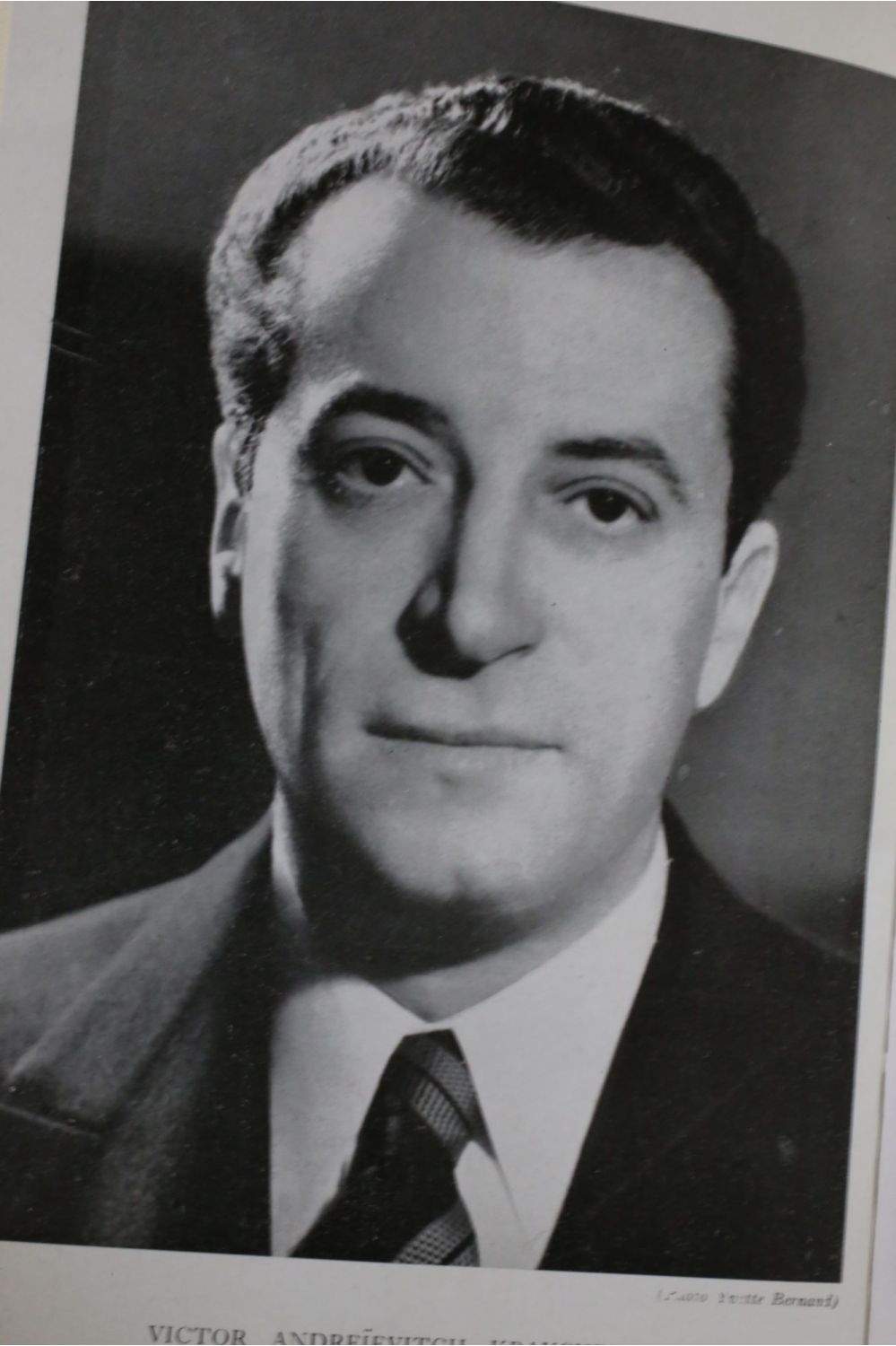
Viktor Kravchenko was born in 1905 into a family of revolutionaries. His father, a railway worker, took part in the 1905 revolution. Kravchenko joined the Communist Party in 1929, and in the 1930s he worked in the field of metallurgy in the Dnipropetrovsk Oblast. In 1932-1933, he saw the famine in Ukraine with his own eyes. Kravchenko was personally acquainted with Sergo Ordzhonikidze and Georgy Pyatakov — important figures of the Communist Party. Under their leadership, he worked in the Supreme Council of National Economy (VSNKh).
During World War II, Kravchenko was a captain in the Red Army on the Eastern Front, and later, as a valuable engineer, he was dispatched to Washington to oversee Lend-Lease purchases. In 1944, when the outcome of the war with Germany became more or less clear, Kravchenko decided to ask for political asylum in the USA. According to American historian John Simkin, citing the New York Times, he refused to provide information on military and economic matters of the USSR, while providing information on the violation of civil and political freedoms in the USSR1. Simkin also writes that a request came from Joseph Stalin to Franklin Roosevelt to extradite Kravchenko to the USSR, but the American president refused, despite the fact that at that time complicating relations with the USSR was dangerous for the USA.
According to Roman Gul, at one time Roosevelt was inclined to extradite Kravchenko. During this time, the writer hid in the apartment of E.L. Hapgood, where he lived for seven months without going anywhere until Roosevelt’s death2.
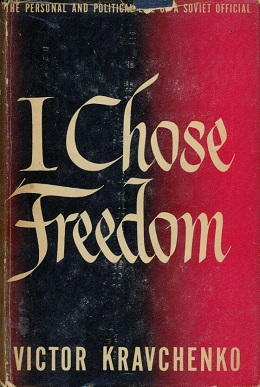
In 1946, Viktor Kravchenko published the book “I Chose Freedom”, which contained a multitude of shocking pieces of information about Stalin’s USSR, including the Holodomor, political repressions, falsifications in the press, and so on. Kravchenko described, for instance, how he was brutally beaten by NKVD officers Gershgorn and Dorogan when they failed to get him to sign a document in which Kravchenko was supposed to accuse his acquaintances of wrecking and other crimes (and after Kravchenko, bleeding, dragged himself back to his hotel, he saw a huge poster there with the words “Let us rally around Stalin for a happy life!”).
His book also describes the falsifications of the plan execution results at his factory. When propagandists arrived at the pipe-rolling plant in Pervouralsk, where he was an engineer, and said at rallies that a Stakhanovite increase in output rates was needed (which was objectively impossible), its director Osadchy asked to provide exact information on the finished pipes stored at the factory, and then sent a trade agent to Moscow. Here is what happened next:
Osadchy, in consultation with the brigade, sent a special agent to Moscow, who entered into a secret understanding with Kozhevnikov, now head of Glavtrubostal. Kozhevnikov, in turn, fixed it with Glavmetalsnab. Our agent returned to Pervouralsk with a packet of orders for various types of piping for different enterprises in the country. By an amazing coincidence, all these orders fitted precisely the types of pipes lying in our warehouses. We needed only to clean them, grease them, pack them and — credit them to our current production.
It was barefaced cheating. But Osadchy, the city and provincial party committees, the members of the brigade, everyone, in short, was delighted. And everyone pretended to be blind. Only the Chekists smiled up their sleeves, knowing that this fraud delivered the leadership of our plant and of the whole province into their hands3.
And this is how Kravchenko describes the beginning of the day on June 22, 1941:
Yesterday’s war communiqués had spoken of the victories of Hitler’s armies, of the discomfiture of his enemies, the “capitalist jackals” and “plutocratic warmongers”.
In recent months there had not been the slightest change in the tone of the official propaganda. Not a careless word of sympathy for the peoples enslaved by Hitler, not a risky phrase of censure for the Nazi marauders. Though millions of Russians felt a deep pity for the victims of Nazi outrages, we could not express our feelings openly.
<…>
Molotov’s striking and terrible words left us petrified. What were we to conclude from his sensational statement? The Führer, treacherous and dishonest, vile and stupid, had turned his famous “blitz” against a country which for nearly two years had denied itself the barest necessities in order to help him conquer Europe. We had fulfilled our obligations scrupulously. We had supported the Nazis not only with goods, but with world-wide propaganda and diplomatic pressure. Now we were receiving our reward4.
We are unable to cite all the information from the book — about the falsifications in manufacturing, about the famine, about the violations of human rights, about the lies of propaganda in the USSR, and so forth. Unfortunately, the Russian reader can fully familiarize themselves with the book only in English. In this article, however, we look primarily at the consequences of the writing of this book. Some American scholars and journalists accused Kravchenko of lying, as did representatives of communist parties and the intelligentsia in many other countries. The hype surrounding the book became extraordinarily widespread; in 1947, it was published in France and sold nearly 500,000 copies.
At that time, the French Communist Party was part of a coalition government, and its leader Maurice Thorez was the Deputy Prime Minister. On November 13, 1947, the communist weekly Les Lettres Françaises launched an attack on the book “I Chose Freedom” with an article titled “How Kravchenko Was Fabricated”5. The Stalinists wrote the exact same thing they answer to criticism today: that the book was written by Americans, and Kravchenko (who had worked and served the regime for almost his entire life) was a traitor, a coward, a drunkard, a libertine, a thief, a falsifier, and so on. He was called a “marionette pulled by thick strings from the USA”. In response, Kravchenko sued the publishers Claude Morgan and André Wurmser, as well as the author of the article, Sim Thomas (it was later revealed that no such person existed, and the article was brought to “Les Lettres Françaises” by André Ullmann — as Claude Morgan claimed, Ullmann himself wrote that article6) for defamation.
At that time, the Stalinist state security was the most terrifying mafia on the planet, killing people all over the world: the assassinations of Leon Trotsky, Georgy Agabekov, Ignace Reiss, the kidnappings and murders of Andreu Nin and Kurt Landau, and numerous other deaths were on its conscience. The involvement of Stalinist secret services in the strange deaths of Fyodor Raskolnikov, Ephraim Sklyansky, Leon Sedov, Walter Krivitsky, and many others has still not been proven. One had to possess a certain courage to stand up against one of the newspapers controlled by Stalin’s criminal syndicate. Kravchenko stated: “I took serious precautions. For the Soviets, I am a man who must be destroyed first and foremost. In the United States of America, I escaped assassination attempts twice. I don’t care what happens to me after the trial — as long as nothing happens before”7. On January 24, 1949, the trial of Viktor Kravchenko against the newspaper Les Lettres Françaises began. We will not describe all the testimonies from the trial here, limiting ourselves to an overview of just some of them.
The beginning of the trial
Kravchenko’s interests were defended primarily by lawyers Maître Georges Izard (a former socialist deputy, author of the books “From Marx to Marxism” and “Man is a Revolutionary”) and Maître Gilbert Geyzman. They were opposed most frequently by Maître Nordmann, Maître Matarasso, and Maître Blumel, with the President of the Court Durkheim presiding over the trial. Many representatives of the French intelligentsia came to support the Communist Party’s newspaper — Frédéric Joliot-Curie, Vercors, Jean Cassou, Louis Martin-Chauffier, and others.
As it turned out, it was not defamation that was put on trial first and foremost, but the Soviet system itself. There were two sides to the trial — Kravchenko, who described the Stalinist system as practically fascist, where people live in poverty and lack rights, and the publishers of “Les Lettres Françaises”, who argued that the USSR was a land of real freedom and democracy, where everyone lived in prosperity and harmony. It was being decided whose viewpoint was closer to the truth.
Kravchenko began the trial with the following words: “I left behind in my homeland, which I love dearly, my close relatives and family. I do not know what became of them. Before this, I had never been abroad and did not know any foreign languages; I had no one when I broke with the Soviet regime. And yet, I did it because I had to tell the world about how my people suffer. Millions of people would like to do what I did, and among those witnesses whom the Politburo will send to my trial, there will be people whom I know, whom I have known, and who think as I do, but they have left hostages in Moscow, their wives and children, and they will say nothing about it”8. Kravchenko accuses the Stalinist top leadership of stealing the revolution. He says: “While I was in Russia, these masters praised and promoted me, and even sent me abroad. But now that I have broken with the regime, they call me a traitor and a thief… I am called a traitor, and I find myself in good company, for in Moscow Léon Blum, Bevin, Attlee, and Truman are called traitors. Only Thorez, Togliatti, and Stalin himself are honest men… While my country was at war (even if as an ally of the United States), I refused to give the American press any information whatsoever regarding the military and economic situation of my country. In 1940, when I was at the front, Thorez was sitting in Moscow under Stalin’s wing”9. The French Communists, in response to this phrase, try to force the court to forbid discussing a statesman of France. The writer concludes like this:
Let no one reproach me for exaggeration when I speak of the Soviet regime. Remember that you called the stories about German death camps and crematoria an exaggeration, and it turned out to be the truth. You will see my witnesses. These are people without a homeland. They have given up everything, they have chosen hunger. They know that their relatives will be tortured, but they will speak the truth. They love their homeland, and they will tell you why they remain here. They, like me, will warn the world of the danger threatening it; they, like me, are ready to sacrifice their lives in the struggle. I seek the struggle!10
The publisher of the Stalinist newspaper, Claude Morgan, in response to this, begins to say that he is a Frenchman, the newspaper is French, his comrades are French, and it is inappropriate for a foreigner to lecture them. Next, he tells how his newspaper fought the Nazis and occupiers, and what sacrifices he and his comrades made (modern Russian Stalinists will betray the memory of their sacrifices and speak of a “united Europe” that supposedly attacked the USSR under Hitler’s leadership11). Nina Berberova notes: “while recounting in detail the heroic epic of ‘Les Lettres Françaises’, Morgan for some reason remains silent about one of its main initiators, Jean Paulhan, who, as is well known, left this newspaper some time ago, calling its leaders liars”12.

Next, the publisher André Wurmser speaks and says that Kravchenko did not write his book, that the Americans wrote it. He tries to continue the manipulation started by Morgan, dividing the audience into “us vs them”, creating an image of the enemy and presenting himself as “one of us” and Kravchenko as “the outsider”, and says that his opponent is an enemy of his own country, and consequently, of their country as well; and everyone who is against the Soviet Union is also against France. A typical propaganda technique of totalitarian regimes is to convince everyone that a person with a different opinion holds different views not by virtue of their personal experience, but because they are an enemy. Those who are not with us are against us. The Stalinists try to incite the public against Kravchenko, to arouse angry emotions in them and vent them on the “outsider”. Wurmser speaks of a “fifth column” and treason, substituting the thesis — “We are going to find out from Kravchenko now that atrocities were committed not in Buchenwald, but in Siberia! We will be told that our comrades died in crematoria in the Kuban!” (Stalinists even today prefer not to argue with your viewpoint, but to invent a viewpoint, attribute it to you, and argue with that instead).
Maître Izard asks Wurmser whether he considers André Marty, who called for an uprising against his own government, a patriot. Wurmser answers in the affirmative. Maître Izard draws the listeners’ attention to the fact that the Stalinists have double standards — André Marty is a patriot to them, while Kravchenko, who criticizes the Stalinist regime, is a traitor.
The President suggests that the defendants ask Kravchenko a few questions. They ask him how Ibsen’s “A Doll’s House” ends. Kravchenko does not understand what this has to do with anything and refuses to answer the question. It turns out that this work is mentioned in Kravchenko’s book, and the Stalinists are trying to build a chain of reasoning based on this: Kravchenko cannot recount the content, therefore — he did not read Ibsen, therefore — the book where “A Doll’s House” is mentioned was not written by him. However, this chain is mere demagoguery. Even if Kravchenko could not recount the content of the book, it does not follow that he did not read it or that, for example, he could not know some qualities of its characters. People rarely remember the contents of all the books they have read, and they can know about certain characters of books/movies/folklore without even knowing of the source’s existence. Thus, not every person who knows who Frodo Baggins is and imagines what he looks like has read “The Lord of the Rings” or remembers the content of the book. Therefore, the Stalinists here tried to deceive all the listeners, counting on the fact that Kravchenko would not be able to find his bearings and explain this in court. At the same time, they do not even check their own authors — Morgan admitted that he did not check Sim Thomas’s data because he “fully trusts”13 his information. However, they managed to throw Viktor Kravchenko into some confusion — he refused to answer this question, and this was interpreted by the defendants as ignorance of the work mentioned in his book. Kravchenko himself later recalled that the translator translated the word “ends” (konchaetsya) to him as “passed away” (skonchalsya), and that he could not understand what “house of the doll” had died.
Witnesses for “Les Lettres Françaises”
The Stalinists call their witness — Louis Martin-Chauffier, chairman of the National Union of French Writers. He says that “Les Lettres Françaises” is a very good newspaper. Maître Izard stands up from his seat and reminds Martin-Chauffier that his own friend, the writer Paul Nizan, was called a traitor by the newspaper for leaving the Communist Party after the Soviet-German Pact (the Molotov-Ribbentrop Pact). Izard asks: “Do you consider your friend Nizan a traitor, or do you hold a separate opinion?”14 The chairman of the writers’ union tries to evade the answer. Therefore, in serious discussions, Stalinists often look awkward — they approve of the policies of Stalinism, but they do not approve when these policies affect them or people close to them, and this contradiction always comes to the surface, exposing the hypocritical nature of the Stalinist system and Stalinists — the readiness to sacrifice other people’s lives. A totalitarian system implies that it is never wrong. Because if you admit one mistake — then, perhaps, you will admit all the others, and in the end it will turn out that the whole system, compared to others, is unfit for a normal life. It only remains to pretend that the system is never wrong, but this is a lie that always comes to the surface and makes the defender of the system a liar in the eyes of all impartial listeners.
Next comes the Stalinist Fernand Grenier, a deputy of the National Assembly. He criticizes Kravchenko’s book: “how can one remember what a father said when the child was eight years old!”15. Kravchenko explains that he remembered everything regarding his father because it was discussed many times in the family after his father had been arrested (under the Tsarist regime). Here we see again nitpicking that is unrelated to the substance of the arguments, intended to sow doubt in the audience about the opponent’s authority, but completely failing to refute him on the merits. Grenier also speaks about the purges described in the book; he says that he attended one of these purges in the USSR and did not smell the “smell of blood” that Kravchenko wrote about. On the contrary, for the most part, questions were asked and answered calmly there. Kravchenko immediately draws the court’s attention to the fact that Grenier does not know the Russian language, and since the event took place at an automobile plant, he was presented with a standard party meeting as a “purge”. Kravchenko reminds how Nikolai Bukharin (who not so long ago had been admired as a hero of the revolution) was called a “scoundrel”, how people demanded to “shoot them like mad dogs” — him and his like-minded associates — and asks if that is not the smell of blood. He says:
To me, the purges mean six million victims, they mean teeth knocked out, they mean sleepless nights spent in the dungeons of the NKVD, they mean torture, they mean suffering. You and I stand on different positions… You deny, Monsieur Grenier, what I told in my book. But all this is not because you know well what I write about, not because you know our reality, but only because you are a member of the Communist Party. If you say just one word in defense of my book, I guarantee you that tomorrow you will be expelled from this party, that you will be nobody16.
Grenier begins to talk in response about the achievements of industrialization in the USSR (in the style of “The crimes of Moisha Rabinovich are indelible. But on December 21, 1920, he played the violin virtuosically for the crowd!”), Kravchenko answers him: “A revolution is not made for industrialization, a revolution is made for man”17. And here we understand one of the main differences of the Stalinists. They want to make a revolution for “industrialization” or “socialism”, while democratic movements want to make revolutions first and foremost for man. Kravchenko, meanwhile, says that “collectivization in the Soviet Union was a second revolution, bloodier, more cruel and barbaric than the October one”18.
Pierre Debray, an employee of “Témoignage Chrétien”, comes out. He tries to shame Kravchenko: “There is also one man who broke with the regime. That is Mikhail Koryakov. He is in great need in the United States. He even regrets that he left. Now that is an honest man!”19 Kravchenko answers:
First of all, he is not in the United States, but in South America. Secondly — he published a book that had some success, and now he is not in need. Thirdly—he actually wrote a very sympathetic article about my book. I will translate it and deliver it here tomorrow so that the court can familiarize itself with it20.
The next day, he indeed brings a translation of Koryakov’s article, where the latter speaks praisefully of Kravchenko’s book. Next, another witness is called in support of the Stalinists. Here is how Nina Berberova describes it:
Professor of Political Science and Communist Party member Babi gives his testimony. He is a combatant, a resistant, and lost a son in the war. He argues that Kravchenko could not have written his book, because an entirely un-Russian spirit is felt in it.
The President: And do you read Russian?
Babi: No. But I know Russian authors in translation. (Laughter in the audience.) Furthermore, Kravchenko remembers everything too well: he remembers himself when he was two years old.
The President: Clearly, he did not write based on personal memories of the day of his birth!
<…>
Babi: The book “I Chose Freedom” was written by an American: all the women in it are beautiful. This is Hollywood taste! (Laughter in the courtroom.)21
Babi uses a classic Stalinist tactic — he says that there were no repressions because in 1917 the population of Russia was 117 million people, and in 1939 it was already 180 million (later at the trial, evidence was provided that this witness cited incorrect data, deceiving the court). The President of the court responds to this:
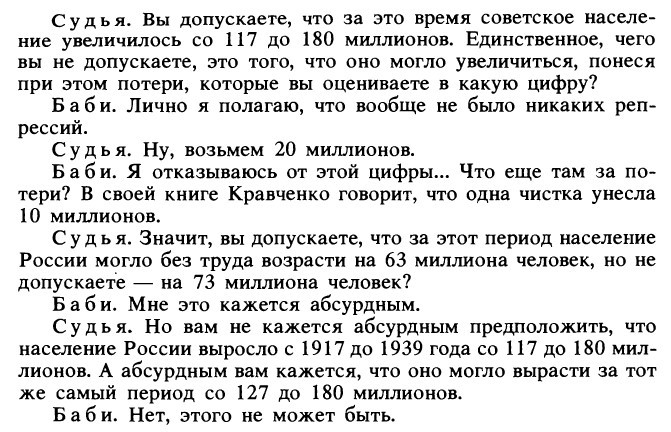
Next, the Stalinists try to prove that Kravchenko’s book was written by an American. They bring in Pérusse, a professor of the Russian language at the University of Clermont-Ferrand, who says: “first of all, it is written here ‘они обвиняют’ [they accuse]. That is not how people speak in Russian. In Russian, a pronoun is never placed before a verb; one must say ‘обвиняют’. Secondly: the word ‘апеллировать’ [to appeal] is written with one ‘p’ and two ‘l’s. Here, however, it is written with two ‘p’s and one ‘l’. Thirdly, it says here ‘citizens of their governments’ — that cannot be said in Russian…”22 As Nina Berberova notes, “unfortunately, those who do not speak Russian could not fully appreciate the testimony of this witness”23. Witness D’Astier de La Vigerie says that in Algeria, where he was Commissioner of Internal Affairs, he would have arrested Kravchenko for enemy propaganda, and each of his employees would have done the same.
Then Maître Nordmann asks Kravchenko when and by whom he was interrogated by the secret police of New York. The latter responds:
The American police do not concern me. I saw Soviet agents near my house on the third day after my arrival in New York24.
Former Menshevik David Dallin later recalled that he tried to find Russian-speaking friends for Kravchenko in the US among people who called themselves anti-Stalinists. One of them, Mark Zborowski, posed as a Trotskyist. It later turned out that he was an agent of the Soviet secret services25.
Testimonies in favor of Kravchenko
Moinet — one of the participants of the famous Normandie-Niemen squadron and recipient of many Soviet and French medals — is called into the courtroom. He had been to the USSR, saw how people lived there, and confirms the words written by Kravchenko in his book. He recounts how, during his time in the USSR, he became friends with a Soviet mechanic, and how the latter reported that for the workers “life is just as bad as under the Tsar, even worse”26 (he is ready to provide the name and address of this mechanic, but only to the judge privately). Moinet describes how near Tula, women dressed in rags were clearing snow from runways under the supervision of other women armed with submachine guns. These women, Moinet says, were guilty of being late for work at their factory (in the article about the standard of living under Stalin, we cited documents showing anti-worker legislation). The pilot states: “They were brought to such a state that — I saw it myself — they relieved themselves right there, on the spot”27. He quotes the copy of Kravchenko’s book he holds in his hands, and shares his own impressions regarding every short citation. He talks about Moscow restaurants, the official black market (we mentioned this in the article on the planned economy), the inequality between the lives of dignitaries and proletarians, and the NKVD. His account that it is forbidden to listen to foreign radio in the USSR — only Soviet radio, for which loudspeakers are installed everywhere — makes a particular impression on the court. Moinet says that the Soviet Union is a country of privileges. There are heated railway cars and unheated ones. When the French pilot told the Soviet commissars that women were traveling in an unheated car and that they ought to be transferred to a heated one, they gave him no reply. Moinet is asked if he can correspond with his friends, the Soviet pilots. He answers: “Of course not. I wrote many times but received no reply”28. At the same time, he keeps a photograph of his mechanic at home with words written on the reverse side: “Comrade Lieutenant, I hope that you will remember our brotherly friendship and that you will write to me and send news of yourself”29. The pilot notes that Kravchenko was called a traitor for leaving one country that was fighting Germany for another. But those same people do not call Maurice Thorez a traitor, who fled France for a country that at that moment was bound by a pact with Hitler.
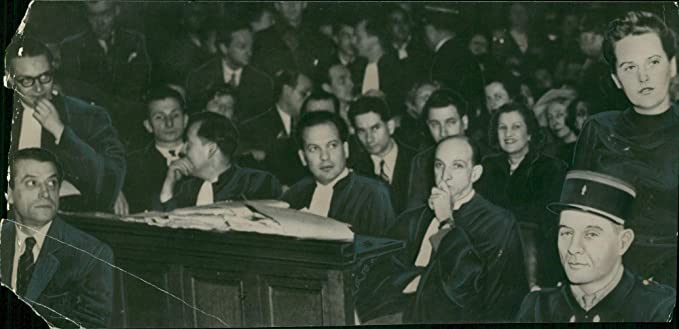
Next, the engineer Francisque Bornet, who lived in Russia from 1909 to 1947, is called. He spent five years in a Soviet prison and concentration camp, where he was thrown simply for being French. He has a list of 137 Frenchmen who were arrested with him, many of whom died in the concentration camp. He gives a detailed and thorough account of his work in Magnitogorsk, of arrested Poles, of exiles to Siberia, of labor camps, of the purging of engineers, of the famine that was just as severe in 1939 as it was in 1946 (collective farmers mixed flour with tree bark), and of arbitrary rule. Bornet also recounts how, while in the concentration camp, he read a short article in Izvestia stating that there were no French prisoners in the USSR.
Semyon and Olga Marchenko, refugees from the USSR, are called into court. The latter describes how the Stalinist authorities dekulakized the peasants. Peasants who owned (like the Marchenkos) one cow and two horses were designated as kulaks. Prison, exile, mistreatment, eviction, separation from loved ones — Olga Marchenko went through all of it. She relates how they were assessed a tax they could not pay, because the goal was to eliminate all “kulaks”. They borrowed from peasant neighbors and paid the tax. Then a brigade came to her house and she, in her ninth month of pregnancy, was thrown out of the house into the snow, and the door was sealed.

The engineer Kizilo comes forward to testify. Nina Berberova describes it:
A year ago Kizilo was cured of tuberculosis, from which he suffered as a result of the torments experienced in the cellars of the NKVD. He recounts in detail the tortures to which he was subjected after being accused of Bukharinist-Trotskyist heresy, and how a cell designed for 24 people held 136 prisoners, who could only stand, and if they lay down, their space was measured out with matches.
He saw women being beaten, children’s cells; he saw people being led to be shot. He explained to the court what a “swallow” is (when a child is tied hand and foot, thrown to the floor and beaten), and what a “cat” is (a grating by the wheels of the last car of a train carrying prisoners to prevent them from slipping under the wheels).
En route, in cattle cars, the prisoners were given salted fish and bread, and from the Siberian station they walked a hundred kilometers on foot in forty-degree-below-zero frost. Along the way, those who grew weak were shot down (thus died a trust director in Kazakhstan and an acquaintance of the witness, a doctor).
In the North Urals camp, those sentenced to more than 10 years (like the witness himself) were assigned to hard labor — making rifle blanks.
“Here I saw academicians, people’s commissars, 14-year-old boys, Jews, Georgians, Poles, Kirghiz. This was also the Soviet Union, only a different one…”. Returning after work (12 kilometers on foot), they dried their clothes by lying on them for the night.
Kizilo wrote a complaint home to his wife. She made copies of this complaint and sent them to all institutions. Around this time Yezhov was removed, and Kizilo was pardoned. He returned home and asked: “what was I tyrannized for 18 months for?” But he was given to understand that it was better to forget about everything and ask no questions30.
He speaks about the grain monopoly in the USSR, and how sometimes grain is withheld as a punishment for bad behavior. The lawyers for “Les Lettres Françaises” ask him what he was doing in 1941 when the evacuation began. Kizilo answers: “the Communist Party members fled, the management fled, they left me four old nags. I could not get away on them with a wife and two children”31. Kravchenko cannot contain himself and explodes: “You think he is a traitor? You are the traitor, not he!” and lunges toward the Stalinists, but the situation is brought under control by the gendarmes. Maître Nordmann tries once again to substitute the thesis: “According to Kravchenko, the Kremlin leaders covered the steppe with corpses and turned tens of millions of people into convicts. What does the witness think?” Kravchenko: “You are lying! That is not what is written there, in my book!”32 A gendarme is seated between Kravchenko and Nordmann; later, the latter continues to use the straw man tactic, seemingly trying to unbalance the writer, to disrupt his emotional equilibrium so that he would lose the ability to reason calmly and make a mistake (a classic technique of demagoguery), repeating to him once more: “We will soon be told that Buchenwald was in Siberia!”33
On the following day, February 1, 1949, in the newspaper “Pravda”, the writer Konstantin Simonov called Kravchenko “a homelandless monster, scum, a turncoat and a traitor”34, compared him to a typhus louse and a Judas, called his book a “cesspool”, and wrote that amidst bursts of Homeric laughter in the courtroom, Kravchenko and other lackeys of American fascist-leaning aggressors were caught red-handed in a lie.
A witness named Krevsun from Poltava is called. He was accused of a conspiracy against Stalin (he names the articles under which he was framed) and given 10 years of exile, where he and other repressed people built Magadan. When he was taken away in 1930, there were 117 people in the cell — packed like herrings in a barrel. He was at the gold mines. He worked in temperatures of 65 degrees below zero, and when he returned to Ukraine, he found nothing — neither his house nor his farmstead; his wife had been forced into a collective farm. Next comes the testimony of the journalist Silenko. He is asked why, at the end of the war, he fled from the advancing Soviet army:
I was a soldier in the Red Army and was taken prisoner by the Germans. The French and British who were captured by the Germans and became prisoners of war were helped by the Red Cross. But Stalin said: “We have no prisoners of war, only traitors and deserters…”. And so thousands of our soldiers died in the camps. I was in a camp, I slept on corpses myself… According to the oath I took, I was supposed to commit suicide. Many did end their lives, but I still wanted to fight fascism, both German and Soviet. I love my people to death. And I am ready to be executed for them at any moment, but Stalin and the Politburo are not the people35.
When the French and British returned home from captivity, they were welcomed almost as heroes, whereas many Soviet soldiers were sent to camps as traitors. For Silenko, the time of collectivization was the time of his father’s arrest, eviction from their native cottage, and wandering in the steppe, in the snow: “In those years, 30 percent of the population died in our country. The corpses lay until spring, in the frost. The collective farmers swelled from hunger. And when it was all over, they put up a statue of Stalin in the village”36. The journalist talks about his work at the newspaper “Elektroenergiya”. The editor-in-chief, Aleshenko, would send him to the factory floor to write down two or three names of workers. Then he would return, write articles about the happy life in the Soviet Union, and sign them with the names of those workers (if the workers later asked why it was signed with their names, people from the state security organs would ask them: “Aren’t you happy, then?”). He says that those wishing to verify these facts can look at the issues from 1940 in the Lenin Library.
Naturally, the witnesses cite inflated figures of the victims because official statistics were suppressed at the time. Therefore, the witnesses could only convey their impressions — thus, Stalinist censorship ultimately backfired against the regime itself.
The newspaper’s new witnesses
The Stalinists call a “fifth column specialist”, Albert Kahn, the author of books on plots and conspiracy theories. He speaks of anti-Soviet intrigues and claims that Kravchenko is praised by Goebbels’ people. Maître Izard asks if Kahn knows Sim Thomas, and the latter replies that he is hearing the name for the first time. There is perplexity and laughter in the courtroom — the specialist does not know who Sim Thomas is and has not even read the article that triggered the proceedings. Albert Kahn continues: “There are a million Ukrainians in America. They are all fascists and continue the espionage that the Nazis engaged in…”37 The people sitting in the courtroom must have been highly amused by how this “fifth column specialist” fights national socialism while uttering racist remarks. Meanwhile, he endlessly advertises his books on conspiracies. Kahn accuses Kravchenko of ties to fascists and asserts that his book “I Chose Freedom” is the result of a fascist conspiracy. The latter responds: “How does the witness explain that my book was serialized in forty American newspapers simultaneously? Are there really forty fascist newspapers in America?” Kahn: “Those were Hearst newspapers… He is a fascist and was for the Axis”38. Izard joins the conversation again, as Berberova writes:
Kahn: I came to testify about Kravchenko’s activities in America.
Izard: If it was only to tell us that he is against the Soviets, then it was probably not worth the trip? Or is it a bad thing that Hearst published him?
Kahn: I spoke of Kravchenko’s connection with Michua and whose interests his book serves. Besides, he never wrote it. It was written by Lyons.
Izard: I have just read in the newspaper “France-Soir” that Stalin is inviting Truman to Moscow. TASS released a telegram about this precisely in the Hearst press. (Laughter, the public is called to order)… I would like to know if Kravchenko was an agent of the American secret service or an agent of American Nazis?
Kahn: He could not have been an agent of the American service. He worked for the Germans.This statement by the witness makes a certain impression: from these words, it follows that Kahn and “Les Lettres Françaises” accuse Kravchenko of completely different things39.
Next, Zilliacus, a member of the British Parliament, speaks in defense of the Soviet authorities. He talks about the industrial achievements of the USSR, his personal conversations with Stalin and Molotov, and many other things. He is asked a question:
Izard: Do you think that Kravchenko can now return to Russia in peace?
Zilliacus (stuttering slightly): There are, as I have already said, somewhat different conceptions there…40
Everyone had waited a long time for the Soviet witnesses to arrive, and they finally appeared. Kravchenko’s first wife, Zinaida Gorlova, arrived as well (from whom, as Boris Nosik writes, a woman whose profession left no one in doubt did not step away by a single inch41). Later, as John Simkin writes, her son Konstantin confirmed that his mother’s testimony had been written for her by the state security services and did not correspond to reality42. Kravchenko’s former boss, Romanov, also testified. To begin with, he accused Kravchenko of being vain, lazy, “living beyond his means”, carousing, and so on. Then he begins to get confused in his testimony (we cite according to Berberova’s text):
Romanov: I will try to speak the truth. Kravchenko is not stupid. (Maître Izard: Thank you for that much!) He has an excellent memory. (Maître Izard: We shall note that down! That is very important). He knows how to present himself. But his father told me that he disgraces the family.
Kravchenko: Romanov, for God’s sake fear God! (laughs).
Romanov: At the Technical Institute, he was famous for his debauchery and behaved rather poorly. For example, when he failed an exam with Prof. Emelyanenko, he later spread a rumor that Emelyanenko, for class reasons, had failed him. His time was spent on everything except studying. How they gave him a diploma, I don’t even know…
Maître Izard: But you seem to have said that he is not stupid? (Laughter.)43
Romanov also used a standard Stalinist quibble at the trial — meaning that, despite the alleged repressions and beatings, Kravchenko and his witnesses are sitting here and are quite alive. As the saying goes, “if you had perished, then we might have believed you”. Stalinists love to reproach victims for having survived. The Soviet witness continues:
Romanov: …And so we learned that he had committed a heinous crime: he entered into a debate with our government.
Kravchenko: And why not?
President: Have you read Sim Thomas’s article?
Romanov (in a weeping voice): I have read it! I understood that he is a traitor and can no longer look anyone in the eye!
Kravchenko: Don’t you cry now! I am looking you in the eye!
<…>
Kravchenko: I want to ask, in turn: let the witness tell us when he joined the Party?
Romanov does not answer this question. Wurmser shouts something from his seat, Maître Izard, in turn, raises his voice:
– It is not Kravchenko who is on trial here, but you. You are a defamer!
Romanov: I was non-Party.
Kravchenko: Is it a secret when you joined the Party?
Romanov (reluctantly): In 1939.From this answer, it follows that Romanov could not have known very much regarding Kravchenko’s life and work before 1939 at all44.
Next, Zinaida Gorlova speaks. She complains that Kravchenko beat her, smashed dishes, almost killed her, wanted to shoot her, forced her to have an abortion, refused to pay child support, refused to give consent to her second husband to adopt him, that her father called Kravchenko an “ignorant Don Juan”, and so on. Further, Gorlova says that Kravchenko never told her anything about collectivization or about Ordzhonikidze, and this contradicts what was written in the book “I Chose Freedom”. Kravchenko, pale, agitated, with burning eyes, stands up from his seat. He reminds Gorlova that she was in the collective farms together with him, that she went to see Ordzhonikidze. Nina Berberova describes the events:
Maître Izard takes a document out of his briefcase, from which it appears that Gorlova had been in the Kremlin to see Ordzhonikidze and that Kravchenko is right. Kravchenko’s ex-wife begins to slowly turn red and asks for a chair to sit down.
Kravchenko: It is not I who am lying, but you! You concealed from the court that you have been married not twice, but three times. (Though that is no sin!) Your father, Sergey Nikolaevich Gorlov, loved me. You confessed your first pregnancy to me three days after our wedding and wanted the operation yourself, as your mother wanted it too. You were in the collective farms together with me, you couldn’t stand that life, but you hid it, otherwise they would have expelled you from the Medical Institute where you were studying. Then you went to Berdyansk to rest from your collective farm impressions. And upon arrival from Berdyansk, by mutual agreement, we parted. And I did not know then that you were pregnant a second time.
Gorlova: That is all a complete lie!
Kravchenko: I request the court to call my witnesses on Wednesday — who knew Zinaida Gorlova when she was my wife. They will confirm everything I have said. (Gorlova sinks onto a chair, her voice fails her). Do you remember Misha Shcherban and Chernikov?.. (Kravchenko looks into Gorlova’s eyes)45.
Kravchenko asks Gorlova where her father is. She answers that he died in 1938 of bronchopneumonia. Kravchenko addresses the court and the jurors, informing them that in 1938 her father was sent to hard labor for 10 years without the right of correspondence, and recounts his biography. He promises to bring five witnesses who will confirm his words. Some of the people describing the trial reported that Kravchenko shouted: “Zina, run over here!” and offered to help her stay in France, but Gorlova was controlled by the woman assigned to her46. However, this moment is not recorded in the transcripts.
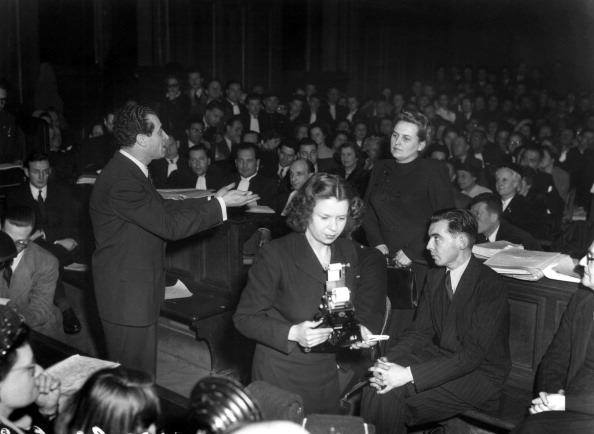
The Stalinists call a witness named Kolybalov, a pipe specialist. He says that Kravchenko worked poorly, embezzled 60 thousand rubles, that he was convicted as an embezzler, and that he never held any responsible position. Maître Izard pulls out a newspaper article in which Kravchenko and Kolybalov’s superior, Merkulov, was pleased with the work of the future author of “I Chose Freedom”. The maître also quotes the interrogation of the witness Romanov, who asserts that Kravchenko was never convicted (recall that Romanov is his boss). Kolybalov stands in bewilderment and can say nothing. He is asked about Stalin’s purges:
Kolybalov: I came regarding the Kravchenko case and I will not speak about anything else.
Izard: Well, of course, in the Soviet code there is Article 51.1, Letter C. (The article concerns relatives remaining in Russia). Because of this article, the Soviet witnesses cannot say anything at all!47
Kravchenko relates how people like Kolybalov came to factories only to deliver speeches praising Stalin. Kolybalov responds to this: “I will ask you not to mention the name of my beloved leader Stalin here”, which causes laughter in the courtroom (likely because there are many atheists there). Kravchenko:
For the witness’s information, I can mention “his beloved leader” here because I am in free France and I do not give a damn from a high tree what he thinks about it. I have waited for this minute all my life48.
The Soviet side calls the engineer Vasilenko, a deputy of the Supreme Soviet of Ukraine since 1938. The latter again accuses Kravchenko of embezzlement, carousing, and entertaining himself with American female citizens, and says that he never studied at the Kharkiv Institute, as he writes in the book. Finally, it comes to the accusation of desertion. In response, Maître Izard presents a document from the American embassy: from it, it follows that after Kravchenko left Washington on April 3, 1944, the Soviet government only informed the authorities of his flight on April 18, and only on May 6 demanded his extradition as a deserter. Vasilenko is asked about the people destroyed during the Stalinist repressions whom he should have known by virtue of his office:

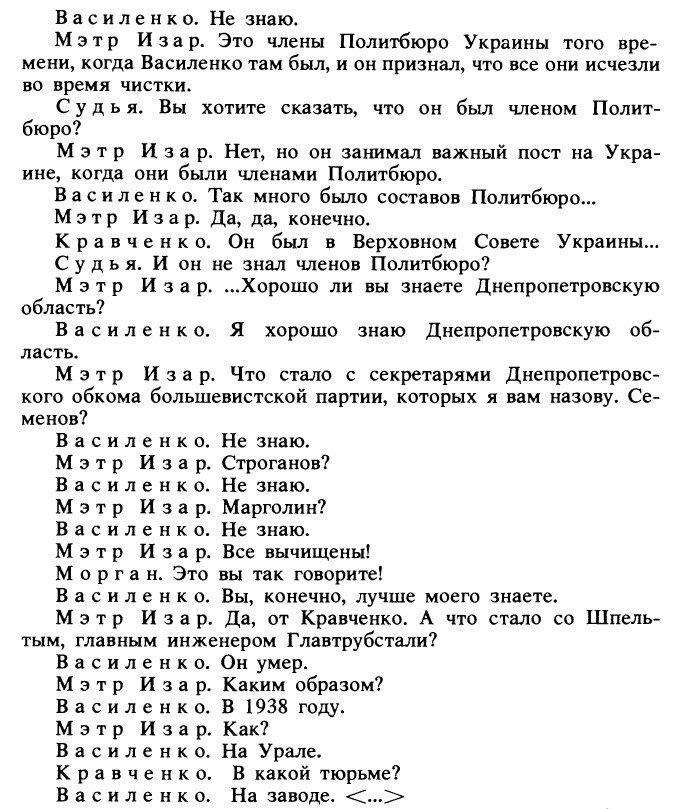
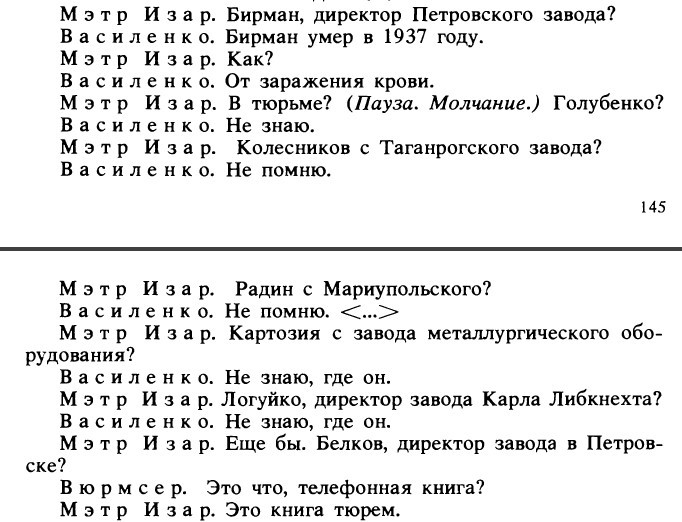
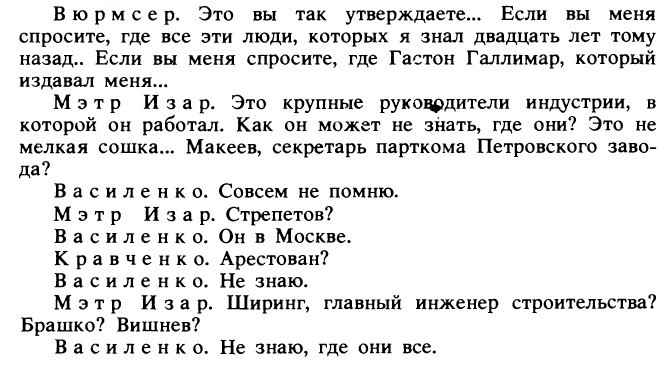
In France, people long remembered this “roll call of the dead” performed by Maître Izard. Boris Nosik, meanwhile, recalled how Konstantin Simonov came to visit Ivan Bunin, tempting him to return to Russia. The latter asked him where Babel was, where Pilnyak was, where the other writers were, and Simonov replied in exactly the same way, “I cannot know”49… Of course, Bunin did not return.
Let us return to the trial. The witness Romanov is confronted face-to-face with Nikolay Lagovsky, Kravchenko’s former instructor at the Kharkiv Institute. It turns out that Romanov and Vasilenko committed perjury regarding the claim that Kravchenko had never studied there. The Stalinists receive another painful blow. The thing is that earlier they had produced a 1942 questionnaire in which it was written that Kravchenko had not held major positions, had not studied in Kharkiv, and had not been a member of the Komsomol. In response to this, Maître Izard presents a statement by Vyacheslav Molotov himself, in which the latter, in connection with the third five-year plan, speaks of the important significance of the combine that Kravchenko is appointed to manage. At the XVIII Congress of the Communist Party, this combine was included in the third five-year plan. Maître Nordmann attempts to object, but Maître Izard, laughing, remarks that it is dangerous for him to disagree with Molotov.
Next, “Les Lettres Françaises” puts forward Jules Cot — an old French engineer who lived in Russia for a long time. However, what he says does not defend the Soviet regime, but rather the opposite. Cot says that for the most part, people in the USSR are satisfied with their lives, but he gives an example of one dissatisfied factory director. When he is asked about the fate of this director, it turns out that he was arrested and executed. He is questioned by Maître Geizman:
Maître Geizman: I would like to know who lied: Deputy Grenier or Kravchenko? Grenier told us that in Russia salaries are all more or less the same. Kravchenko, however, says in his book that between the worker and the engineer there is a huge distance.
Cot: The difference in salaries is very large!
Maître Geizman: That means Grenier lied!50
The Soviet General Rudenko — a hero of Stalingrad, recipient of more than ten medals, and a deputy of the Supreme Soviet of the USSR — is called into court. He calls Kravchenko a turncoat, a criminal, a drunkard, and a thief, saying that he stole 150 thousand rubles. Unfortunately, this is yet another piece of testimony from the defendants that is unsupported by documents. Rudenko says that the USSR strives for peace; Kravchenko quips: “And meanwhile you have taken Eastern Europe”51. The bickering continues:
Rudenko. …We want nature to open its riches to us, to secure a happy life for the people. We fight against arid winds, transforming nature; we want to turn rivers that flow north so that they flow south and nourish oases and current deserts.
Kravchenko. You would do better to return freedom to the people, and only then occupy yourselves with oases52.
Rudenko says that Kravchenko was never in the Sovnarkom, as he writes in his book. Kravchenko’s lawyers present his curriculum vitae, compiled at one time by the Soviet embassy in Washington, and from it, it follows that Kravchenko worked for five years as a shop director, chief engineer, and was in the Sovnarkom of the RSFSR as an “engineer, advisor”. Rudenko says that Kravchenko’s article was used in their agitation by the Hitlerites. Kravchenko replies that Stalin supplied Hitler’s Germany with a million tons of grain, 900 thousand tons of petroleum products, 100 thousand tons of cotton, 500 thousand tons of steel alloys, 300 thousand tons of iron, 100 thousand tons of chrome, 11 thousand tons of lead, and 3 thousand tons of nickel (we wrote about this, for example, here — meaning Kravchenko’s testimony is confirmed)… Rudenko, realizing that it is unsafe for him to hear all this, leaves the courtroom.
Kravchenko’s new witnesses
Mrs. Kornienko, a librarian from the Petrovsky plant, is called. She served in the factory library for 16 years and knew almost everyone. When asked about the purges at the plant, she replies that Birman, Kalashnikov, Adamenko, Marushin, and Ivanchenko were arrested — about fifty people in total. And those were only the most prominent figures. She is asked if she knew the witness Vasilenko. Kornienko replies that the NKVD summoned her once and demanded that she spy on five individuals: Korobov, Tupenkov, Zernov (directors), Fedorov (chairman of the party committee), and precisely Vasilenko. At first she refused, but then the state security officers reminded her that she had a daughter and a son-in-law. Kornienko says that the uncle of Vasilenko’s wife, Kalashnikov, perished in Soviet exile, and that she tried not to pass political conversations to the NKVD. They are confronted face-to-face, where Vasilenko lets it slip: “I am grateful to her for not drowning me… (suddenly menacingly): But all this is a lie!”53
Next, the witness Luzna is called. He recounts how he was dekulakized: the year 1930 in Ukraine, ruin, arrest, a heated goods van, loss of his family, arrival in the taiga. He escaped from Siberia, returned to his homeland, but did not find his family. And then the exact same thing again: the year 1932, famine, terror, flight from his native land. Until 1936 he wandered around Ukraine, worked as a farmhand, and paved roads. He was arrested and told to sign a confession stating that he wanted to blow up the power station in the city. He signed it after torture. He was offered to work for the NKVD, but he refused, escaped, and went back to vagrancy. He was arrested a second time and wanted to commit suicide after the second arrest. He says:
I will tell the court this: the Soviet authorities promised the workers to give them a paradise on earth, but instead of paradise, they gave a continuous class struggle [Stalin’s speech of July 9, 1928, on the “intensification of the class struggle”54 as progress is made toward socialism – A.R.]. Instead of bread, they gave famine and cannibalism. Instead of freedom, they gave camps. And Kravchenko described only a small fraction of what the Ukrainians and other peoples went through, because a human being cannot even conceive of all this. One Hitlerite tyrant has been defeated there, where peoples came to know Buchenwald and Dachau, but I assure you that over there, we have hundreds of Buchenwalds and Dachaus!55
He adds that he does not know of a single case where someone he knew was arrested for cause, but he knows a great many examples of innocent people being arrested. Next, the electrical engineer Babunin is called, who under oath confirms that everything written by Kravchenko is the truth, relates how he was tortured, and how an interrogator told him in prison, “here we have a bloodbath for engineers”56. At every interrogation, his cellmate was presented with a new accusation — first of attempting to blow up a bridge, then of drawing up lists of communists to liquidate them, then simply of being a Japanese spy. When asked why he did not return to the USSR after the war, Babunin answers:
I saw what was happening already in the camps for those who wanted to return. Soviet representatives openly stated that all these unfortunate people who had been forcibly driven to Germany still needed to justify themselves in the eyes of the Soviet people. But we think the opposite: we think that it is the authorities who still need to justify themselves in our eyes57.
The witness Shchebet relates how his dekulakized family (5 people) was sent to the Northern Dvina; his mother and sisters were exiled to one place, his father and uncle to another. The uncle could not endure the frost and perished. Shchebet himself escaped, lived in Arkhangelsk under a false passport, and then returned to Ukraine, where his parents had been returned. But he did not find them: his mother had died in prison, his sister had vanished, and his father had gone wherever his eyes would lead him. Maître Nordmann says that these are the words of Goebbels’ propaganda. Maître Izard responds that the Nazis also said that concentration camps were invented by their enemies. The witness is asked why the poor did not sympathize with collectivization, to which he replies: “because it was a deception, everything was taken away, people had to go into slavery”. Shchebet expresses hope that he will return to Russia when there are no communists there. Maître Nordmann ironically asks when that will be, to which the witness replies: “I don’t know, I am not thinking about that now, I work in the mines, I might be buried tomorrow, and that is how my miserable life will end”. When the witness leaves, Nordmann casts a contemptuous glance at him and says: “For a miner, he is dressed rather well!”58
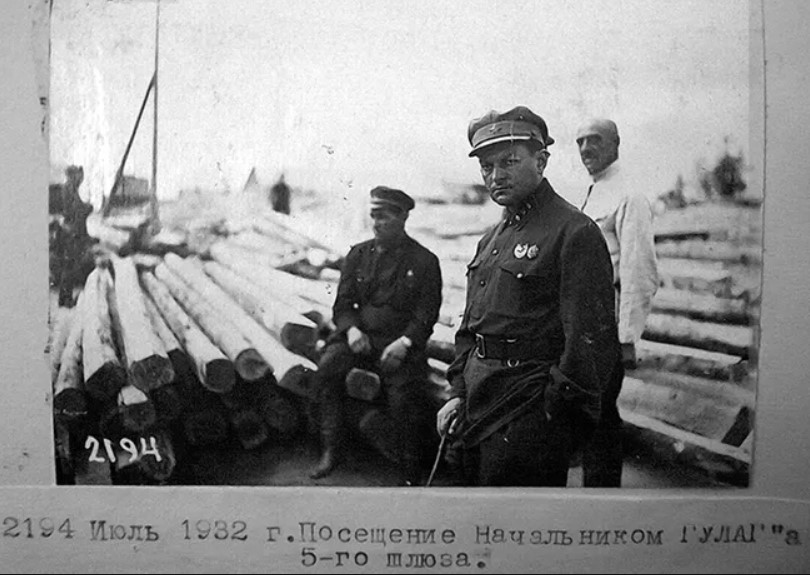
Meanwhile, the Soviet government states that there are three war criminals on French territory — witnesses Krevsun, Antonov, and Pasechnik. Maître Izard protests: over four years, the Soviet authorities had time to demand war criminals from the American and British authorities, which they did, and neither Krevsun, Pasechnik, nor Antonov ever appeared on the list of those criminals. These people passed all control commissions. The Maître is certain that the Stalinist government simply wants to deal with them. The court summons the witness Antonov, who recounts in detail how he was mistreated and tortured in the dungeons of the NKVD: he vomited blood from the beatings; he lay in his own filth for five days until he fell into complete unconsciousness. He says that there were about eight hundred thousand of them in the camp, which was located along a 280-kilometer-long canal they were building (this was the construction of the White Sea–Baltic Canal). The court was presented with money that circulated in this camp — it was a state within a state. Antonov leaves the courtroom in tears.
After the recess, he is shown a note from the Soviet government where he is named a Gestapo agent, where it is said of him that he was present at executions, that he misappropriated the property of those executed, and traded in it. Antonov says that he lives in the French zone. It turns out that the French authorities carried out purges in the presence of Soviet representatives, and at that time no crimes were discovered on Antonov’s part.
Antonov’s wife relates the arrest of her first husband, saying that she was arrested as the wife of an engineer. The prison was full of “wives”. She lists Matveev, Margolin, Filippov — all those who stood at the head of the trust, and who were arrested and exiled. She describes how she sat in prison, how three women slept on one narrow bed, how they were led to interrogations, how children were sent to orphanages, and lists by surname those who perished. She is asked how she and her husband ended up here; Antonova replies that they wrote a letter to Maître Izard. Maître Izard: “We have received 5,000 such letters!”59

Witness Vasilkov arrives on crutches. He speaks about the purge of the engineers: a certain Ivanchenko was so popular that to arrest him, they had to summon him to Moscow — the workers would not have allowed his arrest in Kharkiv. A list of surnames of those arrested follows: Strepetov, Shchepin, Manaenko… Their families were exiled to Siberia or simply thrown out of their houses and apartments. Vasilkov’s father was arrested several times; when he was 77 years old, he was sent into exile (this was 1937). One sister (there were five sisters in total) went to look for her father; she was arrested and given five years. Another went mad with grief. The third, who was a professor, was fired from all jobs for her non-proletarian origin; in the end, she poisoned herself. The fourth went missing. The fifth committed suicide. Listening to this story, Wurmser, the publisher of the Stalinist newspaper, laughs merrily (just like today’s Stalinists who make jokes about people’s misfortunes and suffering in the style of “a billion shot personally by Stalin”). The public hums at him menacingly, the president states that this is not at all funny, and Maître Izard declares that this behavior is indecent, inhuman, and boorish.
The witness Lebed says that he was a Party member and, under the control of the NKVD, arranged meetings for distinguished foreign guests in railway workshops and at stations. The workshops were decorated with flowers, and new overalls were distributed to the workers. The foreigners were met with solemnity, and after their departure, the new overalls were taken back and everything returned to its former state (does this not look like today’s trips with ice cream vendors from the FSO?). This is why none of the foreigners have any idea about what happened and happens in the USSR. The witness recounts how during the Great Terror he was arrested, beaten, and forced to sign a confession for something he did not do. When they began to threaten him that they would arrest his wife, he signed the papers. Later, he was fully rehabilitated (by which time he had managed to spend several years in prison), and after some time he was released from prison, completely ill, in May 1941. Listening to this, the Stalinists continue to laugh, and the president addresses them: “Why are you laughing all the time? This is, finally, intolerable! None of this is funny. I am getting tired of looking at you”60.
https://www.youtube.com/watch?v=bmYI49RQn-U
A Frenchman, Pascal Giarelli, steps up to the witness stand. He states that all his life he was a disciple of Lenin, Trotsky, and Plekhanov, knew revolutionaries even before the First World War, and learned the Russian language with them. He recounts how during the Second World War he met Russian prisoners — about a hundred young fellows who called him “papa”. He was surprised that none of them wanted to return to the USSR, and to a man, they asked if there was any way to stay in France. He concludes his speech:
When I learned that he (points to Kravchenko) was being criticized, I immediately decided: I must speak out. The book is first-rate. The Red Army soldiers told exactly the same things. I am an old revolutionary; I worked for the Red Spaniards. But one cannot live in Russia. That is clear to any fool61.
Finally, an event occurs that brings confusion even into the ranks of the Stalinists. Margarete Buber-Neumann speaks, the widow of Heinz Neumann, who perished in Russia and was a member of the Politburo of the German Communist Party and a member (before the war) of the Comintern. Neumann was a well-known politician; many communists knew who he was. As Berberova notes, “this testimony was worth ten years of anti-communist propaganda”62. Neumann had been a communist for a long time. In 1921-1926 she was a member of the German Communist Youth League, and from 1926 to 1937 she was a member of the German Communist Party. Here is her testimony:
My husband Heinz Neumann, a member of the Comintern, was recalled in 1932 for deviations from the political line… Neumann called for striking at National Socialism wherever you met it. In the autumn of 1931, the slogan changed. Neumann was recalled to Moscow for a conversation with Comrade Stalin. This was in December 1931. Stalin told him at first: “Don’t you think, Comrade Neumann, that if the fascists take power in Germany, they will be so busy with the West that we will be able to build socialism in Russia in peace?” Neumann was of a different opinion, so he was recalled to Moscow to work in the Comintern, and then sent to Spain, to the editorial office of “Mundo Obrero”… Soon he was removed from work in Spain and recalled to Zurich63.
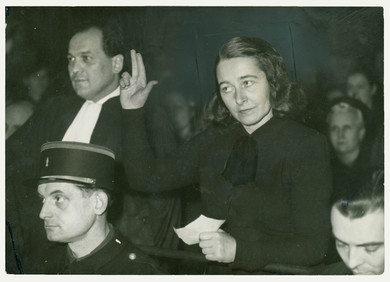
In 1936, her husband was summoned by Georgi Dimitrov and asked to write a book in which Neumann would repent of his mistakes, but he refused. In 1937, he was arrested in Moscow, and in 1938, Margarete herself was arrested. She never saw her husband again. She spoke of night interrogations, of a camp “the size of two Denmarks” where she was sent. In 1940, the Stalinist government handed her and some other German socialists and communists over to Hitler, having hypocritically dressed, fed, and combed them beforehand. A German worker traveling with them, sentenced in absentia by a German court for belonging to the Communist Party, and a Hungarian Jew refused to cross the border. They were dragged across the bridge by force. They were immediately shot dead by the Nazis. Neumann herself was sent to the Ravensbrück concentration camp:
When I arrived at Ravensbrück, I naturally made the acquaintance of Czech and German communists. But they hated me because, of course, I told them what I had to endure in Soviet Russia. They persecuted me, and later threatened that when the Soviet Army arrived, they would demand that I be arrested and sent back there64.
Maître Nordmann reproached her for not feeling gratitude to the Soviet Army that liberated her from Ravensbrück. Margarete Buber-Neumann explained that she had escaped to the American zone without waiting for the approach of the Soviet Army.
The final stage
Before questions begin to be asked to Victor Kravchenko himself, Hewlett Johnson, a pastor and the Dean of Canterbury, testifies in favor of the Communist Party. He talks about how he was in the USSR, saw life there, the churches, the collective farms, and everything he saw indicated that people live happily in the Soviet Union. The questions addressed to Kravchenko begin:
Matarasso: We would like to know how and when Kravchenko was interrogated by the American police?
Kravchenko: Why is he asking me about this, frankly speaking?
Matarasso: We would like to know how and where he was guarded?
Maître Izard: He was guarded, and they did well. Let us recall certain cases… Trotsky, for example…65
The people from “Les Lettres Françaises” claimed that Kravchenko did not write his book. In response, the prosecution provided the Russian manuscript (18 chapters out of 28), from the American translation, with corrections by both Kravchenko and his translator, photocopies, and a large number of galley proofs, also with numerous corrections. It is reported in the courtroom: just now, in the Soviet newspaper “Pravda”, it was stated with extreme crudeness that the Minister of the Interior of France, Jules Moch, is dependent on the American dollar. The Soviet newspaper also bursts into the crudest abuse regarding the French press and especially the “France-Presse” agency. This means that the Stalinists in Moscow understood: the case is lost.
The forensic expert, Professor Sannié, analyzed the ink and concluded that the manuscript was written at least a year or a year and a half ago, no less. Consequently, it was not “fabricated” for the trial. Then came a letter from Ivan Lodyzhensky, who typed the manuscript in Russian. Third in line was a letter from Bernard Nikolsky, who writes that the work was very difficult, Kravchenko was extremely demanding and pedantic, and interfered in literally everything. The fourth piece of evidence was from the publisher Scribner, who reports that there were so many amendments in the proof sheets that Kravchenko had to pay separately for the too numerous corrections. A large number of other facts and testimonies were also cited, proving that the book was written precisely by Kravchenko. The Stalinists, nevertheless, stick to their line:
Maître Nordmann (takes out a page of the manuscript with notes): For whom are these notes?
Kravchenko: They were made for myself.
Nordmann: But here it is written in the imperative mood.The expert of “Les Lettres Françaises” translated incorrectly: Mr. Andronnikov explains that the verb is not in the imperative mood, but in the infinitive mood. (Movement in the courtroom.)
The President: I must observe that Mr. Kravchenko remains master of the situation the whole time!
Kravchenko: I will answer everything. I will leave nothing unanswered”66.
Vladimir Pozner, the expert evaluating the authenticity of the manuscript on the Soviet side, continues:
“Pozner: Style ‘B’ is the style of Russian emigrants who have lived in America for a long time. Kravchenko could not have said ‘steak’; he would have said ‘beefsteaks’, as Russians from Russia say.
Kravchenko: In Russia, there are neither beefsteaks nor steaks. (Laughter in the courtroom.)”67.
Toward the end of the day, a real battle over Kravchenko’s manuscript breaks out. The Stalinists demand that the manuscript be handed over to them until tomorrow, and shout that Kravchenko will alter it and pull out pages. It is nevertheless decided to return the manuscript to the writer (because in principle he was not obliged to provide it and did so as a gesture of goodwill); at the same time, the president, hearing the shouts of Wurmser and Morgan, turns red, stands up and says:
Never in my more than twenty years of work in the magistracy have I witnessed such scandalous distrust of another man’s word. Where are we? Do you really think they are going to tamper with these pages? A little more respect, gentlemen, for what is being done here!68.
The following day, Maître Izard pulls out two letters. At the beginning of the trial, the communist deputy D’Astier de La Vigerie said that if Kravchenko’s book had appeared in 1944 in Algiers, he would have arrested him and was sure that all members of the Algerian government would have done the same. The first letter received by Izard is signed by Le Troquer, a socialist and former minister of that government. He writes that he would never have arrested Kravchenko. The second letter is from André Philip, who not only writes that Kravchenko could have freely published his book in Algiers, but also adds that if D’Astier had arrested him, he would have been immediately kicked out of the ministry.
– And these are not right-wingers, these are left-wing people writing!
Wurmser: You call socialists left-wingers?
Izard: No, I forgot that according to your terminology, they are hydras of imperialism69.
The essence of the Stalinists is exposed — just like today, they call all other leftists right-wingers and fascists, and only they themselves are not like that. Though that is precisely a big question, since everything shown at the trial allows placing an equals sign between them and the fascists. Perhaps all these speeches about their left-wing nature and about “right-wingers” are to hide their true essence? The Stalinists call new witnesses who call Kravchenko “Goebbels’ propaganda”. The famous and respected scientist Frédéric Joliot-Curie also testifies in their favor, recounting how he had been to the USSR three times and saw only good things there — a school for child prodigies housed in a palace, 13-year-old children who talked with him about atomic energy, and so on. He even says that there is freedom of criticism in the USSR — he heard how some workers boldly spoke out that, supposedly, so-and-so was to blame for insufficient indicators (true, the scientist forgot to specify what happened to those guilty parties afterward). Kravchenko, in his reply to the experts, says:
I wrote that the Soviet regime differs little from the fascist regime. If one takes the verdict of the Nuremberg trials and replaces German names with Soviet names, everything can be left in place — everything will be correct70.
Maître Heitzmann speaks. He says: “Why won’t the borders open so that we can finally go to this country and find out in practice what is true and what is untrue? How simple it would be to solve the question!”71 Evaluating the witnesses for “Les Lettres Françaises”, he asks why among them there was not a single person who would say: I am against communism and against “Les Lettres Françaises”, but I must say that Kravchenko’s book is a harmful book? Why did all these professors, Christians, and politicians belong to the Party or sympathize with it? The Maître says: “We cannot forget that the Party, for those who belong to it, stands above everything: above truth, above justice, above ideas, above the oath. The Party dictates everything to them”72. He ridicules the words of the Stalinists who say that thanks to the purges there was no “fifth column” in the USSR, and the next day demand that the witnesses be handed over to them as collaborators and traitors. He ridicules the Moscow officials who swore to tell the whole truth but refused to testify about the purges. He ridicules Wurmser, on whose novels booksellers now stick the inscription: “a book by the opponent of Kravchenko”, while his surname is printed in small font.
Then Maître Izard speaks. He says:
I ask you to imagine for a moment what would have happened if Kravchenko, in April 1944, had returned to Russia, as General Rudenko demanded. This trial would have taken place in Moscow. Probably Romanov and Kolybalov would have been called as witnesses. And there, in the dock, would sit this very same man whom we came to know here. Kravchenko, who would be beating his breast and confessing to crimes he did not commit — in a manner that is no longer a secret to anyone.
<…>
The defendants’ witness, on whom they had placed such high hopes, Kahn, spoke to us for two hours in an authoritative tone about Kravchenko’s connection with a certain Luc Michaux, a Ukrainian Nazi. We have received a letter, a copy of which I am handing over to the court, in which Kahn apologizes to Michaux for giving false testimony against him and assures him that in the second edition of Kahn’s book, all passages about Michaux will be crossed out.
<…>
In 1944, the Communists in America said that Kravchenko was a Nazi agent. Now, just as in 1944, we are assured that he is an agent of America. Times and moods have changed, a new version has been invented. But the goal remains the same: to discredit the man and declare that his book is a lie73.
This speech, which those present listen to with bated breath, concludes:
What kind of country is this that appoints former executioners of Buchenwald and Ravensbrück to high police posts in East Prussia? – asks Maître Izard, quoting a French newspaper, an organ of combatants. – What kind of country is this where, when you attack it, or even simply criticize it, you are already a criminal? What kind of people are its servants who throw the word “traitor” in all directions (reads): “Schuman, Moch, Meyer – traitors”. (Are you not anti-Semites? That sounds, really, somewhat strange!). “Léon Blum – a traitor!”… Blumel! Your former friend is called a traitor by your current friends. What do you say to that? (Blumel shrugs his shoulders in silence). The Communist Courtade threatens the Socialists that the people will one day “deal with them just as they did with Petkov”… Or take this, in “Literaturnaya Gazeta” in Moscow, it is said of President Durkheim that he is a hypocrite. I have dozens of newspapers and magazines, and everywhere it is one and the same: “traitor, traitor, treason, dollars, bribery”… And about Paul Nizan you said that he was a “traitor” because this honest Communist did not want to accept the German-Soviet pact!
Kravchenko, with his book, showed us what these methods are and where they come from. We see these methods now in the Communist Party of France. Oh, how much you wanted to say at this trial, but you only contradicted yourselves and said nothing. Day by day, your press grew cruder.
I ask the court: do not let them get away with it! Punish them with all the severity of our laws, which we treasure because they are the guarantee of our freedom. They use this freedom too, but just a little more, and a dictatorship of defamation will establish itself among us74.
The lawyers for “Les Lettres Françaises” speak, and their speeches carry the same old content: an anti-Soviet conspiracy, the lies of enemies, Goebbels’ propaganda, American money, half-mad traitors, a fifth column, and so on. Communist newspapers are cited in confirmation. The Communist Buber-Neumann, who went through Stalinist and Hitlerite camps, is already being called a “professional propagandist”.
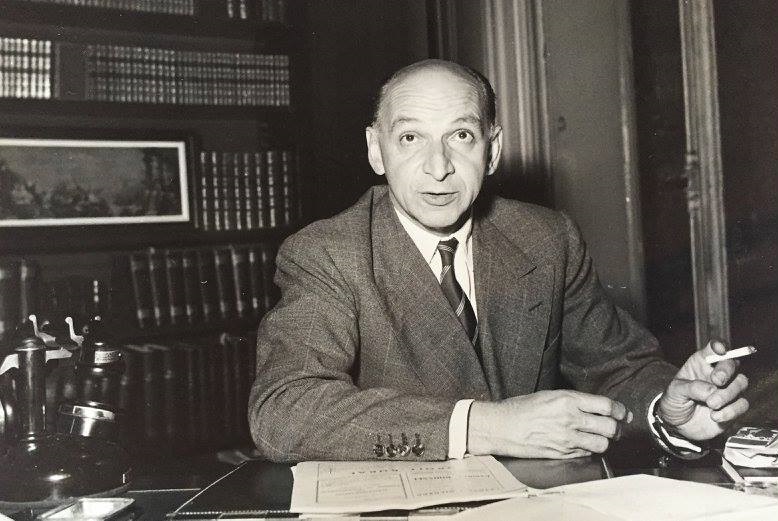
Finally, Maître Izard announces that they have found a Soviet document from 1943 confirming Kravchenko’s work in the Sovnarkom, and that he had been accused of embezzling 4,000 rubles (and not 60 or 150 thousand, as the Soviet witnesses claimed), but the court found no crime had been committed.
Kravchenko’s final statement
Victor Kravchenko apparently spent a long time preparing his final statement at the trial. Here are some excerpts from this speech:
My witnesses – Russians, Ukrainians, Belarusians – spoke the bitter truth here before you. They are the real representatives of the peoples of Russia – workers, peasants, doctors, engineers – and not the Soviet elite, self-assured and insolent, whom you saw here.
<…>
These individuals, together with their French agents, avoided and feared speaking about the subject of the book. They could not defend their regime, the regime of Adolf Stalin.
Why? Because they have nothing to defend, because I wrote and spoke the truth and presented facts that they are unable to refute in the conditions of a democratic, free trial.
Neither they, nor their Kremlin masters here in court, nor their press and radio in Moscow, as in other countries, could refute anything of what I wrote or what I said here.
They took the old, well-tried path of slander and provocation, perjury and false witness, and did not disdain presenting in court fake documents fabricated in the Kremlin NKVD. Such is their morally repulsive portrait and behavior. I think that you, gentlemen judges, will evaluate them according to their deserts.
I have no doubt that the public opinion of the world has already passed moral judgment on those who sit here in the dock, as well as on their Kremlin inspirers and masters.
<…>
The world cannot be free as long as people on one-sixth of its surface – the peoples of my homeland – live under a dictatorship, under the violence of the greatest police power history has ever known.
Therefore, it is not true that every nation gets the government it deserves! This formula is correct only for those countries where democratic, and not totalitarian, systems exist.
This formula, used all too often, incites Western countries not against the Soviet regime, but against the peoples of Russia, and thereby, with the help of Kremlin propaganda, turns them into opponents of the West, rather than friends and allies in the struggle against all forms of dictatorship.
The specified formula was specially invented by hypocrites, only to wash their hands of the so-misnamed “Russian question”.
<…>
Millions of people of various positions who left the Soviet Union, the country of false socialism and false democracy, brought to the Western world a terrible experience and knowledge about the Kremlin realm of modern Genghis Khans.
Those who want to see and hear the truth, however bitter it may be, can learn it in all its diversity: both about the misfortunes of the peoples of Russia and about the activities of the institutions of the Soviet dictatorship, its policies, as well as its goals.
I can repeat what I said in my book: the struggle against the Soviet dictatorship is not only the business of the peoples of Russia, but the vital cause of all progressive and honest people everywhere. Without a free, democratic Russia, there will be no peace in the world75.
Kravchenko’s speech moved the audience. Maître Izard has this phrase about the man: “Millions of those who have been deprived of a voice speak with his voice”76.

After the trial
The trial ended in a victory for Victor Kravchenko. The court ordered Morgan and Wurmser, the publishers of “Les Lettres Françaises”, to pay him 50 thousand francs; each of them was also to pay a fine of 5 thousand francs and publish a notice about this in the newspaper77. Morgan and Wurmser did not rest in their search for enemies and traitors to communism, and in 1950 they were sued by David Rousset, whom they had also accused of “Goebbels’ propaganda”. Rousset also gathered a significant amount of evidence and witnesses, and the court forced the publishers to pay 100 thousand francs this time78, while the Stalinists covered themselves with even greater disgrace in France. Later, Wurmser would accuse Morgan of treason as well79. Thirty years after the trial, in his memoirs “Don Quixotes and Others”, Claude Morgan admitted that “Kravchenko was right”80 and regretted that he had not believed him, calling himself an “a**hole” for it. He would understand this in 1956, looking out of a Budapest hotel window at Soviet tanks. André Wurmser, in his memoirs “Sincerely Yours”, justified his behavior at the trial by claiming he did not know about the real state of affairs in Stalin’s USSR at the time81.
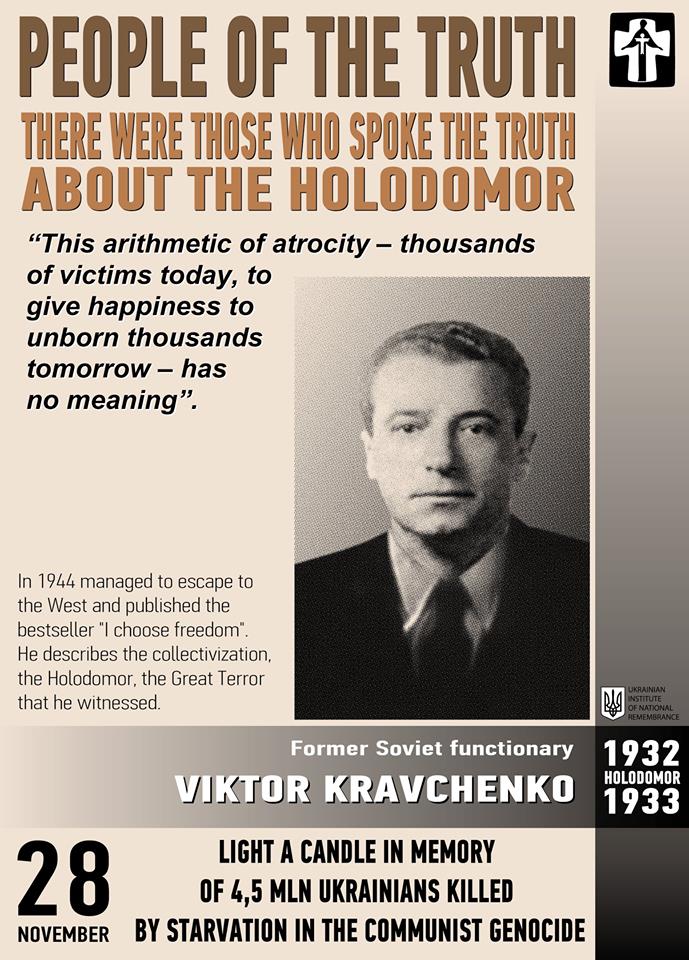
The writer Vercors, who had testified in favor of the newspaper during the Kravchenko trial, sent a telegram to Soviet writers in 1956 containing a quote with an insinuation: “If he deceives you once, shame on him. If he deceives you twice, shame on you”82. D’Astier de La Vigerie, who had threatened that he would have arrested Kravchenko as a traitor, would write in 1963 about the monstrous lies he saw in 1949 in the Soviet Union and compare Stalin to a giant spider that no longer distinguishes the flies it devours83. Maître Matarasso, who defended “Les Lettres Françaises”, would falter right during the trial — when he heard the words of Margarete Buber-Neumann. He was unable to ask her a single question. Later, he would admit that everything Kravchenko said in his book was the truth84.
In Moscow, on April 14, 1949, “Literaturnaya Gazeta” published an article on the “indisputable failure of the American provocation”. The article, signed by V. Rudny, reported that the “plot” of Kravchenko’s book was borrowed from a book released by Goebbels’ department in 1941, that “pressed to the wall by witness testimony, the plaintiff was forced to admit to being an agent of American intelligence”; that “by the end of the trial, the traitor was already completely demoralized and crushed, and his own lawyers kept shouting irritably: ‘Idiot, he’s blabbering the wrong things!'” The newspaper reported: “Kravchenko dashed about the court like a hunted rat, squeaked, and looked around in fear… Retribution awaited the guilty lackey on Avenue d’Iéna. Finally, to avoid further scandalous revelations, the Americans removed him from the courtroom altogether”85. But the words from Moscow sounded increasingly ridiculous. Kravchenko had chosen Paris for a reason — it was an intellectual battle for France, for the political center of Europe. And for the Stalinists, it became what Stalingrad had been for the Nazis.
Citizens of developed countries realized that words from the USSR could not be trusted. Sometime after Stalin’s death, the 20th Congress of the CPSU took place, where Khrushchev repeated part of what had been said by Kravchenko. When archives began to open another 30 years later, it became obvious to the majority that Kravchenko and his witnesses had spoken the truth at the trial.
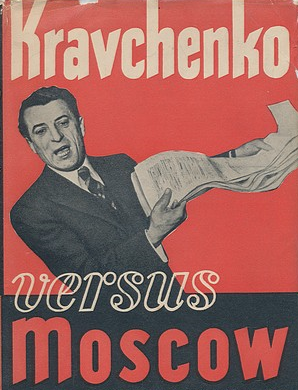
Victor Kravchenko remained a social democrat; in the US, he advocated for the reduction of social inequality and against the war in Vietnam86, and called for granting freedom to colonies, as a result of which he became inconvenient during the Eisenhower era after the trial, and his second book had practically no success or advertising campaign. He invested the profits from the sale of his first book into projects for organizing the peasant poor into collective farms at silver mines in Peru and Bolivia. As a result, he went bankrupt; Gary Kern, author of the book “The Kravchenko Case: One Man’s War on Stalin”, suggested that the KGB played a role in the failure of the enterprises87. Several attempts were made on his life, and in 1966 he was found dead in his apartment from a gunshot wound. The official cause of death was ruled a suicide. In 1992, his sons Valentin and Andrew met for the first time when the former arrived in the US after the collapse of the USSR. The New York Times newspaper wrote that the brothers intended to prove the guilt of the Soviet secret services in the death of their father, whom Valentin had been taught to hate by the Communist Party his whole life88.
The main lesson of the Kravchenko trial is that you cannot build politics on lies and coercion. Stalinists like to say that Khrushchev “ruined everything” with the 20th Congress. Why are they incapable of understanding that if you continue to lie, it will only exacerbate problems rather than solve them? Did they not understand this in childhood, like most normal people? Why do they understand that if you hold people hostage, free people will figure it out, but they do not understand that the same is true regarding state policy? If domestic lovers of totalitarianism and dictatorship do not understand this, sooner or later a similar judicial process will be held over them. It is only a pity for those people who will suffer from their actions before this trial. Stalin and his clique wanted to force the whole world to love and respect them, yet the whole world laughed at them and considered them unhealthy people. Like the publisher and translator of the French version of the book “I Chose Freedom”, who cuttingly sent several copies with “friendly” inscriptions to Stalin, Molotov, and other major figures of the Kremlin89. When the General Secretary died, he was cursed by his own accomplices: they resolved to remove his corpse from the Mausoleum, destroy his portraits, and sentenced his son under Article 58-10 (just as Stalin himself had taught them). Every country has its real heroes — people who single-handedly challenge an entire mafia and win. In the US, they know and respect Edward Murrow and Eliot Ness. Let us hope that someday in our country, too, they will begin to heroize not just violence, but people who chose freedom.
- John Simkin. Victor Kravchenko // Spartacus Educational (spartacus-educational.com). September 1997. [Electronic resource]. URL: https://spartacus-educational.com/RUSkravechenko.htm (accessed: 18.11.2020).
- R.B. Gul. I Carried Russia Away. Volume III. Russia in America / R.B. Gul. – 365 p. – Moscow; Berlin: Direct-Media, 2019. – pp. 6-7.
- Victor Kravchenko. I Chose Freedom. The Personal and Political Life of a Soviet Official. – 496 p. – London: Robert Hale Limited. – p. 299.
- Ibid., p. 352-353.
- Aliya Aysina. Le procès de Kravchenko: une vérité malvenue? // Ministère de la Justice (www.justice.gouv.fr). 20 June 2019. [Electronic resource]. URL: http://www.justice.gouv.fr/histoire-et-patrimoine-10050/proces-historiques-10411/le-proces-de-kravchenko-une-verite-malvenue–32496.html (accessed: 18.11.2020).
- B. Nosik. This Strange Paris Trial. – 256 p. – M.: Mosk. Rabochiy, 1991. – p. 32.
- Vladimir Tolz, Olga Edelman. “TASS is not authorized to state”. 1949: Viktor Kravchenko vs “Lettres Françaises” (Part 1) // Radio Liberty (www.svoboda.org). 11 July 2009. [Electronic resource]. URL: https://www.svoboda.org/a/1776216.html (accessed: 18.11.2020).
- N.N. Berberova. The Last and the First: [Novel]; The Kravchenko Case: [Chronicle of the trial of one of the first Soviet “defectors”, France, 1949] / N. N. Berberova. – 316 p. – M.: Sabashnikov Publishing House, 2000
- Ibid.
- Ibid.
- Dmitry Ushakov. “United Europe against the USSR” – HD // YouTube (www.youtube.com). 1 July 2016. [Electronic resource]. URL: https://www.youtube.com/watch?v=4428jAS98n0 (accessed: 18.11.2020).
- N.N. Berberova. The Last and the First: [Novel]; The Kravchenko Case: [Chronicle of the trial of one of the first Soviet “defectors”, France, 1949] / N. N. Berberova. – 316 p. – M.: Sabashnikov Publishing House, 2000
- B. Nosik. This Strange Paris Trial. – 256 p. – M.: Mosk. Rabochiy, 1991. – p. 15.
- N.N. Berberova. The Last and the First: [Novel]; The Kravchenko Case: [Chronicle of the trial of one of the first Soviet “defectors”, France, 1949] / N. N. Berberova. – 316 p. – M.: Sabashnikov Publishing House, 2000
- Ibid.
- B. Nosik. This Strange Paris Trial. – 256 p. – M.: Mosk. Rabochiy, 1991. – p. 41.
- Ibid., p. 44.
- Ibid., p. 39.
- N.N. Berberova. The Last and the First: [Novel]; The Kravchenko Case: [Chronicle of the trial of one of the first Soviet “defectors”, France, 1949] / N. N. Berberova. – 316 p. – M.: Sabashnikov Publishing House, 2000
- Ibid.
- Ibid.
- Ibid.
- Ibid.
- Ibid.
- D. Dallin. The Kravchenko Case // Modern Age. Vol. 6. No. 3. July 1962. Russian translation – according to the “New Journal” for 1966.
- N.N. Berberova. The Last and the First: [Novel]; The Kravchenko Case: [Chronicle of the trial of one of the first Soviet “defectors”, France, 1949] / N. N. Berberova. – 316 p. – M.: Sabashnikov Publishing House, 2000
- B. Nosik. This Strange Paris Trial. – 256 p. – M.: Mosk. Rabochiy, 1991. – p. 86.
- N.N. Berberova. The Last and the First: [Novel]; The Kravchenko Case: [Chronicle of the trial of one of the first Soviet “defectors”, France, 1949] / N. N. Berberova. – 316 p. – M.: Sabashnikov Publishing House, 2000
- B. Nosik. This Strange Paris Trial. – 256 p. – M.: Mosk. Rabochiy, 1991. – p. 89.
- N.N. Berberova. The Last and the First: [Novel]; The Kravchenko Case: [Chronicle of the trial of one of the first Soviet “defectors”, France, 1949] / N. N. Berberova. – 316 p. – M.: Sabashnikov Publishing House, 2000
- Ibid.
- B. Nosik. This Strange Paris Trial. – 256 p. – M.: Mosk. Rabochiy, 1991. – p. 101.
- N.N. Berberova. The Last and the First: [Novel]; The Kravchenko Case: [Chronicle of the trial of one of the first Soviet “defectors”, France, 1949] / N. N. Berberova. – 316 p. – M.: Sabashnikov Publishing House, 2000
- B. Nosik. This Strange Paris Trial. – 256 p. – M.: Mosk. Rabochiy, 1991. – p. 111.
- Ibid., p. 107-109.
- N.N. Berberova. The Last and the First: [Novel]; The Kravchenko Case: [Chronicle of the trial of one of the first Soviet “defectors”, France, 1949] / N. N. Berberova. – 316 p. – M.: Sabashnikov Publishing House, 2000
- Ibid.
- Ibid.
- Ibid.
- Ibid.
- B. Nosik. This Strange Paris Trial. – 256 p. – M.: Mosk. Rabochiy, 1991. – p. 124.
- John Simkin. Victor Kravchenko // Spartacus Educational (spartacus-educational.com). September 1997. [Electronic resource]. URL: https://spartacus-educational.com/RUSkravechenko.htm (accessed: 18.11.2020).
- N.N. Berberova. The Last and the First: [Novel]; The Kravchenko Case: [Chronicle of the trial of one of the first Soviet “defectors”, France, 1949] / N. N. Berberova. – 316 p. – M.: Sabashnikov Publishing House, 2000
- Ibid.
- Ibid.
- B. Nosik. This Strange Paris Trial. – 256 p. – M.: Mosk. Rabochiy, 1991. – p. 136.
- N.N. Berberova. The Last and the First: [Novel]; The Kravchenko Case: [Chronicle of the trial of one of the first Soviet “defectors”, France, 1949] / N. N. Berberova. – 316 p. – M.: Sabashnikov Publishing House, 2000
- B. Nosik. This Strange Paris Trial. – 256 p. – M.: Mosk. Rabochiy, 1991. – p. 141.
- B. Nosik. This Strange Paris Trial. – 256 p. – M.: Mosk. Rabochiy, 1991. – p. 146-147.
- N.N. Berberova. The Last and the First: [Novel]; The Kravchenko Case: [Chronicle of the trial of one of the first Soviet “defectors”, France, 1949] / N. N. Berberova. – 316 p. – M.: Sabashnikov Publishing House, 2000
- Ibid.
- B. Nosik. This Strange Paris Trial. – 256 p. – M.: Mosk. Rabochiy, 1991. – p. 177.
- N.N. Berberova. The Last and the First: [Novel]; The Kravchenko Case: [Chronicle of the trial of one of the first Soviet “defectors”, France, 1949] / N. N. Berberova. – 316 p. – M.: Sabashnikov Publishing House, 2000
- Stalin. I. Works. Vol. 11. P. 171.
- B. Nosik. This Strange Paris Trial. – 256 p. – M.: Mosk. Rabochiy, 1991. – p. 194.
- N.N. Berberova. The Last and the First: [Novel]; The Kravchenko Case: [Chronicle of the trial of one of the first Soviet “defectors”, France, 1949] / N. N. Berberova. – 316 p. – M.: Sabashnikov Publishing House, 2000
- B. Nosik. This Strange Paris Trial. – 256 p. – M.: Mosk. Rabochiy, 1991. – p. 197.
- N.N. Berberova. The Last and the First: [Novel]; The Kravchenko Case: [Chronicle of the trial of one of the first Soviet “defectors”, France, 1949] / N. N. Berberova. – 316 p. – M.: Sabashnikov Publishing House, 2000
- Ibid.
- Ibid.
- Ibid.
- Ibid.
- B. Nosik. This Strange Paris Trial. – 256 p. – M.: Mosk. Rabochiy, 1991. – p. 214.
- B. Nosik. This Strange Paris Trial. – 256 p. – M.: Mosk. Rabochiy, 1991. – p. 217.
- N.N. Berberova. The Last and the First: [Novel]; The Kravchenko Case: [Chronicle of the trial of one of the first Soviet “defectors”, France, 1949] / N. N. Berberova. – 316 p. – M.: Sabashnikov Publishing House, 2000
- Ibid.
- Ibid.
- Ibid.
- Ibid.
- Ibid.
- Ibid.
- Ibid.
- Ibid.
- Ibid.
- Ibid.
- B. Nosik. This Strange Paris Trial. – 256 p. – M.: Mosk. Rabochiy, 1991. – p. 197.
- N.N. Berberova. The Last and the First: [Novel]; The Kravchenko Case: [Chronicle of the trial of one of the first Soviet “defectors”, France, 1949] / N. N. Berberova. – 316 p. – M.: Sabashnikov Publishing House, 2000
- John Simkin. David Rousset // Spartacus Educational (spartacus-educational.com). September 1997. [Electronic resource]. URL: https://spartacus-educational.com/RUSrousset.htm (accessed: 18.11.2020).
- B. Nosik. This Strange Paris Trial. – 256 p. – M.: Mosk. Rabochiy, 1991. – p. 28.
- Philip Martin. L’Affaire Kravchenko // Phoenix New Times (www.phoenixnewtimes.com). February 12, 1992, 16:00. [Electronic resource]. URL: https://www.phoenixnewtimes.com/news/l-affaire-kravchenko-6426499 (accessed: 18.11.2020).
- Claude Morgan // Denis Touret (www.denistouret.net). [Electronic resource]. URL: https://www.denistouret.net/textes/Morgan.html (accessed: 18.11.2020).
- B. Nosik. This Strange Paris Trial. – 256 p. – M.: Mosk. Rabochiy, 1991. – p. 58.
- D’Astier de La Vigerie. On Stalin. Paris, 1963
- B. Nosik. This Strange Paris Trial. – 256 p. – M.: Mosk. Rabochiy, 1991. – p. 154.
- Ibid., p. 244-245.
- John Simkin. Victor Kravchenko // Spartacus Educational (spartacus-educational.com). September 1997. [Electronic resource]. URL: https://spartacus-educational.com/RUSkravechenko.htm (accessed: 18.11.2020).
- Gary Kern. The Kravchenko case: one man’s war on Stalin / Gary Kern. – 1st ed. – 651 p. – New York: Enigma books, 2007. – p. 536.
- Seth Mydans. First Meeting For Two Sons Of a Defector // The New York Times (www.nytimes.com). January 4, 1992. [Electronic resource]. URL: https://www.nytimes.com/1992/01/04/us/first-meeting-for-two-sons-of-a-defector.html (accessed: 18.11.2020).
- B. Nosik. This Strange Paris Trial. – 256 p. – M.: Mosk. Rabochiy, 1991. – p. 234.