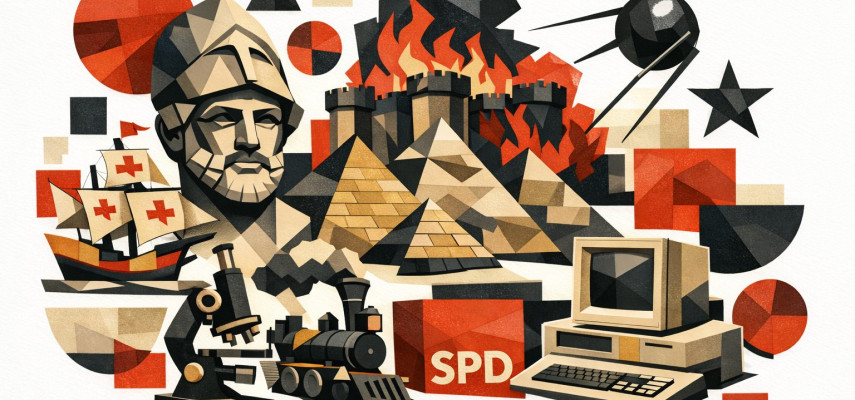
A brief history of human development
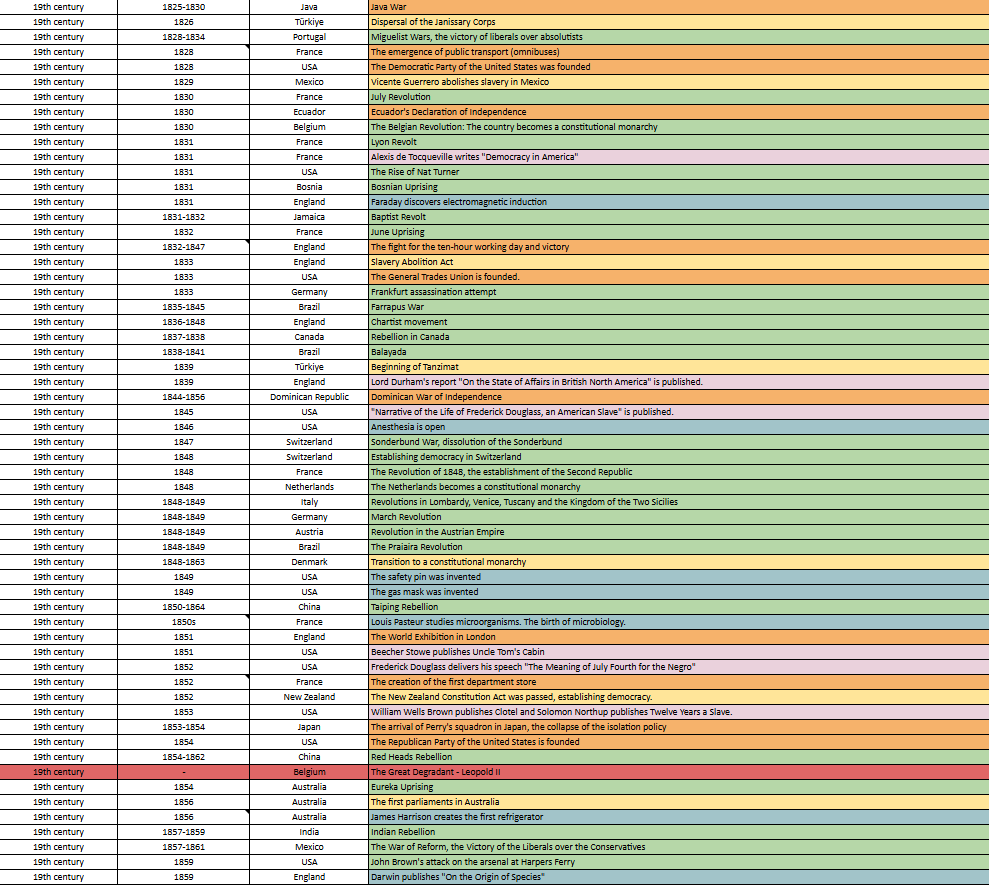
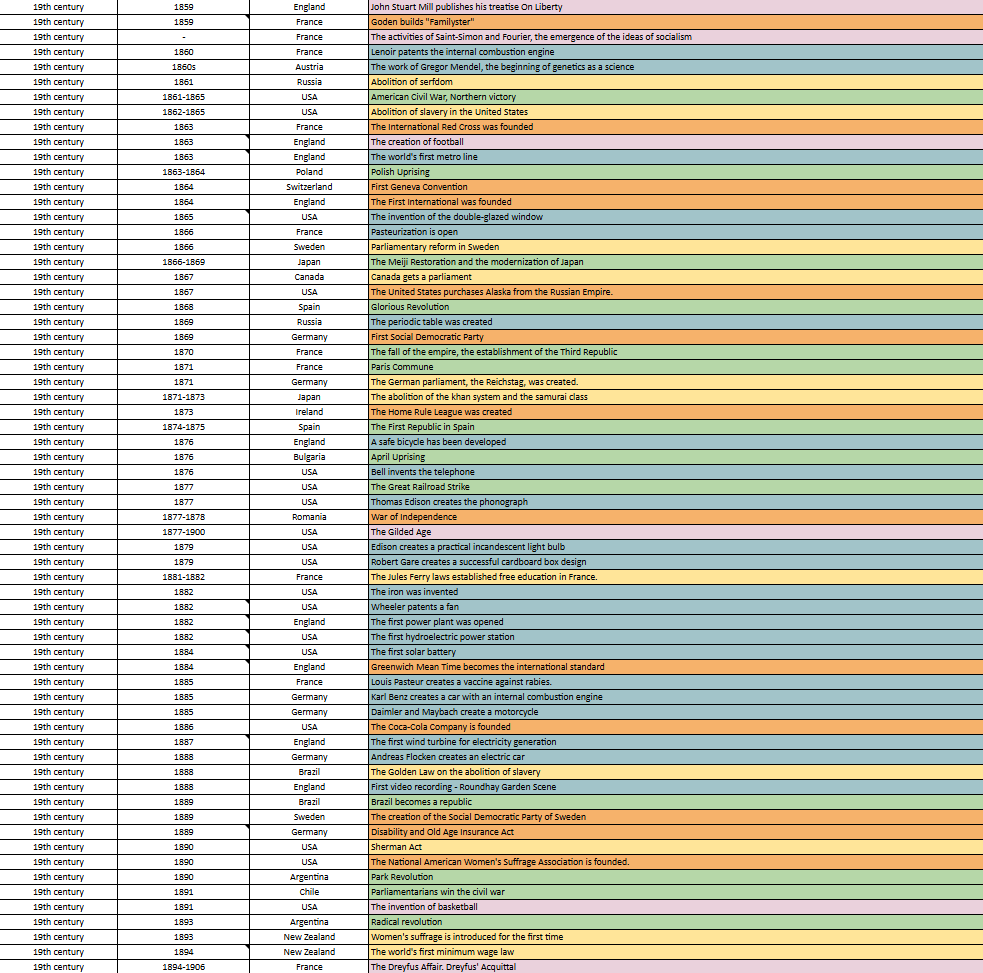
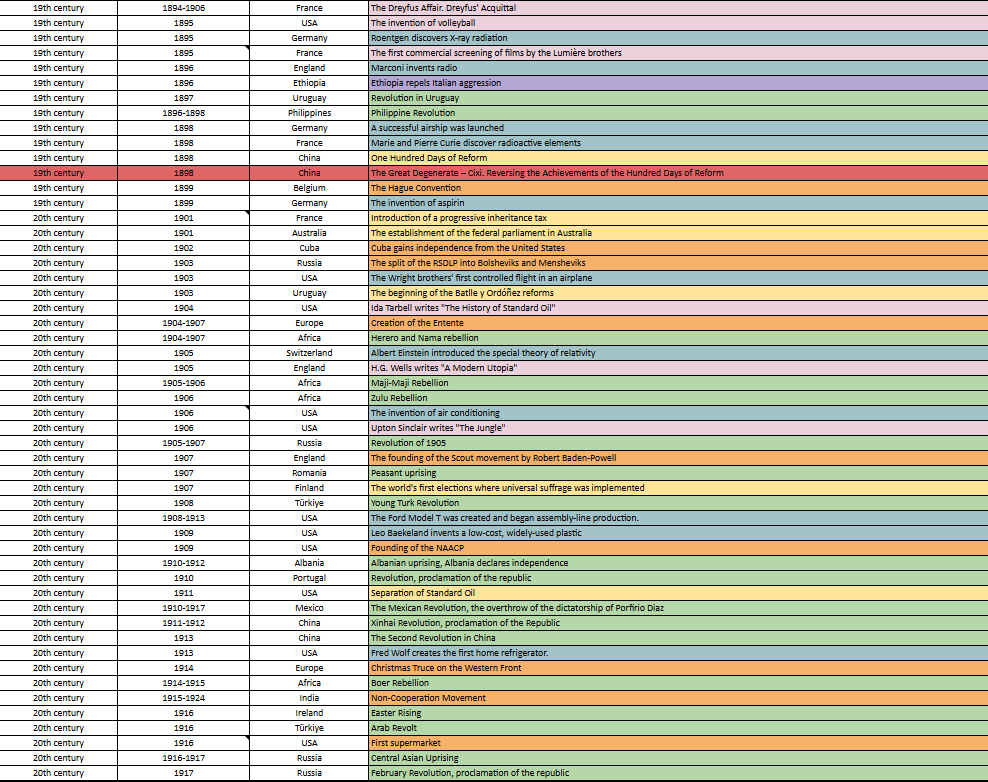
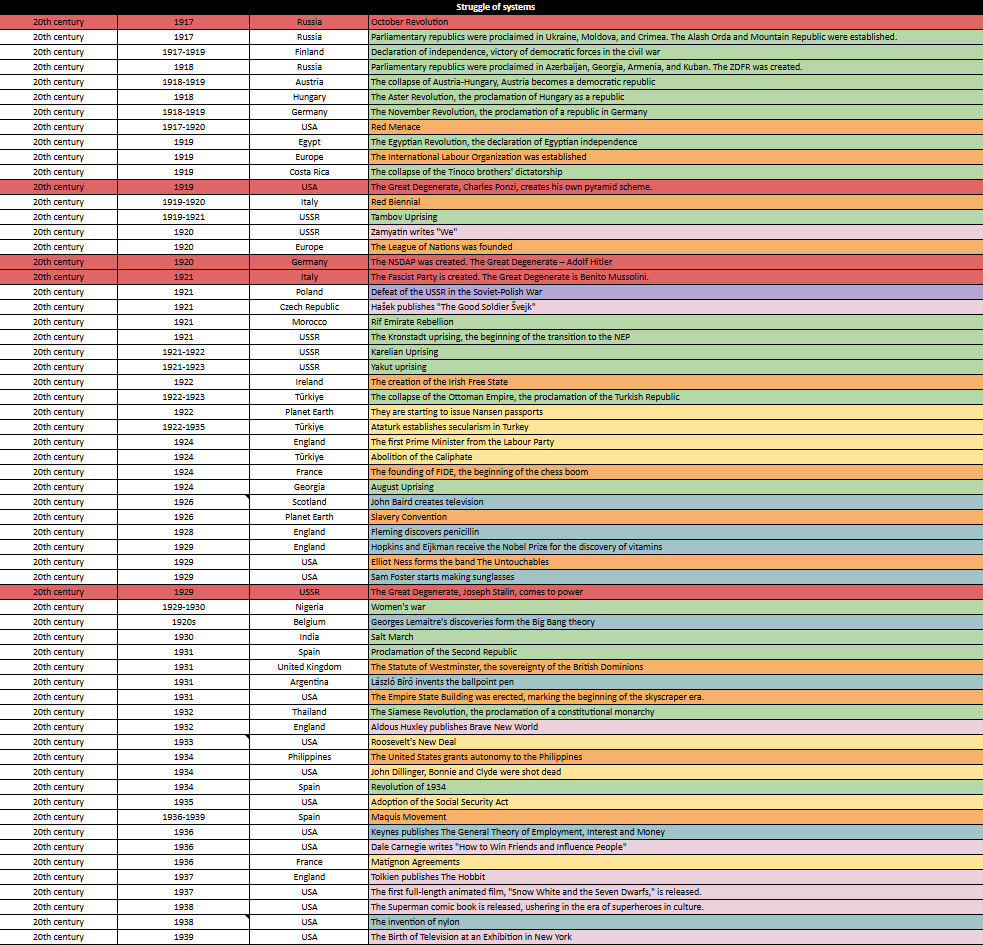
Many believe that history teaches us nothing, yet social democrats still need to try to learn something from it. To do so, however, one must know it, and to help better navigate through it, we have compiled a table of major historical events alongside a brief overview. In this piece, we will not delve into the fine details; rather, it serves as a guide on the basis of which the reader can independently dive deeper into studying a particular event, and the authors can choose topics for writing articles in our journal. The table is currently not final and remains a work in progress.
In this article, we will attempt to briefly describe the main periods in the history of humanity and its progress. Why do we need to know this? For example, if we know them and understand how humanity developed, we will not make the mistake of thinking that human development has always followed an upward arc. Such a stance could lead us to the conclusion that, regardless of whether we act or not, a paradise with all the amenities awaits us in the end anyway, meaning there is no need to work for it or fight for better living conditions. As we will see from the facts, this is a dangerous and mistaken position.
Familiarization with world history and its key events allows us not to miss important things. For instance, in 1856, a parliament was established in Australia, and people might think it was created just like that, granted by benevolent elites. But two years prior, there was the Eureka Rebellion (not to mention the rebellions in Canada, which, as we wrote in another piece, also influenced the colonies), and we thus see that it was not merely the will of the elites that influenced this decision. Accordingly, this is one of the arguments in favor of not waiting for their mercy, but taking action instead. Another example is that people might think elements of the welfare state were first introduced in the USSR and conclude that communist achievements were unique, if they overlook facts that demonstrate otherwise — for example, free education was introduced in France in the 1880s, and the first orphanages appeared in Byzantium. This helps us take a critical stance toward communist propaganda that attempts to claim credit for the achievements of others.
We have already criticized Marxist socio-economic formation theory and explained why it is irrelevant for social democrats today. However, for many people, it served as a method for analyzing world history. We have also received questions regarding the existence of an alternative to this approach. Here, alas, we cannot offer anything “special” other than reforming the standard modernization approach (also known as “modernization theory”). In short, it involves viewing history through the paradigm of the problems of transition from traditionality to modernity1. It also assumes that in the course of modernization, less developed societies acquire the features of more developed ones2. At the same time, more modern versions of the approach reject the linearity of global development and imply the abandonment of strict determinism of any kind3.
Marx’s “formation theory” itself was largely an adaptation of Giambattista Vico’s historical approach to the conditions of his time, and the option we propose can also be considered an adaptation taking into account new discoveries and the current situation.
However, the modernization approach lacks a clear periodization, so we will offer our own version of the periodization of the modernization approach to world history, in which, nevertheless, we will highlight the special role of individual civilizations. At present, there is a consensus regarding the division of the early stages of human development into Primitive Society, Antiquity, and Classical Antiquity, but regarding subsequent history, there are neither universally accepted timeframes nor a universally accepted list of periods (the formation approach contributed to this confusion as well). In addition, in our view, the role of the communal movement in medieval Europe is seriously underestimated (we will justify why below). As a result, we have divided world history into 8 periods:
- Primitive society;
- Antiquity;
- Classical antiquity;
- Dark Ages;
- Communal era;
- Renaissance;
- Great revolutions;
- Struggle of systems.
The events will be presented by us in the form of a table. From them, we selected several groups of major events. The first group of events includes important scientific discoveries, inventions, achievements, and instances of the discovery or popularization of technologies. The second group includes important cases of political struggle — revolutions, uprisings, strikes, and instances of establishing democracy or other progressive political institutions. Important reforms are combined in the third group, and the fourth includes significant social practices of human interaction, as well as international phenomena and agreements. The fifth group features important cultural phenomena, and the sixth includes the most significant military clashes that ended in victory for progressive forces. Finally, the seventh group of events consists of those events and periods marked by the most noticeable outbursts of reaction in world history. Following them, as a rule, human development either stalled, rolled back, or faced severe problems.

Naturally, not all important events are included in the table, as world history is too complex and vast a topic to cover sufficiently all at once. Therefore, the table is still in the development stage.
There is also a certain degree of subjectivity on the part of the authors regarding which events deserve mention and which do not. Many may also raise the question of why the table omits a considerable number of wars, including global ones. First of all, it should be noted here that we wanted to consider, primarily, the history of human development. Yes, we could not bypass certain major catastrophes. But we do not consider it justified to mention conflicts here that are, in content, ordinary semi-gangland disputes between factions that gained control of a state. There were plenty of them in human history, and they would stretch the article significantly, despite not deserving mention or the interest of broad circles of readers.
For instance, the defeat of the Axis powers by the Anti-Hitler Coalition was a major military victory in which the bloc of democratic states in alliance with the USSR demonstrated its superiority over right-wing authoritarian regimes. This is an important milestone for humanity. But, for example, the Great Northern War, despite its scale, was mainly a dispute between one authoritarian government and another. It was a war of two reactionary forces that had no tangible significance for global human progress. As a result, studying it is not obligatory for the modern general public — this should be left to professional historians. Yes, defeat in the Great Northern War influenced Sweden’s development and the reassessment of its path (which in the future would become one of the factors in its transition to the Nordic model, extremely valuable for global progress), but we cannot afford to mention in this material all the causes of important events that also have their own causes — otherwise, the material would expand dozens, or even hundreds of times. Modern historical science and its teaching in educational institutions overestimate the role of war, creating a sense among the audience of the significance of military action (even if it is a “dispute” between authoritarian governments) and territorial acquisitions. In social democratic education, this overestimation must be revised and reduced to the necessary minimum — the study of the need for the democratic and progressive world to resist the forces of authoritarianism and reaction.
Contents
Primitive society
Africa is the cradle of humanity; it is where humankind took its first steps and made its first vital discoveries. During that period, Africa was the center of global progress, with Asia, the Middle East, and Europe joining it in the later stages of primitive society as competitors for the role of the most progressive region in the future.
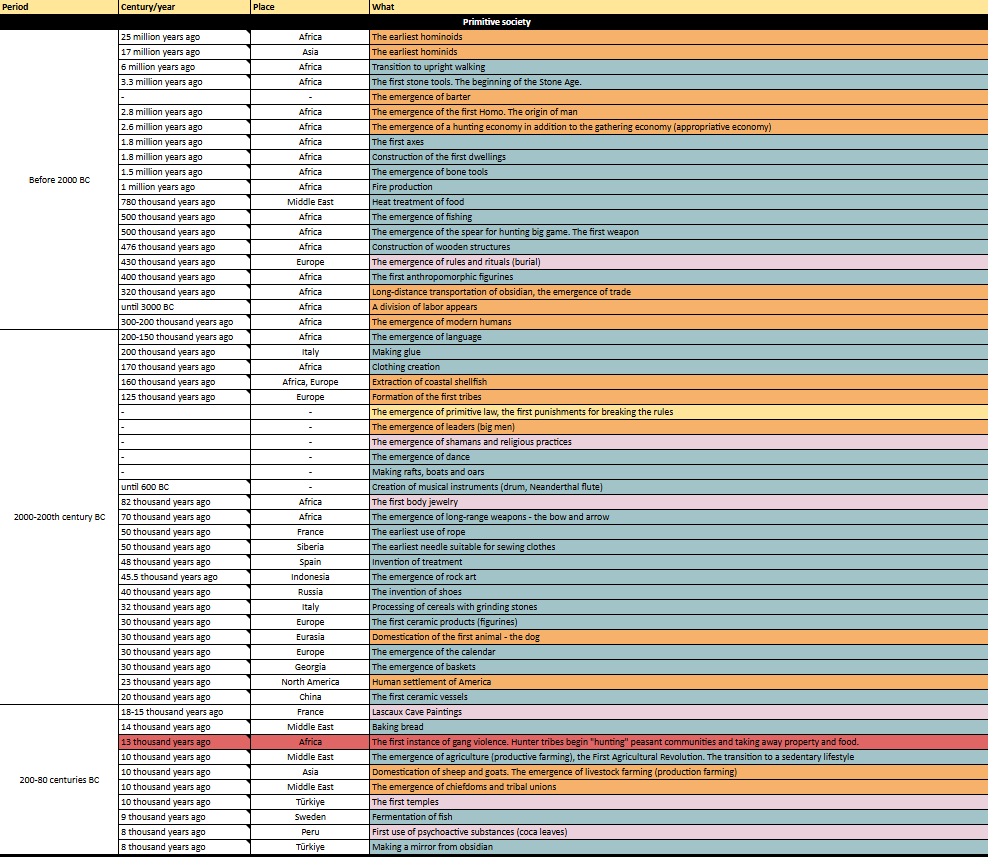
The first hominoids (i.e., apes) emerge in Africa, and later, the first known traces of hominids (a narrower family of primates that, together with gibbons, forms the hominoid superfamily; hominids include humans and great apes) appear in Asia. In Africa, we observe the first human and how they begin making their initial discoveries: using the first tools, building dwellings, and harnessing fire. Humans master hunting, moving beyond mere gathering. With the control of fire, cooking food becomes possible (in the Middle East). A bit later, with the adoption of new tools, fishing emerges. In Europe, cultural practices are observed — such as burial rituals. In Africa, not only barter but also full-fledged trade originates — the long-distance transportation of various goods. Finally, language and clothing appear.
It is difficult for us to establish when and where the first rules were established in tribes — rules for sharing prey, the prohibition of certain actions (killing a fellow tribe member, rape, and so on), or when the first tribal leaders and the first people specializing in explaining complex natural phenomena (primitively, through mysticism) appeared. However, it can be assumed that this happened after the formation of the first large tribes and no earlier than the emergence of the division of labor.

The emergence of long-range weapons — the bow and arrow — brought a revolution to hunting. It significantly affected hunting efficiency and the human ability to settle in new territories. It was no longer necessary to engage in direct combat with predators — they could be struck from a distance. Humanity learns to treat diseases, sew clothes, wear shoes, domesticates animals, and masters ceramics (which can be used to make dishes). With the advent of the calendar, humans begin to orient themselves in time. During this period, the main world events shift to Eurasia.
In the final stages of primitive society, the Middle East begins to play the most significant role, where bread baking was mastered. Here, a producing economy emerges — first agriculture, followed by the domestication of sheep and goats. Humanity transitions to a settled lifestyle, which will ultimately launch the era of Antiquity. This period is marred by the earliest recorded instance of group violence. People begin fighting as tribes, killing each other en masse.
Antiquity
The Middle East becomes the center of world development. Two of the greatest civilizations of their time arise here — first Sumer, and then Ancient Egypt. The Sumerians build the first cities, invent the brick, and develop irrigation systems. With the appearance of cities comes the state, largely thanks to which Sumer gains the opportunity to develop centrally, securing an advantage over surrounding tribes. It becomes possible to create an instrument such as money and currency, standardized across the territory of the state. Writing and a numeral system are created, also according to a single standard. An invention boom occurs — the Sumerians invent the wheel, the plow, the toilet, the potter’s wheel, and manufacture glass.
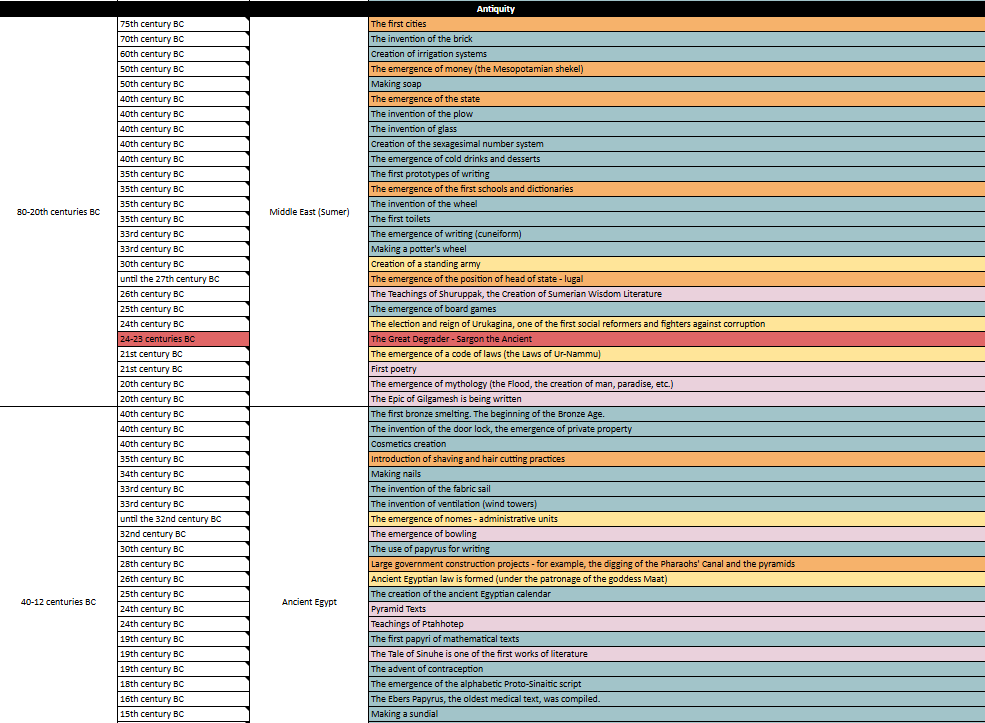
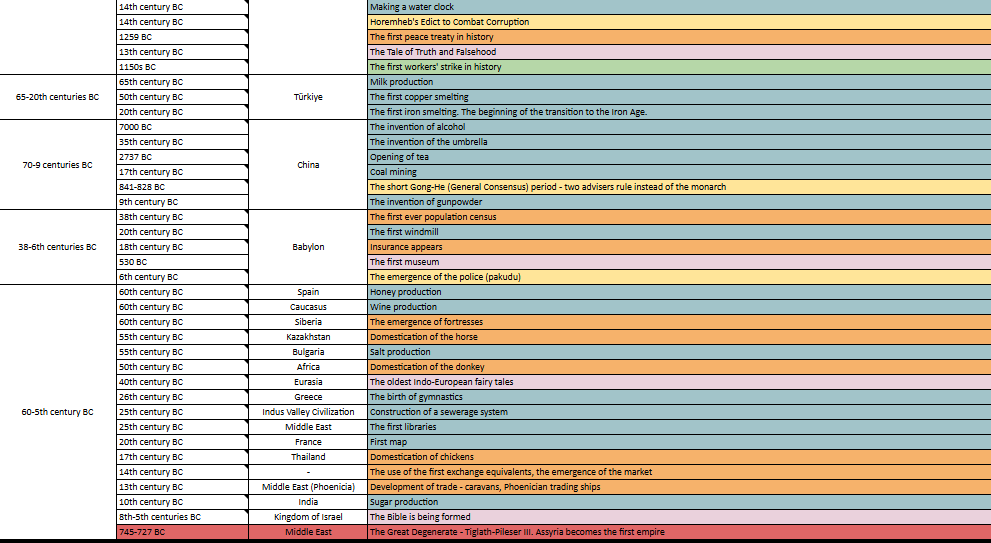
Education emerges — the first schools and dictionaries, and Sumerian wisdom literature is created, representing an attempt to preserve accumulated knowledge (an example being the Instructions of Shuruppak). The first position of head of state (lugal) appears, as well as a code of laws. The Sumerians create mythology — an attempt to answer complex questions still beyond human understanding, and they develop poetry and board games. They also experience the rule of one of the first social reformers — Urukagina, and the emergence of history’s first Great Degenerate — Sargon the Great, creator of the first proto-empire, obsessed with conquering other peoples. Soon after, the decline of Sumer as a civilization will follow.
By Great Degenerates, we mean those leaders and rulers who caused the greatest damage to human progress, slowed its development, or turned it back. As a rule, these are tyrants consumed by a thirst for power, the suppression of others’ opinions, conquest, violence, and lies, or the most zealous promoters of their ideas who aimed to halt progress or cultivate harmful concepts.
During the heyday of Sumer, another great civilization of that era began to develop nearby — Ancient Egypt. The smelting of bronze began in these territories, and humanity entered the Bronze Age. The door lock was invented here, allowing us to speak of the existence of norms of private property. The Egyptians invented cosmetics and introduced the practices of shaving and haircutting. They invented the sail (which led to a revolution in navigation), nails, water and sundials, and began using papyrus for writing. Bowling, one of the leisure activities still popular today, makes its appearance.
The Egyptian state was divided into administrative units – nomes. It allowed the mobilization of people to implement large projects – such as the pyramids and the Canal of the Pharaohs. Ancient Egyptian law and concepts of justice took shape, and the first precedents of anti-corruption campaigns emerged. Egyptian culture left us important works – the Pyramid Texts, The Maxims of Ptahhotep, The Tale of Sinuhe, and the Tale of Truth and Falsehood. In them, the Egyptians tried not only to pass on experience to future generations, but also to shape a value system and simply tell a story. Along with this, they left us papyri with mathematical texts and the world’s oldest medical text (“Ebers Papyrus”).
In Ancient Egypt, there were several so-called “intermediate periods” when a weakening of central authority was observed; ultimately, they ended with the civilization being subjugated by the Assyrian Empire4, and Ancient Egypt departed the historical stage as one of the leading civilizations. The history of Ancient Egypt is also notable for hosting the first strike in world history, as well as the conclusion of the first known peace treaty.
During the Antiquity period, besides Sumer and Ancient Egypt, there were three other major centers of human development – one in the territory of Turkey, the second in China, and the third in Babylon. In Turkey, even before bronze smelting in Ancient Egypt, copper smelting was mastered, and later – iron. Thus began the Iron Age. In China, coal mining was mastered and gunpowder was invented. In Babylon, important social phenomena were observed, such as the first museum and the first case of property insurance. Also, a police force was established there to ensure public order. In other places, humanity domesticated the horse, mastered the production of wine, salt, and sugar, and created a sewage system.
The end of the era of Antiquity can be considered the beginning of the activities of the Great Degenerate – Tiglath-Pileser III, creator of the first full-fledged empire in history – the Assyrian. Being subjected to this parasitic entity, the Middle East ceased to be the center of human development. And even though Assyria, like any other empire, would soon collapse, the role of the center of world development shifted to civilizations in other territories.
Perhaps the most important lesson of Antiquity – this period proved the superiority of state forms of societal organization over stateless ones, which during this period began to be displaced by state forms and were eventually squeezed out completely, leaving the historical arena everywhere due to their uncompetitiveness.
Classical antiquity
This era begins with the birth of the polis system in Ancient Greece. During Classical Antiquity, the centers of world development became Ancient Greece (primarily Athens), Rome, and China. It is here that most events important to humanity take place, the most important of which is the establishment of democracy in Athens. Soon after, we observe history’s first clash of systems – democratic and authoritarian – during the aggression of the Persian Empire against Greece. Despite overwhelming superiority in almost all resources, especially in the number of warriors, the Persian Empire suffers a series of crushing defeats from the Greeks, who are inferior to them in numbers – at the Battle of Marathon, the battles of Salamis, Plataea, and the Eurymedon. As a result of these heavy defeats, the empire’s expansion stops, and the Greeks create the prototype of democratic coalitions – the Delian League.
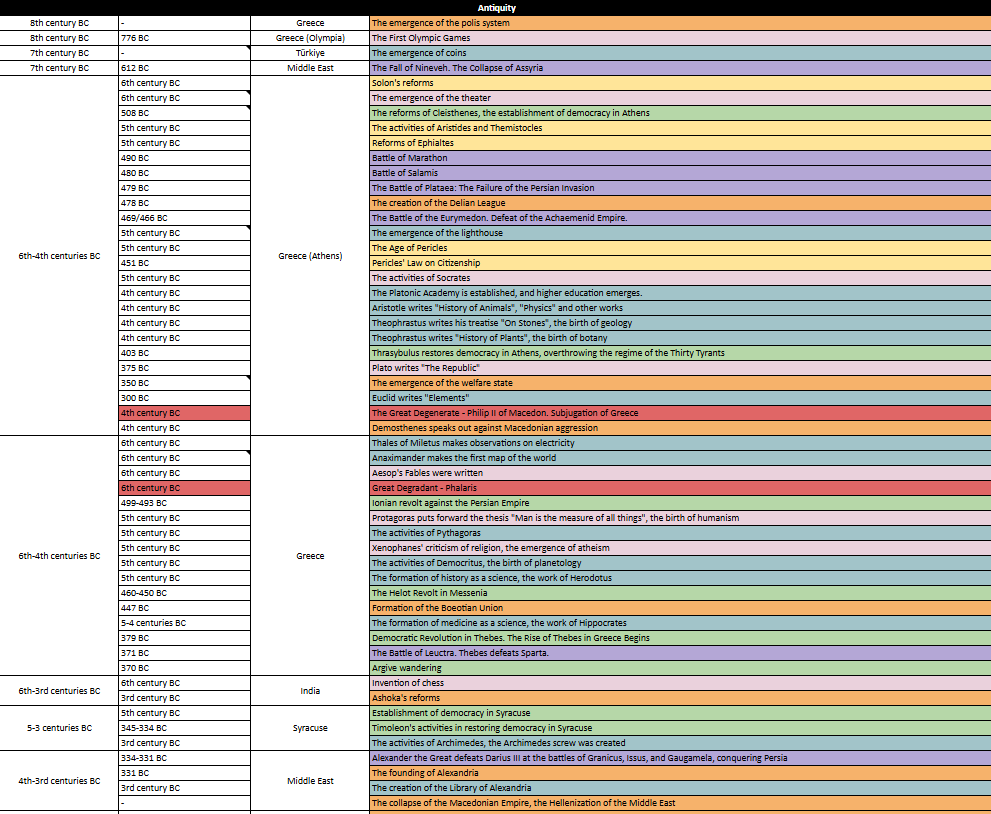
The Greeks create the lighthouse, the theater, the institution of citizenship, conduct the first observations of electricity, compile the first map of the world, but most importantly – they can be considered the creators of science as such (as well as higher education). The systematization of all knowledge accumulated by humanity rests largely on the Greek foundation and the data gathered by the Greeks on geology, botany, geometry, history, medicine, mathematics, and so on. Unfortunately, the world’s first democracy did not stand against another enemy – the Great Degenerate Philip II of Macedon. Macedonia was culturally close to Greece, and while for Greece subjugation to the Macedonians was a step backward, Alexander the Great’s conquest of Persian territories was a step forward for the latter. The subsequent Hellenization would have a beneficial effect on the Middle East, but more on that later.
In China, meanwhile, a strong centralized state is observed. The Chinese create the blast furnace, begin smelting cast iron, and invent the compass and fireworks. Here, state influence in the economy began to take root very early – such as the formation of state monopolies (on salt and iron). Overall, despite the system’s authoritarianism, the Chinese managed to make several very important discoveries.
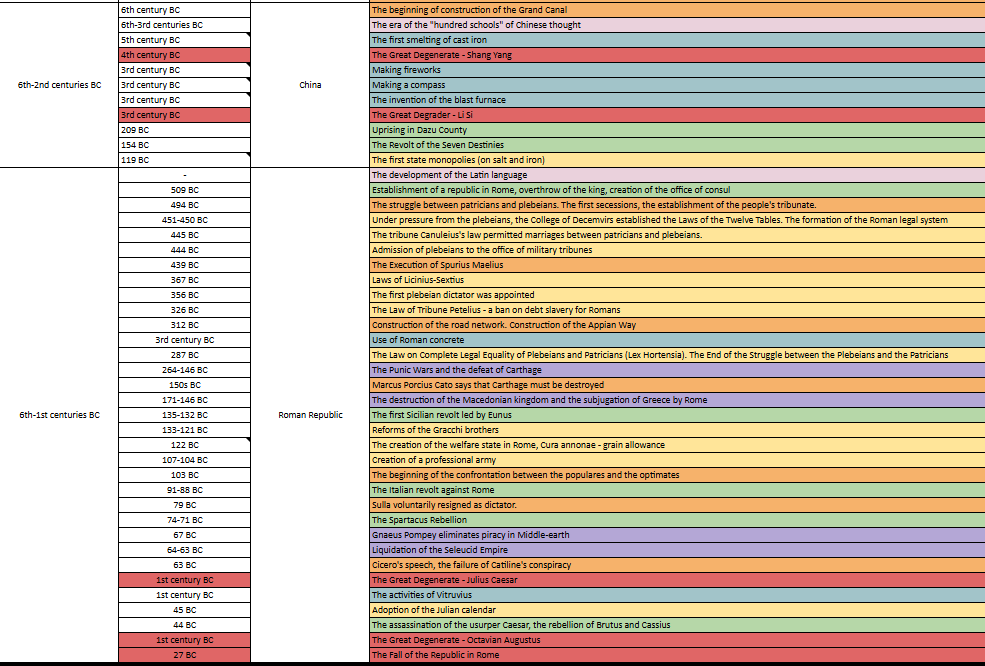
In 509 BC, an important event takes place – in Rome, the king is overthrown and a republic is established. Moreover, this happened a year before the reforms of Cleisthenes and the establishment of democracy in Athens. Gradually, Rome, constantly reformed, becomes the leading power in Europe and the center of the world. A vast road network is built, and “all roads lead to Rome”, while the technology of making concrete is mastered. The regular struggle of the plebeians provides an example of successful mass struggle and their acquisition of new rights for themselves. A more progressive system allows republican Rome to defeat the more aristocratic and authoritarian Carthage, Macedonia, and the Seleucid Empire, avenging the defeat of democracy in Greece. At the same time, Rome itself is far from a model of democracy, being nothing more than a weak form of it, and uprisings occur within it protesting against the flaws of the system (for example, the uprising of Spartacus). A struggle between different parties takes place in Rome, and the left-wing reforms of the Gracchi brothers are carried out. The decline of Rome begins with the reign of two Great Degenerates – Julius Caesar and Octavian Augustus, through whose efforts the republic, unconquered by external enemies, falls under the power of internal enemies – supporters of authoritarianism. Rome transforms into an empire, and the era of the Dark Ages sets in.
Classical Antiquity demonstrated to us that democratic forms of statehood become centers of world progress; however, although they are capable of defeating superior authoritarian forms of statehood, they are still not invincible. They can be defeated both by authoritarian states that have adopted their cultural and scientific experience and by populists from within, in the event of a decline in the spirit and consciousness of their citizens.
Dark Ages
With the fall of the republic in Rome, human progress slows down. Over 8 centuries, humanity achieved extremely small results. In fact, a rollback occurs – democracies cease to exist, peoples plunge into religious fanaticism, science falls into decay, and Europe is plagued by nomads – essentially organized groups of criminal elements.
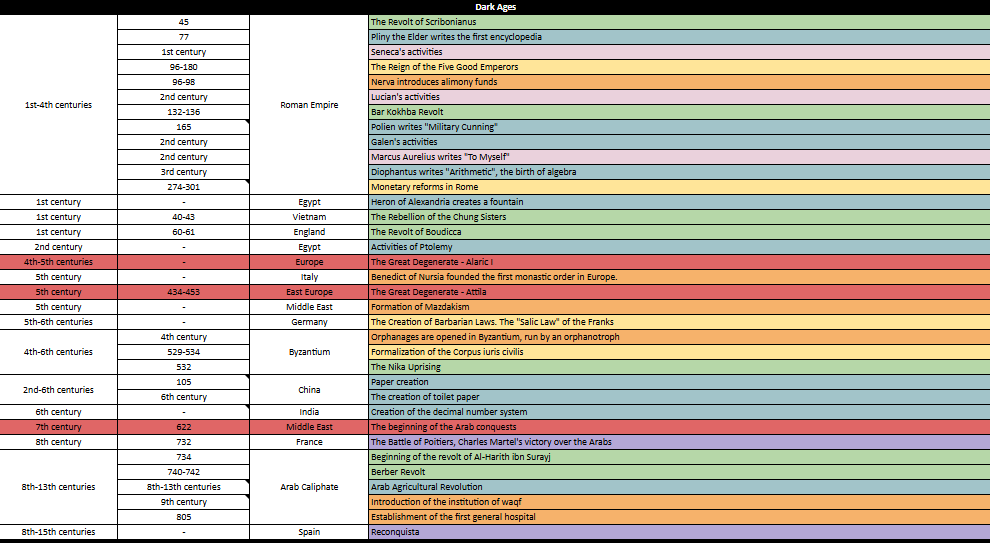
The Arab world becomes the most developed during this period, carefully studying the heritage of the ancient Greeks. The most important events take place here – the Arab Agricultural Revolution, the creation of the first general hospital (later, already in the Communal Era, algebra will be created here). Speaking of the achievements of the non-Arab world, some of the most important events are the invention of paper in China and the decimal numeral system in India. However, the Arab world will not remain the center of world development for long. Over time, Islam will bog down in fundamentalism and authoritarianism, and the Arab world will become a laggard. Therefore, the Battle of Tours and the Reconquista, which played a major role in stopping Arab expansion, even if they might not have seemed like a progressive advance at the time, turned out to be so in the end, as became clear only centuries later.
The Dark Ages serve as proof that human history does not move only upward, is not linear, and humanity may well begin to degrade and lose the knowledge and wealth it has accumulated.
Communal era
Although mainstream historical science does not usually separate this period into a distinct era, we will nevertheless risk making such a division. Let us explain why. The fact is that combining this period with the previous one into a single period called the Middle Ages blurs the importance of the communal movement in Europe, which, in our view, is undeservedly underestimated. This was a period when, after centuries of stagnation, townspeople began to fight against feudal lords for self-government and independence. Republics and the first democracies began to emerge. And it is during this period that Europe begins to awaken, rather than in the Renaissance.
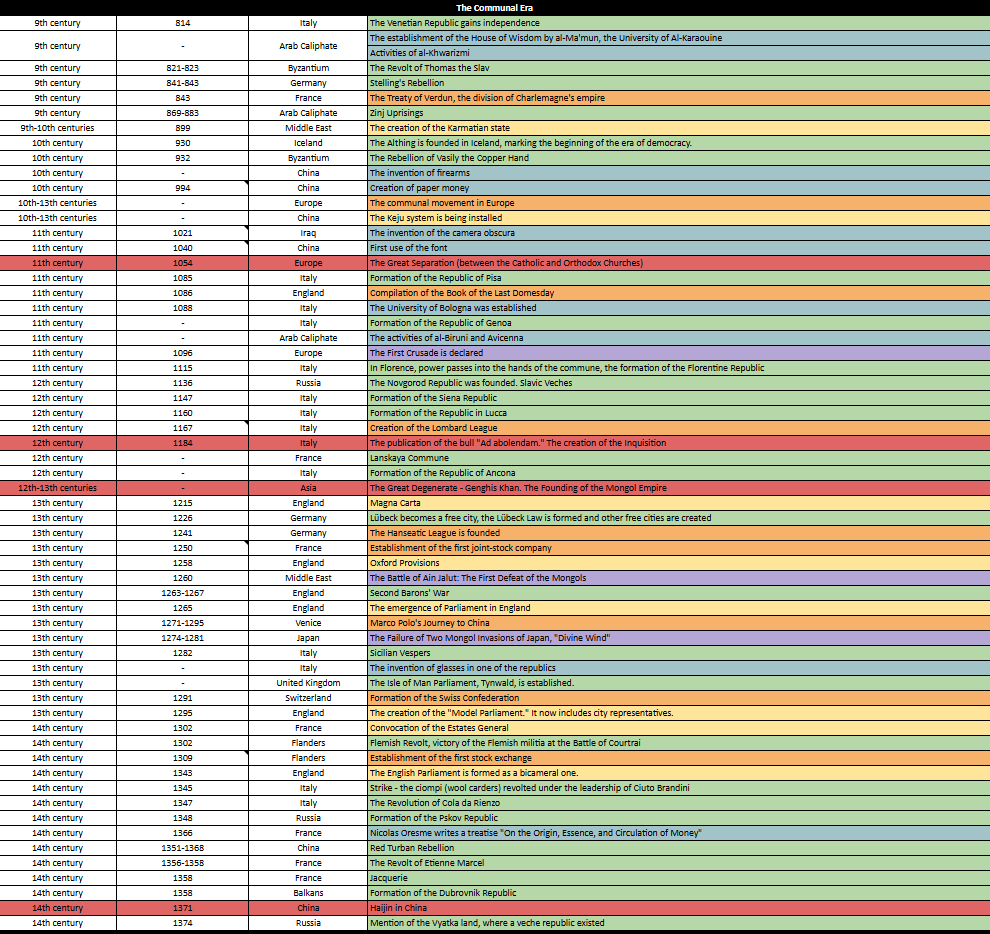
The era begins in 814 with the emergence of the first stable and successful republic in many years – the Venetian Republic (in this year it gains independence from Byzantium). In Iceland, the Commonwealth period begins, and a parliament – the Althing – is established. Following Venice, a real “parade of republics” occurs in Italy – the Republics of Pisa, Genoa, Florence, Siena, Lucca, and so on; the Lombard League appears. In Germany, free imperial cities and the Hanseatic League are created; in France, cities begin to buy out individual dues and rights from feudal lords5; in Rus’, the Novgorod, Pskov, and Vyatka Republics emerge. The commune as a form of urban organization begins to play an important role. Joint-stock companies and stock exchanges arise. In England, a parliament is created and the Magna Carta is adopted – two events that laid the foundation for England’s future rise. However, at this stage, Italy still remains the center of world events – in addition to political developments, eyeglasses are invented here, and the University of Bologna is opened.
In China, firearms are invented during this same period, and movable type begins to be used. However, China’s development will soon slow down due to the introduction of Haijin (isolationism, a ban on maritime trade, which will be briefly interrupted during certain periods). In the Abbasid Caliphate, a university was founded even earlier than in Bologna, and the activity of the great scholars al-Biruni and Avicenna flourishes here; however, the progress of the Arabs will soon be halted for a long time. In Mongolia, the Great Degenerate was born – Genghis Khan, who launched his campaigns of conquest and founded the Mongol Empire. Under the blows of the Mongols, both the Rus’ republics and the Abbasid Caliphate will fall. Yet, forces of degradation are not the only ones gaining victories at this time – in response to the conquests of the Seljuk Turks, Christians declare the First Crusade in an attempt to win back Syria and Palestine from them, initially achieving significant victories.
Renaissance
The beginning of the Renaissance is traditionally considered to be the work of the first humanists – Petrarch and Giovanni Boccaccio. It was Petrarch who expressed the idea of a long period of cultural darkness in the Middle Ages6, thereby paying insufficient attention to the importance of the communal movement, and due to the authority of this humanist, this point of view was not particularly questioned. In this era, humanity experiences a revival of interest in classical science and the values of Antiquity, thanks to which it received its name.
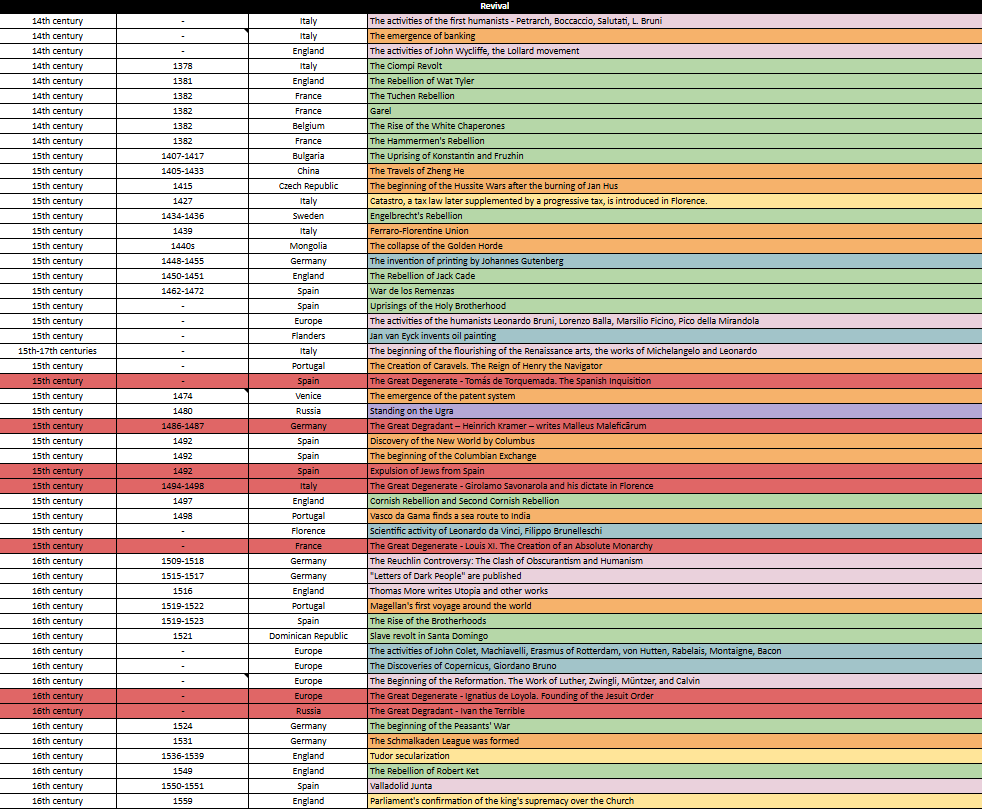
The most important turning point of development is the invention of printing in Germany. It became a powerful impetus not only for enlightenment, but also for the triumphs of degenerative forces. On the one hand, we observe the flowering of the arts and the emergence of new humanists in Europe; on the other, the Inquisition, the dictatorship of Girolamo Savonarola, the infamous Malleus Maleficarum (“The Hammer of Witches”), and so on. In Portugal, the caravel is invented, launching the Age of Discovery; on the territory of Russia, the Great Stand on the Ugra River ends the period of Mongol rule. The Mongol Empire fades away. In the Netherlands, a revolution occurs and a republic is established, soon after which the country becomes a European leader, although during the Renaissance it is difficult to single out one central world civilization.
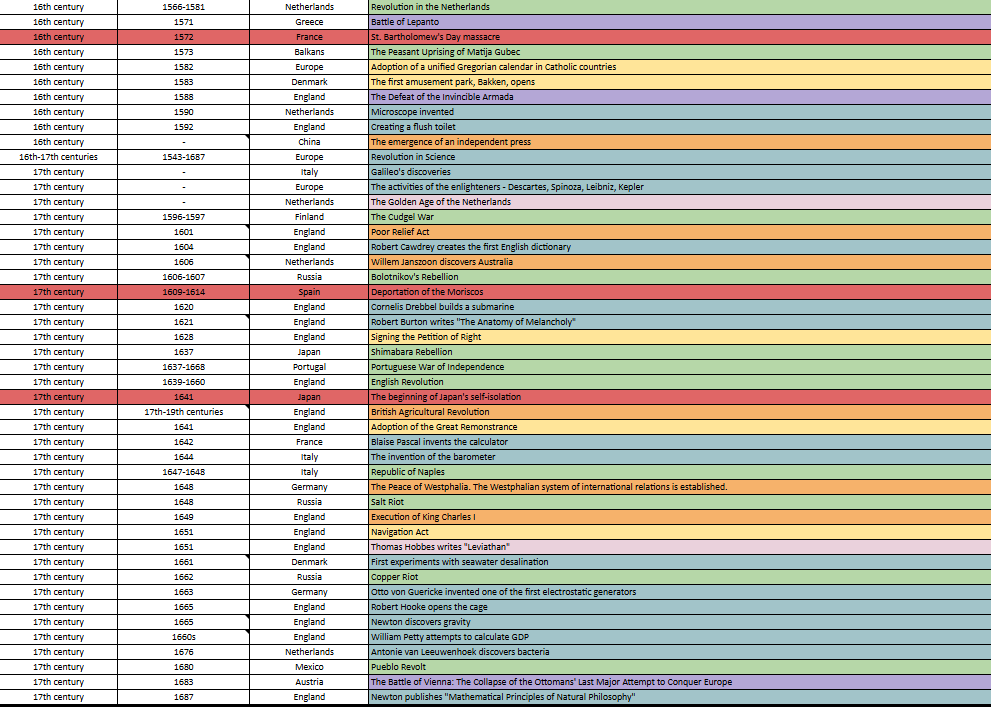
People begin to think about a model for an ideal social order; utopians appear, such as Thomas More in England. In various European countries, the microscope, flush toilet, calculator, and barometer are invented, and the heliocentric system of the world is substantiated.
Great revolutions
After the simultaneously breakthrough and bloody period of the Renaissance comes what is probably the greatest era in human history in terms of advancing progress and democracy – the era of Great Revolutions. Its beginning can be traced to the Glorious Revolution in England in 1688, when rights and powers were redistributed in favor of Parliament and the Bill of Rights was adopted. From that moment, the rise of England, which becomes the leading world civilization, is obvious. This date also largely coincides with the beginning of the Age of Enlightenment in Europe. In England, people will invent the steam engine, the spinning jenny, Cartwright’s power loom, vaccines, the steam locomotive, tin cans for food, the safety bicycle, and discover photosynthesis, electromagnetic induction, and the first dinosaur known to man. Finally, it is here that Charles Darwin will write “On the Origin of Species”. In neighboring Scotland, torture is abolished.
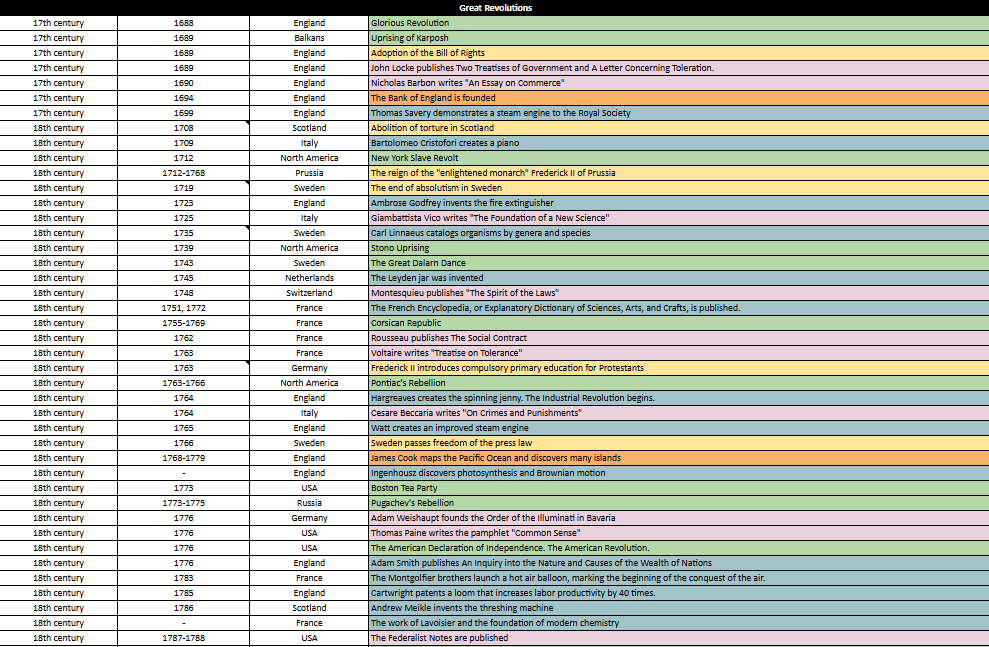
In the second half of this period, the role of the USA – a new state entity that proclaimed its independence in 1776 as a result of the American Revolution – becomes increasingly significant. Americans will adopt their Bill of Rights, develop the concept of human rights, discover anesthesia, create the telephone, phonograph, insulated glass unit, practical incandescent lamp, electric iron, fan, air conditioner, various types of power plants, widely used plastics, and master assembly line production. Here, the General Trades Union arises, as well as two parties that can be counted among the most influential in world history – the Democratic and Republican parties. In 1861-1865, a civil war takes place in the USA, in which the northern states, led by the then-progressive Republican Party, win and abolish slavery in the country. At the beginning of the twentieth century, antitrust legislation is adopted here.
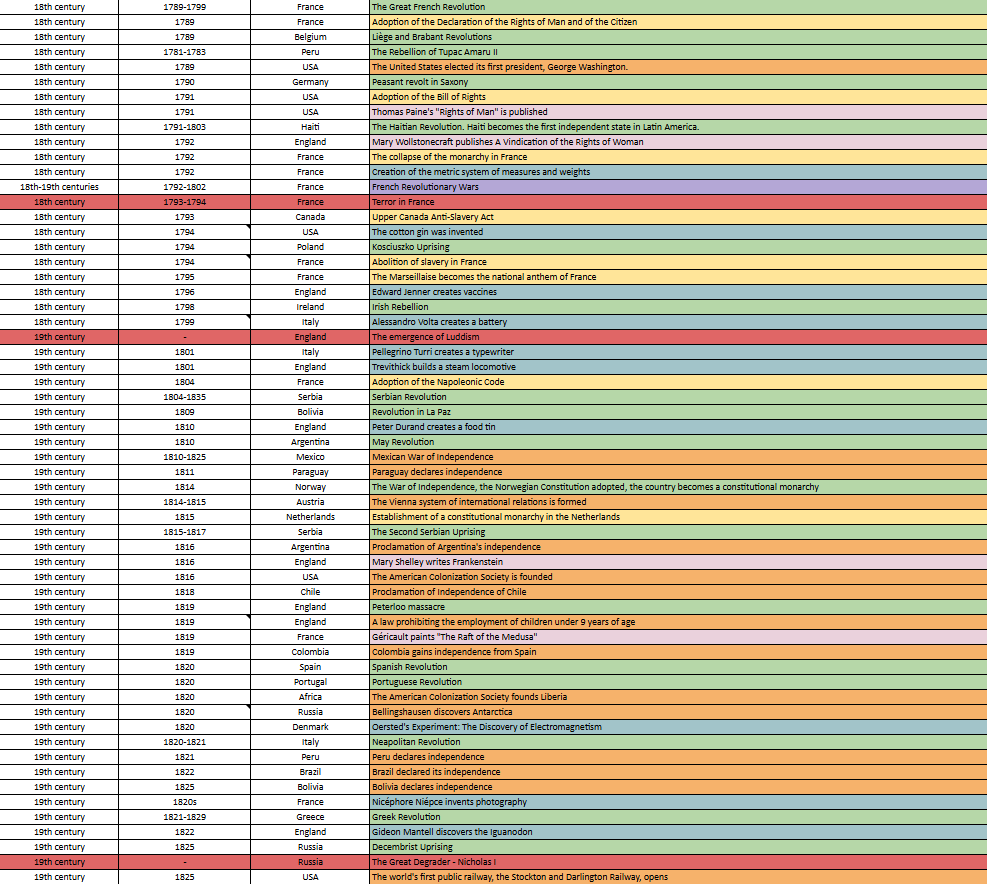
On the relatively “troubled” continent, however, things are more complicated. France, following the example of England and the USA, also decided to carry out a democratic revolution, as a result of which it achieved a great deal – adopting the Declaration of the Rights of Man and of the Citizen, establishing a republic, creating the metric system, and abolishing slavery. It is in the French Parliament that the Right and the Left emerge. But this division had a flip side – the emergence of radicals. The Jacobin dictatorship and terror show for the first time how far democratic transformations can lead if they turn into ochlocratic ones. The republic conducts wars, which, due to the threat from authoritarian regimes, their solidarity against the ideas of the revolution, and the British joining them due to their monarchist sentiments, will grow into an almost all-continental conflict. In France, the Napoleonic Code is adopted, which, along with the ideas of the revolution, spreads across authoritarian Europe. However, at the same time, France gradually transforms into an empire and ultimately suffers defeat in the wars.
Throughout the century, however, France is shaken by new revolutions and bouts of reaction. Scientific and social inventions occur here both during revolutionary changes and under authoritarian regimes. The French invent the hot air balloon, photography, modern chemistry, the department store, pasteurization, and public transportation. Here, the ideas of socialism take shape, the International Red Cross is created, free education is established, and a progressive inheritance tax is introduced. In the high-profile Dreyfus Affair, the anti-Semites suffer defeat.
An important phenomenon of the Era of Great Revolutions is, first, the first wave of decolonization. Inspired by the example of the USA, first the Haitian Revolution (which resulted in the emergence of the independent state of Haiti), and then the revolution in La Paz in 1809 launched a series of other revolutions and wars of independence, during which the Spanish and Portuguese colonial empires collapsed. This also influenced the fact that revolutions occurred in Spain and Portugal themselves in 1820. Most of the colonies in Latin America become independent states. The Mexican Revolution takes place, introducing the 8-hour workday, along with the left-wing reforms of Batlle y Ordóñez in Uruguay. But many of these countries do not become democratic right away; moreover, the struggle for the democratization of Latin America is still not over today.
Second, another phenomenon of colossal importance – the parade of revolutions of 1848 in Europe, when parliamentary democracy is established in a number of countries – Switzerland, France, the Netherlands, and Denmark. But changes occur throughout Europe, where parliamentary democracies gradually triumph. Long before this, in 1719, the authorities in Sweden initiated reforms themselves to strengthen the power of Parliament. In Belgium, simultaneously with the French Revolution, the Liège and Brabant Revolutions take place (and after the Revolution of 1830, a constitutional monarchy is established). Norway and the Netherlands become constitutional monarchies in 1814 and 1815, respectively. Revolutions take place in Greece, certain Italian states, and the Glorious Revolution occurs in Spain. After uprisings in Canada, Great Britain decides to grant a parliament to this country, to New Zealand (where after some time the world’s first women’s suffrage and minimum wage will be introduced), and to Australia.
The Concert of Europe is formed – the first unsuccessful attempt to create a system of world order and balance of power to avoid wars. Treaties such as the Geneva Convention of 1864 aim to alleviate the hardships of war through universal agreement on individual issues. World’s fairs begin to be held. Americans attempt to create a free state in Africa – Liberia, and also purchase Alaska from Russia (which is one of the underestimated ways of establishing democratic orders in a specific territory). Attempts at Westernization are undertaken in the Middle East (for example, the Tanzimat in Turkey), as well as in Japan (the Meiji Restoration). At this same time, many of our favorite sports take shape – football, basketball.
In Germany, its own parliament – the Reichstag – and the world’s first Social Democratic Party emerge. Soon, the automobile, electric car, motorcycle, airship, and X-rays are invented in this country. However, two forces are brewing here that will soon slow down world progress – National Socialism and Communism. In France and Russia, another destructive ideology takes shape – anarchism; also in Russia, the RSDLP party splits into Bolsheviks (who will adopt communism) and Mensheviks – an event that seemed insignificant at first, but its results will affect the entire world and the direction of its development. It seemed that Russia initially followed a democratic path, but the February Revolution, which was supposed to become a new triumph of the Era of Great Revolutions, became its swan song. Very soon, the influence of communism, the split of the RSDLP, and the dire situation associated with World War I will bear fruit.
Struggle of systems
In October 1917, a Bolshevik coup takes place in Russia – an authoritarian faction of the local Social Democratic Party comes to power (soon mutating into the Communist Party), and Russia becomes the world’s first country with communists in power. The political situation in the world changes radically – whereas throughout the era of Great Revolutions, authoritarianism was in retreat (one could even say it had been retreating since the Communal Era), now one of its forms declared itself a progressive and even democratic force, seizing power in the second-largest country in the world at that time and thereby gaining vast resources. Russia became a springboard for communist expansion based on the concept of “world revolution”. From this moment, the struggle between democratic and authoritarian systems for world domination begins. One cannot say it was not going on before, but back then democracy was strengthening locally, without thinking of winning on a global scale. With the revolutions of 1905-1907 and 1917 in Russia, it became obvious that if they succeeded, global supremacy would pass to the democratic system, which could not fail to evoke a reaction from authoritarianism, which turned out to be the Bolshevik coup.
The collapse of the Russian Empire was accompanied by the Civil War in Russia and Finland, the Polish-Soviet War, as well as the formation of many independent republics on the ruins of the empire. The Communists managed to seize most of the territories of the former empire, except for Finland, Poland, and the Baltic states. During the same period, Austria-Hungary collapsed (where Communist attempts to take power ended in failure), and an extremely unstable democratic regime was established in Germany, which was also forced to fight Communist attempts to seize power. The USA at this time experienced a period of the “Red Scare”, when the federal government concerned itself in time with the issue of countering the anarchist and communist threats to democracy and conducted active campaigns against them (unfortunately, moderate socialists would also come under attack). The Communists manage to suppress uprisings in Russia, but they suffer defeat in Poland. The Communist threat leads to the emergence of an authoritarian threat from the right. A fascist regime is formed in Italy, and a Nazi regime in Germany, which, together with the Japanese far-right regime, become the main threat to humanity. In the USSR, the Communist regime acquires many of the features inherent in fascism and Nazism. The first authoritarian coalition takes shape – mainly consisting of far-right regimes.
In the USA, meanwhile, Roosevelt conducts the New Deal; the country actively develops culturally and economically, strengthening its position as the leading world power. An active struggle against crime and corruption takes place there. New international entities emerge, attempting to improve the life of humanity – the League of Nations and the International Labour Organization; the Slavery Convention is signed.
The right-wing authoritarian coalition unleashes World War II; the USSR is initially friendly toward it and also tries to wage wars of conquest, but fails in Finland. Soon, under the blows of Hitler’s regime, European democracies collapse, except for Great Britain, Sweden, Finland, and Switzerland; then Hitler suddenly attacks the USSR, which was friendly toward him. The remaining democracies of the world unite with the USSR and destroy the first authoritarian coalition. On the basis of the three leading Axis powers, new, democratic regimes emerge, while in Eastern Europe, regimes controlled by the USSR are established. The second authoritarian coalition (Communist) is formed. The Cold War begins.
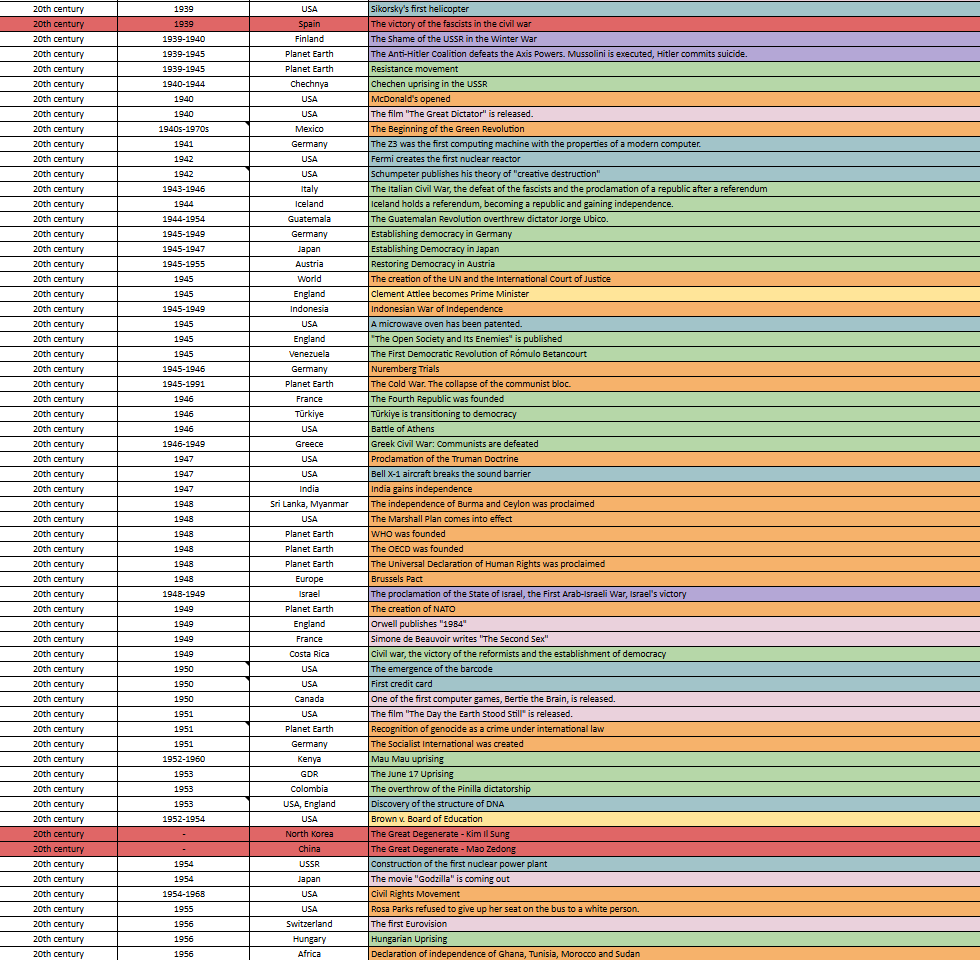
The Communists, having consolidated their position in Eastern Europe, suffer defeat in Greece and switch to Asia. There they attempt to subjugate Korea and China, where they fight for power using civil war methods. Meanwhile, instead of the League of Nations, the UN is created. The WHO and the OECD are founded, the Universal Declaration of Human Rights is proclaimed, and genocide is recognized as a crime. Europe recovers, thanks in part to the Marshall Plan. To counter the Communist authoritarian coalition, NATO is created. In the Middle East, an outpost of democracy and the Western world emerges – Israel. Turkey, which had previously undergone Atatürk’s secular modernization, part of whose political methods was also reactionary, transitions to democracy.
In the USA, the barcode, credit card, and microwave oven appear; the first laser and the first industrial robot are created; an aircraft breaks the sound barrier; together with the British, Americans discover the structure of DNA. The USSR responds to this with other scientific breakthroughs – the creation of a nuclear power plant, the launch of a satellite, and the first human into space. The Space Race concludes with the American landing on the Moon. After that, the initiative in the scientific race passes completely to the USA. There, the computer mouse, liquid-crystal display, prototype of the Internet, operating system, mobile phone, GPS, and 3D printing will be created.

African countries begin to gain independence. However, many become authoritarian or fall under Communist rule, which largely offsets the positive effect of gaining independence. Greenpeace is founded and the SALT I arms limitation treaty is signed. In the 1970s, right-wing authoritarian regimes collapse – in Portugal, Greece, and Spain. China begins to implement Deng Xiaoping’s market reforms. In the 1980s, dictatorships collapse in Argentina, Brazil, Uruguay, Chile, and Paraguay, and Perestroika begins in the USSR. The economic collapse of the USSR prevents it from continuing to hold control over Eastern Europe, and many of the countries in this region transition to democracy. The USSR itself disintegrates into numerous states, some of which become democratic, while others attempt to embark on a Western path of development. In Asia, South Korea, Taiwan, and Mongolia transition to democracy.
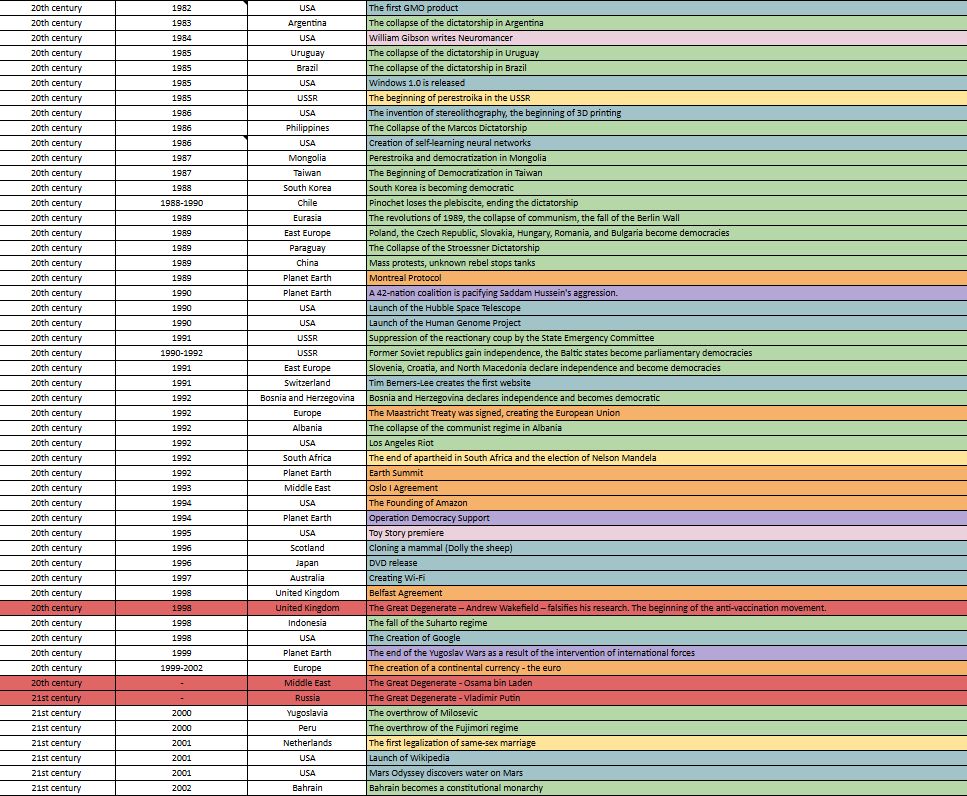
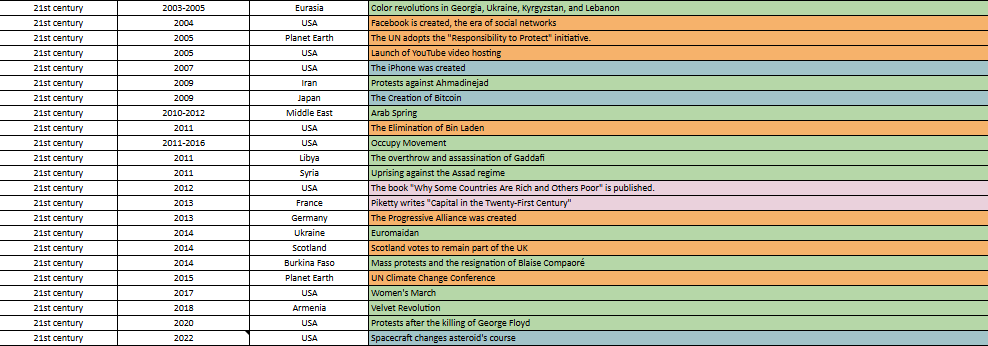
In Europe, an international entity of a new type emerges – the European Union. Democracies around the world collectively participate in curbing the aggression of Saddam Hussein’s regime. The Google search engine, the social network Facebook, Wikipedia, the iPhone, and cryptocurrencies appear; neural networks are developed. In Australia, Wi-Fi technology is created. At the same time, a new authoritarian coalition begins to take shape, threatening democracy once again.
Conclusion
Of course, above we have examined far from all the important events in human history, nor have we disclosed those examined in sufficient detail. This is hardly possible to do in the current format, whose task is a brief overview, rather than a presentation of all known facts (which would take whole volumes of text). However, this is quite enough to have an initial structure for further in-depth study, and to understand how humanity developed throughout its history. It went through 8 main periods, and the development that took place during these periods was not linear. It was not continuous progress. The most important aspects of human history were the search for efficient forms of economic activity (mastering a hunter-gatherer economy, the division of labor, the market, a producing economy, and so on), new technologies and inventions (making fire, creating seafaring, smelting bronze, discovering electromagnetic induction, and so on), preserving knowledge, as well as, naturally, the search for an effective political organization. Humanity learned to unite into tribes, then into cities, then into states, and, finally, into international alliances. It discovered representative democracy for itself, and at present we are at that stage of history where representative democracy is struggling to become the leading form of human organization. Its main opponent is authoritarianism.
- I.V. Poberezhnikov. Modernization: theoretical and methodological approaches // Economic History. Review / Ed. L.I. Borodkin. Issue 8. Moscow, 2002. Pp. 146-168. URL: http://www.hist.msu.ru/Labs/Ecohist/OB8/poberej.htm (Accessed: 08.12.2024).
- A.I. Gorelikov. Modernization theory as a new approach to the study of the historical process in Russia // Scientific Notes of Komsomolsk-na-Amure State Technical University. No. III-2(7), 2011. [Electronic resource]. URL: http://www.uzknastu.ru/files/pdf/2011-7-2/9-13.pdf (Accessed: 08.12.2024).
- I.V. Poberezhnikov. Modernization: theoretical and methodological approaches // Economic History. Review / Ed. L.I. Borodkin. Issue 8. Moscow, 2002. Pp. 146-168. URL: http://www.hist.msu.ru/Labs/Ecohist/OB8/poberej.htm (Accessed: 08.12.2024).
- A.O. Bolshakov. Ancient Egypt // Great Russian Encyclopedia. Volume 9. Moscow, 2007, pp. 597-608
- A.Y. Tereshchenko. Communal Movement // Great Russian Encyclopedia. Volume 14. Moscow, 2009, p. 653
- Renaissance // Encyclopaedia Britannica (www.britannica.com). [Electronic resource]. URL: https://www.britannica.com/event/Renaissance (Accessed: 08.12.2024).