Global problems and international organizations
In this article, we will examine the most well-known international organizations that can help social democrats solve global problems and list what these problems are.
Some of the issues facing progressive social democrats are extremely difficult or even impossible to solve effectively by the efforts of a single government alone. Their solution requires coordination between several states (optimally — all or at least a majority). The task of such coordination is performed by various international organizations. Let us find out what these problems are, what international organizations exist, and how humanity is capable of solving problems within the framework of these organizations.
Contents
Main issues
First of all, there are certain problems that could threaten serious consequences for all of humanity and future generations. And the consequences may turn out to be far less catastrophic if we take precautions in advance than if we act post factum in the event that the worst-case scenario materializes. In our article criticizing laissez-faire, we already mentioned that the global community faces environmental problems that cannot be solved without organized intervention, and also that social inequality is growing in the world, and explained why this is a serious problem. To this, one can add the problem of tax evasion — in order to fight tax evaders more successfully, coordination and cooperation between states are needed, as well as their recognition of tax evasion as a malicious crime requiring the extradition of the offender and the disclosure of their financial data.
Lagging states
In the aforementioned article, we also noted the gap between developed and developing countries. This problem is largely related to the low level of democracy, the rule of law, and other institutions in developing countries. Eradicating poverty, hunger, authoritarianism, and high crime rates should be achieved worldwide, not just in individual countries. This is necessary, among other things, to prevent lagging states from blaming developed ones for their problems and breeding populist dictatorships that pump material resources out of their citizens through extractive institutions. We need these countries to have a stable and developed social democracy that supports other democracies and is economically strong enough to support the global development of science, disarmament, the fight against environmental problems, and so on.
Armed conflicts and human rights violations
Partly due to the backwardness of many countries, terrorist organizations, armed criminal groups, and authoritarian regimes sometimes form in the least developed areas of the planet, carrying out military aggression and pumping resources out of their citizens while suppressing their attempts to resist. All of this jeopardizes people’s lives and well-being, and also threatens people in democratic countries. Authoritarian regimes can not only attack democratic ones (like Hitler’s Germany), they can also provoke an arms race (during the “Cold War”, both sides were to blame for the arms buildup), and they can wage an information war against democracy (like Putin’s Russia1). Therefore, the confrontation between authoritarianism and democracy is, in essence, a new “Cold War”, and there is no longer any point in denying it. Democracy, as we noted in the relevant article, is so far marching toward victory, but the task of liberating people from the oppression of officials they did not elect remains a pressing issue.
International terrorism also poses a major threat. Organizations like the “Islamic State” or “Al-Qaeda” are responsible for the deaths of a large number of innocent people — for example, the deaths of 292 people in a double terrorist attack in Baghdad on July 3, 20162, the deaths of nearly 3 thousand people in the terrorist attacks of September 11, 2001 in the US3, and so forth. To combat terrorist organizations, coordination and consensus among countries are required, along with the establishment of a developed social democracy in the countries where the cells of these organizations are located.
Resource depletion
In the 20th century, more minerals were extracted from the Earth’s interior than in all the rest of human civilization’s history. Many of them are non-renewable, and some are on the verge of complete depletion, especially oil and natural gas, as well as certain valuable metals4. There are other major problems such as deforestation, desertification, the increasing concentration of carbon dioxide in the atmosphere5, climate change, and so on. According to UN estimates, as early as 2030, 47% of the Earth’s population will live under the threat of water scarcity6. This requires coordination of regulation rather than non-intervention.
Overpopulation
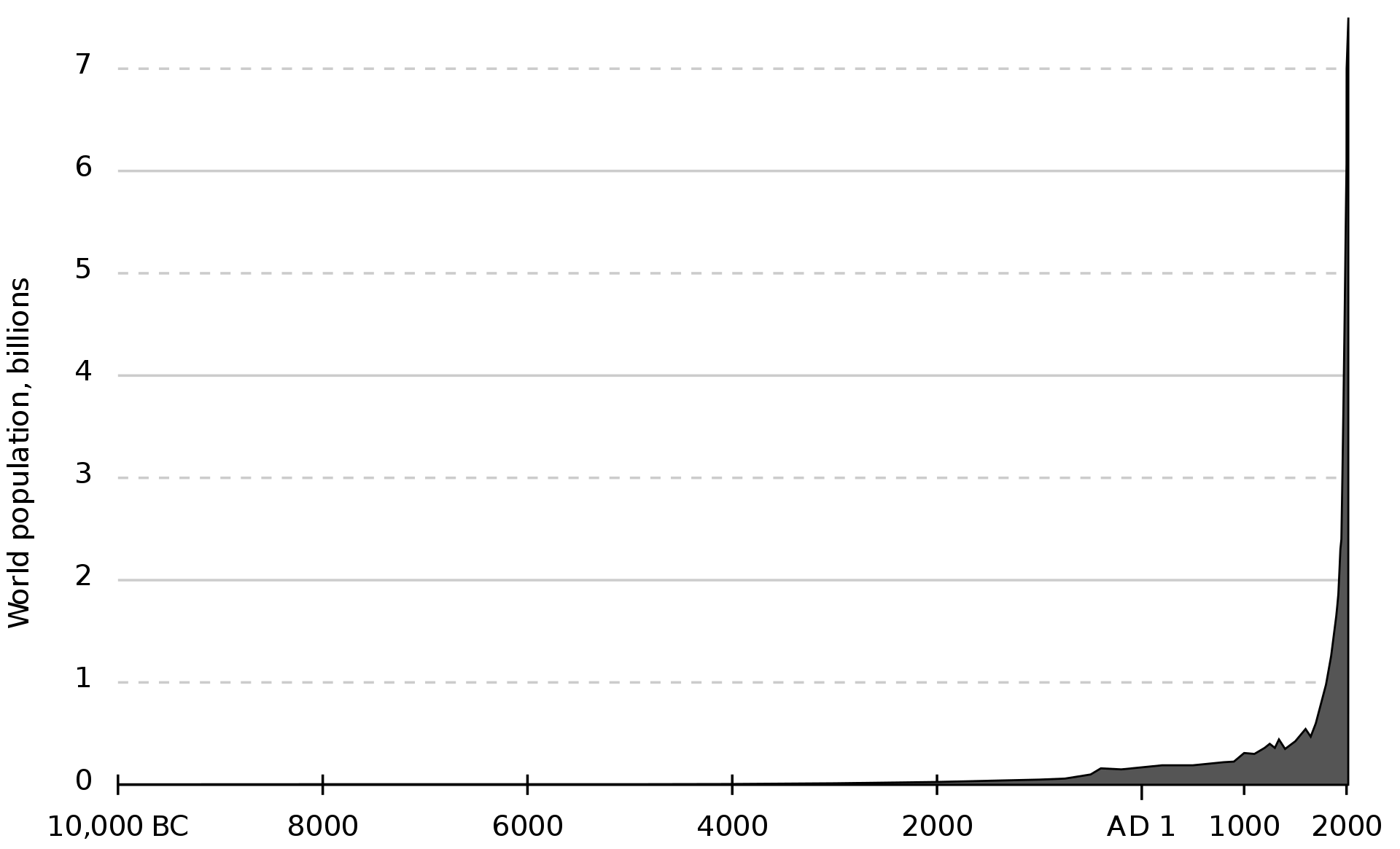
According to estimates by the UN Population Fund, in 1927 the Earth’s population was about 2 billion people, by 1999 it had increased to 6 billion, and by 2011 — to 7 billion7. The global population continues to increase by 250 thousand people every day8. As a group of scientists states in the report “The Limits to Growth”, “if a profound correction is not made very soon, a collapse of some sort is certain. And it will occur within the lifetime of the present generation”9.
The “World Scientists’ Warning to Humanity”, signed in 1992 by about 1,700 scientists, pointed out that “the earth’s ability to provide for overgrowing numbers of people is finite”10; it also pointed out problems of air pollution, depletion and contamination of groundwater, mass extinction of species, loss of soil productivity, and so forth. The set of measures proposed by the scientists implied serious intervention in the natural development of the market. Twenty-five years later, a similar appeal was signed by as many as 15 thousand scientists from 184 countries11.
What else international organizations are needed for
In addition to solving global problems, international organizations can contribute to the global optimization of society. Chiefly, this occurs through the establishment of uniform standards that facilitate the joint work of people from different countries, promote movement around the world, and improve society.
Disarmament
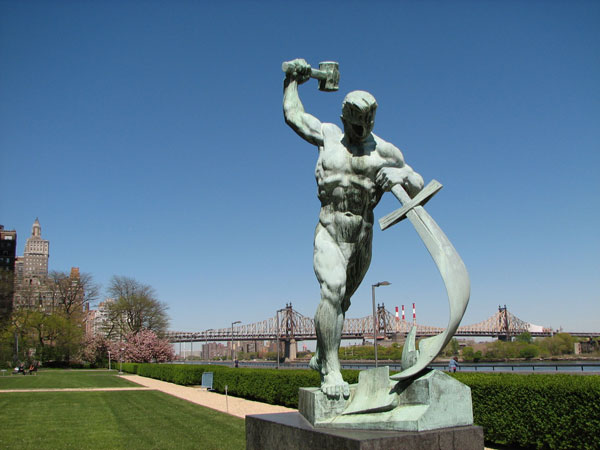
One of the most important functions of international organizations is the reduction of state military expenditures through disarmament. For instance, the SANE Act would allow the US to cut over 75 billion dollars from its budget over 10 years, and this concerns nuclear weapons alone12. This money could well be redirected into something useful for people — for example, into home building. The greater the number of countries participating in disarmament treaties, the more complete the minimization of expenditures on armaments and the maintenance of armies can be. If armies have minimal armaments, minimal influence in society (preventing them from lobbying for increased military spending), and a minimal number of people are employed in military sectors (the army, the military-industrial complex, services), this will free up more workforce and resources for the development of spheres that better correspond to progressive values — medicine, the production of goods and services for mass consumption, and so forth.
Innovative programs
Some scientific research requires such massive financial expenditures that it would be difficult to handle individually or without cutting expenditures on something else (such as military spending). For example, this includes space programs. Potential human extinction scenarios related to threats to planet Earth make us reflect on the necessity of colonizing other planets. Such projects will require serious expenditures that a single state would hardly venture to take upon itself. In addition, the colonization of new planets will open up new opportunities for economic growth and for developing ways to extend human life. This completely answers to progressive values aimed at raising the standard of living.
Standardization
The development of common standards is needed to facilitate interaction between citizens of different countries, the exchange of experience, the reduction of costs, and the establishment of common rules, thereby contributing to the growth of living standards and the economy, and to resisting local elites. According to foreign studies conducted in the leading countries of the world (Germany, the UK, Canada, Australia, France), the impact of standardization on GDP growth amounted to over 27%, and on labor productivity growth — 30%, while Russian enterprises noted an improvement in the economic indicators of their activity by 32% due to the use of standardization methods13.
A standard is a technical regulatory document on standardization that establishes a set of rules, norms, and requirements for the object of standardization and is approved by a competent authority. Standards are presented in the form of documents containing certain requirements, rules, or norms that are mandatory for execution. These are also primary units of measurement or physical constants (e.g., meter, volt, ampere, etc.). Standards include all objects for physical comparison: state primary standards of the unit of length, mass, force, etc.14
The United Nations Economic Commission for Europe notes that “the significance of standardization for the economy and society is universally recognized by the global community. An analysis of international experience shows that no state can build its economy and civilized mutually beneficial trade and economic relations with other countries without standards” and that “changes, which are a constant phenomenon, require a certain dynamics of processes in the field of standardization”15. Standardization contributes to an increase in production volumes and a reduction in product prime costs. Standards largely predetermine the quality of life, harmony, prosperity, and peace on earth, and are a prerequisite and a guarantee of effective international economic cooperation and world trade.
At the same time, progressive social democrats have the opportunity to expand the framework of standardization by supporting initiatives for language unification (we have already written about this) and the transition to single continental currencies.
International organizations
To solve part of the tasks mentioned above, certain organizations are already working, whose activities social democrats support or at least partially support, and which should be developed.
UN
The United Nations was established to maintain international peace and security, and to develop cooperation among states. Today, its goals also include cooperating in solving international problems and in promoting respect for human rights, and harmonizing the actions of different countries16. The main organs of the UN are the General Assembly, the Security Council, the Economic and Social Council, the International Court of Justice, and the Secretariat.
The General Assembly (GA) consists of all the Members of the United Nations. Each Member shall have not more than five representatives in the General Assembly. Each Member of the General Assembly shall have one vote. In accordance with the UN Charter, the GA may discuss any questions or any matters within the scope of the Charter or relating to the powers and functions of any organs provided for in the Charter, and may make recommendations to the Members of the United Nations or to the Security Council on any such questions or matters. The GA may consider the general principles of cooperation in the maintenance of international peace and security, including the principles governing disarmament and the regulation of armaments; and may discuss any questions relating to the maintenance of international peace and security. The GA may call the attention of the Security Council to situations which are likely to endanger international peace and security. Decisions of the GA on important questions shall be made by a two-thirds majority of the members present and voting. These questions shall include: recommendations with respect to the maintenance of international peace and security, the election of the non-permanent members of the Security Council, the election of the members of the Economic and Social Council, the election of members of the Trusteeship Council, the admission of new Members to the United Nations, the suspension of the rights and privileges of membership, the expulsion of Members, questions relating to the operation of the trusteeship system, and budgetary questions. The GA shall meet in regular annual sessions and in such special sessions as occasion may require. Special sessions shall be convoked by the Secretary-General at the request of the Security Council or of a majority of the Members of the United Nations.
The Security Council (SC) consists of 15 Members of the United Nations. Five of them (China, France, the RF as the continuator of the USSR, the United Kingdom, and the United States) are permanent members of the SC. The General Assembly elects ten non-permanent members of the SC for a term of two years, due regard being specially paid, in the first instance to the contribution of Members of the United Nations to the maintenance of international peace and security and to the other purposes of the Organization, and also to equitable geographical distribution. Each member of the SC shall have one representative. The SC has primary responsibility for the maintenance of international peace and security, and in carrying out its duties under this responsibility it acts on behalf of the Members of the United Nations. The SC shall determine the existence of any threat to the peace, breach of the peace, or act of aggression and shall make recommendations, or decide what measures shall be taken to maintain or restore international peace and security. The SC is empowered to decide what measures not involving the use of armed forces are to be employed to give effect to its decisions, and it may call upon the Members of the United Nations to apply such measures (these may include complete or partial interruption of economic relations and of rail, sea, air, postal, telegraphic, radio, and other means of communication, and the severance of diplomatic relations). Should the SC consider that these measures would be inadequate or have proved to be inadequate, it is empowered to take such action by air, sea, or land forces as may be necessary to maintain or restore international peace and security (demonstrations, blockade, and other operations by air, sea, or land forces of Members of the United Nations). To this end, the Members of the United Nations undertake to make available to the SC, the necessary armed forces, assistance, and facilities, including rights of passage.
The Economic and Social Council (ECOSOC) is empowered to: make or initiate studies and reports with respect to international economic, social, cultural, educational, health, and related matters and to make recommendations on any such matters to the General Assembly, to the Members of the United Nations, and to the specialized agencies concerned; make recommendations for the purpose of promoting respect for, and observance of, human rights and fundamental freedoms for all; prepare draft conventions for submission to the General Assembly, with respect to matters falling within its competence; call international conferences on matters falling within its competence; coordinate the activities of the specialized agencies; take appropriate steps to obtain regular reports from the specialized agencies; furnish information to the Security Council and, upon the invitation of the Security Council, is obliged to assist it. ECOSOC shall also perform such other functions as may be assigned to it by the General Assembly.
NATO
The North Atlantic Treaty Organization, or NATO, is a military-political alliance of a part of European states, the USA, and Canada. The composition of the organization changes from time to time. The purpose of the organization is to ensure the collective security of its members in the Euro-Atlantic region; an attack against one of the organization’s members is considered an attack against the alliance as a whole17.
As the organization’s website notes, NATO “promotes democratic values and enables members to consult and cooperate on defence and security-related issues to solve problems, build trust and, in the long run, prevent conflict”18. It is also stated there that “NATO is committed to the peaceful resolution of disputes. If diplomatic efforts fail, it has the military power to undertake crisis-management operations”. NATO’s decisions are an expression of the collective will of all member states, as all decisions are reached by consensus.
The European Union
The EU is an integration association of European states. The Union is founded on the principles of liberty, democracy, respect for human rights and fundamental freedoms, and the rule of law, principles which are common to the Member States (Article 6.1 of the Treaty). They are realized within a society characterized by pluralism, non-discrimination, tolerance, solidarity, and equality between women and men. All Member States are obliged not only to declare their commitment to these values but also to ensure their effective implementation. Deviation from the observance of these origins and principles may entail the adoption of preventive measures by the EU or, in the presence of a persistent and serious threat, the imposition of sanctions by suspending the right to participate in the work of EU bodies or even membership in the EU.
In the area of domestic policy, the tasks tackled by the Communities and the Union include: building a common and single internal market, creating an economic and monetary union, implementing a policy of economic and social cohesion, promoting research in the scientific field and technological progress, ensuring and protecting consumer rights, and taking radical measures to protect the environment. In the social sphere, prominence is given to promoting increased employment, rising well-being and quality of life, achieving a high level of health care, education and vocational training, strengthening social protection, and combating social exclusion. Measures are being taken to step up the EU’s participation in solving tasks of a humanitarian nature and implementing collective measures to maintain peace. In order to develop a common defense policy, provisions have been made for the creation of a European military planning group and the formation of collective EU armed forces19.
The IMF and the World Bank
Among the purposes of the International Monetary Fund (IMF) are20:
- To facilitate the expansion and balanced growth of international trade;
- To promote exchange stability;
- To assist in the establishment of a multilateral system of payments in respect of current transactions between members and in the elimination of foreign exchange restrictions which hamper the growth of world trade;
- To give confidence to members by making the general resources of the Fund temporarily available to them, thus providing them with opportunity to correct maladjustments in their balance of payments without resorting to measures destructive of national or international prosperity;
- To be a forum for consultation and collaboration on international monetary problems.
The IMF is a specialized agency of the UN, a universal organization that performs regulatory, supervisory, consultative, and various financial functions. The IMF’s regulatory function is carried out by conducting surveillance over the policies of member countries to ensure their compliance with the obligations assumed upon joining this organization, primarily regarding exchange rates. The IMF’s financial function is expressed primarily in providing credits to countries to solve their short-term problems caused by a deterioration of the balance of payments, and for economic restructuring. The IMF’s resources can be used by a country only under certain, rather strict conditions.
The World Bank is a leading international financial organization consisting of five closely associated institutions: the International Bank for Reconstruction and Development (IBRD), the International Finance Corporation (IFC), the International Development Association (IDA), the Multilateral Investment Guarantee Agency (MIGA), and the International Centre for Settlement of Investment Disputes (ICSID). The WB provides financing to developing countries, to which countries with economies in transition were added in the 1990s. Nowadays, the IBRD accounts for most development projects in emerging market countries with middle-income levels (more than 1,445 US dollars). The IDA provides assistance to the poorest countries that cannot afford to borrow from the IBRD. It provides interest-free credits with a 35–40-year maturity period and a grace period on principal payments during the first 10 years.
The World Bank and the IMF are, in theory, supposed to help developing countries catch up with developed ones in terms of economic performance and living standards. However, the organizations’ successes in this field are extremely meager; many economists — for instance, Erik Reinert — subject the organizations to harsh criticism, linking their failures to the dominance of proponents of the “free market” concept and state non-intervention in the economy21.
One of the most important tasks of social democrats today is a radical change in the policies of the IMF and the World Bank, which would contribute to the growth of the economy and the living standards of Third World countries.
WHO
The World Health Organization is an international intergovernmental organization, a specialized agency of the UN in the field of health. According to its constitution, the objective of WHO “shall be the attainment by all peoples of the highest possible level of health”, and one of the principles states that “the health of all peoples is fundamental to the attainment of peace and security and is dependent upon the fullest co-operation of individuals and States”. WHO organizes the fight against diseases (for example, international campaigns to eradicate malaria and smallpox), develops international standards for medicines, and so forth, and carries out work to collect and summarize statistical data on births, diseases, epidemics, injuries, causes of death, and so on22.
CIS
The Commonwealth of Independent States is a regional interstate organization that included part of the former republics of the USSR. The main goals of the CIS are: cooperation in political, economic, environmental, humanitarian, cultural, and other fields, and in ensuring peace and security23. CIS members, for instance, jointly combat organized crime or illegal migration.
There are many other regional interstate organizations besides the CIS (for example, the Arab Maghreb Union or the Pacific Islands Forum) — however, Russia is not a member of most of them.
ISO
The International Organization for Standardization is an independent, non-governmental international organization with a membership of national standards bodies. Through its members, it brings together experts to share knowledge and develop voluntary, consensus-based, market relevant International Standards that support innovation and provide solutions to global challenges24.
They make it easier for people to understand the world around them — such as the ISO 3166 standard. This is the International Standard for country codes and codes for their subdivisions. The purpose of ISO 3166 is to define internationally recognized codes of letters and/or numbers that we can use when we refer to countries and their subdivisions. Using codes saves time and avoids errors. Instead of using a country’s name (which will change depending on the language being used), we can use a combination of letters and/or numbers that are understood all over the world. For example, all national postal organizations throughout the world exchange international mail in containers marked with the relevant country codes. Internet domain name systems use codes to define top-level domain names, such as ‘.fr’ for France, ‘.ru’ for Russia. In addition, in machine-readable passports, codes are used to determine the nationality of the user, and in bank transfers, they allow determining the location of the bank25.
Standards also save lives. For example, the ISO 13216 standard contains information about a universal system for anchoring child restraint systems to vehicles. The purpose of this system is to improve the overall safety performance of child restraint systems, in particular, by increasing the ease of installation and reducing the risk of misuse. In practice, this means that car manufacturers can install identical anchor points in their vehicles — a metal loop, often hidden in the gap between the flat and vertical parts of the seat. Manufacturers of child seats sell a product that parents and guardians can install and hear a reassuring click. They can be sure that the seat is held securely in place, and that it will be compatible with any car model equipped with the ISOFIX system. This is a great example of how ISO brings together manufacturers of different products to work together, using International Standards as a framework for building compatible products that make everyday life safer and more convenient26. There are a large number of other examples where standards bring immense benefit to people.
Solving problems through organizations
In the first part of the article, we outlined a list of the main international challenges for the first half of the 21st century:
- Eliminating the gap between developed and lagging states;
- Preventing or bringing about the earliest possible end to armed conflicts and human rights violations;
- Delaying resource depletion;
- Improving the environment;
- Preventing overpopulation;
- Disarmament;
- Implementing complex innovative programs;
- Standardization.
How are these tasks being solved? Eliminating the gap between developed and lagging states should be partially handled by the IMF and the World Bank, but they are currently struggling with these tasks, as we mentioned in our article criticizing the free market. Fighting armed conflicts and protecting human rights are handled by the UN and military blocs such as NATO. The combination of the UN and the presence of various independent military blocs currently deals satisfactorily with confronting military conflicts, but regarding the protection of human rights, their actions are perhaps not active enough. There is no significant level of struggle against the problems of resource depletion and environmental degradation, although the international community regularly calls for such a struggle27. The European Union deals with these issues partially. Since UN projections assume that the planet is not threatened by the problem of overpopulation, this issue is also not being resolved at the international level (thus, the consequences here depend heavily on the predictive potential of these forecasts).
“Anti-imperialist” movements and ideologies (such as statists) hinder resistance to human rights violations. If a typical dictator and his nomenclature suppress their people, unleash terror, and use torture, and the international community attempts to intervene and liquidate this nomenclature militarily, “anti-imperialists” (in reality, defenders of dictatorships and new slavery) will stir up hysteria, portraying this attempt to protect people from the tyranny of officials they did not elect as “defending the interests of the USA” (or another democratic country), “violating sovereignty”, and so on. Therefore, it is equally important to fight such demagogic ideologies that substitute concepts.
More substantial are the UN’s achievements in the field of disarmament. It serves as a permanent forum for conducting disarmament negotiations, developing recommendations, and initiating research in this field. The UN supports multilateral negotiations conducted within the framework of the Conference on Disarmament and other international bodies. As a result of these negotiations, international agreements such as the Treaty on the Non-Proliferation of Nuclear Weapons (1968), the Comprehensive Nuclear-Test-Ban Treaty (1996), and treaties on the creation of nuclear-weapon-free zones were concluded28. Other treaties were also concluded29, prohibiting the development, production, and stockpiling of chemical (1992) and bacteriological (1972) weapons, prohibiting the emplacement of nuclear weapons on the seabed and ocean floor (1971) and in outer space (1967), as well as treaties prohibiting or restricting other categories of armaments. More than 150 states have become parties to the 1997 Ottawa Convention on the Prohibition of Anti-Personnel Mines. The balance between leading powers, such as the USA and Russia, also allowed them to negotiate with each other, concluding treaties on the limitation of strategic armaments. However, despite all successes, disarmament has not yet become a universal and irreversible process30.
The issue of complex international innovative programs is less acute than other issues because the need for its resolution is not obvious to everyone. Therefore, for example, issues of space exploration are resolved only by space powers, among which the three largest are the USA, Russia, and China31. And at that, the prospects of the latter two are quite vague, and American NASA has long ceased to surprise with any breakthrough achievements.
Standardization, as has already been mentioned, is handled by ISO. It is the world’s largest developer of international standards (currently, there are more than 21,000 ISO standards)32. ISO’s sphere of activity covers both traditional industries, including agriculture and construction, mechanical engineering, manufacturing and distribution, and transport, as well as information and communication technologies, effective management issues, and the service sector. ISO works perfectly, but at the moment it is not ready to expand the scope of standardization due to a lack of political support.
Conclusion
There are enough global problems and tasks in the world that international organizations are working to solve — with partial success. From the perspective of social democrats, these successes must be developed and expanded. What social democratic parties around the world can do for this, we partially examined in our article on the foreign policy of social democrats.
- About EUvsDisinfo // EUvsDisinfo (euvsdisinfo.eu). [Electronic resource]. URL: https://euvsdisinfo.eu/about/ (Accessed: 31.01.2021).
- Grief and fear: victims of the IS bombing commemorated in Iraq // BBC News (www.bbc.com). July 27, 2016. [Electronic resource]. URL: https://www.bbc.com/russian/media-36904630 (Accessed: 31.01.2021).
- The US honored the memory of the victims of the terrorist attacks of September 11, 2001 // Interfax (www.interfax.ru). September 11, 2018, 15:34. [Electronic resource]. URL: https://www.interfax.ru/world/628857 (Accessed: 31.01.2021).
- Non-renewable natural resources // ECOportal.info. May 3, 2017, 20:26. [Electronic resource]. URL: https://ecoportal.info/nevozobnovimye-prirodnye-resursy/ (accessed: 30.11.2019).
- John P. Rafferty. Keeling Curve // Encyclopedia Britannica (www.britannica.com). [Electronic resource]. URL: https://www.britannica.com/science/Keeling-Curve (accessed: 30.11.2019).
- Freshwater scarcity in countries of the world. Background information // RIA Novosti (ria.ru). March 22, 2010, 13:45. [Electronic resource]. URL: https://ria.ru/20100322/215718166.html (accessed: 30.11.2019).
- Population seven billion: UN sets out challenges // BBC News (www.bbc.com). October 26, 2011. [Electronic resource]. URL: https://www.bbc.com/news/world-15459643 (accessed: 30.11.2019).
- N. Sadik. Population growth and the food crisis // Food and Agriculture Organization of the United Nations (www.fao.org). [Electronic resource]. URL: http://www.fao.org/3/U3550t/u3550t02.htm (accessed: 30.11.2019).
- Donella Meadows, Jorgen Randers, Dennis Meadows. Limits to Growth: The 30-Year Update. — 342 p. — M.: IKC “Akademkniga”, 2007. — p. 32.
- 1992 World Scientists’ Warning to Humanity // Union of Concerned Scientists (www.ucsusa.org). July 16, 1992. [Electronic resource]. URL: https://www.ucsusa.org/resources/1992-world-scientists-warning-humanity (accessed: 18.01.2020).
- Sergey Demenko. Nobel laureates sound the alarm again // Rossiyskaya Gazeta — Federal Issue No. 160 (7623). July 24, 2018. [Electronic resource]. URL: https://rg.ru/2018/07/24/15-tysiach-uchenyh-obratilis-s-otkrytym-pismom-ko-vsem-zhiteliam-zemli.html (accessed: 18.01.2020).
- PNND Co-President Edward Markey introduces legislation to cut nuclear weapons spending // Parliamentarians for Nuclear Non-Proliferation and Disarmament | Global cooperation of legislators on the path to nuclear disarmament (www.pnnd.org). June 4, 2020, 13:12. [Electronic resource]. URL: http://www.pnnd.org/ru/article/sopredsedatel-pnnd-edvard-marki-vvodit-zakonodatelnyy-akt-chtoby-sokratit-rashody-na (accessed: 04.02.2021).
- G.N. Ivanova, A.G. Grabar. The role of standardization in improving the quality of life and regional development // Education and Research Center for Management Systems and Certification (mc.misis.ru). [Electronic resource]. URL: https://mc.misis.ru/seminar/2013/reports/grabar2013.pdf (Accessed: 31.01.2021).
- Section 2. Benefits of standardization to society // UNECE (unece.org). [Electronic resource]. URL: https://unece.org/fileadmin/DAM/trade/wp6/AreasOfWork/EducationOnStandardization/Benefits_of_standardization_to_society_Rus.pdf (Accessed: 31.01.2021).
- Ibid.
- K.A. Bekyashev. United Nations // Great Russian Encyclopedia. Volume 24. Moscow, 2014, p. 336. [Electronic resource]. URL: https://bigenc.ru/law/text/2683279 (Accessed: 04.02.2021).
- North Atlantic Treaty Organization (NATO): structure and tasks // RIA Novosti (ria.ru). October 16, 2012, 09:30. [Electronic resource]. URL: https://ria.ru/20121016/772528942.html (Accessed: 31.01.2021).
- What is NATO? // NATO (www.nato.int). [Electronic resource]. URL: https://www.nato.int/nato-welcome/index.html (Accessed: 31.01.2021).
- L.M. Entin. European Union // Great Russian Encyclopedia. Volume 9. Moscow, 2007, pp. 561-563. [Electronic resource]. URL: https://bigenc.ru/law/text/1974758 (Accessed: 04.02.2021).
- V.K. Pospelov. International Monetary Fund // Great Russian Encyclopedia. Volume 19. Moscow, 2011, pp. 553-554. [Electronic resource]. URL: https://bigenc.ru/economics/text/2199547 (Accessed: 04.02.2021).
- E.S. Reinert. How Rich Countries Got Rich… and Why Poor Countries Stay Poor [Text] / trans. from English by N. Avtonomova; ed. by V. Avtonomov; National Research University “Higher School of Economics”. 4th ed. – 384 p. – M.: Publishing House of the Higher School of Economics, 2016.
- World Health Organization // Great Russian Encyclopedia. Volume 6. Moscow, 2006, p. 44. [Electronic resource]. URL: https://bigenc.ru/law/text/2334275 (Accessed: 04.02.2021).
- D.V. Malyshev. Commonwealth of Independent States // Great Russian Encyclopedia. Electronic version (2018). URL: https://bigenc.ru/domestic_history/text/5225745 (Accessed: 04.02.2021).
- All about ISO // ISO (www.iso.org). [Electronic resource]. URL: https://www.iso.org/ru/about-us.html (Accessed: 31.01.2021).
- ISO 3166 country codes // ISO (www.iso.org). [Electronic resource]. URL: https://www.iso.org/ru/iso-3166-country-codes.html (Accessed: 31.01.2021).
- ISO 13216 child seats ISOFIX // ISO (www.iso.org). [Electronic resource]. URL: https://www.iso.org/ru/home/standards/popular-standards/iso-13216–isofix-child-seats-fo.html (Accessed: 31.01.2021).
- International agencies call for urgent action to avoid irreversible depletion of groundwater // UNESCO (www.unesco.org). April 13, 2015. [Electronic resource]. URL: http://www.unesco.org/new/ru/media-services/single-view/news/global_agencies_call_for_urgent_action_to_avoid_irreversibl/ (Accessed: 31.01.2021).
- What the UN does to ensure peace // United Nations (www.un.org). [Electronic resource]. URL: https://www.un.org/ru/aboutun/uninbrief/disarmament.shtml (Accessed: 31.01.2021).
- Disarmament // United Nations (www.un.org). [Electronic resource]. URL: https://www.un.org/ru/documents/decl_conv/conv_disarmament.shtml (Accessed: 31.01.2021).
- Disarmament // Great Russian Encyclopedia. Volume 28. Moscow, 2015, p. 174. [Electronic resource]. URL: https://bigenc.ru/military_science/text/3490859 (Accessed: 04.02.2021).
- Lika Musina. Top 7 space powers // ICTNEWS (ictnews.uz). November 06, 2018, 10:43. [Electronic resource]. URL: https://ictnews.uz/06/11/2018/top-7/ (Accessed: 31.01.2021).
- International Organization for Standardization // Ministry of Foreign Affairs of the Republic of Belarus (www.mfa.gov). [Electronic resource]. URL: https://www.mfa.gov.by/mulateral/organization/list/ebf941327dcace61.html (Accessed: 31.01.2021).