Anarchism in practice
The split between anarchists and social democrats occurred back during the First International, in the mid-19th century. Even today, our views on the state remain radically different. But while social democrats have managed to successfully implement their reforms in practice since the split, what have anarchists been able to achieve? Have they ever succeeded in creating a stateless society in any territory? Let us examine the few existing examples.
In our article on the state, we concluded that demands for the withering away or abolition of the state today are irrational and unrealistic, and it is extremely difficult to imagine a viable scenario for implementing these demands in the future; therefore, progressive social democrats can hardly support these demands and should not include them in their ideological and program documents.
The state should not be abolished; it should be controlled by the tools of democracy and through the broadest possible participation of the masses in its activities.
However, many representatives of anarchist ideologies may disagree, pointing out that there is a certain experience existing both in history and within their ideology. We will try to examine these examples. Let us note right away: this article will analyze large examples connected with anarchists, Marxists, and libertarians, as well as movements close to them. Tribal groups, including so-called “uncontacted peoples” (tribes that refuse any contact with the outside world), will not be considered here, as they represent pre-state forms of social development, and their lack of a state is ensured not by the realization of conscious theoretical developments, but simply by a stage of development.
Nor will “societies” located inside states be examined (Christiania in Denmark1), autonomies within states, or the participation of anarchists and forces close to them in state governments (Catalonia during the Spanish Civil War of 1936-19392), since they are de jure and/or de facto under the jurisdiction of states, which does not allow calling them a full-fledged implementation of a “society without a state”: in many ways, they are not independent actors on a number of issues, they depend on the state, and in some aspects they theoretically and/or practically depart from the implementation of the concept of a “society without a state”.
Some might object that many such “societies” do not care about the fact of being located within a state. However, they are under the protection of such a state, without which such a society might not be able to exist at all. There is no “purity” of the experiment here. Yet living on a “precarious footing” risks becoming the cause of the commune’s destruction and even the arrest of a number of its residents.
Contents
What is anarchy?
Before moving on to examples, let us break down the meaning of the term. The term “anarchy” itself comes from the Ancient Greek root anarchos (“without a ruler”), designating the absence of the rule of law or an established government, and the main definitions are formed on this basis.
Ozhegov’s Dictionary: “1. Lack of authority, absence of any management. 2. Spontaneity in the implementation of something, lack of organization, complete disorder”3.
Cambridge Dictionary: “a situation in which there is no organization and control, especially because there is no effective government”4.
We can also cite definitions of anarchism. For example, the Encyclopædia Britannica notes that anarchism is a cluster of doctrines and attitudes, centered on the belief that government is both harmful and unnecessary5. The Great Russian Encyclopedia defines anarchism as “a set of political doctrines and movements that deny any external power over the collective and the individual, and therefore advocate for radical liberation from the power of the state, religious and other traditional institutions, and for the creation of a society based exclusively on the principles of cooperation and reciprocity”6.
From all of the above, we can conclude that anarchy is a situation where there is no power and no state as an institution of organization, management, and control.
Republic of Cospaia
Examples of a stateless system appeared long before the formalization of anarchist theory. The Republic of Cospaia7 was formed in 1440 as the result of a boundary error between Florence and the Papal See, which left a 300-hectare no-man’s land (that is, slightly less than partially recognized South Ossetia) with a population of only 250 people, and which was recognized in 1448 by both countries (they considered that it was not worth spending time redrafting treaties regarding an already complex border).
There was no army or prisons in this territory, nor a Constitution (the main law was the Latin motto “Perpetua et firma libertas”, which translates to “Perpetual and firm liberty”), and it was governed by a “Council of elders and heads of families”. Over time, the territory’s uniqueness made it a location for growing tobacco, which became the most important source of income, as in many Italian states tobacco consumption was punishable.
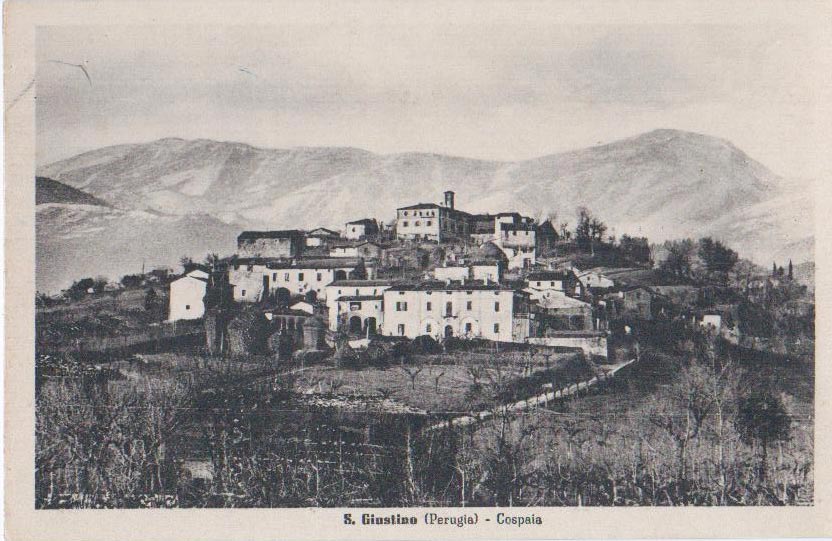
At the same time, the territory itself was not completely independent and was largely influenced by various local forces, Florence in particular8. The situation began to deteriorate toward the end of the 18th century: a fatal blow was the liberalization of tobacco consumption in the Papal States in 1724, followed by the taxation of tobacco grown in Cospaia. Another problem was that due to the peculiarities of the system, this region became a haven for smugglers and criminals.
The Republic disappeared on June 26, 1826, when its representatives signed an act of submission, dividing the territory between the Papal States and the Grand Duchy of Tuscany, receiving monetary compensation and permission to continue growing tobacco in return. Thus, the first experiment that can be attributed to anarchists existed for a long time, but solely due to the loyalty of its neighbors. With the end of this loyalty, the statelessness ended as well, having been sold for money and tobacco.
It is noteworthy that the Republic of Cospaia still had its own representatives. And here the question arises whether to consider representatives as authority. If not, then why are representatives in a representative democracy considered authority? If they are considered authority, then all anarchist projects that involve the presence of representatives, according to some definitions, cannot be considered anarchy, and consequently, their supporters cannot be considered anarchists. But the implementation of such projects will not be able to be successful for the same reasons that we described in the article on direct democracy.
19th century
A formal starting point for ideologues of “stateless societies” in the modern sense can be considered the middle of the 19th century, when anarchism (the first to willingly call himself an anarchist was the French political writer and pioneer socialist Pierre-Joseph Proudhon9) and Marxism (a body of doctrine developed by Karl Marx and, to a lesser extent, Friedrich Engels10) fully emerged.
A chance to create a “society without a state” appeared in France as a consequence of the country’s defeat in the Franco-Prussian War. It became the Commune of Lyon of 187011, which saw its end quite soon when the Russian anarchist Mikhail Bakunin and his supporters officially announced the abolition of the state and proclaimed a federation of communes on September 28; however, on the very same day they were defeated, and the radical revolutionaries who had not achieved their goal (including Bakunin) had to flee. Marx maliciously commented:
The Lyons events showed that a decree abolishing the state is by no means enough to fulfill all these fine promises. On the other hand, two companies of bourgeois National Guards were enough to shatter this brilliant dream and force Bakunin, with his miraculous decree in his pocket, to beat a hasty retreat to Geneva.
In fairness, it should be noted that Bakunin, unlike Marx, at least arrived at the scene and tried to implement his ideas in practice (in this sense, one can say that Konstantin Syemin respects the Marxist tradition). As for the Paris Commune of 1871, although it sought to create a federation of communes with broad autonomy for municipalities, it did not seek to destroy the state12.
Free Territory of Makhno
A practical chance for supporters of a “society without a state” presented itself to a fuller extent in 1917, when as a result of the February Revolution (which can be read about in the article dedicated to the history of democracy in Russia), power passed to the Provisional Government. Anarchists stood side by side with the Bolshevik forces and, with their armed forces, helped in the overthrow of the Provisional Government13. However, anarchists had many disagreements with the Bolsheviks: for instance, they recognized Soviets only as organs of the people’s revolution, not as government structures. This was reflected at the Extraordinary Congress of Soviets on March 15, 1918, where they accused the Bolsheviks of betraying the revolution:
Post-October Bolshevikism has lost its revolutionary color, and if until now we said that, despite all our differences, tactical and program, we had a common language of revolution with the Bolsheviks, then with those who speak the language of reaction we have nothing in common, and today we must say that from the moment of concluding an imperialist peace, the common revolutionary language has vanished…14
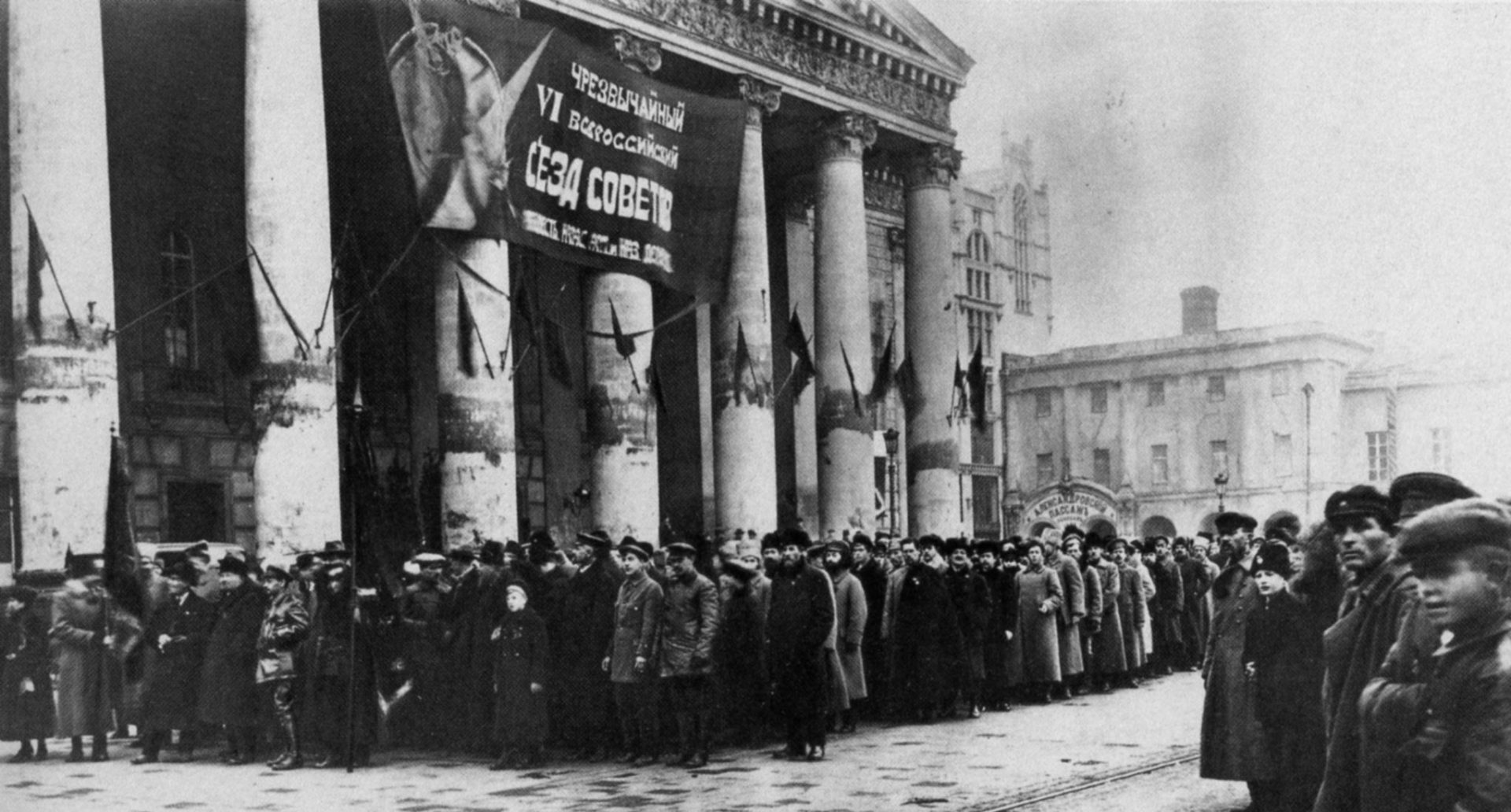
Anarchists also began to form their “Black Guard” and launched a campaign with slogans of a “third revolution”. It was becoming clear that an armed conflict between these forces was inevitable. Already in the spring of 1918, armed units subordinate to the Bolsheviks had to engage in combat clashes with paramilitary formations of anarchists (who this time were armed with more than just decrees). Having met strong resistance, the Bolsheviks moved to disarm and crush anarchist cells and detachments. This took place on the largest scale in late spring – summer of 1918 in Moscow and Petrograd, accompanied by mass arrests.
Overall, in Russia, anarchists took a dual position15: while protesting against the strengthening of state power, the establishment of a one-party dictatorship, the “Red Terror”, and the policy of “War Communism”, most of them combined criticism of the political course of the RCP(b) with support for the Soviet state in the struggle against the White movement and the Entente. In line with this stance, two camps were formed: a pro-Bolshevik wing of the movement (“anarcho-Bolsheviks”, “Soviet anarchists”) and “underground anarchists”, who entered into an open armed struggle against the Bolshevik regime. However, both negotiations on legalization and attempts to overthrow the Bolsheviks proved unsuccessful; by the early 1920s, anarchists, like other forces, practically disappeared from the country, and representatives of this ideology were subjected to repression, just like other leftists.
And while in the territory of Russia anarchism was unable to form a full-fledged alternative, the situation in the territory of Ukraine was different, as a specific entity was created there that became one of the most famous attempts to build anarchism: the Free Territory.
The very name of the territory raises questions, as in a number of materials it is known as “Obshchezhitiye” [Hostel/Commune], “Commune”, even “South-Ukrainian Stateless Workers’ Federation”16, and so on, but for convenience, we will use the term “Free Territory” and the abbreviation “territory”.
Its existence is inextricably linked with the name of Nestor Ivanovych Makhno (1888-1934), a famous practitioner of anarchism and a combat guerrilla commander.
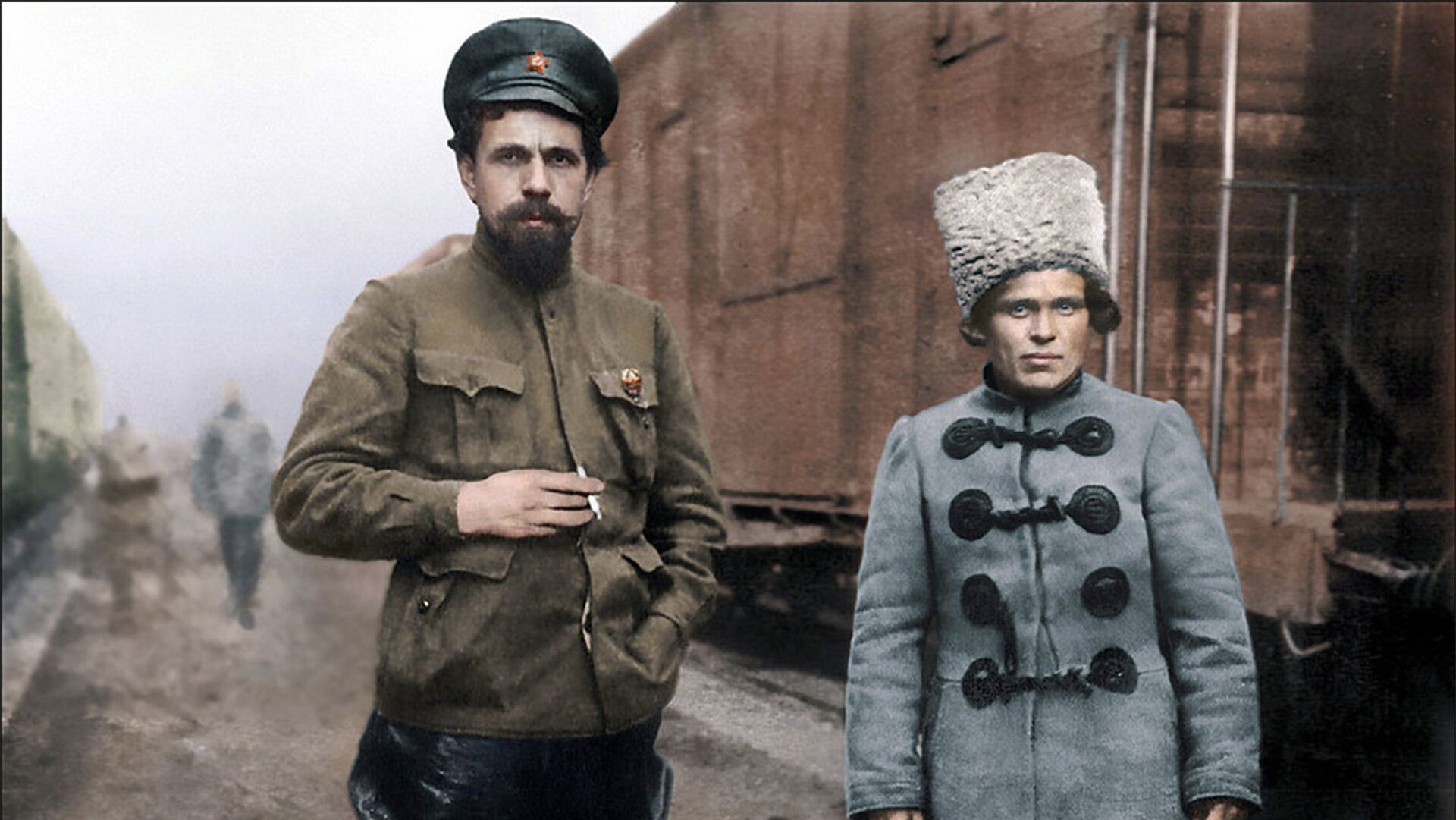
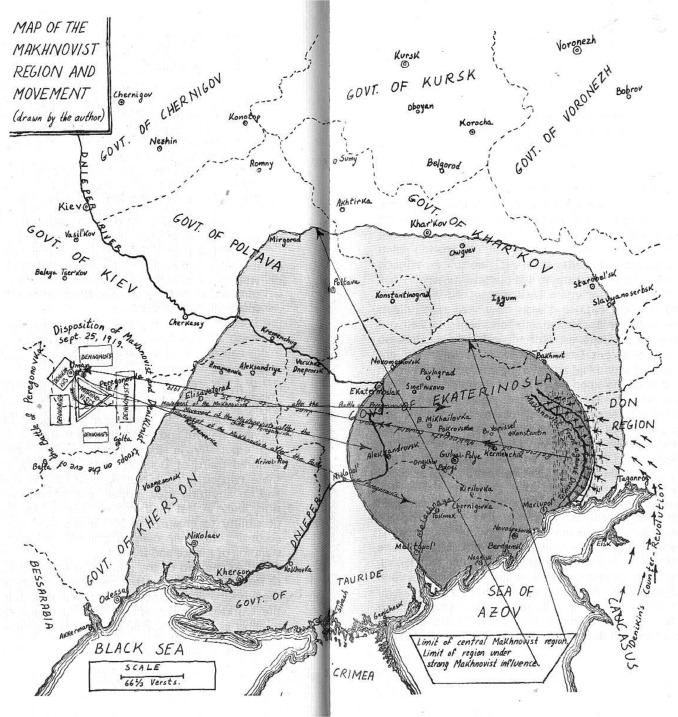
The anarchists themselves described themselves as follows: “Makhnovists are peasants and workers who rose up back in 1918 against the violence of the German-Magyar (Magyars is the endonym of Hungarians), Austrian, and Hetman bourgeois power in Ukraine. Makhnovists are those working people who raised the banner of struggle against Denikinism and all oppression, violence, and lies, wherever they came from. Makhnovists are the very working people by whose labor the bourgeoisie in general, and now the Soviet bourgeoisie in particular, grows rich, fat, and reigns supreme all its life”17. The center of the Makhnovist movement was the Yekaterinoslav, Taurida, and Kherson governorates, which were the citadel of large landowning and private landownership18.
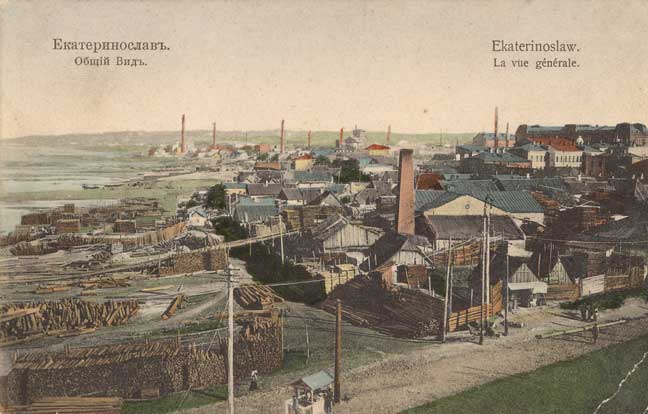
To understand the reasons, we need to outline the following: on the eve of 1917, the average area of peasant land plots in this region of Ukraine was 6 desiatinas, to which another half a desiatina leased was added. At the same time, wealthy households owned from 6 to 12 desiatinas and constituted 12.2% of the total mass of peasant farms. Middle-income households owned from 3 to 6 desiatinas and constituted 30%. The remaining 57% of households owned only 3 or 4 desiatinas. In addition, hundreds of thousands of peasant families had no land at all and were predominantly landless non-sowers.
The dominance of large landowning property stalled the development of peasant farms and created fertile ground for active peasant protest. It should be noted that on the eve of the revolutionary upheavals of 1917, the number of poor elements in the settlements of southern Ukraine was larger compared to the forest-steppe regions. This left a special mark on the peasant insurgency in the region during the Civil War. On the one hand, as in other regions of Ukraine and Russia, the peasant poor here, especially young families most in need of land, became an active force of the agrarian-peasant revolution of 1917 directed against landowners and private property owners. At the beginning of the formation of the Red Army, Makhno declared himself commissar of the Huliaipole district and created a combat organization that he called the “Black Guard”19.
In order to strengthen Soviet power in Ukraine, Makhno began a struggle against supporters of the Central Rada (the parliament of the Ukrainian People’s Republic – note) and Cossack units of Ataman Alexey Kaledin. However, events “associated with the Austro-German invasion that began after the signing of the Treaty of Brest-Litovsk” forced the “free battalions” to retreat to Taganrog, where they dissolved. The Makhnovist movement itself, in the form that many are accustomed to seeing it, began a year later, in 1918, under conditions of the occupation of Ukraine by Austro-German troops as a reaction of peasants to the policy of the occupiers who plundered the Ukrainian countryside, as well as to the regime of Hetman Skoropadsky, who attempted to revise the results of the peasant revolution of 191720.
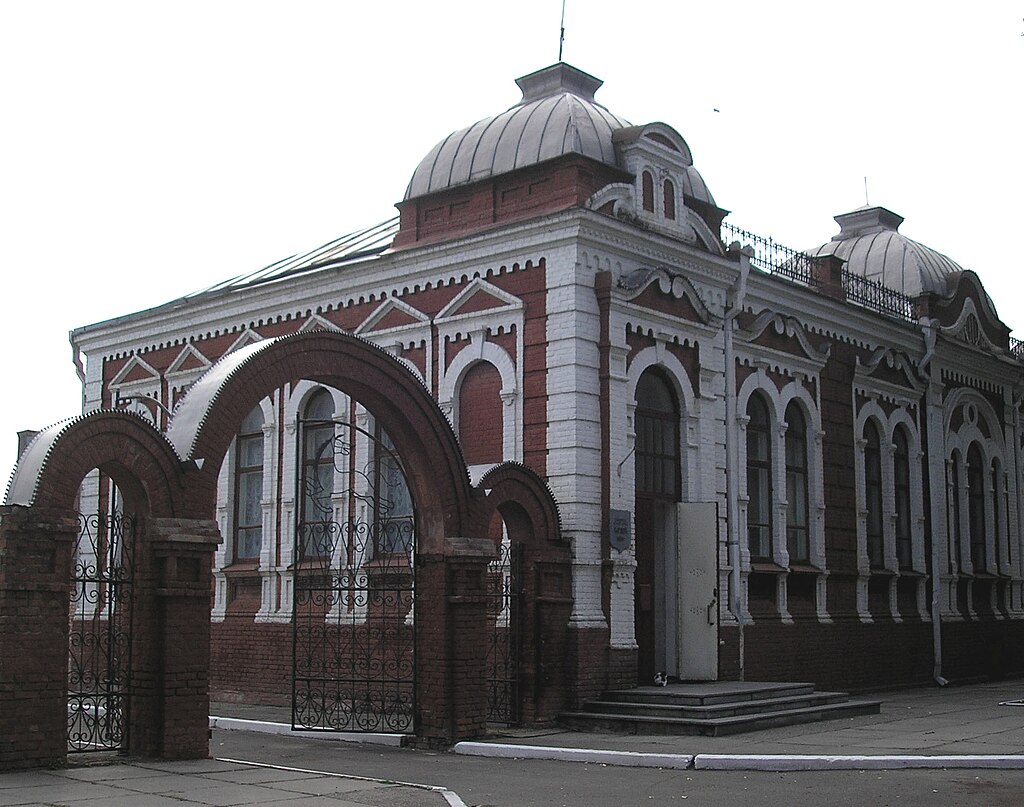
And the beginning of the Free Territory can be considered November 27, 1918, when Makhno declared Huliaipole the “capital” of his army, introduced a state of siege in the village, and formed and personally headed the Huliaipole Revolutionary Headquarters21, and from the autumn of 1918 (after the withdrawal of German troops from its territory), Makhnovist detachments became a force capable of capturing the provincial center — Yekaterinoslav. On the whole, Huliaipole and the entire South of Ukraine became a powerful hearth of the peasant revolution, covering a territory with a population of 2 million people22.
But what alternative did the anarchists of Ukraine propose? To answer this, let us consider some program documents (Draft declaration of the Revolutionary Insurgent Army of Ukraine (Makhnovists), which was adopted by the Military Revolutionary Council of the army at a meeting on October 20, 191923; Program statement of the Makhnovist insurgents of 191924, Appeal “What the Makhnovist insurgents strive for. On authority and the Soviet system” of August 191925), which formed the basis of their ideology. Anarchists opposed the idea of “political authority (be it monarchical, communist, or bourgeois-republican)” to a new order, which represented a “genuine Soviet worker-peasant system without authority”.
In the “territory”, an important role is played by “socio-economic organizations, rural committees or soviets, all kinds of unions, cooperatives, pit, factory, and plant committees, railway, post-telegraph, and other organizations” created by “free peasants and workers”.
The rest, the so-called “Backward and non-working strata of the population”, over time, will naturally be drawn into the new order (though in what way this will occur is not explained).
At the same time, all these organizations form bodies that bring them together, namely economic councils (hereinafter soviets), which perform the technical task of regulating social and economic life on a large scale. The soviets themselves are formed from the bottom up (volost, city, regional, and others) and are convened as needed. According to the statements of anarchists, the Soviets are only consultative and executive bodies regulating live economic activity on the ground.
In cities “liberated” by the anarchists “from authority”, the largest workers’ organization (for example, the council of trade unions) was to immediately take the initiative in convening a large conference for the prompt discussion and decision of a number of pressing issues. The composition of such a conference would include:
- Representatives from all workers’ organizations and enterprises without exception (unions, factories, plants, workshops, mills, various establishments, and others);
- Representatives from railway workers, tram workers, post, and telegraph, and so forth;
- Representatives from peasants of, if possible, a wider area;
- Representatives from insurgent units.
The conference was to resolve first of all the following questions:
- How to organize the defense of the city and ensure peace for the population;
- How to proceed with organizing the proper distribution of public and basic necessity products currently available in the city;
- Which items and in what quantity can be sent to the countryside right now; which products and in what quantity can now be sent from the countryside to the city; what exchange unit should be established; how to organize proper relations with the countryside and establish a proper exchange of products between workers’ and peasants’ organizations;
- The production of which specific items can be secured and continued in the city right now;
- What is necessary to establish other stalled branches of production and how to obtain what is needed;
- Organization of various kinds of urban work;
- The financial issue, and so on.
Over time, the conference would turn into a working economic Council of workers’ and peasants’ organizations. The Council would be a natural association of grassroots workers’ and peasants’, urban and rural organizations, fulfilling, as a Council, the will of general assemblies, gatherings, conferences, congresses, and the like.
The question of executive authority dealing with local spheres (educational work, medical and sanitary matters, road maintenance, registration of marriages, births, and deaths, general statistics, and so on) is as follows: it may not exist, as there is broad and free private initiative, but if necessary, corresponding departments can be created under the Councils. The role and activity of these departments, in the opinion of anarchists, “will be neither complex nor cumbersome” if a properly established socio-economic apparatus functions everywhere locally, in grassroots local organizations and councils. Looking at a higher level, an important body of the territory was the Congress of peasants, workers, and insurgents of the “territory”.
As noted by Doctor of Historical Sciences Aleksandr Shubin, the very first congress in the “territory” to determine the main principles of the structure of the new power was convened on January 23, 1919, in Velyka Mykhailivka, but it was a gathering of peasant detachments and self-defense units26. By decision of the 1st Congress, peasants sent delegates from the community (“mir”) to subsequent congresses, while the military sent delegates from units. A commission was created to convene a more representative congress.
As many as 245 delegates gathered for the 2nd Congress. In 1919, they took the form of congresses of councils of peasants, workers, and front-line fighters of the “territory”. Their decisions came into force in a given district after approval by village assemblies27. The congress was formed according to the following scheme (for convenience, we use the version from the 4th Regional Congress of peasants, workers, and insurgents)28:
I. Since the congress is a business and worker-peasant congress, representatives of political parties cannot be sent to it as members of the congress.
II. Only representatives of peasants and workers as such should be at the congress.
III. The representation norm for our congress is as follows:
- From every three thousand — 1 delegate.
- From each insurgent unit — 1 delegate.
- If a workers’ organization and enterprise have fewer than three thousand, they also send one delegate.
Real power, according to Shubin’s assessment, was held by Makhno’s headquarters, which even engaged in cultural and educational work, but all its civilian (and formally military) activity was under the control of the executive body of the congress — created by the 2nd Congress of councils of peasants, workers, and front-line fighters, namely the Military Revolutionary Council (VRS)29.
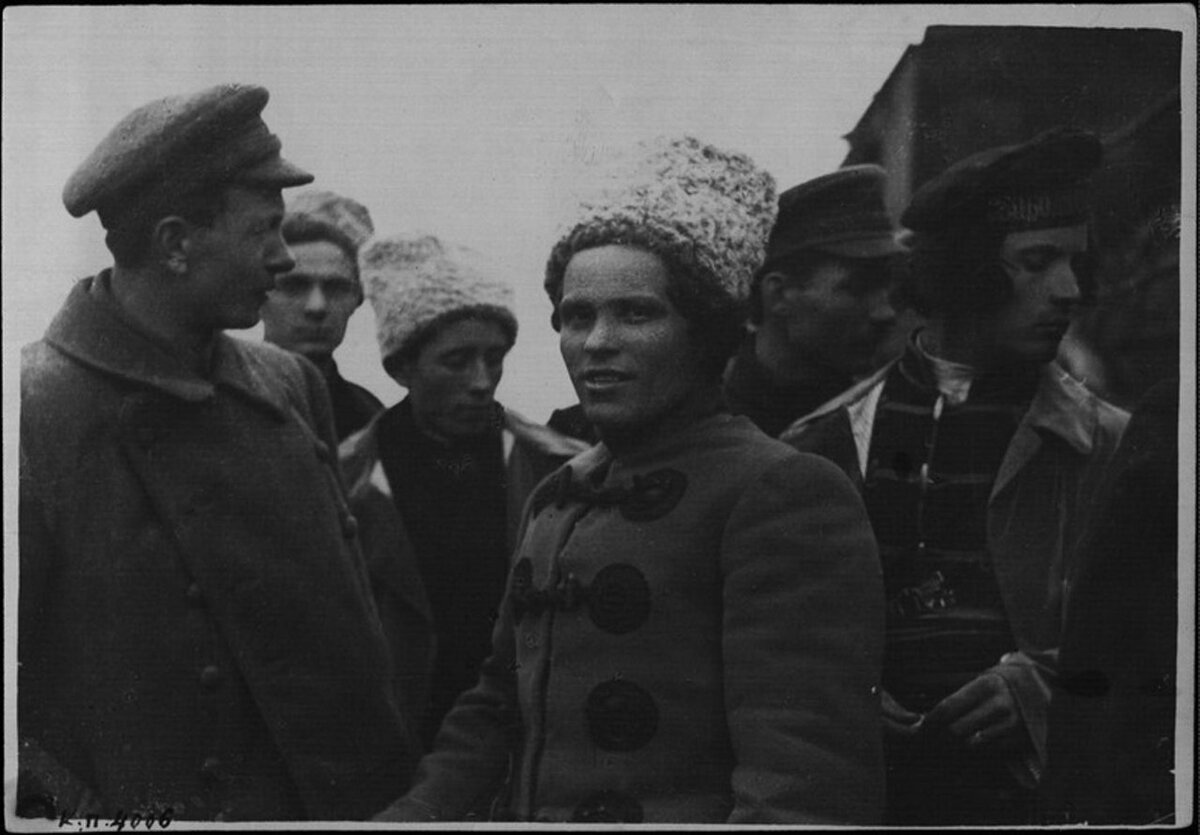
Judicial authority undergoes serious revision, while institutions like police and prison are abolished as “old, fruitless, and unnecessary rags”. The following is proposed as an alternative:
- Free organizations, unions, and councils of workers and peasants must themselves freely establish one or another concrete form of justice;
- Justice must be carried out by local public forces, with broad participation of the population and in the complete absence of predetermined norms of punishment.
As for defense, self-defense of the population should be built on the principles of free organization of protection by living local forces, rather than by special bodies.
Despite the fact that factory workers were given weapons for self-defense, the Makhnovists constantly “requisitioned” everything they needed directly in the workshops. However, they looted the halted production alongside the workers themselves, who were desperate to earn at least something at the factory30. The “territory” itself was not democratic and had significant legal issues, as enormous power was held by Makhno, who could personally make a decision on punishing commanders in the form of execution. As Shubin notes31:
The repressive system was only one element of the Makhnovist administration. Commandants and unit commanders held great authority locally. The attempt to “introduce” statelessness, declared by Volin at the Aleksandrovsk congress and in the documents cited above, naturally failed. The district was a frontline zone, isolated from the country and thoroughly militarized. Under such conditions, it could only be a question of a more or less rigid form of military regime… against the general background of the civil war, the Makhnovists managed to create a relatively democratic regime, although not without authoritarianism, repressions, and abuses.
It is worth noting that terror was carried out on the “territory”: in particular, against Mennonites32 (followers of Protestant teaching that arose in the 16th century as a branch of the Anabaptist movement, who settled in Russia during the time of Catherine II and, in the early 20th century, remained a closed ethno-confessional community with their own language (Plautdietsch), traditions, Protestant religion, and distinctive way of life isolated from the foreign-confessional environment), as well as robberies of the population33. One can recall the memoirs of Makhno’s wife recorded in her diary (according to data, to understand the situation: at this time Makhno came to recruit an army, and some people had lost their weapons34)35:
March 8. Arrived in Huliaipole. Here, under the drunk command of the Bat’ko, they began doing something impossible: cavalrymen started beating all former partisans they caught on the street with whips and rifle butts.
March 9. Today is Sunday, the day is clear and warm, there are many people on the street. Everyone came out of their houses, looking at the newcomers, and the newcomers, like a crazy wild horde, rush on horseback, fly into innocent people, and for no reason at all begin beating them, saying: “that’s for you for not taking care of your rifle”… They broke two guys’ heads and chased one into the river, where he is swimming and screaming. People got frightened and ran away.
March 10. The residents of Huliaipole began to resent quietly in corners, but openly they were afraid to express their dissatisfaction against the Makhnovists — such fear fell upon everyone…. And indeed, how could the downtrodden, intimidated, exhausted by all kinds of authorities villagers protest against the violence of drunk Makhnovists — right now the power is theirs, and so is the will.
At the same time, the existence of an army is recognized due to the presence of external threats. The army is understood by Ukrainian anarchists as a “free and nation-wide military organization built on elective principles and tightly bonded with the population”. This army was named the “Revolutionary Insurgent Army of Ukraine named after Bat’ko Makhno”. No similar army was created in any of the epicenters of the peasant insurgency in Russia during the Civil War. It was precisely the armed power of the Makhnovists that forced the Bolsheviks to reckon with them and conclude a military alliance three times. It also allowed them to conduct a social experiment with “free soviets” in the controlled territory, keeping out food requisition detachments, the Cheka, revolutionary committees, and other administrative bodies of Bolshevik power36.
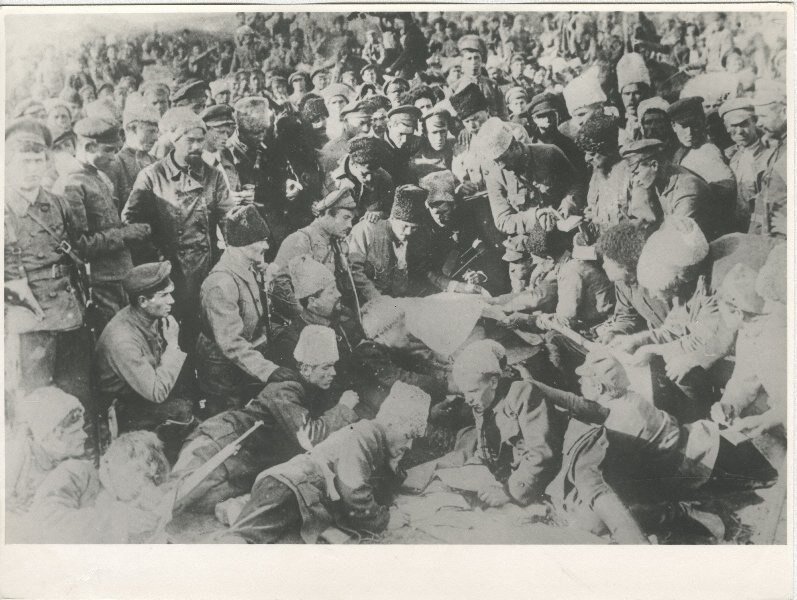
In its structure, Makhno’s Insurgent Army resembled the Red Army with its headquarters, military revolutionary councils, regiments, platoons, intelligence, machine-gun companies, artillery, record-keeping, and the like. Its difference lay in the voluntary principle of recruitment and the election of command staff solely on combat merits. Discipline was maintained in Makhno’s detachments, and measures were taken by the command to minimize the negative costs of war — robbery of the civilian population, drunkenness, desertion, and so forth. Makhno personally executed marauders and robbers37.
The army itself was formed voluntarily38, while Makhno himself advocated for compulsory recruitment, but his comrades at a meeting of the command staff and headquarters members, namely Chernyak, Vengerov, and Uralov, managed to convince the majority that compulsory mobilization contradicts the principles of the revolution39.
Inside the country, this army was to be at the disposal of working-class and peasant labor organizations, with the goal of protecting them “from any attempts at violence by power and capital”, as well as helping them “in implementing their free construction”.
As for foreign policy, the General Congresses of representatives from all organizations, cities, and villages that make up the free community designate a commission to conduct daily relations with foreign states. The commission’s activity must be open and explicit. No “diplomatic secrets” are permissible. Questions that cannot be resolved by the commission are discussed and decided through emergency congresses. On the question of party structure, the situation was dual. Anarchists rejected political figures and parties:
Any “political activity”, which by its very nature always inevitably comes down to creating, strengthening, and maintaining a system of privileges, a system of political and economic oppression of the working classes — any “political” organization and activity, as unnecessary, will fall away and abolish itself.
As a result, political figures and parties in the councils, as described above, were de jure impermissible. However, socialist parties could exist and carry out their agitation, subject to the following restrictions40:
- Military communications are permitted for publication only upon condition of receiving them from the editorial office of the main organ of the Revolutionary Insurgent Army, “Road to Freedom”, or from the Revolutionary Telegraph Agency (Retag).
- While granting all socialist parties and organizations complete freedom for their ideas, the military command of the Insurgent Army at the same time warns all parties that THE PREPARATION, ORGANIZATION, AND IMPOSITION BY THEM OF POLITICAL POWER UPON THE WORKING PEOPLE, having nothing in common with the freedom to spread one’s ideas, WILL UNDER NO CIRCUMSTANCES BE PERMITTED BY THE REVOLUTIONARY INSURGENCY”.
Also, the councils and bodies were not in fact non-partisan, because although parties did not separately nominate their own delegates and there was no party agitation during elections, many delegates were members of various organizations within the territories. Thus, the first composition of the Provisional Revolutionary Council was as follows: 7 anarchists, 3 Left SRs, 2 Bolsheviks, and one sympathizer41.
Economically, the situation was peculiar. Let us start with the land42: cultivated agricultural farms (experimental demonstration fields, nurseries, forests) were declared the property of the entire people. The land was distributed by county land committees for a single harvest according to a uniform norm per consumer of both sexes. Those townships that had surplus land extended their domain only to the area assigned to them by the county land committee, which also disposed of the remaining surpluses. If a peasant rented land in his own or another township and did not exceed the labor norm, it remained entirely in his use. As for the private sector, enterprises were placed into the hands of those who worked in them43.
At the same time, the private sector in industry was preserved in the “territory”. Thus, even in Huliaipole, the former administration was retained at the factory, which conducted constant negotiations with the trade union. The workers’ labor was paid in flour from a nearby mill, with which relations had been established by the trade union44.
However, the leaders of the movement soon began to speak critically of the workers. At a rally on the occasion of the visit to the region by Pavel Dybenko and Alexandra Kollontai, Makhno “began scolding the workers because none of the workers joined the reception of volunteers for the army45. Relations with the workers escalated even further after conflicts at enterprises whose equipment the Makhnovists “evacuated” to Huliaipole when surrendering cities to Denikin’s forces46.
Many industrial workers grew disillusioned with the Makhnovshchina (it was impossible to organize production due to the lack of raw materials and sales markets, as everything was cut off by the front line47, and Makhno’s unwillingness to pay for the growing volume of military work placed railway workers and metalworkers on the brink of ruin48) and supported the Menshevik program instead49, while at one of the regional congresses of peasants, workers, and insurgents, the delegates of Menshevik trade unions were condemned as “counter-revolutionaries” for opposing the Makhnovist platform of free Soviets (the Mensheviks and Socialist-Revolutionaries favored the Constituent Assembly) and subsequently left the congress50.
As Shubin noted, the state of the district favorably differed from the all-Russian economic collapse due to the prosperous situation in agriculture and the related light industry51. Shoemakers, food workers, leather workers, and other laborers of small industries oriented directly toward the individual consumer quickly fitted into the “market socialism” proposed by the Makhnovists52.
In terms of foreign policy, the “territory” had independence, while being characterized by largely antagonistic relations with all states, which was caused by the anarchist rejection of any form of statehood and largely led to war with everyone.
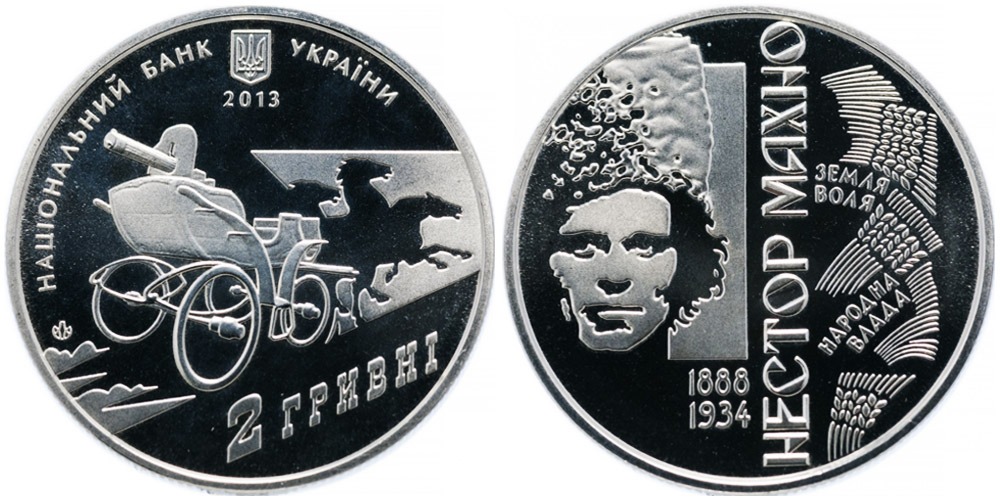
Situational alliances arose with the Bolsheviks (Nestor Makhno entered into an alliance with the Bolsheviks and the Red Army three times: at the end of 1918, in February 1919, and in October 192053). However, these alliances were short-lived, and the last war between the Bolsheviks and the Makhnovists resumed in 1920, resulting in the destruction of the anarchist entity by 1921-1922.
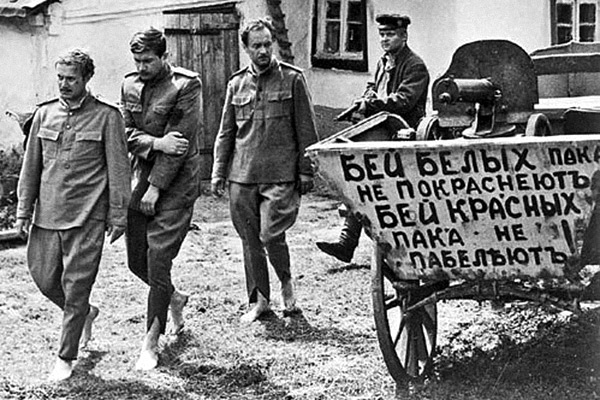
Had the situation been different, the “territory” could have become part of a state controlled by the communists. The anarchists sought the following: “the organization by the local worker-peasant population in the area of operation of the Makhnovist army of free bodies of economic and political self-government, [the basis of which is] their autonomy and federative connection with the state bodies of the Soviet republics”54.
Overall, it can be said that the idea of a “system without a state” of the anarchist type suffered defeat and has not re-emerged to this day, and although for many Makhno and his “territory” serve as a model for constructing anarchism, in reality, it turned out to be a state with quite clear military authority, where despite certain freedoms, repressions were present, and in general, the orientation toward peasants and the underdevelopment of the territory, as well as hostility toward everyone, failed to ensure its survival.
Where to classify Rojava?
From anarchists, one can often hear about the allegedly successful anarchist experience of Rojava in Syria, or more precisely, the Democratic Autonomous Administration of North and East Syria, which is largely an independent actor in the region proclaiming a confederation in its “Social Contract” (the region’s constitution)55. The ideological basis of the Constitution of Rojava is the ideology of Democratic Confederalism. The founder and theorist of this ideology is the leader of the “Kurdistan Workers’ Party” (PKK), Abdullah Öcalan, who was previously a Marxist-Leninist (the same ideology maintained by the PKK)56, but who changed his and the party’s views, partly thanks to the libertarian socialist Murray Bookchin57.
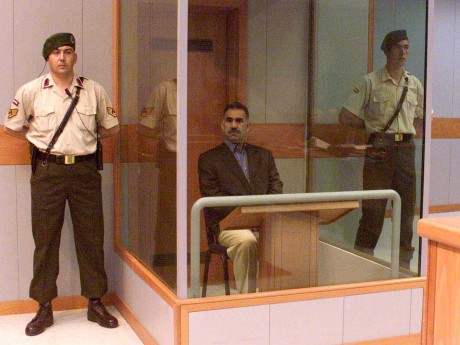
The idea itself includes the creation of institutions of grassroots democracy (councils and communes), a plurality of parties and movements, feminism, economic cooperation based on socialist principles (socialization of land and means of production), peaceful coexistence of all nations and religions, but the cornerstone of this paradigm is the rejection of the institution of the state and its elimination. According to PKK ideologues, the nation-state is guilty of crimes such as genocide, racial and gender inequality, religious conflicts, and so forth.
Therefore, the Kurds plan to build not a separate independent socialist state of Kurdistan, as was previously the case, but to create a broad self-governing autonomy on the territory of the states among which Kurdistan is divided. So broad that it will have its own economic system, armed formations, political institutions, and so on. At the same time, the PKK and its leader have much larger plans: thus, the model of democratic confederalism is proposed as an alternative not only for the entire Middle East, but also for the world as a whole, which is declared by PKK organizations, such as the Kurdistan Communities Union58. The ideology itself appeared in Syria largely due to the Democratic Union Party affiliated with the PKK, which is connected with the founding of Rojava.
However, in many respects it has more features of a federal state (there is a single constitution, common central institutions, such as a parliament (in which 60% of seats must be elected by general elections) and a government), and it also considers itself part of Syria, while its state system created in the autonomy formed the basis for building the Democratic Republic of Syria59.
After the fall of Assad, the fate of Rojava remains vague, as Turkey considers the Kurds a threat, and its allied rebels (who now rule Syria) are fighting them60.
It can be said that Rojava is in many ways the implementation of a federal state, which, although it assumes broad autonomy of regions and municipalities, at the same time prescribes rather centralized bodies in the Constitution, and coupled with the desire to establish autonomy without creating a full-fledged “society without a state”, as well as an unclear status in the future, the region’s existence remains in question. As a result, we can speak of the fact that the idea of a “system without a state” of the anarchist type suffered defeat and has not re-emerged to this day.
Situational anarchies
In history, there have been examples of how statelessness arose without the participation of anarchists, situationally. However, these examples did not end well either. Taking ancient civilizations, here one can recall the Maya civilization, which was one of the most powerful in America, but then sharply ceased to exist. According to the hypothesis of economists Daron Acemoglu and James A. Robinson, this was associated with the collapse of state institutions:
This narrative illustrates the collapse of the Maya civilization: political institutions that had provided the foundations for trade, agricultural development, and population growth suddenly collapsed… As political institutions dissolved, the process of state centralization reversed, economic crisis ensued, and the population shrank precipitously.
<…>
The archaeological record does not allow us to determine conclusively why the k’uhul ajaw were overthrown, why the surrounding elites lost power, and why the political institutions that had underpinned Maya Classic civilization collapsed. We know that this was linked to escalating internal violence within cities. A plausible scenario is that factions within the city (perhaps led by elite groups) mounted resistance, leading to civil strife. While the extractive institutions generated enough prosperity for Maya cities to flourish and for elites to get rich, build monuments, and invent artistic traditions, the system was inherently unstable. The extractive institutions that enriched the narrow elite generated massive inequality, and more importantly, intensified the struggle for control of resources among competing factions. This conflict ultimately brought about the decline of Maya civilization61.
In the Middle Ages in England, a period arose also known as “The Anarchy”, when, as a result of a succession crisis, the country plunged into a state of war from 1135 to 1153. Features of this period were that power shifted to local lords, who built numerous unauthorized castles and fortresses, in most of the country the royal forest law was not observed (many forest territories belonged to monarchs), and royal revenues dropped sharply due to unsuccessful monetary policy and loss of control over the mints62. Economy was also declining, peasants were torn away from their land plots to build castles and fortifications, and mercenary troops devastated the country63. Nevertheless, modern anarchists would not call this anarchy, since during this period in England only the central power temporarily collapsed, while the power of the lords on the ground remained intact.

From the realm of modern political science, one can recall such a category as a “failed state”, that is, a state that is unable to perform two fundamental functions of a sovereign nation-state in the modern world system64:
- It is unable to project power over its territory and peoples;
- It cannot protect its national borders.
The capacity of a failed state to govern is eroded so much that it is incapable of performing administrative and organizational tasks necessary to control people and resources, and can provide only minimal state services. Its citizens no longer believe in the legitimacy of their government, and the state becomes illegitimate in the eyes of the international community.
Such states are found in Africa, Asia, and the Middle East, with Afghanistan and Somalia serving as classic examples.
State centralized to a sufficient degree and strong is also important. This is seen particularly clearly when comparing with a East African country such as Somalia. As we shall see later, political power in Somalia has long been dispersed among different factions. In a situation where there is no single player strong enough to control the rest and decide what they can and cannot do, society becomes divided among irreconcilable clans, and none of them can become the dominant force. The power of each clan is limited only by the power of another. Such distribution of power in society leads not to the emergence of inclusive economic institutions, but to chaos, inevitable in the absence of minimal political and, consequently, state centralization. The state cannot provide the minimum level of order necessary for the development of economy and trade, or even elementary safety of citizens. Max Weber, whom we already met in the previous chapter, gave the most famous and widely recognized definition of the key feature of the state — “monopoly of legitimate physical violence” in society. In the absence of such a monopoly plus some level of centralization that this monopoly entails, the state cannot perform its function of maintaining law and order, let alone providing public goods and supporting and regulating economic activity. When the state cannot achieve a minimum acceptable level of political centralization, society sooner or later plunges into chaos, as happened in Somalia65.
Conclusion
Having examined the main projects aimed at creating an alternative to the state, we can state the following: not a single project to create a full-fledged (that is, independent of any state) “society without a state” was able to succeed, and even the number of attempts made was extremely small. These projects emerged mainly as a result of wars (the exception being the Republic of Cospaia, which arose as a result of an error); only one of them began to take certain forms of an alternative, namely Makhno’s “Free Territory”, which in its structure resembled a military dictatorship with relative freedoms, ultimately destroyed by situational allies in the person of the communists.
Many may ask: the text mainly mentions left-wing projects, but what about right-wing ones — for instance, did libertarians have similar practices? There were several attempts to create libertarian states, namely the Republic of Minerva in 1972 on reclaimed reefs in the Pacific Ocean, but the state of Tonga laid claim to this territory, and the participants of the project left the area without a fight66. The second case is the Republic of Liberland in 2015 on disputed territory on the border between Serbia and Croatia, with an area comparable to British Gibraltar, but the Croatian authorities did not allow this to be realized67 (as written by the Ministry of Foreign and European Affairs of Croatia, this is a matter between them and Serbia, and “third parties” have no right to this territory68). All of this can hardly be viewed as the creation of alternatives to the state.
To date, there are territories in the world that serve as an example of absolute anarchy, that is, statelessness, namely “Terra nullius” or “No man’s land”, which represents territory that is legally unoccupied or uninhabited69. The largest and most potential territory for settlement is Bir Tawil between Egypt and Sudan, claimed by no one70, but the lack of infrastructure and access to the sea, harsh climate, and complex regional situation make this option quite difficult.
The fact that all attempts to create a society without a state ended in failure, coupled with the fact that stateless societies were displaced by states throughout human history, leads to the conclusion: a stateless system is not progress; on the contrary, it is degradation and a return to an obsolete past. Anarchists deny not only the role of the state, but thereby also the division of labor, as a result of which political representatives emerged. Anarchist aspirations can work only in the format of regionalism, which increases the role of municipalities and regions within a democratic system, with the potential breakdown into small independent democratic states, which fits fully into the framework of modern social democracy, to which realistically minded people among anarchists should transition.
- Justin Calderon. What happened to Christiania’s dream of becoming Denmark’s hippie paradise? // CNN travel (https://edition.cnn.com/travel). August 10, 2019, 4:26. [Electronic resource]. URL: https://edition.cnn.com/travel/article/christiania-copenhagen-denmark/index.html (Accessed: 23.09.2024).
- Anarchism // Encyclopædia Britannica (https://www.britannica.com/). [Electronic resource]. URL: https://www.britannica.com/topic/anarchism/Anarchism-in-Spain (Accessed: 23.09.2024).
- S.I. Ozhegov, N.Yu. Shvedova. Explanatory Dictionary of the Russian Language: 80,000 words and phraseological expressions / Russian Academy of Sciences. V.V. Vinogradov Institute of the Russian Language. — 4th ed., expanded. — 944 pp. — M.: A TEMP LLC, 2006. — p. 24.
- Anarchy // Cambridge Dictionary (https://dictionary.cambridge.org/). [Electronic resource]. URL: https://dictionary.cambridge.org/dictionary/english/anarchy (Accessed: 23.09.2024).
- Anarchism // Encyclopædia Britannica (https://www.britannica.com/). [Electronic resource]. URL: https://www.britannica.com/topic/anarchism (Accessed: 13.12.2024).
- D.Yu. Kralechkin. Anarchism // Great Russian Encyclopedia: scientific and educational portal – URL: https://bigenc.ru/c/anarkhizm-4e7359. – Publication date: 17.05.2023. – Update date: 29.08.2023
- The Independent Republic of Cospaia // Umbria tourism (https://edition.cnn.com/travel). [Electronic resource]. URL: https://www.umbriatourism.it/en/-/republic-of-cospaia (Accessed: 23.09.2024).
- Comunità di Cospaia, San Giustino (Perugia), 1828 – 1860. // SAN – Strumenti di ricerca online (https://inventari-san.cultura.gov.it/). [Electronic resource]. URL: https://inventari-san.cultura.gov.it/inventari/111/sp/771 (Accessed: 23.09.2024).
- Anarchism // Encyclopædia Britannica (https://www.britannica.com/). [Electronic resource]. URL: https://www.britannica.com/topic/anarchism/Anarchism-in-Spain (Accessed: 23.09.2024).
- Marxism // Encyclopædia Britannica (https://www.britannica.com/). [Electronic resource]. URL: https://www.britannica.com/topic/Marxism (Accessed: 23.09.2024).
- Brunobenoit. EVENEMENTS/La Commune de Lyon (1870-1871) // Histoires lyonnaises (https://lyonnais.hypotheses.org/). April 11, 2016. [Electronic resource]. URL: https://lyonnais.hypotheses.org/851 (Accessed: 23.09.2024).
- Déclaration au peuple français // Fondation Gabriel Péri (https://gabrielperi.fr/). April 11, 2016. [Electronic resource]. URL: https://gabrielperi.fr/commune-de-paris/declaration-au-peuple-francais-du-19-avril-1871/ (Accessed: 23.09.2024).
- Zubarev I.Yu. Participation of Russian anarchists in the revolutionary events of the early 20th century // News of the Voronezh State Pedagogical University. — 2021. — No. 2 (291). — pp. 151-154.
- Anarchists. Documents and materials. 1883—1935. In 2 vols. / Vol. 2. 1917-1935. – 592 pp. – M: “Russian Political Encyclopedia” (ROSSPEN), 1999. – p. 139.
- Rublev D.I. Anarchists and the leadership of the RCP(b): negotiations on the legalization of the anarchist movement in 1920 // Bulletin of Moscow University. Series 21. Management (state and society). — 2020. — No. 1 (291). — pp. 113-135.
- RGVA. F. 198. Op. 5. D. 40. L. 43. Typescript copy.
- TsA FSB RF. F. 1. Op. 4. D. 578. L. 57. Typographic copy.
- Kondrashin V.V. Makhnovshchina // Historical Courier — 2024. — No. 4 (36). — pp. 138-150.
- Yermakov V.D., Telerov P.I. Insurgent guerrilla movement in the south of Russia: between whites and reds // Bulletin of the Russian Christian Academy for the Humanities — 2018. — Vol. 19. — No. 3. — pp. 333-348.
- Kondrashin V.V. Makhnovshchina // Historical Courier — 2024. — No. 4 (36). — pp. 138-150.
- Yermakov V.D. Anarchists on the fronts of the Civil War of 1917-1922 / Ministry of Culture of the RF. St. Petersburg State Inst. of Culture. – 272 pp. – SPb: SPbGIK, 2018. – p. 221.
- Nestor Makhno. Peasant Movement in Ukraine. 1918—1921: Documents and Materials / Series: Peasant Revolution in Russia. 1902—1922: Documents and Materials / Ed. by V. Danilov and T. Shanin. – 1000 pp. – M.: “Russian Political Encyclopedia” (ROSSPEN), 2006. – p. 9.
- Anarchists. Documents and materials. 1883—1935. In 2 vols. / Vol. 2. 1917-1935. – 592 pp. – M: “Russian Political Encyclopedia” (ROSSPEN), 1999. – pp. 354-361.
- Ibid., pp. 351-352.
- TsA FSB RF. F. 1. Op. 4. D. 603. L. 8—12. Typographic copy.
- Shubin A.V. Makhno and his time: On the Great Revolution and the Civil War of 1917-1922. – 320 pp. – M.: Book House “LIBROKOM”, 2013 – p. 115.
- TsDAGOU. F. 5, Op. 1, D. 274, L. 93-94.
- Nestor Makhno. Peasant Movement in Ukraine. 1918—1921: Documents and Materials / Series: Peasant Revolution in Russia. 1902—1922: Documents and Materials / Ed. by V. Danilov and T. Shanin. – 1000 pp. – M.: “Russian Political Encyclopedia” (ROSSPEN), 2006. – p. 211.
- Shubin A.V. Makhno and his time: On the Great Revolution and the Civil War of 1917-1922. – 320 pp. – M.: Book House “LIBROKOM”, 2013 – p. 209.
- Shubin A.V. Makhno and his time: On the Great Revolution and the Civil War of 1917-1922. – 320 pp. – M.: Book House “LIBROKOM”, 2013 – p. 213.
- Shubin A.V. Makhno and his time: On the Great Revolution and the Civil War of 1917-1922. – 320 pp. – M.: Book House “LIBROKOM”, 2013 – p. 222.
- Nazarova T.P., Redkina O.Yu. Mennonites in the Civil War (1918-1920): survival practices of an ethno-confessional group // Bulletin of Volgograd State University. Series 4: History. Regional Studies. International Relations — 2022. — Vol. 27. — No. 4. — pp. 215-224.
- Nestor Makhno. Peasant Movement in Ukraine. 1918—1921: Documents and Materials / Series: Peasant Revolution in Russia. 1902—1922: Documents and Materials / Ed. by V. Danilov and T. Shanin. – 1000 pp. – M.: “Russian Political Encyclopedia” (ROSSPEN), 2006. – p. 14.
- Ibid., p. 16.
- RGVA. F. 1407. Op. 1. D. 910. L. 1—13. Typescript. Original translation from Ukrainian. TsGAVO of Ukraine. F. 3204. Op. 2. D. 12. L. 7—23. Typescript copy.
- Kondrashin V.V. Makhnovshchina // Historical Courier — 2024. — No. 4 (36). — pp. 138-150.
- Ibid.
- TsDAGOU. F. 5. Op. 1. D. 351. L. 155-156.
- TsDAGOU. F. 5. Op. 1. D. 274. L. 18.
- TsDAGOU. F. 5, Op. 1, D. 351, L. 163–164.
- TsDAGOU. F. 5, Op. 1, D. 274, L. 29.
- Nestor Makhno. Peasant Movement in Ukraine. 1918—1921: Documents and Materials / Series: Peasant Revolution in Russia. 1902—1922: Documents and Materials / Ed. by V. Danilov and T. Shanin. – 1000 pp. – M.: “Russian Political Encyclopedia” (ROSSPEN), 2006. – p. 14.
- Aleksandr Shubin. The Makhnovist Movement And The National Question In The Ukraine, 1917–1921 // Anarchism and Syndicalism in the Colonial and Postcolonial World, 1870-1940. The Praxis of National Liberation, Internationalism, and Social Revolution — 2011. — Volume: 6. — p. 147-191.
- GAZO. F. R. 1058, Op. 1. D. 1. L. 51.
- TsDAGOU F. 5. Op. 1. D. 274. L. 32.
- Ibid., L. 32.
- Shubin A.V. Makhno and his time: On the Great Revolution and the Civil War of 1917-1922. – 320 pp. – M.: Book House “LIBROKOM”, 2013 – p. 213.
- Ibid., p. 212.
- Aleksandr Shubin. The Makhnovist Movement And The National Question In The Ukraine, 1917–1921 // Anarchism and Syndicalism in the Colonial and Postcolonial World, 1870-1940. The Praxis of National Liberation, Internationalism, and Social Revolution — 2011. — Volume: 6. — p. 147-191.
- Shubin A.V. Makhno and his time: On the Great Revolution and the Civil War of 1917-1922. – 320 pp. – M.: Book House “LIBROKOM”, 2013 – p. 209.
- Ibid., p. 213.
- Ibid.
- Nestor Makhno. Peasant Movement in Ukraine. 1918—1921: Documents and Materials / Series: Peasant Revolution in Russia. 1902—1922: Documents and Materials / Ed. by V. Danilov and T. Shanin. – 1000 pp. – M.: “Russian Political Encyclopedia” (ROSSPEN), 2006. – p. 19.
- RGASPI. F. 71. Op. 33. D. 1575. L. 18—19. Z
- DAANES’ Social Contract, 2023 Edition // Rojava Information Center (https://rojavainformationcenter.org/). December 14, 2023. [Electronic resource]. URL: https://rojavainformationcenter.org/2023/12/aanes-social-contract-2023-edition/ (Accessed: 23.09.2024).
- Karlov V.V. Connection of the Kurdistan Workers’ Party with revolutionary events in Syrian Kurdistan // Bulletin of the Moscow International Academy. — 2019. — No. 2. — pp. 178-185.
- Francesco Mazzucotelli. Beyond the nation-state? Democratic confederalism and the charter of Rojava // Il Politico, NUOVA SERIES. — 2015. — Vol. 80. — № 2/3(239-240). — p. 256-275.
- Our Idea // https://kck-info.com/ (https://kck-info.com/). December 14, 2023. [Electronic resource]. URL: https://kck-info.com/ouridea/ (Accessed: 23.09.2024).
- DAANES’ Social Contract, 2023 Edition // Rojava Information Center (https://rojavainformationcenter.org/). December 14, 2023. [Electronic resource]. URL: https://rojavainformationcenter.org/2023/12/aanes-social-contract-2023-edition/ (Accessed: 23.09.2024).
- Syrian Kurds explained what Trump’s return to the White House threatens them with // RBC (https://www.rbc.ru/). December 13, 2019, 18:03. [Electronic resource]. URL: https://www.rbc.ru/politics/13/12/2024/675c35d69a79472c5f1058d7 (Accessed: 23.09.2024).
- Daron Acemoglu, James A. Robinson. Why Nations Fail: The Origins of Power, Prosperity, and Poverty. — Crown Currency, 2012. — pp. 150-151.
- Reforms of the first Plantagenets in the context of the problem of centralization of power (1154-1216) // Materials of section meetings of the 60th student scientific and practical conference of PNU: in 2 vols. / Ministry of Science and Higher Education of the RF, Pacific National University; [editorial board; ed. by I. N. Pugachev et al.]. — 2020. — Vol. 2. — pp. 80-83.
- Salikov D.Kh. The institute of sheriffs in the system of local governance of medieval England // Bulletin of Chelyabinsk State University. — 2015. — No. 23 (378). — pp. 97-101.
- Failed state // Encyclopædia Britannica (https://www.britannica.com/). [Electronic resource]. URL: https://www.britannica.com/topic/failed-state (Accessed: 23.09.2024).
- Daron Acemoglu, James A. Robinson. Why Nations Fail: The Origins of Power, Prosperity, and Poverty. — Crown Currency, 2012. — p. 81.
- Republic of Minerva // CNN travel (https://edition.cnn.com/travel). September 15, 2016. [Electronic resource]. URL: https://www.atlasobscura.com/places/republic-of-minerva (Accessed: 23.09.2024).
- Gideon Lewis-Kraus. Welcome to Liberland, the World’s Newest Country (Maybe) // The New York Times Magazine (https://www.nytimes.com/section/magazine). August 11, 2015. [Electronic resource]. URL: https://www.nytimes.com/2015/08/16/magazine/the-making-of-a-president.html (Accessed: 23.09.2024).
- On Virtual Narratives at Croatia’s Borders // Republic of Croatia Ministry of Foreign and European Affairs (https://mvep.gov.hr/dk/dk). July 17, 2015. [Electronic resource]. URL: https://mvep.gov.hr/nyheder/on-virtual-narratives-at-croatia-s-borders-165325/165325 (Accessed: 23.09.2024).
- Terra nullius // Oxford Reference (https://www.oxfordreference.com/). [Electronic resource]. URL: https://www.oxfordreference.com/display/10.1093/oi/authority.20110803103157982 (Accessed: 23.09.2024).
- Jack Shenker. Welcome to the land that no country wants // The Guardian (https://www.theguardian.com/europe). March 3, 2016, 06:00. [Electronic resource]. URL: https://www.theguardian.com/world/2016/mar/03/welcome-to-the-land-that-no-country-wants-bir-tawil (Accessed: 23.09.2024).