Will there be peace under communists?
Many have heard the communist arguments that under socialism or their rule, wars will cease, that "no capitalism means no wars". But is this claim correct, and has it passed the test of practice? Or are the decisions of social democrats regarding reducing the likelihood of wars significantly more effective? In this article, we will examine this question in detail.
Under communism there will be no wars, but there will be such a struggle for peace that no stone will be left standing.
Communists often claim that “capitalism” leads to wars (we criticized the very concept of “capitalism” in a separate article). Thus, “Socialist Alternative” asserts: “the contradictions of capitalism lead to ever new wars”1. Putin’s Valdai Club echoes them: “capitalism has generated far more war and violence than any other form of human organization”2 (it is difficult to establish whether modern communists repeat this under the influence of the Russian dictator’s structures, or whether the latter are under the influence of communists). The same can be read at “Politsturm”: “what makes war an objectively inevitable phenomenon of capitalism? Precisely the objective laws of the development of capitalist society”3. SA concludes: “capitalist leaders continue to demonstrate an inability to provide humanity with a better future. Their approach and policies are blown to pieces by cannons and shells. Marxists, however, are full of hope: we must use the failures of the old system to form and inspire enthusiasm for a new one. Our program of anti-war protests remains the same as that of the “Zimmerwald Left”: to stop the war through a revolutionary mass movement against the capitalist system that generates it”4.
All these arguments of Marxists lead the reader to the conclusion: socialism is needed. Then there will be no wars. This was pointed out as far back as Vladimir Lenin: “Disarmament is the ideal of socialism. There will be no wars in socialist society; consequently, disarmament will be achieved”5. Is this really so? Disarmament is also the ideal of social democracy (provided there is reciprocity from all sides), but human desires far from always coincide with our capabilities. And, moreover, we have historical examples that experimentally gave an answer to the question of whether there will be wars between societies with communists in power and/or a planned economy.
Contents
“Pre-capitalist” wars
Already in “Politsturm” we find the first refutation. They admit: “The constant companion of class society from its very inception was war. It accompanied humanity at all socio-economic stages of development based on private ownership of the means of production. Capitalist society was no exception”6. That is, under other socio-economic systems there were also wars, Marxists themselves admit this and they cannot fail to admit it. It turns out that their cause lies not in “capitalism” (otherwise why, in the absence of “capitalism”, were wars still fought?). Indeed, when Sargon the Great conducted wars of conquest in the 23rd century BCE7, was “capitalism” their cause? Was it the cause of the battle of Jebel Sahaba more than ten thousand years ago? Was Assyria capitalist? Researchers have noted instances of chimpanzees from one troop attacking members of another troop8, does this mean that it is a matter of ape capitalism? No doubt these attacks were provoked by chimpanzee banana corporations. The truth is that people fought under all socio-economic systems. Therefore, the cause of wars does not lie in any single one of them.
Communist wars
If communists bring peace to the planet, then at least between countries and territories governed by communists, no wars will occur? Practice has given an answer to this: wars between countries and territories under the rule of communist parties do take place.
The most illustrative example in this regard is the 1979 war between China and Vietnam, also called by some the “first socialist”9. At that time, communist parties led respectively by Hua Guofeng10 and Le Duan11 were in power in both countries. The number of military clashes on the border of China and Vietnam grew from 100 cases in 1974 to 900 in 197612, and on February 17, 1979, 27 Chinese divisions with a total strength of about 220,000 men crossed the Vietnamese border13. Each side suffered losses of about 30,000 killed. Interestingly, the Chinese communists called this a “self-defensive counterattack against Vietnam”, and the Vietnamese called it a “war against Chinese expansionism”.
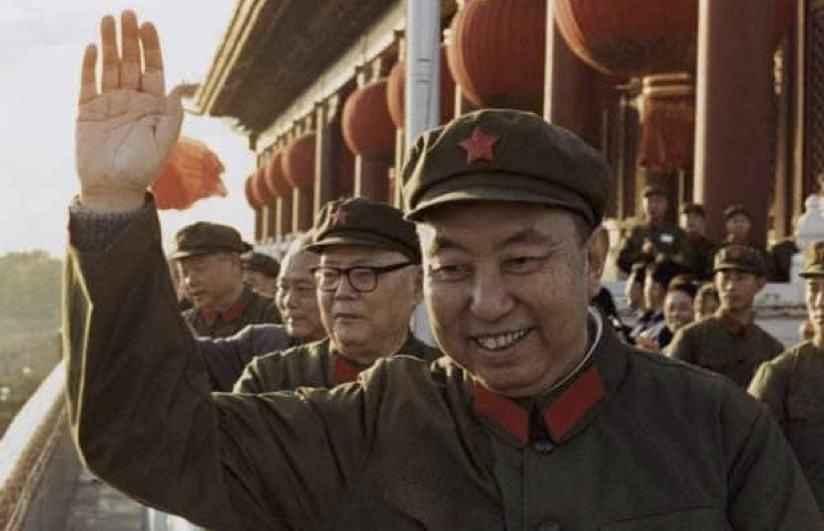
One of the causes of this war was again a military conflict between states with communists in power. The fact is that a year earlier, in 1978, into Cambodia, where communists led by Pol Pot were in power and committing mass murders, entered the army of communist Vietnam14 in response to attacks by the Cambodian “Khmer Rouge” on peaceful Vietnamese15 and their dissemination of slogans such as “Vietnam is Kampuchea’s enemy number one!” and “ready to fight Vietnam for 700 years!”16. However, just two weeks after the start of this war, the leadership of the Cambodian communists fled to Thailand17. The only problem was that they were supported by the Chinese communists, which led to a new conflict. Thus, the Sino-Vietnamese War was not the “first socialist” one. But nor was the Vietnamese-Cambodian conflict the first war between communists.
In 1969, power in Somalia was seized by the Supreme Revolutionary Council led by General Mohamed Siad Barre, who declared his intention to guide the country along the path of “scientific socialism”18, and Marxism-Leninism became the official state ideology19. In 1974, a civil war broke out in neighboring Ethiopia (more on it later), where the Provisional Military Administrative Council (also known as the Derg) led by Mengistu Haile Mariam, which adhered to Marxist ideology20, held power. Barre deemed it reasonable to launch a large-scale armed conflict in 1977 — the Ogaden War21, which lasted until 1978. Such audacity shocked even the USSR, which collaborated with Somalia, condemning Barre’s actions and calling on him to cease aggression, after which more than six thousand Soviet and Cuban “specialists” were expelled from the country. Barre’s aggression ultimately ended in failure, and by the early 1990s, central power in Somalia had practically ceased to exist, state disintegration processes were in full swing, and a civil war began22 (which incidentally shattered Marxists’ hopes that wars would cease after the withering away of the state).
The Ogaden War, however, was also not the first war between communists. As mentioned above, in 1974 a civil war began in Ethiopia, during which other factions fought against the Marxist Derg, such as the Tigray People’s Liberation Front and the Ethiopian People’s Revolutionary Democratic Front; both declared their Marxist orientation at certain stages of their activities232425. In 1991, the Derg regime fell after the EPRDF captured Addis Ababa. Over the 16 years of this war, more than 250,000 people died26. Thus, we have not only examples of wars between states led by communists, but also an example of a civil war between communists.
Communists will predictably call all the above-mentioned forces “fake communists” (of course, only they themselves are “real”, or at most only those whom they themselves approve of depending on the situation), but this is characteristic of the communist movement. For the above-mentioned forces, such communists will also be “incorrect”. But none of them is able to prove that it is specifically they who are correct. Nor can they prove that they will not turn out to be the same “incorrect” communists who unleash wars and repression. They are also unable to explain why it happens that almost any communist regime degenerates into a dictatorship of the nomenklatura. Social democrats can; we did this in the article on the “dictatorship of the proletariat”. Furthermore, those communists who talk about “incorrect communists” thereby indirectly confirm the assumption that even if they manage to seize power worldwide (which is extremely unlikely), wars will then be fought for correct communism, against those who have been “stripped” of their communist status.
Here we have mentioned only major wars; we have not taken small clashes, such as the Ethiopian-Somali border war of 1982 or the Sino-Soviet border conflicts (on Zhenbao/Damansky Island, near the village of Dulat, at Lake Zhalanashkol). Nor have we taken “cold” wars, such as the Soviet-Yugoslav conflict or the specific foreign policy of Enver Hoxha.
Aggressiveness of communist governments
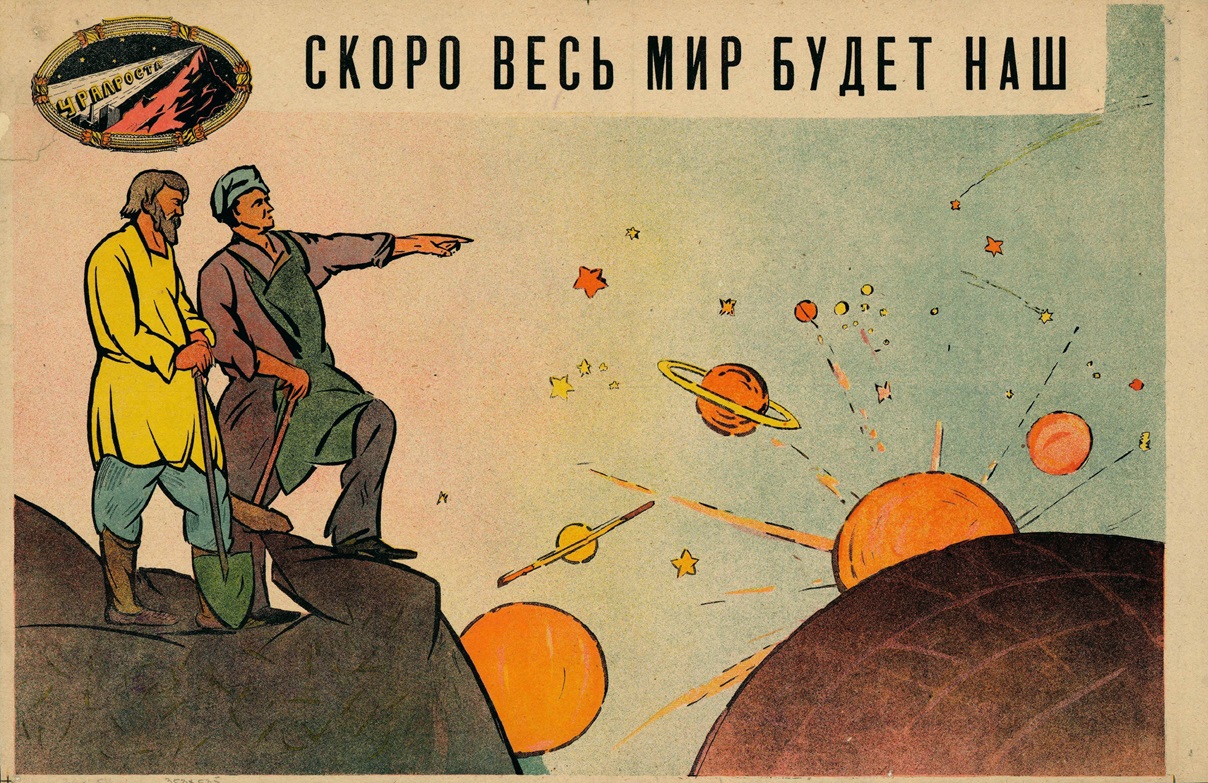
Above, we provided only examples of wars between communists. Examples of communist governments unleashing aggressive wars are significantly more numerous — including the Korean War, the attack on South Vietnam, the USSR’s aggression against Finland, and many other examples; however, they deserve a separate piece (we examined some in the article on US wars). What is the reason why communists unleash wars, despite seemingly stating that their goals are to establish peace and end all wars? The point is that, from the communist perspective, wars will cease when the entire world belongs to communists. And since few will want to surrender to communists voluntarily, this cannot be achieved without military intervention and stoking communist revolutions or civil wars to establish communist power. Consequently, for the sake of such grand goals as communism and universal peace, one can march across the world once with fire and sword. Few communists will admit this outside their circle of “comrades”, but that is roughly how their logic works.
Fortunately, we have evidence in the form of the theory of world revolution (which is an essential component of Marxism) and, indeed, quotes from the classics. Vladimir Lenin wrote: “The duty of Socialists, while not refusing to use any of the means of legal struggle of the working class, is to subordinate them all to this urgent and most important task, to develop the revolutionary consciousness of the workers, to unite them in international revolutionary struggle, to support and advance every revolutionary action, to strive to turn the imperialist war between peoples into a civil war of the oppressed classes against their oppressors, a war for the expropriation of the capitalist class, for the conquest of political power by the proletariat, for the realization of Socialism”27. Speaking of the domestic situation, this even sounds somewhat logical — to turn a senseless war between countries for territories and the interests of elites into a revolutionary war against one’s own government that permitted this war. However, it is enough to study the works of the Bolsheviks as a whole to understand that this guideline applies not only to the domestic situation.
Thus, in 1915 Lenin wrote: “A victory of socialism is possible first in a few or even in one single capitalist country alone. After expropriating the capitalists and organising their own socialist production, the victorious proletariat of that country would rise against the rest of the world — the capitalist world — attracting to its cause the oppressed classes of other countries, stirring uprisings in those countries against the capitalists, and in case of need using even armed force against the exploiting classes and their states”28. Here he admits with all directness: if communists take power in one country, it becomes a bridgehead and a base from which military operations against other countries will be organized. The goal is the seizure of power by communists in those countries. Lenin wrote about this in other materials as well: “Socialism, victorious in one country, does not at one stroke eliminate all war in general. On the contrary, it presupposes war. The development of capitalism proceeds extremely unevenly in different countries. It cannot be otherwise under commodity production. Hence, the ineradicable conclusion: socialism cannot achieve victory simultaneously in all countries. It will achieve victory first in one or several countries, while the others will for some time remain bourgeois or pre-bourgeois. This is bound to create not only friction, but a direct striving on the part of the bourgeoisie of other countries to crush the victorious proletariat of the socialist state. In such cases a war on our part would be a legitimate and just war. It would be a war for socialism, for the liberation of other nations from the bourgeoisie. Engels was perfectly right when, in his letter to Kautsky of September 12, 1882, he expressly recognized the possibility of ‘defensive wars’ on the part of victorious socialism. He had in mind defense of the victorious proletariat against the bourgeoisie of other countries. Only after we have overthrown, finally vanquished and expropriated the bourgeoisie all over the world, and not just in one country, will wars become impossible”29.
This is stated clearly enough. Wars will become impossible only when the “bourgeoisie” is defeated and expropriated. Translated from Marxist jargon, this means that all non-communist countries must either be conquered militarily or fall under communist rule through other means (and since few wish to do this bloodlessly, as we mentioned above, this will mostly occur by force). This was also confirmed in the “Short Course” of the History of the C.P.S.U.(B.):
The victory of Socialism in the U.S.S.R., as expressed in the abolition of the capitalist economic system and the building of a Socialist economic system, cannot, however, be considered a final victory, inasmuch as the danger of foreign armed intervention and of attempts to restore capitalism has not been eliminated, and inasmuch as the country of Socialism is not guaranteed against this danger. To eliminate the danger of foreign capitalist intervention, it is necessary to eliminate the capitalist encirclement30.
Communists embodied these demands in practice as well. Thus, in 1923, communist Heinrich Brandler reported at a Comintern meeting: “After the general strike, our comrades are 60-70% engaged in preparations for civil war. From the hundreds, we are now creating paramilitary combat organizations in the form of 15 divisions of 5,000 men each; we will have them on their feet within 6 weeks. We also have groups of five and partisan units that were already fully armed prior to the general strike; we also have so-called red officer schools where approximately 7,200 men have received such training that we can assign them to specialists. Out of 350,000 officers in Germany, we have only 200, and not all of these 200 can be used in military work. But we estimate that we have several thousand non-commissioned officers and sergeants who, as the experience of organizing the hundreds shows, are in my opinion fully prepared for military work if it is directed technically and politically by a stable staff. The issue of weapons is also resolved in the sense that we have enough weapons at hand. We bought weapons and there are only technical difficulties in distributing them; for if we distribute even 20,000 rifles now, our cause will immediately fail and the warehouses as well”31. That is, archival records show their admissions of preparing civil wars. A civil war in itself, if it is for liberation from tyranny, is not as terrifying as submission to tyranny; however, one should not claim that all wars will disappear under your rule when many of them will only begin. The idea of world domination by communists was voiced as early as the “Manifesto of the Communist Party”:
The Communists disdain to conceal their views and aims. They openly declare that their ends can be attained only by the forcible overthrow of all existing social conditions. Let the ruling classes tremble at a Communistic revolution. The proletarians have nothing to lose but their chains. They have a world to win32.
Friedrich Engels also articulated this quite explicitly in his works:
Among all the large and small nations of Austria, only three standard-bearers of progress took an active part in history, and still retain their vitality — the Germans, the Poles and the Magyars. Hence they are now revolutionary. All the other large and small nationalities and peoples are destined to perish before long in the revolutionary world storm. For that reason they are now counter-revolutionary.
<…>
At the first victorious uprising of the French proletariat, which Louis Napoleon is striving with all his might to provoke, the Austrian Germans and Magyars will be set free and will wreak a bloody revenge on the Slav nations. The general war which will then break out will scatter this Slav Sonderbund and wipe out all these petty stubborn nations, so that their very name will be forgotten. The next world war will result in the disappearance from the face of the earth not only of reactionary classes and dynasties, but also of entire reactionary peoples. And that, too, is a step forward33.
Therefore, already in 1920, Lenin spoke directly: their goal is to pit non-communist states against each other.
We must know how to take advantage of the antagonisms and contradictions between two imperialisms, two groups of capitalist states, pitting them against each other. As long as we have not conquered the whole world, as long as we, from the economic and military standpoint, are weaker than the capitalist world, we must adhere to the rule that we must know how to take advantage of the contradictions and antagonisms among the imperialists34.
In general, both the theory and practice of the communist movement are by no means peaceful — on the contrary, it calls for reaching world communism through the “forcible overthrow of all existing social conditions”. Does it follow from this that if a country does not wish to transition to communism, it should be left alone? No, such behavior would contradict communist theory, as it does not ensure the achievement of communist goals. Therefore, states under the control of communist parties cannot live in peace with other states, and thus, in practice, they do not live in peace with other states.
Is war profitable for capitalists and communists?
Sometimes one hears the claim from communists that war is profitable for capitalists (from which it is supposed to follow that the existence of entrepreneurs is the cause of wars), in support of which examples are given of businessmen who indeed grew rich on war — for example, arms manufacturers. However, in the exact same way, one can cite examples of communists for whom war is advantageous. Vladimir Lenin himself says this in plain text once again: “On July 12, when our troops in their continuous advance, having already covered a huge distance, were approaching the ethnographic border of Poland, the British Government in the person of Curzon addressed a note to us demanding that we stop our troops at a line 50 versts from the ethnographic border of Poland on condition of concluding peace along this line. This line ran along the line Bialystok – Brest-Litovsk and gave us Eastern Galicia. So this line was very advantageous to us. This line was called the Curzon Line”35. Lenin here explicitly states that he was made an offer through which he would benefit from the war. On September 2, 1935, Joseph Stalin wrote to Vyacheslav Molotov: “The old Entente no longer exists. Instead, two ententes are taking shape: the entente of Italy and France on the one hand, and the entente of England and Germany on the other. The fiercer the fight between them, the better for the USSR. We can sell grain to both so that they can fight. It is not at all in our interest for one of them to defeat the other right now. It is advantageous to us that the fight between them be as prolonged as possible, but without a quick victory of one over the other”36. Stalin again says in plain text: war is advantageous to us, and as prolonged as possible. But is it possible on this basis to conclude that war is advantageous to communists?
No, on this basis such a conclusion cannot be made. Because during wars, as a rule, there are those communists who would lose heavily in material terms (and possibly lose their lives), and the same can be said about business. There is not only business that earns from wars, but also business that loses from them. Thus, in August 2023, it was reported that direct losses of the largest European companies in Russia since the start of the full-scale invasion of Ukraine amounted to €100 billion37. At the same time, in Ukraine, only 6% of entrepreneurs suffered no damage due to the war38. Therefore, the statements of communists here are incorrect if there are no specifics and it is not specified which particular business benefits from war.
What is the solution?
It is impossible to completely eliminate the possibility of wars breaking out. For this, we would need perfect human beings who never wish harm on another, are never deceived by populists (capable of starting a war for their own goals), and never have psychiatric disorders, but that would require a different biological species. However, the probability of war can be minimized. What will help minimize wars? As we noted in the article on social democratic foreign policy, regimes that are classified as full democracies practically do not fight each other — practice shows this and research confirms it.
Thus, the work of Vanderbilt University professor James Lee Ray, summarizing other research on this topic, concludes that of the two answers to the question of whether democracy leads to peace, the answer “yes” is more justified39. A study by Harvard University professors shows that the link between democracy and peaceful policy is five times stronger than that between smoking and lung cancer40. At the same time, many studies do not take into account the difference between full and flawed democracies, and some even ignore their differences from hybrid regimes, which seriously affects research results. After all, a war between full democracies is far less likely than between a full democracy and a hybrid regime. One vivid example is Northern Europe. Today there is long-term and harmonious peace in this region, yet before the establishment of democratic rule it was constantly shaken by wars, for example, a series of Dano-Swedish wars.
Therefore, the goal of social democrats is to achieve the transformation of the majority of countries in the world into full democracies, which will make wars a rare phenomenon. However, even in this case, due to the imperfection of human nature and behavior, wars will still happen, for example, with organized criminal groups, and some of them may even seize power in individual regions.
We thank Artyom Kuznetsov for his assistance in writing the article.
- G. Cool, V. Shabat. War shows the failure of capitalism // Socialist Alternative (socialist.news). April 26, 2022. [Electronic resource]. URL: https://socialist.news/histheory/base/war-failure-capitalism/ (Accessed: 19.08.2024).
- R. Desai. War and peace under capitalism // Valdai Club (ru.valdaiclub.com). October 19, 2015. [Electronic resource]. URL: https://ru.valdaiclub.com/a/highlights/voyna-i-mir-pri-kapitalizme/ (Accessed: 19.08.2024).
- Capitalism and war. Part I: why wars are fought // Politsturm (politsturm.com). February 24, 2024. [Electronic resource]. URL: https://politsturm.com/kapitalizm-i-voina-chast-i-prichiny-i-rol-v-historii (Accessed: 19.08.2024).
- G. Cool, V. Shabat. War shows the failure of capitalism // Socialist Alternative (socialist.news). April 26, 2022. [Electronic resource]. URL: https://socialist.news/histheory/base/war-failure-capitalism/ (Accessed: 19.08.2024).
- V.I. Lenin. Collected Works. Vol. 23. August 1916 – March 1917. – Progress Publishers, 1964. – p. 95.
- Capitalism and war. Part I: why wars are fought // Politsturm (politsturm.com). February 24, 2024. [Electronic resource]. URL: https://politsturm.com/kapitalizm-i-voina-chast-i-prichiny-i-rol-v-historii (Accessed: 19.08.2024).
- V.Y. Shelestin. Sargon the Great // Great Russian Encyclopedia (old.bigenc.ru). [Electronic resource]. URL: https://old.bigenc.ru/world_history/text/3536446 (Accessed: 19.08.2024).
- Bloody chimpanzee war in Africa: what caused it? // BBC News Ukraine (www.bbc.com). April 24, 2018. [Electronic resource]. URL: https://www.bbc.com/ukrainian/features-russian-43878277 (Accessed: 22.08.2024).
- S. Melnichuk, A. Naumov. “The Chinese walked in waves against machine guns”. 40 years ago, a war between the main communist powers of Asia began. The USSR was left out of work // Lenta (lenta.ru). February 17, 2019, 00:02. [Electronic resource]. URL: https://lenta.ru/articles/2019/02/17/china_vietnam/ (Accessed: 19.08.2024).
- S.V. Dmitriev. Hua Guofeng // Great Russian Encyclopedia (old.bigenc.ru). [Electronic resource]. URL: https://old.bigenc.ru/world_history/text/4671811 (Accessed: 19.08.2024).
- M.A. Syunnerberg. Le Duan // Great Russian Encyclopedia (old.bigenc.ru). [Electronic resource]. URL: https://old.bigenc.ru/world_history/text/2137445 (Accessed: 02.09.2024).
- C. Nguyen. How the Sino-Vietnamese War Was Purposefully Forgotten // The Diplomat (thediplomat.com). February 17, 2023. [Electronic resource]. URL: https://thediplomat.com/2023/02/how-the-sino-vietnamese-war-was-purposefully-forgotten/ (Accessed: 19.08.2024).
- M.M. Yu. The 1979 Sino-Vietnamese War and Its Consequences // Hoover Institution (www.hoover.org). December 20, 2022. [Electronic resource]. URL: https://www.hoover.org/research/1979-sino-vietnamese-war-and-its-consequences (Accessed: 19.08.2024).
- L.C. Overton, D.P. Chandler. Vietnamese intervention // Encyclopedia Britannica (www.britannica.com). August 17, 2024. [Electronic resource]. URL: https://www.britannica.com/place/Cambodia/Vietnamese-intervention (Accessed: 19.08.2024).
- J. Pringle. Meanwhile: When the Khmer Rouge came to kill in Vietnam // International Herald Tribune (www.iht.com). January 7, 2004. [Electronic resource]. URL: http://www.iht.com/articles/2004/01/07/edpringle_ed3_.php (Accessed: 27.10.2005).
- Ieng Sary. Chapter 2. The people of Kampuchea in the struggle against the Pol Pot regime // Ethnography, political and economic geography (geography.su). [Electronic resource]. URL: http://geography.su/books/item/f00/s00/z0000013/st022.shtml (Accessed: 22.08.2024).
- D.P. Chandler, L.C. Overton. Vietnamese intervention // Encyclopedia Britannica (www.britannica.com). [Electronic resource]. URL: https://www.britannica.com/place/Cambodia/Vietnamese-intervention (Accessed: 22.08.2024).
- Somalia // Great Russian Encyclopedia (bigenc.ru). [Electronic resource]. URL: https://bigenc.ru/c/somali-bd0b83 (Accessed: 22.08.2024).
- Mohamed Siad Barre // Marxists Internet Archive (www.marxists.org). [Electronic resource]. URL: https://www.marxists.org/archive/siad-barre/index.htm (Accessed: 22.08.2024).
- Why Ethiopians are nostalgic for a murderous Marxist regime // The Economist (www.economist.com). December 7, 2017. [Electronic resource]. URL: https://www.economist.com/middle-east-and-africa/2017/12/07/why-ethiopians-are-nostalgic-for-a-murderous-marxist-regime (Accessed: 22.08.2024).
- Somalia // Great Russian Encyclopedia (bigenc.ru). [Electronic resource]. URL: https://bigenc.ru/c/somali-bd0b83 (Accessed: 22.08.2024).
- Ibid.
- C. Cherian. Civil war in Ethiopia as conflict deepens in Tigray province // Frontline (frontline.thehindu.com). December 8, 2020. [Electronic resource]. URL: https://frontline.thehindu.com/world-affairs/civil-war-in-ethiopia-as-conflict-deepens-in-tigray-province/article33170264.ece (Accessed: 22.08.2024).
- J. Burke. Rise and fall of Ethiopia’s TPLF – from rebels to rulers and back // The Guardian (www.theguardian.com). November 25, 2020, 17:00. [Electronic resource]. URL: https://www.theguardian.com/world/2020/nov/25/rise-and-fall-of-ethiopias-tplf-tigray-peoples-liberation-front (Accessed: 22.08.2024).
- M. Labzaé, S. Planel. “We Cannot Please Everyone”: Contentions over Adjustment in EPRDF Ethiopia (1991–2018) // Cambridge Core (www.cambridge.org). March 12, 2021. [Electronic resource]. URL: https://www.cambridge.org/core/journals/international-review-of-social-history/article/we-cannot-please-everyone-contentions-over-adjustment-in-eprdf-ethiopia-19912018/E0C05E225BCE77BDC3FFEC13F7453501 (Accessed: 22.08.2024).
- Ethiopian Civil War 1974-1991 // Onwar.com (www.onwar.com). December 16, 2000. [Electronic resource]. URL: http://www.onwar.com/aced/nation/eat/ethiopia/fethiopia1974.htm (Accessed: 13.01.2011).
- V.I. Lenin. Collected Works. Vol. 21. August 1914 – December 1915. – Progress Publishers, 1964. – pp. 313-314.
- V.I. Lenin. Collected Works. Vol. 21. August 1914 – December 1915. – Progress Publishers, 1964. – p. 342.
- V.I. Lenin. Collected Works. Vol. 23. August 1916 – March 1917. – Progress Publishers, 1964. – p. 79.
- History of the Communist Party of the Soviet Union (Bolsheviks): Short Course. Edited by a Commission of the Central Committee of the C.P.S.U.(B.), 1938. – Moscow: Foreign Languages Publishing House, 1945. – p. 356.
- Politburo of the CC RCP(b)-CPSU(b) and the Comintern. 1919-1943: Documents / Federal Archival Agency of Russia, Russian State Archive of Socio-Political History; Ed. G.M. Adibekov. — Moscow: “Russian Political Encyclopedia” (ROSSPEN), 2004. — 960 p. – p. 173.
- K. Marx and F. Engels. Selected Works. Volume One. — Moscow: Foreign Languages Publishing House, 1955. — p. 65.
- K. Marx and F. Engels. Collected Works. Volume 8. — Moscow: Progress Publishers, 1977. — pp. 230, 238.
- V.I. Lenin. Collected Works. Vol. 31. April-December 1920. – Progress Publishers, 1966. – p. 448.
- RGASPI. F. 44. Op. 1. D. 5. L. 9-36. Uncorrected shorthand transcript. Typescript. Pub.: Istoricheskiy Arkhiv. 1992. No. 1. pp. 14-27.
- RGASPI. F. 558. Op. 11. D. 89. L. 2, 2 ob. Autograph.
- A. Prasad. European companies suffered at least €100 billion in direct losses in Russia since the start of the war – FT // Forbes (forbes.ua). August 7, 2023, 11:14. [Electronic resource]. URL: https://forbes.ua/ru/news/evropeyski-kompanii-zaznali-shchonaymenshe-100-mlrd-pryamikh-zbitkiv-u-rosii-z-pochatku-viyni-ft-07082023-15271 (Accessed: 22.08.2024).
- SMEs continue to pay salaries and support the Armed Forces of Ukraine despite rising financial losses // European Business Association (eba.com.ua). May 18, 2023. [Electronic resource]. URL: https://eba.com.ua/msb-prodovzhuyut-vyplachuvaty-zarplaty-ta-pidtrymuvaty-zsu-popry-zrostannya-finansovyh-vtrat/ (Accessed: 22.08.2024).
- J.L. Ray. Does Democracy Cause Peace // ResearchGate (www.researchgate.net). July 1998. [Electronic resource]. URL: https://www.researchgate.net/publication/228591512_Does_Democracy_Cause_Peace (Accessed: 22.08.2024).
- K. Imai, J. Lo. Robustness of Empirical Evidence for the Democratic Peace: A Nonparametric Sensitivity Analysis // Harvard University (imai.fas.harvard.edu). [Electronic resource]. URL: https://imai.fas.harvard.edu/research/files/dempeace.pdf (Accessed: 22.08.2024).